EP1860893A2 - Mobiles Telekommunikationssystem - Google Patents
Mobiles Telekommunikationssystem Download PDFInfo
- Publication number
- EP1860893A2 EP1860893A2 EP07114720A EP07114720A EP1860893A2 EP 1860893 A2 EP1860893 A2 EP 1860893A2 EP 07114720 A EP07114720 A EP 07114720A EP 07114720 A EP07114720 A EP 07114720A EP 1860893 A2 EP1860893 A2 EP 1860893A2
- Authority
- EP
- European Patent Office
- Prior art keywords
- communication device
- registration
- functional
- call
- gsm
- Prior art date
- Legal status (The legal status is an assumption and is not a legal conclusion. Google has not performed a legal analysis and makes no representation as to the accuracy of the status listed.)
- Granted
Links
- 238000004891 communication Methods 0.000 claims abstract description 45
- 238000000034 method Methods 0.000 claims abstract description 40
- 239000011159 matrix material Substances 0.000 claims description 24
- 238000001514 detection method Methods 0.000 claims description 10
- 230000011664 signaling Effects 0.000 claims description 4
- 230000000977 initiatory effect Effects 0.000 claims 1
- 238000010295 mobile communication Methods 0.000 abstract description 7
- 230000003213 activating effect Effects 0.000 description 10
- 230000032258 transport Effects 0.000 description 9
- 238000000926 separation method Methods 0.000 description 7
- 230000007246 mechanism Effects 0.000 description 6
- 238000004458 analytical method Methods 0.000 description 3
- 230000008901 benefit Effects 0.000 description 3
- 230000004044 response Effects 0.000 description 3
- 230000001960 triggered effect Effects 0.000 description 3
- 230000000903 blocking effect Effects 0.000 description 2
- 241000613158 Eirene Species 0.000 description 1
- 230000004888 barrier function Effects 0.000 description 1
- 230000001419 dependent effect Effects 0.000 description 1
- 238000010586 diagram Methods 0.000 description 1
- 230000000694 effects Effects 0.000 description 1
- 230000008569 process Effects 0.000 description 1
- 238000010200 validation analysis Methods 0.000 description 1
Images






Classifications
-
- H—ELECTRICITY
- H04—ELECTRIC COMMUNICATION TECHNIQUE
- H04W—WIRELESS COMMUNICATION NETWORKS
- H04W8/00—Network data management
- H04W8/26—Network addressing or numbering for mobility support
-
- H—ELECTRICITY
- H04—ELECTRIC COMMUNICATION TECHNIQUE
- H04Q—SELECTING
- H04Q3/00—Selecting arrangements
- H04Q3/0016—Arrangements providing connection between exchanges
- H04Q3/0029—Provisions for intelligent networking
- H04Q3/0045—Provisions for intelligent networking involving hybrid, i.e. a mixture of public and private, or multi-vendor systems
-
- B—PERFORMING OPERATIONS; TRANSPORTING
- B61—RAILWAYS
- B61L—GUIDING RAILWAY TRAFFIC; ENSURING THE SAFETY OF RAILWAY TRAFFIC
- B61L2205/00—Communication or navigation systems for railway traffic
- B61L2205/02—Global system for mobile communication - railways [GSM-R]
-
- H—ELECTRICITY
- H04—ELECTRIC COMMUNICATION TECHNIQUE
- H04W—WIRELESS COMMUNICATION NETWORKS
- H04W84/00—Network topologies
Definitions
- the present invention relates to mobile communications systems and, in particular, although not restricted to such, relates to a utility communications system.
- Wireless mobile telecommunication services are now quite commonplace. There are in existence worldwide several wireless mobile telephony standards which are provided for general public use, by way of subscription or similar. Many advantages of mobile wireless telephony exist over standard fixed line POTS telephony systems, the most significant being that the mobile telephone is mobile as such, provided that the use of a particular mobile telephone corresponds within a region covered by the operator to which the mobile subscriber is connected to.
- GSM-R Global System for Mobile Communications
- a GSM-Railway network communication is required between different user types (person to person, person to system, system to system) in different environments (on the same train, from train to train, from/to ground to/from train, from ground to ground).
- the different user types need to be able to communicate with each other using special railway numbers, i.e. Functional Numbers (FN) which reflect functional information such as the train number the user is on, the function of the train (goods or passenger), the function of the person who is assigned a particular GSM-R phone etc.
- a central register known as the Functional Home Location Register (HLRf), stores the Functional Numbers and their related data.
- An access matrix function which provides means of checking which person call another one, is located on the central functional register. The intention is to enable GSM-R personnel and systems to use the Functional Number instead of the GSM Mobile Station ISDN number (MSISDN) for dialling and display purposes.
- MSISDN GSM Mobile Station ISDN number
- a service called 'Follow Me' has been specified, which allows a MS user to register a temporarily assigned FN against a temporarily assigned MS, and deregister the association once he no longer requires either the FN or the MS.
- MS mobile station
- Any calls to the FN need access to the central register to determine which MS the train operator is using and therefore where to route the call.
- the train operator needs to be able to check the status of the FN by performing an interrogation sequence, and when the train operator has finished working with his assigned MS, he needs to be able to de-register the FN.
- MSISDN Mobile Subscriber ISDN number
- GMSC Gateway Mobile Switching Centre
- HLR Home Location Register
- the GSM-Railways requirement to use a Functional Number which cannot be used for routing purposes, means that the originating switch must somehow use the called FN to obtain the called users MSISDN from a central functional register before it can set-up the call. It must also provide the calling FN to the access matrix for validation.
- the GSM-R solutions for allowing railway personnel to register and deregister FNs with the access matrix do not include any flexibility in the types of registration and deregistration available.
- Disadvantages of the current GSM-R solutions include the fact that there is no way of registering FNs for Fixed Line Directory Numbers (DN) and that the system does not allow de-registration to be performed from terminals other than the terminal used for registration. Further, the system does not include any extensibility, such that any future requirement for additional types of registration, interrogation or de-registration procedures would require significant software development.
- DN Fixed Line Directory Numbers
- the invention seeks to define an architecture to support the use of 'Functional Numbers' for addressing purposes within a wireless communication network, and provide a method for transporting 'Functional Numbers' between the relevant wireless communication entities within the architecture.
- the invention also seeks to define a flexible and extendible encoding scheme for the GSM-R defined supplementary service handling operations used for registering, interrogating and deregistering FNs.
- the invention provide an extension to the way Functional Numbers are registered and deregistered by providing an encoding for supervisory control of registration and deregistration procedures
- an architecture for providing call set up procedures employing an access matrix at a Service Control Point (SCP), wherein the architecture further comprises: the use of GSM/ ISDN User-to-User supplementary service protocols and IN protocols to transport FNs between an originating switch and the access matrix; and an information analysis trigger means at a detection point; wherein a routing and alerting means associated with the detection point routes and alerts the network of the originating basic call and the Initial detection point message between the GMSC and the SCP; and routes from the SCP to the GMSC a connect message when connection is possible.
- a release call message is issued when connection is not possible.
- the architecture defines an Intelligent Network (IN) architecture which sites the access matrix at a Service Control Point (SCP).
- SCP Service Control Point
- transport of the FNs between the originating switch (i.e. GMSC) and the access matrix (sited at the SCP) is enabled by means of a user-user IE and a calling party sub-address parameter.
- the calling party subaddress could be provided by means of an Intelligent Network parameter.
- the system could support an Unstructured Supplementary Service Data protocol and which would provide an encoding mechanism for supporting supplementary service handling operations which mechanism provides supervisory control.
- a GSM-based telecommunications system comprising an architecture which employs an access matrix at a Service Control Point (SCP), a method of providing call set up procedures, the method comprising:
- the method comprises the following procedures:
- a supervisory management registration class of GSM-R MSs operable in or for a GSM-based telecommunications system supporting an Unstructured Supplementary Service Data protocol to provide enhancement of the use of USSD strings for the registration, interrogation and deregistration operations, extensibility and introduction of new fields, wherein a user having such a supervisory management registration class is capable of registering and deregistering other users.
- a GSM-based telecommunications system comprising an architecture which employs an access matrix and utilises the GSM Unstructured Supplementary Service Data protocol, a flexible and extendible encoding scheme for the GSM-R defined supplementary service handling operations used for registering, interrogating and deregistering FNs.
- the encoding scheme introduces a number of fields for use in a USSD string: a first field indicating the general operation code (registration, interrogation and de-registration); a second field indicating the service code; a third field indicating the service type of the operation; and a fourth field indicating a list of parameters, wherein . the third field parameters can be entered as a number between 1 and 9; and the fourth field parameters can vary for each string and operation.
- the field indicating the general operation code has two or three characters.
- the two fields which describe an operation provide flexibility. If the operation service type was introduced at the very beginning, it could interfere with service codes other than the FM service, blocking some possibilities in the use of the operations. Different service codes (including GSM service codes) could be used with the general operations, without being excluded by a too specific operation which would block access to other services. To provide full flexibility in the use of the operations, the operation service type is preferably introduced after the service code field. A further field comprising a separation character (*) can be interposed between information fields.
- the GSM Unstructured Supplementary Service Data (USSD) protocol string comprises the following fields:
- a class of registration (value "E") is provided which is a supervisor's registration/de-registration class.
- a GSM-based telecommunications system comprising an architecture which utilises the GSM Unstructured Supplementary Service Data protocol, an encoding mechanism for supporting supplementary service handling operations which provide supervisory control for registration and deregistration procedures.
- the supervisory handling operations include registration and deregistration of functional numbers of a user whereby the user can be associated and deregistered with respect to a MSISDN by a supervisor.
- FIG. 1 shows an overview of a GSM-Railways private network.
- the call area is indicated by the track 20 and outlying area 22, upon which track trains 24 operate in communication with GSM-R subscribers and dispatchers 26 (associated with both mobile and fixed stations) while in the coverage area of the GSM-R system.
- FNs Functional Numbers
- HLRf HLRf
- MORANE SSRS A 04/02 T 6002 A service, called Follow Me, has been defined to enable GSM-R personnel to be contacted using a FN (rather then the telephone number of the MS they are using) and a way of registering and deregistering FNs in the HLRf from the MS has been defined in order for the service to activated or deactivated.
- the first aspect of the invention i.e. defining an architecture to support the use of FNs for addressing purposes
- the advantages of this solution include the technical benefits provided by IN, both for the initial implementation and any future extension/enhancement.
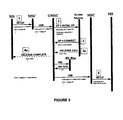
- Transport of the FNs between the originating switch (i.e. GMSC) and the access matrix (sited at the SCP) is triggered on reaching Detection Point 3 (Detection Point which analyses information before routing and alerting in the Intelligent Network) in the originating basic call state machine.
- Detection Point 3 Detection Point which analyses information before routing and alerting in the Intelligent Network
- the IN message used between the GMSC and the SCP is the Initial DP message, and from the SCP to the GMSC the Connect message is used in successful cases and the Release call message is used in unsuccessful cases (when the call will have been rejected as the result of the access matrix check).
- the information flow for a call set-up is:
- the second aspect of the invention i.e. providing a method for transporting FNs between network entites
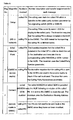
- the following table and information flow diagram ( Figure 3) show how the FNs are obtained and transported to and from the access matrix during the GSM-R call set-up procedure:
- the third aspect of the invention (i.e. extending the USSD encoding to provide flexibility for GSM-R defined supplementary service handling operations used for registering, interrogating and deregistering FNs) defines a range of fields for use in a USSD string (Table 2). This range of fields and the encoding used provides a flexible and extendible mechanism to support the registration, interrogation and de-registration operations and any future operations which may be required.
- the following fields are defined: (Note: fields 1-3 existing, fields 4 & 6 part of the invention)
- the aim of the two fields which describe an operation (1 and 4) is to introduce flexibility. If the operation service type was introduced at the very beginning, it could interfere with service codes other than the FM service, blocking some possibilities in the use of the operations. Different service codes (including GSM service codes) could be used with the general operations, without being excluded by a too specific operation which would block access to other services. To provide full flexibility in the use of the operations, the operation service type is preferably introduced after the service code field.
- the first field, Operation has two or three characters and allows for future creation of operations, combining * and # over three characters.
- the fourth aspect of the invention (i.e. providing a solution for supervisory control of FN registration and deregistration procedures) defines a new MS Registration Class of 'E' (registration/ deregistration supervisors) which is stored in the HLRm (see Table 1) and checked on receipt of a registration/deregistration request which includes a 'supervisor' category code.
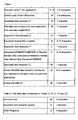
- Table 3 shows a proposed registration USSD string 1 content (MS to HLRm).
- Table 4 shows a registration USSD string 2 content (HLRm to HLRf), examples of such being:
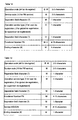
- Tables 5 and 7 show a proposed registration USSD strings 3 and 4 contents (HLRf to HLRm, followed by HLRm - MS). Examples of which are:
- the message 'already registered' may be sent to the MS
- Interrogation of a single FN is performed to obtain its associated MSISDN/DN (for fixed terminals).
- Table 8 shows a proposed interrogation USSD string 1 content (MS to HLRm), an example of which is:
- Table 9 shows a proposed interrogation USSD string 2 content (HLRm to HLRf), an example of which is:
- Tables 10 and 11 show a proposed interrogation USSD strings 3 and 4 contents (HLRf to HLRm, followed by HLRm - MS). Examples of which are:
- the message 'FN not registered' may optionally be sent to the MS.
- the associated MSISDN/ DN is the forwarded to number to which the FN being interrogated in registered to and is not to be confused with the served MSISDN from where the interrogation is performed.
- the interrogation response is conditional, it is not mandatory when interrogation cannot be activated (there is an error), but it is mandatory when interrogation has been activated i.e. the MSISDN corresponding to the FN interrogated must be included in response string 4.
- MORANE describes the following de-registration: the user de-registers his own FN using the MS which was used to register the FN. This is the first optional service type: user de-registration. Greater variety and flexibility to de-registration is possible, allowing a user to de-register another user within GSM-R or all users of the same train at the same time.
- User De-registration Single FN de-registration activated from the MS associated with the FN to be de-registered.
- Global De-registration De-registration of all FNs of one train from a MS with class of registration E.
- Supervisor De-registration De-registration of FN(s) from a MS with class E registration.
- the service types are optional as some operators may not wish to use them, but they are created to bring more variety and flexibility to the de-registration operation.
- de-registration entitlement will be checked by the class of registration check at the HLRm and the FN - MSISDN association check at the HLRf.
- service types When service types are used they limit the use of de-registration, which makes all the possibilities for de-registration less ambiguous to use.
- Table 12 shows a proposed de-registration USSD string 1 content (MS to HLRm), examples of which are:
- the person who wants to de-register other users will be recognised by his MSISDN and the class of registration it carries.
- the HLRm will determine if the person requesting global or supervisor de-registration is entitled to activate it, checking the class of registration (users with the class E registration will be allowed to activate de-registration).
- the FN entered here is the FN of the user who wants to de-register himself.
- the FN entered here is the FN of the other person that the user wants to de-register.
- the FN entered here is the lead train driver's FN, as the train driver FN always contains the running number which will be used to apply global de-registration on every FN carrying the same RN as the driver.
- Table 13 shows a proposed de-registration USSD string 2 content (HLRm to HLRf), examples of which are:
- Tables 14 and 15 show a proposed de-registration USSD strings 3 and 4 contents (HLRf to HLRm, followed by HLRm - MS). Examples of which are:
- a user can de-register himself.
- the de-registration can be carried out by service type 1 in string 1, or without the service type indication.
- the FN is associated with an MS capable of activating de-registration or if the FN is not associated with the MS activating de-registration and the MS has a registration class E, e.g. for arbitrary FN.
- Global de-registration A user can de-register FN 888 2 45678901 01 and all FNs on the same train with running number 45678901.
- the de-registration could be achieved with service type 2 in string 1, or without the service type indication.
- the FN is associated with an MS capable of activating de-registration or if the FN is not associated with an MS capable of activating de-registration and the MS has a registration class E.
- Supervisor de-registration User can de-register driver2 only on other train.
- the de-registration can be carried out with service type 3 in String 1 or with no service type indication. In both cases the MS must have a registration class E.
- the message 'FN not registered' may be sent to the MS
Landscapes
- Engineering & Computer Science (AREA)
- Computer Networks & Wireless Communication (AREA)
- Databases & Information Systems (AREA)
- Signal Processing (AREA)
- Mobile Radio Communication Systems (AREA)
Applications Claiming Priority (3)
| Application Number | Priority Date | Filing Date | Title |
|---|---|---|---|
| GBGB9808725.7A GB9808725D0 (en) | 1998-04-23 | 1998-04-23 | A mobile telecommunications system |
| GBGB9808723.2A GB9808723D0 (en) | 1998-04-23 | 1998-04-23 | A mobile telecommunications system |
| EP99303149A EP0952744A3 (de) | 1998-04-23 | 1999-04-23 | Mobilfunksystem dass die Verwendung von Funktionsnummern unterstützt |
Related Parent Applications (1)
| Application Number | Title | Priority Date | Filing Date |
|---|---|---|---|
| EP99303149A Division EP0952744A3 (de) | 1998-04-23 | 1999-04-23 | Mobilfunksystem dass die Verwendung von Funktionsnummern unterstützt |
Publications (3)
| Publication Number | Publication Date |
|---|---|
| EP1860893A2 true EP1860893A2 (de) | 2007-11-28 |
| EP1860893A3 EP1860893A3 (de) | 2007-12-05 |
| EP1860893B1 EP1860893B1 (de) | 2009-08-26 |
Family
ID=26313525
Family Applications (2)
| Application Number | Title | Priority Date | Filing Date |
|---|---|---|---|
| EP99303149A Withdrawn EP0952744A3 (de) | 1998-04-23 | 1999-04-23 | Mobilfunksystem dass die Verwendung von Funktionsnummern unterstützt |
| EP07114720A Expired - Lifetime EP1860893B1 (de) | 1998-04-23 | 1999-04-23 | Mobiles Telekommunikationssystem |
Family Applications Before (1)
| Application Number | Title | Priority Date | Filing Date |
|---|---|---|---|
| EP99303149A Withdrawn EP0952744A3 (de) | 1998-04-23 | 1999-04-23 | Mobilfunksystem dass die Verwendung von Funktionsnummern unterstützt |
Country Status (2)
| Country | Link |
|---|---|
| EP (2) | EP0952744A3 (de) |
| DE (1) | DE69941345D1 (de) |
Cited By (9)
| Publication number | Priority date | Publication date | Assignee | Title |
|---|---|---|---|---|
| WO2009112068A1 (en) * | 2008-03-11 | 2009-09-17 | Telefonaktiebolaget Lm Ericsson (Publ) | System and method for using subscriber role information in a mobile communication system |
| EP2112857A1 (de) * | 2008-04-21 | 2009-10-28 | Nokia Siemens Networks Oy | Dienstregistrierung in einem Zellnetzwerk |
| RU2385551C1 (ru) * | 2009-03-23 | 2010-03-27 | Открытое акционерное общество "Российские железные дороги" (ОАО "РЖД") | Система мобильной связи на железнодорожном транспорте |
| RU2389629C1 (ru) * | 2009-04-17 | 2010-05-20 | Открытое акционерное общество "Российские железные дороги" (ОАО "РЖД") | Система передачи данных на базе радиоканала стандарта dect |
| CN102019944A (zh) * | 2010-11-23 | 2011-04-20 | 华为技术有限公司 | 列车运行控制方法及列车自动防护系统、ctcs-3控制单元 |
| CN101321367B (zh) * | 2008-07-22 | 2011-10-12 | 北京六捷科技有限公司 | 一种铁路机车综合无线通信设备的监测系统及其方法 |
| WO2012155832A1 (zh) * | 2011-05-16 | 2012-11-22 | 铁道部运输局 | Ctcs-2级列车运行控制系统 |
| US8786426B2 (en) | 2010-10-18 | 2014-07-22 | Alstom Transport Sa | System for monitoring operating functions of railway devices |
| CN105792186A (zh) * | 2014-12-17 | 2016-07-20 | 中兴通讯股份有限公司 | 适用于铁路的长期演进系统及呼叫方法 |
Families Citing this family (17)
| Publication number | Priority date | Publication date | Assignee | Title |
|---|---|---|---|---|
| DE19942607A1 (de) * | 1999-08-31 | 2001-03-08 | Siemens Ag | Verfahren zur Angabe möglicher Kommunikationspartner |
| DE19943144A1 (de) * | 1999-09-09 | 2001-03-22 | Siemens Ag | Verfahren zur Änderung von Servicedaten |
| EP1191805A1 (de) * | 2000-08-25 | 2002-03-27 | Alcatel | Telekommunikationssystem, und entsprechenden Mobilstation, Datenbank und Verfahren |
| NL1020623C2 (nl) * | 2001-05-18 | 2003-04-18 | Volker Stevin Rail & Traffic B | Spoorwegsignaleringsysteem. |
| DE10203368B4 (de) * | 2002-01-29 | 2007-12-20 | Siemens Ag | Verfahren und Vorrichtung zum Herstellen einer Telefonverbindung |
| DE10336793B4 (de) * | 2003-08-08 | 2005-06-23 | Db Telematik Gmbh | Verfahren zur Einrichtung und Konfiguration von Telekommunikationsdiensten eines Mobilfunknetzes |
| DE102004005420A1 (de) * | 2004-02-03 | 2005-09-08 | Db Telematik Gmbh | Verfahren und Vorrichtung zur Übertragung und Anzeige von auf zentralen Systemen der Leit- und Sicherungstechnik erzeugten proprietären Datentelegrammen über digitale Mobilfunknetze |
| ITMI20040603A1 (it) * | 2004-03-29 | 2004-06-29 | Mma Marconi Mobile Access S P | Metodo e terminali per il supporto della numerazione funzionale applicata a servizi di messaggistica breve in reti di comunicazioni senza fili |
| EP1596620A1 (de) * | 2004-05-14 | 2005-11-16 | Nortel Networks Limited | System und Verfahren zur Verarbeitung von nicht eindeutigen funktionalen Nummern in Telekommunikationsanwendungen |
| CN100442911C (zh) * | 2005-01-11 | 2008-12-10 | 华为技术有限公司 | 一种gsm-r中实现呼叫的方法 |
| CN103596150A (zh) * | 2005-02-01 | 2014-02-19 | 微软公司 | 混合的无线和有线电信网络中的短消息的发送的系统和方法 |
| DE102005033214B4 (de) * | 2005-07-13 | 2007-05-24 | Db Telematik Gmbh | Verfahren zur Registrierung oder Deregistrierung funktionaler Nummern für Mobilstationen eines Funk-Kommunikationssystems unter Verwendung einer Konfigurations-Datenbank zur Zuordnung der funktionalen Nummern zu physikalischen Zielrufnummern |
| US20070077942A1 (en) * | 2005-09-30 | 2007-04-05 | Nortel Networks Limited | Location-based addressing |
| CN100370852C (zh) * | 2006-01-24 | 2008-02-20 | 华为技术有限公司 | 实现移动终端动态编组、编组注销的方法及系统 |
| CN102083007B (zh) * | 2011-01-25 | 2013-03-20 | 上海交通大学 | Gsm-r集群调度业务分析系统及其实现方法 |
| EP2869608A1 (de) | 2013-10-30 | 2015-05-06 | Callfreedom Sp. z o.o. | Kommunikationssystem zum Austausch von Nachrichten zwischen einem oder mehreren Mobiltelefonanbietern und mindestens einem Datenbetreiber |
| CN103809586A (zh) * | 2014-02-21 | 2014-05-21 | 北京六捷科技有限公司 | 一种铁路调度命令的故障分析诊断系统及方法 |
Citations (1)
| Publication number | Priority date | Publication date | Assignee | Title |
|---|---|---|---|---|
| EP0431453A2 (de) | 1989-12-02 | 1991-06-12 | AEG MOBILE COMMUNICATION GmbH | Funksystem |
Family Cites Families (6)
| Publication number | Priority date | Publication date | Assignee | Title |
|---|---|---|---|---|
| JPH0865728A (ja) * | 1994-08-24 | 1996-03-08 | Hitachi Ltd | 移動体通信ネットワークおよび呼制御方法 |
| DE19511520A1 (de) * | 1995-03-29 | 1996-10-02 | Sel Alcatel Ag | Streckenfunksystem und Mobilstation dafür |
| US5566235A (en) * | 1995-10-05 | 1996-10-15 | Bell Atlantic Network Services, Inc. | Customer controlled service mediation management |
| DE19608464C2 (de) * | 1996-03-01 | 1998-04-09 | Siemens Ag | Verfahren zur Administrierung zusätzlicher Dienste in einem mobilen Kommunikationsnetz |
| DE19632354C1 (de) * | 1996-08-10 | 1998-02-19 | Plus Mobilfunk Gmbh E | Verfahren zum dynamischen Zuordnen von Kurzwahlrufnummern in einem mit einem Mobilfunknetz und/oder einem Festfunknetz ausgestatteten Telefonnetz |
| DE19719955C2 (de) * | 1997-05-14 | 2000-09-14 | Deutsche Telekom Mobil | Verfahren zur Erreichbarkeit von Teilnehmern in einem Funkkommunikationssystem |
-
1999
- 1999-04-23 EP EP99303149A patent/EP0952744A3/de not_active Withdrawn
- 1999-04-23 EP EP07114720A patent/EP1860893B1/de not_active Expired - Lifetime
- 1999-04-23 DE DE69941345T patent/DE69941345D1/de not_active Expired - Lifetime
Patent Citations (1)
| Publication number | Priority date | Publication date | Assignee | Title |
|---|---|---|---|---|
| EP0431453A2 (de) | 1989-12-02 | 1991-06-12 | AEG MOBILE COMMUNICATION GmbH | Funksystem |
Cited By (13)
| Publication number | Priority date | Publication date | Assignee | Title |
|---|---|---|---|---|
| WO2009112068A1 (en) * | 2008-03-11 | 2009-09-17 | Telefonaktiebolaget Lm Ericsson (Publ) | System and method for using subscriber role information in a mobile communication system |
| US8838099B2 (en) | 2008-03-11 | 2014-09-16 | Telefonaktiebolaget L M Ericsson (Publ) | System and method for using subscriber role information in a mobile communication system |
| RU2470487C2 (ru) * | 2008-03-11 | 2012-12-20 | Телефонактиеболагет Лм Эрикссон (Пабл) | Система и способ использования информации о роли абонента в системе мобильной связи |
| CN102027765A (zh) * | 2008-03-11 | 2011-04-20 | 爱立信电话股份有限公司 | 移动通信系统中使用订户职责信息的系统和方法 |
| EP2112857A1 (de) * | 2008-04-21 | 2009-10-28 | Nokia Siemens Networks Oy | Dienstregistrierung in einem Zellnetzwerk |
| CN101321367B (zh) * | 2008-07-22 | 2011-10-12 | 北京六捷科技有限公司 | 一种铁路机车综合无线通信设备的监测系统及其方法 |
| RU2385551C1 (ru) * | 2009-03-23 | 2010-03-27 | Открытое акционерное общество "Российские железные дороги" (ОАО "РЖД") | Система мобильной связи на железнодорожном транспорте |
| RU2389629C1 (ru) * | 2009-04-17 | 2010-05-20 | Открытое акционерное общество "Российские железные дороги" (ОАО "РЖД") | Система передачи данных на базе радиоканала стандарта dect |
| US8786426B2 (en) | 2010-10-18 | 2014-07-22 | Alstom Transport Sa | System for monitoring operating functions of railway devices |
| CN102019944A (zh) * | 2010-11-23 | 2011-04-20 | 华为技术有限公司 | 列车运行控制方法及列车自动防护系统、ctcs-3控制单元 |
| CN102019944B (zh) * | 2010-11-23 | 2012-09-19 | 华为技术有限公司 | 列车运行控制方法及列车自动防护系统、ctcs-3控制单元 |
| WO2012155832A1 (zh) * | 2011-05-16 | 2012-11-22 | 铁道部运输局 | Ctcs-2级列车运行控制系统 |
| CN105792186A (zh) * | 2014-12-17 | 2016-07-20 | 中兴通讯股份有限公司 | 适用于铁路的长期演进系统及呼叫方法 |
Also Published As
| Publication number | Publication date |
|---|---|
| EP1860893B1 (de) | 2009-08-26 |
| EP1860893A3 (de) | 2007-12-05 |
| DE69941345D1 (de) | 2009-10-08 |
| EP0952744A3 (de) | 2000-12-20 |
| EP0952744A2 (de) | 1999-10-27 |
Similar Documents
| Publication | Publication Date | Title |
|---|---|---|
| EP1860893B1 (de) | Mobiles Telekommunikationssystem | |
| US6049712A (en) | Arrangement system and method relating to telecommunications access and control | |
| AU736497B2 (en) | Validating a forward-to-number within a mobile telecommunications system | |
| AU725877B2 (en) | Call set-up process | |
| FI116964B (fi) | Menetelmä ja laite äänimerkkien poimimiseksi liikkuviin päätteisiin | |
| EP1111945B1 (de) | System und Verfahren für globalen Zugang zu Diensten für mobile Telefonteilnehmer | |
| US6078804A (en) | Providing different routing treatments for emergency calls based on subscriber specified data | |
| AU725595B2 (en) | Remotely retrieving sim stored data over a connection-less communications link | |
| US6141545A (en) | Method and system for remote call forwarding of telephone calls from cellular phone | |
| US5781858A (en) | Method and arrangement for handling and inspecting supplemetary services intended for a mobile telephone unit | |
| US6892070B2 (en) | Communication system and method for minimizing international roaming costs | |
| AU4066597A (en) | Broadcasting messages to mobile stations within a geographic area | |
| JP2001523423A (ja) | 固定端末加入者および移動端末加入者を有する電気通信ネットワーク | |
| US20010014614A1 (en) | Method of controlling call routing and a communication terminal | |
| US20030185373A1 (en) | System and method for toll notification when placing a call | |
| US20010055379A1 (en) | Communication service information providing system | |
| US6501948B1 (en) | Call forwarding in a telecommunication system | |
| US6957059B2 (en) | Method and device for registering and connecting collect calls with intelligent network services | |
| FI109856B (fi) | Merkinantomenetelmä tietoliikennejärjestelmässä | |
| US6374107B1 (en) | Local SCP for a mobile integrated intelligent network | |
| US6507645B1 (en) | Method for changing service data | |
| KR100384945B1 (ko) | 무선 지능망에서 에이엔씨엠 서비스 구현 방법 | |
| CN101151915B (zh) | 混合的无线和有线电信网络中的短消息的发送的系统和方法 | |
| KR980007063A (ko) | 국제 이동전화망간 또는 이기종 이동전화망간의 로밍서비스 방법 | |
| US20010055977A1 (en) | Process for establishing a communications connection |
Legal Events
| Date | Code | Title | Description |
|---|---|---|---|
| PUAI | Public reference made under article 153(3) epc to a published international application that has entered the european phase |
Free format text: ORIGINAL CODE: 0009012 |
|
| PUAL | Search report despatched |
Free format text: ORIGINAL CODE: 0009013 |
|
| AC | Divisional application: reference to earlier application |
Ref document number: 0952744 Country of ref document: EP Kind code of ref document: P |
|
| AK | Designated contracting states |
Kind code of ref document: A2 Designated state(s): DE FR GB |
|
| AK | Designated contracting states |
Kind code of ref document: A3 Designated state(s): DE FR GB |
|
| RTI1 | Title (correction) |
Free format text: A MOBILE TELECOMMUNICATIONS SYSTEM SUPPORTING THE USE OF FUNCTIONAL NUMBERS |
|
| 17P | Request for examination filed |
Effective date: 20080529 |
|
| AKX | Designation fees paid |
Designated state(s): DE FR GB |
|
| GRAP | Despatch of communication of intention to grant a patent |
Free format text: ORIGINAL CODE: EPIDOSNIGR1 |
|
| RIC1 | Information provided on ipc code assigned before grant |
Ipc: H04W 8/26 20090101AFI20090324BHEP Ipc: H04W 84/00 20090101ALI20090324BHEP Ipc: H04Q 3/00 20060101ALI20090324BHEP |
|
| GRAS | Grant fee paid |
Free format text: ORIGINAL CODE: EPIDOSNIGR3 |
|
| GRAA | (expected) grant |
Free format text: ORIGINAL CODE: 0009210 |
|
| AC | Divisional application: reference to earlier application |
Ref document number: 0952744 Country of ref document: EP Kind code of ref document: P |
|
| AK | Designated contracting states |
Kind code of ref document: B1 Designated state(s): DE FR GB |
|
| REG | Reference to a national code |
Ref country code: GB Ref legal event code: FG4D |
|
| REF | Corresponds to: |
Ref document number: 69941345 Country of ref document: DE Date of ref document: 20091008 Kind code of ref document: P |
|
| PLBE | No opposition filed within time limit |
Free format text: ORIGINAL CODE: 0009261 |
|
| STAA | Information on the status of an ep patent application or granted ep patent |
Free format text: STATUS: NO OPPOSITION FILED WITHIN TIME LIMIT |
|
| 26N | No opposition filed |
Effective date: 20100527 |
|
| REG | Reference to a national code |
Ref country code: DE Ref legal event code: R082 Ref document number: 69941345 Country of ref document: DE Representative=s name: BARDEHLE PAGENBERG PARTNERSCHAFT PATENTANWAELT, DE |
|
| REG | Reference to a national code |
Ref country code: GB Ref legal event code: 732E Free format text: REGISTERED BETWEEN 20130502 AND 20130508 |
|
| REG | Reference to a national code |
Ref country code: GB Ref legal event code: 732E Free format text: REGISTERED BETWEEN 20130509 AND 20130515 |
|
| REG | Reference to a national code |
Ref country code: FR Ref legal event code: TP Owner name: APPLE INC., US Effective date: 20130515 |
|
| REG | Reference to a national code |
Ref country code: DE Ref legal event code: R082 Ref document number: 69941345 Country of ref document: DE Representative=s name: BARDEHLE PAGENBERG PARTNERSCHAFT MBB PATENTANW, DE Effective date: 20121023 Ref country code: DE Ref legal event code: R081 Ref document number: 69941345 Country of ref document: DE Owner name: APPLE INC., US Free format text: FORMER OWNER: NORTEL NETWORKS LTD., ST. LAURENT, CA Effective date: 20140313 Ref country code: DE Ref legal event code: R081 Ref document number: 69941345 Country of ref document: DE Owner name: APPLE INC., CUPERTINO, US Free format text: FORMER OWNER: NORTEL NETWORKS LTD., ST. LAURENT, QUEBEC, CA Effective date: 20140313 Ref country code: DE Ref legal event code: R082 Ref document number: 69941345 Country of ref document: DE Representative=s name: BARDEHLE PAGENBERG PARTNERSCHAFT MBB PATENTANW, DE Effective date: 20140313 |
|
| REG | Reference to a national code |
Ref country code: FR Ref legal event code: PLFP Year of fee payment: 18 |
|
| REG | Reference to a national code |
Ref country code: FR Ref legal event code: PLFP Year of fee payment: 19 |
|
| REG | Reference to a national code |
Ref country code: FR Ref legal event code: PLFP Year of fee payment: 20 |
|
| PGFP | Annual fee paid to national office [announced via postgrant information from national office to epo] |
Ref country code: GB Payment date: 20180329 Year of fee payment: 20 |
|
| PGFP | Annual fee paid to national office [announced via postgrant information from national office to epo] |
Ref country code: FR Payment date: 20180315 Year of fee payment: 20 |
|
| PGFP | Annual fee paid to national office [announced via postgrant information from national office to epo] |
Ref country code: DE Payment date: 20180410 Year of fee payment: 20 |
|
| REG | Reference to a national code |
Ref country code: DE Ref legal event code: R071 Ref document number: 69941345 Country of ref document: DE |
|
| REG | Reference to a national code |
Ref country code: GB Ref legal event code: PE20 Expiry date: 20190422 |
|
| PG25 | Lapsed in a contracting state [announced via postgrant information from national office to epo] |
Ref country code: GB Free format text: LAPSE BECAUSE OF EXPIRATION OF PROTECTION Effective date: 20190422 |