EP1861121B1 - Composition de vaccin anti-vih - Google Patents
Composition de vaccin anti-vih Download PDFInfo
- Publication number
- EP1861121B1 EP1861121B1 EP06705249A EP06705249A EP1861121B1 EP 1861121 B1 EP1861121 B1 EP 1861121B1 EP 06705249 A EP06705249 A EP 06705249A EP 06705249 A EP06705249 A EP 06705249A EP 1861121 B1 EP1861121 B1 EP 1861121B1
- Authority
- EP
- European Patent Office
- Prior art keywords
- hiv
- ser
- lipidated
- prt
- seq
- Prior art date
- Legal status (The legal status is an assumption and is not a legal conclusion. Google has not performed a legal analysis and makes no representation as to the accuracy of the status listed.)
- Expired - Lifetime
Links
Images









Classifications
-
- A—HUMAN NECESSITIES
- A61—MEDICAL OR VETERINARY SCIENCE; HYGIENE
- A61K—PREPARATIONS FOR MEDICAL, DENTAL OR TOILETRY PURPOSES
- A61K38/00—Medicinal preparations containing peptides
- A61K38/16—Peptides having more than 20 amino acids; Gastrins; Somatostatins; Melanotropins; Derivatives thereof
- A61K38/162—Peptides having more than 20 amino acids; Gastrins; Somatostatins; Melanotropins; Derivatives thereof from virus
-
- A—HUMAN NECESSITIES
- A61—MEDICAL OR VETERINARY SCIENCE; HYGIENE
- A61P—SPECIFIC THERAPEUTIC ACTIVITY OF CHEMICAL COMPOUNDS OR MEDICINAL PREPARATIONS
- A61P31/00—Antiinfectives, i.e. antibiotics, antiseptics, chemotherapeutics
- A61P31/12—Antivirals
- A61P31/14—Antivirals for RNA viruses
- A61P31/18—Antivirals for RNA viruses for HIV
Definitions
- the present invention relates generally to a vaccine composition, and more-specifically to an anti-HIV vaccine composition comprising a plurality of peptides.
- a process for preparation of an immunogenic peptide mixture is described by Torres in co-owned U.S. Patent Application No. 10/072,084 (publication number 2002/0183484 ). According to this process, immunogenic eptitope sequences of a pathogen are assessed, and variability is evaluated. A peptide mixture is synthesized comprising different peptides representative of the frequency with which different amino acids are found at variable residues of selected epitopes of pathogenic proteins.
- the inventive composition which is directed to multi-clade HIV immunity and which targets only hypervariable HIV epitopes, elicits a broadly reactive CTL and T-helper cell response.
- an anti-HIV vaccine composition comprising mixtures of isolated peptides, in combination with a pharmaceutically acceptable carrier; wherein the composition consists of SEQ ID NO:1 to SEQ ID NO:176, wherein isolated peptides SEQ ID NO:81 to SEQ ID NO:160 are lipidated proteins.
- the inventive composition which Is directed to multl-clade HIV immunity, and which targets only hypervariable HIV epitopes, elicits a broadly reactive CTL and T-helper cell response.
- Figure 1 illustrates a method by which the vaccine is assembled.
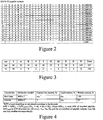
- Figure 2 depicts the peptides in V1 (SEQ ID NO:1 to SEQ ID NO:16).
- Figure 3 illustrates the amino acids in V1.
- Figure 4 provides characteristics of V1.
- Figure 5 depicts the peptides in V2 (SEQ ID NO:17 to SEQ ID NO:32).
- Figure 6 illustrates the amino acids in V2.
- Figure 7 provides characteristics of V2.
- Figure 8 depicts 16 peptides in V3 (SEQ ID NO:33 to SEQ ID NO:48).
- Figure 9 illustrates the amino acids in V3.
- Figure 10 provides characteristics of V3.
- Figure 11 depicts the in V4 (SEQ ID NO:49 to SEQ ID NO:64).
- Figure 12 illustrates amino acid in V4.
- Figure 13 provides characteristics of V4.
- Figure 14 depicts the peptides in V5 (SEQ ID NO:65 to SEQ ID NO:80).
- Figure 15 illustrates the amino acids in V5.
- Figure 16 provides characteristics of V5.
- Figure 17 depicts the peptides in V6 (SEQ ID NO:81 to SEQ ID NO:96).
- Figure 18 illustrates the amino acids in V6.
- Figure 19 provides characteristics of V6.
- Figure 20 depicts the peptides in V7(SEQ ID NO:97 to SEQ ID NO:112).
- Figure 21 illustrates the amino acids in V7.
- Figure 22 provides characteristics of V7.
- Figure 23 depicts the peptides in V8 (SEQ ID NO:113 - SEQ ID NO:128).
- Figure 24 illustrates the amino acids in V8.
- Figure 25 provides characteristics of V8.
- Figure 26 depicts the peptides in V9 (SEQ ID NO:129 to SEQ ID NO:144).
- Figure 27 illustrates the amino acids in V9.
- Figure 28 provides characteristics of V9.
- Figure 29 depicts the peptides in V10 (SEQ ID NO:145 to SEQ ID NO:160).
- Figure 30 illustrates the amino acids in V10.
- Figure 31 provides characteristics of V10.
- Figure 32 depicts the peptides in V11 (SEQ ID NO:161 to SEQ ID NO:168).
- Figure 33 illustrates the amino acids in V11.
- Figure 34 provides characteristics of V11.
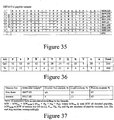
- Figure 35 depicts the peptides in V12 (SEQ ID NO:169 to SEQ ID NO:176).
- Figure 36 illustrates the amino acids in V12.
- Figure 37 provides characteristics of V12.
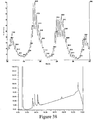
- Figure 38 depicts MALDI mass spec and analytical HPLC of V1.
- Figure 39 depicts MALDI mass spec and analytical HPLC of V2.
- Figure 40 depicts MALDI mass spec and analytical HPLC of V3.
- Figure 41 depicts MALDI mass spec and analytical HPLC of V4.
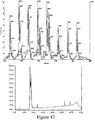
- Figure 42 depicts MALDI mass spec and analytical HPLC of V5.
- Figure 43 depicts the MALDI mass spec of V6.
- Figure 44 depicts the MALDI mass spec of V7.
- Figure 45 depicts the MALDI mass spec of V8.
- Figure 46 depicts the MALDI mass spec of V9.
- Figure 47 depicts the MALDI mass spec of V10.
- Figure 48 depicts the MALDI mass spec of V11.
- Figure 49 depicts the MALDI mass spec of V12.
- Figure 50 illustrates stimulation indices (SI) for vaccinated monkeys.
- Figure 51 illustrates a CTL response at 2 and 5 weeks post vaccination.
- Figure 52 illustrates the effect of the invention for multiple variants of HIV.
- Figure 53 shows mucosal immunity developed by vaccinated monkeys.
- Figure 54 shows induction of antibody binding response.
- Figure 55 shows (a) HPLC chromatograms and (b) mass spectra of an exemplary vaccine formulation of the present invention.
- Figure 56 illustrates induction of reactive cellular immunity of the vaccine of the present invention.
- Figure 57 illustrates the expansion of cytotoxic CD4 + T cells in vaccinated animals.
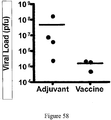
- Figure 58 illustrates the efficacy of a vaccine of the present invention in HLA transgenic mice.
- the invention relates to a vaccine composition, and more specifically to an anti-HIV vaccine composition comprising mixtures of isolated peptides, in combination with a pharmaceutically acceptable carrier; wherein the composition consists of SEQ ID NO:1 to SEQ ID NO:176 wherein isolated peptides SEQ ID NO:81 to SEQ ID NO:160 are lipidated proteins.
- the peptides may or may not have a conservative substitution therein.
- the HIV vaccine composition prepared according to the invention elicits a broadly reactive cellular immunity, targeting only hypervariable epitopes of HIV-1.
- the isolated peptides may be lipidated peptides SEQ ID NO:81 to SEQ ID NO:176, or peptide analogues thereof. Also described are mixtures of isolated peptides which may comprise at least two of the following: (a) eight or more of SEQ ID NO:1 to SEQ ID NO:16, or peptide analogues thereof; (b) eight or more of SEQ ID NO:17 to SEQ ID NO:32, or peptide analogues thereof; (c) eight or more of SEQ ID NO:33 to SEQ ID NO:48, or peptide analogues thereof; (d) eight or more of SEQ ID NO:49 to SEQ ID NO:64, or peptide analogues thereof; or (e) eight or more of SEQ ID NO:65 to SEQ ID NO:80, or peptide analogues thereof.
- At least one of said mixtures of isolated peptides can represent a hypervariable region of HIV-1 Gag protein.
- the peptides within said mixture of isolated peptides may represent a hypervariable region of HIV-1 Gag protein which comprises SEQ ID NO:161 to SEQ ID NO:176, or peptide analogues thereof.
- an anti-HIV vaccine composition comprising the following isolated peptides: (a) SEQ ID NO:161 to SEQ ID NO:168, or peptide analogues thereof; (b) SEQ ID NO:169 to SEQ ID NO:176, or peptide analogues thereof, or (c) SEQ ID NO:1 to SEQ ID NO: 176.
- the composition may comprise at least one of SEQ ID NO:1 to SEQ ID NO: 176, or peptide analogues thereof, in combination with a pharmaceutically acceptable carrier.
- composition can be formulated using oligonucleotides encoding the isolated peptides, or peptide analogues thereof.
- the oligonucleotides can be delivered in viral or non-viral vectors.
- a lipidated oligopeptide spacer may be attached thereto.
- the spacer can comprise 3 (a tripeptide) or fewer amino acids.
- the spacer comprises Lys-Ser-Ser wherein the Lys residue is lipidated.
- the spacer can be attached to the N-terminal residue of the isolated peptide.
- the lipidated peptides are lipidated at the N-terminal or C-terminal amino acid residue.
- hypervariable region refers to a portion of the HIV protein which shows a high degree of amino acid variation from molecule to molecule. This is likely different from a hypervariable nucleotide region, which may or may not result in amino acid variation.
- a hypervariable region can be determined in situations where a particular amino acid is present at a given position in less than or equal to a pre-determined percentage of sequences. For example, if the pre-determined percentage is 90%, then this means that a particular amino acid is present at a given position in less than or equal to 90% of the sequences analyzed in a typical sequence database.
- the isolated peptide mixtures represent variants of a hypervariable region of the HIV proteins.
- Each of the hypervariable regions comprises a plurality of variable amino acid residues represented by two or more amino acids.
- the plurality of peptides as referred to herein may comprise three or more residues.
- a "conservative substitution” means a substitution of an individual residue with another residue, as would be readily understood by the person of ordinary skill in the art.
- Exemplary substitutions include, but are not limited to, Arg-Lys, Glu-Asp, Gln-Asn, Thr-Ser, Phe-Tyr, or Leu-ile. In this way, the replacement of an amino acid with a conservative substitution would be considered equivalent.
- substitution matrices as PAM250 and BLOSUM62, which show, for example that replacement of lysine by arginine, or valine with lsoleucine are considered conservative substitutions.
- a "peptide analogue” refers to a peptide of the present invention which comprises a conservative substitution as described above, a deletion of an amino acid, or an insertion of an amino acid, such that the conservative substitution, deletion or insertion has no material effect on the function of the peptide.
- an anti-HIV vaccine composition comprising mixtures of isolated peptides.
- the mixtures may be formulated on the basis of at least two HIV proteins, each of which has a hypervariable region.
- the composition of the invention consists of comprises SEQ ID NO:1 to SEQ ID NO:176 wherein isolated peptides SEQ ID NO:81 to SEQ ID NO 160 are lipidated proteins . It would be understood that peptides of any length could be used in the composition of the present invention. Ideally, peptides having 15 or more residues are used, but fragments of any length, particularly shorter than those presented herein, may also be used. Further, any number of these peptides could be included in the vaccine composition of the present invention.
- the peptide mixtures are formulated in combination with a pharmaceutically acceptable carrier.
- At least one of the HIV proteins may be an envelope protein.
- one of the HIV proteins is HIV-1 gp120, in which case the isolated peptide mixtures may be selected from the group consisting of SEQ ID NO:1 to SEQ ID NO:160, or peptide analogues thereof.
- a portion of said isolated peptides may be lipidated peptides, for example, those selected from the group consisting of SEQ ID NO:81 to SEQ ID NO:160, or peptide analogues thereof.
- an anti-HIV vaccine composition may comprise at least two of the following mixtures of isolated peptides:
- At least one of the mixtures of isolated peptides described herein may represent a hypervariable region of HIV-1 Gag protein, in which case, the mixture of isolated peptides representing a hypervariable region of HIV-1 Gag protein may be selected from the group consisting of SEQ ID NO:161 to SEQ ID NO:176, or peptide analogues thereof, which may or may not be lipidated.
- the anti-HIV vaccine may include the following isolated peptides: SEQ ID NO:161 to SEQ ID NO:168, or peptide analogues thereof; and SEQ ID NO:169 to SEQ ID NO:176, or peptide analogues thereof.
- An exemplary anti-HIV composition may comprise SEQ ID NO:1 to SEQ ID NO: 176 or peptide analogues thereof, in combination with a pharmaceutically acceptable carrier.
- the inventive composition which is directed to multi-clade HIV immunity, and which targets only hypervariable HIV epitopes, elicits a broadly reactive CTL and T-helper cell response.
- SEQ ID NO:1 to SEQ ID NO:176 are peptides which may be used in combination according to the invention wherein SEQ ID NO 80 to SEQ ID NO:160 are lipidated. Although all peptides of SEQ ID NO:1 to SEQ ID NO:176 may be used in combination as the vaccine formulation of the invention, sub-groups of these peptides could be used together.
- the vaccine may be prepared according to the methodology described by Torres in U.S. Patent Application No. 10/072,084 (publication number 2002/0183484 ), or by any alternative methodology acceptable to one skilled in the art.
- oligonucleotides encoding these peptides may be inserted in viral or non-viral vectors for delivery.
- Peptides may be synthesized individually in and mixed together to accomplish an acceptable composition. Any variety of different modes by which these peptide antigens may be prepared is acceptable for use with the invention.
- selection of more than one viral gene product may have the advantage that different types of responses will be induced by the vaccine.
- a cytoplasmic protein and an envelope protein may be selected.
- two or more viral gene products are selected from which a hypervariable epitope is represented, a broad based reactivity can be accomplished.
- one or more hypervariable epitope regions can be targeted, for example, two hypervariable epitope regions from each protein, to arrive at the peptide mixture. From each hypervariable epitope region, the peptide length is selected, and within the peptide, a plurality of variable residues are selected.
- variable residue having at least two optional amino acids found naturally occurring in sequenced versions of the virus.
- a high degree of variability is represented.
- three or four variable residues may be represented in the mixture of peptides, each having two or more different amino acids represented in the sequenced database records for HIV variants. If two variable residues are indicated in a hypervariable region, 2 2 different peptides would be used in the mixture representing that particular region. If three or four variable residues are indicated in a hypervariable region, the number of peptides in the resulting mixture would be 2 3 and 2 4 , respectively, and so on.
- the synthesis of the peptide mixtures occurs, according to any acceptable method of peptide synthesis.
- the peptides can be lipidated by any conventional or acceptable method known in the art to introduce lipids to the vaccine. This can be achieved by attaching one or more lipid moities to the peptides of the vaccine composition. There are several ways for introducing lipids.
- the lipids can be attached via an oligopeptide spacer at either the N- or C-terminus of the vaccine peptides between the peptide and the lipid moiety.
- the oligopeptide can comprise any number of amino acid residues and the lipid moiety can be attached to any of the amino acid residues in the oligopeptide.
- the lipid moiety is bulky and is added to the N-terminus end of the oligopeptide such that it is separated from the amino acids of the vaccine peptide to prevent any possible interference with functional portions, for example, of the amino acids in the vaccine peptides.
- a suitable spacer is selected for the particular application used. Usually, the spacer comprises no more than 3 amino acids which are relatively simple in structure (such as, but not limited to, serine, glycine or asparagine, for example). Serine is suitable as it increases the solubility of lipidated peptides in water. Also, it is advantageous to include lysine in the oligopeptide, which permits the addition of two lipid moieties.
- the vaccine peptides can be lipidated directly without using a spacer at all. In this way, either the N- or C-terminal amino acid residue of the vaccine peptide is itself lipidated.
- the vaccine peptide can undergo total lipidation, i.e., one or more residues of the peptide can be lipidated.
- One advantage of total lipidation is that the vaccine peptides can be purified first, then lipidated. This overcomes some of the problems associated with the purification of lipidated peptides.
- Peptides need not be lipidated, but it may be advantageous for certain peptides to be lipidated with any acceptable lipid, such as palmitic acid, so as to allow a peptide to pass through lipid bilayer. Peptides incorporating lipidation may benefit from placement of a KSS motif at their N-termini.
- the peptides incorporating lipidation may contain 1 or more lipid moieties, for example, two lipid moieties per peptide. Lipidated peptides may move more easily through cytoplasm and lipid bilayer, and may result in an enhanced CTL response.
- the proteins selected may contain hypervariable regions with selected variable amino acids that are characteristic of the variability found within the clade of interest. This allows the vaccine to take advantage of regional variability while targeting regional distinctiveness.
- the variable residues selected for the peptides in the mixtures may be representative of a broader base of variability from a variety of different regions. For example, a vaccine formulated to provide in India would target variable residues particular to clade C sequences. A vaccine formulated to provide in South East Asia could target variable residues characteristic of clade E sequences.
- Example 1 Anti HIV-1 Peptide Composition.
- the vaccine composition is based on 12 peptide-based components in combination with an adjuvant and a buffer.
- the exact composition of the 12 components is detailed below.
- Two different proteins were used in formulation of the composition, specifically: gp120, an envelope protein, and Gag protein.
- Peptides mixtures used for this embodiment of the invention were determined by analysing HIV clades from around the world, (clades A, B, C, D and E), and arriving at hypervariable regions common to different clades.
- Clade B which is the predominant clade found in North America, is most highly characterized, and is well-represented in the selected hypervariable regions of this example however, equal weight was given to data from all clades when selecting hypervariable regions.
- the 12 peptide-based components are as follows: 5 non-lipidated formulations, each comprised of 16 unique species (V1-V5); 5 formulations that are the same as the non-lipidated formulations, but each having a lipid tail added (V6-V10); and 2 additional lipidated formulations, each with 8 unique variants (V11-V12).
- Formulations V1-V10 are derived from 5 hypervariable regions in the gp120 envelope protein, while formulations V11 and V12 are from variable regions in a Gag protein. According to this example, the vaccine is the combination of all these components.
- the peptide compositions V1 to V12 are prepared using any possible peptide synthesis, and may be prepared using the method described in co-owned U.S. Patent Application No. 10/072,084 (publication number 2002/0183484 ). The composition of the 12 components V1 to V12 is detailed below.
- Figure 1 provides a diagrammatic representation of a method by which the vaccine can be assembled, once the crude peptide-based components have been prepared. Briefly, HPLC purified fractions of twelve components or 'variosites" V1 to V12 are subjected individually to an ion exchange procedure to replace a TFA counter ion with an acetate ion. No loss of the peptide products is seen at this step. Identification by MS and analytical HPLC may be conducted to ensure identification of V1 to V12. Components V1 to V5 are subjected to QC analysis and concentrated. These non-lipidated peptides are pooled into a non-lipidated mixture. Components V6 to V12 are pooled to form a lipidated mixture.
- a lipidated oligopeptide was used for lipidating the isolated vaccine polypeptides in this example.
- the peptides were lipidated at their N-termini.
- a lysine-serine-serine (Lys-Ser-Ser) tripeptide was covalently attached to the N-terminus of the peptides of SEQ ID NOs: 1 to 80, where the Lys residue was lipidated.
- the resulting lipidated peptides are SEQ ID NOs: 81 to 160.
- lipidation is performed as follows. Upon completion of the synthesis of a mixed peptide composition (V6 - V12) on the synthesiser, the resin is removed from the column and placed into a vial. Dissolve 10 eq. of the Palmitic Acid, 10 eq. of TBTU and 10 eq. HOBT (all relative to the resin) in DMF (10 ml/0.1 mmol resin). Add the solution to the peptidyl resin in the vial. Add 20 eq. (relative to the resin) of the DIPEA. Adjust pH to 8-9 by adding DIPEA drop-wise. Seal the vial with a screw cap and shake the mixture overnight (at least 12 hours).
- the sterile peptide vaccine (100 ⁇ g), containing an equal amount (8.333 ⁇ g) of each of V1 to V12, is combined with Montanide TM adjuvant (500 ⁇ L) as Montanide ISA 51 (Seppic) emulsion, which has been sterile sealed and with phosphate buffered saline (PBS) pH 7.4, in an amount of 500 ⁇ L of a sterile injectable quality.
- Montanide TM adjuvant 500 ⁇ L
- Montanide ISA 51 (Seppic) emulsion which has been sterile sealed and with phosphate buffered saline (PBS) pH 7.4, in an amount of 500 ⁇ L of a sterile injectable quality.
- PBS phosphate buffered saline
- Figure 2 depicts the 16 peptides found in V1, along with the molecular weights of each peptide.
- " *" denotes a variable site at which more than one amino acid is used in the peptide formulation.
- These 16 peptides are listed as SEQ ID NO:1 to SEQ ID NO:16, respectively.
- sixteen peptides are found in this peptide mixture. roughly in equimolar quantities.
- Each of the 16 peptides contains 27 amino acids.
- variable amino acids may be present, according to the sequences found in databases representing variants of HIV. All of the combinations of peptides are represented.
- 2 4 (16) variants of this hypervariable residue are found in the mixture V1.
- Figure 3 illustrates the amount of each amino acid present in V1.
- Figure 4 provides characterizing details of V1, such as molecular weight, protein, counter ion and lipid content.
- Figure 5 depicts the 16 peptides found in V2, along with the molecular weights of each peptide. These 16 peptides are listed as SEQ ID NO:17 to SEQ ID NO:32, respectively.
- Figure 6 illustrates the amount of each amino acid present in V2.
- Figure 7 provides characterizing details of V2.
- Figure 8 depicts the 16 peptides found in V3, along with the molecular weights of each peptide. These 16 peptides are listed as SEQ ID NO:33 to SEQ ID NO:48, respectively.
- Figure 9 illustrates the amount of each amino acid present in V3.
- Figure 10 provides characterizing details of V3.
- Figure 11 depicts the 16 peptides found in V4, along with the molecular weights of each peptide. These 16 peptides are listed as SEQ ID NO:49 to SEQ ID NO:64, respectively.
- Figure 12 illustrates the amount of each amino acid present in V4.
- Figure 13 provides characterizing details of V4.
- Figure 14 depicts the 16 peptides found in V5, along with the molecular weights of each peptide. These 16 peptides are listed as SEQ ID NO:65 to SEQ ID NO:80, respectively.
- Figure 15 illustrates the amount of each amino acid present in V5.
- Figure 16 provides characterizing details of V5.
- Figure 17 depicts the 16 peptides found in V6, along with the molecular weights of each peptide. These 16 peptides are listed as SEQ ID NO:81 to SEQ ID NO:96, respectively. These peptides are lipidated.
- Figure 18 illustrates the amount of each amino acid present in V6.
- Figure 19 provides characterizing details of V6.
- Figure 20 depicts the 16 peptides found in V7, along with the molecular weights of each peptide. These 16 peptides are listed as SEQ ID NO:97 to SEQ ID NO:112, respectively. These peptides are lipidated.
- Figure 21 illustrates the amount of each amino acid present in V7.
- Figure 22 provides characterizing details of V7.
- Figure 23 depicts the 16 peptides found in V8, along with the molecular weights of each peptide. These 16 peptides are listed as SEQ ID NO:113 to SEQ ID NO:128, respectively. These peptides are lipidated.
- Figure 24 illustrates the amount of each amino acid present in V8.
- Figure 25 provides characterizing details of V8.
- Figure 26 depicts the 16 peptides found in V9, along with the molecular weights of each peptide. These 16 peptides are listed as SEQ ID NO:129 to SEQ ID NO:144, respectively. These peptides are lipidated.
- Figure 27 illustrates the amount of each amino acid present in V9.
- Figure 28 provides characterizing details of V9.
- Figure 29 depicts the 16 peptides found in V10, along with the molecular weights of each peptide. These 16 peptides are listed as SEQ ID NO:145 to SEQ ID NO:160, respectively. These peptides are lipidated.
- Figure 30 illustrates the amount of each amino acid present in V10.
- Figure 31 provides characterizing details of V10.
- Figure 32 depicts the 8 peptides found in V11, along with the molecular weights of each peptide. These 8 peptides which may or may not be lipidated are listed as SEQ ID NO:161 to SEQ ID NO:168, respectively.
- Figure 33 illustrates the amount of each amino acid present in V11.
- Figure 34 provides characterizing details of V11.
- Figure 35 depicts the 8 peptides found in V12, along with the molecular weights of each peptide. These 8 peptides which may or may not be lipidated are listed as SEQ ID NO:169 to SEQ ID NO:176, respectively.
- Figure 36 illustrates the amount of each amino acid present in V12.
- Figure 37 provides characterizing details of V12.
- Figure 38 depicts the MALDI mass spectrum and an analytical HPLC spectrum of the crude peptide mixture V1.
- Figure 39 depicts the MALDI mass spectrum and an analytical HPLC spectrum of the crude peptide mixture V2.
- Figure 40 depicts the MALDI mass spectrum and an analytical HPLC spectrum of the crude peptide mixture V3.
- Figure 41 depicts the MALDI mass spectrum and an analytical HPLC spectrum of the crude peptide mixture V4.
- Figure 42 depicts the MALDI mass spectrum and an analytical HPLC spectrum of the crude peptide mixture V5.
- Figure 43 depicts the MALDI mass spectrum of crude peptide mixture V6.
- Figure 44 depicts the MALDI mass spectrum of crude peptide mixture V7.
- Figure 45 depicts the MALDI mass spectrum of crude peptide mixture V8.
- Figure 46 depicts the MALDI mass spectrum of crude peptide mixture V9.
- Figure 47 depicts the MALDI mass spectrum of crude peptide mixture V10.
- Figure 48 depicts the MALDI mass spectrum of crude peptide mixture V11.
- Figure 49 depicts the MALDI mass spectrum of crude peptide mixture V12.
- the final vaccine composition comprises 80 different peptides (SEQ ID NOs: 1 to 80) that represent frequently occurring and predicted sequences present in five hypervariable regions of the HIV-1 gp120, as well lipidated versions of these 80 peptides (SEQ ID NOs: 81 to 160), and 16 additional peptides (SEQ ID NOs: 161 to 176) which may or may not be lipidated and based on two variable regions in the HIV-1 Gag protein (176 peptides in total), in combination with an adjuvant and a buffer.
- a group of 6 cynomolgus macaques were immunized simultaneously with 0.1 mg of the final vaccine composition. This procedure was used instead of employ a prime-boost immunization schedule.
- Figure 50 illustrates the Stimulation Indices (SI) for the six monkeys.
- SI Stimulation Indices
- Six different monkeys were assessed for stimulation indices of peripheral blood mononuclear cells (PBMC) after exposure to a variety of antigens.
- the legend illustrates "vaccine” as one of the antigens, in this case meaning non-lipidated peptide compositions V1 to V5 (representing hypervariable regions of envelop proteins).
- the remaining antigens shown are recombinant proteins representing envelope proteins from which the vaccine of this example is derived.
- the clade from which the protein is derived is listed parenthetically beside the named protein in the legend.
- the final antigen of the legend p55 (B) is derived from Gag, while all others shown are from Gp 120.
- stimulation indices are a measurement of proliferation conducted with 3 H-thymidine added at day 5 post-isolation. Harvesting was done at day 6. These data indicate that the vaccine elicits response in the animals
- Figure 51 shows a CTL response for one of the monkeys at 2 weeks and 5 weeks after delivery of the 4 vaccinations.
- SPC spot forming cells.
- PBMCs are infected with different vectors expressing viral proteins of interest.
- the antigens used are shown with the clade from which each is derived listed parenthetically.
- Data illustrate response at both 2 weeks and 5 weeks post vaccination. Although the response is more pronounced at 2 weeks, the 5 week response shows a lasting effect to be detectable, although decayed from the high 2 week response.
- the vaccine is broadly reactive, as shown by the high response to the panel multiple variants used.
- Figure 52 illustrates the average neutralizing antibody titres to multiple variants of HIV, clade B strains.
- the first bar shows a baseline titre, while the second bar illustrates the greatly increased response illustrated after the third vaccination.
- Neutralization was conducted in TZM-b1 cells.
- Virus stocks used were: HIV-1 MN (H9-grown, 11-01-02); SF162 (PBMC-grown, 03-13-03); SS1196.01 (293T-transfection, 03-04-04).
- Figure 53 shows the mucosal immunity developed by monkeys, characterized by anti-H1V-1 IgA, after immunization with the vaccine outlined above.
- Salivary samples were collected from anesthetized adult cynomolgous monkeys two weeks after the third immunization with the vaccine. Saliva was collected by using sterile 3-ml plastic transfer pipettes. Immediately, EDTA was added to a final concentration of 5 mM to prevent formation of heterotypic calcium ion-dependent immunoglobulin-mucin complexes and to inhibit the IgA1 protease activity in the saliva. The saliva samples were held at -80°C after filtration through a 0.22 micron Millipore TM filter until assay.
- ELISA to detect IgA antibodies in saliva was conducted as follows. Immulo TM -2 plates (Dynatech, Chantilly, Va.) were coated overnight with recombinant HIV-1 gp120 at a concentration of 5 ⁇ g/ml in 0.05 M carbonate buffer (pH 9.6). Unbound protein was washed from the wells that were then blocked with phosphate-buffered saline (PBS; pH 8.0) containing 0.1 % BSA. After the wells were washed, dilutions of saliva samples from each monkey were added in duplicate and incubated overnight with shaking.
- PBS phosphate-buffered saline
- a biotinylated affinity-purified polyclonal goat anti-monkey ⁇ chain antibody at 2.0 ⁇ g/ml was used to detect bound SIgA antibodies.
- streptavidin conjugated with horseradish peroxidase SA-HRP; BioSource International, Camarillo, Calif.
- SA-HRP horseradish peroxidase
- the wells were washed again, and o-phenylenediamine (1 mg/ml) in citrate-phosphate buffer (pH 4.5) containing 0.012% hydrogen peroxide was added to each well.
- the optical density at 450 nm was measured with an automated microplate reader (Tecan U.S., Inc., Research Triangle Park, N.C.). As negative control, non-vaccinated monkey saliva was tested as describe previously.
- Figure 54 summarizes the HIV specific antibody binding response of the vaccinated monkeys to two divergent strains of HIV.
- SF162 is a clade B virus (common in North America), and is known among experts to be a difficult strain to elicit antibodies against.
- CM is a clade E virus, which is common to South-East Asia.
- ELISA enzyme linked immunosorbent assay
- This graph shows the relative concentration of HIV-specific binding antibodies (as measured by optical density) over several dilution points. This graph gives a positive indication that binding antibodies specific to HIV are present after just three immunizations.
- HIV-1 amino acid sequence data was obtained from the Los Alamos Database and aligned. Twenty-one subtype A, 128 subtype B, 51 subtype C, 17 subtype D, and 33 subtype E sequences were examined in one embodiment of the vaccine formulation of the present invention.
- Vaccine formulations were based on 5 variable epitopes in the HIV-1 envelope protein and two variable epitopes in the Gag protein (amino acids 131-154, 159-185, 307-324, 388-410, and 456-471 in Env, and amino acids 369-384 and 470-498 in Gag, based on the B.US.SF2 gp120 sequence).
- the lipidated peptides contain two palmitic acid moieties attached to each peptide variant via a Lys containing tripeptide spacer. Lipidated forms of the peptides were synthesized on the solid phase from non-lipidated precursors by the simple elongation of the peptide chains with the tripeptide spacer, Lys-Ser-Ser, followed by one-step double lipidation of Lys at its two free amino groups.
- PBMCs Peripheral blood mononuclear cells
- PBMCs Peripheral blood mononuclear cells
- PBMCs Peripheral blood mononuclear cells (2x10 5 /well) were tested in triplicate against the following recombinant proteins: HIV-1 IIIB gp160 and HIV-1 MN gp120 (Advanced Biotechnologies, Inc., Columbia, MD) and HIV-1 CM gp120 (Protein Sciences Corporation, Meriden, CT).
- the following reagents were obtained through the NIH Research and Reference Reagent Program, Division of AIDS, NIAID, NIH: HIV-1 96ZM651 gp120, HIV-1 93TH975 gp120, and HIV-1 SF162 gp120.
- Tritiated thymidine (1 ⁇ Ci/well) was added to all wells at the end of day 5.
- Cells were harvested on a TOMTEC cell harvester the following day and counts were obtained on a WALLAC 1450 Microbeta Plus liquid scintillation counter. Stimulation indices are defined as the mean cpm value of an experimental condition divided by the mean cpm value obtained in wells incubated without antigen.
- PBMCs were infected for 90 minutes with 2 pfu of recombinant vaccinia vectors expressing Env or Gag/Pol/Env proteins from six subtypes of HIV-1 (A- F).
- 2.5 x 10 5 cells were then added to 96 well plates that were coated with anti-monkey IFN- ⁇ antibody (Mabtech, Mariemont, OH). After 40 hrs incubation at 37C, cells were removed, washed with PBS+0.05% Tween 20, and incubated with 1 ⁇ g/ml of biotinylated anti-monkey IFN- ⁇ antibody (Mabtech) for 2 hrs at room temperature.
- IFN- ⁇ + and perforin + T cells were washed and suspended in RPMI-10, then incubated for 16-18 hours in the presence of monensin (BD GolgiStop, BD Biosciences) and surface stained with anti-human CD3-PerCP-Cy 5.5 and CD4-R-PE or CD8-R-PE. Fixation and red blood cell lysis was performed using FACSLYSE bluffer according to the manufacturer's instructions (BD Biosciences). PBMC were then permeabilized with Cytoperm (BD Biosciences) and incubated with anti-human perforin-FITC. All fluorochrome-labeled monoclonals were purchased from BD Biosciences. Paraformaldehyde-fixed cells were analyzed on a FACSCAN flow cytometer. Data analysis was performed using WinMIDI software.
- Plasma collected in EDTA-coated tubes was shipped to Virologic, Inc. for determination of neutralizing activity. Positive neutralizing antibody responses were determined relative to neutralizing activity against a non-HIV-1 virus and to activity present in pre-immunization plasma for each animal.
- Virus-specific IgA-titers were determined by ELISA.
- Recombinant proteins (MN, IIIB, CM) or non-lipidated vaccine formulations V1-V5 were adsorbed onto EIA/RIA TM Stripwell plates (Corning Incorporated, USA) at a concentration of 0.3 ⁇ g/well. The plates were washed six times with 0.5% Tween-20/PBS, and blocked with 1% BSA (FractionV)/PBS.
- mice from Jackson Laboratories where immunized 4 times with 12 ⁇ g of vaccine (1/50 th the dose given to the macaques) or adjuvant alone (PBS and saline) injected subcutaneously at the base of the tail in a total volume of 100 ⁇ l (1:1 1 ratio of ISA-51 adjuvant:PBS).
- mice were challenged intraperitoneally with 2x10 7 pfu of a recombinant vaccinia virus containing expressing Gag/Pol/Env proteins from a subtype E variant of HIV-1. Mice were placed in a biohazard level II facility for 10 days and monitored for sickness and abnormalities over the period of experiment.
- the media was then removed from the cells were washed once and covered with 2 ml of complete IMDM containing 10% FCS and 0.5% agarose.
- the plates were left at room temperature for half an hour to let the media solidify and transferred to a 37°C incubator for 7 days. Plates were fixed over night with 4% paraformaldehyde at room temperature, stained with 0.05% neutral red in PBS for at least 1 hour, rinsed with tap water and left inverted at room temperature to dry prior to counting.
- Figure 56C shows the frequency of IFN- ⁇ -secreting CD8 + T cells measured by flow cytometry responding to a panel of recombinant vaccinia virus vectors expressing Env (indicated with bold underline) or Gag/Pol/Env proteins from multiple HIV-1 subtypes (indicated parenthetically). Responses to Env-expressing vectors are indicated with a bold line.
- the average frequency of IFN- ⁇ -secreting CD8 + T cells from 3 unimmunized animals to each vector is indicated with an asterisk.
- Animals 079 and 011 responded to every variant tested while animal 012 recognized variants from all of the subtypes of virus tested ( Figure 56A ).
- Animals 059, 013, and 002 responded to a subtype B variant and one additional non-clade B variant.
- the vaccine of the present invention was designed to elicit a broadly reactive repertoire of T helper cells.
- Proliferative responses of PBMCs obtained from vaccinated and unimmunized control animals after the third, fourth, and fifth immunizations of the vaccine were evaluated.
- Proliferative responses after three immunizations in 4/6 animals to multiple subtypes were detected, which increased in strength and breadth over time.
- 2 animals (013 and 011) responded to variants from all three subtypes tested while another animal (002) responded to variants from subtypes B and E ( Figure 56B ).
- Two additional animals (012 and 059) responded to multiple subtype B variants.
- Animal 079 failed to respond to any of the envelope proteins tested at this time point, but did respond to subtypes B and E when assessed at an earlier time point (6 weeks after the third immunization, data not shown).
- PBMCs were similarly infected with recombinant vaccinia vectors expressing Env or Gag/Pol/Env proteins from subtypes A, B, C, D, E, and F.
- IFN- ⁇ -secreting CD8 + T cells directed against subtypes B and E were present in animals 013 and 079.
- IFN- ⁇ -secreting CD8 + T cells to any viral variants in animal 011 were not detected, despite the clear ability to detect virus-specific cellular immunity using the other assays.
- CD4 + T cells with cytotoxic activity are expanded during chronic viral infections ( Appay, V., et al. J Immunol (2002), 168(11), 5954-5958 ), and can be induced with vaccination ( Cooper, D., et al. Vaccine 2004, 23(2), 236-246 ). Similar to the conditions used for the Elispot assays, PBMCs were briefly infected with recombinant vaccinia vectors to determine the ability to expand virus-specific T helper cells. CD4 + perforin + T cells were quantitated by flow cytometric analysis 16 hours after infection of PBMCs with recombinant vaccinia virus vectors expressing the indicated HIV-1 proteins.
- the clade of virus to which each variant belongs is indicated parenthetically.
- the frequency of perforin + cells among CD4 + T cells is indicated in each panel. After 24 hours, cultures were assessed for the presence of CD4 + perforin + T cells ( Figure 57 ). When assessed 2 weeks after the fifth immunization, high frequencies of HIV-specific CD4 + perforin + T cells were detected in 4 of the 6 vaccinated animals. These cells were not detected at the later 6 week time point, consistent with the notion that these cells are a terminally differentiated, effector population of T helper cells that are lost over time (Appay, supra).
- All vaccinated animals developed antibodies capable of binding to the 5 individual vaccine components that represent the 5 hypervariable regions of the gp120 envelope protein, in addition to a panel of clade B and E HIV-1 envelope proteins (data not shown).
- sera from the vaccinated animals were assessed for their ability to neutralize a panel of primary isolates of HIV-1.
- Neutralizing antibody activity was evaluated using sera obtained 6 weeks after the 5 th vaccination against a total of 24 primary isolates of HIV-1 from 5 clades (A-E), with 13/24 of the isolates T cell tropic and the remainder tropic for macrophages or both macrophages and T cells.
- Mk 013 had antibodies that neutralized 4/13 T cell tropic HIV-1 isolates from both clades D and E; the sera failed to neutralize any of the 11 macrophage or dually tropic isolates (Table 1). More specifically, IC 50 titers of Mk 013 sera against 3 T cell tropic clade D variants were 1:19, 1:53, and 1:11, with IC 50 titers of reference HIV-1 + plasma against the same 3 variants of 1:87, 1:67, and 1:35, respectively.
- HIV-specific IgA titers in saliva were determined using envelope proteins from two clade B viruses (IIIB and MN) and a clade E variant (CM).
- Monkeys 012, 059, and 013 had titers ranging from 1:50 -1:300 against at least one envelope protein; monkeys 012 and 059 had titers against both clade B and clade E envelope proteins.
- the exemplified vaccine of the present invention was designed to elicit CTL responses to multiple, antigenically variable regions in both the Env and Gag proteins of HIV-1.
- SHIV viruses that could be used to challenge the presently vaccinated animals express SIV-derived Gag protein, thereby precluding the potential efficacy of vaccine-induced cellular immunity against the epitopes in this protein.
- the utility of SHIV challenge in the species of macaques used in this study is of questionable value given the relatively poor viral replication relative to that in rhesus macaques ( Reimann, K.A., et al., J Virol (2005), 79(14), 8878-8885 ).
- HLA A*0201 transgenic mice were Immunized with an exemplary vaccine of the present invention and then challenged them with recombinant vaccinia virus expressing Gag/Pol/Env proteins from a clade E strain of HIV-1.
- This challenge system allowed the assessment of the impact of both humoral and cellular responses against both the HIV-1 Gag and Env proteins.
- HLA A*0201 transgenic mice were immunized with the vaccine and challenged 1 month after the final vaccination with a recombinant vaccinia vector expressing HIV-1 viral proteins from a clade E strain of virus. Viral loads were significantly lower 10 days after challenge in vaccinated mice (p ⁇ 0.05).
Landscapes
- Health & Medical Sciences (AREA)
- Life Sciences & Earth Sciences (AREA)
- Virology (AREA)
- Veterinary Medicine (AREA)
- Chemical & Material Sciences (AREA)
- Medicinal Chemistry (AREA)
- General Health & Medical Sciences (AREA)
- Public Health (AREA)
- Pharmacology & Pharmacy (AREA)
- Animal Behavior & Ethology (AREA)
- Immunology (AREA)
- Proteomics, Peptides & Aminoacids (AREA)
- Epidemiology (AREA)
- Bioinformatics & Cheminformatics (AREA)
- Engineering & Computer Science (AREA)
- Gastroenterology & Hepatology (AREA)
- Communicable Diseases (AREA)
- Organic Chemistry (AREA)
- Nuclear Medicine, Radiotherapy & Molecular Imaging (AREA)
- General Chemical & Material Sciences (AREA)
- Chemical Kinetics & Catalysis (AREA)
- Oncology (AREA)
- Molecular Biology (AREA)
- Tropical Medicine & Parasitology (AREA)
- AIDS & HIV (AREA)
- Medicines Containing Antibodies Or Antigens For Use As Internal Diagnostic Agents (AREA)
- Peptides Or Proteins (AREA)
Claims (11)
- Une composition de vaccin anti-VIH comprenant un mélange de peptides isolés, en combinaison avec un support acceptable d'un point de vue pharmaceutique ; dans laquelle le mélange de peptides isolés consiste en SEQ ID NO : 1 à SEQ ID NO : 176, et dans laquelle les peptides isolés SEQ ID NO : 81 à SEQ ID NO : 160 sont des protéines lipidées.
- La composition de vaccin anti-VIH selon la revendication 1, la composition étant formulée à l'aide d'oligonucléotides codant pour les peptides isolés.
- La composition de vaccin anti-VIH selon la revendication 2, dans laquelle les oligonucléotides sont délivrés dans des vecteurs viraux ou non viraux.
- La composition de vaccin anti-VIH selon la revendication 1, dans laquelle les peptides lipidés comprennent, attaché sur ceux-ci, un espaceur oligopeptide lipidé.
- La composition de vaccin anti-VIH selon la revendication 4, dans laquelle l'espaceur comprend 3 aminoacides ou moins.
- La composition de vaccin anti-VIH selon la revendication 4, dans laquelle l'espaceur est un tripeptide.
- La composition de vaccin anti-VIH selon la revendication 4, dans laquelle l'espaceur comprend Lys-Ser-Ser.
- La composition de vaccin anti-VIH selon la revendication 7, dans laquelle le résidu Lys est lipidé.
- La composition de vaccin anti-VIH selon une quelconque des revendications 4 à 8, dans laquelle l'espaceur est attaché au résidu N-terminal du peptide isolé.
- La composition de vaccin anti-VIH selon la revendication 1, dans laquelle les peptides lipidés sont lipidés au niveau du résidu aminoacide N-terminal ou C-terminal.
- La composition de vaccin anti-VIH selon la revendication 1 destinée à être utilisée dans le traitement du VIH grâce à la fourniture d'une immunité protectrice contre le VIH-1 pol/gag/env.
Applications Claiming Priority (2)
| Application Number | Priority Date | Filing Date | Title |
|---|---|---|---|
| US65690805P | 2005-03-01 | 2005-03-01 | |
| PCT/CA2006/000295 WO2006092046A1 (fr) | 2005-03-01 | 2006-02-28 | Composition de vaccin anti-vih |
Publications (3)
| Publication Number | Publication Date |
|---|---|
| EP1861121A1 EP1861121A1 (fr) | 2007-12-05 |
| EP1861121A4 EP1861121A4 (fr) | 2009-01-21 |
| EP1861121B1 true EP1861121B1 (fr) | 2012-04-11 |
Family
ID=36585937
Family Applications (1)
| Application Number | Title | Priority Date | Filing Date |
|---|---|---|---|
| EP06705249A Expired - Lifetime EP1861121B1 (fr) | 2005-03-01 | 2006-02-28 | Composition de vaccin anti-vih |
Country Status (5)
| Country | Link |
|---|---|
| US (1) | US8029797B2 (fr) |
| EP (1) | EP1861121B1 (fr) |
| AT (1) | ATE552847T1 (fr) |
| CA (1) | CA2540279C (fr) |
| WO (1) | WO2006092046A1 (fr) |
Families Citing this family (10)
| Publication number | Priority date | Publication date | Assignee | Title |
|---|---|---|---|---|
| CA2735724C (fr) | 2008-06-19 | 2018-07-24 | Variation Biotechnologies Inc. | Compositions et procedes pour le traitement de la grippe |
| CA2803282C (fr) | 2009-07-06 | 2018-05-01 | David E. Anderson | Procedes pour preparer des vesicules et formulations produites a partir de ces procedes |
| JP5854559B2 (ja) | 2009-07-06 | 2016-02-09 | ヴァリエーション バイオテクノロジーズ インコーポレイテッド | 小胞を調製する方法及びこれから製造される製剤 |
| WO2012006367A2 (fr) | 2010-07-06 | 2012-01-12 | Variation Biotechnologies, Inc. | Compositions et méthodes pour traiter la grippe |
| EP2422618A1 (fr) * | 2010-08-27 | 2012-02-29 | Technologie Integrale Ltd. | Modèle animal pour l'évaluation de l'efficacité d'un vaccin contre le VIH |
| US10736844B2 (en) | 2011-01-13 | 2020-08-11 | Variation Biotechnologies Inc. | Compositions and methods for treating viral infections |
| US20140328876A1 (en) | 2011-11-18 | 2014-11-06 | Variation Biotechnologies Inc. | Synthetic derivatives of mpl and uses thereof |
| AU2013208693B2 (en) | 2012-01-12 | 2017-12-07 | Variation Biotechnologies Inc. | Compositions and methods for treating viral infections |
| EP2806894A4 (fr) | 2012-01-27 | 2015-11-04 | Variation Biotechnologies Inc | Procédés et compositions pour agents thérapeutiques |
| US10383927B2 (en) | 2015-01-09 | 2019-08-20 | Primex Clinical Laboratories, Inc. | Variable epitope library compositions and methods of therapeutic and prophylactic use |
Family Cites Families (3)
| Publication number | Priority date | Publication date | Assignee | Title |
|---|---|---|---|---|
| US7118874B2 (en) | 1998-10-09 | 2006-10-10 | Variation Biotechnologies Inc. | Immunogenic formulation and process for preparation thereof |
| WO2001024810A1 (fr) | 1999-10-05 | 2001-04-12 | Epimmune Inc. | Induction de reponses immunitaires cellulaires au virus de l'immunodeficience humaine de type 1 a l'aide de compositions de peptides et d'acides nucleiques |
| US7180195B2 (en) | 2003-12-17 | 2007-02-20 | Intel Corporation | Method and apparatus for improved power routing |
-
2006
- 2006-02-28 US US11/817,640 patent/US8029797B2/en not_active Expired - Fee Related
- 2006-02-28 EP EP06705249A patent/EP1861121B1/fr not_active Expired - Lifetime
- 2006-02-28 CA CA002540279A patent/CA2540279C/fr not_active Expired - Fee Related
- 2006-02-28 WO PCT/CA2006/000295 patent/WO2006092046A1/fr not_active Ceased
- 2006-02-28 AT AT06705249T patent/ATE552847T1/de active
Also Published As
| Publication number | Publication date |
|---|---|
| WO2006092046A1 (fr) | 2006-09-08 |
| US20090117141A1 (en) | 2009-05-07 |
| EP1861121A4 (fr) | 2009-01-21 |
| EP1861121A1 (fr) | 2007-12-05 |
| ATE552847T1 (de) | 2012-04-15 |
| US8029797B2 (en) | 2011-10-04 |
| CA2540279A1 (fr) | 2006-06-14 |
| CA2540279C (fr) | 2009-10-20 |
Similar Documents
| Publication | Publication Date | Title |
|---|---|---|
| US6815201B2 (en) | HIV-1 gp120 V1/V2 domain epitopes capable of generating neutralizing antibodies | |
| Haigwood et al. | Native but not denatured recombinant human immunodeficiency virus type 1 gp120 generates broad-spectrum neutralizing antibodies in baboons | |
| US6258599B1 (en) | Compositions and methods for treating viral infections | |
| Gorse et al. | A dose-ranging study of a prototype synthetic HIV-1MN V3 branched peptide vaccine | |
| CA2359892A1 (fr) | Techniques d'elicitation d'anticorps neutralisants ciblant gp41 du vih-1 | |
| AU650911B2 (en) | Peptides for use in vaccination and induction of neutralizing antibodies against human immunodeficiency virus | |
| EP1038001B1 (fr) | Expression constitutive de particules non infectieuses du type hiv | |
| EP1861121B1 (fr) | Composition de vaccin anti-vih | |
| Zolla-Pazner et al. | Neutralization of a clade B primary isolate by sera from human immunodeficiency virus-uninfected recipients of candidate AIDS vaccines | |
| CS68091A2 (en) | Synthetic polypeptides | |
| Azizi et al. | Induction of broad cross-subtype-specific HIV-1 immune responses by a novel multivalent HIV-1 peptide vaccine in cynomolgus macaques | |
| Naylor et al. | Preclinical and clinical studies on immunogenicity and safety of the HIV-1 p17-based synthetic peptide AIDS vaccine—HGP-30-KLH | |
| EP0719281B1 (fr) | Constructions de peptides a branches multiples destines a etre utilises contre le vih | |
| US5622933A (en) | Multiple branch peptide constructions for use against HIV | |
| EP1011707B1 (fr) | EPITOPES DU DOMAINE V1/V2 gp120 DU VIH-1, CAPABLES DE PRODUIRE DES ANTICORPS NEUTRALISANTS | |
| WO2003022879B1 (fr) | Peptides imitant un epitope cryptique de gp41 de hiv-1 | |
| EP0693938B1 (fr) | Peptides utilises pour la vaccination et pour l'induction d'anticorps neutralisants diriges contre le virus d'immunodeficience humaine | |
| Rey-Cuillé et al. | HIV-1 neutralizing antibodies elicited by the candidate CBD1 epitope vaccine react with the conserved caveolin-1 binding motif of viral glycoprotein gp41 | |
| US20040115622A1 (en) | Mixture of peptides originating from a Nef protein and applications thereof | |
| Doms et al. | Hua-Xin Liao, Bijan Etemad-Moghadam, David C. Montefiori | |
| AU2006200454A1 (en) | Compositions and methods for treating viral infections | |
| WO2004014945A1 (fr) | Epitope de la gp41 et utilisations de celui-ci pour le traitement d'infections au vih | |
| AU2008203501A1 (en) | Compositions and methods for treating viral infections | |
| AU2004208648A1 (en) | Compositions and methods for treating infections |
Legal Events
| Date | Code | Title | Description |
|---|---|---|---|
| PUAI | Public reference made under article 153(3) epc to a published international application that has entered the european phase |
Free format text: ORIGINAL CODE: 0009012 |
|
| 17P | Request for examination filed |
Effective date: 20070928 |
|
| AK | Designated contracting states |
Kind code of ref document: A1 Designated state(s): AT BE BG CH CY CZ DE DK EE ES FI FR GB GR HU IE IS IT LI LT LU LV MC NL PL PT RO SE SI SK TR |
|
| DAX | Request for extension of the european patent (deleted) | ||
| A4 | Supplementary search report drawn up and despatched |
Effective date: 20081229 |
|
| 17Q | First examination report despatched |
Effective date: 20090318 |
|
| RAP1 | Party data changed (applicant data changed or rights of an application transferred) |
Owner name: VARIATION BIOTECHNOLOGIES INC. |
|
| GRAP | Despatch of communication of intention to grant a patent |
Free format text: ORIGINAL CODE: EPIDOSNIGR1 |
|
| GRAS | Grant fee paid |
Free format text: ORIGINAL CODE: EPIDOSNIGR3 |
|
| GRAA | (expected) grant |
Free format text: ORIGINAL CODE: 0009210 |
|
| AK | Designated contracting states |
Kind code of ref document: B1 Designated state(s): AT BE BG CH CY CZ DE DK EE ES FI FR GB GR HU IE IS IT LI LT LU LV MC NL PL PT RO SE SI SK TR |
|
| REG | Reference to a national code |
Ref country code: GB Ref legal event code: FG4D |
|
| REG | Reference to a national code |
Ref country code: CH Ref legal event code: EP |
|
| REG | Reference to a national code |
Ref country code: AT Ref legal event code: REF Ref document number: 552847 Country of ref document: AT Kind code of ref document: T Effective date: 20120415 |
|
| REG | Reference to a national code |
Ref country code: IE Ref legal event code: FG4D |
|
| REG | Reference to a national code |
Ref country code: DE Ref legal event code: R096 Ref document number: 602006028740 Country of ref document: DE Effective date: 20120606 |
|
| REG | Reference to a national code |
Ref country code: NL Ref legal event code: VDEP Effective date: 20120411 |
|
| REG | Reference to a national code |
Ref country code: AT Ref legal event code: MK05 Ref document number: 552847 Country of ref document: AT Kind code of ref document: T Effective date: 20120411 |
|
| LTIE | Lt: invalidation of european patent or patent extension |
Effective date: 20120411 |
|
| PG25 | Lapsed in a contracting state [announced via postgrant information from national office to epo] |
Ref country code: LT Free format text: LAPSE BECAUSE OF FAILURE TO SUBMIT A TRANSLATION OF THE DESCRIPTION OR TO PAY THE FEE WITHIN THE PRESCRIBED TIME-LIMIT Effective date: 20120411 Ref country code: IS Free format text: LAPSE BECAUSE OF FAILURE TO SUBMIT A TRANSLATION OF THE DESCRIPTION OR TO PAY THE FEE WITHIN THE PRESCRIBED TIME-LIMIT Effective date: 20120811 Ref country code: PL Free format text: LAPSE BECAUSE OF FAILURE TO SUBMIT A TRANSLATION OF THE DESCRIPTION OR TO PAY THE FEE WITHIN THE PRESCRIBED TIME-LIMIT Effective date: 20120411 Ref country code: CY Free format text: LAPSE BECAUSE OF FAILURE TO SUBMIT A TRANSLATION OF THE DESCRIPTION OR TO PAY THE FEE WITHIN THE PRESCRIBED TIME-LIMIT Effective date: 20120411 Ref country code: SE Free format text: LAPSE BECAUSE OF FAILURE TO SUBMIT A TRANSLATION OF THE DESCRIPTION OR TO PAY THE FEE WITHIN THE PRESCRIBED TIME-LIMIT Effective date: 20120411 Ref country code: FI Free format text: LAPSE BECAUSE OF FAILURE TO SUBMIT A TRANSLATION OF THE DESCRIPTION OR TO PAY THE FEE WITHIN THE PRESCRIBED TIME-LIMIT Effective date: 20120411 |
|
| PG25 | Lapsed in a contracting state [announced via postgrant information from national office to epo] |
Ref country code: LV Free format text: LAPSE BECAUSE OF FAILURE TO SUBMIT A TRANSLATION OF THE DESCRIPTION OR TO PAY THE FEE WITHIN THE PRESCRIBED TIME-LIMIT Effective date: 20120411 Ref country code: GR Free format text: LAPSE BECAUSE OF FAILURE TO SUBMIT A TRANSLATION OF THE DESCRIPTION OR TO PAY THE FEE WITHIN THE PRESCRIBED TIME-LIMIT Effective date: 20120712 Ref country code: SI Free format text: LAPSE BECAUSE OF FAILURE TO SUBMIT A TRANSLATION OF THE DESCRIPTION OR TO PAY THE FEE WITHIN THE PRESCRIBED TIME-LIMIT Effective date: 20120411 Ref country code: PT Free format text: LAPSE BECAUSE OF FAILURE TO SUBMIT A TRANSLATION OF THE DESCRIPTION OR TO PAY THE FEE WITHIN THE PRESCRIBED TIME-LIMIT Effective date: 20120813 |
|
| PG25 | Lapsed in a contracting state [announced via postgrant information from national office to epo] |
Ref country code: BE Free format text: LAPSE BECAUSE OF FAILURE TO SUBMIT A TRANSLATION OF THE DESCRIPTION OR TO PAY THE FEE WITHIN THE PRESCRIBED TIME-LIMIT Effective date: 20120411 |
|
| PG25 | Lapsed in a contracting state [announced via postgrant information from national office to epo] |
Ref country code: CZ Free format text: LAPSE BECAUSE OF FAILURE TO SUBMIT A TRANSLATION OF THE DESCRIPTION OR TO PAY THE FEE WITHIN THE PRESCRIBED TIME-LIMIT Effective date: 20120411 Ref country code: AT Free format text: LAPSE BECAUSE OF FAILURE TO SUBMIT A TRANSLATION OF THE DESCRIPTION OR TO PAY THE FEE WITHIN THE PRESCRIBED TIME-LIMIT Effective date: 20120411 Ref country code: EE Free format text: LAPSE BECAUSE OF FAILURE TO SUBMIT A TRANSLATION OF THE DESCRIPTION OR TO PAY THE FEE WITHIN THE PRESCRIBED TIME-LIMIT Effective date: 20120411 Ref country code: SK Free format text: LAPSE BECAUSE OF FAILURE TO SUBMIT A TRANSLATION OF THE DESCRIPTION OR TO PAY THE FEE WITHIN THE PRESCRIBED TIME-LIMIT Effective date: 20120411 Ref country code: RO Free format text: LAPSE BECAUSE OF FAILURE TO SUBMIT A TRANSLATION OF THE DESCRIPTION OR TO PAY THE FEE WITHIN THE PRESCRIBED TIME-LIMIT Effective date: 20120411 Ref country code: NL Free format text: LAPSE BECAUSE OF FAILURE TO SUBMIT A TRANSLATION OF THE DESCRIPTION OR TO PAY THE FEE WITHIN THE PRESCRIBED TIME-LIMIT Effective date: 20120411 Ref country code: DK Free format text: LAPSE BECAUSE OF FAILURE TO SUBMIT A TRANSLATION OF THE DESCRIPTION OR TO PAY THE FEE WITHIN THE PRESCRIBED TIME-LIMIT Effective date: 20120411 |
|
| PLBE | No opposition filed within time limit |
Free format text: ORIGINAL CODE: 0009261 |
|
| STAA | Information on the status of an ep patent application or granted ep patent |
Free format text: STATUS: NO OPPOSITION FILED WITHIN TIME LIMIT |
|
| PG25 | Lapsed in a contracting state [announced via postgrant information from national office to epo] |
Ref country code: IT Free format text: LAPSE BECAUSE OF FAILURE TO SUBMIT A TRANSLATION OF THE DESCRIPTION OR TO PAY THE FEE WITHIN THE PRESCRIBED TIME-LIMIT Effective date: 20120411 |
|
| 26N | No opposition filed |
Effective date: 20130114 |
|
| PG25 | Lapsed in a contracting state [announced via postgrant information from national office to epo] |
Ref country code: ES Free format text: LAPSE BECAUSE OF FAILURE TO SUBMIT A TRANSLATION OF THE DESCRIPTION OR TO PAY THE FEE WITHIN THE PRESCRIBED TIME-LIMIT Effective date: 20120722 |
|
| REG | Reference to a national code |
Ref country code: DE Ref legal event code: R097 Ref document number: 602006028740 Country of ref document: DE Effective date: 20130114 |
|
| PG25 | Lapsed in a contracting state [announced via postgrant information from national office to epo] |
Ref country code: BG Free format text: LAPSE BECAUSE OF FAILURE TO SUBMIT A TRANSLATION OF THE DESCRIPTION OR TO PAY THE FEE WITHIN THE PRESCRIBED TIME-LIMIT Effective date: 20120711 |
|
| PG25 | Lapsed in a contracting state [announced via postgrant information from national office to epo] |
Ref country code: MC Free format text: LAPSE BECAUSE OF NON-PAYMENT OF DUE FEES Effective date: 20130228 |
|
| REG | Reference to a national code |
Ref country code: CH Ref legal event code: PL |
|
| PG25 | Lapsed in a contracting state [announced via postgrant information from national office to epo] |
Ref country code: CH Free format text: LAPSE BECAUSE OF NON-PAYMENT OF DUE FEES Effective date: 20130228 Ref country code: LI Free format text: LAPSE BECAUSE OF NON-PAYMENT OF DUE FEES Effective date: 20130228 |
|
| REG | Reference to a national code |
Ref country code: IE Ref legal event code: MM4A |
|
| PG25 | Lapsed in a contracting state [announced via postgrant information from national office to epo] |
Ref country code: IE Free format text: LAPSE BECAUSE OF NON-PAYMENT OF DUE FEES Effective date: 20130228 |
|
| REG | Reference to a national code |
Ref country code: FR Ref legal event code: PLFP Year of fee payment: 10 |
|
| PG25 | Lapsed in a contracting state [announced via postgrant information from national office to epo] |
Ref country code: TR Free format text: LAPSE BECAUSE OF FAILURE TO SUBMIT A TRANSLATION OF THE DESCRIPTION OR TO PAY THE FEE WITHIN THE PRESCRIBED TIME-LIMIT Effective date: 20120411 |
|
| PG25 | Lapsed in a contracting state [announced via postgrant information from national office to epo] |
Ref country code: HU Free format text: LAPSE BECAUSE OF FAILURE TO SUBMIT A TRANSLATION OF THE DESCRIPTION OR TO PAY THE FEE WITHIN THE PRESCRIBED TIME-LIMIT; INVALID AB INITIO Effective date: 20060228 Ref country code: LU Free format text: LAPSE BECAUSE OF NON-PAYMENT OF DUE FEES Effective date: 20130228 |
|
| REG | Reference to a national code |
Ref country code: FR Ref legal event code: PLFP Year of fee payment: 11 |
|
| REG | Reference to a national code |
Ref country code: FR Ref legal event code: CA Effective date: 20160222 |
|
| PGFP | Annual fee paid to national office [announced via postgrant information from national office to epo] |
Ref country code: DE Payment date: 20160226 Year of fee payment: 11 |
|
| PGFP | Annual fee paid to national office [announced via postgrant information from national office to epo] |
Ref country code: GB Payment date: 20160209 Year of fee payment: 11 Ref country code: FR Payment date: 20160225 Year of fee payment: 11 |
|
| REG | Reference to a national code |
Ref country code: DE Ref legal event code: R119 Ref document number: 602006028740 Country of ref document: DE |
|
| GBPC | Gb: european patent ceased through non-payment of renewal fee |
Effective date: 20170228 |
|
| REG | Reference to a national code |
Ref country code: FR Ref legal event code: ST Effective date: 20171031 |
|
| PG25 | Lapsed in a contracting state [announced via postgrant information from national office to epo] |
Ref country code: DE Free format text: LAPSE BECAUSE OF NON-PAYMENT OF DUE FEES Effective date: 20170901 Ref country code: FR Free format text: LAPSE BECAUSE OF NON-PAYMENT OF DUE FEES Effective date: 20170228 |
|
| PG25 | Lapsed in a contracting state [announced via postgrant information from national office to epo] |
Ref country code: GB Free format text: LAPSE BECAUSE OF NON-PAYMENT OF DUE FEES Effective date: 20170228 |