EP1863251A1 - Verfahren und Vorrichtung zur Routen Optimierung in Mobile IPv6 ohne Bekanntgabe des Aufenthaltsortes - Google Patents
Verfahren und Vorrichtung zur Routen Optimierung in Mobile IPv6 ohne Bekanntgabe des Aufenthaltsortes Download PDFInfo
- Publication number
- EP1863251A1 EP1863251A1 EP06011019A EP06011019A EP1863251A1 EP 1863251 A1 EP1863251 A1 EP 1863251A1 EP 06011019 A EP06011019 A EP 06011019A EP 06011019 A EP06011019 A EP 06011019A EP 1863251 A1 EP1863251 A1 EP 1863251A1
- Authority
- EP
- European Patent Office
- Prior art keywords
- address
- home
- mobile node
- node
- correspondent
- Prior art date
- Legal status (The legal status is an assumption and is not a legal conclusion. Google has not performed a legal analysis and makes no representation as to the accuracy of the status listed.)
- Granted
Links
Images



Classifications
-
- H—ELECTRICITY
- H04—ELECTRIC COMMUNICATION TECHNIQUE
- H04W—WIRELESS COMMUNICATION NETWORKS
- H04W8/00—Network data management
- H04W8/02—Processing of mobility data, e.g. registration information at HLR [Home Location Register] or VLR [Visitor Location Register]; Transfer of mobility data, e.g. between HLR, VLR or external networks
- H04W8/08—Mobility data transfer
- H04W8/16—Mobility data transfer selectively restricting mobility data tracking
-
- H—ELECTRICITY
- H04—ELECTRIC COMMUNICATION TECHNIQUE
- H04W—WIRELESS COMMUNICATION NETWORKS
- H04W8/00—Network data management
- H04W8/02—Processing of mobility data, e.g. registration information at HLR [Home Location Register] or VLR [Visitor Location Register]; Transfer of mobility data, e.g. between HLR, VLR or external networks
- H04W8/08—Mobility data transfer
- H04W8/082—Mobility data transfer for traffic bypassing of mobility servers, e.g. location registers, home PLMNs or home agents
-
- H—ELECTRICITY
- H04—ELECTRIC COMMUNICATION TECHNIQUE
- H04W—WIRELESS COMMUNICATION NETWORKS
- H04W80/00—Wireless network protocols or protocol adaptations to wireless operation
- H04W80/04—Network layer protocols, e.g. mobile IP [Internet Protocol]
- H04W80/045—Network layer protocols, e.g. mobile IP [Internet Protocol] involving different protocol versions, e.g. MIPv4 and MIPv6
Definitions
- the invention relates to optimized routing and location privacy in mobile packet-based communication networks.
- This invention describes a method and system that enables a Mobile IPv6 (Internet Protocol version 6) mobile node to hide its location from a correspondent node and at the same time provides optimized routing of data packets; a mobile node enabled to hide its location from a correspondent node and at the same time provide optimised routing of data packets; and a computer readable medium that enables a Mobile IPv6 (Internet Protocol version 6) mobile node to hide its location from a correspondent node and at the same time provides optimized routing of data packets.
- a Mobile IPv6 Internet Protocol version 6
- IP Internet Protocol
- IP Internet Protocol
- packets consist of many interconnected networks, in which speech and data is transmitted from one terminal to another terminal in pieces, so-called packets.
- packets are routed to the destination by routers in a connection-less manner. Therefore, packets consist of IP header and payload information and the header comprises among other things source and destination IP address.
- IP network uses a hierarchical addressing scheme. Hence, an IP address does not only identify the corresponding terminal, but additionally contains location information about this terminal. With additional information provided by routing protocols, routers in the network are able to identify the next router towards a specific destination.
- a terminal If a terminal is mobile, from now on called Mobile Node (MN), and moves between subnets, it must change its IP address to a topological correct one because of the hierarchical addressing scheme. However, since connections on higher-layers such as TCP connections are defined with the IP addresses (and ports) of the communicating nodes, the connection breaks if one of the nodes changes its IP address, e.g., due to movement.
- MN Mobile Node
- Mobile IPv6 [ D. Johnson, C. Perkins, J. Arkko, "Mobility Support in IPv6", IETF RFC 3775, June 2004 ] is an IP-based mobility protocol that enables MNs to move between subnets in a manner transparent for higher layers and applications, i.e. without breaking higher-layer connections. Therefore, a MN has two IP addresses configured: a Care-of-Address (CoA) and a Home Address (HoA). The MN's higher layers use the HoA for communication with the communication partner (destination terminal), from now on called Corresponding Node (CN). This address does not change and serves the purpose of identification of the MN. Topologically, it belongs to the Home Network (HN) of the MN.
- CoA Care-of-Address
- HoA Home Address
- CN Corresponding Node
- the CoA changes on every movement resulting in a subnet change and is used as the locator for the routing infrastructure. Topologically, it belongs to the network the MN is currently visiting.
- One out of a set of Home Agents (HA) located on the home link maintains a mapping of the MN's CoA to MN's HoA and redirects incoming traffic for the MN to its current location.
- Reasons for having a set of HAs instead of a single HA are redundancy and load balancing.
- Mobile IPv6 currently defines two modes of operation: bi-directional tunnelling and route optimization. If bi-directional tunnelling is used, data packets sent by the CN and addressed to the HoA of the MN are intercepted by the HA in the HN and tunnelled to CoA of the MN. Data packets sent by the MN are reverse tunnelled to the HA, which decapsulates the packets and sends them to the CN. For this operation, only the HA must be informed about the CoA of the MN. Therefore, the MN sends Binding Update (BU) messages to the HA. These messages are sent over an IPsec security association and thus are authenticated and integrity protected.
- BU Binding Update
- the CN Since the CN is not aware of the CoA of the MN, it cannot derive the location of the MN and, thus, location privacy is provided. However, if the MN is far away from the home network and the CN is close to the MN, the communication path is unnecessarily long, resulting in inefficient routing and high packet delays (see Figure 1).
- the one this invention aims at is hiding the MN's location to the CN. Other aspects are hiding the location to eavesdroppers or preventing tracking of the MN's location.
- the route optimization mode can prevent the inefficiency of bi-directional tunnelling mode by using the direct path between CN and MN (see Figure 1). Therefore, the MN sends BU messages to the CN, which then is able to directly send data packets to the MN (a type 2 routing header is used to send the packets on the direct path).
- the CN has to implement Mobile IPv6 route optimization support.
- the MN and the CN perform a so-called return routability procedure, which tests the reachability of the MN at the HoA and CoA and generates a shared session key (see below).
- the CN learns the CoA of the MN by means of the BU message it can derive its location, i.e. location privacy is not provided.
- HMIP Hesham Soliman, Claude Catelluccia, Karim El Malki, Ludovic Bellier, "Hierarchical Mobile IPv6 mobility management (HMIPv6)", IETF RFC4140, August 2005] was developed to reduce the latency and signalling overhead occurring due to sending BU messages to a (potentially far away) HAs. It is proposed to handle the mobility partly locally. Therefore, a hierarchy of Mobility Anchor Points (MAP) is introduced in the visited network. The MN only needs to register its CoA with the local MAP.
- MAP Mobility Anchor Points
- RoA Regional CoA
- MN can start Route Optimization mode using the RCoA as CoA.
- CN still knows the RCoA and hence the MAP region the MN is currently located in, location privacy support is very limited.
- AREC [ WO2004055993 ; as well as G. Krishnamurthi, H. Chaskar, R. Siren, "Providing End-to-End Location Privacy in IP-based Mobile Communication", IEEE WCNC, March 2004 ] requires modification of every Access Router (AR) of every visited network. Binding information is sent from HAs to ARs of the CN and MN, respectively, and data packets are tunnelled between the ARs of MN and CN without involvement of the HAs. This way, the direct, i.e. shortest, route between MN and CN is used and location privacy is supported. In WO2004010668 a very similar approach is presented. However, security issues arise due to the dissemination of binding information to ARs and the distribution of binding information from the HAs to the ARs requires a new complex protocol, which would have to be standardized and which would have to be universally deployed to be useful.
- ORC [ Ryuji Wakikawa, "Optimized Route Cache Protocol (ORC)", Internet Draft draft-wakikawa-nemo-orc-01.txt, October 2004 ] was developed for route optimization in mobile networks (NEMO) and requires modifications to edge routers of visited networks, including the provision of binding information.
- the MN tunnels data packets to the edge router of CN's current network (assuming that CN is mobile) and the CN can tunnel data packets to the edge router of MN's current visited network.
- each node needs to know the IP address of the correspondent edge router. Security issues arise and a new protocol has to be standardize, which would have to be universally deployed to be useful.
- simultaneous location privacy and optimized routing is only supported, if the modified edge router is deployed in CN's network and if this router is located on the direct path between MN and CN.
- GlobalHAHA [ P. Thubert, R. Wakikawa, V. Devarapalli, "Global HA to HA protocol", IETF Internet Draft draft-thubert-nemo-global-haha-00, October 2004 ] allows the distribution of HAs in the Internet that are usually bound to the home link by letting multiple HAs advertise routes to the home network prefix from different topological locations. A MN can bind to the closest HA, which serves as proxy HA, resulting in an optimized route. Location privacy is given, if bi-directional tunnelling is used. Hence, simultaneous route optimization and location privacy is provided.
- LPA Location Privacy Agents
- LPS Location Privacy Servers
- multicast addresses are used as CoA. Since they do not include any location information, location privacy support is given even in route optimization mode. However, this solution does not scale with the number of MNs, since a large-scale deployment would result in a flat routing in the internet.
- Mechanisms such as proposed in US20040236937 only deal with hiding the MN's identity and hence also location from eavesdroppers. It cannot hide the MN's location from CN and hence doesn't solve the given problem.
- a Correspondent Agent is introduced that proxies the CN in terms of return routability. This way the CN implementation does not need to be modified and data packets can directly be tunnelled between MN and CA.
- a side effect of the CA is that MN's location is hidden from CN. This approach is similar to ORC. Hence, security issues arise, a new protocol has to be standardized, and a CA has to be introduced. Furthermore, simultaneous location privacy and optimized routing is only supported, if a CA is deployed in CN's network and if this CA is located on the direct path between MN and CN.
- C. Castelluccia, F. Dupont and G. Montenegro propose to replace the HoA by a Temporary Mobile Identifier (TMI). If the MN initiates the session, it can thus hide the HoA from CN and only reveal the TMI. Although CN learns the MN's CoA, it doesn't reveal the MN's location since CN doesn't know the real identity corresponding to the CoA. However, for the CN to be able to initiate communication with the MN, the CN must know the MN's HoA and hence location privacy is not provided in such scenarios (note that the HoA cannot be changed to keep higher-layer sessions alive).
- TMI Temporary Mobile Identifier
- a mechanism that provides both location privacy and optimized routing is certainly desirable, since interactive applications such as VolP require short packet delays.
- the mechanism should require only small changes to Mobile IPv6 message formats and implementations of Mobile IPv6 entities. Furthermore, it should support scenarios where the MN initiates the communication session as well as where the CN initiates the session.
- the main problem to be solved is to hide the MN's location from CN and at the same time provide optimized routing of data packets. This shall be possible for communication sessions initiated by MN as well as by CN and shall only require minimal changes to Mobile IPv6. Moreover, location privacy support shall be unlimited, i.e., it shall neither be possible for the correspondent node to derive the link, nor the network or the domain, where the mobile node is currently located.
- the present invention has been made in consideration of the above situation and has as its object to hide a mobile node's location from a correspondent node and at the same time provide optimised routing of data packets to this correspondent node.
- the present invention provides a method, apparatus, system and computer-readable medium in a system of packet-switched networks comprising a plurality of home agents, at least one mobile node and at least one correspondent node, a first mobile node being configured with at least one topologically correct internet protocol address.
- a first correspondent node requests communication with an application on the first mobile node, and a first of the plurality of home agents is located in proximity to a direct path between the first mobile node and the first correspondent node.
- Bootstrapping with the first home agent to obtain a first home address and other communication parameters is carried out; and the first mobile node's location is registered with the first home agent by sending a binding update message comprising a first mobile node's topologically correct address as care-of address and the first home address as home address.
- the first home agent is used in bi-directional tunnelling mode for communication with the first correspondent node, with the communication parameters set up in the bootstrapping step and the first home address as home address.
- the step of bootstrapping with the first home agent is carried out by the first mobile node or a proxy node on behalf of the first mobile node.
- the step of registering the first mobile node's location with the first home agent is carried out by the first mobile node or a proxy node on behalf of the first mobile node.
- the step of locating the first of the plurality of home agents is carried out by the first mobile node or a proxy node on behalf of the first mobile node.
- a further embodiment of the invention has the first home agent situated closer to the first correspondent node than to the first mobile node.
- the step of locating the first of the plurality of home agents comprises querying a domain name server for a home agent address, the domain name being constructed from at least the first correspondent node's domain name, to find an address of the first home agent.
- the step of locating the first of the plurality of home agents comprises sending a request to an anycast address constructed from at least the first correspondent node's address prefix; and replying by one of the plurality of home agents to the request with an address of the first home agent.
- the step of locating the first of the plurality of home agents comprises sending a request containing information about the first correspondent node to a dedicated network entity; and receiving a reply from the dedicated network entity with an address of the first home agent.
- Another advantageous embodiment has the dedicated network entity mapping an address of the first correspondent node to an address of one of a plurality of home agents located close to the first correspondent node, wherein the mapping is pre-configured or dynamically discovered.
- the first home agent is re-used in a subsequent communication sessions with the same or other correspondent nodes in the same or a nearby domain by skipping the locating and the bootstrapping steps.
- the method for routing packets in a system of packet-switched networks comprising a plurality of home agents, at least one mobile node and at least one correspondent node, a first mobile node being configured with at least one topologically correct internet protocol address and a first home address, comprises the steps of an application starting on a first correspondent node a communication session with the first mobile node by sending data packets to the first mobile node's first home address, the first home address and a first of mobile node's topologically correct addresses being registered at the first home agent.
- the mobile node receives first data packets from the first correspondent node tunnelled over the first home agent; and a second of the plurality of home agents in proximity to a direct path between the first mobile node and the first correspondent node is located. Bootstrapping with the second home agent is carried out to obtain a second home address and other communication parameters; and the first mobile node's location is registered with the second home agent by sending a first binding update comprising the first mobile node's topologically correct address as care-of address and the second home address as home address. The first mobile node's location is also registered with the first correspondent node by sending a second binding update message comprising the second home address as care-of address and the first home address as home address.
- a first care-of-test init message is sent to the first correspondent node over a bi-directional tunnel to the second home agent, with a source address in the internet protocol header of a first care-of-test init message set to the second home address; and a care-of-test message is received from the first correspondent node over the bi-directional tunnel to the second home agent.
- the route optimization mode is used over the bi-directional tunnel to the second home agent for communication between the first mobile node and the first correspondent node with the communication parameters set up in the bootstrapping step by sending data packets destined for the first correspondent node by the first mobile node over the bi-directional tunnel to the second home agent, the data packets in the tunnel comprising the first home address in a home address option, the second home address as source address in the internet protocol header and the first correspondent node's address as destination address in the internet protocol header.
- a mobile node in a system of packet-switched networks comprising a plurality of home agents and at least one correspondent node, is configured with at least one topologically correct internet protocol address.
- the mobile node comprises an application adapted to request communication with a first correspondent node, locating means adapted to locate a first of the plurality of home agents in proximity to a direct path between the mobile node and the first correspondent node; bootstrapping means adapted to bootstrap with the first home agent to obtain a first home address and other communication parameters; transmission means adapted to send a binding update message comprising a first topologically correct address as care-of-address and the first home address as home address; and communication means adapted to use the first home agent in bi-directional tunnelling mode for communication with the first correspondent node, with the communication parameters and the first home address as home address.
- a system of packet-switched networks for routing packets comprising a plurality of home agents, at least one mobile node and at least one correspondent node, a first mobile node being configured with at least one topologically correct internet protocol address.
- the system further comprises an application on the first mobile node adapted to request communication with a first correspondent node; locating means adapted to locate a first of the plurality of home agents in proximity to a direct path between the first mobile node and the first correspondent node; bootstrapping means adapted to bootstrap with the first home agent to obtain a first home address and other communication parameters; registration means adapted to register the first mobile node's location with the first home agent by sending a binding update message comprising a first mobile node's topologically correct care-of-address and the first home address as home address; and the first home agent being adapted to be used in a bi-directional tunnelling mode for communication with the first correspondent node, with the communication parameters and the first home address as home address.
- a computer readable medium storing instructions that, when executed by a processor of a mobile node in a system of packet-switched networks comprising a plurality of home agents and at least one correspondent node, the mobile node being configured with at least one topologically correct internet protocol address, cause the mobile node to carry out the following steps: requesting communication with a first correspondent node by an application on the first mobile node, locating a first of the plurality of home agents in proximity to a direct path between the first mobile node and the first correspondent node; bootstrapping with the first home agent to obtain a first home address and other communication parameters; registering the first mobile node's location with the first home agent by sending a binding update message comprising a first topologically correct address as care-of address and the first home address as home address; and using the first home agent in bi-directional tunnelling mode for communication with the first correspondent node, with the communication parameters set up in the bootstrapping step and the first home address as home address.
- the basic approach for location privacy followed by this invention is to hide the MN's CoA from CN.
- the first key idea of this invention is to discover and bootstrap with a HA, which is located close to the direct path between MN and CN, and use this HA in bi-directional tunnelling mode when communicating with the corresponding CN for providing optimized routing. In the MN-initiated scenario, this already solves the problem of simultaneous location privacy and optimized routing.
- the main idea is to permanently keep being registered with a first HA and disclose the corresponding HoA to be reachable and be able to receive packets from CNs and, upon receiving first packets of a new communication session, bootstrap with a second HA and obtain a second HoA as described below to achieve optimized routing.
- the MN executes the route optimization mode over the bi-directional tunnel to the second HA and the CoA in route optimization mode is set to the second HoA.
- This idea can also be used for purposes other than location privacy, such as HA load balancing, optimization of bootstrapping and multi-homing scenarios.
- the MN uses bi-directional tunnelling mode for communication with the CN. If the MN initiates the communication with the CN, it is free to choose a HA and a corresponding HoA for the communication with the CN, if it has multiple HAs and HoAs available.
- the idea to provide optimized routing is to discover and bootstrap with a HA which is located close to the direct path between MN and CN and use this HA in bi-directional tunnelling mode for communication with the CN.
- a HA close to MN would add location information to the HoA and hence may break location privacy, the new HA should be rather close to CN.
- Another advantage of a HA located close to the CN is that it provides a short route even in the presence of heavy MN mobility. Since such a HA is primarily used for optimized routing with a specific CN, we call it "Route Optimization" (RO)-HA.
- the MN may be registered with one or more HAs before bootstrapping with the RO-HA.
- RO-HA location-dependent HA discovery as mentioned in G. Giaretta, J. Kempf and V. Devarapalli ("Mobile IPv6 bootstrapping in split scenario", draft-ietf-mip6-bootstrapping-split-02.txt, March 2006 ).
- the MN may query DNS for "ha.eu.panasonic.com” or "_mip6._ipv6.eu.panasonic.com” to obtain a RO-HA address, in this case an address of an HA that is located in the same domain as the CN.
- a second way to discover a RO-HA address is to use anycast-based HA discovery such as "Dynamic Home Agent Address Discovery (DHAAD)" as specified in RC3775.
- DHAAD Dynamic Home Agent Address Discovery
- the MN would therefore send a request to an anycast address, which it constructs based on the CN's address prefix and a HA in CN's network would reply to this requests.
- DHAAD Dynamic Home Agent Address Discovery
- a third way is to introduce a dedicated network entity (server) that is able to map a CN address to one or more addresses of HAs which are located close to this CN (i.e., in the same or nearby domain or subnet) or a tuple of MN and CN address to one or more addresses of HAs which provide an optimized route (i.e., in a domain or subnet on or close to the direct path between MN and CN).
- These mappings can be pre-configured by the network operator or dynamically discovered, e.g., .with the mechanisms described above.
- the MN would then send a request to this network entity and receive a reply with the RO-HA address.
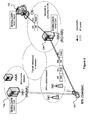
- FIG. 2 shows an example with data path and addresses in IP headers.
- the MN 100 was registered with HA1 104 and was configured with HoA1 before initiating communication with CN 102. After an application requests a communication session with CN 102, the MN 100 discovers and bootstraps with the RO- HA "HA2" 206, configures a corresponding HoA ("RO-HoA" or "HoA2”) and uses it for communication with CN 102 in bi-directional tunnelling mode. Therefore, the MN 102 tunnels data packets to HA2 206, which decapsulates and sends them to CN 102.
- RO-HoA HoA
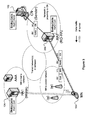
- CN (102) When CN (102) replies, it sends packets to MN's RO-HoA (HoA2) 206, which are routed to RO-HA (HA2) 206 and tunnelled to MN 100 (see Figure 3).
- HoA1 104 is not used in this communication session.
- the tunnel to the RO-HA can be re-used.
- the MN Upon movement, the MN sends BU messages to HA1 as well as HA2.
- FIG. 8 describes the MN initiated method in form of a flow chart.
- communication is requested.
- the mobile node locates a first HA in proximity to the direct path between itself and the first CN in step 804.
- QoS Quality of Service
- the number of hops and/or packet delays can be used.
- the MN bootstraps with the HA. This includes that the IPsec security association is set up and the HoA is assigned before authentication and authorization with Mobility Service Authoriser (MSA) is carried out.
- MSA Mobility Service Authoriser
- the MN's location is registered with the first home agent, which is then used in bi-directional tunneling mode for communication with the CN in step 810.
- An active MN which is not at home is registered with at least one HA.
- the MN's HoA corresponding to this HA must be known by a CN to be reachable by this CN. This can, e.g., be achieved by publishing the HoA in DNS (Domain Name Server). Since this HA is mainly used by the MN to be reachable, it is from now on called IP-Reachability (IR)-HA (HA1 in Figure 5).
- IR-HA IP-Reachability
- the CN selects one of MN's IR-HoAs (i.e., HoAs belonging to one of the MN's IR-HAs), e.g., by querying DNS with the MN's host name, to contact the MN.
- the MN cannot select a HoA by itself and the corresponding IR-HA may not provide a short route.
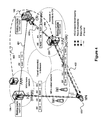
- the MN 100 may decide to optimize the route (e.g., depending on the distance to the IR-HA 104 from which the packets were received). Therefore, the MN 100 discovers and bootstraps with a HA 206 (step 402), which is preferably located close to CN 102 and preferably close to the direct path between MN 100 and CN 102.
- This HA is again a RO-HA as defined in the MN-initiated case (HA2 in Figure 4). Note that the RO-HA 206 should rather be located close to CN 102 than to MN 100 in order to keep strong location privacy support and prevent frequent bootstrapping in the presence of MN mobility.
- the MN 100 registers with the RO-HA and starts the return routability procedure with the CN over the reverse tunnel to the RO-HA 206 (step 403).
- the MN uses the IR-HoA (HoA1) as HoA and the RO-HoA (HoA2) as CoA in CoTi and BU messages and sends those messages to the CN 102 over the reverse tunnel to RO-HA 206.
- BU messages sent to HAs still contain the "real" CoA.
- data packets sent by CN 102 (step 404) are routed to RO-HA 206 using the type 2 routing header and tunnelled to the MN 100 including the routing header.
- the MN 100 is located in the network of RO-HA 206. Consequently, the route is now optimized without breaking the session and location privacy is provided. Since neither HAs nor CNs have to be modified, the solution is easy to deploy and no transition issues arise.
- Figure 5 shows the path and addresses in case the MN sends data packets over the reverse tunnel to the RO-HA (HA2) 206.
- the packets contain the IR-HoA (HoA1) in the HoA option and RO-HoA (HoA2) 206 as source address in the inner IP header. Note that this is different from RFC3775, which prescribes that the CoA is used as source address in route optimization mode.
- Figure 9 is a flow chart depicting the CN initiated case.
- the MN receives data packets from the first CN in step 904.
- a second HA in proximity to the direct path between the first MN and first CN is located in step 906 and bootstrapping with the second HA is carried out in step 908.
- the first MN's location is registered with the second HA and a home address belonging to the second HA's network is registered as first MN's location with the CN in step 912.
- CoT and CoTi messages are sent over the bi-directional tunnel in step 914, and in step 916 route optimization mode is used, both with the MN's second HoA used as CoA.
- the tunnel to the RO-HA can be re-used.
- the MN sends BU messages to the IR-HA as well as the RO-HA. However, it does not send a BU message to the CN, as it would usually do in route optimization mode according to RFC3775. instead, it only sends a BU to CN if it changes the bi-directional tunnel underlying the route optimization mode from RO-HA to another RO-HA (and periodically to prevent the binding lifetime to expire).
- the RO-HA must first be discovered. To reduce the time needed for this discovery, two options are possible.
- IR-HA discovers the RO-HA, either based on a configured list of HAs or dynamically, and suggests the RO-HA address to MN.
- the discovery can already start upon receiving the first data packets from a CN.
- the suggestion of the RO-HA address can, e.g., be done by sending a trigger message as defined for HA reliability.
- CN discovers RO-HA, either based on a configured list of HAs or dynamically (e.g., from announcements in local network such as Router Advertisements or DHCP messages), and suggests the RO-HA address to MN.
- the suggestion of the RO-HA address can, e.g., be done by sending a trigger message as defined for HA reliability.
- the optimized route can first be used after the MN has completed the bootstrapping procedure with RO-HA. To reduce this time, the following options are possible.
- IR-HA bootstraps with RO-HA on behalf of MN. Subsequently, the parameters and the state of the Ipsec (Internet Protocol security) security associations are transferred from IR-HA to MN. Hence, the time to establish the IPsec security association is reduced.
- Ipsec Internet Protocol security
- IR-HA upon receiving first data packet from CN, IR-HA generates and transfers shared session keys together with authorization data to RO-HA. Hence, the time needed to consult AAAH (Authentication, Authorisation and Accounting, Home domain) server is saved.
- AAAH Authentication, Authorisation and Accounting, Home domain
- the return routability procedure with CN can be executed concurrently to the bootstrapping procedure with RO-HA by tunneling CoT/i packets from MN over IR-HA and RO-HA to CN.
- the corresponding states in RO-HA can be established by IR-HA.
- IR-HA may trigger the MN to optimize the route (e.g., upon receiving first data packets from CN) and bootstrap with RO-HA. Therefore, the trigger messages defined for HA reliability can be re-used.
- One option to prevent this for services requiring a call/connection setup signalling exchange is to execute the call/connection setup signalling over the non-optimized route in parallel to establishing the optimized route. Only if both processes are complete, the data transfer is started. This can be achieved by introducing a new trigger message indicating that the optimized route is established or by adding this information to the call/connection setup signalling.
- the route is not well optimized. If either IR-HA or RO-HA is a HA of CN, at least one HA knows the CoAs and locations of both MN and CN and hence can discover a new RO-HA which is located in between MN's and CN's visited network. Hence, the session can be moved again to the new RO-HA to further optimize the route.
- MN and CN both are registered at the same HA can happen accidentally or can be forced.
- a possible option to force this situation is that MN and CN or some entity/entities on behalf of them (e.g., their IR-HAs) negotiate(s) a common HA and trigger their MN/CN to bootstrap with the common HA.
- a disadvantage of using route optimization mode over the bi-directional tunnelling mode in the CN-initiated session scenario is the additional overhead caused by the routing header inside the reverse tunnel.
- Options to get rid of this overhead are, e.g., RO-HA intercepts data packets addressed to RO-HoA, replaces the address in the destination field of the IP header with the address in the routing header and removes the routing header before tunnelling the packet; or the MN uses the RO-HA address as CoA (instead of RO-HoA) and sends BU messages containing ⁇ IR-HoA,CoA> to RO-HA. In this case the routing header is automatically removed by RO-HA (since it contains the address of the RO-HA).
- the packets are addressed to IR-HoA, which triggers RO-HA to consult its Binding Cache and tunnel the packets to the MN's CoA.
- IR-HoA triggers RO-HA to consult its Binding Cache and tunnel the packets to the MN's CoA.
- both options require changes to HA implementations, which are not needed for the basic (unoptimized) method.
- This invention has broader applicability than only for location privacy. More generally, it enables moving a data session to a new anchor HA without breaking the data session (i.e., without changing the HoA of the session).
- One application is optimized routing in scenarios when MN moves and is able to bootstrap with new (local) HAs upon entering a new network (see Figure 6).
- the route in bi-directional tunnelling mode can be optimized by moving the data session from HA1 to HA2 using this invention.
- a second application is load balancing for HAs.
- a highly loaded HA may want to reduce its load and trigger the MN to bootstrap with another HA and move the session to this HA.
- This invention can be used to move an ongoing data session without breaking it (note that other than in Figure 6, the MN does not necessarily move in this case).
- This enables Internet-wide load balancing between HAs located in different networks.
- RFC3775 only supports load balancing between HAs located in the same network (i.e., on the same link).
- the load balancing could further be extended by bootstrapping with multiple HAs and maintaining multiple bi-directional tunnels (each using route optimization mode over bi-directional tunnelling mode).
- the MN can then send the data packets over those routes, e.g., in a round-robin fashion.
- this requires extensions to RFC3775 currently under development in the IETF monami6 working group, which allow the MN to register multiple CoAs with the CN.
- a third application is fault tolerance.
- HA1 can temporarily go down without interrupting the communication between MN and CN using HoA1.
- HA1 is still needed for routing HoT/HoTi (Home Test/Home Test init) messages, which are needed for updating the binding in CN when the binding lifetime expires or HA2 is changed.
- HoT/HoTi Home Test/Home Test init
- a fourth application is to move the data sessions arbitrarily between different network interfaces and the corresponding anchors.
- a MN may be equipped with a WLAN (Wireless Local Area Network) and a cellular network (e.g., UMTS, Universal Mobile Telecommunications Standard) interface (IF), the corresponding addresses being registered as HoAs at HA1 and HA2, respectively.
- this invention enables the MN to move ongoing data sessions from the WLAN to the UMTS interface or vice versa by moving the session from HA1 to HA2 or vice versa (see Figure 7) as described above.
- this invention is described with respect to a packet-switched system running the Mobile IPv6 protocol, the invention is not limited to this protocol. Instead, it is applicable to systems running any mobility management protocol, which support both routing of data packets through a mobility anchor and routing of data packets without passing through the anchor.
- Mobile IPv4 [RFC3344] with route optimization extension.
- the mobility management protocol can also run on a proxy node without loss of applicability of this invention.
- the proxy node executes all necessary actions described in this document including sending location updates to the network on behalf of the mobile node.
- Examples of such protocols are any kinds of Proxy Mobile (e.g., [ K. Chowdhury, "Network Based Layer 3 Connectivity and Mobility Management for IPv4", draft-chowdhury-netmip4-00.txt, February 2006 ] or [ K. Chowdhury, A.
- Another embodiment of the invention relates to the implementation of the above described various embodiments using hardware and software. It is recognised that the various above-mentioned methods, as well as the various logical blocks and modules described above may be implemented where performed using computing devices (processors), as for example general purpose processors, Application Specific Integrated Circuits (ASIC), Field Programmable Gate Arrays (FPGA) or other programmable logic devices, etc. The various embodiments of the invention may also be performed or embodied by a combination of these devices.
- various embodiments of the invention may also be implemented by means of software modules which are executed by a processors or directly in hardware. Also, a combination of software modules and a hardware implementation may be possible.
- the software modules may be stored in any kind of computer-readable storage medium, for example RA;, EPROM, EEPROM, flash memory, registers, hard disks, CD-ROM, DVD, etc.
Landscapes
- Engineering & Computer Science (AREA)
- Databases & Information Systems (AREA)
- Computer Networks & Wireless Communication (AREA)
- Signal Processing (AREA)
- Mobile Radio Communication Systems (AREA)
Priority Applications (13)
| Application Number | Priority Date | Filing Date | Title |
|---|---|---|---|
| EP06011019A EP1863251B1 (de) | 2006-05-29 | 2006-05-29 | Verfahren und Vorrichtung zur Routen-Optimierung in Mobile IPv6 ohne Bekanntgabe des Aufenthaltsortes |
| AT06011019T ATE522065T1 (de) | 2006-05-29 | 2006-05-29 | Verfahren und vorrichtung zur routen-optimierung in mobile ipv6 ohne bekanntgabe des aufenthaltsortes |
| EP06014072A EP1863252B1 (de) | 2006-05-29 | 2006-07-06 | Optimierung von Mobile-IP-Routing in Szenarien mit Übergängen zwischen mehreren IP-Protokollversionen |
| DE602006012944T DE602006012944D1 (de) | 2006-05-29 | 2006-07-06 | Optimierung von Mobile-IP-Routing in Szenarien mit Übergängen zwischen mehreren IP-Protokollversionen |
| AT06014072T ATE461580T1 (de) | 2006-05-29 | 2006-07-06 | Optimierung von mobile-ip-routing in szenarien mit übergängen zwischen mehreren ip- protokollversionen |
| EP10150001A EP2164285A2 (de) | 2006-05-29 | 2006-07-06 | Optimierung von Mobile-IP-Routing in Szenarien mit Übergängen zwischen mehreren IP-Protokollversionen |
| EP06022260A EP1863253A1 (de) | 2006-05-29 | 2006-10-24 | Verfahren und Vorrichtung zur Routenoptimierung in Mobile IPv6 ohne Bekanntgabe des Aufenthaltsortes |
| PCT/EP2007/004635 WO2007137765A1 (en) | 2006-05-29 | 2007-05-24 | Method and apparatus for simultaneous location privacy and route optimization for communication sessions |
| JP2009512468A JP5048761B2 (ja) | 2006-05-29 | 2007-05-24 | 通信セッションのためのロケーション・プライバシーとルート最適化とを同時に実施する方法及び装置 |
| EP07725532A EP2022232B1 (de) | 2006-05-29 | 2007-05-24 | Verfahren und vorrichtung für gleichzeitige ortsprivatsphäre und routenoptimierung für kommunikationssitzungen |
| US12/302,826 US8230076B2 (en) | 2006-05-29 | 2007-05-24 | Method and apparatus for simultaneous location privacy and route optimization for communication sessions |
| AT07725532T ATE539536T1 (de) | 2006-05-29 | 2007-05-24 | Verfahren und vorrichtung für gleichzeitige ortsprivatsphäre und routenoptimierung für kommunikationssitzungen |
| CNA2007800254788A CN101485171A (zh) | 2006-05-29 | 2007-05-24 | 用于通信会话的同时的位置保密与路由优化的方法和设备 |
Applications Claiming Priority (1)
| Application Number | Priority Date | Filing Date | Title |
|---|---|---|---|
| EP06011019A EP1863251B1 (de) | 2006-05-29 | 2006-05-29 | Verfahren und Vorrichtung zur Routen-Optimierung in Mobile IPv6 ohne Bekanntgabe des Aufenthaltsortes |
Publications (2)
| Publication Number | Publication Date |
|---|---|
| EP1863251A1 true EP1863251A1 (de) | 2007-12-05 |
| EP1863251B1 EP1863251B1 (de) | 2011-08-24 |
Family
ID=37309247
Family Applications (1)
| Application Number | Title | Priority Date | Filing Date |
|---|---|---|---|
| EP06011019A Expired - Lifetime EP1863251B1 (de) | 2006-05-29 | 2006-05-29 | Verfahren und Vorrichtung zur Routen-Optimierung in Mobile IPv6 ohne Bekanntgabe des Aufenthaltsortes |
Country Status (4)
| Country | Link |
|---|---|
| EP (1) | EP1863251B1 (de) |
| CN (1) | CN101485171A (de) |
| AT (2) | ATE522065T1 (de) |
| DE (1) | DE602006012944D1 (de) |
Cited By (2)
| Publication number | Priority date | Publication date | Assignee | Title |
|---|---|---|---|---|
| WO2010121771A3 (en) * | 2009-04-20 | 2010-12-16 | Panasonic Corporation | Route optimization of a data path between communicating nodes using a route optimization agent |
| CN101635663B (zh) * | 2008-07-21 | 2012-06-27 | 华为技术有限公司 | 数据传输方法、系统及网络设备 |
Families Citing this family (1)
| Publication number | Priority date | Publication date | Assignee | Title |
|---|---|---|---|---|
| CN105122854B (zh) * | 2014-01-24 | 2019-09-13 | 华为技术有限公司 | 一种控制路由优化的方法、装置及系统 |
Citations (2)
| Publication number | Priority date | Publication date | Assignee | Title |
|---|---|---|---|---|
| US6407988B1 (en) * | 1998-10-06 | 2002-06-18 | At&T Corp. | Mobility support services using mobility aware access networks |
| EP1442579B1 (de) | 2001-11-09 | 2005-11-02 | Nokia Corporation | Geheimhalten des aufenthaltsortes in kommunikationsnetzwerken |
-
2006
- 2006-05-29 EP EP06011019A patent/EP1863251B1/de not_active Expired - Lifetime
- 2006-05-29 AT AT06011019T patent/ATE522065T1/de not_active IP Right Cessation
- 2006-07-06 AT AT06014072T patent/ATE461580T1/de not_active IP Right Cessation
- 2006-07-06 DE DE602006012944T patent/DE602006012944D1/de not_active Expired - Lifetime
-
2007
- 2007-05-24 CN CNA2007800254788A patent/CN101485171A/zh active Pending
Patent Citations (2)
| Publication number | Priority date | Publication date | Assignee | Title |
|---|---|---|---|---|
| US6407988B1 (en) * | 1998-10-06 | 2002-06-18 | At&T Corp. | Mobility support services using mobility aware access networks |
| EP1442579B1 (de) | 2001-11-09 | 2005-11-02 | Nokia Corporation | Geheimhalten des aufenthaltsortes in kommunikationsnetzwerken |
Non-Patent Citations (2)
| Title |
|---|
| RONG ZHEN ET AL.: "A case for mobility support with temporary home agents2 Computer Communications and Networks, 200", PROCEEDINGS 10TH INTERNATIONAL CONFERENCE, 15 October 2001 (2001-10-15), pages 226 - 233 |
| RONG ZHENG ET AL: "A case for mobility support with temporary home agents", COMPUTER COMMUNICATIONS AND NETWORKS, 2001. PROCEEDINGS. TENTH INTERNATIONAL CONFERENCE ON 15-17 OCT. 2001, PISCATAWAY, NJ, USA,IEEE, 15 October 2001 (2001-10-15), pages 226 - 233, XP010562099, ISBN: 0-7803-7128-3 * |
Cited By (3)
| Publication number | Priority date | Publication date | Assignee | Title |
|---|---|---|---|---|
| CN101635663B (zh) * | 2008-07-21 | 2012-06-27 | 华为技术有限公司 | 数据传输方法、系统及网络设备 |
| WO2010121771A3 (en) * | 2009-04-20 | 2010-12-16 | Panasonic Corporation | Route optimization of a data path between communicating nodes using a route optimization agent |
| US8737371B2 (en) | 2009-04-20 | 2014-05-27 | Optis Wireless Technology, Llc | Route optimization of a data path between communicating nodes using a route optimization agent |
Also Published As
| Publication number | Publication date |
|---|---|
| ATE461580T1 (de) | 2010-04-15 |
| DE602006012944D1 (de) | 2010-04-29 |
| EP1863251B1 (de) | 2011-08-24 |
| CN101485171A (zh) | 2009-07-15 |
| ATE522065T1 (de) | 2011-09-15 |
Similar Documents
| Publication | Publication Date | Title |
|---|---|---|
| EP2022232B1 (de) | Verfahren und vorrichtung für gleichzeitige ortsprivatsphäre und routenoptimierung für kommunikationssitzungen | |
| US8031674B2 (en) | Optimized reverse tunnelling for packet switched mobile communication systems | |
| EP2223498B1 (de) | Routenoptimierungskontinuität beim handover von mobilität auf netzwerkbasis zu mobilität auf hostbasis | |
| Zhu et al. | A survey of mobility support in the Internet | |
| FI106825B (fi) | IP-liikkuvuusmekanismi pakettiradioverkkoa varten | |
| EP2244495B1 (de) | Routenoptimierung eines Datenpfades zwischen Kommunikationsknoten unter Verwendung eines Routenoptimierungsagenten | |
| US8724553B2 (en) | Route optimization with location privacy support | |
| US20100284331A1 (en) | Mobile ip route optimization in ip version transition scenarios | |
| JPWO2008078633A1 (ja) | 通信システム、ドメイン管理装置、エッジ装置並びに移動端末 | |
| WO2010029464A1 (en) | Efficient routing between a mobile node in a proxy mobile ip network and a correspondent node | |
| WO2009116246A1 (ja) | 通信方法、通信システム、モバイルノード及びアクセスルータ | |
| EP2262293B1 (de) | Dynamische Entdeckung des Mobilitätsankerpunktes mit spezifischer Bindung | |
| EP2071807A1 (de) | Verbessertes Mobile IP-System mit verteilten Home Agents | |
| EP1863251B1 (de) | Verfahren und Vorrichtung zur Routen-Optimierung in Mobile IPv6 ohne Bekanntgabe des Aufenthaltsortes | |
| EP1863253A1 (de) | Verfahren und Vorrichtung zur Routenoptimierung in Mobile IPv6 ohne Bekanntgabe des Aufenthaltsortes | |
| EP1863252B1 (de) | Optimierung von Mobile-IP-Routing in Szenarien mit Übergängen zwischen mehreren IP-Protokollversionen | |
| Zhu et al. | Rfc 6301: A survey of mobility support in the internet | |
| Zohra et al. | Overview of ipv6 mobility management protocols and their handover performances | |
| WO2007101628A1 (en) | Mobile ipv6 optimised reverse tunnelling for multi-homed terminals |
Legal Events
| Date | Code | Title | Description |
|---|---|---|---|
| PUAI | Public reference made under article 153(3) epc to a published international application that has entered the european phase |
Free format text: ORIGINAL CODE: 0009012 |
|
| AK | Designated contracting states |
Kind code of ref document: A1 Designated state(s): AT BE BG CH CY CZ DE DK EE ES FI FR GB GR HU IE IS IT LI LT LU LV MC NL PL PT RO SE SI SK TR |
|
| AX | Request for extension of the european patent |
Extension state: AL BA HR MK YU |
|
| 17P | Request for examination filed |
Effective date: 20080415 |
|
| 17Q | First examination report despatched |
Effective date: 20080528 |
|
| AKX | Designation fees paid |
Designated state(s): AT BE BG CH CY CZ DE DK EE ES FI FR GB GR HU IE IS IT LI LT LU LV MC NL PL PT RO SE SI SK TR |
|
| RAP1 | Party data changed (applicant data changed or rights of an application transferred) |
Owner name: PANASONIC CORPORATION |
|
| GRAP | Despatch of communication of intention to grant a patent |
Free format text: ORIGINAL CODE: EPIDOSNIGR1 |
|
| GRAS | Grant fee paid |
Free format text: ORIGINAL CODE: EPIDOSNIGR3 |
|
| GRAA | (expected) grant |
Free format text: ORIGINAL CODE: 0009210 |
|
| AK | Designated contracting states |
Kind code of ref document: B1 Designated state(s): AT BE BG CH CY CZ DE DK EE ES FI FR GB GR HU IE IS IT LI LT LU LV MC NL PL PT RO SE SI SK TR |
|
| REG | Reference to a national code |
Ref country code: GB Ref legal event code: FG4D |
|
| REG | Reference to a national code |
Ref country code: CH Ref legal event code: EP |
|
| REG | Reference to a national code |
Ref country code: IE Ref legal event code: FG4D |
|
| REG | Reference to a national code |
Ref country code: DE Ref legal event code: R096 Ref document number: 602006023926 Country of ref document: DE Effective date: 20111124 |
|
| REG | Reference to a national code |
Ref country code: NL Ref legal event code: VDEP Effective date: 20110824 |
|
| LTIE | Lt: invalidation of european patent or patent extension |
Effective date: 20110824 |
|
| PG25 | Lapsed in a contracting state [announced via postgrant information from national office to epo] |
Ref country code: NL Free format text: LAPSE BECAUSE OF FAILURE TO SUBMIT A TRANSLATION OF THE DESCRIPTION OR TO PAY THE FEE WITHIN THE PRESCRIBED TIME-LIMIT Effective date: 20110824 Ref country code: SE Free format text: LAPSE BECAUSE OF FAILURE TO SUBMIT A TRANSLATION OF THE DESCRIPTION OR TO PAY THE FEE WITHIN THE PRESCRIBED TIME-LIMIT Effective date: 20110824 Ref country code: LT Free format text: LAPSE BECAUSE OF FAILURE TO SUBMIT A TRANSLATION OF THE DESCRIPTION OR TO PAY THE FEE WITHIN THE PRESCRIBED TIME-LIMIT Effective date: 20110824 Ref country code: FI Free format text: LAPSE BECAUSE OF FAILURE TO SUBMIT A TRANSLATION OF THE DESCRIPTION OR TO PAY THE FEE WITHIN THE PRESCRIBED TIME-LIMIT Effective date: 20110824 Ref country code: IS Free format text: LAPSE BECAUSE OF FAILURE TO SUBMIT A TRANSLATION OF THE DESCRIPTION OR TO PAY THE FEE WITHIN THE PRESCRIBED TIME-LIMIT Effective date: 20111224 Ref country code: PT Free format text: LAPSE BECAUSE OF FAILURE TO SUBMIT A TRANSLATION OF THE DESCRIPTION OR TO PAY THE FEE WITHIN THE PRESCRIBED TIME-LIMIT Effective date: 20111226 |
|
| REG | Reference to a national code |
Ref country code: AT Ref legal event code: MK05 Ref document number: 522065 Country of ref document: AT Kind code of ref document: T Effective date: 20110824 |
|
| PG25 | Lapsed in a contracting state [announced via postgrant information from national office to epo] |
Ref country code: SI Free format text: LAPSE BECAUSE OF FAILURE TO SUBMIT A TRANSLATION OF THE DESCRIPTION OR TO PAY THE FEE WITHIN THE PRESCRIBED TIME-LIMIT Effective date: 20110824 Ref country code: LV Free format text: LAPSE BECAUSE OF FAILURE TO SUBMIT A TRANSLATION OF THE DESCRIPTION OR TO PAY THE FEE WITHIN THE PRESCRIBED TIME-LIMIT Effective date: 20110824 Ref country code: AT Free format text: LAPSE BECAUSE OF FAILURE TO SUBMIT A TRANSLATION OF THE DESCRIPTION OR TO PAY THE FEE WITHIN THE PRESCRIBED TIME-LIMIT Effective date: 20110824 Ref country code: GR Free format text: LAPSE BECAUSE OF FAILURE TO SUBMIT A TRANSLATION OF THE DESCRIPTION OR TO PAY THE FEE WITHIN THE PRESCRIBED TIME-LIMIT Effective date: 20111125 Ref country code: CY Free format text: LAPSE BECAUSE OF FAILURE TO SUBMIT A TRANSLATION OF THE DESCRIPTION OR TO PAY THE FEE WITHIN THE PRESCRIBED TIME-LIMIT Effective date: 20110824 Ref country code: PL Free format text: LAPSE BECAUSE OF FAILURE TO SUBMIT A TRANSLATION OF THE DESCRIPTION OR TO PAY THE FEE WITHIN THE PRESCRIBED TIME-LIMIT Effective date: 20110824 |
|
| PG25 | Lapsed in a contracting state [announced via postgrant information from national office to epo] |
Ref country code: BE Free format text: LAPSE BECAUSE OF FAILURE TO SUBMIT A TRANSLATION OF THE DESCRIPTION OR TO PAY THE FEE WITHIN THE PRESCRIBED TIME-LIMIT Effective date: 20110824 |
|
| PG25 | Lapsed in a contracting state [announced via postgrant information from national office to epo] |
Ref country code: CZ Free format text: LAPSE BECAUSE OF FAILURE TO SUBMIT A TRANSLATION OF THE DESCRIPTION OR TO PAY THE FEE WITHIN THE PRESCRIBED TIME-LIMIT Effective date: 20110824 Ref country code: SK Free format text: LAPSE BECAUSE OF FAILURE TO SUBMIT A TRANSLATION OF THE DESCRIPTION OR TO PAY THE FEE WITHIN THE PRESCRIBED TIME-LIMIT Effective date: 20110824 |
|
| PG25 | Lapsed in a contracting state [announced via postgrant information from national office to epo] |
Ref country code: IT Free format text: LAPSE BECAUSE OF FAILURE TO SUBMIT A TRANSLATION OF THE DESCRIPTION OR TO PAY THE FEE WITHIN THE PRESCRIBED TIME-LIMIT Effective date: 20110824 Ref country code: RO Free format text: LAPSE BECAUSE OF FAILURE TO SUBMIT A TRANSLATION OF THE DESCRIPTION OR TO PAY THE FEE WITHIN THE PRESCRIBED TIME-LIMIT Effective date: 20110824 Ref country code: EE Free format text: LAPSE BECAUSE OF FAILURE TO SUBMIT A TRANSLATION OF THE DESCRIPTION OR TO PAY THE FEE WITHIN THE PRESCRIBED TIME-LIMIT Effective date: 20110824 |
|
| PG25 | Lapsed in a contracting state [announced via postgrant information from national office to epo] |
Ref country code: DK Free format text: LAPSE BECAUSE OF FAILURE TO SUBMIT A TRANSLATION OF THE DESCRIPTION OR TO PAY THE FEE WITHIN THE PRESCRIBED TIME-LIMIT Effective date: 20110824 |
|
| PLBE | No opposition filed within time limit |
Free format text: ORIGINAL CODE: 0009261 |
|
| STAA | Information on the status of an ep patent application or granted ep patent |
Free format text: STATUS: NO OPPOSITION FILED WITHIN TIME LIMIT |
|
| 26N | No opposition filed |
Effective date: 20120525 |
|
| REG | Reference to a national code |
Ref country code: DE Ref legal event code: R097 Ref document number: 602006023926 Country of ref document: DE Effective date: 20120525 |
|
| PG25 | Lapsed in a contracting state [announced via postgrant information from national office to epo] |
Ref country code: MC Free format text: LAPSE BECAUSE OF NON-PAYMENT OF DUE FEES Effective date: 20120531 |
|
| REG | Reference to a national code |
Ref country code: CH Ref legal event code: PL |
|
| PG25 | Lapsed in a contracting state [announced via postgrant information from national office to epo] |
Ref country code: CH Free format text: LAPSE BECAUSE OF NON-PAYMENT OF DUE FEES Effective date: 20120531 Ref country code: LI Free format text: LAPSE BECAUSE OF NON-PAYMENT OF DUE FEES Effective date: 20120531 |
|
| REG | Reference to a national code |
Ref country code: IE Ref legal event code: MM4A |
|
| PG25 | Lapsed in a contracting state [announced via postgrant information from national office to epo] |
Ref country code: ES Free format text: LAPSE BECAUSE OF FAILURE TO SUBMIT A TRANSLATION OF THE DESCRIPTION OR TO PAY THE FEE WITHIN THE PRESCRIBED TIME-LIMIT Effective date: 20111205 Ref country code: IE Free format text: LAPSE BECAUSE OF NON-PAYMENT OF DUE FEES Effective date: 20120529 |
|
| PG25 | Lapsed in a contracting state [announced via postgrant information from national office to epo] |
Ref country code: BG Free format text: LAPSE BECAUSE OF FAILURE TO SUBMIT A TRANSLATION OF THE DESCRIPTION OR TO PAY THE FEE WITHIN THE PRESCRIBED TIME-LIMIT Effective date: 20111124 |
|
| PG25 | Lapsed in a contracting state [announced via postgrant information from national office to epo] |
Ref country code: TR Free format text: LAPSE BECAUSE OF FAILURE TO SUBMIT A TRANSLATION OF THE DESCRIPTION OR TO PAY THE FEE WITHIN THE PRESCRIBED TIME-LIMIT Effective date: 20110824 |
|
| PG25 | Lapsed in a contracting state [announced via postgrant information from national office to epo] |
Ref country code: LU Free format text: LAPSE BECAUSE OF NON-PAYMENT OF DUE FEES Effective date: 20120529 |
|
| REG | Reference to a national code |
Ref country code: GB Ref legal event code: 732E Free format text: REGISTERED BETWEEN 20140612 AND 20140618 |
|
| REG | Reference to a national code |
Ref country code: DE Ref legal event code: R082 Ref document number: 602006023926 Country of ref document: DE Representative=s name: GRUENECKER, KINKELDEY, STOCKMAIR & SCHWANHAEUS, DE |
|
| PG25 | Lapsed in a contracting state [announced via postgrant information from national office to epo] |
Ref country code: HU Free format text: LAPSE BECAUSE OF FAILURE TO SUBMIT A TRANSLATION OF THE DESCRIPTION OR TO PAY THE FEE WITHIN THE PRESCRIBED TIME-LIMIT Effective date: 20060529 |
|
| REG | Reference to a national code |
Ref country code: DE Ref legal event code: R082 Ref document number: 602006023926 Country of ref document: DE Representative=s name: GRUENECKER, KINKELDEY, STOCKMAIR & SCHWANHAEUS, DE Effective date: 20140711 Ref country code: DE Ref legal event code: R081 Ref document number: 602006023926 Country of ref document: DE Owner name: PANASONIC INTELLECTUAL PROPERTY CORPORATION OF, US Free format text: FORMER OWNER: MATSUSHITA ELECTRIC INDUSTRIAL CO., LTD., KADOMA-SHI, OSAKA, JP Effective date: 20110929 Ref country code: DE Ref legal event code: R081 Ref document number: 602006023926 Country of ref document: DE Owner name: PANASONIC INTELLECTUAL PROPERTY CORPORATION OF, US Free format text: FORMER OWNER: PANASONIC CORPORATION, KADOMA, OSAKA, JP Effective date: 20140711 Ref country code: DE Ref legal event code: R082 Ref document number: 602006023926 Country of ref document: DE Representative=s name: GRUENECKER PATENT- UND RECHTSANWAELTE PARTG MB, DE Effective date: 20140711 |
|
| REG | Reference to a national code |
Ref country code: FR Ref legal event code: TP Owner name: PANASONIC INTELLECTUAL PROPERTY CORPORATION OF, US Effective date: 20140722 |
|
| REG | Reference to a national code |
Ref country code: FR Ref legal event code: PLFP Year of fee payment: 11 |
|
| REG | Reference to a national code |
Ref country code: FR Ref legal event code: PLFP Year of fee payment: 12 |
|
| REG | Reference to a national code |
Ref country code: FR Ref legal event code: PLFP Year of fee payment: 13 |
|
| REG | Reference to a national code |
Ref country code: DE Ref legal event code: R079 Ref document number: 602006023926 Country of ref document: DE Free format text: PREVIOUS MAIN CLASS: H04L0029060000 Ipc: H04L0065000000 |
|
| PGFP | Annual fee paid to national office [announced via postgrant information from national office to epo] |
Ref country code: GB Payment date: 20220519 Year of fee payment: 17 Ref country code: FR Payment date: 20220523 Year of fee payment: 17 Ref country code: DE Payment date: 20220519 Year of fee payment: 17 |
|
| REG | Reference to a national code |
Ref country code: DE Ref legal event code: R119 Ref document number: 602006023926 Country of ref document: DE |
|
| GBPC | Gb: european patent ceased through non-payment of renewal fee |
Effective date: 20230529 |
|
| PG25 | Lapsed in a contracting state [announced via postgrant information from national office to epo] |
Ref country code: DE Free format text: LAPSE BECAUSE OF NON-PAYMENT OF DUE FEES Effective date: 20231201 Ref country code: GB Free format text: LAPSE BECAUSE OF NON-PAYMENT OF DUE FEES Effective date: 20230529 |
|
| PG25 | Lapsed in a contracting state [announced via postgrant information from national office to epo] |
Ref country code: FR Free format text: LAPSE BECAUSE OF NON-PAYMENT OF DUE FEES Effective date: 20230531 |