EP1868130A2 - Versionsübereinstimmungssystem - Google Patents
Versionsübereinstimmungssystem Download PDFInfo
- Publication number
- EP1868130A2 EP1868130A2 EP07252296A EP07252296A EP1868130A2 EP 1868130 A2 EP1868130 A2 EP 1868130A2 EP 07252296 A EP07252296 A EP 07252296A EP 07252296 A EP07252296 A EP 07252296A EP 1868130 A2 EP1868130 A2 EP 1868130A2
- Authority
- EP
- European Patent Office
- Prior art keywords
- version
- license
- enterprise
- licenses
- product
- Prior art date
- Legal status (The legal status is an assumption and is not a legal conclusion. Google has not performed a legal analysis and makes no representation as to the accuracy of the status listed.)
- Withdrawn
Links
Images




Classifications
-
- G—PHYSICS
- G06—COMPUTING OR CALCULATING; COUNTING
- G06F—ELECTRIC DIGITAL DATA PROCESSING
- G06F21/00—Security arrangements for protecting computers, components thereof, programs or data against unauthorised activity
- G06F21/10—Protecting distributed programs or content, e.g. vending or licensing of copyrighted material ; Digital rights management [DRM]
-
- G—PHYSICS
- G06—COMPUTING OR CALCULATING; COUNTING
- G06F—ELECTRIC DIGITAL DATA PROCESSING
- G06F21/00—Security arrangements for protecting computers, components thereof, programs or data against unauthorised activity
- G06F21/10—Protecting distributed programs or content, e.g. vending or licensing of copyrighted material ; Digital rights management [DRM]
- G06F21/105—Arrangements for software license management or administration, e.g. for managing licenses at corporate level
-
- G—PHYSICS
- G06—COMPUTING OR CALCULATING; COUNTING
- G06F—ELECTRIC DIGITAL DATA PROCESSING
- G06F2221/00—Indexing scheme relating to security arrangements for protecting computers, components thereof, programs or data against unauthorised activity
- G06F2221/21—Indexing scheme relating to G06F21/00 and subgroups addressing additional information or applications relating to security arrangements for protecting computers, components thereof, programs or data against unauthorised activity
- G06F2221/2137—Time limited access, e.g. to a computer or data
Definitions
- Disclosed embodiments relate generally to managing software products within an enterprise, and more specifically to systems and methods for verifying that the enterprise is only using versions of the software products that are covered by the enterprise's software licenses.
- some users may still employ older versions of software products because, for instance, the older versions satisfy their needs and/or because the older versions are necessary for compatibility to access pre-existing documents or systems.
- some users may employ the updated version of the software product so as to take advantage of improvements and new features and/or to allow compatibility with other newly released products/versions, for example.
- License types often vary from one vendor to another, and the terms and associated attributes of each license may be important in determining whether an enterprise is in compliance.
- a standard single user base license from a specific vendor might specify that the enterprise has full product use rights for one user of a specific version of the software.
- a competitive upgrade license might provide a single user base license for a software product purchased at a reduced price from a vendor when the enterprise agrees to switch from a competitor's product.
- a version upgrade license might give the enterprise the right to upgrade an existing base license to allow use of a specific newer version of a software product.
- a general upgrade license might give the enterprise the right to upgrade an existing base license for any earlier versions of the software product to allow use of a newer product version.
- a maintenance license might allow the enterprise to upgrade an existing base license to give the enterprise rights to use updated versions of the product released while the maintenance period is in effect. License terms may vary, so determining if an enterprise is in compliance may depend on the license type (and/or the attributes associated with a specific license). This non-exclusive listing of typical license types is merely intended to illustrate specific representative licenses and the possible attributes that govern the scope of coverage for each specific license type, and is not intended to limit the scope of this disclosure. Persons skilled in the art field will understand alternatives and equivalents to the representative licenses, licensing terms and/or attributes, all of which are included within the scope of this disclosure.
- enterprises may have difficulty ensuring compliance. In other words, it may be difficult for an enterprise to ensure that all versions of all software products being used are covered by licenses. This management problem may be especially difficult in larger enterprises such as Fortune 500 companies, for example, since they employ so many different users and so many different versions of so many different software products. Additionally, the very nature of software products further complicates attempts to ensure compliance. In particular, it is relatively easy to copy software products and there are frequent misunderstandings regarding the various licenses covering different versions of the software products being used throughout an enterprise. Under such circumstances, enterprises may quite easily become guilty of essentially pirating software products/versions without even realizing it. Unlicensed usage of software products and/or versions may result in potentially costly legal exposure. Thus, it is important for enterprises to ensure compliance with the terms of their various licenses (in order to avoid legal exposure for breach of license and/or copyright violations, for example).
- a version compliance system generally determines compliance of software product version usage within an enterprise by comparing the number of actual uses of each product version to license information relating to those product versions.
- An enterprise is compliant if every use of a product version is covered by a license, and any uses of product versions that are not covered by a license would indicate noncompliance.
- License information generally comprising the quantity of base licenses for each product version and information on actual usage is generally collected to allow for such a comparison.
- information concerning license attributes such as downgrade coverage and/or license type may allow for a more accurate determination of the number of each product version ultimately available.
- the present disclosure is directed to a method for checking version compliance comprising collecting licensing information regarding product versions available to an enterprise under license; collecting information regarding actual usage of product versions within the enterprise; and comparing actual usage information to licensing information to determine compliance; wherein the licensing information comprises the number of each product version available under license; and wherein the enterprise is in compliance if each instance of actual usage of a product version is covered by a base license.
- the actual usage information may comprise the number of installations of product versions within the enterprise and the number of licenses consumed within an entitlement coordination framework for the enterprise; in which case the enterprise would be in compliance if each installation and each consumed license not associated with an installation is covered by a base license.
- the actual usage information may comprise only the number of installations of product versions detected within the enterprise via an inventory scan.
- the method may further comprise using an available base license with downgrade coverage to cover usage of a prior version if necessary to achieve compliance.
- the licensing information further comprises license attribute information indicating if a license is an upgrade
- the method may further comprise aggregating all base licenses and upgrades relating to each product version; and applying each upgrade for each product version to a prior version base license. The upgrades may be applied to the lowest prior version base license available, starting from the lowest version upgrade up to the highest version upgrade.
- the licensing information further comprises designation of each license as machine or user based, the method may further comprise checking for overlapping licenses; wherein two or more user based licenses for a single user would overlap.
- the present disclosure is directed to a computer readable media containing instructions for a processor to implement steps comprising collecting licensing information regarding product versions available to an enterprise under license; collecting information regarding actual usage of product versions within the enterprise; and comparing actual usage information to licensing information to determine compliance; wherein the licensing information comprises the number of each product version available under license; and wherein the enterprise is in compliance if each instance of actual usage of a product version is covered by a base license.
- the licensing information further comprises information concerning whether each base license provides downgrade coverage
- the computer readable media may further comprise the step of using an available base license with downgrade coverage to cover usage of a prior version if necessary to achieve compliance.
- the actual usage information may comprise the number of installations of product versions within the enterprise and the number of licenses consumed within an entitlement coordination framework for the enterprise; such that the enterprise would be in compliance if each installation and each consumed license not associated with an installation is covered by a base license.
- the licensing information further comprises license attribute information indicating if a license is an upgrade
- the computer readable media may further comprise the steps of aggregating all base licenses and upgrades relating to each product version; and applying each upgrade for each product version to a prior version base license; wherein upgrades are applied to the lowest prior version base license available, starting from the lowest version upgrade up to the highest version upgrade.
- the licensing information further comprises designation of each license as machine or user based
- the computer readable media may further comprise the step of checking for overlapping licenses; wherein two or more user based licenses for a single user would overlap.
- the present disclosure is directed to a device comprising a version compliance system operable to check compliance by comparing actual usage of product versions in an enterprise to licensing information regarding product versions available to the enterprise under license; and an entitlement coordination framework operable to install product versions for actual usage in the enterprise via license consumption; wherein the licensing information comprises the number of each product version available under license; actual usage information comprises the number of installations of product versions within the enterprise and the number of licenses consumed within the entitlement coordination framework for the enterprise; and the enterprise is in compliance if each installation and each consumed license not associated with an installation is covered by a base license.
- the version compliance system comprises a rollup procedure operable to apply upgrades to prior version base licenses.
- the licensing information further comprises information concerning whether each base license provides downgrade coverage
- the version compliance system may be operable to use an available base license with downgrade coverage to cover usage of a prior version if necessary to achieve compliance.
- FIG. 1 is a flow diagram of a general version compliance system
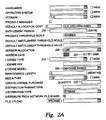
- FIG. 2A is a representative data entry format for initially inputting license information by defining the licenses held by an enterprise and the attributes associated with each license;
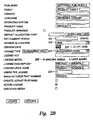
- FIG. 2B is a representative data entry format for editing or amending license information, which allows for updating of the licenses held by an enterprise and the attributes associated with each license;
- FIG. 3 is a flow diagram of a rollup procedure that might be used to apply updates to underlying base licenses to determine the number of each version of each product that an enterprise is authorized to use under license;
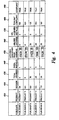
- FIG. 4 is a representative format showing the results of a software product compliance comparison process that checks compliance by comparing the license information to the number of installs for each product version within an enterprise;
- FIG. 5 is a diagram of a representative system integrating a version compliance system within an entitlement coordination framework
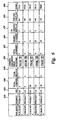
- FIG. 6 is a representative format showing the results of a software product compliance comparison process that checks compliance by comparing the license information to the number of installs and the number of licenses consumed;
- FIG. 7 is a representative format showing license coverage, which provides details regarding how specific licenses have been applied in an attempt to ensure compliance or minimize the number of violations.
- FIG. 8 is a representative format showing the results of a software product compliance comparison process of the sort that might be occur once an effective entitlement coordination framework is in place within an enterprise, with corresponding consumed licenses accounting for each installed product version.
- a version compliance system compares the actual usage of software product versions within an enterprise to the licenses that authorize use of software product versions within an enterprise and then determines if any software product versions are being used without the proper license authority.
- the general goal of a version compliance system is to determine whether there are any unauthorized uses of product versions, which allows the enterprise to either confirm that it is in compliance or take steps to achieve licensing compliance.
- the number of each version of software products available to an enterprise under license and the number of each version of software products actually being used within an enterprise are determined. Actual usage is then compared to licensed availability to determine if the enterprise is compliant or if there are any versions of any product being used within the enterprise without proper license coverage. This compliance analysis may allow the enterprise to take steps as necessary to ensure compliance, such as by acquiring additional licenses, for example.
- FIGURE 1 illustrates a general version compliance system 100.
- licensing information is collected to determine the licensed number of each version of each software product available to users within the enterprise.
- information on actual usage of each product version throughout the enterprise is collected to determine the number of each version of each product actually being used (as for example, by download onto hardware) within the enterprise. While the illustrative example of FIGURE 1 shows the collection of actual usage data at step 120 taking place after the collection of licensing information at step 110, these functions could be performed in either sequence, or even simultaneously.
- compliance may be checked at step 130 by comparing actual usage 120 to license availability 110 to determine if there are any versions of any product being used without the proper license.
- An enterprise is compliant if every version of every product being used within the enterprise is covered by a license. Generally compliance is checked for all versions of all products being used within the enterprise, but compliance could also be checked on a product-by-product basis to ensure that a specific software product being used within the enterprise is version compliant. For convenience, examples disclosed herein may discuss compliance with respect to only a single product, but it should be understood that a version compliance system may check compliance across multiple products and often would check compliance for all products being used by an enterprise.
- information on licenses may be collected as the licenses are acquired, or the information may be input at a later date to allow for a compliance check.
- information on the number of each version of each product available under license is collected.
- information regarding the type of license and/or the attributes associated with each license may be collected to better determine the actual coverage of the licenses available within an enterprise.
- license attributes it may be useful to have information on whether a license allows for use of earlier versions (also referred to as downgrade coverage), whether a license is user or machine based, and/or whether a license provides a base license that may operate independently or merely provides an upgrade that can only be effectively used in conjunction with a separate base license.
- Persons skilled in the art field will understand alternatives and equivalents to the representative license types and/or attributes, all of which are included within scope of this disclosure.
- FIGURE 2A provides an illustrative example of a data entry format for initially inputting license information, defining the licenses held by an enterprise and the attributes associated with each license.
- FIGURE 2B provides an illustrative example of a data entry format for editing or amending license information, allowing for updating of the licenses held by an enterprise and the attributes associated with each license.
- These representative data entry formats allow the user to input information concerning, for example, the number of licensed uses of a product version authorized 210, the license type 215 (which may relate to specific attributes), the license model 220 (user or machine based, for example), and/or the version date 225 to be collected for each specific version of each specific software product being used within an enterprise, so that license information is available to check compliance.
- Additional optional information regarding the manner of usage of licensed product versions may also be input in these representative formats.
- the default version allocation 230 may optionally be set, specifying which version(s) of a product should be made available to users when they are entitled to a product; or an entitlement period 235 might optionally be set, specifying the duration of an entitlement for a product version.
- the data entry formats presented in Figures 2A and 2B are merely representative; and not all of the information shown may be collected for a specific version compliance system. Furthermore, additional license information could also be collected.
- the actual coverage of a license may be used to determine the effective number of each version of a product ultimately available within the enterprise. For example, some licenses may provide downgrade coverage, allowing the license for a later version to cover use of an earlier version of a product. Other licenses may apply upgrades to pre-existing base licenses to convert the base license to cover a newer version of the product. So the attributes of each license may be useful in determining specific version coverage. Specifically, the number of each specific version of a licensed product available to users may be determined based on the number of base licenses for a particular version held by the enterprise and also based on any upgrades that may be applied, for example.
- a rollup procedure may be implemented to apply upgrades to base licenses.
- Such a rollup procedure may allow for a more accurate determination of the ultimate number of each version of a product that is covered by license and available for use within the enterprise.
- upgrades to underlying base licenses the number of each version of a product covered by license and ultimately available within an enterprise, as well as the attributes of the converted base licenses, may be determined in preparation for checking compliance.
- a rollup procedure generally comprises gathering all of the license purchase information for an enterprise, identifying licenses related to each version for each product (typically based on license type and/or attributes) such that all licenses relating to specific product versions can be considered together, aggregating the quantities for related base licenses and upgrades, and applying upgrades against prior base license versions to determine the ultimate number of each version of each product available under license within the enterprise. While a rollup procedure would generally be performed across all products used within an enterprise, the procedure tends to operate on each product separately such that rollup could be performed for individual products or one product at a time by simply limiting the initial gathering of license information to a single product.
- Rollup generally converts the information collected concerning the various licenses held by an enterprise into information on the ultimate number of each version of a product available for use within the enterprise (taking into account upgrades that might apply to allow base licenses for earlier versions to instead cover later versions of a product).
- the rollup procedure may serve to preliminarily place the general license information (collected in step 110 of FIGURE 1, for example) into a more useful form in preparation for checking compliance by a comparison analysis (as in step 130 of FIGURE 1).
- FIGURE 3 illustrates a representative rollup process.
- information on all licenses held by an enterprise is gathered at step 310, as described above with relation to step 110 of FIGURE 1, for example.
- the information may be input at the time that new product versions are obtained by the enterprise, or it may be input at the time that a compliance check will be performed.
- the licenses are grouped based on the particular version of a product to which they relate. Thus, all licenses of any sort relating to a specific version of a specific product are grouped together at step 320. This allows for aggregation of all underlying base licenses and upgrades relating to cach particular version of a product at step 330.
- all base licenses relating to version 2.0 of a specific product would be aggregated, as would all upgrade licenses relating to version 2.0.
- the sums derived from this aggregation would specify the number of base licenses and upgrades that apply for a particular version of a particular software product.
- upgrades are applied to prior version base licenses to determine the ultimate number of each version of a product available under license within the enterprise.
- upgrades are applied to the lowest prior version base license available.
- the upgrades may be applied using an iterative process, with upgrades relating to each version generally being applied separately, from the lowest to the highest version.
- the result of such a rollup procedure is a listing of updated (fully upgraded) base licenses, showing the ultimate number of each version of a product available for use within the enterprise.
- Versions 1.0 and 2.0 were previously released before the enterprise began purchasing Product Y.
- the enterprise purchases ten (10) Product Y Version 1.0 Standard Single User Licenses. Later, at the second time increment, the enterprise purchases five (5) additional Standard Single User Licenses for Product Y V 1.0.
- the enterprise purchases four (4) Product Y V2.0 Version Upgrades. Then at time increment 4, the enterprise purchases six (6) Product Y V2.0 Competitive Upgrades.
- a new version of Product Y, namely Version 3.0, is released at time increment 5. Later, at time increment 6, the enterprise purchases three (3) Product Y General Upgrades. At time increment 7, the enterprise purchases ten (10) Product Y One Year Maintenance Licenses. Then, another new version of Product Y, namely Version 4.0, is released at time increment 8, which is within one year of time increment 7.
- base licenses and upgrades are then aggregated for each version.
- the enterprise holds fifteen (15) base licenses for Version 1.0 (by cumulating the first two purchases); four (4) upgrades to Version 2.0 based on the purchase at time increment 3; six (6) base licenses for Version 2.0 based on the Competitive Upgrades purchased at time increment 4, since a competitive upgrade is simply a new base license to an upgraded version of a product offered to an enterprise at a lower price by the vendor as an incentive for the enterprise to switch from a competitor's product to the vendor's product, and competitor upgrades do not require a separate base license; three (3) upgrades for Version 3.0 based on the purchase at time increment 6, since the general upgrades would relate to the latest release, which was Version 3.0; and ten (10) upgrades for Version 4.0 since, according to the terms, the maintenance licenses apply to any versions released within one year of purchase, and Version 4.0 was released within one year of the purchase of the maintenance licenses.
- the version licenses for this example are: Quantity Version License Type 15 V1.0 Base License 4 V2.0 Upgrade 6 V2.0 Base License 3 V3.0 Upgrade 10 V4.0 Upgrade
- step 340 of FIGURE 3 upgrades are applied to the base licenses to determine the ultimate quantity of each version of the product available under license within the enterprise.
- upgrades are applied one at a time, starting from the lowest upgrade and proceeding incrementally to the highest.
- the four (4) Version 2.0 upgrades from time increment 3 are applied to the underlying Version 1.0 base licenses from time increment I and/or time increment 2.
- four (4) of the fifteen (15) base licenses for Version 1.0 are converted to base licenses for Version 2.0, such that there are now eleven (11) Version 1.0 base licenses remaining and ten (10) total Version 2.0 base licenses.
- the listing appears as follows: Quantity Version License Type 11 V1.0 Base License 10 V2.0 Base License 3 V3.0 Upgrade 10 V4.0 Upgrade
- the Version 3.0 upgrades are applied. While upgrades may be applied to any base license with a release date prior to the purchase date of the upgrade, upgrades are generally applied to underlying base licenses with the lowest version number. Thus, the three (3) Version 3.0 upgrades are applied to some of the remaining Version 1.0 underlying base licenses, resulting in eight (8) remaining Version 1.0 base licenses and three (3) Version 3.0 base licenses. After applying the Version 3.0 upgrades, the listing appears as follows: Quantity Version License Type 8 V1.0 Base License 10 V2.0 Base License 3 V3.0 Base License 10 V4.0 Upgrade
- Version 4.0 upgrades are applied.
- the Version 4.0 upgrades are first applied to any remaining underlying base licenses for Version 1.0, which translates the remaining eight (8) Version 1.0 base licenses to Version 4.0 base licenses.
- rollup is intended as an illustration of one representative rollup procedure only, and does not limit the scope of rollup in general. It demonstrates the manner in which rollup may generally occur, applying upgrades to underlying base licenses to determine the ultimate number of each version of a product available under license within an enterprise. In this way, rollup may be applied to collected license information to better represent the product versions ultimately available under license terms. In addition to its use within a version compliance system, rollup could be used independently in conjunction with an entitlement coordination framework to provide updated information concerning the number of base licenses available for consumption as more fully disclosed herein.
- a version compliance system In addition to determining the number of each version of each product available under license within an enterprise, a version compliance system relies on information about the actual usage of various product versions within the enterprise to determine whether the enterprise is in compliance with its license terms. Actual product version usage may be determined before, after, or simultaneously with the determination of licensing information. In the example of FIGURE 1, at step 120 information regarding actual usage is collected after licensing information is collected at step 110 simply as a matter of convenience. Once both pieces of information have been collected, a comparison follows at step 130 to check compliance.
- the number of product versions actually in use may be determined by an inventory scan.
- an automated inventory tool scans the computer system of the enterprise to determine the number of each version of each product installed throughout the enterprise's computer system.
- a physical review of elements of the computer system might serve as an inventory scan.
- the number of product versions actually installed for use throughout the enterprise is determined during the inventory scan.
- version compliance may be determined by comparing the number of each product version installed within the enterprise to the number of each product version available to the enterprise under license.
- FIGURE 4 illustrates a representative format for such a compliance checking comparison for an enterprise's use of Product Y.
- Column 410 lists the product being considered. While the example of FIGURE 4 shows a compliance comparison for only one product, designated Product Y from Software Publisher X, other products could also be considered singly or all at once.
- Column 420 lists the various versions of the product available and/or used throughout the enterprise.
- Column 430 lists the total number of each version of the product available to the enterprise under license. This is based on the licensing information collected, as shown for example in step 110 of FIGURE 1, and may also take into account updates applied via a rollup procedure to determine the ultimate number of each version of the product available within the enterprise under license.
- Column 440 lists the number of each version installed throughout the enterprise's computer system as may be determined via the inventory scan.
- Column 450 indicates whether licenses for one version allow for authorized use of an earlier version. This may be called downgrade coverage, and is determined based on the attributes of the licenses. If downgrade coverage applies, as it does for Version 6.0 in the example of FIGURE 4 (as indicated by the "True" in the box for this version in column 450), then those licenses may provide coverage for Version 6.0 and all earlier versions. In FIGURE 4, for example, three (3) of the base licenses for Version 6.0 are actually being used to cover the installation of Versions 3.0 and 4.0 to maintain compliance by ensuring that any software installations are covered by license. Generally, any licenses with downgrade coverage that are not needed to cover their specific version of the product covered under the license at purchase will be used to cover any otherwise unlicensed installs for previous versions of the product, thereby maintaining compliance if possible.
- Column 460 lists the number of licenses not being used to cover installed software, thereby indicating the number of additional installations that may be available to users in the enterprise.
- Unused Licenses in column 460 generally represents the difference between Total Licenses from column 430 and Total Installs from column 440, although there may be a discrepancy if downgrade coverage is being used for earlier versions. Any earlier installations covered by a license's downgrade coverage are also deducted from Total Licenses in column 430 when determining the number of Unused Licenses in column 460.
- Column 470 shows the number of unlicensed installs for each version.
- This number generally represents the difference between Total Installs from column 440 and Total Licenses from column 430, with any negative number being represented as zero since there would be no unlicensed installs if there are more licenses than installations. Again, downgrade coverage may allow for coverage of installs even if there are insufficient licenses for a specific version, affecting the number of unlicensed installs reported in column 470.
- Compliance is achieved, as indicated by a "True" in column 490, if there are no unlicensed installs, which in this example occurs if column 470 indicates zero for a particular version. In other words, there is version compliance if each installation of a product version is covered by a license. If there are any unlicensed installs, however, then version compliance would not be achieved and additional licenses may need to be acquired to ensure compliance. Compliance may also be indicated in terms of a percentage, as shown in column 480, to give some indication of the severity of noncompliance.
- the installs for Version 5.0 and Version 7.0 are covered by licenses for those specific versions with additional licenses to spare, while there are no installs of Version 6.0, such that the only three (3) licenses for Version 6.0 actually being used provide downgrade coverage with additional licenses to spare.
- version compliance may be used to manage product version acquisition for achieving or maintaining compliance with the terms of the enterprise's various licenses.
- the number of each version of each product in actual usage might be determined using a consumption method.
- a consumption method would be available if an enterprise has implemented an entitlement coordination framework to control distribution of product versions to users. In that case, the number of each version of each product being consumed via the entitlement program could be used to determine actual usage.
- a consumption method might use information concerning both installations (as from an inventory scan) and license consumption (as from an entitlement coordination framework).
- An entitlement coordination framework is a system that allows an administrator to specify which users may access particular products and/or versions.
- a central pool of entitlements representing the number of each version of each product available under license for use within the enterprise is managed by an administrator.
- the administrator generally determines which products and/or versions from the central pool may be allocated to each user. Users may then use those designated products/versions by a process generally called "consumption.”
- the entitlement coordination framework indicates that one of the base licenses authorizing use of that product version is being used and is not available to provide coverage for some other usage within the enterprise. In other words, consumption of an entitlement acts to remove the entitled license (covering a specific product version) from the central pool.
- FIGURE 5 generally illustrates a representative integrated system comprising an entitlement coordination framework and a version compliance system, allowing for a consumption method of compliance comparison determination. Implementation of such systems may be by computer readable media containing instructions for one or more processors.
- a version compliance system 510 is integrated within a general entitlement coordination framework 500.
- the entitlement coordinator 520 serves as the central communication hub for the entitlement coordination framework 500, linking the various components so that information can flow freely throughout the framework.
- the version compliance system 510 determines which product versions are available under license (based on information from the rights authority 523) and checks to ensure that all product versions actually being used within the enterprise (based on information from either the asset manager 527 and/or the entities 530 consuming entitlements) are covered by a license.
- the rights authority 523 generally accesses license information to determine coverage, while the asset manager 527 generally downloads, installs, and/or uninstalls software products for entities 530 throughout the enterprise, as well as tracking these actual installations.
- the version compliance system 510 may optionally factor in downgrade coverage and/or use a rollup procedure to apply upgrades, so that the ultimate number of each product version available under license can be determined.
- the version compliance system 510 may check compliance by comparing the ultimate number of each product version available to the actual usage, which may be based on the number of installations/downloads tracked by the asset manager 527 or the number of consumptions of entitlements by entities 530 communicated via the entitlement coordinator.
- the version compliance system 510 of FIGURE 5 communicates the number of product versions available under license, as well as possibly communicating information regarding compliance issues, to the entitle license controller 540, so that the central pool of available licenses 547 of the entitlement coordination framework 500 may be kept up to date.
- the entitle license controller 540 controls entitlement usage throughout the enterprise by determining which entities 530 may access specific product versions in the central pool 547. Generally, once the entitlement coordination framework 500 is in place within an enterprise, entities 530 (such as users) will only be able to consume/install product versions from the central pool 547 to which they have been entitled. In this way, the entitlement coordination framework 500 with integrated version compliance 510 may help ensure and maintain compliance within the enterprise, as only the number of each product version within the central pool 547 should generally be available for entitlement and consumption within the enterprise.
- the integrated system of FIGURE 5 is merely exemplary, and is not intended to limit the scope of version compliance in general or of an integrated system with an entitlement coordination framework having version compliance specifically. Persons skilled in the art field will understand and appreciate alternatives and equivalents, all of which are included within the scope of this disclosure.
- Such a consumption method of compliance may be used to achieve compliance initially, as for example during a transition period, when an enterprise begins using an entitlement coordination framework after having already installed some software products onto its computer system. In this circumstance, the enterprise needs a way to determine compliance, even though installations may not be accounted for by corresponding license consumptions. Such a consumption method of compliance may alternatively be used to maintain compliance once the entitlement coordination framework has been fully integrated into the computer system, such that all installations are accounted for by corresponding consumed licenses.
- FIGURE 6 illustrates a representative format that may be used to provide a comparison for a consumption method of checking compliance, determining compliance for an enterprise's use of Software Publisher X's Product Y in this example.
- FIGURE 6 demonstrates the use of a consumption method to initially check compliance based on both installations and license consumption.
- software products were previously installed on the enterprise's computer system prior to implementation of an entitlement coordination framework.
- consumed licenses may not fully account for all product versions installed on the computer system. Instead, there may be product versions installed on the computer system without any corresponding license consumption because the installations may have occurred outside of the entitlement coordination framework.
- FIGURE 6 generally tracks the example of FIGURE 4, having the same number of licenses and installs as FIGURE 4, but also including information concerning consumption, which is available if the version compliance system is used in conjunction with an entitlement coordination framework.
- Column 610 lists the product being considered. While the example of FIGURE 6 only shows a compliance comparison for Product Y, other products could also be considered singly or all at once.
- Column 620 lists the various versions of the product available and/or used throughout the enterprise.
- Column 630 lists the total number of each version of the product available to the enterprise under license. This is based on the licensing information collected, as shown for example in step 110 of FIGURE 1, and may also take into account updates applied via a rollup procedure to determine the ultimate number of each version of the product available within the enterprise under license.
- Column 640 lists the number of each version installed throughout the enterprise's computer system, as may be determined via an inventory scan.
- Column 650 indicates whether licenses for one version allow for authorized use of an earlier version. This downgrade coverage is determined based on the attributes of the licenses. If downgrade coverage applies, as it does for Version 6.0 in the example of FIGURE 6, then those licenses may provide coverage for the specific version to which they apply as well as all earlier versions. Generally, any licenses with downgrade coverage that are not needed to cover their specific version of the product will be used to cover any otherwise unlicensed installs for previous versions of the product, thereby maintaining compliance if possible.
- Column 655 lists the total number of base licenses consumed for each version of the product. Thus, if an entitlement coordination framework is being used within an enterprise, column 655 will indicate the number of each version of a product that has been consumed from the central pool of the entitlement coordination framework.
- Column 660 lists the number of licenses not being used to cover installed and/or consumed software, showing the number of additional installations that may be available to users in the enterprise. The Unused Licenses of column 660 generally represent the number of licenses which remain available for use.
- Column 670 shows the number of unlicensed installs for each version. This number generally indicates whether there are any uses (potentially shown as installs and/or consumed licenses) for which there is not license coverage.
- compliance is achieved if there are no unlicensed installs, namely if column 670 indicates a zero for a particular version. In other words, there is version compliance if each installation and each consumed license not associated with an installation is covered by a base license. If there are any unlicensed installs or consumptions, however, then there would not be version compliance. Compliance may also be indicated in terms of a percentage, as shown in column 680, to give some indication of the severity of any noncompliance problem.
- Version 6.0 licenses are operable to provide downgrade coverage, as denoted by the "True" in column 650, three (3) of these licenses are being used to cover the installations for Versions 3.0 and 4.0, such that 20 Version 6.0 base licenses remain unused as indicated in column 660. Thus, Versions 3.0 and 4.0 are in compliance in the example of FIGURE 6 due to downgrade coverage. Finally, the five (5) installations of Version 7.0 are covered by base licenses specifically for Version 7.0 with additional licenses remaining.
- license coverage may be seen in a related representative format of the type illustrated in FIGURE 7 , which reports how license consumption from column 655 of FIGURE 6 interacts with installs from column 640 of FIGURE 6. For each version of the product, details may be provided regarding license coverage for installations, consumptions (and whether consumed licenses cover installations, whether installations are covered by unconsumed licenses, or whether installations are not covered by any license), and whether consumptions are necessary for compliance based on whether the license model is user-based or machine-based. Thus, specific details regarding the way in which license consumption and product installation interact in FIGURE 6 may be seen in the related format set forth in
- an analysis may be performed to detail whether installations are covered by license, and if so, which specific license provides coverage (if for example, downgrade coverage applies) and whether the license covering an installation is consumed or unconsumed (indicating whether the entitlement coordination framework is accounting for installations).
- licenses were made outside of the entitlement coordination framework, such that some installations do not have a corresponding consumed license.
- the number of installations (regardless of whether they are covered by consumed or unconsumed licenses) and the number of consumed licenses not associated with an installation are deducted from the total licenses available (column 630) (with any negative number being set to zero). This would be true even if downgrade coverage is being provided for an earlier installation, as the installations being covered by downgrade coverage would be deducted from the total licenses available for the higher version providing coverage.
- information about user (i.e. non-machine) based licenses may be used to analyze whether there is any unnecessary license consumption. This could occur, for example, if a single user has consumed multiple user based licenses, or if a user has one or more user based licenses while using a computer already covered by a machine based license. Instances of such overlap may be flagged to notify an administrator of inefficient license usage, so that additional licenses may be available for return to the central pool.
- FIGURE 7 specifically indicates in column 710 how licenses are consumed and/or installed.
- the specific example of FIGURE 7, which relates details regarding license coverage for the example of FIGURE 6, shows that Version 3.0 has a single installation that is covered by downgrade coverage from an unconsumed base license for Version 6.0. Since there is a Version 6.0 license available to provide downgrade coverage, Version 1.0 does not have any unlicensed installs, as indicated in column 670 of FIGURE 6. Further, because an unconsumed Version 6.0 license covers the single installation of Version 3.0, the single install of Version 3.0 is deducted from the available Version 6.0 licenses when determining the number of unused licenses, as indicated in column 660 of FIGURE 6.
- the two (2) installations of Version 4.0 are covered by downgrade coverage from unconsumed licenses for Version 6.0.
- This downgrade coverage ensures that there are no unlicensed installs for Version 4.0, as shown in column 670 of FIGURE 6, and since unconsumed Version 6.0 licenses cover these installations, the Version 4.0 installs (shown in column 640 of FIGURE 6) are deducted from the available Version 6.0 licenses when determining the number of unused licenses shown in column 660 of FIGURE 6.
- the information in FIGURE 7 explains the application of downgrade coverage using unconsumed Version 6.0 licenses to ensure compliance, which is why Versions 3.0 and 4.0 show no unlicensed installs in column 670 even though there are no specific licenses for those versions.
- FIGURE 7 also explains why there are only 20 of the original 23 licenses for Version 6.0 unused, as shown in column 660, even though there are no Version 6.0 licenses consumed (column 655) or installed (column 640).
- FIGURE 7 further explains that the installs for Version 5.0 and Version 7.0 are covered by unconsumed licenses for those specific versions. Additionally, Version 5.0 has five (5) consumed licenses (column 655) that do not cover the installed product version. FIGURE 7 explains that the installation of product Version 5.0 is covered by an unconsumed license for Version 5.0, and that five (5) Version 5.0 user-based licenses are also being consumed. This optional indication of user versus machine-based licenses allows for an analysis of whether there are unnecessary consumptions, such that additional licenses might be available. Only a single user-based license is needed for any one user, allowing the user to use the product version on any machine.
- a user has been granted a user-based license while already having access to a licensed product through a machine-based license, one of those licenses may be available for allocation to another user. If multiple licenses having overlapping coverage are detected, then a flag or notification may be provided so that an analysis can determine whether some license consumption is not required for compliance and additional licenses may be freed up.
- version compliance may be used to manage product version acquisition for achieving or maintaining compliance with the terms of the various licenses.
- an enterprise fully integrates an entitlement coordination framework with a consumption method version compliance system, such that all product version installations arc accounted for by corresponding consumed licenses (as would typically be the case after an initial transition period is completed, once installations have been fully coordinated with corresponding license consumption), then the entitlement coordination system generally should be able to maintain compliance equilibrium. At that point, license consumption data has been updated to ensure that any installations have a corresponding consumed license. Once such a coordinated balance is achieved, the joint system should automatically ensure that any future installations are covered by a consumed license so long as all product version installations take place through the entitlement coordination system, since users are generally only allowed to install products by consuming a license from the central pool of the enterprise's entitlement coordination framework. This should ensure continued compliance.
- FIGURE 8 provides an example of the consumption method of compliance comparison when product version installations are all properly accounted for within an integrated entitlement coordination framework such that for each installation, there is a corresponding consumption. While the example of FIGURE 8 considers both consumptions and installations, it could alternatively determine compliance based on license consumption alone so long as all installations are governed by a balanced entitlement coordination framework.
- FIGURE 8 is similar to FIGURE 6, with column 814 indicating the product at issue, column 820 indicating the version of the product, column 830 indicating the total number of base licenses available for a product version (which may be based on the application of upgrades to underlying base licenses using a rollup procedure to determine the ultimate number of base licenses available for a particular version), column 840 indicating the number of a product version installed on the enterprise's computer system, column 850 indicating whether or not a license provides downgrade coverage, column 855 indicating the total number of licenses to a product version consumed using the integrated entitlement coordination framework, column 860 indicating the number of unused licenses, column 870 indicating the number of unlicensed installs, and column 890 indicating whether a product version is in compliance.
- the number of installs shown in column 840 generally should match the number of licenses consumed shown in column 855 since no product versions would be installed except by consuming a license.
- downgrade coverage may again factor in, as described above.
- the installs for Version 3.0 and Version 4.0 are covered by consumed licenses for Version 6.0, which is indicated in column 855 as three (3) consumed licenses for Version 6.0.
- the use of a rollup procedure may further ensure that the central pool of available product version base licenses is updated to take into account any upgrades, so that both the pool of available licenses and compliance would be based on the ultimate number of available base licenses for product versions.
- a detailed license coverage format page (similar to that shown in FIGURE 7) could also be employed to specifically show which consumed licenses cover particular product version installations.
- compliance may be determined. If there are no unlicensed installs shown in column 870 for a particular version of a product, then that version is in compliance. In other words, there is version compliance if each installation and each consumed license not associated with an installation is covered by a base license. On the other hand, if there are unlicensed installs for a particular version of a product, then additional licenses will need to be acquired and/or specific installations will need to be removed to ensure compliance. In a fully integrated consumption version compliance system, used with an entitlement coordination framework, compliance should generally be maintained automatically so long as there are no unauthorized installations taking place outside of the entitlement coordination framework.
- an integrated system with both a version compliance system and an entitlement coordination framework may allow the system administrator to allocate specific versions to specific users and/or to allow users to have the option to consume any of a variety of versions of a product from the central pool.
- version allocation could be set as "one”, meaning that a user would only be entitled to a specific version; "latest”, meaning a user will always see the latest version available, regardless of which version they are specifically allocated; "earlier”, meaning a user will be able to choose between the version they were allocated and any previous versions available; and “later”, meaning that a user will be able to choose between the version they were allocated and any subsequent versions available.
- FIGURES 2A and 2B allow for version allocation of this sort to be set as license information input in block 230.
- the administrator may use the entitlement coordination system to provide version options to users, while the integrated version compliance system ensures that users only have access to available product versions within the central pool.
- the tally of available product versions is adjusted accordingly to prevent consumption in excess of the enterprise's licenses.
- a version compliance system may be used independently to determine whether an enterprise is compliant.
- version compliance may be checked by comparing license information to information on actual usage (typically based on inventory results reporting the number of product versions installed throughout the enterprise's computer system).
- a version compliance system may be used in conjunction with an entitlement coordination framework to manage installation and use of product versions and to achieve and maintain compliance by taking consumption into account. Regardless, downgrade coverage and/or a rollup procedure may be useful when determining compliance.
Landscapes
- Engineering & Computer Science (AREA)
- Software Systems (AREA)
- Theoretical Computer Science (AREA)
- Multimedia (AREA)
- Technology Law (AREA)
- Computer Hardware Design (AREA)
- Computer Security & Cryptography (AREA)
- Physics & Mathematics (AREA)
- General Engineering & Computer Science (AREA)
- General Physics & Mathematics (AREA)
- Management, Administration, Business Operations System, And Electronic Commerce (AREA)
- Storage Device Security (AREA)
Applications Claiming Priority (1)
| Application Number | Priority Date | Filing Date | Title |
|---|---|---|---|
| US80449006P | 2006-06-12 | 2006-06-12 |
Publications (1)
| Publication Number | Publication Date |
|---|---|
| EP1868130A2 true EP1868130A2 (de) | 2007-12-19 |
Family
ID=38573193
Family Applications (2)
| Application Number | Title | Priority Date | Filing Date |
|---|---|---|---|
| EP07252292A Withdrawn EP1868129A2 (de) | 2006-06-12 | 2007-06-07 | Zeitgebundene Berechtigung für ein Framework zur Verteilung digitaler Inhalte |
| EP07252296A Withdrawn EP1868130A2 (de) | 2006-06-12 | 2007-06-07 | Versionsübereinstimmungssystem |
Family Applications Before (1)
| Application Number | Title | Priority Date | Filing Date |
|---|---|---|---|
| EP07252292A Withdrawn EP1868129A2 (de) | 2006-06-12 | 2007-06-07 | Zeitgebundene Berechtigung für ein Framework zur Verteilung digitaler Inhalte |
Country Status (3)
| Country | Link |
|---|---|
| US (1) | US20070288389A1 (de) |
| EP (2) | EP1868129A2 (de) |
| AU (2) | AU2007202637A1 (de) |
Families Citing this family (112)
| Publication number | Priority date | Publication date | Assignee | Title |
|---|---|---|---|---|
| US20070289028A1 (en) * | 2006-06-12 | 2007-12-13 | Software Spectrum, Inc. | Time Bound Entitlement for Digital Content Distribution Framework |
| US20080133289A1 (en) * | 2006-12-05 | 2008-06-05 | Microsoft Corporation | Model Based License Counting |
| US8725647B2 (en) * | 2008-03-27 | 2014-05-13 | Ca, Inc. | Method and system for determining software license compliance |
| US20090249493A1 (en) * | 2008-03-27 | 2009-10-01 | Computer Associates Think, Inc. | Method and System for Determining Software License Compliance |
| US8606718B2 (en) * | 2008-03-27 | 2013-12-10 | Ca, Inc. | Method and system for determining software license compliance |
| JP5293151B2 (ja) * | 2008-12-19 | 2013-09-18 | 富士ゼロックス株式会社 | コンテンツ保護装置及びコンテンツ保護プログラム |
| US20100250730A1 (en) * | 2009-03-31 | 2010-09-30 | Microsoft Corporation | Automated license reconciliation for deployed applications |
| US20110289499A1 (en) * | 2010-05-19 | 2011-11-24 | Microsoft Corporation | Techniques to automatically update software applications |
| US8352453B2 (en) | 2010-06-22 | 2013-01-08 | Oracle International Corporation | Plan-based compliance score computation for composite targets/systems |
| JP5670167B2 (ja) * | 2010-12-09 | 2015-02-18 | 株式会社日立システムズ | ライセンス一括割当機能を有するid管理システム及びプログラム |
| US9183359B2 (en) * | 2011-06-01 | 2015-11-10 | Avaya Inc. | Method and apparatus for assigning and releasing licenses |
| US20130085883A1 (en) * | 2011-09-30 | 2013-04-04 | Sirsi Corporation | Library resource acquisition |
| US9245096B2 (en) * | 2012-01-24 | 2016-01-26 | International Business Machines Corporation | Software license management in a networked computing environment |
| GB2505436A (en) * | 2012-08-29 | 2014-03-05 | 1E Ltd | Replacing software based on usage and attribute data |
| US9785760B2 (en) * | 2013-11-14 | 2017-10-10 | Adobe Systems Incorporated | Method and apparatus for managing software entitlements |
| JP2017021538A (ja) * | 2015-07-09 | 2017-01-26 | キヤノン株式会社 | 情報処理装置、方法、プログラムおよび記憶媒体 |
| US11327941B2 (en) * | 2018-05-02 | 2022-05-10 | Flexera Software Llc | Standardized graph-based framework for determining a license position of an enterprise computer system |
| US11449370B2 (en) | 2018-12-11 | 2022-09-20 | DotWalk, Inc. | System and method for determining a process flow of a software application and for automatically generating application testing code |
| US10838715B1 (en) * | 2019-05-03 | 2020-11-17 | Servicenow, Inc. | Efficient automatic population of downgrade rights of licensed software |
| US11025508B1 (en) | 2020-04-08 | 2021-06-01 | Servicenow, Inc. | Automatic determination of code customizations |
| US11296922B2 (en) | 2020-04-10 | 2022-04-05 | Servicenow, Inc. | Context-aware automated root cause analysis in managed networks |
| US10999152B1 (en) | 2020-04-20 | 2021-05-04 | Servicenow, Inc. | Discovery pattern visualizer |
| US11301435B2 (en) | 2020-04-22 | 2022-04-12 | Servicenow, Inc. | Self-healing infrastructure for a dual-database system |
| US11392768B2 (en) | 2020-05-07 | 2022-07-19 | Servicenow, Inc. | Hybrid language detection model |
| US11263195B2 (en) | 2020-05-11 | 2022-03-01 | Servicenow, Inc. | Text-based search of tree-structured tables |
| US11470107B2 (en) | 2020-06-10 | 2022-10-11 | Servicenow, Inc. | Matching configuration items with machine learning |
| US11277359B2 (en) | 2020-06-11 | 2022-03-15 | Servicenow, Inc. | Integration of a messaging platform with a remote network management application |
| US11451573B2 (en) | 2020-06-16 | 2022-09-20 | Servicenow, Inc. | Merging duplicate items identified by a vulnerability analysis |
| US11379089B2 (en) | 2020-07-02 | 2022-07-05 | Servicenow, Inc. | Adaptable user interface layout for applications |
| US11277321B2 (en) | 2020-07-06 | 2022-03-15 | Servicenow, Inc. | Escalation tracking and analytics system |
| US11301503B2 (en) | 2020-07-10 | 2022-04-12 | Servicenow, Inc. | Autonomous content orchestration |
| US11449535B2 (en) | 2020-07-13 | 2022-09-20 | Servicenow, Inc. | Generating conversational interfaces based on metadata |
| US11632300B2 (en) | 2020-07-16 | 2023-04-18 | Servicenow, Inc. | Synchronization of a shared service configuration across computational instances |
| US11748115B2 (en) | 2020-07-21 | 2023-09-05 | Servicenow, Inc. | Application and related object schematic viewer for software application change tracking and management |
| US11272007B2 (en) | 2020-07-21 | 2022-03-08 | Servicenow, Inc. | Unified agent framework including push-based discovery and real-time diagnostics features |
| US11343079B2 (en) | 2020-07-21 | 2022-05-24 | Servicenow, Inc. | Secure application deployment |
| US11582106B2 (en) | 2020-07-22 | 2023-02-14 | Servicenow, Inc. | Automatic discovery of cloud-based infrastructure and resources |
| US11095506B1 (en) | 2020-07-22 | 2021-08-17 | Servicenow, Inc. | Discovery of resources associated with cloud operating system |
| US11275580B2 (en) | 2020-08-12 | 2022-03-15 | Servicenow, Inc. | Representing source code as implicit configuration items |
| US11372920B2 (en) | 2020-08-31 | 2022-06-28 | Servicenow, Inc. | Generating relational charts with accessibility for visually-impaired users |
| US11245591B1 (en) | 2020-09-17 | 2022-02-08 | Servicenow, Inc. | Implementation of a mock server for discovery applications |
| US11625141B2 (en) | 2020-09-22 | 2023-04-11 | Servicenow, Inc. | User interface generation with machine learning |
| US11150784B1 (en) | 2020-09-22 | 2021-10-19 | Servicenow, Inc. | User interface elements for controlling menu displays |
| US11632303B2 (en) | 2020-10-07 | 2023-04-18 | Servicenow, Inc | Enhanced service mapping based on natural language processing |
| US11734025B2 (en) | 2020-10-14 | 2023-08-22 | Servicenow, Inc. | Configurable action generation for a remote network management platform |
| US11342081B2 (en) | 2020-10-21 | 2022-05-24 | Servicenow, Inc. | Privacy-enhanced contact tracing using mobile applications and portable devices |
| US11258847B1 (en) | 2020-11-02 | 2022-02-22 | Servicenow, Inc. | Assignments of incoming requests to servers in computing clusters and other environments |
| US11363115B2 (en) | 2020-11-05 | 2022-06-14 | Servicenow, Inc. | Integrated operational communications between computational instances of a remote network management platform |
| US11868593B2 (en) | 2020-11-05 | 2024-01-09 | Servicenow, Inc. | Software architecture and user interface for process visualization |
| US11281442B1 (en) | 2020-11-18 | 2022-03-22 | Servicenow, Inc. | Discovery and distribution of software applications between multiple operational environments |
| US11693831B2 (en) | 2020-11-23 | 2023-07-04 | Servicenow, Inc. | Security for data at rest in a remote network management platform |
| US11216271B1 (en) | 2020-12-10 | 2022-01-04 | Servicenow, Inc. | Incremental update for offline data access |
| US11269618B1 (en) | 2020-12-10 | 2022-03-08 | Servicenow, Inc. | Client device support for incremental offline updates |
| US11630717B2 (en) | 2021-01-06 | 2023-04-18 | Servicenow, Inc. | Machine-learning based similarity engine |
| US11301365B1 (en) | 2021-01-13 | 2022-04-12 | Servicenow, Inc. | Software test coverage through real-time tracing of user activity |
| US11418586B2 (en) | 2021-01-19 | 2022-08-16 | Servicenow, Inc. | Load balancing of discovery agents across proxy servers |
| US11921878B2 (en) | 2021-01-21 | 2024-03-05 | Servicenow, Inc. | Database security through obfuscation |
| US11301271B1 (en) | 2021-01-21 | 2022-04-12 | Servicenow, Inc. | Configurable replacements for empty states in user interfaces |
| US11513885B2 (en) | 2021-02-16 | 2022-11-29 | Servicenow, Inc. | Autonomous error correction in a multi-application platform |
| US11277369B1 (en) | 2021-03-02 | 2022-03-15 | Servicenow, Inc. | Message queue architecture and interface for a multi-application platform |
| US11831729B2 (en) | 2021-03-19 | 2023-11-28 | Servicenow, Inc. | Determining application security and correctness using machine learning based clustering and similarity |
| US12254063B2 (en) | 2021-03-22 | 2025-03-18 | Servicenow, Inc. | Cross-modality curiosity for sparse-reward tasks |
| US11640369B2 (en) | 2021-05-05 | 2023-05-02 | Servicenow, Inc. | Cross-platform communication for facilitation of data sharing |
| US11635752B2 (en) | 2021-05-07 | 2023-04-25 | Servicenow, Inc. | Detection and correction of robotic process automation failures |
| US11635953B2 (en) | 2021-05-07 | 2023-04-25 | Servicenow, Inc. | Proactive notifications for robotic process automation |
| US12585929B2 (en) | 2021-05-28 | 2026-03-24 | Servicenow, Inc. | Layered gradient accumulation and modular pipeline parallelism for improved training of machine learning models |
| US11277475B1 (en) | 2021-06-01 | 2022-03-15 | Servicenow, Inc. | Automatic discovery of storage cluster |
| US11762668B2 (en) | 2021-07-06 | 2023-09-19 | Servicenow, Inc. | Centralized configuration data management and control |
| US11418571B1 (en) | 2021-07-29 | 2022-08-16 | Servicenow, Inc. | Server-side workflow improvement based on client-side data mining |
| US11516307B1 (en) | 2021-08-09 | 2022-11-29 | Servicenow, Inc. | Support for multi-type users in a single-type computing system |
| US12254352B2 (en) | 2021-10-28 | 2025-03-18 | Servicenow, Inc. | Reduced memory utilization for data analytics procedures |
| US11960353B2 (en) | 2021-11-08 | 2024-04-16 | Servicenow, Inc. | Root cause analysis based on process optimization data |
| US11734381B2 (en) | 2021-12-07 | 2023-08-22 | Servicenow, Inc. | Efficient downloading of related documents |
| US12099567B2 (en) | 2021-12-20 | 2024-09-24 | Servicenow, Inc. | Viewports and sub-pages for web-based user interfaces |
| US12437250B2 (en) | 2021-12-21 | 2025-10-07 | Servicenow, Inc. | Multi-dimensional process mining and analysis |
| US12001502B2 (en) | 2022-01-11 | 2024-06-04 | Servicenow, Inc. | Common fragment caching for web documents |
| US11829233B2 (en) | 2022-01-14 | 2023-11-28 | Servicenow, Inc. | Failure prediction in a computing system based on machine learning applied to alert data |
| US12261904B2 (en) | 2022-01-20 | 2025-03-25 | Servicenow, Inc. | Nested request-response protocol network communications |
| US12481416B2 (en) | 2022-02-01 | 2025-11-25 | Servicenow, Inc. | Progressive refresh of user interface screens |
| US11582317B1 (en) | 2022-02-07 | 2023-02-14 | Servicenow, Inc. | Payload recording and comparison techniques for discovery |
| JP7547409B2 (ja) * | 2022-03-29 | 2024-09-09 | キヤノン株式会社 | 監視装置、監視装置の制御方法およびプログラム |
| US11734150B1 (en) | 2022-06-10 | 2023-08-22 | Servicenow, Inc. | Activity tracing through event correlation across multiple software applications |
| US11989538B2 (en) | 2022-06-21 | 2024-05-21 | Servicenow, Inc. | Orchestration for robotic process automation |
| US12231508B2 (en) | 2022-07-12 | 2025-02-18 | Servicenow, Inc. | Rapid error detection through command validation |
| US12056473B2 (en) | 2022-08-01 | 2024-08-06 | Servicenow, Inc. | Low-code / no-code layer for interactive application development |
| US12095634B2 (en) | 2022-08-12 | 2024-09-17 | Servicenow, Inc. | Hybrid request routing system |
| US12500820B2 (en) | 2022-09-20 | 2025-12-16 | Servicenow, Inc. | Smart detection for determination of database accuracy |
| US12039328B2 (en) | 2022-09-30 | 2024-07-16 | Servicenow, Inc. | Configuration items for supporting automations and efficacies thereof |
| US12141048B2 (en) | 2022-10-12 | 2024-11-12 | Servicenow, Inc. | Machine learning model for determining software defect criticality |
| US12072775B2 (en) | 2022-12-07 | 2024-08-27 | Servicenow, Inc. | Centralized configuration and change tracking for a computing platform |
| US12147487B2 (en) | 2022-12-07 | 2024-11-19 | Servicenow, Inc. | Computationally efficient traversal of virtual tables |
| US12487906B2 (en) | 2022-12-22 | 2025-12-02 | Servicenow, Inc. | Discovery and predictive simulation of software-based processes |
| US12536044B2 (en) | 2023-01-10 | 2026-01-27 | Servicenow, Inc. | Efficient cloud-based discovery of computing resources |
| US12192245B2 (en) | 2023-01-23 | 2025-01-07 | Servicenow, Inc. | Control of cloud infrastructure configuration |
| US12299419B2 (en) | 2023-01-26 | 2025-05-13 | Servicenow, Inc. | Unified framework for configuration and deployment of platform intelligence |
| US12499311B2 (en) | 2023-03-03 | 2025-12-16 | Servicenow, Inc. | Language model preprocessing with weighted n-grams |
| US12131168B1 (en) | 2023-04-18 | 2024-10-29 | Servicenow, Inc. | Outcome-oriented automation platform |
| US12222834B2 (en) | 2023-05-24 | 2025-02-11 | Servicenow, Inc. | Discovery troubleshooting based on machine learning |
| US12294581B2 (en) | 2023-06-14 | 2025-05-06 | Servicenow, Inc. | Identifying security vulnerabilities based on access control lists |
| US12437158B2 (en) | 2023-07-18 | 2025-10-07 | Servicenow, Inc. | Method for filtering and semi-automatically labeling training data |
| US12425195B2 (en) | 2023-07-24 | 2025-09-23 | Service Now, Inc. | Client-side sharing of cryptographic keys |
| US12248361B2 (en) | 2023-07-31 | 2025-03-11 | Servicenow, Inc. | Parallelized exception handling for large datasets |
| US12499119B2 (en) | 2023-08-07 | 2025-12-16 | Servicenow, Inc. | Template-based generation of synthetic data sets |
| US12518041B2 (en) | 2023-08-18 | 2026-01-06 | Servicenow, Inc. | Configurable security policy architecture |
| US12474900B2 (en) | 2023-09-08 | 2025-11-18 | Servicenow, Inc. | Interface element configuration and management for application platforms |
| US12554380B2 (en) | 2023-09-18 | 2026-02-17 | Servicenow, Inc. | Component selector for user interfaces with dynamic identifiers |
| US12362995B2 (en) | 2023-11-06 | 2025-07-15 | Servicenow, Inc. | Reconciliation of partial configuration items |
| US12613990B2 (en) | 2023-11-10 | 2026-04-28 | Servicenow, Inc. | Automated file information population exhibiting reduced storage and bandwidth and increased security |
| US12254014B1 (en) | 2024-02-23 | 2025-03-18 | Servicenow, Inc. | Document creation with guided generative artificial intelligence |
| US12438790B1 (en) | 2024-03-26 | 2025-10-07 | Servicenow, Inc. | Network anomaly detection using clustering |
| US12587432B2 (en) | 2024-05-16 | 2026-03-24 | Servicenow, Inc. | Visual map for network alerts |
| US12563115B2 (en) | 2024-06-20 | 2026-02-24 | Servicenow, Inc. | Database offload with node-to-node communication |
Family Cites Families (91)
| Publication number | Priority date | Publication date | Assignee | Title |
|---|---|---|---|---|
| US658464A (en) * | 1899-04-24 | 1900-09-25 | Edward Reinli | Apparatus for teaching children to walk. |
| US5155847A (en) * | 1988-08-03 | 1992-10-13 | Minicom Data Corporation | Method and apparatus for updating software at remote locations |
| WO1993011480A1 (en) * | 1991-11-27 | 1993-06-10 | Intergraph Corporation | System and method for network license administration |
| US5365589A (en) * | 1992-02-07 | 1994-11-15 | Gutowitz Howard A | Method and apparatus for encryption, decryption and authentication using dynamical systems |
| US5835911A (en) * | 1994-02-08 | 1998-11-10 | Fujitsu Limited | Software distribution and maintenance system and method |
| US5845090A (en) * | 1994-02-14 | 1998-12-01 | Platinium Technology, Inc. | System for software distribution in a digital computer network |
| US5694546A (en) * | 1994-05-31 | 1997-12-02 | Reisman; Richard R. | System for automatic unattended electronic information transport between a server and a client by a vendor provided transport software with a manifest list |
| EP0697662B1 (de) * | 1994-08-15 | 2001-05-30 | International Business Machines Corporation | Verfahren und System zur verbesserten Zugriffssteuerung auf Basis der Rollen in verteilten und zentralisierten Rechnersystemen |
| JPH08263438A (ja) * | 1994-11-23 | 1996-10-11 | Xerox Corp | ディジタルワークの配給及び使用制御システム並びにディジタルワークへのアクセス制御方法 |
| US5715403A (en) * | 1994-11-23 | 1998-02-03 | Xerox Corporation | System for controlling the distribution and use of digital works having attached usage rights where the usage rights are defined by a usage rights grammar |
| CN1312549C (zh) * | 1995-02-13 | 2007-04-25 | 英特特拉斯特技术公司 | 用于安全交易管理和电子权利保护的系统和方法 |
| US5892900A (en) * | 1996-08-30 | 1999-04-06 | Intertrust Technologies Corp. | Systems and methods for secure transaction management and electronic rights protection |
| US5717604A (en) * | 1995-05-25 | 1998-02-10 | Wiggins; Christopher | Network monitoring system for tracking, billing and recovering licenses |
| US5671412A (en) * | 1995-07-28 | 1997-09-23 | Globetrotter Software, Incorporated | License management system for software applications |
| KR19980701566A (ko) * | 1995-11-20 | 1998-05-15 | 요트.게.아. 롤페즈 | 컴퓨터 프로그램을 분배하는 시스템 |
| US5790664A (en) * | 1996-02-26 | 1998-08-04 | Network Engineering Software, Inc. | Automated system for management of licensed software |
| US6049671A (en) * | 1996-04-18 | 2000-04-11 | Microsoft Corporation | Method for identifying and obtaining computer software from a network computer |
| US6092105A (en) * | 1996-07-12 | 2000-07-18 | Intraware, Inc. | System and method for vending retail software and other sets of information to end users |
| US5919247A (en) * | 1996-07-24 | 1999-07-06 | Marimba, Inc. | Method for the distribution of code and data updates |
| US6532543B1 (en) * | 1996-08-13 | 2003-03-11 | Angel Secure Networks, Inc. | System and method for installing an auditable secure network |
| US5754763A (en) * | 1996-10-01 | 1998-05-19 | International Business Machines Corporation | Software auditing mechanism for a distributed computer enterprise environment |
| US6347398B1 (en) * | 1996-12-12 | 2002-02-12 | Microsoft Corporation | Automatic software downloading from a computer network |
| US6009274A (en) * | 1996-12-13 | 1999-12-28 | 3Com Corporation | Method and apparatus for automatically updating software components on end systems over a network |
| DE69724947T2 (de) * | 1997-07-31 | 2004-05-19 | Siemens Ag | Rechnersystem und Verfahren zur Sicherung einer Datei |
| US6044469A (en) * | 1997-08-29 | 2000-03-28 | Preview Software | Software publisher or distributor configurable software security mechanism |
| US6038563A (en) * | 1997-10-31 | 2000-03-14 | Sun Microsystems, Inc. | System and method for restricting database access to managed object information using a permissions table that specifies access rights corresponding to user access rights to the managed objects |
| US6078909A (en) * | 1997-11-19 | 2000-06-20 | International Business Machines Corporation | Method and apparatus for licensing computer programs using a DSA signature |
| US6035423A (en) * | 1997-12-31 | 2000-03-07 | Network Associates, Inc. | Method and system for providing automated updating and upgrading of antivirus applications using a computer network |
| US6094679A (en) * | 1998-01-16 | 2000-07-25 | Microsoft Corporation | Distribution of software in a computer network environment |
| US6385596B1 (en) * | 1998-02-06 | 2002-05-07 | Liquid Audio, Inc. | Secure online music distribution system |
| US6189146B1 (en) * | 1998-03-18 | 2001-02-13 | Microsoft Corporation | System and method for software licensing |
| US6243692B1 (en) * | 1998-05-22 | 2001-06-05 | Preview Software | Secure electronic software packaging using setup-external unlocking module |
| US6167568A (en) * | 1998-06-30 | 2000-12-26 | Sun Microsystems, Inc. | Method and apparatus for implementing electronic software distribution |
| US6226618B1 (en) * | 1998-08-13 | 2001-05-01 | International Business Machines Corporation | Electronic content delivery system |
| US6598090B2 (en) * | 1998-11-03 | 2003-07-22 | International Business Machines Corporation | Centralized control of software for administration of a distributed computing environment |
| US6266774B1 (en) * | 1998-12-08 | 2001-07-24 | Mcafee.Com Corporation | Method and system for securing, managing or optimizing a personal computer |
| US6510466B1 (en) * | 1998-12-14 | 2003-01-21 | International Business Machines Corporation | Methods, systems and computer program products for centralized management of application programs on a network |
| US7209892B1 (en) * | 1998-12-24 | 2007-04-24 | Universal Music Group, Inc. | Electronic music/media distribution system |
| US6584507B1 (en) * | 1999-03-02 | 2003-06-24 | Cisco Technology, Inc. | Linking external applications to a network management system |
| US6697948B1 (en) * | 1999-05-05 | 2004-02-24 | Michael O. Rabin | Methods and apparatus for protecting information |
| US20040030768A1 (en) * | 1999-05-25 | 2004-02-12 | Suban Krishnamoorthy | Unified system and method for downloading code to heterogeneous devices in distributed storage area networks |
| US6516349B1 (en) * | 1999-09-07 | 2003-02-04 | Sun Microsystems, Inc. | System for updating a set of instantiated content providers based on changes in content provider directory without interruption of a network information services |
| US6493871B1 (en) * | 1999-09-16 | 2002-12-10 | Microsoft Corporation | Method and system for downloading updates for software installation |
| US6615405B1 (en) * | 2000-01-06 | 2003-09-02 | Power Quest Corporation | Method and system for distributing and maintaining software across a computer network |
| JP2001222424A (ja) * | 2000-02-08 | 2001-08-17 | Fujitsu Ltd | ソフトウェアライセンス管理装置,ソフトウェアライセンス管理方法およびソフトウェアライセンス管理用プログラム記録媒体 |
| NO311197B1 (no) * | 2000-03-02 | 2001-10-22 | Ramirez Olguin Nelson Eric | Sikkerhetssystem mot ulovlig bruk eller kopiering av elektronisk data |
| US6961858B2 (en) * | 2000-06-16 | 2005-11-01 | Entriq, Inc. | Method and system to secure content for distribution via a network |
| GB2366969A (en) * | 2000-09-14 | 2002-03-20 | Phocis Ltd | Copyright protection for digital content distributed over a network |
| US7231360B2 (en) * | 2000-11-22 | 2007-06-12 | Sy Bon K | Time-based software licensing approach |
| US7072867B2 (en) * | 2000-11-30 | 2006-07-04 | International Business Machines Corporation | System and method for third party logging server |
| US7584278B2 (en) * | 2000-12-11 | 2009-09-01 | Microsoft Corporation | Method and system for task based management of multiple network resources |
| US20020091815A1 (en) * | 2001-01-10 | 2002-07-11 | Center 7, Inc. | Methods for enterprise management from a central location using intermediate systems |
| US6961773B2 (en) * | 2001-01-19 | 2005-11-01 | Esoft, Inc. | System and method for managing application service providers |
| JP2004530185A (ja) * | 2001-02-01 | 2004-09-30 | エイビーエヌ アムロ サービスィズ カンパニー,インコーポレイテッド | 自動ライセンス設備のためのシステムおよび方法 |
| US20040015953A1 (en) * | 2001-03-19 | 2004-01-22 | Vincent Jonathan M. | Automatically updating software components across network as needed |
| US20020178119A1 (en) * | 2001-05-24 | 2002-11-28 | International Business Machines Corporation | Method and system for a role-based access control model with active roles |
| US7343297B2 (en) * | 2001-06-15 | 2008-03-11 | Microsoft Corporation | System and related methods for managing and enforcing software licenses |
| US20030009691A1 (en) * | 2001-07-06 | 2003-01-09 | Lyons Martha L. | Centralized clearinghouse for entitlement information |
| CN100419616C (zh) * | 2001-07-17 | 2008-09-17 | 松下电器产业株式会社 | 内容使用装置和网络系统,以及许可信息获取方法 |
| US7055149B2 (en) * | 2001-07-25 | 2006-05-30 | Lenovo (Singapore) Pte Ltd. | Method and apparatus for automating software upgrades |
| US7735080B2 (en) * | 2001-08-30 | 2010-06-08 | International Business Machines Corporation | Integrated system and method for the management of a complete end-to-end software delivery process |
| US7069581B2 (en) * | 2001-10-04 | 2006-06-27 | Mcafee, Inc. | Method and apparatus to facilitate cross-domain push deployment of software in an enterprise environment |
| US7451477B2 (en) * | 2001-10-24 | 2008-11-11 | Bea Systems, Inc. | System and method for rule-based entitlements |
| CA2363411A1 (en) * | 2001-11-21 | 2003-05-21 | Platespin Canada Inc. | System and method for provisioning software |
| US20050021398A1 (en) * | 2001-11-21 | 2005-01-27 | Webhound Corporation | Method and system for downloading digital content over a network |
| US7350226B2 (en) * | 2001-12-13 | 2008-03-25 | Bea Systems, Inc. | System and method for analyzing security policies in a distributed computer network |
| US20030200300A1 (en) * | 2002-04-23 | 2003-10-23 | Secure Resolutions, Inc. | Singularly hosted, enterprise managed, plural branded application services |
| US7219344B2 (en) * | 2002-04-30 | 2007-05-15 | Accenture Global Services Gmbh | Method and apparatus for deploying programs and computing platforms to selected computers |
| AU2003223802A1 (en) * | 2002-05-10 | 2003-11-11 | Protexis Inc. | System and method for multi-tiered license management and distribution using networked clearinghouses |
| US20040024764A1 (en) * | 2002-06-18 | 2004-02-05 | Jack Hsu | Assignment and management of authentication & authorization |
| US20040003390A1 (en) * | 2002-06-27 | 2004-01-01 | Microsoft Corporation | System and method for installing a software application in a non-impactfull manner |
| US7707115B2 (en) * | 2002-07-25 | 2010-04-27 | Avaya Inc. | Periodic software licensing system |
| US20040024781A1 (en) * | 2002-08-01 | 2004-02-05 | The Regents Of The University Of California | Method of comparing version strings |
| US7254608B2 (en) * | 2002-10-31 | 2007-08-07 | Sun Microsystems, Inc. | Managing distribution of content using mobile agents in peer-topeer networks |
| US20060155711A1 (en) * | 2002-11-05 | 2006-07-13 | Jackson Wayne A | Method and system for management of software product licences |
| US20040167859A1 (en) * | 2003-02-14 | 2004-08-26 | Richard Mirabella | Software license management system configurable for post-use payment business models |
| US7403925B2 (en) * | 2003-03-17 | 2008-07-22 | Intel Corporation | Entitlement security and control |
| US7278165B2 (en) * | 2003-03-18 | 2007-10-02 | Sony Corporation | Method and system for implementing digital rights management |
| US20060173787A1 (en) * | 2003-03-24 | 2006-08-03 | Daniel Weber | Data protection management apparatus and data protection management method |
| JP2004302931A (ja) * | 2003-03-31 | 2004-10-28 | Fujitsu Ltd | 機密コンテンツ管理方法 |
| US7512749B2 (en) * | 2003-06-30 | 2009-03-31 | Intel Corporation | Safe software revision for embedded systems |
| US20050049973A1 (en) * | 2003-09-02 | 2005-03-03 | Read Mark A. | Method and program for automated management of software license usage by monitoring and disabling inactive software products |
| US7389273B2 (en) * | 2003-09-25 | 2008-06-17 | Scott Andrew Irwin | System and method for federated rights management |
| US7925635B1 (en) * | 2004-04-23 | 2011-04-12 | Bmc Software, Inc. | System and method for collecting statistics related to software usage |
| US7360208B2 (en) * | 2004-05-17 | 2008-04-15 | Oracle International Corp. | Rolling upgrade of distributed software with automatic completion |
| CN100373333C (zh) * | 2004-05-19 | 2008-03-05 | 寺泽阳一郎 | 信息处理设备、软件更新系统、更新软件的方法以及其程序 |
| US20050289072A1 (en) * | 2004-06-29 | 2005-12-29 | Vinay Sabharwal | System for automatic, secure and large scale software license management over any computer network |
| US7711952B2 (en) * | 2004-09-13 | 2010-05-04 | Coretrace Corporation | Method and system for license management |
| US20060085350A1 (en) * | 2004-09-28 | 2006-04-20 | Siemens Information And Communication Networks, Inc. | Enterprise-wide flexible software licensing model |
| US20060080257A1 (en) * | 2004-10-08 | 2006-04-13 | Level 3 Communications, Inc. | Digital content distribution framework |
| JP4192950B2 (ja) * | 2006-01-30 | 2008-12-10 | コニカミノルタビジネステクノロジーズ株式会社 | ライセンス管理装置、ライセンス管理システム、ライセンス管理方法、ライセンス管理プログラムおよび記録媒体 |
-
2006
- 2006-12-29 US US11/618,443 patent/US20070288389A1/en not_active Abandoned
-
2007
- 2007-06-07 EP EP07252292A patent/EP1868129A2/de not_active Withdrawn
- 2007-06-07 EP EP07252296A patent/EP1868130A2/de not_active Withdrawn
- 2007-06-08 AU AU2007202637A patent/AU2007202637A1/en not_active Abandoned
-
2010
- 2010-06-25 AU AU2010202645A patent/AU2010202645B2/en active Active
Also Published As
| Publication number | Publication date |
|---|---|
| AU2010202645B2 (en) | 2012-04-26 |
| EP1868129A2 (de) | 2007-12-19 |
| AU2007202637A1 (en) | 2008-01-03 |
| AU2010202645A1 (en) | 2010-07-15 |
| US20070288389A1 (en) | 2007-12-13 |
Similar Documents
| Publication | Publication Date | Title |
|---|---|---|
| AU2010202645B2 (en) | Version compliance system | |
| EP2036034A2 (de) | Versionsübereinstimmungssystem | |
| US7865442B1 (en) | Distributing and billing software according to customer use of program modules | |
| US6938027B1 (en) | Hardware/software management, purchasing and optimization system | |
| US7519561B2 (en) | System, method and program to manage software licenses | |
| CN103473503B (zh) | 动态软件授权平台及方法 | |
| EP0684538B1 (de) | Vorrichtung und Verfahren zum Zugriff auf Software | |
| US7197466B1 (en) | Web-based system for managing software assets | |
| US7849017B2 (en) | Enforced seat-based licensing | |
| WO2001079970A2 (en) | Method for managing software license certificates | |
| US7225137B1 (en) | Hardware/software management, purchasing and optimization system | |
| CN101390050A (zh) | 通过相减性安装达成选择性分配软件资源的装置与方法 | |
| US20050149447A1 (en) | Method and apparatus to estimate software charges and analyze computer operating logs | |
| US20050160409A1 (en) | Systems and methods for providing software and a corresponding pricing model | |
| US20020156738A1 (en) | "Pay as you go " database system | |
| EP2618293A2 (de) | Funktionslizenzierungsrahmen für Kreditmanagementfunktion für Dritte | |
| US8145596B2 (en) | Value assessment of a computer program to a company | |
| Clapp et al. | A Management Guide to Software Maintenance in COTS-Based Systems | |
| WO2006074035A2 (en) | Software licensing system | |
| EP1216439A1 (de) | Verfahren und gerät zur verbindung von lizenzabkommensinformationen mit hardware- und software-konfigurationen | |
| KR101745403B1 (ko) | 사용자 권한 관리 시스템 및 그 제공방법 | |
| Reedy et al. | Software configuration management issues in the maintenance of Ada software systems | |
| WO2000014667A9 (en) | Hardware/software management, purchasing and optimization system | |
| Fairclough et al. | ESA software engineering standards and ISO 9001: Theory and practice | |
| Harnick | Right-Sized Risk-Based Deployment of a Cots Chromatography Data System |
Legal Events
| Date | Code | Title | Description |
|---|---|---|---|
| PUAI | Public reference made under article 153(3) epc to a published international application that has entered the european phase |
Free format text: ORIGINAL CODE: 0009012 |
|
| AK | Designated contracting states |
Kind code of ref document: A2 Designated state(s): AT BE BG CH CY CZ DE DK EE ES FI FR GB GR HU IE IS IT LI LT LU LV MC MT NL PL PT RO SE SI SK TR |
|
| AX | Request for extension of the european patent |
Extension state: AL BA HR MK YU |
|
| RIN1 | Information on inventor provided before grant (corrected) |
Inventor name: COVINO, JOHN M. Inventor name: PENNEY, BRUCE D. Inventor name: DUMONT, NORMAN J. Inventor name: BRUSSEAU, CRAIG S. Inventor name: JACOBS, ERICH K. Inventor name: VAUGHAN, MICHAEL J. |
|
| STAA | Information on the status of an ep patent application or granted ep patent |
Free format text: STATUS: THE APPLICATION HAS BEEN WITHDRAWN |
|
| 18W | Application withdrawn |
Effective date: 20090112 |