EP1868184B1 - Système de reconnaissance vocale avec gestion des profils d'utilisateur - Google Patents
Système de reconnaissance vocale avec gestion des profils d'utilisateur Download PDFInfo
- Publication number
- EP1868184B1 EP1868184B1 EP07011522.5A EP07011522A EP1868184B1 EP 1868184 B1 EP1868184 B1 EP 1868184B1 EP 07011522 A EP07011522 A EP 07011522A EP 1868184 B1 EP1868184 B1 EP 1868184B1
- Authority
- EP
- European Patent Office
- Prior art keywords
- profile
- user
- profiles
- command
- active
- Prior art date
- Legal status (The legal status is an assumption and is not a legal conclusion. Google has not performed a legal analysis and makes no representation as to the accuracy of the status listed.)
- Active
Links
Images



Classifications
-
- G—PHYSICS
- G10—MUSICAL INSTRUMENTS; ACOUSTICS
- G10L—SPEECH ANALYSIS TECHNIQUES OR SPEECH SYNTHESIS; SPEECH RECOGNITION; SPEECH OR VOICE PROCESSING TECHNIQUES; SPEECH OR AUDIO CODING OR DECODING
- G10L15/00—Speech recognition
- G10L15/26—Speech to text systems
Definitions
- the invention relates to speech recognition systems, and more specifically to a speech recognition and device control system including a user profile management component and method for hot-swapping user profiles during runtime.
- Speech recognition is the process by which an acoustic signal received by microphone is converted to a set of text words, numbers, or symbols by a computer. These recognized words then can be used in a variety of computer software applications for purposes such as document preparation, data entry, and command and control.
- speech recognition systems may be used in modem operating rooms to control various medical systems and devices.
- a surgeon or other user by giving a simple voice command, may direct the functionality of a device controlled by the speech recognition system. For example, the surgeon may deliver a voice command to adjust a patient table or adjust the pressure of a pump.
- a component e.g., a call system
- communication channels e.g., an Ethernet connection, device bus, etc.
- a speech recognition system is also connected providing the voice driven user interface and recognition software.
- voice command When a voice command is issued, the command may be recognized and converted to a text string. If it is successfully identified as valid command corresponding to one of the connected devices, the system will send an appropriate signal so that the desired control action is taken.
- Speech recognition systems are generally customizable for a particular user. For example, a user may customize particular settings of the system. A user may further configure or train the system to recognize his or her particular voice and custom commands. Customization and configuration is performed at the time of initializing the system or upon restarting the system. As such, prior art systems are not customizable or reconfigurable during use and without interruption. Therefore when a second user desires to operate the system, the system must rebooted and/or restarted to reconfigure the system for the second user. In an operating room setting where time is critical, such delay is highly undesirable.
- US 2001/0032085 A1 is directed at automatic voice and data recognition for implanted medical device instrument systems to allow a hands-free interactive control of a medical data processing instrument that interfaces with an implanted medical device.
- the system includes a microphone and a speech recognition circuit coupled to the microphone and adapted to recognize an audio signal from the microphone.
- the audio signal corresponds to one of a subset of commands from a set of commands and each command corresponds to a task to be performed on the implanted medical device.
- US 6,462,500 B1 shows an operating table control system and an operating table that comprises such a control system.
- the control system comprises a microphone linked to a receiver block and delivering audio signals to a discriminating block comparing the voice profile of the speaker with a particular authorized speaker profile recorded in a personal chip card of the speaker.
- the authorized audio signals are then processed in a voice recognition device and electronic control unit so as to selectively activate one of the actuators of the operating table in response to a specific voice command uttered into the microphone and effected by an effector actuated by the speaker.
- the present invention provides a speech recognition and control system having a user profile management system. It offers a speech recognition and control system continuously operable by two or more users and has a quick, smooth and failsafe means to change user profiles during using.
- a speech recognition and control system continuously operable by two or more users, including a receiver for receiving a speech input, a processor in communication with the receiver, a database in communication with the processor, the database including a plurality of user profiles, profile management software executing on the processor for determining an active profile from the plurality of user profiles, and software executing on the processor for identifying at least one command from the speech input based on the active profile.
- the profile management software switches the active profile from a first one of the plurality of user profiles to a second one of the plurality of user profiles upon receiving a profile selection indicative of the second one of the plurality of profiles.
- the profile management software may switch the active profile during runtime of the speech recognition system.
- a method of recognizing and implementing spoken commands in a voice-driven device control system including the steps of determining an active profile from one of a plurality of user profiles, receiving a speech input, recognizing at least one command from the speech input based on the active profile; and implementing the at least one command.
- the step of determining an active profile may include receiving a user selection indicative of a user profile and activating the user profile without restarting, rebooting and/or resetting the voice-driven device control system.
- Also provided is a method of switching users of a speech recognition system during runtime including the steps of receiving a user selection, determining a user profile corresponding to the user selection, comparing the user profile to an active profile to determine conflicts between the user profile and the active profile, and activating the user profile if no conflicts exist between the user profile and the active profile.
- the method may include an additional step of generating a notification indicative of a conflict or a new active profile.
- FIG. 1 is a schematic diagram of a system according to the present invention.
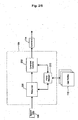
- FIG. 2 is a schematic diagram of a processor of the system shown in FIG. 1 .
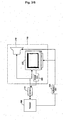
- FIG. 3 is a schematic diagram of a user interface of the system shown in FIG. 1 .
- FIG. 4 is a method of recognizing and implementing spoken commands employable by the system shown in FIG. 1 .
- FIG. 5 is a method of switching users during runtime employable by the system shown in FIG. 1 .
- FIG. 1 shows a speech recognition and device control system according to the present invention.
- the system may be useful for any number of applications including, for example, control of devices and/or processes in a medical operating room.
- the system may further be useful for any number of industrial and/or scientific applications.
- the system according to the present invention is continuously operable by two or more users.
- the system includes one or more receivers 104 for receiving speech input 102.
- the receiver 104 may be any instrument or device for receiving an incoming sound or sound wave and converting it into a digital waveform and/or an electric current or electric energy (e.g., speech data 106).
- the receiver 104 may be a microphone.
- the speech input 102 received by the receiver 104 may be any spoken utterance from a user such as a spoken word or phrase, or a collection of words or phrases.
- the speech input 102 preferably includes words or phrases indicative of one or more commands which a user desires to be communicated to and/or implemented by the system.
- the system further includes one or more processors 108.
- the processor 108 may be any device, system, or part thereof that controls at least one operation or receives and/or execute one or more software programs.
- the processor 108 may, for example, be one of a digital signal processor, a microcontroller, a microprocessor, or a computer programmable logic device. It should be noted that the functionality associated with the processor 108 may be centralized or distributed, whether locally or remotely.
- the processor 108 is in communication with the receiver 104 and may receive information from the receiver 104, such as the speech data 106, As will be described in detail below, the processor 108 and other components associated therewith may then transmit or otherwise communicate a command 114 to a device 116, user interface 118, or any other system or apparatus in communication with the processor 108.
- the system according to the present invention also includes at least one database, storage, and/or data collection including a plurality of user profiles, e.g., 110.
- Each user profile 110 of the system may include any number of user preferences, settings or parameters pertaining to a particular user's use of the system.
- a user profile 110 may include a speech recognition profile pertaining to a user.
- the speech recognition profile may include pronunciation data or any data generated as a result of speech recognition training by the particular user.
- the speech recognition profile may further include one or more language models, e.g., specific to the particular user or general to all users of the system.
- a user profile 110 may further include a display or user interface preferences profile, e.g., including any number of settings or parameters related to the user interface 118.
- the user profile 110 may also include a device preferences profile including preferences, settings and parameters pertaining to any number of particular devices operable by the system.
- the user profile 110 may further include a feedback preferences profile identifying the types of feedback the user desires (e.g., notifications, alerts, etc.) and/or the manner in which feedback is desired (e.g., audio, visual, etc).
- a user profile 110 may include many other preferences, settings, parameters and profiles.
- the system further includes any number of devices, such as device 116 shown in FIG. 1 .
- a device 116 may be any device or group of devices operable by the system.
- the device 116 may be medical device, instrument, tool or system, e.g., in an operating room.
- the device 116 may further be a scientific or industrial device, instrument, tool or system.
- Each device 116 may receive commands 114 from the system.
- Some devices 116 may also provide feedback or other data to the system.
- the system also includes at least one user interface 118 (e.g., graphical user interface).
- the user interface 118 may be any device for displaying or otherwise providing information or feedback to a user and/or receiving input or information from the user.
- the user interface 118 may include any number of components such as a monitor or display, a keypad, keyboard, a touch-screen, a mouse, and/or an audio output.
- the user interface 118 further includes the receiver 104.
- FIG. 2 shows an exemplary processor 108 of the system.
- the processor 108 includes any number of software applications or processes executing thereon.
- the software of the system may be stored or located either local or remote to the processor 108, e.g., in a database and/or temporary memory.
- the system includes a profile manager 210 for determining an active profile from the plurality of user profiles 110.
- the profile manager 210 may be embodied in hardware, software or a combination thereof,
- the profile manager 210 may include profile management software executing on the processor 108 as shown in FIG. 2 .
- the system according to the present invention may be used by two or more users (e.g., simultaneously or consecutively).
- Each of the users may have a user profile 110 accessible by the profile manager 210 and/or processor 108 and identifiable by a unique user identifier.
- the profile manager 210 provides a means for determining which of the user profiles 110 is the active profile of the system at any given time.
- the profile manager 210 further provides means for switching the active profile during runtime of the system, e.g., without restarting, rebooting and/or resetting the system and processor 108.
- the profile manager 210 may switch the active profile from a first one of the plurality of user profiles (e.g., corresponding to a first one of the present users of the system) to a second one of the plurality of user profiles (e.g., corresponding to a second one of the present users of the system) after receiving a profile selection indicative of the second one of the plurality of profiles.
- the profile or user selection may be a spoken selection (e.g., speech input 102). For example, a user may speak his or her unique identifier, such as a unique code or the user's name (e.g., "Dr. Smith"), to switch the active profile. A user may also manually select a new active profile via the user interface 118.
- the selection may further be an automatic selection or switch provided by the system. For example, the system may recognize a new user's voice (e.g., corresponding to a user profile 110) and automatically switch profiles accordingly.
- the profile manager 210 compares the current active profile to the selected profile to determine if any potential conflicts exist prior to switching the active profile. For example, the profile manager 210 may check for any conflicting device preferences or settings pertaining to a device currently in use by the system. The profile manager 210 may further check any number of other settings, preferences, and parameters in each profile to ensure a failsafe and smooth switch and/or transition. If a conflict is found, the profile manager 210 generates an alert or notification to the system's user or users. The alert may be audible or visual. In some cases, the alert may prompt the users for input to resolve the conflict.
- the system may generate a notification of the active profile switch.
- the user interface 118 continuously displays the unique identifier corresponding to the active profile.
- the notification therefore may include changing the display to indicate the unique identifier corresponding to the new active profile.
- the display may also be accompanied by an audible notification as desired.
- the system also includes a recognizer 220 for recognizing or identifying at least one potential command (e.g., a word or phrase) or a command 114 from the speech input 102 or speech data 106.
- the recognizer 220 may be embodied in hardware, software or a combination thereof.
- the recognizer 220 may include recognizer software executing on the processor 108 as shown in FIG. 2 .
- the recognizer 220 may identify the command 114 based on the active profile.
- the recognizer 220 may access the active user's speech recognition profile and/or language model and identify a command 114 based at least in part on information contained thereon.
- the recognizer 220 may further access or employ any number of language models applicable to all users of the system in identifying the potential command or command 114 (not shown).
- the system further includes a command controller 230 for implementing the at least one command (e.g., 114) and communicating with any number of devices or systems.
- the command controller 230 may determine a device associated with the potential command or command 114 identified by the recognizer 220.
- the command controller 230 may employ information and device preferences contained in the user profile 110.
- the command controller 230 may also employ any number of other components, applications and other means in implementing a command.
- the command controller 230 may then transmit or communicate the command 114 to a device 116 or user interface 118 (shown in FIG. 1 ).
- FIG. 3 shows an exemplary user interface 118.
- the user interface 118 may include one or more monitors or displays 320.
- the display 320 is a touch-screen display enabling a user to make selections or provide manual input 322 to the system by touching or tapping the display 320.
- the user interface 118 may also include any other means to provide manual input 322 including, but not limited to, a keyboard, keypad, switches, a mouse, or a joystick.
- the exemplary user interface 118 also includes an audio output 310 or speaker.
- the audio output 310 may provide users with audio feedback from the system, notifications, alerts, etc.
- Some embodiments of the user interface 118 also include the receiver 104.
- FIG. 4 shows a method of recognizing and implementing spoken commands employable by the system shown in FIG. 1 .
- the method includes a first step 401 of determining an active profile from one of a plurality of user profiles.
- the step 401 may be executed by the profile manager 210 of the system.
- the profile manager 210 may, for example, receive a user selection indicative of a particular user profile (e.g., unique user identifier). Upon receiving the selection, or after completing a conflict check, the profile manager 210 may activate the user profile during runtime and without restarting, rebooting and/or resetting the voice-driven device control system.
- the method also includes a step 403 of receiving a speech input.
- the speech input may be indicative of a command to be implemented by the system or a device operable by the system.
- the system may then identify or recognize at least one potential command or command from the speech input, e.g., based on information, settings or preferences contained in the active profile (step 405).
- the command or commands identified by the system may next be processed and implemented (step 407). For example, a command may be implemented by one or more corresponding devices operable by the system.
- FIG. 5 shows a method of switching users during runtime employable by system shown in FIG. 1 .
- the method includes a step 501 of receiving a user or profile selection.
- the selection may be received as a speech input, manual input, an automatic selection (e.g., based on the system's recognition of a particular user's voice), or a combination thereof.
- the user selection preferably includes a unique user identifier such as a code, name, or any other identifier.
- a user profile corresponding to the user selection is then determined (step 503). Determining the user profile may include querying the database of user profiles 110.
- the selected user profile is compared to the current active profile to determine if any conflicts or potential conflicts exist between the user profile and the active profile (steps 505-507). If no conflicts exist, the selected user profile is activated (step 509).
- the user profile may be activated immediately, or in some embodiments, upon confirmation of the switch by one or both users.
- a notification of the switch in active profiles is then
- a notification or alert is generated (step 513).
- the alert may include a request for user input to resolve the conflict. If the conflict is resolved (step 515), the active profile is switched and the users notified (step 511).
- a speech recognition and control system continuously operable by two or more users, including a receiver for receiving a speech input, a processor in communication with the receiver, a database in communication with the processor, the database including a plurality of user profiles, prof le management software executing on the processor for determining an active profile from the plurality of user profiles, and software executing on the processor for identifying at least one command from the speech input based on the active profile.
Landscapes
- Engineering & Computer Science (AREA)
- Computational Linguistics (AREA)
- Health & Medical Sciences (AREA)
- Audiology, Speech & Language Pathology (AREA)
- Human Computer Interaction (AREA)
- Physics & Mathematics (AREA)
- Acoustics & Sound (AREA)
- Multimedia (AREA)
- User Interface Of Digital Computer (AREA)
- Information Retrieval, Db Structures And Fs Structures Therefor (AREA)
Claims (16)
- Système de reconnaissance de la parole et de commande par la parole utilisable de façon continue par au moins deux utilisateurs, comprenant :un récepteur (104) destiné à recevoir une entrée de parole (102) ;un processeur (108) en communication avec ledit récepteur (104) ;un logiciel s'exécutant sur ledit processeur (108) destiné à identifier au moins un ordre (114) à partir de l'entrée de parole (102) sur la base d'un profil actif,une base de données en communication avec ledit processeur (108), ladite base de données comportant une pluralité de profils d'utilisateur (110), chaque profil d'utilisateur (110) comportant des préférences d'utilisateur et des réglages pour un utilisateur particulier ; etun logiciel de gestion de profils (210) s'exécutant sur ledit processeur (108), destiné à déterminer le profil actif parmi la pluralité de profils d'utilisateur (110),le système étant caractérisé en ce qu'il est adapté à reconnaître la voix d'un nouvel utilisateur correspondant à un profil d'utilisateur (110) et, par voie de conséquence, à basculer automatiquement de profil, chacun parmi la pluralité de profils d'utilisateur (110) comportant un profil de reconnaissance de la parole appartenant à l'utilisateur respectif.
- Système selon la revendication 1, comprenant en outre :un logiciel destiné à générer une notification lors du basculement du profil actif.
- Système selon la revendication 2, dans lequel le logiciel destiné à générer une notification génère une notification audible (324) et/ou une notification visuelle.
- Système selon la revendication 2, dans lequel la notification comporte un identificateur d'utilisateur correspondant au profil actif.
- Système selon la revendication 1, dans lequel ledit logiciel de gestion de profils (210) bascule le profil actif depuis un premier parmi la pluralité de profils d'utilisateur (110) vers un deuxième parmi la pluralité de profils d'utilisateur (110) suite à la réception d'une sélection de profil indiquant le deuxième parmi la pluralité de profils, et dans lequel ledit logiciel de gestion de profils (210) compare le premier parmi la pluralité de profils d'utilisateur (110) au deuxième parmi la pluralité de profils d'utilisateur (110) dans le but de déterminer des conflits potentiels entre les premier et deuxième profils préalablement au basculement du profil actif.
- Système selon la revendication 5, dans lequel ledit logiciel de gestion de profils (210) génère une alerte (324) si un conflit potentiel est identifié.
- Système selon la revendication 1, dans lequel chacun parmi la pluralité de profils d'utilisateur (110) comporte au moins un profil parmi un profil de reconnaissance de la parole, un profil de préférences d'affichage, un profil de préférences de dispositif et un profil de préférences de retour d'information.
- Système selon la revendication 1, dans lequel un parmi la pluralité de profils d'utilisateur (110) est un profil par défaut.
- Système selon la revendication 1, dans lequel au moins un parmi la pluralité de profils d'utilisateur (110) est modifiable par ledit logiciel de gestion de profils.
- Système selon la revendication 1, comprenant en outre :un logiciel s'exécutant sur ledit processeur (108) destiné à mettre en oeuvre ledit au moins un ordre (114).
- Procédé de reconnaissance et de mise en oeuvre d'ordres parlés (114) destiné à être utilisé dans un système de commande de dispositif piloté par la voix, le procédé comprenant les étapes consistant à :déterminer (401) un profil actif à partir d'un parmi une pluralité de profils d'utilisateur (110), chaque profil d'utilisateur (110) comportant des préférences d'utilisateur et des réglages pour un utilisateur particulier ;recevoir (403) une entrée de parole (102) ;reconnaître (405) au moins un ordre (114) à partir de l'entrée de parole (102) sur la base du profil actif ; etmettre en oeuvre (407) ledit au moins un ordre (114),le procédé étant caractérisé par l'étape consistant à reconnaître la voix d'un nouvel utilisateur correspondant à un profil d'utilisateur (110) et, par voie de conséquence, à basculer automatiquement de profil, chacun parmi la pluralité de profils d'utilisateur (110) comportant un profil de reconnaissance de la parole appartenant à l'utilisateur respectif.
- Procédé selon la revendication 11, dans lequel ladite étape consistant à déterminer (401) un profil actif comprend l'étape consistant à recevoir (501) une sélection d'utilisateur indiquant un profil d'utilisateur (110) et à activer (509) le profil d'utilisateur (110) sans redémarrer le système de commande de dispositif piloté par la voix.
- Procédé selon la revendication 11, dans lequel ladite étape consistant à mettre en oeuvre (407) l'ordre (114) comprend l'étape consistant à transmettre l'ordre (114) à au moins un dispositif commandable par le système de commande de dispositif piloté par la voix.
- Procédé selon la revendication 11, dans lequel ladite étape consistant à basculer automatiquement de profil comprend les étapes consistant à :déterminer (503) un profil d'utilisateur (110) correspondant à la voix du nouveau utilisateur ;comparer (505) le profil d'utilisateur (110) à un profil actif en cours dans le but de déterminer (507) des conflits entre le profil d'utilisateur (110) et le profil actif en cours ; etactiver (509) le profil d'utilisateur (110) si aucun conflit n'existe entre le profil d'utilisateur (110) et le profil actif en cours.
- Procédé selon la revendication 14, comprenant en outre l'étape consistant à:générer (513) une notification (324), la notification (324) indiquant un conflit ou bien un nouveau profil actif.
- Procédé selon la revendication 14, dans lequel ladite étape consistant à déterminer (503) un profil d'utilisateur (110) comporte l'étape consistant à interroger une base de données d'une pluralité de profils d'utilisateur (110).
Applications Claiming Priority (1)
| Application Number | Priority Date | Filing Date | Title |
|---|---|---|---|
| US11/455,248 US8015014B2 (en) | 2006-06-16 | 2006-06-16 | Speech recognition system with user profiles management component |
Publications (2)
| Publication Number | Publication Date |
|---|---|
| EP1868184A1 EP1868184A1 (fr) | 2007-12-19 |
| EP1868184B1 true EP1868184B1 (fr) | 2015-04-15 |
Family
ID=38229045
Family Applications (1)
| Application Number | Title | Priority Date | Filing Date |
|---|---|---|---|
| EP07011522.5A Active EP1868184B1 (fr) | 2006-06-16 | 2007-06-13 | Système de reconnaissance vocale avec gestion des profils d'utilisateur |
Country Status (4)
| Country | Link |
|---|---|
| US (1) | US8015014B2 (fr) |
| EP (1) | EP1868184B1 (fr) |
| JP (1) | JP4699411B2 (fr) |
| CA (1) | CA2576758C (fr) |
Families Citing this family (33)
| Publication number | Priority date | Publication date | Assignee | Title |
|---|---|---|---|---|
| US8688459B2 (en) * | 2007-10-08 | 2014-04-01 | The Regents Of The University Of California | Voice-controlled clinical information dashboard |
| US9648380B2 (en) | 2009-09-14 | 2017-05-09 | Tivo Solutions Inc. | Multimedia device recording notification system |
| US8682145B2 (en) | 2009-12-04 | 2014-03-25 | Tivo Inc. | Recording system based on multimedia content fingerprints |
| JP5673330B2 (ja) * | 2011-04-25 | 2015-02-18 | 株式会社デンソー | 音声入力装置 |
| WO2012169679A1 (fr) * | 2011-06-10 | 2012-12-13 | 엘지전자 주식회사 | Appareil d'affichage, procédé de commande d'un appareil d'affichage et système de reconnaissance vocale pour un appareil d'affichage |
| JP2013178644A (ja) * | 2012-02-28 | 2013-09-09 | Toshiba Corp | 医用情報通信試験装置 |
| US10068288B2 (en) * | 2012-12-17 | 2018-09-04 | Capital One Financial Corporation | Systems and methods for providing a user interface for facilitating personal payment transactions |
| US9812130B1 (en) * | 2014-03-11 | 2017-11-07 | Nvoq Incorporated | Apparatus and methods for dynamically changing a language model based on recognized text |
| US10643616B1 (en) * | 2014-03-11 | 2020-05-05 | Nvoq Incorporated | Apparatus and methods for dynamically changing a speech resource based on recognized text |
| DE102014209358A1 (de) * | 2014-05-16 | 2015-11-19 | Ford Global Technologies, Llc | Vorrichtung und Verfahren zur Spracherkennung, insbesondere in einem Fahrzeug |
| US9620106B2 (en) | 2014-07-30 | 2017-04-11 | At&T Intellectual Property I, L.P. | System and method for personalization in speech recogniton |
| US10720237B2 (en) * | 2015-04-29 | 2020-07-21 | Koninklijke Philips N.V. | Method of and apparatus for operating a device by members of a group |
| JP6788016B2 (ja) * | 2016-09-12 | 2020-11-18 | 株式会社Fuji | 介助装置 |
| US10013971B1 (en) * | 2016-12-29 | 2018-07-03 | Google Llc | Automated speech pronunciation attribution |
| KR102412202B1 (ko) * | 2017-01-03 | 2022-06-27 | 삼성전자주식회사 | 냉장고 및 이의 정보 표시 방법 |
| DK179549B1 (en) | 2017-05-16 | 2019-02-12 | Apple Inc. | FAR-FIELD EXTENSION FOR DIGITAL ASSISTANT SERVICES |
| EP3745395B1 (fr) * | 2017-05-16 | 2022-05-18 | Apple Inc. | Extension en champ lointain pour services d'assistant numérique |
| US10504513B1 (en) * | 2017-09-26 | 2019-12-10 | Amazon Technologies, Inc. | Natural language understanding with affiliated devices |
| US10567515B1 (en) | 2017-10-26 | 2020-02-18 | Amazon Technologies, Inc. | Speech processing performed with respect to first and second user profiles in a dialog session |
| US10715604B1 (en) * | 2017-10-26 | 2020-07-14 | Amazon Technologies, Inc. | Remote system processing based on a previously identified user |
| DE102018106388A1 (de) | 2018-03-19 | 2019-09-19 | gimya.solution UG (haftungsbeschränkt) | Vorrichtung und Verfahren zum Steuern und/oder Regeln von medizinischen Geräten |
| EP3723082B1 (fr) * | 2018-04-16 | 2023-09-06 | Google LLC | Détermination automatique d'une langue pour la reconnaissance de la parole d'un énoncé vocal reçu par l'intermédiaire d'une interface d'assistant automatisé |
| CN109065058B (zh) * | 2018-09-30 | 2024-03-15 | 合肥鑫晟光电科技有限公司 | 语音通信方法、装置及系统 |
| WO2020243691A1 (fr) | 2019-05-31 | 2020-12-03 | Apple Inc. | Interfaces utilisateurs pour une commande média audio |
| US10996917B2 (en) | 2019-05-31 | 2021-05-04 | Apple Inc. | User interfaces for audio media control |
| US10802843B1 (en) | 2019-05-31 | 2020-10-13 | Apple Inc. | Multi-user configuration |
| JP6977004B2 (ja) * | 2019-08-23 | 2021-12-08 | サウンドハウンド,インコーポレイテッド | 車載装置、発声を処理する方法およびプログラム |
| US12381880B2 (en) | 2020-10-12 | 2025-08-05 | Apple Inc. | Media service configuration |
| US12405717B2 (en) | 2020-10-26 | 2025-09-02 | Apple Inc. | Methods and user interfaces for handling user requests |
| US11960615B2 (en) | 2021-06-06 | 2024-04-16 | Apple Inc. | Methods and user interfaces for voice-based user profile management |
| US12021806B1 (en) | 2021-09-21 | 2024-06-25 | Apple Inc. | Intelligent message delivery |
| WO2023076187A2 (fr) * | 2021-10-25 | 2023-05-04 | Exxo, Inc. | Systèmes et procédés d'identification et de réponse de source d'interrogation |
| US12321667B2 (en) | 2022-07-14 | 2025-06-03 | Becton, Dickinson And Company | Contactless control of physiological monitors |
Family Cites Families (25)
| Publication number | Priority date | Publication date | Assignee | Title |
|---|---|---|---|---|
| US6646541B1 (en) | 1996-06-24 | 2003-11-11 | Computer Motion, Inc. | General purpose distributed operating room control system |
| US6463361B1 (en) | 1994-09-22 | 2002-10-08 | Computer Motion, Inc. | Speech interface for an automated endoscopic system |
| US7053752B2 (en) | 1996-08-06 | 2006-05-30 | Intuitive Surgical | General purpose distributed operating room control system |
| US5970457A (en) | 1995-10-25 | 1999-10-19 | Johns Hopkins University | Voice command and control medical care system |
| US6496099B2 (en) | 1996-06-24 | 2002-12-17 | Computer Motion, Inc. | General purpose distributed operating room control system |
| US6642836B1 (en) | 1996-08-06 | 2003-11-04 | Computer Motion, Inc. | General purpose distributed operating room control system |
| US5915001A (en) * | 1996-11-14 | 1999-06-22 | Vois Corporation | System and method for providing and using universally accessible voice and speech data files |
| JP2000305596A (ja) | 1999-04-23 | 2000-11-02 | Sony Corp | 音声認識装置及びナビゲーション装置 |
| US6266635B1 (en) | 1999-07-08 | 2001-07-24 | Contec Medical Ltd. | Multitasking interactive voice user interface |
| US6601026B2 (en) | 1999-09-17 | 2003-07-29 | Discern Communications, Inc. | Information retrieval by natural language querying |
| US6587818B2 (en) | 1999-10-28 | 2003-07-01 | International Business Machines Corporation | System and method for resolving decoding ambiguity via dialog |
| US6591239B1 (en) | 1999-12-09 | 2003-07-08 | Steris Inc. | Voice controlled surgical suite |
| US7319962B2 (en) * | 1999-12-24 | 2008-01-15 | Medtronic, Inc. | Automatic voice and data recognition for implanted medical device instrument systems |
| FR2808186B1 (fr) * | 2000-04-27 | 2003-02-21 | Alm | Systeme de commande de table d'operation et table d'operation comportant un tel systeme |
| US6993119B1 (en) * | 2000-08-09 | 2006-01-31 | Bellsouth Intellectual Property Corporation | Network and method for providing a flexible call forwarding telecommunications service with automatic speech recognition capability |
| US7117159B1 (en) * | 2001-09-26 | 2006-10-03 | Sprint Spectrum L.P. | Method and system for dynamic control over modes of operation of voice-processing in a voice command platform |
| JP3970080B2 (ja) * | 2002-04-16 | 2007-09-05 | キヤノン株式会社 | 動画再生装置、動画再生方法及びそのコンピュータ・プログラム |
| US7286749B2 (en) | 2002-04-16 | 2007-10-23 | Canon Kabushiki Kaisha | Moving image playback apparatus, moving image playback method, and computer program thereof with determining of first voice period which represents a human utterance period and second voice period other than the first voice period |
| US7693720B2 (en) * | 2002-07-15 | 2010-04-06 | Voicebox Technologies, Inc. | Mobile systems and methods for responding to natural language speech utterance |
| US20050180464A1 (en) | 2002-10-01 | 2005-08-18 | Adondo Corporation | Audio communication with a computer |
| DE602004020247D1 (de) * | 2003-10-21 | 2009-05-07 | Johnson Controls Tech Co | System und verfahren zur auswahl eines benutzersprachprofils für eine vorrichtung in einem fahrzeug |
| US8233592B2 (en) * | 2003-11-10 | 2012-07-31 | Nuance Communications, Inc. | Personal home voice portal |
| US20050288930A1 (en) * | 2004-06-09 | 2005-12-29 | Vaastek, Inc. | Computer voice recognition apparatus and method |
| US7949529B2 (en) * | 2005-08-29 | 2011-05-24 | Voicebox Technologies, Inc. | Mobile systems and methods of supporting natural language human-machine interactions |
| US20070219792A1 (en) * | 2006-03-20 | 2007-09-20 | Nu Echo Inc. | Method and system for user authentication based on speech recognition and knowledge questions |
-
2006
- 2006-06-16 US US11/455,248 patent/US8015014B2/en not_active Expired - Fee Related
-
2007
- 2007-01-31 CA CA2576758A patent/CA2576758C/fr active Active
- 2007-03-23 JP JP2007077381A patent/JP4699411B2/ja not_active Expired - Fee Related
- 2007-06-13 EP EP07011522.5A patent/EP1868184B1/fr active Active
Also Published As
| Publication number | Publication date |
|---|---|
| CA2576758C (fr) | 2012-11-13 |
| CA2576758A1 (fr) | 2007-12-16 |
| US8015014B2 (en) | 2011-09-06 |
| EP1868184A1 (fr) | 2007-12-19 |
| US20070294081A1 (en) | 2007-12-20 |
| JP4699411B2 (ja) | 2011-06-08 |
| JP2007334301A (ja) | 2007-12-27 |
Similar Documents
| Publication | Publication Date | Title |
|---|---|---|
| EP1868184B1 (fr) | Système de reconnaissance vocale avec gestion des profils d'utilisateur | |
| JP6887031B2 (ja) | 方法、電子装置、家庭用機器ネットワークおよび記憶媒体 | |
| EP1909264B1 (fr) | Système et procédé de réduction des risques dans des applications de contrôle vocaux | |
| EP1801780B1 (fr) | Support simultané de reconnaissance de commande de phrase isolée et connectée dans des systèmes de reconnaissance vocale automatiques | |
| KR100753780B1 (ko) | 음성 입력 디바이스 | |
| US10930277B2 (en) | Configuration of voice controlled assistant | |
| JP6636303B2 (ja) | 対話装置、対話機器、対話装置の制御方法、制御プログラム、および記録媒体 | |
| CN113975078A (zh) | 基于人工智能的按摩控制方法及相关设备 | |
| WO2019234392A1 (fr) | Appareil et procédé | |
| JP2003255987A (ja) | 音声認識を利用した機器の制御方法、制御装置及び制御プログラム | |
| EP0772184A1 (fr) | Identification des appareils ménagers pour la voix | |
| KR100423495B1 (ko) | 음성인식에 의한 휴대용 기기의 동작제어 장치 및 방법 | |
| JPH08335094A (ja) | 音声入力方法およびこの方法を実施する装置 | |
| JP2013257448A (ja) | 音声認識装置 |
Legal Events
| Date | Code | Title | Description |
|---|---|---|---|
| PUAI | Public reference made under article 153(3) epc to a published international application that has entered the european phase |
Free format text: ORIGINAL CODE: 0009012 |
|
| AK | Designated contracting states |
Kind code of ref document: A1 Designated state(s): AT BE BG CH CY CZ DE DK EE ES FI FR GB GR HU IE IS IT LI LT LU LV MC MT NL PL PT RO SE SI SK TR |
|
| AX | Request for extension of the european patent |
Extension state: AL BA HR MK YU |
|
| 17P | Request for examination filed |
Effective date: 20080528 |
|
| 17Q | First examination report despatched |
Effective date: 20080630 |
|
| AKX | Designation fees paid |
Designated state(s): DE FR GB IT |
|
| GRAP | Despatch of communication of intention to grant a patent |
Free format text: ORIGINAL CODE: EPIDOSNIGR1 |
|
| INTG | Intention to grant announced |
Effective date: 20141117 |
|
| GRAS | Grant fee paid |
Free format text: ORIGINAL CODE: EPIDOSNIGR3 |
|
| GRAA | (expected) grant |
Free format text: ORIGINAL CODE: 0009210 |
|
| AK | Designated contracting states |
Kind code of ref document: B1 Designated state(s): DE FR GB IT |
|
| REG | Reference to a national code |
Ref country code: GB Ref legal event code: FG4D |
|
| REG | Reference to a national code |
Ref country code: DE Ref legal event code: R096 Ref document number: 602007041031 Country of ref document: DE Effective date: 20150528 |
|
| REG | Reference to a national code |
Ref country code: DE Ref legal event code: R097 Ref document number: 602007041031 Country of ref document: DE |
|
| PG25 | Lapsed in a contracting state [announced via postgrant information from national office to epo] |
Ref country code: IT Free format text: LAPSE BECAUSE OF NON-PAYMENT OF DUE FEES Effective date: 20150613 |
|
| PLBE | No opposition filed within time limit |
Free format text: ORIGINAL CODE: 0009261 |
|
| STAA | Information on the status of an ep patent application or granted ep patent |
Free format text: STATUS: NO OPPOSITION FILED WITHIN TIME LIMIT |
|
| 26N | No opposition filed |
Effective date: 20160118 |
|
| PGRI | Patent reinstated in contracting state [announced from national office to epo] |
Ref country code: IT Effective date: 20160412 |
|
| REG | Reference to a national code |
Ref country code: FR Ref legal event code: PLFP Year of fee payment: 10 |
|
| REG | Reference to a national code |
Ref country code: FR Ref legal event code: PLFP Year of fee payment: 11 |
|
| REG | Reference to a national code |
Ref country code: FR Ref legal event code: PLFP Year of fee payment: 12 |
|
| PGFP | Annual fee paid to national office [announced via postgrant information from national office to epo] |
Ref country code: IT Payment date: 20180522 Year of fee payment: 13 |
|
| PG25 | Lapsed in a contracting state [announced via postgrant information from national office to epo] |
Ref country code: IT Free format text: LAPSE BECAUSE OF NON-PAYMENT OF DUE FEES Effective date: 20190613 |
|
| P01 | Opt-out of the competence of the unified patent court (upc) registered |
Effective date: 20230527 |
|
| PGFP | Annual fee paid to national office [announced via postgrant information from national office to epo] |
Ref country code: DE Payment date: 20250626 Year of fee payment: 19 |
|
| PGFP | Annual fee paid to national office [announced via postgrant information from national office to epo] |
Ref country code: GB Payment date: 20250618 Year of fee payment: 19 |
|
| PGFP | Annual fee paid to national office [announced via postgrant information from national office to epo] |
Ref country code: FR Payment date: 20250624 Year of fee payment: 19 |