EP1868328A1 - Procédé d'opération d'un dispositif d'automation et dispositif d'automation - Google Patents
Procédé d'opération d'un dispositif d'automation et dispositif d'automation Download PDFInfo
- Publication number
- EP1868328A1 EP1868328A1 EP06012055A EP06012055A EP1868328A1 EP 1868328 A1 EP1868328 A1 EP 1868328A1 EP 06012055 A EP06012055 A EP 06012055A EP 06012055 A EP06012055 A EP 06012055A EP 1868328 A1 EP1868328 A1 EP 1868328A1
- Authority
- EP
- European Patent Office
- Prior art keywords
- memory
- automation device
- communication
- communication relationship
- memory segment
- Prior art date
- Legal status (The legal status is an assumption and is not a legal conclusion. Google has not performed a legal analysis and makes no representation as to the accuracy of the status listed.)
- Granted
Links
- 238000000034 method Methods 0.000 title claims abstract description 29
- 238000004891 communication Methods 0.000 claims abstract description 127
- 238000004590 computer program Methods 0.000 claims description 8
- 238000012545 processing Methods 0.000 claims description 3
- 238000012546 transfer Methods 0.000 claims description 3
- 238000012795 verification Methods 0.000 claims description 2
- 238000012360 testing method Methods 0.000 claims 1
- 230000005540 biological transmission Effects 0.000 description 7
- 238000012986 modification Methods 0.000 description 3
- 230000004048 modification Effects 0.000 description 3
- 230000015572 biosynthetic process Effects 0.000 description 1
- 230000001419 dependent effect Effects 0.000 description 1
- 238000013461 design Methods 0.000 description 1
- 238000011161 development Methods 0.000 description 1
- 238000011156 evaluation Methods 0.000 description 1
- 238000009472 formulation Methods 0.000 description 1
- 238000013467 fragmentation Methods 0.000 description 1
- 238000006062 fragmentation reaction Methods 0.000 description 1
- 239000000203 mixture Substances 0.000 description 1
- 238000012544 monitoring process Methods 0.000 description 1
Images

Classifications
-
- H—ELECTRICITY
- H04—ELECTRIC COMMUNICATION TECHNIQUE
- H04L—TRANSMISSION OF DIGITAL INFORMATION, e.g. TELEGRAPHIC COMMUNICATION
- H04L49/00—Packet switching elements
- H04L49/90—Buffering arrangements
- H04L49/901—Buffering arrangements using storage descriptor, e.g. read or write pointers
-
- H—ELECTRICITY
- H04—ELECTRIC COMMUNICATION TECHNIQUE
- H04L—TRANSMISSION OF DIGITAL INFORMATION, e.g. TELEGRAPHIC COMMUNICATION
- H04L49/00—Packet switching elements
- H04L49/90—Buffering arrangements
Definitions
- the present invention relates to a method for operating an automation device provided for receiving telegrams and to an automation device operating according to the method or provided for carrying out the method.
- a possible communication relationship exists between a first automation device or communication station (sender) and another communication station or automation device (receiver) for which the data intended by the sender for transfer are determined.
- a sender may be a communication relationship between a sender and a plurality of recipients.
- a communication relationship between a transmitter and a plurality of receivers which is usually handled via so-called broadcast or multicast frames, resulting in the processing of the respective recipient Data then a problem if the amount of data can not be transmitted within a telegram.
- the data volume to be transmitted can not be transferred with a single telegram, the data volume is divided into several consecutive telegrams according to the respective data transmission protocol. This results in a fragmentation of the transmitted data. If, during a sequence of incoming telegrams in the context of a communication relationship, telegrams which belong to other communication relationships also arrive at the respective recipient, a complex administration and assignment of the incoming data has hitherto been necessary.
- the automation device distinguishes between active and new communication relationships, for each new communication relationship - if available - selects a specific resource and then for this communication relationship, which thus active communication relationship is used, in particular used exclusively.
- the automation device for incoming or received telegrams is a memory area acting as a resource pool and comprising at least one memory segment having at least one memory section. Associated in this context means that the memory area is or will be provided in a local memory comprised by the automation device or in a remote memory communicatively connected to the automation device.
- the automation device distinguishes between active and new communication relationships with a remote communication participant, ie a respective transmitter.
- the automation device itself acts as a receiver in the communication relationship and selects for each new communication relationship, that is to say a not yet active and therefore not yet "known" communication relationship, from the resource pool a free resource, ie a memory segment and / or a memory section. With the selection of such a free resource, which is used for this communication relationship in the following, the respective communication relation becomes the active communication relation.
- the communication relationship is subsequently carried out exclusively using the selected resource.
- a free resource ie a selected memory segment or a selected memory section
- a transmitter identifier identifying the remote communication user.
- the sender identification comprises an address criterion which identifies the remote communication subscriber, the respective sender, as well as an ordering criterion inserted by the respective sender into the respective message, a distinction of communication relationships not only related to the remote communication subscriber becomes possible.
- the distinction between communication relationships based on the respective sender identification takes place in such a way that it references the respective sender, ie the programmable controller, which has given the respective message to the bus.
- the sender identification comprises an address identifying the sender or a reference which is comparably unique in this respect as well as a classification criterion. Such an address is unique for each communication user, z. B. due to a corresponding configuration, given.
- the order criterion is basically any date distinguishable from other data, e.g. For example, a number from the set of natural numbers, into consideration.
- An order criterion is for a station or running on the transmitter application z. B. determined on the basis of a corresponding configuration.
- the respective communication subscriber as well as an application running on it or any other functional unit to which the ordering criterion relates can be distinguished. In this way, communication relationships between a first, acting as a transmitter automation device and a second, acting as a receiver automation device are then still distinguishable if send on the part of the transmitter several software applications telegrams to the receiver.
- the automation device in the case of an incoming telegram the respective sender identification checked using approved sender IDs.
- a number of authorized sender identifiers are stored or storable in a memory allocated to the automation device in the sense already explained above.
- the or each authorized sender identification results in particular due to appropriate configuration, so if z.
- a communication relationship between a particular application of a particular first automation device with a particular application of a particular second automation device is provided and at the latest in this context, a sender identification, so in particular the combination of address and order criterion is set. If such a check fails, it is clear that the respective telegram was not intended for the recipient it arrived at.
- the sender can then, ie with almost no time delay, issued a message in this regard. Without such a check, it is possible to recognize telegrams that are not intended for a specific receiver but arrive there only after a content evaluation of the telegram.
- the time offset between a possibly possible message to the sender and the original message transmission is disproportionate to the time offset that results between message transmission and message, if immediately upon receipt of a message whose sender ID is checked for compliance with approved sender IDs.
- a resource that is to say a memory segment and / or a memory section, is selected only if the respective transmitter identifier corresponds to an authorized transmitter identifier.
- This is z. B. ensures that data contained in the received message occupy only space on the side of the receiver, if the respective data are actually intended for the respective recipient.
- the verification of the sender identification preferably takes place on the basis of an authorized sender identification by pairwise checking of Address and order criterion. Then, a telegram or an underlying communication relationship is only recognized as permissible if both the address and the order criterion coincide with corresponding entries in the authorized sender identification. A simple implementation of such a pairwise check is possible if the address and order criterion are combined into one datum both with respect to the sender identification and with respect to the respective authorized sender identification to be checked.
- the order criterion of an authorized sender identification defines a respective memory segment and that a memory section is selected and used in the memory segment.
- the address of an authorized sender identification defines a respective memory segment and that a memory section is selected and used in the memory segment.
- a memory segment is selected on the basis of a criterion characterizing the origin of the telegram. The memory segment is therefore available exclusively for telegrams which have the respective address or the respective order criterion in the sender identification.
- a selection of a memory section then takes place as the actual memory location for the received telegram or the data contained in the telegram depending on the availability of such memory sections.
- the automation device logs which memory section has been selected. For subsequent communication relationships under the same sender identification, the same memory segment is selected. Due to the logging of the resources used in this known communication relationship, ie at a lowest level due to the logging of the respective memory section, this or this is used for any further communication in this communication relationship. It is preferably managed for each of these memory sections, at which point an entry of new data is possible, without overwriting old, not yet evaluated data.
- the data contained in the respectively incoming telegrams are always stored exclusively in the respective memory section on the basis of the resource assigned to this communication relationship. If received during the reception of telegrams in this communication relationship telegrams from other communication relationships in the respective automation device, there may be no conflicts, since the data received in the telegrams of such further communication relationships other resources, ie other memory sections, possibly also other memory segments assigned are and so far without a risk or even a possibility of a collision with data from other communication relationships are stored.
- a selected resource is released again when a data transfer in the respective communication relationship is completed.
- selected resources for other communication relationships become available again when the data transmitted in a completed communication relationship is received and / or evaluated.
- an error message is then transmitted to one or the remote communication subscriber, that is to say to the sender, if no free resource is available for the new communication relationship at the receiver.
- the respective remote communication subscriber who receives such an error message, then has to postpone his transmission request, that is to say the transmission of the respective telegram, until one of the resources currently used by the receiver is released again, after a communication relationship completed thereunder has ended.
- the method according to the invention can be implemented in software, firmware and / or in hardware.
- the invention accordingly also relates to a computer program comprising computer executable program code instructions for implementing the method described above when the computer program is executed on a computer and a computer program product, in particular a storage medium, having a computer executable such computer program.
- the invention also relates to an automation device with program code means, in particular an implementation of the method described above in software and / or hardware, in which the automation device is associated with a resource pool, in which incoming telegrams as belonging to an active or a new communication relationship with a remote communication participant are distinguishable and in which for each new communication relationship from the resource pool a free resource selectable and then for this communication relationship, which thus becomes the active communication relationship, is usable.
- a processing unit so z.
- ASIC user-specific integrated circuit
- FPGA etc.
- FIG. 1 shows a schematic simplified representation of an automation system 10 with a number communicatively interconnected communication participants 12, 14, 16, 18.
- the communicative connection between the individual communication participants 12 to 18 takes place on the basis of a bus 20, in particular a field bus, z. B. the so-called PROFIBUS.
- the automation system 10 with its programmable controllers 12 to 18 is provided according to the representation selected by way of example in a manner known per se for controlling and / or monitoring a technical process 22, not shown in more detail.
- FIG. 2 shows in a likewise simplified simplified manner a data exchange between two automation devices 12 to 18 of the automation system 10 (FIG.
- the data exchange takes place via the bus 20 (FIG. 1) and is performed according to a protocol prescribed for the bus 20 by transmitting telegrams 24 between the first transmitter functioning in the illustrated situation Automation device 12 and acting as a receiver 28 second automation device 16 handled.
- the data to be transmitted by the transmitter 26 to the receiver 28 is of such a size that it can not be accommodated within a single telegram 24 having a fixed size according to the respective protocol, such data is transmitted by a plurality of successive ones Telegrams 24. If a sequence of telegrams 24 belonging to different data transmission operations / communication relationships is received simultaneously or quasi simultaneously from a plurality of transmitters 26 or from the same transmitter 26 at a receiver 28, an unambiguous assignment of the individual telegrams 24 to the respective communication relationship is made more difficult.
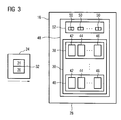
- each automation device 12 to 18 (FIG. 1) is assigned a memory area 30 functioning as a resource pool. This is illustrated in FIG. 3 on the basis of the automation device / communication subscriber 16 functioning as the receiver 28.
- a received at the receiver 28 or received by the receiver 28 telegram 24 is for the respective receiver 28 as to an active or a new communication relationship with a remote communication participants 12, ie the respective transmitter 26 (FIG 2), duly distinguishable.
- the sender identification 32 comprises an address 34 identifying the sender 26 or a reference which is comparably unique in this respect, as well as an ordering criterion 36.
- Such an address 34 is unique for each communication subscriber, e.g. B. due to a corresponding configuration, given.
- order criterion 36 is basically any distinguishable from other dates date, z. Legs Number from the set of natural numbers, into consideration.
- An order criterion 36 is for a transmitter 26 or running on the transmitter 26 application z. B. determined on the basis of a corresponding configuration.
- a receiver 28 has not received any telegrams 24 under a specific sender identifier 32, at least with the receipt of a first telegram 24 with this sender identifier 32, a new communication relationship arises.
- a new communication relationship thus arises z. B. even if a transmitter 26 has already received telegrams 24 under a first order criterion 36 and now receives a telegram 24 with a 26 not yet used by this transmitter classification criterion 36. Then as the origin of the telegram 24 not only the respective transmitter 26, ie z. B. the respective automation device 12 to 18, but z. B. also on the respective automation device 12 to 18 running application or the like distinguishable.
- a free resource e.g. B. a first, second, etc. memory segment 38, 40 and a first, second, third, etc. memory section 42, 44, 46 in the respective memory segment 38, 40 selected.
- the respective resource is then used exclusively for the new communication relationship, which becomes an active communication relationship at the latest with the assignment of a hitherto free resource.
- the memory area 30 functioning as a resource pool is shown as a section in a memory 48 assigned to the receiver 28.
- the memory area 30 need not necessarily be occupied in the local memory 48 of the receiver 28. It can likewise be provided that the memory area 30 is occupied in a memory (not shown) that can only be reached via the bus 20 (FIG. 1).
- a free resource that is to say a memory segment 38, 40 and a memory section 42 to 46, takes place in connection with the recognition of a new communication relationship by means of approved transmitter identifiers 50 assigned to the receiver 28, which in accordance with the illustration in FIG Stored data base 52 for authorized sender identifiers 50, wherein this database 52 can also be stored in any other reachable for the receiver 28 memory.
- the or each authorized sender identifier 52 is sent to a respective receiver 28 e.g. B. assigned during configuration of an automation solution. During such a configuration, it is determined which communication relationships are required between the individual communication participants and / or the applications running on them.
- the transmitter identifiers 32 to be used on the side of the respective transmitters 26 (FIG.
- the respective receiver 28 checks the sender identifier 32 contained in the telegram 24 on the basis of the or each assigned sender identifier 50 assigned to it. If no suitable authorized sender identifier 50 is found for the received sender identifier 32, the telegram 24 is rejected and preferably the respective one Transmitter 26 (FIG 2) with a related message, z. B. an error message (not shown), informed.
- the received telegram 24 is intended for the respective receiver 28. Then, on the basis of the sender identifier 32 (or, for example, if sender identifier 32 and authorized sender identifier 50 are not identical, based on the authorized sender identifier 50), a free resource for storing the telegram 24 or at least the one in the memory area 30 functioning as a resource pool Telegram 24 contained selected data.
- the procedure is such that the order criterion 36 in the transmitter identifier 32 (or in the authorized transmitter identifier 50) references the respective memory segment 38, 40.
- a memory location for transmitted data is at least approximately determined during the configuration during which the order criterion 36 is determined.
- a free, ie not currently used by another communication relationship with the same order criterion 34 memory section 42 to 46 is then selected and used for the new communication relationship and further communication under this communication relationship as a free resource.
- Data belonging to the same active communication relationship and received in successive telegrams 24 at the receiver 28 are stored in the memory segment / section 38, 40; 42 to 46 cached. If, during the reception of consecutive telegrams 24 of a first active communication relationship with the same receiver, 28 telegrams 24 of another active communication relation or a new communication relation are received, the data contained in the telegrams 24 of other active communication relations are exclusively assigned to these active communication relations Resources of the resource pool assigned or it is selected for a new communication relationship, a free resource and the data is then assigned to this resource, so that collisions in any case, at least as long as free Resources in the resource pool are available to be avoided.
- a method for operating an intended for receiving telegrams 24 automation device 12, 14, 16, 18 and such an automation device 12 to 18 is specified, which is characterized in that the automation device 12 to 18 for incoming or received telegrams 24 manages a resource pool, that the programmable controller 12 to 18 differentiates between active and new communication relationships with a remote communication user 12 to 18, and that a free resource is selected for each new communication relationship from the resource pool and then for that communication relationship, the thus becoming the active communication relationship.
Landscapes
- Engineering & Computer Science (AREA)
- Computer Networks & Wireless Communication (AREA)
- Signal Processing (AREA)
- Communication Control (AREA)
- Small-Scale Networks (AREA)
Priority Applications (2)
| Application Number | Priority Date | Filing Date | Title |
|---|---|---|---|
| EP06012055.7A EP1868328B2 (fr) | 2006-06-12 | 2006-06-12 | Procédé d'opération d'un dispositif d'automation et dispositif d'automation |
| US11/811,943 US7839877B2 (en) | 2006-06-12 | 2007-06-12 | Method for operating an automation device and automation device |
Applications Claiming Priority (1)
| Application Number | Priority Date | Filing Date | Title |
|---|---|---|---|
| EP06012055.7A EP1868328B2 (fr) | 2006-06-12 | 2006-06-12 | Procédé d'opération d'un dispositif d'automation et dispositif d'automation |
Publications (3)
| Publication Number | Publication Date |
|---|---|
| EP1868328A1 true EP1868328A1 (fr) | 2007-12-19 |
| EP1868328B1 EP1868328B1 (fr) | 2011-10-05 |
| EP1868328B2 EP1868328B2 (fr) | 2017-03-01 |
Family
ID=36926397
Family Applications (1)
| Application Number | Title | Priority Date | Filing Date |
|---|---|---|---|
| EP06012055.7A Ceased EP1868328B2 (fr) | 2006-06-12 | 2006-06-12 | Procédé d'opération d'un dispositif d'automation et dispositif d'automation |
Country Status (2)
| Country | Link |
|---|---|
| US (1) | US7839877B2 (fr) |
| EP (1) | EP1868328B2 (fr) |
Citations (3)
| Publication number | Priority date | Publication date | Assignee | Title |
|---|---|---|---|---|
| EP0990964A1 (fr) * | 1998-09-28 | 2000-04-05 | Siemens Aktiengesellschaft | Méthode d'opération d'un dispositif d'automatisation |
| DE10141187A1 (de) | 2001-03-22 | 2002-09-26 | Siemens Ag | Elektronischer Schaltkreis und Verfahren für eine Kommunikationsschnittstelle mit Zwischenspeicherung |
| EP1594063A1 (fr) * | 2004-05-05 | 2005-11-09 | Siemens Aktiengesellschaft | Procédé de surveillance de programmes de contrôle |
Family Cites Families (11)
| Publication number | Priority date | Publication date | Assignee | Title |
|---|---|---|---|---|
| US6862278B1 (en) * | 1998-06-18 | 2005-03-01 | Microsoft Corporation | System and method using a packetized encoded bitstream for parallel compression and decompression |
| JP4328459B2 (ja) * | 2000-10-27 | 2009-09-09 | Necエンジニアリング株式会社 | ネットワークのサービス品質測定システム及びその方法 |
| US7493391B2 (en) * | 2001-02-12 | 2009-02-17 | International Business Machines Corporation | System for automated session resource clean-up by determining whether server resources have been held by client longer than preset thresholds |
| JP2003196142A (ja) * | 2001-12-25 | 2003-07-11 | Sony Corp | ライトワンス型メモリ装置及びファイル管理方法 |
| US20050207380A1 (en) * | 2002-10-09 | 2005-09-22 | Blasco Claret Jorge V | Process for implementing virtual local area networks over communication systems in the electricity network |
| TWI313412B (en) * | 2002-11-25 | 2009-08-11 | Ibm | Method and apparatus for intermediate buffer segmentation and reassembly |
| US7519669B2 (en) * | 2004-04-30 | 2009-04-14 | Sap Aktiengesellschaft | Prioritizing producers and consumers of an enterprise messaging system |
| JP4401913B2 (ja) * | 2004-09-17 | 2010-01-20 | 株式会社日立コミュニケーションテクノロジー | パケット転送装置およびアクセスネットワークシステム |
| US20060075044A1 (en) * | 2004-09-30 | 2006-04-06 | Fox Kevin D | System and method for electronic contact list-based search and display |
| US7664041B2 (en) * | 2005-05-26 | 2010-02-16 | Dale Trenton Smith | Distributed stream analysis using general purpose processors |
| US20070088793A1 (en) * | 2005-10-17 | 2007-04-19 | Landsman Richard A | Filter for instant messaging |
-
2006
- 2006-06-12 EP EP06012055.7A patent/EP1868328B2/fr not_active Ceased
-
2007
- 2007-06-12 US US11/811,943 patent/US7839877B2/en not_active Expired - Fee Related
Patent Citations (3)
| Publication number | Priority date | Publication date | Assignee | Title |
|---|---|---|---|---|
| EP0990964A1 (fr) * | 1998-09-28 | 2000-04-05 | Siemens Aktiengesellschaft | Méthode d'opération d'un dispositif d'automatisation |
| DE10141187A1 (de) | 2001-03-22 | 2002-09-26 | Siemens Ag | Elektronischer Schaltkreis und Verfahren für eine Kommunikationsschnittstelle mit Zwischenspeicherung |
| EP1594063A1 (fr) * | 2004-05-05 | 2005-11-09 | Siemens Aktiengesellschaft | Procédé de surveillance de programmes de contrôle |
Also Published As
| Publication number | Publication date |
|---|---|
| EP1868328B1 (fr) | 2011-10-05 |
| US7839877B2 (en) | 2010-11-23 |
| EP1868328B2 (fr) | 2017-03-01 |
| US20070286242A1 (en) | 2007-12-13 |
Similar Documents
| Publication | Publication Date | Title |
|---|---|---|
| EP1309920B1 (fr) | Procede d'adressage pour au moins un dispositif de bus nouvellement raccorde a un systeme de bus | |
| DE102012223124A1 (de) | Fahrzeugkommunikationssteuervorrichtung | |
| EP3854028B1 (fr) | Procédé de détection d'abonnés du réseau dans un réseau d'automatisation et réseau d'automatisation | |
| EP0388687B1 (fr) | Méthode pour échanger des données | |
| DE102011089587A1 (de) | Teilnehmerstation eines Bussystems und Verfahren zur Übertragung von Nachrichten zwischen Teilnehmerstationen eines Bussystems | |
| DE102014224944A1 (de) | Verfahren und Steuergerät zur Übertragung sicherheitsrelevanter Daten in einem Kraftfahrzeug mittels eines Ethernet-Standards | |
| WO2017186404A1 (fr) | Système de communication industriel utilisable de manière redondante, procédé permettant de faire fonctionner ledit système et station d'abonné radio | |
| DE10127417A1 (de) | Transport-Protokoll für die Gerätekommunikation | |
| EP3172869B1 (fr) | Procédé pour reproduire des délais dans des réseaux et passerelle correspondante | |
| EP0435395B1 (fr) | Méthode hiérarchique de synchronisation pour les point de commutation d'un reseau de télécommunications | |
| EP1103118B1 (fr) | Publication active | |
| DE112014002049B4 (de) | Qualitätsdaten-Verarbeitungsgerät für drahtlose Kommunikation und Kommunikationssystem | |
| WO2019223913A1 (fr) | Procédé de transmission de données et réseau de communication d'automatisation | |
| EP1868328B1 (fr) | Procédé d'opération d'un dispositif d'automation et dispositif d'automation | |
| EP3345351B1 (fr) | Procédé, dispositif et programme informatique pour faire fonctionner une installation de traitement de données | |
| EP3032779A1 (fr) | Procede de determination de la qualite de signal dans un reseau faisant appel a un protocole can | |
| DE102020005856A1 (de) | Verfahren zum Betreiben einer technischen Anlage und technische Anlage | |
| DE10037969A1 (de) | Verfahren zur Erkennung einer flexiblen Vernetzung von Baugruppen bei beliebiger Netztopologie sowie zum Informationsaustausch zwischen solchen Baugruppen | |
| DE102008016720A1 (de) | Verfahren und Kommunikationssystem zum Bestimmen der Qualität wenigsten einer IP-Verbindung zwischen einer mobilen Einrichtung und einem mit einem öffentlichen IP-basierten Kommunikationsnetz verbundenen Server | |
| EP1615374B1 (fr) | Procédé d'émission et de réception des notifications d'événement | |
| EP4073983B1 (fr) | Procédé de communication de données entre des participants d'un système d'automatisation | |
| DE102014005945A1 (de) | Verfahren zur Übermittlung von Informationen | |
| DE10317962A1 (de) | Verfahren zur Anmeldung eines neuen Teilnehmers in einem Funksystem einer Gefahrenmeldeanlage | |
| EP3982147B1 (fr) | Système de détermination et de représentation des données dépendant de la position des émetteurs à capteur par rapport à une station réceptrice respective | |
| EP2536106A1 (fr) | Procédé de transmission d'adresses |
Legal Events
| Date | Code | Title | Description |
|---|---|---|---|
| PUAI | Public reference made under article 153(3) epc to a published international application that has entered the european phase |
Free format text: ORIGINAL CODE: 0009012 |
|
| AK | Designated contracting states |
Kind code of ref document: A1 Designated state(s): AT BE BG CH CY CZ DE DK EE ES FI FR GB GR HU IE IS IT LI LT LU LV MC NL PL PT RO SE SI SK TR |
|
| AX | Request for extension of the european patent |
Extension state: AL BA HR MK YU |
|
| 17P | Request for examination filed |
Effective date: 20080124 |
|
| 17Q | First examination report despatched |
Effective date: 20080221 |
|
| AKX | Designation fees paid |
Designated state(s): DE FR GB IT |
|
| GRAP | Despatch of communication of intention to grant a patent |
Free format text: ORIGINAL CODE: EPIDOSNIGR1 |
|
| GRAS | Grant fee paid |
Free format text: ORIGINAL CODE: EPIDOSNIGR3 |
|
| GRAA | (expected) grant |
Free format text: ORIGINAL CODE: 0009210 |
|
| AK | Designated contracting states |
Kind code of ref document: B1 Designated state(s): DE FR GB IT |
|
| REG | Reference to a national code |
Ref country code: GB Ref legal event code: FG4D Free format text: NOT ENGLISH |
|
| REG | Reference to a national code |
Ref country code: DE Ref legal event code: R096 Ref document number: 502006010299 Country of ref document: DE Effective date: 20111208 |
|
| PLBI | Opposition filed |
Free format text: ORIGINAL CODE: 0009260 |
|
| PLAX | Notice of opposition and request to file observation + time limit sent |
Free format text: ORIGINAL CODE: EPIDOSNOBS2 |
|
| 26 | Opposition filed |
Opponent name: WAGO KONTAKTTECHNIK GMBH & CO. KG Effective date: 20120705 |
|
| PGFP | Annual fee paid to national office [announced via postgrant information from national office to epo] |
Ref country code: IT Payment date: 20120626 Year of fee payment: 7 |
|
| REG | Reference to a national code |
Ref country code: DE Ref legal event code: R026 Ref document number: 502006010299 Country of ref document: DE Effective date: 20120705 |
|
| PLBB | Reply of patent proprietor to notice(s) of opposition received |
Free format text: ORIGINAL CODE: EPIDOSNOBS3 |
|
| RAP2 | Party data changed (patent owner data changed or rights of a patent transferred) |
Owner name: SIEMENS AKTIENGESELLSCHAFT |
|
| PLAB | Opposition data, opponent's data or that of the opponent's representative modified |
Free format text: ORIGINAL CODE: 0009299OPPO |
|
| R26 | Opposition filed (corrected) |
Opponent name: WAGO KONTAKTTECHNIK GMBH & CO. KG Effective date: 20120705 |
|
| APAH | Appeal reference modified |
Free format text: ORIGINAL CODE: EPIDOSCREFNO |
|
| APBM | Appeal reference recorded |
Free format text: ORIGINAL CODE: EPIDOSNREFNO |
|
| APBP | Date of receipt of notice of appeal recorded |
Free format text: ORIGINAL CODE: EPIDOSNNOA2O |
|
| RAP2 | Party data changed (patent owner data changed or rights of a patent transferred) |
Owner name: SIEMENS AKTIENGESELLSCHAFT |
|
| PG25 | Lapsed in a contracting state [announced via postgrant information from national office to epo] |
Ref country code: IT Free format text: LAPSE BECAUSE OF NON-PAYMENT OF DUE FEES Effective date: 20130612 |
|
| APBQ | Date of receipt of statement of grounds of appeal recorded |
Free format text: ORIGINAL CODE: EPIDOSNNOA3O |
|
| REG | Reference to a national code |
Ref country code: FR Ref legal event code: PLFP Year of fee payment: 11 |
|
| APBU | Appeal procedure closed |
Free format text: ORIGINAL CODE: EPIDOSNNOA9O |
|
| PUAH | Patent maintained in amended form |
Free format text: ORIGINAL CODE: 0009272 |
|
| STAA | Information on the status of an ep patent application or granted ep patent |
Free format text: STATUS: PATENT MAINTAINED AS AMENDED |
|
| 27A | Patent maintained in amended form |
Effective date: 20170301 |
|
| AK | Designated contracting states |
Kind code of ref document: B2 Designated state(s): DE FR GB IT |
|
| REG | Reference to a national code |
Ref country code: DE Ref legal event code: R102 Ref document number: 502006010299 Country of ref document: DE |
|
| RIC2 | Information provided on ipc code assigned after grant |
Ipc: H04L 12/861 20130101AFI20170123BHEP |
|
| REG | Reference to a national code |
Ref country code: FR Ref legal event code: PLFP Year of fee payment: 12 |
|
| REG | Reference to a national code |
Ref country code: FR Ref legal event code: PLFP Year of fee payment: 13 |
|
| PGFP | Annual fee paid to national office [announced via postgrant information from national office to epo] |
Ref country code: FR Payment date: 20180614 Year of fee payment: 13 |
|
| PGFP | Annual fee paid to national office [announced via postgrant information from national office to epo] |
Ref country code: DE Payment date: 20180820 Year of fee payment: 13 Ref country code: GB Payment date: 20180614 Year of fee payment: 13 |
|
| REG | Reference to a national code |
Ref country code: DE Ref legal event code: R119 Ref document number: 502006010299 Country of ref document: DE |
|
| GBPC | Gb: european patent ceased through non-payment of renewal fee |
Effective date: 20190612 |
|
| PG25 | Lapsed in a contracting state [announced via postgrant information from national office to epo] |
Ref country code: GB Free format text: LAPSE BECAUSE OF NON-PAYMENT OF DUE FEES Effective date: 20190612 Ref country code: DE Free format text: LAPSE BECAUSE OF NON-PAYMENT OF DUE FEES Effective date: 20200101 |
|
| PG25 | Lapsed in a contracting state [announced via postgrant information from national office to epo] |
Ref country code: FR Free format text: LAPSE BECAUSE OF NON-PAYMENT OF DUE FEES Effective date: 20190630 |