EP1869780B1 - Vorrichtung und verfahren zur bestimmung des sleep-takt-timing - Google Patents
Vorrichtung und verfahren zur bestimmung des sleep-takt-timing Download PDFInfo
- Publication number
- EP1869780B1 EP1869780B1 EP06737617A EP06737617A EP1869780B1 EP 1869780 B1 EP1869780 B1 EP 1869780B1 EP 06737617 A EP06737617 A EP 06737617A EP 06737617 A EP06737617 A EP 06737617A EP 1869780 B1 EP1869780 B1 EP 1869780B1
- Authority
- EP
- European Patent Office
- Prior art keywords
- frequency
- sleep
- estimate
- clock
- sleep clock
- Prior art date
- Legal status (The legal status is an assumption and is not a legal conclusion. Google has not performed a legal analysis and makes no representation as to the accuracy of the status listed.)
- Expired - Lifetime
Links
Images




Classifications
-
- H—ELECTRICITY
- H04—ELECTRIC COMMUNICATION TECHNIQUE
- H04W—WIRELESS COMMUNICATION NETWORKS
- H04W52/00—Power management, e.g. Transmission Power Control [TPC] or power classes
- H04W52/02—Power saving arrangements
- H04W52/0209—Power saving arrangements in terminal devices
- H04W52/0261—Power saving arrangements in terminal devices managing power supply demand, e.g. depending on battery level
- H04W52/0287—Power saving arrangements in terminal devices managing power supply demand, e.g. depending on battery level changing the clock frequency of a controller in the equipment
- H04W52/029—Power saving arrangements in terminal devices managing power supply demand, e.g. depending on battery level changing the clock frequency of a controller in the equipment reducing the clock frequency of the controller
-
- H—ELECTRICITY
- H04—ELECTRIC COMMUNICATION TECHNIQUE
- H04J—MULTIPLEX COMMUNICATION
- H04J1/00—Frequency-division multiplex systems
-
- H—ELECTRICITY
- H04—ELECTRIC COMMUNICATION TECHNIQUE
- H04L—TRANSMISSION OF DIGITAL INFORMATION, e.g. TELEGRAPHIC COMMUNICATION
- H04L7/00—Arrangements for synchronising receiver with transmitter
- H04L7/02—Speed or phase control by the received code signals, the signals containing no special synchronisation information
- H04L7/033—Speed or phase control by the received code signals, the signals containing no special synchronisation information using the transitions of the received signal to control the phase of the synchronising-signal-generating means, e.g. using a phase-locked loop
-
- Y—GENERAL TAGGING OF NEW TECHNOLOGICAL DEVELOPMENTS; GENERAL TAGGING OF CROSS-SECTIONAL TECHNOLOGIES SPANNING OVER SEVERAL SECTIONS OF THE IPC; TECHNICAL SUBJECTS COVERED BY FORMER USPC CROSS-REFERENCE ART COLLECTIONS [XRACs] AND DIGESTS
- Y02—TECHNOLOGIES OR APPLICATIONS FOR MITIGATION OR ADAPTATION AGAINST CLIMATE CHANGE
- Y02D—CLIMATE CHANGE MITIGATION TECHNOLOGIES IN INFORMATION AND COMMUNICATION TECHNOLOGIES [ICT], I.E. INFORMATION AND COMMUNICATION TECHNOLOGIES AIMING AT THE REDUCTION OF THEIR OWN ENERGY USE
- Y02D30/00—Reducing energy consumption in communication networks
- Y02D30/70—Reducing energy consumption in communication networks in wireless communication networks
Definitions
- the present disclosure relates to methods and apparatus for estimating a sleep clock frequency and, more particularly, estimating a sleep clock frequency using a combiner to selectively determine an estimate of the sleep clock frequency.
- TCXOs temperature controlled crystal oscillators
- TCXOs In order to improve the battery life of a mobile device, it is known to place most current consuming units within the device into a power saving mode and maintain the system time using low-power sleep circuits. Because of the high current draw of TCXOs, it is not energy efficient to use such devices to maintain system time for sleep circuits. Accordingly, it is known to maintain system timing during sleep or power saving modes using by using a sleep controller having a much lower power usage (e.g., a clock with a current draw of 200 pA) and a lower frequency (e.g., 30-60 kHz) than TCXO devices, which operate a higher frequency (e.g., 44-66 MHz).
- a sleep controller having a much lower power usage (e.g., a clock with a current draw of 200 pA) and a lower frequency (e.g., 30-60 kHz) than TCXO devices, which operate a higher frequency (e.g., 44-66 MHz).
- the slow clock is a low accuracy, free running crystal without temperature compensation
- the system time may drift during sleep. Accordingly, it is desirable to account for this drift and thus determine a maximum sleep time that may be set for the mobile device so that there is no need for re-acquisition of system time on wakeup.
- the sleep clock is used as a timer during sleep, it is necessary to have a good estimate of the sleep clock frequency before going to sleep.
- determining system timing using CDMA PN codes may not be available for determining timing.
- determining an estimate of the sleep clock using the fast clock may yield a very accurate estimate of the sleep clock frequency, but does not account for the change or error due to drift of the sleep clock.
- the sleep clock frequency is accurately determined and the error or drift of the sleep frequency is determined, how to combine this information to yield an accurate result has not been contemplated in the known art.
- WO 02/47281 A1 discloses techniques for compensating for frequency drift in a low frequency clock employed during a sleep period between paging slots within a mobile station of a mobile communications system.
- the correction of a frequency error in the low frequency clock can be done by comparing the measurement of a high frequency clock to that of the low frequency clock when the high frequency clock is active (not sleep periods).
- an apparatus for determining a frequency estimate of a sleep clock.
- the apparatus includes a sleep clock frequency estimator configured to output a fast clock derived sleep clock frequency estimate; a sleep clock change frequency estimator configured to output an estimate of a change in frequency of the sleep clock; and a combiner configured to weight at least one of the fast clock derived sleep clock frequency estimate to obtain a weighted sleep clock frequency estimate and the estimate of the change in frequency of the sleep clock to obtain a weighted estimate of the change in frequency of the sleep clock, and to determine at least one new estimate of the sleep clock frequency using at least one of the weighted sleep clock frequency estimate and the weighted estimate of the change in frequency of the sleep clock.
- a processing circuit for estimating a sleep clock frequency for use in a wireless transceiver system includes a sleep clock frequency estimator configured to output a fast clock derived sleep clock frequency estimate; a sleep clock change frequency estimator configured to output an estimate of a change in frequency of the sleep clock; a combiner configured to selectively weight at least one of the fast clock derived sleep clock frequency estimate to obtain a weighted sleep clock frequency estimate and the estimate of the change in frequency of the sleep clock to obtain a weighted estimate of the change in frequency of the sleep clock, and to determine at least one new estimate of the sleep clock frequency using at least one of the weighted sleep clock frequency estimate and the weighted estimate of the change in frequency of the sleep clock; a memory device configured to store the at least one new estimate of the slow clock frequency weighting estimate; and a processor configured to read the at least one new estimate from the memory device and calculate a system sleep time based on the at least one new estimate prior to entering the system into a sleep mode.
- a wireless device for use in a mobile communications network.
- the device includes a sleep clock frequency estimator configured to output a fast clock derived sleep clock frequency estimate; a sleep clock change frequency estimator configured to output an estimate of a change in frequency of the sleep clock; a combiner configured to selectively weight at least one of the fast clock derived sleep clock frequency estimate to obtain a weighted sleep clock frequency estimate and the estimate of the change in frequency of the sleep clock to obtain a weighted estimate of the change in frequency of the sleep clock, and to determine at least one new estimate of the sleep clock frequency using at least one of the weighted sleep clock frequency estimate and the weighted estimate of the change in frequency of the sleep clock; a memory device configured to store the at least one new estimate of the slow clock frequency weighting estimate; and a processor configured to read the at least one new estimate from the memory device and calculate a sleep time of the wireless device based on the at least one new estimate prior to entering the system into a sleep mode.
- a method for estimating the frequency of a sleep clock includes estimating a change in sleep clock frequency; determining a weighted estimated change in sleep clock frequency using a calculated coefficient to weight the value of the sleep clock frequency change; determining a new estimate for sleep clock frequency using the weighted estimated change in sleep clock frequency and a previous estimated sleep clock frequency and storing the new estimate in a memory device; estimating a sleep clock frequency using a fast clock; determining a weighted estimated sleep clock frequency using at least another calculated coefficient to weight the value of the estimated sleep clock frequency; determining a further new estimate for sleep clock frequency using weighted estimated change in sleep clock frequency and the previously stored new estimate for sleep clock frequency; and storing the further new estimate in memory such that the further new estimate replaces the new estimate.
- a computer readable medium having instructions stored thereon, the stored instructions, when executed by a processor, causing the processor to perform a method of estimating the frequency of a sleep clock.
- the method performed includes estimating a change in sleep clock frequency; determining a weighted estimated change in sleep clock frequency using a calculated coefficient to weight the value of the sleep clock frequency change; determining a new estimate for sleep clock frequency using the weighted estimated change in sleep clock frequency and a previous estimated sleep clock frequency and storing the new estimate in a memory device; estimating a sleep clock frequency using a fast clock; determining a weighted estimated sleep clock frequency using at least another calculated coefficient to weight the value of the estimated sleep clock frequency; determining a further new estimate for sleep clock frequency using weighted estimated change in sleep clock frequency and the previously stored new estimate for sleep clock frequency; and storing the further new estimate in memory such that the further new estimate replaces the new estimate.
- an apparatus for estimating the frequency of a sleep clock.
- the apparatus includes means for estimating a change in the sleep clock frequency; means for determining a weighted estimated change in sleep clock frequency using a calculated coefficient to weight the value of the sleep clock frequency change; means for determining a new estimate for sleep clock frequency using the weighted estimated change in sleep clock frequency and a previous estimated sleep clock frequency; means for storing that stores the new estimate; means for estimating a sleep clock frequency using a fast clock; means for determining a weighted estimated sleep clock frequency using at least one calculated coefficient to weight the value of the estimated sleep clock frequency; and means for determining a further new estimate for sleep clock frequency using weighted estimated change in sleep clock frequency and the previously stored new estimate for sleep clock frequency. It is further noted that in this example the means for storing stores the further new estimate such that the further new estimate replaces the new estimate.
- FIG. 1 is a plot of the error in sleep timing as a function of the sleep time duration.
- FIG. 2 is a block diagram of an exemplary device, such as a mobile transceiver, employing a sleep clock frequency estimator according to the present disclosure.
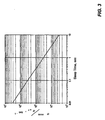
- FIG. 3 is a plot of error variance of a synchronizer sleep clock estimator with respect to sleep time.
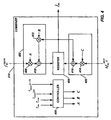
- FIG. 4 is a block diagram of an exemplary sleep clock frequency estimator according to the present disclosure.
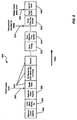
- FIG. 5 is an exemplary time line illustrating a sequence of events occurring in a device employing the sleep clock frequency estimator of FIG. 4 .
- FIG. 6 is a flow diagram of an example method for estimating sleep clock frequency in a wireless device.
- FIG. 7 is another example of a device employing a sleep clock frequency estimator.
- apparatus and methods are presently disclosed that combine a slow clock frequency estimate with an estimate of the slow clock frequency change.
- the combination of these estimates if performed selectively where the estimates are multiplied by coefficients based on the reliability of the estimate source.
- T is the temperature in degrees Celsius
- the base frequency of a sleep clock crystal at 25°C is 32kHz in this example.
- the type of crystal will, of course, affect the values of the coefficients in equation (1) and, thus, this is only exemplary.
- the timing error ⁇ of the slow clock may be expressed as: ⁇ ⁇ 0.35 ⁇ ⁇ ⁇ t 2 ⁇ chips in the unit of chips. Equations (8) and (9) are both plotted in FIG. 1 to show timing error both in units of ⁇ sec as well as chips. As may be seen in FIG. 1 , the error rises as the duration of a sleep mode increases, with an increasing rate of change. It is noted that since the higher order terms are ignored, Equations (8) and (9) no longer serve as an upper bound.
- a synchronizer tracking circuit within a mobile transceiver can tolerate timing errors up to ⁇ 128 chips, if the sleep clock calibration error is ignored before the mobile goes to sleep, the short sleep time between received frames (less than 1 ⁇ 4 second) is not a problem as long as the channel is well behaved during that period. It is safe for the mobile to go to sleep for any time less than 10 seconds (the flat zone), taking into consideration channel variation and sleep clock tracking error (discussed in the next section). For sleep times of more than 15 sec, re-acquisition of a TDM Pilot II or even TDM Pilot I, in the case of CDMA, is necessary since the sleep clock variance rises quickly in that region.
- TDM Pilot II For sleep times from 20-35 sec, re-acquisition of TDM Pilot II is necessary since TDM Pilot II allows ⁇ 512 chips of timing errors. For sleep times of more than 35 sec, acquiring TDM Pilot I is necessary. Unlike the initial acquisition of TDM Pilot I at power up, we have a rough position of TDM Pilot I. Re-acquiring TDM Pilot I is, therefore, not as costly as is in the initial acquisition.
- FIG. 2 illustrates a block diagram of an exemplary device, such as a mobile transceiver, employing sleep clock frequency estimator according to the present disclosure. Since errors in estimating the sleep clock frequency prior to a transceiver device being put to sleep can affect the length of time the device can sleep before the next wakeup time, a higher degree of accuracy of the estimate is beneficial.
- the exemplary device illustrated in FIG. 2 serves to reduce the estimation error.
- a transceiver 200 includes both a fast clock 202 and a slow or sleep clock 204.
- a sleep clock frequency estimator 206 receives a fast clock signal 208 and a sleep clock signal 210 from clocks 202 and 204, respectively.
- the fast and sleep clock signals 208, 210 are sent to a fast clock based sleep clock frequency estimator (TSCFE) 212, which determines an estimate of the sleep clock frequency ( f SC TSCFE ) based on the fast clock implemented with a oscillator such as a TCXO.
- the sleep cock frequency estimator 212 may be configured as described in co-pending U.S. Patent Application entitled "APPARATUS AND METHODS FOR ESTIMATING A SLEEP CLOCK FREQUENCY" referenced above.
- the TCXO sleep clock frequency estimator 212 outputs the fast clock derived estimate of the sleep clock frequency ( f SC TSCFE ) 214 to a combiner 218, which will be discussed further below in connection with FIG. 4 .
- FIG. 2 illustrates that the sleep clock frequency estimator 206 also includes a synchronizer sleep clock frequency estimator (SSCFE) 216.
- the synchronizer sleep clock frequency estimator 216 uses the first arriving path (FAP) as a reference, in the case of CDMA, or the start of a FFT/demodulation window as a reference in the case of OFDM, for example.
- FAP first arriving path
- An estimation of the FAP determined by a synchronizer 219, which may be separate as shown or a part of a processor 220.
- the synchronizer 219 provides the estimation of the FAP to the SSCFE 216 either directly, or via the processor 220 as illustrated in FIG. 2 .
- ⁇ T a measured difference ⁇ T between the actual FAP upon wakeup and the expected FAP based on f ⁇ SC may be determined.
- the FAP drift to correct the sleep clock frequency error is subject to four potential error sources.
- the first two sources of error are the movement or jitter of the FAP, which introduces error, and the estimation of the FAP position. Both result in false corrections to the sleep clock frequency estimate.
- the second error source is negligible for a CDMA transceiver since the CDMA searcher/delay lock loop (DLL) can provide timing accuracy as high as a fractional PN chip. Nonetheless, for other types of transceivers, such as OFDM transceivers, this second source of error is still significant.
- the SSCFE 216 is not updated during the awake period and hence may become obsolete for long awake period. Accordingly, the SSCFE 216, is not suitable for providing estimates when there is a long sleep time.
- the degree of error of the SSCFE 216 may be quantified.
- the SSCFE 216 is configured to receive the ⁇ T and the sleep time T sleep from the processor 220 as indicated by communication line 222. Additionally, SSCFE 216 receives the previous sleep clock frequency estimate f ⁇ SC and the sleep clock frequency estimate ⁇ SC , as indicated by lines 224 and 226, respectively. The SSCFE uses these input values to determine the estimate of the change in the slow clock frequency using equation (10) above. The SSCFE 216 outputs the value of ⁇ ⁇ f SC SSCFE 228 to the combiner 218.
- the combiner 218 is configured to selectively utilize the input values ⁇ ⁇ f SC SSCFE and f SC TSCFE (214, 228) to determine a sleep clock frequency estimate. As will be explained below in connection with FIG. 4 , the combiner 218 utilizes weighting coefficients to selectively assign a reliability rating to the estimates ⁇ ⁇ f SC SSCFE and f SC TSCFE and combine the values such that those values with higher reliability are given greater weight or "credence.”
- the output of the combiner is the estimated sleep clock frequency f ⁇ SC 230, which is sent to the processor 220.
- the processor 220 utilizes the estimated sleep clock frequency 230 to set the maximum sleep time and provide the estimate of the sleep clock frequency prior to directing the transceiver 200 entering into a sleep mode.
- CDMA transceivers typically utilize a fixed sleep and awake pattern in a slotted mode (i.e ., 1.28 • 2 SCI sec sleep and 4 msec awake).
- the SSCFE 218 would have superior estimation performance over the sleep clock frequency estimator 212 for this type of fixed pattern.
- the sleep-awake pattern is flexible. Accordingly, in these types of systems neither the SSCFE 218 or sleep clock frequency estimator 212 would yield superior performance over the other with such flexible patterns. Accordingly, in such types of systems, a combined use of the estimates of the SSCFE 218 and the sleep clock frequency estimator 212 is beneficial.
- the slow clock frequency estimator 206 is configured such that it can work on TSCFE alone without the help from SSCFE.
- An implementation of an adaptive combiner, such as adaptive combiner 218, within a sleep clock frequency estimator is illustrated in FIG. 4 .
- the adaptive combiner 218 receives the estimates of the slow clock frequency ( f SC TSCFE ) and the change in the slow clock frequency ( ⁇ ⁇ f SC SSCFE ).
- a first operational block 400 within the combiner 218 receives the estimate of the slow clock frequency f SC TSCFE for further processing of f SC TSCFE with weighting coefficients A and B .
- a second operational block 402 receives the change in the slow clock frequency ⁇ ⁇ f SC SSCFE for further processing with weighting coefficient C .
- Blocks 400 and 402 send processed outputs, which are values of f ⁇ SC to a register 404 for storage.
- Register 404 is configured as a storage register for storing a current value of f ⁇ SC , but may be implemented with any suitable storage device. Additionally, although register 404 is illustrated as residing within the combiner 218, this storage device may be located as a discrete unit or could also be implemented in the processor 220 or a system memory device 232 shown in FIG. 2 .
- Combiner 218 also includes a controller 406, such as a microcontroller or microprocessor that is used to calculate the weighting coefficients A , B and C .
- the controller 406 receives various inputs from processor 220, for example, for use in determining the weighting coefficients. These inputs include the current wakeup duration ( T wake ) of the wireless device 200, the previous sleep time duration prior to wakeup ( T sleep ), the current measurement time of the TCXO sleep clock frequency estimator 212 ( T measure ( n )), and the previous measurement time of the TCXO sleep clock frequency estimator 212 ( T measure ( n- 1)).
- controller 406 for determining the weighting coefficients include variance of the sleep clock ⁇ SC 2 , variance of the sleep clock frequency estimate ⁇ f ⁇ SC 2 , variance of the synchronizer sleep clock frequency estimate ⁇ SSCFE 2 , variance of the synchronizer timing tracking ⁇ ⁇ ⁇ T 2 , and variance of the TCXO sleep clock frequency estimate ⁇ TSCFE 2 n for a current measurement time n .
- the weighting coefficients A , B and C are selectively or adaptively adjusted by combiner 218 "on the fly” by utilizing the awake time ( T awake ) and sleep time ( T sleep ) in the calculations of the weighting coefficients.
- Coefficients A and B relate to the TCXO sleep clock frequency estimate f SC TSCFE , as do the variables in equations (12) and (13) above.
- Coefficient C relates to the estimate of the change in the slow clock frequency ⁇ ⁇ f SC SSCFE and the variables in equation (14) relate to the variance of the synchronizer slow clock frequency estimator 216 and the synchronizer 219.
- controller 406 is shown as residing within the combiner 218, this device could also be implemented as a discrete unit. Furthermore, the system processor 220 could alternatively perform the functions carried out by controller 406.
- the first operational block 400 includes various multipliers and an adder that are used to determine the frequency estimate output by the block 400 to the register 404.
- the block includes a first multiplier 408 that multiplies the TCXO sleep clock frequency estimate f SC TSCFE by the coefficient A .
- the product of this multiplication is sent to an adder 410.
- Block 400 also includes a second multiplier 412 that multiplies the value of the estimated sleep clock frequency f ⁇ SC stored in register 404 by coefficient B .
- Multiplier 412 outputs the product to adder 410, where the products of multipliers 408 and 412 are summed together. It is noted that the sum of coefficients A and B will always be unity (1).
- coefficient A determines or "weights" the percentage of how much the TXCO sleep clock frequency estimate f SC TSCFE is given relevance
- coefficient B likewise determines the percentage degree of relevance the previously determined sleep clock frequency estimate f ⁇ SC is given. Accordingly, the summed output of adder 410 is a newly determined sleep clock frequency estimate f ⁇ SC that is stored in register 404.
- Block 402 also calculates an estimate of the sleep clock frequency f ⁇ SC and writes the value to register 404.
- the coefficient C provides a multiplier establishing a quantitative degree of reliability of the estimated change in the slow clock frequency ( ⁇ ⁇ f SC SSCFE ) . After the value ⁇ ⁇ f SC SSCFE is multiplied by coefficient C , this establishes a modified or weighted value of the change in the slow clock frequency that is subsequently added to the previous value of f ⁇ SC to determine a new estimated value f ⁇ SC written to register 404.
- FIG. 5 shows a timeline 500 of the operation of a mobile wireless device, such as transceiver 200, utilizing the apparatus of FIGs. 2 and 4 .
- Timeline 500 illustrates the operation of a device from just after wakeup from a sleep mode to the entry of another sleep period.
- the fast clock e.g., TCXO 202
- a wakeup clock expires (block 506)
- the fast clock takes over for system timing, as indicated by arrow 508.
- various operations pertinent to the device operation commence as shown in blocks 510.
- the synchronizer 219 then starts timing as indicated by block 512.
- the synchronizer slow clock frequency estimator 216 can update the estimate of ⁇ ⁇ f SC SSCFE , which, in turn, allows the second operational block 402 to determine and store a new value for f ⁇ SC in register 404.
- the processor 220 will decide to put the device 200 into a sleep mode, as indicated by arrow 516.
- the slow clock frequency estimate f SC TSCFE of the TCXO slow clock frequency estimator (TSCFE) 212 will determined by the processor 220 (or similar logic in the estimator 212 itself) and delivered to block 400 in the combiner 218, which occurs at block 518 in FIG. 5 .
- a new estimate for f ⁇ SC is then determined by block 400 and written to register 404, thus overwriting the previous new estimate written by block 402. Both estimates of f ⁇ SC from each of block 400 and 402 are valuable, as block 400, for example, uses the current estimate of f ⁇ SC stored in register 404, for determining the new estimate.
- this value can be read out the register by processor 220, for example, in setting the maximum sleep time (e.g., setting the sleep clock timer at block 520) just prior to entering sleep mode as indicated by arrow 522.
- FIG. 6 illustrates a flow diagram of a method 600 for determining a slow clock frequency estimate f ⁇ SC in accordance with the present disclosure.
- the method 600 is initialized at block 602 and corresponds to a wakeup of device 200, for example.
- Flow proceeds to block 604, where an estimated change in sleep clock frequency is determined.
- SSCFE 216 may perform this part of the process, for example.
- a weighted estimated change in sleep clock frequency is determined using a calculated coefficient (e.g., coefficient C ) to weight the value of the sleep clock frequency change 606.
- This part of the process is implemented, for example, by the second operational block 402 within the combiner 218 and, more particularly with multiplier 414.
- the process of block 608 may be effected with adder 416, for example.
- the new estimate of the sleep clock frequency ( f ⁇ SC ) is calculated, it is stored in a memory (e.g., register 404) as shown by block 610.
- an estimate of sleep clock frequency is determined using the fast clock as indicated in block 612.
- the T C XO sleep clock frequency estimator 212 may perform this part of the process, for example. Additionally, it is noted the estimator 212 may be operational simultaneous with the SSCFE 216 used to determine the change in the slow clock frequency, although the information determined by the estimator 212 will not be used until after the information from the SSCFE 216 is utilized in determining the new estimate of sleep clock frequency.
- flow proceeds to block 614 for determination of a weighted estimated sleep clock frequency using at least one calculated coefficient (e.g., at least one of coefficients A and B ) to weight the value of the estimated sleep clock frequency.
- the part of the process may be effected with first operational block 400 and, more particularly, with multipliers 408 and 412.
- a further new estimate for sleep clock frequency is determined at block 616 using the weighted estimated change in sleep clock frequency determined at block 614 and the previously stored new estimate for sleep clock frequency.
- Multiplier 412 i.e., multiplying the stored new estimate with a coefficient
- the adder 410 perform this determination.
- this further new estimate is determined, it is stored in the memory device (e.g., register 404), thus overwriting the previously stored new estimate as indicated in block 618.
- Processor 220 may then use this further new estimate to set the sleep time for the transceiver 200, for example.
- FIG. 7 illustrates another example of a device employing a sleep clock frequency estimator.
- the device 700 may be a wireless device such as a transceiver. Accordingly, the device 700 includes an antenna 702 for receiving and transmitting wireless communication signals. Within the device 700, are a fast clock and a sleep clock (not shown) for keeping system time during awake and sleep periods, respectively. The device then includes means for effecting frequency estimation of the sleep clock. Included are means for estimating a change in sleep clock frequency 704.
- Means 704 is equivalent to, as an example, the SSCFE 216 illustrated in FIG. 2 for determining an estimate of ⁇ ⁇ f SC SSCFE , as well as synchronizer 219 and processor 220, which determine variable used in determining the estimate of ⁇ ⁇ f SC SSCFE .
- means 706 for determining a weighted estimated change in sleep clock frequency using a calculated coefficient to weight the value of the sleep clock frequency change.
- Means 706 is similar to the second operational block 402 of the combiner 218 shown in FIG. 4 .
- means 706 can be effected with the multiplier 414 and controller 406, as an example.
- means 706 outputs this result to means 708 for determining a new estimate for sleep clock frequency (e.g., f ⁇ SC ) using weighted estimated change in sleep clock frequency and a previous estimated sleep clock frequency 708. As may be seen in FIG.
- a previous estimated sleep clock frequency 709 is input (or fed back) to means 708 for determination of the new estimate.
- Means 708 may be implemented, for example, by adder 416 in second operational block 402.
- Means 708 then stores or writes the new estimated sleep clock frequency f ⁇ SC in a means 710 for storing the estimated sleep clock frequency.
- Means 710 may be implemented by a memory, a register (e.g., register 404) or any other suitable device capable of storing data.
- the transceiver 700 also includes means 712 for estimating the sleep clock frequency using a fast clock.
- Means 712 can be effected with the TSCFE 212 discussed in FIG. 2 , or any other similar device for measuring a clock using another clock, and a processor or hardware to calculate the frequency estimate (e.g., processor 220).
- the result is input to means 714 for determining a weighted estimated sleep clock frequency using at least one calculated coefficient to weight the value of the estimated sleep clock frequency.
- Means 714 could be implemented, for example, with multipliers 408 and 412 in block 400 and controller 406 shown in FIG. 4 , but is not necessarily limited to only such an implementation.
- the resultant weighted sleep clock frequency estimate output from means 714 is input to means 716 for determining a further new estimate for sleep clock frequency using weighted estimated change in sleep clock frequency and the previously stored new estimate for sleep clock frequency stored by means 708 is the storage means 710.
- a feedback of the previously stored new estimate 718 is input to means 716 for making the determination of the further new estimate.
- Means 716 may be implemented with multiplier 412 as it applies a coefficient to the new estimate of sleep clock frequency and adder 410, which receives the products of multiplier 408 and 412.
- the resultant further new estimate of the sleep clock frequency is written in the means for storing 710, thereby overwriting the new estimate determined by means 708.
- the value of the further new estimate f ⁇ SC stored in storage means 710 may be accessed or output 720 for use by other means (not shown) in the transceiver 700 for determining a sleep time for the device 700.
- the presently disclosed estimators above require no computation and can thus be implemented solely in hardware (except for the adders, which can be implemented in the microprocessor).
- the presently disclosed sleep clock frequency estimator improves estimation accuracy by providing the microprocessor with the most recent estimate with longest possible and appropriate measurement period whenever the microprocessor requires.
- the disclosed constantly functioning estimators eliminate extra ⁇ 1 errors that can arise due to constant interruption of the fast clock counting process.
- the disclosed estimators do not require intervention from the microprocessor (i.e., the microprocessor does not need to instruct the estimator when to start and when to stop counting).
- a software module may reside in RAM memory, flash memory, ROM memory, EPROM memory, EEPROM memory, registers, a hard disk, a removable disk, a CD-ROM, or any other form of storage medium known in the art.
- An exemplary storage medium is coupled to the processor, such that the processor can read information from, and write information to the storage medium.
- the storage medium may be integral to the processor.
- the processor and the storage medium may reside in an ASIC or similar processing circuit.
- the ASIC may reside in a user terminal or other wireless device.
- the processor and the storage medium may reside as discrete components in a user terminal or wireless device. Additionally the other components, such as those within the device 200 in FIG. 2 , for example, could also reside with the ASIC or processing circuit, or reside as discrete components in the device 200.
Landscapes
- Engineering & Computer Science (AREA)
- Computer Networks & Wireless Communication (AREA)
- Signal Processing (AREA)
- Mobile Radio Communication Systems (AREA)
- Manipulation Of Pulses (AREA)
- Control Of Stepping Motors (AREA)
- Synchronisation In Digital Transmission Systems (AREA)
- Transceivers (AREA)
Claims (34)
- Vorrichtung zum Schätzen der Frequenz einer Schlafuhr (204) anhand von Schätzwerten zweier verschiedener Frequenz-Schätzungsquellen, umfassend:Mittel zum Schätzen einer Veränderung in der Schlafuhrfrequenz (604), wobei eine erste Quelle benutzt wird;Mittel zum Bestimmen einer gewichteten geschätzten Veränderung in der Schlafuhrfrequenz, wobei ein erster berechneter Koeffizient benutzt wird, um den Wert der Schlafuhrfrequenz-Veränderung (606) zu gewichten;Mittel zum Bestimmen eines neuen Schätzwerts für eine Schlafuhrfrequenz, wobei die gewichtete geschätzte Veränderung der Schlafuhrfrequenz und eine vorherige geschätzte Schlafuhrfrequenz (608) benutzt werden;Mittel zum Speichern, welches den neuen Schätzwert (610) speichert;Mittel zum Schätzen einer Schlafuhrfrequenz, welches eine Schnelluhr (612) als zweite Quelle benutzt;Mittel zum Bestimmen einer gewichteten geschätzten Schnelluhr-abgeleiteten Schlafuhrfrequenz, wobei zumindest ein zweiter berechneter Koeffizient benutzt wird, um den Wert der geschätzten Schnelluhr-abgeleiteten Schlafuhrfrequenz (614) zu gewichten; undMittel zum Bestimmen eines weiteren neuen Schätzwerts für eine Schlafuhrfrequenz, wobei die gewichtete geschätzte Schnelluhr-abgeleitete Schlafuhrfrequenz und der vorher gespeicherte neue Schätzwert für eine Schlafuhrfrequenz (616) benutzt werden; undwobei das Mittel zum Speichern des weiteren neuen Schätzwerts so speichert, dass der weitere neue Schätzwert den neuen Schätzwert (618) ersetzt.
- Verfahren zum Schätzen der Frequenz einer Schlafuhr (204) anhand von Schätzwerten zweier verschiedener Frequenz-Schätzquellen, umfassend:Schätzen einer Veränderung in einer Schlafuhrfrequenz (604),Bestimmen einer gewichteten geschätzten Veränderung der Schlafuhrfrequenz, wobei ein erster berechneter Koeffizient benutzt wird, um den Wert der Schlafuhrfrequenz-Veränderung (606) zu gewichten;Bestimmen einer neuen Schätzung einer Schlafuhrfrequenz, wobei die gewichtete geschätzte Veränderung einer Schlafuhrfrequenz und eine vorherige geschätzte Schlafuhrfrequenz (608) benutzt werden und Speichern des neuen Schätzwerts in einer Speichervorrichtung (610);Schätzen einer Schlafuhrfrequenz, wobei eine Schnelluhr (612) als zweite Quelle benutzt wird;Bestimmen einer gewichteten geschätzten Schnelluhr-abgeleiteten Schlafuhrfrequenz, wobei zumindest ein zweiter berechneter Koeffizient benutzt wird, um den Wert der geschätzten Schnelluhr-abgeleiteten Schlafuhrfrequenz (614) zu gewichten;Bestimmen eines weiteren neuen Schätzwerts für eine Schlafuhrfrequenz, wobei die gewichtete geschätzte Schnelluhr-abgeleitete Schlafuhrfrequenz und der vorher gespeicherte neue Schätzwert für eine Schlafuhrfrequenz (616) benutzt wird; undSpeichern des weiteren neuen Schätzwerts in einem Speicher, so dass der weitere neue Schätzwert den neuen Schätzwert (618) ersetzt.
- Verfahren nach Anspruch 2, wobei ein Bestimmen einer gewichteten geschätzten Veränderung der Schlafuhrfrequenz unter Benutzung des ersten berechneten Koeffizienten, um den Wert der Schlafuhrfrequenz-Veränderung (606) zu gewichten, umfasst:adaptives Berechnen des ersten berechneten Koeffizienten, indem zumindest eine Schlafzeitdauer (Tsleep) der Vorrichtung, eine Wachzeitdauer (Tawake) der Vorrichtung, eine Varianz der Schlafuhr (204) und eine Varianz des Schlafuhr-Veränderungsfrequenz-Schätzers (216) berücksichtigt werden.
- Verfahren nach Anspruch 2, wobei ein Bestimmen einer gewichteten geschätzten Schnelluhr-abgeleiteten Schlafuhrfrequenz unter Benutzung des zumindest einen zweiten berechneten Koeffizienten, um den Wert der Schnelluhr-abgeleiteten Schlafuhrfrequenz (614) zu gewichten, umfasst:adaptives Berechnen des berechneten Koeffizienten durch Berücksichtigen von zumindest einer Schlafzeitdauer (Tsleep) der Vorrichtung, einer Wachzeitdauer (Tawake) der Vorrichtung, einer Varianz der Schlafuhr (204) und einer Varianz des Schlafuhrfrequenz-Schätzers (212).
- Verfahren nach Anspruch 2, des Weiteren umfassend:Bestimmen eines Schlaf-Timings für eine Dauer eines Schlafzustands einer drahtlosen Vorrichtung, wobei der weitere neue Schätzwert im Speicher benutzt wird.
- Computer-lesbares Medium, welches darauf gespeicherte Instruktionen aufweist, wobei die gespeicherten Instruktionen, wenn sie durch einen Prozessor (220) ausgeführt werden, den Prozessor (220) dazu bringen, ein Verfahren des Schätzens der Frequenz einer Schlafuhr (204) anhand von Schätzwerten zweier verschiedener Frequenz-Schätzquellen auszuführen, wobei das Verfahren umfasst:Schätzen einer Veränderung einer Schlafuhrfrequenz (604), wobei eine erste Quelle benutzt wird;Bestimmen einer gewichteten geschätzten Veränderung einer Schlafuhrfrequenz, wobei ein erster berechneter Koeffizient benutzt wird, um den Wert der Schlafuhrfrequenz-Veränderung (606) zu gewichten;Bestimmen eines neuen Schätzwertes für eine Schlafuhrfrequenz, wobei die gewichtete geschätzte Veränderung der Schlafuhrfrequenz und eine vorher geschätzte Schlafuhrfrequenz benutzt werden und Speichern der neuen Schätzwerte in einer Speichervorrichtung (608), wenn beide Quellen verfügbar sind;Bestimmen einer Schlafuhrfrequenz, wobei eine Schnelluhr (612) als zweite Quelle benutzt wird;Bestimmen einer gewichteten geschätzten Schnelluhr-abgeleiteten Schlafuhrfrequenz, wobei zumindest ein zweiter berechneter Koeffizient benutzt wird, um den Wert der geschätzten Schnelluhr-abgeleiteten Schlafuhrfrequenz (614) zu gewichten;Bestimmen eines weiteren neuen Schätzwerts für eine Schlafuhrfrequenz, wobei die gewichtete geschätzte Schnelluhr-abgeleitete Schlafuhrfrequenz und der vorher gespeicherte neue Schätzwert für eine Schlafuhrfrequenz (616) benutzt werden; undSpeichern des Weiteren neuen Schätzwerts in einem Speicher, so dass der weitere neue Schätzwert den neuen Schätzwert (618) ersetzt.
- Computer-lesbares Medium nach Anspruch 6, wobei das Bestimmen einer gewichteten geschätzten Veränderung in einer Schlafuhrfrequenz unter Benutzung eines ersten berechneten Koeffizienten, um den Wert der Schlafuhrfrequenz-Veränderung (606) zu gewichten, umfasst:adaptives Berechnen des ersten berechneten Koeffizienten durch Berücksichtigen von zumindest einer Schlafzeitdauer (Tsleep) der Vorrichtung, einer Wachzeitdauer T(awake) der Vorrichtung, einer Varianz der Schlafuhr (204) und einer Varianz des Schlafuhr-Veränderungsfrequenz-Schätzers (216).
- Computer-lesbares Medium nach Anspruch 6, wobei das Bestimmen einer gewichteten geschätzten Schelluhr-abgeleiteten Schlafuhrfrequenz unter Benutzung des zumindest einen zweiten berechneten Koeffizienten, um den Wert der Schnelluhr-abgeleiteten Schlafuhrfrequenz (614) zu gewichten, umfasst:adaptives Berechnen des zweiten berechneten Koeffizienten durch Berücksichtigung von zumindest einem einer Schlafzeitdauer (Tsleep) der Vorrichtung, einer Wachzeitdauer (Tawake) der Vorrichtung, einer Varianz der Schlafuhr (204), einer Varianz des Schlafuhrfrequenz-Schätzers (212) und einer Varianz der Schlafuhr (204).
- Computer-lesbares Medium nach Anspruch 6, des Weiteren umfassend:Bestimmen eines Schlaf-Timings für eine Dauer eines Schlafzustands einer drahtlosen Vorrichtung unter Benutzung des weiteren neuen Schätzwerts im Speicher.
- Vorrichtung zum Bestimmen eines Frequenzschätzwerts einer Schlafuhr (204) anhand von Schätzwerten zweier verschiedener Frequenzschätzquellen, umfassend:einen Schlafuhr-Veränderungsfrequenz-Schätzer (216), der konfiguriert ist, um einen Schätzwert einer Veränderung in der Frequenz der Schlafuhr (204), abgeleitet von der ersten Quellen, auszugeben, undeinen Schlafuhrfrequenz-Schätzer (212), der konfiguriert ist, um einen Schlafuhr(204)-Frequenzschätzwert auszugeben, der von einer Schnelluhr (202) als zweite Quelle abgeleitet ist;einen Kombinierer (218), der konfiguriert ist, um den Schnelluhr(202)-abgeleiteten Schlafuhr(204)-Frequenzschätzwert zu gewichten, um einen gewichteten Schlafuhr(204)-Frequenzschätzwert und den Schätzwert der Frequenzveränderung der Schlafuhr (204) zu erhalten, um einen gewichteten Schätzwert der Frequenzveränderung der Schlafuhr (204) zu erhalten, und um zumindest einen neuen Schätzwert der Schlafuhr(204)-Frequenz zu bestimmen, wobei der gewichtete Schlafuhr(204)-Frequenzschätzwert und der gewichtete Schätzwert der Frequenzveränderung der Schlafuhr (204) verwendet werden.
- Vorrichtung nach Anspruch 10, wobei der Kombinierer (218) des Weiteren umfasst:eine Speichervorrichtung (232), die konfiguriert ist, um zumindest einen neuen Schätzwert des Langsamuhrfrequenz-Gewichtungsschätzwerts zu speichern.
- Vorrichtung nach Anspruch 10, wobei der Kombinierer (218) des Weiteren umfasst:einen betriebsbereiten Block, welcher konfiguriert ist, um den Schätzwert der Frequenzveränderung der Schlafuhr (204) von dem Schlafuhrfrequenz-Veränderungs-Schätzer (216) zu empfangen, und den Schätzwert der Frequenzveränderung der Schlafuhr (204) unter Benutzung von zumindest einem gewichteten Koeffizienten zu modifizieren und den zumindest einen neuen Schätzwert der Langsamuhr-Frequenz auszugeben.
- Vorrichtung nach Anspruch 12, wobei der betriebsbereite Block des Weiteren umfasst:einen Multiplizierer, der konfiguriert ist, um den Schätzwert der Frequenzveränderung durch Multiplizieren des Schätzwerts der Frequenzveränderung der Schlafuhr (204) mit zumindest einem Gewichtungskoeffizienten zu modifizieren; undeinen Addierer, der konfiguriert ist, um ein resultierendes Produkt des Multiplizierers zu einem vorherigen Schätzwert der Schlafuhr(204)-Frequenz, welche in einer Speichervorrichtung (232) gespeichert ist, hinzuzufügen.
- Vorrichtung nach Anspruch 10, wobei der Kombinierer (218) des Weiteren umfasst:einen betriebsbereiten Block, der konfiguriert ist, um den Schnelluhr(202)-abgeleiteten Schätzwert der Frequenz der Schlafuhr (204) von dem Schlafuhrfrequenz-Schätzer (212) zu empfangen, und den Schnelluhr(202)-abgeleiteten Schätzwert der Frequenz der Schlafuhr (204) unter Benutzung von zumindest einem Gewichtungskoeffizienten zu modifizieren, um den zumindest einen neuen Schätzwert der Schlafuhr(204)-Frequenz zu erhalten.
- Vorrichtung nach Anspruch 14, wobei der betriebsbereite Block des Weiteren umfasst:einen Multiplizierer, der konfiguriert ist, um den Schnelluhr(202)-abgeleiteten Schätzwert der Frequenz der Schlafuhr (204) durch Multiplizieren des Schätzwerts der Frequenzveränderung der Schlafuhr (204) durch einen ersten Gewichtungskoeffizienten zu modifizieren;einen zweiten Multiplizierer, der konfiguriert ist, um einen vorherigen Schätzwert der Schlafuhr(204)-Frequenz, welche in einer Speicherungsvorrichtung (232) gespeichert ist, mit einem zweiten Gewichtungskoeffizienten zu multiplizieren; undeinen Addierer, der konfiguriert ist, um resultierende Produkte der ersten und zweiten Multiplizierer zu addieren, um den zumindest einen neuen Schätzwert der Schlafuhr(204)-Frequenz zu erhalten.
- Vorrichtung nach Anspruch 10, wobei der Kombinierer (218) des Weiteren umfasst:eine Steuerung (406), die konfiguriert ist, um Information in Bezug auf eine drahtlose Vorrichtung zu empfangen, und adaptiv einen oder mehrere Gewichtungskoeffizienten zu berechnen, die benutzt werden, um zumindest einen der gewichteten Langsamuhr-Frequenzschätzwerte und den gewichteten Schätzwert der Frequenzveränderung der Schlafuhr (204) zu bestimmen.
- Vorrichtung nach Anspruch 16, wobei die Information, welche die drahtlose Vorrichtung betrifft, eine oder mehrere einer Schlafzeitdauer (Tsleep) der Vorrichtung, einer Wachzeitdauer (Tawake) der Vorrichtung, einer Varianz der Schlafuhr (204), einer Varianz des Schlafuhrfrequenz-Schätzers (212) und einer Varianz des Schlafuhr-Veränderungsfrequenz-Schätzer (216) umfasst.
- Vorrichtung nach Anspruch 10, wobei der Kombinierer (218) des Weiteren umfasst:eine Speichervorrichtung (232), die konfiguriert ist, um zumindest einen neuen Schätzwert der Schlafuhr(204)-Frequenz zu speichern;einen ersten betriebsbereiten Block in Verbindung mit der Speichervorrichtung (232) und konfiguriert, um den Schätzwert der Frequenzveränderung der Schlafuhr (204) von dem Schlafuhrfrequenz-Veränderungs-Schätzer (216) zu erhalten, um den Schätzwert der Frequenzveränderung der Schlafuhr (204) unter Benutzung eines ersten Gewichtungskoeffizienten zu modifizieren, um den zumindest neuen Schätzwert der Schlafuhr(204)-Frequenz unter Benutzung des veränderten Schätzwerts der Frequenzveränderung der Schlafuhr (204) zu bestimmen, und um den zumindest einen neuen Schätzwert der Langsamuhrfrequenz in der Speichervorrichtung (232) zu speichern; undeinen zweiten betriebsbereiten Block in Verbindung mit der Speichervorrichtung (232) und konfiguriert, um den Schnelluhr(202)-abgeleiteten Schätzwert der Frequenz der Schlafuhr (204) von dem Schlafuhrfrequenz-Schätzer (212) zu empfangen, um den Schnelluhr(202)-abgeleiteten Schätzwert der Frequenz der Schlafuhr (204) unter Benutzung von zumindest einem zweiten Gewichtungskoeffizienten zu modifizieren, um einen weiteren neuen Schätzwert anhand des modifizierten Schnelluhr(202)-abgeleiteten Schätzwerts der Frequenz der Schlafuhr (204) zu bestimmen, und um den zumindest einen neuen Schätzwert der Langsamuhrfrequenz durch Speichern des weiteren neuen Schätzwerts der Schlafuhr(204)-Frequenz in der Speichervorrichtung (232) zu überschreiben.
- Vorrichtung nach Anspruch 10, wobei die Vorrichtung ein Verarbeitungsschaltkreis zum Schätzen einer Schlafuhr(204)-Frequenz zur Benutzung in einem drahtlosen Transceiversystem (200) ist, des Weiteren umfassend:eine Speichervorrichtung (232), die konfiguriert ist, um den zumindest einen neuen Schätzwert des Langsamuhrfrequenz-Gewichtungsschätzwerts abzuspeichern; undeinen Prozessor (220), der konfiguriert ist, um den zumindest einen neuen Schätzwert aus der Speichervorrichtung (232) auszulesen, und eine Systemschlafzeit anhand des zumindest einen neuen Schätzwerts vor dem Eintreten des Systems in einen Schlafzustand zu berechnen.
- Verarbeitungsschaltkreis nach Anspruch 19, wobei der Kombinierer (218) des Weiteren umfasst
einen betriebsbereiten Block, der konfiguriert ist, um den Schätzwert der Frequenzveränderung der Schlafuhr (204) von dem Schlafuhr-Veränderungsfrequenz-Schätzer (216) zu empfangen, und den Schätzwert der Frequenzveränderung der Schlafuhr (204) unter Benutzung von zumindest einem Gewichtungskoeffizienten zu modifizieren, und den zumindest einen neuen Schätzwert der Langsamuhrfrequenz auszugeben. - Verarbeitungsschaltkreis nach Anspruch 20, wobei der betriebsbereite Block des Weiteren umfasst:einen Multiplizierer, der konfiguriert ist, um den Schätzwert der Frequenzveränderung durch Multiplizieren der Frequenzveränderung der Schlafuhr (204) mit zumindest einem Gewichtungskoeffizienten zu modifizieren; undeinen Addierer, der konfiguriert ist, um ein resultierendes Produkt des Multiplizierers zu einem vorherigen Schätzwert der Schlafuhr(204)-Frequenz zu addieren, welcher in der Speichervorrichtung (232) gespeichert ist.
- Verarbeitungsschaltkreis nach Anspruch 19, wobei der Kombinierer (218) des Weiteren umfasst:einen betriebsbereiten Block, der konfiguriert ist, um den Schnelluhr(202)-abgeleiteten Schätzwert der Schlafuhr(204)-Frequenz von dem Schlafuhrfrequenz-Schätzer (212) zu empfangen und den Schnelluhr(202)-abgeleiteten Schätzwert der Frequenz der Schlafuhr (204) unter Benutzung von zumindest einem zweiten Gewichtungskoeffizienten zu modifizieren, um den zumindest einen neuen Schätzwert der Schlafuhr(204)-Frequenz zu erhalten.
- Verarbeitungsschaltkreis nach Anspruch 2, wobei der betriebsbereite Block des Weiteren umfasst:einen ersten Multiplizierer, der konfiguriert ist, um den Schnelluhr(202)-abgeleiteten Schätzwert der Frequenz der Schlafuhr (204) durch Multiplizieren des Schätzwerts der Frequenzveränderung der Schlafuhr (204) mit dem ersten Gewichtungskoeffizienten zu multiplizieren;ein zweiter Multiplizierer, der konfiguriert ist, um einen vorherigen Schätzwert der Schlafuhr(204)-Frequenz, welcher in der Speichervorrichtung (232) gespeichert ist, mit dem zweiten Gewichtungskoeffizienten zu multiplizieren; undeinen Addierer, der konfiguriert ist, um resultierende Produkte der ersten und zweiten Multiplizierer zu addieren, um den zumindest einen neuen Schätzwert der Schlafuhr(204)-Frequenz zu erhalten, und den zumindest einen neuen Schätzwert der Schlafuhr(204)-Frequenz in der Speichervorrichtung (232) zu speichern.
- Verarbeitungsschaltkreis nach Anspruch 19, des Weiteren umfassend:eine Steuerung (406), die konfiguriert ist, um Information, welche das drahtlose System betrifft, zu empfangen, und um einen oder mehrere Gewichtungskoeffizienten adaptiv auszurechnen, welche benutzt werden, um zumindest einen der gewichteten Langsamuhrfrequenz-Schätzwerte und der gewichteten Schätzwerte der Frequenzveränderung der Schlafuhr (204) auszurechnen.
- Verarbeitungsschaltkreis nach Anspruch 24, wobei die Information, welche die kabellose Vorrichtung betrifft, einen oder mehrere einer Schlafzeitdauer (Tsleep) der Vorrichtung, einer Wachzeitdauer (Tawake) der Vorrichtung, einer Varianz der Schlafuhr (204), einer Varianz des Schlafuhrfrequenz-Schätzers (212) und einer Varianz des Schlafuhrfrequenz-Veränderungs-Schätzers (216) umfasst.
- Verarbeitungsschaltkreis nach Anspruch 19, wobei der Kombinierer (218) des Weiteren umfasst:einen ersten betriebsbereiten Block in Verbindung mit der Speichervorrichtung (232) und konfiguriert, um den Schätzwert der Frequenzveränderung der Schlafuhr (204) von dem Schlafuhrfrequenz-Veränderungs-Schätzer (216) zu empfangen, um den Schätzwert der Frequenzveränderung der Schlafuhr (204) zu modifizieren, wobei ein erster Gewichtungskoeffizient benutzt wird, um den zumindest neuen Schätzwert der Schlafuhr(204)-Frequenz unter Benutzung der modifizierten Schätzung der Frequenzveränderung der Schlafuhr (204) zu bestimmen, und den zumindest einen neuen Schätzwert der Langsamuhrfrequenz in der Speichervorrichtung (232) zu speichern; undeinen zweiten betriebsbereiten Block in Verbindung mit der Speichervorrichtung (232) und konfiguriert, um den Schnelluhr(202)-abgeleiteten Schätzwert der Frequenz der Schlafuhr (204) von dem Schlafuhrfrequenz-Schätzer (212) zu empfangen, um den Schnelluhr(202)-abgeleiteten Schätzwert der Frequenz der Schlafuhr (204) unter Benutzung von zumindest einem zweiten Gewichtungskoeffizienten zu modifizieren, um einen weiteren neuen Schätzwert anhand des modifizierten Schnelluhr(202)-abgeleiteten Schätzwerts der Frequenz der Schlafuhr (204) zu bestimmen, und den zumindest einen neuen Schätzwert der Langsamuhrfrequenz durch Speichern des weiteren neuen Schätzwerts der Schlafuhr(204)-Frequenz in der Speichervorrichtung (232) zu überschreiben.
- Vorrichtung nach Anspruch 10, wobei die Vorrichtung eine drahtlose Vorrichtung zur Benutzung in einem mobilen Kommunikationsnetzwerk ist, des Weiteren umfassend:eine Speichervorrichtung (232), die konfiguriert ist, um den zumindest einen neuen Schätzwert des Langsamuhrfrequenz-Gewichtungsschätzwerts zu speichern; undeinen Prozessor (220), der konfiguriert ist, um den zumindest einen neuen Schätzwert von der Speichervorrichtung (232) auszulesen, und eine Schlafzeit der kabellosen Vorrichtung anhand des zumindest einen neuen Schätzwerts vor dem Eintreten des Systems in den Schlafzustand zu berechnen.
- Drahtlose Vorrichtung nach Anspruch 27, wobei der Kombinierer (218) des Weiteren umfasst:einen betriebsbereiten Block, der konfiguriert ist, um den Schätzwert der Frequenzveränderung der Schlafuhr (204) von dem Schlafuhrfrequenz-Veränderungs-Schätzer (216) zu empfangen, und den Schätzwert der Frequenzveränderung der Schlafuhr (204) unter Benutzung von zumindest einem ersten Gewichtungskoeffizienten zu modifizieren, und den zumindest einen neuen Schätzwert der Langsamuhrfrequenz auszugeben.
- Drahtlose Vorrichtung nach Anspruch 28, wobei der betriebsbereite Block des Weiteren umfasst:einen Multiplizierer, der konfiguriert ist, um den Schätzwert der Frequenzveränderung durch Multiplizieren des Schätzwerts der Frequenzveränderung der Schlafuhr (204) mit zumindest einem Gewichtungskoeffizienten zu modifizieren; undeinen Addierer, der konfiguriert ist, um ein resultierendes Produkt des Multiplizierers einem vorherigen Schätzwert der Schlafuhr(204)-Frequenz, welche in der Speichervorrichtung (232) gespeichert ist, zu addieren.
- Drahtlose Vorrichtung nach Anspruch 27, wobei der Kombinierer (218) des Weiteren umfasst:einen betriebsbereiten Block, der konfiguriert ist, um den Schnelluhr(202)-abgeleiteten Schätzwert der Frequenz der Schlafuhr (204) von dem Schlafuhrfrequenz-Schätzer (212) zu empfangen, und den Schnelluhr(202)-abgeleiteten Schätzwert der Frequenz der Schlafuhr (204) unter Benutzung des zumindest einen zweiten Gewichtungskoeffizienten zu modifizieren, um den zumindest einen neuen Schätzwert der Schlafuhr(204)-Frequenz zu erhalten.
- Drahtlose Vorrichtung nach Anspruch 30, wobei der betriebsbereite Block des Weiteren umfasst:einen ersten Multiplizierer, der konfiguriert ist, um den Schnelluhr(202)-abgeleiteten Schätzwert der Schlafuhr(204)-Frequenz durch Multiplizieren des Schätzwerts der Frequenzveränderung der Schlafuhr (204) durch den ersten Gewichtungskoeffizienten zu modifizieren;einen zweiten Multiplizierer, der konfiguriert ist, um einen vorherigen Schätzwert der Schlafuhr(204)-Frequenz, welcher in einer Speichervorrichtung (232) gespeichert ist, mit dem zweiten Gewichtungskoeffizienten zu multiplizieren;einen Addierer, der konfiguriert ist, um resultierende Produkte des ersten und zweiten Multiplizierers zu addieren, um den zumindest einen neuen Schätzwert der Schlafuhr(204)-Frequenz zu erhalten, und um den zumindest einen neuen Schätzwert der Schlafuhr(204)-Frequenz in der Speichervorrichtung (232) zu speichern.
- Drahtlose Vorrichtung nach Anspruch 27, des Weiteren umfassend:eine Steuerung (406), welche konfiguriert ist, um Informationen zu empfangen, welche die kabellose Vorrichtung betreffen, und einen oder mehrere Gewichtungskoeffizienten adaptiv auszurechnen, welche benutzt werden, um zumindest einen der gewichteten Langsamuhrfrequenz-Schätzwerte und der gewichteten Schätzwerte der Frequenzveränderung der Schlafuhr (204) zu bestimmen.
- Drahtlose Vorrichtung nach Anspruch 32, wobei die Informationen, welche die kabellose Vorrichtung betreffen, einen oder mehrere einer Schlafzeitdauer T(sleep) der Vorrichtung, einer Wachzeitdauer (Tawake) der Vorrichtung, einer Varianz der Schlafuhr (204), einer Varianz des Schlafuhrfrequenz-Schätzers (212) und einer Varianz des Schlafuhrfrequenz-Veränderungs-Schätzers (216) umfasst.
- Drahtlose Vorrichtung nach Anspruch 27, wobei der Kombinierer (218) des Weiteren umfasst:einen ersten betriebsbereiten Block in Kommunikation mit der Speichervorrichtung (232) und konfiguriert, um den Schätzwert der Frequenzveränderung der Schlafuhr (204) von dem Schlafuhr-Veränderungsfrequenz-Schätzer (216) zu empfangen, um den Schätzwert der Frequenzveränderung der Schlafuhr (204) unter Benutzung eines ersten Gewichtungskoeffizienten zu modifizieren, um den zumindest neuen Schätzwert der Schlafuhr(204)-Frequenz unter Benutzung des modifizierten Schätzwerts der Frequenzveränderung der Schlafuhr (204) zu bestimmen, und den zumindest einen neuen Schätzwert der Langsamuhrfrequenz in der Speichervorrichtung (232) zu speichern; undeinen zweiten betriebsbereiten Block in Kommunikation mit der Speichervorrichtung (232) und konfiguriert, um den Schnelluhr(202)-abgeleiteten Schätzwert der Frequenz der Schlafuhr (204) von dem Schlafuhrfrequenz-Schätzer (212) zu empfangen, um den Schnelluhr(202)-abgeleiteten Schätzwert der Frequenz der Schlafuhr (204) unter Benutzung des zumindest einen zweiten gewichteten Koeffizienten zu modifizieren, um einen weiteren neuen Schätzwert anhand des modifizierten Schnelluhr(202)-abgeleiteten Schätzwerts der Schlafuhr(204)-Frequenz zu bestimmen, und den zumindest einen neuen Schätzwert der Langsamuhrfrequenz durch Speichern des weiteren neuen Schätzwerts der Schlafuhr(204)-Frequenz in der Speichervorrichtung (232) zu überschreiben.
Applications Claiming Priority (3)
| Application Number | Priority Date | Filing Date | Title |
|---|---|---|---|
| US66083305P | 2005-03-10 | 2005-03-10 | |
| US11/271,409 US7463910B2 (en) | 2005-03-10 | 2005-11-09 | Apparatus and method for determining sleep clock timing |
| PCT/US2006/008456 WO2006099063A1 (en) | 2005-03-10 | 2006-03-08 | Apparatus and method for determining sleep clock timing |
Publications (2)
| Publication Number | Publication Date |
|---|---|
| EP1869780A1 EP1869780A1 (de) | 2007-12-26 |
| EP1869780B1 true EP1869780B1 (de) | 2010-04-21 |
Family
ID=36509217
Family Applications (1)
| Application Number | Title | Priority Date | Filing Date |
|---|---|---|---|
| EP06737617A Expired - Lifetime EP1869780B1 (de) | 2005-03-10 | 2006-03-08 | Vorrichtung und verfahren zur bestimmung des sleep-takt-timing |
Country Status (9)
| Country | Link |
|---|---|
| US (1) | US7463910B2 (de) |
| EP (1) | EP1869780B1 (de) |
| JP (1) | JP2008537372A (de) |
| KR (1) | KR100927558B1 (de) |
| CN (1) | CN101171754A (de) |
| AT (1) | ATE465554T1 (de) |
| DE (1) | DE602006013804D1 (de) |
| TW (1) | TW200703930A (de) |
| WO (1) | WO2006099063A1 (de) |
Families Citing this family (19)
| Publication number | Priority date | Publication date | Assignee | Title |
|---|---|---|---|---|
| US8509859B2 (en) * | 2005-03-11 | 2013-08-13 | Qualcomm Incorporated | Apparatus and methods for control of sleep modes in a transceiver |
| JP4503512B2 (ja) * | 2005-08-26 | 2010-07-14 | 京セラ株式会社 | 無線通信装置及び電力変換器の動作周波数制御方法 |
| US20100067416A1 (en) * | 2008-09-15 | 2010-03-18 | Qualcomm Incorporated | Re-programming media flow phone using speed channel switch time through sleep time line |
| US20100303185A1 (en) * | 2009-06-02 | 2010-12-02 | Jacobus Cornelis Haartsen | Methods of Operating Wireless Communications Devices Including Detecting Times of Receipt of Packets and Related Devices |
| US9420385B2 (en) * | 2009-12-21 | 2016-08-16 | Starkey Laboratories, Inc. | Low power intermittent messaging for hearing assistance devices |
| US8690423B2 (en) * | 2010-09-07 | 2014-04-08 | Stoneridge, Inc. | Temperature sensor |
| KR101770736B1 (ko) * | 2011-03-17 | 2017-09-06 | 삼성전자주식회사 | 응용프로그램의 질의 스케쥴링을 이용한 시스템의 소모전력 절감 방법 및 그 방법을 이용하여 소모전력을 절감하는 휴대단말기 |
| US8589715B2 (en) | 2011-05-10 | 2013-11-19 | Qualcomm Incorporated | Method and system for correcting timing errors due to thermal changes within a portable computing device |
| GB2491001B (en) * | 2011-05-20 | 2013-05-08 | Renesas Mobile Corp | Method and apparatus for calibrating sleep clocks |
| GB201108512D0 (en) * | 2011-05-20 | 2011-07-06 | Renesas Mobile Corp | Method and apparatus for calibrating sleep clocks |
| CN103650601B (zh) * | 2011-07-05 | 2019-03-01 | 瑞典爱立信有限公司 | 用于维持无线电时基的技术 |
| JP5673448B2 (ja) * | 2011-09-01 | 2015-02-18 | ソニー株式会社 | 通信装置、通信方法、通信システムおよび基地局 |
| CN103327587B (zh) * | 2013-05-29 | 2016-12-07 | 北京创毅讯联科技股份有限公司 | 一种终端睡眠周期控制方法和装置 |
| US9766682B1 (en) * | 2014-01-27 | 2017-09-19 | Marvell International Ltd. | Wakeup time system using drift estimation |
| CA2856027C (en) * | 2014-03-18 | 2024-07-02 | Smartrek Technologies Inc. | MESH NETWORK SYSTEM AND TECHNIQUES |
| CN104597790B (zh) * | 2014-12-26 | 2017-09-29 | 北京兆易创新科技股份有限公司 | 一种串口控制器及基于其的微控制器系统的唤醒方法 |
| CN108762047B (zh) * | 2018-03-20 | 2020-01-31 | 联想(北京)有限公司 | 一种时间提示方法和装置 |
| CN113050497A (zh) * | 2021-03-23 | 2021-06-29 | 阿尔特汽车技术股份有限公司 | 进行定时校正的方法及相应的控制器、车辆、设备和介质 |
| CN113038445B (zh) * | 2021-03-26 | 2022-11-18 | 上海磐启微电子有限公司 | 一种蓝牙休眠时钟的校准方法 |
Family Cites Families (23)
| Publication number | Priority date | Publication date | Assignee | Title |
|---|---|---|---|---|
| FI95980C (fi) | 1992-09-04 | 1996-04-10 | Nokia Mobile Phones Ltd | Menetelmä ja kytkentäjärjestely ajan mittaamiseksi tarkasti epätarkalla kellolla |
| US5613235A (en) * | 1995-06-29 | 1997-03-18 | Nokia Mobile Phones Limited | Operation of a radiotelephone in a synchronous extended standby mode for conserving battery power |
| JPH09113654A (ja) | 1995-10-16 | 1997-05-02 | Nec Ic Microcomput Syst Ltd | 間欠受信制御器 |
| JPH10190568A (ja) | 1996-12-27 | 1998-07-21 | Matsushita Electric Ind Co Ltd | 無線受信装置 |
| US5874846A (en) | 1997-01-17 | 1999-02-23 | Chrontel Incorporated | Method and apparatus for frequency generation in a synchronous system |
| US6016312A (en) * | 1997-02-28 | 2000-01-18 | Motorola, Inc. | Radiotelephone and method for clock calibration for slotted paging mode in a CDMA radiotelephone system |
| US6029061A (en) * | 1997-03-11 | 2000-02-22 | Lucent Technologies Inc. | Power saving scheme for a digital wireless communications terminal |
| US5950120A (en) | 1997-06-17 | 1999-09-07 | Lsi Logic Corporation | Apparatus and method for shutdown of wireless communications mobile station with multiple clocks |
| US6411830B2 (en) * | 1997-08-05 | 2002-06-25 | D.S.P.C. Technologies Ltd | System and method for reducing power consumption in waiting mode |
| US6176611B1 (en) * | 1997-08-05 | 2001-01-23 | D.S.P.C. Technologies Ltd. | System and method for reducing power consumption in waiting mode |
| DE59810357D1 (de) | 1997-08-08 | 2004-01-15 | Siemens Ag | Verfahren zur aufrechterhaltung durch eine hohe taktfrequenz vorgegebenen zeitrasters durch eine niedrige taktfrequenz |
| EP0924947A1 (de) | 1997-12-22 | 1999-06-23 | The Technology Partnership Public Limited Company | Verfahren zur Energieeinsparung für Endgerät eines digitalen zellularen Systems |
| EP0939495B1 (de) | 1998-02-26 | 2004-04-14 | Motorola Semiconducteurs S.A. | Energiesparanordnung für ein elektronisches tragbares Gerät |
| US6333939B1 (en) | 1998-08-14 | 2001-12-25 | Qualcomm Incorporated | Synchronization of a low power oscillator with a reference oscillator in a wireless communication device utilizing slotted paging |
| US6212398B1 (en) * | 1998-12-03 | 2001-04-03 | Ericsson Inc. | Wireless telephone that rapidly reacquires a timing reference from a wireless network after a sleep mode |
| FR2791217B1 (fr) | 1999-03-18 | 2001-06-01 | Sagem | Procede de veille dans un telephone mobile |
| US6453181B1 (en) * | 1999-11-04 | 2002-09-17 | Qualcomm, Incorporated | Method and apparatus for compensating for frequency drift in a low frequency sleep clock within a mobile station operating in a slotted paging mode |
| ES2281328T3 (es) * | 2000-06-09 | 2007-10-01 | Motorola, Inc. | Sincronizacion temporal para sistemas moviles. |
| ATE352129T1 (de) | 2000-12-07 | 2007-02-15 | Qualcomm Inc | Verfahren und apparat zum nachverfolgen der länge einer schlafperiode in einer mobilstation |
| KR100350474B1 (ko) * | 2000-12-30 | 2002-08-29 | 삼성전자 주식회사 | 디지털 무선 통신 단말 시스템에서 대기시 적응적 전력소모 감소 방법 |
| KR100396785B1 (ko) | 2001-10-19 | 2003-09-02 | 엘지전자 주식회사 | Gsm단말기의 시간오차 보상장치 및 방법 |
| US7197341B2 (en) | 2003-12-22 | 2007-03-27 | Interdigital Technology Corporation | Precise sleep timer using a low-cost and low-accuracy clock |
| US7529531B2 (en) * | 2005-11-09 | 2009-05-05 | Qualcomm, Incorporated | Apparatus and methods for estimating a sleep clock frequency |
-
2005
- 2005-11-09 US US11/271,409 patent/US7463910B2/en not_active Expired - Fee Related
-
2006
- 2006-03-08 AT AT06737617T patent/ATE465554T1/de not_active IP Right Cessation
- 2006-03-08 WO PCT/US2006/008456 patent/WO2006099063A1/en not_active Ceased
- 2006-03-08 EP EP06737617A patent/EP1869780B1/de not_active Expired - Lifetime
- 2006-03-08 DE DE602006013804T patent/DE602006013804D1/de not_active Expired - Lifetime
- 2006-03-08 KR KR1020077023197A patent/KR100927558B1/ko not_active Expired - Fee Related
- 2006-03-08 CN CNA2006800154145A patent/CN101171754A/zh active Pending
- 2006-03-08 JP JP2008500927A patent/JP2008537372A/ja not_active Ceased
- 2006-03-10 TW TW095108053A patent/TW200703930A/zh unknown
Also Published As
| Publication number | Publication date |
|---|---|
| ATE465554T1 (de) | 2010-05-15 |
| CN101171754A (zh) | 2008-04-30 |
| JP2008537372A (ja) | 2008-09-11 |
| EP1869780A1 (de) | 2007-12-26 |
| KR20070110440A (ko) | 2007-11-16 |
| DE602006013804D1 (de) | 2010-06-02 |
| WO2006099063A1 (en) | 2006-09-21 |
| US7463910B2 (en) | 2008-12-09 |
| KR100927558B1 (ko) | 2009-11-23 |
| TW200703930A (en) | 2007-01-16 |
| US20060205382A1 (en) | 2006-09-14 |
Similar Documents
| Publication | Publication Date | Title |
|---|---|---|
| EP1869780B1 (de) | Vorrichtung und verfahren zur bestimmung des sleep-takt-timing | |
| US7529531B2 (en) | Apparatus and methods for estimating a sleep clock frequency | |
| US6453181B1 (en) | Method and apparatus for compensating for frequency drift in a low frequency sleep clock within a mobile station operating in a slotted paging mode | |
| CN102047561B (zh) | 使用多个时钟周期利用一个计数器校正时钟的方法以及相关装置和方法 | |
| US7403507B2 (en) | System and method for recovering system time in direct sequence spread spectrum communications | |
| KR100940467B1 (ko) | 슬롯 페이징 모드에서 동작하는 이동국 내에서의 저주파수휴면 클럭 에러 보정 | |
| US20030119503A1 (en) | Communication device with a self-calibrating sleep timer | |
| JP2003527788A (ja) | スロットのあるページングモードで動作する移動局内部で睡眠モードに続き高周波クロックを活性化する方法と装置 | |
| JP2008197114A (ja) | 測位方法 | |
| WO2009052716A1 (en) | Method and mobile terminal for eliminating frequency deviation | |
| EP1507333B1 (de) | Verfahren und Apparat zur Kompensation der Frequenzabweichung innerhalb eines Schlaftaktsignals | |
| US7545316B2 (en) | Apparatus and methods to share time and frequency data between a host processor and a satellite positioning system receiver | |
| CN115150240B (zh) | 一种基于NB-IoT系统的时频同步的方法和装置 | |
| EP2730133B1 (de) | Technik zur bewahrung einer funkzeitbasis | |
| CN114025421B (zh) | 天通卫星物联网终端低功耗唤醒时钟预补偿装置及方法 | |
| HK1120167A (en) | Apparatus and method for determining sleep clock timing | |
| JP2002026770A (ja) | データ受信装置及び自動周波数制御方法 | |
| WO2002098009A1 (en) | Method and system for optimising the length of a search window | |
| HK1075548A1 (en) | Method and apparatus for compensating for frequency drift within a sleep clock signal | |
| HK1075548B (en) | Method and apparatus for compensating for frequency drift within a sleep clock signal | |
| HK1074541B (en) | Method and apparatus for tracking the length of a sleep period in a mobile station |
Legal Events
| Date | Code | Title | Description |
|---|---|---|---|
| PUAI | Public reference made under article 153(3) epc to a published international application that has entered the european phase |
Free format text: ORIGINAL CODE: 0009012 |
|
| 17P | Request for examination filed |
Effective date: 20071010 |
|
| AK | Designated contracting states |
Kind code of ref document: A1 Designated state(s): AT BE BG CH CY CZ DE DK EE ES FI FR GB GR HU IE IS IT LI LT LU LV MC NL PL PT RO SE SI SK TR |
|
| 17Q | First examination report despatched |
Effective date: 20080320 |
|
| DAX | Request for extension of the european patent (deleted) | ||
| GRAP | Despatch of communication of intention to grant a patent |
Free format text: ORIGINAL CODE: EPIDOSNIGR1 |
|
| GRAS | Grant fee paid |
Free format text: ORIGINAL CODE: EPIDOSNIGR3 |
|
| GRAA | (expected) grant |
Free format text: ORIGINAL CODE: 0009210 |
|
| AK | Designated contracting states |
Kind code of ref document: B1 Designated state(s): AT BE BG CH CY CZ DE DK EE ES FI FR GB GR HU IE IS IT LI LT LU LV MC NL PL PT RO SE SI SK TR |
|
| REG | Reference to a national code |
Ref country code: GB Ref legal event code: FG4D |
|
| REG | Reference to a national code |
Ref country code: CH Ref legal event code: EP |
|
| REG | Reference to a national code |
Ref country code: IE Ref legal event code: FG4D |
|
| REF | Corresponds to: |
Ref document number: 602006013804 Country of ref document: DE Date of ref document: 20100602 Kind code of ref document: P |
|
| REG | Reference to a national code |
Ref country code: NL Ref legal event code: VDEP Effective date: 20100421 |
|
| LTIE | Lt: invalidation of european patent or patent extension |
Effective date: 20100421 |
|
| PG25 | Lapsed in a contracting state [announced via postgrant information from national office to epo] |
Ref country code: NL Free format text: LAPSE BECAUSE OF FAILURE TO SUBMIT A TRANSLATION OF THE DESCRIPTION OR TO PAY THE FEE WITHIN THE PRESCRIBED TIME-LIMIT Effective date: 20100421 Ref country code: SE Free format text: LAPSE BECAUSE OF FAILURE TO SUBMIT A TRANSLATION OF THE DESCRIPTION OR TO PAY THE FEE WITHIN THE PRESCRIBED TIME-LIMIT Effective date: 20100421 Ref country code: LT Free format text: LAPSE BECAUSE OF FAILURE TO SUBMIT A TRANSLATION OF THE DESCRIPTION OR TO PAY THE FEE WITHIN THE PRESCRIBED TIME-LIMIT Effective date: 20100421 Ref country code: ES Free format text: LAPSE BECAUSE OF FAILURE TO SUBMIT A TRANSLATION OF THE DESCRIPTION OR TO PAY THE FEE WITHIN THE PRESCRIBED TIME-LIMIT Effective date: 20100801 |
|
| PG25 | Lapsed in a contracting state [announced via postgrant information from national office to epo] |
Ref country code: AT Free format text: LAPSE BECAUSE OF FAILURE TO SUBMIT A TRANSLATION OF THE DESCRIPTION OR TO PAY THE FEE WITHIN THE PRESCRIBED TIME-LIMIT Effective date: 20100421 Ref country code: FI Free format text: LAPSE BECAUSE OF FAILURE TO SUBMIT A TRANSLATION OF THE DESCRIPTION OR TO PAY THE FEE WITHIN THE PRESCRIBED TIME-LIMIT Effective date: 20100421 Ref country code: IS Free format text: LAPSE BECAUSE OF FAILURE TO SUBMIT A TRANSLATION OF THE DESCRIPTION OR TO PAY THE FEE WITHIN THE PRESCRIBED TIME-LIMIT Effective date: 20100821 Ref country code: LV Free format text: LAPSE BECAUSE OF FAILURE TO SUBMIT A TRANSLATION OF THE DESCRIPTION OR TO PAY THE FEE WITHIN THE PRESCRIBED TIME-LIMIT Effective date: 20100421 Ref country code: SI Free format text: LAPSE BECAUSE OF FAILURE TO SUBMIT A TRANSLATION OF THE DESCRIPTION OR TO PAY THE FEE WITHIN THE PRESCRIBED TIME-LIMIT Effective date: 20100421 |
|
| PG25 | Lapsed in a contracting state [announced via postgrant information from national office to epo] |
Ref country code: GR Free format text: LAPSE BECAUSE OF FAILURE TO SUBMIT A TRANSLATION OF THE DESCRIPTION OR TO PAY THE FEE WITHIN THE PRESCRIBED TIME-LIMIT Effective date: 20100722 Ref country code: CY Free format text: LAPSE BECAUSE OF FAILURE TO SUBMIT A TRANSLATION OF THE DESCRIPTION OR TO PAY THE FEE WITHIN THE PRESCRIBED TIME-LIMIT Effective date: 20100519 Ref country code: PL Free format text: LAPSE BECAUSE OF FAILURE TO SUBMIT A TRANSLATION OF THE DESCRIPTION OR TO PAY THE FEE WITHIN THE PRESCRIBED TIME-LIMIT Effective date: 20100421 |
|
| PG25 | Lapsed in a contracting state [announced via postgrant information from national office to epo] |
Ref country code: EE Free format text: LAPSE BECAUSE OF FAILURE TO SUBMIT A TRANSLATION OF THE DESCRIPTION OR TO PAY THE FEE WITHIN THE PRESCRIBED TIME-LIMIT Effective date: 20100421 Ref country code: PT Free format text: LAPSE BECAUSE OF FAILURE TO SUBMIT A TRANSLATION OF THE DESCRIPTION OR TO PAY THE FEE WITHIN THE PRESCRIBED TIME-LIMIT Effective date: 20100823 Ref country code: DK Free format text: LAPSE BECAUSE OF FAILURE TO SUBMIT A TRANSLATION OF THE DESCRIPTION OR TO PAY THE FEE WITHIN THE PRESCRIBED TIME-LIMIT Effective date: 20100421 |
|
| PLBE | No opposition filed within time limit |
Free format text: ORIGINAL CODE: 0009261 |
|
| STAA | Information on the status of an ep patent application or granted ep patent |
Free format text: STATUS: NO OPPOSITION FILED WITHIN TIME LIMIT |
|
| PG25 | Lapsed in a contracting state [announced via postgrant information from national office to epo] |
Ref country code: RO Free format text: LAPSE BECAUSE OF FAILURE TO SUBMIT A TRANSLATION OF THE DESCRIPTION OR TO PAY THE FEE WITHIN THE PRESCRIBED TIME-LIMIT Effective date: 20100421 Ref country code: BE Free format text: LAPSE BECAUSE OF FAILURE TO SUBMIT A TRANSLATION OF THE DESCRIPTION OR TO PAY THE FEE WITHIN THE PRESCRIBED TIME-LIMIT Effective date: 20100421 Ref country code: SK Free format text: LAPSE BECAUSE OF FAILURE TO SUBMIT A TRANSLATION OF THE DESCRIPTION OR TO PAY THE FEE WITHIN THE PRESCRIBED TIME-LIMIT Effective date: 20100421 Ref country code: CZ Free format text: LAPSE BECAUSE OF FAILURE TO SUBMIT A TRANSLATION OF THE DESCRIPTION OR TO PAY THE FEE WITHIN THE PRESCRIBED TIME-LIMIT Effective date: 20100421 |
|
| 26N | No opposition filed |
Effective date: 20110124 |
|
| PG25 | Lapsed in a contracting state [announced via postgrant information from national office to epo] |
Ref country code: IT Free format text: LAPSE BECAUSE OF FAILURE TO SUBMIT A TRANSLATION OF THE DESCRIPTION OR TO PAY THE FEE WITHIN THE PRESCRIBED TIME-LIMIT Effective date: 20100421 |
|
| PG25 | Lapsed in a contracting state [announced via postgrant information from national office to epo] |
Ref country code: MC Free format text: LAPSE BECAUSE OF NON-PAYMENT OF DUE FEES Effective date: 20110331 |
|
| REG | Reference to a national code |
Ref country code: CH Ref legal event code: PL |
|
| GBPC | Gb: european patent ceased through non-payment of renewal fee |
Effective date: 20110308 |
|
| REG | Reference to a national code |
Ref country code: FR Ref legal event code: ST Effective date: 20111130 |
|
| REG | Reference to a national code |
Ref country code: IE Ref legal event code: MM4A |
|
| PG25 | Lapsed in a contracting state [announced via postgrant information from national office to epo] |
Ref country code: IE Free format text: LAPSE BECAUSE OF NON-PAYMENT OF DUE FEES Effective date: 20110308 Ref country code: LI Free format text: LAPSE BECAUSE OF NON-PAYMENT OF DUE FEES Effective date: 20110331 Ref country code: FR Free format text: LAPSE BECAUSE OF NON-PAYMENT OF DUE FEES Effective date: 20110331 Ref country code: CH Free format text: LAPSE BECAUSE OF NON-PAYMENT OF DUE FEES Effective date: 20110331 Ref country code: DE Free format text: LAPSE BECAUSE OF NON-PAYMENT OF DUE FEES Effective date: 20111001 |
|
| REG | Reference to a national code |
Ref country code: DE Ref legal event code: R119 Ref document number: 602006013804 Country of ref document: DE Effective date: 20111001 |
|
| PG25 | Lapsed in a contracting state [announced via postgrant information from national office to epo] |
Ref country code: GB Free format text: LAPSE BECAUSE OF NON-PAYMENT OF DUE FEES Effective date: 20110308 |
|
| PG25 | Lapsed in a contracting state [announced via postgrant information from national office to epo] |
Ref country code: LU Free format text: LAPSE BECAUSE OF NON-PAYMENT OF DUE FEES Effective date: 20110308 |
|
| PG25 | Lapsed in a contracting state [announced via postgrant information from national office to epo] |
Ref country code: BG Free format text: LAPSE BECAUSE OF FAILURE TO SUBMIT A TRANSLATION OF THE DESCRIPTION OR TO PAY THE FEE WITHIN THE PRESCRIBED TIME-LIMIT Effective date: 20100721 Ref country code: TR Free format text: LAPSE BECAUSE OF FAILURE TO SUBMIT A TRANSLATION OF THE DESCRIPTION OR TO PAY THE FEE WITHIN THE PRESCRIBED TIME-LIMIT Effective date: 20100421 |
|
| PG25 | Lapsed in a contracting state [announced via postgrant information from national office to epo] |
Ref country code: HU Free format text: LAPSE BECAUSE OF FAILURE TO SUBMIT A TRANSLATION OF THE DESCRIPTION OR TO PAY THE FEE WITHIN THE PRESCRIBED TIME-LIMIT Effective date: 20100421 |