EP1870492A1 - Revêtement de phosphate métallique pour une résistance à l'oxydation - Google Patents
Revêtement de phosphate métallique pour une résistance à l'oxydation Download PDFInfo
- Publication number
- EP1870492A1 EP1870492A1 EP07109953A EP07109953A EP1870492A1 EP 1870492 A1 EP1870492 A1 EP 1870492A1 EP 07109953 A EP07109953 A EP 07109953A EP 07109953 A EP07109953 A EP 07109953A EP 1870492 A1 EP1870492 A1 EP 1870492A1
- Authority
- EP
- European Patent Office
- Prior art keywords
- coating
- component
- turbine
- amorphous phosphate
- turbine blade
- Prior art date
- Legal status (The legal status is an assumption and is not a legal conclusion. Google has not performed a legal analysis and makes no representation as to the accuracy of the status listed.)
- Ceased
Links
Images

Classifications
-
- F—MECHANICAL ENGINEERING; LIGHTING; HEATING; WEAPONS; BLASTING
- F01—MACHINES OR ENGINES IN GENERAL; ENGINE PLANTS IN GENERAL; STEAM ENGINES
- F01D—NON-POSITIVE DISPLACEMENT MACHINES OR ENGINES, e.g. STEAM TURBINES
- F01D5/00—Blades; Blade-carrying members; Heating, heat-insulating, cooling or antivibration means on the blades or the members
- F01D5/12—Blades
- F01D5/28—Selecting particular materials; Particular measures relating thereto; Measures against erosion or corrosion
- F01D5/288—Protective coatings for blades
-
- C—CHEMISTRY; METALLURGY
- C23—COATING METALLIC MATERIAL; COATING MATERIAL WITH METALLIC MATERIAL; CHEMICAL SURFACE TREATMENT; DIFFUSION TREATMENT OF METALLIC MATERIAL; COATING BY VACUUM EVAPORATION, BY SPUTTERING, BY ION IMPLANTATION OR BY CHEMICAL VAPOUR DEPOSITION, IN GENERAL; INHIBITING CORROSION OF METALLIC MATERIAL OR INCRUSTATION IN GENERAL
- C23C—COATING METALLIC MATERIAL; COATING MATERIAL WITH METALLIC MATERIAL; SURFACE TREATMENT OF METALLIC MATERIAL BY DIFFUSION INTO THE SURFACE, BY CHEMICAL CONVERSION OR SUBSTITUTION; COATING BY VACUUM EVAPORATION, BY SPUTTERING, BY ION IMPLANTATION OR BY CHEMICAL VAPOUR DEPOSITION, IN GENERAL
- C23C22/00—Chemical surface treatment of metallic material by reaction of the surface with a reactive liquid, leaving reaction products of surface material in the coating, e.g. conversion coatings, passivation of metals
- C23C22/02—Chemical surface treatment of metallic material by reaction of the surface with a reactive liquid, leaving reaction products of surface material in the coating, e.g. conversion coatings, passivation of metals using non-aqueous solutions
- C23C22/03—Chemical surface treatment of metallic material by reaction of the surface with a reactive liquid, leaving reaction products of surface material in the coating, e.g. conversion coatings, passivation of metals using non-aqueous solutions containing phosphorus compounds
-
- C—CHEMISTRY; METALLURGY
- C23—COATING METALLIC MATERIAL; COATING MATERIAL WITH METALLIC MATERIAL; CHEMICAL SURFACE TREATMENT; DIFFUSION TREATMENT OF METALLIC MATERIAL; COATING BY VACUUM EVAPORATION, BY SPUTTERING, BY ION IMPLANTATION OR BY CHEMICAL VAPOUR DEPOSITION, IN GENERAL; INHIBITING CORROSION OF METALLIC MATERIAL OR INCRUSTATION IN GENERAL
- C23C—COATING METALLIC MATERIAL; COATING MATERIAL WITH METALLIC MATERIAL; SURFACE TREATMENT OF METALLIC MATERIAL BY DIFFUSION INTO THE SURFACE, BY CHEMICAL CONVERSION OR SUBSTITUTION; COATING BY VACUUM EVAPORATION, BY SPUTTERING, BY ION IMPLANTATION OR BY CHEMICAL VAPOUR DEPOSITION, IN GENERAL
- C23C22/00—Chemical surface treatment of metallic material by reaction of the surface with a reactive liquid, leaving reaction products of surface material in the coating, e.g. conversion coatings, passivation of metals
- C23C22/82—After-treatment
-
- C—CHEMISTRY; METALLURGY
- C23—COATING METALLIC MATERIAL; COATING MATERIAL WITH METALLIC MATERIAL; CHEMICAL SURFACE TREATMENT; DIFFUSION TREATMENT OF METALLIC MATERIAL; COATING BY VACUUM EVAPORATION, BY SPUTTERING, BY ION IMPLANTATION OR BY CHEMICAL VAPOUR DEPOSITION, IN GENERAL; INHIBITING CORROSION OF METALLIC MATERIAL OR INCRUSTATION IN GENERAL
- C23C—COATING METALLIC MATERIAL; COATING MATERIAL WITH METALLIC MATERIAL; SURFACE TREATMENT OF METALLIC MATERIAL BY DIFFUSION INTO THE SURFACE, BY CHEMICAL CONVERSION OR SUBSTITUTION; COATING BY VACUUM EVAPORATION, BY SPUTTERING, BY ION IMPLANTATION OR BY CHEMICAL VAPOUR DEPOSITION, IN GENERAL
- C23C28/00—Coating for obtaining at least two superposed coatings either by methods not provided for in a single one of groups C23C2/00 - C23C26/00 or by combinations of methods provided for in subclasses C23C and C25C or C25D
- C23C28/30—Coatings combining at least one metallic layer and at least one inorganic non-metallic layer
- C23C28/32—Coatings combining at least one metallic layer and at least one inorganic non-metallic layer including at least one pure metallic layer
- C23C28/321—Coatings combining at least one metallic layer and at least one inorganic non-metallic layer including at least one pure metallic layer with at least one metal alloy layer
-
- C—CHEMISTRY; METALLURGY
- C23—COATING METALLIC MATERIAL; COATING MATERIAL WITH METALLIC MATERIAL; CHEMICAL SURFACE TREATMENT; DIFFUSION TREATMENT OF METALLIC MATERIAL; COATING BY VACUUM EVAPORATION, BY SPUTTERING, BY ION IMPLANTATION OR BY CHEMICAL VAPOUR DEPOSITION, IN GENERAL; INHIBITING CORROSION OF METALLIC MATERIAL OR INCRUSTATION IN GENERAL
- C23C—COATING METALLIC MATERIAL; COATING MATERIAL WITH METALLIC MATERIAL; SURFACE TREATMENT OF METALLIC MATERIAL BY DIFFUSION INTO THE SURFACE, BY CHEMICAL CONVERSION OR SUBSTITUTION; COATING BY VACUUM EVAPORATION, BY SPUTTERING, BY ION IMPLANTATION OR BY CHEMICAL VAPOUR DEPOSITION, IN GENERAL
- C23C28/00—Coating for obtaining at least two superposed coatings either by methods not provided for in a single one of groups C23C2/00 - C23C26/00 or by combinations of methods provided for in subclasses C23C and C25C or C25D
- C23C28/30—Coatings combining at least one metallic layer and at least one inorganic non-metallic layer
- C23C28/32—Coatings combining at least one metallic layer and at least one inorganic non-metallic layer including at least one pure metallic layer
- C23C28/321—Coatings combining at least one metallic layer and at least one inorganic non-metallic layer including at least one pure metallic layer with at least one metal alloy layer
- C23C28/3215—Coatings combining at least one metallic layer and at least one inorganic non-metallic layer including at least one pure metallic layer with at least one metal alloy layer at least one MCrAlX layer
-
- C—CHEMISTRY; METALLURGY
- C23—COATING METALLIC MATERIAL; COATING MATERIAL WITH METALLIC MATERIAL; CHEMICAL SURFACE TREATMENT; DIFFUSION TREATMENT OF METALLIC MATERIAL; COATING BY VACUUM EVAPORATION, BY SPUTTERING, BY ION IMPLANTATION OR BY CHEMICAL VAPOUR DEPOSITION, IN GENERAL; INHIBITING CORROSION OF METALLIC MATERIAL OR INCRUSTATION IN GENERAL
- C23C—COATING METALLIC MATERIAL; COATING MATERIAL WITH METALLIC MATERIAL; SURFACE TREATMENT OF METALLIC MATERIAL BY DIFFUSION INTO THE SURFACE, BY CHEMICAL CONVERSION OR SUBSTITUTION; COATING BY VACUUM EVAPORATION, BY SPUTTERING, BY ION IMPLANTATION OR BY CHEMICAL VAPOUR DEPOSITION, IN GENERAL
- C23C28/00—Coating for obtaining at least two superposed coatings either by methods not provided for in a single one of groups C23C2/00 - C23C26/00 or by combinations of methods provided for in subclasses C23C and C25C or C25D
- C23C28/30—Coatings combining at least one metallic layer and at least one inorganic non-metallic layer
- C23C28/32—Coatings combining at least one metallic layer and at least one inorganic non-metallic layer including at least one pure metallic layer
- C23C28/322—Coatings combining at least one metallic layer and at least one inorganic non-metallic layer including at least one pure metallic layer only coatings of metal elements only
-
- C—CHEMISTRY; METALLURGY
- C23—COATING METALLIC MATERIAL; COATING MATERIAL WITH METALLIC MATERIAL; CHEMICAL SURFACE TREATMENT; DIFFUSION TREATMENT OF METALLIC MATERIAL; COATING BY VACUUM EVAPORATION, BY SPUTTERING, BY ION IMPLANTATION OR BY CHEMICAL VAPOUR DEPOSITION, IN GENERAL; INHIBITING CORROSION OF METALLIC MATERIAL OR INCRUSTATION IN GENERAL
- C23C—COATING METALLIC MATERIAL; COATING MATERIAL WITH METALLIC MATERIAL; SURFACE TREATMENT OF METALLIC MATERIAL BY DIFFUSION INTO THE SURFACE, BY CHEMICAL CONVERSION OR SUBSTITUTION; COATING BY VACUUM EVAPORATION, BY SPUTTERING, BY ION IMPLANTATION OR BY CHEMICAL VAPOUR DEPOSITION, IN GENERAL
- C23C28/00—Coating for obtaining at least two superposed coatings either by methods not provided for in a single one of groups C23C2/00 - C23C26/00 or by combinations of methods provided for in subclasses C23C and C25C or C25D
- C23C28/30—Coatings combining at least one metallic layer and at least one inorganic non-metallic layer
- C23C28/32—Coatings combining at least one metallic layer and at least one inorganic non-metallic layer including at least one pure metallic layer
- C23C28/325—Coatings combining at least one metallic layer and at least one inorganic non-metallic layer including at least one pure metallic layer with layers graded in composition or in physical properties
-
- C—CHEMISTRY; METALLURGY
- C23—COATING METALLIC MATERIAL; COATING MATERIAL WITH METALLIC MATERIAL; CHEMICAL SURFACE TREATMENT; DIFFUSION TREATMENT OF METALLIC MATERIAL; COATING BY VACUUM EVAPORATION, BY SPUTTERING, BY ION IMPLANTATION OR BY CHEMICAL VAPOUR DEPOSITION, IN GENERAL; INHIBITING CORROSION OF METALLIC MATERIAL OR INCRUSTATION IN GENERAL
- C23C—COATING METALLIC MATERIAL; COATING MATERIAL WITH METALLIC MATERIAL; SURFACE TREATMENT OF METALLIC MATERIAL BY DIFFUSION INTO THE SURFACE, BY CHEMICAL CONVERSION OR SUBSTITUTION; COATING BY VACUUM EVAPORATION, BY SPUTTERING, BY ION IMPLANTATION OR BY CHEMICAL VAPOUR DEPOSITION, IN GENERAL
- C23C28/00—Coating for obtaining at least two superposed coatings either by methods not provided for in a single one of groups C23C2/00 - C23C26/00 or by combinations of methods provided for in subclasses C23C and C25C or C25D
- C23C28/30—Coatings combining at least one metallic layer and at least one inorganic non-metallic layer
- C23C28/34—Coatings combining at least one metallic layer and at least one inorganic non-metallic layer including at least one inorganic non-metallic material layer, e.g. metal carbide, nitride, boride, silicide layer and their mixtures, enamels, phosphates and sulphates
- C23C28/345—Coatings combining at least one metallic layer and at least one inorganic non-metallic layer including at least one inorganic non-metallic material layer, e.g. metal carbide, nitride, boride, silicide layer and their mixtures, enamels, phosphates and sulphates with at least one oxide layer
-
- C—CHEMISTRY; METALLURGY
- C23—COATING METALLIC MATERIAL; COATING MATERIAL WITH METALLIC MATERIAL; CHEMICAL SURFACE TREATMENT; DIFFUSION TREATMENT OF METALLIC MATERIAL; COATING BY VACUUM EVAPORATION, BY SPUTTERING, BY ION IMPLANTATION OR BY CHEMICAL VAPOUR DEPOSITION, IN GENERAL; INHIBITING CORROSION OF METALLIC MATERIAL OR INCRUSTATION IN GENERAL
- C23C—COATING METALLIC MATERIAL; COATING MATERIAL WITH METALLIC MATERIAL; SURFACE TREATMENT OF METALLIC MATERIAL BY DIFFUSION INTO THE SURFACE, BY CHEMICAL CONVERSION OR SUBSTITUTION; COATING BY VACUUM EVAPORATION, BY SPUTTERING, BY ION IMPLANTATION OR BY CHEMICAL VAPOUR DEPOSITION, IN GENERAL
- C23C30/00—Coating with metallic material characterised only by the composition of the metallic material, i.e. not characterised by the coating process
-
- F—MECHANICAL ENGINEERING; LIGHTING; HEATING; WEAPONS; BLASTING
- F05—INDEXING SCHEMES RELATING TO ENGINES OR PUMPS IN VARIOUS SUBCLASSES OF CLASSES F01-F04
- F05D—INDEXING SCHEME FOR ASPECTS RELATING TO NON-POSITIVE-DISPLACEMENT MACHINES OR ENGINES, GAS-TURBINES OR JET-PROPULSION PLANTS
- F05D2230/00—Manufacture
- F05D2230/90—Coating; Surface treatment
-
- F—MECHANICAL ENGINEERING; LIGHTING; HEATING; WEAPONS; BLASTING
- F05—INDEXING SCHEMES RELATING TO ENGINES OR PUMPS IN VARIOUS SUBCLASSES OF CLASSES F01-F04
- F05D—INDEXING SCHEME FOR ASPECTS RELATING TO NON-POSITIVE-DISPLACEMENT MACHINES OR ENGINES, GAS-TURBINES OR JET-PROPULSION PLANTS
- F05D2260/00—Function
- F05D2260/20—Heat transfer, e.g. cooling
- F05D2260/202—Heat transfer, e.g. cooling by film cooling
-
- F—MECHANICAL ENGINEERING; LIGHTING; HEATING; WEAPONS; BLASTING
- F05—INDEXING SCHEMES RELATING TO ENGINES OR PUMPS IN VARIOUS SUBCLASSES OF CLASSES F01-F04
- F05D—INDEXING SCHEME FOR ASPECTS RELATING TO NON-POSITIVE-DISPLACEMENT MACHINES OR ENGINES, GAS-TURBINES OR JET-PROPULSION PLANTS
- F05D2300/00—Materials; Properties thereof
- F05D2300/60—Properties or characteristics given to material by treatment or manufacturing
- F05D2300/611—Coating
-
- Y—GENERAL TAGGING OF NEW TECHNOLOGICAL DEVELOPMENTS; GENERAL TAGGING OF CROSS-SECTIONAL TECHNOLOGIES SPANNING OVER SEVERAL SECTIONS OF THE IPC; TECHNICAL SUBJECTS COVERED BY FORMER USPC CROSS-REFERENCE ART COLLECTIONS [XRACs] AND DIGESTS
- Y02—TECHNOLOGIES OR APPLICATIONS FOR MITIGATION OR ADAPTATION AGAINST CLIMATE CHANGE
- Y02T—CLIMATE CHANGE MITIGATION TECHNOLOGIES RELATED TO TRANSPORTATION
- Y02T50/00—Aeronautics or air transport
- Y02T50/60—Efficient propulsion technologies, e.g. for aircraft
-
- Y—GENERAL TAGGING OF NEW TECHNOLOGICAL DEVELOPMENTS; GENERAL TAGGING OF CROSS-SECTIONAL TECHNOLOGIES SPANNING OVER SEVERAL SECTIONS OF THE IPC; TECHNICAL SUBJECTS COVERED BY FORMER USPC CROSS-REFERENCE ART COLLECTIONS [XRACs] AND DIGESTS
- Y10—TECHNICAL SUBJECTS COVERED BY FORMER USPC
- Y10T—TECHNICAL SUBJECTS COVERED BY FORMER US CLASSIFICATION
- Y10T428/00—Stock material or miscellaneous articles
- Y10T428/12—All metal or with adjacent metals
- Y10T428/12493—Composite; i.e., plural, adjacent, spatially distinct metal components [e.g., layers, joint, etc.]
- Y10T428/12535—Composite; i.e., plural, adjacent, spatially distinct metal components [e.g., layers, joint, etc.] with additional, spatially distinct nonmetal component
- Y10T428/12611—Oxide-containing component
Definitions
- the present invention relates generally to coatings for turbine components in gas turbine engines.
- the present invention includes coatings for interior and under platform areas of the high pressure turbine airfoils of a gas turbine engine.
- the operating temperature within a gas turbine engine is both thermally and chemically hostile.
- Significant advances in high temperature capabilities have been achieved through the development of iron, nickel and cobalt-based superalloys and the use of environmental coatings capable of protecting superalloys from oxidation, hot corrosion, etc., but coating systems continue to be developed to improve the performance of the materials.
- Aircraft gas turbine engines have a so-called High Pressure Turbine (HPT) to drive the compressor.
- HPT High Pressure Turbine
- the HPT is located immediately aft of the combustor in the engine layout and experiences the highest temperature and pressure levels (nominally - 3000° F (1850°C) and 300 psia, respectively) developed in the engine.
- the HPT also operates at very high rotational speeds (10,000 RPM for large high-bypass turbofans, 50,000 for small helicopter engines).
- HPT components are air-cooled and are constructed from high-temperature superalloys.
- turbine airfoils In addition to the use of thermal barrier coating (TBC) performance on the exterior surface of the turbine blade, turbine airfoils generally use film cooling in which relatively cooler air is forced through cooling passages in the airfoils. Although, the air within the cooling passages is relatively cool with respect to the combustion gas path, the superalloy walls forming the cooling passage are hot due to heat transfer from the exterior surface of the turbine blade that may or may not include a thermal barrier coating.
- the internal cooling passage metal temperature often reach temperatures only 100°F less than the exterior metal temperature.
- These internal cooling passages may include diffusion coatings, such as aluminide coatings for environmental protection.
- the internal surfaces are not accessible to many types of coating application techniques, such as those employing line-of-sight deposition processes. Additionally, the internal surfaces are subjected to a significantly different service environment than the external surfaces.
- the external surfaces experience hot corrosion, hot oxidation, and erosion in the combustion gas.
- a flow of bleed air from the engine compressor, not combustion gas is passed through the internal passages, and the internal surfaces are at a lower temperature than the external surfaces.
- the internal surfaces are subject to oxidation at a range of temperatures.
- the dovetail region of the internal surfaces see oxidation at temperatures as low as about 1000°F while the regions near the tip of the airfoil will see temperatures up to about 1900°F.
- the internal surfaces are additionally subjected to hot corrosion conditions.
- the bleed air for cooling includes ingested particulates such as dirt, volcanic ash, fly ash, concrete dust, sand and sea salt, as well as metal, sulfates, sulfites, chlorides, carbonates, various and sundry oxides and/or various salts in either particulate or gaseous form.
- particulates such as dirt, volcanic ash, fly ash, concrete dust, sand and sea salt
- the corrosion products are not the result of exposure of the engine components to the hot gases of combustion, normally associated with oxidation and corrosion products from contaminants in the fuel. These materials are deposited on substrate surfaces.
- the presence of the combination of salts and/or other contaminants at a temperature in the range of about 1300°F, a typical temperature for the internal surfaces near the dovetail region of the turbine blade, may lead to severe corrosion resulting in the formation of fatigue cracks on the internal surfaces. Additionally, hot corrosion may occur at internal locations closer to the turbine blade tip of the airfoil section where the internal wall temperature is greater.
- the internal surfaces of the gas turbine components are thus subjected to environmental damage of a type substantially different from that experienced on the external surfaces.
- the corrosion products are the result of exposure of the engine components to cooling air and contaminants drawn from varying outdoor environments, it is not uniform from engine to engine as aircraft visit different geographic locations with different and distinct atmospheric conditions. For example, some aircraft are regularly exposed to salt water environments, while others regularly may be subject to air pollutants from highly industrial regions. A variety of coatings have been developed to mitigate corrosion concerns.
- Components formed from iron, nickel and cobalt-based superalloys cannot withstand long service exposures if located in certain sections of a gas turbine engine, such as the LPT and HPT sections.
- a common solution is to provide such components with an environmental coating of diffusion aluminide.
- These coatings are generally formed by such methods as diffusing aluminum deposited by chemical vapor deposition (CVD), slurry coating, pack cementation, above-the-pack (ATP), or vapor (gas) phase aluminide (VPA) deposition into the superalloy.
- CVD chemical vapor deposition
- slurry coating slurry coating
- pack cementation above-the-pack
- VPA vapor phase aluminide
- a thin protective aluminum oxide (alumina) scale or layer that inhibits oxidation of the diffusion coating and the underlying substrate forms over the additive layer.
- the diffusion aluminide suffers from some drawbacks when applied to the internal surfaces of the turbine blade and the under-platform portion of the turbine section.
- the diffusion aluminide coating of the complex internal surfaces of the turbine blade is difficult to apply, requiring specialized equipment, and complicated processing.
- aluminide coatings and their alumina scale increase the centrifugal load, which increases stresses present in the blade.
- the aluminide coating could have a detrimental effect on the mechanical properties of the underlying turbine blade.
- the aluminide coating can reduce the fatigue life of the substrate at temperatures below its ductile to brittle transition temperature (DBTT) on which the coating is deposited.
- DBTT brittle transition temperature
- aluminide coatings At lower operating temperatures, below the DBTT, aluminide coatings have minimal ductility that may be less than the local operating strains of the component. This lack of ductility could lead to cracks in the internal coating during operation, which may propagate under further loading. In order to minimize this drawback, the thickness of aluminide coatings are generally maintained below about 1.5 mils (about 38.1 microns). Due to the complex nature of the internal cooling passages of a turbine blade, thickness control of an aluminide coating is difficult. When maintaining an aluminide coating thickness to less than 1.5 mils for maximum fatigue life, certain regions of the internal passages may yield less than 0.5mils of coating and as little as no measurable coating thickness. Thinner coatings generally do not provide the desired level of protection.
- What is needed is a coating system that provides the interior surfaces of turbine blades and other surfaces that come into contact with cooling air with resistance to oxidation and hot corrosion, which does not substantially affect the properties of the turbine blade, is easily applied to surfaces, such as the interior surfaces of a substrate material and does not detrimentally interact and impact the coating or coatings applied to the exterior of the turbine blade.
- the present invention provides this advantage as well as other related advantages.
- the present invention includes a high pressure turbine component for use in a gas turbine engine and a method for coating a high pressure turbine component.
- the gas turbine engine turbine component is coated with an amorphous phosphate-containing coating disposed on a surface of the component.
- the coating has a thickness of from about 0.10 microns to about 10 microns. Typical thickness is 100-200nm per application and can be applied in multiple layers to achieve the required thickness.
- the coating provides resistance to oxidation and hot corrosion at temperature greater than about 1000°F (about 538°C).
- the present invention also includes a method for coating a high pressure turbine engine component.
- the method includes providing a high pressure turbine component and contacting a surface of the component with a mixture comprising an amorphous phosphate-containing coating compound precursor. Thereafter, the mixture is cured at a temperature sufficient to convert the mixture to an amorphous phosphate-containing coating that is at least partially amorphous.
- the cured coating has a thickness of from about 0.10 microns to about 10 microns and provides resistance to oxidation and hot corrosion at temperatures greater than about 1000°F (about 538°C).
- An advantage of the present invention is that the coating of the present invention is easily applied to a variety of surfaces, including interior surfaces of turbine blades and surfaces within the high pressure turbine that contact cooling air.
- Another advantage of the present invention is that the coating of the present invention is thin and has a low density that does not appreciably add to the centrifugal stress experienced by the turbine blade.
- the coating of the present invention may be applied to an entire turbine blade without the need for masking without detrimentally impacting the performance of the exterior surface. Yet another advantage is that the coating of the present invention may be applied to an entire turbine blade with the use of simple masking methods.
- Yet another advantage of the present invention is that surfaces provided with the coating of the present invention may omit aluminide coatings, allowing substrates to retain mechanical properties.
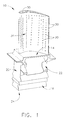
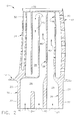
- FIG. 1 and 2 One embodiment of a turbine component that can be used with the method of the present invention includes turbine blade 10 shown in FIG. 1 and 2.
- the turbine blade 10 has three sections: an airfoil section 34, a platform section 14, and a dovetail section 20.
- the airfoil section includes a plurality of cooling holes 30, which permit cooling air to escape from an interior space of the turbine blade 10.
- cooling intake passages 24 allow cooling air to enter the interior space of the turbine blade 10 for purposes of cooling.
- the turbine blade 10 is typically fabricated from an environmental resistant alloy, such as a nickel-based superalloy.
- the exterior surface of the turbine blade 10 may be coated with any coating system known in the art for coating a turbine blade 10.
- a known coating system includes a bond coat on the surface of the turbine blade 10, typically comprising a diffusion aluminide or an overlay MCrAlY, and a thermal barrier layer disposed on the bond coating, which may include ceramic materials, such as yttria stabilized zirconia.
- the bond coating and thermal barrier layer are typically applied to an external surface of the airfoil portion 34 of the turbine blade 10 where resistance to oxidation from heat is important.
- FIG. 2 shows a cutaway view of the turbine blade 10 of FIG. 1, wherein a plurality of interior cooling passageway surfaces 26 define a plurality of interior cooling passageways 28, which serve to keep the blade 10 cool during normal engine operation as cooling air from the external source.
- a typical source of cooling air is air from the compressor section of the gas turbine engine.
- the cooling air 40 is introduced into the passageways 28 via air intake passages 24.
- the cooling air 40 flows through the interior cooling passageways 28 and exits the turbine blade through cooling holes 30, which provide film cooling to the blade surface.
- the interior surfaces 26 of the turbine blade 10 may optionally be coated with an environmental resistant layer.
- One type of environmental resistant layer that may be applied to interior surface 26 is a diffusion aluminide coating.
- the present invention provides an amorphous phosphate-containing coating 52 on interior surface 26 or an amorphous phosphate-containing coating 52 on at least a portion of an environmentally resistant layer.
- FIG.3 shows an exploded view of a coating system according to the present invention disposed on interior surface 26 of a substrate article.
- Interior surface 26 is the surface of alloy 50, which forms the metallic portion of the turbine blade 10.
- a suitable alloy composition for alloy 50 includes a nickel-based superalloy.
- Suitable alloy may include RENE ® N5, having a composition that is well-known in the art, including a nominal composition of, by weight percent, 7.5 Co, 7.0 Cr, 6.2 Al, 6.5 Ta, 5.0 W, 3.0 Re, 1.5 Mo, 0.05 C, 0.15 Hf, 0.01 Y, 0.004 B, the balance nickel and incidental impurities, but any other turbine blade alloy known in the art may be used.
- RENE ® is a trademark of Teledyne Industries, Inc., Los Angeles, CA for superalloy metals. Disposed on surface 26 is amorphous phosphate-containing coating 52. Surface 26 is preferably uniformly coated with an amorphous phosphate-containing coating 52 in order to provide oxidation and hot corrosion resistance.
- FIG. 4 shows an exploded view of a coating system according to the present invention including disposed on interior surface 26.
- interior surface 26 is the surface of alloy 50, which forms the metallic portion of the turbine blade 10.
- Environmental resistant layer 54 is disposed on surface 26.
- Environmental resistant layer 54 may be any environmental resistant layer 54 that may be applied to the interior surface 26 of a turbine blade 10.
- One suitable environmental resistant layer 54 includes an aluminide coating.
- Disposed on surface 26 and over environmental resistant layer 54 is amorphous phosphate-containing coating 52.
- the amorphous phosphate-containing coating 52 preferably has a thickness of from about 0.10 microns to about 10 microns and provides resistance to oxidation and hot corrosion at temperature greater than about 1000°F, including temperatures of about 1000°F to about 2000°F.
- the amorphous phosphate-containing coating provides a barrier to oxygen diffusion.
- the barrier preferably provides sufficient resistance to oxygen diffusivity that the amorphous phosphate-containing coating 52 has an oxygen diffusivity of less than about 1 x 10 -12 cm 2 /sec at temperatures of about 1400°C (2552°F).
- the reduced oxygen diffusivity of the amorphous phosphate-containing coating 52 allows for slow oxide scale growth and a fast transition from metastable aluminum oxide phases, such as theta or gamma, to the stable alpha aluminum oxide phase.
- the amorphous phosphate-containing coating 52 is also resistant and acts as a barrier to hot corrosion from deposited metal, sulfates, sulfites, chlorides, carbonates, various and sundry oxides and/or various salts in either particulate or gaseous form.
- the amorphous phosphate-containing coating 52 of the present invention, while adherent to the surface, is thin and compliant making it resistant to cracking under stress.
- the present invention also includes a method for coating the interior surfaces of a turbine blade and for coating hot section turbine component surfaces that come into contact with the cooling air of a gas turbine engine.
- the method includes providing a high pressure turbine component that comes into contact with cooling air within the gas turbine engine.
- the component may include underlying layers within the interior surfaces, such as aluminide layers, as well as exterior coating systems, not to be limited by, including diffusion alumindes, noble metal-modified diffusion aluminides, NiAl or MCrAIY overlays, and thermal barrier coatings.
- An optional surface preparation may be performed to clean the surface in preparation for coating.
- the surface preparation may be any surface preparation known in the art suitable for preparing a surface for subsequent coating.
- a liquid coating composition including a liquid composition comprising a composition for forming amorphous phosphate-containing coating 52.
- An amorphous phosphate-containing coating 52 for use in the coating system of the present invention includes, but is not limited to an aluminophosphate coating, formed from a liquid mixture comprising a metal salt, alcohol and phosphorous pentoxide (P 2 O 5 ).
- Aluminophosphate compounds for use in the amorphous phosphate-containing coating 52, compositions for forming an aluminophosphate amorphous coating and/or materials making up the coating composition for forming an aluminophosphate coating, are disclosed in U.S. Pat. Nos.
- Examples of aluminumophospate coatings including compositions comprising amorphous, metastable aluminum phosphate having phosphate (e.g., PO 4 ) and aluminum oxide compounds (e.g., AlO 4 ) bonded within the amorphous coating.
- the application of the coating composition may take place using any conventional application method, including, but not limited to, injection, brushing, rolling, dipping, injecting, spin-coating, spraying and combinations thereof.
- masking of the surface may be utilized. Masking may be useful in preventing coating of areas such as the exterior surfaces and dovetail pressure faces of the turbine blade.
- the coated component is then dried and heated to cure the coating composition and form the amorphous phosphate-containing coating.
- the temperature curing is preferably greater than about 400°C (752°F), more preferably greater than about 600°C (1112°F) and still more preferably from about 500°C (932°F) to about 800°C (1472°F).
- the cured amorphous phosphate-containing coating 52 is adherent to the surface, has a thickness of from about 0.10 microns to about 10 microns, specifically, from about 0.1 microns to about 5 microns, more specifically from about 0.2 microns to about 2.0 microns, and is resistant to oxygen diffusion.
- the internal passages of a turbine blade 10 are coated with an amorphous phosphate-containing coating 52 comprising aluminophosphate.
- masking includes covering a surface with a material or coating that may subsequently and substantially be removed and prevents coating of the underlying substrate.
- Suitable masking materials include, but are not limited to, masking tapes which may be applied at room temperature and removed from the substrate surface after applying the amorphous phosphate-containing coating 52.
- the coating method of the present invention has the advantage that the coating may be applied to only the internal surface of the turbine blade 10 with the use of masking.
- simple masking methods including masking tape, releasable coatings and inert films may be applied to areas of turbine blade that do not require/desire coating including the external surface of the airfoil, the contact points with the disk of the dovetail, contact points with dampers, and over other coatings.
- the component may then be immersed (i.e., dipped) in an amorphous phosphate-containing coating precursor containing liquid composition. Following the precursor application and drying, the masking material can be removed before curing at elevated temperature to form the coating.
- the coating method of the present invention has the advantage that the coating may be applied to the interior surface of a turbine blade 10 without the use of masking.
- the component may be immersed (i.e., dipped) in liquid phosphate coating precursor containing liquid composition and subsequently cured to form a coating on the entire surface of the turbine blade 10.
- the relatively thin low density coating has little or no detrimental effect on weight and provides properties, such as resistance to oxygen diffusion, that provide hot corrosion and oxidation resistance.
- the amorphous phosphate-containing coating 52 may be present on all surfaces of the turbine blade 10, including the exterior surfaces of the airfoil section 34 and coatings present thereon.
- adherence to coated surfaces, such as thermal barrier coatings on the airfoil section 34 may be weak and the amorphous phosphate-containing coating 52 may wear away during normal operation of the gas turbine engine.
- contact surfaces that are subject to high wear rates such as the contact points with the disk of the dovetail or the contact points with blade dampers, will wear through the coating 52 early during operation of the gas turbine engine and not affect the performance of these contact surfaces.
- the remaining portions of the turbine blade 10 remain coated and the amorphous phosphate-containing coating 52 provides oxidation and hot corrosion resistance.
- the first sample was coated with an amorphous phosphate-containing coating according to the present invention.
- a second, comparative sample was left uncoated. Both the first sample and comparative sample were subject to oxidation testing with 20 cycles per hour in a Mach 1 gas stream at 2150 °F, where the samples were allowed to be cooled to about room temperature between cycles. The weight loss of the sample in grams was measured and are show in TABLE As shown in TABLE 1, the alloy coated with amorphous phosphate-containing coating had substantially greater resistance to oxidation than the uncoated material as evidence by the initiation of material weight loss at a longer test time (about 824 hours versus about 371 hours).
- Example 1 N5 Alloy Coated with Amorphous Phosphate-Containing Coating Comparative Example - Uncoated N5 Alloy Time(hrs) Weight Gain (grams) Time (hrs) Weight Gain (grams) 0 0.0000 0 0.0000 40 0.0024 40 0.0026 81 0.0030 80 0.0032 128 0.0037 122 0.0030 168 0.0034 170 0.0032 208 0.0043 214 0.0039 250 0.0041 258 0.0030 298 0.0040 290 0.0036 342 0.0044 331 0.0030 386 0.0039 371 -0.0001 418 0.0045 417 0.0001 459 0.0042 460 -0.0031 495 0.0043 514 -0.0107 541 0.0044 562 -0.0147 584 0.0034 606 -0.0372 638 0.0032 652 -0.0442 686 0.0030 700 -0.0627 730 0.0012 776 0.0002 824 -0.0011
Landscapes
- Chemical & Material Sciences (AREA)
- Engineering & Computer Science (AREA)
- Materials Engineering (AREA)
- Mechanical Engineering (AREA)
- Chemical Kinetics & Catalysis (AREA)
- Metallurgy (AREA)
- Organic Chemistry (AREA)
- Inorganic Chemistry (AREA)
- General Chemical & Material Sciences (AREA)
- General Engineering & Computer Science (AREA)
- Turbine Rotor Nozzle Sealing (AREA)
- Other Surface Treatments For Metallic Materials (AREA)
Applications Claiming Priority (1)
| Application Number | Priority Date | Filing Date | Title |
|---|---|---|---|
| US11/425,596 US20070298277A1 (en) | 2006-06-21 | 2006-06-21 | Metal phosphate coating for oxidation resistance |
Publications (1)
| Publication Number | Publication Date |
|---|---|
| EP1870492A1 true EP1870492A1 (fr) | 2007-12-26 |
Family
ID=38509811
Family Applications (1)
| Application Number | Title | Priority Date | Filing Date |
|---|---|---|---|
| EP07109953A Ceased EP1870492A1 (fr) | 2006-06-21 | 2007-06-11 | Revêtement de phosphate métallique pour une résistance à l'oxydation |
Country Status (3)
| Country | Link |
|---|---|
| US (1) | US20070298277A1 (fr) |
| EP (1) | EP1870492A1 (fr) |
| JP (1) | JP2008002468A (fr) |
Cited By (1)
| Publication number | Priority date | Publication date | Assignee | Title |
|---|---|---|---|---|
| WO2019170302A1 (fr) * | 2018-03-09 | 2019-09-12 | Senior Ip Gmbh | Structure de drain profilé intégrée |
Families Citing this family (4)
| Publication number | Priority date | Publication date | Assignee | Title |
|---|---|---|---|---|
| US8658291B2 (en) * | 2008-12-19 | 2014-02-25 | General Electric Company | CMAS mitigation compositions, environmental barrier coatings comprising the same, and ceramic components comprising the same |
| US8802225B2 (en) * | 2011-05-31 | 2014-08-12 | United Technologies Corporation | Article having vitreous monocoating |
| BR122020020238B1 (pt) * | 2011-12-19 | 2021-09-08 | Praxair S.T. Technology, Inc | Composição de pasta fluida, revestimento de barreira térmica ou ambiental, e, métodos para produção de uma pasta fluida aquosa, e para aplicar um revestimento de barreira térmica ou ambiental com uma pasta fluida aquosa |
| US10100656B2 (en) | 2015-08-25 | 2018-10-16 | General Electric Company | Coated seal slot systems for turbomachinery and methods for forming the same |
Citations (4)
| Publication number | Priority date | Publication date | Assignee | Title |
|---|---|---|---|---|
| US6150033A (en) * | 1995-06-06 | 2000-11-21 | Sermatech International, Inc. | Environmentally friendly coating compositions, bonding solution, and coated parts |
| EP1666633A1 (fr) * | 2004-12-01 | 2006-06-07 | General Electronic Company | Protégé d'un revêtement de barrière thermique avec un revêtement sacrificiel |
| US20060127694A1 (en) * | 2004-12-15 | 2006-06-15 | Hazel Brian T | Corrosion resistant coating composition, coated turbine component and method for coating same |
| EP1700929A1 (fr) * | 2005-03-10 | 2006-09-13 | General Electric Company | Composition liquide éléctrostatique pour former un revêtement comprenant des particules métalliques minuscules revêtues de couches résistant à la corrosion et sa méthode d'utilisation |
Family Cites Families (16)
| Publication number | Priority date | Publication date | Assignee | Title |
|---|---|---|---|---|
| US5260099A (en) * | 1990-04-30 | 1993-11-09 | General Electric Company | Method of making a gas turbine blade having a duplex coating |
| US6074699A (en) * | 1994-04-29 | 2000-06-13 | Mcdonnell Douglas Corporation | Surface hardness of articles by reactive phosphate treatment |
| US6733907B2 (en) * | 1998-03-27 | 2004-05-11 | Siemens Westinghouse Power Corporation | Hybrid ceramic material composed of insulating and structural ceramic layers |
| US6036762A (en) * | 1998-04-30 | 2000-03-14 | Sambasivan; Sankar | Alcohol-based precursor solutions for producing metal phosphate materials and coating |
| US6296945B1 (en) * | 1999-09-10 | 2001-10-02 | Siemens Westinghouse Power Corporation | In-situ formation of multiphase electron beam physical vapor deposited barrier coatings for turbine components |
| US6680126B1 (en) * | 2000-04-27 | 2004-01-20 | Applied Thin Films, Inc. | Highly anisotropic ceramic thermal barrier coating materials and related composites |
| EP1286931A2 (fr) * | 2000-05-19 | 2003-03-05 | The University Of British Columbia | Processus de fabrication de ceramiques a hydroxyde composite liees chimiquement |
| US6461415B1 (en) * | 2000-08-23 | 2002-10-08 | Applied Thin Films, Inc. | High temperature amorphous composition based on aluminum phosphate |
| US7001679B2 (en) * | 2001-08-09 | 2006-02-21 | Siemens Westinghouse Power Corporation | Protective overlayer for ceramics |
| US6616978B1 (en) * | 2002-05-09 | 2003-09-09 | General Electric Company | Protecting a substrate with a multilayer oxide/phosphate coating having a temperature-stepped cure |
| US7678465B2 (en) * | 2002-07-24 | 2010-03-16 | Applied Thin Films, Inc. | Aluminum phosphate compounds, compositions, materials and related metal coatings |
| JP2005535554A (ja) * | 2002-08-14 | 2005-11-24 | アプライド シン フィルムズ,インコーポレイティッド | リン酸アルミニウム化合物、組成物、材料及び関連複合体 |
| GB0225670D0 (en) * | 2002-11-05 | 2002-12-11 | Rolls Royce Plc | Method of forming a diffusion barrier on a titanium alloy substrate |
| US8021758B2 (en) * | 2002-12-23 | 2011-09-20 | Applied Thin Films, Inc. | Aluminum phosphate compounds, coatings, related composites and applications |
| JP2006515535A (ja) * | 2002-12-23 | 2006-06-01 | アプライド シン フィルムズ,インコーポレイティッド | リン酸アルミニウムコーティング |
| US6989174B2 (en) * | 2004-03-16 | 2006-01-24 | General Electric Company | Method for aluminide coating a hollow article |
-
2006
- 2006-06-21 US US11/425,596 patent/US20070298277A1/en not_active Abandoned
-
2007
- 2007-06-11 EP EP07109953A patent/EP1870492A1/fr not_active Ceased
- 2007-06-20 JP JP2007162151A patent/JP2008002468A/ja active Pending
Patent Citations (5)
| Publication number | Priority date | Publication date | Assignee | Title |
|---|---|---|---|---|
| US6150033A (en) * | 1995-06-06 | 2000-11-21 | Sermatech International, Inc. | Environmentally friendly coating compositions, bonding solution, and coated parts |
| EP1666633A1 (fr) * | 2004-12-01 | 2006-06-07 | General Electronic Company | Protégé d'un revêtement de barrière thermique avec un revêtement sacrificiel |
| US20060127694A1 (en) * | 2004-12-15 | 2006-06-15 | Hazel Brian T | Corrosion resistant coating composition, coated turbine component and method for coating same |
| EP1672174A1 (fr) * | 2004-12-15 | 2006-06-21 | General Electric Company | Composition de revêtement anticorrosif, composants de turbine revêtu et son procèdè de fabrication |
| EP1700929A1 (fr) * | 2005-03-10 | 2006-09-13 | General Electric Company | Composition liquide éléctrostatique pour former un revêtement comprenant des particules métalliques minuscules revêtues de couches résistant à la corrosion et sa méthode d'utilisation |
Cited By (1)
| Publication number | Priority date | Publication date | Assignee | Title |
|---|---|---|---|---|
| WO2019170302A1 (fr) * | 2018-03-09 | 2019-09-12 | Senior Ip Gmbh | Structure de drain profilé intégrée |
Also Published As
| Publication number | Publication date |
|---|---|
| JP2008002468A (ja) | 2008-01-10 |
| US20070298277A1 (en) | 2007-12-27 |
Similar Documents
| Publication | Publication Date | Title |
|---|---|---|
| JP5160194B2 (ja) | 耐酸化性を得るためのセラミック耐食性コーティング | |
| US8257559B2 (en) | Thermal barrier coating resistant to penetration by environmental contaminants | |
| EP1595977B1 (fr) | Pièce en superalliage ayant un revêtement résistant à la corrosion | |
| US6352788B1 (en) | Thermal barrier coating | |
| JP4191427B2 (ja) | 改良プラズマ溶射熱ボンドコート系 | |
| US7833586B2 (en) | Alumina-based protective coatings for thermal barrier coatings | |
| US7666515B2 (en) | Turbine component other than airfoil having ceramic corrosion resistant coating and methods for making same | |
| US7776143B2 (en) | Particulate corrosion resistant coating composition | |
| US20090047135A1 (en) | Layered corrosion resistant coating for turbine blade environmental protection | |
| US7314674B2 (en) | Corrosion resistant coating composition, coated turbine component and method for coating same | |
| EP1820876A1 (fr) | Procédé de revêtement de composants d'une turbine à gaz | |
| US7163718B2 (en) | Method of selective region vapor phase aluminizing | |
| EP1870492A1 (fr) | Revêtement de phosphate métallique pour une résistance à l'oxydation | |
| US20040180232A1 (en) | Selective region vapor phase aluminided superalloy articles | |
| EP1627862A1 (fr) | Compositions céramiques pour des revêtements barrières thermiques présentant des propriétés mécaniques améliorées | |
| US7294413B2 (en) | Substrate protected by superalloy bond coat system and microcracked thermal barrier coating | |
| US7175888B2 (en) | Mischmetal oxide TBC | |
| US20100136240A1 (en) | Process for Forming an Outward Grown Aluminide Coating | |
| US6896488B2 (en) | Bond coat process for thermal barrier coating | |
| JP4907072B2 (ja) | 選択的領域気相アルミナイズ方法 | |
| Stolle | Conventional and advanced coatings for turbine airfoils | |
| JPH09195067A (ja) | 耐熱部品 | |
| CA2483232C (fr) | Methode d'aluminiage selectif en phase vapeur d'une region |
Legal Events
| Date | Code | Title | Description |
|---|---|---|---|
| PUAI | Public reference made under article 153(3) epc to a published international application that has entered the european phase |
Free format text: ORIGINAL CODE: 0009012 |
|
| AK | Designated contracting states |
Kind code of ref document: A1 Designated state(s): AT BE BG CH CY CZ DE DK EE ES FI FR GB GR HU IE IS IT LI LT LU LV MC MT NL PL PT RO SE SI SK TR |
|
| AX | Request for extension of the european patent |
Extension state: AL BA HR MK YU |
|
| 17P | Request for examination filed |
Effective date: 20080626 |
|
| 17Q | First examination report despatched |
Effective date: 20080725 |
|
| AKX | Designation fees paid |
Designated state(s): DE FR GB |
|
| STAA | Information on the status of an ep patent application or granted ep patent |
Free format text: STATUS: THE APPLICATION HAS BEEN REFUSED |
|
| 18R | Application refused |
Effective date: 20100508 |