EP1870825B1 - Système et procédé pour la gestion de test d'échantillon de laboratoire - Google Patents
Système et procédé pour la gestion de test d'échantillon de laboratoire Download PDFInfo
- Publication number
- EP1870825B1 EP1870825B1 EP06011422.0A EP06011422A EP1870825B1 EP 1870825 B1 EP1870825 B1 EP 1870825B1 EP 06011422 A EP06011422 A EP 06011422A EP 1870825 B1 EP1870825 B1 EP 1870825B1
- Authority
- EP
- European Patent Office
- Prior art keywords
- sample
- analytical
- unit
- decision unit
- test
- Prior art date
- Legal status (The legal status is an assumption and is not a legal conclusion. Google has not performed a legal analysis and makes no representation as to the accuracy of the status listed.)
- Active
Links
Images

Classifications
-
- G—PHYSICS
- G16—INFORMATION AND COMMUNICATION TECHNOLOGY [ICT] SPECIALLY ADAPTED FOR SPECIFIC APPLICATION FIELDS
- G16H—HEALTHCARE INFORMATICS, i.e. INFORMATION AND COMMUNICATION TECHNOLOGY [ICT] SPECIALLY ADAPTED FOR THE HANDLING OR PROCESSING OF MEDICAL OR HEALTHCARE DATA
- G16H10/00—ICT specially adapted for the handling or processing of patient-related medical or healthcare data
- G16H10/40—ICT specially adapted for the handling or processing of patient-related medical or healthcare data for data related to laboratory analysis, e.g. patient specimen analysis
-
- Y—GENERAL TAGGING OF NEW TECHNOLOGICAL DEVELOPMENTS; GENERAL TAGGING OF CROSS-SECTIONAL TECHNOLOGIES SPANNING OVER SEVERAL SECTIONS OF THE IPC; TECHNICAL SUBJECTS COVERED BY FORMER USPC CROSS-REFERENCE ART COLLECTIONS [XRACs] AND DIGESTS
- Y10—TECHNICAL SUBJECTS COVERED BY FORMER USPC
- Y10T—TECHNICAL SUBJECTS COVERED BY FORMER US CLASSIFICATION
- Y10T436/00—Chemistry: analytical and immunological testing
- Y10T436/11—Automated chemical analysis
Definitions
- the present invention refers to a system and a method for data management within a laboratory environment. More particularly, the present invention relates to a system and a method for managing information relating to requests for a number of tests to be made on at least one sample within a laboratory environment. The present invention also refers to a decision unit for managing such information, to a computer program product, a computer program and a computer-readable medium.
- the present invention provides a system and a method, which allow small to very large: laboratory sites, as for example molecular diagnostic sites, to realize customer solutions combining fully computers aided sample handling functions with data management decisision.
- Those laboratory sites have, as already mentioned, typically one or more units for sample preparation and one or more units for analysis, e.g. in case of molecular diagnostic laboratories for amplification and detection.
- the present invention proposes a system for managing information relating to requests for a number of tests to be made on at least one sample within a laboratory environment with the features of claim 1.
- the present invention further relates to a method for managing such information with the features of claim 8.
- a system for managing information relating to requests for a number of tests to be made on at least one sample within a laboratory environment comprises at least one pre-analytical unit, which is configured to scan the at least one sample and to sort and/or aliquot the at least one sample on request according to respective test requirements, at least one analytical unit configured to run at least one test of the number of tests on the appropriately sorted and/or aliquoted sample and a decision unit enabling at least one host component to access the system and to submit the sample order, and acting as connecting component for interconnecting the at least one pre-analytical unit and the at least one analytical unit and as intermediary and coordinator in communication between those units, such that the number of tests can be performed via a workflow, particularly via a recursive workflow, coordinated by the decision unit until a pre-given stopping criterion is fulfilled, particularly until the sample is completely measured, the decision unit being further configured to collate the test results appropriately with the sample and to give a respective report towards
- the system can also comprise at least one sample reception unit configured to receive the at least one sample.
- a decision unit for managing information relating to requests for a number of tests to be made on at least one sample in a system within a laboratory environment.
- the system within the laboratory environment comprises at least one pre-analytical unit and at least one analytical unit.
- the decision unit enables at least one host component to access the system and to submit a sample order for the at least one sample.
- the decision unit acts as a connection component for interconnecting the at least one pre-analytical unit and the at least one analytical unit and as intermediary and coordinator in communication between those units, such that the number of tests can be performed via a workflow, particularly via a recursive workflow, coordinated by the decision unit, until a pre-given criterion is fulfilled, particularly until the sample is completely measured.
- the decision unit is further configured to correlate the test results appropriately with the sample and to give a respective report towards the at least one host component.
- the decision unit is combining the information coming from the different units, e.g. from the at least one pre-analytical unit and the at least one analytical unit, as a basis to make a next decision.
- the decision unit itself can be configured to optionally combine current analytical data, such as current analytical test result information with other sample related information to decide the next pre-analytical step.
- Sample related information is to be understood within the scope of the present specification in a broad sense, including sample specific information, such as sample quality, sample volume, sample turn around time, sample load balancing information, delta checks with previous results, and/or patient related demographic information, such as age, gender, location information, requester/ward etc.
- a further embodiment of the present invention refers to a method for managing information related to requests for a number of tests to be made on at least one sample in a system within a laboratory environment, the system within the laboratory environment comprising at least one pre-analytical unit, at least one analytical unit and one decision unit.
- the method comprises the following steps:
- the processing can be done via a recursive workflow.
- step D comprises the following sub-steps:
- test results are sent back to the decision unit.
- sample order is accordingly updated with respect to the uploaded test results, i.e. by current test result information and with respect to further current sample related information.
- the test result information can comprise all still open or pending test requests.
- the further current sample related information can comprise any information describing situational interests.
- new tests or confirmation tests can be generated by the decision unit based on current test results, current result flags, previous sample results, any other patient related demographic information, such as gender, age, requester, etc. or the test just made or any other requested test can be commented, blocked, released, replaced, modified or extended, e.g. with comments or flags. Failed tests which have to be repeated can also be included.
- the updated sample order is processed again until a pre-given stopping criterion is reached. Such a stopping criterion can be fulfilled, e.g. when all test requests have been done.
- One embodiment of the proposed method further comprises the step of receiving the sample order comprising a sample-ID and the sample test requests with sample test request information and sample related information from the at least one host component. That means that the sample order comprising the sample-ID and the test requests is downloaded from the at least one host component to the decision unit.
- the pre-analytical unit is sending a query to the decision unit after the sample received at the pre-analytical unit has been scanned.
- the decision unit sends the sample order to the pre-analytical unit.
- the pre-analytical unit processes the sample order by sorting and/or aliquoting the sample, depending on the sample test request information, and by putting the sample as a sample tube into an appropriate target. It is possible, for example, that depending on the sample test request information sample material is pipetted into an appropriate secondary tube which is assigned to an appropriate rack and target.
- sample order is directly received by the pre-analytical unit. That means that the sample order can be directly entered on the pre-analytical unit, e.g. by loading sample tubes assorted by test parameters. In that case the decision unit must be able to handle unknown sample orders uploaded by the pre-analytical unit.
- the system further comprises at least one post-analytical unit, configured to archive measured samples.
- the post-analytical unit is an equipment used to perform post-analytical functions in a respective laboratory, as for example archiving of samples.
- the equipment can be a robot system doing the required post-analytical steps.
- post- and the pre-analytical units are consolidated within one common physical equipment.
- post- and the pre-analytical units are consolidated within one common physical equipment.
- the decision unit provides one consolidating and standardized front end for all pre-analytical, analytical and post- analytical units of the system related to one or more existing host systems. Those host systems are relieved from real-time duties.
- the system according to the present invention provides one backbone to realize advanced sample workflows, thus increasing laboratory efficiency and delivering high quality results.
- the system allows to combine pre-analytical, analytical and post-analytical decisions with data management functions as automatic result validation rules. This is, as already mentioned above, a pre-requisite for optimising the complete laboratory process.
- the system can communicate with at least one host component via any standard host interface protocol, particularly via ASTM or HL7.
- any standard host interface protocol particularly via ASTM or HL7.
- ASTM or HL7 a standard host interface protocol
- the system can be integrated fast, easy and with low risk within a specific laboratory environment. This reduces complexity and improves quality.
- the decision unit acts as a distributor unit, distributing the at least one sample to the at least one analytical unit according to distribution criteria, which have been configured by the decision unit itself executed in real-time, based on pre-analytical information from the at least one pre-analytical unit and/or on current analytical data which are optionally combined in real-time with current result flags, other sample information, such as sample quality, sample volume, sample turn around time, sample load balancing rules, previous sample results, etc. and/or patient related information such as age, gender, location information, requester/ward, patient demographic data, etc..
- a current test or any other requested test can be commented, blocked, released or replaced, modified or extended, e.g. with comments or flags.
- Current analytical data means those data which can be derived from already performed tests and corresponding test results.
- the system comprises a plurality of analytical units, enabling the system to run a plurality of tests. Particularly, those tests can be performed in parallel. Furthermore, those tests can differ from each other. That means that the number of tests to be made on the at least one sample can be run by different suitable analytical units, even in parallel, if necessary.
- the at least one pre-analytical unit is further configured to put the sorted and/or aliquoted sample into an appropriate target for transfer to the at least one analytical unit.
- the analytical unit is configured to receive open test requests either in query mode or in batch mode from the decision unit.
- any next action to be done with the at least one sample is taken at one logical point.
- This logical point is realised by the decision unit which is typically located in a so-called sample distribution area of the laboratory.
- the action itself can be a sorting step, an aliquoting step, a combined sorting and aliquoting step or an archive step. Any execution of a pre-analytical action is either automated by a robot system or semi-automated by a computer aided manual system.
- the decision unit can encompass or be connected with a rule engine.
- Such a recursive workflow which can be performed by means of a system according to the present invention and/or by means of a decision unit according to the present invention, delivers a lot of advantages, some of which are summarized in the following.
- the process is clear, since all sample distribution decisions are taken by the decision unit.
- the decision taken by the decision unit considers pre-analytical information as well as current analytical test results, if already available. Optional available sample information of patient related information can be considered.
- the recursive workflow realises a combination of pre-analytical rule settings with analytical results, optionally combined with other sample and patient related information which represent laboratory processes. The samples remain in the laboratory until all required actions have been done.
- the process to be executed is easy to learn for any laboratory worker due to a clear process structure.
- a fully computer aided decision process and paperless working is decreasing the error rate and increasing the quality.
- the present invention further covers a computer program product with a computer-readable medium and a computer program stored on the computer-readable medium with a program code which is suitable for carrying out a method according to the present invention when the computer program is run on a computer, particularly on a computer which is incorporated within a system according to the present invention.
- the present invention also refers to a computer program with a program code which is suitable for carrying out a method according to the invention when the computer program is run on a computer, particularly on a computer which is incorporated within a system according to the present invention.
- the invention also relates to a computer-readable medium with a computer program stored thereon, the computer program comprising a program code, which is suitable for carrying out a method according to the invention when the computer program is run on a computer, particularly on a computer integrated within a system and/or a decision unit according to the present invention.
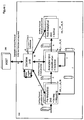
- FIG. 1 shows a block diagram of an embodiment of the system according to the present invention.
- the system 100 comprises a decision unit 10, at least one pre-analytical unit 20, at least one analytical unit 30 and at least one post-analytical unit 40. The possibility of a multiplicity of the respective units is indicated by an appropriate enumeration and by successively arranged boxes, respectively.
- the decision unit 10 is further connected with a database 11 as indicated by link A.
- the database 11 can also be integrated within the decision unit 10.
- the decision unit 10 is connected, as indicated by link B, with at least one or more host components 200. Via standard host interface protocols, e.g. ASTM or HL7, the decision unit 10 can communicate with at least one host component 200 with a standard function set. No specific logic has to be realized in the host system. Therefore, it can be integrated fast, easy and with low risk.
- a sample order comprising a sample-ID and sample test requests can be downloaded from at least one host component 200 to the decision unit 10 of the system 100 via standard interface protocols.
- Sample test request information and sample information optionally including other sample and patient demographic information, which is included in the sample order, is stored in the local database 11 of the decision unit 10.
- a sample in form of a sample tube 50 is arriving, as indicated on the left side of figure 1 , in the pre-analytical unit 20.
- a sample scan is preformed by the pre-analytical unit 20 which is sent via link C to the decision unit 10.
- the decision unit 10 is downloading to the pre-analytical unit 20 via link C sample information, i.e. an appropriate target information or pending test requests which are included in the sample order.
- sample information i.e. an appropriate target information or pending test requests which are included in the sample order.
- the at least one pre-analytical unit 20 is performing the required action, i.e. sorting or aliquoting the sample tube 50, and putting the sample tube 50 into an appropriate target.
- the pre-analytic sorting/aliquoting information is uploaded (e.g. in form of an extended sample order) via link C to the decision unit 10.
- the sorted aliquoted sample tube 50 is put via link D on the analytical unit 30.
- the analytical unit 30 is asking via link E for the appropriate test request information from the decision unit 10.
- the decision unit 10 is downloading via link E the extended sample order including the corresponding information to the analytical unit 30.
- the test results are uploaded from the analytical unit 30 via link E to the decision unit 10.
- the decision unit 10 updates the sample order with respect to the uploaded test results. That means that the decision unit 10 processes the test results, derives therefrom open and/or pending test requests, decides about further actions and initiates those actions, if necessary. Furthermore, the decision unit 10 updates the sample order stored within the database 11.
- the decision unit 10 can comprise a rule engine 12 by means of which that coordination functionality of the decision unit 10 can be supported.
- the rule engine 12 can be an off-the-shelf rule engine capable of handling facts and applying inference rules on those facts.
- the inference rules can be defined in advance and dynamically adapted to new circumstances.
- the rule engine can add new or confirmation tests based on current test results, current test result flags, other sample information, such as sample quality, sample volume, sample turn around time, sample load balancing rules, previous sample results, etc., and/or patient related information, such as age, gender, location information, requester/ward, etc., or this test or any other requested test can be commented, blocked, released, replaced, modified or extended, e.g. by comments or flags.
- the sample tube 50 is either immediately processed by the analytical unit 30 as indicated by backwardly directed arrow I, in case the analytical unit has the capabilities or the sample tube 50 is put back on one of the pre-analytical units 20 as indicated by backwardly directed arrow F.
- the pre-analytical unit 20 is scanning the sample unit 50 again and sends the scan via link C to the decision unit 10.
- the decision unit 10 is downloading again the appropriate test request or target information via link C to the pre-analytical unit 20 and the described steps are repeated until all test requests/targets have been done and no open test request/target is existing.
- the sample tube 50 is sorted via link G into an archive tray by the at least one post-analytical unit 40, which is informed by the decision unit 10 via link H.
- links A, B, C, E and H describe communication links enabling the respective units to transfer information data among each other, particularly by using appropriate interface protocols, respectively, links D, F, G and I correspond to transporting connections for the sample tube 50.
- the host component 200 is relieved from any real-time duties as all required decisions, i.e. pre-analytical, analytical and post-analytical decisions are taken by the decision unit 10.
- High quality results can be delivered by proven process units within the system 100 and complex algorithms do not have to be implemented in the host component 200.
- the laboratory process as described above can be optimised by combining sample flow related decisions as pre-analytical, analytical and post-analytical steps with data management information as received test results optionally combined with available sample and patient information within the decision unit 10.
- data management information as received test results optionally combined with available sample and patient information within the decision unit 10.
- those workflow and data management functions can be integrated fast, easy and with low risk into an existing laboratory environment. This reduces the complexity, improves laboratory quality and provides a satisfying work environment.
- the system is scalable and extendable as pre-analytical, analytical and post-analytical units can be added based on the throughput and turn around time requirements. This can be done without change of the interface between the host component 200 and the decision unit 10.
- pre-analytical unit 20_1 it is possible to provide a plurality of pre-analytical units 20, wherein all of the pre-analytical units have the same functionality and perform the same task on a sample. Therefore, it is possible to handle a plurality of samples 1 to n in parallel. That means, for example, that samples 1 to i are handled by pre-analytical unit 20_1, whereas samples i+1 to n are handled by pre-analytical unit 20_2. This can be continued analogically in case of more than two pre-analytical units.
- each of the pre-analytical units can perform certain steps in the pre-analytical processing of a sample, thus the pre-analytical units complement one another with respect to the whole pre-analytical processing. That means, for example, in case of m steps which have to be done in the pre-analytical processing, that steps 1 to i are done for all samples by pre-analytical unit 20_1, whereas steps i+1 to m are performed by pre-analytical unit 20_2.
- the assignment of steps can be modified accordingly in case of more than two pre-analytical units.
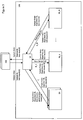
- FIG. 2 describes a further block diagram of an embodiment of the system according the present invention.
- the system 100 comprises a decision unit 10, at least one analytical unit 30 and at least one further unit 25 in which a pre-analytical unit and a post-analytical unit are combined.
- the decision unit 10 is again connected via a link A with a database 11 which can also be an integral part of the decision unit 10.
- the decision unit 10 can communicate with at least one host component 200 via a standard interface protocol, as indicated by link B.
- the decision unit 10 can also communicate with the pre- and post-analytical unit 25 and with the analytical unit 30 via appropriate interface protocols, respectively, as indicated by links C, E and H.
- a sample tube 50 is arriving in the pre- and post-analytical unit 25 where a sample scan is performed and sent to the decision unit 10.
- the decision unit 10 is downloading an appropriate sample order including a sample-ID and either the sample test request or target information, optionally combined with available sample and patient information, which is stored in the local database 11 of the decision unit 10.
- the stored sample order optionally combined with other information has been downloaded before from the host component 200 to the decision unit 10 of the system 100 via standard interface protocols.
- the pre- and post analytical unit 25 is performing a required action, as for example sorting or aliquoting, and putting the sample tube 50 into an appropriate target.
- the sample order can be extended by the pre-analytic sorting/aliquoting information.
- Such extended sample order in terms of sample information, e.g. sample extension, sample position or any other information, is uploaded via link C from the pre- and post-analytical unit 25 to the decision unit 10.
- the sorted/aliquoted sample tube 50 is put via connection D on the analytical unit 30.
- the analytical unit 30 is asking via link E for appropriate test request information from the decision unit 10.
- the analytical unit 30 is asking for such information either in batch mode or in query mode.
- the decision unit 10 is downloading the sample order or the extended sample order, which is to be understood in the broadest sense of sample information comprising the required information, to the analytical unit 30. After the required test has been done the test results are uploaded from the analytical unit 30 to the decision unit 10.
- the decision unit 10 updates the sample order with respect to the uploaded test results.
- the decision unit 10 can add new or confirmation tests based on current test results, current test result flags, other sample information, such as sample quality, sample volume, sample turn around time, sample load balancing rules, previous sample results, etc., and/or patient related information, such as age, gender, location information, requester/ward, etc., or this test or any other requested test can be commented, blocked, released, replaced, modified or extended, e.g. by comments or flags.
- the sample tube 50 is either immediately processed by the analytical unit 30 as indicated by backwardly directed arrow I, in case the analytical unit has the capabilities, or the sample tube 50 is put back on the pre- and post-analytical unit 25 as indicated by backwardly directed arrow F.
- the pre- and post-analytical unit is scanning the sample tube 50 again and the scan is sent to the decision unit 10.
- sample tube 50 is sorted into an archive tray by the pre- and post analytical unit 25.
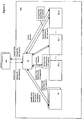
- Figure 3 shows a flowchart of an embodiment of the method according to the present invention.
- the method as described hereinafter can be used in large molecular diagnostics sites. Those sites have typically one or more instruments for automated sample preparation and one or more automated amplification and detection instruments. Instruments for automated sample preparation are provided for example by COBAS AmpliPrepTM Instruments of Roche Diagnostics. As automated amplification and detection instruments COBAS TaqManTM Analyser, COBAS TaqMan 48TM Analyser or COBAS AmplicorTM Analyser, all distributed by Roche Diagnostics, can be used. A number of the laboratories are using one or more so-called Hamilton StarTM for automated pipetting of primary sample tubes to so-called S-tubes of the mentioned COBAS AmpliPrepTM Instrument.
- the Hamilton system in a workflow as it is provided by an embodiment of the method according to the present invention can be used as an aliquot system generating out of a bar-coded primary sample tube an aliquot in a so-called SK 24 rack.
- the Hamilton system is not used as a pooling system.
- the decision unit as a part of an embodiment of the system according to the present invention manages the workflow described hereinafter and required data information transfer between the different units.
- the decision unit manages in a molecular diagnostics workflow an interface to a host component, a data flow between the so-called Hamilton system and any analytical unit, hereinafter called AmplilinkTM data stations, and collates test results with the corresponding sample tubes and reports sample and/or test order status towards a corresponding host component.
- a sample order is generated in a host component 200.
- the sample order consists of a unique sample ID and a number of test requests.
- the sample order namely the sample-ID and the test requests, is downloaded to the decision unit 10 as a part of a system 100.
- the decision unit 10 is sending via link C the sample order, including a specimen-ID plus the sample test requests, to the pre-analytical unit 20.
- the pre-analytical unit 20 is processing the sample order.
- sample material is pipetted in a rack, such as a SK-rack.
- the pre-analytical unit 20 is extending the sample order by the rack-ID and the rack-position.
- the extended sample order is uploaded via link C to the decision unit 10.
- the sample order that means the sample-ID plus the test requests
- the host component 200 must also be able to handle unknown samples, that means sample-ID plus sample test results, uploaded by the decision unit 10 at the end of the test process.
- the decision unit 10 is receiving the extended sample order, namely the sample-ID, the sample-ID modified, the rack-ID, the rack-position and the test requests.
- the decision unit 10 is forwarding the sample order according to the rack-ID, received by the pre-analytical unit 20 and an assigned rack-range in case of multiple connections to appropriate analytical units 30 via respective links E_1, ..., E_N.
- Those analytical units 30 can be assorted by rack-range as indicated by the numeration 30_1 to 30_N.
- the analytical unit 30_1 handles rack range A to M
- the analytical unit 30_N handles rack range N-Z.
- the analytical unit 30_1 is processing the sample orders relating to rack ranges A to M.
- the analytical unit 30_N processes the sample orders relating to rack ranges N to Z. After having performed the corresponding tests, the respective analytical unit 30 is uploading via respective link E the sample order and the test results to the decision unit 10 including flags and comments. The decision unit 10 is updating the sample order with respect to the received test results. The decision unit 10 is uploading the updated sample order, including the test results to the host component 200. Such an upload can be performed according to predefined rules. The decision unit 10 can uploading the updated sample order periodically to the host component, thus informing the host component about the actual sample order/result status. Alternatively, the host component is only informed by a sample order upload when all test requests have been done. In case that there are still pending test requests, the decision unit 10 downloads again the sample order, including sample test results(s) and pending test request(s) via link C to the pre-analytical unit 20.
- FIG. 4 shows a further flowchart of another embodiment of the method according to the present invention.
- a sample order is again generated in a host component 200.
- the sample order consists of a unique sample-ID and a number of test requests to be made on the corresponding sample.
- the sample order namely the sample-ID and the test requests, is downloaded to a decision unit 10, which is part of a system 100.
- One or more pre-analytical units 20, which is also included within system 100, is sending a query to the decision unit 10 as soon as the sample has been scanned on the pre-analytical unit 20.
- the decision unit 10 is sending via link C the sample order to the pre-analytical unit 20.
- the pre-analytical unit 20 is processing the sample order.
- sample material is pipetted in an appropriate rack, which can be for example a so-called SK-24 rack.
- the pre-analytical unit 20 is extending the sample order by a rack-ID and a rack-position.
- the extended sample order is uploaded via link C to the decision unit 10.
- sample orders can also be entered directly on the pre-analytical unit 20, e.g. by loading samples, assorted by test parameters. Therefore, the decision unit 10, as well as the host component 200, must be able to handle unknown sample orders uploaded by the pre-analytical unit 20 and the decision unit 10, respectively.
- the decision unit 10 is receiving the extended sample order, including the sample-ID, a sample-ID modified, a rack-ID, a rack-position and test requests.
- the decision unit 10 is forwarding via batch download the sample order to all analytical units 30_1, ..., 30_N, which are connected with the decision unit 10 via links E_1, ..., E_N, respectively.
- the respective analytical unit 30_i among the plurality of analytical units 30, which is receiving the SK-24 rack is processing the sample order.
- This analytical unit 30_i is uploading the sample order and the test results to the decision unit 10, including flags and comments.
- the decision unit 10 After the decision unit 10 has received the complete sample, the decision unit is sending a cancel request via respective links E_j to the other analytical units 30_j (i ⁇ j) to delete an appropriate order automatically out of a local analytical data base.
- the decision unit 10 is updating the sample order with respect to the test results and uploading the updated sample order including the test results to the at least one host component 200. In case that there are still pending test requests, the decision unit 10 downloads again the sample order, including sample test results(s) and pending test request(s) via link C to the pre-analytical unit 20.
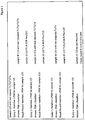
- Figure 5 shows a recursive workflow which can be realised within an embodiment of the system according to the present invention.
- a simple recursive workflow based on test requests only, is implemented between a pre-analytical unit, herein after called Hamilton, a decision unit, called PSM, and an analytical unit, called Amplilink.
- PSM decision unit
- Amplilink an analytical unit
- Such a recursive workflow means, in the example shown here, that only the remaining test requests, which have not been processed up to now, are considered. If all tests have been done an appropriate flag is sent to the pre-analytical unit, acting as a sample preparation unit. Optionally completely processed samples can then go into archive. In case that the requested sample is not known by the decision unit, an appropriate flag is sent to the pre-analytical unit.
- the example shown in figure 5 describes a sample "123” with test requests "T1/T2/T3/T4".
- the at least one pre-analytical unit Hamilton asks via query 1 the decision unit PSM for sample “123”.
- a sample-ID "123” with test requests "T1/T2/T3/T4" is provided.
- the pre-analytical Hamilton performs pre-analytical actions, e.g. pipetting, and sends the result back to the decision unit PSM for sample "123", which reads "sample-ID 123 T1;R-ID/R-Pos/123".
- the sample is forwarded to an appropriate analytical unit for processing test request T1.
- the at least one pre-analytical unit Hamilton asks the decision unit PSM for sample "123".
- the decision unit PSM sends to the pre-analytical unit Hamilton where the sample is put on the sample-ID "123" with test requests "T2/T3/T4", since T1 has been already processed successfully.
- the pre-analytical unit Hamilton where the sample is put on performs the pre-analytical action (pipetting) and sends the result back to the decision unit PSM, which reads the "sample-ID 123 T2; R-ID/R-Pos/123".
- the sample "123” is forwarded by the decision unit PSM to an appropriate analytical unit, which processes test request T2.
- the at least one pre-analytical unit Hamilton asks again via query 3 the decision unit PSM for sample "123".
- the decision unit PSM answers by providing the sample-ID "123” with test request "T3/T4".
- the pre-analytical Hamilton where the sample is put on makes pipetting for sample "123” and sends the results back to the decision unit PSM, which reads "sample-ID 123 T3,T4;R-ID/R-Pos/123". Therefore, the sample is forwarded to an analytical unit, which is capable of processing test requests T3, T4.
- the sample is forwarded back to the at least one pre-analytical unit Hamilton, which asks via query 4 the decision unit PSM again for sample "123".
- the decision unit provides the pre-analytical unit with information of the sample "123", namely the sample-ID "123", with no test requests left. That means, that in this case, an empty record is sent back, so that the pre-analytical unit Hamilton does not perform any further action.
- the sample can then be forwarded to a post-analytical unit in which the sample can be archived.
- a post-analytical unit can be consolidated with a pre-analytical unit within a common physical device.
Landscapes
- Health & Medical Sciences (AREA)
- Engineering & Computer Science (AREA)
- Epidemiology (AREA)
- General Health & Medical Sciences (AREA)
- Medical Informatics (AREA)
- Primary Health Care (AREA)
- Public Health (AREA)
- Automatic Analysis And Handling Materials Therefor (AREA)
- Medical Treatment And Welfare Office Work (AREA)
Claims (11)
- Système pour réaliser un flux de travaux afin d'exécuter un certain nombre d'essais à effectuer sur au moins un échantillon (50) au sein d'un environnement de laboratoire, le système comportant :au moins une unité pré-analytique (20) étant configurée pour recevoir et pour scanner le au moins un échantillon (50) et pour trier, quantifier et/ou archiver le au moins un échantillon (50) à la demande conformément à des demandes d'essai respectives comprises à l'intérieur d'un ordre d'échantillon respectif comportant un ID d'échantillon et des demandes d'essai d'échantillon, dans lequel des informations de tri/quantification pré-analytiques sont téléchargées depuis l'unité pré-analytique dans une unité de décision (20), et pour scanner à nouveau le au moins un échantillon (50) lorsque l'échantillon est ramené vers l'unité pré-analytique une fois que l'ordre d'échantillon a été mis à jour par l'unité de décision,une pluralité d'unités analytiques (30_1, ...30_N), chacune étant configurée pour exécuter au moins un essai parmi le nombre d'essais sur l'échantillon trié et/ou quantifié (50) et pour télécharger les résultats d'essai dans l'unité de décision, etl'unité de décision (10) permettant à au moins un hôte (200) d'avoir accès au système et de soumettre l'ordre d'échantillon pour le au moins un échantillon, et agissant en tant qu'intermédiaire et coordinateur en communication entre la au moins une unité pré-analytique (20) et la pluralité d'unités analytiques (30_1, ...30_N), dans lequel l'unité de décision (10) coordonne le traitement du nombre d'essais via un flux de travaux jusqu'à ce que tous les essais aient été réalisés, l'unité de décision (10) étant en outre configurée pour télécharger l'ordre d'échantillon comportant l'ID d'échantillon et des demandes d'essai d'échantillon depuis le au moins un hôte (200), pour distribuer le au moins un échantillon à une unité analytique appropriée (30) conformément à des critères de distribution qui sont configurés par l'unité de décision elle-même et lesquels sont basés sur des informations pré-analytiques en provenance d'au moins une unité pré-analytique (20) et sur des résultats d'essais provenant des essais parmi le nombre d'essais qui ont déjà été exécutés par au moins une unité analytique (30) combinées de manière facultative avec d'autres informations associées à un échantillon, pour mettre à jour l'ordre d'échantillon par rapport aux résultats d'essais téléchargés et pour ajouter de nouveaux essais ou des essais de confirmation et pour commenter, bloquer, libérer, remplacer, modifier ou étendre n'importe quel essai demandé et pour combiner des données analytiques courantes avec d'autres informations associées à un échantillon pour déterminer une nouvelle étape pré-analytique, de sorte que l'échantillon mis à jour doit être à nouveau traité jusqu'à ce que toutes les demandes d'essais aient été réalisées et pour rassembler des résultats d'essais obtenus avec l'échantillon (50) et pour fournir un rapport respectif à destination du au moins un hôte (200).
- Système selon la revendication 1, le système (100) comportant en outre au moins une unité post-analytique (40) configurée pour archiver des échantillons mesurés en tant que partie du flux de travaux.
- Système selon la revendication 2, dans lequel la au moins une unité post-analytique et la au moins une unité pré-analytique sont consolidées à l'intérieur d'un ou plusieurs équipements physiques communs (25) .
- Système selon l'une quelconque des revendications précédentes, dans lequel l'unité de décision (10) est configurée pour combiner des données analytiques courantes avec d'autres informations associées à un échantillon.
- Système selon l'une quelconque des revendications précédentes, la pluralité d'unités analytiques (30_1, ...,30_N) permettant au système (100) d'exécuter, en particulier en parallèle, une pluralité d'essais, en particulier une pluralité d'essais différents.
- Système selon l'une quelconque des revendications précédentes, dans lequel la au moins une unité pré-analytique (20) est en outre configurée pour placer l'échantillon trié et/ou quantifié dans une cible appropriée en vue d'un transfert vers la pluralité d'unités analytiques (30_1, ..., 30_N).
- Système selon l'une quelconque des revendications précédentes, le système comportant en outre au moins une unité de réception d'échantillon pour recevoir le au moins un échantillon.
- Procédé pour réaliser un flux de travaux afin d'exécuter un certain nombre d'essais à effectuer sur au moins un échantillon (50) au sein d'un environnement de laboratoire, l'environnement de laboratoire comportant un système selon l'une quelconque des revendications 1 et 7, le procédé comportant les étapes suivantes consistant à :A. recevoir l'échantillon par l'intermédiaire de la au moins une unité de réception d'échantillon,B. transporter l'échantillon vers la au moins une unité pré-analytique (20),C. identifier l'échantillon par l'intermédiaire d'au moins une unité pré-analytique et attribuer l'échantillon à un ordre d'échantillon par l'intermédiaire de l'unité de décision,D. exécuter un scan d'échantillon par l'intermédiaire d'au moins une unité pré-analytique (20) et envoyer le scan d'échantillon à l'unité de décision (10),E. recevoir par l'intermédiaire de l'unité de décision l'ordre d'échantillon comportant un ID d'échantillon et les demandes d'essais d'échantillon avec des informations de demande d'essai d'échantillon et des informations associées à l'échantillon en provenance d'au moins un hôte (200),F. traiter l'échantillon conformément à l'ordre d'échantillon par l'intermédiaire d'une interaction coordonnée adaptable de manière dynamique de la au moins une unité pré-analytique (20) et la pluralité d'unités analytiques (30_1, ...30_N), dans lequel le au moins un échantillon est distribué à une unité analytique appropriée (30) conformément à des critères de distribution qui sont configurés par l'unité de décision elle-même et qui sont basés sur des informations pré-analytiques en provenance d'au moins une unité pré-analytique (20) et sur des résultats d'essais provenant d'essais parmi le nombre d'essais qui ont déjà été exécutés par au moins une unité analytique (30) combinés de manière facultative avec d'autres informations associées à un échantillon, et dans lequel l'ordre d'échantillon est mis à jour par rapport à des résultats d'essai téléchargés,F' si nécessaire, commenter, bloquer, libérer, remplacer, modifier ou étendre n'importe quel essai demandé par l'intermédiaire de l'unité de décision etF'' combiner par l'intermédiaire de l'unité de décision, des données analytiques courantes avec d'autres informations associées à l'échantillon pour déterminer une étape pré-analytique suivante, de sorte que l'ordre d'échantillon mis à jour doit être à nouveau traité jusqu'à ce que toutes les demandes d'essais aient été réalisées,F''' scanner à nouveau le au moins un échantillon (50) par l'intermédiaire d'au moins l'unité pré-analytique lorsque l'échantillon est ramené vers l'unité pré-analytique une fois que l'ordre d'échantillon a été mis à jour par l'unité de décision,F'''' distribuer de manière appropriée par l'intermédiaire de l'unité de détermination, l'échantillon à une cible supplémentaire dans le cas où il existe encore des demandes d'essais ouvertes,G. rassembler par l'intermédiaire de l'unité de décision, des résultats d'essais obtenus avec l'échantillon correspondant, etH. fournir, par l'intermédiaire de l'unité de décision, un rapport concernant le traitement à au moins un hôte (200),dans lequel la coordination entre la au moins une unité pré-analytique (20) et la pluralité d'unités analytiques (30_1, ..., 30_N) est coordonnée par l'unité de décision (10) agissant en tant qu'intermédiaire et coordinateur en communication entre les unités respectives et le rapport est fourni par l'unité de décision (10) à le au moins un hôte (200).
- Le procédé selon la revendication 8, dans lequel l'étape F comporte les sous étapes suivantes consistant à :F_1. traiter l'ordre d'échantillon par l'unité pré-analytique (20) en triant et/ou en quantifiant l'échantillon et en plaçant l'échantillon dans une cible appropriée,F_2. placer l'échantillon trié et/ou quantifié sur une unité analytique appropriée (30),F_3. en fonction de l'ordre d'échantillon avec les informations de demande d'essai d'échantillon et les informations associées à l'échantillon, téléchargés depuis l'unité de décision (10) vers la pluralité d'unités analytiques (30_1, ..., 30_N), exécuter au moins un essai approprié parmi le nombre d'essais par l'intermédiaire d'au moins l'une parmi la pluralité d'unités analytiques (30_1, ..., 20_N),F_4. télécharger les résultats d'essais depuis la au moins une unité parmi la pluralité d'unités analytiques (30_1, ..., 20_N) dans l'unité de décision (10),F_5. mettre à jour l'ordre d'échantillon par rapport aux résultats d'essais téléchargés au niveau de l'unité de décision (10), etF_6. répéter au moins certaines des étapes jusqu'à ce qu'un critère d'arrêt prédéterminé soit satisfait.
- Procédé selon la revendication 8 ou 9, comportant en outre l'étape consistant à trier l'échantillon dans un bac d'archives dans le cas où toutes les demandes d'essais ont été réalisées.
- Procédé selon l'une quelconque des revendications 8 à 10, dans lequel le rapport fourni à destination du au moins un hôte (200) comporte des résultats d'essais et/ou un état d'ordre d'échantillon.
Priority Applications (8)
| Application Number | Priority Date | Filing Date | Title |
|---|---|---|---|
| ES06011422.0T ES2603087T3 (es) | 2006-06-01 | 2006-06-01 | Un sistema y un método para gestionar información relacionada con solicitudes de muestras de pruebas en un entorno de laboratorio |
| EP06011422.0A EP1870825B1 (fr) | 2006-06-01 | 2006-06-01 | Système et procédé pour la gestion de test d'échantillon de laboratoire |
| CA2678254A CA2678254C (fr) | 2006-06-01 | 2007-05-23 | Systeme et procede de gestion d'informations relatives a des demandes de test d'echantillons dans un environnement de laboratoire |
| PCT/EP2007/004581 WO2007137750A1 (fr) | 2006-06-01 | 2007-05-23 | Système et procédé de gestion d'informations relatives à des demandes de test d'échantillons dans un environnement de laboratoire |
| JP2009512462A JP5538885B2 (ja) | 2006-06-01 | 2007-05-23 | 検査室環境内におけるサンプル検査要求に関する情報を管理するシステム、判定ユニットおよび方法 |
| US12/277,681 US20090130765A1 (en) | 2006-06-01 | 2008-11-25 | System and a method for managing information relating to sample test requests within a laboratory environment |
| US15/989,976 US11211152B2 (en) | 2006-06-01 | 2018-05-25 | System and a method for managing information relating to sample test requests within a laboratory environment |
| US17/534,918 US11705225B2 (en) | 2006-06-01 | 2021-11-24 | System and a method for managing information relating to sample test requests within a laboratory environment |
Applications Claiming Priority (1)
| Application Number | Priority Date | Filing Date | Title |
|---|---|---|---|
| EP06011422.0A EP1870825B1 (fr) | 2006-06-01 | 2006-06-01 | Système et procédé pour la gestion de test d'échantillon de laboratoire |
Publications (2)
| Publication Number | Publication Date |
|---|---|
| EP1870825A1 EP1870825A1 (fr) | 2007-12-26 |
| EP1870825B1 true EP1870825B1 (fr) | 2016-08-17 |
Family
ID=37398773
Family Applications (1)
| Application Number | Title | Priority Date | Filing Date |
|---|---|---|---|
| EP06011422.0A Active EP1870825B1 (fr) | 2006-06-01 | 2006-06-01 | Système et procédé pour la gestion de test d'échantillon de laboratoire |
Country Status (6)
| Country | Link |
|---|---|
| US (3) | US20090130765A1 (fr) |
| EP (1) | EP1870825B1 (fr) |
| JP (1) | JP5538885B2 (fr) |
| CA (1) | CA2678254C (fr) |
| ES (1) | ES2603087T3 (fr) |
| WO (1) | WO2007137750A1 (fr) |
Families Citing this family (20)
| Publication number | Priority date | Publication date | Assignee | Title |
|---|---|---|---|---|
| EP1862928A1 (fr) | 2006-06-01 | 2007-12-05 | F.Hoffmann-La Roche Ag | Système et procédé pour la gestion de test d'échatillon de laboratiore et de leur information contextuelle |
| EP1870825B1 (fr) | 2006-06-01 | 2016-08-17 | F.Hoffmann-La Roche Ag | Système et procédé pour la gestion de test d'échantillon de laboratoire |
| US8572556B2 (en) | 2010-12-31 | 2013-10-29 | Starlims Corporation | Graphically based method for developing connectivity drivers |
| US9665956B2 (en) | 2011-05-27 | 2017-05-30 | Abbott Informatics Corporation | Graphically based method for displaying information generated by an instrument |
| US9123002B2 (en) | 2011-05-27 | 2015-09-01 | Abbott Informatics Corporation | Graphically based method for developing rules for managing a laboratory workflow |
| US9268619B2 (en) | 2011-12-02 | 2016-02-23 | Abbott Informatics Corporation | System for communicating between a plurality of remote analytical instruments |
| DE102013107101A1 (de) * | 2013-07-05 | 2015-01-08 | Netzsch-Gerätebau GmbH | Verfahren und magazin zum vorhalten, transport, verarbeiten und archivieren von thermoanalytischer proben |
| GB201405246D0 (en) * | 2014-03-24 | 2014-05-07 | Synthace Ltd | System and apparatus |
| WO2018119321A1 (fr) * | 2016-12-22 | 2018-06-28 | Counsyl, Inc. | Laboratoire de diagnostic automatique et système de gestion d'informations de laboratoire pour haut débit |
| WO2018139380A1 (fr) * | 2017-01-30 | 2018-08-02 | 富士フイルム株式会社 | Dispositif d'analyse, système d'analyse, procédé de gestion de dispositif d'analyse et programme |
| EP3410323B1 (fr) | 2017-05-29 | 2020-11-25 | F. Hoffmann-La Roche AG | Procédé de fonctionnement d'un système de laboratoire |
| EP3422014B1 (fr) | 2017-06-27 | 2024-07-24 | F. Hoffmann-La Roche AG | Système de laboratoire |
| EP3696550B1 (fr) | 2019-02-15 | 2023-07-12 | F. Hoffmann-La Roche AG | Procédé de fonctionnement d'un laboratoire analytique ayant la route de transportation optimale |
| EP3817003A1 (fr) | 2019-10-31 | 2021-05-05 | F. Hoffmann-La Roche AG | Procédé de fonctionnement d'un laboratoire analytique |
| CN111176819B (zh) * | 2019-12-31 | 2021-07-09 | 苏州长光华医生物医学工程有限公司 | 样本测试流水线任务调度方法、系统、计算机存储介质 |
| US11557373B2 (en) | 2020-08-11 | 2023-01-17 | Specialty Diagnostic (SDI) Laboratories, Inc. | Systems and methods for smart testing of genetic materials |
| US11255762B1 (en) | 2020-08-11 | 2022-02-22 | Specialty Diagnostic (SDI) Laboratories, Inc. | Method and system for classifying sample data for robotically extracted samples |
| US11430575B2 (en) | 2020-11-13 | 2022-08-30 | Specialty Diagnostic (SDI) Laboratories, Inc. | Systems and methods for a data driven disease test result prediction |
| CN114578073A (zh) * | 2022-05-07 | 2022-06-03 | 深圳市帝迈生物技术有限公司 | 样本检测方法、系统以及计算机可读存储装置 |
| US12555056B2 (en) * | 2023-07-27 | 2026-02-17 | Dionex Corporation | Sample tracking workflow and method |
Family Cites Families (8)
| Publication number | Priority date | Publication date | Assignee | Title |
|---|---|---|---|---|
| US5841975A (en) * | 1996-12-10 | 1998-11-24 | The Regents Of The University Of California | Method and apparatus for globally-accessible automated testing |
| US6581012B1 (en) * | 1999-07-30 | 2003-06-17 | Coulter International Corp. | Automated laboratory software architecture |
| AU6378501A (en) | 2000-06-09 | 2001-12-17 | Medimage Aps | A fail-sure computer aided method for anticoagulant treatment |
| ES2333697T3 (es) * | 2001-04-05 | 2010-02-26 | Inpeco Ip Ltd. | Metodo para la gestion de sistemas de celula de trabajo basado en un sistema de gestion de la automatizacion. |
| US20030216628A1 (en) | 2002-01-28 | 2003-11-20 | Bortz Jonathan David | Methods and systems for assessing glycemic control using predetermined pattern label analysis of blood glucose readings |
| US8200438B2 (en) * | 2002-08-19 | 2012-06-12 | Escreen, Inc. | Method and computer program for creating electronic custody and control forms for human assay test samples |
| EP1870825B1 (fr) | 2006-06-01 | 2016-08-17 | F.Hoffmann-La Roche Ag | Système et procédé pour la gestion de test d'échantillon de laboratoire |
| US20070282476A1 (en) * | 2006-06-06 | 2007-12-06 | Siemens Corporate Research, Inc | Dynamic Workflow Scheduling |
-
2006
- 2006-06-01 EP EP06011422.0A patent/EP1870825B1/fr active Active
- 2006-06-01 ES ES06011422.0T patent/ES2603087T3/es active Active
-
2007
- 2007-05-23 CA CA2678254A patent/CA2678254C/fr active Active
- 2007-05-23 JP JP2009512462A patent/JP5538885B2/ja active Active
- 2007-05-23 WO PCT/EP2007/004581 patent/WO2007137750A1/fr not_active Ceased
-
2008
- 2008-11-25 US US12/277,681 patent/US20090130765A1/en not_active Abandoned
-
2018
- 2018-05-25 US US15/989,976 patent/US11211152B2/en active Active
-
2021
- 2021-11-24 US US17/534,918 patent/US11705225B2/en active Active
Also Published As
| Publication number | Publication date |
|---|---|
| JP5538885B2 (ja) | 2014-07-02 |
| US11211152B2 (en) | 2021-12-28 |
| JP2009539077A (ja) | 2009-11-12 |
| US20090130765A1 (en) | 2009-05-21 |
| EP1870825A1 (fr) | 2007-12-26 |
| CA2678254A1 (fr) | 2007-12-06 |
| US11705225B2 (en) | 2023-07-18 |
| CA2678254C (fr) | 2016-11-29 |
| ES2603087T3 (es) | 2017-02-23 |
| WO2007137750A1 (fr) | 2007-12-06 |
| US20220084637A1 (en) | 2022-03-17 |
| US20180286497A1 (en) | 2018-10-04 |
Similar Documents
| Publication | Publication Date | Title |
|---|---|---|
| US11705225B2 (en) | System and a method for managing information relating to sample test requests within a laboratory environment | |
| US12385936B2 (en) | Network-based system for the dynamic workflow management of a biological sample | |
| JP2009539077A5 (fr) | ||
| EP3757706B1 (fr) | Procédé de maintenance pour un système de laboratoire | |
| US20220137079A1 (en) | Method for operating a laboratory system | |
| US7379821B2 (en) | System and method for open control and monitoring of biological instruments | |
| CN110088591B (zh) | 用于分析生物样本的系统 | |
| JP2019032300A5 (fr) | ||
| EP4003595A1 (fr) | Systèmes et procédés de planification de chargement basés sur l'optimisation pour analyseurs de laboratoire | |
| WO2007123879A2 (fr) | Systèmes automatisés conçus pour manipuler des échantillons devant subir des épreuves de diagnostic en laboratoire et leur associer des informations pertinentes | |
| CN111579804B (zh) | 操作分析实验室的方法 | |
| JP2020194540A (ja) | データパッケージを分析デバイスに提供する技術 | |
| CN119130017A (zh) | 一种物料上线方法、系统、装置、设备以及存储介质 | |
| JP2003121451A (ja) | 自動分析装置 | |
| CN111880500A (zh) | 一种基于加工系统的炼钢样品加工方法、装置和加工系统 | |
| US20250069712A1 (en) | Method for operating laboratory system and laboratory system | |
| US20240168042A1 (en) | Method for optimizing laboratory system | |
| CN120069354A (zh) | 一种样品容器与实验任务的自动化管控方法 | |
| CN114144680A (zh) | 检体检查自动化系统、以及检体检查方法 | |
| HK40009572A (en) | Systems and methods for biological sample laboratory screening | |
| HK40009572B (en) | Systems and methods for biological sample laboratory screening |
Legal Events
| Date | Code | Title | Description |
|---|---|---|---|
| PUAI | Public reference made under article 153(3) epc to a published international application that has entered the european phase |
Free format text: ORIGINAL CODE: 0009012 |
|
| AK | Designated contracting states |
Kind code of ref document: A1 Designated state(s): AT BE BG CH CY CZ DE DK EE ES FI FR GB GR HU IE IS IT LI LT LU LV MC NL PL PT RO SE SI SK TR |
|
| AX | Request for extension of the european patent |
Extension state: AL BA HR MK YU |
|
| 17P | Request for examination filed |
Effective date: 20080602 |
|
| AKX | Designation fees paid |
Designated state(s): AT BE BG CH CY CZ DE DK EE ES FI FR GB GR HU IE IS IT LI LT LU LV MC NL PL PT RO SE SI SK TR |
|
| 17Q | First examination report despatched |
Effective date: 20080812 |
|
| APBK | Appeal reference recorded |
Free format text: ORIGINAL CODE: EPIDOSNREFNE |
|
| APBN | Date of receipt of notice of appeal recorded |
Free format text: ORIGINAL CODE: EPIDOSNNOA2E |
|
| APBR | Date of receipt of statement of grounds of appeal recorded |
Free format text: ORIGINAL CODE: EPIDOSNNOA3E |
|
| APAF | Appeal reference modified |
Free format text: ORIGINAL CODE: EPIDOSCREFNE |
|
| APBT | Appeal procedure closed |
Free format text: ORIGINAL CODE: EPIDOSNNOA9E |
|
| GRAP | Despatch of communication of intention to grant a patent |
Free format text: ORIGINAL CODE: EPIDOSNIGR1 |
|
| INTG | Intention to grant announced |
Effective date: 20151222 |
|
| GRAS | Grant fee paid |
Free format text: ORIGINAL CODE: EPIDOSNIGR3 |
|
| GRAA | (expected) grant |
Free format text: ORIGINAL CODE: 0009210 |
|
| AK | Designated contracting states |
Kind code of ref document: B1 Designated state(s): AT BE BG CH CY CZ DE DK EE ES FI FR GB GR HU IE IS IT LI LT LU LV MC NL PL PT RO SE SI SK TR |
|
| REG | Reference to a national code |
Ref country code: GB Ref legal event code: FG4D |
|
| REG | Reference to a national code |
Ref country code: CH Ref legal event code: EP |
|
| REG | Reference to a national code |
Ref country code: IE Ref legal event code: FG4D |
|
| REG | Reference to a national code |
Ref country code: AT Ref legal event code: REF Ref document number: 821683 Country of ref document: AT Kind code of ref document: T Effective date: 20160915 |
|
| REG | Reference to a national code |
Ref country code: DE Ref legal event code: R096 Ref document number: 602006049936 Country of ref document: DE |
|
| REG | Reference to a national code |
Ref country code: NL Ref legal event code: MP Effective date: 20160817 |
|
| REG | Reference to a national code |
Ref country code: LT Ref legal event code: MG4D |
|
| REG | Reference to a national code |
Ref country code: AT Ref legal event code: MK05 Ref document number: 821683 Country of ref document: AT Kind code of ref document: T Effective date: 20160817 |
|
| PG25 | Lapsed in a contracting state [announced via postgrant information from national office to epo] |
Ref country code: LT Free format text: LAPSE BECAUSE OF FAILURE TO SUBMIT A TRANSLATION OF THE DESCRIPTION OR TO PAY THE FEE WITHIN THE PRESCRIBED TIME-LIMIT Effective date: 20160817 Ref country code: FI Free format text: LAPSE BECAUSE OF FAILURE TO SUBMIT A TRANSLATION OF THE DESCRIPTION OR TO PAY THE FEE WITHIN THE PRESCRIBED TIME-LIMIT Effective date: 20160817 Ref country code: NL Free format text: LAPSE BECAUSE OF FAILURE TO SUBMIT A TRANSLATION OF THE DESCRIPTION OR TO PAY THE FEE WITHIN THE PRESCRIBED TIME-LIMIT Effective date: 20160817 |
|
| REG | Reference to a national code |
Ref country code: ES Ref legal event code: FG2A Ref document number: 2603087 Country of ref document: ES Kind code of ref document: T3 Effective date: 20170223 |
|
| PG25 | Lapsed in a contracting state [announced via postgrant information from national office to epo] |
Ref country code: PL Free format text: LAPSE BECAUSE OF FAILURE TO SUBMIT A TRANSLATION OF THE DESCRIPTION OR TO PAY THE FEE WITHIN THE PRESCRIBED TIME-LIMIT Effective date: 20160817 Ref country code: LV Free format text: LAPSE BECAUSE OF FAILURE TO SUBMIT A TRANSLATION OF THE DESCRIPTION OR TO PAY THE FEE WITHIN THE PRESCRIBED TIME-LIMIT Effective date: 20160817 Ref country code: GR Free format text: LAPSE BECAUSE OF FAILURE TO SUBMIT A TRANSLATION OF THE DESCRIPTION OR TO PAY THE FEE WITHIN THE PRESCRIBED TIME-LIMIT Effective date: 20161118 Ref country code: SE Free format text: LAPSE BECAUSE OF FAILURE TO SUBMIT A TRANSLATION OF THE DESCRIPTION OR TO PAY THE FEE WITHIN THE PRESCRIBED TIME-LIMIT Effective date: 20160817 Ref country code: PT Free format text: LAPSE BECAUSE OF FAILURE TO SUBMIT A TRANSLATION OF THE DESCRIPTION OR TO PAY THE FEE WITHIN THE PRESCRIBED TIME-LIMIT Effective date: 20161219 Ref country code: AT Free format text: LAPSE BECAUSE OF FAILURE TO SUBMIT A TRANSLATION OF THE DESCRIPTION OR TO PAY THE FEE WITHIN THE PRESCRIBED TIME-LIMIT Effective date: 20160817 |
|
| PG25 | Lapsed in a contracting state [announced via postgrant information from national office to epo] |
Ref country code: RO Free format text: LAPSE BECAUSE OF FAILURE TO SUBMIT A TRANSLATION OF THE DESCRIPTION OR TO PAY THE FEE WITHIN THE PRESCRIBED TIME-LIMIT Effective date: 20160817 Ref country code: EE Free format text: LAPSE BECAUSE OF FAILURE TO SUBMIT A TRANSLATION OF THE DESCRIPTION OR TO PAY THE FEE WITHIN THE PRESCRIBED TIME-LIMIT Effective date: 20160817 |
|
| REG | Reference to a national code |
Ref country code: FR Ref legal event code: PLFP Year of fee payment: 12 Ref country code: DE Ref legal event code: R097 Ref document number: 602006049936 Country of ref document: DE |
|
| PG25 | Lapsed in a contracting state [announced via postgrant information from national office to epo] |
Ref country code: BE Free format text: LAPSE BECAUSE OF FAILURE TO SUBMIT A TRANSLATION OF THE DESCRIPTION OR TO PAY THE FEE WITHIN THE PRESCRIBED TIME-LIMIT Effective date: 20160817 Ref country code: DK Free format text: LAPSE BECAUSE OF FAILURE TO SUBMIT A TRANSLATION OF THE DESCRIPTION OR TO PAY THE FEE WITHIN THE PRESCRIBED TIME-LIMIT Effective date: 20160817 Ref country code: SK Free format text: LAPSE BECAUSE OF FAILURE TO SUBMIT A TRANSLATION OF THE DESCRIPTION OR TO PAY THE FEE WITHIN THE PRESCRIBED TIME-LIMIT Effective date: 20160817 Ref country code: BG Free format text: LAPSE BECAUSE OF FAILURE TO SUBMIT A TRANSLATION OF THE DESCRIPTION OR TO PAY THE FEE WITHIN THE PRESCRIBED TIME-LIMIT Effective date: 20161117 Ref country code: CZ Free format text: LAPSE BECAUSE OF FAILURE TO SUBMIT A TRANSLATION OF THE DESCRIPTION OR TO PAY THE FEE WITHIN THE PRESCRIBED TIME-LIMIT Effective date: 20160817 |
|
| PLBE | No opposition filed within time limit |
Free format text: ORIGINAL CODE: 0009261 |
|
| STAA | Information on the status of an ep patent application or granted ep patent |
Free format text: STATUS: NO OPPOSITION FILED WITHIN TIME LIMIT |
|
| 26N | No opposition filed |
Effective date: 20170518 |
|
| PG25 | Lapsed in a contracting state [announced via postgrant information from national office to epo] |
Ref country code: SI Free format text: LAPSE BECAUSE OF FAILURE TO SUBMIT A TRANSLATION OF THE DESCRIPTION OR TO PAY THE FEE WITHIN THE PRESCRIBED TIME-LIMIT Effective date: 20160817 |
|
| PG25 | Lapsed in a contracting state [announced via postgrant information from national office to epo] |
Ref country code: MC Free format text: LAPSE BECAUSE OF FAILURE TO SUBMIT A TRANSLATION OF THE DESCRIPTION OR TO PAY THE FEE WITHIN THE PRESCRIBED TIME-LIMIT Effective date: 20160817 |
|
| REG | Reference to a national code |
Ref country code: IE Ref legal event code: MM4A |
|
| PG25 | Lapsed in a contracting state [announced via postgrant information from national office to epo] |
Ref country code: IE Free format text: LAPSE BECAUSE OF NON-PAYMENT OF DUE FEES Effective date: 20170601 Ref country code: LU Free format text: LAPSE BECAUSE OF NON-PAYMENT OF DUE FEES Effective date: 20170601 |
|
| REG | Reference to a national code |
Ref country code: FR Ref legal event code: PLFP Year of fee payment: 13 |
|
| REG | Reference to a national code |
Ref country code: DE Ref legal event code: R079 Ref document number: 602006049936 Country of ref document: DE Free format text: PREVIOUS MAIN CLASS: G06F0019000000 Ipc: G16Z0099000000 |
|
| PG25 | Lapsed in a contracting state [announced via postgrant information from national office to epo] |
Ref country code: HU Free format text: LAPSE BECAUSE OF FAILURE TO SUBMIT A TRANSLATION OF THE DESCRIPTION OR TO PAY THE FEE WITHIN THE PRESCRIBED TIME-LIMIT; INVALID AB INITIO Effective date: 20060601 |
|
| PG25 | Lapsed in a contracting state [announced via postgrant information from national office to epo] |
Ref country code: CY Free format text: LAPSE BECAUSE OF NON-PAYMENT OF DUE FEES Effective date: 20160817 |
|
| PG25 | Lapsed in a contracting state [announced via postgrant information from national office to epo] |
Ref country code: TR Free format text: LAPSE BECAUSE OF FAILURE TO SUBMIT A TRANSLATION OF THE DESCRIPTION OR TO PAY THE FEE WITHIN THE PRESCRIBED TIME-LIMIT Effective date: 20160817 |
|
| PG25 | Lapsed in a contracting state [announced via postgrant information from national office to epo] |
Ref country code: IS Free format text: LAPSE BECAUSE OF FAILURE TO SUBMIT A TRANSLATION OF THE DESCRIPTION OR TO PAY THE FEE WITHIN THE PRESCRIBED TIME-LIMIT Effective date: 20161217 |
|
| PGFP | Annual fee paid to national office [announced via postgrant information from national office to epo] |
Ref country code: DE Payment date: 20250520 Year of fee payment: 20 |
|
| PGFP | Annual fee paid to national office [announced via postgrant information from national office to epo] |
Ref country code: GB Payment date: 20250520 Year of fee payment: 20 |
|
| PGFP | Annual fee paid to national office [announced via postgrant information from national office to epo] |
Ref country code: IT Payment date: 20250520 Year of fee payment: 20 |
|
| PGFP | Annual fee paid to national office [announced via postgrant information from national office to epo] |
Ref country code: FR Payment date: 20250520 Year of fee payment: 20 |
|
| PGFP | Annual fee paid to national office [announced via postgrant information from national office to epo] |
Ref country code: ES Payment date: 20250701 Year of fee payment: 20 |
|
| PGFP | Annual fee paid to national office [announced via postgrant information from national office to epo] |
Ref country code: CH Payment date: 20250701 Year of fee payment: 20 |