EP1870849A2 - System zur Verwendung einer Hochfrequenzidentifikationskarte (RFID) - Google Patents
System zur Verwendung einer Hochfrequenzidentifikationskarte (RFID) Download PDFInfo
- Publication number
- EP1870849A2 EP1870849A2 EP07107153A EP07107153A EP1870849A2 EP 1870849 A2 EP1870849 A2 EP 1870849A2 EP 07107153 A EP07107153 A EP 07107153A EP 07107153 A EP07107153 A EP 07107153A EP 1870849 A2 EP1870849 A2 EP 1870849A2
- Authority
- EP
- European Patent Office
- Prior art keywords
- rfid
- user
- account
- card
- services
- Prior art date
- Legal status (The legal status is an assumption and is not a legal conclusion. Google has not performed a legal analysis and makes no representation as to the accuracy of the status listed.)
- Ceased
Links
Images


Classifications
-
- G—PHYSICS
- G06—COMPUTING OR CALCULATING; COUNTING
- G06Q—INFORMATION AND COMMUNICATION TECHNOLOGY [ICT] SPECIALLY ADAPTED FOR ADMINISTRATIVE, COMMERCIAL, FINANCIAL, MANAGERIAL OR SUPERVISORY PURPOSES; SYSTEMS OR METHODS SPECIALLY ADAPTED FOR ADMINISTRATIVE, COMMERCIAL, FINANCIAL, MANAGERIAL OR SUPERVISORY PURPOSES, NOT OTHERWISE PROVIDED FOR
- G06Q40/00—Finance; Insurance; Tax strategies; Processing of corporate or income taxes
- G06Q40/02—Banking, e.g. interest calculation or account maintenance
-
- G—PHYSICS
- G06—COMPUTING OR CALCULATING; COUNTING
- G06Q—INFORMATION AND COMMUNICATION TECHNOLOGY [ICT] SPECIALLY ADAPTED FOR ADMINISTRATIVE, COMMERCIAL, FINANCIAL, MANAGERIAL OR SUPERVISORY PURPOSES; SYSTEMS OR METHODS SPECIALLY ADAPTED FOR ADMINISTRATIVE, COMMERCIAL, FINANCIAL, MANAGERIAL OR SUPERVISORY PURPOSES, NOT OTHERWISE PROVIDED FOR
- G06Q20/00—Payment architectures, schemes or protocols
- G06Q20/22—Payment schemes or models
- G06Q20/28—Pre-payment schemes, e.g. "pay before"
-
- G—PHYSICS
- G06—COMPUTING OR CALCULATING; COUNTING
- G06K—GRAPHICAL DATA READING; PRESENTATION OF DATA; RECORD CARRIERS; HANDLING RECORD CARRIERS
- G06K17/00—Methods or arrangements for effecting co-operative working between equipments covered by two or more of main groups G06K1/00 - G06K15/00, e.g. automatic card files incorporating conveying and reading operations
-
- G—PHYSICS
- G06—COMPUTING OR CALCULATING; COUNTING
- G06Q—INFORMATION AND COMMUNICATION TECHNOLOGY [ICT] SPECIALLY ADAPTED FOR ADMINISTRATIVE, COMMERCIAL, FINANCIAL, MANAGERIAL OR SUPERVISORY PURPOSES; SYSTEMS OR METHODS SPECIALLY ADAPTED FOR ADMINISTRATIVE, COMMERCIAL, FINANCIAL, MANAGERIAL OR SUPERVISORY PURPOSES, NOT OTHERWISE PROVIDED FOR
- G06Q20/00—Payment architectures, schemes or protocols
- G06Q20/08—Payment architectures
- G06Q20/20—Point-of-sale [POS] network systems
-
- G—PHYSICS
- G06—COMPUTING OR CALCULATING; COUNTING
- G06Q—INFORMATION AND COMMUNICATION TECHNOLOGY [ICT] SPECIALLY ADAPTED FOR ADMINISTRATIVE, COMMERCIAL, FINANCIAL, MANAGERIAL OR SUPERVISORY PURPOSES; SYSTEMS OR METHODS SPECIALLY ADAPTED FOR ADMINISTRATIVE, COMMERCIAL, FINANCIAL, MANAGERIAL OR SUPERVISORY PURPOSES, NOT OTHERWISE PROVIDED FOR
- G06Q20/00—Payment architectures, schemes or protocols
- G06Q20/30—Payment architectures, schemes or protocols characterised by the use of specific devices or networks
- G06Q20/32—Payment architectures, schemes or protocols characterised by the use of specific devices or networks using wireless devices
-
- G—PHYSICS
- G06—COMPUTING OR CALCULATING; COUNTING
- G06Q—INFORMATION AND COMMUNICATION TECHNOLOGY [ICT] SPECIALLY ADAPTED FOR ADMINISTRATIVE, COMMERCIAL, FINANCIAL, MANAGERIAL OR SUPERVISORY PURPOSES; SYSTEMS OR METHODS SPECIALLY ADAPTED FOR ADMINISTRATIVE, COMMERCIAL, FINANCIAL, MANAGERIAL OR SUPERVISORY PURPOSES, NOT OTHERWISE PROVIDED FOR
- G06Q20/00—Payment architectures, schemes or protocols
- G06Q20/30—Payment architectures, schemes or protocols characterised by the use of specific devices or networks
- G06Q20/32—Payment architectures, schemes or protocols characterised by the use of specific devices or networks using wireless devices
- G06Q20/327—Short range or proximity payments by means of M-devices
-
- G—PHYSICS
- G06—COMPUTING OR CALCULATING; COUNTING
- G06Q—INFORMATION AND COMMUNICATION TECHNOLOGY [ICT] SPECIALLY ADAPTED FOR ADMINISTRATIVE, COMMERCIAL, FINANCIAL, MANAGERIAL OR SUPERVISORY PURPOSES; SYSTEMS OR METHODS SPECIALLY ADAPTED FOR ADMINISTRATIVE, COMMERCIAL, FINANCIAL, MANAGERIAL OR SUPERVISORY PURPOSES, NOT OTHERWISE PROVIDED FOR
- G06Q20/00—Payment architectures, schemes or protocols
- G06Q20/30—Payment architectures, schemes or protocols characterised by the use of specific devices or networks
- G06Q20/32—Payment architectures, schemes or protocols characterised by the use of specific devices or networks using wireless devices
- G06Q20/327—Short range or proximity payments by means of M-devices
- G06Q20/3278—RFID or NFC payments by means of M-devices
-
- G—PHYSICS
- G06—COMPUTING OR CALCULATING; COUNTING
- G06Q—INFORMATION AND COMMUNICATION TECHNOLOGY [ICT] SPECIALLY ADAPTED FOR ADMINISTRATIVE, COMMERCIAL, FINANCIAL, MANAGERIAL OR SUPERVISORY PURPOSES; SYSTEMS OR METHODS SPECIALLY ADAPTED FOR ADMINISTRATIVE, COMMERCIAL, FINANCIAL, MANAGERIAL OR SUPERVISORY PURPOSES, NOT OTHERWISE PROVIDED FOR
- G06Q20/00—Payment architectures, schemes or protocols
- G06Q20/30—Payment architectures, schemes or protocols characterised by the use of specific devices or networks
- G06Q20/34—Payment architectures, schemes or protocols characterised by the use of specific devices or networks using cards, e.g. integrated circuit [IC] cards or magnetic cards
- G06Q20/341—Active cards, i.e. cards including their own processing means, e.g. including an IC or chip
-
- G—PHYSICS
- G06—COMPUTING OR CALCULATING; COUNTING
- G06Q—INFORMATION AND COMMUNICATION TECHNOLOGY [ICT] SPECIALLY ADAPTED FOR ADMINISTRATIVE, COMMERCIAL, FINANCIAL, MANAGERIAL OR SUPERVISORY PURPOSES; SYSTEMS OR METHODS SPECIALLY ADAPTED FOR ADMINISTRATIVE, COMMERCIAL, FINANCIAL, MANAGERIAL OR SUPERVISORY PURPOSES, NOT OTHERWISE PROVIDED FOR
- G06Q20/00—Payment architectures, schemes or protocols
- G06Q20/30—Payment architectures, schemes or protocols characterised by the use of specific devices or networks
- G06Q20/34—Payment architectures, schemes or protocols characterised by the use of specific devices or networks using cards, e.g. integrated circuit [IC] cards or magnetic cards
- G06Q20/349—Rechargeable cards
-
- G—PHYSICS
- G06—COMPUTING OR CALCULATING; COUNTING
- G06Q—INFORMATION AND COMMUNICATION TECHNOLOGY [ICT] SPECIALLY ADAPTED FOR ADMINISTRATIVE, COMMERCIAL, FINANCIAL, MANAGERIAL OR SUPERVISORY PURPOSES; SYSTEMS OR METHODS SPECIALLY ADAPTED FOR ADMINISTRATIVE, COMMERCIAL, FINANCIAL, MANAGERIAL OR SUPERVISORY PURPOSES, NOT OTHERWISE PROVIDED FOR
- G06Q20/00—Payment architectures, schemes or protocols
- G06Q20/30—Payment architectures, schemes or protocols characterised by the use of specific devices or networks
- G06Q20/34—Payment architectures, schemes or protocols characterised by the use of specific devices or networks using cards, e.g. integrated circuit [IC] cards or magnetic cards
- G06Q20/354—Card activation or deactivation
-
- G—PHYSICS
- G06—COMPUTING OR CALCULATING; COUNTING
- G06Q—INFORMATION AND COMMUNICATION TECHNOLOGY [ICT] SPECIALLY ADAPTED FOR ADMINISTRATIVE, COMMERCIAL, FINANCIAL, MANAGERIAL OR SUPERVISORY PURPOSES; SYSTEMS OR METHODS SPECIALLY ADAPTED FOR ADMINISTRATIVE, COMMERCIAL, FINANCIAL, MANAGERIAL OR SUPERVISORY PURPOSES, NOT OTHERWISE PROVIDED FOR
- G06Q20/00—Payment architectures, schemes or protocols
- G06Q20/30—Payment architectures, schemes or protocols characterised by the use of specific devices or networks
- G06Q20/34—Payment architectures, schemes or protocols characterised by the use of specific devices or networks using cards, e.g. integrated circuit [IC] cards or magnetic cards
- G06Q20/355—Personalisation of cards for use
- G06Q20/3558—Preliminary personalisation for transfer to user
-
- G—PHYSICS
- G07—CHECKING-DEVICES
- G07F—COIN-FREED OR LIKE APPARATUS
- G07F7/00—Mechanisms actuated by objects other than coins to free or to actuate vending, hiring, coin or paper currency dispensing or refunding apparatus
- G07F7/08—Mechanisms actuated by objects other than coins to free or to actuate vending, hiring, coin or paper currency dispensing or refunding apparatus by coded identity card or credit card or other personal identification means
- G07F7/10—Mechanisms actuated by objects other than coins to free or to actuate vending, hiring, coin or paper currency dispensing or refunding apparatus by coded identity card or credit card or other personal identification means together with a coded signal, e.g. in the form of personal identification information, like personal identification number [PIN] or biometric data
- G07F7/1008—Active credit-cards provided with means to personalise their use, e.g. with PIN-introduction/comparison system
-
- H—ELECTRICITY
- H04—ELECTRIC COMMUNICATION TECHNIQUE
- H04M—TELEPHONIC COMMUNICATION
- H04M15/00—Arrangements for metering, time-control or time indication ; Metering, charging or billing arrangements for voice wireline or wireless communications, e.g. VoIP
- H04M15/04—Recording calls, or communications in printed, perforated or other permanent form
- H04M15/06—Recording class or number of calling, i.e. A-party or called party, i.e. B-party
-
- H—ELECTRICITY
- H04—ELECTRIC COMMUNICATION TECHNIQUE
- H04M—TELEPHONIC COMMUNICATION
- H04M15/00—Arrangements for metering, time-control or time indication ; Metering, charging or billing arrangements for voice wireline or wireless communications, e.g. VoIP
- H04M15/43—Billing software details
-
- H—ELECTRICITY
- H04—ELECTRIC COMMUNICATION TECHNIQUE
- H04M—TELEPHONIC COMMUNICATION
- H04M15/00—Arrangements for metering, time-control or time indication ; Metering, charging or billing arrangements for voice wireline or wireless communications, e.g. VoIP
- H04M15/68—Payment of value-added services
-
- H—ELECTRICITY
- H04—ELECTRIC COMMUNICATION TECHNIQUE
- H04M—TELEPHONIC COMMUNICATION
- H04M17/00—Prepayment of wireline communication systems, wireless communication systems or telephone systems
-
- H—ELECTRICITY
- H04—ELECTRIC COMMUNICATION TECHNIQUE
- H04M—TELEPHONIC COMMUNICATION
- H04M17/00—Prepayment of wireline communication systems, wireless communication systems or telephone systems
- H04M17/10—Account details or usage
-
- H—ELECTRICITY
- H04—ELECTRIC COMMUNICATION TECHNIQUE
- H04M—TELEPHONIC COMMUNICATION
- H04M17/00—Prepayment of wireline communication systems, wireless communication systems or telephone systems
- H04M17/20—Prepayment of wireline communication systems, wireless communication systems or telephone systems with provision for recharging the prepaid account or card, or for credit establishment
-
- H—ELECTRICITY
- H04—ELECTRIC COMMUNICATION TECHNIQUE
- H04W—WIRELESS COMMUNICATION NETWORKS
- H04W4/00—Services specially adapted for wireless communication networks; Facilities therefor
- H04W4/24—Accounting or billing
-
- H—ELECTRICITY
- H04—ELECTRIC COMMUNICATION TECHNIQUE
- H04M—TELEPHONIC COMMUNICATION
- H04M1/00—Substation equipment, e.g. for use by subscribers
- H04M1/72—Mobile telephones; Cordless telephones, i.e. devices for establishing wireless links to base stations without route selection
- H04M1/724—User interfaces specially adapted for cordless or mobile telephones
- H04M1/72403—User interfaces specially adapted for cordless or mobile telephones with means for local support of applications that increase the functionality
- H04M1/7243—User interfaces specially adapted for cordless or mobile telephones with means for local support of applications that increase the functionality with interactive means for internal management of messages
- H04M1/72436—User interfaces specially adapted for cordless or mobile telephones with means for local support of applications that increase the functionality with interactive means for internal management of messages for text messaging, e.g. short messaging services [SMS] or e-mails
-
- H—ELECTRICITY
- H04—ELECTRIC COMMUNICATION TECHNIQUE
- H04M—TELEPHONIC COMMUNICATION
- H04M2215/00—Metering arrangements; Time controlling arrangements; Time indicating arrangements
- H04M2215/01—Details of billing arrangements
- H04M2215/0196—Payment of value-added services, mainly when their charges are added on the telephone bill, e.g. payment of non-telecom services, e-commerce, on-line banking
-
- H—ELECTRICITY
- H04—ELECTRIC COMMUNICATION TECHNIQUE
- H04M—TELEPHONIC COMMUNICATION
- H04M2215/00—Metering arrangements; Time controlling arrangements; Time indicating arrangements
- H04M2215/20—Technology dependant metering
- H04M2215/2026—Wireless network, e.g. GSM, PCS, TACS
-
- H—ELECTRICITY
- H04—ELECTRIC COMMUNICATION TECHNIQUE
- H04M—TELEPHONIC COMMUNICATION
- H04M2215/00—Metering arrangements; Time controlling arrangements; Time indicating arrangements
- H04M2215/32—Involving wireless systems
Definitions
- This invention is generally directed to the use of Radio Frequency Identification (RFID) in various purchase transactions.
- RFID Radio Frequency Identification
- the invention is directed to using RFID to enhance prepayment of wireless airtime and other services.
- pre-pay A manner known in the art in which to pay for goods and/or services, is for the user to make payments to credit an account in advance. This type of payment is commonly known as "pre-pay.”
- the process of making a payment and crediting the user's account is commonly known as a “top-up,” which reflects the normal manner of usage in which the user frequently tops up their account by relatively small amounts.
- top-up The process of making a payment and crediting the user's account is commonly known as a “top-up,” which reflects the normal manner of usage in which the user frequently tops up their account by relatively small amounts.
- Many pre-pay systems allow the user to make payments at a variety of retail establishments, thereby allowing the user to pay for a top-up at a location which is convenient.
- pre-paid accounts are presently used for numerous other goods and services.
- the user purchases at a retail outlet a stored value card associated with a value.
- the card may be activated. Such activation may be accomplished by the retailer or user providing information sufficient to identify the particular stored value card that the user is purchasing to a central processor. Often, this information is provided to a central processor by swiping a magnetic stripe on the stored value card, by scanning a bar code on the stored value card, or by entering account information located on the stored value card.
- the user accesses a central processor, e.g., by calling a toll-free number on the back of the card, and requests to add the value associated with the stored value card to the user's prepaid account.
- the user typically must provides information sufficient to identify the user's account, such as a phone number associated with the account and the name of the account provider.
- the central processor may then cause the value associated with the stored value card to be added to the user's prepaid account.
- Several pieces of information must be provided during this transaction, including (1) the amount of payment; (2) confirmation of secure receipt of payment; (3) the number of the mobile phone to which the payment is to be applied; and (4) the wireless carrier with which the mobile phone number is associated.
- this information is provided in a variety of different ways, such as via reading a magnetic stripe, reading a bar code (linear and two-dimensional), manual input, and/or input via Interactive Voice Response (IVR) systems. Combinations of these technologies may also be used.
- RFID Radio Frequency Identification
- RFID technology generally comprises a tag and an interrogator, each located remote from each other.
- RFID tags may also be known as chips or transponders, and RFID interrogators may also be known as readers, transceivers, or decoders.
- RFID tags there are generally three (3) main categories of tags characterized by their power source: passive, semi-passive and active. Passive tags do not have any internal power, and must absorb power from an outsides source in order to transmit data.
- Semi-passive tags and active tags have internal power sources. Semi-passive tags generally do not transmit their data until the tag is interrogated, while active tags (also known as beacons) may transmit data at periodic intervals.
- an RFID interrogator may emit an activation signal, which may be received by the RFID tag.
- the RFID tag may be activated and may emit data stored on the RFID tag to the RFID interrogator.
- the RFID interrogator may pass the received data to a host computer, and optionally may send additional information to be stored on the RFID tag.
- RFID may reduce or eliminate the need for other data storage systems, such as magnetic stripes or bar codes, and thus reduce or eliminate the difficulties associated with reading such media.
- RFID may also reduce or eliminate the need for manual input and Interactive Voice Response (IVR) systems.
- IVR Interactive Voice Response
- RFID Radio Frequency Identification
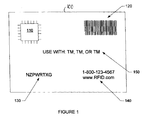
- FIG. 1 is a schematic diagram of an RFID enabled stored value card in accordance with some embodiments of the present invention.
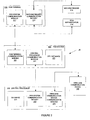
- FIG. 2 is a schematic diagram of an RFID processing system in accordance with some embodiments of the present invention.
- FIG. 3 is a flow diagram, illustrating activation of an RFID enabled stored value card in accordance with some embodiments of the present invention.
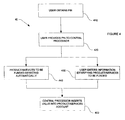
- FIG. 4 is a flow diagram, illustrating a first use of an RFID enabled stored value card in accordance with some embodiments of the present invention.
- FIG. 5 is a flow diagram, illustrating subsequent uses of an RFID enabled stored value card in accordance with some embodiments of the present invention.
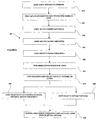
- Figure 6 is a flow diagram, illustrating a system for managing RFID enabled stored value cards and/or RFID enabled wireless communication devices in accordance with some embodiments of the present invention.
- Radio Frequency Identification allows wireless communication between an RFID tag and an RFID interrogator.
- An RFID tag generally comprises an antenna to receive energy and signals (and to transmit signals), a memory chip, a unique identifier, and optionally an internal power supply.
- the memory chip may have read/write capabilities, and may be controlled by an RFID interrogator.
- the RFID interrogator may generally be comprised of a transceiver for transmitting data to the tag, a receiver for receiving data from the tag, a power supply, and a decoder.
- the RFID interrogator may be associated with a host computer or a communications network.
- An RFID tag may be quite small, and may be embedded in various items. Of particular relevance to the present invention is the ability to embed an RFID tag in a stored value card and/or in a wireless communication device.
- An RFID enabled stored value card may be used to purchase and/or pre-pay for a wide range of products and services, usually but not exclusively, in a retail environment.
- An RFID enabled wireless communication device may be used to simplify transactions between the wireless communication device and an interrogator, which may be located at a point of sale (POS) device.
- POS point of sale
- the RFID enable wireless communication device may therefore be used for a multitude of purposes, some of which are discussed in more detail below.
- Each RFID tag embedded in a stored value card or wireless communication device may have its own unique identity, and may also contain the identity of the component into which it is embedded (e.g., the particular stored value card or particular wireless communication device). The identity of each RFID tag together with associated component information may be held in an associated record stored in a central database for later reference.
- An RFID interrogator may be located at a POS, a dedicated kiosk, or other such retail environment, and may access this information.
- the RFID enabled stored value card 100 may be of any physical shape and configuration, and also may comprise any type of material.
- the RFID enabled stored value card 100 may be configured the same or similar to a standard credit or debit card, made of plastic and having the same or similar proportions and features.
- the RFID enabled stored value card 100 may also be card-like, but may have different proportions than a standard credit or debit card, e.g., a keychain card, a folding paper card, a metal card, and so forth.
- the RFID enabled stored value card 100 may be non-card-like, e.g., a key fob, miniature figure, and/or a communication device, etc.
- the RFID enabled stored value card 100 may comprise an RFID tag 110, machine readable media 120, a personal identification number (PIN) 130, and an information access address 140.
- the RFID enabled stored value card 100 may optionally comprise other information 150. Each of these components is optional, and it is fully contemplated that the RFID enabled stored value card 100 may not include all of these components, or may further comprise additional components.
- the RFID tag 110 may be a passive RFID tag, but it is also contemplated that the RFID tag 110 may be a semi-passive or active RFID tag.
- the machine readable media 120 may be in any format, such as but not limited to a magnetic stripe, a one-dimensional or two-dimensional bar code, a series of images or symbols, etc.
- the PIN 130 may be initially concealed on the RFID enabled stored value card (e.g., under a scratch panel or other security barrier) or may be fully visible.
- the PIN may be comprised of numeric, alpha, or alpha-numeric characters.
- An Alpha PIN comprised of only alphabetic characters may be preferred over using a PIN with only numeric characters because the number of potential unique permutations is much greater.
- a purely alphabetic PIN may be easy for a user to distinguish from a purely numeric PIN, and as such both PINs may be included for different purposes.
- a centralized database may hold a record of the identity of each RFID tag, the RFID enabled stored value card that the RFID tag is embedded in, and the associated PIN.
- the information access address 140 may take any form that may direct a user to additional information.
- the information access address 140 may be in the form of a telephone number (e.g., a toll free number), a number to direct text messages (e.g., SMS communications) to, a particular internet address, an email address, and/or a physical postal address.
- a telephone number e.g., a toll free number
- a number to direct text messages e.g., SMS communications
- the RFID enabled stored value card may also comprise other information 150.
- the other information 150 may comprise, but is not limited to, instructions for first use and subsequent uses, particular branding (e.g., the names and/or trademarks of providers of goods or services at which the RFID enabled stored value card may be redeemed), first use value (e.g., the RFID enabled stored value card's initial denomination at purchase), required legal notices, and/or any other information that may be useful to a user or otherwise required.
- the system 20 may be comprised of a point of sale (POS) terminal 210, a point of sale (POS) system 220, and a central processor 230.
- the system 20 may optionally further comprise a wireless communication device 240.
- the POS terminal 210 may comprise a POS system communication module 211, a machine reader communication module 212, a machine reader 213, and an RFID interrogator 214.
- the POS system communications module may provide communications between the POS terminal 210 and the POS system 220.
- the machine reader communication module 212 may provide for communication between the POS terminal (and via the POS system communication module 212, the POS system 220) and the machine reader 213 and the RFID interrogator 214.
- the machine reader 213 may comprise any reader capable of reading media, including but not limited to a magnetic stripe reader, a bar code (one-dimensional or two-dimensional) reader, an optical recognition device, etc.
- the RFID interrogator 214 may provide a means for determining if an RFID tag is present, and means for reading any information present on an RFID tag.
- the POS system 220 may be generally comprised of a payment card system communication module 221, a POS terminal communication module 222, and a Universal Product Code (UPC) database 223.
- the payment card system communication module 221 may provide for communications between the POS system 220 and the central processor 230.
- the central processor 230 may be located in a location remote of the POS system 220.
- the UPC database 223 may reflect the various product codes for all products available from a particular merchant or retailer, group of merchants or retailers, or a consortium of merchants or retailers.
- the central processor 230 may be located remote of the POS terminal 210 and the POS system 220, and may generally comprise a database 231, a POS system communication module 232, and a wireless communication device communication module 233.
- the database 231 may in turn comprise information associated with one or more RFID enabled stored value cards 100.
- the database 231 may include information such as the RFID enabled stored value card 100 PIN, activation numbers, identification numbers, and/or account information.
- the POS system communication module 232 may provide for communication between the central processor 230 and the POS system 220.
- the wireless communication device module 233 may provide for communication with the wireless communication device 240.
- the wireless communication device 240 may be any wireless device that allows a user to communicate with a third party located at a remote area.
- the wireless communication device 240 may be, but is not limited to, a wireless telephone, SMS device, wireless email device, pager, personal digital assistant, etc.
- a method 30 of activating of an RFID enabled stored value card 100 in accordance with some embodiments of the present invention will now be discussed.
- a user may select an RFID enabled stored value card 100.
- the RFID enabled stored value card 100 may be the sole selection, or it may be included in a variety of other product or service selections that the user may make.
- the user may bring the RFID enabled stored value card 100, along with any other selected products or services, to a POS terminal 210 for purchase.
- the POS terminal 210 may recognize the stored value card as being RFID enabled.
- the POS terminal 210 may recognize this when the machine readable media 120 on the RFID enabled stored value card 100 is read by the machine reader 213 associated with the POS terminal 210.
- the POS terminal 210 may recognize the RFID capability if the RFID interrogator 214 is active and detects the RFID tag.
- the POS terminal 210 may activate the RFID interrogator 214. If the RFID interrogator 214 was already active, this step may be omitted. The RFID interrogator 214 may activate the RFID tag 110 if the RFID tag 110 is passive or semi-active. At step 340 the RFID interrogator 214 may capture information recorded on the RFID tag 110. This information may include indicia identifying the specific RFID enabled stored value card 100 that has been purchased. The RFID interrogator 214 may convey this information to the machine reader communication module 212 of the POS terminal 210. The POS terminal 210 may in turn convey this information to the POS system 220 via the POS system communication module 211. At step 350 the POS system 220 may send a request to the central processor 230 via the payment card system communication module 221 to activate the particular RFID enabled stored value card 100 purchased.
- the central processor 230 may receive the activation request and may activate the particular RFID enabled stored value card 100 purchased.
- the activation of the RFID enabled stored value card may be accomplished by associating a value with an account that is associated with the particular RFID enabled stored value card 100. This value may be a fixed denomination for some RFID enabled stored value cards, or may be selectable by the user.
- the activation of the RFID enabled stored value card 100 may be accomplished by inserting, deleting, or modifying a flag in the database 231 of the central processor 230.
- the RFID enabled stored value card 100 may now be active, and the user may pay for the RFID enabled stored value card 100 purchased.
- the RFID enabled stored value card 100 activation may be deferred until after verification that the user has successfully paid.
- the RFID enabled stored value card 100 may be initially activated, but then later deactivated if payment is not verified within a set time after the activation.
- the user obtains the PIN 130 of the RFID enabled stored value card 100.
- the PIN 130 may be printed under a scratch panel (e.g., a latex security barrier) or may be otherwise obscured from view prior to purchase.
- the user may scratch the security panel off, or may otherwise view the PIN 130.
- the user may provide the PIN 130 and/or any other required identifying indicia to the central processor 230.
- the user may provide this information to the central processor 230 via a telephone call, text message (SMS), IVR, tone recognition, by stating it verbally to an operator, by accessing an internet webpage, etc.
- SMS text message
- IVR IVR
- tone recognition by stating it verbally to an operator, by accessing an internet webpage, etc. This step may be accomplished in any manner that provides for communication between the user and the central processor 230.
- the user may provide information regarding the account to which the user would like to add value from the RFID enabled stored value card 100.
- This information may include account numbers, telephone numbers, etc.
- This step may also be accomplished in any manner that provides for communication between the user and the central processor 230.
- the central processor 230 may automatically detect the information regarding the account to which the user would like to add value from the RFID enabled stored value card 100. This may be accomplished automatically if the user contacts the central processor 230 using a wireless communication device 240, the service account of which is the desired target of the stored value.
- a wireless communication device 240 may contain an embedded electronic serial number (ESN) which may serve as a unique identifier.
- ESN embedded electronic serial number
- the ESN may be identified by the central processor 230 when the communication from the user is received. Further, the central processor 230 may trace or associate the ESN with a particular carrier and with a particular phone number in the database 231.
- the central processor 230 may associate a carrier, a particular wireless communication number (e.g., telephone number), and/or a user's carrier account number with the detected ESN. Accordingly, when the stored value on an RFID enabled stored value card 100 is intended to be provided to the provider of the telecommunications service of the user's wireless communications device 240 that contacts the central processor 230, the ESN and the RFID enabled stored value card PIN 130 may supply sufficient information to complete the transaction. Under some circumstances the user may only need to provide a PIN 130, and other necessary information (user identity, mobile telephone service provider, value amount) may be obtained by other means.
- a user may send an email containing the card PIN 130 to the central processor or intermediary internet address. All other data necessary to complete a purchase of internet services may be associated automatically, and a purchase of internet services may be completed.
- the central processor 230 may provide value from an account associated with the RFID enabled stored value card 100 to the user's account to which the user would like to add value (e.g., prepaid wireless telephone account).
- value e.g., prepaid wireless telephone account
- a user may bring an RFID enabled stored value card 100 to a retail or merchant in order to "top off,” reload, or recharge, value on the card.
- the POS terminal 210 may recognize the stored value card 100 as RFID enabled. This recognition may be the result of the RFID interrogator 214 detecting the RFID capability of the stored value card 100, or by the machine reader 213 conveying a product code to the POS terminal 210 and POS system 220 (via the POS system communication module 211) which the POS system 220 detects as an RFID enabled product, and turning on the RFID interrogator 214.
- the POS system 220 may communicate with the central processor 230 and convey top off options to the POS terminal 210.
- the merchant or retailer may then inform the user of the top off options available for the specific RFID enabled stored value card 100.
- the user may select the desired recharge option.
- the user's selection may be conveyed to the central processor 230.
- the central processor 230 may credit the value selected by the user to the same user identity and/or RFID card account that was associated with the RFID enabled stored value card 100 in a previous transaction. If selected by the user, at optional step 570, the central processor 230 may automatically provide the amount of value selected directly to the user's account that was previously used.
- step 580 the user may provide information regarding the account to which the user would like to add value from the RFID enabled stored value card 100. This information may include account numbers, telephone numbers, etc. This step may also be accomplished in any manner that provides for communication between the user and the central processor 230.
- a website may be used to create a user profile.
- the user may visit the particular website used to manage the user's RFID enabled stored value card account.
- the user may enter RFID identifying indicia, and designated provider information (such as the user's phone number, and carrier) into the user's profile.
- the user may provide information regarding various payment sources for the RFID enabled stored value card 100.
- these sources may include credit card accounts, debit card numbers, bank account information (checking, savings, money market, investment, etc.) and any other financial source.
- the user may select a default funding source. For example, the user may select to fund the RFID enabled stored value card 100 with electronic withdrawals from his or her checking account.
- the user may select a default payment or funding amount. For example, the user may select a default payment amount of $50.
- the user may select a default payment frequency.
- the user may select to have the RFID enabled stored value card 100 automatically funded on a periodic (e.g., monthly) basis, or may select to only fund the RFID enabled stored value card 100 upon later user interaction.
- the user may select to have $50 withdrawn from his or her checking account and added to the RFID enabled stored value card 100 monthly, or may set the system up with default values, but require additional user interaction before any actual funding is accomplished.
- the user may have the RFID enabled stored value card 100 read by an RFID interrogator.
- the RFID interrogator may be a component of a POS terminal, or may be a component of a stand-alone kiosk that may be dedicated (single purpose), such as an airline check-in kiosk, or may be multi-purpose like an automated teller machine (ATM).
- the RFID interrogator may read the information on the RFID enabled stored value card 100, and access the saved profile established by the user during their internet session described above in steps 610-650.
- the POS terminal or kiosk may request that the user select their default (e.g., predetermined) options, or select a different funding source, amount, and frequency. Should the user select their default selections, at step 680 the POS terminal or kiosk may communicate such selection to the central processor which may make the appropriate withdrawal and funding. If the user selected to have the funds automatically inserted into a particular account (e.g., a wireless airtime account), the central processor may automatically deposit the withdrawn funds (minus any applicable services fees) into the user's account.
- a particular account e.g., a wireless airtime account
- step 685 the user may select the funding source, amount, and/or frequency as desired.
- the central processor may fund the RFID enabled stored value card 100 according to the user selections at steps 680 or 685. If the user selected to automatically provide payment from the RFID enabled stored value card 100 to the selected user account (e.g., wireless airtime account), the central processor may make such payment at step 690 as well.
- the selected user account e.g., wireless airtime account
- any interactions between the user and the POS terminal may be dependent upon the user's selections.
- the default funding options e.g., a checking account
- no funds related to the RFID stored value card funding would be exchanged between the user and the POS terminal (or merchant, clerk, etc.).
- the user selected a funding option of cash, or a credit card not of record then the user would provide such cash or credit card to the POS terminal (or merchant, clerk, etc.).
- a kiosk may be equipped with an RFID interrogator, and may provide the user with the payment options discussed above, and/or the ability for the user to modify their default selections.
- a kiosk may confirm the transaction, and may also present the user with a request to approve the default selections or to make different selections.
- a single "key" on an interactive touch screen may allow the user to select: a) the default provider and associated user account number, b) the default amount, and c) the default payment source.
- RFID enabled stored value cards may also be used for numerous other purposes.
- an RFID enabled product such as a stored value card
- a traditional machine reader e.g., bar code reader, magnetic stripe reader, etc.
- the embedded RFID tag may be read at a distance, resulting in more convenient purchases.
- a purchaser of such an RFID enabled product (such as a stored value card) may not need to take the product out of their shopping cart, but may simply place the product in communication with an RFID interrogator.
- an RFID enabled stored value card may be used as a generic payment card.
- the RFID enabled stored value card may have an amount of value associated with it (e.g., in an account associated with the RFID enabled stored value card). These funds may be used by the user for general purchases.
- the user may purchase goods or services, and allow an RFID interrogator (e.g., at a POS terminal) to read the RFID tag in the RFID enabled stored value card.
- the POS may send data obtained from the RFID tag and information regarding the purchase transaction to a central processor with a payment request.
- the central processor may debit the account associated with the RFID enabled stored value card, or may debit the funding source for the RFID enabled stored value card (e.g., the user's checking account or credit card).
- the central processor may return to the POS terminal a communication indicating whether or not the payment transaction was successful (e.g., an "OK" or "NOK" response).
- an RFID enabled stored value card may be used to provide payment to multiple accounts.
- a website may be used to create a user profile. The user may visit the particular website used to manage the user's RFID enabled stored value card account, and may enter RFID identifying indicia, funding information (source, amount, and/or frequency) and multiple designated provider information.
- the provider information may include information sufficient to identify the user's account with each provider (e.g., the user's phone number for a wireless provider, the user's account number for a digital cable provider, etc.).
- the accounts may be prioritized, so that the top priority account is presumed unless other accounts are expressly selected. For example, the top priority account may be presented first in a scroll type selection menu during interaction with the user.
- the user may then present the RFID enabled stored value card at a POS terminal or equivalent (e.g., kiosk, ATM machine, etc.).
- the POS may utilize an RFID interrogator to read the RFID enabled stored value card, and may then access the user's list of preferred accounts from the registration profile associated with the RFID enabled stored value card. This list may be presented to the user visually on a screen.
- the user may select a default account and a default value, or the user may select a non-default account and a non-default value. This selection may be made verbally to a merchant or clerk, or may be made electronically (e.g., using a touch screen).
- a list of payment options from the registration profile may be presented to the user, including any credit card, debit card, gift card, or any commercial payment vehicles that the POS may accept.
- the user may select a default payment option, or a non-default payment option.
- the user may then authorize the selected payment to the selected account.
- the POS terminal may communicate with the central processor such selection.
- the central processor may provide payment to the selected account, deducting such funds from the account associated with the RFID enabled stored value card and selected by the user.
- the user may provide cash to the POS terminal, which in turn instructs the central processor to make the selected payment. In such a situation, later settlement may occur between the POS terminal (or merchant) and the central processor.
- a wireless communication device may include an RFID tag.
- the RFID tag may be an active tag, serving as a beacon and regularly broadcasting information, or may be semi-passive, emitting information only upon receiving a request to do so.
- the RFID tag may emit information comprising a tag ID, an ESN, and/or the wireless communication device's access number (e.g., telephone number).
- a POS terminal may receive this information from the wireless communication device's RFID tag and may perform actions based upon this information.
- a user may request to provide a specified amount of value to the provider or carrier of the wireless communication device.
- the retailer may initiate the transaction using an RFID enabled POS terminal.
- the POS terminal may communicate with the RFID enabled wireless communication device, thereby obtaining the necessary information (e.g., provider, account number, etc.).
- the user may provide payment to the POS terminal, which in turn, may provide value to the wireless communication device's provider or carrier.
- the user may authorize the transaction by making a selection on the wireless communication device (e.g., press the "#" key to approve).
- a retailer receiving information from a user's RFID enabled wireless communication device may also interact with the user regarding the wireless communication device. For example, a retailer may offer to sell additional airtime or other services to the user. Such an offer may be displayed on a screen of the POS terminal or on the RFID enabled wireless communication device itself. The user may accept or decline the offer through interactions with the POS terminal, or with the RFID enabled wireless communication device.
- the retailer may perform more complex transactions after receiving information from an RFID on a mobile telephone. For example, the retailer may determine the amount of minutes left in a user's mobile telephone account and use that information to interact with the user. For example, the retailer may ask, "You have only 15 minutes remaining in your account, would you like to purchase 500 additional minutes for $10?" If the user agrees, then the user may perform this sale simultaneously with the sale of any other additional products from the retailer during the check out procedure at the POS.
- a user of an RFID enabled wireless communication device may also use a website to create a user profile.
- the user may visit the particular website used to manage the user's RFID enabled wireless communication device.
- the user may enter RFID identifying indicia, and designated provider information (such as the user's phone number, and carrier) into the user's profile.
- the user may also provide information regarding various payment sources. Without limitation, these sources may include credit card accounts, debit card numbers, bank account information (checking, savings, money market, investment, etc.) and any other financial source.
- the user may select a default funding source.
- the user may utilize the RFID enabled wireless communication device to provide payment for goods or services from the associated payment sources.
- a user may select various items from a retailer or merchant for purchase.
- the user may bring the items to an RFID enabled POS terminal, where they are totalled.
- the RFID enabled POS terminal may interact with the user's RFID enabled wireless communication device.
- the user may select (either verbally to the merchant, or through electronic selection on the RFID enabled POS terminal, and/or the RFID enabled wireless communication device) the payment source for the purchased goods.
- the RFID enabled POS terminal may communicate with the RFID enabled wireless communication device to obtain the necessary payment information.
- the POS terminal may then either withdraw funds from the payment source directly, or from an intermediary account that may be replenished by the funding sources.
- a user may also use an RFID enabled wireless communication device with internet capabilities to make purchases over the internet. The user would select the goods or services he or she wishes to purchase, and then select the funding source via the RFID enabled wireless communication device. It is also contemplated that in addition to goods and services, a user may use an RFID enabled wireless communication device to provide payment to an RFID enabled gasoline pump for expedited pay-at-the-pump transactions.
- a user may use an RFID enabled telephone to transfer value from an account (or a merchant, etc.) to a stored value account accessible by the RFID enabled telephone for use in online purchases.
- value may also be used in typical "brick-and-mortar" purchases as well (e.g., merchant terminals, gasoline dispensing pumps, etc.).
- RFID enabled phone with access to one or more stored value accounts are numerous, and the discussion above and the claims below should not be read to foreclose any of these uses.
- a user's RFID card may facilitate interactions that are customized based upon information associated with the RFID card.
- a retailer may provide customized information and/or advertisements to the user. For example, a user with a recorded history of regularly buying a particular product may be enticed to additionally buy a second product at a particular discount. The user may also be reminded or further enticed to purchase accompanying or complimentary products. Alternatively, the user may be rewarded for loyalty, for example by automatically discounting every Nth product by a certain percentage.
- Communications to the user may be delivered privately by printing coupons at a check-in kiosk, or may be delivered semi-privately by a small display mounted on a grocery cart.
- the grocery cart may comprise an RFID reader, and may communicate with the user and the user's RFID enabled stored value card and/or RFID enabled wireless communication device.
- the user's location in a particular retail establishment may be determined, and information and/or advertisements contoured accordingly. For example, user may receive targeted advertisements such as "Brand X paper towels in aisle 7 are 20% off” or "turn left at the next aisle to get napkins for the large pepperoni pizza.”
- the user may have a default shopping list which may be displayed on the grocery cart or on the user's RFID enabled wireless communication device.
- the retailer and/or central processor may track the user's progress through the store by tracking the RFID card, and may apply a predictive algorithm or an expert system to all available information. For example, if the user passed through pizza area, and then paused for 30 seconds in front of the napkin area, then the retailer may infer that the user is trying to decide which napkin to buy, and the retailer may suggest "Brand X napkins are on sale today," or similar.
- a user's RFID enabled stored value card or RFID enabled wireless communication device may have substantial historical information associated with it. This information may be used to interact with the user during goods and/or service selection and purchase transactions.
Landscapes
- Engineering & Computer Science (AREA)
- Business, Economics & Management (AREA)
- Computer Networks & Wireless Communication (AREA)
- Accounting & Taxation (AREA)
- Physics & Mathematics (AREA)
- General Physics & Mathematics (AREA)
- Theoretical Computer Science (AREA)
- Strategic Management (AREA)
- General Business, Economics & Management (AREA)
- Signal Processing (AREA)
- Microelectronics & Electronic Packaging (AREA)
- Computer Security & Cryptography (AREA)
- Finance (AREA)
- Development Economics (AREA)
- Economics (AREA)
- Marketing (AREA)
- Technology Law (AREA)
- Cash Registers Or Receiving Machines (AREA)
- Financial Or Insurance-Related Operations Such As Payment And Settlement (AREA)
- Mobile Radio Communication Systems (AREA)
Applications Claiming Priority (1)
| Application Number | Priority Date | Filing Date | Title |
|---|---|---|---|
| US11/436,321 US20060231611A1 (en) | 2005-03-23 | 2006-05-18 | Radio frequency identification purchase transactions |
Publications (2)
| Publication Number | Publication Date |
|---|---|
| EP1870849A2 true EP1870849A2 (de) | 2007-12-26 |
| EP1870849A3 EP1870849A3 (de) | 2010-10-13 |
Family
ID=38667119
Family Applications (1)
| Application Number | Title | Priority Date | Filing Date |
|---|---|---|---|
| EP07107153A Ceased EP1870849A3 (de) | 2006-05-18 | 2007-04-27 | System zur Verwendung einer Hochfrequenzidentifikationskarte (RFID) |
Country Status (9)
| Country | Link |
|---|---|
| US (1) | US20060231611A1 (de) |
| EP (1) | EP1870849A3 (de) |
| JP (1) | JP4763649B2 (de) |
| KR (1) | KR20070106941A (de) |
| CN (1) | CN101076071A (de) |
| AU (1) | AU2007201836A1 (de) |
| CA (1) | CA2585322C (de) |
| MX (1) | MX2007004906A (de) |
| WO (1) | WO2007136939A2 (de) |
Cited By (5)
| Publication number | Priority date | Publication date | Assignee | Title |
|---|---|---|---|---|
| US8310000B2 (en) | 2006-03-31 | 2012-11-13 | Semiconductor Energy Laboratory Co., Ltd. | Nonvolatile semiconductor memory device and manufacturing method thereof |
| US9224084B2 (en) | 2009-04-01 | 2015-12-29 | Vanguard Identification Systems, Inc. | Smart device programmable electronic luggage tag |
| USD765785S1 (en) | 2014-07-25 | 2016-09-06 | Vanguard Identification Systems, Inc. | Electronic luggage tag |
| US9918537B2 (en) | 2009-04-01 | 2018-03-20 | Vanguard Identification Systems | Smart device programmable electronic luggage tag and bag mountings therefore |
| WO2018211308A1 (en) * | 2017-05-15 | 2018-11-22 | Valencia Renato | Method of, system for, and server computer for enabling a payment transaction to be conducted in a linked, integrated, interchangeable payment system (liips) including a passageway payment system using an rfid sticker linked to payment devices |
Families Citing this family (71)
| Publication number | Priority date | Publication date | Assignee | Title |
|---|---|---|---|---|
| US8706630B2 (en) | 1999-08-19 | 2014-04-22 | E2Interactive, Inc. | System and method for securely authorizing and distributing stored-value card data |
| US8280345B2 (en) | 2000-12-22 | 2012-10-02 | Google Inc. | LPRF device wake up using wireless tag |
| US8315563B2 (en) * | 2000-12-22 | 2012-11-20 | Google Inc. | Wireless reader tags (WRTs) with sensor components in asset monitoring and tracking systems |
| US20080303897A1 (en) | 2000-12-22 | 2008-12-11 | Terahop Networks, Inc. | Visually capturing and monitoring contents and events of cargo container |
| US7522568B2 (en) * | 2000-12-22 | 2009-04-21 | Terahop Networks, Inc. | Propagating ad hoc wireless networks based on common designation and routine |
| US7865432B2 (en) | 2002-02-15 | 2011-01-04 | Coinstar, Inc. | Methods and systems for exchanging and/or transferring various forms of value |
| EP1481351A4 (de) | 2002-02-15 | 2010-04-28 | Coinstar Inc | Verfahren und systeme zum austausch und/oder transfer verschiedener arten von werten |
| US8033375B2 (en) | 2002-02-15 | 2011-10-11 | Coinstar, Inc. | Methods and systems for exchanging and/or transferring various forms of value |
| US7437328B2 (en) * | 2003-11-14 | 2008-10-14 | E2Interactive, Inc. | Value insertion using bill pay card preassociated with biller |
| WO2006110189A1 (en) | 2005-04-07 | 2006-10-19 | Michael Daily | Self checkout kiosk and retail security system |
| US7345586B2 (en) * | 2005-06-29 | 2008-03-18 | Motorola Inc | System and method for transferring data to an electronic device |
| DE102005054130A1 (de) * | 2005-11-14 | 2007-05-16 | Bosch Gmbh Robert | Druckmedium und Druckgerät |
| JP4855813B2 (ja) * | 2006-03-30 | 2012-01-18 | 富士通株式会社 | 無線タグ管理プログラム、無線タグ管理方法及び無線タグ管理装置 |
| US11062342B2 (en) | 2006-07-27 | 2021-07-13 | Blackhawk Network, Inc. | System and method for targeted marketing and consumer resource management |
| US20080084312A1 (en) * | 2006-10-10 | 2008-04-10 | Daily Michael A | Radio frequency identification layered foam tag |
| AU2006252239B2 (en) * | 2006-12-22 | 2010-04-01 | Canon Kabushiki Kaisha | Barcode pattern |
| EP1936909A1 (de) * | 2006-12-22 | 2008-06-25 | Alcatel Lucent | Ausgabe von objektcodedefinierter Information an Benutzer |
| WO2008086439A1 (en) | 2007-01-09 | 2008-07-17 | Visa U.S.A. Inc. | Contactless transaction |
| US20080172331A1 (en) * | 2007-01-16 | 2008-07-17 | Graves Phillip C | Bill Payment Card Method and System |
| US8181865B2 (en) * | 2007-04-24 | 2012-05-22 | Freedom Shopping, Inc. | Radio frequency identification point of sale unassisted retail transaction and digital media kiosk |
| CN100465992C (zh) * | 2007-05-16 | 2009-03-04 | 北京飞天诚信科技有限公司 | 一种非接触式卡及其控制方法 |
| US20080300973A1 (en) * | 2007-05-30 | 2008-12-04 | Dewitt Jay Allen | Supply of requested offer based on offeree transaction history |
| US20080319843A1 (en) * | 2007-06-22 | 2008-12-25 | Dennis Norman Moser | Supply of requested offer based on point-of-service to offeree distance |
| US7920063B2 (en) * | 2007-08-13 | 2011-04-05 | Wal-Mart Stores, Inc. | RFID theft prevention system |
| US20090076896A1 (en) * | 2007-09-13 | 2009-03-19 | Dewitt Jay Allen | Merchant supplied offer to a consumer within a predetermined distance |
| US20090076925A1 (en) * | 2007-09-13 | 2009-03-19 | Dewitt Jay Allen | Offeree requested offer based on point-of-service to offeree distance |
| US20090083055A1 (en) * | 2007-09-20 | 2009-03-26 | Edwin Tan | Method and system for a scratchcard |
| US20090159709A1 (en) | 2007-12-24 | 2009-06-25 | Dynamics Inc. | Advanced dynamic credit cards |
| SK50042008A3 (sk) | 2008-01-04 | 2009-09-07 | Logomotion, S. R. O. | Spôsob a systém autentifikácie najmä pri platbách, identifikátor totožnosti a/alebo súhlasu |
| US20090259579A1 (en) * | 2008-04-09 | 2009-10-15 | International Business Marchines Corp | System and method for transferring monetary value between currency documents |
| US7885878B2 (en) * | 2008-05-28 | 2011-02-08 | First Data Corporation | Systems and methods of payment account activation |
| CN102113008A (zh) * | 2008-05-30 | 2011-06-29 | 兰迪帕特网络公司 | 用于提供在线服务和软件的方法和系统 |
| US20100106642A1 (en) * | 2008-06-05 | 2010-04-29 | Namedepot.Com, Inc. | Method and system for delayed payment of prepaid cards |
| US9454865B2 (en) * | 2008-08-06 | 2016-09-27 | Intel Corporation | Methods and systems to securely load / reload acontactless payment device |
| KR101671789B1 (ko) | 2008-08-29 | 2016-11-02 | 에스에무케이 가부시키가이샤 | 비접촉 통신을 위한 제거가능한 카드, 이의 활용 및 제조 방법 |
| US9098845B2 (en) | 2008-09-19 | 2015-08-04 | Logomotion, S.R.O. | Process of selling in electronic shop accessible from the mobile communication device |
| SK288641B6 (sk) | 2008-10-15 | 2019-02-04 | Smk Corporation | Spôsob komunikácie s POS terminálom, frekvenčný konventor k POS terminálu |
| US20100114617A1 (en) * | 2008-10-30 | 2010-05-06 | International Business Machines Corporation | Detecting potentially fraudulent transactions |
| US8508357B2 (en) | 2008-11-26 | 2013-08-13 | The Nielsen Company (Us), Llc | Methods and apparatus to encode and decode audio for shopper location and advertisement presentation tracking |
| US8615428B2 (en) * | 2009-01-14 | 2013-12-24 | Signature Systems, LLC. | Point of sale device for online reward point exchange method and system |
| US8705523B2 (en) | 2009-02-05 | 2014-04-22 | Google Inc. | Conjoined class-based networking |
| KR101789113B1 (ko) | 2009-05-03 | 2017-10-23 | 에스에무케이 가부시키가이샤 | 휴대폰과 같은 이동 통신 디바이스를 이용하는 지불 단말기;자동 이체 지불 트랜잭션의 방법 |
| SK288521B6 (sk) | 2009-07-08 | 2017-12-04 | Smk Corporation | Spôsob a systém zadávania PIN kódu pri bezhotovostných platbách, nosič PIN kódu |
| US20110137740A1 (en) * | 2009-12-04 | 2011-06-09 | Ashmit Bhattacharya | Processing value-ascertainable items |
| CN101833832B (zh) * | 2010-05-11 | 2014-08-13 | 中兴通讯股份有限公司 | 多媒体业务的提供方法、刷卡机及移动终端 |
| US20120012648A1 (en) * | 2010-07-19 | 2012-01-19 | Collins Samuel R | S/M for conducting a purchase transaction of eligible goods or services using a stored value |
| AU2011323490A1 (en) | 2010-11-01 | 2013-05-02 | Outerwall Inc. | Gift card exchange kiosks and associated methods of use |
| US8630952B2 (en) * | 2011-03-04 | 2014-01-14 | Citibank, N.A. | Methods and systems using contactless card |
| US8713095B2 (en) * | 2011-03-13 | 2014-04-29 | Nir Ashkenazy | Methods circuits apparatuses and systems for facilitating access to online content |
| WO2013059716A2 (en) * | 2011-10-19 | 2013-04-25 | Ran Margalit | Automated purchasing system |
| EP2595122A1 (de) | 2011-11-15 | 2013-05-22 | Gemalto SA | Verfahren zum Eintragen und Authentisieren eines Kartenbesitzers |
| US20130127737A1 (en) * | 2011-11-23 | 2013-05-23 | Jonathan Shneidman | Telescreen operating method |
| US8874467B2 (en) | 2011-11-23 | 2014-10-28 | Outerwall Inc | Mobile commerce platforms and associated systems and methods for converting consumer coins, cash, and/or other forms of value for use with same |
| US9129294B2 (en) | 2012-02-06 | 2015-09-08 | Outerwall Inc. | Coin counting machines having coupon capabilities, loyalty program capabilities, advertising capabilities, and the like |
| CA2864986C (en) * | 2012-02-20 | 2020-05-12 | Dynamics Inc. | Systems and methods for flexible components, flexible cards, multi-layer boards, multiple sensor detectors, non-time smearing detection mechanisms and electromagnetic field generators for powered cards and devices |
| US9916992B2 (en) | 2012-02-20 | 2018-03-13 | Dynamics Inc. | Systems and methods for flexible components for powered cards and devices |
| TR201206348A2 (tr) * | 2012-05-30 | 2012-12-21 | Avea �Let���M H�Zmetler� Anon�M ��Rket� | NFC üzerinden TL yükleme yöntemi. |
| US9064195B2 (en) | 2012-06-29 | 2015-06-23 | Dynamics Inc. | Multiple layer card circuit boards |
| US9010647B2 (en) | 2012-10-29 | 2015-04-21 | Dynamics Inc. | Multiple sensor detector systems and detection methods of magnetic cards and devices |
| US9921072B2 (en) | 2012-11-09 | 2018-03-20 | Visa International Service Association | Systems and methods for route prediction |
| US10949627B2 (en) | 2012-12-20 | 2021-03-16 | Dynamics Inc. | Systems and methods for non-time smearing detection mechanisms for magnetic cards and devices |
| US9439036B2 (en) | 2013-01-25 | 2016-09-06 | Visa International Service Association | Systems and methods to select locations of interest based on distance from route points or route paths |
| US10055751B2 (en) | 2013-04-05 | 2018-08-21 | Visa International Service Association | Systems and methods to enhance search results using transaction data of merchants |
| US9112790B2 (en) | 2013-06-25 | 2015-08-18 | Google Inc. | Fabric network |
| US20150109101A1 (en) * | 2013-10-20 | 2015-04-23 | VenGo, LLC | System and Method for Reading Multiple RFIDs |
| US20150109107A1 (en) * | 2013-10-20 | 2015-04-23 | VenGo, LLC | System for Holding Multiple RFIDs in a Wearable Device |
| US20150109106A1 (en) * | 2013-10-20 | 2015-04-23 | VenGo, LLC | System for Holding an RFID within a Slotted Wearable Device |
| US9332396B2 (en) | 2014-03-17 | 2016-05-03 | Visa International Service Association | Systems and methods to provide location-dependent information during an optimal time period |
| KR101725214B1 (ko) | 2014-10-20 | 2017-04-11 | 주식회사 하렉스인포텍 | 결제 서비스 제공 시스템 및 방법 |
| DE102015011083A1 (de) * | 2015-08-24 | 2017-03-02 | Giesecke & Devrient Gmbh | Datenträgerverwaltung |
| US20190318352A1 (en) * | 2018-04-13 | 2019-10-17 | Ford Global Technologies, Llc | Wireless Digital Payment For Vehicles |
Family Cites Families (38)
| Publication number | Priority date | Publication date | Assignee | Title |
|---|---|---|---|---|
| US5274845A (en) * | 1992-01-03 | 1993-12-28 | Motorola, Inc. | Universal personal communication system and tracing system therefor |
| US5696908A (en) * | 1995-06-07 | 1997-12-09 | Southeast Phonecard, Inc. | Telephone debit card dispenser and method |
| JP3387330B2 (ja) * | 1996-09-12 | 2003-03-17 | 株式会社日立製作所 | 電子マネー保有装置およびこれを用いる電子マネー支払い方法 |
| US6295522B1 (en) * | 1997-07-11 | 2001-09-25 | Cybercash, Inc. | Stored-value card value acquisition method and apparatus |
| US6038549A (en) * | 1997-12-22 | 2000-03-14 | Motorola Inc | Portable 1-way wireless financial messaging unit |
| US6571336B1 (en) * | 1998-02-12 | 2003-05-27 | A. James Smith, Jr. | Method and apparatus for securing a list of passwords and personal identification numbers |
| US6123259A (en) * | 1998-04-30 | 2000-09-26 | Fujitsu Limited | Electronic shopping system including customer relocation recognition |
| WO2000004701A1 (en) * | 1998-07-16 | 2000-01-27 | Intervoice Limited Partnership | System and method for managing prepaid wireless service |
| US6215999B1 (en) * | 1999-03-17 | 2001-04-10 | Motorola, Inc. | Method and apparatus for identifying channels and channel frequencies used in a subzone of a wireless communication system |
| US6424706B1 (en) * | 1999-03-31 | 2002-07-23 | Imagine Networks, Llc | Method and system for transferring telecommunication-time units among accounts and exchanging same for goods or services |
| SE521583C2 (sv) * | 1999-04-23 | 2003-11-18 | Ericsson Telefon Ab L M | Förfarande och anordning för att anropa tjänster i en telekommunikationsterminal |
| US7328190B2 (en) * | 2002-09-24 | 2008-02-05 | E2Interactive, Inc. | System and method for adding value to a stored-value account |
| AU3478800A (en) * | 1999-09-03 | 2001-04-10 | Catalina Marketing International, Inc. | Providing directed marketing incentives using identification of customers and purchase selections through rf id technology |
| US7171199B1 (en) * | 1999-09-10 | 2007-01-30 | Lucent Technologies Inc. | Method and system for directing a data message in a wireless communications network including multiple wireless systems |
| JP2001283295A (ja) * | 2000-03-31 | 2001-10-12 | Ntt Docomo Inc | 料金管理装置、料金管理システム、通信システムおよび料金管理方法 |
| JP2002199133A (ja) * | 2000-12-27 | 2002-07-12 | Nec Commun Syst Ltd | プリペイド式携帯端末の加入者番号取得システムおよび方法 |
| US6934529B2 (en) * | 2001-02-20 | 2005-08-23 | Sevket Ilhan Bagoren | Replenishment of pre-paid wireless telephone accounts using short message service (SMS) |
| JP2002260023A (ja) * | 2001-03-05 | 2002-09-13 | Nippon Signal Co Ltd:The | 駅務機器および駅務システム |
| US6623039B2 (en) * | 2001-03-19 | 2003-09-23 | Kenneth Thompson | Multi-purpose card |
| US7805378B2 (en) * | 2001-07-10 | 2010-09-28 | American Express Travel Related Servicex Company, Inc. | System and method for encoding information in magnetic stripe format for use in radio frequency identification transactions |
| CA2353283C (en) * | 2001-07-19 | 2004-04-20 | Relizon Canada | Integrated electronic gift card packet |
| JP2003050900A (ja) * | 2001-08-06 | 2003-02-21 | K-Tai Purika Co Ltd | 情報収集方法、情報収集システム及び通信に用いるカードのポイント提供方法 |
| JP3662865B2 (ja) * | 2001-08-28 | 2005-06-22 | Necアクセステクニカ株式会社 | 携帯電話端末及び電子メール作成方法 |
| JP4323119B2 (ja) * | 2001-08-29 | 2009-09-02 | 株式会社エヌ・ティ・ティ・ドコモ | 通信料金処理方法および管理サーバ |
| JP2003101677A (ja) * | 2001-09-19 | 2003-04-04 | Denso Corp | プリペイド式通信サービスシステム |
| JP2004030271A (ja) * | 2002-06-26 | 2004-01-29 | Matsushita Electric Ind Co Ltd | 決済情報通知サービスサーバ及び決済情報通知方法 |
| US20040007618A1 (en) * | 2002-07-10 | 2004-01-15 | Scott Oram | Prepaid credit card method |
| US20040054587A1 (en) * | 2002-07-16 | 2004-03-18 | Dev Roger A. | System and method for managing private consumer accounts using branded loyalty cards and self-service terminals |
| JP4214452B2 (ja) * | 2002-07-30 | 2009-01-28 | サン電子株式会社 | 遊技場における情報管理装置 |
| JP2005010853A (ja) * | 2003-06-16 | 2005-01-13 | Ntt Docomo Inc | 商品情報提供装置、タグリーダ制御装置及び商品情報通知サーバ、並びに商品情報提供方法 |
| EP1534022A1 (de) * | 2003-11-21 | 2005-05-25 | Alcatel | Verfahren zum Unterstützen von auf einer Identifikationskennzeichnung basierten Diensten |
| US20050143051A1 (en) * | 2003-12-30 | 2005-06-30 | Welgate Corporation | Mobile authentication/financial transaction system using a unique mobile identification code and method thereof |
| EP1571562B1 (de) * | 2004-03-03 | 2017-11-01 | Swisscom AG | Verfahren, mit welchem eine Telekommunikationsdienstleistung mittels einer elektronischen Adresse beansprucht werden kann |
| US8407097B2 (en) * | 2004-04-15 | 2013-03-26 | Hand Held Products, Inc. | Proximity transaction apparatus and methods of use thereof |
| US20050278216A1 (en) * | 2004-06-10 | 2005-12-15 | E2Interactive, Inc. D/B/A E2Interactive, Inc. | System and method for distributing an identifier redeemable for a plurality of products |
| JP4524588B2 (ja) * | 2004-07-27 | 2010-08-18 | 凸版印刷株式会社 | 情報転送システム |
| US7519325B2 (en) * | 2004-12-30 | 2009-04-14 | Nokia Corporation | Docking of short-range wireless communication tags with mobile terminals |
| US8467766B2 (en) * | 2006-07-06 | 2013-06-18 | Qualcomm Incorporated | Methods and systems for managing payment sources in a mobile environment |
-
2006
- 2006-05-18 US US11/436,321 patent/US20060231611A1/en not_active Abandoned
-
2007
- 2007-04-10 WO PCT/US2007/066281 patent/WO2007136939A2/en not_active Ceased
- 2007-04-18 CA CA2585322A patent/CA2585322C/en active Active
- 2007-04-24 MX MX2007004906A patent/MX2007004906A/es active IP Right Grant
- 2007-04-26 AU AU2007201836A patent/AU2007201836A1/en not_active Abandoned
- 2007-04-27 EP EP07107153A patent/EP1870849A3/de not_active Ceased
- 2007-05-14 KR KR1020070046304A patent/KR20070106941A/ko not_active Ceased
- 2007-05-18 CN CNA2007101034965A patent/CN101076071A/zh active Pending
- 2007-05-18 JP JP2007132301A patent/JP4763649B2/ja not_active Expired - Fee Related
Cited By (8)
| Publication number | Priority date | Publication date | Assignee | Title |
|---|---|---|---|---|
| US8310000B2 (en) | 2006-03-31 | 2012-11-13 | Semiconductor Energy Laboratory Co., Ltd. | Nonvolatile semiconductor memory device and manufacturing method thereof |
| US9224084B2 (en) | 2009-04-01 | 2015-12-29 | Vanguard Identification Systems, Inc. | Smart device programmable electronic luggage tag |
| US9918537B2 (en) | 2009-04-01 | 2018-03-20 | Vanguard Identification Systems | Smart device programmable electronic luggage tag and bag mountings therefore |
| USD765785S1 (en) | 2014-07-25 | 2016-09-06 | Vanguard Identification Systems, Inc. | Electronic luggage tag |
| USD851175S1 (en) | 2014-07-25 | 2019-06-11 | Vanguard Identification Systems, Inc. | Electronic luggage tag |
| USD854090S1 (en) | 2014-07-25 | 2019-07-16 | Vanguard Identification Systems, Inc. | Electronic luggage tag |
| WO2018211308A1 (en) * | 2017-05-15 | 2018-11-22 | Valencia Renato | Method of, system for, and server computer for enabling a payment transaction to be conducted in a linked, integrated, interchangeable payment system (liips) including a passageway payment system using an rfid sticker linked to payment devices |
| US11687912B2 (en) | 2017-05-15 | 2023-06-27 | Renato Valencia | Method of and system for enabling a payment transaction to be conducted in a linked, integrated, interchangeable payment system (LIIPS) including a passageway payment system using an RFID sticker linked to payment devices |
Also Published As
| Publication number | Publication date |
|---|---|
| AU2007201836A1 (en) | 2007-12-06 |
| WO2007136939A3 (en) | 2008-11-13 |
| EP1870849A3 (de) | 2010-10-13 |
| JP4763649B2 (ja) | 2011-08-31 |
| CA2585322A1 (en) | 2007-11-18 |
| MX2007004906A (es) | 2008-12-01 |
| CA2585322C (en) | 2016-12-13 |
| JP2007310889A (ja) | 2007-11-29 |
| US20060231611A1 (en) | 2006-10-19 |
| WO2007136939A2 (en) | 2007-11-29 |
| KR20070106941A (ko) | 2007-11-06 |
| CN101076071A (zh) | 2007-11-21 |
Similar Documents
| Publication | Publication Date | Title |
|---|---|---|
| CA2585322C (en) | Radio frequency identification purchase transactions | |
| US9785931B2 (en) | Methods and systems for bulk activation of multiple, disparate stored value accounts | |
| JP5303471B2 (ja) | 複数の事業体からのクーポン・オファー | |
| AU2010259034B2 (en) | Coupon card methods and systems | |
| US8113438B1 (en) | Governor arrangement for contactless point of sale terminal gateway | |
| US8615426B2 (en) | Coupon offers from multiple entities | |
| AU2003207870B2 (en) | Method and apparatus for secure electronic payment | |
| US20100312634A1 (en) | Coupon card point of service terminal processing | |
| US20070168282A1 (en) | Systems and/or methods for simplifying payment systems, and payment instruments implementing the same | |
| US8474694B2 (en) | Radio frequency identification purchase transactions | |
| US20060253392A1 (en) | Payment apparatus and method | |
| MXPA06000573A (es) | Sistema y metodo para activar o cambiar el estado de una cuenta asociada con una tarjeta prepagada. | |
| AU2009302485A1 (en) | Systems, methods, and computer readable media for payment and non-payment virtual card transfer between mobile devices | |
| US20180253749A1 (en) | Opt in System and Method | |
| US10664816B2 (en) | Method and system for making electronic payments | |
| US20100211500A1 (en) | Charitable gift card | |
| US20160012468A1 (en) | Product-class-based incentivized transaction | |
| KR20070059581A (ko) | 마일리지/포인트 적립에 의한 거스름돈 지급 시스템 및방법 | |
| AU2015218423A1 (en) | Systems, methods, and computer readable media for payment and non-payment virtual card transfer between mobile devices |
Legal Events
| Date | Code | Title | Description |
|---|---|---|---|
| PUAI | Public reference made under article 153(3) epc to a published international application that has entered the european phase |
Free format text: ORIGINAL CODE: 0009012 |
|
| AK | Designated contracting states |
Kind code of ref document: A2 Designated state(s): AT BE BG CH CY CZ DE DK EE ES FI FR GB GR HU IE IS IT LI LT LU LV MC MT NL PL PT RO SE SI SK TR |
|
| AX | Request for extension of the european patent |
Extension state: AL BA HR MK YU |
|
| PUAL | Search report despatched |
Free format text: ORIGINAL CODE: 0009013 |
|
| AK | Designated contracting states |
Kind code of ref document: A3 Designated state(s): AT BE BG CH CY CZ DE DK EE ES FI FR GB GR HU IE IS IT LI LT LU LV MC MT NL PL PT RO SE SI SK TR |
|
| AX | Request for extension of the european patent |
Extension state: AL BA HR MK RS |
|
| RIC1 | Information provided on ipc code assigned before grant |
Ipc: G07F 7/10 20060101ALI20100908BHEP Ipc: G06Q 20/00 20060101AFI20071120BHEP |
|
| 17P | Request for examination filed |
Effective date: 20110325 |
|
| AKX | Designation fees paid |
Designated state(s): AT BE BG CH CY CZ DE DK EE ES FI FR GB GR HU IE IS IT LI LT LU LV MC MT NL PL PT RO SE SI SK TR |
|
| 17Q | First examination report despatched |
Effective date: 20120514 |
|
| STAA | Information on the status of an ep patent application or granted ep patent |
Free format text: STATUS: THE APPLICATION HAS BEEN REFUSED |
|
| 18R | Application refused |
Effective date: 20130918 |