EP1870871A1 - Appareil d'appel pour bateaux - Google Patents
Appareil d'appel pour bateaux Download PDFInfo
- Publication number
- EP1870871A1 EP1870871A1 EP06731380A EP06731380A EP1870871A1 EP 1870871 A1 EP1870871 A1 EP 1870871A1 EP 06731380 A EP06731380 A EP 06731380A EP 06731380 A EP06731380 A EP 06731380A EP 1870871 A1 EP1870871 A1 EP 1870871A1
- Authority
- EP
- European Patent Office
- Prior art keywords
- ship
- information
- call
- unit
- signal
- Prior art date
- Legal status (The legal status is an assumption and is not a legal conclusion. Google has not performed a legal analysis and makes no representation as to the accuracy of the status listed.)
- Ceased
Links
Images


Classifications
-
- G—PHYSICS
- G08—SIGNALLING
- G08G—TRAFFIC CONTROL SYSTEMS
- G08G3/00—Traffic control systems for marine craft
- G08G3/02—Anti-collision systems
-
- B—PERFORMING OPERATIONS; TRANSPORTING
- B63—SHIPS OR OTHER WATERBORNE VESSELS; RELATED EQUIPMENT
- B63B—SHIPS OR OTHER WATERBORNE VESSELS; EQUIPMENT FOR SHIPPING
- B63B43/00—Improving safety of vessels, e.g. damage control, not otherwise provided for
- B63B43/18—Improving safety of vessels, e.g. damage control, not otherwise provided for preventing collision or grounding; reducing collision damage
-
- B—PERFORMING OPERATIONS; TRANSPORTING
- B63—SHIPS OR OTHER WATERBORNE VESSELS; RELATED EQUIPMENT
- B63B—SHIPS OR OTHER WATERBORNE VESSELS; EQUIPMENT FOR SHIPPING
- B63B2213/00—Navigational aids and use thereof, not otherwise provided for in this class
- B63B2213/02—Navigational aids and use thereof, not otherwise provided for in this class using satellite radio beacon positioning systems, e.g. the Global Positioning System GPS
Definitions
- the present invention relates to an apparatus which calls up other ships via radio communication.
- Most ships are equipped with a radio communication apparatus for performing radio communication with operators of other ships.
- the radio communication apparatuses mounted on these ships can be used to draw to the attention of the operator of the approaching ship that there is a probability of collision with the subject ship or the own ship.
- an operator of a ship and an operator of a radio communication apparatus mounted in the ship are different people. Accordingly, an operator of a ship as used in the present specification will refer not only to a person who operates or steers the ship but also to a person who operates a radio communication apparatus mounted in the ship.
- an operator of an apparatus mounted in a ship will refer not only to a person who operates the apparatus but also to a person who operates or steers a ship equipped with the apparatus. Further, for the sake of simplicity, such expressions as “to call up a ship” and “communication with a ship” will be simply used to mean “to call up the operator of a ship” and “communication with the operator of a ship”, respectively.
- a calling channel which is a frequency channel for calling up other ships is assigned.
- the calling channel is defined as a channel which uses universally common frequencies from a viewpoint of safe navigation of ships.
- the frequency channel of the radio communication apparatus is set to a calling channel. After recognition of each other, the frequency channel is switched to a working channel for proceeding with radio communication.
- ship call-up radio apparatuses such as DSC (Digital Selective Calling) apparatuses are in a wide-spread use as apparatuses for rapidly performing a series of operations including setting of the calling channel, calling of other ships, and switching to the working channel.
- An identification number is assigned to each of the ships equipped with such a ship call-up radio apparatus, and the series of operation processing is performed in accordance with the identification numbers.
- the operator of the ship call-up radio apparatus inputs the identification number of the other ship and information concerning the working channel which will be used after calling.
- Fig. 7 shows a conventional ship call-up radio apparatus 5.
- the ship call-up radio apparatus 5 includes a radio communication unit 30 which performs radio communication on a calling channel or a working channel, a call-up signal generating unit 14, and watchkeeping receiver unit 22.
- the call-up signal generating unit 14 generates a call-up signal A including an identification number of the other ship and information concerning the working channel to be used after the calling, and inputs the call-up signal A to the radio communication unit 30.
- the identification number of the other ship and the information concerning the working channel is input by an operator via a keyboard or the like (not shown) included in the ship call-up radio apparatus 5.
- the radio communication unit 30 converts the call-up signal A which is input into a signal having carriers thereof modulated, further converts the signal into a signal having a radio frequency band and amplifies it, and then transmits the signal via an antenna.
- the calling channel is used for transmitting the call-up signal A.
- the watchkeeping receiver unit 22 continuously receives a call-up signal A transmitted from the ship call-up radio apparatus 5 mounted in other ships via an antenna 20.
- the watchkeeping receiver unit 22 then extracts the identification number from the call-up signal A which is received and compares the extracted identification number to the own identification number stored in a ship static information storage unit 26, thereby monitoring whether or not the own ship is being called.
- the ship call-up radio apparatus 5 when recognizing through the watchkeeping receiver unit 22, that the ship equipped with the ship call-up radio apparatus 5 itself (i.e. the own ship) has been called up, activates display of the display unit 28 to indicate that the ship has been called up by another ship.
- the ship call-up radio apparatus 5 sets the frequency channel of the radio communication unit 30 to the working channel under control of a channel control unit 24, so as to set a state which allows radio communication with the calling ship by the radio communication unit 30. Once this setting is made, the operator of the called ship can communicate with the operator of the calling ship via a receiver 34.
- a series of operation processing from setting of the calling channel to setting of the working channel can be performed automatically by designating the identification number of the other ship to be called up and the working channel to be used after calling.
- a ship identification system is conceivable as a means for obtaining the identification number of a ship.
- a terminal device mounted in each ship can transmit, via radio, information concerning its own identification number and navigation information such as a location, speed, and so on, and also receive, via radio, information concerning the identification numbers of other ships and navigation information.
- systems such as Automatic Identification System (AIS) have been realized.
- AIS Automatic Identification System
- a terminal device in this system will be referred to as a ship identification apparatus.
- Fig. 8 shows a structure of a general ship identification apparatus 7.
- a positioning unit 62 receives, via an antenna 60, a positioning signal from a positioning satellite such as a GPS satellite and calculates the position, speed or the like of the ship in which the positioning unit 62 is mounted (i.e. the own ship), thereby generating navigation information.
- a ship information storage unit 66 stores ship static information (unique information) including the name and identification number of the ship in which the ship information storage unit 66 is mounted (i.e. the own ship), the cargo type, the destination port, the expected arrival time, type of ship, and so on.
- An own ship information generating unit 64 acquires the navigation information from the positioning unit 62 and the ship static information from the ship information storage unit 66 to generate a ship information signal including the acquired information and transmits the ship information signal for notification via a radio circuit unit 68 and an antenna 70.
- a notification information acquisition unit 72 acquires, via the antenna 70 and the radio circuit unit 68, the ship information signals being transmitted by a plurality of other ships.
- a display information generating unit 74 extracts the navigation information of the plurality of other ships from the ship information signals which are acquired, and generates other ship graphic data for indicating positions of other ships on a graph and ship static information sequence data for displaying various information in the ship static information of other ships in a sequence designated by the operator.
- a display unit 76 displays charts based on the other ships graphic data and charts based on the ship static information sequence data in accordance with a switching operation performed by the operator.
- an other-ship information output unit 78 outputs the ship information signals acquired from the plurality of other ships via the antenna 70 and the radio circuit unit 68 in an order in which the ship information signals were acquired.
- signals to be output in an order in which the signals were acquired from the plurality of other ships will be particularly referred to as an other-ship information signal I.
- the other-ship information signal I can be regarded as a signal including the other-ship information in which information elements such as the navigation information and the ship static information of other ships are arranged in a sequence.
- the ship identification apparatus 7 which can display information concerning the identification numbers, the navigation information, and so on of a plurality of other ships, the operator can grasp the movement of ships existing within a predetermined range from the own ship along with their identification numbers or the like.
- the ship identification apparatus 7 When an operator of a ship finds a ship having a probability of collision with the operator's ship (the own ship) by the ship identification apparatus 7, it is possible to call up the ship in accordance with the identification number of the ship displayed in the ship identification apparatus 7 and perform radio communication with the ship thorough the radio communication unit 30 of the ship call-up apparatus 5.
- the ship call-up radio apparatus 5 and the ship identification apparatus 7 are separate apparatuses independently configured, it is necessary for the operator to input the identification number of the ship in the ship call-up radio apparatus 5 manually through key entry while referring to the display unit 76 of the ship identification apparatus 7. As such, it requires a long time for the operation from when a ship having a probability of collision is found until when the ship is called up.
- the ship call-up radio apparatus and the ship identification apparatus are thus configured individually and independently in the following backgrounds: (1) with regard to the ship identification apparatus, the system design is established on the premise that the positions and courses of other ships can be grasped easily and accurately so that hazards including collision or the like can be prevented in advance; (2) accordingly, the act of positively communicating with other ships is not expected; and (3) under such a design concept, the ship identification systems such as AIS have been in a rapid and wide-spread use in recent years and are currently installed in many ships separately and independently from radio apparatuses.
- the ship identification systems such as AIS are already in wide-spread use, it is expected that there will be an increased demand for additionally providing the ship call-up radio apparatus in the ship identification apparatus already mounted in a ship.
- the ship identification apparatus already mounted in a ship needs to be modified, a great amount of labor and cost will be required for modification.
- the ship identification apparatus already mounted in a ship is replaced with a new apparatus equipped with both the ship identification apparatus and the ship call-up radio apparatus, the value of the existing apparatus will come to nothing.
- the other-ship information signal I output from the other-ship information output unit 78 shown in Fig. 8 can be automatically acquired.
- this signal because the information included in this signal is merely a sequence of the navigation information and the ship static information of other ships arranged as an information element, it is difficult to use this signal directly as a signal for selecting a ship to be called up and immediately generating a call-up signal A including the identification number of the selected ship.
- the present invention was made so as to overcome the above problems and provides a ship call-up apparatus which acquires information concerning a plurality of other ships from an existing apparatus and calls up another ship immediately.
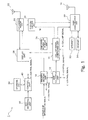
- Fig. 1 shows a structure of a ship call-up radio apparatus 1 according to a first embodiment of the present invention.
- information flow is indicated by arrows, among which information flow concerning control is indicated by dotted lines.
- a control unit 40 controls a priority deciding unit 40, a ship selecting unit 12, and a call-up signal generating unit 14 by transmission and reception of a control signal C. Operations of each of other constitutional units will be described below in conjunction with the operation of the ship call-up radio apparatus 1.
- the other-ship information signal I output from the ship identification apparatus 7 shown in Fig. 8 is input to the priority deciding unit 10. While this signal I includes other-ship information including navigation information and ship static information concerning each of other ships arranged as a sequence of information elements, the order of this sequence has no particular meaning and is merely based on the order in which the notification information acquiring unit 72 of the ship identification apparatus 7 acquired the ship information signals from a plurality of other ships.
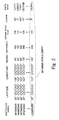
- Fig. 2 shows a structure of the other-ship information included in the signal input to the priority deciding unit 10. Specifically, the identification number, the position represented by latitude and longitude, the bearing obtained when the direction of the own ship's bow is 0°, the distance from the own ship, the ground speed, the course obtained when the north direction is set to 0°, and the ship's name are arranged in a sequence. In Fig. 2, a series of information items from the identification number to the ship's name which are listed in a line are designated collectively as one information element.
- the other-ship information may also include other ship static information such as the cargo type, the destination port, the expected arrive time, and so on.
- the priority deciding unit 10 stores the other-ship information concerning other ships in the predetermined number (n), and arranges, in a sequence, the information elements of the other-ship information concerning the n ships which are stored in descending order of probability of approaching the own ship.
- All the arranging methods (1) to (4) described above are considered to arrange the information elements in descending order of probability of approaching the own ship, and any appropriate method is selected by the operator depending on the situation. Specifically, when a command is input by the operator through a key entering unit 36, the control unit 40 performs operation setting for the priority deciding unit 10. Further, the times t 2 and t 4 are set by previously storing them in a storage unit 38 by the operator via the key entering unit 36 and the control unit 40 and then reading them out by the control unit 40 to control the priority deciding unit 10. In the following description, a case where the current time point distance arranging method is selected will be described.
- the priority deciding unit 10 particularly notes the information concerning the distance from the own ship among the information elements of the other-ship information concerning the n ships and arranges the information elements in the order of increasing distance.
- the other-ship information which is thus arranged in a sequence is then input to a display unit 28 and a ship selecting unit 12. Consequently, the result of arrangement is displayed on the display unit 28 as shown in Fig. 3, and at the same time, the ship call-up radio apparatus 1 is placed in a key entry waiting state for selecting a ship from the displayed arrangement result.
- the display unit 28 displays, in "calling key” boxes, key entry numbers for enabling selection of a ship to be called up from among the displayed ships. These numbers are allocated by the priority deciding unit 10 at the time of deciding the sequence.
- the operator determines that the ship having the identification number "554647848” has a high probability of collision based on the display of the display unit 28, the operator inputs a key "1" indicated in the corresponding "calling key” box through the key entering unit 36, so that the ship selecting unit 12 selects the information element corresponding to the ship having the identification number "564647848” and inputs the information element in the call-up signal generating unit 14.
- This operation is performed under control of the control unit 40 to control the ship selecting unit 12 based on the information input to the key entering unit 36 by the operator.
- the ship call-up radio apparatus 1 Upon depression of the key indicated in the "calling key” box by the operator, display representing a working channel entry waiting state is displayed in the display unit 28, so that the ship call-up radio apparatus 1 is placed in a state where information W for determining the working channel can be input in the call-up signal generating unit 14 via the key entering unit 36 and the control unit 40.
- the working channel refers to a frequency channel for proceeding with radio communication after the other ship is called up and the ships recognize each other.
- the information W for determining the working channel is input to the call-up signal generating unit 14 by further inputting the working channel by the operator after depression of the key indicated in the "calling key” box.
- control unit 40 automatically reads out information for determining the radio channel which is previously allocated as the working channel from the storage unit 38 and inputs the information in the call-up signal generating unit 14 may be employed.
- the call-up signal generating unit 14 generates a call-up signal A based on the information element which is input, the ship static information of the own ship previously stored in the ship static information storage unit 26, and the information W for deciding the working channel.
- the call-up signal A which is a signal to be used for calling up another ship via radio communication, refers to a signal including information concerning the identification number of the ship to be called up and the identification number of the own ship and information concerning the working channel to be used after the calling up.
- the call-up signal A can further include arbitrary ship static information such as names of the ship to be called up and of the own ship, and so on.
- the call-up signal generating unit 14 generates a call-up signal A from the ship static information of the ship to be called up such as the identification information thereof extracted from the information element which is input, the ship static information of the own ship such as the identification number acquired from the ship static information storage unit 26, and the information W for deciding the working channel which is designated by the control unit 40, and inputs the call-up signal A to the radio communication unit 30.
- the radio communication unit 30 converts the call-up signal A which is input into a signal whose carriers have been modulated, further converts the signal into a signal having a radio frequency band and amplifies it, and then transmits the resultant signal via an antenna 16.
- the call-up signal generating unit 14 has previously input information concerning the calling channel in the channel control unit 24, which controls the radio communication unit 30 such that the call-up signal A is transmitted on the calling channel.
- the call-up signal A transmitted from the antenna 16 as an electromagnetic wave is received by the ship call-up radio apparatus 1 mounted in a plurality of other ships.
- the call-up signal generating unit 14 has input the information included in the call-up signal A in the display unit 28, which indicates the display as shown in Fig. 4 at the time of transmitting the call-up signal A. While the display content of Fig. 4 includes the calling channel, the identification number of the ship to be called up, and the working channel, it is also possible to display ship static information of the ship to be called up other than the identification number.
- the call-up signal generating unit 14 has further input the information W for deciding the working channel in the channel control unit 24. Consequently, the channel control unit 24 can control the receiving frequency of the radio communication unit 30 at predetermined timing such that, after the call-up signal A is transmitted, response communication by the operator of the ship which is called up is performed on the working channel.
- the radio communication unit 30 receives, via the antenna 16, a signal in accordance with a response from the operator of the ship which is called up, and informs the operator of the ship call-up radio apparatus 1 of the response through a speaker 32.
- a signal in accordance with a response from the operator of the ship which is called up and informs the operator of the ship call-up radio apparatus 1 of the response through a speaker 32.
- communication through conversation between the operator of the ship call-up radio apparatus 1 and the operator of the ship which is called up is performed through a receiver 34.
- communication via the radio communication unit 30 is audio communication through the receiver 34 and the speaker 32, general data communication using facsimile data, image data, and so on can also be performed.
- a watchkeeping receiver unit 22 which is continuously receiving the call-up signals A transmitted from the ship call-up radio apparatuses mounted in other ships via the antenna 20, extracts the identification number from the call-up signal A which is received. Specifically, the watchkeeping receiver unit 22 amplifies the call-up signal A received at the antenna 20 for frequency conversion, and further demodulates the signal so as to extract the identification number. The watchkeeping receiver unit 22 then compares the identification number thus extracted with the identification number of the own ship stored in the ship static information storage unit 26 to determine whether or not the own ship is being called up.
- the information included in the called-up signal A which is received is input to the display unit 28, which then indicates display representing the fact that the own ship has been called up by another ship, as shown in Fig. 5, for example. While the display content of Fig. 5 includes the calling channel, the identification number of the calling ship, the name of the calling ship, and the working channel, it is also possible to display ship static information of the calling ship other than the identification number.
- the ship call-up radio apparatus 1 performs display indicating that the own ship has been called up by another ship by the display unit 28, and, at the same time, is placed in a state where radio communication with the calling ship is enabled. More specifically, the ship call-up radio apparatus 1, on the basis of the information W for deciding the working channel extracted from the call-up signal A which is received, performs operation processing such as setting the frequency channel of the radio communication unit 30 to the working channel, and so on. Here, setting of the frequency channel of the radio communication unit 30 is performed under the control of the channel control unit 24.
- the operator of the ship which is called up is allowed to perform communication for responding to the operator of the calling ship via the receiver 34.
- communication through conversation between the operator of the calling ship and the operator of the ship call-up radio apparatus is to be performed through the receiver 34.
- a ship call-up radio apparatus 3 As described above, with the ship call-up radio apparatus 1 according to the first embodiment shown in Fig. 1, decision concerning probability of ship collision is left completely to the discretion of the operator, who makes a decision in accordance with the display shown in Fig. 3 and so on. With this structure, however, the operator must bear a heavy burden in anticipating the collision risk, which may result in a collision accident caused by human error. In order to deal with this defect, a ship call-up radio apparatus 3 according to a second embodiment shown in Fig. 6 is provided with a means for automatically performing hazard anticipation. In Fig. 6, elements identical with those in the ship call-up radio apparatus 1 shown in Fig. 1 are denoted by the same numerals and will not described again.
- the other-ship information in which the sequence of the information elements has been decided by the sequence decision unit 10 is input to the display unit 28 and the ship selection unit 12. Consequently, the arrangement result is displayed in the display unit 28, as shown in Fig. 3.
- the other-ship information signal I has also been input to a hazard anticipation unit 50, as in the priority deciding unit 10.
- the hazard anticipation unit 50 stores other-ship information concerning ships in the predetermined number (n), and arranges information elements of the other-ship information concerning the n ships which are stored in the descending order of probabilities of approaching the own ship.
- the methods of arrangement including (1) the current time point distance arranging method, (2) the distance after designated time arranging method, (3) the approaching speed arranging method, and (4) the ship track arranging method, as described above, are conceivable. It is here assumed that the hazard anticipation unit 50 performs hazard anticipation by using the above sequence deciding methods (1) to (4).
- the hazard anticipation unit 50 defines the probability of approach, i.e., the degree of hazard, with numeral values 1 to n, in which the higher the numeral value, the greater the degree of hazard.
- the hazard anticipation unit 50 decides the sequence of the information elements concerning each of the methods (1) to (4) described above, and assigns the degree of hazard to the information element corresponding to each ship.
- the hazard anticipation unit 50 calculates, for each information element, a weighted average value based on the four degrees of hazard assigned in the four arrangement methods (1) to (4) described above.
- the weight of each arrangement method for use in the weighted average calculation is previously stored in the storage unit 38 via the key entering unit 36, so that the control unit 40 then reads out the weight for setting.
- the hazard anticipation unit 50 then arranges the information elements in the descending order of the weighed average values calculated based on the four degrees of hazard. The resulting arrangement is preferably displayed in the display unit 28.
- hazard determination is further performed.
- the ship corresponding to the identification number included in that information element is determined to have a probability of collision.
- the predetermined hazard condition such as that the distance from the own ship is 200m or less, for example, is previously stored by the operator in the storage unit 38 via the key entering unit 36 and the control unit 40, so that the control unit 40 can read out the hazard condition for setting.
- the hazard anticipation unit 50 inputs the information element corresponding the ship thus determined in a warning unit 52, the display unit 28, and the ship selecting unit 12.
- the warning unit 52 issues a warning, through a warning sound or voice guidance, that the ship corresponding to the identification number included in the input information element has a probability of collision.
- the display unit 28 displays indication that the ship corresponding to the identification number included in the input information element has a probability of collision and therefore that a call-up signal A is to be automatically transmitted to the ship.
- the ship selecting unit 12 selects the information element corresponding to the ship with the identification number included in the input information element and then inputs the information element in the call-up signal generating unit 14.
- the ship call-up radio apparatus 3 is in a key entry waiting state for selecting a ship based on the arrangement result displayed in the display unit 28.
- operation processing in which a key in the "calling key” box is depressed and a call-up signal A is transmitted through input of the working channel is given priority with respect to the hazard determination by the hazard anticipation unit 50.
- the hazard anticipation by the hazard anticipation unit 50 is suspended when the key indicated in the "calling key” box is depressed and the working channel is input, and interrupt processing for transmitting a call-up signal A based on the depression of the key indicated in the "calling key” box and input of the working channel is preferentially performed.
- the operation processing in which the call-up signal generating unit 14 generates a call-up signal A based on the information element which is input, the ship static information of the own ship which is previously stored in the ship static information storage unit 26, and the information concerning the working channel, and calls up the other ship is similar to that of the ship call-up radio apparatus 1 according to the first embodiment.
- the information W for deciding the predetermined working channel is automatically read from the storage unit 38 by the control unit 40 and is input to the call-up signal generating unit 14.
- a ship with a probability of collision is detected by the hazard anticipation unit 50 and a call-up signal A is automatically transmitted to the ship, so that a collision accident caused by human error can be prevented.
- information elements of the other-ship information can be arranged in a sequence as information suitable for calling up the other ship and then used, a ship to be called up can be called up immediately.
Landscapes
- Ocean & Marine Engineering (AREA)
- Engineering & Computer Science (AREA)
- Public Health (AREA)
- Chemical & Material Sciences (AREA)
- Combustion & Propulsion (AREA)
- Mechanical Engineering (AREA)
- Health & Medical Sciences (AREA)
- Radar, Positioning & Navigation (AREA)
- Remote Sensing (AREA)
- Physics & Mathematics (AREA)
- General Physics & Mathematics (AREA)
- Traffic Control Systems (AREA)
- Mobile Radio Communication Systems (AREA)
Applications Claiming Priority (2)
| Application Number | Priority Date | Filing Date | Title |
|---|---|---|---|
| JP2005114622A JP4203038B2 (ja) | 2005-04-12 | 2005-04-12 | 船舶搭載用dsc無線装置 |
| PCT/JP2006/307433 WO2006109711A1 (fr) | 2005-04-12 | 2006-04-07 | Appareil d’appel pour bateaux |
Publications (2)
| Publication Number | Publication Date |
|---|---|
| EP1870871A1 true EP1870871A1 (fr) | 2007-12-26 |
| EP1870871A4 EP1870871A4 (fr) | 2012-04-18 |
Family
ID=37086986
Family Applications (1)
| Application Number | Title | Priority Date | Filing Date |
|---|---|---|---|
| EP06731380A Ceased EP1870871A4 (fr) | 2005-04-12 | 2006-04-07 | Appareil d'appel pour bateaux |
Country Status (4)
| Country | Link |
|---|---|
| EP (1) | EP1870871A4 (fr) |
| JP (1) | JP4203038B2 (fr) |
| NO (1) | NO343168B1 (fr) |
| WO (1) | WO2006109711A1 (fr) |
Cited By (2)
| Publication number | Priority date | Publication date | Assignee | Title |
|---|---|---|---|---|
| WO2016121254A1 (fr) * | 2015-01-29 | 2016-08-04 | 古野電気株式会社 | Dispositif d'affichage pour communications radio, procédé de communications radio, et système de communications radio |
| US11665503B2 (en) | 2020-11-17 | 2023-05-30 | Icom Incorporated | Communication device and method for controlling same |
Families Citing this family (7)
| Publication number | Priority date | Publication date | Assignee | Title |
|---|---|---|---|---|
| JP4848264B2 (ja) * | 2006-12-26 | 2011-12-28 | 日本無線株式会社 | 船舶無線装置 |
| KR100805894B1 (ko) | 2007-01-19 | 2008-02-20 | 제주대학교 산학협력단 | 선박 정보 모니터링 시스템 |
| JP2010145089A (ja) * | 2008-12-16 | 2010-07-01 | Furuno Electric Co Ltd | 情報表示装置および船舶用無線装置 |
| FR2954519B1 (fr) * | 2009-12-21 | 2012-07-20 | Astrium Sas | Systeme de suivi de navires en mer. |
| JP2011175512A (ja) * | 2010-02-25 | 2011-09-08 | Icom Inc | ターゲット識別装置 |
| CN113232795A (zh) * | 2021-06-01 | 2021-08-10 | 福州海联星信息科技有限公司 | 一种船舶避碰方法及终端 |
| JP7818934B2 (ja) * | 2021-11-22 | 2026-02-24 | 古野電気株式会社 | 物標情報表示装置、物標情報表示方法、及びプログラム |
Family Cites Families (9)
| Publication number | Priority date | Publication date | Assignee | Title |
|---|---|---|---|---|
| US4684949A (en) * | 1983-01-17 | 1987-08-04 | The United States Of America As Represented By The Secretary Of Transportation | VHF/radar transponder collision avoidance aid |
| US5307074A (en) * | 1986-07-04 | 1994-04-26 | Lmt Radio Professionnelle | Collision avoidance system for sea navigation |
| FR2661536B1 (fr) * | 1990-04-27 | 1995-01-27 | Lmt Radio Professionelle | Procede de codage pour systeme anticollision pour la navigation maritime. |
| JP2684959B2 (ja) * | 1993-05-31 | 1997-12-03 | 日本電気株式会社 | Gps船舶航行システム |
| JPH07129872A (ja) * | 1993-11-01 | 1995-05-19 | Unyusho Senpaku Gijutsu Kenkyusho | 船舶衝突予防航行支援装置 |
| JPH1084311A (ja) * | 1996-09-10 | 1998-03-31 | Furuno Electric Co Ltd | 移動体間通信装置及び移動体間通信システム |
| JP2000214255A (ja) * | 1999-01-25 | 2000-08-04 | Japan Radio Co Ltd | 船舶用レ―ダ装置 |
| JP4925525B2 (ja) * | 2001-08-03 | 2012-04-25 | 古野電気株式会社 | 他船表示装置 |
| JP3995462B2 (ja) * | 2001-12-13 | 2007-10-24 | 古野電気株式会社 | Aisデータ処理装置 |
-
2005
- 2005-04-12 JP JP2005114622A patent/JP4203038B2/ja not_active Expired - Lifetime
-
2006
- 2006-04-07 WO PCT/JP2006/307433 patent/WO2006109711A1/fr not_active Ceased
- 2006-04-07 EP EP06731380A patent/EP1870871A4/fr not_active Ceased
-
2007
- 2007-11-07 NO NO20075681A patent/NO343168B1/no unknown
Cited By (2)
| Publication number | Priority date | Publication date | Assignee | Title |
|---|---|---|---|---|
| WO2016121254A1 (fr) * | 2015-01-29 | 2016-08-04 | 古野電気株式会社 | Dispositif d'affichage pour communications radio, procédé de communications radio, et système de communications radio |
| US11665503B2 (en) | 2020-11-17 | 2023-05-30 | Icom Incorporated | Communication device and method for controlling same |
Also Published As
| Publication number | Publication date |
|---|---|
| NO20075681L (no) | 2008-01-09 |
| JP4203038B2 (ja) | 2008-12-24 |
| JP2006293753A (ja) | 2006-10-26 |
| EP1870871A4 (fr) | 2012-04-18 |
| WO2006109711A1 (fr) | 2006-10-19 |
| NO343168B1 (no) | 2018-11-19 |
Similar Documents
| Publication | Publication Date | Title |
|---|---|---|
| US6484091B2 (en) | On-vehicle vehicle guide apparatus, communication server system, and substitute vehicle guide system | |
| US8082095B2 (en) | Enhanced passenger pickup via telematics synchronization | |
| US20060161440A1 (en) | Guidance information providing systems, methods, and programs | |
| KR20110021665A (ko) | 차량 정보 제공방법 및 이를 적용한 단말기 | |
| JPH11102198A (ja) | メッセージ処理装置、メッセージ処理方法及びメッセージ処理プログラムを記録した媒体 | |
| EP1870871A1 (fr) | Appareil d'appel pour bateaux | |
| US20180279097A1 (en) | Interactive method, device and system for public transport information | |
| US20130226450A1 (en) | Apparatus and method for supporting safe navigation of ships | |
| KR20190018091A (ko) | 버스 하차 안내 시스템 및 방법 | |
| KR100892079B1 (ko) | 내비게이션 시스템 | |
| US8126514B2 (en) | In-vehicle apparatus, cellular phone device, and method for controlling communication therebetween | |
| JP4081179B2 (ja) | コンピュータネットワークによる航行支援システム | |
| JP2001337967A (ja) | 交通機関の情報提示システム | |
| JP2005156269A (ja) | 広告情報出力装置 | |
| JP2006250874A (ja) | ナビゲーション装置および自車相対位置の案内方法 | |
| KR100988359B1 (ko) | 이종 통신 방식 간의 선박위치 정보제공 시스템 | |
| KR100583817B1 (ko) | 선박 자동식별시스템 및 그의 선박정보 표시방법 | |
| KR100811078B1 (ko) | 이동통신단말기를 이용한 목적지 유도 시스템 및 그 방법 | |
| JP2005189667A (ja) | 車載機器、音声対話ドキュメント作成サーバ及びこれらを用いたナビゲーションシステム | |
| KR20170097806A (ko) | 비콘 기반 상황인지 맞춤형 버스 정보 제공시스템 | |
| KR20080085931A (ko) | 대중 교통 수단에서의 목적지 정보 개인 안내 시스템 및 그목적지 정보 개인 안내 방법 | |
| US10024672B2 (en) | Navigation communication device and method | |
| JP4848264B2 (ja) | 船舶無線装置 | |
| US20150192425A1 (en) | Facility search apparatus and facility search method | |
| KR101759114B1 (ko) | P2p 이동 경로 확인 네비게이션 시스템 및 방법 |
Legal Events
| Date | Code | Title | Description |
|---|---|---|---|
| PUAI | Public reference made under article 153(3) epc to a published international application that has entered the european phase |
Free format text: ORIGINAL CODE: 0009012 |
|
| 17P | Request for examination filed |
Effective date: 20071005 |
|
| AK | Designated contracting states |
Kind code of ref document: A1 Designated state(s): DK NL |
|
| DAX | Request for extension of the european patent (deleted) | ||
| RBV | Designated contracting states (corrected) |
Designated state(s): DK NL |
|
| A4 | Supplementary search report drawn up and despatched |
Effective date: 20120319 |
|
| RIC1 | Information provided on ipc code assigned before grant |
Ipc: G08G 3/02 20060101AFI20120312BHEP |
|
| STAA | Information on the status of an ep patent application or granted ep patent |
Free format text: STATUS: EXAMINATION IS IN PROGRESS |
|
| 17Q | First examination report despatched |
Effective date: 20171109 |
|
| STAA | Information on the status of an ep patent application or granted ep patent |
Free format text: STATUS: THE APPLICATION HAS BEEN REFUSED |
|
| 18R | Application refused |
Effective date: 20200311 |