EP1873668A1 - Integration der Bestätigung der Geräteintegrität in die Benutzerauthentifizierung - Google Patents
Integration der Bestätigung der Geräteintegrität in die Benutzerauthentifizierung Download PDFInfo
- Publication number
- EP1873668A1 EP1873668A1 EP06013341A EP06013341A EP1873668A1 EP 1873668 A1 EP1873668 A1 EP 1873668A1 EP 06013341 A EP06013341 A EP 06013341A EP 06013341 A EP06013341 A EP 06013341A EP 1873668 A1 EP1873668 A1 EP 1873668A1
- Authority
- EP
- European Patent Office
- Prior art keywords
- certificate
- service
- authentication
- private key
- user
- Prior art date
- Legal status (The legal status is an assumption and is not a legal conclusion. Google has not performed a legal analysis and makes no representation as to the accuracy of the status listed.)
- Withdrawn
Links
Images

Classifications
-
- H—ELECTRICITY
- H04—ELECTRIC COMMUNICATION TECHNIQUE
- H04L—TRANSMISSION OF DIGITAL INFORMATION, e.g. TELEGRAPHIC COMMUNICATION
- H04L63/00—Network architectures or network communication protocols for network security
- H04L63/08—Network architectures or network communication protocols for network security for authentication of entities
- H04L63/0815—Network architectures or network communication protocols for network security for authentication of entities providing single-sign-on or federations
-
- G—PHYSICS
- G06—COMPUTING OR CALCULATING; COUNTING
- G06F—ELECTRIC DIGITAL DATA PROCESSING
- G06F21/00—Security arrangements for protecting computers, components thereof, programs or data against unauthorised activity
- G06F21/30—Authentication, i.e. establishing the identity or authorisation of security principals
- G06F21/31—User authentication
- G06F21/33—User authentication using certificates
- G06F21/335—User authentication using certificates for accessing specific resources, e.g. using Kerberos tickets
-
- G—PHYSICS
- G06—COMPUTING OR CALCULATING; COUNTING
- G06F—ELECTRIC DIGITAL DATA PROCESSING
- G06F21/00—Security arrangements for protecting computers, components thereof, programs or data against unauthorised activity
- G06F21/30—Authentication, i.e. establishing the identity or authorisation of security principals
- G06F21/31—User authentication
- G06F21/41—User authentication where a single sign-on provides access to a plurality of computers
-
- H—ELECTRICITY
- H04—ELECTRIC COMMUNICATION TECHNIQUE
- H04L—TRANSMISSION OF DIGITAL INFORMATION, e.g. TELEGRAPHIC COMMUNICATION
- H04L63/00—Network architectures or network communication protocols for network security
- H04L63/12—Applying verification of the received information
-
- H—ELECTRICITY
- H04—ELECTRIC COMMUNICATION TECHNIQUE
- H04W—WIRELESS COMMUNICATION NETWORKS
- H04W12/00—Security arrangements; Authentication; Protecting privacy or anonymity
- H04W12/04—Key management, e.g. using generic bootstrapping architecture [GBA]
- H04W12/041—Key generation or derivation
-
- H—ELECTRICITY
- H04—ELECTRIC COMMUNICATION TECHNIQUE
- H04W—WIRELESS COMMUNICATION NETWORKS
- H04W12/00—Security arrangements; Authentication; Protecting privacy or anonymity
- H04W12/04—Key management, e.g. using generic bootstrapping architecture [GBA]
- H04W12/043—Key management, e.g. using generic bootstrapping architecture [GBA] using a trusted network node as an anchor
- H04W12/0431—Key distribution or pre-distribution; Key agreement
-
- H—ELECTRICITY
- H04—ELECTRIC COMMUNICATION TECHNIQUE
- H04W—WIRELESS COMMUNICATION NETWORKS
- H04W12/00—Security arrangements; Authentication; Protecting privacy or anonymity
- H04W12/40—Security arrangements using identity modules
- H04W12/48—Security arrangements using identity modules using secure binding, e.g. securely binding identity modules to devices, services or applications
Definitions
- ID subscriber identity
- IMSI international mobile subscriber identity
- USIM USIM
- This module is plugged into the device that the subscriber currently has in use, i.e. his mobile phone. Once the device is changed the module may be removed and inserted into a new device (e.g. a SIM card is extracted from an old mobile phone and used with a new one).
- TCP Trusted Computing Group
- the present invention tackles this problem. It is proposed to protect services accessible via a network by combining information drawn from subscriber (user) specific authentication and device specific verification in a certificate used for service access. Preferably, this certificate is sealed to the device or even a special (trusted) state of the device which is used for service access.
- a private key may be generated and provided to the device.
- a corresponding public key may form part of the certificate so that the key may be extracted by a service provider and employed for providing the service to the subscriber.
- a key derived from the service subscriber authentication can be used to encrypt the information contained in the certificate and/or the private key.
- This key may be a session key or a (different) private key generated by a PKI infrastructure.
- a server (below also referred to as TS-server or trusted computing server) may be provided for performing the verification of the device.
- a server may be a certification authority (CA) that can issue certificates in line with TCG specifications.
- CA certification authority
- certificates are issued that go beyond TCG proposals in that they include information such as credentials referring to user authentication. This information may be obtained from a user authentication process performed by the server itself. This way to proceed has the advantage that the user authentication information included in the certificate is recent information.
- user authentication information may be derived from a different network element that performed user authentication, e.g. as part of user registration at a network.
- the device used by the subscriber preferably comprises a device-specific trusted platform module (such as specified by TCG) and a user-specific security module (e.g. SIM or USIM card).
- a device-specific trusted platform module such as specified by TCG
- a user-specific security module e.g. SIM or USIM card
- a secured channel may be used for transmitting information between the device-specific trusted platform module and the user-specific security module. Communication between these modules may be necessary for accessing protected information. For instance, information can be first encrypted and then sealed. After reception by the device unsealing is performed by the device-specific module and decrypting is performed by the user-specific module.
- the invention can be used for services accessed via a mobile phone.
- User authentication is common with this kind of services.
- the level of security is improved by the invention which adds device attestation and combines it with user authentication.
- the TC-Server may be physically co-located with a network application functions NAF or a bootstrapping server function BSF.
- a separate, dedicated platform may be set up.
- Fig. 1 illustrates a basic principle of the present invention.
- a trust aware service is offered. For subscribing to this service there are two requirements
- a user authentication infrastructure for user authentication U-Auth
- a device integrity verification infrastructure to ensure the integrity of the device Device-Integrity
- GAA/GBA 3rd generation partnership project
- the network authentication and service access is tied to a subscriber ID.
- the subscriber possesses a removable module (SIM/USIM) that is plugged into his device.
- SIM Subscriber ID
- USB universal serial number
- PIN personal identification number
- the SIM On successful entry of the PIN, the SIM tries to connect to the mobile network using the Authentication and Key Agreement Protocol (AKA protocol) which forms part of the 3GPP GBA mechanism.
- AKA protocol is laid down in the specification TS 33.102 and generally used for modern mobile networks, such as UMTS and IMS (IP multimedia subsystem) networks.
- AKA protocol authentication is performed during registration.
- Secret keys are generated and stored at the SIM card as well as at the service network.
- the secret keys are used to protect signaling between the device (more generally referred to as user equipment) and the service network.
- the Generic Bootstrapping Architecture is shown in Fig. 2.
- the bootstrapping server function BSF and the user equipment UE mutually authenticate using the AKA protocol, and agree on session keys that can afterwards be applied between the user equipment UE and an operator-controlled network application function NAF.
- the user equipment UE and the network application function NAF can run some application-specific protocol where the authentication /encryption of messages will be key-protected.
- session keys which were generated during the mutual authentication between the user equipment UE and the bootstrapping server function BS are passed on from the bootstrapping server function BSF to the network application function NAF via a protected connection.
- SSC subscriber certificates
- NAFs network application functions
- the GBA is also used to issue subscriber certificates for the user equipment UE to enable it to access NAFs which work with certificates instead of session keys.
- a NAF can act as a Public Key Infrastructure (PKI) portal and can issue certificates to the user equipment UE.
- PKI Public Key Infrastructure
- the certificates' validity may be short-term, e.g. corresponding to the typical duration of a session.
- the communication between the (NAF) PKI portal and the user equipment UE is secured by the session keys derived during the GBA run.
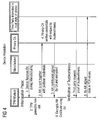
- Fig. 3 shows a certificate-based service access.
- S-ID is the session ID, which results from a successful GBA run.
- GBA/SSC credentials are used to form a certification that is used to access a SSC-based service hosted on a NAF.
- TCG specifications introduce techniques such as "attestation” based on AIKs (attestation identity keys) to bind the authentication/integrity attestation of the device to a 'unique' security module that is tightly built-in within the device (but not linked with a SIM/USIM based subscriber identity).
- This security module (or TPM module according to TCG terminology) is not removable in the sense that the user can simply shift 'his' module to another device (as opposed to a SIM card).
- Device integrity attestation is thus bound to the device and cannot be moved between devices.
- a device can have several AIKs which makes the AIK unsuitable for using it for authentication of the same user using the same device e.g. in different modes.
- TCG-like mechanisms do not support direct subscriber identification as the authenticated entity in this case is the so-called "TRUSTed device”.
- the AIK can be used for verification of trustworthiness. Such a verification procedure generally is performed along the following lines:
- a device-specific trusted platform module e.g. SIM card.
- a user-specific security module e.g. SIM card
- the invention proposes to combine user authentication information and device integrity attestation.
- the concept can be explained based on a mobile phone as an example.
- the existing technologies in the environment of mobile networks and services such as 3GPP GAA/GBA/SSC (abbreviated: GAA) architecture and TCG based device integrity attestation mechanisms are combined to support the binding of (removable) subscriber authentication based on portable SIM/USIM (provided by GBA) to the verified TRUST capabilities and credentials of an individual 'TRUSTed' device (that should be TCG compliant).
- GAA 3GPP GAA/GBA/SSC
- TCG based device integrity attestation mechanisms are combined to support the binding of (removable) subscriber authentication based on portable SIM/USIM (provided by GBA) to the verified TRUST capabilities and credentials of an individual 'TRUSTed' device (that should be TCG compliant).
- the invention supports applying the same SIM/USIM on different TRUSTed devices with proper (verifiable) application environments.
- a subscriber to use (TRUST aware) services bound to its own ID, but enhanced by mechanisms that present the service an assertion (that can be proved) of the 'TRUST state' of a currently connecting device.
- the service is enabled to accept or deny the access based on device specific information that is not visible using a subscriber identity alone.
- the invention allows combining both, the security mechanisms used by 3GPP GAA and those proposed by TCG, to build a new security relationship between a TCG compliant device (i.e. a device comprising a TPM module), a subscriber possessing the device (i.e. SIM, plugged into a device) and a service that is aware of TRUSTed computing mechanisms.
- a TCG compliant device i.e. a device comprising a TPM module
- SIM subscriber possessing the device
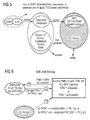
- Fig. 5 describes basic principles of how the invention can be employed in a mobile network environment.
- a specific NAF (working with GAA provided shared secrets), that is called below as 'TC-SERVER', is executing services, which support mechanisms and processes that are suited for TCG oriented remote device management.
- a SSC Subscriber Certificates
- a SSC Subscriber Certificates
- the 'TC-SERVER' is also enabled to pre-condition the connecting device in a way that it behaves as it is expected by a determined TCG aware service that may have provided a specific profile, policy or other requirements for granting access.
- This pre-conditioning includes mechanisms such as remote software download, AIK issuing, remote device configuration and issuing of credentials and tokens that are related to platform credentials and system states of the device.
- these remote device management processes After permitting the device to access the TC-SERVER (this will work as described with GAA), these remote device management processes perform a device attestation (e.g. based on an attestation identity key AIK) as used within the TCG TRUST framework.
- a device attestation e.g. based on an attestation identity key AIK
- Other mechanisms that rely on locally trusted software in a device are included as well.
- first GBA/SSC credentials are derived from a GAA registration procedure. These credentials are used to access a SSC based service on a NAF. This NAF is collocated or coincides with a TC-Server that performs an attestation of device integrity. The TC-Server generates device credentials that are combined with CBA/SSC credentials in a certificate used for service access.
- TC_CERT After the generation of a certificate - which is referred to as TC_CERT below - the certificate is sent to the device using a secure channel. Also the associated 'private key' PrK_tc is generated in network and sent to the device, in a way that a subscriber can use but not modify it. TCG mechanisms can be used to accomplish this, e.g. relying on the secure SW running in the device or using TPM based remote protocols such as 'remote data binding' that makes use of TPM auditing commands.
- the TC_CERT as well as the associated private key are sealed to the system state that corresponds to the state that is confirmed by the certificate.
- the TC_SERVER After successful attestation, the TC_SERVER sends the PrK_tc to the trusted device, protected with the GAA credentials (using either Ks or PbK-ssc) and seals it to the secure state of the platform.
- the trusted SW in the platform assures, that the decrypted private key is only used once per transaction (e.g. for authentication) and deleted afterwards.
- An additional secure channel between SIM/USIM and the secure Trusted Platform SW might be used to prevent from eavesdropping by an attacker, e.g. physically listening at the SIM/TD interfaces (e.g. HW-debugger, ICE etc.).
- the trusted platform is not able to prove authentication of the TC_CERT.
- the TC_CERT When connecting to a service the TC_CERT is shown using a secure protocol (e.g. supporting challenge and response mechanisms to avoid replay attacks at TPM level.
- a secure protocol e.g. supporting challenge and response mechanisms to avoid replay attacks at TPM level.
- secure remote channels such as TLS- can be used to communicate with trusted device software.
- the TCG-aware service verifies the certificate either comparing an attestation and by comparison with "expected TRUST values" (these can be provided by communicating with the TC-SERVER), or simply relying on the sealing mechanism in the TRUSTed device.
- the service need not to verify the TRUST state of the device itself. GAA related functions can also be routed and interacted via the TC-SERVER. Thus, seen from the perspective of the service the TC-SERVER is the only verification entity.
Landscapes
- Engineering & Computer Science (AREA)
- Computer Security & Cryptography (AREA)
- Computer Networks & Wireless Communication (AREA)
- Signal Processing (AREA)
- Computer Hardware Design (AREA)
- General Engineering & Computer Science (AREA)
- Theoretical Computer Science (AREA)
- Computing Systems (AREA)
- Software Systems (AREA)
- Physics & Mathematics (AREA)
- General Physics & Mathematics (AREA)
- Mobile Radio Communication Systems (AREA)
Priority Applications (2)
| Application Number | Priority Date | Filing Date | Title |
|---|---|---|---|
| EP06013341A EP1873668A1 (de) | 2006-06-28 | 2006-06-28 | Integration der Bestätigung der Geräteintegrität in die Benutzerauthentifizierung |
| PCT/EP2007/056324 WO2008000721A1 (en) | 2006-06-28 | 2007-06-25 | Integration of device integrity attestation into user authentication |
Applications Claiming Priority (1)
| Application Number | Priority Date | Filing Date | Title |
|---|---|---|---|
| EP06013341A EP1873668A1 (de) | 2006-06-28 | 2006-06-28 | Integration der Bestätigung der Geräteintegrität in die Benutzerauthentifizierung |
Publications (1)
| Publication Number | Publication Date |
|---|---|
| EP1873668A1 true EP1873668A1 (de) | 2008-01-02 |
Family
ID=37667340
Family Applications (1)
| Application Number | Title | Priority Date | Filing Date |
|---|---|---|---|
| EP06013341A Withdrawn EP1873668A1 (de) | 2006-06-28 | 2006-06-28 | Integration der Bestätigung der Geräteintegrität in die Benutzerauthentifizierung |
Country Status (2)
| Country | Link |
|---|---|
| EP (1) | EP1873668A1 (de) |
| WO (1) | WO2008000721A1 (de) |
Cited By (18)
| Publication number | Priority date | Publication date | Assignee | Title |
|---|---|---|---|---|
| EP2073496A1 (de) * | 2007-12-14 | 2009-06-24 | Intel Corporation | Rahmen zur Verteilung symmetrischer Schlüssel für das Internet |
| US8099761B2 (en) | 2008-08-14 | 2012-01-17 | Microsoft Corporation | Protocol for device to station association |
| WO2013026875A1 (de) * | 2011-08-24 | 2013-02-28 | Deutsche Telekom Ag | Verfahren zur authentisierung eines telekommunikationsendgeräts umfassend ein identitätsmodul an einer servereinrichtung eines telekommunikationsnetzes, verwendung eines identitätsmoduls, identitätsmodul und computerprogramm |
| CN103313244A (zh) * | 2012-03-14 | 2013-09-18 | 中国移动通信集团公司 | 一种基于gba的认证方法及装置 |
| US8555361B2 (en) | 2010-02-26 | 2013-10-08 | Motorola Mobility Llc | Dynamic cryptographic subscriber-device identity binding for subscriber mobility |
| CN103686710A (zh) * | 2012-09-26 | 2014-03-26 | 中国移动通信集团公司 | 一种gba初始化方法、装置 |
| US8769612B2 (en) | 2008-08-14 | 2014-07-01 | Microsoft Corporation | Portable device association |
| US8775533B2 (en) | 2011-05-20 | 2014-07-08 | Microsoft Corporation | Auto connect in peer-to-peer network |
| DE102013202001A1 (de) * | 2013-02-07 | 2014-08-07 | Bundesdruckerei Gmbh | Verfahren zum Versehen eines mobilen Endgeräts mit einem Authentisierungszertifikat |
| US8806023B2 (en) | 2011-05-20 | 2014-08-12 | Microsoft Corporation | Auto-connect in a peer-to-peer network |
| CN104145465A (zh) * | 2012-02-02 | 2014-11-12 | 诺基亚通信公司 | 机器类型通信中基于群组的自举 |
| US8943551B2 (en) | 2008-08-14 | 2015-01-27 | Microsoft Corporation | Cloud-based device information storage |
| US9032106B2 (en) | 2013-05-29 | 2015-05-12 | Microsoft Technology Licensing, Llc | Synchronizing device association data among computing devices |
| US9565708B2 (en) | 2011-05-20 | 2017-02-07 | Microsoft Technology Licensing, Llc | Auto-connect in a peer-to-peer network |
| US10277407B2 (en) | 2016-04-19 | 2019-04-30 | Microsoft Technology Licensing, Llc | Key-attestation-contingent certificate issuance |
| CN109922121A (zh) * | 2014-09-05 | 2019-06-21 | 高通股份有限公司 | 使用多个证书进行接入和业务区分 |
| CN110299996A (zh) * | 2018-03-22 | 2019-10-01 | 阿里巴巴集团控股有限公司 | 认证方法、设备及系统 |
| US11349665B2 (en) | 2017-12-22 | 2022-05-31 | Motorola Solutions, Inc. | Device attestation server and method for attesting to the integrity of a mobile device |
Families Citing this family (6)
| Publication number | Priority date | Publication date | Assignee | Title |
|---|---|---|---|---|
| US20090259851A1 (en) | 2008-04-10 | 2009-10-15 | Igor Faynberg | Methods and Apparatus for Authentication and Identity Management Using a Public Key Infrastructure (PKI) in an IP-Based Telephony Environment |
| CN102065086B (zh) * | 2010-12-20 | 2013-01-16 | 西安西电捷通无线网络通信股份有限公司 | 一种适合可信连接架构的平台鉴别过程管理方法 |
| US8798273B2 (en) | 2011-08-19 | 2014-08-05 | International Business Machines Corporation | Extending credential type to group Key Management Interoperability Protocol (KMIP) clients |
| US9705879B2 (en) | 2014-09-17 | 2017-07-11 | Microsoft Technology Licensing, Llc | Efficient and reliable attestation |
| US11438161B2 (en) | 2019-10-31 | 2022-09-06 | Hewlett Packard Enterprise Patent Department | Implicit attestation for network access |
| CN114596088A (zh) * | 2022-01-30 | 2022-06-07 | 中国人民银行数字货币研究所 | 一种数字货币交易方法和系统以及数字货币卡应用装置 |
Citations (2)
| Publication number | Priority date | Publication date | Assignee | Title |
|---|---|---|---|---|
| US6233685B1 (en) * | 1997-08-29 | 2001-05-15 | Sean William Smith | Establishing and employing the provable untampered state of a device |
| WO2002019598A2 (en) * | 2000-08-28 | 2002-03-07 | Contentguard Holdings, Inc. | Systems and methods for integrity certification and verification of content consumption environments |
-
2006
- 2006-06-28 EP EP06013341A patent/EP1873668A1/de not_active Withdrawn
-
2007
- 2007-06-25 WO PCT/EP2007/056324 patent/WO2008000721A1/en not_active Ceased
Patent Citations (2)
| Publication number | Priority date | Publication date | Assignee | Title |
|---|---|---|---|---|
| US6233685B1 (en) * | 1997-08-29 | 2001-05-15 | Sean William Smith | Establishing and employing the provable untampered state of a device |
| WO2002019598A2 (en) * | 2000-08-28 | 2002-03-07 | Contentguard Holdings, Inc. | Systems and methods for integrity certification and verification of content consumption environments |
Cited By (33)
| Publication number | Priority date | Publication date | Assignee | Title |
|---|---|---|---|---|
| US9654453B2 (en) | 2007-12-14 | 2017-05-16 | Intel Corporation | Symmetric key distribution framework for the Internet |
| US9015484B2 (en) | 2007-12-14 | 2015-04-21 | Intel Corporation | Symmetric key distribution framework for the Internet |
| EP2073496A1 (de) * | 2007-12-14 | 2009-06-24 | Intel Corporation | Rahmen zur Verteilung symmetrischer Schlüssel für das Internet |
| US8532303B2 (en) | 2007-12-14 | 2013-09-10 | Intel Corporation | Symmetric key distribution framework for the internet |
| US9197625B2 (en) | 2008-08-14 | 2015-11-24 | Microsoft Technology Licensing, Llc | Cloud-based device information storage |
| US8769612B2 (en) | 2008-08-14 | 2014-07-01 | Microsoft Corporation | Portable device association |
| US8943551B2 (en) | 2008-08-14 | 2015-01-27 | Microsoft Corporation | Cloud-based device information storage |
| US10447705B2 (en) | 2008-08-14 | 2019-10-15 | Microsoft Technology Licensing, Llc | Cloud-based device information storage |
| US8099761B2 (en) | 2008-08-14 | 2012-01-17 | Microsoft Corporation | Protocol for device to station association |
| US8555361B2 (en) | 2010-02-26 | 2013-10-08 | Motorola Mobility Llc | Dynamic cryptographic subscriber-device identity binding for subscriber mobility |
| US9565708B2 (en) | 2011-05-20 | 2017-02-07 | Microsoft Technology Licensing, Llc | Auto-connect in a peer-to-peer network |
| US8775533B2 (en) | 2011-05-20 | 2014-07-08 | Microsoft Corporation | Auto connect in peer-to-peer network |
| US8806023B2 (en) | 2011-05-20 | 2014-08-12 | Microsoft Corporation | Auto-connect in a peer-to-peer network |
| US9184913B2 (en) | 2011-08-24 | 2015-11-10 | Deutsche Telekom Ag | Authenticating a telecommunication terminal in a telecommunication network |
| WO2013026875A1 (de) * | 2011-08-24 | 2013-02-28 | Deutsche Telekom Ag | Verfahren zur authentisierung eines telekommunikationsendgeräts umfassend ein identitätsmodul an einer servereinrichtung eines telekommunikationsnetzes, verwendung eines identitätsmoduls, identitätsmodul und computerprogramm |
| CN104145465B (zh) * | 2012-02-02 | 2017-08-29 | 诺基亚通信公司 | 机器类型通信中基于群组的自举的方法和装置 |
| CN104145465A (zh) * | 2012-02-02 | 2014-11-12 | 诺基亚通信公司 | 机器类型通信中基于群组的自举 |
| US9654284B2 (en) | 2012-02-02 | 2017-05-16 | Nokia Solutions And Networks Oy | Group based bootstrapping in machine type communication |
| CN103313244B (zh) * | 2012-03-14 | 2016-12-14 | 中国移动通信集团公司 | 一种基于gba的认证方法及装置 |
| CN103313244A (zh) * | 2012-03-14 | 2013-09-18 | 中国移动通信集团公司 | 一种基于gba的认证方法及装置 |
| CN103686710A (zh) * | 2012-09-26 | 2014-03-26 | 中国移动通信集团公司 | 一种gba初始化方法、装置 |
| CN103686710B (zh) * | 2012-09-26 | 2017-03-22 | 中国移动通信集团公司 | 一种gba初始化方法、装置 |
| EP2765752A1 (de) * | 2013-02-07 | 2014-08-13 | Fraunhofer-Gesellschaft zur Förderung der angewandten Forschung e.V. | Verfahren zum Versehen eines mobilen Endgeräts mit einem Authentisierungszertifikat |
| DE102013202001A1 (de) * | 2013-02-07 | 2014-08-07 | Bundesdruckerei Gmbh | Verfahren zum Versehen eines mobilen Endgeräts mit einem Authentisierungszertifikat |
| DE102013202001B4 (de) * | 2013-02-07 | 2017-08-10 | Bundesdruckerei Gmbh | Verfahren zum Versehen eines mobilen Endgeräts mit einem Authentisierungszertifikat |
| US9311109B2 (en) | 2013-05-29 | 2016-04-12 | Microsoft Technology Licensing, Llc | Synchronizing device association data among computing devices |
| US9032106B2 (en) | 2013-05-29 | 2015-05-12 | Microsoft Technology Licensing, Llc | Synchronizing device association data among computing devices |
| CN109922121A (zh) * | 2014-09-05 | 2019-06-21 | 高通股份有限公司 | 使用多个证书进行接入和业务区分 |
| US11223628B2 (en) | 2014-09-05 | 2022-01-11 | Qualcomm Incorporated | Using multiple credentials for access and traffic differentiation |
| US10277407B2 (en) | 2016-04-19 | 2019-04-30 | Microsoft Technology Licensing, Llc | Key-attestation-contingent certificate issuance |
| US11349665B2 (en) | 2017-12-22 | 2022-05-31 | Motorola Solutions, Inc. | Device attestation server and method for attesting to the integrity of a mobile device |
| CN110299996A (zh) * | 2018-03-22 | 2019-10-01 | 阿里巴巴集团控股有限公司 | 认证方法、设备及系统 |
| CN110299996B (zh) * | 2018-03-22 | 2022-07-01 | 阿里巴巴集团控股有限公司 | 认证方法、设备及系统 |
Also Published As
| Publication number | Publication date |
|---|---|
| WO2008000721A1 (en) | 2008-01-03 |
Similar Documents
| Publication | Publication Date | Title |
|---|---|---|
| WO2008000721A1 (en) | Integration of device integrity attestation into user authentication | |
| KR101374810B1 (ko) | 가상 가입자 식별 모듈 | |
| US8724819B2 (en) | Credential provisioning | |
| EP2630816B1 (de) | Authentifizierung von zugangsendgerätidentitäten in roaming-netzwerken | |
| JP5490772B2 (ja) | アクセス制御クライアントの記憶及び演算に関する方法及び装置 | |
| US8788832B2 (en) | Virtual subscriber identity module | |
| US8881257B2 (en) | Method and apparatus for trusted federated identity management and data access authorization | |
| EP2255507B1 (de) | System und verfahren zur sicheren ausstellung von abonnementberechtigungen an kommunikationsgeräte | |
| CN116566594B (zh) | 一种设备控制方法、设备和分布式数字钥匙系统 | |
| EP3422630A1 (de) | Kontrolle des zugriffs auf eine netzwerkvorrichtung über eine benutzervorrichtung | |
| CN120434625B (zh) | 一种基于tee的隐私保护方法及系统 | |
| Arfaoui et al. | Practical and privacy-preserving TEE migration | |
| MacDonald | Cellular authentication & key agreement for service providers | |
| Bodriagov | A secure mobile phone-based interactive logon in Windows | |
| Badra et al. | TLS Tandem | |
| HK1184305A (en) | A mobile trusted platform (mtp) residing on a wtru | |
| HK1169525A (en) | Methods and apparatus for storage and execution of access control clients |
Legal Events
| Date | Code | Title | Description |
|---|---|---|---|
| PUAI | Public reference made under article 153(3) epc to a published international application that has entered the european phase |
Free format text: ORIGINAL CODE: 0009012 |
|
| AK | Designated contracting states |
Kind code of ref document: A1 Designated state(s): AT BE BG CH CY CZ DE DK EE ES FI FR GB GR HU IE IS IT LI LT LU LV MC NL PL PT RO SE SI SK TR |
|
| AX | Request for extension of the european patent |
Extension state: AL BA HR MK YU |
|
| AKX | Designation fees paid | ||
| STAA | Information on the status of an ep patent application or granted ep patent |
Free format text: STATUS: THE APPLICATION IS DEEMED TO BE WITHDRAWN |
|
| 18D | Application deemed to be withdrawn |
Effective date: 20080703 |
|
| REG | Reference to a national code |
Ref country code: DE Ref legal event code: 8566 |