EP1873956A2 - Terminal mobile et procédé pour contrôler sa réception - Google Patents
Terminal mobile et procédé pour contrôler sa réception Download PDFInfo
- Publication number
- EP1873956A2 EP1873956A2 EP20070106866 EP07106866A EP1873956A2 EP 1873956 A2 EP1873956 A2 EP 1873956A2 EP 20070106866 EP20070106866 EP 20070106866 EP 07106866 A EP07106866 A EP 07106866A EP 1873956 A2 EP1873956 A2 EP 1873956A2
- Authority
- EP
- European Patent Office
- Prior art keywords
- channel
- reception
- receiving process
- receiving
- controlling
- Prior art date
- Legal status (The legal status is an assumption and is not a legal conclusion. Google has not performed a legal analysis and makes no representation as to the accuracy of the status listed.)
- Granted
Links
Images


Classifications
-
- H—ELECTRICITY
- H04—ELECTRIC COMMUNICATION TECHNIQUE
- H04L—TRANSMISSION OF DIGITAL INFORMATION, e.g. TELEGRAPHIC COMMUNICATION
- H04L1/00—Arrangements for detecting or preventing errors in the information received
- H04L1/0001—Systems modifying transmission characteristics according to link quality, e.g. power backoff
- H04L1/0023—Systems modifying transmission characteristics according to link quality, e.g. power backoff characterised by the signalling
- H04L1/0027—Scheduling of signalling, e.g. occurrence thereof
-
- H—ELECTRICITY
- H04—ELECTRIC COMMUNICATION TECHNIQUE
- H04L—TRANSMISSION OF DIGITAL INFORMATION, e.g. TELEGRAPHIC COMMUNICATION
- H04L1/00—Arrangements for detecting or preventing errors in the information received
- H04L1/0001—Systems modifying transmission characteristics according to link quality, e.g. power backoff
- H04L1/0023—Systems modifying transmission characteristics according to link quality, e.g. power backoff characterised by the signalling
- H04L1/0026—Transmission of channel quality indication
-
- H—ELECTRICITY
- H04—ELECTRIC COMMUNICATION TECHNIQUE
- H04L—TRANSMISSION OF DIGITAL INFORMATION, e.g. TELEGRAPHIC COMMUNICATION
- H04L1/00—Arrangements for detecting or preventing errors in the information received
- H04L1/12—Arrangements for detecting or preventing errors in the information received by using return channel
- H04L1/16—Arrangements for detecting or preventing errors in the information received by using return channel in which the return channel carries supervisory signals, e.g. repetition request signals
- H04L1/18—Automatic repetition systems, e.g. Van Duuren systems
- H04L1/1829—Arrangements specially adapted for the receiver end
- H04L1/1854—Scheduling and prioritising arrangements
Definitions
- the present invention relates to a mobile terminal and a method of controlling reception of the same, and relates to a technique suitably applied in a system using, for example, an HSDPA (Hi-Speed Downlink Packet Access) transmission system that is one transmission system in the mobile communication system.
- HSDPA Hi-Speed Downlink Packet Access
- a W-CDMA (Wideband-Code Division Multiple Access) system is a 3rd generation mobile communication system, and is being standardized by the 3GPP (3rd Generation Partnership Project) .
- the HSDPA is provided as a system for realizing the maximum transmission speed of 14 Mbps through a downlink, as one of the themes of the standardization.
- the HSDPA uses the adaptive coding modulation procedure.
- One feature of the HSDPA is to adaptively switch between, for example, the QPSK (Quadrature Phase Shift Keying) modulation procedure and the 16QAM (Quadrature Amplitude Modulation) system in accordance with the wireless environment between a base station and a mobile terminal device (hereinafter referred to also as a mobile station).
- QPSK Quadrature Phase Shift Keying
- 16QAM Quadrature Amplitude Modulation
- the HSDPA uses an H-ARQ (Hybrid Automatic Repeat request) system.
- H-ARQ Hybrid Automatic Repeat request
- the mobile station detects an error in data received from the base station, the data is retransmitted from the base station in response to a request from the mobile station. Then, the mobile station performs error correction decoding using both of the already-received data and the retransmitted data. In this manner, in the H-ARQ, the already-received data is effectively used even if an error occurs, thereby enhancing the gain of the error correction decoding and reducing the number of retransmission.
- H-ARQ Hybrid Automatic Repeat request
- the HSDPA uses mainly the following wireless channels of HS-SCCH (High Speed-Shared Control Channel), HS-DSCH (High Speed-Downlink Shared Channel), HS-DPCCH (High Speed-Dedicated Physical Control Channel).
- HS-SCCH High Speed-Shared Control Channel
- HS-DSCH High Speed-Downlink Shared Channel
- HS-DPCCH High Speed-Dedicated Physical Control Channel
- Both of the HS-SCCH and the HS-DSCH are downlink (i.e. in a direction from the base station to the mobile station) shared channels.
- the HS-SCCH is a control channel for sending various parameters (L1 information) regarding data to be sent through the HS-LSCH.
- various parameters includes modulation type information (representing with which modulation procedure data is sent through the HS-DSCH), an assigned number of a diffusion code (code multiplexing number), a process number of HS-DSCH, a retransmission/new indicator representing whether transmission data is to be retransmitted and a pattern of rate matching to be performed for the transmission data.
- control signals can concurrently be sent to a plurality of mobile stations using a plurality of diffusion codes (e.g. four codes).
- a plurality of diffusion codes e.g. four codes.
- the mobile station can determine the HS-SCCH that is addressed thereto, based on a UE-ID (User Equipment-Identity).
- UE-ID User Equipment-Identity
- the HS-DPCCH is an individual control channel in the uplink direction from the mobile station to the base station, and is used when the mobile station sends an ACK or NACK signal to the base station in accordance with whether data received through the HS-DSCH can be received or not.
- the base station controls a retransmission process in response to a NACK signal sent from the mobile station.
- the HS-DPCCH is used when the mobile station sends a measurement result of reception quality (e.g. an SIR: Signal to Interference Ratio) of a received signal from the base station, to the base station as a CQI (Channel Quality Indicator).
- the base station determines whether the downlink wireless environment is favorable based on the received CQI. If it is determined that the downlink wireless environment is favorable, the modulation procedure is switched to one capable of transmitting data at a high speed. On the contrary, if it is determined that the downlink wireless environment is not favorable, the modulation procedure is switched to a procedure for transmitting data at a low speed (i.e. adaptive modulation is performed).
- a ratio of a small amount of HS-DSCH data becomes lower than that of a large amount of HS-DSCH data, thus possibly realizing favorable transmission characteristics.
- data of the HS-SCCH has a constant number of information bits at the time of data transmission.
- favorable transmission characteristics are not realized, even if the above transmission control is performed based on the CQI.
- Japanese Patent Application Laid-Open No. 2004-312530 discloses a technique for improving the transmission power for the HS-SCCH, when the reception of the HS-SCCH is deteriorated.
- Japanese Patent Application Laid-Open No. 2005-318470 discloses a technique for the transmission control on the side of the mobile station. According to this technique, a BLER of the HS-DSCH becomes constant by adding an offset to the CQI sent from he mobile station for the sake of modulation.
- Japanese Patent Application Laid-Open No. 2002-369258 discloses a technique for efficiently sending control information from the mobile station to the base station.
- the HS-SCCH is received, and the parameters are extracted therefrom. Then, the HS-DSCH is received. Depending on the transmission environment and different coding systems between the HS-SCCH/HS-DSCH, the HS-SCCH may not be received, while the HS-DSCH may be received. In such an environment, the HS-DSCH may fail to be received.
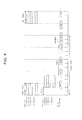
- FIG. 4 is a diagram showing the channel configuration and its timing relationship in the HSDPA. Because the W-CDMA uses a code division multiplex system, each channel is divided by code. Though not illustrated, the mobile station uses a CPICH (Common Pilot Channel) as a channel for sending a so-called pilot signal . This channel is used for channel estimation, cell search and timing reference for another down physical channel within the same cell, in the mobile station. In addition, the mobile station uses a P-CCPCH (Primary Common Control Physical Channel) as a channel for sending report information.
- CPICH Common Pilot Channel
- P-CCPCH Primary Common Control Physical Channel
- one frame (10 ms) is composed of fifteen slots.
- the frame head of the HS-DSCH delays by two slots as compared to the HS-SCCH. This delay enables the mobile station to demodulate the HS-DSCH using a demodulation procedure corresponding to a modulation procedure represented in the received information, after it receives the information through the HS-SCCH.
- Each of the HS-SCCH and HS-DSCH includes one sub-frame composed of three slots.
- the HS-DPCCH is a channel of an uplink direction.
- the first slot of the HS-DPCCH is used for sending an ACK/NACK signal representing a result of the received HS-DSCH from the mobile station to the base station approximately after 7.5 slots since the reception of the HS-DSCH.
- the second and third slots are used for sending CQI information for controlling the adaptive modulation periodically to the base station for the sake of feedback transmission.
- the CQI information to be sent is generated based on the receiver environment (e.g. a result of measured SIR) that is measured in a period that is four to one slot prior to the CQI transmission.
- the following (1) to (7) are examples of data to be sent through the HS-SCCH.
- Each of the following data is used for a receiving process for correspond ing HS-DSCH (delay of two slots).
- X ccs represents a diffusion code for sending data through the HS-DSCH (e.g. data representing a combination of a multicode number and a code offset), and is formed of seven bits.
- FIG. 5 is a diagram exemplarily showing the above data flow.
- a numeral 100 identifies a base station (BTS : Base Transceiver Station), while a numeral 200 identifies a mobile terminal (MS: Mobile station). Note that the mobile terminal 200 may be referred simply as a mobile station 200.
- the base station 100 mainly includes, for example, a CRC adding unit 101, a turbo-encoder 102, a 1st rate-matching unit 103, a virtual IR. (Virtual Incremental Redundancy) buffer 104, a 2nd rate-matching unit 105 and a physical CH (channel) mapping unit 106.
- a CRC adding unit 101 mainly includes, for example, a CRC adding unit 101, a turbo-encoder 102, a 1st rate-matching unit 103, a virtual IR. (Virtual Incremental Redundancy) buffer 104, a 2nd rate-matching unit 105 and a physical CH (channel) mapping unit 106.
- a CRC adding unit 101 mainly includes, for example, a CRC adding unit 101, a turbo-encoder 102, a 1st rate-matching unit 103, a virtual IR. (Virtual Incremental Redundancy) buffer 104, a 2nd rate-match
- transmission data addressed to the mobile station 200 is input to the CRC adding unit 101, and the unit 101 adds a CRC code for a CRC process thereto. Then, the transmission data is input to the turbo-encoder 102, and the turbo-encoder 102 performs an error correction encoding process (a turbo-encoding process in this case) therefor.
- the 1st rate-matching unit 103 performs a puncture (thinning) process for deleting a predetermined bit(s) using a predetermined algorithm or a repetition process for repeating a predetermined bit (s).
- the data will be processed to a data amount suitable for a predetermined area of the virtual IR buffer 104 in the following stage. Then, the data is temporarily held in the virtual IR buffer 104 for timing adjustment.
- the 2nd rate-matching unit 105 performs the puncture or repetition process for the transmission data sent from the virtual IR buffer 104 in such a way that the data can be contained in one sub-frame of the physical channel that is a target channel for mapping (assignment) performed by the physical CH mapping unit 106 in the following stage. As a result, the data can be input to the physical CH mapping unit 106.
- the physical CH mapping unit 106 maps the transmission data whose data amount has been adjusted by the 2nd rate-matching unit 105. Then, the transmission data is sent to the mobile station 200 through a non-illustrated transmission antenna.
- the mobile station 200 mainly includes, for example, a physical CH (channel) separating unit 107, a 2nd rate-matching unit 108, a virtual IR buffer 109, a 1st rate-dematching unit 110, a turbo-decoding unit 111 and a CRC process unit 112.
- a signal sent from the base station 100 is input to the physical CH separation unit 107 through an unshown reception antenna, and the physical CH separation unit 107 identifies and demaps the received physical channel so as to extract effective data, and the extracted data is input to the 2nd rate-dematching unit 108.
- the 2nd rate-dematching unit 108 For the received data, the 2nd rate-dematching unit 108 performs a rate dematching process (for adjusting the data amount) that is an opposite process of the rate matching process (the above puncture or repetition process for adjusting the data amount) performed by the 2nd rate-matching unit 105 on the receiver side (the base station 100).
- the received data after the rate dematching process is temporarily held in the virtual IR buffer 109 for timing adjustment, and is input to the 1st rate-dematching unit 110.
- the 1st rate-dematching unit 110 For the received data from the virtual IR buffer 109, the 1st rate-dematching unit 110 performs a rate dematching process (for adjusting the data amount) that is an opposite process of the rate matching process (the above puncture or repetition process) performed by the 2nd rate-matching unit 105 on the sender side (the base station 100).
- received data is turbo-decoded (error correction decoded) by the turbo-decoding unit 111, and is CRC processed by the CRC process unit 112.
- the CRC result is "true” (OK)
- an ACK signal is sent to the base station 100.
- the CRC result is "false” (NG)
- an NACK signal is sent thereto.
- FIG. 6 is a diagram showing timings of receiving the HS-SCCH and HS-DSCH and various processing timings. For simplicity of description, FIG. 6 shows only data of the process No. 1. However, the same applies to other data. In FIG. 6, the process numbers of 0 to 5 are repeated.
- the mobile station 200 receives the HS-SCCH sent from the base station 100, extracts Xue included in the first half of the HS-SCCH, and determines whether this HS-SCCH is addressed to its own mobile station 200 in the slot number #1 in the process No. 1. If it is determined that the HS-SCCH is addressed to its own mobile station 200, the mobile station 200 extracts HS-DSCH demodulation parameters (such as a modulation procedure parameter, a code multiplexing numberparameter, etc.) and HS-DSCH decoding parameters (such as a transport block size parameter, a rate matching parameter, etc.) from the last half of the received HS-SCCH. In the slot number #0 of the process No. 2, the mobile station 200 performs demodulation setting and decoding setting for the HS-DSCH that is received with a delay of two slots since the HS-SCCH is received.
- HS-DSCH demodulation parameters such as a modulation procedure parameter, a code multiplexing numberparameter, etc.
- the mobile station 200 performs a process for demodulating the received HS-DSCH in accordance with the HS-DSCH demodulation setting, in the slot number #0 of the new process No. 3. Then, the turbo-decoding unit 111 performs a process for decoding the received HS-DSCH, in accordance with the HS-DSCH decoding setting.
- the mobile station 200 sends an ACK signal to the base station 100.
- the mobile station 200 sends a NACK signal to the base station 100, and requests for retransmission of the HS-DSCH.
- the mobile station 200 performs a process for synthesizing retransmission data from the base station 100 with the data held in the virtual IR buffer 109 (H-ARQ synthesizing).
- FIG. 7A is a diagram for explaining an H-ARQ process when retransmission data is appropriately received.
- FIG. 7B is a diagram for explaining an H-ARQ process when retransmission data is not appropriately received. In this case also, the process numbers of 0 to 5 are repeated.
- the demodulation/decoding process and the CRC process is performed for the receive data in the mobile station 200.
- the CRC process unit 112 determines that the CRC result is "false"
- the mobile station 200 sends a NACK signal to the base station 100 through the HS-DPCCH at timing after 7.5 slots since the complete reception of the HS-DSCH (i.e. at a timing corresponding to the 1.5 slots of the process No. 3).
- the base station 100 Upon reception of the NACK signal, the base station 100 retransmits transmission data (retransmission data of the process No. 0) whose rate matching pattern has been changed through the HS-DSCH.
- the mobile station 200 synthesizes the received data held in the virtual IR buffer 109 with the retransmission data at the same timing of the process No. 0 as that of the next cycle, and performs a turbo-decoding process therefor. Note that the H-ARQ synthesizing process is performed for the data received in the process No. 1, as illustrated with the dotted lines of FIG. 7A.
- the received HS-DSCH data is synthesized with the retransmission data at a processing timing (cycle) of the same processing number.
- corresponding HS-DSCH data pieces can be synthesized without identifying which received data corresponds to the retransmission data using any special process.
- the base station 100 can send a next new packet before receiving the ACK or NACK signal from the base station 200, thus preventing a decrease in the transmission efficiency and realizing accurate synthesizing process.
- the base station 100 may not appropriately receive the NACK signal, the base station 100 may not send retransmission data (retransmission data of the process No. 0 in this case), or the mobile station 200 may not receive the retransmission data.
- the mobile station 200 does not perform the synthesizing process at a timing corresponding to the process No. 0 in which the retransmission data should originally be synthesized. Instead, the mobile station 200 performs the synthesizing process at a timing corresponding to the same process No. 0 in which the retransmission data has appropriately been received.
- the transmission data may not be subject to the synthesizing process.
- FIG. 8 shows a CQI mapping table which holds CQIs in association with transport block size parameters, code multiplexing number (1 to 5) parameters and modulation procedure (QPSK, 16-QAM) parameters.
- the base station 100 changes the format of the HS-DSCH so as to make the format correspond to a transmission parameter corresponding to the CQI value stored in the CQI mapping table, and sends the data.
- the transmission power value is always constant. However, depending on the positional relationship (distance, etc.) between the base station 100 and the mobile station 200, different apparent transmission power values are identified by a plurality of mobile stations 200.
- An SIR is generally used as an indicator indicating the transmission power from the base station 100 identified at the mobile station 200. For example, when the mobile station 200 exists near the base station 100, the SIR is high. On the contrary, when the mobile station 200 exists far from the base station 100, the SIR is low.
- the mobile station 200 sends a high CQI value to the base station 100, when a high SIR is identified. As a result, a large amount of transmission data is sent from the base station 100. On the contrary, when a low SIR is identified, the mobile station 200 sends a low CQI value to the base station 100. As a result, a small amount of transmission data is sent from the base station 100, thus surely sending/receiving the data.
- CQI values are sent to the base station 100 in the Static environment (where there is no fading).
- a CQI value corresponds to the transport block size, the code multiplexing number and the modulation procedure.
- This CQI value is so selected that the BLER of the HS-DSCH measured by the mobile station 200 is not greater than 10% (i.e. BLER ⁇ 0.1).
- the CQI value and the searched an SIR are held in association with each other in a table.
- the mobile station 20 measures each SIR, searches the mapping table for a CQI value corresponding to the measured SIR, and sends the value to the base station 100. Then, the base station 100 sends transmission data having a transport block size as large a size as possible (equal to or smaller than any of the transport block sizes acquired from the CQI mapping table), to the mobile station 200 through the HS-D,SCH.
- the HS-SCCH is decoded so as to extract various parameters. Then, the HS-DSCH is demodulated and decoded using the extracted parameters. At this time, the HS-SCCH is convolution codes so as to be decoded. On the other hand, the HS-DSCH is turbo-encoded so as to be demodulated and decoded. This is because the data to be transmitted through the HS-SCCH has a relatively short bit length, and the data to be transmitted through the HS-DSCH has various bit lengths.
- the "ratio before and after the rate matching" changes. Therefore, either good or bad transmission (reception) characteristics may be realized (as described above, the lower the “ratio before and after the rate matching" is, the favorable reception characteristics may possibly be realized).
- the HS-DSCH can appropriately be received (i.e. the CRC result is "true” when the data is received and decoded).
- the HS-SCCH may not appropriately be received (i.e. the CRC result is "false” when the data is received and decoded). That is, generally, channels are so assigned that reception characteristics are better in the HS-SCCH than the case of the HS-DSCH.
- the good/bad reception characteristics of both of the HS-SCCH and HS-DSCH may become the other way around.
- the present invention has been made in consideration of the above problem. It is accordingly an object of this invention to prevent deterioration of transmission efficiency by enabling the reception of one channel (second channel), even if the other channel (first channel) can not appropriately be received, in an HSDPA transmission system where information regarding a receiving process for the second channel is transmitted through the first channel.
- the present invention adopts a mobile terminal and a method of controlling reception of the terminal as follows.
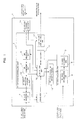
- FIG. 1 is a block diagram showing the configuration of the main part of a mobile terminal (hereinafter referred to as a mobile station) according to one embodiment of the present invention.
- the mobile station 1 communicates with a base station (BTS, not shown) by wireless (through a downlink in the HSDPA system).
- the mobile station 1 comprises, for example, an HS-SCCH receiving unit 2, an HS-DSCH receiving unit 3, a CQI memory 6, a reception-controlling unit 7, an HS-DPCCH transmission unit 14 and an HS-SCCH parameter delivery switch 15.
- the HS-SCCH receiving unit (first channel receiving processing means) 2 is to perform a receiving process (demodulating, decoding, etc.) for an HS-SCCH (first channel) serving as a control channel) that is sent from the base station (hereinafter referred to as a base station). Specifically, the HS-SCCH receiving unit 2 demodulates and decodes a received signal of the HS-SCCH, and obtains its decoded result.
- the unit 2 can extract (acquire) information (a process number parameter, a retransmission/new indicator parameter, a transport block size parameter, a code multiplexing number parameter, a modulation procedure parameter and a rate matching parameter) necessary for receiving process (demodulating, decoding, etc.) for an HS-DSCH (a second channel) serving as a data channel.
- acquire information a process number parameter, a retransmission/new indicator parameter, a transport block size parameter, a code multiplexing number parameter, a modulation procedure parameter and a rate matching parameter
- the HS-DSCH receiving unit 3 is to perform a receiving process for a received, signal of the HS-DSCH from the base station, using the parameters extracted by the HS-SCCH receiving unit 2. To satisfactorily perform this receiving process, the unit 3 includes an HS-DSCH demodulating unit 4 and an HS-DSCH decoding unit 5.
- the HS-DSCH demodulating unit 4 is to perform a demodulating process for a received signal of the HS-DSCH, using, for example, these parameters regarding the modulation procedure and code multiplexing number.
- the HS-DSCH decoding unit 5 is to perform a decoding process for a received signal of the HS-DSCH, using, for example, these parameters regarding the process number, retransmission/new indicator, transport block size and rate matching receiving process.
- the HS-DPCCH transmission unit 14 sends an ACK signal to the base station through the HS-DPCCH, if the HS-DSCH signal is appropriately received (e.g. a CRC result) by the HS-DSCH receiving unit 3 (OK) . On the contrary, the unit 14 sends a NACK signal to the base station, if the signal is not appropriately received (NG). Further, the unit 14 sends a CQI corresponding to a received result of an HS-SCCH SIR that is measured by an SIR measuring unit 8 (as will be described later) to the base station through the HS-DPCCH.
- the CQI memory (holding means ; reception quality information holding unit) 6 is to hold a CQI value (CQI report value) sent (feed back) to the base station by the HS-DPCCH transmission unit 14, as reception quality information.
- a CQI table 11 is a component part of the reception-controlling unit 7. As shown in FIG. 8, the table 11 is to hold data including a predetermined range of CQI values and various parameters (e.g. a transport block size parameter, a code multiplexing number parameter, a modulation procedure parameter) in association with each other in the form of a mapping table.
- the data can be kept in a predetermined storage device (may be provided exclusively for the CQI memory 6, CQI table 11, etc. , or may be shared within the mobile station 1).
- the CQI table 11 is so prepared that it simply holds information (the CQI report value) held in association with various parameters in advance, without keeping these parameters per se in the CQI memory 6.
- the CQI memory 6 has such a configuration as if it holds the above-described parameters, though the memory 6 has only a minimum capacity.
- the CQI memory 6 may hold those parameters per se instead of the CQI values (i.e. the CQI table 11 is not necessary in this case).
- the HS-SCCH parameter delivery switch 15 selectively delivers, to the HS-DSCH receiving unit 3, parameters as information necessary for the receiving process for data of the HS-DSCH (the demodulating and decoding process).
- parameters include parameters obtained as a result of the receiving process (the demodulating and decoding process) for the signal of the HS-SCCH received by the HS-SCCH receiving unit 2 and also parameters held in the CQI table 11 based on the CQI report values.
- the selective delivery of the parameters is performed based on a result of a process for comparing (and determining) a predetermined threshold value with the reception quality (SIR value) in the signal transmitted between the mobile station 1 and the base station, under the control of the SIR measuring unit 8, an SIR comparing unit 9 and a controlling unit 12.
- the parameters obtained from the HS-SCCH receiving unit 2 are delivered to the HS-DSCH receiving unit 3.
- the SIR value therebetween is not greater than the predetermined threshold value, past HS-SCCH decoding results (parameters) corresponding to the CQI values held in the CQI memory 6 are delivered to the HS-DSCH receiving unit 3.
- the reception-controlling unit 7 is to control the receiving process for at least the HS-SCCH and HS-DSCH.
- the unit 7 includes not only the CQI table 11, but also the SIR measuring unit 8, the SIR comparing unit 9, an HS-SCCH reception stopping unit 10, the controlling unit 12 and a negotiation controlling unit 13 as shown in FIG. 1.
- the SIR measuring unit (reception quality measuring unit) 8 is to measure the reception quality of a transmission signal between the mobile station 1 and the base station. For example, the unit 8 measures the SIR of the HS-SCCH signal received by the HS-SCCH receiving unit 2, as the reception quality information. Note that the SIR measuring unit 8 can also measure the SIR of the received HS-DSCH signal as the reception quality information.
- the SIR comparing unit 9 is to compare and determine whether an SIR measured by the SIR measuring unit 8 is equal to or lower than a predetermined threshold value. In this example, if the SIR is equal to or lower than the threshold value, the HS-SCCH reception stopping unit 10 stops the HS-SCCH receiving process which is performed by the HS-SCCH receiving unit 2.
- the HS-SCCH reception stopping unit 10 stops the receiving process for the HS-SCCH receiving unit 2. This is because the HS-DSCH receiving unit 3 executes the receiving process based on the past HS-SCCH decoding results (parameters) corresponding to the CQI values held in the CQI memory 6. (That is, the results of the received and decoded HS-SCCH to be newly received (this time) are not necessary.) On the contrary, if the measured SIR is not equal to or lower than threshold value, the HS-SCCH reception stopping unit 10 controls a receiving process to be usually executed by the HS-SCCH receiving unit 2 (i.e.
- the controlling unit 12 includes the standard functions of the HSDPA system for providing the HS-DPCCH transmission unit 14 with a result of the received process (CRC result: OK/NG) performed by the HS-DSCH receiving unit 3 so as to generate and send an ACK/NACK signal.
- the controlling unit 12 controls at least the HS-SCCH receiving unit 2, the HS-DSCH receiving unit 3, the CQI memory 6 and the HS-DPCCH transmission unit 14, thereby controlling the receiving process (operational mode) for the HS-SCCH and HS-DSCH.
- the controlling unit 12 selectively controls a normal HS-DSCH receiving process (referred to as a "normal mode") using the parameters obtained from the newly-received HS-SCCH (this time) and the HS-DSCH receiving process (referred to as a "past parameter operational mode") using the past parameters corresponding to the CQI values held in the CQI memory 6.
- a normal mode a normal HS-DSCH receiving process
- a past parameter operational mode referred to as a "past parameter operational mode”
- the above (4) HS-SCCH reception stopping control function is provided for the purpose of stopping the supply of power to the HS-SCCH receiving unit 2 in the past parameter operational mode so as to reduce power consumption.
- the function of (4) is not a requisite (i.e. an optional matter).
- the negotiation controlling unit 13 sends a CQI report value to the base station.
- the unit 13 and the base station makes an arrangement (negotiation) for the receiving process.
- the base station informs the mobile station 1 about the arrangement through the HS-SCCH.
- the base station may send the HS-SCCH using at least one parameter corresponding to any CQI value equal to or lower than the CQI report value. That is, the CQI report value may not correspond to the parameter held in the CQI table 11.
- the negotiation controlling unit 13 is provided so as to prevent a failure in receiving the HS-DSCH, and thus is not a requisite (i.e. an optional matter) .
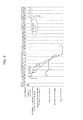
- FIG. 2 is a timing chart showing receiving process timings for the HS-SCCH and HS-DSCH.
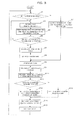
- FIG. 3 is a flowchart showing the processing flow of the reception control method. For simplicity of description, only the received data of process No. 1 will hereinafter be described. However, the same reception controlling can be performed for the received data of any other process number.
- the reception-controlling unit 7 determines whether the HS-SCCH receiving unit 2 is set to perform the receiving process for the HS-SCCH, before starting the receiving process for the receive data of the process No. 1 (i.e. determines whether the operational mode is the normal mode or past parameter operational mode (Step S1 of FIG. 3).
- the HS-SCCH receiving unit 2 If it is determined the HS-SCCH receiving unit 2 is set to perform the receiving process for the HS-SCCH (i.e. normal mode) (Yes in Step S1 of FIG. 3), the HS-SCCH receiving unit 2 receives HS-SCCH that is sent from the base station in slot numbers #0 to #2 of the process No. 1 in FIG. 2 (Step S2 of FIG. 3). Further, the unit 2 extracts Xue included in the first half of the HS-SCCH, and determines whether this HS-SCCH is addressed to its own mobile station 1 in the slot number "1" of the process No. 1 (Steps S3 and S4 of FIG. 3).
- the HS-SCCH receiving unit 2 extracts HS-DSCH demodulation parameters (including a modulation procedure parameter, a code multiplexing number parameter, etc.) and HS-DSCH decoding parameters (including a transport block size parameter, a rate matching parameter, etc.) (Steps S5 and S6 of FIG. 3), from the last half part of the received HS-SCCH. Then, the HS-SCCH receiving unit 2 performs demodulation and decoding settings for the HS-DSCH received with a delay of two slots since the HS-SCCH data is received, in the slot number #0 of the process No. 2.
- HS-DSCH demodulation parameters including a modulation procedure parameter, a code multiplexing number parameter, etc.
- HS-DSCH decoding parameters including a transport block size parameter, a rate matching parameter, etc.
- the HS-SCCH receiving unit 2 does not perform the receiving process for the last half of the HS-SCCH and corresponding HS-DSCH steps S2 to S4 of FIG. 3).
- the reception-controlling unit 7 controls the HS-SCCH parameter delivery swi tch 15 to deliver parameters extracted from the HS-SCCH newly received by the HS-SCCH receiving unit 2 to the HS-DSCH receiving unit 3 in the normal mode.
- the HS-DSCH receiving 3 performs a demodulation process for the received HS-DSCH in the slot number #0 of the next process No. 3, and performs a decoding process for the received HS-DSCH in the slot number #0 of the process No. 3 to the slot number #0 of the process No. 4, in accordance with the parameters (Step S9 of FIG. 3).
- the HS-DSCH receiving unit 3 receives the parameters extracted from the HS-SCCH newly received by the HS-SCCH receiving unit 2, using the parameter transfer function of the HS-SCCH parameter delivery switch 15 so as to perform a receiving process for corresponding HS-DSCH, in the normal mode of this example.
- the SIR measuring unit 8 measures an SIR of the HS-SCCH signal received by the HS-SCCH receiving unit 2 as reception quality between the mobile station 1 and the base station (Step S10 of FIG. 3). Further, the SIR comparing unit 9 compares and determines whether the SIR measured by the SIR measuring unit 8 is equal to or lower than a predetermined threshold value (Step S11 of FIG. 3).
- the reception-controlling unit 7 sets the operational mode of the HS-SCCH reception stopping unit 10 into a normal mode so as to perform the HS-SCCH and HS-DSCH receiving processes in the same way as before (Step S13 of FIG. 3). That is, the controlling unit 7 controls the HS-SCCH receiving unit 2 to perform the primary receiving process (i.e. a process for newly receiving HS-SCCH using decoded results (parameters)).
- the reception-controlling unit 7 sets the operational mode to the past parameter operational mode, and stops the HS-SCCH receiving process for the HS-SCCH receiving unit 2 using the HS-SCCH reception stopping control function (Step S12 of FIG. 3).
- the reception-controlling unit 7 controls the HS-SCCH parameter delivery switch 15 to deliver the past decoded HS-SCCH results (parameters) corresponding to the CQI values held in the CQI memory 6 to the HS-DSCH receiving unit 3. Then, the HS-DSCH receiving unit 3 performs the receiving process for the HS-DSCH data based on the past decoded HS-SCCH results (parameters).
- the measured SIR is equal to or lower than the predetermined threshold value, and the HS-SCCH reception stopping unit 10 stops the HS-SCCH receiving process of the HS-SCCH receiving unit 2.
- a CRC process unit (not illustrated) performs a CRC process for the HS-DSCH data decoded by the HS-DSCH receiving unit 3. If the check result is "true”, the HS-DPCCH transmission unit 14 sends an ACK signal to the base station. On the contrary, if the check result is "false", the unit 14 sends a NACK signal to the base station, and sends a request for retransmitting the HS-DSCH (Step S14 of FIG. 3). The HS-DPCCH transmission unit 14 controls the CQI memory 6 to hold the CQI values, based on the process for newly receiving (this time) the HS-DSCH data (Step S15 of FIG. 3).
- the reception-controlling unit 7 determines again whether the HS-SCCH receiving unit 2 is set to perform the receiving process for the HS-SCCH data (whether the unit is in a normal mode) (Step S1 of FIG. 3), before beginning to perform the receiving process for the next data to be received.
- the measured SIR between its own mobile station 1 and the base station is equal to or lower than the predetermined threshold value in the previous receiving process for the HS-SCCH (see slot numbers #0 to #2 of the process No.1 in FIG. 2).
- the operational mode has already been set to the past parameter operational mode (No in Step S1 of FIG. 3).
- HS-SCCH is sent from the base station, but the HS-SCCH receiving unit 2 does not perform the receiving process for the HS-SCCH (dotted lines in the slot numbers # 0' to #2' of the process No. 1 in FIG. 2).
- the controlling unit 12 looks up and acquires parameters (necessary for demodulating and decoding the HS-DSCH) corresponding to the previous CQI values held in the CQI memory 6 from the CQI table 11 (parameter look up function).
- the parameters acquired from the CQI table 11 are provided to the HS-DSCH receiving unit 3 in the past parameter operational mode of this example. Then, the unit 3 performs the receiving process for the HS-DSCH.
- the controlling unit 12 detects a receiving process timing for the HS-DSCH data based on the received process result (process number) of the past successful reception (demodulating and decoding) performed by the HS-SCCH receiving unit 2, and informs the HS-DSCH receiving unit 3 of the detected timing (process number informing function).
- the HS-DSCH receiving unit 3 can be aware of the exact reception timing of the HS-DSCH data so as to accurately perform the receiving process for the HS-DSCH, even when the receiving process for the HS-SCCH is not appropriately performed by the HS-SCCH receiving unit 2 (i.e. the operational mode is the past parameter operational mode).
- the unit 12 detects a time period in which the HS-DSCH signal is received, the HS-DPCCH data is transmitted, and then the HS-DSCH signal is received again (e.g. the cycle of six processes "0" to "5"), when the timing of receiving the HS-DSCH cannot be acquired from the result of the HS-SCCH receiving process. As a result, the timing of each process can easily be estimated.
- the retransmission/new indicator parameter can easily be distinguished in accordance with whether the mobile station 1 has sent an ACK or NACK signal every six processes. That is, an HS-DSCH signal to be newly received (this time) can be considered as a new signal, when the ACK signal has been sent because the CRC result of the previous (six processes before) HS-DSCH receiving process was "true”. On the contrary, an HS-DSCH signal to be newly received (this time) can be retransmission data, when a NACK signal has been sent because the CRC result of the previous (six processes before) HS-DSCH receiving process was "false".
- the rate matching parameter can easily be distinguished, in accordance with whether the retransmission/new indicator parameter represents the reception of the new data or retransmission data. That is, it can be understood that a system bit generally has priority over the other, when the new data will be transmitted. On the contrary, it can be understood that a system bit does not generally have priority over the other, when the retransmission data will be transmitted.
- the operational mode shifts to the normal mode by the mode setting function, and the HS-SCCH receiving unit 2 restarts the HS-SCCH receiving process.
- the negotiation controlling unit 13 can negotiate with a base station in advance for the parameters (including the transport block size parameter, the demodulation procedure parameter, the code multiplexing number parameter, etc.).
- the parameters are to be sent to the mobile station 1 through the HS-SCCH, in response to the CQI report value sent to the base station.
- the negotiation controlling unit 13 controls the base station to uniquely determine a parameter corresponding to a CQI sent from the mobile station 1 so as to send HS-DSCH data using a DCC (Dedicated Control Channel) (i.e. to perform a CQI table fixation negotiation), before communication begins between the mobile station 1 and the base station in the HSDPA.
- DCC Dedicated Control Channel
- the base station can be prevented from sending the HS-SCCH using a parameter corresponding to any CQI value lower than the CQI report value. That is, data can be matched with the CQI table 11. Thus, it can surely be prevented that the HS-DSCH fails to be transmitted.
- the parameters are looked up using the CQI values held in the CQI memory 6 and the CQI table 11, and the looked parameters are provided to the HS-DSCH receiving unit 3.
- the parameters which are extracted from the previously-received HS-SCCH signal may be held in the CQI memory 6, and the HS-DSCH data may be received using the parameters.
- any of the transport block size parameter, modulation procedure parameter and code multiplexing number parameter may not correspond to the CQI table 11, due to a change in a communication environment (i.e. a change in the number of users in the same cell). Even in this case, there is a high probability that its format combination of the transport block size, the modulation procedure and the code multiplexing number corresponds to any of the combinations held in the CQI table 11, thus not resulting in a serious problem.
- the operational mode when it is determined that the measured SIR is greater than the predetermined threshold value, the operational mode is switched to the normal mode by the mode setting function, thereby enabling controlling the HS-SCCH receiving unit 2 to perform the HS-SCCH receiving process.
- the operational mode can be switched to the normal mode.
- the operational mode can periodically be switched to the normal mode (i.e. the HS-SCCH receiving unit 2 periodically performs the HS-SCCH receiving process) so as to periodically update the data contents of the CQI memory 6 or CQI table 11.
- the data contents of the CQI memory 6 or CQI table 11 can be highly reliable in accordance with the change in the communication condition.
- the operational mode may be switched based on the measured SIR.
- the operational mode can be switched based on the ratio of the HS-DSCH data before and after the rate matching.
- the operational mode is switched to the past parameter operational mode, only when there is a low ratio of the HS-DSCH before and after the rate matching and when the HS-DSCH data has a higher possibility of successful transmission than that of the HS-SCCH.
- the operational mode may be switched to any mode, when there is a high ratio of the HS-DSCH before and after the rate matching and when the HS-SCCH data has the same possibility of transmission failure as that of the HS-DSCH data. If the operational mode is set to the normal mode, the data contents of the CQI memory 6 or CQI table 11 can periodically be updated. If the operational mode is set to the past parameter operational mode, the HS-SCCH receiving process for the HS-SCCH receiving unit 2 stops, thus reducing the consumption power as a whole.
- a ratio of the HS-SCCH is substantially constant before and after the rate matching. If there is simply a low SIR between the base station and the mobile station 1, there is a high possibility of failure of transmitting HS-SCCH data. If not, there is a high possibility of successful transmission of the HS-SCCH. However, a ratio of the HS-DSCH decreases before and after the rate matching, when there is a low SIR between the base station and the mobile station 1 and there is a low CQI value. Thus, there is a high possibility for successful reception of the HS-DSCH. On the contrary, a ratio of the HS-DSCH increases before and after the rate matching, when there is a high SIR. between the base station and the mobile station 1 and there is a high CQI value. Thus, there is a high possibility for failure in receiving the HS-DSCH.
- the receiving process for the HS-SCCH data is actively stopped (i.e. the operational mode is switched to the past parameter operational mode), thereby improving the transmission efficiency of the communication system.
Landscapes
- Engineering & Computer Science (AREA)
- Quality & Reliability (AREA)
- Computer Networks & Wireless Communication (AREA)
- Signal Processing (AREA)
- Mobile Radio Communication Systems (AREA)
- Detection And Prevention Of Errors In Transmission (AREA)
Applications Claiming Priority (1)
| Application Number | Priority Date | Filing Date | Title |
|---|---|---|---|
| JP2006182416A JP4734186B2 (ja) | 2006-06-30 | 2006-06-30 | 移動端末装置及び同装置における受信制御方法並びに無線伝送システム |
Publications (3)
| Publication Number | Publication Date |
|---|---|
| EP1873956A2 true EP1873956A2 (fr) | 2008-01-02 |
| EP1873956A3 EP1873956A3 (fr) | 2012-07-25 |
| EP1873956B1 EP1873956B1 (fr) | 2014-01-01 |
Family
ID=38544033
Family Applications (1)
| Application Number | Title | Priority Date | Filing Date |
|---|---|---|---|
| EP20070106866 Ceased EP1873956B1 (fr) | 2006-06-30 | 2007-04-24 | Terminal mobile et procédé pour contrôler sa réception |
Country Status (3)
| Country | Link |
|---|---|
| US (1) | US8165071B2 (fr) |
| EP (1) | EP1873956B1 (fr) |
| JP (1) | JP4734186B2 (fr) |
Cited By (2)
| Publication number | Priority date | Publication date | Assignee | Title |
|---|---|---|---|---|
| EP3029868A4 (fr) * | 2013-09-04 | 2016-08-10 | Huawei Tech Co Ltd | Procédé de mesure de canal, dispositif terminal et station de base |
| GB2593745A (en) * | 2020-03-31 | 2021-10-06 | Samsung Electronics Co Ltd | Improvements in and relating to HARQ in a non-terrestrial network |
Families Citing this family (10)
| Publication number | Priority date | Publication date | Assignee | Title |
|---|---|---|---|---|
| EP1825629B1 (fr) * | 2004-12-17 | 2013-03-06 | Telefonaktiebolaget L M Ericsson (Publ) | Commande de niveau de puissance pour acces par paquets de canal partage en liaison descendante haut debit |
| CN101272536B (zh) * | 2007-03-08 | 2012-06-20 | 创新音速有限公司 | 无线通讯系统提高资源使用效率的方法及其相关装置 |
| US8559457B2 (en) * | 2007-06-18 | 2013-10-15 | Nokia Siemens Networks Oy | Method for dynamic interpretation of transport block size |
| KR101392446B1 (ko) * | 2007-08-23 | 2014-05-07 | 삼성전자주식회사 | 통신 시스템에서 데이터 전송율 역정합 방법 및 장치 |
| US20100039968A1 (en) * | 2008-08-13 | 2010-02-18 | Cambridge Silicon Radio Limited | Receiver |
| US8743799B2 (en) | 2010-06-24 | 2014-06-03 | Nokia Siemens Networks Oy | Change of rate matching modes in presence of channel state information reference signal transmission |
| JP2013021544A (ja) * | 2011-07-12 | 2013-01-31 | Fujitsu Ltd | 無線通信システム、無線通信装置及び無線通信方法 |
| WO2014104958A1 (fr) * | 2012-12-24 | 2014-07-03 | Telefonaktiebolaget L M Ericsson (Publ) | Informer un réseau quand l'ue dans un état cell_fach détecte que la resélection de cellule doit être effectuée |
| US9130689B1 (en) * | 2013-05-23 | 2015-09-08 | L-3 Communications Corp. | Applying code division multiplexing to a beacon channel containing data for decoding a corresponding traffic channel |
| US11218249B2 (en) * | 2019-09-18 | 2022-01-04 | Intel Corporation | Apparatus, system and method of processing a wireless communication packet based on a cyclic redundancy check (CRC) result |
Family Cites Families (13)
| Publication number | Priority date | Publication date | Assignee | Title |
|---|---|---|---|---|
| CA2380039C (fr) | 2001-04-03 | 2008-12-23 | Samsung Electronics Co., Ltd. | Methode de transmission de donnees de commande dans un systeme de communication mobile amrc |
| JP4694034B2 (ja) * | 2001-05-11 | 2011-06-01 | 京セラ株式会社 | 携帯通信端末 |
| JP3746055B2 (ja) * | 2001-10-19 | 2006-02-15 | 株式会社エヌ・ティ・ティ・ドコモ | 無線制御装置、基地局、無線制御方法、移動パケット通信システム、移動局、無線制御プログラム及びコンピュータ読み取り可能な記録媒体 |
| JP2004080306A (ja) * | 2002-08-15 | 2004-03-11 | Toshiba Corp | 無線データ通信システムの伝送レート決定方法、移動局装置及び基地局装置 |
| KR100988536B1 (ko) | 2002-11-01 | 2010-10-20 | 인터디지탈 테크날러지 코포레이션 | 무선 통신 시스템용 채널 품질 예측 방법 |
| US7688798B2 (en) * | 2003-02-14 | 2010-03-30 | Nokia Siemens Networks Gmbh & Co. Kg | Data transmission method |
| JP4288093B2 (ja) | 2003-04-09 | 2009-07-01 | 株式会社エヌ・ティ・ティ・ドコモ | 無線通信制御システム及び無線通信制御方法 |
| US7054288B2 (en) * | 2004-02-13 | 2006-05-30 | Interdigital Technology Corporation | Method and apparatus for providing fast detection of a high speed shared control channel |
| JP4421935B2 (ja) | 2004-04-30 | 2010-02-24 | 株式会社エヌ・ティ・ティ・ドコモ | 無線基地局装置及び無線通信制御方法 |
| JP2005328317A (ja) | 2004-05-14 | 2005-11-24 | Fujitsu Ltd | 通信装置、再送制御方法 |
| JP4432645B2 (ja) | 2004-07-02 | 2010-03-17 | 富士通株式会社 | 通信装置、無線通信システム |
| US7590389B2 (en) * | 2005-02-14 | 2009-09-15 | Ipwireless, Inc. | Radio link quality determination in a wireless network |
| DK1878177T3 (en) * | 2005-04-26 | 2017-10-02 | Corversant Wireless Licensing S À R L | Fixed HS-DSCH or E-DCH allocation for VOIP (or HS-DSCH without HS-SCCH / E-DCH without E-DPCCH) |
-
2006
- 2006-06-30 JP JP2006182416A patent/JP4734186B2/ja not_active Expired - Fee Related
-
2007
- 2007-04-24 EP EP20070106866 patent/EP1873956B1/fr not_active Ceased
- 2007-04-26 US US11/790,578 patent/US8165071B2/en not_active Expired - Fee Related
Non-Patent Citations (3)
| Title |
|---|
| Antonio Forenza: "Antenna and algorithm design in MIMO communication systems: exploiting the spatial selectivity of wireless channels", , 1 May 2006 (2006-05-01), pages 155-155, XP002677449, Retrieved from the Internet: URL:http://repositories.lib.utexas.edu/handle/2152/2457 [retrieved on 2012-06-11] * |
| Guo Y., Jay: "Advances in mobile radio access networks", 1 January 2004 (2004-01-01), Artech House, USA, XP002677447, pages 69-73, * page 71 * * |
| Zahid Ghadialy: "High Speed Downlink Packet Access (HSDPA): A Tutorial", , 12 June 2004 (2004-06-12), pages 1-5, XP002677448, Retrieved from the Internet: URL:http://web.archive.org/web/20040612164829/http://3g4g.co.uk/Tutorial/ZG/zg_hsdpa.html [retrieved on 2012-06-11] * |
Cited By (4)
| Publication number | Priority date | Publication date | Assignee | Title |
|---|---|---|---|---|
| EP3029868A4 (fr) * | 2013-09-04 | 2016-08-10 | Huawei Tech Co Ltd | Procédé de mesure de canal, dispositif terminal et station de base |
| US10390246B2 (en) | 2013-09-04 | 2019-08-20 | Huawei Technologies Co., Ltd. | Channel measurement method, terminal device, and base station |
| GB2593745A (en) * | 2020-03-31 | 2021-10-06 | Samsung Electronics Co Ltd | Improvements in and relating to HARQ in a non-terrestrial network |
| GB2593745B (en) * | 2020-03-31 | 2022-10-12 | Samsung Electronics Co Ltd | Improvements in and relating to HARQ in a non-terrestrial network |
Also Published As
| Publication number | Publication date |
|---|---|
| US8165071B2 (en) | 2012-04-24 |
| EP1873956B1 (fr) | 2014-01-01 |
| US20080002618A1 (en) | 2008-01-03 |
| EP1873956A3 (fr) | 2012-07-25 |
| JP4734186B2 (ja) | 2011-07-27 |
| JP2008011444A (ja) | 2008-01-17 |
Similar Documents
| Publication | Publication Date | Title |
|---|---|---|
| EP1873956B1 (fr) | Terminal mobile et procédé pour contrôler sa réception | |
| KR100606008B1 (ko) | 부호 분할 다중 접속 통신 시스템에서 역방향 데이터재전송 요청 송수신 장치 및 방법 | |
| EP1286491B1 (fr) | Procédé et dispositif en utilisant des techniques multicanaux de demande de répétition automatique ARQ | |
| US7907906B2 (en) | Mobile station | |
| US8204023B2 (en) | CQI reporting method and apparatus for mobile telecommunication system | |
| EP1540864B1 (fr) | Procédé et appareil signalant des informations d'activité hsdpa | |
| US7720504B2 (en) | Radio communication apparatus or mobile station | |
| EP1566913A1 (fr) | Appareil et procédure pour la transmission d'informations de commande pour la transmission de paquets de données à haut débit dans un système de communication mobile | |
| US7948932B2 (en) | Radio communication apparatus, and mobile station | |
| EP1278327B1 (fr) | Systeme et procede de transmission par paquets | |
| EP1796303A2 (fr) | Appareil et procédé de transmission/réception d'un canal de contrôle à grande vitesse dans un système de communication sans fil à large bande | |
| KR20060100286A (ko) | 이동국, 이동 통신 시스템 및 이동 통신 방법 | |
| KR100678156B1 (ko) | 무선 패킷 데이터 송신기 및 수신기와 송신 및 수신방법 | |
| US7549102B2 (en) | Transmitting apparatus, receiving apparatus, and re-transmission control method | |
| KR20070083775A (ko) | 데이터 통신 장치, 데이터 수신 장치, 데이터 송신 장치 및재송 제어 방법 | |
| EP1617584A2 (fr) | Dispositif de communication utilisant une procédure ARQ hybride | |
| JP2005328317A (ja) | 通信装置、再送制御方法 | |
| US7783327B2 (en) | Mobile station | |
| JP4576868B2 (ja) | 無線装置、受信方法、移動局 | |
| EP2060072B1 (fr) | Schéma de transmission par paquet de données haute vitesse | |
| JP5152141B2 (ja) | 無線装置、受信方法、移動局 | |
| KR20100049147A (ko) | 무선 통신 시스템에서 복합 자동재전송 요청 프로세스 수행방법 및 이를 위한 시스템 | |
| JP2010050990A (ja) | 無線装置、受信方法、移動局 | |
| KR20110094590A (ko) | 고속 무선통신 시스템에서 하향링크 제어채널을 이용한 단말기의 수신패턴 설정 방법 및 시스템 |
Legal Events
| Date | Code | Title | Description |
|---|---|---|---|
| PUAI | Public reference made under article 153(3) epc to a published international application that has entered the european phase |
Free format text: ORIGINAL CODE: 0009012 |
|
| AK | Designated contracting states |
Kind code of ref document: A2 Designated state(s): AT BE BG CH CY CZ DE DK EE ES FI FR GB GR HU IE IS IT LI LT LU LV MC MT NL PL PT RO SE SI SK TR |
|
| AX | Request for extension of the european patent |
Extension state: AL BA HR MK YU |
|
| PUAL | Search report despatched |
Free format text: ORIGINAL CODE: 0009013 |
|
| RIC1 | Information provided on ipc code assigned before grant |
Ipc: H04L 1/00 20060101ALI20120614BHEP Ipc: H04L 1/18 20060101AFI20120614BHEP |
|
| AK | Designated contracting states |
Kind code of ref document: A3 Designated state(s): AT BE BG CH CY CZ DE DK EE ES FI FR GB GR HU IE IS IT LI LT LU LV MC MT NL PL PT RO SE SI SK TR |
|
| AX | Request for extension of the european patent |
Extension state: AL BA HR MK RS |
|
| 17P | Request for examination filed |
Effective date: 20130121 |
|
| AKX | Designation fees paid |
Designated state(s): DE FR GB IT |
|
| GRAP | Despatch of communication of intention to grant a patent |
Free format text: ORIGINAL CODE: EPIDOSNIGR1 |
|
| INTG | Intention to grant announced |
Effective date: 20130429 |
|
| GRAS | Grant fee paid |
Free format text: ORIGINAL CODE: EPIDOSNIGR3 |
|
| GRAP | Despatch of communication of intention to grant a patent |
Free format text: ORIGINAL CODE: EPIDOSNIGR1 |
|
| INTG | Intention to grant announced |
Effective date: 20130913 |
|
| GRAA | (expected) grant |
Free format text: ORIGINAL CODE: 0009210 |
|
| AK | Designated contracting states |
Kind code of ref document: B1 Designated state(s): DE FR GB IT |
|
| REG | Reference to a national code |
Ref country code: GB Ref legal event code: FG4D |
|
| REG | Reference to a national code |
Ref country code: DE Ref legal event code: R096 Ref document number: 602007034530 Country of ref document: DE Effective date: 20140213 |
|
| REG | Reference to a national code |
Ref country code: DE Ref legal event code: R097 Ref document number: 602007034530 Country of ref document: DE |
|
| PLBE | No opposition filed within time limit |
Free format text: ORIGINAL CODE: 0009261 |
|
| STAA | Information on the status of an ep patent application or granted ep patent |
Free format text: STATUS: NO OPPOSITION FILED WITHIN TIME LIMIT |
|
| 26N | No opposition filed |
Effective date: 20141002 |
|
| REG | Reference to a national code |
Ref country code: DE Ref legal event code: R097 Ref document number: 602007034530 Country of ref document: DE Effective date: 20141002 |
|
| REG | Reference to a national code |
Ref country code: FR Ref legal event code: PLFP Year of fee payment: 10 |
|
| PG25 | Lapsed in a contracting state [announced via postgrant information from national office to epo] |
Ref country code: IT Free format text: LAPSE BECAUSE OF FAILURE TO SUBMIT A TRANSLATION OF THE DESCRIPTION OR TO PAY THE FEE WITHIN THE PRESCRIBED TIME-LIMIT Effective date: 20140101 |
|
| REG | Reference to a national code |
Ref country code: FR Ref legal event code: PLFP Year of fee payment: 11 |
|
| REG | Reference to a national code |
Ref country code: FR Ref legal event code: PLFP Year of fee payment: 12 |
|
| PGFP | Annual fee paid to national office [announced via postgrant information from national office to epo] |
Ref country code: GB Payment date: 20180329 Year of fee payment: 12 |
|
| PGFP | Annual fee paid to national office [announced via postgrant information from national office to epo] |
Ref country code: FR Payment date: 20180315 Year of fee payment: 12 |
|
| PGFP | Annual fee paid to national office [announced via postgrant information from national office to epo] |
Ref country code: DE Payment date: 20180410 Year of fee payment: 12 |
|
| REG | Reference to a national code |
Ref country code: DE Ref legal event code: R119 Ref document number: 602007034530 Country of ref document: DE |
|
| GBPC | Gb: european patent ceased through non-payment of renewal fee |
Effective date: 20190424 |
|
| PG25 | Lapsed in a contracting state [announced via postgrant information from national office to epo] |
Ref country code: DE Free format text: LAPSE BECAUSE OF NON-PAYMENT OF DUE FEES Effective date: 20191101 Ref country code: GB Free format text: LAPSE BECAUSE OF NON-PAYMENT OF DUE FEES Effective date: 20190424 |
|
| PG25 | Lapsed in a contracting state [announced via postgrant information from national office to epo] |
Ref country code: FR Free format text: LAPSE BECAUSE OF NON-PAYMENT OF DUE FEES Effective date: 20190430 |