EP1874019A2 - Verfahren und Systeme zur Leitweglenkung und zur Codec-Aushandlung in hybriden Sprach-/Daten-/Internet-/drahtlosen Systemen - Google Patents
Verfahren und Systeme zur Leitweglenkung und zur Codec-Aushandlung in hybriden Sprach-/Daten-/Internet-/drahtlosen Systemen Download PDFInfo
- Publication number
- EP1874019A2 EP1874019A2 EP07015004A EP07015004A EP1874019A2 EP 1874019 A2 EP1874019 A2 EP 1874019A2 EP 07015004 A EP07015004 A EP 07015004A EP 07015004 A EP07015004 A EP 07015004A EP 1874019 A2 EP1874019 A2 EP 1874019A2
- Authority
- EP
- European Patent Office
- Prior art keywords
- call
- station
- routing
- packet switched
- terminating
- Prior art date
- Legal status (The legal status is an assumption and is not a legal conclusion. Google has not performed a legal analysis and makes no representation as to the accuracy of the status listed.)
- Withdrawn
Links
- 238000000034 method Methods 0.000 title claims abstract description 36
- 230000011664 signaling Effects 0.000 claims abstract description 25
- 238000004891 communication Methods 0.000 claims description 26
- 238000011156 evaluation Methods 0.000 abstract description 2
- 230000005540 biological transmission Effects 0.000 description 7
- 238000010586 diagram Methods 0.000 description 7
- 230000001934 delay Effects 0.000 description 4
- 230000006978 adaptation Effects 0.000 description 2
- 230000001413 cellular effect Effects 0.000 description 2
- 238000006243 chemical reaction Methods 0.000 description 2
- 235000008694 Humulus lupulus Nutrition 0.000 description 1
- 208000030979 Language Development disease Diseases 0.000 description 1
- 230000003044 adaptive effect Effects 0.000 description 1
- 239000000969 carrier Substances 0.000 description 1
- 230000006835 compression Effects 0.000 description 1
- 238000007906 compression Methods 0.000 description 1
- 238000007796 conventional method Methods 0.000 description 1
- 230000001419 dependent effect Effects 0.000 description 1
- 239000002360 explosive Substances 0.000 description 1
- 238000010295 mobile communication Methods 0.000 description 1
- 238000012986 modification Methods 0.000 description 1
- 230000004048 modification Effects 0.000 description 1
- 238000005457 optimization Methods 0.000 description 1
- 238000012552 review Methods 0.000 description 1
Images




Classifications
-
- H—ELECTRICITY
- H04—ELECTRIC COMMUNICATION TECHNIQUE
- H04L—TRANSMISSION OF DIGITAL INFORMATION, e.g. TELEGRAPHIC COMMUNICATION
- H04L61/00—Network arrangements, protocols or services for addressing or naming
- H04L61/09—Mapping addresses
- H04L61/10—Mapping addresses of different types
-
- H—ELECTRICITY
- H04—ELECTRIC COMMUNICATION TECHNIQUE
- H04L—TRANSMISSION OF DIGITAL INFORMATION, e.g. TELEGRAPHIC COMMUNICATION
- H04L61/00—Network arrangements, protocols or services for addressing or naming
-
- H—ELECTRICITY
- H04—ELECTRIC COMMUNICATION TECHNIQUE
- H04L—TRANSMISSION OF DIGITAL INFORMATION, e.g. TELEGRAPHIC COMMUNICATION
- H04L65/00—Network arrangements, protocols or services for supporting real-time applications in data packet communication
- H04L65/10—Architectures or entities
- H04L65/102—Gateways
- H04L65/1023—Media gateways
- H04L65/103—Media gateways in the network
-
- H—ELECTRICITY
- H04—ELECTRIC COMMUNICATION TECHNIQUE
- H04L—TRANSMISSION OF DIGITAL INFORMATION, e.g. TELEGRAPHIC COMMUNICATION
- H04L65/00—Network arrangements, protocols or services for supporting real-time applications in data packet communication
- H04L65/10—Architectures or entities
- H04L65/102—Gateways
- H04L65/1033—Signalling gateways
- H04L65/104—Signalling gateways in the network
-
- H—ELECTRICITY
- H04—ELECTRIC COMMUNICATION TECHNIQUE
- H04L—TRANSMISSION OF DIGITAL INFORMATION, e.g. TELEGRAPHIC COMMUNICATION
- H04L65/00—Network arrangements, protocols or services for supporting real-time applications in data packet communication
- H04L65/10—Architectures or entities
- H04L65/102—Gateways
- H04L65/1043—Gateway controllers, e.g. media gateway control protocol [MGCP] controllers
-
- H—ELECTRICITY
- H04—ELECTRIC COMMUNICATION TECHNIQUE
- H04L—TRANSMISSION OF DIGITAL INFORMATION, e.g. TELEGRAPHIC COMMUNICATION
- H04L65/00—Network arrangements, protocols or services for supporting real-time applications in data packet communication
- H04L65/1066—Session management
- H04L65/1069—Session establishment or de-establishment
-
- H—ELECTRICITY
- H04—ELECTRIC COMMUNICATION TECHNIQUE
- H04L—TRANSMISSION OF DIGITAL INFORMATION, e.g. TELEGRAPHIC COMMUNICATION
- H04L65/00—Network arrangements, protocols or services for supporting real-time applications in data packet communication
- H04L65/1066—Session management
- H04L65/1101—Session protocols
- H04L65/1106—Call signalling protocols; H.323 and related
-
- H—ELECTRICITY
- H04—ELECTRIC COMMUNICATION TECHNIQUE
- H04L—TRANSMISSION OF DIGITAL INFORMATION, e.g. TELEGRAPHIC COMMUNICATION
- H04L65/00—Network arrangements, protocols or services for supporting real-time applications in data packet communication
- H04L65/80—Responding to QoS
-
- H—ELECTRICITY
- H04—ELECTRIC COMMUNICATION TECHNIQUE
- H04M—TELEPHONIC COMMUNICATION
- H04M7/00—Arrangements for interconnection between switching centres
- H04M7/0024—Services and arrangements where telephone services are combined with data services
- H04M7/0057—Services where the data services network provides a telephone service in addition or as an alternative, e.g. for backup purposes, to the telephone service provided by the telephone services network
-
- H—ELECTRICITY
- H04—ELECTRIC COMMUNICATION TECHNIQUE
- H04M—TELEPHONIC COMMUNICATION
- H04M7/00—Arrangements for interconnection between switching centres
- H04M7/006—Networks other than PSTN/ISDN providing telephone service, e.g. Voice over Internet Protocol (VoIP), including next generation networks with a packet-switched transport layer
-
- H—ELECTRICITY
- H04—ELECTRIC COMMUNICATION TECHNIQUE
- H04M—TELEPHONIC COMMUNICATION
- H04M7/00—Arrangements for interconnection between switching centres
- H04M7/12—Arrangements for interconnection between switching centres for working between exchanges having different types of switching equipment, e.g. power-driven and step by step or decimal and non-decimal
- H04M7/1205—Arrangements for interconnection between switching centres for working between exchanges having different types of switching equipment, e.g. power-driven and step by step or decimal and non-decimal where the types of switching equipement comprises PSTN/ISDN equipment and switching equipment of networks other than PSTN/ISDN, e.g. Internet Protocol networks
-
- H—ELECTRICITY
- H04—ELECTRIC COMMUNICATION TECHNIQUE
- H04W—WIRELESS COMMUNICATION NETWORKS
- H04W88/00—Devices specially adapted for wireless communication networks, e.g. terminals, base stations or access point devices
- H04W88/18—Service support devices; Network management devices
- H04W88/181—Transcoding devices; Rate adaptation devices
-
- H—ELECTRICITY
- H04—ELECTRIC COMMUNICATION TECHNIQUE
- H04M—TELEPHONIC COMMUNICATION
- H04M2207/00—Type of exchange or network, i.e. telephonic medium, in which the telephonic communication takes place
- H04M2207/18—Type of exchange or network, i.e. telephonic medium, in which the telephonic communication takes place wireless networks
-
- H—ELECTRICITY
- H04—ELECTRIC COMMUNICATION TECHNIQUE
- H04M—TELEPHONIC COMMUNICATION
- H04M7/00—Arrangements for interconnection between switching centres
- H04M7/0093—Arrangements for interconnection between switching centres signalling arrangements in networks
Definitions
- the present invention generally relates to routing and coding in the field of communication systems and, more particularly, to routing and coding of signals which may be transmitted over various different types of communication systems, e.g., packet switched, circuit-switched, wireline, wireless, Internet, etc., enroute between two parties.
- IP Internet Protocol
- VoIP Voice over IP
- a user A can communicate with a user B using Internet and VoIP techniques as communication interface between their respective public switched telephone networks (PSTNs).
- PSTNs public switched telephone networks
- the equal access function (planned for implementation within the GSM networks) allows a subscriber to choose a default carrier from among several interexchange carriers (IXC) for national long distance and international communication "legs", i.e., transmissions between home and visiting public land mobile networks (PLMNs).
- IXC interexchange carriers
- PLMNs public land mobile networks
- a call to a mobile, e.g., GSM, user is typically first routed to the home network (which routing is referred to herein as the "homing leg”) and then further to the visited network (which routing is referred to herein as the "roaming leg").
- equal access can be used from the calling subscriber on the homing leg (i.e., from VPLMN A to HPLMN B in Figure 2) and the called subscriber roaming leg (i.e., from HPLMN B to VPLMN B in Figure 2).
- the calling subscriber can select the IXC for the homing leg (which carrier may also be an Internet telephony service provider (ITSP) as well) on a pre-selection and/or on a call-by-call basis by using a specific prefix in front of the dialed destination number.
- the IXC to be used for the roaming leg is indicated by the Primary Interexchange Carrier (PIC) identity, as stored in the user's profile in HLR.
- PIC Primary Interexchange Carrier
- Permitting the uncoordinated introduction of VoIP on the roaming leg can introduce unpredictable speech quality (e.g., associated with multiple transcodings)and long call delays.
- the gateway mobile switching center GMSC
- PIC primary inter-exchange carrier
- the incoming call comes from the IP domain (e.g., using an ITSP's VoIP network), then the call will unnecessarily undergo multiple conversions between the IP and circuit switched domain.
- an initial coding e.g., compression of voice information, also referred to as source or speech coding
- the particular coding algorithm is defined by the applicable air interface standard, in this example that defined in the GSM 06.10 standard and referred to herein simply as the "GSM codec”.
- GSM codec the applicable air interface standard
- the received information is transcoded in the BSC/TRC from the GSM codec to a G-711 codec (e.g., an ordinary PCM codec as defined by G.711) for transmission within nodes of the VPLMN a - Since, in this example, a VoIP bypass 22 is used to route the call on the homing leg, another transcoding is performed in the VoIP gateway 24.
- the information can be transcoded from G.711 to a low bit-rate code (e.g, that specified in G.723.1 or G.729) for transmission over an IP network 22.
- a low bit-rate code e.g, that specified in G.723.1 or G.729
- the information reaches the recipient user's HPLMN b , it is again transcoded at gateway 26, i.e., from the low bit-rate code back into PCM code for routing within the HPLMN nodes. Routing information is obtained from the home location register (HLR) 28 in order to route the call to the MSC 34 which is currently supporting mobile communications with the recipient. Then, the information is again transcoded at gateway 30 and transmitted over the VoIP roaming leg network 32.
- the information is once again transcoded into PCM for routing therein, Finally, the information is again transcoded into the GSM codec mode and transmitted over the air interface to mobile unit 36.
- each conversion between coding standards reduces speech quality, and each encoding to a low bitrate codec adds about 20-30 ms delay (i.e., which is primarily attributable to waiting for enough speech data to generate a codec frame).
- Further transcodings can occur if, for example, other services such as call forwarding or conference calling are invoked. This means that the received speech quality becomes unpredictable, since it becomes dependent on the particular traffic case and on the various codecs (e.g., different standards may be used in different segments such as GSM over the first air interface and DAMPS over the second) applied to segments in the call.
- the international patent application WO 99/05590 introduces an integrated voice system that enables to set up calls between network nodes via an IP network.
- the system is limited to fixed networks an therefore does not solve the problems related to mobile telecommunication networks as roaming to further networks and voice codings. Accordingly, it would be desirable to provide enhanced techniques for routing and coding of calls which use various systems to route information between two parties.
- a call control point e.g. a gatekeeper
- the PIC identity associated with the recipient party's preferences is acquired from, for example, the recipient's HPLMN and sent to the gatekeeper.
- the PIC identity is used by the gatekeeper to identify the type of carrier network (e.g. circuit switched or VoIP) to be used to route information to the recipient and is used by the gatekeeper to make further routing decisions.
- the IP homing leg is terminated at the voice gateway in the recipient's HPLMN and the information is sent over to the GMSC where normal, circuit-switched routing procedures (e.g., those defined in the GSM standard for routing calls to a roaming mobile user) will apply.
- circuit-switched routing procedures e.g., those defined in the GSM standard for routing calls to a roaming mobile user
- the gatekeeper retrieves from the HLR the called user's roaming number, which is used to further route the call directly over the IP domain towards a voice gateway at the visited network. In this latter case, the call need not be routed through the HPLMN of the called user and both delay and the number of transcodings can be minimized.
- TFO tandem free operation
- inband signalling e.g., as set forth in GSM TS 04.53
- outband signalling in the IP network
- this method can be used on parts of the call to minimize the number of transcodings.
- TDMA time division multiple access
- CDMA code division multiple access
- ETSI European Telecommunication Standard Institute
- a communication system 100 according to an exemplary GSM embodiment of the present invention is depicted.
- the system 100 is designed as a hierarchical network with multiple levels for managing calls. Using a set of uplink and downlink frequencies, mobile stations 120 operating within the system 100 participate in calls using time slots allocated to them on these frequencies.
- a group of Mobile Switching Centers (MSCs) 140 are responsible for the routing of calls from an originator to a destination. In particular, these entities are responsible for setup, control and termination of calls.
- MSCs 140 known as the gateway MSC (GMSC)
- PSTN Public Switched Telephone Network
- each of the MSCs 140 are connected to a group of base station controllers (BSCs) 160.
- BSCs base station controllers
- the BSC 160 communicates with a MSC 140 under a standard interface known as the A-interface, which is based on the Mobile Application Part of CCITT Signaling System No. 7.
- each of the BSCs 160 controls a group of base transceiver stations (BTSs) 200.
- Each BTS 200 includes a number of TRXs (not shown) that use the uplink and downlink RF channels to serve a particular common geographical area, such as one or more communication cells 210.
- the BTSs 200 primarily provide the RF links for the transmission and reception of data bursts to and from the mobile stations 120 within their designated cell. When used to convey packet data, these channels are frequently referred to as packet data channels (PDCHs).
- PDCHs packet data channels
- a number of BTSs 200 are incorporated into a radio base station (RBS) 220.
- RBS radio base station
- the RBS 22 may, for example, be configured according to a family of RBS-2000 products, which products are offered by Telefonaktiebolaget L M Ericsson, the assignee of the present invention.
- RBS-2000 products which products are offered by Telefonaktiebolaget L M Ericsson, the assignee of the present invention.
- the interested reader is referred to U.S. Patent Application Serial No. 08/921,319 , entitled "A Link Adaptation Method For Links using Modulation Schemes That Have Different Symbol Rates", to Magnus Frodigh et al.
- a GSM radiocommunication system 300 can also be connected to a PSTN 310 through the Internet as seen in Figure 5.
- the GSM system 300 is connected (via an NAS and voice gateway) through an internet service provider 310 to the IP backbone or Internet 320.
- the Internet 320 is also connected to a corporate LAN 330 to provide a further example of the types of systems over which information may be conveyed between two (or more) terminal devices according to the present invention.
- routing of calls between, for example, a GSM cellular phone 340 and fixed (wireline) telephone 350 can be simplified by evaluating the calls at a gatekeeper, which can e.g., be either the GSM system 300 or the ISP 310 in the exemplary system of Figure 5.
- the gatekeeper obtains routing information and forwards the calls directly to a destination based on the type of carrier to be used and the routing information obtained from a user's profile.
- An exemplary method is illustrated in the flow chart of Figure 6.
- the gatekeeper can perform a number analysis on the directory number (e.g., the MSISDN) included in the call setup message received from the mobile terminal placing the call in order to identify that it is a mobile user.
- the directory number e.g., the MSISDN
- the gatekeeper can download the user's profile from its HLR using, for example, a MAP operation at step 410.
- a MAP operation Those skilled in the art will be familiar with CCITT signaling generally and MAP operations, specifically, so a further discussion of such operations is omitted here.
- the gatekeeper determines whether the PIC identity included in the user's profile is associated with an IP carrier or a circuit-switched carrier. If the PIC identity indicates that an IP carrier is to be used for the roaming leg, then the flow proceeds to step 430, wherein the gatekeeper retrieves a roaming number for the intended recipient by using, for example, the SendRoutingInfo MAP operation towards the HLR.
- the gatekeeper can translate the received roaming number into an IP address of the voice gateway at the VPLMN of the called user.
- the payload information can then be sent directly to that address from the gatekeeper as indicated at step 450. If, on the other hand, the PIC identity is something other than an IP carrier, e.g, a circuit switched carrier, then the gatekeeper will terminate the IP leg of the call at the voice gateway in the HPLMN at step 460.
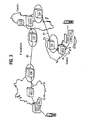
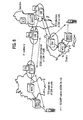
- the payload information to be communicated between terminal 690 and terminal 695 can be transmitted directly across IP link 700 rather than being routed through the called user's home system using links 710 and 720, thereby reducing the number of transcodings by at least two.
- the gatekeeper 740 determines that the roaming leg (720) is a VoIP leg from, e.g., a prefix transmitted by terminal 690 with the MSISDN. Then, the roaming number associated with the BSC/MSC 750 currently serving recipient terminal 695 is acquired from HLR 760. The gatekeeper 740 then instructs gateway 770 to forward the payload information directly to gateway 780 using the roaming number obtained from HLR 760.
- TFO tandem free operation
- inband signalling e.g., as set forth in GSM TS 04.53
- outband signalling in the IP network
- this method can be used on parts of the call to minimize the number of transcodings.
- additional transcoding can be reduced by applying the GSM codec and the emerging GSM Tandem Free Operation standard between every GSM BSC and every VoIP gateway, thus avoiding the present transcoding in the BSCs.
- the VoIP gateways involved in the call are under the control of the same service provider, they can be configured to use the GSM codec over the IP legs resulting in end-to-end transcoding for a mobile-to-mobile VoIP call.
- end-to-end transcoding can be achieved by deploying a logic that maps the inband TFO codec negotiation on the circuit switched leg with an outband H.245/SDP codec negotiation clone over the IP leg. This can be done immediately after the call set-up resulting in a codec re-negotiation between the end-points participating in the call. Also if, during the call, poor radio conditions are encountered then if an adaptive, multi-rate codec is available on the mobile station, a dynamic adaptation to a lower, codec bit-rate can be agreed end-to-end.
- better speech quality in a call involving mobile subscriber(s) is available when the call traverses both a telephony exchange and an IP network. At the same time the bandwidth used in the IP network is minimized.
Landscapes
- Engineering & Computer Science (AREA)
- Signal Processing (AREA)
- Computer Networks & Wireless Communication (AREA)
- Multimedia (AREA)
- Business, Economics & Management (AREA)
- General Business, Economics & Management (AREA)
- General Engineering & Computer Science (AREA)
- Mobile Radio Communication Systems (AREA)
- Data Exchanges In Wide-Area Networks (AREA)
- Telephonic Communication Services (AREA)
Applications Claiming Priority (2)
| Application Number | Priority Date | Filing Date | Title |
|---|---|---|---|
| US12149699P | 1999-02-24 | 1999-02-24 | |
| EP00906321A EP1155559B1 (de) | 1999-02-24 | 2000-02-11 | Verfahren und vorrichtung zum vermittlen von anrufen in hybriden sprache/data/internet/schnurlos systemen |
Related Parent Applications (1)
| Application Number | Title | Priority Date | Filing Date |
|---|---|---|---|
| EP00906321A Division EP1155559B1 (de) | 1999-02-24 | 2000-02-11 | Verfahren und vorrichtung zum vermittlen von anrufen in hybriden sprache/data/internet/schnurlos systemen |
Publications (2)
| Publication Number | Publication Date |
|---|---|
| EP1874019A2 true EP1874019A2 (de) | 2008-01-02 |
| EP1874019A3 EP1874019A3 (de) | 2008-07-02 |
Family
ID=38748116
Family Applications (1)
| Application Number | Title | Priority Date | Filing Date |
|---|---|---|---|
| EP07015004A Withdrawn EP1874019A3 (de) | 1999-02-24 | 2000-02-11 | Verfahren und Systeme zur Leitweglenkung und zur Codec-Aushandlung in hybriden Sprach-/Daten-/Internet-/drahtlosen Systemen |
Country Status (1)
| Country | Link |
|---|---|
| EP (1) | EP1874019A3 (de) |
Cited By (2)
| Publication number | Priority date | Publication date | Assignee | Title |
|---|---|---|---|---|
| FR2927753A1 (fr) * | 2008-02-20 | 2009-08-21 | France Telecom | Procede et dispositif de controle de la qualite de service dans un reseau. |
| US12143428B2 (en) | 2022-11-30 | 2024-11-12 | T-Mobile Usa, Inc. | Enabling a wideband codec audio call between a mobile device and a wireless telecommunication network support center |
Family Cites Families (5)
| Publication number | Priority date | Publication date | Assignee | Title |
|---|---|---|---|---|
| US5812534A (en) * | 1993-01-08 | 1998-09-22 | Multi-Tech Systems, Inc. | Voice over data conferencing for a computer-based personal communications system |
| CA2243655A1 (en) * | 1996-01-23 | 1997-07-31 | William N. Rallis | Internet telecommunications system |
| SE516506C2 (sv) * | 1996-08-29 | 2002-01-22 | Telia Ab | Telekommunikationssystem innefattande en eller flera mobila terminaler |
| SE9702266L (sv) * | 1997-06-13 | 1998-12-14 | Telia Ab | DECT-terminal |
| ATE370607T1 (de) * | 1999-02-24 | 2007-09-15 | Ericsson Telefon Ab L M | Verfahren und vorrichtung zum vermittlen von anrufen in hybriden sprache/data/internet/schnurlos systemen |
-
2000
- 2000-02-11 EP EP07015004A patent/EP1874019A3/de not_active Withdrawn
Non-Patent Citations (1)
| Title |
|---|
| None * |
Cited By (4)
| Publication number | Priority date | Publication date | Assignee | Title |
|---|---|---|---|---|
| FR2927753A1 (fr) * | 2008-02-20 | 2009-08-21 | France Telecom | Procede et dispositif de controle de la qualite de service dans un reseau. |
| WO2009103919A3 (fr) * | 2008-02-20 | 2010-11-04 | France Telecom | Procede et dispositif de controle de la qualite de service dans un reseau |
| US9143352B2 (en) | 2008-02-20 | 2015-09-22 | Orange | Method and device for monitoring service quality in a network |
| US12143428B2 (en) | 2022-11-30 | 2024-11-12 | T-Mobile Usa, Inc. | Enabling a wideband codec audio call between a mobile device and a wireless telecommunication network support center |
Also Published As
| Publication number | Publication date |
|---|---|
| EP1874019A3 (de) | 2008-07-02 |
Similar Documents
| Publication | Publication Date | Title |
|---|---|---|
| US6856612B1 (en) | Methods and systems for call routing and codec negotiation in hybrid voice/data/internet/wireless systems | |
| US6256612B1 (en) | End-to-end coder/decoder (codec) | |
| EP1130894B1 (de) | Konferenz für schnurlose VoIP und VoATM Anrufe mittels Codec Neuverhandlung durch H.323 Prozeduren | |
| US6611694B1 (en) | Arrangement for improving the speech quality, especially for VoIP (Voice over IP) calls | |
| KR100800794B1 (ko) | 패킷망을 통해 음성 서비스를 지원하는 이동통신시스템에서 음성 서비스의 전송률을 제어하는 방법 및 장치 | |
| US20040246962A1 (en) | Dynamically assignable resource class system to directly map 3GPP subscriber communications to a MPLS-based protocol | |
| EP1155559B1 (de) | Verfahren und vorrichtung zum vermittlen von anrufen in hybriden sprache/data/internet/schnurlos systemen | |
| EP1325618B1 (de) | Verfahren zur übertragung von sprache über drahtlose paketvermittelnde-netzwerke | |
| EP1142378A1 (de) | System und verfahren zum bereitstellen von an einer umherstreifenden mobilstation gerichteten anrufen in einem h.323 system | |
| JP4969693B2 (ja) | サービス情報伝送方法及び無線システム | |
| JP4213344B2 (ja) | 移動体データ・サービス用のシステムおよび方法 | |
| US7068644B1 (en) | Wireless access gateway to packet switched network | |
| JP3650800B2 (ja) | 異なるネットワークのターミナル間のスピーチ送信 | |
| JP4327355B2 (ja) | 移動通信ネットワークの非透過的データ送信 | |
| US7089011B1 (en) | Method and system for selective call routing for transcoder free operation | |
| JP2002528975A (ja) | デジタルテレコミュニケーションシステム | |
| US20040071109A1 (en) | Wireless device and network with improved functional architecture | |
| US7742450B2 (en) | Method for efficient bearer traffic routing in a communication system | |
| US20040203802A1 (en) | Process for optimizing speech coding as a function of end user device characteristics | |
| EP1874019A2 (de) | Verfahren und Systeme zur Leitweglenkung und zur Codec-Aushandlung in hybriden Sprach-/Daten-/Internet-/drahtlosen Systemen | |
| US8059663B1 (en) | Gateway-based system and method for tandem free operation | |
| Yumiba et al. | Mobile service history and future | |
| WO2002023768A1 (en) | Optimised mobile-to-mobile call handling in satellite networks using gprs/umts network architecture |
Legal Events
| Date | Code | Title | Description |
|---|---|---|---|
| PUAI | Public reference made under article 153(3) epc to a published international application that has entered the european phase |
Free format text: ORIGINAL CODE: 0009012 |
|
| AC | Divisional application: reference to earlier application |
Ref document number: 1155559 Country of ref document: EP Kind code of ref document: P |
|
| AK | Designated contracting states |
Kind code of ref document: A2 Designated state(s): AT BE CH CY DE DK ES FI FR GB GR IE IT LI LU MC NL PT SE |
|
| PUAL | Search report despatched |
Free format text: ORIGINAL CODE: 0009013 |
|
| AK | Designated contracting states |
Kind code of ref document: A3 Designated state(s): AT BE CH CY DE DK ES FI FR GB GR IE IT LI LU MC NL PT SE |
|
| RIN1 | Information on inventor provided before grant (corrected) |
Inventor name: BJELLAND, FRODE Inventor name: HUNDSCHEIDT, FRANK Inventor name: VERGOPOULOS, GEORGE Inventor name: HELLWIG, KARL Inventor name: WIDMARK, JERKER |
|
| 17P | Request for examination filed |
Effective date: 20081222 |
|
| AKX | Designation fees paid |
Designated state(s): AT BE CH CY DE DK ES FI FR GB GR IE IT LI LU MC NL PT SE |
|
| 17Q | First examination report despatched |
Effective date: 20090318 |
|
| STAA | Information on the status of an ep patent application or granted ep patent |
Free format text: STATUS: THE APPLICATION IS DEEMED TO BE WITHDRAWN |
|
| 18D | Application deemed to be withdrawn |
Effective date: 20170811 |