EP1876109B1 - Enveloppe et son procédé de fabrication - Google Patents
Enveloppe et son procédé de fabrication Download PDFInfo
- Publication number
- EP1876109B1 EP1876109B1 EP07011352A EP07011352A EP1876109B1 EP 1876109 B1 EP1876109 B1 EP 1876109B1 EP 07011352 A EP07011352 A EP 07011352A EP 07011352 A EP07011352 A EP 07011352A EP 1876109 B1 EP1876109 B1 EP 1876109B1
- Authority
- EP
- European Patent Office
- Prior art keywords
- information
- mailing envelope
- envelope
- shipping
- closure flaps
- Prior art date
- Legal status (The legal status is an assumption and is not a legal conclusion. Google has not performed a legal analysis and makes no representation as to the accuracy of the status listed.)
- Not-in-force
Links
- 238000000034 method Methods 0.000 title claims abstract description 24
- 238000004519 manufacturing process Methods 0.000 title claims abstract description 16
- 239000000853 adhesive Substances 0.000 claims description 38
- 230000001070 adhesive effect Effects 0.000 claims description 38
- 239000000123 paper Substances 0.000 description 45
- 230000003313 weakening effect Effects 0.000 description 15
- 239000011111 cardboard Substances 0.000 description 10
- 238000012545 processing Methods 0.000 description 9
- 239000003973 paint Substances 0.000 description 7
- 239000011087 paperboard Substances 0.000 description 7
- 239000000835 fiber Substances 0.000 description 6
- 230000005540 biological transmission Effects 0.000 description 5
- 239000000969 carrier Substances 0.000 description 5
- 239000004698 Polyethylene Substances 0.000 description 4
- 238000013461 design Methods 0.000 description 4
- 238000011161 development Methods 0.000 description 4
- 230000018109 developmental process Effects 0.000 description 4
- -1 polyethylene Polymers 0.000 description 4
- 229920000573 polyethylene Polymers 0.000 description 4
- 238000000926 separation method Methods 0.000 description 4
- 239000003795 chemical substances by application Substances 0.000 description 3
- 230000010354 integration Effects 0.000 description 3
- 239000000463 material Substances 0.000 description 3
- 238000006243 chemical reaction Methods 0.000 description 2
- 239000011248 coating agent Substances 0.000 description 2
- 238000000576 coating method Methods 0.000 description 2
- 230000001419 dependent effect Effects 0.000 description 2
- 238000003780 insertion Methods 0.000 description 2
- 230000037431 insertion Effects 0.000 description 2
- 238000009434 installation Methods 0.000 description 2
- 239000004775 Tyvek Substances 0.000 description 1
- 229920000690 Tyvek Polymers 0.000 description 1
- 238000004026 adhesive bonding Methods 0.000 description 1
- 239000002390 adhesive tape Substances 0.000 description 1
- 238000005516 engineering process Methods 0.000 description 1
- 238000011156 evaluation Methods 0.000 description 1
- 239000004745 nonwoven fabric Substances 0.000 description 1
- 238000002360 preparation method Methods 0.000 description 1
- 230000003014 reinforcing effect Effects 0.000 description 1
- 230000000284 resting effect Effects 0.000 description 1
- 238000003860 storage Methods 0.000 description 1
- 239000000126 substance Substances 0.000 description 1
- 230000007704 transition Effects 0.000 description 1
- 238000012795 verification Methods 0.000 description 1
Images




Classifications
-
- B—PERFORMING OPERATIONS; TRANSPORTING
- B65—CONVEYING; PACKING; STORING; HANDLING THIN OR FILAMENTARY MATERIAL
- B65D—CONTAINERS FOR STORAGE OR TRANSPORT OF ARTICLES OR MATERIALS, e.g. BAGS, BARRELS, BOTTLES, BOXES, CANS, CARTONS, CRATES, DRUMS, JARS, TANKS, HOPPERS, FORWARDING CONTAINERS; ACCESSORIES, CLOSURES, OR FITTINGS THEREFOR; PACKAGING ELEMENTS; PACKAGES
- B65D27/00—Envelopes or like essentially-rectangular flexible containers for postal or other purposes having no structural provision for thickness of contents
- B65D27/06—Envelopes or like essentially-rectangular flexible containers for postal or other purposes having no structural provision for thickness of contents with provisions for repeated re-use
Definitions
- the invention relates to a shipping envelope for shipping on at least two shipping routes.
- Such shipping envelopes are used in a variety of fields. They serve to send letters or other items to a recipient and allow the recipient to use the original shipping envelope for at least one further shipment.
- Examples of this are marketing campaigns and / or the commercial leasing of items that can be transported by mail.
- Particularly suitable items for - preferably multiple - shipping with mail items are books, CDs and DVDs.
- DVDs as a media for movies and video games are displacing conventional video tapes or other data media. Reasons for this are both the smaller dimensions and the lower weight of the DVD.
- DVDs Another important known advantage of DVDs is their multiple playability without noticeable quality loss. Because of this multiple playability of DVDs, there is a growing need to send them to end users, with end users being able to use these DVDs for a predetermined amount of time for a fee that is significantly less than the purchase price of a DVD.
- a suitable for this purpose shipping envelope is in the German utility model DE 20 2005 007 765 U1 disclosed.
- This envelope is characterized by the fact that there is a first fold line at the transition from the back to the flap and that the flap through dividing a second fold line parallel to the first fold line into a first section and a second section, the first section being between the first and second fold lines, and wherein the envelope comprises an adhesive strip, the second section being foldable with respect to the first section is trained.
- FIG. 5 An embodiment of this shipping envelope (there Fig. 5 ) makes it possible to print the recipient address and sender address on the shipping envelope in a single operation.
- DE 20 2006 002 176 U1 and DE 20 2006 000 855 U1 disclose a mailing envelope for shipping circular media having a rectangular backside portion and a front side portion integrally formed on the backside portion folded over the backside portion and adhered thereto by side gluing portions and reinforcing tabs to form a pocket for the data carrier having an upper dispensing gap results.
- US 2005/0247769 A1 Openable one-way and two-way mailer for DVDs, CDs . Video games and other such data carriers for sending from a sender to a recipient in the form of a mailpiece.
- This shipping bag allows improved protection of the data carriers during shipping, whereby the shipping bag including the data carrier weighs no more than 1 ounce.
- FR 2869879 discloses a shipping envelope having two independently hinged flaps P1 and P3, each connected to the base P2 by a suitable folding line.
- the shipping envelope is made by folding section P3 under section P2 and then folding these two sections together under section P1.
- the first address can be seen on the envelope.
- the section P1 is folded under the section P2 and these two sections again under the section P3, so that in this configuration on the envelope the second address is to be seen.
- the object of the invention is to provide a shipping envelope that is suitable for shipping on at least two shipping routes and that can be easily produced and / or printed.
- the object of the invention is also to provide a simple and fast method for the production of the shipping envelope.
- the process should preferably be suitable for the production of large quantities of shipping envelopes (several hundred, in particular several thousand, shipping envelopes per day).
- this object is achieved by a shipping envelope according to claim 1 and a method for producing a shipping envelope according to claim 13.
- the invention provides in particular to provide a shipping envelope with two independently hinged flaps.
- the closure flaps are each connected to a turn-up body via a suitable fold line, wherein in a particularly simple case the turn-up body consists only of flat paper or cardboard.
- the envelope body may consist of at least two paper sheets or at least one cardboard sheet and at least one paper sheet.
- Such a design of the envelope body with at least two components is particularly suitable when sensitive objects are transported.
- the shipping envelope is further characterized by having at least two independently hinged flaps, the flaps being configured to overlap in at least a portion in a closed condition, and at least two of the flaps within the portion / or have franking information.
- At least one of the closing flaps in the closed state substantially covers an entire side surface of the shipping envelope.
- At least two of the closure flaps in the closed state cover substantially an entire side surface of the shipping envelope.
- At least two closure flaps are foldable on a common side surface of the letter body.
- Such a folded shipping envelope has several advantages.
- this makes it possible to make the shipping envelope particularly stable and to use uniform transport conditions for a return and a return of the shipping envelope.
- a further expedient embodiment of the shipping envelope is characterized in that at least two closing flaps are arranged on two adjacent side lines of the mailpiece.
- the shipping envelope in such a way that at least two of the closure flaps are located on two opposite side lines of the mailpiece.
- the flaps are at least partially provided with an adhesive strip.
- any adhesives which develop sufficient forces to prevent unfolding of interconnected paper areas when processing mailpieces are suitable.
- surfaces with which the adhesive strips come into contact during a connection are designed in such a way that the reclosability increases.
- a particularly preferred embodiment provides in this case to use a paint coating.
- An advantage of such a paint coating is that it prevents a chemical reaction with the adhesive.
- Physical bonds in particular adhesion forces, are particularly suitable for achieving resealability since, as a rule, reversibility is higher than for chemical bonds.
- Such double adhesive tapes are an example of adhesives which allow opening and subsequent reclosing using the same splice.
- weakening lines are perforation lines, since these can be opened in a particularly simple and reliable manner.
- weakening lines for example lines that are characterized by a deliberate reduction in paper thickness in the selected areas.
- the line of weakness is between an adhesive strip and a fold line of the closure flap.
- the line of weakness is adjacent to the adhesive strip and the line of weakness and the adhesive strip run at least partially parallel to each other. This has the advantage that a separation of the closure flap is further facilitated.
- the shipping envelope includes both mechanical means for facilitating the readability of information relevant to mailing, as well as advantageous embodiments of the information relevant to the mailing.
- shipment-relevant information examples include recipient information, franking information and shipment identification information.
- the address information, the franking information and the shipment information can be coupled together in particularly preferred embodiments.
- the shipment identification information may be applied to the shipping envelope in a variety of embodiments.
- this makes it possible to determine whether the shipping envelope is on a way to a recipient or on a way back to the original sender.
- the respective findings or checks can be forwarded as a message (push method) or transmitted as retrievable information (pull method).
- the shipment identification information is machine-readable.
- the transmission identification information is encrypted.
- the franking information for the forwarding of the shipping envelope is advantageous for the franking information for the forwarding of the shipping envelope to be introduced into a first digital franking mark.
- the franking information for the return of the shipping envelope be integrated into a further digital franking mark.
- the shipment identification information is advantageous for the shipment identification information to be incorporated in at least one of the digital franking marks.
- the invention further relates to a method according to claim 13 for producing a shipping envelope provided with a recipient address and a return address.
- a provided for the creation of the mail piece of paper sheet is printed by a uniform printing operation in two spatially separated areas, wherein a first area is printed with first recipient information and / or first franking information for a delivery of the mailing envelope, wherein a second area with second recipient information and / or second franking information for a return of the shipping envelope is printed, further wherein at least one point of the paper sheet a shipment identification is printed, and wherein the paper sheet is folded after printing so that it has at least two independently hinged flaps, the flaps so are designed to overlap in a closed state in at least a portion and that the recipient information and clearance information for sending the shipping chlags on a readable surface of a first flap.
- inventively printed shipping envelope can be further processed in advantageous embodiments of the invention.
- an object preferably a data carrier, for example a CD or DVD, in the Insert envelope or in a bag formed within the envelope.
- the insertion of the article is expediently carried out in dependence on the recipient information, so that the recipient can each receive an individually provided for him object.
- the envelope is folded so that the closure flap provided for return is first connected to a body of the shipping envelope.
- the basic body consists here in the simplest case of sections of the original paper sheet.
- the CD can also be inserted here.
- the first shipping portion After connecting the portion connected to the second address (return address) with the main body, the first shipping portion is subsequently folded so that it at least in sections resting on the section with the return address,
- a connection of the closure flap having the first receiver information with the other closure flap and / or the base body takes place by means of an adhesive bond.
- the thus designed or produced shipping envelope can then be introduced into a normal transport process of mail.
- a pre-sorting already takes place during the preparation of the shipping envelopes. This is done by making the shipping envelopes in order of intended sorting.
- the pre-sorting of the transmissions can take place, for example, in dependence on the first receiver information.
- a first embodiment of the invention provides that the shipment identification information is located both outside the first region and outside the second region.
- Another preferred embodiment of the invention is characterized in that shipment identification information is printed at two different locations.
- the printing of the shipment identification information at two different locations takes place in a particularly preferred embodiment in that a first shipment identification information is printed in a region of the first recipient information and / or the first franking information.
- a second shipment identification indication to be present in a region of the second recipient information and / or the second franking information is printed.
- shipping envelopes according to the invention can be produced particularly simply, quickly and reliably.
- the shipping envelopes shown in the figures are particularly suitable for shipping items such as CDs and DVDs as well as information carriers such as information leaflets provided with reply forms.
- Such digital franking markings are particularly suitable because they can be generated with corresponding printing devices (for example laser printers or inkjet printers).
- Such digital postage indicia have a number of other advantages.
- they may contain encrypted digital information that contributes to high security against counterfeiting.
- the in Fig. 1 Illustrated sheet consists of a suitable for shipping material. This may be, for example, paper or cardboard with an adjustable strength. For paper, different paper weights - usually between 60 g / m 2 to 120 g / m 2 and cardboard preferred paper weights between 150 g / m 2 to about 300 g / m 2 - are used.
- paper-like fiber webs are suitable.
- Particularly preferred embodiments of these paper-like fiber webs consist of thermally welded polyethylene fibers.
- thermally welded polyethylene fibers are known commercially, for example, under the trade names Tyvek or Typar.
- thermally bonded polyethylene fibers are their high resistance and their low basis weight.
- basis weights that are below the usually achievable for paper basis weight of usually at least 60 g / m 2 lie.
- surface weights of between 30 g / m 2 and about 60 g / m 2 .
- a sufficient printability of the paper or the box for the shipping envelope is advantageous because this significantly improves the recognition accuracy of the addresses and the information contained in the digital franking marks.
- the paper or cardboard sheet to be printed can optionally be provided with fold lines before or after printing.
- Particularly preferred embodiments of the invention provide that the franking information 15, 35, 55, 65, 115, 135, 215, 235 include shipment identification information.
- paper or cardboard sheet is first printed and then folded, it is possible to print at the maximum speed that can be achieved for printing conventional printer, in particular of laser printers or high-performance inkjet printers to realize.
- the paper sheet is divided by fold lines 1 and 2 into three segments.
- the segments form a first closure flap 30, a base body 20 and a second closure flap 10.
- the first recipient information 34 includes, for example, a first recipient address.
- this recipient address as well as other addresses used in the invention is given in the usual postal formats and preferably contains city, street and postcode.
- the first closing flap 30 has franking information 35.
- the franking information 35 is expediently incorporated in a first franking mark.
- a second recipient information 14 for the return of the shipping envelope and associated second franking information 15 are located on the second closure flap 10.
- the first recipient information 34, the first franking information 35, the second recipient information 14 and the second franking information 15 are printed on the same surface of the paper sheet.
- the second closure flap 10 is folded back to produce the shipping envelope, preferably after insertion of an article, as illustrated in the following figures DVD 28, 44, 128.
- the first closure flap 30 is folded onto the second closure flap 10.
- the surface readable in the first sending operation is in Fig. 1 designated by the reference numeral 32.
- Fig. 1 The readable in a second shipping process surface of the shipping envelope is in Fig. 1 marked with the reference numeral 12.
- shipment identification information relating to a first shipment is located on the first surface 32.
- shipment identification information provided for a second shipment of the shipping envelope be located on the second surface 12.
- Fig. 2 shows a first embodiment of a back of a shipping envelope according to the invention.
- the front side is designed as in Fig. 1 shown.
- the paper sheet used to make the shipping envelope is shown unfolded.
- first the second closing flap 10 of the paper sheet is folded onto the base body 20 and then the first closing flap 30 is folded onto the second closing flap 10.
- an adhesive strip 37 On the first closure flap 30 is an adhesive strip 37. In a particularly simple and expedient embodiment, this is a correspondingly coated paper area.
- the adhesive strip 37 can be separated from the further first closure flap 30 via a weakening line 38 running parallel to it.
- An adhesive strip 17 is located on the second closure flap 10.
- the adhesive strip 17 can be separated from the further second closure flap 10 via a weakening line 18 extending parallel to it.
- a closure of the shipping envelope on the first shipping route is advantageously carried out by the attached on the back of the first shipping envelope 30 adhesive strip 37.
- this adhesive strip 37 rests on the surface of the second flap 10.
- the so-sealed shipping envelope can be advantageously separated by the first receiver along the line of weakness 38.
- the first weakening line 38 is formed as a perforation line.
- the first recipient can insert the first item or another preferably equivalent item in the shipping envelope and then seal the shipping envelope as shown below.
- This closing is preferably carried out by first folding the first closing flap 30 onto the base body 20 and subsequently folding the second closing flap 10 onto the first closing flap 30.
- the second recipient information and / or the second franking information as well as optionally the second consignment identification data are located on a readable surface 12 of the shipping envelope.
- the illustrated, preferred shipping envelope can be used both for shipping circular disks, such as CDs or DVDs, and for shipping rectangular objects, preferably books and / or brochures.
- a circular disk is in Fig. 2 designated by the reference numeral 28.
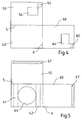
- Fig. 4 shows an address page of another preferred embodiment of a paper sheet for the production of a shipping envelope according to the invention.
- the paper sheet is divided by fold lines 5 and 6 into three segments.
- the segments form a first closure flap 60, a base body 40 and a second closure flap 50.
- the first receiver information 64 preferably includes a first receiver address.
- the first closing flap 60 has franking information 65, which are expediently incorporated in a first franking mark.
- the fold lines 5 and 6 are in this case arranged adjacent to each other. Accordingly, the two flaps 50 and 60 adjoin one another.
- Fig. 5 shows a particularly preferred embodiment of a back of in Fig. 4 illustrated paper sheets, but not the weakening lines according to the invention are shown.
- Fig. 5 shows a paper sheet used for the production of a further shipping envelope according to the invention in the unfolded state.
- the process steps for generating the shipping envelope based on the in 4 and FIG. 5 illustrated paper sheets are preferably as well as previously based on Fig. 1 to Fig. 3 shown.
- the adhesive strip 17, 37, 57, 67, 117, 137, 217, 237 is arranged so that it rests on one of the respective fold line 1, 2, 5, 6, 101, 102, 201, 202 of the closure flap 10 , 30, 50, 60, 110, 130, 210, 230 opposite edge region, along a longitudinal line of the respective flap.
- Fig. 5 a lateral fixation of the circular data carrier 44 by lateral adhesive strips 41 and 42 shown.
- a lateral fixation of the data carrier is alternatively also possible because the main body of the shipping envelope is adapted to the dimensions of the data carrier.
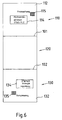
- FIG. 6 A particularly preferred embodiment of an address page of such a shipping envelope is in Fig. 6 shown.
- Fig. 6 shows a sheet of paper, which expediently has a similar basic design and similar developments, as previously with reference to Fig. 1 to Fig. 3 Shipment envelope shown.
- the shipping envelope also indicates Fig. 6 a first closing flap 130, a base 120 and a second closing flap 110.
- the first recipient information 134 expediently includes a first recipient address.
- the first closure flap 30 is printed with franking information 35, preferably in the form of a franking mark.
- the first recipient information 134, the first franking information 135, the second recipient information 114 and the second franking information 115 are printed on the same surface of the paper sheet.
- the first shipment identification information is printed.
- this is done by integration into the franking information 135.
- the shipment information for a return of the shipping envelope in a same surface area 112 are arranged as the second recipient information 114 and the second franking information 115.
- an integration of the shipment identification information in the recipient identification information 114 and / or in the second franking information 115 is advantageous.
- FIG. 7 A particularly preferred embodiment of a back of in Fig. 6 illustrated paper sheet is in Fig. 7 shown.
- Fig. 7 Shipment envelope shown has flaps 110 and 130, which can expediently apply to the base body 120, as previously with reference to Fig. 1 to 3 was presented. In Fig. 7 However, not the weakening lines according to the invention are shown.
- the embodiment according to Fig. 6 and Fig. 7 differs from the previously described embodiments of shipping envelopes according to the invention in that a fixing of the data carrier takes place by a suitable choice of the dimensions of the main body 120 of the shipping envelope.
- the second closure flap 110 is folded backwards for sending the shipping envelope on a first shipping route - transmission to the first recipient.
- the first closing flap 130 is folded onto the second closing flap 110.
- the surface area 132 of the flap 130 is on a readable surface of the shipping envelope.
- the other surface 136 of the closure flap 130 rests on the surface region 112 of the closure flap 110, so that the first closure flap 130 covers the second closure flap 110.
- the surface area 112 of the second flap 110 forms a readable surface of the shipping envelope.
- the surface area 132 of the first closing flap 130 is covered by the second closing flap 110.
- Fig. 8 shows a further preferred embodiment of a back of in Fig. 1 illustrated paper sheet. In Fig. 8 However, not the weakening lines according to the invention are shown.
- This paper sheet preferably has those components whose advantages have been previously described with reference to Fig. 1 and Fig. 3 were presented.
- this paper sheet also includes a first closure flap 230 and a second closure flap 210 for designing a particularly preferred shipping envelope.
- first closure flap 230 and the second closure flap 210 are folded to complete the shipping envelope and to prepare for returning the shipping envelope in the same manner as previously described with reference to FIG Fig. 1 to Fig. 3 shown.
- adhesive strips 217 and 237 are reclosable.
- a further closing means is arranged in at least one region of the basic body.
- the closing means is formed by a paint strip 290.
- the paint strip 290 is configured to be in contact with an adhesive strip 270, 280 of at least one of the closure flaps 210, 230 in at least one closure state of the shipping envelope.
- the adhesive strips 270 and 280 are arranged so that they contact a different area of the paint strip 290 when the associated closure flap 210 or 230 makes contact with the base body.
- an adhesive flap 280 located on the first closure flap 230 is in one of a fold line 202 remote area of the closure flap 230 is disposed, while another adhesive strip 270 of the second flap 210 is disposed closer to a fold line 201.
- the preferred storage of the data carrier 228 shown below can also be used in the other mailing envelopes.
- FIG. 8 shown particularly preferred introduction of the data carrier 228 is effected in that two adhesive strips 221 and 222 are arranged on the base body of the paper sheet so that the data carrier herein can be introduced while remaining of game.
- a whereabouts of game is particularly advantageous because this way the volume 228 easier to insert into the envelope or can be removed from the mailing envelope.
- Fig. 9 shows an address page of a mailing envelope according to the invention for shipping on a first shipping route - delivery to the first recipient.
- Fig. 10 shows an address page of a shipping envelope according to the invention for a shipment on a second shipping route.
- the second shipping route is a shipment to a second recipient, preferably a return to the original sender.
- second recipient information 214 and second franking information 215 are on a readable surface of the shipping envelope.
- the figures relate to the particularly preferred use of shipping envelopes for shipping circular objects, in particular circular data carriers.
- the shipping envelopes are also suitable for shipping books and / or brochures.
Landscapes
- Engineering & Computer Science (AREA)
- Mechanical Engineering (AREA)
- Credit Cards Or The Like (AREA)
- Making Paper Articles (AREA)
Claims (17)
- Enveloppe avec un corps de base (20, 40, 120) et au moins deux volets de fermeture rabattables indépendamment l'un de l'autre (10, 30, 50, 60, 110, 130, 210, 230), les volets de fermeture (10, 30, 50, 60, 110, 130, 210, 230) étant réalisés de manière telle que, dans un état fermé, ils se chevauchent en au moins une partie et sont respectivement reliés au corps de base (20, 40, 120) par l'intermédiaire d'une ligne de pliage appropriée (1, 2, 5, 6, 101, 102, 201, 202),
au moins deux des volets de fermeture (10, 30, 50, 60, 110, 130, 210, 230) comportant en outre, dans les limites de ladite partie, des informations sur le destinataire (14, 34, 54, 64, 114, 134, 214, 234) et/ou des informations d'affranchissement (15, 35, 55, 65, 115, 135, 215, 235) et les volets de fermeture (10, 30, 50, 60, 110, 130, 210, 230) étant disposés de manière à pouvoir être pliés de sorte que, dans un premier état plié, des premières informations sur le destinataire (34, 64, 134, 234) et des premières informations d'affranchissement (35, 65, 135, 235) pour un envoi de l'enveloppe se trouvent sur une surface lisible d'un premier des volets de fermeture (30, 60, 130, 230) et, dans un deuxième état plié, des deuxièmes informations sur le destinataire (14, 54, 114, 214) avec une adresse de retour à l'expéditeur, situées sur un deuxième des volets de fermeture (10, 50, 110, 210), et des deuxièmes informations d'affranchissement (15, 55, 115, 215) pour un retour de l'enveloppe à l'expéditeur se trouvent sur une surface lisible du deuxième volet de fermeture (10, 50, 110, 210) et des indications relatives à l'identification de l'envoi se trouvent en outre sur une surface lisible,
caractérisée en ce que
les volets de fermeture (10, 30, 50, 60, 110, 130, 210, 230) présentent, dans leur zone de bord opposée à la ligne de pliage (1, 2, 5, 6, 101, 102, 201, 202), une bande collante (17, 37, 57, 67, 117, 137, 217, 237) et une ligne d'affaiblissement voisine (18, 38) qui lui est parallèle, la bande collante pouvant être séparée du reste du volet de fermeture par l'intermédiaire de la ligne d'affaiblissement. - Enveloppe selon la revendication 1, caractérisée en ce qu'au moins l'un des volets de fermeture (10, 30, 50, 60, 110, 130, 210, 230) recouvre, à l'état fermé, sensiblement l'ensemble d'une face latérale de l'enveloppe.
- Enveloppe selon la revendication 2, caractérisée en ce qu'au moins deux des volets de fermeture (10, 30, 50, 60, 110, 130, 210, 230) recouvrent, à l'état fermé, sensiblement l'ensemble d'une face latérale de l'enveloppe.
- Enveloppe selon l'une ou plusieurs des revendications 1 ou 3, caractérisée en ce qu'au moins deux volets de fermeture (50, 60) sont disposés au niveau de deux lignes de pliage voisines (5, 6) de l'enveloppe.
- Enveloppe selon l'une ou plusieurs des revendications 1 à 3, caractérisée en ce qu'au moins deux des volets de fermeture (10, 30, 110, 130, 210, 230) sont situés au niveau de deux lignes de pliage (1, 2, 101, 102, 201, 202) opposées de l'enveloppe.
- Enveloppe selon l'une des revendications précédentes, caractérisée en ce que la ligne d'affaiblissement (18, 38) se présente au moins en partie sous la forme d'une ligne perforée.
- Enveloppe selon l'une ou plusieurs des revendications précédentes, caractérisée en ce que les indications relatives à l'identification de l'envoi sont lisibles par machine.
- Enveloppe selon la revendication 7, caractérisée en ce que les indications relatives à l'identification de l'envoi sont cryptées.
- Enveloppe selon l'une ou les deux revendications 7 ou 8, caractérisée en ce que les indications relatives à l'identification de l'envoi contiennent des informations sur une voie d'expédition.
- Enveloppe selon l'une ou plusieurs des revendications précédentes, caractérisée en ce que les informations d'affranchissement (35, 65, 135, 235) pour l'envoi de l'enveloppe sont introduites dans une première marque d'affranchissement numérique.
- Enveloppe selon l'une ou plusieurs des revendications précédentes, caractérisée en ce que les informations d'affranchissement (15, 55, 115, 215) pour le retour de l'enveloppe à l'expéditeur sont intégrées dans une autre marque d'affranchissement numérique.
- Enveloppe selon l'une ou plusieurs des revendications précédentes, caractérisée en ce que les indications relatives à l'identification de l'envoi sont introduites dans au moins l'une des marques d'affranchissement numériques.
- Procédé pour fabriquer une enveloppe pourvue d'une adresse de destinataire et d'une adresse de retour à l'expéditeur selon l'une des revendications 1 à 12, une feuille de papier prévue pour la réalisation de l'envoi postal étant imprimée au moyen d'une opération d'impression uniforme dans deux zones séparées l'une de l'autre dans l'espace, une première zone étant imprimée avec des premières informations sur le destinataire (34, 64, 134, 234) et/ou des premières informations d'affranchissement (35, 65, 135, 235) pour un envoi de l'enveloppe, une deuxième zone étant imprimée avec des deuxièmes informations sur le destinataire (14, 54, 114, 214) et/ou des deuxièmes informations d'affranchissement (15, 55, 115, 215) pour un retour de l'enveloppe à l'expéditeur, une indication relative à l'identification de l'envoi étant en outre imprimée à au moins un endroit de la feuille de papier et la feuille de papier, après l'impression, étant pourvue de lignes de pliage (1, 2, 5, 6, 101, 102, 201, 202) et étant pliée le long de ces lignes de pliage (1, 2, 5, 6, 101, 102, 201, 202) de manière telle qu'elle présente au moins deux volets de fermeture rabattables indépendamment l'un de l'autre (10, 30, 50, 60, 110, 130, 210, 230) et un corps de base (20, 40, 120), les volets de fermeture (10, 30, 50, 60, 110, 130, 210, 230) étant réalisés de manière telle que, dans un état fermé, ils se chevauchent en au moins une partie et les premières informations sur le destinataire (34, 64, 134, 234) et les premières informations d'affranchissement (35, 65, 135, 235) pour l'envoi de l'enveloppe se trouvent sur une surface, lisible dans un premier état plié, d'un premier des volets de fermeture (30, 60, 130, 230) et les deuxièmes informations sur le destinataire (14, 54, 114, 214) et les deuxièmes informations d'affranchissement (15, 55, 115, 215) pour le retour de l'enveloppe à l'expéditeur se trouvent sur une surface, lisible dans un deuxième état plié, d'un deuxième des volets de fermeture (10, 50, 110, 210), caractérisé en ce que les volets de fermeture (10, 30, 50, 60, 110, 130, 210, 230) sont pourvus, dans leur zone de bord opposée à la ligne de pliage (1, 2, 5, 6, 101, 102, 201, 202), d'une bande collante (17, 37, 57, 67, 117, 137, 217, 237) et d'une ligne d'affaiblissement voisine (18, 38) qui lui est parallèle, la bande collante pouvant être séparée du reste du volet de fermeture par l'intermédiaire de la ligne d'affaiblissement.
- Procédé selon la revendication 13, caractérisé en ce que l'indication relative à l'identification de l'envoi se trouve tant en dehors de la première zone qu'en dehors de la deuxième zone.
- Procédé selon la revendication 13, caractérisé en ce que des indications relatives à l'identification de l'envoi sont imprimées à deux endroits différents.
- Procédé selon la revendication 15, caractérisé en ce qu'une première des indications relatives à l'identification de l'envoi est imprimée dans une zone des premières informations sur le destinataire (34, 64, 134, 234) et/ou des premières informations d'affranchissement (35, 65, 135, 235).
- Procédé selon l'une des ou les deux revendications 15 ou 16, caractérisé en ce qu'une deuxième des indications relatives à l'identification de l'envoi est imprimée dans une zone des deuxièmes informations sur le destinataire (14, 54, 114, 214) et/ou des deuxièmes informations d'affranchissement (15, 55, 115, 215).
Applications Claiming Priority (1)
| Application Number | Priority Date | Filing Date | Title |
|---|---|---|---|
| DE102006030956A DE102006030956A1 (de) | 2006-07-03 | 2006-07-03 | Versandumschlag und Verfahren zu seiner Herstellung |
Publications (3)
| Publication Number | Publication Date |
|---|---|
| EP1876109A2 EP1876109A2 (fr) | 2008-01-09 |
| EP1876109A3 EP1876109A3 (fr) | 2008-05-28 |
| EP1876109B1 true EP1876109B1 (fr) | 2011-12-21 |
Family
ID=38566090
Family Applications (1)
| Application Number | Title | Priority Date | Filing Date |
|---|---|---|---|
| EP07011352A Not-in-force EP1876109B1 (fr) | 2006-07-03 | 2007-06-11 | Enveloppe et son procédé de fabrication |
Country Status (3)
| Country | Link |
|---|---|
| EP (1) | EP1876109B1 (fr) |
| AT (1) | ATE538047T1 (fr) |
| DE (1) | DE102006030956A1 (fr) |
Family Cites Families (8)
| Publication number | Priority date | Publication date | Assignee | Title |
|---|---|---|---|---|
| CH226032A (de) * | 1942-10-31 | 1943-03-15 | Simon Alfred | Umschlag für zweimalige Verwendung. |
| US3983679A (en) * | 1975-05-30 | 1976-10-05 | Bell & Howell Company | Apparatus and method of processing mail |
| US6019280A (en) * | 1998-12-31 | 2000-02-01 | Moore U.S.A. Inc. | C-fold return postcard mailer |
| DE10054666B4 (de) * | 2000-11-03 | 2005-02-10 | Deutsche Post Ag | Verfahren zum Versehen von Postsendungen mit Frankierungsvermerken |
| US7798392B2 (en) * | 2003-10-17 | 2010-09-21 | United States Postal Service | Delivery container for digital disc |
| DE202006000855U1 (de) * | 2006-01-19 | 2006-04-20 | Amango Pure Entertainment Gmbh | Zweiwege-Versandumschlag für kreisförmigen Datenträger |
| DE202006002176U1 (de) * | 2006-02-10 | 2006-04-27 | Amango Pure Entertainment Gmbh | Zweiwege-Versandumschlag für kreisförmigen Datenträger |
| DE202006002175U1 (de) * | 2006-02-10 | 2006-04-20 | Amango Pure Entertainment Gmbh | Zweiwege-Versandumschlag für kreisförmigen Datenträger |
-
2006
- 2006-07-03 DE DE102006030956A patent/DE102006030956A1/de not_active Withdrawn
-
2007
- 2007-06-11 AT AT07011352T patent/ATE538047T1/de active
- 2007-06-11 EP EP07011352A patent/EP1876109B1/fr not_active Not-in-force
Also Published As
| Publication number | Publication date |
|---|---|
| EP1876109A2 (fr) | 2008-01-09 |
| EP1876109A3 (fr) | 2008-05-28 |
| ATE538047T1 (de) | 2012-01-15 |
| DE102006030956A1 (de) | 2008-01-10 |
Similar Documents
| Publication | Publication Date | Title |
|---|---|---|
| US5290225A (en) | Method of making a self mailer with return envelope formed from a single cut sheet | |
| US6155476A (en) | Laminated mailer blank with transparent window | |
| US4334618A (en) | Stationery having snap-open envelope with remailable portion | |
| US3718277A (en) | Printed folder including mailable article | |
| US3858792A (en) | Printed folder | |
| US6209779B1 (en) | Laminated mailer blank with transparent window | |
| CA2272441C (fr) | Carte-postale reponse a panneau | |
| US5464255A (en) | Folded business form with return envelope | |
| US7469816B2 (en) | Digital media mailer | |
| DE2737244A1 (de) | Endlosformularsatz fuer umschlaglosen briefversand | |
| US6402022B1 (en) | Mailing form for non-impact printing | |
| US6672624B2 (en) | Mailing form for non-impact printing | |
| EP0739293A1 (fr) | Pochette d'expedition reutilisable | |
| US5263637A (en) | Self-mailer with return order envelope and the method for producing the same | |
| US6481754B2 (en) | Machine sealable mailing form for non-impact printing | |
| US5452851A (en) | Two-sheet self-mailer | |
| US4762271A (en) | Compartmented and separable mailing envelope | |
| EP1876109A2 (fr) | Enveloppe et son procédé de fabrication | |
| DE19513913A1 (de) | Umschlag mit einer darin angeordneten separaten bedruckten Karte aus einem einteiligen Bogen und Verfahren zu deren Herstellung | |
| US5607100A (en) | Direct mail packet with plurality of detachably joined envelopes and method of manufacture | |
| US8579333B2 (en) | Confidential postcards | |
| DE60020886T2 (de) | Arrangement zum Versenden von Kompaktdisks (CD'S) oder ähnlichen plattenförmigen Datenmedien | |
| EP1501096A2 (fr) | Enveloppe pour expédier un support d'information | |
| US20050116015A1 (en) | Eccentric fold, pressure-seal mailer with built-in envelope | |
| DE69204675T2 (de) | Versandbrief. |
Legal Events
| Date | Code | Title | Description |
|---|---|---|---|
| PUAI | Public reference made under article 153(3) epc to a published international application that has entered the european phase |
Free format text: ORIGINAL CODE: 0009012 |
|
| AK | Designated contracting states |
Kind code of ref document: A2 Designated state(s): AT BE BG CH CY CZ DE DK EE ES FI FR GB GR HU IE IS IT LI LT LU LV MC MT NL PL PT RO SE SI SK TR |
|
| AX | Request for extension of the european patent |
Extension state: AL BA HR MK YU |
|
| PUAL | Search report despatched |
Free format text: ORIGINAL CODE: 0009013 |
|
| AK | Designated contracting states |
Kind code of ref document: A3 Designated state(s): AT BE BG CH CY CZ DE DK EE ES FI FR GB GR HU IE IS IT LI LT LU LV MC MT NL PL PT RO SE SI SK TR |
|
| AX | Request for extension of the european patent |
Extension state: AL BA HR MK RS |
|
| 17P | Request for examination filed |
Effective date: 20081128 |
|
| AKX | Designation fees paid |
Designated state(s): AT BE BG CH CY CZ DE DK EE ES FI FR GB GR HU IE IS IT LI LT LU LV MC MT NL PL PT RO SE SI SK TR |
|
| 17Q | First examination report despatched |
Effective date: 20091119 |
|
| GRAP | Despatch of communication of intention to grant a patent |
Free format text: ORIGINAL CODE: EPIDOSNIGR1 |
|
| GRAS | Grant fee paid |
Free format text: ORIGINAL CODE: EPIDOSNIGR3 |
|
| GRAA | (expected) grant |
Free format text: ORIGINAL CODE: 0009210 |
|
| AK | Designated contracting states |
Kind code of ref document: B1 Designated state(s): AT BE BG CH CY CZ DE DK EE ES FI FR GB GR HU IE IS IT LI LT LU LV MC MT NL PL PT RO SE SI SK TR |
|
| REG | Reference to a national code |
Ref country code: GB Ref legal event code: FG4D Free format text: NOT ENGLISH |
|
| REG | Reference to a national code |
Ref country code: CH Ref legal event code: EP |
|
| REG | Reference to a national code |
Ref country code: AT Ref legal event code: REF Ref document number: 538047 Country of ref document: AT Kind code of ref document: T Effective date: 20120115 |
|
| REG | Reference to a national code |
Ref country code: IE Ref legal event code: FG4D |
|
| REG | Reference to a national code |
Ref country code: DE Ref legal event code: R096 Ref document number: 502007008884 Country of ref document: DE Effective date: 20120308 |
|
| REG | Reference to a national code |
Ref country code: NL Ref legal event code: VDEP Effective date: 20111221 |
|
| PG25 | Lapsed in a contracting state [announced via postgrant information from national office to epo] |
Ref country code: LT Free format text: LAPSE BECAUSE OF FAILURE TO SUBMIT A TRANSLATION OF THE DESCRIPTION OR TO PAY THE FEE WITHIN THE PRESCRIBED TIME-LIMIT Effective date: 20111221 |
|
| LTIE | Lt: invalidation of european patent or patent extension |
Effective date: 20111221 |
|
| PG25 | Lapsed in a contracting state [announced via postgrant information from national office to epo] |
Ref country code: LV Free format text: LAPSE BECAUSE OF FAILURE TO SUBMIT A TRANSLATION OF THE DESCRIPTION OR TO PAY THE FEE WITHIN THE PRESCRIBED TIME-LIMIT Effective date: 20111221 Ref country code: SI Free format text: LAPSE BECAUSE OF FAILURE TO SUBMIT A TRANSLATION OF THE DESCRIPTION OR TO PAY THE FEE WITHIN THE PRESCRIBED TIME-LIMIT Effective date: 20111221 Ref country code: NL Free format text: LAPSE BECAUSE OF FAILURE TO SUBMIT A TRANSLATION OF THE DESCRIPTION OR TO PAY THE FEE WITHIN THE PRESCRIBED TIME-LIMIT Effective date: 20111221 Ref country code: SE Free format text: LAPSE BECAUSE OF FAILURE TO SUBMIT A TRANSLATION OF THE DESCRIPTION OR TO PAY THE FEE WITHIN THE PRESCRIBED TIME-LIMIT Effective date: 20111221 Ref country code: GR Free format text: LAPSE BECAUSE OF FAILURE TO SUBMIT A TRANSLATION OF THE DESCRIPTION OR TO PAY THE FEE WITHIN THE PRESCRIBED TIME-LIMIT Effective date: 20120322 |
|
| PG25 | Lapsed in a contracting state [announced via postgrant information from national office to epo] |
Ref country code: CY Free format text: LAPSE BECAUSE OF FAILURE TO SUBMIT A TRANSLATION OF THE DESCRIPTION OR TO PAY THE FEE WITHIN THE PRESCRIBED TIME-LIMIT Effective date: 20111221 |
|
| REG | Reference to a national code |
Ref country code: IE Ref legal event code: FD4D |
|
| PG25 | Lapsed in a contracting state [announced via postgrant information from national office to epo] |
Ref country code: BG Free format text: LAPSE BECAUSE OF FAILURE TO SUBMIT A TRANSLATION OF THE DESCRIPTION OR TO PAY THE FEE WITHIN THE PRESCRIBED TIME-LIMIT Effective date: 20120321 Ref country code: CZ Free format text: LAPSE BECAUSE OF FAILURE TO SUBMIT A TRANSLATION OF THE DESCRIPTION OR TO PAY THE FEE WITHIN THE PRESCRIBED TIME-LIMIT Effective date: 20111221 Ref country code: EE Free format text: LAPSE BECAUSE OF FAILURE TO SUBMIT A TRANSLATION OF THE DESCRIPTION OR TO PAY THE FEE WITHIN THE PRESCRIBED TIME-LIMIT Effective date: 20111221 Ref country code: IE Free format text: LAPSE BECAUSE OF FAILURE TO SUBMIT A TRANSLATION OF THE DESCRIPTION OR TO PAY THE FEE WITHIN THE PRESCRIBED TIME-LIMIT Effective date: 20111221 Ref country code: IS Free format text: LAPSE BECAUSE OF FAILURE TO SUBMIT A TRANSLATION OF THE DESCRIPTION OR TO PAY THE FEE WITHIN THE PRESCRIBED TIME-LIMIT Effective date: 20120421 Ref country code: SK Free format text: LAPSE BECAUSE OF FAILURE TO SUBMIT A TRANSLATION OF THE DESCRIPTION OR TO PAY THE FEE WITHIN THE PRESCRIBED TIME-LIMIT Effective date: 20111221 |
|
| PG25 | Lapsed in a contracting state [announced via postgrant information from national office to epo] |
Ref country code: PL Free format text: LAPSE BECAUSE OF FAILURE TO SUBMIT A TRANSLATION OF THE DESCRIPTION OR TO PAY THE FEE WITHIN THE PRESCRIBED TIME-LIMIT Effective date: 20111221 Ref country code: PT Free format text: LAPSE BECAUSE OF FAILURE TO SUBMIT A TRANSLATION OF THE DESCRIPTION OR TO PAY THE FEE WITHIN THE PRESCRIBED TIME-LIMIT Effective date: 20120423 Ref country code: RO Free format text: LAPSE BECAUSE OF FAILURE TO SUBMIT A TRANSLATION OF THE DESCRIPTION OR TO PAY THE FEE WITHIN THE PRESCRIBED TIME-LIMIT Effective date: 20111221 |
|
| PLBE | No opposition filed within time limit |
Free format text: ORIGINAL CODE: 0009261 |
|
| STAA | Information on the status of an ep patent application or granted ep patent |
Free format text: STATUS: NO OPPOSITION FILED WITHIN TIME LIMIT |
|
| PG25 | Lapsed in a contracting state [announced via postgrant information from national office to epo] |
Ref country code: DK Free format text: LAPSE BECAUSE OF FAILURE TO SUBMIT A TRANSLATION OF THE DESCRIPTION OR TO PAY THE FEE WITHIN THE PRESCRIBED TIME-LIMIT Effective date: 20111221 |
|
| 26N | No opposition filed |
Effective date: 20120924 |
|
| PG25 | Lapsed in a contracting state [announced via postgrant information from national office to epo] |
Ref country code: IT Free format text: LAPSE BECAUSE OF FAILURE TO SUBMIT A TRANSLATION OF THE DESCRIPTION OR TO PAY THE FEE WITHIN THE PRESCRIBED TIME-LIMIT Effective date: 20111221 |
|
| BERE | Be: lapsed |
Owner name: DEUTSCHE POST A.G. Effective date: 20120630 |
|
| REG | Reference to a national code |
Ref country code: DE Ref legal event code: R097 Ref document number: 502007008884 Country of ref document: DE Effective date: 20120924 |
|
| PG25 | Lapsed in a contracting state [announced via postgrant information from national office to epo] |
Ref country code: MC Free format text: LAPSE BECAUSE OF NON-PAYMENT OF DUE FEES Effective date: 20120630 |
|
| REG | Reference to a national code |
Ref country code: CH Ref legal event code: PL |
|
| REG | Reference to a national code |
Ref country code: CH Ref legal event code: PL |
|
| PG25 | Lapsed in a contracting state [announced via postgrant information from national office to epo] |
Ref country code: LI Free format text: LAPSE BECAUSE OF NON-PAYMENT OF DUE FEES Effective date: 20120630 Ref country code: ES Free format text: LAPSE BECAUSE OF FAILURE TO SUBMIT A TRANSLATION OF THE DESCRIPTION OR TO PAY THE FEE WITHIN THE PRESCRIBED TIME-LIMIT Effective date: 20120401 Ref country code: BE Free format text: LAPSE BECAUSE OF NON-PAYMENT OF DUE FEES Effective date: 20120630 Ref country code: CH Free format text: LAPSE BECAUSE OF NON-PAYMENT OF DUE FEES Effective date: 20120630 |
|
| PG25 | Lapsed in a contracting state [announced via postgrant information from national office to epo] |
Ref country code: FI Free format text: LAPSE BECAUSE OF FAILURE TO SUBMIT A TRANSLATION OF THE DESCRIPTION OR TO PAY THE FEE WITHIN THE PRESCRIBED TIME-LIMIT Effective date: 20111221 |
|
| PG25 | Lapsed in a contracting state [announced via postgrant information from national office to epo] |
Ref country code: MT Free format text: LAPSE BECAUSE OF FAILURE TO SUBMIT A TRANSLATION OF THE DESCRIPTION OR TO PAY THE FEE WITHIN THE PRESCRIBED TIME-LIMIT Effective date: 20111221 |
|
| REG | Reference to a national code |
Ref country code: AT Ref legal event code: MM01 Ref document number: 538047 Country of ref document: AT Kind code of ref document: T Effective date: 20120611 |
|
| PG25 | Lapsed in a contracting state [announced via postgrant information from national office to epo] |
Ref country code: AT Free format text: LAPSE BECAUSE OF NON-PAYMENT OF DUE FEES Effective date: 20120611 |
|
| PG25 | Lapsed in a contracting state [announced via postgrant information from national office to epo] |
Ref country code: TR Free format text: LAPSE BECAUSE OF FAILURE TO SUBMIT A TRANSLATION OF THE DESCRIPTION OR TO PAY THE FEE WITHIN THE PRESCRIBED TIME-LIMIT Effective date: 20111221 |
|
| PG25 | Lapsed in a contracting state [announced via postgrant information from national office to epo] |
Ref country code: LU Free format text: LAPSE BECAUSE OF NON-PAYMENT OF DUE FEES Effective date: 20120611 |
|
| PG25 | Lapsed in a contracting state [announced via postgrant information from national office to epo] |
Ref country code: HU Free format text: LAPSE BECAUSE OF FAILURE TO SUBMIT A TRANSLATION OF THE DESCRIPTION OR TO PAY THE FEE WITHIN THE PRESCRIBED TIME-LIMIT Effective date: 20070611 |
|
| REG | Reference to a national code |
Ref country code: FR Ref legal event code: PLFP Year of fee payment: 10 |
|
| REG | Reference to a national code |
Ref country code: FR Ref legal event code: PLFP Year of fee payment: 11 |
|
| PGFP | Annual fee paid to national office [announced via postgrant information from national office to epo] |
Ref country code: FR Payment date: 20170621 Year of fee payment: 11 Ref country code: GB Payment date: 20170620 Year of fee payment: 11 |
|
| PGFP | Annual fee paid to national office [announced via postgrant information from national office to epo] |
Ref country code: DE Payment date: 20170630 Year of fee payment: 11 |
|
| REG | Reference to a national code |
Ref country code: DE Ref legal event code: R119 Ref document number: 502007008884 Country of ref document: DE |
|
| GBPC | Gb: european patent ceased through non-payment of renewal fee |
Effective date: 20180611 |
|
| PG25 | Lapsed in a contracting state [announced via postgrant information from national office to epo] |
Ref country code: FR Free format text: LAPSE BECAUSE OF NON-PAYMENT OF DUE FEES Effective date: 20180630 Ref country code: DE Free format text: LAPSE BECAUSE OF NON-PAYMENT OF DUE FEES Effective date: 20190101 Ref country code: GB Free format text: LAPSE BECAUSE OF NON-PAYMENT OF DUE FEES Effective date: 20180611 |