EP1876152A2 - Verfahren zur physikalisch-chemischen Anpassung von Chemiegips oder Phosphorgips zur Verwendung in Zementrezepturen und anderen Baumaterialien - Google Patents
Verfahren zur physikalisch-chemischen Anpassung von Chemiegips oder Phosphorgips zur Verwendung in Zementrezepturen und anderen Baumaterialien Download PDFInfo
- Publication number
- EP1876152A2 EP1876152A2 EP07008619A EP07008619A EP1876152A2 EP 1876152 A2 EP1876152 A2 EP 1876152A2 EP 07008619 A EP07008619 A EP 07008619A EP 07008619 A EP07008619 A EP 07008619A EP 1876152 A2 EP1876152 A2 EP 1876152A2
- Authority
- EP
- European Patent Office
- Prior art keywords
- phosphogypsum
- chemical
- physical adaptation
- adaptation
- drying
- Prior art date
- Legal status (The legal status is an assumption and is not a legal conclusion. Google has not performed a legal analysis and makes no representation as to the accuracy of the status listed.)
- Withdrawn
Links
Images
Classifications
-
- C—CHEMISTRY; METALLURGY
- C04—CEMENTS; CONCRETE; ARTIFICIAL STONE; CERAMICS; REFRACTORIES
- C04B—LIME, MAGNESIA; SLAG; CEMENTS; COMPOSITIONS THEREOF, e.g. MORTARS, CONCRETE OR LIKE BUILDING MATERIALS; ARTIFICIAL STONE; CERAMICS; REFRACTORIES; TREATMENT OF NATURAL STONE
- C04B11/00—Calcium sulfate cements
- C04B11/26—Calcium sulfate cements strating from chemical gypsum; starting from phosphogypsum or from waste, e.g. purification products of smoke
-
- C—CHEMISTRY; METALLURGY
- C01—INORGANIC CHEMISTRY
- C01F—COMPOUNDS OF THE METALS BERYLLIUM, MAGNESIUM, ALUMINIUM, CALCIUM, STRONTIUM, BARIUM, RADIUM, THORIUM, OR OF THE RARE-EARTH METALS
- C01F11/00—Compounds of calcium, strontium, or barium
- C01F11/46—Sulfates
-
- C—CHEMISTRY; METALLURGY
- C04—CEMENTS; CONCRETE; ARTIFICIAL STONE; CERAMICS; REFRACTORIES
- C04B—LIME, MAGNESIA; SLAG; CEMENTS; COMPOSITIONS THEREOF, e.g. MORTARS, CONCRETE OR LIKE BUILDING MATERIALS; ARTIFICIAL STONE; CERAMICS; REFRACTORIES; TREATMENT OF NATURAL STONE
- C04B11/00—Calcium sulfate cements
- C04B11/005—Preparing or treating the raw materials
-
- C—CHEMISTRY; METALLURGY
- C04—CEMENTS; CONCRETE; ARTIFICIAL STONE; CERAMICS; REFRACTORIES
- C04B—LIME, MAGNESIA; SLAG; CEMENTS; COMPOSITIONS THEREOF, e.g. MORTARS, CONCRETE OR LIKE BUILDING MATERIALS; ARTIFICIAL STONE; CERAMICS; REFRACTORIES; TREATMENT OF NATURAL STONE
- C04B18/00—Use of agglomerated or waste materials or refuse as fillers for mortars, concrete or artificial stone; Treatment of agglomerated or waste materials or refuse, specially adapted to enhance their filling properties in mortars, concrete or artificial stone
- C04B18/02—Agglomerated materials, e.g. artificial aggregates
-
- C—CHEMISTRY; METALLURGY
- C04—CEMENTS; CONCRETE; ARTIFICIAL STONE; CERAMICS; REFRACTORIES
- C04B—LIME, MAGNESIA; SLAG; CEMENTS; COMPOSITIONS THEREOF, e.g. MORTARS, CONCRETE OR LIKE BUILDING MATERIALS; ARTIFICIAL STONE; CERAMICS; REFRACTORIES; TREATMENT OF NATURAL STONE
- C04B22/00—Use of inorganic materials as active ingredients for mortars, concrete or artificial stone, e.g. accelerators or shrinkage compensating agents
- C04B22/08—Acids or salts thereof
- C04B22/14—Acids or salts thereof containing sulfur in the anion, e.g. sulfides
- C04B22/142—Sulfates
- C04B22/143—Calcium-sulfate
- C04B22/144—Phosphogypsum
-
- C—CHEMISTRY; METALLURGY
- C04—CEMENTS; CONCRETE; ARTIFICIAL STONE; CERAMICS; REFRACTORIES
- C04B—LIME, MAGNESIA; SLAG; CEMENTS; COMPOSITIONS THEREOF, e.g. MORTARS, CONCRETE OR LIKE BUILDING MATERIALS; ARTIFICIAL STONE; CERAMICS; REFRACTORIES; TREATMENT OF NATURAL STONE
- C04B28/00—Compositions of mortars, concrete or artificial stone, containing inorganic binders or the reaction product of an inorganic and an organic binder, e.g. polycarboxylate cements
- C04B28/14—Compositions of mortars, concrete or artificial stone, containing inorganic binders or the reaction product of an inorganic and an organic binder, e.g. polycarboxylate cements containing calcium sulfate cements
- C04B28/142—Compositions of mortars, concrete or artificial stone, containing inorganic binders or the reaction product of an inorganic and an organic binder, e.g. polycarboxylate cements containing calcium sulfate cements containing synthetic or waste calcium sulfate cements
- C04B28/143—Compositions of mortars, concrete or artificial stone, containing inorganic binders or the reaction product of an inorganic and an organic binder, e.g. polycarboxylate cements containing calcium sulfate cements containing synthetic or waste calcium sulfate cements the synthetic calcium sulfate being phosphogypsum
-
- C—CHEMISTRY; METALLURGY
- C04—CEMENTS; CONCRETE; ARTIFICIAL STONE; CERAMICS; REFRACTORIES
- C04B—LIME, MAGNESIA; SLAG; CEMENTS; COMPOSITIONS THEREOF, e.g. MORTARS, CONCRETE OR LIKE BUILDING MATERIALS; ARTIFICIAL STONE; CERAMICS; REFRACTORIES; TREATMENT OF NATURAL STONE
- C04B7/00—Hydraulic cements
- C04B7/36—Manufacture of hydraulic cements in general
- C04B7/38—Preparing or treating the raw materials individually or as batches, e.g. mixing with fuel
- C04B7/42—Active ingredients added before, or during, the burning process
- C04B7/421—Inorganic materials
- C04B7/424—Oxides, Hydroxides
-
- C—CHEMISTRY; METALLURGY
- C22—METALLURGY; FERROUS OR NON-FERROUS ALLOYS; TREATMENT OF ALLOYS OR NON-FERROUS METALS
- C22B—PRODUCTION AND REFINING OF METALS; PRETREATMENT OF RAW MATERIALS
- C22B1/00—Preliminary treatment of ores or scrap
- C22B1/14—Agglomerating; Briquetting; Binding; Granulating
- C22B1/24—Binding; Briquetting ; Granulating
- C22B1/2406—Binding; Briquetting ; Granulating pelletizing
-
- C—CHEMISTRY; METALLURGY
- C01—INORGANIC CHEMISTRY
- C01P—INDEXING SCHEME RELATING TO STRUCTURAL AND PHYSICAL ASPECTS OF SOLID INORGANIC COMPOUNDS
- C01P2004/00—Particle morphology
- C01P2004/50—Agglomerated particles
-
- C—CHEMISTRY; METALLURGY
- C04—CEMENTS; CONCRETE; ARTIFICIAL STONE; CERAMICS; REFRACTORIES
- C04B—LIME, MAGNESIA; SLAG; CEMENTS; COMPOSITIONS THEREOF, e.g. MORTARS, CONCRETE OR LIKE BUILDING MATERIALS; ARTIFICIAL STONE; CERAMICS; REFRACTORIES; TREATMENT OF NATURAL STONE
- C04B2103/00—Function or property of ingredients for mortars, concrete or artificial stone
- C04B2103/20—Retarders
- C04B2103/22—Set retarders
Definitions
- phosphoric rock In the production of phosphoric acid, phosphoric rock is used, which is leached with sulphuric acid according to various widely known processes such as the di-hydrate, hemi-hydrate and hemi-di-hydrate, or in accordance with the name of the companies that introduced the technology, for example, Dorr-Oliver, Nissan H and C, Fissons, Lurgi, etc.
- the desired product is obtained, H 3 PO 4 , along with a by-product known as phosphogypsum or chemical gypsum, CaSO 4 .2H 2 O, according to the reaction: Ca 3 (PO 4 ) 2 + 3H 2 SO 4 + 6H 2 O ⁇ 2H 3 PO 4 + 3CaSO 4 .2H 2 O
- This phosphogypsum basically consists of fine crystals, tabular or rosette in shape, of calcium sulphate di-hydrate or hemi-hydrate or its mixtures depending on the process, with sizes between 50 and 150 ⁇ m, along with partially digested rock or the insoluble fraction of the phosphoric rock, namely, silica, oxides of iron, aluminium, magnesium, and other species of the same metals though substituted with phosphates or polyphosphates.
- phosphogypsum has been used as an additive for regulating the setting time, wholly or partially replacing mineral gypsum.
- prior treatment of the phosphogypsum has been required in order to reduce or eliminate the impurities which have a negative affect on the setting time and on the compression strength, among other characteristics of the prepared cement.
- the first application at the industrial level was in Japan, where phosphogypsum is thermally treated by means of calcination at 800 °C (conversion to the anhydride, CaSO 4 ) and mixed with bases such as CaO, with later agglomeration in order to obtain retardant for cements.
- the company ONODA developed a technology for obtaining gypsum for construction, stucco and plaster of Paris, but in this case applying chemical methods such as washing and neutralisation, filtering and drying ( US 3998596 , US 3928053 ).
- Saltgitter patented a technology based on counter-current washing treatment in settling tanks, neutralisation with strong sodium or calcium bases, separation of the phosphogypsum by hydrocyclones in order to eliminate impurities (free P 2 O 5 , F - and others) and finally drying and calcination, in order to obtain a material suitable for applications in the cement industry.
- the technological process associated with the invention notably simplifies the number and type of unitary operations (elimination of counter-current washes and filtering), along with a reduction in energy costs due to operating at low temperatures (150 °C vs. 800-1200 °C of other processes) for short times (1-2 hours), reduction in quantities of neutralising agents (maximum of 10 %), as well as minimising the volume of water required in the process and, in addition, the total time for processing from damp phosphogypsum as far as obtaining a pellet with suitable mechanical properties is less than 24 hours.
- the product is presented in the form of pellets which allows for easy handling and a reduction in fines.
- the final composition of the phosphogypsum obtained in this invention is similar to that of natural gypsums and compatible with Portland cement type formulations.
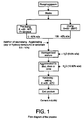
- the present invention relates to a process for the chemical and physical adaptation of phosphogypsum characterised in that it comprises three unitary operations named drying, mixing for reactions in the solid state, and agglomeration and in that the drying operation comprises at least pre-drying between ambient temperature and 40°C, and drying-dehydration between 60 and 250°C, preferably between 60 and 150°C.
- the process of the present invention describes the application of a novel process for the chemical and physical adaptation of chemical gypsum or phosphogypsum coming from the production of phosphoric acid and its use as a setting retarding agent in Portland type cements or in the preparation of other materials for construction.
- the adaptation is based on reactions in the solid state or in the presence of small amounts of water between the phosphogypsum and the agglutinating-neutralising agents, primarily by the application of oxy- and hydroxy-compounds, without rejecting the respective carbonates, of magnesium, aluminium and mainly calcium carbonate, along with mixtures thereof and later preparation of self-hardening pellets which facilitate its transport and handling.
- the technological process associated with the invention notably simplifies the number and type of unitary operations, and the preparation of pellets of mixtures of phosphogypsum, along with a reduction in energy costs due to operating at low temperatures (150 °C) for short times (1-2 hours) and a reduction in the quantities of neutralising agents, and it also minimise the volume of water required in the process.
- the process preferably involves chemical adaptation, by means of applying an agglutinating-neutralising agent, normally a base of the type hydrated lime or calcium oxide along with compounds of the carbonate type and those of other metals such as magnesium or aluminium, simultaneously with the physical adaptation or obtaining of an agglomerate with suitable mechanical properties, for use as a retardant in Portland type cements.
- an agglutinating-neutralising agent normally a base of the type hydrated lime or calcium oxide along with compounds of the carbonate type and those of other metals such as magnesium or aluminium
- neutralising-agglutinating agents are preferred added and mixed for the neutralisation and stabilisation of harmful compounds of said phosphogypsum.
- the mentioned neutralising-agglutinating agents are preferably selected from among oxy- and hydroxy-compounds, respective carbonates, of magnesium, aluminium and mainly calcium and mixtures thereof and can be mixed in a quantity of between 0.5 and 10 % w/w of chemical gypsum for the reaction in the solid state.
- the mixture of phosphogypsum and neutralising- agglutinating agents can take place between 5 and 60 minutes and preferably between 5 and 12 minutes.
- the mixing operation also can comprise the addition of water at between 0.5 and 5 % w/w.
- the neutralisation-stabilisation of harmful compounds of phosphogypsum occurs in a preferred way in the solid state.
- the agglomeration operation of the present invention is preferably carried out in a device selected from among pelletising disc, agglomerating drum, agglomerating cone or other device for obtaining an agglomerated or granulated material.
- the agglomeration operation can be carried out by means of the addition of water on the agglomerating disc or other agglomerating device, up to a final content of between 10 and 30 %.
- the agglomerated material obtained by the process of the present invention displays hydration reactions which harden said material (self hardening pellets). By this reactions, the agglomerated material acquires mechanical properties of compression strength of between 2 kg/pellet up to 30 kg/pellet and a number of falls greater than 10.
- Said hydration reactions which harden said material mentioned above are preferably carried out in the conditions selected from among up to 36 hours at ambient temperature and 4 hours at 40 °C.
- the product obtained in the agglomerated operation, without addition of water in said operation is characterised in that it comprises a crushing step in a ball mill as far as a size less than 45 ⁇ m to which is then added up to 40 % by weight of water preferably between 21 and 29 % by weight.
- the process of the present invention consists in an adaptation process based on the application of reactions in the solid state, at low temperature and in three unitary operations as are drying, mixing for reactions in the solid state, and agglomeration, in accordance with the steps stated below:
- phosphogypsum preferably coming from Step 4 above, may be subjected to fine grinding until a material less than 45 ⁇ m is obtained, to which up to 40 % of water is added, preferably between 21 and 29 % by weight, for the preparation of the desired constructive form, whether these be boards, blocks, or any other.
- This invention relates also to the material obtained by the process as described above.
- This material can be described as a modified phosphogypsum where harmful components contained in the same have been neutralised and stabilised.
- the modified and agglomerated phosphogypsum displays final free water contents of less than 5 % by weight and contents of free P 2 O 5 and F - equal to or less than 0.01 % and down as far as 0.0001 %, which makes it suitable for use in Portland type cement formulations (retardant) without any lessening of the mechanical properties of the concrete resulting from these cements.
- the present invention also relates to the use of the material as defined above for its application as cement setting retardant.
- the setting times for this material can be between 4 hours and a maximum of 8.
- This material can be also used as a construction material, and to add the same to Clinker and its application as cement setting retardant.
- the modified phosphogypsum associated with this invention was used as retardant for Portland cements, obtaining a product with physical and chemical characteristics that meet quality standards for cements according to national and international norms.
- This invention would entail the replacement of imports and a reduction in the use of natural gypsum along with a lessening of the environmental impact caused by mining operations for the extraction of the mineral.
- waste material is exploited coming from the wet process phosphoric acid production plants, granting the opportunity to reuse and apply this reject material in the construction industry, as well as reducing the environmental liabilities and the effect on the terrain and on landscapes.
Landscapes
- Chemical & Material Sciences (AREA)
- Engineering & Computer Science (AREA)
- Ceramic Engineering (AREA)
- Organic Chemistry (AREA)
- Materials Engineering (AREA)
- Structural Engineering (AREA)
- Inorganic Chemistry (AREA)
- Life Sciences & Earth Sciences (AREA)
- Geology (AREA)
- Civil Engineering (AREA)
- Chemical Kinetics & Catalysis (AREA)
- Environmental & Geological Engineering (AREA)
- General Life Sciences & Earth Sciences (AREA)
- Geochemistry & Mineralogy (AREA)
- Manufacturing & Machinery (AREA)
- Mechanical Engineering (AREA)
- Metallurgy (AREA)
- Curing Cements, Concrete, And Artificial Stone (AREA)
- Compounds Of Alkaline-Earth Elements, Aluminum Or Rare-Earth Metals (AREA)
Applications Claiming Priority (1)
| Application Number | Priority Date | Filing Date | Title |
|---|---|---|---|
| VE150706 | 2006-07-03 |
Publications (2)
| Publication Number | Publication Date |
|---|---|
| EP1876152A2 true EP1876152A2 (de) | 2008-01-09 |
| EP1876152A3 EP1876152A3 (de) | 2008-10-01 |
Family
ID=38236375
Family Applications (1)
| Application Number | Title | Priority Date | Filing Date |
|---|---|---|---|
| EP07008619A Withdrawn EP1876152A3 (de) | 2006-07-03 | 2007-04-27 | Verfahren zur physikalisch-chemischen Anpassung von Chemiegips oder Phosphorgips zur Verwendung in Zementrezepturen und anderen Baumaterialien |
Country Status (2)
| Country | Link |
|---|---|
| US (1) | US7585485B2 (de) |
| EP (1) | EP1876152A3 (de) |
Cited By (3)
| Publication number | Priority date | Publication date | Assignee | Title |
|---|---|---|---|---|
| CN101323436B (zh) * | 2008-07-21 | 2012-05-30 | 昆明理工大学 | 一种采用复合还原剂还原分解磷石膏的方法 |
| CN110498658A (zh) * | 2019-08-28 | 2019-11-26 | 贵州蓝图新材料股份有限公司 | 一种磷石膏基装配式外墙板及其制备方法 |
| CN111704388A (zh) * | 2020-06-11 | 2020-09-25 | 贵州凯襄新材料有限公司 | 一种混凝土缓凝剂及其制备方法 |
Families Citing this family (10)
| Publication number | Priority date | Publication date | Assignee | Title |
|---|---|---|---|---|
| CN105293961A (zh) * | 2015-11-23 | 2016-02-03 | 江苏一夫科技股份有限公司 | 一种磷石膏制备建筑石膏粉的方法 |
| CN105859172B (zh) * | 2016-03-31 | 2018-06-26 | 武汉理工大学 | 一种磷石膏基水泥超缓凝剂及其制备方法 |
| CN108863276A (zh) * | 2018-09-28 | 2018-11-23 | 张方琴 | 一种建材用石膏板 |
| CN109967488A (zh) * | 2019-02-28 | 2019-07-05 | 西南科技大学 | 一种磷矿浮选尾矿与磷石膏协同无害化处置方法 |
| CN112934906A (zh) * | 2019-12-11 | 2021-06-11 | 西南科技大学 | 一种利用灼烧生料无害化处理磷尾矿和磷石膏的方法 |
| CN111825421A (zh) * | 2020-07-29 | 2020-10-27 | 襄阳市政建设集团有限公司 | 一种基于保温材料的活性磷石膏微粉制备方法 |
| CN112430000A (zh) * | 2020-11-11 | 2021-03-02 | 中国葛洲坝集团水泥有限公司 | 一种用作水泥缓凝剂的改性钛石膏及其制备方法 |
| CN114380520B (zh) * | 2022-01-29 | 2023-02-10 | 中国建筑材料工业规划研究院 | 一种预处理磷石膏的方法、磷石膏粗品和回收产品 |
| CN115259727B (zh) * | 2022-08-30 | 2023-07-25 | 浙江玖龙新材料有限公司 | 一种混凝土超长缓凝剂及其生产工艺 |
| CN116177974B (zh) * | 2022-12-13 | 2024-07-16 | 贵州中建建筑科研设计院有限公司 | 一种基于磷石膏的机制砂尾泥自密实回填料及其制备方法与应用 |
Citations (11)
| Publication number | Priority date | Publication date | Assignee | Title |
|---|---|---|---|---|
| US3951675A (en) | 1972-10-02 | 1976-04-20 | Centre D'etudes Et De Recherches Des Phosphates Mineraux Cerphos | Method for the treatment of phosphogypsum |
| US4086099A (en) | 1974-06-28 | 1978-04-25 | Rhone-Poulenc Industries | Method of preparing plaster |
| US4151000A (en) | 1976-01-13 | 1979-04-24 | Produits Chimiques Ugine Kuhlmann | Anhydrite binder and method |
| US4301130A (en) | 1978-05-06 | 1981-11-17 | Politechnika Wroclawska | Method of washing waste phosphogypsum |
| US4388292A (en) | 1981-12-14 | 1983-06-14 | United States Gypsum Company | Process for reducing radioactive contamination in phosphogypsum |
| US4415543A (en) | 1980-02-12 | 1983-11-15 | Wilson Sr Eddie K | Process for treating phospho-gypsum waste product from wet-acid process of making phosphoric acid |
| US4421731A (en) | 1982-09-29 | 1983-12-20 | United States Gypsum Company | Process for purifying phosphogypsum |
| US4424196A (en) | 1982-06-29 | 1984-01-03 | United States Gypsum Company | Phosphohemihydrate process for purification of gypsum |
| US4533528A (en) | 1983-07-15 | 1985-08-06 | United States Gypsum Company | Process for continuously calcining gypsum to low dispersed consistency stucco |
| US4954134A (en) | 1989-07-31 | 1990-09-04 | Tennessee Valley Authority | Agglomeration of gypsum, limestone, or gypsum-limestone mix |
| US20030163014A1 (en) | 2000-10-05 | 2003-08-28 | Ellis William J. | Gypsum decontamination process |
Family Cites Families (21)
| Publication number | Priority date | Publication date | Assignee | Title |
|---|---|---|---|---|
| US2216555A (en) * | 1937-11-26 | 1940-10-01 | United States Gypsum Co | Set-stabilized calcined gypsum plaster |
| US3159497A (en) | 1960-10-25 | 1964-12-01 | Onoda Cement Co Ltd | Method of improving the grade of byproduct gypsum obtained in carrying out a wet process for production of phosphoric acid |
| GB1063632A (en) * | 1964-02-24 | 1967-03-30 | Ici Ltd | Process for casting gypsum |
| GB1187664A (en) * | 1967-06-20 | 1970-04-15 | Modular Plastics Developments | Process for the Production of Plaster |
| AU1431670A (en) * | 1970-04-24 | 1971-10-28 | Gebr Giulini Gmbh | Method of producing calcium sulphate hemihydrate from contaiminated types of gypsum, particularly phosphoric acid waste gypsum |
| DE2160205A1 (de) * | 1971-12-04 | 1973-06-07 | Knauf Westdeutsche Gips | Verfahren zur herstellung von abbindefaehigen calciumsulfaten aus feinteiligen calciumsulfaten |
| US3860433A (en) * | 1972-05-30 | 1975-01-14 | Borje W A Ost | Very high early strength cement |
| US3928053A (en) | 1973-06-04 | 1975-12-23 | Onoda Cement Co Ltd | Method of improving the grade of phosphoric acid by-product gypsum to be used as an inhibitor for cement setting and its apparatus |
| US3998596A (en) | 1973-06-04 | 1976-12-21 | Onoda Cement Company, Ltd. | Apparatus for treating by-product gypsum to be used as an inhibitor for setting of cement |
| FR2265701B1 (de) * | 1974-03-26 | 1980-11-14 | Charbonnages Ste Chimique | |
| FR2388771A1 (fr) * | 1977-04-29 | 1978-11-24 | Lafarge Sa | Platre obtenu a partir de phosphogypses et procede pour son obtention |
| DE2908266C2 (de) * | 1979-03-02 | 1986-01-09 | Gebr. Knauf Westdeutsche Gipswerke, 8715 Iphofen | Verfahren zur Herstellung eines Calciumsulfat-Halbhydrat-Dihydrat-Gemisches aus feinteiligem synthetischen Calciumsulfat-Halbhydrat |
| US4342732A (en) * | 1980-07-17 | 1982-08-03 | Smith Robert H | Sludge fixation and stabilization |
| US5261957A (en) * | 1990-11-26 | 1993-11-16 | Freeport-Mcmoran Resource Partners, Limited Partnership | Phosphogypsum composition having improved expansion properties |
| CN1085879A (zh) | 1992-10-16 | 1994-04-27 | 湖北襄樊水泥厂 | 磷石膏制水泥生产用增强石膏球 |
| CN1187477A (zh) | 1997-12-19 | 1998-07-15 | 徐宝良 | 脱水磷石膏及其生产方法 |
| JP2001139356A (ja) | 1999-11-08 | 2001-05-22 | Taiheiyo Cement Corp | セメント用石膏、その製造方法及び製造装置、並びにセメント組成物 |
| CN1171821C (zh) | 2002-06-26 | 2004-10-20 | 喻忠元 | 高效混凝土掺合剂 |
| CN1159250C (zh) | 2002-07-16 | 2004-07-28 | 武汉理工大学 | 改质磷石膏砖及作水泥缓凝剂的应用 |
| CN1211309C (zh) | 2002-08-09 | 2005-07-20 | 孙国庆 | 改性磷石膏 |
| RU2215707C1 (ru) | 2002-11-19 | 2003-11-10 | Гордеев Игорь Владимирович | Способ утилизации фосфогипса |
-
2007
- 2007-04-11 US US11/786,220 patent/US7585485B2/en not_active Expired - Fee Related
- 2007-04-27 EP EP07008619A patent/EP1876152A3/de not_active Withdrawn
Patent Citations (11)
| Publication number | Priority date | Publication date | Assignee | Title |
|---|---|---|---|---|
| US3951675A (en) | 1972-10-02 | 1976-04-20 | Centre D'etudes Et De Recherches Des Phosphates Mineraux Cerphos | Method for the treatment of phosphogypsum |
| US4086099A (en) | 1974-06-28 | 1978-04-25 | Rhone-Poulenc Industries | Method of preparing plaster |
| US4151000A (en) | 1976-01-13 | 1979-04-24 | Produits Chimiques Ugine Kuhlmann | Anhydrite binder and method |
| US4301130A (en) | 1978-05-06 | 1981-11-17 | Politechnika Wroclawska | Method of washing waste phosphogypsum |
| US4415543A (en) | 1980-02-12 | 1983-11-15 | Wilson Sr Eddie K | Process for treating phospho-gypsum waste product from wet-acid process of making phosphoric acid |
| US4388292A (en) | 1981-12-14 | 1983-06-14 | United States Gypsum Company | Process for reducing radioactive contamination in phosphogypsum |
| US4424196A (en) | 1982-06-29 | 1984-01-03 | United States Gypsum Company | Phosphohemihydrate process for purification of gypsum |
| US4421731A (en) | 1982-09-29 | 1983-12-20 | United States Gypsum Company | Process for purifying phosphogypsum |
| US4533528A (en) | 1983-07-15 | 1985-08-06 | United States Gypsum Company | Process for continuously calcining gypsum to low dispersed consistency stucco |
| US4954134A (en) | 1989-07-31 | 1990-09-04 | Tennessee Valley Authority | Agglomeration of gypsum, limestone, or gypsum-limestone mix |
| US20030163014A1 (en) | 2000-10-05 | 2003-08-28 | Ellis William J. | Gypsum decontamination process |
Cited By (3)
| Publication number | Priority date | Publication date | Assignee | Title |
|---|---|---|---|---|
| CN101323436B (zh) * | 2008-07-21 | 2012-05-30 | 昆明理工大学 | 一种采用复合还原剂还原分解磷石膏的方法 |
| CN110498658A (zh) * | 2019-08-28 | 2019-11-26 | 贵州蓝图新材料股份有限公司 | 一种磷石膏基装配式外墙板及其制备方法 |
| CN111704388A (zh) * | 2020-06-11 | 2020-09-25 | 贵州凯襄新材料有限公司 | 一种混凝土缓凝剂及其制备方法 |
Also Published As
| Publication number | Publication date |
|---|---|
| EP1876152A3 (de) | 2008-10-01 |
| US20080003174A1 (en) | 2008-01-03 |
| US7585485B2 (en) | 2009-09-08 |
Similar Documents
| Publication | Publication Date | Title |
|---|---|---|
| US7585485B2 (en) | Process for the physiochemical conditioning of chemical gypsum or phospho-gypsum for use in formulation for cement and other construction materials | |
| AU592408B2 (en) | Magnesium cement | |
| JP4700348B2 (ja) | 2成分系湿式セメント、その製造方法および使用方法 | |
| CN101624267B (zh) | 一种拜耳法赤泥的低温陶瓷固化剂 | |
| EP0994196B1 (de) | Verfahren zum Erhärten Stahlwerksslacke sowie damit hergestelltes Material | |
| US11912582B2 (en) | Systems and methods to recover value-added materials from gypsum | |
| CN113337295B (zh) | 一种利用大宗工业固废生产土壤调理剂的方法及产品 | |
| CN113502164A (zh) | 一种利用脱硫石膏和磷石膏与钾矿石生产矿物质土壤调理剂的方法及产品 | |
| CN107406326A (zh) | 将多种工业废物完全转化为可持续替代品和可用产品的过程 | |
| CN104496223A (zh) | 一种钡渣解毒方法 | |
| KR102240695B1 (ko) | 굴 패각과 명반석을 활용한 알루미나질 클링커 및 황산칼륨의 제조방법, 및 알루미나질 클링커 또는 황산칼륨을 포함하는 조성물 | |
| CN101723608A (zh) | 一种制备凝石胶凝材料的方法 | |
| CN115368042B (zh) | 一种利用氟石膏与石英废石生产多孔性硅灰石球粒的方法 | |
| KR20180051903A (ko) | 중금속 용출이 없는 무독성 표층혼합처리 공법 | |
| CN106698988B (zh) | 一种用碳酸盐岩改性磷石膏及其制备方法 | |
| KR102352690B1 (ko) | 염소 바이패스 더스트와 고수분 무기성 슬러지류를 이용한 친환경 인공골재 조성물, 인공골재 제조방법 및 인공골재 재활용방법 | |
| Kurdowski et al. | Red mud and phosphogypsum and their fields of application | |
| CN115140960B (zh) | 一种抗结团剂、预混物、土体固化剂及其制备与应用 | |
| KR100833217B1 (ko) | 준설토의 고화방법 및 이에 사용되는 준설토용 고화제 | |
| WO2022245733A1 (en) | Systems and methods to recover value-added materials from gypsum | |
| KR100628848B1 (ko) | 무기결합재 조성물 및 이를 이용한 경화체 제조방법 | |
| KR20220096603A (ko) | 굴패각을 활용한 순환 유동층 보일러 탈황제, 이를 이용한 순환유동층 보일러의 탈황방법 및 그 연소 잔재물을 활용한 결합재 조성물 | |
| KR20220005935A (ko) | 패각을 활용한 유동층 보일러 탈황제, 이를 이용한 순환유동층 보일러의 탈황방법 및 이의 연소 잔재물을 활용한 결합재 조성물 | |
| JP6804131B2 (ja) | けい酸質肥料、およびその製造方法 | |
| KR102352687B1 (ko) | 염소 바이패스 더스트와 분체성 저수분 무기 슬러지류를 이용한 친환경 인공골재 조성물, 인공골재 제조방법 및 인공골재 재활용방법 |
Legal Events
| Date | Code | Title | Description |
|---|---|---|---|
| PUAI | Public reference made under article 153(3) epc to a published international application that has entered the european phase |
Free format text: ORIGINAL CODE: 0009012 |
|
| AK | Designated contracting states |
Kind code of ref document: A2 Designated state(s): AT BE BG CH CY CZ DE DK EE ES FI FR GB GR HU IE IS IT LI LT LU LV MC MT NL PL PT RO SE SI SK TR |
|
| AX | Request for extension of the european patent |
Extension state: AL BA HR MK YU |
|
| PUAL | Search report despatched |
Free format text: ORIGINAL CODE: 0009013 |
|
| AK | Designated contracting states |
Kind code of ref document: A3 Designated state(s): AT BE BG CH CY CZ DE DK EE ES FI FR GB GR HU IE IS IT LI LT LU LV MC MT NL PL PT RO SE SI SK TR |
|
| AX | Request for extension of the european patent |
Extension state: AL BA HR MK RS |
|
| 17P | Request for examination filed |
Effective date: 20090331 |
|
| AKX | Designation fees paid |
Designated state(s): AT BE BG CH CY CZ DE DK EE ES FI FR GB GR HU IE IS IT LI LT LU LV MC MT NL PL PT RO SE SI SK TR |
|
| 17Q | First examination report despatched |
Effective date: 20091203 |
|
| STAA | Information on the status of an ep patent application or granted ep patent |
Free format text: STATUS: THE APPLICATION IS DEEMED TO BE WITHDRAWN |
|
| 18D | Application deemed to be withdrawn |
Effective date: 20141101 |