EP1876785A2 - Procédé d'informations de l'état de canal pour système de communication multiporteur - Google Patents
Procédé d'informations de l'état de canal pour système de communication multiporteur Download PDFInfo
- Publication number
- EP1876785A2 EP1876785A2 EP07019850A EP07019850A EP1876785A2 EP 1876785 A2 EP1876785 A2 EP 1876785A2 EP 07019850 A EP07019850 A EP 07019850A EP 07019850 A EP07019850 A EP 07019850A EP 1876785 A2 EP1876785 A2 EP 1876785A2
- Authority
- EP
- European Patent Office
- Prior art keywords
- csi
- mode
- feedback method
- subcarriers
- modulation
- Prior art date
- Legal status (The legal status is an assumption and is not a legal conclusion. Google has not performed a legal analysis and makes no representation as to the accuracy of the status listed.)
- Withdrawn
Links
Images




Classifications
-
- H—ELECTRICITY
- H04—ELECTRIC COMMUNICATION TECHNIQUE
- H04L—TRANSMISSION OF DIGITAL INFORMATION, e.g. TELEGRAPHIC COMMUNICATION
- H04L1/00—Arrangements for detecting or preventing errors in the information received
- H04L1/0001—Systems modifying transmission characteristics according to link quality, e.g. power backoff
- H04L1/0023—Systems modifying transmission characteristics according to link quality, e.g. power backoff characterised by the signalling
- H04L1/0028—Formatting
- H04L1/0029—Reduction of the amount of signalling, e.g. retention of useful signalling or differential signalling
-
- H—ELECTRICITY
- H04—ELECTRIC COMMUNICATION TECHNIQUE
- H04L—TRANSMISSION OF DIGITAL INFORMATION, e.g. TELEGRAPHIC COMMUNICATION
- H04L27/00—Modulated-carrier systems
- H04L27/26—Systems using multi-frequency codes
-
- H—ELECTRICITY
- H04—ELECTRIC COMMUNICATION TECHNIQUE
- H04L—TRANSMISSION OF DIGITAL INFORMATION, e.g. TELEGRAPHIC COMMUNICATION
- H04L1/00—Arrangements for detecting or preventing errors in the information received
- H04L1/0001—Systems modifying transmission characteristics according to link quality, e.g. power backoff
- H04L1/0023—Systems modifying transmission characteristics according to link quality, e.g. power backoff characterised by the signalling
- H04L1/0028—Formatting
- H04L1/003—Adaptive formatting arrangements particular to signalling, e.g. variable amount of bits
-
- H—ELECTRICITY
- H04—ELECTRIC COMMUNICATION TECHNIQUE
- H04L—TRANSMISSION OF DIGITAL INFORMATION, e.g. TELEGRAPHIC COMMUNICATION
- H04L5/00—Arrangements affording multiple use of the transmission path
- H04L5/003—Arrangements for allocating sub-channels of the transmission path
- H04L5/0037—Inter-user or inter-terminal allocation
-
- H—ELECTRICITY
- H04—ELECTRIC COMMUNICATION TECHNIQUE
- H04L—TRANSMISSION OF DIGITAL INFORMATION, e.g. TELEGRAPHIC COMMUNICATION
- H04L5/00—Arrangements affording multiple use of the transmission path
- H04L5/003—Arrangements for allocating sub-channels of the transmission path
- H04L5/0042—Intra-user or intra-terminal allocation
-
- H—ELECTRICITY
- H04—ELECTRIC COMMUNICATION TECHNIQUE
- H04L—TRANSMISSION OF DIGITAL INFORMATION, e.g. TELEGRAPHIC COMMUNICATION
- H04L5/00—Arrangements affording multiple use of the transmission path
- H04L5/003—Arrangements for allocating sub-channels of the transmission path
- H04L5/0044—Allocation of payload; Allocation of data channels, e.g. PDSCH or PUSCH
- H04L5/0046—Determination of the number of bits transmitted on different sub-channels
-
- H—ELECTRICITY
- H04—ELECTRIC COMMUNICATION TECHNIQUE
- H04L—TRANSMISSION OF DIGITAL INFORMATION, e.g. TELEGRAPHIC COMMUNICATION
- H04L5/00—Arrangements affording multiple use of the transmission path
- H04L5/003—Arrangements for allocating sub-channels of the transmission path
- H04L5/0058—Allocation criteria
- H04L5/006—Quality of the received signal, e.g. BER, SNR, water filling
-
- H—ELECTRICITY
- H04—ELECTRIC COMMUNICATION TECHNIQUE
- H04L—TRANSMISSION OF DIGITAL INFORMATION, e.g. TELEGRAPHIC COMMUNICATION
- H04L5/00—Arrangements affording multiple use of the transmission path
- H04L5/0091—Signalling for the administration of the divided path, e.g. signalling of configuration information
- H04L5/0094—Indication of how sub-channels of the path are allocated
-
- H—ELECTRICITY
- H04—ELECTRIC COMMUNICATION TECHNIQUE
- H04L—TRANSMISSION OF DIGITAL INFORMATION, e.g. TELEGRAPHIC COMMUNICATION
- H04L1/00—Arrangements for detecting or preventing errors in the information received
- H04L1/0001—Systems modifying transmission characteristics according to link quality, e.g. power backoff
- H04L1/0002—Systems modifying transmission characteristics according to link quality, e.g. power backoff by adapting the transmission rate
- H04L1/0003—Systems modifying transmission characteristics according to link quality, e.g. power backoff by adapting the transmission rate by switching between different modulation schemes
-
- H—ELECTRICITY
- H04—ELECTRIC COMMUNICATION TECHNIQUE
- H04L—TRANSMISSION OF DIGITAL INFORMATION, e.g. TELEGRAPHIC COMMUNICATION
- H04L1/00—Arrangements for detecting or preventing errors in the information received
- H04L1/0001—Systems modifying transmission characteristics according to link quality, e.g. power backoff
- H04L1/0023—Systems modifying transmission characteristics according to link quality, e.g. power backoff characterised by the signalling
- H04L1/0025—Transmission of mode-switching indication
-
- H—ELECTRICITY
- H04—ELECTRIC COMMUNICATION TECHNIQUE
- H04L—TRANSMISSION OF DIGITAL INFORMATION, e.g. TELEGRAPHIC COMMUNICATION
- H04L1/00—Arrangements for detecting or preventing errors in the information received
- H04L1/0001—Systems modifying transmission characteristics according to link quality, e.g. power backoff
- H04L1/0023—Systems modifying transmission characteristics according to link quality, e.g. power backoff characterised by the signalling
- H04L1/0026—Transmission of channel quality indication
-
- H—ELECTRICITY
- H04—ELECTRIC COMMUNICATION TECHNIQUE
- H04L—TRANSMISSION OF DIGITAL INFORMATION, e.g. TELEGRAPHIC COMMUNICATION
- H04L25/00—Baseband systems
- H04L25/02—Details ; arrangements for supplying electrical power along data transmission lines
- H04L25/0202—Channel estimation
- H04L25/0204—Channel estimation of multiple channels
-
- H—ELECTRICITY
- H04—ELECTRIC COMMUNICATION TECHNIQUE
- H04L—TRANSMISSION OF DIGITAL INFORMATION, e.g. TELEGRAPHIC COMMUNICATION
- H04L5/00—Arrangements affording multiple use of the transmission path
- H04L5/0001—Arrangements for dividing the transmission path
- H04L5/0003—Two-dimensional division
- H04L5/0005—Time-frequency
- H04L5/0007—Time-frequency the frequencies being orthogonal, e.g. OFDM(A) or DMT
Definitions
- the present invention generally relates to a mobile communication system, and more particularly, to a Channel State Information (CSI) feedback method for a multi-carrier communication system.
- CSI Channel State Information
- a multi-carrier transmission technology such as, for example, an OFDM (Orthogonal Frequency Division Multiplexing Scheme) has been proposed as a basis technology for supporting a data rate which will be required in an advanced mobile communication service.
- OFDM Orthogonal Frequency Division Multiplexing Scheme
- the CSI in the multi-carrier communication system increases in proportion to the run of subcarriers, the amount of feedback information, and a the feedback period.
- Run which is a known terminology in Run-length encoding
- the run is sequences in which the same data value occurs in many consecutive data elements. Accordingly, the run is the sequences of subcarriers to which an identical modulation mode is allocated.
- a base station performs adaptive modulation and resource/power allocation processes based on the CSI for each subcarrier fed back from an MS(Mobile Station), that is, a modulation and coding level. For instance, in case of 4 types of modulation levels, 2-bits of information are required in order to divide each of the modulation levels. Thus, when an OFDM method is used, the MS feeds back each modulation level for all the allocated subcarriers to the base station, resulting in an exponential increase of CSI. To reduce the amount of CSI, a method for grouping adjacent subcarriers and allocating identical modulation levels based on subcarriers whose channel states are worst in the groups has been suggested.
- the modulation levels are allocated to subcarriers of one group in a lump, deteriorating the accuracy of CSI and likewise reducing system performance.
- a system and method which can reduce the amount of information for the CSI is desirable.
- CSI channel state information
- a CSI transmission mode is determined by a CSI feedback method in a multi-carrier communication system according to data traffic of a reverse link. According to the determined CSI transmission mode, CSI for subcarriers is encoded into one CSI codeword, and the CSI codeword is transmitted to the base station. The CSI is a modulation mode to be allocated to the subcarriers.
- the CSI transmission mode is classified into a first rough mode, a second rought mode, a first fine mode, and a second fine mode according to a CSI classification distinguishability.
- the CSI classification distinguishability increases in order of the first rough mode, the second rough mode, the first fine mode, and the second fine mode, with the second fine mode being the highest in order.
- the CSI transmission mode is determined using a decreasing CSI classification distinguishability.
- the above subcarriers are classified as no transmission(NoTx) and (binary phase shift keying) BPSK in the first rough mode, NoTx, BPSK and QPSK (quadrature phase shift keying) in the second rought mode, NoTx, BPSK, QPSK and 16QAM (16-quadrature phase shift keying in the first fine mode, and NoTx, BPSK, PSK, 16QAM and 64QAM (64-quadrature phase shift keying) in the second fine mode.
- the above encoding comprises the steps of measuring SINRs of the subcarriers, allocating identical modulation modes to subcarriers having similar SINRs according to the CSI transmission mode, binding contiguous subcarriers of a frequency region to CSI groups among the subcarriers allocated with the identical modulation modes, and generating the subcarriers as one CSI codeword by an RLE(Run Length Encoding) method.
- the CSI transmission mode indicates two modulation modes, including: a first modulation mode for displaying the CSI of the subcarriers in NoTx and BPSK; a second modulation mode for displaying the CSI of the subcarriers in BPSK and QPSK; a third modulation mode for displaying the CSI of the subcarriers in QPSK and 16QAM; and a fourth transmission mode for displaying the CSI of the subcarriers in 16QAM and 64QAM.
- the CSI transmission mode is stepwise converted into the second, third, and fourth modulation modes from the first modulation mode.
- CSI is encoded for transmission according to a transmission mode of a next step relating to subcarriers allocated with high modulation modes among modulation modes displayed by the corresponding transmission mode.
- Fig. 1 is a block diagram which illustrates a structure of a base station to which a channel state information feedback method in accordance with an embodiment of the present invention.
- a base station includes a BS-transmitter 10, a BS-receiver 20, and a BS-controller 30 for controlling the base station components including the BS-transmitter 10 and the BS receiver 20.
- Signals transmitted from MSs(not shown) are received through a receiving antenna 21 of the BS receiver20, and processed by an A/D(Analog/Digital) and CP remove module 23 and are, then sent to an are outputted as a plurality of sub channel signal sequences FFT(Fast Fourier Transform) and S/P(Serial/Parallel) module 25and are outputted as a plurality of sub channel signal sequences.
- the sub channel signal sequences are demodulated by a CSI and Decoder 27. Among the demodulated signals, CSI signals are transmitted to the BS controller30.
- data which is to be transmitted to an MS is encoded by an Encoder 13 of the BS transmitter 10, multiplexed by an IFFT and P/S(Paraliel/Serial) module 15, and then forwarded to a CP Insert and D/A 17 and converted into an analog signal which is then is transmitted via a transmission antenna 29.
- the BS controller 30 analyzes the CSI signals received from the receiver 20 and generates control signals based on the control signals such that the encoder 13 allocates subcarriers and bits for the subcarriers to the corresponding MSs according to the control signals which are transmitted from the BS controller 30.
- the base station can allocate bits for each subcarrier, the MSs feedback CSI for the allocated subcarriers to the base station.
- Fig. 2 is a flow chart illustrating a signal processing procedure between an MS and a BS for carrying out resource/power allocation and adaptive modulation processes in an FDD OFDMA system.
- an MS 32 measures SINRs(Signal-to-Interference and Noise Ratios) for each of the allocated subcarrier(s) by monitoring a channel state.
- the MS 32 then counts the run of contiguous subcarriers having an identical SINR in step S202.
- the MS 32 then having determined the run continous subcarriers having an indentical SINR encodes a corresponding CSI and transmits the encoded CSI in step S203.
- a BS 30 then receives the encoded CSI signal from the MS 32 and proceeds to decode the encoded CSI signal in step S204.
- the BS 30-then transmits resource allocation information and user data to the MS 22 in step S206.
- the MS 32 decodes the user data according to the resource allocation information (S207).
- Equation 1 An SINR ⁇ n for each subcarrier is obtained using Equation 1 below.
- ⁇ n H n 2 • ⁇
- H n is a channel transfer function relative to an nth subcarrier
- ⁇ is an entire SINR value.
- the MS compares the SINR value ⁇ n for each subcarrier obtained from equation 1 with a predetermined threshold SINR value ⁇ threshold , determines a maximum modulation mode for each subcarriers, expresses the maximum modulation mode to be allocated to the corresponding subcarriers as CSI, and transmits the CSI to the BS 30.
- the BS 30 carries out resource allocation, power allocation and adaptive modulation processes based on the CSI received from the MS 32.
- an amount of feedback information R feedback transmitted to the BS 30 during a predetermined period increases in proportion to the run of subcarriers N sub , the number of bits that configure feedback information B sub , and a feedback update period f update , as shown in Equation 2.
- R feedback N sub ⁇ B sub ⁇ f update
- the increase in the amount of feedback information R feedback can deteriorate the channel efficiency of a reverse link.
- the amount of the feedback information R feedback should be reduced. Therefore, with consideration to Equation 2, to in order to reduce the amount of the feedback information R feedback transmitted to the BS, the number of the bits B sub that configure the feedback information can be reduced and/or the feedback update period f update can be reduced.
- changing the feedback update period f update may have an influence on system performance. Accordingly, the feedback update period should be determined in consideration of channel situations.
- a CSI encoding technique for reducing the number of bits B sub that configure the feedback information and a CSI transmission technique for adaptively controlling the feedback update period f update in consideration of channel situations have been applied, thereby optimally maintaining system performance and increasing channel efficiency of a reverse link.
- Fig. 3 is a table illustrating the number subcarrier blocks having a maximum contiguous identical modulation mode which is averagely obtained for 1024 and 2048 subcarriers under indoor, outdoor, pedestrian, and vehicular mobile channel environments.
- the subcarriers of the maximum contiguous identical modulation mode are grouped, and a lot of CSI for subcarriers included in a specific group is encoded in a lump.
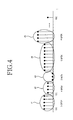
- Fig. 4 is a diagram for describing a grouping of contiguous subcarriers in a CSI feedback method in accordance with an embodiment of the present invention.
- Fig. 4 five contiguous sub channels from among all sub channels are determined in a QPSK (Quadrature Phase Shift Keying) mode to be organized as a first group 41.
- QPSK Quadrature Phase Shift Keying
- Four contiguous sub channels are determined in a BPSK (Binary Phase Shift Keying) mode to be organized as a second group 42, and three contiguous sub channels are determined in a no transmission (NoTx) mode to be organized as a third group 43.
- NoTx no transmission
- nine contiguous sub channels are decided in a QPSK mode to be organized as a fourth group 44, and four contiguous sub channels in a 16QAM mode to be organized as a fifth group 45.
- the above organized sub channel groups are encoded into 5-QPSK, 4-BPSK, 3-NoTx, 9-BPSK, and 4-16QAM by using an RLE(Run-Length Encoding) method.
- the MS compresses and transmits channel state information on only the subcarriers that are most likely to be allocated , rather than the entire subcarriers, using the RLE method. Thus, it can reduce an amount of feedback information while increasing system efficiency.
- the MS processes these subcarriers in other codes by considering NoTx codes or compressibility, and compresses them by using the RLE method.
- run-length having an identical mode in the multi-carrier communication system gets longer, thereby realizing remarkable compressibility.
- the MS feeds back CSI to the BS to every antenna.
- the BS compares a single antenna only with the operated system, increasing the CSI that should be transmitted to the BS from the MS in proportion to the number of the antennas. For example, if the BS uses an antenna selection technique, it is inefficient to receive CSI on all of the antennas (that are used for transmission by the BS to the MS) from the MS.
- the MS selects transmit antennas only having high preference by perceiving channel states of each antenna, that is, it selects the transmit antennas only having the best CSI, loads the information on the selected transmit antennas only, and transmits the to the BS by using the RLE technique, thereby increasing feedback efficiency.
- an RL code encoded by the RLE method is adaptively transmitted to the BS according to data of a reverse link and under various circumstances.
- CSI feedback method of the present invention CSI transmission modes differentiated by the type and the number of modulation modes that are applicable to subcarriers are selectively applied when carrying out a CSI transmission process.
- Fig. 5 is a table illustrating CSI information displayable by CSI transmission mode used in a CSI feedback method in accordance with an embodiment of the present invention.
- a CSI transmission mode is largely classified into a rough mode and a fine mode.
- the rough mode is subdivided into a first rough mode R1 and a second rough mode R2.
- the fine mode is subdivided into a first fine mode F1 and a second fine mode F2.
- Modulation modes which are displayable as CSI on each subcarrier in the R1 mode are NoTx and BPSK
- modulation modes which are displayable as CSI on each subcarrier in the R2 mode are NoTx, BPSK, and QPSK.
- modulation modes which are displayable as CSI on each of the subcarriers in the F1 mode are NoTx, BPSK, QPSK, and 16QAM
- modulation modes which are displayable as CSI on each of the subcarriers in the F2 mode are NoTx, BPSK, QPSK, 16QAM, and 64QAM.
- the CSI on all the subcarriers is displayed as either NoTx or BPSK while the MS operates in the R1 mode.
- the run of identical contiguous subcarriers is increased, thereby promoting the characteristic data compressibility of RLE, an encoding technique that is used in the present invention.
- channel states of the subcarriers can be subdivided to provide more detail when displaying the channel states.
- compressibility deteriorates, and the number of bits that are required for displaying the CSI which is transmitted to the BS may increase.
- Fig. 6 is a diagram sequentially illustrating a reverse link frame for each of F2, F1, R2, and R1 transmission modes in a CSI feedback method in accordance with an embodiment of the present invention.
- the reverse link frame includes a preamble, data, and a CSI field, and determines a CSI transmission mode according to an amount of data which is transmitted through one frame. That is to say, if the amount of data which is transmitted through the reverse link is small, the number of bits for CSI transmitting can be set to be relatively large. Thus, when transmitting a small amount of data per frame it is perferable to transmit CSI using the F2 mode having a high CSI classification distinguishability for subcarriers. If the amount of data to be transmitted per frame increases while transmitting the CSI in the F2 mode, an MS converts the CSI transmission mode into F1, R2, and R1 transmission modes from the F2 mode in order ,respectively.
- a transmission mode having low classification distinguishability (e.g., the R1 mode) the number of bits for displaying the transmitted CSI is reduced.
- a mode having low-classification distinguishability e.g., the R1 mode
- a minimal CSI field is included within the predetermined maximum data frame to assure that the a feedback information transmission (i.e., the CSI) is kept to a minimum.
- Fig. 7 is a table for arranging CSI displayable by CSI transmission mode used for a CSI feedback method in accordance with a second embodiment of the present invention.
- a CSI transmission mode is classified into S1, S2, S3, and S4 modes: the S1 mode defines modulation modes which are displayable as CSI for each subcarrier into a NoTx and a BPSK modulation mode; the S2 mode defines the modulation modes displayable as the CSI for each subcarrier into a BPSK and a QPSK modulation mode; the S3 mode defines the modulation modes displayable as the CSI for each subcarrier into a QPSK and a 16QAM modulation mode; and the S4 mode defines the modulation modes displayable as the CSI for each subcarrier into a 16QAM and a 64QAM modulation mode. Therefore, unlike the CSI feedback method as described in with the first embodiment, all CSI classification distinguishabilities by CSI transmission mode are the same.
- Fig. 8 is a diagram illustrating a CSI feedback method in accordance with an alternative embodiment of the present invention.
- an MS starts transmitting CSI in an S1 mode which displays a modulation mode having the lowest modulation efficiency. If data traffic of a reverse link is not generated even after transmitting the CSI in the S1 mode, the MS is converted into an S2 mode to transmit the CSI in the S2 mode that has improved the modulation efficiency of CSI of the S 1 mode.
- the transmission mode is converted into the S2 mode, among subcarriers determined as NoTx and BPSK in the S1 mode, the MS reclassifies subcarriers determined as BPSK into subcarriers which can conduct BPSK modulation and subcarriers which can conduct QPSK modulation. Then, the MS transmits the CSI in the S2 mode. And, if an idle state continues after transmitting the CSI, the MS is converted into a CSI transmission mode which can display high modulation efficiency in the S3 and S4 modes.
- Fig. 9 is a table for setting modulation modes displayed as CSI to NoTx, BPSK, QPSK, 16QAM, and 64QAM and for arranging codes used when performing a CSI feedback process in a CSI feedback method in accordance with the present invention.
- the code table includes three makeup codes in corresponding to each modulation mode, that is, 128,64, and 32 makeup codes and one completion code
- the above code table is generated by obtaining a probability of producing codewords of each modulation mode under pedestrian channel environment, and by carrying out a Hofmann coding process based on the obtained probability.
- the termination code is used for expressing a run which is continued up to 31 from 0, and 5 bits follow the termination code in order to indicate the run-length between 0 and 31..
- Fig. 10 is a table showing results of encoding CSI with the RLE method of Fig. 9 under various channel environments by using 1024 and 2048 subcarriers, respectively, in consideration of 5 modulation modes as the CSI.
- an amount of CSI feedback information is reduced by more than 80% compared to the known CSI feedback method even under a mobile channel environment of a vehicle with high mobility.
- compression rates produced when CSI is transmitted at two levels such as NoTx and BPSK are also displayed on a vehicle mobile channel environment item.
- an amount of information has been decreased by more than 90%.
- the CSI feedback method in accordance with the present invention can decrease the amount of feedback information by grouping subcarriers having contiguous identical channel states and compressively transmitting the channel states of the grouped subcarriers by using an RLE method.
- the amount of CSI feedback information can be reduced by about 90% with the use of 2048 subcarriers under vehicular mobile environment.
- the amount of the CSI feedback information can reduced in the FDD multi-carrier system.
- each MS can configure CSI with consideration to QoS (Quality of Service) that a user requires, so that the BS can allocate subcarriers and bits by considering QoS of the MSs.
- QoS Quality of Service
- the present invention reducesthe amount of feedback information required by redefining CSI consideration of base station scheduling. If an MS has subcarriers and does not want to allocate channels thereto, the amount of CSI feedback information can be further reduced by using an RLE method with an NoTx code or a specially defined code thus increasing system efficiency. And, in case a base station operating a multi-antenna system, a MS feeds back corresponding CSI to the base station by selecting an antenna having a good channel state through the RLE method, thereby effectively controlling the amount of CSI feedback information required by the multi-antenna system. Accordingly, these and other aspects of the present invention can be incorporated in existing communication systems.
- the CSI feedback method in accordance with the present invention adaptively conducts a CSI feedback process according to an amount of data transmitted on a reverse link, effectively using resources of the reverse link.
- the present invention stepwise carries out the feedback process according to an amount of reverse data in consideration of channel situations. As a result, it can improve system efficiency and channel efficiency of the reverse link.
Landscapes
- Engineering & Computer Science (AREA)
- Signal Processing (AREA)
- Computer Networks & Wireless Communication (AREA)
- Quality & Reliability (AREA)
- Mobile Radio Communication Systems (AREA)
Applications Claiming Priority (2)
| Application Number | Priority Date | Filing Date | Title |
|---|---|---|---|
| KR1020040009825A KR20050081528A (ko) | 2004-02-14 | 2004-02-14 | 다중반송파 통신시스템을 위한 채널 상태정보 피드백 방법 |
| EP05003080A EP1564953A3 (fr) | 2004-02-14 | 2005-02-14 | Procédé de rétroaction d'information de l'état du canal pour un système de communication de plusieurs porteuses |
Related Parent Applications (1)
| Application Number | Title | Priority Date | Filing Date |
|---|---|---|---|
| EP05003080A Division EP1564953A3 (fr) | 2004-02-14 | 2005-02-14 | Procédé de rétroaction d'information de l'état du canal pour un système de communication de plusieurs porteuses |
Publications (1)
| Publication Number | Publication Date |
|---|---|
| EP1876785A2 true EP1876785A2 (fr) | 2008-01-09 |
Family
ID=34698988
Family Applications (2)
| Application Number | Title | Priority Date | Filing Date |
|---|---|---|---|
| EP05003080A Withdrawn EP1564953A3 (fr) | 2004-02-14 | 2005-02-14 | Procédé de rétroaction d'information de l'état du canal pour un système de communication de plusieurs porteuses |
| EP07019850A Withdrawn EP1876785A2 (fr) | 2004-02-14 | 2005-02-14 | Procédé d'informations de l'état de canal pour système de communication multiporteur |
Family Applications Before (1)
| Application Number | Title | Priority Date | Filing Date |
|---|---|---|---|
| EP05003080A Withdrawn EP1564953A3 (fr) | 2004-02-14 | 2005-02-14 | Procédé de rétroaction d'information de l'état du canal pour un système de communication de plusieurs porteuses |
Country Status (4)
| Country | Link |
|---|---|
| US (1) | US20050232156A1 (fr) |
| EP (2) | EP1564953A3 (fr) |
| KR (1) | KR20050081528A (fr) |
| CN (1) | CN1684457A (fr) |
Cited By (6)
| Publication number | Priority date | Publication date | Assignee | Title |
|---|---|---|---|---|
| WO2010028573A1 (fr) * | 2008-09-09 | 2010-03-18 | 华为技术有限公司 | Procédé, appareil et système pour fournir une rétroaction d’erreur de signal dans un système de communication multi-porteuses |
| US20100202545A1 (en) * | 2009-02-06 | 2010-08-12 | Samsung Electronics Co., Ltd. | Power distribution method and apparatus for OFDM system |
| CN101635619B (zh) * | 2009-08-28 | 2012-09-05 | 华为技术有限公司 | 子载波发送方法、基站和系统 |
| CN101340223B (zh) * | 2008-08-07 | 2012-10-03 | 中兴通讯股份有限公司 | 基于波束成形的上行系统资源分配方法及装置 |
| RU2520382C2 (ru) * | 2009-09-04 | 2014-06-27 | Интел Корпорейшн | Способ и устройство для передачи сигнала ack/nack в системе беспроводной связи |
| US10959120B2 (en) | 2005-12-22 | 2021-03-23 | Qualcomm Incorporated | Methods and apparatus related to selecting control channel reporting formats |
Families Citing this family (86)
| Publication number | Priority date | Publication date | Assignee | Title |
|---|---|---|---|---|
| US7218948B2 (en) | 2003-02-24 | 2007-05-15 | Qualcomm Incorporated | Method of transmitting pilot tones in a multi-sector cell, including null pilot tones, for generating channel quality indicators |
| US9544860B2 (en) | 2003-02-24 | 2017-01-10 | Qualcomm Incorporated | Pilot signals for use in multi-sector cells |
| US8811348B2 (en) | 2003-02-24 | 2014-08-19 | Qualcomm Incorporated | Methods and apparatus for generating, communicating, and/or using information relating to self-noise |
| US9661519B2 (en) | 2003-02-24 | 2017-05-23 | Qualcomm Incorporated | Efficient reporting of information in a wireless communication system |
| US8503938B2 (en) | 2004-10-14 | 2013-08-06 | Qualcomm Incorporated | Methods and apparatus for determining, communicating and using information including loading factors which can be used for interference control purposes |
| NZ555079A (en) | 2004-10-14 | 2010-04-30 | Qualcomm Inc | Methods and apparatus for determining, communicating and using information which can be used for interference control purposes |
| US7450909B2 (en) | 2004-11-04 | 2008-11-11 | Samsung Electronics Co., Ltd | Apparatus and method for signal transmission and reception using downlink channel information in a sleep mode in a BWA communication system |
| EP1722583A1 (fr) * | 2005-05-11 | 2006-11-15 | Siemens Aktiengesellschaft | Beam-hopping dans un système de radiocommunication |
| US7986612B2 (en) * | 2005-08-22 | 2011-07-26 | Panasonic Corporation | Communication terminal apparatus, base station apparatus and reception quality reporting method |
| US9955438B2 (en) * | 2005-09-27 | 2018-04-24 | Qualcomm Incorporated | Method and apparatus for carrier allocation and management in multi-carrier communication systems |
| JP5063883B2 (ja) * | 2005-09-29 | 2012-10-31 | 富士通株式会社 | 無線通信装置、送信方法、送信装置、データ伝送システムおよびデータ伝送方法 |
| US9191840B2 (en) | 2005-10-14 | 2015-11-17 | Qualcomm Incorporated | Methods and apparatus for determining, communicating and using information which can be used for interference control |
| US8694042B2 (en) | 2005-10-14 | 2014-04-08 | Qualcomm Incorporated | Method and apparatus for determining a base station's transmission power budget |
| JP4870093B2 (ja) * | 2005-12-20 | 2012-02-08 | シャープ株式会社 | 通信システムおよびそれに用いる基地局および端末 |
| US9125093B2 (en) | 2005-12-22 | 2015-09-01 | Qualcomm Incorporated | Methods and apparatus related to custom control channel reporting formats |
| US9473265B2 (en) | 2005-12-22 | 2016-10-18 | Qualcomm Incorporated | Methods and apparatus for communicating information utilizing a plurality of dictionaries |
| US9125092B2 (en) | 2005-12-22 | 2015-09-01 | Qualcomm Incorporated | Methods and apparatus for reporting and/or using control information |
| US9148795B2 (en) | 2005-12-22 | 2015-09-29 | Qualcomm Incorporated | Methods and apparatus for flexible reporting of control information |
| US8437251B2 (en) | 2005-12-22 | 2013-05-07 | Qualcomm Incorporated | Methods and apparatus for communicating transmission backlog information |
| US9119220B2 (en) | 2005-12-22 | 2015-08-25 | Qualcomm Incorporated | Methods and apparatus for communicating backlog related information |
| US9137072B2 (en) | 2005-12-22 | 2015-09-15 | Qualcomm Incorporated | Methods and apparatus for communicating control information |
| US9451491B2 (en) | 2005-12-22 | 2016-09-20 | Qualcomm Incorporated | Methods and apparatus relating to generating and transmitting initial and additional control information report sets in a wireless system |
| US8514771B2 (en) | 2005-12-22 | 2013-08-20 | Qualcomm Incorporated | Methods and apparatus for communicating and/or using transmission power information |
| US9338767B2 (en) | 2005-12-22 | 2016-05-10 | Qualcomm Incorporated | Methods and apparatus of implementing and/or using a dedicated control channel |
| US20070249360A1 (en) * | 2005-12-22 | 2007-10-25 | Arnab Das | Methods and aparatus related to determining, communicating, and/or using delay information in a wireless communications system |
| US9572179B2 (en) | 2005-12-22 | 2017-02-14 | Qualcomm Incorporated | Methods and apparatus for communicating transmission backlog information |
| CN100350760C (zh) * | 2006-01-04 | 2007-11-21 | 东南大学 | 基于瞬时和统计信道信息的多天线信道反馈方法 |
| KR100965668B1 (ko) * | 2006-01-17 | 2010-06-24 | 삼성전자주식회사 | 통신 시스템에서 데이터 송수신 방법 및 시스템 |
| US10044532B2 (en) * | 2006-03-20 | 2018-08-07 | Texas Instruments Incorporated | Pre-coder selection based on resource block grouping |
| US20070243882A1 (en) | 2006-04-12 | 2007-10-18 | Qualcomm Incorporated | Method and apparatus for locating a wireless local area network associated with a wireless wide area network |
| JP5200002B2 (ja) * | 2006-04-27 | 2013-05-15 | インテル・コーポレーション | 適応ビットローディング用の変調パターン圧縮技術 |
| EP1863209A1 (fr) * | 2006-06-02 | 2007-12-05 | Alcatel Lucent | Rapport de la qualité de canal dans un système en multiplexage par division de fréquences orthogonales |
| WO2008025366A1 (fr) * | 2006-08-29 | 2008-03-06 | Telefonaktiebolaget Lm Ericsson (Publ) | Procédé et agencement pour une signalisation d'adaptation de liaison dans un réseau de communication sans fil |
| US8611259B2 (en) * | 2006-09-08 | 2013-12-17 | Samsung Electronics Co., Ltd. | Method and system for providing channel state information feedback in a wireless communication system |
| CA2680718C (fr) | 2007-03-19 | 2016-01-26 | Telefonaktiebolaget L M Ericsson (Publ) | Affectation de liaison montante destinee a declencher un premier ou second type de rapport cqi |
| US8009580B2 (en) * | 2007-07-13 | 2011-08-30 | Mitsubishi Electric Research Laboratories, Inc. | Signaling and training for antenna selection in OFDMA networks |
| US20090029714A1 (en) * | 2007-07-25 | 2009-01-29 | Rudrapatna Ashok N | Method of allocating bandwidth for transmission of channel quality information |
| EP2026488A1 (fr) * | 2007-08-14 | 2009-02-18 | Panasonic Corporation | Rapport ACQ contigu |
| EP2195951A4 (fr) | 2007-10-02 | 2013-01-23 | Ericsson Telefon Ab L M | Inclusion dans l'allocation de liaison montante d'une indication de quantité spécifique de cqi devant être reportée |
| GB0720723D0 (en) | 2007-10-23 | 2007-12-05 | Icera Inc | Reporting channel quality information |
| US7894483B2 (en) * | 2007-12-18 | 2011-02-22 | Infineon Technologies Ag | Multi-carrier communication via sub-carrier groups |
| KR20090077647A (ko) | 2008-01-11 | 2009-07-15 | 삼성전자주식회사 | 이동통신 시스템에서 단말의 가용 전력 정보를 전송하는방법 및 장치 |
| US8259599B2 (en) * | 2008-02-13 | 2012-09-04 | Qualcomm Incorporated | Systems and methods for distributed beamforming based on carrier-to-caused interference |
| CN101594680B (zh) * | 2008-05-29 | 2012-02-29 | 中兴通讯股份有限公司 | 一种对高速物理下行链路共享信道资源的反馈方法 |
| JP4955614B2 (ja) | 2008-06-25 | 2012-06-20 | 京セラ株式会社 | 無線通信装置および無線通信方法 |
| CN101621849B (zh) * | 2008-06-30 | 2011-12-07 | 中兴通讯股份有限公司 | 一种下行数据接收状态的反馈方法 |
| CN101626621B (zh) | 2008-07-08 | 2013-03-20 | 华为技术有限公司 | 一种信息调度方法、装置 |
| US8249204B2 (en) * | 2008-07-11 | 2012-08-21 | Industrial Technology Research Institute | Apparatus and method for channel state information feedback |
| KR101549004B1 (ko) | 2008-12-31 | 2015-09-11 | 엘지전자 주식회사 | 무선 통신 시스템에서 신호 전송 모드 결정 기법 |
| US8780689B2 (en) * | 2009-03-03 | 2014-07-15 | Qualcomm Incorporated | Method and system for reducing feedback information in multicarrier-based communication systems based on tiers |
| CN102365837B (zh) | 2009-03-29 | 2014-05-14 | Lg电子株式会社 | 在无线通信系统中发送控制信息的方法及其装置 |
| WO2010123295A2 (fr) * | 2009-04-24 | 2010-10-28 | 한국전자통신연구원 | Procédé collaboratif de communication dans un système cellulaire de communications sans fil et terminal destiné à mettre en oeuvre le procédé |
| US8923110B2 (en) * | 2009-04-24 | 2014-12-30 | Telefonaktiebolaget L M Ericsson (Publ) | Channel state information reconstruction from sparse data |
| US9654187B2 (en) * | 2009-04-24 | 2017-05-16 | Telefonaktiebolaget Lm Ericsson (Publ) | Efficient uplink transmission of channel state information |
| CN101877628B (zh) * | 2009-04-30 | 2013-11-06 | 中兴通讯股份有限公司 | 一种多载波反馈信息的发送系统及方法 |
| EP2448136B1 (fr) | 2009-06-23 | 2019-01-23 | Alcatel Lucent | Procédé de renvoi d'informations d'état de canal et dispositif correspondant |
| US9083482B2 (en) | 2009-09-27 | 2015-07-14 | Lg Electronics Inc. | Method and apparatus for transmitting reference signal in wireless communication system |
| KR101754970B1 (ko) * | 2010-01-12 | 2017-07-06 | 삼성전자주식회사 | 무선 통신 시스템의 채널 상태 측정 기준신호 처리 장치 및 방법 |
| WO2011085540A1 (fr) * | 2010-01-12 | 2011-07-21 | 富士通株式会社 | Procédé et dispositif pour renvoyer un état de canal spatial |
| EP2362563B1 (fr) * | 2010-02-23 | 2016-01-06 | Alcatel Lucent | Rétroaction d'informations d'état de canal |
| US8582638B2 (en) * | 2010-04-30 | 2013-11-12 | Blackberry Limited | System and method for channel state feedback in carrier aggregation |
| CN104135351B (zh) * | 2010-05-28 | 2017-09-26 | 华为技术有限公司 | 一种对多载波应答信息的反馈方法、装置和系统 |
| EP2578034B1 (fr) | 2010-06-01 | 2019-11-27 | Nokia Solutions and Networks Oy | Appareil et procédé de fourniture d'informations de porteuse |
| KR101790505B1 (ko) * | 2010-06-01 | 2017-11-21 | 주식회사 골드피크이노베이션즈 | 서브프레임 구성에 따른 채널상태정보-기준신호 할당 장치 및 방법 |
| WO2011152674A2 (fr) * | 2010-06-04 | 2011-12-08 | 엘지전자 주식회사 | Procédé et appareil pour transmettre des informations d'état de canal dans un système de communication sans fil à plusieurs porteuses |
| WO2011155777A2 (fr) * | 2010-06-09 | 2011-12-15 | 엘지전자 주식회사 | Procédé et dispositif pour transmettre/recevoir des informations d'état de canal dans un système de communication sans fil qui supporte des porteuses multiples |
| CN102291216A (zh) * | 2010-06-17 | 2011-12-21 | 株式会社Ntt都科摩 | 一种用户设备及信道状态信息反馈方法 |
| KR101507865B1 (ko) | 2010-07-21 | 2015-04-07 | 엘지전자 주식회사 | 채널 상태 정보 피드백을 송수신하는 방법 및 그 장치 |
| JP5668139B2 (ja) * | 2010-07-26 | 2015-02-12 | エルジー エレクトロニクス インコーポレイティド | マルチキャリアアグリゲーションを支援する無線接続システムにおいて非周期的チャネル状態情報フィードバック方法 |
| CN102082636B (zh) * | 2010-08-16 | 2013-05-08 | 电信科学技术研究院 | 一种信道状态信息csi反馈指示方法和基站及系统 |
| CN103081385B (zh) | 2010-09-14 | 2016-02-17 | Lg电子株式会社 | 用于上行链路资源分配的方法和装置 |
| KR101835326B1 (ko) | 2010-09-26 | 2018-03-07 | 엘지전자 주식회사 | 다중 안테나 지원 무선 통신 시스템에서 효율적인 피드백 방법 및 장치 |
| JP5995850B2 (ja) * | 2010-09-29 | 2016-09-21 | エルジー エレクトロニクス インコーポレイティド | 多重アンテナ支援無線通信システムにおいて効率的なフィードバック方法及び装置 |
| US8687555B2 (en) | 2010-09-29 | 2014-04-01 | Lg Electronics Inc. | Method and apparatus for performing effective feedback in wireless communication system supporting multiple antennas |
| KR101114681B1 (ko) * | 2010-10-29 | 2012-03-05 | 세종대학교산학협력단 | Miso-ofdm 통신 시스템 및 그 피드백 방법 |
| CN102468938A (zh) * | 2010-11-10 | 2012-05-23 | 鼎桥通信技术有限公司 | 上行反馈数据传输方法及用户设备 |
| US10085164B2 (en) * | 2011-04-28 | 2018-09-25 | Qualcomm Incorporated | System and method for managing invalid reference subframes for channel state information feedback |
| KR101556174B1 (ko) | 2011-06-10 | 2015-10-13 | 엘지전자 주식회사 | 제어 정보를 전송하는 방법 및 이를 위한 장치 |
| CN104509186B (zh) * | 2012-11-02 | 2018-05-18 | 华为技术有限公司 | 信道状态信息进程配置和触发的方法、基站及用户设备 |
| US10033601B2 (en) * | 2012-12-28 | 2018-07-24 | Industrial Technology Research Institute | Method of reporting CQI and related communication device |
| US9647801B2 (en) * | 2013-12-27 | 2017-05-09 | Arris Enterprises, Inc. | Method for selecting modulation tiers for transmissions over an orthogonal frequency division multiplexed (OFDM) channel |
| US9647786B2 (en) * | 2013-12-27 | 2017-05-09 | Arris Enterprises, Inc. | Determining bitloading profiles based on sNR measurements |
| KR102381442B1 (ko) * | 2015-01-23 | 2022-04-01 | 삼성전자주식회사 | 간섭 제거를 위한 전송모드 블라인드 검출 기법 |
| CN112042245B (zh) * | 2018-02-23 | 2025-07-22 | 上海诺基亚贝尔股份有限公司 | 基于互易性的csi报告配置 |
| JP2021129126A (ja) * | 2018-04-27 | 2021-09-02 | ソニーグループ株式会社 | 無線通信装置、および、無線通信方法 |
| WO2023147221A1 (fr) * | 2022-01-27 | 2023-08-03 | Mediatek Singapore Pte. Ltd. | Procédé et appareil de représentation efficace d'informations d'état de canal |
Family Cites Families (9)
| Publication number | Priority date | Publication date | Assignee | Title |
|---|---|---|---|---|
| ATE554578T1 (de) * | 2000-11-20 | 2012-05-15 | Sony Deutschland Gmbh | Adaptive unterträgerbelastung |
| US6947748B2 (en) * | 2000-12-15 | 2005-09-20 | Adaptix, Inc. | OFDMA with adaptive subcarrier-cluster configuration and selective loading |
| US6771706B2 (en) * | 2001-03-23 | 2004-08-03 | Qualcomm Incorporated | Method and apparatus for utilizing channel state information in a wireless communication system |
| US6751187B2 (en) * | 2001-05-17 | 2004-06-15 | Qualcomm Incorporated | Method and apparatus for processing data for transmission in a multi-channel communication system using selective channel transmission |
| EP1289179A1 (fr) * | 2001-08-28 | 2003-03-05 | Lucent Technologies Inc. | Réseau de télécommunications sans fil, terminal utilisateur, station de base, et méthode de télécommunication |
| US7477876B2 (en) * | 2001-11-02 | 2009-01-13 | Alcatel-Lucent Usa Inc. | Variable rate channel quality feedback in a wireless communication system |
| US20030125040A1 (en) * | 2001-11-06 | 2003-07-03 | Walton Jay R. | Multiple-access multiple-input multiple-output (MIMO) communication system |
| US7200178B2 (en) * | 2002-06-12 | 2007-04-03 | Texas Instruments Incorporated | Methods for optimizing time variant communication channels |
| KR100571806B1 (ko) * | 2003-02-11 | 2006-04-17 | 삼성전자주식회사 | 적응적 ofdma 시스템에서 궤환되는 채널 상태 정보를줄이기 위한 방법 및 이를 사용하는 적응적 ofdma시스템 |
-
2004
- 2004-02-14 KR KR1020040009825A patent/KR20050081528A/ko not_active Ceased
-
2005
- 2005-02-14 US US11/057,426 patent/US20050232156A1/en not_active Abandoned
- 2005-02-14 EP EP05003080A patent/EP1564953A3/fr not_active Withdrawn
- 2005-02-14 EP EP07019850A patent/EP1876785A2/fr not_active Withdrawn
- 2005-02-16 CN CNA200510069751XA patent/CN1684457A/zh active Pending
Cited By (7)
| Publication number | Priority date | Publication date | Assignee | Title |
|---|---|---|---|---|
| US10959120B2 (en) | 2005-12-22 | 2021-03-23 | Qualcomm Incorporated | Methods and apparatus related to selecting control channel reporting formats |
| CN101340223B (zh) * | 2008-08-07 | 2012-10-03 | 中兴通讯股份有限公司 | 基于波束成形的上行系统资源分配方法及装置 |
| WO2010028573A1 (fr) * | 2008-09-09 | 2010-03-18 | 华为技术有限公司 | Procédé, appareil et système pour fournir une rétroaction d’erreur de signal dans un système de communication multi-porteuses |
| US20100202545A1 (en) * | 2009-02-06 | 2010-08-12 | Samsung Electronics Co., Ltd. | Power distribution method and apparatus for OFDM system |
| US8995538B2 (en) * | 2009-02-06 | 2015-03-31 | Samsung Electronics Co., Ltd. | Power distribution method and apparatus for OFDM system |
| CN101635619B (zh) * | 2009-08-28 | 2012-09-05 | 华为技术有限公司 | 子载波发送方法、基站和系统 |
| RU2520382C2 (ru) * | 2009-09-04 | 2014-06-27 | Интел Корпорейшн | Способ и устройство для передачи сигнала ack/nack в системе беспроводной связи |
Also Published As
| Publication number | Publication date |
|---|---|
| KR20050081528A (ko) | 2005-08-19 |
| US20050232156A1 (en) | 2005-10-20 |
| CN1684457A (zh) | 2005-10-19 |
| EP1564953A2 (fr) | 2005-08-17 |
| EP1564953A3 (fr) | 2007-03-14 |
Similar Documents
| Publication | Publication Date | Title |
|---|---|---|
| EP1876785A2 (fr) | Procédé d'informations de l'état de canal pour système de communication multiporteur | |
| US7047006B2 (en) | Method and apparatus for transmission and reception of narrowband signals within a wideband communication system | |
| EP3573261B1 (fr) | Appareil de radiocommunication et procédé de radiocommunication | |
| EP2080299B1 (fr) | Procédé de transmission d'informations de qualité de canal | |
| EP1677478B1 (fr) | Méthode d'affectation dynamique de canaux et de bits dans des systèmes de communication à accès multiple par répartition orthogonale de fréquences utilisant des retours d'information partielle de canal | |
| US9313787B2 (en) | Base station and transmission method | |
| EP2536055B1 (fr) | Transmission d'informations différentielles de qualité du canal de transmisison | |
| EP1821479B1 (fr) | Appareil et procédé pour attribuer un sous-canal à un système de communication sans fil | |
| US20110243027A1 (en) | Mobile station apparatus, communication method, and base station apparatus | |
| US20020183010A1 (en) | Wireless communication systems with adaptive channelization and link adaptation | |
| US20090067531A1 (en) | Method for reporting channel information in multiple antenna system | |
| EP2080287B1 (fr) | Procédé de transmission d'informations de rétroaction | |
| EP2068575A1 (fr) | Procédé de rapport d'indication de qualite de canal, procédé d'attribution de ressources radio, dispositif de station de base et terminal utilisateur | |
| CN102204321B (zh) | 无线通信装置以及无线通信系统 | |
| US20050180354A1 (en) | Method for allocating subchannels in an OFDMA mobile communication system | |
| JP2007166118A (ja) | チャネル品質伝送方法および端末 | |
| EP2066136A1 (fr) | Dispositif de communication radio, système de communication radio et procédé de communication radio | |
| HK40018199A (en) | Radio communication apparatus and radio communication method | |
| HK40018199B (en) | Radio communication apparatus and radio communication method | |
| HK1237137A1 (en) | Radio communication apparatus and radio communication method | |
| HK1237137B (en) | Radio communication apparatus and radio communication method |
Legal Events
| Date | Code | Title | Description |
|---|---|---|---|
| PUAI | Public reference made under article 153(3) epc to a published international application that has entered the european phase |
Free format text: ORIGINAL CODE: 0009012 |
|
| AC | Divisional application: reference to earlier application |
Ref document number: 1564953 Country of ref document: EP Kind code of ref document: P |
|
| AK | Designated contracting states |
Kind code of ref document: A2 Designated state(s): AT BE BG CH CY CZ DE DK EE ES FI FR GB GR HU IE IS IT LI LT LU MC NL PL PT RO SE SI SK TR |
|
| STAA | Information on the status of an ep patent application or granted ep patent |
Free format text: STATUS: THE APPLICATION HAS BEEN WITHDRAWN |
|
| 18W | Application withdrawn |
Effective date: 20081016 |