EP1879305A1 - Système de contrôle de communication sans fil, station de base radio et méthode de contrôle de communication sans fil - Google Patents
Système de contrôle de communication sans fil, station de base radio et méthode de contrôle de communication sans fil Download PDFInfo
- Publication number
- EP1879305A1 EP1879305A1 EP06745399A EP06745399A EP1879305A1 EP 1879305 A1 EP1879305 A1 EP 1879305A1 EP 06745399 A EP06745399 A EP 06745399A EP 06745399 A EP06745399 A EP 06745399A EP 1879305 A1 EP1879305 A1 EP 1879305A1
- Authority
- EP
- European Patent Office
- Prior art keywords
- transmission power
- radio communication
- new transmission
- scch
- setting section
- Prior art date
- Legal status (The legal status is an assumption and is not a legal conclusion. Google has not performed a legal analysis and makes no representation as to the accuracy of the status listed.)
- Withdrawn
Links
Images


Classifications
-
- H—ELECTRICITY
- H04—ELECTRIC COMMUNICATION TECHNIQUE
- H04J—MULTIPLEX COMMUNICATION
- H04J13/00—Code division multiplex systems
-
- H—ELECTRICITY
- H04—ELECTRIC COMMUNICATION TECHNIQUE
- H04W—WIRELESS COMMUNICATION NETWORKS
- H04W52/00—Power management, e.g. Transmission Power Control [TPC] or power classes
- H04W52/04—Transmission power control [TPC]
- H04W52/06—TPC algorithms
- H04W52/16—Deriving transmission power values from another channel
-
- H—ELECTRICITY
- H04—ELECTRIC COMMUNICATION TECHNIQUE
- H04W—WIRELESS COMMUNICATION NETWORKS
- H04W52/00—Power management, e.g. Transmission Power Control [TPC] or power classes
- H04W52/04—Transmission power control [TPC]
- H04W52/18—TPC being performed according to specific parameters
- H04W52/24—TPC being performed according to specific parameters using SIR [Signal to Interference Ratio] or other wireless path parameters
-
- H—ELECTRICITY
- H04—ELECTRIC COMMUNICATION TECHNIQUE
- H04W—WIRELESS COMMUNICATION NETWORKS
- H04W52/00—Power management, e.g. Transmission Power Control [TPC] or power classes
- H04W52/04—Transmission power control [TPC]
- H04W52/18—TPC being performed according to specific parameters
- H04W52/28—TPC being performed according to specific parameters using user profile, e.g. mobile speed, priority or network state, e.g. standby, idle or non-transmission
- H04W52/282—TPC being performed according to specific parameters using user profile, e.g. mobile speed, priority or network state, e.g. standby, idle or non-transmission taking into account the speed of the mobile
-
- H—ELECTRICITY
- H04—ELECTRIC COMMUNICATION TECHNIQUE
- H04W—WIRELESS COMMUNICATION NETWORKS
- H04W52/00—Power management, e.g. Transmission Power Control [TPC] or power classes
- H04W52/04—Transmission power control [TPC]
- H04W52/30—Transmission power control [TPC] using constraints in the total amount of available transmission power
- H04W52/32—TPC of broadcast or control channels
- H04W52/325—Power control of control or pilot channels
-
- H—ELECTRICITY
- H04—ELECTRIC COMMUNICATION TECHNIQUE
- H04W—WIRELESS COMMUNICATION NETWORKS
- H04W52/00—Power management, e.g. Transmission Power Control [TPC] or power classes
- H04W52/04—Transmission power control [TPC]
- H04W52/38—TPC being performed in particular situations
- H04W52/50—TPC being performed in particular situations at the moment of starting communication in a multiple access environment
-
- H—ELECTRICITY
- H04—ELECTRIC COMMUNICATION TECHNIQUE
- H04W—WIRELESS COMMUNICATION NETWORKS
- H04W52/00—Power management, e.g. Transmission Power Control [TPC] or power classes
- H04W52/04—Transmission power control [TPC]
- H04W52/18—TPC being performed according to specific parameters
- H04W52/28—TPC being performed according to specific parameters using user profile, e.g. mobile speed, priority or network state, e.g. standby, idle or non-transmission
- H04W52/286—TPC being performed according to specific parameters using user profile, e.g. mobile speed, priority or network state, e.g. standby, idle or non-transmission during data packet transmission, e.g. high speed packet access [HSPA]
-
- H—ELECTRICITY
- H04—ELECTRIC COMMUNICATION TECHNIQUE
- H04W—WIRELESS COMMUNICATION NETWORKS
- H04W52/00—Power management, e.g. Transmission Power Control [TPC] or power classes
- H04W52/04—Transmission power control [TPC]
- H04W52/38—TPC being performed in particular situations
- H04W52/40—TPC being performed in particular situations during macro-diversity or soft handoff
-
- H—ELECTRICITY
- H04—ELECTRIC COMMUNICATION TECHNIQUE
- H04W—WIRELESS COMMUNICATION NETWORKS
- H04W52/00—Power management, e.g. Transmission Power Control [TPC] or power classes
- H04W52/04—Transmission power control [TPC]
- H04W52/38—TPC being performed in particular situations
- H04W52/44—TPC being performed in particular situations in connection with interruption of transmission
Definitions
- the present invention relates to a radio communication control system, a radio base station and a radio communication control method.
- the HSDPA system is a higher speed packet transmission system for a downlink transmission in IMT-2000.
- the HSDPA system has purposes of achieving a higher peak transmission rate, a lower transmission delay, and a higher throughput and the like.
- the HSPDA system is a transmission system for performing communications by sharing one physical channel among a plurality of mobile stations in a time-division.
- the HSDPA system allocates a channel to a mobile station of better radio quality at each moment. Thus, it is possible to improve the throughput of the entire system.
- the mobile stations to perform communication by using the physical channel in each TTI must be notified.
- the notification is made to the plurality of mobile stations by using a shared control channel called HS-SCCH (High Speed-Shared Control Channel).
- a radio base station sets a transmission power to be allocated to the HS-SCCH, by adding an offset to an A-DPCH (Associated-Dedicated Physical Channel).
- the A-DPCH is dedicatedly set to each of the mobile stations (see, for example, Japanese Patent Application Laid-open Publication No. 2004-312530 ).
- the Japanese Patent Application Laid-open Publication No. 2004-312530 describes that the offset value is controlled in accordance with a communication quality (e. g., a block error rate) of the HS-SCCH.
- an object of the present invention is to provide a radio communication control system, a radio base station, and a radio communication control method that makes it possible to set a suitable transmission power of the HS-SCCH even when the communication is started, by setting the offset value in accordance with the propagation environment of the radio communication.
- a first aspect of the present invention is summarized as a radio communication control system which controls a transmission power of a shared control channel for transmitting a control signal to a plurality of mobile stations, including: a new transmission power setting section configured to set a new transmission power of the shared control channel by adding an offset to a transmission power of a dedicated channel to be transmitted dedicatedly to each of the plurality of mobile stations; wherein the offset is set in accordance with a propagation environment of a radio communication.
- the radio communication control system of the first aspect of the invention it is possible to set a suitable transmission power of the HS-SCCH even when the communication is started, by setting the offset value in accordance with the propagation environment of the radio communication.
- the new transmission power setting section may use, as the propagation environment of the radio communication, at least any one of a fading frequency of the propagation environment, a moving speed of each of the plurality of mobile stations, and a time correlation value of a channel estimation result in an uplink.
- the new transmission power setting section may use, as the propagation environment of the radio communication, at least any one of the number of paths in the propagation environment, an SIR in a downlink, and radio quality information notified from each of the plurality of mobile stations.
- the new transmission power setting section may use, as the propagation environment of the radio communication, whether or not each of the plurality of mobile stations is in a soft handover state.
- the new transmission power setting section may set the new transmission power of the shared control channel, any of when a communication is started, when a handover is started, when the handover is finished, or when a signaling from an upper layer is performed.
- a second aspect of the present invention is summarized as a radio base station for controlling a transmission power of a shared control channel which transmits a control signal to a plurality of mobile stations, including: a new transmission power setting section configured to set a new transmission power of the shared control channel by adding an offset to a transmission power of a dedicated channel transmitted dedicatedly to each of the plurality of mobile stations, wherein the offset is set in accordance with a propagation environment of a radio communication.
- the radio base station of the second aspect of the invention it is possible to set a suitable transmission power of the HS-SCCH even when the communication is started, by setting the offset value in accordance with the propagation environment of the radio communication.
- a third aspect of the present invention is summarized as a radio communication control method for controlling a transmission power of a shared control channel which transmits a control signal to a plurality of mobile stations, including: determining a new transmission power of the shared control channel by adding an offset to a transmission power of a dedicated channel transmitted dedicatedly to each of the plurality of mobile stations; wherein the offset is set in accordance with a propagation environment of a radio communication.
- the radio communication control method of the third aspect of the invention it is possible to set a suitable transmission power of the HS-SCCH even when the communication is started, by setting the offset value in accordance with the propagation environment of the radio communication.
- FIG. 1 A configuration diagram of an entire radio communication control system 10 according to the embodiment is shown in Fig. 1.
- the radio communication control system 10 according to the embodiment is provided with a radio base station device BS30 wirelessly connected to a plurality of mobile stations UE20a, 20b, 20c and 20d, and a radio network control device RNC40 controlling the radio base station device BS30.
- the number of mobile stations performing radio communication with the radio base station device BS is set at "4" in the present embodiment, but may be other than "4".
- the radio communication control system 10 controls a new transmission power of a shared control channel (hereinafter referred to as HS-SCCH) for transmitting control signals to the plurality of mobile stations UE20a, 20b, 20c and 20d, when the HSDPA system is applied in the IMT-2000 system which uses a W-CDMA system.
- HS-SCCH shared control channel
- the mobile stations UE20a, 20b, 20c and 20d are configured to perform radio communications with the base station BS30 by using the HSDPA system.
- Each mobile station reports a transmission power control command (TPC command) for controlling a transmission power of a dedicated channel (hereinafter referred to as A-DPCH) accompanying the HS-channels, to the base station BS30 by using an uplink.
- TPC command transmission power control command
- A-DPCH dedicated channel accompanying the HS-channels
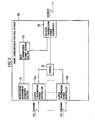
- the radio communication control system 10 As shown in Fig. 2, the radio communication control system 10 according to the embodiment is provided with a plurality of A-DPCH transmission power controllers 11a, 11b, 11c and 11d; a switch 12, a new transmission power setting section 13, a propagation environment estimation section 14, and an HS-SCCH transmission power controller 15.
- Fig. 2 only describes the sections for controlling and setting the transmission power of the HS-SCCH, in the radio communication control system 10.
- the A-DPCH transmission power controllers 11a, 11b, 11c and 11d are provided for each of the mobile stations UE20a, 20b, 20c and 20d, respectively.
- the A-DPCH transmission power controllers 11a, 11b, 11c and 11d control the transmission power of the corresponding mobile station UE20a, 20b, 20c or 20d by using a transmission power control command transmitted from the corresponding mobile station UE20a, 20b, 20c or 20d, respectively.
- the switch 12 is configured to transmit, to the HS-SCCH transmission power control unit 15, the transmission power of the A-DPCH of the mobile station UE, which is scheduled to be assigned to the HS-SCCH and the HS-PDSCH (or HS-DSCH, as a transport channel), together with identification information of the mobile station UE.
- the new transmission power setting section 13 is configured to obtain propagation environment information in a downlink of the mobile station UE, which is scheduled to be assigned to the HS-SCCH and the HS-DSCH in the TTI, from the propagation environment estimation section 14.
- the propagation environment information is such as a fading frequency, the number of paths, or an SIR.
- the new transmission power setting section 13 determines whether or not the mobile station UE newly receives the HS-SCCH.
- the new transmission power setting section 13 calculates an offset value to the transmission power of the A-DPCH in accordance with the propagation environment information so as to set the transmission power of the HS-SCCH.
- the new transmission power setting section 13 transmits the calculated offset value to the HS-SCCH transmission power controller 15.
- the new transmission power setting section 13 may calculate the offset value in accordance with the fading frequency obtained from the propagation environment estimation section 14, for example, by using the Reference Table (1) as shown in Fig. 3. Then, the new transmission power setting section 13 may transmit the calculated offset value to the HS-SCCH transmission power controller 15. In a case where the fading frequency obtained from the propagation environment estimation section 14 is 50 Hz, for example, the new transmission power setting section 13 transmits, to the HS-SCCH transmission power controller 15, 9 dB as the offset value by referring to the Reference Table (1).
- the new transmission power setting section 13 may calculate the offset value in accordance with the number of paths obtained from the propagation environment estimation section 14, for example, by using the Reference Table (2) as shown in Fig. 3. Then, the new transmission power setting section 13 may transmit the calculated offset value to the HS-SCCH transmission power controller 15. In a case where the number of paths obtained from the propagation environment estimation section 14 is 2, for example, the new transmission power setting section 13 transmits, to the HS-SCCH transmission power controller 15, 9 dB as the offset value by referring to the Reference Table (2).
- the new transmission power setting section 13 may calculate the offset value in accordance with the SIR obtained from the propagation environment estimation section 14, for example, by using the Reference Table (3) as shown in Fig. 3. Then, the new transmission power setting section 13 may transmit the calculated offset value to the HS-SCCH transmission power controller 15. In a case where the SIR obtained from the propagation environment estimation section 14 is 10dB, for example, the new transmission power setting section 13 transmits, to the HS-SCCH transmission power controller 15,9.5 dB as the offset value by referring to the Reference Table (3).
- the offset value is calculated in accordance with one of the fading frequency, the number of the paths, and the SIR in the above examples, more than one of the fading frequency, the number of the paths, and the SIR may be used for calculating the offset value.
- the new transmission power setting section 13 may calculate the offset value in accordance with whether or not the mobile station UE is in the soft handover state. Then, the new transmission power setting section 13 may transmit the offset value to the HS-SCCH transmission power controller 15.
- each of the Reference Tables (1) to (4) shown in Fig. 3 has a set of the Reference Tables for the soft handover state and for the non-soft handover state, respectively. Then, based on whether the mobile station UE is in a soft handover state or not, the new transmission power setting section 13 refers to the corresponding Reference Table out of the set of the Reference Tables and sets the offset value.
- each of the Reference Tables (1) to (4) has the set of the Reference Tables for the soft handover state and for the non-soft handover state, respectively.
- the new transmission power setting section 13 may always notify the HS-SCCH transmission power controller 15 of the same offset value, irrespective of the propagation environment information in the downlink of the mobile station UE.
- the new transmission power setting section 13 determines whether or not the mobile station UE scheduled to be assigned to the HS-SCCH and the HS-DSCH in the TTI newly receives the HS-SCCH.
- the new transmission power setting section 13 may determine that the mobile station UE newly receives the HS-SCCH, when the mobile station UE receives the HS-SCCH for the first time after the communication is started.
- the new transmission power setting section 13 may determine that the mobile station UE newly receives the HS-SCCH, when the mobile station UE receives the HS-SCCH for the first time after shifting from the non-soft handover state to the soft handover state.
- the new transmission power setting section 13 may also determine that the mobile station UE newly receives the HS-SCCH, when the mobile station UE receives the HS-SCCH for the first time after shifting from the soft handover state to the non-soft handover state.
- the A-DPCH performs communications with a plurality of cells in the soft handover state, while the HS-SCCH performs communicate with only a single cell even in the soft handover state.
- the optimal value for the offset possibly varies. Accordingly, when shifting between the soft handover state and the non-soft handover state, the communication by using a more optimal offset value can be performed by newly controlling the transmission power of the HS-SCCH.
- the new transmission power setting section 13 may also determine that the mobile station UE newly receives the HS-SCCH, when a time interval between the last HS-SCCH reception at the mobile station UE and the HS-SCCH reception at the mobile station UE in the TTI exceeds a predetermined time interval. For example, when the predetermined time interval is 20 seconds, and the time interval from the HS-SCCH reception at the mobile station UE till the HS-SCCH reception at the mobile station UE in the TTI is 30 seconds, the new transmission power setting section 13 determines that the mobile station UE newly receives the HS-SCCH.
- the new transmission power setting section 13 may determine that the mobile station UE newly receives the HS-SCCH in accordance with a signaling from the layer or a signaling from the node, for example. Specifically, the new transmission power setting section 13 determines that the mobile station UE newly receives the HS-SCCH when a radio network control device RNC performs a signaling to notify the radio base station device BS that the mobile station UE newly receives the HS-SCCH. Alternatively, the new transmission power setting section 13 determines that the mobile station UE newly receives the HS-SCCH when the radio network control device RNC performs the signaling to notify the radio base station device BS of the offset value for the mobile station UE.
- the new transmission power setting section 13 may set a higher offset value so as to obtain a better quality than required.
- a communication with a stable quality can be performed when the communication of the HS-SCCH is started.
- the propagation environment estimation section 14 is configured to obtain the propagation environment information of the mobile station UE, the propagation environment information such as the fading frequency, the number of paths, or the SIR. Further, the propagation environment estimation section 14 is configured to notify the new transmission power control setting section 13 of the propagation environment information in the downlink.
- the fading frequency can be estimated by using a time correlation value of a pilot signal in the uplink or a time correlation value of the estimated channel value obtained with the pilot signal, for example.
- the mobile station may estimate its moving speed according to location information from a GPS, information from a vehicle in which the mobile station exists (a speed meter value), and the like, and notify, through the uplink, the radio base station of the estimated moving speed. Thereby, the fading frequency is estimated according to the moving speed notified from the mobile station.
- the number of the paths can be obtained by a path search performed by using a pilot signal in the uplink.
- the number of the paths may be a value obtained at a moment, or an average value obtained in a predetermined averaging period.
- the SIR can be obtained, for example, by using a CQI (Channel Quality Indicator) transmitted from the mobile station UE by using the HS-DPCCH.
- the HS-DPCCH is an HSDPA control channel in the uplink.
- the HS-SCCH transmission power controller 15 controls the transmission power of the HS-SCCH in the TTI.
- the present invention relates to a case where the mobile station UE scheduled to be assigned to the HS-SCCH and the HS-DSCH in the TTI newly receives the HS-SCCH when the communication is started (i.e., in the TTI).
- a description will be given below of the function of the HS-SCCH transmission power controller 15 in which the mobile station UE newly receives the HS-SCCH. Therefore, descriptions of the functions other than this will be omitted.
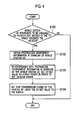
- Fig. 4 is a flowchart illustrating an example of an operation for controlling a new transmission power of the HS-SCCH in the HSDPA system, applied in the IMT-2000 system which uses the W-CDMA system.
- step S101 the new transmission power setting section 13 determines whether or not the mobile station UE scheduled to be assigned to the HS-SCCH and the HS-DSCH in the TTI newly receives the HS-SCCH. Then, when the mobile station UE is determined to newly receive the HS-SCCH, the processing advances to step S102. When the mobile station UE is determined not to newly receive the HS-SCCH, the new transmission power setting section 13 determines that setting the new transmission power of the HS-SCCH is not required, and terminates the processing.
- the new transmission power setting section 13 obtains propagation environment information in the downlink of the mobile station UE, which is scheduled to be assigned to the HS-SCCH and the HS-DSCH in the TTI.
- the propagation environment information in the downlink includes the fading frequency, the number of paths, the SIR and the like as described above.
- step S103 the new transmission power setting section 13 sets the offset value to the transmission power of the A-DPCH in accordance with the propagation environment information in the downlink of the mobile station UE, so as to set the transmission power of the HS-SCCH.
- step S104 the new transmission power setting section 13 sets the new transmission power of the HS-SCCH in accordance with the offset value for the HS-SCCH and the transmission power of the A-DPCH.
- the applicable range of the radio communication control system and the radio communication control method according to the present invention should not be limited to the HSDPA system, which is a high speed packet transmission system in the W-CDMA IMT-2000 system.
- the radio communication control system and the radio communication control method according to the present invention are also applicable to a high speed packet transmission system using a CDMA-TDD system, a CDMA2000 system, a 1xEV-DO system or the like.
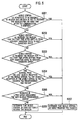
- step S201 the new transmission power setting section 13 determines whether or not the mobile station UE scheduled to be assigned to the HS-SCCH and the HS-DSCH in the TTI receives the HS-SCCH for the first time after the communication is started.
- the processing advances to step S207.
- the processing advances to step S202.
- step S202 the new transmission power setting section 13 determines whether or not the mobile station UE receives the HS-SCCH for the first time after shifting from the non-soft handover state to the soft handover state.
- the processing advances to step S207.
- the processing advances to step S203.
- step S203 the new transmission power setting section 13 determines whether or not the mobile station UE receives the HS-SCCH for the first time after the mobile station UE shifted from the soft handover state to the non-soft handover state.
- the processing advances to step S207.
- the processing advances to step S204.
- step S205 the new transmission power setting section 13 determines whether or not the signaling in an upper layer relating to the new HS-SCCH transmission for the mobile station UE exists.
- the processing advances to step S207.
- the processing advances to step S206.
- step S206 the new transmission power setting section 13 determines that the mobile station UE does not newly receive the HS-SCCH in the TTI.
- step S207 the new transmission power setting section 13 determines that the mobile station UE newly receive the HS-SCCH in the TTI.
- the new transmission power of the HS-SCCH can be suitably set when the mobile station shifts between the soft handover state and the non-soft handover state, in addition to when the communication is started. Consequently, it is possible to provide a stable communication quality when the mobile station shifts between the soft handover state and the non-soft handover state.
- the new transmission power setting section 13 of the radio communication control system 10 may use, as the propagation environment of the radio communication, at least any one of the fading frequency of the propagation environment, the moving speed of the mobile station, and the time correlation value of the channel estimation result in the uplink. Consequently, it is possible to set a suitable transmission power of the HS-SCCH.
- the new transmission power setting section 13 of the radio communication control system 10 may also use, as the propagation environment of the radio communication, at least any one of the number of paths in the propagation environment, the SIR in the downlink, and the radio quality information (CQI) notified from the mobile station. Consequently, it is possible to set a suitable transmission power of the HS-SCCH.
- CQI radio quality information
- the new transmission power setting section 13 of the radio communication control system 10 may set the new transmission power of the shared control channel, any one of when the communication is started, when the handover is started, when the handover is finished, or when the signaling is performed from the upper layer. Consequently, the mobile station can receive the shared control channel (HS-SCCH) with a suitable communication quality, when the mobile station newly receives the HS-SCCH.
- HS-SCCH shared control channel
- the new transmission power setting section 13 of the radio communication control system 10 may also set the new transmission power of the shared control channel when the shared control channel has not been transmitted for the predetermined time interval. Therefore, the new transmission power setting section 13 can determine that the mobile station newly receives the HS-SCCH, when the predetermined time interval has passed.
- the radio communication control system 10 being configured of the radio base station device BS30 and the radio network control device RNC40.
- the respective constituent features (the A-DPCH transmission power controllers 11a, 11b, 11c and 11d, the switch 12, the new transmission power setting section 13, the propagation environment estimation section 14 and the HS-SCCH transmission power controller 15) may be located in the radio base station device BS30.
- the respective constituent features (the A-DPCH transmission power controllers 11a, 11b, 11c and 11d, the switch 12, the new transmission power setting section 13, the propagation environment estimation section 14 and the HS-SCCH transmission power controller 15) shown in Fig. 2 may be located in the radio network control device RNC40.
- the radio communication control system, the radio base station and the radio communication control method according to the present invention are useful for the techniques for setting a suitable transmission power of the HS-SCCH.
Landscapes
- Engineering & Computer Science (AREA)
- Computer Networks & Wireless Communication (AREA)
- Signal Processing (AREA)
- Mobile Radio Communication Systems (AREA)
Applications Claiming Priority (2)
| Application Number | Priority Date | Filing Date | Title |
|---|---|---|---|
| JP2005117400A JP4713919B2 (ja) | 2005-04-14 | 2005-04-14 | 無線通信制御システム、無線基地局及び無線通信制御方法 |
| PCT/JP2006/307746 WO2006112328A1 (fr) | 2005-04-14 | 2006-04-12 | Système de contrôle de communication sans fil, station de base radio et méthode de contrôle de communication sans fil |
Publications (2)
| Publication Number | Publication Date |
|---|---|
| EP1879305A1 true EP1879305A1 (fr) | 2008-01-16 |
| EP1879305A4 EP1879305A4 (fr) | 2012-11-07 |
Family
ID=37115052
Family Applications (1)
| Application Number | Title | Priority Date | Filing Date |
|---|---|---|---|
| EP06745399A Withdrawn EP1879305A4 (fr) | 2005-04-14 | 2006-04-12 | Système de contrôle de communication sans fil, station de base radio et méthode de contrôle de communication sans fil |
Country Status (5)
| Country | Link |
|---|---|
| US (1) | US7873381B2 (fr) |
| EP (1) | EP1879305A4 (fr) |
| JP (1) | JP4713919B2 (fr) |
| CN (1) | CN101160755B (fr) |
| WO (1) | WO2006112328A1 (fr) |
Families Citing this family (10)
| Publication number | Priority date | Publication date | Assignee | Title |
|---|---|---|---|---|
| EP2408240B1 (fr) * | 2009-03-10 | 2017-05-03 | Sharp Kabushiki Kaisha | Dispositif de station mobile, système de communications, procédé de communications et programme |
| EP2362706B1 (fr) * | 2010-02-23 | 2013-10-09 | BlackBerry Limited | Procédé et appareil de programmation de communication opportuniste dans un réseau de communication sans fil utilisant des informations de mouvement |
| US8953713B2 (en) | 2010-11-08 | 2015-02-10 | Qualcomm Incorporated | System and method for uplink multiple input multiple output transmission |
| US9007888B2 (en) | 2010-11-08 | 2015-04-14 | Qualcomm Incorporated | System and method for uplink multiple input multiple output transmission |
| US9380490B2 (en) | 2010-11-08 | 2016-06-28 | Qualcomm Incorporated | System and method for uplink multiple input multiple output transmission |
| US8842542B2 (en) | 2012-02-08 | 2014-09-23 | Qualcomm Incorporated | Method and apparatus for scheduling resources for uplink MIMO communication |
| US20120281642A1 (en) * | 2010-11-08 | 2012-11-08 | Qualcomm Incorporated | System and method for uplink multiple input multiple output transmission |
| US9516609B2 (en) | 2010-11-08 | 2016-12-06 | Qualcomm Incorporated | System and method for uplink multiple input multiple output transmission |
| US9084207B2 (en) | 2010-11-08 | 2015-07-14 | Qualcomm Incorporated | System and method for uplink multiple input multiple output transmission |
| CN105050177A (zh) | 2014-04-15 | 2015-11-11 | 财团法人资讯工业策进会 | 直接通讯网络系统及其资源同步通讯方法 |
Family Cites Families (9)
| Publication number | Priority date | Publication date | Assignee | Title |
|---|---|---|---|---|
| JP3192839B2 (ja) * | 1993-09-20 | 2001-07-30 | 富士通株式会社 | 初期送信電力の決定方法 |
| JP3231575B2 (ja) * | 1995-04-18 | 2001-11-26 | 三菱電機株式会社 | 無線データ伝送装置 |
| DE19962339A1 (de) * | 1999-12-23 | 2001-06-28 | Bosch Gmbh Robert | Verfahren zur Regelung der Sendeleistung, Funkstation und Übertragungskanal |
| US6842624B2 (en) * | 2001-08-29 | 2005-01-11 | Qualcomm, Incorporated | Systems and techniques for power control |
| JP3746055B2 (ja) * | 2001-10-19 | 2006-02-15 | 株式会社エヌ・ティ・ティ・ドコモ | 無線制御装置、基地局、無線制御方法、移動パケット通信システム、移動局、無線制御プログラム及びコンピュータ読み取り可能な記録媒体 |
| KR100811043B1 (ko) * | 2001-11-16 | 2008-03-06 | 엘지전자 주식회사 | 이동 통신 시스템에서 공유 채널 (sch) 및 hi에대한 송신 전력 제어 방법 |
| JP3574443B2 (ja) * | 2002-08-20 | 2004-10-06 | 松下電器産業株式会社 | 通信端末装置、基地局装置、および送信電力制御方法 |
| JP4288093B2 (ja) | 2003-04-09 | 2009-07-01 | 株式会社エヌ・ティ・ティ・ドコモ | 無線通信制御システム及び無線通信制御方法 |
| JP4559240B2 (ja) | 2005-01-13 | 2010-10-06 | 株式会社エヌ・ティ・ティ・ドコモ | 移動通信システム、無線基地局、無線回線制御局及び電力制御方法 |
-
2005
- 2005-04-14 JP JP2005117400A patent/JP4713919B2/ja not_active Expired - Lifetime
-
2006
- 2006-04-12 EP EP06745399A patent/EP1879305A4/fr not_active Withdrawn
- 2006-04-12 US US11/911,596 patent/US7873381B2/en not_active Expired - Fee Related
- 2006-04-12 CN CN200680012365XA patent/CN101160755B/zh not_active Expired - Fee Related
- 2006-04-12 WO PCT/JP2006/307746 patent/WO2006112328A1/fr not_active Ceased
Also Published As
| Publication number | Publication date |
|---|---|
| CN101160755A (zh) | 2008-04-09 |
| CN101160755B (zh) | 2012-09-05 |
| US20080214226A1 (en) | 2008-09-04 |
| JP4713919B2 (ja) | 2011-06-29 |
| JP2006295834A (ja) | 2006-10-26 |
| US7873381B2 (en) | 2011-01-18 |
| EP1879305A4 (fr) | 2012-11-07 |
| WO2006112328A1 (fr) | 2006-10-26 |
Similar Documents
| Publication | Publication Date | Title |
|---|---|---|
| RU2475971C2 (ru) | Способ связи | |
| US7787430B2 (en) | Power control for gated uplink control channel | |
| US8369883B2 (en) | Transmission power control technique and wireless communications system using the same | |
| EP2491750B1 (fr) | Procédés et agencements dans un système de réseau de communication | |
| EP1313231B1 (fr) | Procédé de commande de la puissance de transmission de HS-SCCH dans un système UMTS | |
| US8521205B2 (en) | Preamble length for discontinuous control channel transmission | |
| JP5318208B2 (ja) | システム状態に基づく適応基準電力オフセット位置決定 | |
| EP1998475B1 (fr) | Procédé de régulation de la puissance d'émission et station de base | |
| US7801547B2 (en) | System and method for determining downlink signaling power in a radio communication network | |
| US20120028644A1 (en) | Mobile communication system, interference of neighborhood suppression method and base station in the system | |
| CN1328856C (zh) | 传输控制装置、无线基站及传输速率控制方法 | |
| US20090291642A1 (en) | Systems and Methods for SIR Estimation for Power Control | |
| US20070105561A1 (en) | Method and apparatus for uplink resource allocation in a cellular communication system | |
| US7873381B2 (en) | Wireless communication control system, radio base station, and wireless communication control method | |
| EP2550829B1 (fr) | Réduction de la charge dans un réseau de communication | |
| US7974584B2 (en) | Wireless communication system | |
| US20060099985A1 (en) | Apparatus and method for radio transmission in a cellular communication system | |
| RU2386213C2 (ru) | Способ связи | |
| JP4343247B2 (ja) | 送信電力制御方法、移動局、固定局および通信システム | |
| JP2005318327A (ja) | 通信端末装置及び送信電力制御方法 | |
| JP2006060848A (ja) | 通信端末装置及び送信電力制御方法 | |
| JP2004297567A (ja) | 送信電力制御方法、基地局及び移動通信システム |
Legal Events
| Date | Code | Title | Description |
|---|---|---|---|
| PUAI | Public reference made under article 153(3) epc to a published international application that has entered the european phase |
Free format text: ORIGINAL CODE: 0009012 |
|
| 17P | Request for examination filed |
Effective date: 20071114 |
|
| AK | Designated contracting states |
Kind code of ref document: A1 Designated state(s): DE GB |
|
| DAX | Request for extension of the european patent (deleted) | ||
| RBV | Designated contracting states (corrected) |
Designated state(s): DE GB |
|
| A4 | Supplementary search report drawn up and despatched |
Effective date: 20121005 |
|
| RIC1 | Information provided on ipc code assigned before grant |
Ipc: H04W 52/44 20090101ALN20120928BHEP Ipc: H04W 52/24 20090101ALI20120928BHEP Ipc: H04W 52/28 20090101ALI20120928BHEP Ipc: H04W 52/16 20090101ALI20120928BHEP Ipc: H04W 52/50 20090101ALI20120928BHEP Ipc: H04J 13/00 20110101ALI20120928BHEP Ipc: H04W 52/40 20090101ALN20120928BHEP Ipc: H04B 7/26 20060101AFI20120928BHEP Ipc: H04W 52/32 20090101ALI20120928BHEP |
|
| 17Q | First examination report despatched |
Effective date: 20161129 |
|
| GRAP | Despatch of communication of intention to grant a patent |
Free format text: ORIGINAL CODE: EPIDOSNIGR1 |
|
| RIC1 | Information provided on ipc code assigned before grant |
Ipc: H04W 52/50 20090101ALI20171122BHEP Ipc: H04J 13/00 20110101ALI20171122BHEP Ipc: H04W 52/28 20090101ALI20171122BHEP Ipc: H04W 52/24 20090101ALI20171122BHEP Ipc: H04W 52/40 20090101ALN20171122BHEP Ipc: H04W 52/16 20090101ALI20171122BHEP Ipc: H04B 7/26 20060101AFI20171122BHEP Ipc: H04W 52/32 20090101ALI20171122BHEP Ipc: H04W 52/44 20090101ALN20171122BHEP |
|
| INTG | Intention to grant announced |
Effective date: 20171221 |
|
| RIN1 | Information on inventor provided before grant (corrected) |
Inventor name: ISHII, HIROYUKI Inventor name: NAKAMURA, TAKEHIRO |
|
| STAA | Information on the status of an ep patent application or granted ep patent |
Free format text: STATUS: THE APPLICATION IS DEEMED TO BE WITHDRAWN |
|
| 18D | Application deemed to be withdrawn |
Effective date: 20180501 |
|
| RIC1 | Information provided on ipc code assigned before grant |
Ipc: H04W 52/28 20090101ALI20171122BHEP Ipc: H04W 52/24 20090101ALI20171122BHEP Ipc: H04B 7/26 20060101AFI20171122BHEP Ipc: H04W 52/40 20090101ALN20171122BHEP Ipc: H04J 13/00 20110101ALI20171122BHEP Ipc: H04W 52/50 20090101ALI20171122BHEP Ipc: H04W 52/32 20090101ALI20171122BHEP Ipc: H04W 52/44 20090101ALN20171122BHEP Ipc: H04W 52/16 20090101ALI20171122BHEP |
|
| RIC1 | Information provided on ipc code assigned before grant |
Ipc: H04W 52/24 20090101ALI20171122BHEP Ipc: H04W 52/32 20090101ALI20171122BHEP Ipc: H04W 52/28 20090101ALI20171122BHEP Ipc: H04W 52/16 20090101ALI20171122BHEP Ipc: H04B 7/26 20060101AFI20171122BHEP Ipc: H04W 52/40 20090101ALN20171122BHEP Ipc: H04J 13/00 20110101ALI20171122BHEP Ipc: H04W 52/44 20090101ALN20171122BHEP Ipc: H04W 52/50 20090101ALI20171122BHEP |