EP1879396A2 - Procédé et appareil de communication de données vidéo pour améliorer l'efficacité de transmission - Google Patents
Procédé et appareil de communication de données vidéo pour améliorer l'efficacité de transmission Download PDFInfo
- Publication number
- EP1879396A2 EP1879396A2 EP07011880A EP07011880A EP1879396A2 EP 1879396 A2 EP1879396 A2 EP 1879396A2 EP 07011880 A EP07011880 A EP 07011880A EP 07011880 A EP07011880 A EP 07011880A EP 1879396 A2 EP1879396 A2 EP 1879396A2
- Authority
- EP
- European Patent Office
- Prior art keywords
- video data
- slices
- slice
- data transmission
- reception
- Prior art date
- Legal status (The legal status is an assumption and is not a legal conclusion. Google has not performed a legal analysis and makes no representation as to the accuracy of the status listed.)
- Granted
Links
Images




Classifications
-
- H—ELECTRICITY
- H04—ELECTRIC COMMUNICATION TECHNIQUE
- H04N—PICTORIAL COMMUNICATION, e.g. TELEVISION
- H04N21/00—Selective content distribution, e.g. interactive television or video on demand [VOD]
- H04N21/60—Network structure or processes for video distribution between server and client or between remote clients; Control signalling between clients, server and network components; Transmission of management data between server and client, e.g. sending from server to client commands for recording incoming content stream; Communication details between server and client
- H04N21/63—Control signaling related to video distribution between client, server and network components; Network processes for video distribution between server and clients or between remote clients, e.g. transmitting basic layer and enhancement layers over different transmission paths, setting up a peer-to-peer communication via Internet between remote STB's; Communication protocols; Addressing
- H04N21/631—Multimode Transmission, e.g. transmitting basic layers and enhancement layers of the content over different transmission paths or transmitting with different error corrections, different keys or with different transmission protocols
-
- H—ELECTRICITY
- H04—ELECTRIC COMMUNICATION TECHNIQUE
- H04N—PICTORIAL COMMUNICATION, e.g. TELEVISION
- H04N21/00—Selective content distribution, e.g. interactive television or video on demand [VOD]
- H04N21/20—Servers specifically adapted for the distribution of content, e.g. VOD servers; Operations thereof
- H04N21/23—Processing of content or additional data; Elementary server operations; Server middleware
- H04N21/234—Processing of video elementary streams, e.g. splicing of video streams or manipulating encoded video stream scene graphs
-
- H—ELECTRICITY
- H04—ELECTRIC COMMUNICATION TECHNIQUE
- H04L—TRANSMISSION OF DIGITAL INFORMATION, e.g. TELEGRAPHIC COMMUNICATION
- H04L9/00—Cryptographic mechanisms or cryptographic arrangements for secret or secure communications; Network security protocols
- H04L9/40—Network security protocols
-
- H—ELECTRICITY
- H04—ELECTRIC COMMUNICATION TECHNIQUE
- H04N—PICTORIAL COMMUNICATION, e.g. TELEVISION
- H04N21/00—Selective content distribution, e.g. interactive television or video on demand [VOD]
- H04N21/20—Servers specifically adapted for the distribution of content, e.g. VOD servers; Operations thereof
- H04N21/23—Processing of content or additional data; Elementary server operations; Server middleware
- H04N21/234—Processing of video elementary streams, e.g. splicing of video streams or manipulating encoded video stream scene graphs
- H04N21/2343—Processing of video elementary streams, e.g. splicing of video streams or manipulating encoded video stream scene graphs involving reformatting operations of video signals for distribution or compliance with end-user requests or end-user device requirements
- H04N21/234327—Processing of video elementary streams, e.g. splicing of video streams or manipulating encoded video stream scene graphs involving reformatting operations of video signals for distribution or compliance with end-user requests or end-user device requirements by decomposing into layers, e.g. base layer and one or more enhancement layers
-
- H—ELECTRICITY
- H04—ELECTRIC COMMUNICATION TECHNIQUE
- H04N—PICTORIAL COMMUNICATION, e.g. TELEVISION
- H04N21/00—Selective content distribution, e.g. interactive television or video on demand [VOD]
- H04N21/20—Servers specifically adapted for the distribution of content, e.g. VOD servers; Operations thereof
- H04N21/23—Processing of content or additional data; Elementary server operations; Server middleware
- H04N21/238—Interfacing the downstream path of the transmission network, e.g. adapting the transmission rate of a video stream to network bandwidth; Processing of multiplex streams
- H04N21/2381—Adapting the multiplex stream to a specific network, e.g. an Internet Protocol [IP] network
-
- H—ELECTRICITY
- H04—ELECTRIC COMMUNICATION TECHNIQUE
- H04W—WIRELESS COMMUNICATION NETWORKS
- H04W28/00—Network traffic management; Network resource management
- H04W28/02—Traffic management, e.g. flow control or congestion control
- H04W28/06—Optimizing the usage of the radio link, e.g. header compression, information sizing, discarding information
Definitions
- the present invention relates to a data communication system and, in particular, to a video data communication method and apparatus which improves video quality at a recipient device and transmission efficiency by transmitting video data using both contention free transmission mechanism and priority-based transmission mechanism.
- WLANs wireless local area networks
- IEEE 802.11e proposed in 2005 introduced enhanced media access control (MAC) characterized by a hybrid coordination function (HCF).
- MAC enhanced media access control
- HCF hybrid coordination function
- EDCA enhanced distributed channel access
- HCCA HCF controlled channel access
- the EDCA provides differentiated and distributed access to the wireless medium with 4 access categories (AC) such that the data streams are transmitted in accordance with their priorities, and the HCCA guarantees reserved bandwidth for packets.
- an access point (AP) of IEEE 802.11e network can support both the asynchronous transmission and synchronous transmission.
- H.264 as a new video coding standard is expected to be adopted in many applications.
- the H.264 is a video compression algorithm of which root lie in the ITU-T's H.26L project and called in another name of MPEG-4 Advanced Video Coding (AVC).
- AVC MPEG-4 Advanced Video Coding
- the H.264 promises significantly higher compression than the earlier standards. This standard achieves higher compression efficiency up to a factor of two over the MPEG 2 and enhances video quality.
- the H.264 also can provide DVD quality level video below 1 Mbps transmission rate so as to satisfy the requirements of transmitting a high quality data through wireless, satellite, ADSL, etc.
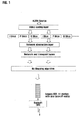
- FIG. 1 is a diagram illustrating an H.264 compressed video data transmission mechanism over an 802.11 standard network.
- video data is H.264 coded, at a video coding layer (VCL), so as to be output in the form of slices, i.e., parameter set information slices, Intra (I) slices, IDR picture (I) slices, Predicted (P) slices, and Bi-predicted (B) slices.
- the slices are processed, at a Network Abstraction Layer (NAL), to adapt networks, then output in the format of Real Time Protocol data unit.
- NAL Network Abstraction Layer
- the network-adapted video data are then transmitted in accordance with IEEE 802.11 MAC under the rule of a Distributed Coordination Function Inter frame space (DIFS) without applying per slice mapping algorithm.
- DIFS Distributed Coordination Function Inter frame space
- the H.264 coded video data transmission is performed without consideration of capabilities of recipient devices, whereby video quality is not guaranteed at the recipient device.
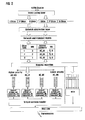
- FIG. 2 is a diagram illustrating another convention H.264 compressed video data transmission scheme over an 802.11e standard network.
- the H.264 coded video data are mapped to a single EDCA entity to be transmitted to IEEE 802.11e network.
- the H.264 coded data are formatted in association with RTP.
- Each packet slice passes the NAL and network and transport layers, and is assigned a NAL reference indication (nal_ref_indication; NRI).
- NRI NAL reference indication
- the packet slice is mapped to an AC_VI as an EDCA entity (or Access Category; AC) and then transmitted under the control of MAC of IEEE 802.11e.
- each of I, P, and B slices is assigned a Traffic Identifier (TID) and a NRI.
- TID Traffic Identifier
- the slices are assigned AC_VI as the access category and 5, 4 as the TID.
- the I, P, and B slices are assigned NRIs of 3, 2, and 1, respectively.
- the Access Category is contained in a header of the packet slice, and TID and NRI are contained in a frame header of the IEEE 802.11e MAC frame. Referring to the Access Category and TID, it is possible to determine how to transmit the packet data.
- FIG. 3 is a diagram illustrating another conventional H.264 compressed video data transmission mechanism over an 802.11e standard network.
- packet slices are mapped to different EDCA entities in consideration of priorities of the packets slices.
- the H.264 coded video data are treated only using the EDCA, and different EDCA entities (i.e. AC_VO, AC_VI, AC_BE, AC_BK) are used in accordance with priority of each packet slice.
- EDCA entities i.e. AC_VO, AC_VI, AC_BE, AC_BK
- the I slice is assigned the AC_VO (voice) which is the first priority CA and TID of 5, 4; P slice is assigned the AC_VI (video) which is the second priority CA and TID of 0, 3; and B slice is assigned the AC_BE (best effort) which is the third priority CA and TID of 1, 2.
- An I-frame has an NRI of 3, P-frame has an NRI of 2, and B-frame has an NRI of 1.
- the EDCA provides class-based differentiated QoS to the IEEE 802.11 WLAN.
- EDCA is very sensitive to the increase in the number of stations, and EDCA throughput quickly degrades as the number of stations increases.
- the EDCA can control the priorities of the traffic, but it does not support a minimum bandwidth guarantee and transport delay time. This is becoming a significant factor degrading the service quality in real time video conference services.
- the IEEE 802.11e shares a physical layer of the IEEE 802.11a/b/g which controls the transmission rate on the basis of channel status between an AP and stations, the data rate varies in a range of 2Mbps ⁇ 54Mpbs according to the movements of the stations in the service area of the AP.
- Such data rate variation makes difficult to guarantee a fixed bandwidth for a multimedia application service.
- a data rate control mechanism for guarantee a minimum bandwidth for specific service together with the location and received signal strength based on the data rate control.
- the present invention has been made in an effort to solve the above problems and provides additional advantages, by providing a video data transmission method and apparatus for improving the video data transmission efficiency by classifying video data in consideration of their importance in recovering at a recipient device and transmitting the classified video data using both contention free transmission mechanism and priority-based transmission mechanism.
- a video data transmission method includes dividing video data into different types of slices; assigning different transport priorities to slice types in accordance with importance for recovering, at a recipient device, the video data; and transmitting the slices on the basis of the transport priorities.
- a video data receiving method includes dividing video data into different types of slices; assigning different reception priorities to slice types in accordance with importance for recovering, at a recipient device, the video data; receiving video data slices in accordance with slice types; and combining the video data slices having different types.
- a video data transmission apparatus includes a video data divider for dividing video data into slices having different types; a priority assigner for assigning different transport priorities to the slice types in accordance with importance for recovering, at a recipient device, the video data; and a transmitter for transmitting the slices on the basis of the transport priorities.
- a video data reception apparatus includes a video data classifier for classifying video data into different types of slices; an priority assigner for assigning different reception priorities to slice types in accordance with importance for receiving the video data; and a receiver for receiving video data slices in accordance with slice types and reception priorities.
- HCCA HCF controlled channel access
- AP access point
- video data are processed to be transmitted depending on the type and priority of the data.
- FIG. 4a is a diagram illustrating an H.264 video data transmission mechanism for IEEE 802.11e WLAN according to an exemplary embodiment of the present invention.
- the H.264 compressed video data are mapped to HCCA and enhanced distributed channel access (EDCA) entities according to different importance of the video data in MAC layer without employing data partitioning (DP).
- EDCA enhanced distributed channel access
- a video coding layer divides original video streams input from a video source to generate I, P, and B slices.
- the I, P, and B slices are transported to a network abstraction layer (NAL) so as to be differentiated and encapsulated into packets, each with an NAL Reference Identification (NRI) indicating the priority of the payload of the packet.
- NAL network abstraction layer
- the packets pass network and transport layers, then mapped to access categories (ACs), i.e. AC_VO, AC_VI, AC_BE, and AC_BK in a MAC layer.
- ACs access categories
- the I, P, and B packets are corresponding to the I, P, and B slices. That is, the I packet includes entire data for a specific picture, the P packet is a packet extracted from the I packet which including a displacement of the I packet, and B packet includes the data predicted from the I or P packet. Thus, it is preferably that the I packet has a highest priority, followed by P packet and then by B packet. Accordingly, the I packet is transported through the HCCA, and the P and B packets are transported through EDCA in consideration of their transport priorities. P packet is preferably treated as AC_VI, and the B packet is preferably treated as AC_BE, in EDCA mechanism. A priority determination is described later.
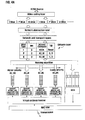
- FIG. 4b is a diagram illustrating an H.264 video data transmission mechanism for an IEEE 802.11e WLAN according to another exemplary embodiment of the present invention. As shown, the H.264 compressed video data are classified into data stream having different importance and mapped to HCCA and EDCA entities according to different importance of the video data in MAC layer without employing data partitioning (DP).
- DP data partitioning
- a video coding layer divides original video stream input from a video source to generate Parameter Set Information (PSI), and I, P, and B slices.
- PSI Parameter Set Information
- I, P, and B slices are transported to a network abstraction layer (NAL) so as to be differentiated and encapsulated into packets, each with an NAL Reference Identification (NRI) indicating the priority of the payload of the packet.
- NAL network abstraction layer
- the packets delivered from the NAL is classified into I, P, and B packets by a classifier and then marked in association of the access category (AC) of the MAC layer.
- AC access category
- the each packet is assigned a priority (Nal_Ref_Idc) and access mechanism, such that each packet is queued in the corresponding transmission queue in association of the access category on the basis of its priority and access mechanism in the MAC layer.
- the packets queued in the EDCA transmission queue are transmitted through the wireless channel under the control of a virtual collision handler, and the packets queued in the HCCA transmission queue are transmitted through the wireless channel under the control of a rate control and traffic shaping entity. In such manner, the H.264 video streams are transmitted through the HCCA or EDCA mechanism.
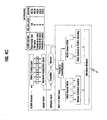
- FIG. 4c is a diagram illustrating an H.264 video data transmission mechanism for IEEE 802.11e WLAN according to another exemplary embodiment of the present invention. As shown, the H.264 compressed video data are partitioned into separate units of different importance, and the partitions are mapped to the HCCA and EDCA entities according to different importance of the partitions.
- a video coding layer partitions and divides original video stream to generate Parameter Set Information (PSI), Instantaneous Decoding Refresh (IDR), I, P, and B slices.
- PSI Parameter Set Information
- IDR Instantaneous Decoding Refresh
- I, P, and B slices The PSI and IDR slices, and Partition A, Partition B, and Partition C slices are transported to a network abstraction layer (NAL) so as to be differentiated and encapsulated into packets, each with an NAL Reference Identifier (NRI) indicating the priority of the payload of the packet.
- NAL network abstraction layer
- the packets delivered from the NAL is classified into partition A, B, C slices by a classifier and then marked in association of the access category (AC) of the MAC layer.
- AC access category
- the Partition A, B, and C slices are transmitted in the EDCA transmission mechanism, and the PSI and IDR slices are transmitted in the HCCA transmission mechanism.
- the partition A, B, and C slices are queued in the corresponding EDCA queues, and the PSI and IDR slices are queued in the corresponding HCCA queues.
- the EDCA packets are mapped to corresponding access classes, i.e. AC_VO, AC_VI, AC_BE, AC_BK on the basis of the traffic priority.
- the transport priority of a slice is determined depending on the influence to the video quality when the slice is lost.
- the H.264 video data transmission methods maps the priorities of the data in the application layer to access classes of the MAC layer.
- FIG. 5 is a graph illustrating variations of PSNRs to loss rates of different types of slices. We need to provide clean copies of FIGs. 5 and 6.
- the USPTO will reject drawings that are blurred and in grey tone. Please provide new drawings clearly showing the lines in white and black.
- 5% I slices loss of H.264 compressed video data degrades Peak Signal-to-Noise Ration (PSNR) as much as 31% from 32dB to 20dB (green line)
- 5% P slices loss degrades PSNR as much as 21% from 32dB to 25dB (blue line)
- 5% B slices loss influenced a little to the PSNR (yellow line).
- the simulation result shows that the I slice is important than other types of slices. Accordingly, in the present invention, it is preferred that the I slice should be assigned the highest transport priority for maintaining the PSNR of the received video data. Also, the simulation result shows that the P slice is more important than the B slice such that the P slice is assigned a higher transport priority than the B slice. Hence, the I slice is assigned the highest priority, followed by P slice, and then B slice. These slices are mapped to the priority access categories (ACs) provided by IEEE 802.11e EDCA.
- ACs priority access categories
- the PSNR is the ratio between the maximum possible power of a signal and the power of corrupting noise that affects the fidelity of its representation, and is defined as 10log([maximum signal power]/[maximum noise power]).
- the PSNR is compared to the SNR that is defined as 10log[average signal power]/[average noise power].
- the alternate current signal of sine wave has a maximum power twice higher than the average power
- the alternate current signal of triangular wave has a maximum power triple higher than the average power.
- the maximum power of an alternate current signal of square wave is identical with the average power. Accordingly, the measurement of the SNR and PSNR relies on the characteristics of the signal.
- a codec performance test is carried out by comparing the data ratios required by the competitive codecs at the time when the encoded pictures show the same PSNR (for example, a picture quality). That is, the performance of a codec is determined by an encoded file size that can maintain the picture quality before encoding.
- FIG. 6a shows a picture received at a recipient device when I, P, and B slices of an H.264 compressed picture are mapped to AC_VI of EDCA as in FIG. 3. As shown in FIG. 6a, the received picture is significantly distorted. In this case, the measured PSNR was 29.02dB.
- FIG. 6b shows a pictured received at a recipient device when I, P, and B slices of an H. 264 compressed picture are transmitted through HCCA and EDCA mechanisms as in FIGs. 4a to 4c.
- the received picture shows better quality than that of FIG. 6a.
- the measured PSNR was 31.80dB.
- the received picture quality can be considerably enhanced by transmitting the slices of the H.264 compressed picture selectively using the DCCA and EDCA mechanism in consideration of the slice loss affection to the PSNR of the received picture without increasing transmission bandwidth.
- FIG. 7 is a flowchart illustrating an H.264 video data transmission method for IEEE 802.11e WLAN according to an exemplary embodiment of the present invention.
- a transmission apparatus encodes a requested video stream (S703).
- the transmission apparatus stores video files as the source of the requested video stream.
- the communication network can be a wired or wireless network.
- the communication network is a wireless local area network (WLAN).
- the transmission apparatus can be a data server, a personal computer, or a laptop computer.
- the recipient device can be a data server, a personal computer, a laptop computer, and the like.
- the transmission apparatus performs encoding on the video file requested by the recipient device.
- the transmission apparatus encodes the video file using the H.264 codec.
- the transmission apparatus partitions or divides the compressed video file in the form of compressed video stream so as to generate partitions or slices.
- the compressed video data is sliced into I (Intra), P (Predicted), and B (Bi-predictive) type slices.
- the I type slice contains only one I macroblock. Every macroblock is predicted from the previously coded data in the same slice.
- the P type slice contains P macroblock and/or I macro block.
- the B type slice contains B macroblock and/or I macroblock.
- the compressed video data are partitioned. Besides partition A, partition B, and partition C, parameter set information and instantaneous decoding refresh (IDR) are used.
- IDR instantaneous decoding refresh
- the compressed video data are packetized and then partitioned into partition A, partition B, and partition C through the data partitioning (DP).
- the partitions A, B, and C contain the slice data and are useful for error resilient decoding.
- the partition A contains header information on a slice header and headers of macroblocks in the slice
- the partition B carries the encoded offset data for the intra slice macroblocks and Switching Intro (SI) slice macroblocks
- partition C carries the encoded offset data for the inter-coded macroblocks in a forward direction or in both the forward and reverse directions.
- Each partition is individually transmitted so as to be located at a separated NAL unit.
- the transmission apparatus determines a threshold value of the packet loss (S707). That is, how much loss in the transmitted data affects the video quality of the received picture is determined in percentage.
- the threshold value relies on the system performance and network environment. In this embodiment, 10% of the entire transmitted data is set for the threshold value.
- the transmission apparatus determines whether the 10% loss of the I, P, and B type slices or partitions A, B, and C affects the PSNR of the received video data (S709a and S709b).
- the PSNR decreased from 32dB to 17dB when the I frame loss is 10%, from 32dB to 22dB when the P frame loss is 10%, and from 36dB to 31dB when the B frame loss is 10%.
- the transmission scheme is determined (S711a, S711b, S711c).
- the I slice is designated to be transmitted through contention free transmission mechanism (in this embodiment, HCCA).
- the P slice is designated to be transmitted through a priority-based transmission mechanism (in this embodiment, AC_VI of EDCA mechanism).
- the B slice is designated to be transmitted through a priority-based transmission (in this embodiment, AC_BE of the EDCA mechanism).
- the TID is assigned to each slice for identifying the payload of the packets (S713a, S713b, and S713c).
- the I slice is transmitted through the HCCA mechanism and is assigned a TID value of "reservation".
- the P slice is transmitted through the EDCA mechanism with an access category of AC_VI and is assigned a TID value of '0, 3'.
- the B slice is transmitted through the EDCA mechanism with an access category of AC_BE and is assigned a TID value of '1, 2'.
- the transmission apparatus determines the final frame formats on the basis of the transmission schemes and TIDs of the slices (S715a, 715b, and 715c).
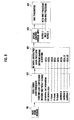
- the access categories and TID values for the slice types are listed in the form of a table in FIG. 4a.
- the transmission apparatus starts transmission of the slices in accordance with the respective transmission schemes over the IEEE 802.11e network (S717).
- the video data compressed in an encoder are classified in different importance; the classified video data are mapped to the access classes provided by the IEEE 802.11e MAC and transmitted in accordance with transmission scheme and access priority.
- FIG. 8 is a block diagram illustrating the configuration of a video data transmission apparatus according to an exemplary embodiment of the present invention.
- the video data transmission apparatus includes a video signal receiver 801, a video coding layer processor 802, a network abstraction layer processor 803, a virtual collision handler 804, and a MAC transmitter 805.
- the video signal receiver 801 receives video signal input from a video source (not shown).
- the video signal receiver 801 packetizes the video signal and outputs the packetized video data to the video coding layer processor 802.
- the video coding layer processor 802 slices the packets that is received from the video signal receiver 801 into a plurality of slices and classifies the slices by their types.
- the video coding layer processor 802 performs H.264 coding and packet slicing.
- the video coding layer processor 802 can generate different types of slices depending on whether a data partitioning is enabled or not. That is, in the case that the data partitioning is not enabled, the video coding layer processor 802 slices the video data into I slice, P slice, and B slice. In the case that the data partitioning is enabled, however, the video coding layer processor 802 generates a parameter set information slice and/or IDR picture slice in addition to the I, P, and B slices. The generated slices are directed to the network abstraction layer processor 803 with an associated header.
- the network abstraction layer processor 803 maps the parameter set information slices, IDR picture slices, and I slices to an HCCA entity.
- the network abstraction layer processor 803 also maps the P slices and B slices to EDCA_VI and EDCA_BE entities, respectively. Accordingly, the slices are transmitted in different transmission mechanisms according to their types.
- the transmission entities have different transmission priorities.
- the transmission priority is determined on the basis of the PSNR degradation extent affected by the slice loss, such that the slice type much affecting the PSNR degradation is assigned a higher transmission priority.
- the virtual collision handler 804 includes a plurality of input buffers corresponding to the transmission entities such that the slices are queued in the respective input buffers.
- the virtual collision handler 804 delivers the slices to the MAC transmitter 805 under the rule of a Distributed Coordination Function Inter Frame Space (DIFS) of an IEEE 802.11 e MAC protocol.
- DIFS Distributed Coordination Function Inter Frame Space
- the MAC transmitter 805 transmits the video data of the slice type having the highest transmission priority using a first transmission scheme and transmits the video data of the slice type having the lower transmission priority using a second transmission scheme.
- the MAC transmitter includes a HCCA MAC processor, EDCA MAC processor, and a selector.
- the HCCA MAC processor transmits the video data queued in a first buffer of the virtual collision handler 804 and the EDCA MAC processor transmits the video data queued in a second buffer of the virtual collision handler 804.
- the selector checks the transmission priority of the video data such that the video data processed by the HCCA MAC processor are transmitted with higher priority.
- the MAC transmitter 805 operates with the IEEE 802.11e MAC protocol for communication with the IEEE 802.11e AP.
- the video data transmission method and device of the present invention classifies the video data into different data types in accordance with importance affecting a video quality at a recipient device and transmits the video having the higher importance with higher priority, thereby improving transmission efficiency of network, particularly, WLAN and securing a high quality picture at the recipient device.
Landscapes
- Engineering & Computer Science (AREA)
- Signal Processing (AREA)
- Multimedia (AREA)
- Computer Security & Cryptography (AREA)
- Computer Networks & Wireless Communication (AREA)
- Small-Scale Networks (AREA)
- Compression Or Coding Systems Of Tv Signals (AREA)
- Mobile Radio Communication Systems (AREA)
- Communication Control (AREA)
- Two-Way Televisions, Distribution Of Moving Picture Or The Like (AREA)
- Data Exchanges In Wide-Area Networks (AREA)
Applications Claiming Priority (1)
| Application Number | Priority Date | Filing Date | Title |
|---|---|---|---|
| KR1020060055153A KR100799669B1 (ko) | 2006-06-20 | 2006-06-20 | 영상신호 송수신효율 향상을 위한 정보통신방법 및 장치 |
Publications (3)
| Publication Number | Publication Date |
|---|---|
| EP1879396A2 true EP1879396A2 (fr) | 2008-01-16 |
| EP1879396A3 EP1879396A3 (fr) | 2010-09-22 |
| EP1879396B1 EP1879396B1 (fr) | 2012-08-08 |
Family
ID=38724291
Family Applications (1)
| Application Number | Title | Priority Date | Filing Date |
|---|---|---|---|
| EP07011880A Ceased EP1879396B1 (fr) | 2006-06-20 | 2007-06-18 | Procédé et appareil de communication de données vidéo pour améliorer l'efficacité de transmission |
Country Status (3)
| Country | Link |
|---|---|
| US (1) | US8189684B2 (fr) |
| EP (1) | EP1879396B1 (fr) |
| KR (1) | KR100799669B1 (fr) |
Cited By (3)
| Publication number | Priority date | Publication date | Assignee | Title |
|---|---|---|---|---|
| WO2010090796A1 (fr) | 2009-02-05 | 2010-08-12 | Cisco Technology, Inc. | Fiabilité de transmission de données sur un réseau |
| WO2010138295A3 (fr) * | 2009-05-28 | 2011-03-10 | Symbol Technologies, Inc. | Procédés et appareil de transmission de données sur la base de dépendances intertrames |
| EP2685771A4 (fr) * | 2011-03-11 | 2014-08-27 | Panasonic Corp | Dispositif de transmission vidéo sans fil, dispositif de réception vidéo sans fil et système de transfert vidéo sans fil les comportant |
Families Citing this family (16)
| Publication number | Priority date | Publication date | Assignee | Title |
|---|---|---|---|---|
| US11221917B1 (en) | 2005-09-30 | 2022-01-11 | Pure Storage, Inc. | Integrity processing in a dispersed storage network |
| US11620185B2 (en) | 2005-09-30 | 2023-04-04 | Pure Storage, Inc. | Integrity processing in a dispersed storage network |
| US10860424B1 (en) | 2005-09-30 | 2020-12-08 | Pure Storage, Inc. | Background verification processing in a storage network |
| US8555109B2 (en) * | 2009-07-30 | 2013-10-08 | Cleversafe, Inc. | Method and apparatus for distributed storage integrity processing |
| US20090103635A1 (en) * | 2007-10-17 | 2009-04-23 | Peshala Vishvajith Pahalawatta | System and method of unequal error protection with hybrid arq/fec for video streaming over wireless local area networks |
| KR101028956B1 (ko) | 2009-07-31 | 2011-04-12 | 포항공과대학교 산학협력단 | 모바일 iptv 서비스를 제공하는 방법 및 이를 위한 시스템 |
| US20120250690A1 (en) * | 2009-12-01 | 2012-10-04 | Samsung Electronics Co. Ltd. | Method and apparatus for transmitting a multimedia data packet using cross layer optimization |
| CN102932656A (zh) * | 2011-08-08 | 2013-02-13 | 中兴通讯股份有限公司 | 视频数据传输方法及装置 |
| US10567765B2 (en) | 2014-01-15 | 2020-02-18 | Avigilon Corporation | Streaming multiple encodings with virtual stream identifiers |
| US9538545B2 (en) * | 2014-11-04 | 2017-01-03 | Qualcomm Incorporated | Mapping data traffic throughout protocol layers based on priority information |
| KR102497216B1 (ko) | 2017-05-10 | 2023-02-07 | 삼성전자 주식회사 | 슬라이스 기반의 압축을 수행하는 영상 처리 장치 및 영상 처리 방법 |
| CN109644496B (zh) * | 2017-06-15 | 2021-03-30 | Oppo广东移动通信有限公司 | 接入控制方法及相关产品 |
| US11336741B2 (en) * | 2019-11-01 | 2022-05-17 | Microsoft Technology Licensing, Llc | Image data segmentation and transmission |
| US11140108B1 (en) | 2020-05-18 | 2021-10-05 | International Business Machines Corporation | Intelligent distribution of media data in a computing environment |
| US11729813B1 (en) * | 2021-06-01 | 2023-08-15 | Amazon Technologies, Inc. | Multimedia service over an extended range wireless local area network (WLAN)using a modulation and coding scheme with symbol repetition for higher priority portions of media for data |
| CN113645441A (zh) * | 2021-07-01 | 2021-11-12 | 贵州电网有限责任公司 | 一种基于5g的电力切片资源分配系统及分配方法 |
Family Cites Families (7)
| Publication number | Priority date | Publication date | Assignee | Title |
|---|---|---|---|---|
| US5181243A (en) * | 1989-05-19 | 1993-01-19 | Syntellect, Inc. | System and method for communications security protection |
| US7076005B2 (en) * | 2001-02-15 | 2006-07-11 | Qualcomm, Incorporated | System and method for transmission format detection |
| KR100579132B1 (ko) * | 2003-12-27 | 2006-05-12 | 한국전자통신연구원 | 타이밍정보 지터 방지를 위한 멀티미디어데이터전송스트림의 계층적 전송 장치 및 그 방법과, 계층적으로전송된 멀티미디어데이터 전송스트림의 복원 장치 및 그방법 |
| KR20050067677A (ko) * | 2003-12-29 | 2005-07-05 | 삼성전자주식회사 | 무선 노드와 외부 인터넷 망과의 통신에서의 데이터 전송장치 및 방법 |
| KR100597438B1 (ko) * | 2004-11-03 | 2006-07-10 | 한국전자통신연구원 | 무선 팬 매체 접근 제어 프레임 송신 장치 및 방법 |
| KR200380000Y1 (ko) | 2004-12-30 | 2005-03-24 | 한상수 | 보빈레스 코일권선기의 코일집게 |
| KR100657314B1 (ko) * | 2005-05-04 | 2006-12-20 | 삼성전자주식회사 | 멀티미디어 스트리밍 송신 장치 및 방법 |
-
2006
- 2006-06-20 KR KR1020060055153A patent/KR100799669B1/ko not_active Expired - Fee Related
-
2007
- 2007-06-18 EP EP07011880A patent/EP1879396B1/fr not_active Ceased
- 2007-06-20 US US11/820,881 patent/US8189684B2/en not_active Expired - Fee Related
Non-Patent Citations (2)
| Title |
|---|
| A. KSENTINI, M. NAIMI, A. GUÉROUI, IEEE COMMUNICATIONS MAGAZINE, vol. 44, no. 1, January 2006 (2006-01-01), pages 107 - 114 |
| N. RAMOS, D. PANIGRAHI, S. DEY, IEEE NETWORK, vol. 19, no. 4, July 2005 (2005-07-01), pages 14 - 20 |
Cited By (8)
| Publication number | Priority date | Publication date | Assignee | Title |
|---|---|---|---|---|
| WO2010090796A1 (fr) | 2009-02-05 | 2010-08-12 | Cisco Technology, Inc. | Fiabilité de transmission de données sur un réseau |
| US8009567B2 (en) | 2009-02-05 | 2011-08-30 | Cisco Technology, Inc. | System and method for improved data transmission reliability over a network |
| CN102742292A (zh) * | 2009-02-05 | 2012-10-17 | 思科技术公司 | 网络上的数据发送可靠性 |
| US8693334B2 (en) | 2009-02-05 | 2014-04-08 | Cisco Technology, Inc. | System and method for improved data transmission reliability over a network |
| CN102742292B (zh) * | 2009-02-05 | 2015-08-05 | 思科技术公司 | 网络上的数据发送可靠性 |
| WO2010138295A3 (fr) * | 2009-05-28 | 2011-03-10 | Symbol Technologies, Inc. | Procédés et appareil de transmission de données sur la base de dépendances intertrames |
| US8837453B2 (en) | 2009-05-28 | 2014-09-16 | Symbol Technologies, Inc. | Methods and apparatus for transmitting data based on interframe dependencies |
| EP2685771A4 (fr) * | 2011-03-11 | 2014-08-27 | Panasonic Corp | Dispositif de transmission vidéo sans fil, dispositif de réception vidéo sans fil et système de transfert vidéo sans fil les comportant |
Also Published As
| Publication number | Publication date |
|---|---|
| KR20070120634A (ko) | 2007-12-26 |
| EP1879396B1 (fr) | 2012-08-08 |
| KR100799669B1 (ko) | 2008-01-30 |
| EP1879396A3 (fr) | 2010-09-22 |
| US20080002777A1 (en) | 2008-01-03 |
| US8189684B2 (en) | 2012-05-29 |
Similar Documents
| Publication | Publication Date | Title |
|---|---|---|
| EP1879396B1 (fr) | Procédé et appareil de communication de données vidéo pour améliorer l'efficacité de transmission | |
| US8443097B2 (en) | Queue management unit and method for streaming video packets in a wireless network | |
| JP4549610B2 (ja) | 通信システム、通信方法、送信装置および方法、受信装置および方法、並びにプログラム | |
| JP5117512B2 (ja) | 再送回数を動的に適合させる方法及び装置 | |
| US11172267B2 (en) | Method and system for scheduling resources for streaming video services in mobile communication networks | |
| Chen et al. | Improving scalable video transmission over IEEE 802.11 e through a cross-layer architecture | |
| Pourmohammadi Fallah et al. | Efficient transmission of H. 264 video over multirate IEEE 802.11 e WLANs | |
| Chen et al. | Robust video streaming over wireless LANs using multiple description transcoding and prioritized retransmission | |
| KR101915885B1 (ko) | 실시간 비디오 스트리밍을 위한 우선 순위 대기열을 갖는 효율적인 mac 레이어 패킷 단편화 방법 및 시스템 | |
| EP2434702B1 (fr) | Procédé de programmation de flux de données dans une infrastructure de réseau de télécommunications | |
| Fallah et al. | Scheduled and contention access transmission of partitioned H. 264 video over WLANs | |
| Shin et al. | An efficient MAC layer packet fragmentation scheme with priority queuing for real-time video streaming | |
| Baik et al. | Efficient MAC for real-time video streaming over wireless LAN | |
| CN117915146B (zh) | 一种视频流传输方法和装置 | |
| Tizon et al. | Scalable and media aware adaptive video streaming over wireless networks | |
| Lee et al. | The study of dynamic video frame mapping scheme for multimedia streaming over IEEE 802.11 e WLAN | |
| Bishnoi et al. | Traffic Queues Controlling Cross-layer Mechanism for SVC Video Transmission over IEEE 802.11 n WLANs | |
| Soni et al. | A cross-layer design for H. 264 video stream over wireless local area networks | |
| Choudhary et al. | QoS enhancements for video transmission over high throughput WLAN: a survey | |
| Surati et al. | Evaluate the Performance of Video Transmission Using H. 264 (SVC) Over Long Term Evolution (LTE) | |
| Fiandrotti et al. | High-performance H. 264/SVC video communications in 802.11 e ad hoc networks | |
| Goel et al. | Enhancing QoS of streaming videos over WLANs | |
| CN116233024A (zh) | 数据包确定方法、装置及存储介质 | |
| Tizon et al. | Adaptive video streaming with long term feedbacks | |
| Du et al. | A deadline-aware transmission framework for H. 264/AVC video over IEEE 802.11 e EDCA wireless networks |
Legal Events
| Date | Code | Title | Description |
|---|---|---|---|
| PUAI | Public reference made under article 153(3) epc to a published international application that has entered the european phase |
Free format text: ORIGINAL CODE: 0009012 |
|
| 17P | Request for examination filed |
Effective date: 20070618 |
|
| AK | Designated contracting states |
Kind code of ref document: A2 Designated state(s): AT BE BG CH CY CZ DE DK EE ES FI FR GB GR HU IE IS IT LI LT LU LV MC MT NL PL PT RO SE SI SK TR |
|
| AX | Request for extension of the european patent |
Extension state: AL BA HR MK YU |
|
| PUAL | Search report despatched |
Free format text: ORIGINAL CODE: 0009013 |
|
| AK | Designated contracting states |
Kind code of ref document: A3 Designated state(s): AT BE BG CH CY CZ DE DK EE ES FI FR GB GR HU IE IS IT LI LT LU LV MC MT NL PL PT RO SE SI SK TR |
|
| AX | Request for extension of the european patent |
Extension state: AL BA HR MK RS |
|
| RIC1 | Information provided on ipc code assigned before grant |
Ipc: H04N 7/24 20060101AFI20071211BHEP Ipc: H04L 12/28 20060101ALI20100813BHEP |
|
| 17Q | First examination report despatched |
Effective date: 20110428 |
|
| AKX | Designation fees paid |
Designated state(s): DE FR GB IT |
|
| REG | Reference to a national code |
Ref country code: DE Ref legal event code: R079 Ref document number: 602007024478 Country of ref document: DE Free format text: PREVIOUS MAIN CLASS: H04N0007240000 Ipc: H04N0021238100 |
|
| GRAP | Despatch of communication of intention to grant a patent |
Free format text: ORIGINAL CODE: EPIDOSNIGR1 |
|
| RIC1 | Information provided on ipc code assigned before grant |
Ipc: H04N 21/2381 20110101AFI20120309BHEP |
|
| GRAS | Grant fee paid |
Free format text: ORIGINAL CODE: EPIDOSNIGR3 |
|
| GRAA | (expected) grant |
Free format text: ORIGINAL CODE: 0009210 |
|
| AK | Designated contracting states |
Kind code of ref document: B1 Designated state(s): DE FR GB IT |
|
| REG | Reference to a national code |
Ref country code: GB Ref legal event code: FG4D |
|
| RAP2 | Party data changed (patent owner data changed or rights of a patent transferred) |
Owner name: SAMSUNG ELECTRONICS CO., LTD. |
|
| REG | Reference to a national code |
Ref country code: DE Ref legal event code: R096 Ref document number: 602007024478 Country of ref document: DE Effective date: 20120927 |
|
| PLBE | No opposition filed within time limit |
Free format text: ORIGINAL CODE: 0009261 |
|
| STAA | Information on the status of an ep patent application or granted ep patent |
Free format text: STATUS: NO OPPOSITION FILED WITHIN TIME LIMIT |
|
| 26N | No opposition filed |
Effective date: 20130510 |
|
| REG | Reference to a national code |
Ref country code: DE Ref legal event code: R097 Ref document number: 602007024478 Country of ref document: DE Effective date: 20130510 |
|
| REG | Reference to a national code |
Ref country code: FR Ref legal event code: PLFP Year of fee payment: 10 |
|
| REG | Reference to a national code |
Ref country code: FR Ref legal event code: PLFP Year of fee payment: 11 |
|
| REG | Reference to a national code |
Ref country code: FR Ref legal event code: PLFP Year of fee payment: 12 |
|
| PGFP | Annual fee paid to national office [announced via postgrant information from national office to epo] |
Ref country code: DE Payment date: 20180522 Year of fee payment: 12 |
|
| PGFP | Annual fee paid to national office [announced via postgrant information from national office to epo] |
Ref country code: FR Payment date: 20180525 Year of fee payment: 12 Ref country code: IT Payment date: 20180612 Year of fee payment: 12 |
|
| PGFP | Annual fee paid to national office [announced via postgrant information from national office to epo] |
Ref country code: GB Payment date: 20180405 Year of fee payment: 12 |
|
| REG | Reference to a national code |
Ref country code: DE Ref legal event code: R119 Ref document number: 602007024478 Country of ref document: DE |
|
| GBPC | Gb: european patent ceased through non-payment of renewal fee |
Effective date: 20190618 |
|
| PG25 | Lapsed in a contracting state [announced via postgrant information from national office to epo] |
Ref country code: DE Free format text: LAPSE BECAUSE OF NON-PAYMENT OF DUE FEES Effective date: 20200101 Ref country code: IT Free format text: LAPSE BECAUSE OF NON-PAYMENT OF DUE FEES Effective date: 20190618 Ref country code: GB Free format text: LAPSE BECAUSE OF NON-PAYMENT OF DUE FEES Effective date: 20190618 |
|
| PG25 | Lapsed in a contracting state [announced via postgrant information from national office to epo] |
Ref country code: FR Free format text: LAPSE BECAUSE OF NON-PAYMENT OF DUE FEES Effective date: 20190630 |