EP1880027B1 - Compositions et procedes destines au diagnostic du cancer utilisant le cluster mir-17-92 - Google Patents
Compositions et procedes destines au diagnostic du cancer utilisant le cluster mir-17-92 Download PDFInfo
- Publication number
- EP1880027B1 EP1880027B1 EP06769983.5A EP06769983A EP1880027B1 EP 1880027 B1 EP1880027 B1 EP 1880027B1 EP 06769983 A EP06769983 A EP 06769983A EP 1880027 B1 EP1880027 B1 EP 1880027B1
- Authority
- EP
- European Patent Office
- Prior art keywords
- mir
- nucleic acid
- cell
- mir17
- acid compound
- Prior art date
- Legal status (The legal status is an assumption and is not a legal conclusion. Google has not performed a legal analysis and makes no representation as to the accuracy of the status listed.)
- Expired - Lifetime
Links
Images





Classifications
-
- C—CHEMISTRY; METALLURGY
- C12—BIOCHEMISTRY; BEER; SPIRITS; WINE; VINEGAR; MICROBIOLOGY; ENZYMOLOGY; MUTATION OR GENETIC ENGINEERING
- C12N—MICROORGANISMS OR ENZYMES; COMPOSITIONS THEREOF; PROPAGATING, PRESERVING, OR MAINTAINING MICROORGANISMS; MUTATION OR GENETIC ENGINEERING; CULTURE MEDIA
- C12N15/00—Mutation or genetic engineering; DNA or RNA concerning genetic engineering, vectors, e.g. plasmids, or their isolation, preparation or purification; Use of hosts therefor
- C12N15/09—Recombinant DNA-technology
- C12N15/11—DNA or RNA fragments; Modified forms thereof; Non-coding nucleic acids having a biological activity
- C12N15/113—Non-coding nucleic acids modulating the expression of genes, e.g. antisense oligonucleotides; Antisense DNA or RNA; Triplex- forming oligonucleotides; Catalytic nucleic acids, e.g. ribozymes; Nucleic acids used in co-suppression or gene silencing
- C12N15/1135—Non-coding nucleic acids modulating the expression of genes, e.g. antisense oligonucleotides; Antisense DNA or RNA; Triplex- forming oligonucleotides; Catalytic nucleic acids, e.g. ribozymes; Nucleic acids used in co-suppression or gene silencing against oncogenes or tumor suppressor genes
-
- A—HUMAN NECESSITIES
- A61—MEDICAL OR VETERINARY SCIENCE; HYGIENE
- A61P—SPECIFIC THERAPEUTIC ACTIVITY OF CHEMICAL COMPOUNDS OR MEDICINAL PREPARATIONS
- A61P35/00—Antineoplastic agents
-
- A—HUMAN NECESSITIES
- A61—MEDICAL OR VETERINARY SCIENCE; HYGIENE
- A61P—SPECIFIC THERAPEUTIC ACTIVITY OF CHEMICAL COMPOUNDS OR MEDICINAL PREPARATIONS
- A61P35/00—Antineoplastic agents
- A61P35/02—Antineoplastic agents specific for leukemia
-
- C—CHEMISTRY; METALLURGY
- C12—BIOCHEMISTRY; BEER; SPIRITS; WINE; VINEGAR; MICROBIOLOGY; ENZYMOLOGY; MUTATION OR GENETIC ENGINEERING
- C12Q—MEASURING OR TESTING PROCESSES INVOLVING ENZYMES, NUCLEIC ACIDS OR MICROORGANISMS; COMPOSITIONS OR TEST PAPERS THEREFOR; PROCESSES OF PREPARING SUCH COMPOSITIONS; CONDITION-RESPONSIVE CONTROL IN MICROBIOLOGICAL OR ENZYMOLOGICAL PROCESSES
- C12Q1/00—Measuring or testing processes involving enzymes, nucleic acids or microorganisms; Compositions therefor; Processes of preparing such compositions
- C12Q1/68—Measuring or testing processes involving enzymes, nucleic acids or microorganisms; Compositions therefor; Processes of preparing such compositions involving nucleic acids
- C12Q1/6876—Nucleic acid products used in the analysis of nucleic acids, e.g. primers or probes
- C12Q1/6883—Nucleic acid products used in the analysis of nucleic acids, e.g. primers or probes for diseases caused by alterations of genetic material
- C12Q1/6886—Nucleic acid products used in the analysis of nucleic acids, e.g. primers or probes for diseases caused by alterations of genetic material for cancer
-
- G—PHYSICS
- G16—INFORMATION AND COMMUNICATION TECHNOLOGY [ICT] SPECIALLY ADAPTED FOR SPECIFIC APPLICATION FIELDS
- G16H—HEALTHCARE INFORMATICS, i.e. INFORMATION AND COMMUNICATION TECHNOLOGY [ICT] SPECIALLY ADAPTED FOR THE HANDLING OR PROCESSING OF MEDICAL OR HEALTHCARE DATA
- G16H10/00—ICT specially adapted for the handling or processing of patient-related medical or healthcare data
- G16H10/40—ICT specially adapted for the handling or processing of patient-related medical or healthcare data for data related to laboratory analysis, e.g. patient specimen analysis
-
- G—PHYSICS
- G16—INFORMATION AND COMMUNICATION TECHNOLOGY [ICT] SPECIALLY ADAPTED FOR SPECIFIC APPLICATION FIELDS
- G16H—HEALTHCARE INFORMATICS, i.e. INFORMATION AND COMMUNICATION TECHNOLOGY [ICT] SPECIALLY ADAPTED FOR THE HANDLING OR PROCESSING OF MEDICAL OR HEALTHCARE DATA
- G16H20/00—ICT specially adapted for therapies or health-improving plans, e.g. for handling prescriptions, for steering therapy or for monitoring patient compliance
- G16H20/40—ICT specially adapted for therapies or health-improving plans, e.g. for handling prescriptions, for steering therapy or for monitoring patient compliance relating to mechanical, radiation or invasive therapies, e.g. surgery, laser therapy, dialysis or acupuncture
-
- G—PHYSICS
- G16—INFORMATION AND COMMUNICATION TECHNOLOGY [ICT] SPECIALLY ADAPTED FOR SPECIFIC APPLICATION FIELDS
- G16H—HEALTHCARE INFORMATICS, i.e. INFORMATION AND COMMUNICATION TECHNOLOGY [ICT] SPECIALLY ADAPTED FOR THE HANDLING OR PROCESSING OF MEDICAL OR HEALTHCARE DATA
- G16H50/00—ICT specially adapted for medical diagnosis, medical simulation or medical data mining; ICT specially adapted for detecting, monitoring or modelling epidemics or pandemics
- G16H50/20—ICT specially adapted for medical diagnosis, medical simulation or medical data mining; ICT specially adapted for detecting, monitoring or modelling epidemics or pandemics for computer-aided diagnosis, e.g. based on medical expert systems
-
- C—CHEMISTRY; METALLURGY
- C12—BIOCHEMISTRY; BEER; SPIRITS; WINE; VINEGAR; MICROBIOLOGY; ENZYMOLOGY; MUTATION OR GENETIC ENGINEERING
- C12Q—MEASURING OR TESTING PROCESSES INVOLVING ENZYMES, NUCLEIC ACIDS OR MICROORGANISMS; COMPOSITIONS OR TEST PAPERS THEREFOR; PROCESSES OF PREPARING SUCH COMPOSITIONS; CONDITION-RESPONSIVE CONTROL IN MICROBIOLOGICAL OR ENZYMOLOGICAL PROCESSES
- C12Q2600/00—Oligonucleotides characterized by their use
- C12Q2600/106—Pharmacogenomics, i.e. genetic variability in individual responses to drugs and drug metabolism
-
- C—CHEMISTRY; METALLURGY
- C12—BIOCHEMISTRY; BEER; SPIRITS; WINE; VINEGAR; MICROBIOLOGY; ENZYMOLOGY; MUTATION OR GENETIC ENGINEERING
- C12Q—MEASURING OR TESTING PROCESSES INVOLVING ENZYMES, NUCLEIC ACIDS OR MICROORGANISMS; COMPOSITIONS OR TEST PAPERS THEREFOR; PROCESSES OF PREPARING SUCH COMPOSITIONS; CONDITION-RESPONSIVE CONTROL IN MICROBIOLOGICAL OR ENZYMOLOGICAL PROCESSES
- C12Q2600/00—Oligonucleotides characterized by their use
- C12Q2600/118—Prognosis of disease development
-
- C—CHEMISTRY; METALLURGY
- C12—BIOCHEMISTRY; BEER; SPIRITS; WINE; VINEGAR; MICROBIOLOGY; ENZYMOLOGY; MUTATION OR GENETIC ENGINEERING
- C12Q—MEASURING OR TESTING PROCESSES INVOLVING ENZYMES, NUCLEIC ACIDS OR MICROORGANISMS; COMPOSITIONS OR TEST PAPERS THEREFOR; PROCESSES OF PREPARING SUCH COMPOSITIONS; CONDITION-RESPONSIVE CONTROL IN MICROBIOLOGICAL OR ENZYMOLOGICAL PROCESSES
- C12Q2600/00—Oligonucleotides characterized by their use
- C12Q2600/136—Screening for pharmacological compounds
-
- C—CHEMISTRY; METALLURGY
- C12—BIOCHEMISTRY; BEER; SPIRITS; WINE; VINEGAR; MICROBIOLOGY; ENZYMOLOGY; MUTATION OR GENETIC ENGINEERING
- C12Q—MEASURING OR TESTING PROCESSES INVOLVING ENZYMES, NUCLEIC ACIDS OR MICROORGANISMS; COMPOSITIONS OR TEST PAPERS THEREFOR; PROCESSES OF PREPARING SUCH COMPOSITIONS; CONDITION-RESPONSIVE CONTROL IN MICROBIOLOGICAL OR ENZYMOLOGICAL PROCESSES
- C12Q2600/00—Oligonucleotides characterized by their use
- C12Q2600/178—Oligonucleotides characterized by their use miRNA, siRNA or ncRNA
-
- Y—GENERAL TAGGING OF NEW TECHNOLOGICAL DEVELOPMENTS; GENERAL TAGGING OF CROSS-SECTIONAL TECHNOLOGIES SPANNING OVER SEVERAL SECTIONS OF THE IPC; TECHNICAL SUBJECTS COVERED BY FORMER USPC CROSS-REFERENCE ART COLLECTIONS [XRACs] AND DIGESTS
- Y02—TECHNOLOGIES OR APPLICATIONS FOR MITIGATION OR ADAPTATION AGAINST CLIMATE CHANGE
- Y02A—TECHNOLOGIES FOR ADAPTATION TO CLIMATE CHANGE
- Y02A90/00—Technologies having an indirect contribution to adaptation to climate change
- Y02A90/10—Information and communication technologies [ICT] supporting adaptation to climate change, e.g. for weather forecasting or climate simulation
Definitions
- Cancer is a major cause of morbidity in the United States.
- the American Cancer Society estimated that 1,359,150 people were diagnosed with a malignant neoplasm and 554,740 died from one of these diseases. Cancer is responsible for 23.9 percent of all American deaths and is exceeded only by heart disease as a cause of mortality (33 percent).
- cancer mortality is increasing and sometime early in this century, cancer is expected to become the leading cause of mortality in the United States as it already is in Japan.
- Cancers share the characteristics of disordered control over normal cell division, growth, and differentiation. Their initial clinical manifestations are extremely heterogeneous, with over 70 types of cancer arising in virtually every organ and tissue of the body. Moreover, some of those similarly classified cancer types may represent multiple different molecular diseases. Unfortunately, some cancers may be virtually asymptomatic until late in the disease course, when treatment is more difficult, and prognosis grim.
- Treatment for cancer typically includes surgery, chemotherapy, and/or radiation therapy. Although nearly 50 percent of cancer patients can be effectively treated using these methods, the current therapies all induce serious side effects which diminish quality of life.
- the identification of novel therapeutic targets and diagnostic markers is desirable for improving the diagnosis, prognosis, and treatment of cancer patients. Such novel therapeutic targets and diagnostic markers are provided herein.
- the present invention provides a composition for use in treating cancer as characterised in the appended claims.
- an isolated nucleic acid compound comprising a sequence that hybridizes to a mir17-92 cistron transcript, or mir17-19b transcript, under physiological conditions and decreases the expression or activity of at least one mRNA encoded by the mir17-92 cistron, or mir17-19b cistron, in a cell. It is further described that, the isolated nucleic acid compound hybridizes to a transcript encoded by SEQ ID NO: 1, or a portion thereof, such as, for example, a portion comprising at least 10 contiguous nucleotide residues of SEQ ID NO: 1.
- the isolated nucleic acid compound hybridizes to a portion of SEQ ID NO: 1 comprising nucleotide residues 84-167, 230-300, 235-256, 370-451. 544-614, 671-757, 793-870, 235-256, or 724-746 or SEQ ID NO: 1.
- the nucleic acid compound is from about 14 to about 50 nucleotides in length, that the nucleic acid compound hybridizes to at least 8 contiguous nucleotides of a transcript encoded by the mir17-92 cistron, that the nucleic acid compound is single-stranded, that the nucleic acid compound is double-stranded, that the nucleic acid compound is a DNA molecule, optionally comprising one or more modified backbone or base moieties, that the nucleic acid compound is a RNA molecule, optionally comprising one or more modified backbone or base moieties, or that the nucleic acid compound comprises a DNA strand and a RNA strand and optionally comprises one or more modified backbone or base moieties.
- the nucleic acid compound is an antisense nucleic acid compound. It is further described that, the antisense nucleic acid compound is from about 15 to about 30 nucleotides in length, that the antisense nucleic acid compound comprises SEQ ID NO: 11, that the antisense nucleic acid compound comprises SEQ ID NO: 12, that the antisense nucleic acid compound comprises one or modified backbone or base moieties, that the antisense nucleic acid compound has at least one internucleotide linkage selected from the group consisting of alkylphosphonates, phosphorothioates, phosphorodithioates, alkylphosphonothioates, phosphoramidates, phosphate esters, carbamates, acetamidate, carboxylmethyl esters, carbonates, and phosphate triesters, or that the modified antisense nucleic acid comprises at least one 2'-O-alkylated ribonucleotide.
- the nucleic acid compound is an RNAi construct. It is further described that the RNAi construct is a dsRNA, optionally comprising one or more modified backbone or base moieties, that the RNAi construct is a hairpin RNA, optionally comprising one or more modified backbone or base moieties, that the duplex portion of the RNAi construct is from about 21 to about 23 nucleotides in length, that the RNAi construct comprises one or more backbone or base moieties, that the modified RNAi construct has at least one internucleotide linkage selected from the group consisting of alkylphosphonates, phosphorothioates, phosphorodithioates, alkylphosphonothioates, phosphoramidates, phosphate esters, carbamates, acetamidate, carboxylmethyl esters, carbonates, and phosphate triesters, or that the modified RNAi construct comprises at least one 2'-O-alkylated ribonucleot
- the nucleic acid compound is an enzymatic nucleic acid. It is additionally described that the enzymatic nucleic acid is a ribozyme or that the enzymatic nucleic acid is a DNA enzyme.
- nucleic acid compound that inhibits the expression in a cell of at least one miRNA encoded by the mir17-92 cistron, or mir17-19b cistron, by at least 50%. It is further described that the nucleic acid compound inhibits the expression in a cell of at least one miRNA encoded by the mir17-92 cistron, or mir17-19b citron, by at least 5-fold.
- a pharmaceutical composition comprising a nucleic acid compound and a pharmaceutically acceptable carrier, wherein the nucleic acid compound hybridizes to a mir17-92 cistron transcript under physiological conditions and decreases the expression or activity of at least one miRNA encoded by the mir17-92 cistron in a cell. It is further described that the pharmaceutical composition comprises a nucleic acid compound selected from the group consisting of: an RNAi construct and an antisense nucleic acid compound.
- the invention provides a method of inhibiting expression or activity of at least one mRNA encoded by a mir17-92 cistron in a cell, as characterised in the appended claims.
- MicroRNA or miRNA
- RNA is a class of small non-coding RNA molecules, that are capable of causing interference, inhibition of RNA translation into protein, and can cause post-transcriptional silencing of specific genes in cells and in the body (see, Zeng and Cullen, RNA, 9(1):112-123, 2003 ; Kidner and Martienssen Trends Genet, 19(1):13-6, 2003 ; Dennis C, Nature, 420(6917):732, 2002 ; Couzin J, Science 298(5602):2296-7, 2002 ). To date, more than 200 microRNAs have been described in humans. However, the precise function of these regulatory, non-coding RNAs remains largely obscure.
- Akinobu et al. (2004) describe a possible involvement of the mir-17-92 cistron in B cell malignancy and teaches that the C13orf25 gene is amplified in lymphomas.
- WO 03/029459 describes diagnostic or therapeutic applications of miRNAs, inter alia miRNAs miR-18 and miR-19b, including the determination of disorders characterized by differential expression of miRNA or the developmental stage of cells and discusses the tumor suppressor activity of specific miRNAs.
- the present invention is based, at least in part, on Applicants' novel discovery that the mir17-92 cistron, a microRNA cluster, is overexpressed in tumors and tumor cell lines.
- Applicants have demonstrated that the full mir17-92 cistron as well as a truncated cluster comprising mir17-19b-1 ("mir17-19b") can act as an oncogene in vivo , as shown by their abilities to accelerate E ⁇ -myc or p53 -/- induced tumorigenesis in mice (see more details in the Figures and Exemplification section).
- the mir17-92 cistron and the miRNAs encoded thereby can therefore be used for therapeutic intervention of tumors and cancers.
- the present invention features therapeutic uses of a composition for treating cancers via decreasing the expression and/or activity of the one or more microRNAs encoded by the mir17-92 cistron as characterised in the appended claims.
- the cancer therapeutic of the present invention decreases the expression and/or activity of miR-19b-1 and/or miR-18.
- Applicants have also devised screening methods to identity inhibitors of mir17- 92 cistron expression as novel cancer therapeutic and preventative agents.
- a mir17-92 cistron inhibitor refers to an agent that decreases the expression and/or activity of one or more miRNAs encoded by the mir17- 92 cistron, which include the following seven microRNAs: miR-17-5p, miR-17-3p, miR-18, miR-19a, miR-20, miR-19b-1 and miR-92-1.
- a mir17-92 cistron inhibitor includes an agent that decreases the level of expression of one or more miRNAs included in the mir17-92 cistron, by decreasing its expression at the transcriptional level, increasing its degradation, or a combination of both, either directly, or indirectly by modulating an upstream regulator of the mir17-92 cistron.
- a mir17-92 cistron inhibitor further includes an agent that interferes with the activity of one or more miRNAs encoded by the mir17-92 cistron, including, but not limited to, a non-functional miRNA that competes with at least one of the miRNAs encoded by the mir17-92 cistron for binding to the respective target gene(s).
- a mir17-92 inhibitor specifically decreases the expression and/or activity of one or more of miR19-b-1 and/or miR-18.
- mir17-92 cistron inhibitors described herein can be biological macromolecules such as nucleic acids or polypeptides, chemical compounds, mixtures of chemical compounds, or extracts isolated from bacterial, plant, fungal, or animal matter, each of which may be administered to a subject in need thereof via standard techniques known in the art.
- mir17-92 cistron inhibitors are antisense molecules as characterised in the appended claims. Antisense molecules have been shown to be effective in inhibiting human miRNAs (see A.M. Cheng et al., Nucleic Acids. Research, 33: 1290-1297 (2005 )).
- mir17-92 cistron inhibitors are oligomeric compounds that can hybridize or sterically interfere with miRNAs encoded by the mir17-92 cistron. Methods of making such oligomeric compounds are described in the PCT application WO05013901 .
- cancer refers to all types of cancers, or neoplasms or benign or malignant tumors. Preferred cancers for treatment using methods provided herein include B-cell malignancies, lymphomas, carcinoma, sarcoma, or leukemia. "Lymphoma” refers to a malignant growth of B or T cells in the lymphatic system. “Lymphoma” includes numerous types of malignant growths, including Hodgkin's Lymphoma and non-Hodgkin's lymphoma (NHL).
- NHL non-Hodgkin's lymphoma
- Non-Hodgkin's Lymphoma refers to a malignant growth of B or T cells in the lymphatic system that is not a Hodgkin's Lymphoma (which is characterized, e.g., by the presence of Reed-Stemberg cells in the cancerous area).
- carcinoma is meant a benign or malignant epithelial tumor and includes, but is not limited to, breast carcinoma, prostate carcinoma, non-small cell lung carcinoma, colon carcinoma, CNS carcinoma, melanoma carcinoma, ovarian carcinoma, or renal carcinoma.
- B cell malignancy refers to B cell lymphomas and leukemias, including, for example, Hodgkin's disease (all forms, e.g., relapsed Hodgkin's disease, resistant Hodgkin's disease), non-Hodgkin's lymphomas (low grade, intermediate grade, high grade, and other types), small lymphocytic/B cell chronic lymphocytic leukemia (SLLB-CLL), ALL-L3 (Burkitt's type leukemia), chronic lymphocytic leukemia (CLL), chronic leukocytic leukemia, acute myelogenous leukemia, acute lymphoblastic leukemia, chronic lymphocytic leukemia, chronic myelogenous leukemia, lymphoblastic leukemia, lymphocytic leukemia, monocytic leukemia, myelogenous leukemia, promyelocytic leukemia, monocytic cell leukemias, lymhoplasma
- detecting a cancer refers to determining the presence or absence of cancer or a precancerous condition in an animal.
- Detecting a cancer also can refer to obtaining indirect evidence regarding the likelihood of the presence of precancerous or cancerous cells in the animal or assessing the predisposition of a patient to the development of a cancer. Detecting a cancer can be accomplished using the methods of this invention alone, in combination with other methods, or in light of other information regarding the state of health of the animal
- mammal for purposes of treatment or diagnosis refers to any animal classified as a mammal, including humans, domestic and farm animals, and zoo, sports, or pet animals, such as dogs, horses, cats, cows, etc.
- a mammal is a human.
- precancerous refers to cells or tissues having characteristics relating to changes that may lead to malignancy or cancer. Examples include adenomatous growths in colon, lung, ovarian, or breast, tissues, or conditions, for example, dysplastic nevus syndrome, a precursor to malignant melanoma of the skin. Examples also include, abnormal neoplastic, in addition to dysplastic nevus syndromes, polyposis syndromes, prostatic dysplasia, and other such neoplasms, whether the precancerous lesions are clinically identifiable or not
- tumor refers to all neoplastic cell growth and proliferation, whether malignant or benign, and all precancerous and cancerous cells and tissues.
- the mir17-92 cistron and the miRNAs encoded thereby can be used for detection, diagnosis, prognosis, rational drug design, and other therapeutic intervention of tumors and cancers, including, for example, various kinds of lymphoma.
- Detection and measurement of amplification and/or overexpression of the mir17-92 cistron, or one or more miRKAs encoded thereby, in a biological sample taken from a patient indicates that the patient may have developed a tumor.
- the presence of amplification of the mir17-92 cistron is diagnostic for cancer or a precancerous condition, for example, a lymphoma, with high probability of accuracy. Described herein are therefore, in one aspect, methods for diagnosing or characterizing a cancer or tumor in a mammalian tissue by measuring the level of expression of one or more of the miRNAs encoded by the mir17-92 cistron in samples taken from subject, and determining whether such miRNA is overexpressed in the sample.
- Suitable samples for diagnosis of a subject may be blood, urine, serum, saliva, or tissue samples.
- a diagnostic sample may be a sample of the tissue under suspicion of being precancerous or cancerous, e.g., a biopsy sample, surgical sample, etc.
- the presence of a target gene (e.g., the mir17-92 polycistron) that has undergone amplification in tumors may be evaluated by determining the copy number of the target genes, i.e., the number of DNA sequences in a cell encoding the target expression product.
- a normal diploid cell has two copies of a given autosomal gene.
- the copy number can be increased, however, by gene amplification or duplication, for example, in cancer cells, or reduced by deletion.
- Methods of evaluating the copy number of a particular gene or miRNA expression levels are well known in the art, and include, inter alia , hybridization and amplification based assays.
- any of a number of hybridization based assays can be used to detect the copy number of the mir17-92 cistron, or a portion thereof, in the cells of a biological sample.
- One such method is Southern blot (see Ausubel et al., or Sambrook et al., supra), where the genomic DNA is typically fragmented, separated electrophoretically, transferred to a membrane, and subsequently hybridized to a probe specific for the mir17-92 cistron.
- Comparison of the intensity of the hybridization signal from the probe for the target region with a signal from a control probe from a region of normal, nonamplified, single-copied genomic DNA in the same genome provides an estimate of the copy number of the mir17-92 cistron, or a portion thereof
- An increased signal compared to the control represents the presence of amplification.
- in situ hybridization for example, fluorescence in situ hybridization (FISH) (see Angerer, 1987 Meth. Enzymol., 152: 649 ).
- FISH fluorescence in situ hybridization
- in situ hybridization comprises the following major steps: (1) fixation of tissue or biological structure to be analyzed; (2) prehybridization treatment of the biological structure to increase accessibility of target DNA, and to reduce nonspecific binding; (3) hybridization of the mixture of nucleic acids to the nucleic acid in the biological structure or tissue; (4) post-hybridization washes to remove nucleic acid fragments not bound in the hybridization, and (5) detection of the hybridized nucleic acid fragments.
- the probes used in such applications are typically labeled, for example, with radioisotopes or fluorescent reporters.
- Preferred probes are sufficiently long, for example, from about 50, 100, or 200 nucleotides to about 1000 or more nucleotides, to enable specific hybridization with the target nucleic acid(s) under stringent conditions.
- CGH comparative genomic hybridization
- a "test" collection of nucleic acids is labeled with a first label
- a second collection for example, from a normal cell or tissue
- the ratio of hybridization of the nucleic acids is determined by the ratio of the first and second labels binding to each fiber in an array. Differences in the ratio of the signals from the two labels, for example, due to gene amplification in the test collection, is detected and the ratio provides a measure of the copy number of the mir17-92 cistron, or a portion thereof.
- a cytogenetic representation of DNA copy-number variation can be generated by CGH, which provides fluorescence ratios along the length of chromosomes from differentially labeled test and reference genomic DNAs.
- Hybridization protocols suitable for use with the methods of the invention are described, for example, in Albertson (1984) EMBO J. 3:1227-1234 ; Pinkel (1988) Proc. Natl. Acad. Sci. USA, 85:9138-9142 ; EPO Pub. No. 430:402 ; Methods in Molecular Biology, Vol. 33: In Situ Hybridization Protocols, Choo, ed., Humana Press, Totowa, N.J. (1994 ).
- Amplification-based assays also can be used to measure the copy number of the mir17-92 cistron, or a portion thereof.
- the mir17-92 cistron nucleic acid sequence acts as a template in an amplification reaction (for example, Polymerase Chain Reaction or PCR).
- an amplification reaction for example, Polymerase Chain Reaction or PCR.
- the amount of amplification product will be proportional to the amount of template in the original sample.
- Comparison to appropriate controls provides a measure of the copy number of the mir17-92 cistron, according to the principles discussed above. Methods of real-time quantitative PCR using TaqMan probes are well known in the art.
- a TaqMan-based assay also can be used to quantify the mir17-92 cistron polynucleotides, or portions thereof.
- TaqMan based assays use a fluorogenic oligonucleotide probe that contains a 5' fluorescent dye and a 3' quenching agent. The probe hybridizes to a PCR product, but cannot itself be extended due to a blocking agent at the 3' end.
- the 5' nuclease activity of the polymerase for example, AmpliTaq
- LCR ligase chain reaction
- Microarray technology may be used because it offers high resolution.
- the traditional CGH generally has a 20 Mb limited mapping resolution; whereas in microarray-based CGH, the fluorescence ratios of the differentially labeled test and reference genomic DNAs provide a locus-by-locus measure of DNA copy-number variation, thereby achieving increased mapping resolution.
- Details of various microarray methods can be found in the literatara. See, for example, U.S. Pat. No. 6,232,068 ; Pollack et al., Nat. Genet., 23(1):41-6, (1999 ), and others.
- hybridization and amplification based methods are described above with reference to DNA copy number of the mir17-92 polycistron. However, one of ordinary skill in the art will understand that such methods may also be used to determine the expression levels of one or more miRNAs encoded by the mir17-92 polycistron. For example, miRNA expression levels may be determined using, for example, Southern blotting, fluorescence in situ hybridization, comparative genomic hybridization, PCR (or RT-PCR), etc. Other methods are provided in the Exemplification section below.
- the various techniques, including hybridization based and amplification based methods, for measuring and evaluating DNA copy numbers are provided herein as discussed above. Described herein are thus methods for detecting amplified genes at the DNA level and increased expression at the RNA level, wherein both the results are indicative of tumor progression.
- the diagnostic methods described herein involve comparison of a test sample to a control sample.
- the methods may involve determining genomic copy number of the mir17-92 cistron, or a portion thereof, determining expression level of one or more miRNAs encoded by the mir17-92 cistron, or a portion thereof, and/or determining the activity level of one or more miRNAs encoded by the mir17-92 cistron, or a portion thereof, in a test sample (e.g., a sample from a subject who is to be diagnosed for cancer or a precancerous lesion).
- the genomic copy number, expression levels, and/or activity levels from the test subject may then be compared to the corresponding levels from a control sample.
- a control sample may be, for example, a sample taken from a subject not suffering from the same disease that the test subject is thought to be suffering from.
- a control sample may be a sample taken from the test individual at an earlier time point (e.g., before the test subject began exhibiting symptoms of the diseased state).
- a control sample may be a sample taken from another location within the test subject (e.g., if the subject is being tested for breast cancer, the control sample be taken from another location within the test subject other than the breast).
- the control sample may be a predetermined measurement determined for one or more persons, preferably a population of individuals, that is stored in a database, such as an electronic database.
- mir17-92 cistron inhibitors are described herein.
- evaluate mir17-92 cistron inhibitors for the ability to prevent and/or ameliorate tumors and cancer symptoms, including, for example, cell-based and animal model-based trial systems.
- the screening methods comprise first contacting a candidate agent with a cancer cell that expresses one or more miRNA members of the mir17-92 cistron, followed by determining the expression level of one or more members of the mir17-92 cistron in the cell to generate data for a test level.
- the test level of each miRNA member of the mir17-92 cistron is then compared to the respective level in the cancer cell prior to contacting the candidate agent.
- the test level of each miRNA member of the mir17-92 cistron may be compared to the respective level in a cancer cell that has been treated with an agent having a known activity or no activity (e.g., a control agent).
- a decrease in the level of one or more miRNA members of the mir17-92 cistron in the test level indicates that the candidate agent is an inhibitors of the mir17-92 cistron and a potential cancer therapeutic agent.
- Agents to be tested for their ability to act as mir17-92 cistron inhibitors can be produced, for example, by bacteria, yeast, plants or other organisms (e.g., natural products), produced chemically (e.g., small molecules, including peptidomimetics), or produced recombinantly.
- Test agents contemplated herein include non-peptidyl organic molecules, peptides, polypeptides, peptidomimetics, sugars, hormones, and nucleic acid molecules (such as antisense, ribozymes or RNAi nucleic acid molecules). Also described is that the test agent is a small organic molecule having a molecular weight of less than about 2,000 daltons.
- test agents can be provided as single, discrete entities, or provided in libraries of greater complexity, such as made by combinatorial chemistry.
- libraries can comprise, for example, alcohols, alkyl halides, mines, amides, esters, aldehydes, ethers and other classes of organic compounds.
- Presentation of test compounds to the test system can be in either an isolated form or as mixtures of compounds, especially in initial screening steps.
- one or more compounds can be tested simultaneously. Where a mixture of compounds is tested, the compounds selected by the foregoing processes can be separated (as appropriate) and identified by suitable methods (e.g., PCR, sequencing, chromatography). Large combinatorial libraries of compounds (e.g., organic compounds, peptides, nucleic acids) produced by combinatorial chemical synthesis or other methods can be tested (see e.g., Ohlmeyer, M.H.J, et al., Proc. Natl. Acad. Sci. USA 90:10922-10926 (1993 ) and DeWitt, S.H. et al., Proc. Natl. Acad. Sci.
- suitable methods e.g., PCR, sequencing, chromatography
- animal models can be used to identify compounds for use as drugs and pharmaceuticals that are capable of treating or suppressing symptoms of tumors and cancers.
- animal models can be exposed to a test compound at a sufficient concentration and for a time sufficient to elicit such an amelioration in the exposed animals.
- the response of the animals to the exposure can be monitored by assessing the reversal of symptoms associated with the tumor or cancer, by evaluating changes in DNA copy number of the mir17-92 cistron, or a portion thereof, in cell populations, and/or by evaluating levels of expression of one or more miRNAs encoded by the mir17-92 cistron.
- Any treatments which reverse one or more symptoms of tumors and cancers, which reduce overexpression of one or more miRNAs encoded by the mir17- 92 cistron, and/or which reduce DNA copy number of the mir17-92 cistron, or a portion thereof, may be considered as candidates for therapy in humans.
- Dosages of test agents can be determined by deriving dose-response curves.
- fingerprint patterns or gene expression profiles can be characterized for known cell states, for example, normal or known pre-neoplastic, neoplastic, or metastatic states, within the cell- and/or animal-based model systems. Subsequently, these known fingerprint patterns can be compared to ascertain the ability of a test compound to modify such fingerprint patterns, and to cause the pattern to more closely resemble that of a normal fingerprint pattern. For example, administration of a compound which affects the expression of one or more miRNAs encoded by the mir17- 92 cistron may cause the fingerprint pattern of a precancerous or cancerous model system to more closely resemble a control (or normal) system; such a compound thus will have therapeutic utilities in treating the cancer.
- administration of a compound may cause the fingerprint pattern of a control system to begin to mimic tumors and cancers (for example, breast cancer, colon cancer, lung cancer, or ovarian cancer); such a compound therefore acts as a tumorigenic agent, which in turn can serve as a target for therapeutic interventions of the cancer and its diagnosis.
- cancers for example, breast cancer, colon cancer, lung cancer, or ovarian cancer
- the drug screening assays described herein comprise determining the expression level and/or activity level of one or more miRNAs encoded by the mir17-92 cistron, or a portion thereof, in a cell contacted with a candidate agent and comparing those levels to a control level.
- the control level may be the expression level and/or activity level of one or more miRNAs encoded by the mir17-92 cistron, or a portion thereof, in a cell not contacted with the test agent, in the same cell before being contacted with the test agent, or in a cell contacted with a test agent having a known activity.
- mir17-92 , cistron inhibitors described in the present invention can be used to generate compositions, e.g., suitable for use in human patients, for treating or preventing cancel.
- the mir17-92 cistron inhibitor is a small organic molecule, e.g., has a molecular weight less than 2000 amu, and even more preferably less than 1500 amu or even 1000 amu.
- the agent is cell-permeable. It is also described that the agent is also orally active.
- Candidate small molecule compounds can be obtained from a wide variety of sources including libraries of synthetic or natural compounds. For example, numerous means are available for random and directed synthesis of a wide variety of organic compounds and biomolecules, including expression of randomized oligonucleotides. Alternatively, libraries of natural compounds in the form of bacterial, fungal, plant, and animal extracts are available or readily produced.
- natural or synthetically produced libraries and compounds can be modified through conventional chemical, physical, and biochemical means.
- Known pharmacological agents may be subjected to directed or random chemical modifications, such as acylation, alkylation, esterification, and amidification, to produce structural analogs.
- the mir17-92 cistron inhibitors described herein include peptidomimetics.
- peptidomimetic includes chemically modified peptides and peptide-like molecules that contain non-naturally occurring amino acids, peptoids, and the like. Peptidomimetics provide various advantages over a peptide, including enhanced stability when administered to a subject. Methods for identifying a peptidomimetic are well known in the art and include the screening of databases that contain libraries of potential peptidomimetics. For example, the Cambridge Structural Database contains a collection of greater than 300,000 compounds that have known crystal structures ( Allen et al., Acta Crystallogr. Section B, 35:2331 (1979 )).
- a structure can be generated using, for example, the program CONCORD ( Rusinko et al., J. Chem. Inf. Comput. Sci. 29:251 (1999 )).
- CONCORD Rusinko et al., J. Chem. Inf. Comput. Sci. 29:251 (1999 )
- Another database the Available Chemicals Directory (Molecular Design Limited, Informations Systems; San Leandro Calif.), contains about 100,000 compounds that are commercially available and also can be searched to identify potential peptidomimetics of the mir17-92 cistron or an MIRNA encoded thereby.
- the mir17-92 cistron inhibitors of the present invention include antisense nucleic acids.
- the invention relates to the use of antisense nucleic acids which inhibit expression of one or more members of the mir17-92 cistron as characterised in the appended claims.
- antisense nucleic acids can be delivered, for example, as an expression plasmid which, when transcribed in the cell, produces an oligonucleotide which is complementary to at least a unique portion of the one or more mature miRNAs encoded by the mir17-92 cistron.
- the construct is an oligonucleotide which is generated ex vivo and which, when introduced into the cell causes inhibition of expression by hybridizing with the miRNAs and/or genomic sequences encoding such miRNAs.
- oligonucleotide probes are optionally modified oligonucleotides which are resistant to endogenous nucleases, e.g., exonucleases and/or endonucleases, and are therefore stable in vivo .
- Antisense molecules have been shown to be effective in inhibiting human miRNAs (see A.M. Cheng et al., Nucleic Acids. Research, 33: 1290-1297 (2005 )).
- the antisense oligonucleotides of the invention are complementary to the guide strand of the miRNA positioned in the RNA silencing complex.
- the antisene oligonucleotides comprise one or more 2'- O -methyl nucleotides.
- the antisense oligonucleotides comprise at least one 2'- O -methyl oligonucleotide at one or both ends (e.g., 3' and/or 5' ends).
- the antisense oligonucleotides are fully modified 2'- O- methyl oliogonucleotides.
- the antisense oligonucleotides comprise one or more 2'- O -methyl ribonucleotides. In certain embodiments, the antisense oligonucleotides are fully modified 2'- O -methyl oligoribonucleotides. In accordance with the invention the antisense oligonucleotide is targeted to miR19-b-1 and/or miR-18.
- Antisense nucleic acids include non-enzymatic nucleic acid compounds that bind to a target nucleic acid by means of RNA-RNA, RNA-DNA or RNA-PNA (protein nucleic acid) interactions and alters the activity of the target nucleic acid (for a review, see Stein and Cheng, 1993 Science 261, 1004 and Woolf et aL, U.S. Pat. No. 5,849,902 ).
- the antisense molecules are complementary to a target sequence along a single contiguous sequence of the antisense molecule.
- an antisense molecule can form a loop and binds to a substrate nucleic acid which forms a loop.
- an antisense molecule can be complementary to two (or more) non-contiguous substrate sequences, or two (or more) non-contiguous sequence portions of an antisense molecule can be complementary to a target sequence, or both.
- Current antisense strategies see Schmajuk et al., 1999, J. Biol. Chem., 274, 21783-21789 , Delihas et aL, 1997, Nature, 15, 751-753 , Stein et al., 1997, Antisense N. A. Drug Dev., 7,151 , Crooke, 2000, Methods Enzymol., 313, 3-45 ; Crooke, 1998, Biotech. Genet. Eng. Rev., 15, 121-157 , Crooke, 1997, Ad. Pharmacol., 40, 1-49 .
- antisense DNA can be used to target nucleic acid by means of DNA-RNA interactions, thereby activating RNase H, which digests the target nucleic acid in the duplex.
- the antisense oligonucleotides can comprise one or more RNAse H activating region, which is capable of activating RNAse H to cleave a target nucleic acid.
- Antisense DNA can be synthesized chemically or expressed via the use of a single stranded DNA expression vector or equivalent thereof.
- An RNase H activating region refers to a region (generally greater than or equal to 4-25 nucleotides in length, preferably from 5-11 nucleotides in length) of a nucleic acid compound capable of binding to a target nucleic acid to form a non-covalent complex that is recognized by cellular RNase H enzyme (see for example Arrow et al., U.S. Pat. No. 5,849,902 ; Arrow et al., U.S. Pat No. 5,989,912 ).
- the RNase H enzyme binds to a nucleic acid compound-target nucleic acid complex and cleaves the target nucleic acid sequence.
- the RNase H activating region comprises, for example, phosphodiester, phosphorothioate, phosphorodithioate, 5'-thiophosphate, phosphoramidate or methylphosphonate backbone chemistry, or a combination thereof
- the RNase H activating region can also comprise a variety of sugar chemistries.
- the RNase H activating region can comprise deoxyribose, arabino, fluoroarabino or a combination thereof, nucleotide sugar chemistry.
- the antisense nucleic acids of the disclosure include natural-type oligonucleotides and modified oligonucleotides including phosphorothioate-type oligodeoxyribonucleotides, phosphorodithioate-type oligodeoxyribonucleotides, methylphosphonate-type oligodeoxyribonucleotides, phosphoramidate-type oligodeoxyribonucleotides, H-phosphonate-type oligodeoxyribonucleotides, triester-type oligodeoxyribonucleotides, alpha-anomer-type oligodeoxyribonucleotides, peptide nucleic acids, other artificial nucleic acids, and nucleic acid-modified compounds.
- natural-type oligonucleotides and modified oligonucleotides including phosphorothioate-type oligodeoxyribonucleotides, phosphorodithio
- modifications include those which are internal or at the end(s) of the oligonucleotide molecule and include additions to the molecule of the internucleoside phosphate linkages, such as cholesterol, cholesteryl, or diamine compounds with varying numbers of carbon residues between the amino groups and terminal ribose, deoxyribose and phosphate modifications which cleave, or crosslink to the opposite chains or to associated enzymes or other proteins which bind to the genome.
- the internucleoside phosphate linkages such as cholesterol, cholesteryl, or diamine compounds with varying numbers of carbon residues between the amino groups and terminal ribose, deoxyribose and phosphate modifications which cleave, or crosslink to the opposite chains or to associated enzymes or other proteins which bind to the genome.
- modified oligonucleotides include oligonucleotides with a modified base and/or sugar such as arabinose instead of ribose, or a 3', 5'-substituted oligonucleotide having a sugar which, at both its 3' and 5' positions is attached to a chemical group other than a hydroxyl group (at its 3' position) and other than a phosphate group (at its 5' position).
- modifications to sugars include modifications to the 2' position of the ribose moiety which include but are not limited to 2'-O-substituted with an -0-lower alkyl group containing 1-6 saturated or unsaturated carbon atoms, or with an -O-aryl, or allyl group having 2-6 carbon atoms wherein such -O-alkyl, aryl or allyl group may be unsubstituted or may be substituted, (e.g., with halo, hydroxy, trifluoromethyl cyano, nitro acyl acyloxy, alkoxy, carboxy, carbalkoxyl, or amino groups), or with an amino, or halo group.
- Nonlimiting examples of particularly useful oligonucleotides of the disclosure have 2'-O-alkylated ribonucleotides at their 3', 5', or 3' and 5' termini, with at least four or five contiguous nucleotides being so modified.
- Examples of 2'-O-alkylated groups include, but are not limited to, 2'-O-methyl, 2'-O-ethyl, 2'-O-propyl, and 2'-O-butyls.
- the synthesis of the natural-type and modified antisense nucleic acids can be carried out with, for example, a 381A DNA synthesizer or 394 DNA/RNA synthesizer manufactured by ABI (Applied Biosystems Inc.) in accordance with the phosphoramidite method (see instructions available from ABI, or F. Eckstein, Oligonucleotides and Analogues: A Practical Approach, IRL Press (1991 )).
- a nucleic acid-related molecule is synthesized by condensation between the 3'-terminus of a modified deoxyribonucleoside or modified ribonucleoside and the 5'-terminus of another modified deoxyribonucleoside, modified ribonucleoside, oligo-modified deoxyribonucleotide or oligo-modified-ribonucleotide by use of a reagent containing phosphoramidite protected with a group such as cyanoethyl group.
- the final cycle of this synthesis is finished to give a product with a protective group (e.g., dimethoxytrityl group) bound to a hydroxyl group at the 5'-terminus of the sugar moiety.
- a protective group e.g., dimethoxytrityl group
- the oligomer thus synthesized at room temperature is cleaved off from the support, and its nucleotide and phosphate moieties are deprotected.
- the natural-type oligonucleic acid compound is obtained in a crude form.
- the phosphorothioate-type nucleic acids can also be synthesized in a similar manner to the above natural type by the phosphoramidite method with the synthesizer from ABI. The procedure after the final cycle of the synthesis is also the same as with the natural type.
- the crude nucleic acids (natural type or modified) thus obtained can be purified in a usual manner e.g., ethanol precipitation, or reverse phase chromatography, ion-exchange chromatography and gel filtration chromatography in high performance liquid chromatography (HPLC), supercritical fluid chromatography, and it may be further purified by electrophoresis.
- HPLC high performance liquid chromatography
- a cartridge for reverse phase chromatography such as tC18-packed SepPak Plus (long body/ENV) (Waters), can also be used.
- the purity of the natural-type and modified (e.g., phosphorothioate-type) nucleic acids can be analyzed by HPLC.
- RNAi constructs comprise double stranded RNA that can specifically block expression of a target gene.
- RNA interference or “RNAi” is a term initially applied to a phenomenon observed in plants and worms where double-stranded RNA (dsRNA) blocks gene expression in a specific and post-transcriptional manner.
- dsRNA double-stranded RNA
- RNAi provides a useful method of inhibiting gene expression in vitro or in vivo .
- RNAi constructs can comprise either long stretches of dsRNA identical or substantially identical to the target nucleic acid sequence or short stretches of dsRNA identical to or substantially identical to only a region of the target nucleic acid sequence.
- RNAi construct is a generic term including small interfering RNAs (siRNAs), hairpin RNAs, and other RNA species which can be cleaved in vivo to form siRNAs.
- RNAi constructs herein also include expression vectors (also referred to as RNAi expression vectors) capable of giving rise to transcripts which form dsRNAs or hairpin RNAs in cells, and/or transcripts which can produce siRNAs in vivo . Further described herein is that the RNAi constructs are non-enzymatic nucleic acids.
- the RNAi constructs contain a nucleotide sequence that hybridizes under physiologic conditions of the cell to the nucleotide sequence of at least a portion of the mRNA transcript for the gene to be inhibited (i.e., the "target" gene).
- the double-stranded RNA need only be sufficiently similar to natural RNA so that it has the ability to mediate RNAi.
- the RNAi constructs described herein have the advantage of being able to tolerate sequence variations that might be expected due to genetic mutation, strain polymorphism or evolutionary divergence.
- the number of tolerated nucleotide mismatches between the target sequence and the RNAi construct sequence is no more than 1 in 5 basepairs, or 1 in 10 basepairs, or 1 in 20 basepairs, or 1 in 50 basepairs. Mismatches in the center of the siRNA duplex are most critical and may essentially abolish cleavage of the target RNA.
- nucleotides at the 3' end of the siRNA strand that is complementary to the target RNA do not significantly contribute to specificity of the target recognition Sequence identity may be optimized by sequence comparison and alignment algorithms known in the art (see Gribskov and Devereux, Sequence Analysis Primer, Stockton Press, 1991 , and references cited therein) and calculating the percent difference between the nucleotide sequences by, for example, the Smith-Waterman algorithm as implemented in the BESTFIT software program using default parameters (e.g., University of Wisconsin Genetic Computing Group). Greater than 90%, 95%, 96%, 97%, 98%, or 99% sequence identity, or even 100% sequence identity, between the inhibitory RNA and the portion of the target gene is preferred.
- the duplex region of the RNA may be defined functionally as a nucleotide sequence that is capable of hybridizing under specified conditions with a portion of the target gene transcript (e.g., 400 mM NaCl, 40 mM PIPES pH 6.4, 1 mM EDTA, 50 °C or 70 °C hybridization for 12-16 hours; followed by washing).
- a portion of the target gene transcript e.g., 400 mM NaCl, 40 mM PIPES pH 6.4, 1 mM EDTA, 50 °C or 70 °C hybridization for 12-16 hours; followed by washing).
- the double-stranded structure may be formed by a single self-complementary RNA strand or two complementary RNA strands.
- RNA duplex formation may be initiated either inside or outside the cell.
- the RNA may be introduced in an amount which allows delivery of at least one copy per cell. Higher doses (e.g., at least 5, 10, 100, 500 or 1000 copies per cell) of double-stranded material may yield more effective inhibition, while lower doses may also be useful for specific applications. Inhibition is sequence-specific in that nucleotide sequences corresponding to the duplex region of the RNA are targeted for genetic inhibition.
- RNAi constructs can be "small interfering RNAs" or "siRNAs.” These nucleic acids are around 19-30 nucleotides in length, and even more preferably 21-23 nucleotides in length.
- the siRNAs are understood to recruit nuclease complexes and guide the complexes to the target mRNA by pairing to the specific sequences. As a result, the target mRNA is degraded by the nucleases in the protein complex.
- the 21-23 nucleotides siRNA molecules comprise a 3' hydroxyl group.
- the siRNA constructs can be generated by processing of longer double-handed RNAs, for example, in the presence of the enzyme dicer.
- dsRNA is combined with a soluble extract derived from a Drosophila embryo, thereby producing a combination.
- the combination is maintained under conditions in which the dsRNA is processed to RNA molecules of about 21 to about 23 nucleotides.
- the siRNA molecules can be purified using a number of techniques known to those of skill in the art. For example, gel electrophoresis can be used to purify siRNA. Alternatively, non-denaturing methods, such as non-denaturing column chromatography, can be used to purify the siRNA. In addition, chromatography (e.g., size exclusion chromatography), glycerol gradient centrifugation, affinity purification with an antibody can be used to purify siRNAs.
- the RNAi construct is in the form of a hairpin structure (referred to as hairpin RNA).
- hairpin RNAs can be synthesized exogenously or can be formed by transcribing from RNA polymerase III promoters in vivo . Examples of making and using such hairpin RNAs for gene silencing in mammalian cells are described in, for example, Paddison et al., Genes Dev, 2002,16:948-58 ; McCaffrey et aL, Nature, 2002, 418:38-9 ; McManus et al., RNA, 2002, 8:842-50 ; Yu et al., Proc Natl Acad Sci U S A, 2002, 99:6047-52 ).
- hairpin RNAs are engineered in cells or in an animal to ensure continuous and stable suppression of a desired gene. It is known in the art that siRNAs can be produced by processing a hairpin RNA in the cell.
- ribozyme molecules designed to catalytically cleave an mRNA transcripts to prevent translation of mRNA (see, e.g., PCT International Publication WO90/11364, published October 4, 1990 ; Sarver et al., 1990, Science 247:1222-1225 ; and U.S. Patent No. 5,093,246 ). While ribozymes that cleave mRNA at site-specific recognition sequences can be used to destroy particular mRNAs, the use of hammerhead ribozymes is preferred. Hammerhead ribozymes cleave mRNAs at locations dictated by flanking regions that form complementary base pairs with the target mRNA.
- target mRNA have the following sequence of two bases: 5'-UG-3'.
- the construction and production of hammerhead ribozymes is well known in the art and is described more fully in Haseloff and Gerlach, 1988, Nature, 334:585-591 .
- the ribozymes described herein also include RNA endoribonucleases (hereinafter "Cech-type ribozymes”) such as the one which occurs naturally in Tetrahymena thermophila (known as the IVS or L-19 IVS RNA) and which has been extensively described (see, e.g., Zaug, et al., 1984, Science, 224:574-578 ; Zaug and Cech, 1986, Science, 231:470-475 ; Zaug, et al., 1986, Nature, 324:429-433 ; published International patent application No. WO88/04300 by University Patents Inc.; Been and Cech, 1986, Cell, 47:207-216 ).
- Ceech-type ribozymes such as the one which occurs naturally in Tetrahymena thermophila (known as the IVS or L-19 IVS RNA) and which has been extensively described (see, e.g., Zaug, et al., 1984, Science, 224:
- DNA enzymes to inhibit expression of one or more miRNAs encoded by the mir17-92 cistron.
- DNA enzymes incorporate some of the mechanistic features of both antisense and ribozyme technologies. DNA enzymes are designed so that they recognize a particular target nucleic acid sequence, much like an antisense oligonucleotide, however much like a ribozyme they are catalytic and specifically cleave the target nucleic acid. Briefly, to design an ideal DNA enzyme that specifically recognizes and cleaves a target nucleic acid, one of skill in the art must first identify the unique target sequence. Preferably, the unique or substantially unique sequence is a G/C rich region of approximately 18 to 22 nucleotides.
- High G/C content helps insure a stronger interaction between the DNA enzyme and the target sequence.
- the specific antisense recognition sequence that will target the enzyme to the message is divided so that it comprises the two arms of the DNA enzyme, and the DNA enzyme loop is placed between the two specific arms.
- Methods of masking and administering DNA enzymes can be found, for example, in U.S. Patent No. 6,110,462 .
- administration of the cancer therapeutic agents of the invention may be continued while the other therapy is being administered and/or thereafter.
- Administration of the cancer therapeutic agents may be made in a single dose, or in multiple doses.
- administration of the cancer therapeutic agent is commenced at least several days prior to the conventional therapy, while in other instances, administration is begun either immediately before or at the time of the administration of the conventional therapy.
- nucleic acid aptamers to inhibit expression of one or more miRNAs encoded by the mir17-92 cistron.
- a nucleic acid aptamer is a nucleic acid or a nucleic acid-like molecule that is capable of binding to a specific molecule of interest with high affinity and specificity.
- a nucleic acid aptamer also can be a nucleic acid molecule that mimics the three dimensional structure of active portions of one or more of the miRNAs encoded by the mir17-92 cistron.
- a nucleic acid-aptamer is typically between about 9 and about 300 nucleotides or the like in length.
- an aptamer is between about 30 and about 100 nucleotides or the like in length.
- Nucleic acid-aptamers may be prepared by any known method, including synthetic, recombinant, and purification methods ( James W., Current Opinion in Pharmacology, 1:540-546 (2001 ); Colas et al., Nature 380:548-550(1996 )).
- Aptamers described herein include non-modified or chemically modified RNA, DNA, PNA or polynucleotides.
- the method of selection may be by, but is not limited to, affinity chromatography and the method of amplification by reverse transcription (RT) or polymerase chain reaction (PCR).
- Aptamers have specific binding regions which are capable of forming complexes with an intended target molecule in an environment wherein other substances in the same environment are not complexed to the nucleic acid.
- nucleic acids for example, mRNA molecules
- aptamer as well as a coding region for a regulatory polypeptide.
- the aptamer is positioned in the nucleic acid molecule such that binding of a ligand to the aptamer prevents translation of the regulatory polypeptide.
- the present invention provides methods for treating or controlling a cancer or tumor and the symptoms associated therewith.
- Any of the agents for example, those identified in the aforementioned assay systems, can be tested for the ability to prevent and/or ameliorate symptoms of tumors and cancers.
- inhibit, control, ameliorate, prevent, treat, and suppress collectively and interchangeably mean stopping or slowing cancer formation, development, or growth and eliminating or reducing cancer symptoms.
- a mir17-92 cistron inhibitor may be administered as part of a combination therapy.
- a combination therapy may comprise administration of two or more mir17-92 cistron inhibitors as described herein.
- a combination therapy comprises two or more nucleic acid inhibitors (e.g., antisense, ribozyme, or RNAi constructs, or combinations thereof).
- a combination therapy comprises antisense nucleic acids targeted to miR19-b-1 and miR-18.
- the invention provides a combination therapy comprising a mir17-92 cistron inhibitor and a convention chemotherapeutic agent, such as, for example, paclitaxel, arabinoside, 5-FU, cisplatin, etc.
- a convention chemotherapeutic agent such as, for example, paclitaxel, arabinoside, 5-FU, cisplatin, etc.
- Other chemotherapeutic agents are described, for example, in U.S. Patent Application Publication No. 2005/0112060 .
- the invention provides a combination therapy for treatment of a B-cell malignancy comprising one or more mir17-92 inhibitors and an anti-CD20 monoclonal antibody or an anti-CD22 monoclonal antibody.
- Examples of CD20 monocolonal antibodies include, for example, RituximabTM.
- Examples of CD22 monoclonal antibodies are described, for example, in U.S. Patent No. 5,789,557 and PCT Publication Nos. WO 98/42378
- the monitoring can be accomplished by detecting and measuring, in the biological samples taken from a patient at various time points during the course of the application of a treatment regimen for treating a cancer or a clinical trial or other research studies, the changed levels of expression of one or more miRNAs encoded by the mir17-92 cistron or amplification of the mir17-92 cistron, in the cell population or sample.
- a level of expression and/or amplification that is lower in samples taken at the later time of the treatment or trial or a research study than those at the earlier date indicates that the treatment regimen is effective to control the cancer in the patient, or the compound is effective in inhibiting the tumor.
- samples taken at the later time of the treatment or trial or a research study showing no statistically significant decrease in level of expression and/or amplification than those at the earlier date indicates that the treatment regimen is not effective to control the cancer in the patient, or the compound is not effective in inhibiting the tumor.
- the time course studies should be so designed that sufficient time is allowed for the treatment regimen or the compound to exert any effect it may have.
- a sample may be obtained from a subject and RNA prepared and analyzed by Northern blot analysis or TaqMan RT-PCR as described herein. Suitable samples include, for example, blood, urine, saliva, serum, or tissue samples.
- tumor cells can be isolated from the tissue in question, such as breast, colon, lung, or ovarian tumor by biopsy or surgery.
- the fingerprint expression profiles or the miRNAs thus generated can serve as putative biomarkers for a variety of cancers including, breast, colon, lung, or ovarian cancer or B-cell or T-cell malignancies.
- the expression of one or more miRNAs encoded by the mir17-92 cistron serves as one such biomarker.
- an effective treatment protocol can be developed using suitable chemotherapeutic anticancer drugs or one or more of the mir17-92 cistron inhibitors described herein.
- compositions of this invention can be formulated and administered to inhibit a variety of disease states by any means that produces contact of the active ingredient with the agent's site of action in the body of a mammal. They can be administered by any conventional means available for use in conjunction with pharmaceuticals, either as individual therapeutic active ingredients or in a combination of therapeutic active ingredients. They can be administered alone, but are generally administered with a pharmaceutical carrier selected on the basis of the chosen route of administration and standard pharmaceutical practice.
- compositions for use in accordance with the present invention may be formulated in conventional manner using one or more physiologically acceptable carriers or excipients.
- the therapeutic compositions of the invention can be formulated for a variety of routes of administration, including systemic and topical or localized administration. Techniques and formulations generally may be found in Remmington's Pharmaceutical Sciences, Meade Publishing Co., Easton, PA .
- injection is preferred, including intramuscular, intravenous, intraperitoneal, and subcutaneous.
- the therapeutic compositions of the invention can be formulated in liquid solutions, preferably in physiologically compatible buffers such as Hank's solution or Ringer's solution.
- the therapeutic compositions may be formulated in solid form and redissolved or suspended immediately prior to use. Lyophilized forms are also included.
- the therapeutic compositions may take the form of, for example, tablets or capsules prepared by conventional means with pharmaceutically acceptable excipients such as binding agents (e.g., pregelatinised maize starch, polyvinylpyrrolidone or hydroxypropyl methylcellulose); fillers (e.g., lactose, microcrystalline cellulose or calcium hydrogen phosphate); lubricants (e.g., magnesium stearate, talc or silica); disintegrants (e.g., potato starch or sodium starch glycolate); or wetting agents (e.g., sodium lauryl sulphate).
- binding agents e.g., pregelatinised maize starch, polyvinylpyrrolidone or hydroxypropyl methylcellulose
- fillers e.g., lactose, microcrystalline cellulose or calcium hydrogen phosphate
- lubricants e.g., magnesium stearate, talc or silica
- disintegrants e.g., potato starch
- Liquid preparations for oral administration may take the form of, for example, solutions, syrups or suspensions, or they may be presented as a dry product for constitution with water or other suitable vehicle before use.
- Such liquid preparations may be prepared by conventional means with pharmaceutically acceptable additives such as suspending agents (e.g., sorbitol syrup, cellulose derivatives or hydrogenated edible fats); emulsifying agents (e.g., lecithin or acacia); non-aqueous vehicles (e.g., ationd oil, oily esters, ethyl alcohol or fractionated vegetable oils); and preservatives (e.g., methyl or propyl-p-hydroxybenzoates or sorbic acid).
- the preparations may also contain buffer salts, flavoring, coloring and sweetening agents as appropriate.
- Preparations for oral administration may be suitably formulated to give controlled release of the active agent.
- the therapeutic compositions may take the form of tablets or lozenges formulated in a conventional manner.
- the compositions for use according to the present invention are conveniently delivered in the form of an aerosol spray presentation from pressurized packs or a nebuliser, with the use of a suitable propellant, e.g., dichlorodifluoromethane, trichlorofluoromethane, dichlorotetrafluoroethane, carbon dioxide or other suitable gas.
- a suitable propellant e.g., dichlorodifluoromethane, trichlorofluoromethane, dichlorotetrafluoroethane, carbon dioxide or other suitable gas.
- the dosage unit may be determined by providing a valve to deliver a metered amount.
- Capsules and cartridges of e.g., gelatin for use in an inhaler or insufflate or may be formulated
- compositions may be formulated for parenteral administration by injection, e.g., by bolus injection or continuous infusion.
- Formulations for injection may be presented in unit dosage form, e.g., in ampoules or in multi-dose containers, with an added preservative.
- the compositions may take such forms as suspensions, solutions or emulsions in oily or aqueous vehicles, and may contain formulatory agents such as suspending, stabilizing and/or dispersing agents.
- the active ingredient may be in powder form for constitution with a suitable vehicle, e.g., sterile pyrogen-free water, before use.
- the therapeutic compositions may also be formulated as a depot preparation. Such long acting formulations may be administered by implantation (for example subcutaneously or intramuscularly) or by intramuscular injection.
- the therapeutic compositions may be formulated with suitable polymeric or hydrophobic materials (for example as an emulsion in an acceptable oil) or ion exchange resins, or as sparingly soluble derivatives, for example, as a sparingly soluble salt
- Systemic administration can also be by transmucosal or transdermal means.
- penetrants appropriate to the barrier to be permeated are used in the formulation.
- penetrants are generally known in the art, and include, for example, for transmucosal administration bile salts and fusidic acid derivatives.
- detergents may be used to facilitate permeation.
- Transmucosal administration may be through nasal sprays or using suppositories.
- the compositions of the invention are formulated into ointments, salves, gels, or creams as generally known in the art.
- a wash solution can be used locally to treat an injury or inflammation to accelerate healing.
- the therapeutic compositions are formulated into conventional oral administration forms such as capsules, tablets, and tonics.
- the therapeutic compositions may, if desired, be presented in a pack or dispenser device which may contain one or more unit dosage forms containing the active ingredient.
- the pack may for example comprise metal or plastic foil, such as a blister pack.
- the pack or dispenser device may be accompanied by instructions for administration.
- a composition of the present invention can also be formulated as a sustained and/or timed release formulation.
- sustained and/or timed release formulations may be made by sustained release means or delivery devices that are well known to those of ordinary skill in the art, such as those described in U.S. Patent Nos.: 3,845,770 ; 3,916,899 ; 3,536,809 ; 3,598,123 ; 4,008,719 ; 4,710,384 ; 5,674,533 ; 5,059,595 ; 5,591,767 ; 5,120,548 ; 5,073,543 ; 5,639,476 ; 5,354,556 ; and 5,733,566 .
- compositions of the present invention can be used to provide slow or sustained release of one or more of the active ingredients using, for example, hydropropylmethyl cellulose, other polymer matrices, gels, permeable membranes, osmotic systems, multilayer coatings, microparticles, liposomes, microspheres, or the like, or a combination thereof to provide the desired release profile in varying proportions.
- Suitable sustained release formulations known to those of ordinary skill in the art, including those described herein, may be readily selected for use with the pharmaceutical compositions of the invention.
- single unit dosage forms suitable for oral administration such as, but not limited to, tablets, capsules, gelcaps, caplets, powders, and the like, that are adapted for sustained release are encompassed by the present invention.
- the dosage administered will be a therapeutically effective amount of the compound sufficient to result in amelioration of symptoms of the bone disease and will, of course, vary depending upon known factors such as the pharmacodynamic characteristics of the particular active ingredient and its mode and route of administration; age, sex, health and weight of the recipient; nature and extent of symptoms; kind of concurrent treatment, frequency of treatment and the effect desired.
- Toxicity and therapeutic efficacy of therapeutic compositions of the present invention can be determined by standard pharmaceutical procedures in cell cultures or experimental animals, e.g., for determining The LD50 (The Dose Lethal To 50% Of The Population) And The ED50 (the dose therapeutically effective in 50% of the population).
- the dose ratio between toxic and therapeutic effects is the therapeutic index and it can be expressed as the ratio LD50/ED50.
- Therapeutic agents which exhibit large therapeutic induces are preferred. While therapeutic compositions that exhibit toxic side effects may be used, care should be taken to design a delivery system that targets such therapeutic agents to the site of affected tissue in order to minimize potential damage to uninfected cells and, thereby, reduce side effects.
- the data obtained from cell culture assays and animal studies can be used in formulating a range of dosage for use in humans.
- the dosage lies preferably within a range of circulating concentrations that include the ED50 with little or no toxicity.
- the dosage may vary within this range depending upon the dosage form employed and the route of administration utilized.
- the therapeutically effective dose can be estimated initially from cell culture assays.
- a dose may be formulated in animal models to achieve a circulating plasma concentration range that includes the IC50 (i.e., the concentration of the test therapeutic agent which achieves a half-maximal inhibition of symptoms or inhibition of biochemical activity) as determined in cell culture.
- IC50 i.e., the concentration of the test therapeutic agent which achieves a half-maximal inhibition of symptoms or inhibition of biochemical activity
- levels in plasma may be measured, for example, by high performance liquid chromatography.
- doses of small molecule agents depends upon a number of factors known to those or ordinary skill in the art, e.g., a physician.
- the dose(s) of the small molecule will vary, for example, depending upon the identity, size, and condition of the subject or sample being treated, further depending upon the route by which the composition is to be administered, if applicable, and the effect which the practitioner desires the small molecule to have upon the nucleic acid or polypeptide of the invention.
- Exemplary doses include milligram or microgram amounts of the small molecule per kilogram of subject or sample weight (e.g., about 1 microgram per kilogram to about 500 milligrams per kilogram, about 100 micrograms per kilogram to about 5 milligrams per kilogram, or about 1 microgram per kilogram to about 50 micrograms per kilogram.
- compositions can be further approximated through analogy to compounds known to exert the desired effect.
- miRNAs have emerged relatively recently as a novel class of small, non-coding RNAs (ncRNAs) that regulate gene expression.
- Nascent primary miRNA transcripts pri-miRNAs
- Drosha and Dicer 2,3 n'bonuclease III enzymes
- MiRNAs are incorporated into the RNAi effector complex, RISC, and target specific mRNAs for translational repression or mRNA cleavage 4-6 . While hundreds of miRNAs have been cloned and/or predicted, only a handful have been functionally characterized.
- lin-4 and let-7 regulate the timing of larval development in C. elegans 7,8 .
- Isy-6 and mir-273 control left/right asymmetric gene expression in C. elegans chemosensory neurons 9,10 .
- Bantam stimulates cell growth and prevents apoptosis in Drosophila 11
- miR181 potentates B-cell differentiation in mammals 12 .
- Microarray-based expression studies have indicated specific alterations in miRNA expression profiles that correlate with particular tumor phenotypes (J. M. T. and S. M. H., unpublished). Among those that show altered expression, the mir1792 cistron is located at 13q31, a genomic locus that is amplified in cases of diffuse large B-cell lymphoma, follicular lymphoma, mantle cell lymphoma, primary cutaneous B-cell lymphoma and several other tumor types 1,13 . There are only 2 annotated genes in the epicenter of this amplicon, c13orf25 and GPC5. Previous studies showed that c13orf25 is the only one of these whose increased expression universally correlates with the presence of the amplicon 1 .
- c13orf25 had been implicated as a target of the 13q31 amplicon 1 . It is unlikely that c13orf25 actually encodes a protein, since predicted ORFs encode only short peptides ( ⁇ 70 a.a.), which are not conserved in closely related species. Instead, the c13orf25 transcript appears to be the functional precursor of a series of seven microRNAs, miR-17-5p, miR-17-3p, miR-18, miR-19a, miR-20, miR-19b-1 and miR-92-1 ( Fig. 1A ). Additionally this cluster is related to the homologous mir106a-92 cluster on chromosome X and the mir106b-25 cluster on chromosome 7 14 ( Fig. 1A ).
- a principal consequence of 13q31-q32 amplification could be an elevation of the mature miRNA species from the mir17-92 cluster.
- the abundance of 191 mature miRNA was assessed in these four cell lines and compared to normal B-cells and to five leukemia and lymphoma cell lines lacking the amplicon ( Fig. 1C ; Figure 4 ).
- SAM analysis Signal Analysis of Microarrays 15 , we identified six miRNAs whose high-level expression correlated with increased gene dosage of c13orf25 (Table 2).
- lymphoma samples including 13 diffuse large B-cell lymphomas and 6 follicular lymphomas, we saw significant (>5 fold) overexpression in 65% of the samples.
- the average increase in pri-miRNA expression was ⁇ 10-fold ( Fig. 1D ).
- colorectal carcinomas rarely showed overexpression of the pri-miRNA.
- increases in expression from this locus were less common (15% samples exhibiting > 5 fold upregulation) and the degree of overexpression was substantially lower ( Fig. 1D ).
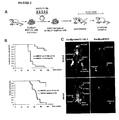
- E ⁇ - myc /+ HSCs with a MSCV retrovirus that directs expression of a truncated cluster comprising mir17-19b-1 (hereafter mir1719b ), the vertebrate-specific portion of the mir17-92 miRNA cistron ( Fig. 1A ).
- This virus also contained a GFP transgene, allowing us to follow infected stem cells in vitro and in vivo ( Fig. 2A ).
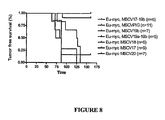
- Mice reconstituted with E ⁇ - myc /+ HSCs carrying a control MSCV vector developed lymphomas after the expected latency (3-6 months) with incomplete penetrance ( Fig. 2B ).
- primary lymphomas could be visualized by virtue of the linked GFP marker ( FIG. 2C , Table 1).
- the mature miRNAs from the mir17-19b cluster exhibit high level expression in these tumors, as compared with miRNAs from the paralogous mir106a-92 locus and similar expression levels of mir17-19b as compared to the Karpas 1718 lymphoma cell line, which has increased c13orf25 gene dosage ( Figure 5 ).
- the full mir17-92 cistron was also tested in a small cohort of animals.
- the E ⁇ -Myc / mir17-19b lymphomas are true malignancies rather than hyperplasias, since primary tumor cells, when transplanted into C57B6/J recipients, induce B-cell lymphomas in 2-3 weeks that result in lethality after 4-5 weeks (data not shown).
- the secondary tumors exhibit pathological features indistinguishable from the original tumors, and retain tumorigenic potential after two additional rounds of serial transplantation (data not shown). Therefore, a microRNA cluster can accelerate E ⁇ - myc induced tumorigenesis in mice.
- the pathological hallmarks of E ⁇ - myc / mir17-19b mosaic animals included massive enlargement of lymph nodes, splenic hyperplasia, infiltration of the thymus by lymphoma cells, and leukemia ( Fig. 2C ). Animals with advanced lymphomas displayed extramedullary hematopoiesis due to functional failure of the bone marrow. Furthermore, 6 out of 14 animals exhibited hind limb paralysis, associated with substantial tumor growth at the lumbar node. Tumors resulting from combined c-myc and mir17-19b expression consistently invade visceral organs outside the lymphoid compartment, including liver, lung, and occasionally, kidney ( Fig. 2C , Table 1 and Fig. 3B ).
- E ⁇ -myc / mir17-19b lymphomas show a high mitotic index without extensive apoptosis ( Fig. 3A ). This contrasts with the E ⁇ - myc /MSCV tumors lacking the microRNA cluster, which show a high degree of apoptosis ( Fig. 3A ).
- E ⁇ - myc -induced lymphomas originate from the B-lymphoid lineage, yet the developmental characteristics of these tumor cells are not stage specific, as they can resemble either mature B-cells or pre-B cells.
- cell surface markers including a B-cell specific marker, B220, and T-cell specific markers, CD4 and CD8a.
- B220 B-cell specific marker
- CD4 and CD8a T-cell specific markers
- E ⁇ - myc / mir17-19b lymphomas were derived purely from the pre-B cell lineage (Thyl low CD19 + B220 + IgM - ) (Table 1), suggesting that overexpression of mir17-19b strongly favors transformation of B-cell progenitors under our experimental conditions.
- this miRNA cistron is highly expressed in embryonic stem cells, with its expression decreasing during embryonic development in mice 21 . It is, therefore, possible that these miRNAs promote 'stem' properties or specify characteristics of early developmental lineages.
- miRNAs only represent 1% of the mammalian genome, more than 50% of miRNA genes are located within regions associated with amplification, deletion and translocation in cancer 22 .
- Expression studies of various tumor types have also revealed specific alterations in miRNA profiles 22-25 .
- mir-15 and mir-16 are frequently deleted and/or down-regulated in B-cell 26 chronic lymphocytic leukemia 26 ;
- miR-143 and miR-145 exhibit decreased expression in colorectal neoplasia , and miR-155 and its ncRNA host gene, BIC , are up-regulated by 100 fold in Burkitt's lymphoma patients 24 .
- one miRNA polycistron is not only the subject of tumor-specific amplification, but that it is also overexpressed in tumors and tumor cell lines and can act as an oncogene in vivo.
- non-coding RNAs may act as integral parts of the molecular architecture of oncogene and tumor suppressor networks.
- RNA was labeled with RNA ligase and a Cy3- conjugated dinucleotide, and hybridized to custom oligonucleotide microarrays, as described in Thomson et al 21 .
- Cy3 median intensity values were filtered to remove data points in which did not exceed 2x background. Values were log-transformed (base 2) and median centered by array. Clustering was performed using the Cluster program from Stanford University using values that were median centered by gene. Dendrograms and expression maps were generated by the Treeview program from Stanford.
- the measurement of miRNA abundance was carried out using Karpas 1718 (derived from splenic lymphoma with villous lymphocytes, kindly provided by A. Karpas, University of Cambridge, UK), OCI-Ly4, OCI-Ly7, and OCI-Ly8 (derived from diffuse large B-cell lymphoma, kindly provided by R. Della-Favera, Columbia University).
- the cell lines lacking the 13q31-q32 amplicon were Raji (B-cell, derived from Burkitt's lymphoma, ATCC), Namalwa (B-cell, derived from Burkitt's lymphoma, ATCC), HG 1125 (EBV transformed human lymphoblastoid, kindly provided by B.
- Manca lymphoblast-like, derived from chronic myelogenous leukemia
- Jurkat proliferating B-cells (spleenic B-cells isolated from C57B6/Ly5.2 mouse and stimulated to proliferate in culture with Lipopolysaccharide), and normal B cells (derived from cord blood, Cambrex, NJ).
- RNA species detected by mir17-92 primers and ⁇ - actin primers in each RNA sample were determined in triplicate by RT-QPCR using an ABI 7900HT Taqman sequence detector following the Standard Curve method. Subsequently, all values were normalized with the averaged ratio of the 5 corresponding normal samples.
- Fetal liver-derived HSCs were isolated from E13.5-E15.5 E ⁇ - myc /+ embryos, and were transduced with MSCV alone or MSCV expressing the mir17-19b cluster. To exclude the possibility that the observed acceleration of lymphomagenesis was due to insertional mutagenesis, experiments were carried out with individual infections for MSCV 17-19b and MSCV control using fetal liver cells isolated from 8 E ⁇ -myc /+ embryos.
- the MSCV retroviral vector used in our studies contains the PGK-puromycin-IRES-GFP (PIG) cassette 18 . Infection rates, as assessed by FACS sorting were typically 40% of bulk fetal-liver cells.
- HSCs infected with MSCV- mir17-19b -PIG and MSCV-PIG were subsequently transplanted into 6-8 week old, lethally irradiated C57BL/6 recipient mice 17 .
- Tumor onset was monitored by blood smear analysis, and tumor samples were either collected into 4% paraformaldehyde for histopathological studies, or prepared as single cell suspension for FACS.
- each pre-miRNA with ⁇ 50 bp flanking sequence was cloned downstream of the CMV promoter in a MSCV vector containing SV40-GFP.
- Eight individual MSCV constructs, each overexpressing a specific miRNA, were pooled at equal concentration. 12 pools of DNA were each used to produce virus to infect E ⁇ - myc /+ fetal liver cells for adoptive transfer into 3 recipient animals as described above. Recipient animals were monitored for at least 6 months for tumor growth. For those that developed lymphoma, tumor cells were prepared from the enlarged lymph nodes, and then subjected to FACS analysis for GFP expression.
- Tissue samples were fixed in 4% paraformaldehyde, embedded in paraffin, sectioned into 5 ⁇ m slices, and stained with haemotoxylin and eosin.
- Ki-67 detection rabbit anti-Ki67, NovoCastra, Newcastle, UK
- representative sections were deparaffinized, rehydrated in graded alcohols, and processed using the avidin-biotin immunoperoxidase method. Sections were then subjected to antigen retrieval by microwave oven treatment, following standard procedures. Diaminobenzidine was used as the chromogen and hematoxylin as the nuclear counterstain.
Landscapes
- Health & Medical Sciences (AREA)
- Life Sciences & Earth Sciences (AREA)
- Engineering & Computer Science (AREA)
- Chemical & Material Sciences (AREA)
- Genetics & Genomics (AREA)
- Organic Chemistry (AREA)
- General Health & Medical Sciences (AREA)
- Zoology (AREA)
- Wood Science & Technology (AREA)
- Biomedical Technology (AREA)
- Proteomics, Peptides & Aminoacids (AREA)
- Bioinformatics & Cheminformatics (AREA)
- General Engineering & Computer Science (AREA)
- Biotechnology (AREA)
- Molecular Biology (AREA)
- Public Health (AREA)
- Oncology (AREA)
- Pathology (AREA)
- Analytical Chemistry (AREA)
- Immunology (AREA)
- Physics & Mathematics (AREA)
- Biophysics (AREA)
- Microbiology (AREA)
- Medical Informatics (AREA)
- Biochemistry (AREA)
- Epidemiology (AREA)
- Primary Health Care (AREA)
- Nuclear Medicine, Radiotherapy & Molecular Imaging (AREA)
- Plant Pathology (AREA)
- Hospice & Palliative Care (AREA)
- General Chemical & Material Sciences (AREA)
- Veterinary Medicine (AREA)
- Pharmacology & Pharmacy (AREA)
- Chemical Kinetics & Catalysis (AREA)
- Surgery (AREA)
- Urology & Nephrology (AREA)
- Animal Behavior & Ethology (AREA)
- Medicinal Chemistry (AREA)
- Hematology (AREA)
- Data Mining & Analysis (AREA)
Claims (25)
- Composition pour une utilisation dans le traitement d'une affection maligne à cellules B, comprenant un composé d'acide nucléique, où ledit composé d'acide nucléique est un oligonucléotide antisens de 5 à 25 nucléotides en longueur et où l'oligonucléotide antisens est(a) complémentaire de la séquence de mir-19b-1 le long d'une seule séquence continue de 5 à 11 nucléotides et s'hybride à mir-19b-1, ou(b) complémentaire de la séquence de mir-18 le long d'une seule séquence continue de 5 à 11 nucléotides et s'hybride à mir-18.
- Méthode in vitro de diminution de l'expression ou de l'activité de mir-19b-1 dans une cellule provenant d'une affection maligne à cellules B, comprenant la mise en contact d'une cellule provenant d'une affection maligne à cellules B avec un composé d'acide nucléique, où ledit composé d'acide nucléique est un oligonucléotide antisens de 5 à 25 nucléotides en longueur et où l'oligonucléotide antisens est complémentaire de la séquence de mir-19b-1 le long d'une seule séquence continue de 5 à 11 nucléotides et s'hybride à mir-19b-1 et où ledit produit d'acide nucléique diminue l'expression ou l'activité de mir-19b-1.
- Méthode in vitro de diminution de l'expression ou de l'activité de mir-18 dans une cellule provenant d'une affection maligne à cellules B, comprenant la mise en contact d'une cellule provenant d'une affection maligne à cellules B avec un composé d'acide nucléique, où ledit composé d'acide nucléique est un oligonucléotide antisens de 5 à 25 nucléotides en longueur et où l'oligonucléotide antisens est complémentaire de la séquence de mir-18 le long d'une seule séquence continue de 5 à 11 nucléotides et s'hybride à mir-18 et où ledit produit d'acide nucléique diminue l'expression ou l'activité de mir-18.
- Composition pour une utilisation selon la revendication 1, dans laquelle le composé d'acide nucléique comprend un ou plusieurs radicaux du squelette ou des bases modifiés.
- Méthode selon la revendication 2 ou 3, dans laquelle le composé d'acide nucléique comprend un ou plusieurs radicaux du squelette ou des bases modifiés.
- Composition pour une utilisation selon la revendication 4, dans laquelle le composé d'acide nucléique est résistant aux nucléases endogènes.
- Méthode selon la revendication 5, dans laquelle le composé d'acide nucléique est résistant aux nucléases endogènes.
- Composition pour une utilisation selon la revendication 4, dans laquelle le composé d'acide nucléique est stable in vivo.
- Méthode selon la revendication 5, dans laquelle le composé d'acide nucléique est stable in vivo.
- Méthode selon l'une quelconque des revendications 2, 3, 5, 7 ou 9, dans laquelle la cellule provenant de l'affection maligne à cellules B est une cellule de souris.
- Méthode selon l'une quelconque des revendications 2, 3, 5, 7 ou 9, dans laquelle la cellule provenant de l'affection maligne à cellules B est une cellule humaine.
- Composition pour une utilisation selon l'une quelconque des revendications 1, 4, 6 ou 8, dans laquelle le composé d'acide nucléique comprend SEQ ID NO : 11.
- Méthode selon l'une quelconque des revendications 2, 5, 7, 9 ou 10, dans laquelle le composé d'acide nucléique comprend SEQ ID NO : 11.
- Composition pour une utilisation selon l'une quelconque des revendications 1, 4, 6 ou 8, dans laquelle le composé d'acide nucléique comprend SEQ ID NO : 12.
- Méthode selon l'une quelconque des revendications 3, 5, 7, 9 ou 10, dans laquelle le composé d'acide nucléique comprend SEQ ID NO : 12.
- Méthode selon l'une quelconque des revendications 2, 5, 7 ou 9 à 11, comprenant en outre la mise en contact de la cellule provenant de l'affection maligne à cellules B avec un composé d'acide nucléique, où ledit composé d'acide nucléique est un oligonucléotide antisens de 5 à 25 nucléotides en longueur et où l'oligonucléotide antisens est complémentaire de la séquence de mir-18 le long d'une seule séquence continue de 5 à 11 nucléotides et s'hybride à mir-18.
- Méthode selon l'une quelconque des revendications 3, 5, 7 ou 9 à 11, comprenant en outre la mise en contact de la cellule provenant de l'affection maligne à cellules B avec un composé d'acide nucléique, où ledit composé d'acide nucléique est un oligonucléotide antisens de 5 à 25 nucléotides en longueur et où l'oligonucléotide antisens est complémentaire de la séquence de mir-19b-1 le long d'une seule séquence continue de 5 à 11 nucléotides et s'hybride à mir-19b-1.
- Méthode selon l'une quelconque des revendications 2, 3, 5, 7 ou 9 à 11, comprenant en outre la mise en contact de la cellule provenant de l'affection maligne à cellules B avec un agent chimiothérapeutique.
- Méthode selon l'une quelconque des revendications 2, 3, 5, 7 ou 9 à 11, comprenant en outre la mise en contact de la cellule provenant de l'affection maligne à cellules B avec un anticorps monoclonal anti-CD20 ou un anticorps anti-CD22.
- Composition pour une utilisation selon l'une quelconque des revendications 1, 4, 6, 8 et 12, où l'affection maligne est une affection maligne à cellules B induite par myc de la souris.
- Composition pour une utilisation selon l'une quelconque des revendications 1, 4, 6, 8 et 12, où l'affection maligne à cellules B est une affection maligne à cellules B induite par myc humaine.
- Composition pour une utilisation selon l'une quelconque des revendications 1, 4, 6, 8, 12, 20 et 21, comprenant le composé d'acide nucléique selon la revendication 1(a), comprenant en outre un composé d'acide nucléique qui est un oligonucléotide antisens de 5 à 25 nucléotides en longueur, où l'oligonucléotide antisens est complémentaire de la séquence de mir-18 le long d'une seule séquence continue de 5 à 11 nucléotides et s'hybride à mir-18.
- Composition pour une utilisation selon l'une quelconque des revendications 1, 4, 6, 8, 12, 20 et 21, comprenant le composé d'acide nucléique selon la revendication 1(b), comprenant en outre un composé d'acide nucléique qui est un oligonucléotide antisens de 5 à 25 nucléotides en longueur, où l'oligonucléotide antisens est complémentaire de la séquence de mir-19b-1 le long d'une seule séquence continue de 5 à 11 nucléotides et s'hybride à mir-19b-1.
- Composition pour une utilisation selon l'une quelconque des revendications 1, 4, 6, 8, 12, 20 et 21, comprenant en outre un agent chimiothérapeutique.
- Composition pour une utilisation selon l'une quelconque des revendications 1, 4, 6, 8, 12, 20 et 21, comprenant en outre un anticorps monoclonal anti-CD20 ou un anticorps anti-CD22.
Applications Claiming Priority (2)
| Application Number | Priority Date | Filing Date | Title |
|---|---|---|---|
| US67709005P | 2005-05-02 | 2005-05-02 | |
| PCT/US2006/016987 WO2006119365A2 (fr) | 2005-05-02 | 2006-05-02 | Compositions et procedes destines au diagnostic et au traitement du cancer |
Publications (2)
| Publication Number | Publication Date |
|---|---|
| EP1880027A2 EP1880027A2 (fr) | 2008-01-23 |
| EP1880027B1 true EP1880027B1 (fr) | 2014-02-19 |
Family
ID=37308676
Family Applications (1)
| Application Number | Title | Priority Date | Filing Date |
|---|---|---|---|
| EP06769983.5A Expired - Lifetime EP1880027B1 (fr) | 2005-05-02 | 2006-05-02 | Compositions et procedes destines au diagnostic du cancer utilisant le cluster mir-17-92 |
Country Status (8)
| Country | Link |
|---|---|
| US (1) | US8071559B2 (fr) |
| EP (1) | EP1880027B1 (fr) |
| JP (1) | JP2008539731A (fr) |
| KR (1) | KR20080051113A (fr) |
| AU (1) | AU2006242154B2 (fr) |
| CA (1) | CA2607256A1 (fr) |
| IL (1) | IL187094A0 (fr) |
| WO (1) | WO2006119365A2 (fr) |
Families Citing this family (60)
| Publication number | Priority date | Publication date | Assignee | Title |
|---|---|---|---|---|
| EP2290073A3 (fr) | 2004-05-28 | 2011-08-31 | Asuragen, Inc. | Procédés et compositions impliquant du microARN |
| CA2857878A1 (fr) | 2004-11-12 | 2006-12-28 | Asuragen, Inc. | Procedes et compositions comprenant des molecules de micro-arn et des molecules d'inhibiteur de micro-arn |
| EP2484782B1 (fr) | 2006-01-05 | 2015-11-18 | The Ohio State University Research Foundation | Procédés à base de micro ARN et compositions pour le diagnostic et le traitement des cancers solides |
| US8039234B1 (en) * | 2006-05-22 | 2011-10-18 | Applied Biosystems, Llc | Methods, panels of identification markers, and kits for identifying forensic samples |
| JP2010510964A (ja) * | 2006-09-19 | 2010-04-08 | アシュラジェン インコーポレイテッド | 治療的介入の標的としての、miR−15、miR−26、miR−31、miR−145、miR−147、miR−188、miR−215、miR−216、miR−331、mmu−miR−292−3pによって調節される遺伝子および経路 |
| US8188255B2 (en) | 2006-10-20 | 2012-05-29 | Exiqon A/S | Human microRNAs associated with cancer |
| WO2008046911A2 (fr) * | 2006-10-20 | 2008-04-24 | Exiqon A/S | Nouveaux microarn humains associés au cancer |
| WO2008073920A2 (fr) * | 2006-12-08 | 2008-06-19 | Asuragen, Inc. | Gènes et voies génétiques régulés par mir-21 utilisés en tant que cibles pour une intervention thérapeutique |
| CA2671299A1 (fr) * | 2006-12-08 | 2008-06-19 | Asuragen, Inc. | Fonctions et cibles de microarn let-7 |
| US20090175827A1 (en) * | 2006-12-29 | 2009-07-09 | Byrom Mike W | miR-16 REGULATED GENES AND PATHWAYS AS TARGETS FOR THERAPEUTIC INTERVENTION |
| US20090005336A1 (en) * | 2007-05-08 | 2009-01-01 | Zhiguo Wang | Use of the microRNA miR-1 for the treatment, prevention, and diagnosis of cardiac conditions |
| US20090131354A1 (en) * | 2007-05-22 | 2009-05-21 | Bader Andreas G | miR-126 REGULATED GENES AND PATHWAYS AS TARGETS FOR THERAPEUTIC INTERVENTION |
| EP2176425A2 (fr) * | 2007-07-06 | 2010-04-21 | Koninklijke Nederlandse Akademie van Wetenschappen | Molécules arn de petite taille, précurseurs associés, supports et procédés de détection de ceux-ci, et utilisation correspondante dans des éléments de frappe |
| WO2009012263A2 (fr) * | 2007-07-18 | 2009-01-22 | The Trustees Of Columbia University In The City Of New York | Micro-arn à spécificité cellulaire et compositions et utilisations de ces micro-arn |
| US8367318B2 (en) * | 2007-07-23 | 2013-02-05 | Dharmacon, Inc. | Screening of micro-RNA cluster inhibitor pools |
| EP2613149B1 (fr) * | 2007-07-25 | 2014-09-17 | University Of Louisville Research Foundation, Inc. | MicroARN associé à l'exosome comme marqueur diagnostique |
| EP2173908B1 (fr) | 2007-08-03 | 2016-01-06 | The Ohio State University Research Foundation | Régions ultra-conservées codant pour des arnnc |
| EP2198050A1 (fr) | 2007-09-14 | 2010-06-23 | Asuragen, INC. | Microarn exprimés de manière différentielle dans le cancer du col de l'utérus et leurs utilisations |
| WO2009070805A2 (fr) * | 2007-12-01 | 2009-06-04 | Asuragen, Inc. | Gènes régulés par le mir-124 et cheminements servant de cibles pour une intervention thérapeutique |
| WO2009086156A2 (fr) * | 2007-12-21 | 2009-07-09 | Asuragen, Inc. | Gènes et voies régulés par mir-10 servant de cibles dans le cadre d'une intervention thérapeutique |
| WO2009100430A2 (fr) * | 2008-02-08 | 2009-08-13 | Asuragen, Inc | Micro arn (mirna) exprimés différentiellement dans des nœuds lymphoïdes prélevés chez des patients atteints d’un cancer |
| US20090233297A1 (en) * | 2008-03-06 | 2009-09-17 | Elizabeth Mambo | Microrna markers for recurrence of colorectal cancer |
| WO2009154835A2 (fr) * | 2008-03-26 | 2009-12-23 | Asuragen, Inc. | Compositions et procédés liés à mir-16 et à la thérapie contre le cancer de la prostate |
| WO2009126726A1 (fr) * | 2008-04-08 | 2009-10-15 | Asuragen, Inc | Procédés et compositions pour diagnostiquer et moduler le papillomavirus humain (hpv) |
| US8258111B2 (en) * | 2008-05-08 | 2012-09-04 | The Johns Hopkins University | Compositions and methods related to miRNA modulation of neovascularization or angiogenesis |
| EP2853601B1 (fr) * | 2008-07-18 | 2016-09-21 | TrovaGene, Inc. | Procédés de détection à base de PCR de séquences d'acide nucléique ultracourt |
| AU2009281969A1 (en) * | 2008-08-12 | 2010-02-18 | The Ohio State University Research Foundation | Micro-RNA-based compositions and methods for the diagnosis, prognosis and treatment of multiple myeloma |
| WO2010018563A2 (fr) * | 2008-08-12 | 2010-02-18 | Rosetta Genomics Ltd. | Compositions et procédés de pronostic d'un lymphome |
| WO2010033818A2 (fr) * | 2008-09-19 | 2010-03-25 | Immune Disease Institute, Inc. | Cibles de miarn |
| US20100179213A1 (en) * | 2008-11-11 | 2010-07-15 | Mirna Therapeutics, Inc. | Methods and Compositions Involving miRNAs In Cancer Stem Cells |
| US20100322909A1 (en) * | 2009-06-17 | 2010-12-23 | The University Of Pittsburgh - Of The Commonwealth System Of Higher Education | Th1-associated micrornas and their use for tumor immunotherapy |
| EP2504452A4 (fr) | 2009-11-23 | 2014-06-11 | Univ Ohio State Res Found | Substances et procédés pouvant s'utiliser pour agir sur la croissance, la migration, et l'invasion de cellules tumorales |
| US20120302626A1 (en) * | 2009-12-04 | 2012-11-29 | Sandeep Dave | Microrna and use thereof in identification of b cell malignancies |
| CA2789404C (fr) * | 2010-02-26 | 2020-03-24 | Columbia University | Procedes et compositions destines a la detection et au traitement du cancer impliquant des miarn et des inhibiteurs des miarn ainsi que des cibles |
| EP3124623B1 (fr) * | 2010-04-20 | 2018-03-28 | Hummingbird Diagnostics GmbH | Ensembles complexes de miarn en tant que nouveaux biomarqueurs d'un syndrome coronaire aigu |
| DK2561078T3 (en) | 2010-04-23 | 2019-01-14 | Cold Spring Harbor Laboratory | NEW STRUCTURALLY DESIGNED SHRNAs |
| US8980549B2 (en) | 2010-08-01 | 2015-03-17 | Ramot At Tel Aviv University Ltd. | MicroRNA patterns for the diagnosis, prognosis and treatment of melanoma |
| WO2012051567A2 (fr) | 2010-10-15 | 2012-04-19 | The Trustees Of Columbia University In The City Of New York | Gènes de l'obésité, leurs protéines et leurs utilisations |
| US9198911B2 (en) | 2010-11-02 | 2015-12-01 | The Trustees Of Columbia University In The City Of New York | Methods for treating hair loss disorders |
| SI2635299T1 (sl) | 2010-11-02 | 2020-02-28 | The Trustees Of Columbia University In The City Of New York | Postopki za zdravljenje motenj izgube las |
| CN103648505B (zh) | 2010-11-12 | 2016-09-28 | 俄亥俄州立大学研究基金会 | 与微rna-21、错配修复和结肠直肠癌相关的材料和方法 |
| BR112013011942A2 (pt) | 2010-11-15 | 2016-11-01 | Univ Michigan | formulação, forma de dosagem de droga para administração transmucosa oral, sistema transmucoso de fornecimento de droga, método de tratamento e profilaxia de uma doença ou distúrbio, método de tratamento, formulação, método para tratamento ou prevenção de carcinoma de célula escamosa de cabeça e pescoço (hnscc), método para quimioprevenção de um câncer oral ou condição pré-cancerosa, método para aumentar a concentração de uma composição de retinida, método de tratamento e profilaxia de uma doença ou condição, método de ratamento de um sujeito apresentando uma condição médica sintomática, método de tratamento de um câncer oral ou condição pré-cancerosa num paciente, método para fazer um sistema de fornecimento de droga bucal, método para aumentar a liberação e permeação de uma composição de retinida. |
| WO2012088067A1 (fr) * | 2010-12-20 | 2012-06-28 | Quintiles Transnational Corporation | Procédés pour prédire et/ou déterminer la réponse à un inhibiteur d'histone désacétylase (hdac) |
| BR112014005104A2 (pt) | 2011-09-02 | 2017-07-04 | Salk Inst For Biological Studi | inibidores camkii, ip3r, calcineurin, p38 e mk2/3 para tratar atar distúrbios metabólicos de obesidade |
| WO2013040251A2 (fr) | 2011-09-13 | 2013-03-21 | Asurgen, Inc. | Méthodes et compositions incluant mir-135b, permettant de faire la distinction entre un cancer du pancréas et une maladie pancréatique bénigne |
| EP2766500A4 (fr) | 2011-10-14 | 2015-10-14 | Univ Ohio State | Méthodes et matériaux relatifs au cancer des ovaires |
| CA2859430A1 (fr) | 2011-12-13 | 2013-06-20 | Ohio State Innovation Foundation | Procedes et compositions se rapportant a mir-21 et mir-29a, a l'inhibition d'exosome, et a la metastase cancereuse |
| US9447471B2 (en) * | 2011-12-29 | 2016-09-20 | Quest Diagnostics Investments Incorporated | Microrna profiling for diagnosis of dysplastic nevi and melanoma |
| US8859202B2 (en) | 2012-01-20 | 2014-10-14 | The Ohio State University | Breast cancer biomarker signatures for invasiveness and prognosis |
| ES2694681T3 (es) | 2012-03-29 | 2018-12-26 | The Trustees Of Columbia University In The City Of New York | Métodos para tratar trastornos de pérdida capilar |
| EP2968551B1 (fr) | 2013-03-15 | 2021-05-05 | The Trustees of Columbia University in the City of New York | Protéines de fusion et procédés correspondants |
| US9682123B2 (en) | 2013-12-20 | 2017-06-20 | The Trustees Of Columbia University In The City Of New York | Methods of treating metabolic disease |
| EP3230454A1 (fr) * | 2014-12-09 | 2017-10-18 | Pierfrancesco Tassone | Inhibiteurs du groupe mir-17-92 destinés à une activité dans le myélome multiple et autres tumeurs malignes |
| EP3237452A4 (fr) | 2014-12-23 | 2018-12-05 | The Trustees of Columbia University in the City of New York | Protéines de fusion et procédés associés |
| WO2016130572A2 (fr) * | 2015-02-10 | 2016-08-18 | Dana-Farber Cancer Institute, Inc. | Procédés de détermination de niveaux d'exposition à un rayonnement et leurs utilisations |
| EP3347486A4 (fr) | 2015-09-09 | 2019-06-19 | The Trustees of Columbia University in the City of New York | Réduction du fragment c99 de l'app localisé sur la membrane er-mam et procédés de traitement de la maladie d'alzheimer |
| US11584932B2 (en) | 2016-11-01 | 2023-02-21 | The Research Foundation For The State University Of New York | 5-halouracil-modified microRNAs and their use in the treatment of cancer |
| US11236337B2 (en) | 2016-11-01 | 2022-02-01 | The Research Foundation For The State University Of New York | 5-halouracil-modified microRNAs and their use in the treatment of cancer |
| EP3712898A1 (fr) * | 2019-03-21 | 2020-09-23 | INSERM (Institut National de la Santé et de la Recherche Médicale) | Procédé permettant de prédire si un receveur de greffe de rein présente un risque de subir un rejet d'allogreffe |
| WO2021262919A2 (fr) | 2020-06-26 | 2021-12-30 | The Research Foundation For The State University Of New York | Microarn modifiés par 5-halogéno-uracile et leur utilisation dans le traitement du cancer |
Family Cites Families (32)
| Publication number | Priority date | Publication date | Assignee | Title |
|---|---|---|---|---|
| US3536809A (en) | 1969-02-17 | 1970-10-27 | Alza Corp | Medication method |
| US3598123A (en) | 1969-04-01 | 1971-08-10 | Alza Corp | Bandage for administering drugs |
| US3845770A (en) | 1972-06-05 | 1974-11-05 | Alza Corp | Osmatic dispensing device for releasing beneficial agent |
| US3916899A (en) | 1973-04-25 | 1975-11-04 | Alza Corp | Osmotic dispensing device with maximum and minimum sizes for the passageway |
| US4008719A (en) | 1976-02-02 | 1977-02-22 | Alza Corporation | Osmotic system having laminar arrangement for programming delivery of active agent |
| IE58110B1 (en) | 1984-10-30 | 1993-07-14 | Elan Corp Plc | Controlled release powder and process for its preparation |
| NZ215865A (en) | 1985-04-22 | 1988-10-28 | Commw Serum Lab Commission | Method of determining the active site of a receptor-binding analogue |
| US4710384A (en) | 1986-07-28 | 1987-12-01 | Avner Rotman | Sustained release tablets made from microcapsules |
| US5116742A (en) | 1986-12-03 | 1992-05-26 | University Patents, Inc. | RNA ribozyme restriction endoribonucleases and methods |
| US4987071A (en) | 1986-12-03 | 1991-01-22 | University Patents, Inc. | RNA ribozyme polymerases, dephosphorylases, restriction endoribonucleases and methods |
| US5010175A (en) | 1988-05-02 | 1991-04-23 | The Regents Of The University Of California | General method for producing and selecting peptides with specific properties |
| US5073543A (en) | 1988-07-21 | 1991-12-17 | G. D. Searle & Co. | Controlled release formulations of trophic factors in ganglioside-lipsome vehicle |
| IT1229203B (it) | 1989-03-22 | 1991-07-25 | Bioresearch Spa | Impiego di acido 5 metiltetraidrofolico, di acido 5 formiltetraidrofolico e dei loro sali farmaceuticamente accettabili per la preparazione di composizioni farmaceutiche in forma a rilascio controllato attive nella terapia dei disturbi mentali organici e composizioni farmaceutiche relative. |
| US5120548A (en) | 1989-11-07 | 1992-06-09 | Merck & Co., Inc. | Swelling modulated polymeric drug delivery device |
| US5182366A (en) | 1990-05-15 | 1993-01-26 | Huebner Verena D | Controlled synthesis of peptide mixtures using mixed resins |
| US5733566A (en) | 1990-05-15 | 1998-03-31 | Alkermes Controlled Therapeutics Inc. Ii | Controlled release of antiparasitic agents in animals |
| US5580578A (en) | 1992-01-27 | 1996-12-03 | Euro-Celtique, S.A. | Controlled release formulations coated with aqueous dispersions of acrylic polymers |
| DE69303494T2 (de) * | 1992-11-13 | 1997-01-16 | Idec Pharma Corp | Therapeutische verwendung von chimerischen und markierten antikörper gegen menschlichen b lymphozyt beschränkter differenzierung antigen für die behandlung von b-zell-lymphoma |
| US5591767A (en) | 1993-01-25 | 1997-01-07 | Pharmetrix Corporation | Liquid reservoir transdermal patch for the administration of ketorolac |
| IT1270594B (it) | 1994-07-07 | 1997-05-07 | Recordati Chem Pharm | Composizione farmaceutica a rilascio controllato di moguisteina in sospensione liquida |
| DE4434989A1 (de) | 1994-09-30 | 1996-04-04 | Basf Ag | Reaktive Azofarbstoffe mit einer Kupplungskomponente aus der Aminonaphthalinreihe |
| US5849902A (en) | 1996-09-26 | 1998-12-15 | Oligos Etc. Inc. | Three component chimeric antisense oligonucleotides |
| US5989912A (en) | 1996-11-21 | 1999-11-23 | Oligos Etc. Inc. | Three component chimeric antisense oligonucleotides |
| DE69838979T2 (de) | 1997-03-20 | 2008-12-24 | The Government Of The United States Of America As Represented By The Secretary, Department Of Health And Human Services | Rekombinante antikörper und immunkonjugate gezielt auf cd22-tragende zellen und tumoren |
| US6183744B1 (en) | 1997-03-24 | 2001-02-06 | Immunomedics, Inc. | Immunotherapy of B-cell malignancies using anti-CD22 antibodies |
| US6224866B1 (en) | 1998-10-07 | 2001-05-01 | Biocrystal Ltd. | Immunotherapy of B cell involvement in progression of solid, nonlymphoid tumors |
| US6110462A (en) | 1999-03-03 | 2000-08-29 | The Scripps Research Institute | Enzymatic DNA molecules that contain modified nucleotides |
| AU6836301A (en) | 2000-06-20 | 2002-01-02 | Idec Pharma Corp | Treatment of b-cell associated diseases such as malignancies and autoimmune diseases using a cold anti-cd20 antibody/radiolabeled anti-cd22 antibody combination |
| CA2462144C (fr) * | 2001-09-28 | 2016-09-20 | Max-Planck-Gesellschaft Zur Forderung Der Wissenschaften E.V. | Molecules de micro-arn |
| EP2530157B1 (fr) | 2003-07-31 | 2016-09-28 | Regulus Therapeutics Inc. | Composés oligomères et compositions à utiliser dans la modulation de miARNs |
| US20050282177A1 (en) * | 2003-09-22 | 2005-12-22 | Aichi Prefecture | Types of lymphoma and method for prognosis thereof |
| CA2554818A1 (fr) | 2004-02-09 | 2005-08-25 | Thomas Jefferson University | Diagnostic et traitement de cancers a l'aide de microarn present dans ou au voisinage de caracteristiques chromosomiennes liees aux cancers |
-
2006
- 2006-05-02 EP EP06769983.5A patent/EP1880027B1/fr not_active Expired - Lifetime
- 2006-05-02 CA CA002607256A patent/CA2607256A1/fr not_active Abandoned
- 2006-05-02 KR KR1020077028100A patent/KR20080051113A/ko not_active Withdrawn
- 2006-05-02 WO PCT/US2006/016987 patent/WO2006119365A2/fr not_active Ceased
- 2006-05-02 JP JP2008510167A patent/JP2008539731A/ja not_active Withdrawn
- 2006-05-02 US US11/416,854 patent/US8071559B2/en not_active Expired - Fee Related
- 2006-05-02 AU AU2006242154A patent/AU2006242154B2/en not_active Ceased
-
2007
- 2007-11-01 IL IL187094A patent/IL187094A0/en unknown
Non-Patent Citations (2)
| Title |
|---|
| MASON KYLIE D ET AL: "In vivo efficacy of the Bcl-2 antagonist ABT-737 against aggressive Myc-driven lymphomas", PROCEEDINGS OF THE NATIONAL ACADEMY OF SCIENCES OF THE UNITED STATES OF AMERICA, vol. 105, no. 46, November 2008 (2008-11-01), pages 17961 - 17966, ISSN: 0027-8424 * |
| V. OLIVE ET AL: "miR-19 is a key oncogenic component of mir-17-92", GENES & DEVELOPMENT, vol. 23, no. 24, 15 December 2009 (2009-12-15), pages 2839 - 2849, XP055038529, ISSN: 0890-9369, DOI: 10.1101/gad.1861409 * |
Also Published As
| Publication number | Publication date |
|---|---|
| IL187094A0 (en) | 2008-02-09 |
| US8071559B2 (en) | 2011-12-06 |
| KR20080051113A (ko) | 2008-06-10 |
| WO2006119365A3 (fr) | 2007-03-08 |
| AU2006242154A1 (en) | 2006-11-09 |
| US20070072204A1 (en) | 2007-03-29 |
| AU2006242154B2 (en) | 2011-11-03 |
| EP1880027A2 (fr) | 2008-01-23 |
| CA2607256A1 (fr) | 2006-11-09 |
| JP2008539731A (ja) | 2008-11-20 |
| WO2006119365A2 (fr) | 2006-11-09 |
Similar Documents
| Publication | Publication Date | Title |
|---|---|---|
| US8071559B2 (en) | Compositions and methods for cancer diagnosis and treatment | |
| JP6046679B2 (ja) | ncRNAをコードする超保存領域 | |
| Craig et al. | Myc-mediated repression of microRNA-34a promotes high-grade transformation of B-cell lymphoma by dysregulation of FoxP1 | |
| US8507195B2 (en) | MiRNAs dysregulated in triple-negative breast cancer | |
| JP5778708B2 (ja) | 結腸癌関連疾患の診断及び治療のためのマイクロrnaに基づいた方法及び組成物 | |
| US9499869B2 (en) | MicroRNA-based methods and compositions for the diagnosis, prognosis and treatment of ovarian cancer using a real-time PCR platform | |
| EP2610347B1 (fr) | Procédés de détermination du pronostic d'un sujet avec un cancer du pancréas | |
| Garzon et al. | MicroRNA 29b functions in acute myeloid leukemia | |
| Taniguchi et al. | Genomic profiling of malignant pleural mesothelioma with array‐based comparative genomic hybridization shows frequent non‐random chromosomal alteration regions including JUN amplification on 1p32 | |
| US20130123343A1 (en) | Methods for Reverting Methylation by Targeting Methyltransferase and Compositions Useful Therefor | |
| WO2014085906A1 (fr) | Biomarqueurs micro-arn pour le cancer de la prostate | |
| WO2012108843A1 (fr) | Traitement du cancer par inhibition de l'expression d'olfm4, de sp5, de tobi, d'arjdia, de fbni ou d'hat1 | |
| US20120190729A1 (en) | Mirna inhibition of six1 expression | |
| WO2012078209A1 (fr) | Diagnostic et traitement des tumeurs adrénocorticales à l'aide d'un microarn-483 humain | |
| Chong et al. | Tracing the molecular route to progression in miRNA-biogenesis-defective thyroid lesions | |
| Rehrauer et al. | Myc-mediated repression of microRNA-34a promotes high grade | |
| Hernandez Herrera | A genome-wide search for tumor suppressor microRNAs in ovarian cancer |
Legal Events
| Date | Code | Title | Description |
|---|---|---|---|
| PUAI | Public reference made under article 153(3) epc to a published international application that has entered the european phase |
Free format text: ORIGINAL CODE: 0009012 |
|
| 17P | Request for examination filed |
Effective date: 20071130 |
|
| AK | Designated contracting states |
Kind code of ref document: A2 Designated state(s): AT BE BG CH CY CZ DE DK EE ES FI FR GB GR HU IE IS IT LI LT LU LV MC NL PL PT RO SE SI SK TR |
|
| DAX | Request for extension of the european patent (deleted) | ||
| 17Q | First examination report despatched |
Effective date: 20081112 |
|
| GRAP | Despatch of communication of intention to grant a patent |
Free format text: ORIGINAL CODE: EPIDOSNIGR1 |
|
| INTG | Intention to grant announced |
Effective date: 20130813 |
|
| GRAS | Grant fee paid |
Free format text: ORIGINAL CODE: EPIDOSNIGR3 |
|
| GRAA | (expected) grant |
Free format text: ORIGINAL CODE: 0009210 |
|
| AK | Designated contracting states |
Kind code of ref document: B1 Designated state(s): AT BE BG CH CY CZ DE DK EE ES FI FR GB GR HU IE IS IT LI LT LU LV MC NL PL PT RO SE SI SK TR |
|
| REG | Reference to a national code |
Ref country code: GB Ref legal event code: FG4D |
|
| REG | Reference to a national code |
Ref country code: CH Ref legal event code: EP |
|
| REG | Reference to a national code |
Ref country code: AT Ref legal event code: REF Ref document number: 652824 Country of ref document: AT Kind code of ref document: T Effective date: 20140315 |
|
| REG | Reference to a national code |
Ref country code: DE Ref legal event code: R096 Ref document number: 602006040335 Country of ref document: DE Effective date: 20140403 |
|
| REG | Reference to a national code |
Ref country code: IE Ref legal event code: FG4D |
|
| REG | Reference to a national code |
Ref country code: NL Ref legal event code: T3 |
|
| REG | Reference to a national code |
Ref country code: AT Ref legal event code: MK05 Ref document number: 652824 Country of ref document: AT Kind code of ref document: T Effective date: 20140219 |
|
| REG | Reference to a national code |
Ref country code: LT Ref legal event code: MG4D |
|
| PG25 | Lapsed in a contracting state [announced via postgrant information from national office to epo] |
Ref country code: IS Free format text: LAPSE BECAUSE OF FAILURE TO SUBMIT A TRANSLATION OF THE DESCRIPTION OR TO PAY THE FEE WITHIN THE PRESCRIBED TIME-LIMIT Effective date: 20140619 Ref country code: LT Free format text: LAPSE BECAUSE OF FAILURE TO SUBMIT A TRANSLATION OF THE DESCRIPTION OR TO PAY THE FEE WITHIN THE PRESCRIBED TIME-LIMIT Effective date: 20140219 |
|
| PG25 | Lapsed in a contracting state [announced via postgrant information from national office to epo] |
Ref country code: CY Free format text: LAPSE BECAUSE OF FAILURE TO SUBMIT A TRANSLATION OF THE DESCRIPTION OR TO PAY THE FEE WITHIN THE PRESCRIBED TIME-LIMIT Effective date: 20140219 Ref country code: PT Free format text: LAPSE BECAUSE OF FAILURE TO SUBMIT A TRANSLATION OF THE DESCRIPTION OR TO PAY THE FEE WITHIN THE PRESCRIBED TIME-LIMIT Effective date: 20140619 Ref country code: ES Free format text: LAPSE BECAUSE OF FAILURE TO SUBMIT A TRANSLATION OF THE DESCRIPTION OR TO PAY THE FEE WITHIN THE PRESCRIBED TIME-LIMIT Effective date: 20140219 Ref country code: FI Free format text: LAPSE BECAUSE OF FAILURE TO SUBMIT A TRANSLATION OF THE DESCRIPTION OR TO PAY THE FEE WITHIN THE PRESCRIBED TIME-LIMIT Effective date: 20140219 Ref country code: SE Free format text: LAPSE BECAUSE OF FAILURE TO SUBMIT A TRANSLATION OF THE DESCRIPTION OR TO PAY THE FEE WITHIN THE PRESCRIBED TIME-LIMIT Effective date: 20140219 Ref country code: AT Free format text: LAPSE BECAUSE OF FAILURE TO SUBMIT A TRANSLATION OF THE DESCRIPTION OR TO PAY THE FEE WITHIN THE PRESCRIBED TIME-LIMIT Effective date: 20140219 |
|
| PG25 | Lapsed in a contracting state [announced via postgrant information from national office to epo] |
Ref country code: BE Free format text: LAPSE BECAUSE OF FAILURE TO SUBMIT A TRANSLATION OF THE DESCRIPTION OR TO PAY THE FEE WITHIN THE PRESCRIBED TIME-LIMIT Effective date: 20140219 Ref country code: LV Free format text: LAPSE BECAUSE OF FAILURE TO SUBMIT A TRANSLATION OF THE DESCRIPTION OR TO PAY THE FEE WITHIN THE PRESCRIBED TIME-LIMIT Effective date: 20140219 |
|
| REG | Reference to a national code |
Ref country code: CH Ref legal event code: NV Representative=s name: VOSSIUS AND PARTNER, CH |
|
| PG25 | Lapsed in a contracting state [announced via postgrant information from national office to epo] |
Ref country code: DK Free format text: LAPSE BECAUSE OF FAILURE TO SUBMIT A TRANSLATION OF THE DESCRIPTION OR TO PAY THE FEE WITHIN THE PRESCRIBED TIME-LIMIT Effective date: 20140219 Ref country code: RO Free format text: LAPSE BECAUSE OF FAILURE TO SUBMIT A TRANSLATION OF THE DESCRIPTION OR TO PAY THE FEE WITHIN THE PRESCRIBED TIME-LIMIT Effective date: 20140219 Ref country code: EE Free format text: LAPSE BECAUSE OF FAILURE TO SUBMIT A TRANSLATION OF THE DESCRIPTION OR TO PAY THE FEE WITHIN THE PRESCRIBED TIME-LIMIT Effective date: 20140219 Ref country code: CZ Free format text: LAPSE BECAUSE OF FAILURE TO SUBMIT A TRANSLATION OF THE DESCRIPTION OR TO PAY THE FEE WITHIN THE PRESCRIBED TIME-LIMIT Effective date: 20140219 |
|
| REG | Reference to a national code |
Ref country code: DE Ref legal event code: R097 Ref document number: 602006040335 Country of ref document: DE |
|
| PG25 | Lapsed in a contracting state [announced via postgrant information from national office to epo] |
Ref country code: PL Free format text: LAPSE BECAUSE OF FAILURE TO SUBMIT A TRANSLATION OF THE DESCRIPTION OR TO PAY THE FEE WITHIN THE PRESCRIBED TIME-LIMIT Effective date: 20140219 Ref country code: SK Free format text: LAPSE BECAUSE OF FAILURE TO SUBMIT A TRANSLATION OF THE DESCRIPTION OR TO PAY THE FEE WITHIN THE PRESCRIBED TIME-LIMIT Effective date: 20140219 |
|
| PLBE | No opposition filed within time limit |
Free format text: ORIGINAL CODE: 0009261 |
|
| STAA | Information on the status of an ep patent application or granted ep patent |
Free format text: STATUS: NO OPPOSITION FILED WITHIN TIME LIMIT |
|
| PG25 | Lapsed in a contracting state [announced via postgrant information from national office to epo] |
Ref country code: LU Free format text: LAPSE BECAUSE OF FAILURE TO SUBMIT A TRANSLATION OF THE DESCRIPTION OR TO PAY THE FEE WITHIN THE PRESCRIBED TIME-LIMIT Effective date: 20140502 |
|
| 26N | No opposition filed |
Effective date: 20141120 |
|
| PG25 | Lapsed in a contracting state [announced via postgrant information from national office to epo] |
Ref country code: MC Free format text: LAPSE BECAUSE OF FAILURE TO SUBMIT A TRANSLATION OF THE DESCRIPTION OR TO PAY THE FEE WITHIN THE PRESCRIBED TIME-LIMIT Effective date: 20140219 |
|
| REG | Reference to a national code |
Ref country code: IE Ref legal event code: MM4A |
|
| REG | Reference to a national code |
Ref country code: DE Ref legal event code: R097 Ref document number: 602006040335 Country of ref document: DE Effective date: 20141120 |
|
| PG25 | Lapsed in a contracting state [announced via postgrant information from national office to epo] |
Ref country code: IT Free format text: LAPSE BECAUSE OF FAILURE TO SUBMIT A TRANSLATION OF THE DESCRIPTION OR TO PAY THE FEE WITHIN THE PRESCRIBED TIME-LIMIT Effective date: 20140219 |
|
| PG25 | Lapsed in a contracting state [announced via postgrant information from national office to epo] |
Ref country code: IE Free format text: LAPSE BECAUSE OF NON-PAYMENT OF DUE FEES Effective date: 20140502 |
|
| PG25 | Lapsed in a contracting state [announced via postgrant information from national office to epo] |
Ref country code: SI Free format text: LAPSE BECAUSE OF FAILURE TO SUBMIT A TRANSLATION OF THE DESCRIPTION OR TO PAY THE FEE WITHIN THE PRESCRIBED TIME-LIMIT Effective date: 20140219 |
|
| REG | Reference to a national code |
Ref country code: FR Ref legal event code: PLFP Year of fee payment: 11 |
|
| PG25 | Lapsed in a contracting state [announced via postgrant information from national office to epo] |
Ref country code: BG Free format text: LAPSE BECAUSE OF FAILURE TO SUBMIT A TRANSLATION OF THE DESCRIPTION OR TO PAY THE FEE WITHIN THE PRESCRIBED TIME-LIMIT Effective date: 20140219 |
|
| PG25 | Lapsed in a contracting state [announced via postgrant information from national office to epo] |
Ref country code: GR Free format text: LAPSE BECAUSE OF FAILURE TO SUBMIT A TRANSLATION OF THE DESCRIPTION OR TO PAY THE FEE WITHIN THE PRESCRIBED TIME-LIMIT Effective date: 20140520 |
|
| PGFP | Annual fee paid to national office [announced via postgrant information from national office to epo] |
Ref country code: NL Payment date: 20160526 Year of fee payment: 11 |
|
| REG | Reference to a national code |
Ref country code: CH Ref legal event code: PFA Owner name: COLD SPRING HARBOR LABORATORY, US Free format text: FORMER OWNER: COLD SPRING HARBOR LABORATORY, US |
|
| PG25 | Lapsed in a contracting state [announced via postgrant information from national office to epo] |
Ref country code: TR Free format text: LAPSE BECAUSE OF FAILURE TO SUBMIT A TRANSLATION OF THE DESCRIPTION OR TO PAY THE FEE WITHIN THE PRESCRIBED TIME-LIMIT Effective date: 20140219 Ref country code: HU Free format text: LAPSE BECAUSE OF FAILURE TO SUBMIT A TRANSLATION OF THE DESCRIPTION OR TO PAY THE FEE WITHIN THE PRESCRIBED TIME-LIMIT; INVALID AB INITIO Effective date: 20060502 |
|
| PGFP | Annual fee paid to national office [announced via postgrant information from national office to epo] |
Ref country code: DE Payment date: 20160527 Year of fee payment: 11 Ref country code: CH Payment date: 20160527 Year of fee payment: 11 Ref country code: GB Payment date: 20160527 Year of fee payment: 11 |
|
| PGFP | Annual fee paid to national office [announced via postgrant information from national office to epo] |
Ref country code: FR Payment date: 20160530 Year of fee payment: 11 |
|
| REG | Reference to a national code |
Ref country code: DE Ref legal event code: R119 Ref document number: 602006040335 Country of ref document: DE |
|
| REG | Reference to a national code |
Ref country code: CH Ref legal event code: PL |
|
| REG | Reference to a national code |
Ref country code: NL Ref legal event code: MM Effective date: 20170601 |
|
| GBPC | Gb: european patent ceased through non-payment of renewal fee |
Effective date: 20170502 |
|
| PG25 | Lapsed in a contracting state [announced via postgrant information from national office to epo] |
Ref country code: LI Free format text: LAPSE BECAUSE OF NON-PAYMENT OF DUE FEES Effective date: 20170531 Ref country code: CH Free format text: LAPSE BECAUSE OF NON-PAYMENT OF DUE FEES Effective date: 20170531 |
|
| REG | Reference to a national code |
Ref country code: FR Ref legal event code: ST Effective date: 20180131 |
|
| PG25 | Lapsed in a contracting state [announced via postgrant information from national office to epo] |
Ref country code: NL Free format text: LAPSE BECAUSE OF NON-PAYMENT OF DUE FEES Effective date: 20170601 |
|
| PG25 | Lapsed in a contracting state [announced via postgrant information from national office to epo] |
Ref country code: GB Free format text: LAPSE BECAUSE OF NON-PAYMENT OF DUE FEES Effective date: 20170502 Ref country code: DE Free format text: LAPSE BECAUSE OF NON-PAYMENT OF DUE FEES Effective date: 20171201 |
|
| PG25 | Lapsed in a contracting state [announced via postgrant information from national office to epo] |
Ref country code: FR Free format text: LAPSE BECAUSE OF NON-PAYMENT OF DUE FEES Effective date: 20170531 |