EP1880221B1 - Procédé pour la stratification de l'insuffisance cardiaque - Google Patents
Procédé pour la stratification de l'insuffisance cardiaque Download PDFInfo
- Publication number
- EP1880221B1 EP1880221B1 EP06754992A EP06754992A EP1880221B1 EP 1880221 B1 EP1880221 B1 EP 1880221B1 EP 06754992 A EP06754992 A EP 06754992A EP 06754992 A EP06754992 A EP 06754992A EP 1880221 B1 EP1880221 B1 EP 1880221B1
- Authority
- EP
- European Patent Office
- Prior art keywords
- heart failure
- amount
- subject
- bnp
- nyha
- Prior art date
- Legal status (The legal status is an assumption and is not a legal conclusion. Google has not performed a legal analysis and makes no representation as to the accuracy of the status listed.)
- Expired - Lifetime
Links
Images

Classifications
-
- G—PHYSICS
- G01—MEASURING; TESTING
- G01N—INVESTIGATING OR ANALYSING MATERIALS BY DETERMINING THEIR CHEMICAL OR PHYSICAL PROPERTIES
- G01N33/00—Investigating or analysing materials by specific methods not covered by groups G01N1/00 - G01N31/00
- G01N33/48—Biological material, e.g. blood, urine; Haemocytometers
- G01N33/50—Chemical analysis of biological material, e.g. blood, urine; Testing involving biospecific ligand binding methods; Immunological testing
- G01N33/68—Chemical analysis of biological material, e.g. blood, urine; Testing involving biospecific ligand binding methods; Immunological testing involving proteins, peptides or amino acids
- G01N33/6893—Chemical analysis of biological material, e.g. blood, urine; Testing involving biospecific ligand binding methods; Immunological testing involving proteins, peptides or amino acids related to diseases not provided for elsewhere
-
- G—PHYSICS
- G01—MEASURING; TESTING
- G01N—INVESTIGATING OR ANALYSING MATERIALS BY DETERMINING THEIR CHEMICAL OR PHYSICAL PROPERTIES
- G01N33/00—Investigating or analysing materials by specific methods not covered by groups G01N1/00 - G01N31/00
- G01N33/48—Biological material, e.g. blood, urine; Haemocytometers
- G01N33/50—Chemical analysis of biological material, e.g. blood, urine; Testing involving biospecific ligand binding methods; Immunological testing
- G01N33/68—Chemical analysis of biological material, e.g. blood, urine; Testing involving biospecific ligand binding methods; Immunological testing involving proteins, peptides or amino acids
- G01N33/6887—Chemical analysis of biological material, e.g. blood, urine; Testing involving biospecific ligand binding methods; Immunological testing involving proteins, peptides or amino acids from muscle, cartilage or connective tissue
-
- G—PHYSICS
- G01—MEASURING; TESTING
- G01N—INVESTIGATING OR ANALYSING MATERIALS BY DETERMINING THEIR CHEMICAL OR PHYSICAL PROPERTIES
- G01N33/00—Investigating or analysing materials by specific methods not covered by groups G01N1/00 - G01N31/00
- G01N33/48—Biological material, e.g. blood, urine; Haemocytometers
- G01N33/50—Chemical analysis of biological material, e.g. blood, urine; Testing involving biospecific ligand binding methods; Immunological testing
- G01N33/74—Chemical analysis of biological material, e.g. blood, urine; Testing involving biospecific ligand binding methods; Immunological testing involving hormones or other non-cytokine intercellular protein regulatory factors such as growth factors, including receptors to hormones and growth factors
-
- G—PHYSICS
- G01—MEASURING; TESTING
- G01N—INVESTIGATING OR ANALYSING MATERIALS BY DETERMINING THEIR CHEMICAL OR PHYSICAL PROPERTIES
- G01N2800/00—Detection or diagnosis of diseases
- G01N2800/32—Cardiovascular disorders
-
- G—PHYSICS
- G01—MEASURING; TESTING
- G01N—INVESTIGATING OR ANALYSING MATERIALS BY DETERMINING THEIR CHEMICAL OR PHYSICAL PROPERTIES
- G01N2800/00—Detection or diagnosis of diseases
- G01N2800/32—Cardiovascular disorders
- G01N2800/325—Heart failure or cardiac arrest, e.g. cardiomyopathy, congestive heart failure
Definitions
- the present invention relates to methods for allocating heart failure in a subject to NYNA classes I, II, III or IV based on the amount of Brain natriuretic peptide (BNP) in a urine sample. Moreover, the present invention encompasses methods for predicting whether a subject is at risk of developing cardiovascular events accompanied heart failure based on the amount of BNP in a urine sample.
- BNP Brain natriuretic peptide
- An aim of modem medicine is to provide personalized or individualized treatment regimens. Those are treatment regimens which take into account a patient's individual needs or risks.
- a particularly important risk is the presence of a cardiovascular complication, particularly an unrecognized cardiovascular complication. Cardiovascular complications, particularly heart diseases, are the leading cause of morbidity and mortality in the Western hemisphere. Cardiovascular complications can remain asymptomatic for long periods of time. Therefore, reliable diagnosis of the presence of a cardiovascular complication is more difficult and error-prone than generally believed (Svendstrup Nielsen, L., et al. (2003). N-terminal pro-brain natriuretic peptide for discriminating between cardiac and non-cardiac dyspnoea. The European Jounal of Heart Failure).
- Natriuretic Peptides are known to be molecular markers for cardiovascular disease progression.
- WO 02/083913 discloses that the brain natriuretic peptide (BNP) and variants thereof in the blood may be used to predict near-term mortality and morbidity in patients suffering already from heart failure.
- BNP brain natriuretic peptide
- WO 02/089657 also discloses various blood biomarkers which may be used as prognostic indicators for said diseases and disorders once diagnosed.
- BNP is mentioned as a suitable biomarker.
- Wu and coworkers disclose a method for measuring the amount of BNP in a plasma sample from patients and assessing the NYHA classifications for these patients based on BNP amounts measured (see figure 3 ).
- the assay can be used for assessing the severity of heart failure because of the proportional increase in BNP concentrations of more than 2-fold when heart failure severity increased from NYHA class I to II, from class II to III, and from class III to IV ( Alan H.B. Wu, et. al., Clinical Chemistry, 2004, Vol. 50(5) Pages 867-873 ).
- WO 03/087819 A discloses a method for predicting a cardiac disease such as congestive heart failure by determining the levels of a BNP precursor or fragments thereof, such as the N-terminus of proBNP 1-21 in a sample such as urine.
- a drawback of the prior art methods is that they require usually evaluation of the results by a specialized cardiologist or they may be only applicable after a cardiac event such as surgery happened already. Moreover, the reliability of the disclosed means and methods for diagnostic purposes, in particular for less severe forms of heart failure, is questionable due to the aforementioned uncertainties.
- the means and methods shall allow a reliable and rapid diagnosis. Specifically, they shall allow diagnosis of heart failure for a general practitioner and not only for a specialized clinician or cardiologist.
- the present application describes to a method for diagnosing heart failure in a subject comprising
- Step b) preferably, comprises correlation of the amount determined in step a) with a reference standard or several reference standards as described in detail below. It may further comprise processing the diagnostic raw data of the correlation into a diagnostic result which may need no further interpretation by a clinician.
- step a) and/or b) may in total or in part be assisted by automation, e.g., by a suitable computer program for correlating and/or processing the data or robotic and sensory equipment for determining the amount in step a).
- diagnosis refers to assessing the probability according to which a subject is suffering or will suffer from heart failure. As will be understood by those skilled in the art, such an assessment is usually not intended to be correct for 100% of the subjects to be diagnosed. The term, however, requires that a statistically significant portion of subjects can be diagnosed to suffer from heart failure or to have a risk of suffering from heart failure in the future. Whether a portion is statistically significant can be determined without further ado by the person skilled in the art using various well known statistic evaluation tools, e.g., determination of confidence intervals, p-value determination, Student's t-test, Mann-Whitney test, etc..
- Preferred confidence intervals are at least 90%, at least 95%, at least 97%, at least 98% or at least 99 %.
- the p-values are, preferably, 0.1, 0.05, 0.01, 0.005, or 0.0001.
- Diagnosing includes monitoring, confirmation, subclassification and prediction of the relevant disease, symptoms or risks therefor.
- Monitoring relates to keeping track of an already diagnosed disease, or complication, e.g. to analyze the progression of the disease or the influence of a particular treatment on the progression of disease or complication.
- Confirmation relates to the strengthening or substantiating a diagnosis already performed using other indicators or markers.
- Subclassification relates to further defining a diagnosis according to different subclasses of the diagnosed disease, e.g. defining according to mild and severe forms of the disease as discussed below in detail.
- Prediction relates to prognosing a disease or complication before other symptoms or markers have become evident or have become significantly altered. Predicting as used herein also, preferably, encompasses diagnosing prevalence for heart failure.
- urine according to the present invention comprises total urine or fractions thereof.
- the fractions are peptide- or polypeptide-containing fractions of the urine.
- Samples of urine can be obtained by any method known in the art. The samples may be subjected to various known pre-treatments prior to applying the method of the present invention (i.e. processed urine samples).
- Heart failure refers to an impaired function of the heart.
- Heart failure is classified into a functional classification system according to the NYHA (New York Heart Association).
- Patients of Class I have no obvious symptoms of cardiovascular disease. Physical activity is not limited, and ordinary physical activity does not cause undue fatigue, palpitation, or dyspnea (shortness of breath). Echocardiography, however, might detect abnormalities in patients on exertion.
- Patients of class II have slight limitation of physical activity. They are comfortable at rest, but ordinary physical activity results in fatigue, palpitation, or dyspnea.
- Patients of class III show a marked limitation of physical activity. They are comfortable at rest, but less than ordinary activity causes fatigue, palpitation, or dyspnea.
- heart failure is chronic heart failure.
- heart failure as referred to herein relates to mild or moderate heart failure.
- the symptoms accompanied with mild or moderate heart failure as meant herein are less severe, i.e. they are no apparent symptoms (e.g. for class I) or symptoms according to NYHA class II or III.
- the term relates to congestive heart failure which may be caused by various underlying diseases or disorders.
- mild or moderate heart failure relates to heart failure according to NYHA class I, II or III.
- a urinary amount of BNP of at least 0.8 pg/ml is indicative for heart failure. More preferably, a subject which belongs into NYHA class I will have an amount of BNP equivalent to 0.8 pg/ml to 2.4 pg/ml, most preferably 1.7 pg/ml in the Advia Carteener assay (Bayer).
- a subject which belongs into NYHA class II will have an amount of BNP equivalent to 2.5 pg/ml to 3.9, most preferably 2.8 pg/ml in the Advia Carteener Assay.
- a subject which belongs into NYHA class III will have an amount of BNP equivalent to 4.0 to 12.0 pg/ml, most preferably 5.4 pg/ml in the Advia Carteneer Assay.
- An even higher amount i.e. larger than 12.0 pg/ml
- the abbreviation "ml" as used herein above refers to the volume of the sample of the urine in millilitres.
- Determining the amount of BNP can be achieved by all known means for determining the amount of a polypeptide or peptide in a sample.
- Said means comprise immunoassay devices and methods which may utilize labeled molecules in various sandwich, competition, or other assay formats.
- Said assays will develop a signal which is indicative for the presence or absence of BNP.
- the signal strength can, preferably, be correlated directly or indirectly (e.g. reverse- proportional) to the amount of polypeptide present in a sample.
- Devices and methods furthermore, encompass biosensors, optical devices coupled to immunoassays, biochips, analytical devices such as mass-spectrometers, NMR- analyzers, or chromatography devices.
- methods include micro plate ELISA-based methods, fully-automated or robotic immunoassays (available for example on ElecsysTM analyzers), CBA (an enzymatic C obalt B inding A ssay, available for example on Roche-HitachiTM analyzers), and latex agglutination assays (available for example on Roche-HitachiTM analyzers).
- Determining the amount according to the present invention relates to measuring the amount or concentration, preferably semi-quantitatively or quantitatively. Measuring can be done directly or indirectly. Indirect measuring includes measuring of cellular responses, bound ligands, labels, or enzymatic reaction products. In the context of the present invention, amount also relates to concentration. It is evident, that from the total amount of a substance of interest in a sample of known size, the concentration of the substance can be calculated, and vice versa. Determination of the amount or concentration of the BNP in a sample can be achieved by various techniques.
- the method for measuring the amount of BNP comprises the steps of (a) contacting a cell capable of a cellular response to the polypeptide with the polypeptide for an adequate period of time, (b) measuring the cellular response.
- the urine sample or processed urine sample is, preferably, added to a cell culture and an internal or external cellular response is measured.
- the cellular response may include the expression of a reporter gene or the secretion of a substance, e.g. a peptide, polypeptide, or a small molecule.
- the method for measuring the amount of BNP comprises the steps of (a) contacting the polypeptide with a suitable substrate for an adequate period of time, (b) measuring the amount of product.
- the method for measuring the amount of BNP comprises the steps of (a) contacting the polypeptide with a specifically binding ligand, (b) (optionally) removing non-bound ligand, (c) measuring the amount of bound ligand.
- Binding according to the present invention includes both covalent and non-covalent binding.
- a ligand according to the present invention can be any peptide, polypeptide, nucleic acid, or small molecule binding to BNP described herein.
- the ligand or agent binds specifically to BNP.
- Specific binding means that the ligand or agent should not bind substantially to ("cross-react" with) another peptide, polypeptide or substance present in the sample to be analyzed.
- the specifically bound protein should be bound with at least 3 times higher, more preferably at least 10 times higher and even more preferably at least 50 times higher affinity than any other relevant peptide or polypeptide.
- Non-specific binding may be tolerable, if can still be distinguished and measured unequivocally, e.g. according to its size on a Western Blot, or by its relatively higher abundance in the sample.
- Binding of the ligand can be measured by any method known in the art. Preferably, the method is semi-quantitative or quantitative. Suitable methods are described in the following. First, binding of a ligand may be measured directly, e.g. by NMR or surface plasmon resonance.
- an enzymatic reaction product may be measured (e.g. the amount of a protease can be measured by measuring the amount of cleaved substrate, e.g. on a Western Blot).
- the amount of substrate is saturating.
- the substrate may also be labeled with a detectable lable prior to the reaction.
- the sample is contacted with the substrate for an adequate period of time.
- An adequate period of time refers to the time necessary for an detectable, preferably measurable amount of product to be produced.
- the ligand may be coupled covalently or non-covalently to a label allowing detection and measurement of the ligand. Labeling may be done by direct or indirect methods. Direct labeling involves coupling of the label directly (covalently or non-covalently) to the ligand. Indirect labeling involves binding (covalently or non-covalently) of a secondary ligand to the first ligand. The secondary ligand should specifically bind to the first ligand. Said secondary ligand may be coupled with a suitable label and/or be the target (receptor) of tertiary ligand binding to the secondary ligand.
- Suitable secondary and higher order ligands may include antibodies, secondary antibodies, and the well-known streptavidin-biotin system (Vector Laboratories, Inc.).
- the ligand or substrate may also be "tagged" with one or more tags as known in the art. Such tags may then be targets for higher order ligands. Suitable tags include biotin, digoxygenin, His-Tag, Glutathion-S-Transferase, FLAG, GFP, myc-tag, influenza A virus haemagglutinin (HA), maltose binding protein, and the like.
- the tag is preferably at the N-terminus and/or C-terminus.
- Suitable labels are any labels detectable by an appropriate detection method. Typical labels include gold particles, latex beads, acridan ester, luminol, ruthenium, enzymatically active labels, radioactive labels, magnetic labels ("e.g. magnetic beads", including paramagnetic and superparamagnetic labels), and fluorescent labels.
- Enzymatically active labels include e.g. horseradish peroxidase, alkaline phosphatase, beta-Galactosidase, Luciferase, and derivatives thereof.
- Suitable substrates for detection include di-amino-benzidine (DAB), 3,3'-5,5'-tetramethylbenzidine, NBT-BCIP (4-nitro blue tetrazolium chloride and 5-bromo-4-chloro-3-indolyl-phosphate, available as ready-made stock solution from Roche Diagnostics), CDP-StarTM (Amersham Biosciences), ECFTM (Amersham Biosciences).
- a suitable enzyme-substrate combination may result in a colored reaction product, fluorescence or chemoluminescence, which can be measured according to methods known in the art (e.g. using a light-sensitive film or a suitable camera system). As for measuring the enyzmatic reaction, the criteria given above apply analogously.
- Typical fluorescent labels include fluorescent proteins (such as GFP and its derivatives), Cy3, Cy5, Texas Red, Fluorescein, and the Alexa dyes (e.g. Alexa 568). Further fluorescent labels are available e.g. from Molcular Probes (Oregon). Also the use of quantum dots as fluorescent labels is contemplated.
- Typical radioactive labels include 35 S, 125 I, 32 P, 33 P and the like. A radioactive label can be detected by any method known and appropriate, e.g. a light-sensitive film or a phosphor imager.
- Suitable measurement methods according the present invention also include precipitation (particularly immunoprecipitation), electrochemiluminescence (electro-generated chemiluminescence), RIA (radioimmunoassay), ELISA (enzyme-linked immunosorbent assay), sandwich enzyme immune tests, electrochemiluminescence sandwich immunoassays (ECLIA), dissociation-enhanced lanthanide fluoro immuno assay (DELFIA), scintillation proximity assay (SPA), turbidimetry, nephelometry, latex-enhanced turbidimetry or nephelometry, or solid phase immune tests.
- precipitation particularly immunoprecipitation
- electrochemiluminescence electrochemiluminescence (electro-generated chemiluminescence)
- RIA radioimmunoassay
- ELISA enzyme-linked immunosorbent assay
- sandwich enzyme immune tests sandwich enzyme immune tests
- Preferred ligands include antibodies, nucleic acids, peptides or polypeptides, and aptamers, e.g. nucleic acid or peptide aptamers. Methods to such ligands are well-known in the art. For example, identification and production of suitable antibodies or aptamers is also offered by commercial suppliers. The person skilled in the art is familiar with methods to develop derivatives of such ligands with higher affinity or specificity.
- nucleic acids peptides or polypeptides. These derivatives can then be tested for binding according to screening procedures known in the art, e.g. phage display.
- Antibodies as referred to herein include both polyclonal and monoclonal antibodies, as well as fragments thereof, such as Fv, Fab and F(ab) 2 fragments that are capable of binding antigen or hapten.
- the present invention also includes humanized hybrid antibodies wherein amino acid sequences of a non-human donor antibody exhibiting a desired antigen-specificity are combined with sequences of a human acceptor antibody.
- the donor sequences will usually include at least the antigen-binding amino acid residues of the donor but may comprise other structurally and/or functionally relevant amino acid residues of the donor antibody as well.
- Such hybrids can be prepared by several methods well known in the art.
- the ligand preferably chosen from the group consisting of nucleic acids, peptides, polypeptides, antibodies and aptamers, is present on a solid support, preferably an array.
- a solid support preferably an array.
- Such solid supports or arrays comprising a ligand or binding agent for the BNP are well known in the art and include, inter alia, commercially available column materials, polystyrene beads, latex beads, magnetic beads, colloid metal particles, glass and/or silicon chips and surfaces, nitrocellulose strips, membranes, sheets, duracytes, wells and walls of reaction trays, plastic tubes etc.
- the ligand or agent may be bound to many different carriers.
- Examples of well-known carriers include glass, polystyrene, polyvinyl chloride, polypropylene, polyethylene, polycarbonate, dextran, nylon, amyloses, natural and modified celluloses, polyacrylamides, agaroses, and magnetite.
- the nature of the carrier can be either soluble or insoluble for the purposes of the invention.
- Suitable methods for fixing/immobilizing said ligand or agent are well known and include, but are not limited to ionic, hydrophobic, covalent interactions and the like. It is also contemplated to use "suspension arrays" as arrays according to the present invention ( Nolan JP, Sklar LA. (2002). Suspension array technology: evolution of the flat-array paradigm. Trends Biotechnol.
- the carrier e.g. a microbead or microsphere
- the array consists of different microbeads or microspheres, possibly labeled, carrying different ligands.
- Methods of producing such arrays for example based on solid-phase chemistry and photo-labile protective groups, are generally known ( US 5,744,305 ).
- Such arrays can also be brought into contact with substances or substance libraries and tested for interaction, for example for binding or change of confirmation. Therefore, arrays comprising a peptide or polypeptide as defined above may be used for identifying ligands binding specifically to said peptides or polypeptides.
- BNP encompasses mature BNP.
- variants encompasses also allelic variants encoded by homologous genes either in human or other animal species. Such homologous genes are, preferably, paralogous or orthologous genes encoding the aforementioned polypeptides. Preferred BNPs and variants thereof to be applied in accordance with the present invention are described below in detail.
- peptide and polypeptide may be both used interchangeable in this specification.
- Diagnosing whether the subject suffers from mild or moderate heart failure based on the amount of BNP comprises correlating the determined amount of BNP with a reference amount.
- the reference amount will be either determined simultaneously or will be determined separately. In the later case, the reference will be stored or recorded in a suitable manner and provided for the correlation.
- the reference amount will be indicative for heart failure.
- the reference amount will be an amount determined from a subject or group of subjects (i. e. an average or mean value of said group) known not to suffer from heart failure, i.e. healthy subject(s).
- Said healthy subject(s) are characterized in that they appear normal in echo-Doppler studies, show normal electrocardiograms (ECG), and show normal ranges for standard biochemical and haematological parameters.
- ECG electrocardiograms
- the healthy subjects shall not show any of the symptoms according to the NYHA classification.
- Diagnosis will be made by correlating the determined amount with the said reference amount whereby an increase in amount in comparison to the reference amount is indicative for heart
- the determined amount is compared to reference amounts from reference subjects or groups thereof known to suffer from heart failure. Diagnosis will be made by correlating the determined amount with the said reference amount whereby a similar or increased amount in comparison to the reference amount is indicative for heart failure.
- a panel of reference values will be provided, each correlating with a different strength of symptoms associated with heart failure, i.e. an individual reference value will be provided for each of the heart failures according to NYHA class I, II, III and IV.
- Preferred reference values have been discussed already above.
- the symptoms according to the standards of the NYHA have been discussed already elsewhere in the specification in detail. According to this embodiment, it is not only possible to diagnose whether a subject suffers from heart failure. Rather, it is also possible to diagnose the strength of the symptoms which a given subject will develop. Thus, subjects suffering from heart failure can be also reliably identified and allocated into a respective NYHA class.
- the present invention it is possible to allocate heart failure in NYHA classes, or a risk of developing cardiovascular events accompanied with heart failure by using a test device which is easy to handle and independent on the evaluation by a highly specialized clinician.
- a clinician may no longer be required for making a diagnosis.
- expensive diagnostic tools are no longer required for making cardiac diagnosis.
- using urine as sample avoids any invasive step performed on the subject.
- the amount of BNP in urine is at least as valuable and reliable for diagnosis as the amount in the blood. Usually, one would expect merely minor levels of BNP to be present in urine since the major clearance for said polypeptide takes place in the kidney by glomerular filtration.
- the present invention describes a device for diagnosing heart failure in a subject comprising
- the term "device” as used herein relates to a system of means comprising at least the aforementioned means operatively linked to each other as to allow diagnosis of heart failure.
- Preferred means for determining the amount of BNP and for diagnosing heart failure are disclosed above in connection with the method of the invention. How to link the means in an operating manner will depend on the type of means included into the device. For example, where means for automatically determining the amount of BNP are applied, the data obtained by said automatically operating means can be processed by, e.g., a computer program in order to diagnose heart failure.
- the means are comprised by a single device in such a case.
- Said device may accordingly include an analyzing unit for the measurement of the amount of BNP in an applied sample and a computer unit for processing the resulting data for the diagnosis.
- the means for diagnosing may comprise control stripes or tables allocating the determined amount to an amount known to be accompanied with heart failure or an amount known to be indicative for a healthy subject as discussed above.
- the test stripes are, preferably, coupled to a ligand or agent which specifically binds to BNP.
- the strip or device preferably, comprises means for detection of the peptide derived from preproBNP binding to the said ligand or agent. Preferred means for detection are disclosed in connection with embodiments relating to the method of the invention above.
- the means are operatively linked in that the user of the system brings together the result of the determination of the amount and the diagnostic value thereof due to the instructions and interpretations given in a manual.
- the means may appear as separate devices in such an embodiment and are, preferably, packaged together as a kit.
- Preferred devices are those which can be applied without the particular knowledge of a specialized clinician, e.g., test stripes or electronic devices which merely require loading with a sample.
- the results may be given as output of diagnostic raw data which need interpretation by the clinician.
- the output of the device are, however, processed diagnostic raw data the interpretation of which does not require a clinician, i.e.
- Further preferred devices comprise the analyzing units/devices (e.g., biosensors, arrays, solid supports coupled to ligands or agents specifically recognizing BNP, Plasmon surface resonace devices, NMR spectrometers, mass- spectrometers etc.) or evaluation units/devices referred to above in accordance with the method of the invention.
- analyzing units/devices e.g., biosensors, arrays, solid supports coupled to ligands or agents specifically recognizing BNP, Plasmon surface resonace devices, NMR spectrometers, mass- spectrometers etc.
- said diagnosing based on the amount of BNP comprises comparing the amount of BNP in a urine sample of the subject with the amount of BNP in a urine sample of a subject known not to suffer from heart failure or known to suffer from heart failure.
- the present invention also relates to a method for predicting whether a subject is at risk of developing cardiovascular events after heart failure comprising
- cardiovascular events relates to cardiovascular death plus hospital admission for any cardiovascular event - heart failure, acute coronary syndrome, cerebrovascular accident/transient ischaemic attack, peripheral vascular event, arrhythmia or syncope.
- cardiovascular event any new out-patient episode of decompensated heart failure requiring an increase in medication can me summarized under cardiovascular event as meant herein as well.
- the symptoms and diagnostic features of cardiovascular events are well known to the clinician (see e.g., Troughton 2000. Treatment of heart failure guided by plasma aminoterminal brain natriuretic peptide (N-BNP) concentrations. The Lancet, Vol. 355 .). Details are also described in standard text books such as Pschyrembel or Stedman.
- the symptoms and features can be determined and can be evaluated by the clinician by taking into account further parameters such as age, weight, size, and further diseases or disorders, therapies and/or clinical history of the subject.
- the said cardiovascular events require hospitalization of the subject and/or are accompanied by mortality or increased morbidity of the subject.
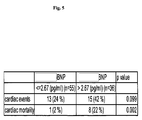
- a urinary amount of BNP of at least 2.67 pg/ml is indicative for an increased risk of developing cardiovascular events and/or mortality (cardiac death) in the future. It is to be understood that the aforementioned values may vary within statistic boundaries.
- the method of the present invention may be used for risk stratification for a patient.
- therapies or other necessary medical treatments or means may be applied to a subject.
- the risk for developing heart failure may be taken into account for future therapies or medical means.
- said predicting based on the amount of BNP comprises comparing the amount of BNP in a urine sample of the subject with the amount of BNP in a urine sample of a subject known not to develop heart failure or a subject known to develop heart failure.
- said risk of developing cardiovascular events accompanied with heart failure relates to a prognostic period of at least 12 months.
- prognostic periods which are also envisaged by the present invention are periods of at least one year.
- said heart failure can be allocated to New York Heart Association (NYHA) classes I, II, III or IV.
- NYHA New York Heart Association
- allocation of the mild or moderate heart failure into the NYHA classes can be performed based on the amount of BNP, i.e. the strength of the symptoms which a subject will develop can be determined based on the amount of BNP.
- BNP the strength of the symptoms which a subject will develop
- the subject's life can be made more convenient.
- said subject is a human.
- the human BNP as referred to in accordance with the present invention is a polypeptide comprising 32 amino acids in length corresponding to the mature molecule (amino acids 77 to 108 of preproBNP).
- the structure of the polypeptides has been described already in detail in the prior art, e.g., WO 02/089657 , WO 02/083913 , Bonow 1996, New Insights into the cardiac natriuretic peptides. Circulation 93: 1946-1950 .
- the aforementioned prior art documents are herewith incorporated by reference with respect to the specific sequences of BNP and variants thereof disclosed therein.
- the BNPs referred to in accordance with the present invention further encompasses allelic.
- variant polypeptides which are on the amino acid level at least 60 % identical, more preferably at least 70 %, at least 80 %, at least 90 %, at least 95 %, at least 98% or at least 99 % identical to human BNP.
- variant polypeptides having amino acid deletions or substitutions compared to human BNP wherein said polypeptides have biological or immunological properties of human BNP.
- BNP can be assayed, preferably, as described in WO 02/089657 or in the accompanying Example below.
- the BNP is human BNP as specified above.
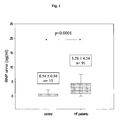
- Urine BNP levels were measured in 15 healthy volunteers and 91 Heart failure (HF) patients.
- HF Heart failure
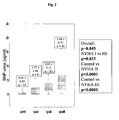
- HF group 8 were in NYHA states I, 63 in NYHA states II and 20 in NYHA states III.
- Urine BNP levels were statistically significant higher in HF patients than in controls (3.28 ⁇ 4.24 vs. 0.54 ⁇ 0.94 pg/ml; p ⁇ 0.0001).
- BNP urine levels were significantly elevated ( Fig. 3 ) according to an increase of severity.
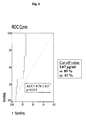
- the ROC curve of BNP for detection of HF yielded an area under the curve (AUC) of 0.81; p ⁇ 0.0001 compared with the diagonal. From this ROC curve the optional cut-point in this specific assay would be 0.83 pg/ml with a specificity of 80 % and a sensitivity of 78 %.
- BNP can be determined in human urine samples and that BNP levels in urine can be used for the diagnosis and the prognosis of heart failure patients as well as for the characterization of the functional states of these patients.
Landscapes
- Life Sciences & Earth Sciences (AREA)
- Health & Medical Sciences (AREA)
- Engineering & Computer Science (AREA)
- Molecular Biology (AREA)
- Biomedical Technology (AREA)
- Chemical & Material Sciences (AREA)
- Urology & Nephrology (AREA)
- Hematology (AREA)
- Immunology (AREA)
- Cell Biology (AREA)
- General Health & Medical Sciences (AREA)
- Biotechnology (AREA)
- Pathology (AREA)
- Food Science & Technology (AREA)
- Medicinal Chemistry (AREA)
- Physics & Mathematics (AREA)
- Analytical Chemistry (AREA)
- Biochemistry (AREA)
- Microbiology (AREA)
- General Physics & Mathematics (AREA)
- Proteomics, Peptides & Aminoacids (AREA)
- Endocrinology (AREA)
- Investigating Or Analysing Biological Materials (AREA)
- Crystals, And After-Treatments Of Crystals (AREA)
- Electrotherapy Devices (AREA)
- External Artificial Organs (AREA)
- Measurement Of The Respiration, Hearing Ability, Form, And Blood Characteristics Of Living Organisms (AREA)
Claims (8)
- Procédé d'attribution de l'insuffisance cardiaque d'un sujet aux classes I, II, III ou IV de la New York Heart Association (NYHA) comprenanta) la détermination de la quantité de peptide B-natriurétique mature (BNP) de 32 acides aminés dans un échantillon d'urine dudit sujet ; etb) l'attribution du fait que le sujet souffre d'insuffisance cardiaque selon la classe I, II, III ou IV de la NYHA sur la base de la quantité de BNP mature de 32 acides aminés déterminée dans l'étape a), dans lequeli. une quantité de 0,8 à 2,4 pg/ml attribue un sujet à la classe I de la NYHA,ii. une quantité de 2,5 à 3,9 pg/ml attribue un sujet à la classe II de la NYHA,iii. une quantité de 4,0 à 12,0 pg/ml attribue un sujet à la classe III de la NYHA ; etiv. une quantité située au-dessus de 12,0 pg/ml attribue un sujet à la classe IV de la NYHA.
- Procédé de prédiction du fait qu'un sujet court le risque ou non de développer des événements cardiovasculaires accompagnés d'insuffisance cardiaque comprenanta) la détermination de la quantité de BNP mature de 32 acides aminés dans un échantillon d'urine dudit sujet ; etb) la prédiction du fait que le sujet court un risque ou non de développer des événements cardiovasculaires accompagnés d'insuffisance cardiaque sur la base de la quantité de BNP mature de 32 acides aminés déterminée dans l'étape a) ; dans lequel une quantité de BNP d'au moins 2,67 pg/ml est indicatrice d'un risque accru de développer des événements cardiovasculaires.
- Procédé selon la revendication 2, dans lequel ledit risque de développer des événements cardiovasculaires accompagnés d'insuffisance cardiaque concerne une période prognostique de 12 mois.
- Procédé selon l'une quelconque des revendications 2 à 3, dans lequel ladite insuffisance cardiaque est l'insuffisance cardiaque selon la classe I, II ou III de la NYHA.
- Procédé selon l'une quelconque des revendications 1 à 4, dans lequel ladite insuffisance cardiaque est l'insuffisance cardiaque chronique.
- Procédé selon l'une quelconque des revendications 1 à 5, dans lequel ledit sujet est un être humain.
- Utilisation du BNP mature de 32 acides aminés dans un échantillon d'urine d'un sujet pour attribuer l'insuffisance cardiaque aux classes I, II, III ou IV de la NYHA.
- Utilisation du BNP mature de 32 acides aminés dans un échantillon d'urine d'un sujet pour prédire le fait que ledit sujet court un risque ou non de développer une insuffisance cardiaque.
Priority Applications (1)
| Application Number | Priority Date | Filing Date | Title |
|---|---|---|---|
| EP06754992A EP1880221B1 (fr) | 2005-05-09 | 2006-05-03 | Procédé pour la stratification de l'insuffisance cardiaque |
Applications Claiming Priority (3)
| Application Number | Priority Date | Filing Date | Title |
|---|---|---|---|
| EP05010043A EP1722232A1 (fr) | 2005-05-09 | 2005-05-09 | Dispositifs et procédés de diagnostics ou de prévoir d'un stade précoce des dysfonctionnements cardiaques |
| EP06754992A EP1880221B1 (fr) | 2005-05-09 | 2006-05-03 | Procédé pour la stratification de l'insuffisance cardiaque |
| PCT/EP2006/062031 WO2006120152A1 (fr) | 2005-05-09 | 2006-05-03 | Dispositifs et methodes permettant de diagnostiquer ou de predire des dysfonctionnements cardiaques a un stade precoce |
Publications (2)
| Publication Number | Publication Date |
|---|---|
| EP1880221A1 EP1880221A1 (fr) | 2008-01-23 |
| EP1880221B1 true EP1880221B1 (fr) | 2010-09-22 |
Family
ID=34936290
Family Applications (2)
| Application Number | Title | Priority Date | Filing Date |
|---|---|---|---|
| EP05010043A Withdrawn EP1722232A1 (fr) | 2005-05-09 | 2005-05-09 | Dispositifs et procédés de diagnostics ou de prévoir d'un stade précoce des dysfonctionnements cardiaques |
| EP06754992A Expired - Lifetime EP1880221B1 (fr) | 2005-05-09 | 2006-05-03 | Procédé pour la stratification de l'insuffisance cardiaque |
Family Applications Before (1)
| Application Number | Title | Priority Date | Filing Date |
|---|---|---|---|
| EP05010043A Withdrawn EP1722232A1 (fr) | 2005-05-09 | 2005-05-09 | Dispositifs et procédés de diagnostics ou de prévoir d'un stade précoce des dysfonctionnements cardiaques |
Country Status (9)
| Country | Link |
|---|---|
| US (1) | US20110104813A1 (fr) |
| EP (2) | EP1722232A1 (fr) |
| JP (1) | JP4927825B2 (fr) |
| CN (2) | CN103091497A (fr) |
| AT (1) | ATE482398T1 (fr) |
| CA (1) | CA2605247A1 (fr) |
| DE (1) | DE602006017058D1 (fr) |
| ES (1) | ES2352351T3 (fr) |
| WO (1) | WO2006120152A1 (fr) |
Families Citing this family (11)
| Publication number | Priority date | Publication date | Assignee | Title |
|---|---|---|---|---|
| EP1722232A1 (fr) * | 2005-05-09 | 2006-11-15 | F.Hoffmann-La Roche Ag | Dispositifs et procédés de diagnostics ou de prévoir d'un stade précoce des dysfonctionnements cardiaques |
| DK2115477T3 (en) * | 2007-01-25 | 2015-08-10 | Hoffmann La Roche | USE OF IGFBP-7 IN THE EVIDENCE OF HEART FAILURE |
| JP5871791B2 (ja) | 2009-04-29 | 2016-03-01 | アカデミス・メディス・セントルム・ベイ・デ・ウニフェルジテイト・ファン・アムステルダムAcademisch Medisch Centrum Bij De Universiteit Van Amsterdam | 心不全または心不全の危険性を中和、予防および/または決定する手段および方法 |
| CN103370619B (zh) * | 2010-11-29 | 2016-01-20 | 美艾利尔圣地亚哥有限公司 | 诊断或风险预测心力衰竭的方法和试剂 |
| SI2883057T1 (sl) | 2012-08-09 | 2019-07-31 | Institut National De La Sante Et De La Recherche Medicale (Inserm) | Diagnostika srčnega popuščanja |
| SG11201702490PA (en) * | 2014-10-10 | 2017-04-27 | Akira Matsumori | Method for detecting cardiac failure patient, method for discrimination of cardiac disease, test reagent for cardiac failure, test kit for cardiac failure, device for detecting cardiac failure, and program for detecting cardiac failure |
| WO2017210488A1 (fr) * | 2016-06-03 | 2017-12-07 | Cedars-Sinai Medical Center | Dosage protéolytique du peptide natriurétique de type b pour l'évaluation du risque de maladie cardiovasculaire |
| US11193947B2 (en) | 2016-06-03 | 2021-12-07 | Cedars-Sinai Medical Center | B-type natriuretic peptide proteolytic assay for cardiovascular disease risk assessment |
| EP3499230A4 (fr) * | 2016-08-09 | 2020-07-29 | Otsuka Pharmaceutical Co., Ltd. | Procédé d'aide au diagnostic de la maladie d'alzheimer mettant en uvre un biomarqueur de l'urine |
| EP3665483A4 (fr) * | 2017-08-08 | 2021-07-14 | Queensland University of Technology | Méthodes pour diagnostiquer les stades précoces de l'insuffisance cardiaque |
| US11255844B2 (en) * | 2018-03-06 | 2022-02-22 | Fresenius Medical Care Holdings, Inc. | Peritoneal dialysis systems and related methods |
Family Cites Families (13)
| Publication number | Priority date | Publication date | Assignee | Title |
|---|---|---|---|---|
| US5744101A (en) * | 1989-06-07 | 1998-04-28 | Affymax Technologies N.V. | Photolabile nucleoside protecting groups |
| JP2676114B2 (ja) * | 1990-04-16 | 1997-11-12 | 塩野義製薬株式会社 | hBNPを認識するモノクローナル抗体および該抗体を用いるhBNPの免疫測定法 |
| ATE373826T1 (de) * | 1999-01-29 | 2007-10-15 | Roche Diagnostics Gmbh | Verfahren zum nachweis von n-terminalem probnp |
| US7632647B2 (en) * | 2001-04-13 | 2009-12-15 | Biosite Incorporated | Use of B-type natriuretic peptide as a prognostic indicator in acute coronary syndromes |
| AUPS169202A0 (en) * | 2002-04-11 | 2002-05-16 | Goetze, Jens Peter | Neuropeptide assay |
| MXPA03004105A (es) * | 2002-05-14 | 2004-10-15 | Hoffmann La Roche | Elaboracion de una prognosis en casos de enfermedad cardiaca usando una combinacion de marcadores. |
| GB0216191D0 (en) * | 2002-07-11 | 2002-08-21 | Univ Leicester | Plasma urotensin in human heart failure |
| US8263325B2 (en) * | 2002-11-15 | 2012-09-11 | Ottawa Heart Institute Research Corporation | Predicting, detecting and monitoring treatment of cardiomyopathies and myocarditis |
| US7109023B2 (en) * | 2002-11-18 | 2006-09-19 | Princeton Biomeditech Corporation | Immunossay device for diagnosing congestive heart failure and predicting mortality in congestive heart failure patients |
| WO2004046729A2 (fr) * | 2002-11-21 | 2004-06-03 | The University Of Leicester | Marqueurs a base de fluide corporel pour l'hypoxie tissulaire |
| US7092759B2 (en) * | 2003-07-30 | 2006-08-15 | Medtronic, Inc. | Method of optimizing cardiac resynchronization therapy using sensor signals of septal wall motion |
| US7887750B2 (en) * | 2004-05-05 | 2011-02-15 | Bayer Healthcare Llc | Analytical systems, devices, and cartridges therefor |
| EP1722232A1 (fr) * | 2005-05-09 | 2006-11-15 | F.Hoffmann-La Roche Ag | Dispositifs et procédés de diagnostics ou de prévoir d'un stade précoce des dysfonctionnements cardiaques |
-
2005
- 2005-05-09 EP EP05010043A patent/EP1722232A1/fr not_active Withdrawn
-
2006
- 2006-05-03 AT AT06754992T patent/ATE482398T1/de active
- 2006-05-03 DE DE602006017058T patent/DE602006017058D1/de not_active Expired - Lifetime
- 2006-05-03 CN CN2013100056784A patent/CN103091497A/zh active Pending
- 2006-05-03 EP EP06754992A patent/EP1880221B1/fr not_active Expired - Lifetime
- 2006-05-03 JP JP2008510547A patent/JP4927825B2/ja not_active Expired - Lifetime
- 2006-05-03 CN CN2006800158682A patent/CN101171517B/zh not_active Expired - Lifetime
- 2006-05-03 WO PCT/EP2006/062031 patent/WO2006120152A1/fr not_active Ceased
- 2006-05-03 CA CA002605247A patent/CA2605247A1/fr not_active Abandoned
- 2006-05-03 ES ES06754992T patent/ES2352351T3/es not_active Expired - Lifetime
-
2007
- 2007-11-07 US US11/936,169 patent/US20110104813A1/en not_active Abandoned
Non-Patent Citations (1)
| Title |
|---|
| ALAN H.B. WU ET AL., CLINICAL CHEMISTRY, vol. 50, no. 5, 2004, pages 876 - 873 * |
Also Published As
| Publication number | Publication date |
|---|---|
| JP2008541078A (ja) | 2008-11-20 |
| CN101171517A (zh) | 2008-04-30 |
| JP4927825B2 (ja) | 2012-05-09 |
| US20110104813A1 (en) | 2011-05-05 |
| HK1119771A1 (en) | 2009-03-13 |
| EP1880221A1 (fr) | 2008-01-23 |
| WO2006120152A1 (fr) | 2006-11-16 |
| ES2352351T3 (es) | 2011-02-17 |
| CN101171517B (zh) | 2013-10-09 |
| CN103091497A (zh) | 2013-05-08 |
| EP1722232A1 (fr) | 2006-11-15 |
| DE602006017058D1 (de) | 2010-11-04 |
| ATE482398T1 (de) | 2010-10-15 |
| CA2605247A1 (fr) | 2006-11-16 |
Similar Documents
| Publication | Publication Date | Title |
|---|---|---|
| JP4944185B2 (ja) | 症状のある患者における急性および慢性の心筋壊死の区別のための手段と方法 | |
| US20110104813A1 (en) | Diagnosis of early stage cardiac dysfunction | |
| US11686736B2 (en) | Biomarkers to improve prediction of heart failure risk | |
| JP5015318B2 (ja) | Gdf−15及びナトリウム利尿ペプチドを用いた、心房細動を有する患者の心不全を評価するための手段及び方法 | |
| JP2011523051A (ja) | 1型糖尿病におけるバイオマーカーとしてのgdf−15 | |
| JP2011501113A (ja) | 急性冠症候群を有する患者での既存の心筋機能不全の評価のためのナトリウム利尿ペプチド/トロポニン比 | |
| JP5198565B2 (ja) | 心疾患に関連する又は関連しないgdf−15の上昇の区別のための手段及び方法 | |
| CA2601147A1 (fr) | Marqueurs biochimiques pour l'embolie pulmonaire aigue | |
| EP1882945A1 (fr) | Procedes et moyens permettant de differenciation entre des causes cardiaques et pulmonaires de dyspnée aiguë | |
| JP2010537212A (ja) | 息切れの原因の鑑別におけるサーファクタントプロテインb及びd | |
| JP4664939B2 (ja) | 息切れの心臓原因および肺原因を鑑別するための手段および方法 | |
| EP2597466A1 (fr) | Supports et procédés pour diagnostic proSP-B des dommages alvéolaires pour l'hypertension artérielle pulmonaire des poumons | |
| US8440463B2 (en) | Predicting renal failure in diabetes patients based on placental growth factor and soluble FLT-1 | |
| EP1882947A1 (fr) | Moyens et méthodes de différentiation des causes cardiaques et pulmonaires du manque de souffle aigu | |
| HK1119771B (en) | Devices and methods for diagnosing or predicting early stage cardiac dysfunctions | |
| EP1835289A1 (fr) | Moyens et procédés de prédiction de complications cardiovasculaires chez des sujets souffrant d'ostéoporose | |
| HK1118334A (en) | Means and methods for the differentiation of cardiac and pulmonary causes of acute shortness of breath | |
| WO2009150249A1 (fr) | Nt-probnp en tant qu’indicateur de pronostic du développement d’une insuffisance rénale terminale dans le diabète sucré | |
| HK1113819A (en) | Means and methods for the differentiation of cardiac and pulmonary causes of shortness of breath |
Legal Events
| Date | Code | Title | Description |
|---|---|---|---|
| PUAI | Public reference made under article 153(3) epc to a published international application that has entered the european phase |
Free format text: ORIGINAL CODE: 0009012 |
|
| 17P | Request for examination filed |
Effective date: 20071129 |
|
| AK | Designated contracting states |
Kind code of ref document: A1 Designated state(s): AT BE BG CH CY CZ DE DK EE ES FI FR GB GR HU IE IS IT LI LT LU LV MC NL PL PT RO SE SI SK TR |
|
| RAP1 | Party data changed (applicant data changed or rights of an application transferred) |
Owner name: ROCHE DIAGNOSTICS GMBH Owner name: F. HOFFMANN-LA ROCHE AG |
|
| 17Q | First examination report despatched |
Effective date: 20080623 |
|
| DAX | Request for extension of the european patent (deleted) | ||
| GRAP | Despatch of communication of intention to grant a patent |
Free format text: ORIGINAL CODE: EPIDOSNIGR1 |
|
| RTI1 | Title (correction) |
Free format text: METHODS FOR STRATIFYING HEART FAILURE |
|
| GRAS | Grant fee paid |
Free format text: ORIGINAL CODE: EPIDOSNIGR3 |
|
| GRAA | (expected) grant |
Free format text: ORIGINAL CODE: 0009210 |
|
| AK | Designated contracting states |
Kind code of ref document: B1 Designated state(s): AT BE BG CH CY CZ DE DK EE ES FI FR GB GR HU IE IS IT LI LT LU LV MC NL PL PT RO SE SI SK TR |
|
| REG | Reference to a national code |
Ref country code: GB Ref legal event code: FG4D |
|
| REG | Reference to a national code |
Ref country code: CH Ref legal event code: EP |
|
| REG | Reference to a national code |
Ref country code: IE Ref legal event code: FG4D |
|
| REF | Corresponds to: |
Ref document number: 602006017058 Country of ref document: DE Date of ref document: 20101104 Kind code of ref document: P |
|
| PG25 | Lapsed in a contracting state [announced via postgrant information from national office to epo] |
Ref country code: FI Free format text: LAPSE BECAUSE OF FAILURE TO SUBMIT A TRANSLATION OF THE DESCRIPTION OR TO PAY THE FEE WITHIN THE PRESCRIBED TIME-LIMIT Effective date: 20100922 Ref country code: LT Free format text: LAPSE BECAUSE OF FAILURE TO SUBMIT A TRANSLATION OF THE DESCRIPTION OR TO PAY THE FEE WITHIN THE PRESCRIBED TIME-LIMIT Effective date: 20100922 |
|
| REG | Reference to a national code |
Ref country code: NL Ref legal event code: VDEP Effective date: 20100922 |
|
| REG | Reference to a national code |
Ref country code: ES Ref legal event code: FG2A Effective date: 20110207 |
|
| LTIE | Lt: invalidation of european patent or patent extension |
Effective date: 20100922 |
|
| PG25 | Lapsed in a contracting state [announced via postgrant information from national office to epo] |
Ref country code: PL Free format text: LAPSE BECAUSE OF FAILURE TO SUBMIT A TRANSLATION OF THE DESCRIPTION OR TO PAY THE FEE WITHIN THE PRESCRIBED TIME-LIMIT Effective date: 20100922 Ref country code: SI Free format text: LAPSE BECAUSE OF FAILURE TO SUBMIT A TRANSLATION OF THE DESCRIPTION OR TO PAY THE FEE WITHIN THE PRESCRIBED TIME-LIMIT Effective date: 20100922 |
|
| PG25 | Lapsed in a contracting state [announced via postgrant information from national office to epo] |
Ref country code: GR Free format text: LAPSE BECAUSE OF FAILURE TO SUBMIT A TRANSLATION OF THE DESCRIPTION OR TO PAY THE FEE WITHIN THE PRESCRIBED TIME-LIMIT Effective date: 20101223 Ref country code: LV Free format text: LAPSE BECAUSE OF FAILURE TO SUBMIT A TRANSLATION OF THE DESCRIPTION OR TO PAY THE FEE WITHIN THE PRESCRIBED TIME-LIMIT Effective date: 20100922 Ref country code: SE Free format text: LAPSE BECAUSE OF FAILURE TO SUBMIT A TRANSLATION OF THE DESCRIPTION OR TO PAY THE FEE WITHIN THE PRESCRIBED TIME-LIMIT Effective date: 20100922 |
|
| PG25 | Lapsed in a contracting state [announced via postgrant information from national office to epo] |
Ref country code: EE Free format text: LAPSE BECAUSE OF FAILURE TO SUBMIT A TRANSLATION OF THE DESCRIPTION OR TO PAY THE FEE WITHIN THE PRESCRIBED TIME-LIMIT Effective date: 20100922 Ref country code: SK Free format text: LAPSE BECAUSE OF FAILURE TO SUBMIT A TRANSLATION OF THE DESCRIPTION OR TO PAY THE FEE WITHIN THE PRESCRIBED TIME-LIMIT Effective date: 20100922 Ref country code: PT Free format text: LAPSE BECAUSE OF FAILURE TO SUBMIT A TRANSLATION OF THE DESCRIPTION OR TO PAY THE FEE WITHIN THE PRESCRIBED TIME-LIMIT Effective date: 20110124 Ref country code: NL Free format text: LAPSE BECAUSE OF FAILURE TO SUBMIT A TRANSLATION OF THE DESCRIPTION OR TO PAY THE FEE WITHIN THE PRESCRIBED TIME-LIMIT Effective date: 20100922 Ref country code: CZ Free format text: LAPSE BECAUSE OF FAILURE TO SUBMIT A TRANSLATION OF THE DESCRIPTION OR TO PAY THE FEE WITHIN THE PRESCRIBED TIME-LIMIT Effective date: 20100922 Ref country code: RO Free format text: LAPSE BECAUSE OF FAILURE TO SUBMIT A TRANSLATION OF THE DESCRIPTION OR TO PAY THE FEE WITHIN THE PRESCRIBED TIME-LIMIT Effective date: 20100922 Ref country code: IS Free format text: LAPSE BECAUSE OF FAILURE TO SUBMIT A TRANSLATION OF THE DESCRIPTION OR TO PAY THE FEE WITHIN THE PRESCRIBED TIME-LIMIT Effective date: 20110122 |
|
| PG25 | Lapsed in a contracting state [announced via postgrant information from national office to epo] |
Ref country code: BE Free format text: LAPSE BECAUSE OF FAILURE TO SUBMIT A TRANSLATION OF THE DESCRIPTION OR TO PAY THE FEE WITHIN THE PRESCRIBED TIME-LIMIT Effective date: 20100922 |
|
| PLBE | No opposition filed within time limit |
Free format text: ORIGINAL CODE: 0009261 |
|
| STAA | Information on the status of an ep patent application or granted ep patent |
Free format text: STATUS: NO OPPOSITION FILED WITHIN TIME LIMIT |
|
| 26N | No opposition filed |
Effective date: 20110623 |
|
| PG25 | Lapsed in a contracting state [announced via postgrant information from national office to epo] |
Ref country code: DK Free format text: LAPSE BECAUSE OF FAILURE TO SUBMIT A TRANSLATION OF THE DESCRIPTION OR TO PAY THE FEE WITHIN THE PRESCRIBED TIME-LIMIT Effective date: 20100922 |
|
| REG | Reference to a national code |
Ref country code: DE Ref legal event code: R097 Ref document number: 602006017058 Country of ref document: DE Effective date: 20110623 |
|
| PG25 | Lapsed in a contracting state [announced via postgrant information from national office to epo] |
Ref country code: MC Free format text: LAPSE BECAUSE OF NON-PAYMENT OF DUE FEES Effective date: 20110531 |
|
| REG | Reference to a national code |
Ref country code: IE Ref legal event code: MM4A |
|
| PG25 | Lapsed in a contracting state [announced via postgrant information from national office to epo] |
Ref country code: IE Free format text: LAPSE BECAUSE OF NON-PAYMENT OF DUE FEES Effective date: 20110503 |
|
| PG25 | Lapsed in a contracting state [announced via postgrant information from national office to epo] |
Ref country code: LU Free format text: LAPSE BECAUSE OF NON-PAYMENT OF DUE FEES Effective date: 20110503 Ref country code: CY Free format text: LAPSE BECAUSE OF FAILURE TO SUBMIT A TRANSLATION OF THE DESCRIPTION OR TO PAY THE FEE WITHIN THE PRESCRIBED TIME-LIMIT Effective date: 20100922 |
|
| PG25 | Lapsed in a contracting state [announced via postgrant information from national office to epo] |
Ref country code: BG Free format text: LAPSE BECAUSE OF FAILURE TO SUBMIT A TRANSLATION OF THE DESCRIPTION OR TO PAY THE FEE WITHIN THE PRESCRIBED TIME-LIMIT Effective date: 20101222 Ref country code: TR Free format text: LAPSE BECAUSE OF FAILURE TO SUBMIT A TRANSLATION OF THE DESCRIPTION OR TO PAY THE FEE WITHIN THE PRESCRIBED TIME-LIMIT Effective date: 20100922 |
|
| PG25 | Lapsed in a contracting state [announced via postgrant information from national office to epo] |
Ref country code: HU Free format text: LAPSE BECAUSE OF FAILURE TO SUBMIT A TRANSLATION OF THE DESCRIPTION OR TO PAY THE FEE WITHIN THE PRESCRIBED TIME-LIMIT Effective date: 20100922 |
|
| REG | Reference to a national code |
Ref country code: FR Ref legal event code: PLFP Year of fee payment: 11 |
|
| REG | Reference to a national code |
Ref country code: FR Ref legal event code: PLFP Year of fee payment: 12 |
|
| REG | Reference to a national code |
Ref country code: FR Ref legal event code: PLFP Year of fee payment: 13 |
|
| REG | Reference to a national code |
Ref country code: FR Ref legal event code: PLFP Year of fee payment: 18 |
|
| P01 | Opt-out of the competence of the unified patent court (upc) registered |
Effective date: 20230526 |
|
| PGFP | Annual fee paid to national office [announced via postgrant information from national office to epo] |
Ref country code: DE Payment date: 20250423 Year of fee payment: 20 |
|
| PGFP | Annual fee paid to national office [announced via postgrant information from national office to epo] |
Ref country code: ES Payment date: 20250602 Year of fee payment: 20 Ref country code: GB Payment date: 20250423 Year of fee payment: 20 |
|
| PGFP | Annual fee paid to national office [announced via postgrant information from national office to epo] |
Ref country code: IT Payment date: 20250423 Year of fee payment: 20 |
|
| PGFP | Annual fee paid to national office [announced via postgrant information from national office to epo] |
Ref country code: FR Payment date: 20250423 Year of fee payment: 20 |
|
| PGFP | Annual fee paid to national office [announced via postgrant information from national office to epo] |
Ref country code: CH Payment date: 20250601 Year of fee payment: 20 |
|
| PGFP | Annual fee paid to national office [announced via postgrant information from national office to epo] |
Ref country code: AT Payment date: 20250424 Year of fee payment: 20 |
|
| REG | Reference to a national code |
Ref country code: CH Ref legal event code: H14 Free format text: ST27 STATUS EVENT CODE: U-0-0-H10-H14 (AS PROVIDED BY THE NATIONAL OFFICE) Effective date: 20260503 Ref country code: DE Ref legal event code: R071 Ref document number: 602006017058 Country of ref document: DE |
|
| REG | Reference to a national code |
Ref country code: GB Ref legal event code: PE20 Expiry date: 20260502 |
|
| REG | Reference to a national code |
Ref country code: ES Ref legal event code: FD2A Effective date: 20260528 |
|
| REG | Reference to a national code |
Ref country code: AT Ref legal event code: MK07 Ref document number: 482398 Country of ref document: AT Kind code of ref document: T Effective date: 20260503 |
|
| PG25 | Lapsed in a contracting state [announced via postgrant information from national office to epo] |
Ref country code: ES Free format text: LAPSE BECAUSE OF EXPIRATION OF PROTECTION Effective date: 20260504 |
|
| PG25 | Lapsed in a contracting state [announced via postgrant information from national office to epo] |
Ref country code: GB Free format text: LAPSE BECAUSE OF EXPIRATION OF PROTECTION Effective date: 20260502 |