EP1881673A2 - Verfahren und Vorrichtung zum Erreichen von Kompatibilität zwischen Komponenten von einem drahtlosen Kommunikationssystem - Google Patents
Verfahren und Vorrichtung zum Erreichen von Kompatibilität zwischen Komponenten von einem drahtlosen Kommunikationssystem Download PDFInfo
- Publication number
- EP1881673A2 EP1881673A2 EP07120414A EP07120414A EP1881673A2 EP 1881673 A2 EP1881673 A2 EP 1881673A2 EP 07120414 A EP07120414 A EP 07120414A EP 07120414 A EP07120414 A EP 07120414A EP 1881673 A2 EP1881673 A2 EP 1881673A2
- Authority
- EP
- European Patent Office
- Prior art keywords
- registration
- message
- request message
- registration request
- extensions
- Prior art date
- Legal status (The legal status is an assumption and is not a legal conclusion. Google has not performed a legal analysis and makes no representation as to the accuracy of the status listed.)
- Withdrawn
Links
Images




Classifications
-
- H—ELECTRICITY
- H04—ELECTRIC COMMUNICATION TECHNIQUE
- H04W—WIRELESS COMMUNICATION NETWORKS
- H04W80/00—Wireless network protocols or protocol adaptations to wireless operation
- H04W80/04—Network layer protocols, e.g. mobile IP [Internet Protocol]
- H04W80/045—Network layer protocols, e.g. mobile IP [Internet Protocol] involving different protocol versions, e.g. MIPv4 and MIPv6
-
- H—ELECTRICITY
- H04—ELECTRIC COMMUNICATION TECHNIQUE
- H04W—WIRELESS COMMUNICATION NETWORKS
- H04W12/00—Security arrangements; Authentication; Protecting privacy or anonymity
- H04W12/06—Authentication
-
- H—ELECTRICITY
- H04—ELECTRIC COMMUNICATION TECHNIQUE
- H04W—WIRELESS COMMUNICATION NETWORKS
- H04W28/00—Network traffic management; Network resource management
- H04W28/02—Traffic management, e.g. flow control or congestion control
- H04W28/04—Error control
-
- H—ELECTRICITY
- H04—ELECTRIC COMMUNICATION TECHNIQUE
- H04W—WIRELESS COMMUNICATION NETWORKS
- H04W36/00—Hand-off or reselection arrangements
- H04W36/0005—Control or signalling for completing the hand-off
- H04W36/0011—Control or signalling for completing the hand-off for data sessions of end-to-end connection
- H04W36/0019—Control or signalling for completing the hand-off for data sessions of end-to-end connection adapted for mobile IP [MIP]
-
- H—ELECTRICITY
- H04—ELECTRIC COMMUNICATION TECHNIQUE
- H04W—WIRELESS COMMUNICATION NETWORKS
- H04W74/00—Wireless channel access
- H04W74/02—Hybrid access
-
- H—ELECTRICITY
- H04—ELECTRIC COMMUNICATION TECHNIQUE
- H04W—WIRELESS COMMUNICATION NETWORKS
- H04W8/00—Network data management
- H04W8/02—Processing of mobility data, e.g. registration information at HLR [Home Location Register] or VLR [Visitor Location Register]; Transfer of mobility data, e.g. between HLR, VLR or external networks
- H04W8/04—Registration at HLR or HSS [Home Subscriber Server]
-
- H—ELECTRICITY
- H04—ELECTRIC COMMUNICATION TECHNIQUE
- H04W—WIRELESS COMMUNICATION NETWORKS
- H04W28/00—Network traffic management; Network resource management
- H04W28/02—Traffic management, e.g. flow control or congestion control
- H04W28/06—Optimizing the usage of the radio link, e.g. header compression, information sizing, discarding information
-
- H—ELECTRICITY
- H04—ELECTRIC COMMUNICATION TECHNIQUE
- H04W—WIRELESS COMMUNICATION NETWORKS
- H04W60/00—Affiliation to network, e.g. registration; Terminating affiliation with the network, e.g. de-registration
-
- H—ELECTRICITY
- H04—ELECTRIC COMMUNICATION TECHNIQUE
- H04W—WIRELESS COMMUNICATION NETWORKS
- H04W60/00—Affiliation to network, e.g. registration; Terminating affiliation with the network, e.g. de-registration
- H04W60/001—Registration rejection or failure
Definitions
- the present invention relates to wireless communication systems generally and specifically, to methods and apparatus for handoff for a packet data service.
- IP Mobile Internet Protocol
- MN Mobile Node
- link-layer mechanisms for mobility i. e., link-layer handoff
- link-layer handoff may offer faster convergence and far less overhead than MobileIP.
- the present invention relates to a method for call registration in a communication system supporting Mobile Internet Protocol communications and to an apparatus in a communication system supporting Mobile Internet Protocol communications as set out in the appended claims.
- a method for call registration in a communication system supporting Mobile Internet Protocol communications comprising: receiving a version indication for a home agent, the version indication identifying a capability of the home agent; and in response to the version indication, determining if a number of registration extensions is consistent with the capability of the home agent.
- the method may further comprise sending a registration request message having the number of registration extensions.
- the version indication may be received from a home Authentication, Administration and Accounting unit.
- An initial registration request message may be received from a mobile node.
- the initial registration request message may include multiple registration extensions, and the registration request message may include one registration extension.
- the version indication may be an attribute.
- the invention further relates to an apparatus for call registration in a communication system supporting Mobile Internet Protocol communications, comprising: means for receiving a version indication for a home agent, the version indication identifying a capability of the home agent; and means for determining if a number of registration extensions consistent with the capability of the home agent in response to the version indication.
- FIG. 1 is a block diagram of a communication system supporting Mobile IP.
- FIG. 2 is a timing diagram illustrating a call registration in a communication system utilizing Authentication Enabling Extensions.
- FIG. 3 is a flow chart of the call registration process utilizing Authentication Enabling Extensions.
- FIG. 4 is a timing diagram illustrating a call registration in a communication system utilizing a version identification message.
- FIG. 5 is a flow chart of a call registration process supporting a version identification message.
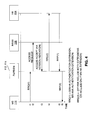
- FIGs. 6-9 are timing diagrams illustrating various call registration processes.
- the following discussion develops the exemplary embodiments by first presenting a network implementing mobile IP to communicate data to and from a mobile node. Then a spread-spectrum wireless communication system is discussed. Next, the mobile IP network is shown implemented in the wireless communication system. The messages are illustrated that register a mobile node with a home agent thereby enabling IP data to be sent to and from the mobile node. Finally, methods for reclaiming resources at the home agent are explained.
- the exemplary embodiment is provided as an exemplar throughout this discussion; however, alternate embodiments may incorporate various aspects without departing from the scope of the present invention. Specifically, the various embodiments are applicable to a data processing system, a wireless communication system, a mobile IP network and any other system desiring efficient use and management of resources.
- the exemplary embodiment employs a spread-spectrum wireless communication system.
- Wireless communication systems are widely deployed to provide various types of communication such as voice, data, and so on. These systems may be based on Code Division-Multiple Access (CDMA), Time Division Multiple Access (TDMA), or some other modulation techniques.
- CDMA Code Division-Multiple Access
- TDMA Time Division Multiple Access
- a CDMA system provides certain advantages over other types of systems, including increased system capacity.
- a system may be designed to support one or more standards such as the "TIA/EIA/IS-95-B Mobile Station-Base Station Compatibility Standard for Dual-Mode Wideband Spread Spectrum Cellular System” referred to herein as the IS-95 standard, the standard offered by a consortium named “3rd Generation Partnership Project” referred to herein as 3GPP, and embodied in a set of documents including Document Nos.
- standards such as the "TIA/EIA/IS-95-B Mobile Station-Base Station Compatibility Standard for Dual-Mode Wideband Spread Spectrum Cellular System” referred to herein as the IS-95 standard, the standard offered by a consortium named “3rd Generation Partnership Project” referred to herein as 3GPP, and embodied in a set of documents including Document Nos.
- 3GPP2 3rd Generation Partnership Project 2
- TR-45.5 referred to herein as the cdma2000 standard, formerly called IS-2000 MC.
- the standards cited hereinabove are hereby expressly incorporated herein by reference.
- a communication system 100 includes both wireless portions and Internet Protocol (IP) portions.
- IP Internet Protocol
- a home network 102 for a Mobile Node (MN) includes Home Agent (HA) 104 and Home Agent Authentication, Administration, and Accounting (HAAA) unit 106.
- HA Home Agent
- HAAA Home Agent Authentication, Administration, and Accounting
- the home network 102 is in communication with an IP host 108. As illustrated, the MN 116 has moved to a foreign system 110, which includes a Packet Data Service Node (PDSN) 112 and a Foreign Agent (FA)112.
- PDSN Packet Data Service Node
- FA Foreign Agent
- a MN such as MN 116, is a host or router that changes its point of attachment from one network or subnetwork to another.
- a MN may change its location without changing its IP address; a MN may continue to communicate with other Internet nodes at any location using its (constant) IP address, assuming link-layer connectivity to a point of attachment is available.
- An HA is a router on a MN home network which tunnels datagrams for delivery to the MN when the MN is away from home, and maintains current location information for the MN.
- a FA is a router on a MN visited network which provides routing services to the MN while registered. The FA detunnels and delivers datagrams to the MN that was tunneled by the MN's home agent. For datagrams sent by a MN, the FA may serve as a default router for registered MNs.
- a MN 116 is given a long-term IP address on a home network 102.
- This home address i.e., IP address of the MN
- IP address of the MN is administered in the same way as a "permanent" IP address is provided to a stationary host.
- a "care-of address” is associated with the MN 116, which reflects the MN's current point of attachment.
- the care of address is the IP address for the end of a tunnel.
- the MN 116 uses the home address as the source address of IP datagrams sent from the MN 116.
- a Home Network such as home network 102, is a network, possibly virtual, having a network prefix matching that of a MN's home address. Note that standard lP routing mechanisms will deliver datagrams destined to a MN's Home Address to the mobile node's Home Network. A Foreign Network is then any network other than the Home Network. Note that these terms are per MN.
- Mobile IP When away from home, Mobile IP uses protocol tunneling to hide a MN's home address from intervening routers between its home network and its current location. The tunnel terminates at the MN's care-of address.
- the care-of address must be an address to which datagrams can be delivered via conventional IP routing. At the care-of address, the original datagram is removed from the tunnel and delivered to the MN.
- a tunnel is the path followed by a datagram while it is encapsulated.
- the model is that, while it is encapsulated, a datagram is routed to a knowledgeable decapsulating agent, which decapsulates the datagram and then correctly delivers it to its ultimate destination.
- Datagrams to the MN 116 are provided from IP host 108 to the home network 102 on path a.
- the datagrams are sent using standard IP routing techniques.
- the datagram is received and intercepted by the HA 104 and tunneled to the care of address.
- the HA 104 passes the tunneled datagram to foreign network 110 via path c.
- the FA 114 detunnels the datagram for delivery to the MN 116.
- the FA 114 sends the datagram to the MN 116 via path e.
- While in communication with the foreign network 110 datagrams from the MN 116 are sent via standard IP routing techniques from foreign network 110 to the IP host 108. Note that the MN 116 is illustrated outside of the foreign network 110 for clarity of operation; however, the MN 116 is operating with in a geographical or virtual area serviced by the foreign network 110.
- Mobile IP registration provides a flexible mechanism for MNs to communicate current reachability information to the HA. It is the method by which MNs request forwarding services when visiting a foreign network, inform the HA of a current care-of address, renew a registration which is due to expire, and/or deregister on return home. Registration messages exchange information between a MN, (optionally) a FA, and the HA. Registration creates or modifies a mobility binding at the HA, associating the MN's home address with the MN's current care-of address for a specified Lifetime.
- Mobile IP defines two different registration procedures, one via a FA that relays the registration to the MN's HA, and one directly with the MN's HA. The following rules determine which of these two registration procedures to use in any particular circumstance. If a mobile node is registering a FA care-of address, the MN MUST register via that FA.
- a MN is using a co-located care-of address, and receives an Agent Advertisement from a FA on the link on which the MN is using this care-of address, the MN SHOULD register via that FA (or via another FA on this link) if the 'R' bit is set in the received Agent Advertisement message. If a MN is otherwise using a co-located care-of address, the MN MUST register directly with its HA. If a MN has returned to its home network and is (de)registering with its HA, the MN MUST register directly with its HA. Both registration procedures involve the exchange of Registration ReQuest (RRQ) and Registration RePly (RRP) messages. When registering via a FA, the registration procedure requires the following four messages:
- the registration messages use the User Datagram Protocol (UDP).
- UDP User Datagram Protocol
- a nonzero UDP checksum should be included in the header, and must be checked by the recipient.
- MN-HA Authentication Extension The MN-HA Authentication Extension immediately follows all non-authentication Extensions, except those FA-specific Extensions which may be added to the message after the MN computes the authentication.
- a MN registers with its HA using an RRQ message so that the HA can create or modify a mobility binding for that MN (e.g., with a new lifetime).
- the RRQ request may be relayed to the HA by the FA through which the MN is registering, or it may be sent directly to the HA in the case in which the MN is registering a co-located care-of address.
- the fixed portion of the RRQ is followed by one or more of the Extensions.
- the MN-HA Authentication Extension must be included in all RRQ requests.
- a mobility agent returns an RRP message to a MN which has sent a RRQ message. If the MN is requesting service from a FA, that FA will receive the RRP from the HA and subsequently relay it to the MN.
- the RRP message contains the necessary codes to inform the MN about the status of its RRQ request, along with the lifetime granted by the HA, which may be smaller than the original RRQ request.
- MN-HA Authentication Extension Exactly one MN-HA Authentication Extension must be present in all RRQ requests and RRP replies, and is intended to eliminate problems which result from the uncontrolled propagation of remote redirects in the Internet.
- the location of the extension marks the end of the authenticated data.
- additional extensions are supported, such as non-authentication extensions used by the FA, MN-FA Authentication Extensions, and/or MN-AAA Authentication Extensions.
- the MN is required to include both the MN-HA Authentication Extension and the MN-AAA Authentication Extension in the RRQ message to the PDSN and FA during Mobile IP registration.
- MN-AAA Authentication Extension is specified in RFC3012.
- IS-835-A some standards and standard versions prior to IS-95, such as the standard identified as IS-835-A, have the requirement. Additionally, this allows the mobile to send both authentication extensions.
- the IS-835-A standard version is more restrictive than the IS-835-B standard version, requiring the mobile to send both authentication extensions. Further, the PDSN and FA are required to include both Extensions in the RRQ message sent to the HA.
- the RFC 3220 specifies that the PDSN and FA send only one authentication extension, specifically, the MN-HA Authentication Extension.
- Each MN, FA, and HA must be able to support a mobility security association for mobile entities, indexed by SPI and IP address. In the case of the MN, this must be its Home Address.
- Registration messages between a MN and HA must be authenticated with an "authorization-enabling extension," such as the MN-HA Authentication Extension. This extension must be the first authentication extension; other foreign agent-specific extensions may be added to the message after the mobile node computes the authentication.
- Authorization-enabling extension is an authentication which makes a (registration) message acceptable to the ultimate recipient of the registration message.
- An authorization-enabling extension must contain an SPI.
- authorization-enabling extension refer to authentication extensions that enable the Registration Request message to be acceptable to the home agent. Using additional protocol, it may be possible for the MN to provide authentication of its registration to the HA, by way of another authenticating entity within the network that is acceptable to the HA.
- a MN registers with the HA using an RRQ message so that the HA can create or modify a mobility binding for that MN (e.g., with a new lifetime).
- the RRQ may be relayed to the HA by the FA through which the MN is registering, or it may be sent directly to the HA in the case in which the MN is registering a co-located care-of address.
- the MN-HA Authentication Extension is an authorization-enabling for registration messages. This requirement is intended to eliminate problems which result from the uncontrolled propagation of remote redirects in the Internet.
- the location of the extension marks the end of the authenticated data.
- the HA will reject the MN's registration request and should send an RRP to the MN via FA/PDSN with a designated error code.
- the error code is identified as 131, indicating that the MN failed authentication.
- the following method is supported by the 3GPP2 TSG-P.
- the MS includes the MN-HA and the MN-AAA Authentication Extensions.
- 3GPP2 "Authorization Enabling Extensions" attribute is added from the Home AAA (RADIUS) server to the PDSN indicating whether Authorization Enabling Extensions can be removed.
- the PDSN handles authentication extensions as follows. If the PDSN receives the 3GPP2 "Authorization Enabling Extensions" attribute from the Home AAA (RADIUS) server, the PDSN shall not remove any extensions following the MN-HA Authentication extension. Note that the attribute is described in a recent ballot resolution version of IS-835-B. The attribute is described hereinbelow. Also, note that the RADIUS server is the AAA server using the RADIUS protocol. This scenario is illustrated in FIG. 2. If the PDSN does not receive the attribute, it removes the MN-AAA Authentication Extension from the RRQ after the completion of the Mobile Node Authentication through the AAA infrastructure, as specified by Mobile lP RFC 3220 prior to forwarding the RRQ to the HA.
- 3GPP2 "Authorization Enabling Extensions" attribute from the Home AAA (RADIUS) server the PDSN shall not remove any extensions following the MN-HA Authentication extension. Note that the attribute is described in a recent ballot resolution version of IS-835
- FIG. 2 illustrates the processing within system 100, wherein system elements are represented on the horizontal axis and the vertical axis represents time.
- the MN 116 sends an RRQ identified as RRQ(1), including both an MN-HA Authentication Extension and an MN-AAA Authentication Extension.
- the RRQ(1) is received by PDSN 112 and/or FA 114, which in response send(s) an access request message to HAAA 106 at time t2.
- the HAAA 106 responds with an access accept message.
- the access accept message includes the Authorization Enabling Extensions.
- the PDSN 112 and/or FA 114 send(s) an RRQ identified as RRQ(2) to the HA 104.
- HA 104 responds with an RRP message identified as RRP(1).
- the PDSN 112 and/or FA 114 respond(s) with an RRP message identified as RRP(2) at time t6.
- FIG. 3 illustrates the process 120 for the decision making process. If an Authorization Enabling Extension attribute is received at decision diamond 122, processing continues to step 126 to process the additional extensions. If the attribute is not received, processing continues to step 124 to remove the additional extensions. Both processing paths continue the registration process at step 128.
- IS-835-A complies with RFC 2002
- IS-835-B is intended to comply with RFC 3220.
- these standards and versions are provided as examples of system configurations. Alternate embodiments may include any of a variety of standards, versions, system components and configurations.
- Table 1 Various Scenarios Considering Different Configurations FA/PDSN Release Home AAA Release HA Release Comments IS-835-B IS-835-B RFC2002 RFC3220 No problem, as both Home AAA and FA/PDSN are Release B. The Home AAA instructs when to remove the HA-AAA Authentication Extension.
- IS-835-A IS-835-A/B RFC2002 Both extensions will be sent according to the IS-835-A because the FA/PDSN complies with IS-835-A.
- IS-835-B IS-835-A RFC2002 May introduce problems, as the FA/PDSN only sends the MN-HA Authentication Extension because Release-A Home AAA cannot send the "Authorization Enabling Extension" attribute. For HA complying with both RFC 2002 and IS-835-A authentication extensions are expected but not received.
- IS-835-A IS-835-A/B RFC3220 Still a problem, as the HA may receive an extension not allowed under RFC 3220.
- IS-835-B IS-835-A RFC3220 The FA/PDSN does not receive the "Authorization Enabling Extensions" attribute, but rather only sends the MN-HA Authentication Extension to the HA.
- the HA and HAAA are in a same carrier's domain, and the HAAA knows or has access to the version of HA. Therefore, for both backward and forward compatibility, it is desirable that the HAAA indicates the HA's version to the FA/PDSN instead of sending the "Authorization Enabling Extensions" attribute. In addition, if the HA version is unknown to the HAAA, or the FA/PDSN doesn't receives this new attribute, both authentication extensions will be sent from the FA/PDSN to the HA.
- FIG. 4 illustrates a scenario for provision of the HA version information.
- the vertical axis represents time, while the horizontal axis represents the system elements.
- the MS includes the MN-HA and the MN-AAA Authentication Extensions in an RRQ message identifies as RRQ(1) sent at time t1 to the FA and/or PDSN.
- the FA and/or PDSN send(s) an access request to the HAAA at time t2.
- the HAAA responds to the access request by providing an access accept to the FA and/or PDSN at time t3.
- the access request identifies the HA version.
- the HAAA sends a version identifier consistent with the 3GPP2 "HA Version Indication" attribute.
- the attribute information indicates the version of the HA with respect to RFC2002 or RFC3220. Please refer to the attribute information provided hereinbelow.
- the RFC2002 HA is equivalent to IS-835-A and RFC3220 HA is equivalent to IS-835-B.
- the process 200 begins at decision diamond 202 to determine if an HA version identification, such as an attribute discussed hereinabove, is received from a HAAA.
- the version identification may be included in an access accept message as illustrated in FIG. 4.
- decision diamond 204 processing continues to decision diamond 204.
- step 212 processing continues to step 212 to retain the additional extensions contained in an RRQ message from a MN.
- the PDSN removes additional extensions, such as the MN-AAA Authentication Extension, at step 206.
- additional extensions are removed from the RRQ after completion of the MN Authentication through the AAA infrastructure when it forwards the RRQ to the HA, as specified by Mobile IP RFC 3220 prior to forwarding the RRQ to the HA.
- the PDSN forwards the RRQ message to the HA, additional extensions are removed from the RRQ message after completion of the MN Authentication through the AAA infrastructure, as specified by Mobile IP RFC 3220.
- the PDSN when the PDSN receives the version identification, such as the 3GPP2 "HA Version Indication” attribute, from the HAAA server indicating that the HA complies with RFC2002 (version 1), the PDSN retains any additional extensions at step 208 following the MN-HA Authentication extension. Similarly, when the PDSN receives the version identification, such as the 3GPP2 "HA Version Indication” attribute, from the HAAA server indicating that the HA version is unknown, the PDSN retains any extensions at step 208 following the MN-HA Authentication extension.
- the version identification such as the 3GPP2 "HA Version Indication” attribute
- a version identification such as the "HA Version Indication” attribute
- a version identification in addition to or in place of the "Authorization-Enabling Extension” attribute
- a version identification provides forward compatibility to distinguish future HA versions from current HA versions.
- future FA and HA may support Mobile IP Registration Revocation [draft-ietf-mobileip-reg-revok-02.txt].
- a revocation-capable FA will avoid sending revocation message to HA that doesn't support revocation.
- the method as illustrated in FIGs. 4 and 5 provides a solution when the FA and/or PDSN, as well as the HAAA support a new version (version 2), such as the RFC 3220, while the HA supports the previous version (version 1), such as RFC 2002.
- the HAAA does not support the new attribute, i.e., version identification, and therefore, the FA and/or PDSN will send both extensions to the HA.
- Alternate embodiments are presented to avoid this problem as well as others created by configurations having inconsistent revisions of hardware and software.
- FIG. 6 One embodiment is illustrated in FIG. 6, and is detailed as follows:
- FIG. 7 An alternate embodiment is illustrated in FIG. 7, and is detailed as follows:
- FIG. 8 Still another embodiment is illustrated in FIG. 8, and detailed as follows, wherein the MN needs to know the authentication has failed, and, as the MN will retry the registration.
- the MN resends the RRQ, resulting in increased registration latency.
- the method of FIG. 8 adds complexity to the FA implementation in order to record the history of failed authentication for the MN. It also adds some complexity to the MN implementation, wherein the MN resends the RRQ upon receipt of the RRP with an error code, such as error code 131. Note also that the FA and the HA actions are in compliance with the requirements of RFC 3220.
- FIG. 9 Yet another embodiment is illustrated in FIG. 9, and detailed as follows:
- the Authorizing Enabling Extensions attribute indicates the required action of the FA before relaying the RRQ message to the HA. This optionally appears in a RADIUS Access-Accept message. This attribute is to support backward compatibility with previous versions of the standard. This attribute is intended to be deprecated in a subsequent release. If there are no compatibility issues, this attribute is not required.
- DSP digital signal processor
- ASIC application specific integrated circuit
- FPGA field programmable gate array
- a general purpose processor may be a microprocessor, but in the alternative, the processor may be any conventional processor, controller, microcontroller, or state machine.
- a processor may also be implemented as a combination of computing devices, e.g., a combination of a DSP and a microprocessor, a plurality of microprocessors, one or more microprocessors in conjunction with a DSP core, or any other such configuration.
- a software module may reside in RAM memory, flash memory, ROM memory, EPROM memory, EEPROM memory, registers, hard disk, a removable disk, a CD-ROM, or any other form of storage medium known in the art.
- An exemplary storage medium is coupled to the processor such that the processor can read information from, and write information to, the storage medium.
- the storage medium may be integral to the processor.
- the processor and the storage medium may reside in an ASIC.
- the ASIC may reside in a user terminal.
- the processor and the storage medium may reside as discrete components in a user terminal.
Landscapes
- Engineering & Computer Science (AREA)
- Computer Networks & Wireless Communication (AREA)
- Signal Processing (AREA)
- Databases & Information Systems (AREA)
- Computer Security & Cryptography (AREA)
- Mobile Radio Communication Systems (AREA)
- Communication Control (AREA)
- Burglar Alarm Systems (AREA)
- Emergency Alarm Devices (AREA)
- Data Exchanges In Wide-Area Networks (AREA)
- Radar Systems Or Details Thereof (AREA)
Applications Claiming Priority (2)
| Application Number | Priority Date | Filing Date | Title |
|---|---|---|---|
| US10/123,727 US7286510B2 (en) | 2002-04-15 | 2002-04-15 | Method and apparatus for providing compatibility between elements of a wireless communication system |
| EP03718399A EP1495615B1 (de) | 2002-04-15 | 2003-04-14 | Verfahren und vorrichtung zum erreichen von kompatibilität zwischen komponenten von einem drahtlosen kommunikationssystem |
Related Parent Applications (2)
| Application Number | Title | Priority Date | Filing Date |
|---|---|---|---|
| EP03718399A Division EP1495615B1 (de) | 2002-04-15 | 2003-04-14 | Verfahren und vorrichtung zum erreichen von kompatibilität zwischen komponenten von einem drahtlosen kommunikationssystem |
| EP03718399.3 Division | 2003-04-14 |
Publications (2)
| Publication Number | Publication Date |
|---|---|
| EP1881673A2 true EP1881673A2 (de) | 2008-01-23 |
| EP1881673A3 EP1881673A3 (de) | 2011-11-30 |
Family
ID=28790799
Family Applications (2)
| Application Number | Title | Priority Date | Filing Date |
|---|---|---|---|
| EP03718399A Expired - Lifetime EP1495615B1 (de) | 2002-04-15 | 2003-04-14 | Verfahren und vorrichtung zum erreichen von kompatibilität zwischen komponenten von einem drahtlosen kommunikationssystem |
| EP07120414A Withdrawn EP1881673A3 (de) | 2002-04-15 | 2003-04-14 | Verfahren und Vorrichtung zum Erreichen von Kompatibilität zwischen Komponenten von einem drahtlosen Kommunikationssystem |
Family Applications Before (1)
| Application Number | Title | Priority Date | Filing Date |
|---|---|---|---|
| EP03718399A Expired - Lifetime EP1495615B1 (de) | 2002-04-15 | 2003-04-14 | Verfahren und vorrichtung zum erreichen von kompatibilität zwischen komponenten von einem drahtlosen kommunikationssystem |
Country Status (11)
| Country | Link |
|---|---|
| US (1) | US7286510B2 (de) |
| EP (2) | EP1495615B1 (de) |
| JP (1) | JP2005522967A (de) |
| KR (1) | KR20040101507A (de) |
| CN (2) | CN101877896B (de) |
| AT (1) | ATE378767T1 (de) |
| AU (1) | AU2003221938A1 (de) |
| BR (1) | BR0309209A (de) |
| DE (1) | DE60317494T2 (de) |
| TW (1) | TW200405741A (de) |
| WO (1) | WO2003090425A1 (de) |
Families Citing this family (18)
| Publication number | Priority date | Publication date | Assignee | Title |
|---|---|---|---|---|
| CN101006682B (zh) * | 2004-08-20 | 2013-03-06 | 艾利森电话股份有限公司 | 快速网络附着 |
| EP1667407A1 (de) * | 2004-12-01 | 2006-06-07 | Siemens Aktiengesellschaft | Netzwerkadressenumsetzung durch den Heimatnetzwerkbereich eines beweglichen Netzwerks |
| GB2423215B (en) * | 2005-02-14 | 2009-05-20 | Samsung Electronics Co Ltd | Mobile communications |
| US8107822B2 (en) * | 2005-05-20 | 2012-01-31 | Finisar Corporation | Protocols for out-of-band communication |
| US7899057B2 (en) | 2006-04-28 | 2011-03-01 | Jds Uniphase Corporation | Systems for ordering network packets |
| US8184615B2 (en) | 2005-10-12 | 2012-05-22 | Qualcomm Incorporated | Wireless terminal methods and apparatus for establishing connections |
| AU2006302040A1 (en) * | 2005-10-11 | 2007-04-19 | Qualcomm Incorporated | Wireless terminal methods and apparatus for establishing connections |
| US7460504B2 (en) | 2005-10-12 | 2008-12-02 | Qualcomm Incorporated | Base station methods and apparatus for establishing connections |
| US8213333B2 (en) * | 2006-07-12 | 2012-07-03 | Chip Greel | Identifying and resolving problems in wireless device configurations |
| JP4782062B2 (ja) * | 2006-09-15 | 2011-09-28 | Kddi株式会社 | Mipおよびsip統合システムおよびmipおよびsip統合方法 |
| US10075182B2 (en) | 2006-10-13 | 2018-09-11 | Qualcomm Incorporated | Message compression |
| US8165124B2 (en) | 2006-10-13 | 2012-04-24 | Qualcomm Incorporated | Message compression methods and apparatus |
| US8526821B2 (en) | 2006-12-29 | 2013-09-03 | Finisar Corporation | Transceivers for testing networks and adapting to device changes |
| EP2137940B1 (de) | 2007-04-06 | 2012-05-16 | Interdigital Technology Corporation | Verfahren und vorrichtung zur identifizierung der protokollkapazitäten eines mobilen netzes |
| CN101312591B (zh) * | 2007-05-22 | 2011-08-10 | 中兴通讯股份有限公司 | 一种鉴权器获取家乡代理相关安全参数信息的方法 |
| CN103686733A (zh) * | 2007-08-13 | 2014-03-26 | 苹果公司 | 用于移动ipv4的新diameter信令 |
| CN114915589B (zh) * | 2021-02-10 | 2024-06-04 | 华为技术有限公司 | 报文传输方法及装置 |
| KR102476419B1 (ko) | 2022-03-22 | 2022-12-12 | 주식회사 폴라리스쓰리디 | 이동 로봇 |
Family Cites Families (7)
| Publication number | Priority date | Publication date | Assignee | Title |
|---|---|---|---|---|
| US6061650A (en) * | 1996-09-10 | 2000-05-09 | Nortel Networks Corporation | Method and apparatus for transparently providing mobile network functionality |
| US6571289B1 (en) * | 1998-08-03 | 2003-05-27 | Sun Microsystems, Inc. | Chained registrations for mobile IP |
| GB9900970D0 (en) * | 1999-01-15 | 1999-03-10 | British Telecomm | Communications network |
| FI19992560L (fi) * | 1999-11-30 | 2001-05-31 | Nokia Networks Oy | IP-liikkuvuus tietoliikennejärjestelmissä |
| JP3636637B2 (ja) * | 2000-05-30 | 2005-04-06 | 三菱電機株式会社 | 経路最適化方法 |
| US6856624B2 (en) * | 2001-02-21 | 2005-02-15 | Alcatel | Temporary unique private address |
| US20030074452A1 (en) * | 2001-10-11 | 2003-04-17 | Nokia Corporation | System and method of determining QoS establishment mode |
-
2002
- 2002-04-15 US US10/123,727 patent/US7286510B2/en not_active Expired - Lifetime
-
2003
- 2003-04-14 AU AU2003221938A patent/AU2003221938A1/en not_active Abandoned
- 2003-04-14 CN CN2010101774567A patent/CN101877896B/zh not_active Expired - Fee Related
- 2003-04-14 EP EP03718399A patent/EP1495615B1/de not_active Expired - Lifetime
- 2003-04-14 CN CN03810959XA patent/CN1653775B/zh not_active Expired - Fee Related
- 2003-04-14 WO PCT/US2003/011557 patent/WO2003090425A1/en not_active Ceased
- 2003-04-14 EP EP07120414A patent/EP1881673A3/de not_active Withdrawn
- 2003-04-14 BR BR0309209-7A patent/BR0309209A/pt not_active Application Discontinuation
- 2003-04-14 DE DE60317494T patent/DE60317494T2/de not_active Expired - Lifetime
- 2003-04-14 AT AT03718399T patent/ATE378767T1/de not_active IP Right Cessation
- 2003-04-14 KR KR10-2004-7016581A patent/KR20040101507A/ko not_active Ceased
- 2003-04-14 JP JP2003587075A patent/JP2005522967A/ja active Pending
- 2003-04-15 TW TW092108677A patent/TW200405741A/zh unknown
Also Published As
| Publication number | Publication date |
|---|---|
| EP1495615A1 (de) | 2005-01-12 |
| JP2005522967A (ja) | 2005-07-28 |
| CN101877896B (zh) | 2013-03-27 |
| EP1495615B1 (de) | 2007-11-14 |
| KR20040101507A (ko) | 2004-12-02 |
| CN101877896A (zh) | 2010-11-03 |
| TW200405741A (en) | 2004-04-01 |
| AU2003221938A1 (en) | 2003-11-03 |
| EP1881673A3 (de) | 2011-11-30 |
| US20030193909A1 (en) | 2003-10-16 |
| ATE378767T1 (de) | 2007-11-15 |
| CN1653775A (zh) | 2005-08-10 |
| US7286510B2 (en) | 2007-10-23 |
| WO2003090425A1 (en) | 2003-10-30 |
| DE60317494T2 (de) | 2008-09-18 |
| DE60317494D1 (de) | 2007-12-27 |
| BR0309209A (pt) | 2005-03-29 |
| CN1653775B (zh) | 2011-09-07 |
Similar Documents
| Publication | Publication Date | Title |
|---|---|---|
| EP1495615B1 (de) | Verfahren und vorrichtung zum erreichen von kompatibilität zwischen komponenten von einem drahtlosen kommunikationssystem | |
| US9445272B2 (en) | Authentication in heterogeneous IP networks | |
| JP3964257B2 (ja) | モバイルipネットワークにおいて、真のローミングを行うことにより、シンプルip移動ノードにシームレスに操作させるシステム及び方法 | |
| US7447182B2 (en) | Discovering an address of a name server | |
| CN100559788C (zh) | 使用动态分配的归属ip地址的多移动ip会话的方法、系统和归属代理 | |
| KR101122996B1 (ko) | 무선 통신 네트워크에서의 사용자 프로파일, 정책, 및 pmip 키 분배 | |
| US9686669B2 (en) | Method of configuring a mobile node | |
| US20090073935A1 (en) | APPARATUS AND METHODS OF PMIPv6 ROUTE OPTIMIZATION PROTOCOL | |
| JP5378603B2 (ja) | 複数技術インターワーキングでの事前登録セキュリティサポート | |
| KR20050059331A (ko) | 무선 패킷 데이터 서비스 연결의 핸드오프에 대한 방법 및장치 | |
| WO2006108907A2 (en) | Utilizing generic authentication architecture for mobile internet protocol key distribution | |
| US20080295154A1 (en) | Method and system for managing mobility of access terminal using proxy mobile internet protocol in a mobile communication system, and method for allocating home address of access terminal for the same | |
| US8175056B2 (en) | Method and system for managing mobility in a mobile communication system using proxy mobile internet protocol | |
| WO2008030063A1 (en) | Method and system for handoff of mobile node in mobile communication system supporting proxy mobile internet protocol | |
| KR101338235B1 (ko) | 적어도 하나의 모바일 통신 유니트 및 통신 시스템 사이에서 이더넷 전송 프로토콜 기반 데이터 패킷들의 전송 방법 | |
| CN101305543B (zh) | 允许不支持chap认证的节点在代理移动ip情况下的网络接入的方法和设备 | |
| KR101345953B1 (ko) | 모바일 아이피를 사용하는 이동 통신 시스템에서 이동 단말의 이동성 관리 방법 및 시스템 | |
| HK1117670A (en) | Method and apparatus for providing compatibility between elements of a wireless communication system | |
| CA2442711A1 (en) | Method and system for discovering an address of a name server | |
| KR20130065562A (ko) | Cdma 2000 시스템을 위한 홈 에이전트(ha)/로컬 모빌리티 에이전트(lma)에서의 과금 방법 및 장치 | |
| HK1078702A (en) | Method and apparatus for providing compatibility between elements of a wireless communication system | |
| EP1946482B1 (de) | Ermöglichung des netzwerkzugangs für proxy-mobil-ip-fälle für knoten, die keine chap-authentifikation unterstützen | |
| CN101198157A (zh) | 一种变更移动节点家乡代理的方法 | |
| Patil et al. | Why the Authentication Data Suboption is Needed for Mobile IPv6 (MIPv6) | |
| Patil et al. | RFC 5419: Why the Authentication Data Suboption is Needed for Mobile IPv6 (MIPv6) |
Legal Events
| Date | Code | Title | Description |
|---|---|---|---|
| PUAI | Public reference made under article 153(3) epc to a published international application that has entered the european phase |
Free format text: ORIGINAL CODE: 0009012 |
|
| 17P | Request for examination filed |
Effective date: 20071109 |
|
| AC | Divisional application: reference to earlier application |
Ref document number: 1495615 Country of ref document: EP Kind code of ref document: P |
|
| AK | Designated contracting states |
Kind code of ref document: A2 Designated state(s): AT BE BG CH CY CZ DE DK EE ES FI FR GB GR HU IE IS IT LI LT LU LV MC MT NL PL PT RO SE SI SK TR |
|
| AX | Request for extension of the european patent |
Extension state: AL BA HR MK YU |
|
| REG | Reference to a national code |
Ref country code: HK Ref legal event code: DE Ref document number: 1117670 Country of ref document: HK |
|
| PUAL | Search report despatched |
Free format text: ORIGINAL CODE: 0009013 |
|
| AK | Designated contracting states |
Kind code of ref document: A3 Designated state(s): AT BE BG CH CY CZ DE DK EE ES FI FR GB GR HU IE IT LI LU MC NL PT RO SE SI SK TR |
|
| AX | Request for extension of the european patent |
Extension state: AL MK |
|
| STAA | Information on the status of an ep patent application or granted ep patent |
Free format text: STATUS: THE APPLICATION IS DEEMED TO BE WITHDRAWN |
|
| 18D | Application deemed to be withdrawn |
Effective date: 20111101 |
|
| REG | Reference to a national code |
Ref country code: HK Ref legal event code: WD Ref document number: 1117670 Country of ref document: HK |