EP1886246B1 - Visuelles codeverfahren für mit kamera ausgestattete mobile einrichtungen - Google Patents
Visuelles codeverfahren für mit kamera ausgestattete mobile einrichtungen Download PDFInfo
- Publication number
- EP1886246B1 EP1886246B1 EP05756209A EP05756209A EP1886246B1 EP 1886246 B1 EP1886246 B1 EP 1886246B1 EP 05756209 A EP05756209 A EP 05756209A EP 05756209 A EP05756209 A EP 05756209A EP 1886246 B1 EP1886246 B1 EP 1886246B1
- Authority
- EP
- European Patent Office
- Prior art keywords
- image
- visual code
- code
- mobile device
- visual
- Prior art date
- Legal status (The legal status is an assumption and is not a legal conclusion. Google has not performed a legal analysis and makes no representation as to the accuracy of the status listed.)
- Revoked
Links
Images


Classifications
-
- G—PHYSICS
- G06—COMPUTING OR CALCULATING; COUNTING
- G06K—GRAPHICAL DATA READING; PRESENTATION OF DATA; RECORD CARRIERS; HANDLING RECORD CARRIERS
- G06K7/00—Methods or arrangements for sensing record carriers, e.g. for reading patterns
- G06K7/10—Methods or arrangements for sensing record carriers, e.g. for reading patterns by electromagnetic radiation, e.g. optical sensing; by corpuscular radiation
- G06K7/14—Methods or arrangements for sensing record carriers, e.g. for reading patterns by electromagnetic radiation, e.g. optical sensing; by corpuscular radiation using light without selection of wavelength, e.g. sensing reflected white light
-
- G—PHYSICS
- G06—COMPUTING OR CALCULATING; COUNTING
- G06K—GRAPHICAL DATA READING; PRESENTATION OF DATA; RECORD CARRIERS; HANDLING RECORD CARRIERS
- G06K19/00—Record carriers for use with machines and with at least a part designed to carry digital markings
- G06K19/06—Record carriers for use with machines and with at least a part designed to carry digital markings characterised by the kind of the digital marking, e.g. shape, nature, code
- G06K19/06009—Record carriers for use with machines and with at least a part designed to carry digital markings characterised by the kind of the digital marking, e.g. shape, nature, code with optically detectable marking
- G06K19/06037—Record carriers for use with machines and with at least a part designed to carry digital markings characterised by the kind of the digital marking, e.g. shape, nature, code with optically detectable marking multi-dimensional coding
-
- G—PHYSICS
- G06—COMPUTING OR CALCULATING; COUNTING
- G06K—GRAPHICAL DATA READING; PRESENTATION OF DATA; RECORD CARRIERS; HANDLING RECORD CARRIERS
- G06K7/00—Methods or arrangements for sensing record carriers, e.g. for reading patterns
- G06K7/10—Methods or arrangements for sensing record carriers, e.g. for reading patterns by electromagnetic radiation, e.g. optical sensing; by corpuscular radiation
- G06K7/14—Methods or arrangements for sensing record carriers, e.g. for reading patterns by electromagnetic radiation, e.g. optical sensing; by corpuscular radiation using light without selection of wavelength, e.g. sensing reflected white light
- G06K7/1404—Methods for optical code recognition
- G06K7/1408—Methods for optical code recognition the method being specifically adapted for the type of code
- G06K7/1417—2D bar codes
-
- G—PHYSICS
- G06—COMPUTING OR CALCULATING; COUNTING
- G06K—GRAPHICAL DATA READING; PRESENTATION OF DATA; RECORD CARRIERS; HANDLING RECORD CARRIERS
- G06K7/00—Methods or arrangements for sensing record carriers, e.g. for reading patterns
- G06K7/10—Methods or arrangements for sensing record carriers, e.g. for reading patterns by electromagnetic radiation, e.g. optical sensing; by corpuscular radiation
- G06K7/14—Methods or arrangements for sensing record carriers, e.g. for reading patterns by electromagnetic radiation, e.g. optical sensing; by corpuscular radiation using light without selection of wavelength, e.g. sensing reflected white light
- G06K7/1404—Methods for optical code recognition
- G06K7/1439—Methods for optical code recognition including a method step for retrieval of the optical code
- G06K7/1443—Methods for optical code recognition including a method step for retrieval of the optical code locating of the code in an image
-
- G—PHYSICS
- G06—COMPUTING OR CALCULATING; COUNTING
- G06K—GRAPHICAL DATA READING; PRESENTATION OF DATA; RECORD CARRIERS; HANDLING RECORD CARRIERS
- G06K7/00—Methods or arrangements for sensing record carriers, e.g. for reading patterns
- G06K7/10—Methods or arrangements for sensing record carriers, e.g. for reading patterns by electromagnetic radiation, e.g. optical sensing; by corpuscular radiation
- G06K7/14—Methods or arrangements for sensing record carriers, e.g. for reading patterns by electromagnetic radiation, e.g. optical sensing; by corpuscular radiation using light without selection of wavelength, e.g. sensing reflected white light
- G06K7/1404—Methods for optical code recognition
- G06K7/1439—Methods for optical code recognition including a method step for retrieval of the optical code
- G06K7/1456—Methods for optical code recognition including a method step for retrieval of the optical code determining the orientation of the optical code with respect to the reader and correcting therefore
Definitions
- the present invention relates to the field of decoding machine readable codes utilizing camera-equipped mobile devices. More specifically, the present invention discloses a proprietary visual code which is capable of being decoded and utilized by virtually any camera-equipped mobile device.
- Barcodes have been utilized for identifying and pricing objects for more than thirty years, Most typically, barcodes are used in retail to identify the item of merchandise. For example, a gallon of milk may contain a barcode that, when scanned, will notify the cashier of the price of the milk.
- the visual code system should be able to be decoded from a wide range of angles and distances for use in different applications.
- a method of decoding a visual code according to the precharacterising portion of claim 1 is disclosed in US-B2-6604682 .
- a method of decoding a visual code is characterised by those features set out in the characterising portion of claim 1.
- Enhancing mobile devices in this manner is promising, because they are in constant reach of their users and are thus available in many everyday situations. They provide continuous wireless connectivity, and models with integrated cameras are becoming more and more popular. The ability to detect objects in the user's immediate vicinity strengthens the role of mobile phones in m-commerce, education, and gaming scenarios. Additionally, it offers a natural way of interaction and makes data entry more convenient.
- the claimed method may provide a basis for superimposing textual or graphical information over the camera image in near real-time, providing the user with the sense of "augmented reality".
- This allows for a wide assortment of application possibilities in situations where information is to be closely linked to physical objects.
- An example is the maintenance of devices or apparatuses in the field.
- individual parts of an apparatus may be associated with different visual codes.
- graphical information By decoding different visual codes, graphical information, which is aligned with the items in the image, can be superimposed over the camera image. Further application possibilities include showing maintenance instructions, ordering spare parts, checking a maintenance schedule, etc.
- the method of the present invention preferably includes built-in orientation-independent coordinate system, rotation angle determination, tilting determination, and distance determination that enable a large number of applications, such as item selection and form entry.
- the recognition algorithm may precisely determine the coordinates of a targeted point relative to the coordinate system that is defined by the visual code.
- the coordinates may be independent of the orientation, tilting, or rotation of the visual code in the camera image. This allows the application to associate each point on the viewed image (and therefore arbitrarily shaped areas) with information and with specific operations. In this manner, a single visual code can be associated with multiple such areas (e.g., the individual cells of a table or elements and regions of an image).
- the recognition algorithm may provide a rotation angle of the visual code in the camera image as an additional input parameter. This can be employed to simplify the interaction with the mobile device. Simply by changing the orientation of the mobile device, different information is displaced, without requiring any interactions via the keypad. Horizontal and vertical tilting may be used was an additional input parameter in the same manner as described above (i.e., associating different information with different tilting angles).
- the mapping between the image coordinate system and the code coordinate system may also be used to un-warp projective distortion in the camera image, which allows the automatic capture of form elements. Individual fields of the printed form may be un-warped to remove the distortion and thus prepare them for further processing, such as transmitting them to an online server.
- the gap between the physical world surrounding the user and the virtual world is narrowed by offering a natural way of "picking up" data in everyday situations.
- Mobile phones are in an excellent position to contribute to this vision, because they are ubiquitously available devices, constantly within reach of the user.
- the short interaction time required for recognizing codes is crucial for usability in a mobile setting. It does not require much effort on behalf of the user and takes just a few seconds.
- the proposed 2-dimensional codes are also suitable for display on electronic screens, such as computer monitors, TV screens, public wall displays, and even on the tiny screens of handheld devices.
- Questionnaires, surveys, and polls on TV could be realized by overlaying visual codes over the screen image.
- This idea also has commercial implications.
- the music company Polydor used SMS as a mobile response channel in a TV spot advertising a CD. Viewers could order the CD via SMS prior to the official release date, which immediately increased sales figures. Again, using visual codes, the response ratio might be substantially increased.
- Camera-equipped mobile phones are not only capable of retrieving an object ID, but can also be used for more complex forms of interaction.
- Our code recognition system may also provide the phone's orientation, amount of rotation, and coordinates of the image center.
- the present invention preferably provides a visual code system which utilizes an orientation-independent coordinate system that is defined by a visual code and the associated recognition algorithm that determines the coordinates of a targeted point in the camera image relative to that coordinate system.
- the present invention also preferably provides a visual code system which associates multiple regions of an image with a single code, wherein each region is linked to different online information and operation associated with the different regions.
- the invention also preferably provides a visual code system which includes a rotation determination feature, a vertical and horizontal tilting determination feature, and a distance determination feature, which allows different rotation, tilting, and distance values to be associated with different information.
- the invention further preferably utilizes a visual code system for item selection, information display in textual, graphical (e.g. on the screen of the mobile device or on a nearby electronic display), auditory (e.g., via the mobile device's speaker, headset or earphone), or tactile form (e.g., via phone vibration), and triggering specific operations.
- a visual code system for item selection information display in textual, graphical (e.g. on the screen of the mobile device or on a nearby electronic display), auditory (e.g., via the mobile device's speaker, headset or earphone), or tactile form (e.g., via phone vibration), and triggering specific operations.
- textual or graphical feedback is superimposed on the camera image itself and correctly aligned ("registered") with the items present in the image, thereby giving the user a sense of "augmented reality.”
- a visual code system is used in conjunction with printed forms for convenient data entry.
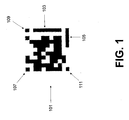
- Visual code 101 consists of large guide bar 103 and small guide bar 105 for determining the location and orientation of visual code 101, three cornerstones 107, 109, and 111, for detecting distortion and the data area with the actual code bits.
- the displayed version of visual code 101 has a capacity of 83 bits, but its design is generic and suitable for extension to a larger number of bits. Visual code 101 can be reliably located even in a low quality image which is small and tilted.
- Visual code 101 may be printed utilizing either standard ink or infrared ink. If infrared ink is utilized to print visual code 101, the digital camera must be capable of identifying infrared images. Infrared ink has the advantage that visual code 101 would not be visible to the naked eye. Therefore, if the algorithm of the present invention were constantly running in the background whenever the digital camera of a mobile device was being used, the decoding of visual code 101 could be utilized to make certain information appear.
- the three cornerstones 107, 109, and 111 define the coordinate system induced by the code. Cornerstone 107 is located at the origin, or position (0,0). Similarly, cornerstone 109 is said to be located at position (10,0) while cornerstone 111 is located at position (0,10). In this coordinate system, the center of large guide bar 103 is located at position (10,5) while the center of small guide bar 105 is located at position (8,10).
- the code requires a white space of a single code element around the code (1 unit in the code coordinate system). Multiple visual codes may be printed next to each other, for example arranged in a grid. A white space of a single code element around two neighboring codes (1 unit in the code coordinate system) is required.
- step 201 the image captured by the digital camera is corrected for radial distortion in step 201.
- the image obtained from the digital camera typically shows some amount of barrel distortion.
- radial lens distortion is less an issue with newer phone cameras, especially if the code only occupies a small area of the image. It is corrected by shifting each pixel radially towards the center of the image. The displacement only depends on the distance of the pixel from the image center and not on the particular image to be corrected.
- Step 201 is optional, because a single visual code typically only covers a small area of the camera image. In this case, radial lens distortion is not significant. However, for some applications, like those involving precise selection of items in the camera image, this step may increase accuracy.
- An adaptive method is taken to produce a black-and-white version of the gray scaled image, because the brightness of the camera image is not constant and the printed code may be unevenly illuminated.
- the algorithm uses a (weighted) moving average of the gray values while traversing the image in a snake-like fashion.
- T n ⁇ 1 , if p n ⁇ g s n s ⁇ 100 - t 100 0 , otherwise
- the algorithm next attempts to identify and label the different regions of the image in step 205.
- This step consists of finding regions of neighboring black pixels, counting them, and assigning a number to each.
- the algorithm used is a well known two-phase method. In the first phase, the image is traversed row by row, assigning preliminary labels to the regions found. During this process, it may happen that two regions with different labels turn out to be in fact the same region. In this case, the equivalence of the two temporary labels is stored in a table. The second phase resolves the equivalences by merging the corresponding regions and assigns a final label to each region.
- the algorithm calculates the different regions' shapes and orientations in step 207.
- the notion of second-order moments is used.
- the algorithm performs the step of locating and evaluating the visual codes in step 209. Locating codes in the image is done by looking for guide bar candidates and by finding corresponding cornerstones. Guide bar candidates are found by simply selecting those regions which have a small enough axis ratio (e.g. below 0.05). For each of these candidates, the size and orientation of the region is used to estimate the expected positions of small guide bar 105 and the three cornerstones 107, 109, and 111. It is then checked whether these features are actually present at the estimated positions. Cornerstone candidates found are only accepted if their axis ratio is above a certain limit (as stated earlier, theoretically they should have a ratio equal to one). If any of the code features (cornerstones 107, 109, and 111, and small guide bar 105) is not present for some guide bar candidate, this particular candidate is abandoned and the next one is examined.
- a small enough axis ratio e.g. below 0.05
- the algorithm computes the projective mapping from code coordinates to image coordinates (and the inverse mapping from image coordinates to code coordinates) in step 303.
- the algorithm assumes that this is indeed a code in the image and starts to read the encoded bits. To that end, the bit positions in the image must be determined, i.e. one needs a function that maps each code bit to an image pixel. Since the code elements are coplanar, there exists a unique homography (projective transformation matrix) between the code plane and the image plane.
- the projective mapping can be calculated once four corresponding points are known. In the algorithm, the correspondences are the centers of the three cornerstones 107, 109, and 111 plus the center of the small guide bar 105. This induces a code coordinate system with its origin at the upper left corner of the code.
- the code coordinates of the upper left cornerstone 107, the upper right cornerstone 109, large guide bar 103, and the lower left cornerstone 111 are defined to be at (0,0), (10,0), (8,10), and (0,10). It is assumed that these elements have been found at image coordinates (X i , Y i ) , i ⁇ ⁇ 0, ..., 3 ⁇ , respectively.
- the algorithm next computes the rotation angle of the visual code in the image in step 305. It takes on values between 0° and 359°. A code that has the same orientation as the image has rotation angle 0°.
- the rotation is determined by mapping the points (0,0) and (100,0) from the code coordinate system to the image coordinate system, resulting in the image points (a x , a y ), and (b x , b y ).
- the algorithm next determines the horizontal and vertical tilting in step 307.
- tilt denotes the amount of inclination of the image plane relative to the code plane.
- Horizontal tilting is the amount of inclination of the image plane relative to the horizontal axis of the visual code.
- vertical tilting denotes the amount of inclination of the image plane relative to the vertical axis of the visual code. A tilting value of 1 means no tilting, a value less than 1 means tilting towards the left/top, and a value greater than 1 means tilting towards the right/bottom.
- the tilting parameters are computed as follows: Four image points with constant distance h (image height) from the image center point in the axis directions of the code coordinate system are computed. They are mapped to corresponding code coordinates and their distances to the center point are computed. The ratios of these distances determine the tilting parameters t x and t y . They are independent of the size of the code in the image. From these ratios the tilting angles t x ⁇ and St y ⁇ can be determined, if a constant r is known that depends on the camera parameters. It can be obtained experimentally.
- the metric distance can still be computed from d camera,code .
- steps 303, 305, 307, 308, and 309 can be performed in any order because each step is discrete and outputs a different parameter or result.
- the algorithm reads the encoded bits in step 309 by simply testing the appropriate pixels (x,y) of the black-and-white image, using code coordinates (u,v) with u, v ⁇ ⁇ 0, ..., 10 ⁇ and (x,y) - ImageCoordinates((u,v)).
- Error detection may optionally be performed in step 311.
- the (83,76,3) linear code employed encodes a 76-bit ID to an 83-bit codeword.
- the resulting hamming distance is three, which should be sufficient to identify wrong codes with a high probability.
- other error detecting or error correcting codes such as Reed-Solomon codes, might be used for increased reliability and robustness against bit errors. This might come at the expense of slightly higher processing times and a lower number of bits actually available for data storage.
- 15 bits of the raw 83 bits might be used for Reed-Solomon error correcting codes, leaving 68 bits for data storage.
- the recognition algorithm provides the orientation of the mobile device relative to the code.
- the algorithm provides the rotation of the code in the image, the viewing position (from left, from right, from top, from bottom), the amount of tilting of the image plane relative to the code plane, and the distance from the code to the camera.
- the projective mapping plane homography between the image plane and the code plane that the recognition algorithm implements, allows the mapping of arbitrary points given in image coordinates to corresponding points in code coordinates and vice versa.
- the code coordinate system and the orientation determination features enable a number of interesting application scenarios involving the selection of items in printed documents.
- An example is the selection of articles depicted in printed mail-order catalogs.
- a single code is sufficient as long as the code coordinates of the items are known. This can be achieved by content creation software that creates "image maps" for the code and its associated sensitive areas.
- Articles in mail-order catalogs can thus be scanned, stored in the mobile device, and current information concerning the articles can be retrieved. The order can then be placed using the wireless communication channel provided by the mobile device.
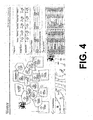
- FIG. 4 shown is an example of a printed document containing visual codes.
- the regions on the map and the entries in the table are individually mapped to different URLs and thus associated to online content.
- FIG. 4 shows a cut-out of a newspaper page containing a geographic map with the current weather data and a table containing the snow heights for various regions.
- the dotted lines drawn on the newspaper page indicate sensitive areas that are individually linked to online content.
- Such a mapping can be created with suitable content creation software.
- mapping tool which allows to draw the areas into the image and to specify the associated URL for each region.
- the tool computes the coordinates of these areas in the coordinate systems of the codes present in the image, and stores this data as an XML file.
- Multiple URLs can be specified for each region by taking into account further parameters that are provided by the code system, such as rotation and tilting. As shown in FIG. 4 , a single code suffices to select the area and table entries, respectively.
- rotation and tilting As shown in FIG. 4 , a single code suffices to select the area and table entries, respectively.
- visual codes can be used in mobile marketing to automate the input of coupon numbers into the mobile device.
- SMS campaigns of soft-drink producers The soft-drink bottles contain numbers (represented by visual codes), which can be sent as an SMS and thus allow the participation in lotteries.
- visual codes could be used for interactive input of answers to multiple choice questions in ad hoc surveys and quizzes or for the selection of candidates in a TV show.
- the code coordinates and the orientation of the device can serve as additional input parameters (in addition to the code value), for example to answer a multiple choice question.
- Telephone numbers for example, can be encoded as visual codes and printed on business cards or in phone books.
- the device either immediately calls the encoded phone number, stores the virtual business card in the device's memory, or - for mobile phone numbers - starts the device's SMS editing application.
- Parts of the device's user interface like deeply nested menus, can be externalized by associating them with a visual code and printing them on paper or showing them on a large screen.
- A. further possible application scenario of the presented invention is adding online content and operations to printed documents, like flyers, magazines, etc.
- An example online operation is selling tickets for events, theaters, or movies via the mobile phone.
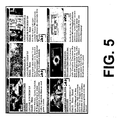
- Fig. 5 shows a page of a printed television magazine, which is equipped with embedded visual codes.
- movie plot outlines can be shown, a list of the cast can be given, movie ratings can be displayed or submitted, movie trailers can be started, and tickets can be directly booked via the mobile phone.
- Visual codes can also be combined with printed forms for the simplification of form input, in which the mobile device provides a wireless communication channel for conveniently and cheaply sending back the entered data.
- the fields of these forms can be check boxes, rulers, and canvas fields for free-hand textual or graphical input.
- the individual form elements can be precisely localized. The projective mapping of the recognition algorithm allows to "unwarp" parts of the image as well as the image as a whole.
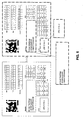
- Fig. 6 shows an example form for the entry of calendar events.
- the recognition algorithm first recognizes the code and locates the edges of the frame. Then the checkboxes located in the form are scanned for check marks. Finally, the canvas fields are "unwarped", i.e. their tilting is removed as shown in the lower part of Fig. 6 , and stored.
- a markup language which describes the structure of a form, including the positions and kinds of input elements it contains.
- the code is first used as a key to retrieve the form description from an online server. After interpreting the retrieved markup, user input can be categorized according to field type and sent back to the server.
Landscapes
- Physics & Mathematics (AREA)
- Engineering & Computer Science (AREA)
- Theoretical Computer Science (AREA)
- General Physics & Mathematics (AREA)
- Toxicology (AREA)
- General Health & Medical Sciences (AREA)
- Artificial Intelligence (AREA)
- Computer Vision & Pattern Recognition (AREA)
- Electromagnetism (AREA)
- Health & Medical Sciences (AREA)
- Image Processing (AREA)
- Image Analysis (AREA)
- User Interface Of Digital Computer (AREA)
- Telephone Function (AREA)
- Studio Devices (AREA)
- Fittings On The Vehicle Exterior For Carrying Loads, And Devices For Holding Or Mounting Articles (AREA)
- Air Bags (AREA)
- Closed-Circuit Television Systems (AREA)
Claims (24)
- Verfahren zum Decodieren eines visuellen Codes (101), umfassend:(a) Aufnehmen eines Bilds enthaltend einen visuellen Code, der mehreren Bereichen des Bilds zugeordnet wird, wobei jeder Bereich eine Gestalt hat;(b) Grauskalieren des Bilds;(c) Schwellenwert-Bestimmung für das Bild;(d) Lokalisieren und Auswerten des visuellen Codes (101) innerhalb des Bilds;(e) Berechnen der Gestalt von dem visuellen Code (101) zugeordneten interessierenden Bereichen innerhalb des Bilds; welches Verfahren dadurch gekennzeichnet ist, dass(f) das Bild unter Verwendung einer mit einer Digitalkamera ausgestatteten mobilen Einrichtung aufgenommen wird;(g) jedem Bereich eine entsprechende URL-Online-Information zugeordnet wird;
und weiters gekennzeichnet durch(h) Bestimmen einer Ausrichtung der mobilen Einrichtung relativ zum visuellen Code und zu den Bereichen bei Anvisieren eines ausgewählten Bereichs; und(i) Anzeigen der Information für den ausgewählten Bereich auf der mobilen Einrichtung in Abhängigkeit von der Ausrichtung der Einrichtung. - Verfahren nach Anspruch 1, weiters umfassend das Korrigieren des Bilds hinsichtlich radialer Linsenverzerrung vor dem Grauskalieren.
- Verfahren nach Anspruch 1, weiters umfassend:Berechnen einer ersten Projektionsabbildung des visuellen Codes (101) aus einem Bild-Koordinatensystem auf ein visueller-Code-Koordinatensystem;Berechnen einer zweiten Projektionsabbildung des visuellen Codes (101) aus dem visueller-Code-Koordinatensystem auf das Bild-Koordinatensystem;Berechnen eines Rotationswinkels des visuellen Codes (101);Berechnen des horizontalen und des vertikalen Neigungswerts des Codes (101);Berechnen eines Abstands des visuellen Codes (101) von der mobilen Einrichtung; undLesen der codierten Bits im visuellen Code (101).
- Verfahren nach Anspruch 3, weiters umfassend das Durchführen einer Fehlerbestimmung am visuellen Code (101).
- Verfahren nach Anspruch 3, wobei der visuelle Code aus drei Eckpunkten (107, 109, 111), einer kleinen Führungsleiste (105) und einer großen Führungsleiste (103) besteht.
- Verfahren nach Anspruch 5, wobei ein individueller visueller Code durch Identifizieren der Eckpunkte (107, 109, 111), der kleinen Führungsleiste (105) und der großen Führungsleiste (103) lokalisiert wird.
- Verfahren nach Anspruch 3, wobei der visuelle Code aus drei Eckpunkten (107, 109, 111), einer kleinen Führungsleiste (105) und einer großen Führungsleiste (103) besteht, und wobei eine Ausrichtung der kleinen Führungsleiste und der großen Führungsleiste bei der Berechnung des Rotationswinkels des visuellen Codes (101), bei der Berechnung des Abstands des visuellen Codes und bei der Berechnung der Neigung des visuellen Codes herangezogen wird.
- Verfahren nach Anspruch 1, wobei das Grauskalieren des Bilds durch Berechnen des Werts jedes Grauskalierungspixels durch Mitteln des Werts von roten und grünen Pixeln ausgeführt wird.
- Verfahren nach Anspruch 8, wobei das Grauskalierungsbild unter Verwendung eines Gewicht-bewegenden Mittelungsalgorithmus in ein Schwarz-Weiß-Bild umgewandelt wird.
- Verfahren nach Anspruch 3, wobei die kleine Führungsleiste (105) und die große Führungsleiste (103) durch Lokalisieren von Bereichen des Bilds identifiziert werden, die ein Achsenverhältnis innerhalb eines vorherbestimmten Bereichs haben.
- Verfahren nach Anspruch 5, wobei die drei Eckpunkte (107, 109, 111) und die große Führungsleiste (103) in Position (0,0), (10,0) bzw. (0,10) liegen, und wobei der Mittelpunkt der großen Führungsleiste in Position (8,10) im visuellen Code-Koordinatensystem liegt.
- Verfahren nach Anspruch 3, wobei zumindest der Rotationswinkel, der horizontale Neigungswert, der vertikale Neigungswinkel und/oder der Abstand des visuellen Codes (101) zum Auswählen von Optionen aus einem Menü verwendet wird.
- Verfahren nach Anspruch 5, wobei mehrere visuelle Codes in einem Gitter angeordnet werden, um Daten über mehrere visuelle Codes zu speichern, und weiters umfassend das Identifizieren des Codegitters.
- Verfahren nach Anspruch 1, wobei das Decodieren in Echtzeit erfolgt.
- Verfahren nach Anspruch 3, wobei die Ausrichtung der mobilen Einrichtung als Parameter zum Auswählen einer Eingabe aus einer Datenbank verwendet wird.
- Verfahren nach Anspruch 15, wobei die Datenbank verschiedene einheitliche Quellenpositionsanzeiger mindestens einem Ausrichtungswert zuordnet.
- Verfahren nach Anspruch 15, wobei die Datenbank die Ausrichtungswinkel Formulareingaben zuordnet, wodurch die Verwendung der mobilen Einrichtung zum Auswählen von Eingaben aus einem Formular durch Verändern der Ausrichtung der mobilen Einrichtung ermöglicht wird.
- Verfahren nach Anspruch 15, wobei die Datenbank die Ausrichtungswinkel einer Bewegungsdiagrammübersicht, einem Videoclip, einer Audiodatei oder einer Filmrezension zuordnet.
- Verfahren nach Anspruch 1, wobei der visuelle Code (101) unter Verwendung einer Infrarottinte gedruckt wird, und wobei die Digitalkamera eine Infrarotkamera ist, die den visuellen Code als visuellen Infrarotcode aufnimmt.
- Verfahren nach Anspruch 3, wobei ein Zielpunkt, der in den visuellen Code-Koordinatensystemen eines auf einem Bildschirm der Kamera dargestellten Bilds ausgedrückt wird, als Parameter zum Auswählen einer Eingabe aus einer Datenbank verwendet wird.
- Verfahren nach Anspruch 14, weiters enthaltend eine grafische Überlagerung über ein auf einem Bildschirm der Kamera dargestelltes Bild, wobei die überlagerte Grafik geometrisch mit Gegenständen im dargestellten Bild abgeglichen wird, wenn sich die mobile Einrichtung bewegt und die Ausrichtung ändert.
- Verfahren nach Anspruch 1, wobei das Richten der Digitalkamera auf den visuellen Code (101) durch ein Fadenkreuz erleichtert wird, welches auf einem Bildschirm der mobilen Einrichtung angezeigt wird.
- Verfahren nach Anspruch 22, wobei der Bildschirm der mobilen Einrichtung ein Touchscreen ist, und wobei die Position des Fadenkreuzes durch Verwendung eines Stifts zum Bestimmen eines Zielpunkts spezifiziert werden kann.
- Verfahren nach Anspruch 4, wobei die Fehlerbestimmung unter Verwendung einer Reed-Solomon-Fehlererkennung erfolgt.
Applications Claiming Priority (2)
| Application Number | Priority Date | Filing Date | Title |
|---|---|---|---|
| US10517005A | 2005-04-13 | 2005-04-13 | |
| PCT/US2005/019178 WO2006112866A2 (en) | 2005-04-13 | 2005-05-28 | Visual code system for camera-equipped mobile devices and applications thereof |
Publications (3)
| Publication Number | Publication Date |
|---|---|
| EP1886246A2 EP1886246A2 (de) | 2008-02-13 |
| EP1886246A4 EP1886246A4 (de) | 2009-06-17 |
| EP1886246B1 true EP1886246B1 (de) | 2011-07-06 |
Family
ID=37115600
Family Applications (1)
| Application Number | Title | Priority Date | Filing Date |
|---|---|---|---|
| EP05756209A Revoked EP1886246B1 (de) | 2005-04-13 | 2005-05-28 | Visuelles codeverfahren für mit kamera ausgestattete mobile einrichtungen |
Country Status (11)
| Country | Link |
|---|---|
| EP (1) | EP1886246B1 (de) |
| JP (1) | JP4764920B2 (de) |
| CN (1) | CN101099161B (de) |
| AT (1) | ATE515751T1 (de) |
| AU (1) | AU2005330700A1 (de) |
| BR (1) | BRPI0520326A2 (de) |
| CA (1) | CA2604476A1 (de) |
| DK (1) | DK1886246T3 (de) |
| ES (1) | ES2369143T3 (de) |
| MX (1) | MX2007012767A (de) |
| WO (1) | WO2006112866A2 (de) |
Cited By (2)
| Publication number | Priority date | Publication date | Assignee | Title |
|---|---|---|---|---|
| WO2014107681A1 (en) * | 2013-01-04 | 2014-07-10 | Awyse, Inc. | System and method for providing augmented reality on mobile devices |
| EP3770866A1 (de) | 2019-07-25 | 2021-01-27 | Spirtech | Verfahren zur identifizierung und kopplung eines zielendgeräts in der nähe eines sich drehenden objekts unter einer vielzahl von endgeräten in drahtloser kommunikationsreichweite mit dem tragbaren objekt |
Families Citing this family (59)
| Publication number | Priority date | Publication date | Assignee | Title |
|---|---|---|---|---|
| US10319181B2 (en) * | 2006-11-10 | 2019-06-11 | Aristocrat Technologies Australia Pty, Ltd. | Systems and methods for verification using encoded glyphs |
| US20090240598A1 (en) * | 2008-03-24 | 2009-09-24 | Kargman James B | Method and apparatus for automated ordering and payment |
| US9451183B2 (en) | 2009-03-02 | 2016-09-20 | Flir Systems, Inc. | Time spaced infrared image enhancement |
| US9635285B2 (en) | 2009-03-02 | 2017-04-25 | Flir Systems, Inc. | Infrared imaging enhancement with fusion |
| US9948872B2 (en) | 2009-03-02 | 2018-04-17 | Flir Systems, Inc. | Monitor and control systems and methods for occupant safety and energy efficiency of structures |
| US9517679B2 (en) | 2009-03-02 | 2016-12-13 | Flir Systems, Inc. | Systems and methods for monitoring vehicle occupants |
| US9473681B2 (en) | 2011-06-10 | 2016-10-18 | Flir Systems, Inc. | Infrared camera system housing with metalized surface |
| US9208542B2 (en) | 2009-03-02 | 2015-12-08 | Flir Systems, Inc. | Pixel-wise noise reduction in thermal images |
| US10757308B2 (en) | 2009-03-02 | 2020-08-25 | Flir Systems, Inc. | Techniques for device attachment with dual band imaging sensor |
| US9674458B2 (en) | 2009-06-03 | 2017-06-06 | Flir Systems, Inc. | Smart surveillance camera systems and methods |
| US9843742B2 (en) | 2009-03-02 | 2017-12-12 | Flir Systems, Inc. | Thermal image frame capture using de-aligned sensor array |
| US9998697B2 (en) | 2009-03-02 | 2018-06-12 | Flir Systems, Inc. | Systems and methods for monitoring vehicle occupants |
| US9756264B2 (en) | 2009-03-02 | 2017-09-05 | Flir Systems, Inc. | Anomalous pixel detection |
| US9235876B2 (en) | 2009-03-02 | 2016-01-12 | Flir Systems, Inc. | Row and column noise reduction in thermal images |
| US10244190B2 (en) | 2009-03-02 | 2019-03-26 | Flir Systems, Inc. | Compact multi-spectrum imaging with fusion |
| USD765081S1 (en) | 2012-05-25 | 2016-08-30 | Flir Systems, Inc. | Mobile communications device attachment with camera |
| US9986175B2 (en) | 2009-03-02 | 2018-05-29 | Flir Systems, Inc. | Device attachment with infrared imaging sensor |
| US20100261454A1 (en) * | 2009-04-14 | 2010-10-14 | Research In Motion Limited | Retrieving additional content based on data within a mobile code |
| US8559929B2 (en) | 2009-04-14 | 2013-10-15 | Blackberry Limited | Resolved mobile code content tracking |
| US9716843B2 (en) | 2009-06-03 | 2017-07-25 | Flir Systems, Inc. | Measurement device for electrical installations and related methods |
| US10091439B2 (en) | 2009-06-03 | 2018-10-02 | Flir Systems, Inc. | Imager with array of multiple infrared imaging modules |
| US9756262B2 (en) | 2009-06-03 | 2017-09-05 | Flir Systems, Inc. | Systems and methods for monitoring power systems |
| US9843743B2 (en) | 2009-06-03 | 2017-12-12 | Flir Systems, Inc. | Infant monitoring systems and methods using thermal imaging |
| US9292909B2 (en) | 2009-06-03 | 2016-03-22 | Flir Systems, Inc. | Selective image correction for infrared imaging devices |
| US9819880B2 (en) | 2009-06-03 | 2017-11-14 | Flir Systems, Inc. | Systems and methods of suppressing sky regions in images |
| US8079524B2 (en) * | 2009-11-30 | 2011-12-20 | Symbol Technologies, Inc. | Imaging-based scanner including border searching for image acquisition |
| US9848134B2 (en) | 2010-04-23 | 2017-12-19 | Flir Systems, Inc. | Infrared imager with integrated metal layers |
| US9207708B2 (en) | 2010-04-23 | 2015-12-08 | Flir Systems, Inc. | Abnormal clock rate detection in imaging sensor arrays |
| US9706138B2 (en) | 2010-04-23 | 2017-07-11 | Flir Systems, Inc. | Hybrid infrared sensor array having heterogeneous infrared sensors |
| US9918023B2 (en) | 2010-04-23 | 2018-03-13 | Flir Systems, Inc. | Segmented focal plane array architecture |
| JP5858990B2 (ja) | 2010-06-11 | 2016-02-10 | アールエヌアイビー | コード化された情報システム |
| US8910870B2 (en) | 2010-08-06 | 2014-12-16 | Hand Held Products, Inc. | System and method for document processing |
| US10389953B2 (en) | 2011-06-10 | 2019-08-20 | Flir Systems, Inc. | Infrared imaging device having a shutter |
| US9961277B2 (en) | 2011-06-10 | 2018-05-01 | Flir Systems, Inc. | Infrared focal plane array heat spreaders |
| US10169666B2 (en) | 2011-06-10 | 2019-01-01 | Flir Systems, Inc. | Image-assisted remote control vehicle systems and methods |
| US9235023B2 (en) | 2011-06-10 | 2016-01-12 | Flir Systems, Inc. | Variable lens sleeve spacer |
| KR101778353B1 (ko) | 2011-06-10 | 2017-09-13 | 플리어 시스템즈, 인크. | 적외선 이미징 장치용 불균일성 교정 기술 |
| US9706137B2 (en) | 2011-06-10 | 2017-07-11 | Flir Systems, Inc. | Electrical cabinet infrared monitor |
| WO2012170954A2 (en) | 2011-06-10 | 2012-12-13 | Flir Systems, Inc. | Line based image processing and flexible memory system |
| US9509924B2 (en) | 2011-06-10 | 2016-11-29 | Flir Systems, Inc. | Wearable apparatus with integrated infrared imaging module |
| US9058653B1 (en) | 2011-06-10 | 2015-06-16 | Flir Systems, Inc. | Alignment of visible light sources based on thermal images |
| US9900526B2 (en) | 2011-06-10 | 2018-02-20 | Flir Systems, Inc. | Techniques to compensate for calibration drifts in infrared imaging devices |
| CN103748867B (zh) | 2011-06-10 | 2019-01-18 | 菲力尔系统公司 | 低功耗和小形状因子红外成像 |
| US10841508B2 (en) | 2011-06-10 | 2020-11-17 | Flir Systems, Inc. | Electrical cabinet infrared monitor systems and methods |
| US9143703B2 (en) | 2011-06-10 | 2015-09-22 | Flir Systems, Inc. | Infrared camera calibration techniques |
| US10051210B2 (en) | 2011-06-10 | 2018-08-14 | Flir Systems, Inc. | Infrared detector array with selectable pixel binning systems and methods |
| US10079982B2 (en) | 2011-06-10 | 2018-09-18 | Flir Systems, Inc. | Determination of an absolute radiometric value using blocked infrared sensors |
| KR101870773B1 (ko) * | 2011-08-31 | 2018-06-26 | 삼성전자 주식회사 | 광학식 문자 판독기를 이용한 스케줄 관리 방법 및 장치 |
| US9811884B2 (en) | 2012-07-16 | 2017-11-07 | Flir Systems, Inc. | Methods and systems for suppressing atmospheric turbulence in images |
| WO2014014957A1 (en) | 2012-07-16 | 2014-01-23 | Flir Systems, Inc. | Methods and systems for suppressing noise in images |
| US8856044B1 (en) | 2013-03-23 | 2014-10-07 | Jeffrey Drazan | Segmented access of remotely stored biographical data to a client device |
| DE102013206825B4 (de) * | 2013-04-16 | 2016-10-06 | Siemens Aktiengesellschaft | Verfahren und Vorrichtung zur Bereitstellung einer zusätzlichen Datenstruktur bei einer Anfrage nach einer Ressource |
| US9973692B2 (en) | 2013-10-03 | 2018-05-15 | Flir Systems, Inc. | Situational awareness by compressed display of panoramic views |
| TWI552082B (zh) * | 2013-12-26 | 2016-10-01 | 財團法人工業技術研究院 | 資料導覽裝置、資料導覽方法及結構化編碼圖樣產生裝置 |
| US11297264B2 (en) | 2014-01-05 | 2022-04-05 | Teledyne Fur, Llc | Device attachment with dual band imaging sensor |
| CN113408313A (zh) * | 2014-07-21 | 2021-09-17 | 艾利丹尼森零售信息服务公司 | 用于显示快速响应(qr)代码内的专有信息的系统、方法和设备 |
| WO2019005066A1 (en) * | 2017-06-29 | 2019-01-03 | Hewlett-Packard Development Company, L.P. | DETECTION OF THE DIRECTION OF A MOBILE COMPUTING DEVICE TO A VISUAL CODE |
| DE102019211984A1 (de) * | 2019-08-09 | 2021-02-11 | Fraunhofer-Gesellschaft zur Förderung der angewandten Forschung e.V. | Vorrichtung, Verfahren zum Steuern derselben und Vorrichtungsverbund bzw. Schwarm |
| CN111580902B (zh) * | 2020-04-20 | 2024-01-26 | 微梦创科网络科技(中国)有限公司 | 一种基于图片分析的移动端元素定位方法及系统 |
Family Cites Families (12)
| Publication number | Priority date | Publication date | Assignee | Title |
|---|---|---|---|---|
| US6561428B2 (en) * | 1997-10-17 | 2003-05-13 | Hand Held Products, Inc. | Imaging device having indicia-controlled image parsing mode |
| JP2000057250A (ja) * | 1998-08-11 | 2000-02-25 | Kyowa Hakko Kogyo Co Ltd | 2次元コードの読取方法 |
| JP2000090187A (ja) * | 1998-09-09 | 2000-03-31 | Pasukaru:Kk | 2次元コード作成装置 |
| JP2000200234A (ja) * | 1998-12-29 | 2000-07-18 | Pasukaru:Kk | 2次元コ―ドハンディスキャナを用いたインタ―ネットの情報照会システム |
| JP2000309154A (ja) * | 1999-04-27 | 2000-11-07 | Toppan Printing Co Ltd | 身分証明証 |
| EP1143372B1 (de) | 2000-04-06 | 2006-03-22 | Seiko Epson Corporation | Verfahren und Vorrichtung zum Lesen von einem zwei-dimensionalen Strichkode und Datenspeichermedium |
| US6832729B1 (en) * | 2001-03-23 | 2004-12-21 | Zih Corp. | Portable data collection device for reading fluorescent indicia |
| JP3835207B2 (ja) * | 2001-06-27 | 2006-10-18 | ソニー株式会社 | 試着画像提供システム及び試着画像提供方法、試着画像生成装置及び試着画像生成方法 |
| JP2003335085A (ja) * | 2002-05-22 | 2003-11-25 | National Printing Bureau | 多数の微小記号文字から成る微小記号文字群が印刷された証券印刷物 |
| JP3516144B1 (ja) * | 2002-06-18 | 2004-04-05 | オムロン株式会社 | 光学情報コードの読取方法および光学情報コード読取装置 |
| JP2004054529A (ja) * | 2002-07-18 | 2004-02-19 | Sharp Corp | 2次元コード読み取り方法,2次元コード読み取りプログラム,該2次元コード読み取りプログラムの記録媒体及び2次元コード読み取り装置 |
| JP4301775B2 (ja) * | 2002-07-18 | 2009-07-22 | シャープ株式会社 | 2次元コード読み取り装置,2次元コード読み取り方法,2次元コード読み取りプログラム及び該プログラムの記録媒体 |
-
2005
- 2005-05-28 EP EP05756209A patent/EP1886246B1/de not_active Revoked
- 2005-05-28 CA CA002604476A patent/CA2604476A1/en not_active Abandoned
- 2005-05-28 BR BRPI0520326-0A patent/BRPI0520326A2/pt not_active Application Discontinuation
- 2005-05-28 DK DK05756209.2T patent/DK1886246T3/da active
- 2005-05-28 CN CN200580046131.2A patent/CN101099161B/zh not_active Expired - Fee Related
- 2005-05-28 WO PCT/US2005/019178 patent/WO2006112866A2/en not_active Ceased
- 2005-05-28 JP JP2008506434A patent/JP4764920B2/ja not_active Expired - Fee Related
- 2005-05-28 AU AU2005330700A patent/AU2005330700A1/en not_active Abandoned
- 2005-05-28 AT AT05756209T patent/ATE515751T1/de not_active IP Right Cessation
- 2005-05-28 ES ES05756209T patent/ES2369143T3/es not_active Expired - Lifetime
- 2005-05-28 MX MX2007012767A patent/MX2007012767A/es active IP Right Grant
Cited By (2)
| Publication number | Priority date | Publication date | Assignee | Title |
|---|---|---|---|---|
| WO2014107681A1 (en) * | 2013-01-04 | 2014-07-10 | Awyse, Inc. | System and method for providing augmented reality on mobile devices |
| EP3770866A1 (de) | 2019-07-25 | 2021-01-27 | Spirtech | Verfahren zur identifizierung und kopplung eines zielendgeräts in der nähe eines sich drehenden objekts unter einer vielzahl von endgeräten in drahtloser kommunikationsreichweite mit dem tragbaren objekt |
Also Published As
| Publication number | Publication date |
|---|---|
| BRPI0520326A2 (pt) | 2009-05-05 |
| WO2006112866A2 (en) | 2006-10-26 |
| JP2008544336A (ja) | 2008-12-04 |
| AU2005330700A1 (en) | 2006-10-26 |
| EP1886246A2 (de) | 2008-02-13 |
| CA2604476A1 (en) | 2006-10-26 |
| ES2369143T3 (es) | 2011-11-25 |
| ATE515751T1 (de) | 2011-07-15 |
| WO2006112866A3 (en) | 2007-02-01 |
| CN101099161A (zh) | 2008-01-02 |
| HK1113950A1 (en) | 2008-10-17 |
| CN101099161B (zh) | 2012-06-27 |
| WO2006112866A8 (en) | 2008-04-10 |
| MX2007012767A (es) | 2008-04-09 |
| EP1886246A4 (de) | 2009-06-17 |
| JP4764920B2 (ja) | 2011-09-07 |
| DK1886246T3 (da) | 2011-10-17 |
Similar Documents
| Publication | Publication Date | Title |
|---|---|---|
| US7296747B2 (en) | Visual code system for camera-equipped mobile devices and applications thereof | |
| CN101099161B (zh) | 用于装备照相机的移动装置的视觉代码系统及其应用 | |
| Rohs et al. | Using camera-equipped mobile phones for interacting with real-world objects | |
| US8879859B2 (en) | Animated image code, apparatus for generating/decoding animated image code, and method thereof | |
| US7575171B2 (en) | System and method for reliable content access using a cellular/wireless device with imaging capabilities | |
| US10650264B2 (en) | Image recognition apparatus, processing method thereof, and program | |
| US10713528B2 (en) | System for determining alignment of a user-marked document and method thereof | |
| KR20200106510A (ko) | 복합 코드 패턴, 생성 장치, 판독 장치, 방법 및 프로그램 | |
| US20120142322A1 (en) | Providing Location Information Using Matrix Code | |
| WO2002025575A9 (en) | Method and apparatus for portably recognizing text in an image sequence of scene imagery | |
| US20140019378A1 (en) | Evaluation system, method, and computer-readable recording medium | |
| JP6047939B2 (ja) | 評価システム、プログラム | |
| US20190311545A1 (en) | Augmented Reality Advertising Systems and Methods | |
| JP2010231431A (ja) | 記事関連情報提供方法、装置、プログラム、記録媒体 | |
| HK1113950B (en) | Visual code system for camera-equipped mobile devices and applications thereof | |
| JP5929573B2 (ja) | 評価システム、プログラム | |
| JP6019888B2 (ja) | 評価システム、情報処理装置 | |
| Chen et al. | Research and development of application of mobile barcode to mobile sightseeing guide on mobile phone | |
| JP2014026594A (ja) | 評価システム、サーバ装置 | |
| CN110580640A (zh) | 信息推送、接收方法、终端、数据处理服务端与系统 | |
| KR20120007727A (ko) | 카메라 센서로 인식하거나 사용자가 직접 입력하는 형식을 갖춘 에스에스 코드 및 관련 서비스 | |
| KR20140044169A (ko) | Qr코드를 이용한 보물찾기 게임방식의 비즈니스모델 | |
| GB2424109A (en) | Graphical code sets | |
| Maurya | Using quick response codes for consumer-initiated marketing communication strategy | |
| Stewart | QR codes: creative mobile media approaches |
Legal Events
| Date | Code | Title | Description |
|---|---|---|---|
| PUAI | Public reference made under article 153(3) epc to a published international application that has entered the european phase |
Free format text: ORIGINAL CODE: 0009012 |
|
| 17P | Request for examination filed |
Effective date: 20071004 |
|
| AK | Designated contracting states |
Kind code of ref document: A2 Designated state(s): AT BE BG CH CY CZ DE DK EE ES FI FR GB GR HU IE IS IT LI LT LU MC NL PL PT RO SE SI SK TR |
|
| R17D | Deferred search report published (corrected) |
Effective date: 20080410 |
|
| DAX | Request for extension of the european patent (deleted) | ||
| A4 | Supplementary search report drawn up and despatched |
Effective date: 20090515 |
|
| 17Q | First examination report despatched |
Effective date: 20090814 |
|
| GRAJ | Information related to disapproval of communication of intention to grant by the applicant or resumption of examination proceedings by the epo deleted |
Free format text: ORIGINAL CODE: EPIDOSDIGR1 |
|
| GRAP | Despatch of communication of intention to grant a patent |
Free format text: ORIGINAL CODE: EPIDOSNIGR1 |
|
| GRAP | Despatch of communication of intention to grant a patent |
Free format text: ORIGINAL CODE: EPIDOSNIGR1 |
|
| RTI1 | Title (correction) |
Free format text: VISUAL CODE METHOD FOR CAMERA-EQUIPPED MOBILE DEVICES |
|
| RAP1 | Party data changed (applicant data changed or rights of an application transferred) |
Owner name: SCANBUY, INC. |
|
| RIN1 | Information on inventor provided before grant (corrected) |
Inventor name: ROHS, MICHAEL Inventor name: GFELLER, BEAT |
|
| GRAS | Grant fee paid |
Free format text: ORIGINAL CODE: EPIDOSNIGR3 |
|
| GRAA | (expected) grant |
Free format text: ORIGINAL CODE: 0009210 |
|
| AK | Designated contracting states |
Kind code of ref document: B1 Designated state(s): AT BE BG CH CY CZ DE DK EE ES FI FR GB GR HU IE IS IT LI LT LU MC NL PL PT RO SE SI SK TR |
|
| REG | Reference to a national code |
Ref country code: GB Ref legal event code: FG4D |
|
| REG | Reference to a national code |
Ref country code: CH Ref legal event code: EP |
|
| REG | Reference to a national code |
Ref country code: IE Ref legal event code: FG4D |
|
| REG | Reference to a national code |
Ref country code: DE Ref legal event code: R096 Ref document number: 602005028881 Country of ref document: DE Effective date: 20110901 |
|
| REG | Reference to a national code |
Ref country code: CH Ref legal event code: NV Representative=s name: KIRKER & CIE S.A. |
|
| REG | Reference to a national code |
Ref country code: DK Ref legal event code: T3 |
|
| REG | Reference to a national code |
Ref country code: SE Ref legal event code: TRGR |
|
| REG | Reference to a national code |
Ref country code: NL Ref legal event code: VDEP Effective date: 20110706 |
|
| REG | Reference to a national code |
Ref country code: ES Ref legal event code: FG2A Ref document number: 2369143 Country of ref document: ES Kind code of ref document: T3 Effective date: 20111125 |
|
| PG25 | Lapsed in a contracting state [announced via postgrant information from national office to epo] |
Ref country code: SI Free format text: LAPSE BECAUSE OF FAILURE TO SUBMIT A TRANSLATION OF THE DESCRIPTION OR TO PAY THE FEE WITHIN THE PRESCRIBED TIME-LIMIT Effective date: 20110706 |
|
| REG | Reference to a national code |
Ref country code: AT Ref legal event code: MK05 Ref document number: 515751 Country of ref document: AT Kind code of ref document: T Effective date: 20110706 |
|
| PG25 | Lapsed in a contracting state [announced via postgrant information from national office to epo] |
Ref country code: FI Free format text: LAPSE BECAUSE OF FAILURE TO SUBMIT A TRANSLATION OF THE DESCRIPTION OR TO PAY THE FEE WITHIN THE PRESCRIBED TIME-LIMIT Effective date: 20110706 Ref country code: BE Free format text: LAPSE BECAUSE OF FAILURE TO SUBMIT A TRANSLATION OF THE DESCRIPTION OR TO PAY THE FEE WITHIN THE PRESCRIBED TIME-LIMIT Effective date: 20110706 Ref country code: NL Free format text: LAPSE BECAUSE OF FAILURE TO SUBMIT A TRANSLATION OF THE DESCRIPTION OR TO PAY THE FEE WITHIN THE PRESCRIBED TIME-LIMIT Effective date: 20110706 Ref country code: PT Free format text: LAPSE BECAUSE OF FAILURE TO SUBMIT A TRANSLATION OF THE DESCRIPTION OR TO PAY THE FEE WITHIN THE PRESCRIBED TIME-LIMIT Effective date: 20111107 Ref country code: IS Free format text: LAPSE BECAUSE OF FAILURE TO SUBMIT A TRANSLATION OF THE DESCRIPTION OR TO PAY THE FEE WITHIN THE PRESCRIBED TIME-LIMIT Effective date: 20111106 Ref country code: LT Free format text: LAPSE BECAUSE OF FAILURE TO SUBMIT A TRANSLATION OF THE DESCRIPTION OR TO PAY THE FEE WITHIN THE PRESCRIBED TIME-LIMIT Effective date: 20110706 |
|
| PG25 | Lapsed in a contracting state [announced via postgrant information from national office to epo] |
Ref country code: GR Free format text: LAPSE BECAUSE OF FAILURE TO SUBMIT A TRANSLATION OF THE DESCRIPTION OR TO PAY THE FEE WITHIN THE PRESCRIBED TIME-LIMIT Effective date: 20111007 Ref country code: PL Free format text: LAPSE BECAUSE OF FAILURE TO SUBMIT A TRANSLATION OF THE DESCRIPTION OR TO PAY THE FEE WITHIN THE PRESCRIBED TIME-LIMIT Effective date: 20110706 Ref country code: CY Free format text: LAPSE BECAUSE OF FAILURE TO SUBMIT A TRANSLATION OF THE DESCRIPTION OR TO PAY THE FEE WITHIN THE PRESCRIBED TIME-LIMIT Effective date: 20110706 Ref country code: AT Free format text: LAPSE BECAUSE OF FAILURE TO SUBMIT A TRANSLATION OF THE DESCRIPTION OR TO PAY THE FEE WITHIN THE PRESCRIBED TIME-LIMIT Effective date: 20110706 |
|
| PLBI | Opposition filed |
Free format text: ORIGINAL CODE: 0009260 |
|
| 26 | Opposition filed |
Opponent name: BUNDESDRUCKEREI GMBH Effective date: 20120308 |
|
| PG25 | Lapsed in a contracting state [announced via postgrant information from national office to epo] |
Ref country code: CZ Free format text: LAPSE BECAUSE OF FAILURE TO SUBMIT A TRANSLATION OF THE DESCRIPTION OR TO PAY THE FEE WITHIN THE PRESCRIBED TIME-LIMIT Effective date: 20110706 Ref country code: SK Free format text: LAPSE BECAUSE OF FAILURE TO SUBMIT A TRANSLATION OF THE DESCRIPTION OR TO PAY THE FEE WITHIN THE PRESCRIBED TIME-LIMIT Effective date: 20110706 |
|
| PLAX | Notice of opposition and request to file observation + time limit sent |
Free format text: ORIGINAL CODE: EPIDOSNOBS2 |
|
| PG25 | Lapsed in a contracting state [announced via postgrant information from national office to epo] |
Ref country code: RO Free format text: LAPSE BECAUSE OF FAILURE TO SUBMIT A TRANSLATION OF THE DESCRIPTION OR TO PAY THE FEE WITHIN THE PRESCRIBED TIME-LIMIT Effective date: 20110706 Ref country code: EE Free format text: LAPSE BECAUSE OF FAILURE TO SUBMIT A TRANSLATION OF THE DESCRIPTION OR TO PAY THE FEE WITHIN THE PRESCRIBED TIME-LIMIT Effective date: 20110706 |
|
| REG | Reference to a national code |
Ref country code: DE Ref legal event code: R026 Ref document number: 602005028881 Country of ref document: DE Effective date: 20120308 |
|
| PG25 | Lapsed in a contracting state [announced via postgrant information from national office to epo] |
Ref country code: MC Free format text: LAPSE BECAUSE OF NON-PAYMENT OF DUE FEES Effective date: 20120531 |
|
| REG | Reference to a national code |
Ref country code: DE Ref legal event code: R119 Ref document number: 602005028881 Country of ref document: DE Effective date: 20121201 |
|
| PG25 | Lapsed in a contracting state [announced via postgrant information from national office to epo] |
Ref country code: DE Free format text: LAPSE BECAUSE OF NON-PAYMENT OF DUE FEES Effective date: 20121201 Ref country code: BG Free format text: LAPSE BECAUSE OF FAILURE TO SUBMIT A TRANSLATION OF THE DESCRIPTION OR TO PAY THE FEE WITHIN THE PRESCRIBED TIME-LIMIT Effective date: 20111006 |
|
| PGFP | Annual fee paid to national office [announced via postgrant information from national office to epo] |
Ref country code: IE Payment date: 20130528 Year of fee payment: 9 Ref country code: CH Payment date: 20130530 Year of fee payment: 9 Ref country code: DK Payment date: 20130528 Year of fee payment: 9 Ref country code: SE Payment date: 20130530 Year of fee payment: 9 |
|
| PG25 | Lapsed in a contracting state [announced via postgrant information from national office to epo] |
Ref country code: TR Free format text: LAPSE BECAUSE OF FAILURE TO SUBMIT A TRANSLATION OF THE DESCRIPTION OR TO PAY THE FEE WITHIN THE PRESCRIBED TIME-LIMIT Effective date: 20110706 |
|
| PG25 | Lapsed in a contracting state [announced via postgrant information from national office to epo] |
Ref country code: LU Free format text: LAPSE BECAUSE OF NON-PAYMENT OF DUE FEES Effective date: 20120528 |
|
| PG25 | Lapsed in a contracting state [announced via postgrant information from national office to epo] |
Ref country code: HU Free format text: LAPSE BECAUSE OF FAILURE TO SUBMIT A TRANSLATION OF THE DESCRIPTION OR TO PAY THE FEE WITHIN THE PRESCRIBED TIME-LIMIT Effective date: 20050528 |
|
| PGFP | Annual fee paid to national office [announced via postgrant information from national office to epo] |
Ref country code: GB Payment date: 20140626 Year of fee payment: 10 |
|
| RDAF | Communication despatched that patent is revoked |
Free format text: ORIGINAL CODE: EPIDOSNREV1 |
|
| PGFP | Annual fee paid to national office [announced via postgrant information from national office to epo] |
Ref country code: ES Payment date: 20140626 Year of fee payment: 10 |
|
| PGFP | Annual fee paid to national office [announced via postgrant information from national office to epo] |
Ref country code: FR Payment date: 20140630 Year of fee payment: 10 |
|
| RDAG | Patent revoked |
Free format text: ORIGINAL CODE: 0009271 |
|
| STAA | Information on the status of an ep patent application or granted ep patent |
Free format text: STATUS: PATENT REVOKED |
|
| REG | Reference to a national code |
Ref country code: CH Ref legal event code: PLX |
|
| PGFP | Annual fee paid to national office [announced via postgrant information from national office to epo] |
Ref country code: IT Payment date: 20140627 Year of fee payment: 10 |
|
| REG | Reference to a national code |
Ref country code: DK Ref legal event code: EBP Effective date: 20140531 |
|
| 27W | Patent revoked |
Effective date: 20140830 |
|
| GBPR | Gb: patent revoked under art. 102 of the ep convention designating the uk as contracting state |
Effective date: 20140830 |
|
| PG25 | Lapsed in a contracting state [announced via postgrant information from national office to epo] |
Ref country code: LI Free format text: LAPSE BECAUSE OF THE APPLICANT RENOUNCES Effective date: 20110706 Ref country code: CH Free format text: LAPSE BECAUSE OF THE APPLICANT RENOUNCES Effective date: 20110706 |
|
| REG | Reference to a national code |
Ref country code: SE Ref legal event code: ECNC |
|
| PG25 | Lapsed in a contracting state [announced via postgrant information from national office to epo] |
Ref country code: DK Free format text: LAPSE BECAUSE OF NON-PAYMENT OF DUE FEES Effective date: 20140531 |
|
| REG | Reference to a national code |
Ref country code: SE Ref legal event code: ECNC |