EP1887005B1 - Procedes de preparation de composes optiquement actifs activant le ppar et intermediaires pour leur preparation - Google Patents
Procedes de preparation de composes optiquement actifs activant le ppar et intermediaires pour leur preparation Download PDFInfo
- Publication number
- EP1887005B1 EP1887005B1 EP06746983A EP06746983A EP1887005B1 EP 1887005 B1 EP1887005 B1 EP 1887005B1 EP 06746983 A EP06746983 A EP 06746983A EP 06746983 A EP06746983 A EP 06746983A EP 1887005 B1 EP1887005 B1 EP 1887005B1
- Authority
- EP
- European Patent Office
- Prior art keywords
- group
- formula
- compound represented
- integer
- compound
- Prior art date
- Legal status (The legal status is an assumption and is not a legal conclusion. Google has not performed a legal analysis and makes no representation as to the accuracy of the status listed.)
- Active
Links
- 0 CCN(C(C)*C)C1=Nc2ccccc2*1 Chemical compound CCN(C(C)*C)C1=Nc2ccccc2*1 0.000 description 3
- CIFFOJAXDOQFLJ-UHFFFAOYSA-N CC(C(CCN)Oc1ccccc1)=O Chemical compound CC(C(CCN)Oc1ccccc1)=O CIFFOJAXDOQFLJ-UHFFFAOYSA-N 0.000 description 1
- KULQOCZZKANINS-UHFFFAOYSA-N O=C1OCCC1[IH]N=O Chemical compound O=C1OCCC1[IH]N=O KULQOCZZKANINS-UHFFFAOYSA-N 0.000 description 1
Classifications
-
- C—CHEMISTRY; METALLURGY
- C07—ORGANIC CHEMISTRY
- C07D—HETEROCYCLIC COMPOUNDS
- C07D413/00—Heterocyclic compounds containing two or more hetero rings, at least one ring having nitrogen and oxygen atoms as the only ring hetero atoms
- C07D413/02—Heterocyclic compounds containing two or more hetero rings, at least one ring having nitrogen and oxygen atoms as the only ring hetero atoms containing two hetero rings
- C07D413/12—Heterocyclic compounds containing two or more hetero rings, at least one ring having nitrogen and oxygen atoms as the only ring hetero atoms containing two hetero rings linked by a chain containing hetero atoms as chain links
-
- A—HUMAN NECESSITIES
- A61—MEDICAL OR VETERINARY SCIENCE; HYGIENE
- A61P—SPECIFIC THERAPEUTIC ACTIVITY OF CHEMICAL COMPOUNDS OR MEDICINAL PREPARATIONS
- A61P29/00—Non-central analgesic, antipyretic or antiinflammatory agents, e.g. antirheumatic agents; Non-steroidal antiinflammatory drugs [NSAID]
-
- A—HUMAN NECESSITIES
- A61—MEDICAL OR VETERINARY SCIENCE; HYGIENE
- A61P—SPECIFIC THERAPEUTIC ACTIVITY OF CHEMICAL COMPOUNDS OR MEDICINAL PREPARATIONS
- A61P3/00—Drugs for disorders of the metabolism
- A61P3/06—Antihyperlipidemics
-
- A—HUMAN NECESSITIES
- A61—MEDICAL OR VETERINARY SCIENCE; HYGIENE
- A61P—SPECIFIC THERAPEUTIC ACTIVITY OF CHEMICAL COMPOUNDS OR MEDICINAL PREPARATIONS
- A61P3/00—Drugs for disorders of the metabolism
- A61P3/08—Drugs for disorders of the metabolism for glucose homeostasis
- A61P3/10—Drugs for disorders of the metabolism for glucose homeostasis for hyperglycaemia, e.g. antidiabetics
-
- A—HUMAN NECESSITIES
- A61—MEDICAL OR VETERINARY SCIENCE; HYGIENE
- A61P—SPECIFIC THERAPEUTIC ACTIVITY OF CHEMICAL COMPOUNDS OR MEDICINAL PREPARATIONS
- A61P43/00—Drugs for specific purposes, not provided for in groups A61P1/00-A61P41/00
-
- A—HUMAN NECESSITIES
- A61—MEDICAL OR VETERINARY SCIENCE; HYGIENE
- A61P—SPECIFIC THERAPEUTIC ACTIVITY OF CHEMICAL COMPOUNDS OR MEDICINAL PREPARATIONS
- A61P9/00—Drugs for disorders of the cardiovascular system
-
- A—HUMAN NECESSITIES
- A61—MEDICAL OR VETERINARY SCIENCE; HYGIENE
- A61P—SPECIFIC THERAPEUTIC ACTIVITY OF CHEMICAL COMPOUNDS OR MEDICINAL PREPARATIONS
- A61P9/00—Drugs for disorders of the cardiovascular system
- A61P9/10—Drugs for disorders of the cardiovascular system for treating ischaemic or atherosclerotic diseases, e.g. antianginal drugs, coronary vasodilators, drugs for myocardial infarction, retinopathy, cerebrovascula insufficiency, renal arteriosclerosis
-
- C—CHEMISTRY; METALLURGY
- C07—ORGANIC CHEMISTRY
- C07D—HETEROCYCLIC COMPOUNDS
- C07D263/00—Heterocyclic compounds containing 1,3-oxazole or hydrogenated 1,3-oxazole rings
- C07D263/52—Heterocyclic compounds containing 1,3-oxazole or hydrogenated 1,3-oxazole rings condensed with carbocyclic rings or ring systems
- C07D263/54—Benzoxazoles; Hydrogenated benzoxazoles
- C07D263/58—Benzoxazoles; Hydrogenated benzoxazoles with hetero atoms or with carbon atoms having three bonds to hetero atoms with at the most one bond to halogen, e.g. ester or nitrile radicals, directly attached in position 2
Definitions
- the present invention relates to a method for producing a compound which activates PPARs (peroxisome proliferator-activated receptors) and which is a useful drug for preventing and/or treating diseases including hyperlipidemia, arteriosclerosis, and diabetes; and to a method for producing production intermediate for the-production thereof.
- PPARs peroxisome proliferator-activated receptors
- PPARs are known to be a family of nuclear receptors, and three sub-types thereof ( ⁇ , ⁇ , ⁇ ) have already been identified (Non-Patent Documents 1 to 5).
- PPAR ⁇ is expressed primarily in the liver and is known to be activated by a plasticizer or a fibrate-type drug such as Wy 14643 or a commercially available pharmaceutical; e.g., clofibrate, fenofibrate, bezafibrate, or gemfibrozil (Non-Patent Documents 6 and 7).
- PPAR ⁇ -activating agent is considered a useful drug for preventing and/or treating diseases such as hyperlipidemia.
- the PPAR ⁇ -activating agent which increases high-density lipoprotein (HDL) cholesterol level and, in blood vessels, suppresses expression of VCAM-1 (a type of cell adhesion factor), is considered to be useful for preventing and/or treating diseases such as arteriosclerosis, and for preventing and/or treating diseases such as diabetes, inflammatory diseases, and heart diseases (Non-Patent Documents 5 and 7 to 14).
- diseases such as arteriosclerosis
- VCAM-1 a type of cell adhesion factor
- Non-Patent Document 13 Activation of PPAR ⁇ in humans has been reported to cause adverse effects of increasing the amount of fat and body weight and causing obesity.
- Non-Patent Documents 14 to 16 Recent studies have also reported that a PPAR ⁇ antagonist possibly improves insulin resistance (Non-Patent Documents 14 to 16).
- R 1 and R 2 which may be identical to or different from each other, each represent a hydrogen atom, a methyl group, or an ethyl group
- R 3a , R 3b , R 4a , and R 4b which may be identical to or different from one another, each represent a hydrogen atom, a halogen atom, a nitro group, a hydroxyl group, a C 1-4 alkyl group, a trifluoromethyl group, a C 1-4 alkoxy group, a di-C 1-4 alkylamino group, a C 1-4 alkylsulfonyloxy group, a C 1-4 alkylsulfonyl group, a C 1-4 alkylsulfinyl group, or a C 1-4 alkylthio group, wherein R 3a and R 3b may be linked to each other to form an alkylenedioxy group, or R 4a and R 4b may be linked to each other to form an alkylthio group,
- Patent Document 1 discloses the following applicable procedures: 1) phenyl-etherification in which a phenol form is reacted with a 2-halocarboxylic acid ester in the presence of a base (reaction steps A-1, B-2, C-3, D-1, and E-3); 2) phenyl-etherification in which the OH group of a 2-hydroxycarboxylic acid ester is transformed (e.g., mesylate or tosylate) to a leaving group such as a methanesulfonyloxy group or a p-toluenesulfonyloxy group, and the product is reacted with a phenol form in the presence of a base (reaction steps F-4 and J-4); and 3) Mitsunobu reaction employing a phenol form and a 2-hydroxycarboxylic acid ester.
- R 1 and R 2 have the same meanings as defined above; and R 6 represents a group such as C 1-4 alkyl.
- An object of the present invention is to provide an optically active butyric acid compound included in the aforementioned formula (A). Another object is to provide a process for producing a production intermediate therefor at high yield and high purity.
- R 1a , R 1b , R 2a , and R 2b which may be identical to or different from one another, each represent a hydrogen atom, a halogen atom, a nitro group, a C 1-4 alkyl group, a trifluoromethyl group, a C 1-4 alkoxy group, a di-C 1-4 alkylamino group, a C 1-4 alkylsulfonyloxy group, a C 1-4 alkylsulfonyl group, or a C 1-4 alkylthio group, wherein R 1a and R 1b may be linked to each other to form an alkylenedioxy group, or R 2a and R 2b may be linked to each other to form an alkylenedioxy group; R 4 represents a C 1-4 alkyl group or a C 6-10 aryl-C 1-3 alkyl group; X represents an oxygen atom, a sulfur atom, or N-R 3 (wherein R 3 represents a hydrogen
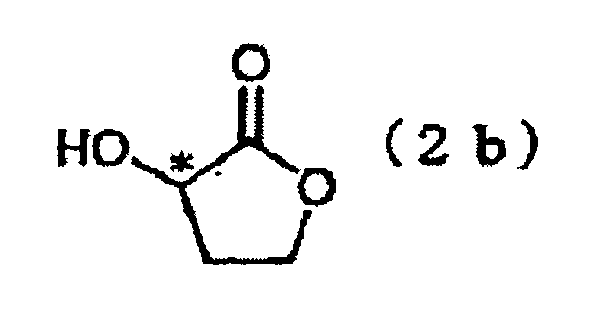
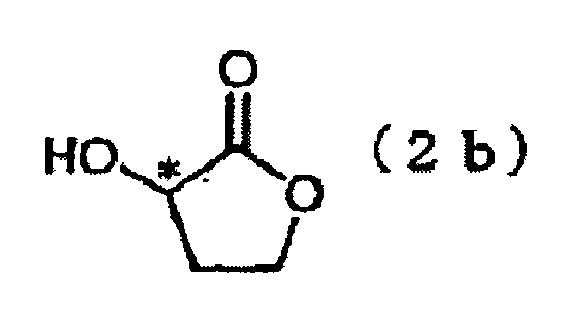
- the present invention is directed to a process for producing Compound (3), characterized in that the process comprises reacting Compound (1) with optically active 2-trifluoromethanesulfonyloxybutyrolactone (2a) in the presence of a base or reacting optically active 2-hydroxybutyrolactone (2b) under Mitsunobu reaction conditions.
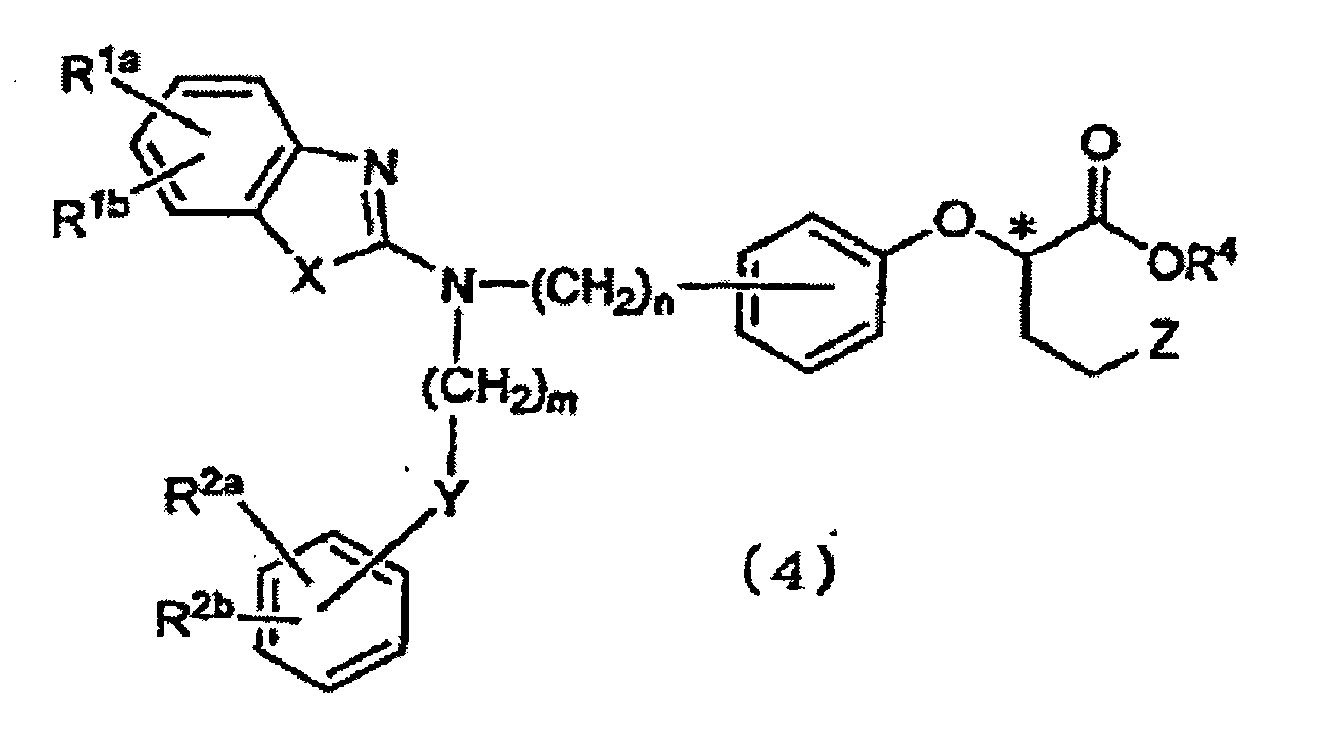
- the present invention is also directed to a process for producing Compound (4), characterized in that the process comprises reacting Compound (1) with optically active 2-trifluoromethanesulfonyloxybutyrolactone (2a) in the presence of a base or reacting optically active 2-hydroxybutyrolactone (2b) under Mitsunobu reaction conditions, to thereby form Compound (3); and reacting Compound (3) with an alcohol represented by R 4 -OH (wherein R 4 has the same meaning as defined above) and a halogenating agent.
- the present invention is also directed to a process for producing Compound (5), characterized in that the process comprises reacting Compound (1) with optically active 2-trifluoromethanesulfonyloxybutyrolactone (2a) in the presence of a base or reacting optically active 2-hydroxybutyrolactone (2b) under Mitsunobu reaction conditions, to thereby form Compound (3); reacting Compound (3) with an alcohol represented by R 4 -OH (wherein R 4 has the same meaning as defined above) and a halogenating agent, to thereby form Compound (4); and dehalogenating Compound (4).
- the present invention is also directed to a process for producing Compound (6), characterized in that the process comprises reacting Compound (1) with optically active 2-trifluoromethanesulfonyloxybutyrolactone (2a) in the presence of a base or reacting optically active 2-hydroxybutyrolactone (2b) under Mitsunobu reaction conditions, to thereby form Compound (3); reacting Compound (3) with an alcohol represented by R 4 -OH (wherein R 4 has the same meaning as defined above) and a halogenating agent, to thereby form Compound (4); and dehalogenating Compound (4), to thereby form Compound (5); and de-esterifying Compound (5).
- R 4 -OH wherein R 4 has the same meaning as defined above
- the present invention is also directed to Compound (3).
- the present invention is also directed to Compound (4).
- the process of the present invention realizes high-yield and high-optical-purity production of an optically active butyric acid compound (6), which is a PPAR ⁇ -selective activator and which can prevent and/or treat, without entailing obesity or increase in body weight, pathological conditions including hyperlipidemia, arteriosclerosis, diabetes, complications of diabetes, inflammation, and heart diseases, and also an production intermediate therefor.
- an optically active butyric acid compound (6) which is a PPAR ⁇ -selective activator and which can prevent and/or treat, without entailing obesity or increase in body weight, pathological conditions including hyperlipidemia, arteriosclerosis, diabetes, complications of diabetes, inflammation, and heart diseases, and also an production intermediate therefor.
- Examples of preferred substituents in the present invention represented by R 1a , R 1b , R 2a , and R 2b in formulas (1), (3), (4), (5), and (6) will next be described.
- Examples of the halogen atom include a fluorine atom and a chlorine atom.
- Examples of the C 1-4 alkyl group include methyl, ethyl, n-propyl, isopropyl, and n-butyl, with methyl being particularly preferred.
- Examples of the C 1-4 alkoxy group include methoxy, ethoxy, n-propoxy, isopropoxy, and n-butoxy, with methoxy being particularly preferred.
- di-C 1-4 alkylamino group examples include dimethylamino, diethylamino, and diisopropylamino, with dimethylamino being particularly preferred.
- Examples of the C 1-4 alkylsulfonyloxy group include methylsulfonyloxy and ethylsulfonyloxy, with methylsulfonyloxy being particularly preferred.
- Examples of the C 1-4 alkylsulfonyl include methylsulfonyl and ethylsulfonyl, with methylsulfonyl being particularly preferred.
- Examples of the C 1-4 alkylthio group include methylthio and ethylthio, with methylthio being particularly preferred.
- alkylenedioxy group which is formed through linkage of R 1a and R 1b or linkage of R 2a and R 2b , include methylenedioxy and ethylenedioxy, with methylenedioxy being particularly preferred.
- Examples of the C 1-4 alkyl group represented by R 4 in formulas (4) and (5) in the present invention include methyl, ethyl, n-propyl, isopropyl, n-butyl, isobutyl, and t-butyl, with methyl and ethyl being particularly preferred.
- Examples of the C 6-10 aryl-C 1-3 alkyl group represented by R 4 in formulas (4) and (5) in the present invention include benzyl, phenethyl, phenylpropyl, and naphthylethyl, with phenethyl being particularly preferred.
- Examples of the halogen atom represented by Z in formula (4) in the present invention include a chlorine atom, a bromine atom, and an iodine atom. Of these, a bromine atom and an iodine atom are preferred, with an iodine atom being particularly preferred.
- X represents an oxygen atom, a sulfur atom, or N-R 3 (wherein R 3 is a hydrogen atom or a C 1-4 alkyl group), with an oxygen atom being preferred.
- Y represents an oxygen atom, an S(O) 1 group (wherein 1 is an integer of 0 or 2, preferably 2), a carbonyl group, or a carbonylamino group, with an oxygen atom being preferred.
- n is an integer of 1 to 6, preferably 1 to 3
- m is an integer of 2 to 6, preferably 2 to 4, particularly preferably 2 or 3.
- R 1a and R 1b each are a hydrogen atom; one of R 2a and R 2b is a hydrogen atom and the other is a methoxy group; X and Y each are an oxygen atom; m is 3; and n is 1.
- R 4 is methyl, ethyl, or phenethyl.
- Z is a bromine atom or an iodine atom.
- step 1-a a phenol form (Compound (1)) is reacted with optically active 2-trifluoromethanesulfonyloxybutyrolactone (2a) in the presence of a base for phenyl-etherification, to thereby form a lactone form (Compound (3)).
- the reaction is performed in an appropriate solvent.
- preferred solvents include dichloromethane, chloroform, 1,2-dichloroethane, acetonitrile, and propionitrile. Of these, dichloromethane, chloroform, acetonitrile, and propionitrile are more preferred, with dichloromethane and chloroform being particularly preferred.
- the base examples include an organic base such as pyridine, triethylamine, or diisopropylethylamine; and an inorganic base such as sodium carbonate, potassium carbonate, or cesium carbonate.
- organic base such as pyridine, triethylamine, or diisopropylethylamine
- inorganic base such as sodium carbonate, potassium carbonate, or cesium carbonate.
- triethylamine, diisopropylethylamine, sodium carbonate, and potassium carbonate are preferred, with triethylamine being particularly preferred.
- the reaction may be performed at 0°C to 50°C.
- the reaction temperature is preferably 10°C to 40°C, particularly preferably 20°C to 30°C.
- the reaction time is 1 to 24 hours, preferably 2 to 6 hours. If required, the reaction may be performed in an inert gas atmosphere such as argon or nitrogen.
- Optically active 2-trifluoromethanesulfonyloxybutyrolactone (2a) employed in this step is a novel compound which has never been disclosed in the literature.
- the compound may be produced through reaction between optically active 2-hydroxybutyrolactone and trifluoromethanesulfonyl chloride or trifluoromethanesulfonic acid anhydride in the presence of a base in a solvent (see Production Example 1).
- the solvent employed in this step include dichloromethane, chloroform, and 1,2-dichloroethane, with dichloromethane and chloroform being preferred.
- the base examples include organic bases such as pyridine, picoline, lutidine, collidine, triethylamine, and diisopropylethylamine. Among them, pyridine, lutidine, and triethylamine are preferred, with pyridine and lutidine being particularly preferred.
- the reaction may be performed at -78°C to 25°C.
- the reaction temperature is preferably -30°C to 10°C, particularly preferably -10°C to 0°C.
- the reaction time is 0.5 to 4 hours, preferably 0.5 to 1.5 hours.
- step 1-b a phenol form (Compound (1)) is reacted with optically active 2-hydroxybutyrolactone (2b) under Mitsunobu reaction, to thereby form a lactone form (Compound (3)).
- Mitsunobu reaction is a dehydration-condensation reaction between an alcohol and a nucleophilic reagent in the presence of an azo reagent and a phosphorus-containing reagent. Mitsunobu reaction is performed in an appropriate solvent.
- solvents examples include toluene, tetrahydrofuran, dioxane, tert-butyl methyl ether, acetonitrile, propionitrile, N,N-dimethylformamide, and N,N-dimethyl-2-imidazolidinone.
- toluene and tetrahydrofuran are more preferred, with toluene being particularly preferred.
- Examples of the phosphorus-containing reagent include triphenylphosphine, tri(o-tolyl)phosphine, tri(p-f luorophenyl)phosphine, tris(2,4,6-trimethoxyphenyl)phosphine, trimethylphosphine, and tri(n-butyl)phosphine, with triphenylphosphine being particularly preferred.
- azo reagent examples include diethyl azodicarboxylate (DEAD), diisopropyl azodicarboxylate (DIAD), di-tert-butyl azodicarboxylate (DBAD), tetramethylazodicarboxamide (TMAD), tetraisopropylazodicarboxamide (TIPA), azodicarbonyldipiperidine (ADDP), and dimethylhexahydrotetrazocinedione (DHTD).
- DEAD diethyl azodicarboxylate
- DIAD diisopropyl azodicarboxylate
- DBAD di-tert-butyl azodicarboxylate
- TMAD tetramethylazodicarboxamide
- TIPA tetraisopropylazodicarboxamide
- ADDP azodicarbonyldipiperidine
- DHTD dimethylhexahydrotetrazocinedione
- diethyl azodicarboxylate, diisopropyl azodicarboxylate, di-tert-butyl azodicarboxylate, and tetramethylazodicarboxamide are preferred, with diisopropyl azodicarboxylate and di-tert-butyl azodicarboxylate are particularly preferred.
- the reaction may be performed at 0°C to 100°C.
- the reaction temperature is preferably 20°C to 60°C, particularly preferably 30°C to 50°C.
- the reaction time is 1 to 60 hours, preferably 24 to 48 hours. If required, the reaction may be performed in an inert gas atmosphere such as argon or nitrogen.
- cyanomethylenetributylphosphoran or cyanomethylenetrimethylphosphoran may be used instead of the aforementioned phosphorus-containing reagent or azo reagent.
- the solvent employed in this step include toluene, tetrahydrofuran, dioxane, and tert-butyl methyl ether. Of these, toluene and tetrahydrofuran are preferred.
- the reaction may be performed at 0°C to 100°C.
- the reaction temperature is preferably 20°C to 60°C, particularly preferably 30°C to 50°C.
- the reaction time is 1 to 60 hours, preferably 24 to 48 hours. If required, the reaction may be performed in an inert gas atmosphere such as argon or nitrogen.
- step 2 the lactone ring of a lactone form (Compound (3)) is opened, to thereby form a halogen form (Compound (4)).
- a halogen form Compound (4)
- halogenating reagent examples include Lewis acids such as halotrialkylsilane, boron tribromide, and aluminum chloride. Of these, halotrialkylsilane is preferably used. Examples of the halotrialkylsilane include iodotrimethylsilane, bromotrimethylsilane, and chlorotrimethylsilane. Of these, iodotrimethylsilane and bromotrimethylsilane are preferred, with iodotrimethylsilane being particularly preferred. Among Lewis acids, boron tribromide is preferably used.
- Examples of the alcohol R 4 -OH include methanol, ethanol, n-propanol, isopropyl alcohol, n-butyl alcohol, isobutyl alcohol, t-butyl alcohol, benzyl alcohol, phenethyl alcohol, phenylpropyl alcohol, and naphthylethyl alcohol. Of these, methanol, ethanol, and phenethyl alcohol are preferred.
- the reaction employing the aforementioned halotrialkylsilane as a halogenating agent may be performed by adding a required amount of alcohol to a solution of Compound (3) in solvent, followed by adding a required amount of halotrialkylsilane.
- dichloromethane, chloroform, 1,2-dichloroethane, etc. as the reaction solvent is preferred, with dichloromethane and chloroform being particularly preferred.
- the reaction may be performed at 0°C to 50°C.
- the reaction temperature is preferably 10°C to 40°C, particularly preferably 20°C to 30°C.
- the reaction time is 1 to 24 hours, preferably 3 to 12 hours.
- the reaction employing the aforementioned Lewis acid as a halogenating agent may be performed by reacting a required amount of the Lewis acid in a solution of Compound (3) in solvent, followed by reacting a required amount of alcohol.
- reaction solvent examples include chloroform, dichloromethane, and carbon tetrachloride. Of these, chloroform and dichloromethane are preferred, with dichloromethane being particularly preferred.
- the reaction may be performed at -30°C to 50°C.
- the reaction temperature is preferably 0°C to 30°C.
- the reaction time is 1 to 24 hours, preferably 6 to 10 hours. If required, the reactions may be performed in an inert gas atmosphere such as argon or nitrogen.
- step 3 a halogen form (Compound (4)) is dehalogenated, to thereby produce an ester form (Compound (5)).
- Compound (4) is hydrogenolyzed with a reduction catalyst in the presence or absence of a base, whereby Compound (5) can be produced.
- solvents employed in the reaction include alcohols such as methanol, ethanol, n-propanol, isopropyl alcohol; esters such as methyl acetate, ethyl acetate, and isopropyl acetate; and ethers such as 1,4-dioxane.
- alcohols such as methanol, ethanol, n-propanol, isopropyl alcohol, and ethyl acetate are preferred, with methanol and ethanol being particularly preferred.
- examples of preferred bases include organic bases such as triethylamine and diisopropylethylamine; and inorganic bases such as sodium hydrogencarbonate and potassium carbonate. Of these, triethylamine, diisopropylethylamine, and potassium carbonate are preferred, with triethylamine being particularly preferred.
- reduction catalyst examples include palladium-carbon, platinum oxide, and palladium black, with palladium-carbon being preferred.
- the reaction may be performed at 10°C to 50°C.
- the reaction temperature is preferably 20°C to 30°C.
- the reaction time is 1 to 12 hours, preferably 3 to 6 hours.
- step 4 an ester form (Compound (5)) is de-estrified, to thereby produce an optically active butyric acid Compound (Compound (6)).
- De-esterification may be performed through a conventional method such as hydrolysis or hydrogenolysis (reduction). Hydrolysis may be performed under any of reaction conditions employed for hydrolysis of ester.
- the hydrolysis is performed in a solvent such as water, an alcohol (e.g., methanol, ethanol, or propanol), an ether (e.g., tetrahydrofuran or dioxane), a ketone (e.g., acetone or methyl ethyl ketone), or acetic acid, or a solvent mixture thereof, in the presence of an inorganic base such as lithium hydroxide, sodium hydroxide, potassium hydroxide, sodium carbonate, or potassium carbonate; a mineral acid such as hydrochloric acid, sulfuric acid, or hydrobromic acid; or an organic acid such as p-toluenesulfonic acid.
- a solvent such as water, an alcohol (e.g., methanol, ethanol, or propanol), an ether (e.g., tetrahydrofuran or dioxane), a ketone (e.g., acetone or methyl ethyl ketone),
- the reaction is performed in an inert solvent such as an ether (e.g., tetrahydrofuran, dioxane, dimethoxyethane, or diethyl ether), an alcohol (e.g., methanol, ethanol, or isopropyl alcohol), or an amide (e.g., dimethylformamide), in the presence of a reduction catalyst such as palladium-carbon, palladium black, palladium, palladium hydroxide, platinum-carbon, platinum oxide, or Raney nickel), in the presence or absence of an inorganic acid such as hydrochloric acid, sulfuric acid, hypochlorous acid or an organic acid such as acetic acid, trifluoroacetic acid, or formic acid, and in a normal pressurized or pressurized hydrogen atmosphere.
- an inert solvent such as an ether (e.g., tetrahydrofuran, dioxane, dimethoxyethane, or diethyl ether), an alcohol (e
- a target substance may be isolated through a routine purification method employed in organic synthesis chemistry such as filtration, washing, drying, recrystallization, or chromatographic purification, as necessary.
- Compound (3) can be produced at high yield and high optical purity, and Compound (6) can be produced while optical purity of Compound (3) is maintained.
- Compound (3) is produced from a phenol form and any of the alkylsulfonate derivatives and arylsulfonate derivatives of optically active 2-hydroxybutyrolactone, chemical yield and/or optical purity considerably lowers.
- N-(benzoxazole-2-yl)-N-(3-(4-methoxyphenoxy)propyl)-3-hydroxybenzylamine 200 mg was dissolved in dichloromethane (1.5 mL), and triethylamine (0.11 mL) was added dropwise to the solution at room temperature, followed by stirring for 5 minutes at the same temperature. Subsequently, a solution of (S) -2-trifluoromethanesulfonyloxybutyrolactone (174 mg) in dichloromethane (1 mL) was added dropwise to the mixture over 10 minutes at room temperature, followed by stirring for 5 hours at the same temperature.
- N-(benzoxazole-2-yl)-N-(3-(4-methoxyphenoxy)propyl)-3-hydroxybenzylamine 2.0 g
- (S)-2-hydroxybutyrolactone 1.0 g
- triphenylphosphine 2.6 g
- triphenylphosphine 1.3 g
- di-tert-butyl azodicarboxylate 1.1 g
- the washed extract was dried over sodium sulfate anhydrate and concentrated under reduced pressure.
- Tables 1 and 2 show chemical yield and optical purity of Compound (3x) produced through the process of the present invention (Nos. 1 and 2 in Table 1), of Compound (3x) produced from sulfonate derivatives of optically active 2-hydroxybutyrolactone (Nos. 3 to 8 in Table 1), and of Compounds (5y) and (6y) produced through a process disclosed in Patent Document 1 (Table 2).
Landscapes
- Health & Medical Sciences (AREA)
- Chemical & Material Sciences (AREA)
- Organic Chemistry (AREA)
- General Health & Medical Sciences (AREA)
- Veterinary Medicine (AREA)
- Public Health (AREA)
- Chemical Kinetics & Catalysis (AREA)
- General Chemical & Material Sciences (AREA)
- Medicinal Chemistry (AREA)
- Nuclear Medicine, Radiotherapy & Molecular Imaging (AREA)
- Bioinformatics & Cheminformatics (AREA)
- Pharmacology & Pharmacy (AREA)
- Life Sciences & Earth Sciences (AREA)
- Animal Behavior & Ethology (AREA)
- Engineering & Computer Science (AREA)
- Diabetes (AREA)
- Hematology (AREA)
- Heart & Thoracic Surgery (AREA)
- Obesity (AREA)
- Cardiology (AREA)
- Vascular Medicine (AREA)
- Urology & Nephrology (AREA)
- Pain & Pain Management (AREA)
- Rheumatology (AREA)
- Emergency Medicine (AREA)
- Endocrinology (AREA)
- Organic Low-Molecular-Weight Compounds And Preparation Thereof (AREA)
- Heterocyclic Carbon Compounds Containing A Hetero Ring Having Nitrogen And Oxygen As The Only Ring Hetero Atoms (AREA)
- Plural Heterocyclic Compounds (AREA)
- Pharmaceuticals Containing Other Organic And Inorganic Compounds (AREA)
Abstract
Claims (6)
- Procédé de production d'un composé représenté par la formule (3) :

la réaction d'un composé représenté par la formule (1) :

- Procédé de production d'un composé représenté par la formule (4) :
la réaction d'un composé représenté par la formule (1) :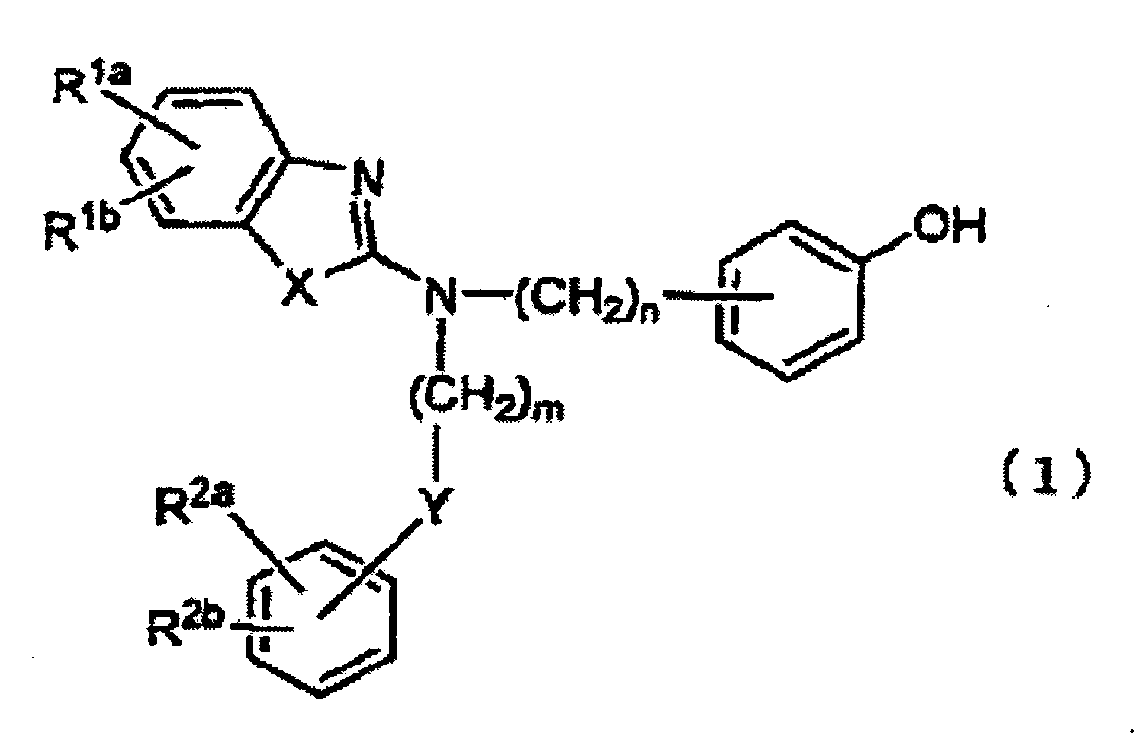


la réaction du composé représenté par la formule (3) avec un alcool représenté par R4-OH (où R4 a la même signification que celle définie ci-dessus) et un réactif d'halogénation. - Procédé de production d'un composé représenté par la formule (5) :

la réaction d'un composé représenté par la formule (1) :


puis la réaction du composé représenté par la formule (3) avec un alcool représenté par R4-OH (où R4 a la même signification que celle définie ci-dessus) et un réactif d'halogénation, pour ainsi former un composé représenté par la formule (4) :
et Z représente un atome d'halogène), puis
la déshalogénation du composé représenté par la formule (4). - Procédé de production d'un composé représenté par la formule (6) :

la réaction d'un composé représenté par la formule (1) :


puis la réaction du composé représenté par la formule (3) avec un alcool représenté par R4-OH (dans laquelle R4 représente un groupe alkyle en C1 à C4 ou un groupe (aryl en C6 à C10)-alkyle en C1 à C3) et un réactif d'halogénation, pour ainsi former un composé représenté par la formule (4) :
puis la déshalogénation du composé représenté par la formule (4), pour ainsi former un composé représenté par la formule (5) :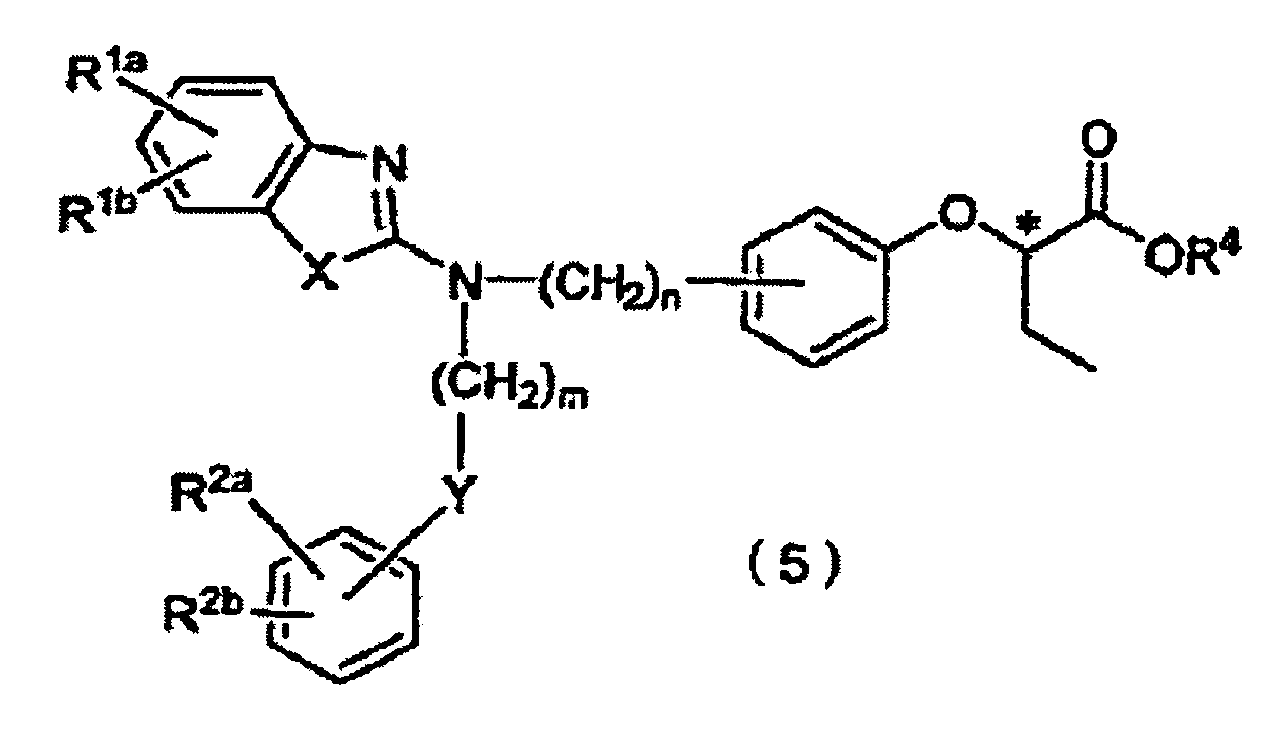
la désestérification du composé représenté par la formule (5). - Composé représenté par la formule (3) :
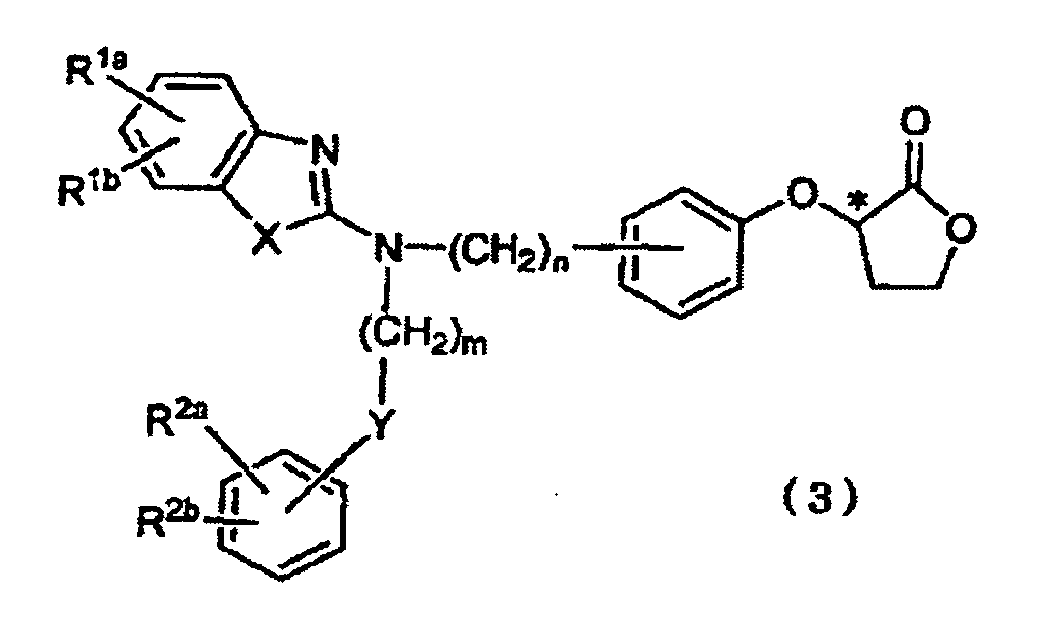
- Composé représenté par la formule (4) :

Applications Claiming Priority (3)
| Application Number | Priority Date | Filing Date | Title |
|---|---|---|---|
| JP2005159261 | 2005-05-31 | ||
| JP2005176663 | 2005-06-16 | ||
| PCT/JP2006/310755 WO2006129649A1 (fr) | 2005-05-31 | 2006-05-30 | Procedes de preparation de composes optiquement actifs activant le ppar et intermediaires pour leur preparation |
Publications (3)
| Publication Number | Publication Date |
|---|---|
| EP1887005A1 EP1887005A1 (fr) | 2008-02-13 |
| EP1887005A4 EP1887005A4 (fr) | 2009-08-12 |
| EP1887005B1 true EP1887005B1 (fr) | 2010-04-21 |
Family
ID=37481578
Family Applications (1)
| Application Number | Title | Priority Date | Filing Date |
|---|---|---|---|
| EP06746983A Active EP1887005B1 (fr) | 2005-05-31 | 2006-05-30 | Procedes de preparation de composes optiquement actifs activant le ppar et intermediaires pour leur preparation |
Country Status (6)
| Country | Link |
|---|---|
| US (1) | US7714141B2 (fr) |
| EP (1) | EP1887005B1 (fr) |
| JP (1) | JP4926955B2 (fr) |
| DE (1) | DE602006013815D1 (fr) |
| ES (1) | ES2342319T3 (fr) |
| WO (1) | WO2006129649A1 (fr) |
Families Citing this family (2)
| Publication number | Priority date | Publication date | Assignee | Title |
|---|---|---|---|---|
| CN105102415B (zh) | 2013-03-29 | 2017-03-15 | 兴和株式会社 | 2‑羟基羧酸或其衍生物的光学纯度提高法 |
| CN115477588B (zh) * | 2022-09-30 | 2023-11-17 | 中国药科大学 | 一种基于胆固醇逆转运途径的调血脂化合物、合成方法及用途 |
Family Cites Families (5)
| Publication number | Priority date | Publication date | Assignee | Title |
|---|---|---|---|---|
| AU3515497A (en) * | 1996-07-29 | 1998-02-20 | Warner-Lambert Company | Improved process for the synthesis of protected esters of (s)-3,4-dihydroxybutyric acid |
| MXPA03007261A (es) * | 2001-02-14 | 2006-03-09 | Abbott Lab | Moduladores del receptor de glucocorticoides. |
| FR2835443B1 (fr) * | 2002-02-01 | 2004-03-05 | Commissariat Energie Atomique | Procede et dispositif de melange de gaz |
| US6653334B1 (en) * | 2002-12-27 | 2003-11-25 | Kowa Co., Ltd. | Benzoxazole compound and pharmaceutical composition containing the same |
| EA009374B1 (ru) * | 2003-09-03 | 2007-12-28 | Кова Ко., Лтд. | Активирующее ppar соединение и содержащая его фармацевтическая композиция |
-
2006
- 2006-05-30 US US11/912,811 patent/US7714141B2/en not_active Expired - Fee Related
- 2006-05-30 WO PCT/JP2006/310755 patent/WO2006129649A1/fr not_active Ceased
- 2006-05-30 ES ES06746983T patent/ES2342319T3/es active Active
- 2006-05-30 JP JP2007519001A patent/JP4926955B2/ja not_active Expired - Fee Related
- 2006-05-30 EP EP06746983A patent/EP1887005B1/fr active Active
- 2006-05-30 DE DE602006013815T patent/DE602006013815D1/de active Active
Also Published As
| Publication number | Publication date |
|---|---|
| WO2006129649A1 (fr) | 2006-12-07 |
| US20090076280A1 (en) | 2009-03-19 |
| DE602006013815D1 (de) | 2010-06-02 |
| US7714141B2 (en) | 2010-05-11 |
| JP4926955B2 (ja) | 2012-05-09 |
| JPWO2006129649A1 (ja) | 2009-01-08 |
| EP1887005A4 (fr) | 2009-08-12 |
| ES2342319T3 (es) | 2010-07-05 |
| EP1887005A1 (fr) | 2008-02-13 |
Similar Documents
| Publication | Publication Date | Title |
|---|---|---|
| EP1661890B1 (fr) | Compose d'activation du recepteur ppar et composition pharmaceutique contenant un tel compose | |
| CN1186315C (zh) | o-茴香酰胺衍生物 | |
| US6048883A (en) | Heterocyclic compounds as pharmaceutical | |
| CN1064952C (zh) | 新的取代2,2-二甲基-ω-苯氧链烷酸及酯,其制备方法及含有它们的药物组合物 | |
| WO1998000137A1 (fr) | Composes hypoglycemiants et hypolipidemiants | |
| CN1237160A (zh) | 取代的吡啶的制备方法 | |
| CN1402703A (zh) | 新的三-取代的苯基衍生物和类似物 | |
| CA2475137C (fr) | Nouveaux derives d'oximes heterocycliques, leur procede de preparation et les compositions pharmaceutiques qui les contiennent | |
| EP1887005B1 (fr) | Procedes de preparation de composes optiquement actifs activant le ppar et intermediaires pour leur preparation | |
| EP1852426B1 (fr) | Procede de production d un compose activant le ppar optiquement actif et son intermediaire | |
| US7538242B2 (en) | Optically active PPAR-activating compound intermediate and method for producing same | |
| ES2357060T3 (es) | Compuesto activador de ppar y composición farmacéutica que contiene el compuesto. | |
| EP3575305A1 (fr) | Procédé de fabrication de composés comprenant un groupe fonctionnel oxazolopyridinones | |
| CN1237967A (zh) | 噁唑啉衍生物的制备方法及中间体 | |
| CN1128029A (zh) | 作为脂氧合酶抑制剂的噻唑衍生物 |
Legal Events
| Date | Code | Title | Description |
|---|---|---|---|
| PUAI | Public reference made under article 153(3) epc to a published international application that has entered the european phase |
Free format text: ORIGINAL CODE: 0009012 |
|
| 17P | Request for examination filed |
Effective date: 20071009 |
|
| AK | Designated contracting states |
Kind code of ref document: A1 Designated state(s): AT BE BG CH CY CZ DE DK EE ES FI FR GB GR HU IE IS IT LI LT LU LV MC NL PL PT RO SE SI SK TR |
|
| AX | Request for extension of the european patent |
Extension state: AL BA HR MK YU |
|
| A4 | Supplementary search report drawn up and despatched |
Effective date: 20090713 |
|
| GRAP | Despatch of communication of intention to grant a patent |
Free format text: ORIGINAL CODE: EPIDOSNIGR1 |
|
| GRAS | Grant fee paid |
Free format text: ORIGINAL CODE: EPIDOSNIGR3 |
|
| GRAA | (expected) grant |
Free format text: ORIGINAL CODE: 0009210 |
|
| AK | Designated contracting states |
Kind code of ref document: B1 Designated state(s): AT BE BG CH CY CZ DE DK EE ES FI FR GB GR HU IE IS IT LI LT LU LV MC NL PL PT RO SE SI SK TR |
|
| AX | Request for extension of the european patent |
Extension state: AL BA HR MK YU |
|
| REG | Reference to a national code |
Ref country code: GB Ref legal event code: FG4D |
|
| REG | Reference to a national code |
Ref country code: CH Ref legal event code: NV Representative=s name: BOVARD AG PATENTANWAELTE Ref country code: CH Ref legal event code: EP |
|
| REG | Reference to a national code |
Ref country code: IE Ref legal event code: FG4D |
|
| REF | Corresponds to: |
Ref document number: 602006013815 Country of ref document: DE Date of ref document: 20100602 Kind code of ref document: P |
|
| REG | Reference to a national code |
Ref country code: ES Ref legal event code: FG2A Ref document number: 2342319 Country of ref document: ES Kind code of ref document: T3 |
|
| REG | Reference to a national code |
Ref country code: NL Ref legal event code: VDEP Effective date: 20100421 |
|
| LTIE | Lt: invalidation of european patent or patent extension |
Effective date: 20100421 |
|
| PG25 | Lapsed in a contracting state [announced via postgrant information from national office to epo] |
Ref country code: SE Free format text: LAPSE BECAUSE OF FAILURE TO SUBMIT A TRANSLATION OF THE DESCRIPTION OR TO PAY THE FEE WITHIN THE PRESCRIBED TIME-LIMIT Effective date: 20100421 Ref country code: LT Free format text: LAPSE BECAUSE OF FAILURE TO SUBMIT A TRANSLATION OF THE DESCRIPTION OR TO PAY THE FEE WITHIN THE PRESCRIBED TIME-LIMIT Effective date: 20100421 Ref country code: NL Free format text: LAPSE BECAUSE OF FAILURE TO SUBMIT A TRANSLATION OF THE DESCRIPTION OR TO PAY THE FEE WITHIN THE PRESCRIBED TIME-LIMIT Effective date: 20100421 |
|
| PG25 | Lapsed in a contracting state [announced via postgrant information from national office to epo] |
Ref country code: LV Free format text: LAPSE BECAUSE OF FAILURE TO SUBMIT A TRANSLATION OF THE DESCRIPTION OR TO PAY THE FEE WITHIN THE PRESCRIBED TIME-LIMIT Effective date: 20100421 Ref country code: SI Free format text: LAPSE BECAUSE OF FAILURE TO SUBMIT A TRANSLATION OF THE DESCRIPTION OR TO PAY THE FEE WITHIN THE PRESCRIBED TIME-LIMIT Effective date: 20100421 Ref country code: IS Free format text: LAPSE BECAUSE OF FAILURE TO SUBMIT A TRANSLATION OF THE DESCRIPTION OR TO PAY THE FEE WITHIN THE PRESCRIBED TIME-LIMIT Effective date: 20100821 Ref country code: FI Free format text: LAPSE BECAUSE OF FAILURE TO SUBMIT A TRANSLATION OF THE DESCRIPTION OR TO PAY THE FEE WITHIN THE PRESCRIBED TIME-LIMIT Effective date: 20100421 Ref country code: AT Free format text: LAPSE BECAUSE OF FAILURE TO SUBMIT A TRANSLATION OF THE DESCRIPTION OR TO PAY THE FEE WITHIN THE PRESCRIBED TIME-LIMIT Effective date: 20100421 |
|
| PG25 | Lapsed in a contracting state [announced via postgrant information from national office to epo] |
Ref country code: PL Free format text: LAPSE BECAUSE OF FAILURE TO SUBMIT A TRANSLATION OF THE DESCRIPTION OR TO PAY THE FEE WITHIN THE PRESCRIBED TIME-LIMIT Effective date: 20100421 Ref country code: CY Free format text: LAPSE BECAUSE OF FAILURE TO SUBMIT A TRANSLATION OF THE DESCRIPTION OR TO PAY THE FEE WITHIN THE PRESCRIBED TIME-LIMIT Effective date: 20100519 Ref country code: GR Free format text: LAPSE BECAUSE OF FAILURE TO SUBMIT A TRANSLATION OF THE DESCRIPTION OR TO PAY THE FEE WITHIN THE PRESCRIBED TIME-LIMIT Effective date: 20100722 Ref country code: MC Free format text: LAPSE BECAUSE OF NON-PAYMENT OF DUE FEES Effective date: 20100531 |
|
| PG25 | Lapsed in a contracting state [announced via postgrant information from national office to epo] |
Ref country code: EE Free format text: LAPSE BECAUSE OF FAILURE TO SUBMIT A TRANSLATION OF THE DESCRIPTION OR TO PAY THE FEE WITHIN THE PRESCRIBED TIME-LIMIT Effective date: 20100421 Ref country code: DK Free format text: LAPSE BECAUSE OF FAILURE TO SUBMIT A TRANSLATION OF THE DESCRIPTION OR TO PAY THE FEE WITHIN THE PRESCRIBED TIME-LIMIT Effective date: 20100421 Ref country code: PT Free format text: LAPSE BECAUSE OF FAILURE TO SUBMIT A TRANSLATION OF THE DESCRIPTION OR TO PAY THE FEE WITHIN THE PRESCRIBED TIME-LIMIT Effective date: 20100823 |
|
| PLBE | No opposition filed within time limit |
Free format text: ORIGINAL CODE: 0009261 |
|
| STAA | Information on the status of an ep patent application or granted ep patent |
Free format text: STATUS: NO OPPOSITION FILED WITHIN TIME LIMIT |
|
| PG25 | Lapsed in a contracting state [announced via postgrant information from national office to epo] |
Ref country code: RO Free format text: LAPSE BECAUSE OF FAILURE TO SUBMIT A TRANSLATION OF THE DESCRIPTION OR TO PAY THE FEE WITHIN THE PRESCRIBED TIME-LIMIT Effective date: 20100421 Ref country code: CZ Free format text: LAPSE BECAUSE OF FAILURE TO SUBMIT A TRANSLATION OF THE DESCRIPTION OR TO PAY THE FEE WITHIN THE PRESCRIBED TIME-LIMIT Effective date: 20100421 Ref country code: BE Free format text: LAPSE BECAUSE OF FAILURE TO SUBMIT A TRANSLATION OF THE DESCRIPTION OR TO PAY THE FEE WITHIN THE PRESCRIBED TIME-LIMIT Effective date: 20100421 Ref country code: SK Free format text: LAPSE BECAUSE OF FAILURE TO SUBMIT A TRANSLATION OF THE DESCRIPTION OR TO PAY THE FEE WITHIN THE PRESCRIBED TIME-LIMIT Effective date: 20100421 |
|
| 26N | No opposition filed |
Effective date: 20110124 |
|
| PG25 | Lapsed in a contracting state [announced via postgrant information from national office to epo] |
Ref country code: IT Free format text: LAPSE BECAUSE OF NON-PAYMENT OF DUE FEES Effective date: 20100530 |
|
| REG | Reference to a national code |
Ref country code: CH Ref legal event code: PFA Owner name: KOWA CO., LTD. Free format text: KOWA CO., LTD.#6-29, NISHIKI 3-CHOME NAKA-KU#NAGOYA-SHI, AICHI 460-8625 (JP) -TRANSFER TO- KOWA CO., LTD.#6-29, NISHIKI 3-CHOME NAKA-KU#NAGOYA-SHI, AICHI 460-8625 (JP) |
|
| PG25 | Lapsed in a contracting state [announced via postgrant information from national office to epo] |
Ref country code: IE Free format text: LAPSE BECAUSE OF NON-PAYMENT OF DUE FEES Effective date: 20100530 |
|
| PGRI | Patent reinstated in contracting state [announced from national office to epo] |
Ref country code: IT Effective date: 20110616 |
|
| PG25 | Lapsed in a contracting state [announced via postgrant information from national office to epo] |
Ref country code: BG Free format text: LAPSE BECAUSE OF FAILURE TO SUBMIT A TRANSLATION OF THE DESCRIPTION OR TO PAY THE FEE WITHIN THE PRESCRIBED TIME-LIMIT Effective date: 20100421 Ref country code: LU Free format text: LAPSE BECAUSE OF NON-PAYMENT OF DUE FEES Effective date: 20100530 Ref country code: HU Free format text: LAPSE BECAUSE OF FAILURE TO SUBMIT A TRANSLATION OF THE DESCRIPTION OR TO PAY THE FEE WITHIN THE PRESCRIBED TIME-LIMIT Effective date: 20101022 |
|
| REG | Reference to a national code |
Ref country code: HU Ref legal event code: AG4A Ref document number: E014284 Country of ref document: HU |
|
| PG25 | Lapsed in a contracting state [announced via postgrant information from national office to epo] |
Ref country code: TR Free format text: LAPSE BECAUSE OF FAILURE TO SUBMIT A TRANSLATION OF THE DESCRIPTION OR TO PAY THE FEE WITHIN THE PRESCRIBED TIME-LIMIT Effective date: 20100421 |
|
| PG25 | Lapsed in a contracting state [announced via postgrant information from national office to epo] |
Ref country code: BG Free format text: LAPSE BECAUSE OF FAILURE TO SUBMIT A TRANSLATION OF THE DESCRIPTION OR TO PAY THE FEE WITHIN THE PRESCRIBED TIME-LIMIT Effective date: 20100721 |
|
| REG | Reference to a national code |
Ref country code: FR Ref legal event code: PLFP Year of fee payment: 10 |
|
| PGFP | Annual fee paid to national office [announced via postgrant information from national office to epo] |
Ref country code: DE Payment date: 20150526 Year of fee payment: 10 Ref country code: GB Payment date: 20150521 Year of fee payment: 10 Ref country code: CH Payment date: 20150520 Year of fee payment: 10 Ref country code: ES Payment date: 20150520 Year of fee payment: 10 |
|
| PGFP | Annual fee paid to national office [announced via postgrant information from national office to epo] |
Ref country code: HU Payment date: 20150521 Year of fee payment: 10 Ref country code: FR Payment date: 20150519 Year of fee payment: 10 Ref country code: IT Payment date: 20150528 Year of fee payment: 10 |
|
| REG | Reference to a national code |
Ref country code: DE Ref legal event code: R119 Ref document number: 602006013815 Country of ref document: DE |
|
| REG | Reference to a national code |
Ref country code: CH Ref legal event code: PL |
|
| GBPC | Gb: european patent ceased through non-payment of renewal fee |
Effective date: 20160530 |
|
| PG25 | Lapsed in a contracting state [announced via postgrant information from national office to epo] |
Ref country code: LI Free format text: LAPSE BECAUSE OF NON-PAYMENT OF DUE FEES Effective date: 20160531 Ref country code: CH Free format text: LAPSE BECAUSE OF NON-PAYMENT OF DUE FEES Effective date: 20160531 |
|
| PG25 | Lapsed in a contracting state [announced via postgrant information from national office to epo] |
Ref country code: IT Free format text: LAPSE BECAUSE OF NON-PAYMENT OF DUE FEES Effective date: 20160530 |
|
| REG | Reference to a national code |
Ref country code: FR Ref legal event code: ST Effective date: 20170131 |
|
| PG25 | Lapsed in a contracting state [announced via postgrant information from national office to epo] |
Ref country code: DE Free format text: LAPSE BECAUSE OF NON-PAYMENT OF DUE FEES Effective date: 20161201 Ref country code: FR Free format text: LAPSE BECAUSE OF NON-PAYMENT OF DUE FEES Effective date: 20160531 Ref country code: HU Free format text: LAPSE BECAUSE OF FAILURE TO SUBMIT A TRANSLATION OF THE DESCRIPTION OR TO PAY THE FEE WITHIN THE PRESCRIBED TIME-LIMIT Effective date: 20160531 |
|
| PG25 | Lapsed in a contracting state [announced via postgrant information from national office to epo] |
Ref country code: GB Free format text: LAPSE BECAUSE OF NON-PAYMENT OF DUE FEES Effective date: 20160530 |
|
| PG25 | Lapsed in a contracting state [announced via postgrant information from national office to epo] |
Ref country code: ES Free format text: LAPSE BECAUSE OF NON-PAYMENT OF DUE FEES Effective date: 20160531 |
|
| REG | Reference to a national code |
Ref country code: ES Ref legal event code: FD2A Effective date: 20181204 |