EP1887735A2 - Procédé de transmission de flux de données via un réseau sans fil et réseau sans fil - Google Patents
Procédé de transmission de flux de données via un réseau sans fil et réseau sans fil Download PDFInfo
- Publication number
- EP1887735A2 EP1887735A2 EP07121554A EP07121554A EP1887735A2 EP 1887735 A2 EP1887735 A2 EP 1887735A2 EP 07121554 A EP07121554 A EP 07121554A EP 07121554 A EP07121554 A EP 07121554A EP 1887735 A2 EP1887735 A2 EP 1887735A2
- Authority
- EP
- European Patent Office
- Prior art keywords
- period
- contention
- station
- transmission
- medium occupancy
- Prior art date
- Legal status (The legal status is an assumption and is not a legal conclusion. Google has not performed a legal analysis and makes no representation as to the accuracy of the status listed.)
- Withdrawn
Links
Images





Classifications
-
- H—ELECTRICITY
- H04—ELECTRIC COMMUNICATION TECHNIQUE
- H04W—WIRELESS COMMUNICATION NETWORKS
- H04W74/00—Wireless channel access
- H04W74/02—Hybrid access
-
- H—ELECTRICITY
- H04—ELECTRIC COMMUNICATION TECHNIQUE
- H04W—WIRELESS COMMUNICATION NETWORKS
- H04W28/00—Network traffic management; Network resource management
- H04W28/16—Central resource management; Negotiation of resources or communication parameters, e.g. negotiating bandwidth or QoS [Quality of Service]
- H04W28/26—Resource reservation
-
- H—ELECTRICITY
- H04—ELECTRIC COMMUNICATION TECHNIQUE
- H04W—WIRELESS COMMUNICATION NETWORKS
- H04W84/00—Network topologies
- H04W84/02—Hierarchically pre-organised networks, e.g. paging networks, cellular networks, WLAN [Wireless Local Area Network] or WLL [Wireless Local Loop]
- H04W84/10—Small scale networks; Flat hierarchical networks
- H04W84/12—WLAN [Wireless Local Area Networks]
Definitions
- This invention is to equip a network device with Quality of Service (QoS) awareness system process to serve traffic streams in a coordinated manner.
- QoS Quality of Service
- This invention also increases QoS awareness and throughput efficiency of traffic streams transmission by coordinating stream transmission and reduce the number of collision for contention based medium access mechanism.
- the timing to obtain transmission permit for stream transmission that is not being coordinated are not base on the stream requirement. It will try to request for transmission permit without any other further consideration if the queue is not empty. Furthermore, the permit is granted based on priority as described in Draft Supplement to International Standard ISO/IEC 8802-11 : 1999 : ANSI/IEEE Std 882.11, 1999 Edition -" Part 11: Wireless LAN Medium Access Control (MAC) and (PHY) Specifications (draft 3.0) and some random periods as described in International Standard ISO/IEC 8802-11 1999 : ANSI/IEEE Std 802.11, 1999 Edition - " Part 11: Wireless LAN Medium Access Control (MAC) and (PHY) Specifications.
- EDCF Enhanced Distributed Coordination Function
- BSS Basic Service Set
- Contention may occur during each time the station of the same priority content for medium dedication time.
- the number of contentions depends on the amount of bandwidth allotted to stations and the number of station within the BSS based on the maximum available bandwidth within BSS.
- the QoS requirement of the transmission streams is jeopardized when the timing to request for transmission permit is not coordinated and guarded.
- Frequent request for short medium occupancy period leads to higher collisions and overheads. This is especially true when the wireless stations do not aggregate these short medium occupancy period requests needed for delivering data streams from one wireless device to another.
- Complicated LSI implementation is required at the network device in order to preserve the QoS requirement of individual data stream where each transmission permit dedication is for plural number of data streams transmission.
- a method for transmitting data stream via wireless medium for contention based medium access across a wireless network having a plurality of stations and an access point communicating to said stations via wireless medium includes:
- the selective contention period is divided into two distinct period as:
- a method for transmitting data stream via wireless medium for contention based medium access across a wireless network having a plurality of stations and an access point communicating to said stations via wireless medium includes:
- the access point transmit a beacon signal including an information about start period of the contention medium occupancy period to each station so that selective contention between the stations can be performed.
- beacon signal the prescheduled medium occupancy period, and the contention medium occupancy period may be provided in turn in the selective contention period.
- a wireless medium occupancy reservation having a duration period for the contention successful station is prescheduled within a prescheduled medium occupancy period of next selective contention period. Then start period of a contention medium occupancy period of next selective contention period is moved forward from the start period of the contention medium occupancy period of the selective contention period by the duration period.
- SB_Ptr Selective Contention Backoff Pointer
- a first medium occupancy reservation having a first duration period for the first station is prescheduled within a prescheduled medium occupancy period of next selective contention period
- a second medium occupancy reservation having a second duration period for the second station is prescheduled after the first medium occupancy reservation within the prescheduled medium occupancy period of next selective contention period.
- start period of a contention medium occupancy period of next selective contention period is moved forward from the start period of the contention medium occupancy period of the selective contention period by sum of the first duration period and the second duration period.
- the start period and the duration period of transmissions from the first and second stations according to the scheduled wireless medium occupancy reservation may be recorded in both the first and the second stations.
- the station monitors condition of the wireless medium occupancy in the selective contention period, and records the condition, then transmission timing is determined according to the condition of the wireless medium occupancy recorded.
- the access point when the access point receives null packet transmitted at the transmission timing according to prescheduled wireless medium occupancy reservation having a duration period for the station, the prescheduled wireless medium occupancy reservation will be cancelled, then start period of the contention medium occupancy period of next selective contention period will be moved back by the duration period.
- the beacon signal may include information with respect to:
- the beacon signal may include information with respect to start period and duration period of prescheduled wireless medium occupancy reservation within the prescheduled medium occupancy period.
- the station transmits data stream having last packet including reservation parameter for wireless medium occupancy reservation having a duration period in prescheduled medium occupancy period of next selective contention period.
- the access point receives the reservation parameter included in last packet, wireless medium occupancy reservation for the station will be prescheduled in prescheduled medium occupancy period of next selective contention period, then the start period of the contention medium occupancy period will be moved forward by the duration period.
- a wireless network system comprising a plurality of stations and an access point communicating with the stations via wireless medium.
- the access point includes:
- the contention medium occupancy period and the prescheduled medium occupancy period are included in the selective contention period.
- the receiver unit when the receiver unit receives a null packet transmitted at the transmission timing according to prescheduled wireless medium occupancy reservation having a duration period for the station, the prescheduled wireless medium occupancy reservation will be cancelled, then start period of the contention medium occupancy period of next selective contention period will be moved forward by the duration period.
- the at least one station includes:
- the station when the station is successful for a contention at the contention medium occupancy period of the selective contention period, and acquires a wireless medium occupancy reservation having a duration period for the contention successful station, then the station may extract information of start period of the contention medium occupancy period of next selective contention period, and begins to transmit data stream at a time before the start period of the contention medium occupancy period by the duration period.
- the medium recorder unit may record the medium record including condition of wireless medium occupancy in both the contention medium occupancy period and the prescheduled medium occupancy period of the selective contention period, and the controller unit can also calculate transmission timing at which the station transmits data stream in the prescheduled medium occupancy period according to the transmission record.
- the controller unit of the second station realizes that the prescheduled wireless medium occupancy reservation for the first station is cancelled, and rearranges its transmission order of the second station within the next prescheduled medium occupancy period by using the medium record recorded by the medium recorder unit of the second station.
- wireless medium control layer In the event, application data streams gain access to the wireless medium using contention based mechanism at the wireless medium control layer, it is possible to selective choose the contention period for data stream this is admitted into the wireless network.
- Selective contention for all wireless station can begins after detecting the selective contention start indicator from the central controller of the wireless network. This indicator is broadcast periodically at the beginning of the selective contention period.
- the stations in the wireless network controlled by the central controlled in a distributed manner updates the transmission time of other stations as well as it's own. With this transmission records, the stations can determine the optimal time to contend for wireless medium and thereby reducing the contention time within the wireless network.
- the stations can reserve wireless medium by contending using any contention methods in current selective contention period and automatically reserve for the same medium occupancy time in the next selective contention period. Deletion wireless medium reservation is performed by simply not transmitting data packets at scheduled transmission time. All transmission and non-transmission period at pre-scheduled time will be automatically updated in the transmission records maintained by individual stations within the wireless network.
- a network device is become more QoS aware.
- the number of transmission permit required serving QoS streams are reduced.
- Contending of Wireless Medium is more scheduled and thus reducing the number of contention or collision as the wireless medium is shared by plural number of wireless station within a wireless network administered by a central controller.
- the present invention allow contention based wireless medium to reserve for bandwidth thereby reducing the number of contention for reserved bandwidth to zero.
- Zero contention provides a constant transmission and reception behaviour at the transmitting and the receiving station respectively. Having a zero or extreme small contention period, the bad characteristic of stream arrival behaviour such as high jitter rate can be removed and allowing less complex interface and software control mechanism implementation in the layer above medium access controller.
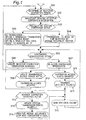
- Fig. 1 gives an exemplification of selective contention, as disclosed in this invention, to ensure subsequent zero contention period for transmission of data packets belonging to a data stream after a successful reservation of medium occupancy based on contention method.
- Fig. 2 should be used as a reference for a better understanding of the operations of Wireless Stations and Wireless Central Controller in a wireless network within Selective Contention period.
- Fig. 2 gives a description of the relationships of other sub-periods within one selection contention period, marked by literal (401). Selective Contention Period timing relationships depicted in Fig. 2 would be a good reference when the embodiment related to Figs. 2 and 3 is read with the HMSC in Fig. 1.
- the Pre-Scheduled medium occupancy period is used for data transmission for stations that have won the contention in (404) of previous Selective Contention period.
- the pointer as indicated as SCB_Ptr, marked by literal (405) is computed from the Selective_Contention_Backoff field of Selective_Contention_Information data structure.
- the Contention back-offs adopted by each station could result in wireless medium contention, marked by literal (406), after all stations begin to content for data transmission rights. It is possible to have plural number of contentions (406) within the medium Occupancy Contention period.
- the high level message sequence chart gives a typical life cycle of selective contention period occur within a wireless network where wireless stations content for rights to transmit.
- the rights to content are made known to all stations by having a central controller broadcasting a message containing timing parameters described in the Selective_Contention_Information structure, during the process marked by literal (302).
- the information in the data structure, Selective_Contention_Information provides an indication where the contention for the 1st transmission of data stream can take place within one selective contention period. Broadcasting of this message indicates the beginning of selective contention period or it can also be used to indicate the end of the selective contention period, based on the values of the Start_n_End parameter in the Selective_Contention_Information.
- This message is broadcasted at the beginning of the Selective Contention Period and may be added at the end of the Selective Contention Period and before the conditions marked by literal (301).
- the message used to indicate the beginning of selective contention period comprises of at least the following parameters:
- Selective_Contention_Information parameters in message format (1) to existing data frames such as part of the beacon frame described in the IEEE802.11 specification disclosed in International Standard ISO/IEC 8802-11 : 1999: ANSI/IEEE Std 802.11, 1999 Edition - " Part 11: Wireless LAN Medium Access Control (MAC) and (PHY) Specifications.
- Another way of implementing Selective Contention is to append all or part of the parameters of Selective_Contention_Information message in the form of information element that could be transmitted by appending to the IEEE802.11 beacon frame.
- Some of the parameters such as Duration of Selective Contention can be implemented as a variable shared by all stations within the wireless network through SNMP's (Simple Network Management Protocol) Management Information Based (MIB) value.
- MIB Management Information Based
- the station decides to cease data transmission in the pre-Alloted Station Contention Active state, process (316), the station can choose to cease transmission or to send out a NULL data packet to indicate that the station has given up the Medium Occupancy time the station reserve in previous Selective Contention period.
- transmitting stations For Stations taking part in obtaining medium occupancy during this selective contention period, transmitting stations must observe and keep a record of the m instances of Transmission silence period and medium occupancy period of a specified data stream admitted to the wireless network governed by a central medium occupancy controller.
- the exemplification of this record described in this embodiment is
- Stream Transmission time parameters is the time where the data packets of the specified data stream are scheduled to contend for medium for transmission.
- Transmission Silence time parameters are the time where the station should not content for the medium occupancy for transmission.
- Transmission Silence vectors consisting of S_Vec[n] and S_Dur[n] are contiguous transmission block separated only by time periods due to contentions or Medium Occupancy Vectors.
- Medium Occupancy Vectors comprises of M_O_Vec[n] and M_O_Dur[n].
- Transmission Silence time are time observed by the stations not transmitting data at the specified time from transmissions from other stations.
- Contentions and transmissions of data in a successfully contended wireless medium occupancy period during the Medium Occupancy Contention period as in (404) shall be allowed to be repeated in the Pre-Scheduled Medium Occupancy period in the next selective contention period (401).
- the station with a successfully contended medium occupancy in the period as marked in (404) will be in the Contention Access Rights Granted condition (308) and allowed to transmit data packets, in processes marked by literal (311) and (313).
- Process marked by (311) will be allowed to transmit up to (n-1) packets and process (313) transmit the nth packet, assuming there are n (where n > 1) data packets for transmission for the medium occupancy period granted from the successful contention.
- the transmitting station of the medium occupancy period may choose to be in the state marked by literal (312).
- the station may specifically asked for similar amount of medium occupancy time in the next selective contention period (401) by performing tasks in (314) and (315).
- station may choose to consolidate the transmission of data packets of the data streams admitted won in the Medium Occupancy Contention Period, (404) for the next transmission.
- Process (315) will make the necessary control information to indicate that the wireless occupancy is needed to the central controller by appending the information in the last data packet transmission.
- the information sent in (315) is depicted the Next_Transmission data structure.
- Both wireless central controller and wireless stations within the wireless network controlled by the said wireless central controller must keep a list of transmission by other stations during Selective Contention Period by process marked by (310) during the Update Transmission Silence Period active condition (309).
- this is updates knows as the Network Allocation Vector disclosed in International Standard ISO/IEC 8802-11 : 1999 : ANSI/IEEE Std 802.11, 1999 Edition - " Part 11: Wireless LAN Medium Access Control (MAC) and (PHY) Specifications updates.
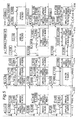
- Fig. 3 shows the detail depiction of the transmission silence and specified stream transmission being updated at the station and the central controller that is responsible for broadcasting the data in the Setective_Contention__Information to the stations in the wireless network the central controller controlled in the Pre-Scheduled Medium Occupancy Period for the next Selective Contention Period. This is to eliminate the contention time wasted in the Medium Occupancy Contention Period, (404), which will form part of the Pre-Scheduled Medium Occupancy Period in the next Selective Contention period.
- the implementation in Fig. 3 assumes that the Transmission Silence vector and Medium occupancy updates are based on inter-leaved transmission silence and medium occupancy period.
- the update process in Fig. 3 can begins, (501), when the end of the Selective Contention period.
- the central controller and the stations within the wireless network can use the same flowchart in Fig. 3 to create Selective Contention Reservation Schedule within the Pre-Scheduled medium Occupancy period for subsequent Selective Contention Period.
- Selective Contention Reservation Schedule at the Stations consists of Silence Transmission vector consisting of S_Vec[m] and S_Dur[m] parameters of Transmission Record structure and Medium Occupancy vectors of stream n consisting of M_0_Vec[n] and M_O_Dur[n] of the Transmission Records structure.
- S_Vec[m] and S_Dur[m] parameters of Transmission Record structure
- Medium Occupancy vectors of stream n consisting of M_0_Vec[n] and M_O_Dur[n] of the Transmission Records structure.
- Process block (503) determines the last point of Transmission Silence of the last fragment and the Medium Occupancy vector nearest to the consecutive Transmission Silence fragment or the next Medium Occupancy vector.
- next vector to be updated is a Transmission Silence fragment
- the new Transmission Silence Fragment is updated based on the condition if the preceding vector is a Medium Occupancy vector or Transmission Silence Vector. If current vector is a Medium Occupancy vector, process path indicated in (504) will be selected. Medium Occupancy vector is updated according to process in (506) and (509).
- the updates of Transmission Silence Fragment is updated according to (507), if the preceding vector is Medium Occupancy vector. Else if the preceding vector is a Silence Transmission vector, the current vector will be updated and the duration of current vector will be added to the preceding Silence Transmission Vector as in (508). The current vector is destroyed as indicated in process (510) by initialising to null.
- Figs. 4 and 5 give an example of 3 stations contending selectively for the wireless medium occupancy from the time the stream is admitted into the wireless network to the time the deletion of stream.
- the timing diagram illustrated in Figs. 4 and 5 depicts the time the streams from the stations are admitted into and deleted from the network. Deletion and admission of streams are performed through additional signalling from upper layer network resource, (607). The time line indicated in (607), provides the time data stream are admitted into and exit from the wireless network.
- the scheduled broadcast of the Selective Contention information by the central controller is shown in the timing chart indicated by literal (608). Contentions and the updates of the pointer (SCB_Ptr) derived from the value carries in the Selective Contention Backoff parameters are also shown the timing chart.
- SCB_Ptr pointer
- Updates of the Transmission Record parameters are based on the value used and indicated in the 4 Selective Contention Period, (613), (614), (615) and (616).
- the updates illustrated in the 4 Selective Contention Period are performed at the end of the Selective Contention Period.
- the Selective Contention Period, (606) are bounded by two broadcast frames consisting of Selective _Contention_Information,
- the timing line marked by literal (609), illustrates the contention for medium occupancy in the Medium Occupancy Contention Period.
- Time lines for Station A (610), Station B (611) and Station C (612) give the instances of Medium Occupancy contention being admitted, re-scheduled and deleted.
- At different Selective Contention Period it illustrates the instances of the different parameters of transmission records. In this example, deletion of Medium Occupancy by station A is based on Option 1 of process (316) of Fig. 1.
- time line (608) shows how termination of Medium Occupancy can take place by having station A send out a null packet (604) in the Medium Occupancy granted in earlier Selective Contention Period. This will allow the medium occupancy contention to take place among stations needing bandwidth on ad-hoc basis marked by literal (605). The amount of time for contention and transmission of data is bounded by the previous medium occupancy given up by station A.
- Fig. 6 is a schematic view of a wireless network including a central controller (which can be called "Access point (AP)) and 3 stations (A, B, C) available.
- Station A is trying to send audio data to the AP and station B is trying to send video data to station C which is a kind of video display terminal.
- AP Access point
- station B is trying to send video data to station C which is a kind of video display terminal.
- contention access mechanism like CSMA/CA (carrier sense multiple access with collision avoidance)
- all stations who are senders like station A & B have to contend for channel access before every transmission.
- CSMA/CA carrier sense multiple access with collision avoidance
- Fig. 7A is a schematic view of the access point (10) of the wireless network.
- the access point (10) has a controller unit (12), a medium recorder unit (14), receiver unit (16), transmitter unit (18).
- the medium recorder unit (14) records start and end period of contention medium occupancy period and start and end period of prescheduled medium occupancy period. Then, the stations (20, 30, 40) contend for wireless medium occupancy in order to transmit data stream in contention medium occupancy period.
- the wireless medium occupancy is prescheduled, and transmission is performed according to the prescheduled wireless medium occupancy in prescheduled medium occupancy period.
- the contention medium occupancy period and the prescheduled medium occupancy period are included in the selective contention period.
- the controller unit (12) preschedules wireless medium occupancy reservation having a duration period for contention successful station in prescheduled medium occupancy period, and moves forward the start period of contention medium occupancy period of next selective contention period by the duration period.
- the transmitter unit (18) transmits a beacon signal including information for start period of the contention medium occupancy period to the stations.
- the receiver unit (16) receives data stream transmitted from the station (20).
- Fig. 7B is a schematic view of the station (20) of the wireless network.
- the station (20) has a controller unit (22), a medium recorder unit (24), receiver unit (26), transmitter unit (28).
- the receiver unit (26) receives a beacon signal including information of start period of contention medium occupancy period transmitted from the access point (10) via the wireless medium. In the contention medium occupancy period the station (20) contends with other station for wireless medium occupancy to transmit data stream.
- the transmitter unit (28) transmits data stream via the wireless medium.
- the controller unit (22) extracts the information of the start period of the contention medium occupancy period from the beacon signal, and monitors condition of wireless medium occupancy at every monitoring period among the start period and the end period of the contention medium occupancy period, then instructs the transmitter to transmit data stream when the controller unit (22) confirms that wireless medium is not occupied.
- Fig 8 is a flowchart for transmission via wireless medium across wireless network.
- the transmission method includes:
- Fig. 9 is a flowchart for another transmission via wireless medium across wireless network.
- the transmission method includes:
- Figs. 10A, 10B, and 11 shows a conventional example of contention access mechanism with data prioritization
- AP periodically broadcasts a frame called "beacon frame" (704,707,712) in order not only to perform timing synchronization but also to indicate broadcasting information to all stations associated with itself.
- beacon frame After receives the beacon frame, all the senders (station A & B) start contending for channel access.
- station A performs carrier sense in the 1 st period (701) and because the carrier sense indicates that channel is idle (nobody's using the channel) station A performs its transmission (706) immediately after the carrier sense. Then, station A is successful for the contention (705) in the 1 st period (701). After station A ends up its transmission (706) in the 1 st period (701), it has to wait for a random period before performing the next carrier sense. Basically, the random period of time that a station has to wait before performing its next carrier sense is called “Random Backoff time” and the operation to wait for a Random Backoff time is called “perform (random) backoff".
- station A After the transmission (706) in the 1st period (701), station A performs random backoff and then perform carrier sense again in the 2nd period (702). However, the carrier sense indicates that channel is busy (because the channel is occupied by station B) so station A has to perform random backoff again immediately after the carrier sense. Then, station B is successful for the contention (708) in the 2nd period (701).
- data prioritization can also be introduced to provide a suitable QoS for different data type as described in Fig. 11.
- AP can determine "Maximum backoff time" for each Data type in order to control average random backoff time to meet different delay bound conditions required by each data type.
- Audio data type requires the most severe delay bound condition (shortest delay bound) compared to the other data types so Maximum random backoff time for Audio should be smaller than Video and Text type.
- Video data also requires a severe delay bound condition but not as much as Audio data so Maximum random backoff time for Video should be larger than Audio type but smaller than Text type.
- AP can control average random backoff time for each data type by indicating a "Table of contention parameters" in beacon frame like shown in Fig. 11. Parameters indicated inside the table can be adjusted according to load conditions, channel conditions, etc. to provide a suitable QoS for each data type.
- Fig. 11 Parameters indicated inside the table can be adjusted according to load conditions, channel conditions, etc. to provide a suitable QoS for each data type.
- Figs. 12 to 19 show concepts of the invention access mechanism "Selective Contention”.
- Fig. 12A shows a definition of Selective Contention Backoff Pointer.
- Selective_Contention_Backoff' is introduced by indicating it in the beacon frame as shown in Fig. 12A. This information is also being demonstrated as SCB_Ptr (1) in the transmission sequence as shown at the top of the same figure.
- the "selective contention period" (2) indicates duration of selective contention period. This information acts as same as the contention period as shown in Fig. 10A.
- a conventional contention access as explained in Figs. 10A and 108 can be performed immediately after the beacon (65,68,72,75).
- station A contends for channel access and occupies channel for 2ms. Then, station A is successful for the contention (66) in the "Contention Medium Occupancy Period" (61).
- station A has more data to transmit, AP registers station A as "Pre-scheduled station” to allow station A to repeat its transmission from the next selective contention period (2nd period). According to the registration, AP has to indicate to all stations that a period of 2ms after the beacon of the 2nd period is "Pre-Scheduled Medium Occupancy period" (62) and is reserved for a "Pre-Scheduled station(s)" which in this case is station A.
- AP has to indicate to all stations that a period of 5ms after the beacon (72) of the 3rd period is "Pre-Scheduled Medium Occupancy period" (64) and is reserved for a "Pre-Scheduled station(s)" which in this case are station A & B.
- both station A and station B can gain access to the channel (73,74) for 2ms and 3ms respectively during "Pre-Scheduled Medium Occupancy period" (64) of the 3rd period without performing any contention.
- the invention selective contention allows any station which succeeds its first contention access once and is registered by the AP as "Pre-scheduled station" to gain access to the channel periodically without contention. It is clear that the invention can drastically decrease contention and also provide a better QoS guarantee than the conventional contention mechanism even when traffic load is high or when a number of users is large.
- station A and B checks their own transmission record observed in the 1 st period (61). By checking the transmission record of the previous Selective Contention Period, each "Pre-scheduled station" can confirm its
- station A can confirm that in the 1st period (61) it won a contention at the 1st order and occupied channel for 2ms.
- Station A can also confirm that after its transmission (83) the channel was occupied (85) by someone (station B in this case) for 3ms. According to this, station A can decide that it must perform transmission at the 1 st order again in the 2nd period. Consequently, station A starts its transmission (87) without contention immediately after the beacon (86) in the 2nd period.
- station B can confirm that in the 1 st period (61) it won a contention at the 2nd order and occupied channel (85) for 3ms. Station B can also confirm that before its transmission (85) the channel was occupied (83) by someone (station A in this case) for 2ms. According to this, station B can decide that it must perform transmission at the 2nd order after waiting for 2ms in the 2nd period. Consequently, after received the beacon (86) of the 2nd period station B waits for 2ms and then starts its transmission (88) without contention. Station B occupies the channel for 3ms until the end of "Pre-Scheduled Medium Occupancy period" (62) of the 2nd period. The operations occurred in the 2nd period as described above are being repeated on and on every selective contention period.
- “Silence” in the transmission record as shown in Fig. 13B is the time period where other stations are performing their transmission and the station has to keep silence (not transmitting anything) in order not to interfere transmission of other stations.
- a station can decide when it should be silence by observing the Duration/ID field indicated in the frames sent by other stations.
- the Duration/ID field is indicated as "Network Allocation Vector (NAV) field” as shown in Fig. 13B. This field is basically indicated in the frame header of each frame.
- NAV Network Allocation Vector
- Pre-scheduled Station Address List is indicated in a beacon frame and used to tell all stations that
- AP indicates "Pre-scheduled Station Address List" within every beacon frame and broadcasts to all stations at the beginning of every Selective Contention Period.
- Fig. 7A, 17B, and 18 shows how to use Next Transmission Information.
- the station which successfully contended channel occupancy in "Medium Occupancy Contention Period” will be allowed to transmit data packets without contention in "Pre-scheduled Medium Occupancy Period” from the next Selective Contention Period.
- a station can indicates its intention whether to continue transmission in the next Selective Contention Period or to suspend transmission and release its own Pre-scheduled medium occupancy time, by indicating Next transmission Information in the last packet transmitted in the current Selective Contention Period.
- station A wants to continue its transmission in the 3rd period with transmission duration of 4ms.
- station A wants to stop transmission from the next (the 4th period) Selective Contention Period.
- a Pre-scheduled station can also release its own Pre-scheduled medium occupancy time by sending a broadcasting frame such as "Null Frame” to AP and all stations whenever it wants as shown in Figs. 19A and 19B.
- Figs. 19A and 19B show an example for suspension of Pre-scheduled transmission by using Null Frame.
- station A which is a "Prescheduled station” sends Null frame in the 2nd period to indicate that it wants to suspend its transmission in "Pre-scheduled Medium Occupancy Period".
- AP and other Pre-scheduled stations Upon reception of Null Frame, AP and other Pre-scheduled stations recognize that transmission order in the "Pre-scheduled Medium Occupancy Period" changes and have to be updated.
- station B which is "Pre-scheduled station” confirms its own transmission record and finds that station A which was a "Prescheduled station” transmitting at the first order has already suspended its "Prescheduled transmission". Consequently, all Pre-scheduled stations except station A recognize that they have to perform "Pre-scheduled transmission” at 1 step younger order. In this case, station B which previously performed "Prescheduled transmission” at the second order recognize that it transmission order is changed from the second (2nd) order to the first (1st) order.
- station B After receives the beacon of the 3rd period, station B starts its Pre-scheduled transmission immediately as shown in the Figs. 19A and 19B.
- the invention solves the problems by providing a systematic process to equip the network device to become QoS awareness; a means to reject admission of stream that will cost transmission medium to be overloaded; a means to shape the emission rate of data units in a form of short burst in order to reduce the number of transmission permit required; a means to generate transmission permit to serve multiple transmission queues concurrently; a means to transmit data units of all the traffic streams in the manner that QoS requirement is not being violated; a means of creating a bounded period called the selective contention period for controlled contention of wireless medium occupancy time; a system where the stations and the central controller contend for wireless medium at a selected time in every selective contention period depending on the traffic conditions; a means for the stations and central controller to have a distributed scheduling of transmission by keeping a transmission records at each stations; a means to update the transmission records; a means to reserve and delete scheduled medium occupancy time within the selective contention period a system to reserve and delete schedule medium occupancy time using contention based wireless medium occupancy access method.
- all traffic streams with transmission being coordinated are being rate controlled and shaped before emitting into a single transmission queue.
- Data units of all traffic streams in the transmission queue are being served in First-In-First-Out fashion.
- traffic streams with transmission not being coordinated are being admission controlled and categorized before emitting to their respective category transmission queue.
- Data units in a transmission queue are only permitted for transmission when transmission permit for that queue is granted.
- their respective Transmission Controller of a transmission queue is coordinating the transmission process.
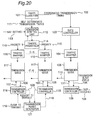
- Fig. 20 shows a systematic process to facilitate QoS for transmission over a wireless network. Initially the traffic stream needs to be classified according to the manner in which it needs to be served, as marked by literal 101. The time at which data transfer is initiated can either being coordinated by a centralized coordinating entity or determined by an autonomous means. Parameterised or prioritised QoS streams can be served by either: coordinated transfer, or autonomous transfer, depending on the choice of the network device or setup.
- the emission of traffic is to be rate controlled (103) and shaped (104) individually, before being admitted to the transmission queue.
- data units can be transmitted in First-In-First-Out (FIFO)manner without introducing a bias towards any traffic stream.
- FIFO First-In-First-Out
- the Traffic Shaper shapes the quantity (measured in terms of either: a) the number, or b) the size) of data units that are permitted to be admitted to the corresponding transmission queue.
- the first process for Traffic Shaping (104) is to determine a service interval for each transmission queue.
- the service interval is defined as the duration between successive dedications of transmission-permits that is required by a transmission queue in order to achieve QoS requirements for all admitted streams.
- the duration, D that is required on the transmission medium to fully transmit one data unit considering all the overheads.
- T S * D.
- T S * D.
- the result obtained from the division of I by P is the value of the service interval.
- the values of: a) Service_Credit, b) Service_Negative_Credit and c) Service_Count need to be computed.
- Service_Credit is defined as the average quantity (measured in terms of number or size) of data units that can be admitted to the transmission queue within a Service Interval. This is computed as the product of the service interval with the sum of the data rates for all admitted traffic streams.
- Service_Negative_Credit is defined as the surplus quantity of data units that can be admitted to the transmission queue, within a service interval. It is used to smooth the traffic that is generated at burst without introducing excessive queuing delay.
- the third variable, Service_Count is the accumulated number or size of data units of the traffic stream that are permitted to be transmitted but have not being do so from the beginning of the stream transmission. It is being initialised to zero before any data units is emitted into the transmission queue. At the beginning of each periodicity of service interval, Service_Credit is added onto the existing value of the variable. After each transmission, a unit is being subtracted from the variable.
- the quantity of data units, N that are permitted to admit into the transmission queue during the current periodic interval is to be determined. If the value of Service_Count at the end of pervious periodic interval is greater than zero, then N is equal to the sum of Service_Count, Service_Credit and Service_Negative_Credit. Else, N is equal to the sum of Service_Count, Service_Credit only. Then this number is used to guard the emission of data units into transmission queue.
- Transmission Controller (108) is to convert transmission permit to control signal (107) for controlling data transmission, which is also generates necessary signals or control frames to release excessive transmission permit base on transmission queue status (106).
- each stream needs to be admitted by the admission control unit (112).
- the admission control unit determines whether admission of the stream will require more resources than are available in the network and based on this calculation, it will decide whether to accept or reject the stream.
- the admission control unit (112) requires two inputs, namely: a) the estimated data rate of the traffic stream, and b) bandwidth available in the medium prior to admitting the stream.
- the data rate of a traffic stream can be estimated by monitoring the number of data units and their size at the input terminal of the Traffic prioritiser (114).
- a station can estimate the bandwidth available in the medium by monitoring it own transmission and the setting of its Network Allocation Vector (NAV).
- NAV Network Allocation Vector
- the emission rate is to be mould in a form of short burst in order to reduce the occurrences of contending for transmission permits with other streams or stream of other network devices in the same transmission network.
- Traffic Shaper marked by literal 116 it is having the same functionality as describe for the traffic shaper marked by literal 104 with a minor modification on the method to determined the required service interval.
- the service interval is to be determined as a interval of transmission permit dedication that is able to maintain QoS Requirement of all streams in the respective transmission queue.
- First is to obtain the duration of transmission permitted, E, when given a transmission permit.
- the service interval is the division result of F over the rate that data units are emitted to the transmission queue.
- Transmission Controller (118) is to control the transmission of the packet at the transmission queue and generate necessary signal to the Transmission Permit Generator to request for transmission permit.
- Request_To_Transmit signal (120) is being generated to the Transmission Permit Generator when the respective transmission queue is non-empty and no pending signal request is being generated.
- Transmit Permit Generator logic can be represented by a two stages Finite State Machine as shown in Fig. 21 with three variables associated with each transmission queue. The first variable, A is to indicate the remaining number of fixed slot that the transmission medium need to remain silent before a transmission permit can be granted to the transmission queue. The second variable, W is to indicate that the transmission queue is having a pending request for transmission permit.
- Request_To_Transmit signal (205) is being received and set to false when Clear_To_Transmit signal (206) is generated.
- IDLE stage (201) at each slot interval, A is being decremented by 1 if it is non-zero. Furthermore, when A is zero and W indicating there is a pending Request_To_Transmit signal for the respective transmission queue, Clear_To_Transmit signal is to be generated.
- a transition from IDLE stage to BUSY stage is required when the transmission medium is detected to be busy.
- BUSY stage (202) A is stop from decrementing. When the transmission medium is idle for a pre-fix duration, a stage transition from BUSY to IDLE is to be performed. During that transition, A is to be recomputed. With that, only a single Transmission Permit Generator is required to serve more than one transmission queue.
- a system that enables a network device to facilitate QoS data transmission in which the timing to initiate transmission by the device is coordinated, comprising of:
- a system that enables a network device to facilitate QoS data transmission in which the timing to initiate transmission by the device is determined autonomously by the device, comprising of:
- a method to ensure no bias is introduced by combining all the data units of all traffic streams that are to be transmitted in a coordinated manner at the transmission queue, in order to allow data units to be transmitted in a timely and First-In-First-Out fashion, when granted a transmission permit, comprising the steps of:
- method to determine the periodicity interval in part (i) of fourth aspect, when the transmission permit given to a transmission queue has a constant duration comprises the step of:
- method to have only one Traffic Permit Generator for multiple transmission queues is to implement the generator process as two stages finite stage machine that comprises of:
- the wireless stations content for transmission bandwidth by dividing into 2 distinct periods of wireless medium occupancy contention are:
- the ninth method for all stations to generate the selective contention period, as in seventh aspect, within the wireless network controlled or coordinated by a central controller on reception of a signal or message indicating the beginning of the selective contention period and by retrieving the following pre-stored numerical representatives from the message consisting of :
- method to prevent wireless medium contention during a period occupied by wireless medium occupancies belonging to other stations through successful contention based reservations by having a transmission records of a bounded period of time where the transmission records are managed by individual station within the wireless network and the records comprises of:
- a system for reserving bandwidth in a wireless network where medium occupancies ger7erafied by transmitting stations using contention means by allowing transmission records, as in eleventh aspect, to be updated in a distributed manner comprises of medium occupancies periods of data streams to be transmitted by the host station and transmission silence period observed by the host stations due to medium occupancy period allotted to other stations.
- method to reduce bandwidth wastage due to contention of wireless medium occupancy reservations in the medium occupancy contention period by freeing up the bandwidth for contention comprises the steps of:
- a system allowing other stations in the wireless network to content for medium occupancy time released by the station by performing individual station transmission record updates from the received null packet from the station releasing medium occupancy.
- method to mould the emission of data units in a short burst in order to reduce the occurrences of collision with other streams or streams from other network devices in a same network that transmission are not being coordinated by a coordinator comprises the steps of:
- method to determine the timing for the Transmission Controller of part iii in second aspect or of part ii in eighteenth aspect to generate a signal to request for transmission permit which is less likely to collide with other transmission comprises by monitoring the status of transmission queue such that the signal to request for transmission permit is only generated if there are enough data units to be transmitted upon receiving transmission permit with the condition that the delay of the signal generation does not cost the lifetime of any data units to be expired.
- Embodimen 1 Method for transmitting data stream via wireless medium for contention based medium access across a wireless network having a plurality of stations and an access point communicating to said stations via wireless medium, the method comprising:
- Embodiment 2 Method for transmitting data stream via wireless medium for contention based medium access across a wireless network having a plurality of stations and an access point communicating to said stations via wireless medium, the method comprising:
- Embodiment 3 Method with the features of embodiment 1 or 2, wherein the access point transmit a beacon signal including an information about start period of the contention medium occupancy period to each station, whereby selective contention between the stations is performed.
- Embodiment 4 Method with the features of embodiment 3 wherein the beacon signal, the prescheduled medium occupancy period, and the contention medium occupancy period are provided in turn in the selective contention period.
- Embodiment 5 Method with the features of embodiment 1 to 4, when a station is successful for a contention at the contention medium occupancy period of the selective contention period, a wireless medium occupancy reservation having a duration period for the contention successful station is prescheduled within a prescheduled medium occupancy period of next selective contention period, then start period of a contention medium occupancy period of next selective contention period is moved forward from the start period of the contention medium occupancy period of the selective contention period by the duration period.
- Embodiment 6 Method with the features of embodiment 1 to 4, when a first station is successful for a first contention at the contention medium occupancy period of the selective contention period, subsequently a second station is successful for a second contention after the first contention, a first medium occupancy reservation having a first duration period for the first station is prescheduled within a prescheduled medium occupancy period of next selective contention period, subsequently a second medium occupancy reservation having a second duration period for the second station is prescheduled after the first medium occupancy reservation within the prescheduled medium occupancy period of next selective contention period, then start period of a contention medium occupancy period of next selective contention period is moved forward from the start period of the contention medium occupancy period of the selective contention period by sum of the first duration period and the second duration period.
- Embodiment 7 Method with the features of embodiment 6, wherein the start period and the duration period of transmissions from the first and second stations according to the scheduled wireless medium occupancy reservation are recorded in both the first and the second stations.
- Embodiment 8 Method with the features of embodiment 1 to 7, wherein the station monitors condition of the wireless medium occupancy in the selective contention period, and records the condition, then transmission timing is determined according to the condition of the wireless medium occupancy recorded.
- Embodiment 9 Method with the features of embodiment 1 to 8, when the access point receives null packet transmitted at the transmission timing according to prescheduled wireless medium occupancy reservation having a duration period for the station, the prescheduled wireless medium occupancy reservation will be cancelled, then start period of the contention medium occupancy period of next selective contention period will be moved back by the duration period.
- Embodiment 10 Method with the features of embodiment 3 to 9, wherein the beacon signal further includes information with respect to:
- Embodiment 11 Method with the features of embodiment 10, wherein the beacon signal further includes information with respect to start period and duration period of prescheduled wireless medium occupancy reservation within the prescheduled medium occupancy period.
- Embodiment 12 Method with the features of embodiment 1 to 11, wherein the station transmits data stream having last packet including reservation parameter for wireless medium occupancy reservation having a duration period in prescheduled medium occupancy period of next selective contention period, the access point receives the reservation parameter included in last packet, wireless medium occupancy reservation for the station will be prescheduled in prescheduled medium occupancy period of next selective contention period, then the start period of the contention medium occupancy period will be moved forward by the duration period.
- Embodiment 13 A wireless network system comprising a plurality of stations and an access point communicating with the stations via wireless medium, the access point comprising:
- Embodiment 14 An access point communicating with a plurality of stations via wireless medium, the access point comprising:
- Embodiment 15 An access point with the features of embodiment 14, when the receiver unit receives a null packet transmitted at the transmission timing according to prescheduled wireless medium occupancy reservation having a duration period for the station, the prescheduled wireless medium occupancy reservation will be cancelled, then start period of the contention medium occupancy period of next selective contention period will be moved back by the duration period.
- Embodiment 16 A station communicating with an access point via wireless medium, the station comprising: a receiver unit which receives a beacon signal including information of start period of contention medium occupancy period transmitted from the access point via the wireless medium, wherein in the contention medium occupancy period the station contends with other station for wireless medium occupancy to transmit data stream; a transmitter unit which transmits data stream via the wireless medium; a medium recorder unit which records transmission record; and a controller unit which extracts the information of the start period of the contention medium occupancy period from the beacon signal, and monitors condition of wireless medium occupancy at every monitoring period among the start period and the end period of the contention medium occupancy period, then instructs the transmitter to transmit data stream when the controller unit confirms that wireless medium is not occupied.
- Embodiment 17 A station with the features of embodiment 16, when the station is successful for a contention at the contention medium occupancy period of the selective contention period, and acquires a wireless medium occupancy reservation having a duration period for the contention successful station, then the station extracts information of start period of the contention medium occupancy period of next selective contention period, and begins to transmit data stream at a time before the start period of the contention medium occupancy period by the duration period.
- Embodiment 18 A station with the features of embodiment 16 or 17, wherein the medium recorder unit records the medium record including condition of wireless medium occupancy in both the contention medium occupancy period and the prescheduled medium occupancy period of the selective contention period, wherein the controller unit calculates transmission timing at which the station transmits data stream in the prescheduled medium occupancy period according to the transmission record.
- Embodiment 19 A station with the features of embodiment 16, when first and second stations are prescheduled respectively within the next prescheduled medium occupancy period, and the first station's transmitter unit transmits a null packet which is a kind of broadcasting packet sent to all stations in order to release its own prescheduled wireless medium occupancy, and the second station's receiver unit receives the null packet from the first station, then the controller unit of the second station realizes that the prescheduled wireless medium occupancy reservation for the first station is cancelled, and rearranges its transmission order of the second station within the next prescheduled medium occupancy period by using the medium record recorded by the medium recorder unit of the second station.
- a null packet which is a kind of broadcasting packet sent to all stations in order to release its own prescheduled wireless medium occupancy
- the second station's receiver unit receives the null packet from the first station
Landscapes
- Engineering & Computer Science (AREA)
- Computer Networks & Wireless Communication (AREA)
- Signal Processing (AREA)
- Mobile Radio Communication Systems (AREA)
- Small-Scale Networks (AREA)
- Near-Field Transmission Systems (AREA)
- Radar Systems Or Details Thereof (AREA)
Applications Claiming Priority (2)
| Application Number | Priority Date | Filing Date | Title |
|---|---|---|---|
| JP2003004498 | 2003-01-10 | ||
| EP04701107A EP1602204B1 (fr) | 2003-01-10 | 2004-01-09 | Procédé de transmission de flux de données via un réseau sans fil, et réseau sans fil |
Related Parent Applications (1)
| Application Number | Title | Priority Date | Filing Date |
|---|---|---|---|
| EP04701107A Division EP1602204B1 (fr) | 2003-01-10 | 2004-01-09 | Procédé de transmission de flux de données via un réseau sans fil, et réseau sans fil |
Publications (1)
| Publication Number | Publication Date |
|---|---|
| EP1887735A2 true EP1887735A2 (fr) | 2008-02-13 |
Family
ID=32708959
Family Applications (2)
| Application Number | Title | Priority Date | Filing Date |
|---|---|---|---|
| EP07121554A Withdrawn EP1887735A2 (fr) | 2003-01-10 | 2004-01-09 | Procédé de transmission de flux de données via un réseau sans fil et réseau sans fil |
| EP04701107A Expired - Lifetime EP1602204B1 (fr) | 2003-01-10 | 2004-01-09 | Procédé de transmission de flux de données via un réseau sans fil, et réseau sans fil |
Family Applications After (1)
| Application Number | Title | Priority Date | Filing Date |
|---|---|---|---|
| EP04701107A Expired - Lifetime EP1602204B1 (fr) | 2003-01-10 | 2004-01-09 | Procédé de transmission de flux de données via un réseau sans fil, et réseau sans fil |
Country Status (6)
| Country | Link |
|---|---|
| US (1) | US20060099956A1 (fr) |
| EP (2) | EP1887735A2 (fr) |
| CN (1) | CN1759577A (fr) |
| AT (1) | ATE383702T1 (fr) |
| DE (1) | DE602004011194T2 (fr) |
| WO (1) | WO2004064284A2 (fr) |
Cited By (1)
| Publication number | Priority date | Publication date | Assignee | Title |
|---|---|---|---|---|
| WO2010099497A1 (fr) * | 2009-02-27 | 2010-09-02 | Qualcomm Incorporated | Procédés et appareils permettant de programmer des messages pour un accès multiple par répartition spatiale pour une demande de liaison montante (rsdma) dans un réseau local (lan) sans fil à accès multiple par répartition spatiale (sdma) |
Families Citing this family (53)
| Publication number | Priority date | Publication date | Assignee | Title |
|---|---|---|---|---|
| US7065144B2 (en) * | 2003-08-27 | 2006-06-20 | Qualcomm Incorporated | Frequency-independent spatial processing for wideband MISO and MIMO systems |
| US9226308B2 (en) | 2003-10-15 | 2015-12-29 | Qualcomm Incorporated | Method, apparatus, and system for medium access control |
| US8462817B2 (en) * | 2003-10-15 | 2013-06-11 | Qualcomm Incorporated | Method, apparatus, and system for multiplexing protocol data units |
| US8472473B2 (en) * | 2003-10-15 | 2013-06-25 | Qualcomm Incorporated | Wireless LAN protocol stack |
| US8284752B2 (en) | 2003-10-15 | 2012-10-09 | Qualcomm Incorporated | Method, apparatus, and system for medium access control |
| US8842657B2 (en) | 2003-10-15 | 2014-09-23 | Qualcomm Incorporated | High speed media access control with legacy system interoperability |
| US8483105B2 (en) * | 2003-10-15 | 2013-07-09 | Qualcomm Incorporated | High speed media access control |
| US8233462B2 (en) | 2003-10-15 | 2012-07-31 | Qualcomm Incorporated | High speed media access control and direct link protocol |
| US8903440B2 (en) * | 2004-01-29 | 2014-12-02 | Qualcomm Incorporated | Distributed hierarchical scheduling in an ad hoc network |
| US7818018B2 (en) * | 2004-01-29 | 2010-10-19 | Qualcomm Incorporated | Distributed hierarchical scheduling in an AD hoc network |
| US8199686B1 (en) * | 2004-03-04 | 2012-06-12 | Marvell International Ltd. | Wireless local area network infrastructure mode for reducing power consumption |
| US8315271B2 (en) * | 2004-03-26 | 2012-11-20 | Qualcomm Incorporated | Method and apparatus for an ad-hoc wireless communications system |
| US7564814B2 (en) * | 2004-05-07 | 2009-07-21 | Qualcomm, Incorporated | Transmission mode and rate selection for a wireless communication system |
| US8401018B2 (en) * | 2004-06-02 | 2013-03-19 | Qualcomm Incorporated | Method and apparatus for scheduling in a wireless network |
| US9031568B2 (en) * | 2004-07-28 | 2015-05-12 | Broadcom Corporation | Quality-of-service (QoS)-based association with a new network using background network scanning |
| EP1779567A4 (fr) * | 2004-08-18 | 2008-12-24 | Staccato Communications Inc | Fusion de groupe de balise |
| US7882412B2 (en) | 2004-10-05 | 2011-02-01 | Sanjiv Nanda | Enhanced block acknowledgement |
| US20060140147A1 (en) * | 2004-12-23 | 2006-06-29 | Van Bemmel Jeroen | Bandwidth allocation protocol for shared wireless networks |
| US8201205B2 (en) | 2005-03-16 | 2012-06-12 | Tvworks, Llc | Upstream bandwidth management methods and apparatus |
| KR100645539B1 (ko) * | 2005-08-19 | 2006-11-14 | 삼성전자주식회사 | 무선 랜 시스템의 무선 자원 사용 장치 및 방법 |
| US8600336B2 (en) | 2005-09-12 | 2013-12-03 | Qualcomm Incorporated | Scheduling with reverse direction grant in wireless communication systems |
| US20070171862A1 (en) * | 2006-01-25 | 2007-07-26 | Honeywell International Inc. | Media access control protocol for mobile ad hoc networks using CDMA and multiuser detection |
| JP4799213B2 (ja) | 2006-02-28 | 2011-10-26 | 株式会社エヌ・ティ・ティ・ドコモ | 無線通信端末及び無線通信方法 |
| KR101299732B1 (ko) * | 2006-07-14 | 2013-09-16 | 삼성전자주식회사 | 고주파 무선 대역에서의 무선 통신 방법 및 장치 |
| GB2440578B (en) * | 2006-07-31 | 2008-08-13 | Motorola Inc | Method and system for wireless communication |
| US7724765B2 (en) * | 2006-12-07 | 2010-05-25 | Motorola, Inc. | Method and apparatus for providing quality of service over a contention access period of a wireless personal area network |
| KR100992419B1 (ko) * | 2007-07-09 | 2010-11-05 | 삼성전자주식회사 | 이동통신 시스템에서 피어투피어 통신을 위한 상태천이방법 |
| US7987285B2 (en) | 2007-07-10 | 2011-07-26 | Bytemobile, Inc. | Adaptive bitrate management for streaming media over packet networks |
| US7991904B2 (en) * | 2007-07-10 | 2011-08-02 | Bytemobile, Inc. | Adaptive bitrate management for streaming media over packet networks |
| US8085680B1 (en) * | 2007-09-24 | 2011-12-27 | At&T Intellectual Property I, Lp | Multi-mode mobile networking device |
| CN101626585B (zh) * | 2008-07-10 | 2013-04-24 | 日电(中国)有限公司 | 无线网络的网络干扰评估方法、动态信道分配方法和设备 |
| CN102165829A (zh) * | 2008-07-31 | 2011-08-24 | 三洋电机株式会社 | 报知方法和访问控制装置 |
| JP5172609B2 (ja) * | 2008-10-31 | 2013-03-27 | 株式会社東芝 | 無線通信装置、無線端末及び無線通信方法 |
| CN102017532A (zh) * | 2008-12-01 | 2011-04-13 | 马维尔国际贸易有限公司 | 接入点增强 |
| EP2203010B1 (fr) * | 2008-12-23 | 2011-12-14 | ABB Research Ltd. | Administrateur, procédé et système de multi-réseaux |
| EP2209346A3 (fr) | 2009-01-19 | 2011-11-23 | Siemens Aktiengesellschaft | Procédé pour la transmission de données dans un réseau local |
| US9007967B2 (en) * | 2009-12-03 | 2015-04-14 | Intel Corporation | BSS/PBSS support and schedule-free networking in 60GHz |
| DE102010015145B4 (de) | 2010-04-16 | 2017-02-09 | Spannrit Schuhkomponenten Gmbh | Thermoplastisch verformbare Schuheinlegesohle |
| US20120082142A1 (en) * | 2010-10-05 | 2012-04-05 | Electronics And Telecommunications Research Institute | Method of allocating radio resource and transmitting data |
| CN102123505B (zh) * | 2011-03-11 | 2014-05-07 | 华为终端有限公司 | 一种信道占用方法、移动ap和外接sta |
| US9049733B2 (en) * | 2011-07-07 | 2015-06-02 | Qualcomm Incorporated | Synchronous transmission methods and apparatus |
| JP5807317B2 (ja) | 2011-09-20 | 2015-11-10 | ホアウェイ・テクノロジーズ・カンパニー・リミテッド | 無線通信システムの競合管理のためのシステムおよび方法 |
| US11323337B2 (en) | 2011-09-27 | 2022-05-03 | Comcast Cable Communications, Llc | Resource measurement and management |
| FI124649B (en) * | 2012-06-29 | 2014-11-28 | Tellabs Oy | Method and system for finding the lowest hop-per-bit rate |
| CN103581107B (zh) | 2012-07-19 | 2017-05-10 | 国基电子(上海)有限公司 | 服务器及其设定工作模式的方法 |
| US9148892B2 (en) * | 2012-08-31 | 2015-09-29 | Cambridge Silicon Radio Limited | Transmitting data |
| US9106557B2 (en) | 2013-03-13 | 2015-08-11 | Comcast Cable Communications, Llc | Scheduled transmission of data |
| US9392487B2 (en) * | 2013-05-06 | 2016-07-12 | Huawei Technologies Co., Ltd. | Systems and methods for traffic-aware medium access selection |
| WO2015070230A1 (fr) * | 2013-11-11 | 2015-05-14 | Marvell World Trade Ltd. | Commande d'accès au support pour mrof multicanaux dans un réseau local sans fil |
| WO2015109599A1 (fr) * | 2014-01-27 | 2015-07-30 | 华为技术有限公司 | Procédé de communication radio, point d'accès et station |
| CN104918329B (zh) * | 2014-03-13 | 2019-06-25 | 中国移动通信集团公司 | 一种通信处理方法、装置及基站 |
| CN107172890B (zh) | 2014-09-12 | 2020-11-06 | 日本电气株式会社 | 无线电站、无线电终端、和用于终端测量的方法 |
| KR20230094860A (ko) * | 2021-12-21 | 2023-06-28 | 한국전자기술연구원 | 비신뢰성 네트워크 기반 무선 전송 스케줄링 방법 및 장치 |
Family Cites Families (7)
| Publication number | Priority date | Publication date | Assignee | Title |
|---|---|---|---|---|
| US4907224A (en) * | 1986-10-17 | 1990-03-06 | Bydatel Corporation | Method for transmitting data in multiple access data communications networks |
| US5677909A (en) * | 1994-05-11 | 1997-10-14 | Spectrix Corporation | Apparatus for exchanging data between a central station and a plurality of wireless remote stations on a time divided commnication channel |
| WO2002037754A2 (fr) * | 2000-11-03 | 2002-05-10 | At & T Corp. | Acces tcma: procede pour un acces canal partage prioritarise |
| JP4534343B2 (ja) * | 2000-11-15 | 2010-09-01 | 三菱電機株式会社 | ディジタル放送受信機、ディジタル放送システム、およびディジタル放送信号処理方法 |
| WO2002063806A2 (fr) * | 2001-02-07 | 2002-08-15 | Xtremespectrum, Inc. | Systeme, procede, et produit de programme informatique permettant de partager une largeur de bande dans un reseau local personnel sans fil ou dans un reseau local sans fil |
| US20040047319A1 (en) * | 2002-09-06 | 2004-03-11 | Johannes Elg | Contention-based medium access control for ad hoc wireless piconets |
| US7356010B2 (en) * | 2002-12-02 | 2008-04-08 | Ntt Docomo Inc. | Point coordinator control passing scheme using a scheduling information parameter set for an IEEE 802.11 wireless local area network |
-
2004
- 2004-01-09 EP EP07121554A patent/EP1887735A2/fr not_active Withdrawn
- 2004-01-09 AT AT04701107T patent/ATE383702T1/de not_active IP Right Cessation
- 2004-01-09 EP EP04701107A patent/EP1602204B1/fr not_active Expired - Lifetime
- 2004-01-09 US US10/541,748 patent/US20060099956A1/en not_active Abandoned
- 2004-01-09 WO PCT/JP2004/000118 patent/WO2004064284A2/fr not_active Ceased
- 2004-01-09 CN CN200480006690.6A patent/CN1759577A/zh active Pending
- 2004-01-09 DE DE602004011194T patent/DE602004011194T2/de not_active Expired - Fee Related
Non-Patent Citations (4)
Cited By (2)
| Publication number | Priority date | Publication date | Assignee | Title |
|---|---|---|---|---|
| WO2010099497A1 (fr) * | 2009-02-27 | 2010-09-02 | Qualcomm Incorporated | Procédés et appareils permettant de programmer des messages pour un accès multiple par répartition spatiale pour une demande de liaison montante (rsdma) dans un réseau local (lan) sans fil à accès multiple par répartition spatiale (sdma) |
| US8989106B2 (en) | 2009-02-27 | 2015-03-24 | Qualcomm Incorporated | Methods and apparatuses for scheduling uplink request spatial division multiple access (RSDMA) messages in an SDMA capable wireless LAN |
Also Published As
| Publication number | Publication date |
|---|---|
| DE602004011194T2 (de) | 2008-12-24 |
| EP1602204B1 (fr) | 2008-01-09 |
| ATE383702T1 (de) | 2008-01-15 |
| WO2004064284A3 (fr) | 2004-10-21 |
| CN1759577A (zh) | 2006-04-12 |
| US20060099956A1 (en) | 2006-05-11 |
| EP1602204A2 (fr) | 2005-12-07 |
| WO2004064284A2 (fr) | 2004-07-29 |
| DE602004011194D1 (de) | 2008-02-21 |
Similar Documents
| Publication | Publication Date | Title |
|---|---|---|
| EP1602204B1 (fr) | Procédé de transmission de flux de données via un réseau sans fil, et réseau sans fil | |
| KR100914104B1 (ko) | 무선 네트워크에 있어서 매체에의 액세스 보증 방법 | |
| US6141336A (en) | Traffic scheduling method, system and article of manufacture for a wireless access to an asynchronous transfer mode network | |
| US9686720B2 (en) | Admission control for QoS-driven wireless LANs | |
| US7450504B1 (en) | Admission control for QoS-driven wireless LANs | |
| US7068633B1 (en) | Enhanced channel access mechanisms for QoS-driven wireless lans | |
| EP1324547A2 (fr) | Allocation de canal dans un réseau CSMA/CA supportant Qualité de Service(QOS) | |
| JP2001505018A (ja) | パケット通信システムのパフォーマンスを向上させる方法と装置 | |
| US6999442B1 (en) | RSVP/SBM based down-stream session setup, modification, and teardown for QOS-driven wireless lans | |
| US6801537B1 (en) | Adaptive contention algorithm based on truncated binary exponential back-off | |
| CN100466492C (zh) | 自适应多址接入方法 | |
| JP2000244523A (ja) | 無線パケット通信システム | |
| JP4065393B2 (ja) | 無線ネットワークにおいて媒体へのアクセスを保証する方法 | |
| JP2004248263A (ja) | 無線通信ネットワークに渡る無線媒体を介してデータ・ストリームを送信するための方法と無線ネットワーク | |
| JP4237239B2 (ja) | 無線ネットワークにおいて媒体へのアクセスを保証する方法 | |
| JP2002314551A (ja) | ローカルエリアネットワークにおけるサービスの質を支持するための統一チャネルアクセス |
Legal Events
| Date | Code | Title | Description |
|---|---|---|---|
| PUAI | Public reference made under article 153(3) epc to a published international application that has entered the european phase |
Free format text: ORIGINAL CODE: 0009012 |
|
| AC | Divisional application: reference to earlier application |
Ref document number: 1602204 Country of ref document: EP Kind code of ref document: P |
|
| AK | Designated contracting states |
Kind code of ref document: A2 Designated state(s): AT BE BG CH CY CZ DE DK EE ES FI FR GB GR HU IE IT LI LT LU MC MT NL PT RO SE SI SK TR |
|
| STAA | Information on the status of an ep patent application or granted ep patent |
Free format text: STATUS: THE APPLICATION HAS BEEN WITHDRAWN |
|
| 18W | Application withdrawn |
Effective date: 20080707 |