EP1888103B1 - Verwendung von glp-1, exendin und agonisten davon zur verzögerung oder verhinderung von kardialer remodellierung - Google Patents
Verwendung von glp-1, exendin und agonisten davon zur verzögerung oder verhinderung von kardialer remodellierung Download PDFInfo
- Publication number
- EP1888103B1 EP1888103B1 EP06740942A EP06740942A EP1888103B1 EP 1888103 B1 EP1888103 B1 EP 1888103B1 EP 06740942 A EP06740942 A EP 06740942A EP 06740942 A EP06740942 A EP 06740942A EP 1888103 B1 EP1888103 B1 EP 1888103B1
- Authority
- EP
- European Patent Office
- Prior art keywords
- glp
- xaa
- exendin
- cic
- cardioprotective
- Prior art date
- Legal status (The legal status is an assumption and is not a legal conclusion. Google has not performed a legal analysis and makes no representation as to the accuracy of the status listed.)
- Expired - Lifetime
Links
Images






Classifications
-
- A—HUMAN NECESSITIES
- A61—MEDICAL OR VETERINARY SCIENCE; HYGIENE
- A61K—PREPARATIONS FOR MEDICAL, DENTAL OR TOILETRY PURPOSES
- A61K38/00—Medicinal preparations containing peptides
- A61K38/16—Peptides having more than 20 amino acids; Gastrins; Somatostatins; Melanotropins; Derivatives thereof
- A61K38/17—Peptides having more than 20 amino acids; Gastrins; Somatostatins; Melanotropins; Derivatives thereof from animals; from humans
- A61K38/22—Hormones
- A61K38/26—Glucagons
-
- A—HUMAN NECESSITIES
- A61—MEDICAL OR VETERINARY SCIENCE; HYGIENE
- A61K—PREPARATIONS FOR MEDICAL, DENTAL OR TOILETRY PURPOSES
- A61K38/00—Medicinal preparations containing peptides
- A61K38/16—Peptides having more than 20 amino acids; Gastrins; Somatostatins; Melanotropins; Derivatives thereof
- A61K38/17—Peptides having more than 20 amino acids; Gastrins; Somatostatins; Melanotropins; Derivatives thereof from animals; from humans
- A61K38/22—Hormones
- A61K38/2278—Vasoactive intestinal peptide [VIP]; Related peptides (e.g. Exendin)
-
- A—HUMAN NECESSITIES
- A61—MEDICAL OR VETERINARY SCIENCE; HYGIENE
- A61P—SPECIFIC THERAPEUTIC ACTIVITY OF CHEMICAL COMPOUNDS OR MEDICINAL PREPARATIONS
- A61P7/00—Drugs for disorders of the blood or the extracellular fluid
-
- A—HUMAN NECESSITIES
- A61—MEDICAL OR VETERINARY SCIENCE; HYGIENE
- A61P—SPECIFIC THERAPEUTIC ACTIVITY OF CHEMICAL COMPOUNDS OR MEDICINAL PREPARATIONS
- A61P9/00—Drugs for disorders of the cardiovascular system
-
- A—HUMAN NECESSITIES
- A61—MEDICAL OR VETERINARY SCIENCE; HYGIENE
- A61P—SPECIFIC THERAPEUTIC ACTIVITY OF CHEMICAL COMPOUNDS OR MEDICINAL PREPARATIONS
- A61P9/00—Drugs for disorders of the cardiovascular system
- A61P9/10—Drugs for disorders of the cardiovascular system for treating ischaemic or atherosclerotic diseases, e.g. antianginal drugs, coronary vasodilators, drugs for myocardial infarction, retinopathy, cerebrovascula insufficiency, renal arteriosclerosis
Definitions
- cardioprotective incretin compounds such as GLP-1, exendin, and agonists and analogs thereof, for the treatment of cardiac diseases or disorders, and more particularly to ameliorate, attenuate, delay the onset of, or prevent cardiac remodeling.
- Cardiac remodeling is a complex process that results in structural and functional changes in one or more chambers in the heart, especially the ventricles. Macroscopically, such changes lead to an increase in end-diastolic and end-systolic volume, an alteration in the shape of the heart from ellipsoid to a more spherical form, and cardiac hypertrophy, most notably an increase in the left ventricular mass (LV mass). Remodeling can occur essentially after any insult to the myocardium and is a progressive and self-perpetuating process that involves a period of myocellular hypertrophy, followed by an absolute reduction in cell number.
- cardiac remodeling is a significant contributor to cardiac diseases, such as the development and progression of congestive heart failure. Cardiac remodeling can also lead to arrhythmias and sudden death, such as those caused by cardiac dysrhythmia.
- Congestive heart failure is one of the most significant causes of morbidity and mortality in developed countries. It occurs as a late manifestation in diverse cardiovascular diseases characterized by loss of contractile mass and/or by volume or pressure overload ( Fortuno, Hypertension 38: 1406-1412 (2001 )). Numerous studies have proposed that cardiac remodeling is a major determinant of the clinical course of CHF, irrespective of its etiology ( Fedak, Cardiovascular Pathology 14:1-11 (2005 )). Cardiac remodeling is thus an attractive target for the treatment of congestive heart failure. As such, agents that act to prevent or decrease cardiac remodeling are desired. Indeed, the literature has identified a need for molecules that can attenuate cardiac remodeling ( Fortuno, Hypertension 38:1406-1412 (2001 )).
- Literature reports indicate that attenuating ventricular remodeling also improves survival after myocardial insult, while treatments which worsen remodeling have been associated with poorer outcomes even when they improve systolic function ( See, Somasundaram, Med. Clin. N. Am., 88: 1193-1207 (2004 )).
- GLP-1 released from the pancreas acts by activating a GLP-1 receptor, one such receptor has been identified as a 463-amino acid member of the G protein-coupled receptor superfamily ( Drucker, Diabetes 47: 159-169 (1998 )). It has been reported that a GLP-1 receptor in cardiac myocytes is structurally identical to the pancreatic islet receptor ( See id ).
- GLP-1 has been described in the treatment of certain cardiac conditions in U.S. Pat. 6,277,819 , WO 99/40788 , WO 01/89554 , WO 03/084563 , and WO/056313 .
- CICs cardioprotective incretin compounds
- Previous treatments of cardiac remodeling have included pharmaceutical, surgical and catheter-based interventions. Despite the ongoing research and development of treatments for cardiac remodeling, there is still a tremendous need for improved and alternative treatments.
- the present invention relates generally to a CIC for use to ameliorate, attenuate, delay, or prevent cardiac remodeling following an insult to the heart.
- an insult can be those caused by hypertension, dilated cardiomyopathy, or coronary disease, such as an infarct. Insults to the heart can also occur as a result of infections, inflammation, surgery, and a genetic predisposition.
- CIC refers to any compound that 1) can mimic an effect of an incretin hormone (incretin mimetic) or can bind to a GLP-1 receptor, and 2) that has an ability to a) ameliorate (improve) at least one cardiac parameter such as left ventricular diastolic function, E wave to A wave ratio, left ventricular end diastolic pressure, cardiac output, cardiac contractility, left ventricular mass, left ventricular mass to body weight ratio, left ventricular volume, left atrial volume, left ventricular end diastolic dimension or systolic dimension, infarct size, exercise capacity, exercise efficiency, or any measure of cardiac systolic and/or diastolic function; or b) attenuate, delay, or prevent at least one deleterious effect on any of the cardiac parameters described in a) or enlargement of a heart chamber.
- cardiac properties can be measured by assays known in the art and the assays herein described.
- Exemplary CICs include GLP-1, ex
- CICs for use in the treatment of conditions associated with cardiac remodeling.
- compounds for delaying or preventing conditions that result from cardiac remodeling include left ventricular hypertrophy, coronary artery disease, essential hypertension, acute hypertensive emergency, cardiomyopathy, heart insufficiency; exercise tolerance, chronic heart failure, arrhythmia, cardiac dysrhythmia, sudden death, syncopy, atherosclerosis, mild chronic heart failure, angina pectoris, cardiac bypass reocclusion, intermittent claudication, diastolic dysfunction, and/or systolic dysfunction.
- a CIC compound has an ability to prevent, attenuate or delay an increase in heart chamber dimension or wall thickness, increase E/A ratio after myocardial infarction; decrease infarct size; increase exercise capacity; increase exercise efficiency; and/or normalize cardiac output after myocardial infarction.
- a CIC for preventing, delaying, attenuating, or ameliorating cardiac remodeling in a subject in need thereof is described.
- a CIC for improving cardiac contractility in a subject in need thereof is described.
- a CIC for reducing or preventing atrial remodeling in a subject in need thereof is provided.
- a CIC for reducing or preventing ventricular remodeling in a subject in need thereof is described.
- a CIC for the amelioration, attenuation, treatment or prevention of a condition associated with cardiac remodeling in a subject in need thereof is described.
- a CIC comprising an amount of CIC sufficient to mediate the effects or treat the diseases or disorders disclosed herein. Also described is the use of at least one CIC to manufacture a medicament to mediate the effects or treat the diseases or disorders disclosed herein.
- the present invention provides a cardioprotective incretin compound (CIC) for use in the treatment or prevention of cardiac remodeling in a subject, wherein said subject has experienced a myocardial insult; wherein said cardioprotective incretin compound binds to or activates a GLP-1 receptor and is selected from the group consisting of
- Embodiment 1 A cardioprotective incretin compound for use in preventing or ameliorating cardiac remodeling in a subject in need or desirous thereof.
- Embodiment 2 The compound for use according to Embodiment 1, wherein said subject has experienced or is experiencing a myocardial insult.
- Embodiment 3 The compound for use according to Embodiment 2, wherein said myocardial insult is the result of a condition selected from the group consisting of cardiac valve disease, a myocardial infarction, cardiomyopathy, hypertension, volume overload, cor-pulmonale and pulmonary hypertension.
- Embodiment 4 The compound for use according to Embodiments 1-3, wherein said subject is also suffering from diabetes.
- Embodiment 5 The compound for use according to any one of Embodiments 1-4, wherein said CIC is acutely administered to said subject.
- Embodiment 6 The compound for use according to any one of Embodiments 1-4, wherein said CIC is chronically administered to said subject.
- Embodiment 7 The compound for use according to any one of Embodiments 1-6, wherein said CIC is GLP-1.
- Embodiment 8 The compound for use according to any one of Embodiments 1-6, wherein said CIC is a GLP-1 analog with GLP-1 activity.
- Embodiment 9 The compound for use according to any one of Embodiments 1-6, wherein said CIC is a GLP-1 receptor agonist.
- Embodiment 10 The compound for use according to any one of Embodiments 1-6, wherein said CIC is an exendin.
- Embodiment 11 The compound for use according to Embodiment 10, wherein said CIC is exendin-4.
- Embodiment 12 The compound for use according to any one of Embodiments 1-11, wherein said CIC is parenterally administered to said subject.
- Embodiment 13 A cardioprotective incretin compound for use in preventing or reducing atrial or ventricular remodeling in a subject in need or desirous thereof.
- Embodiment 14 A cardioprotective incretin compound for use in reducing atrial or ventricular remodeling in a subject in need or desirous thereof.
- Embodiment 15 A cardioprotective incretin compound for use in the treatment or prevention of a condition associated with cardiac remodeling in a subject in need thereof, wherein said condition associated with cardiac remodeling is thereby improved.
- Embodiment 16 The compound for use according to any of Embodiments 13, 14 or 15, wherein said subject has experienced or is experiencing a myocardial insult.
- Embodiment 17 The compound for use according to Embodiment 16, wherein said myocardial insult is the result of a condition selected from the group consisting of cardiac valve disease, a myocardial infarction, cardiomyopathy, hypertension, volume overload, cor-pulmonale and pulmonary hypertension.
- Embodiment 18 The compound for use according to Embodiments 13- 17 wherein said subject is also suffering from diabetes.
- Embodiment 19 The compound for use according to any one of Embodiments 13-18, wherein said CIC is acutely administered to said subject.
- Embodiment 20 The compound for use according to any one of Embodiments 13-18, wherein said CIC is chronically administered to said subject.
- Embodiment 21 The compound for use according to any one of Embodiments 13-18, wherein said CIC is GLP-1.
- Embodiment 22 The compound for use according to any one of Embodiments 13-18, wherein said CIC is a GLP-1 analog with GLP-1 activity.
- Embodiment 23 The compound for use according to any one of Embodiments 13-18, wherein said CIC is a GLP-1 receptor agonist.
- Embodiment 24 The compound for use according to any one of Embodiments 13-18, wherein said CIC is an exendin.
- Embodiment 25 The compound for use according to Embodiment 24, wherein said CIC is exendin-4.
- Embodiment 26 The compound for use according to any one of Embodiments 13-26, wherein said CIC is parenterally administered to said subject.
- Figure 1 demonstrates the effect of CICs on the enlargement of the heart chamber using LV end systolic dimension analysis.
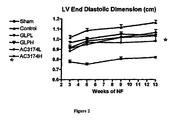
- Figure 2 demonstrates the effect of CICs on the enlargement of the heart chamber using LV end diastolic dimension analysis.
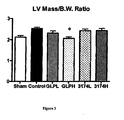
- Figure 3 demonstrates the effect of CICs on the LV Mass/body weight ratio.
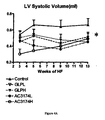
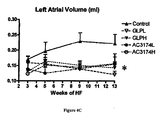
- Figures 4A , 4B , and 4C demonstrate the effect of CICs on the enlargement of the LV and LA volume.
- Figure 5 demonstrates the effect of CICs on the baseline plasma lactate levels.
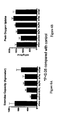
- Figures 6A and 6B demonstrates the effect of CICs on exercise capacity and peak oxygen uptake.
- Figure 7 demonstrates the effect of CICs on exercise capacity efficiency.
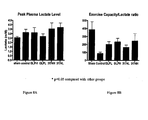
- FIGS 8A and 8B demonstrate the effect of CICs on the peak plasma lactate level and the exercise capacity/lactate ratio.
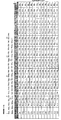
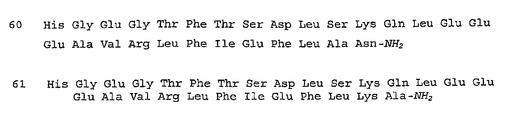
- FIG. 9A and 9B illustrates certain CICs useful in the invention provided herein.
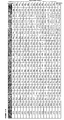
- FIG. 10 illustrates additional CICs useful in the invention provided herein.
- cardiac remodeling refers to a restructuring and reshaping of any of the cardiac chambers of the heart.
- cardiac remodeling refers to the restructuring and reshaping of the ventricles.
- cardiac remodeling can be described as genomic changes following an insult to the myocardium, with subsequent molecular, cellular and interstitial changes, leading to the restructuring and reshaping of the cardiac chambers.
- Such restructuring and reshaping can be manifested clinically as changes in size, shape, and function of the heart.
- Cardiac remodeling can occur in response to any stimulus or combination of stimuli to the myocardium.
- cardiac remodeling is the result of a myocardial insult.
- cardiac remodeling can occur in response to myocardial insults resulting from myocardial infarction, hypertension, volume overload (e.g. from aortic regurgitation), infection, inflammation, diabetes, viral cardiomyopathy, and idiopathic cardiomyopathy.
- cardiac remodeling is prevented, delayed, attenuated, or ameliorated by the administration of a CIC.
- prevention or amelioration of cardiac remodeling can include a reduction of cardiac remodeling by any amount.
- prevention or amelioration of cardiac remodeling is accompanied by a reduced risk of congestive heart failure (CHF).
- CHF congestive heart failure
- cardiac remodeling is ameliorated or reduced to an amount that is less than about 1%, 2%, 5%, 10%, 20%, 30%, 40%, 50%, 60%, 70%, 80%, or 90% of the amount of cardiac remodeling in the absence of administering a CIC.
- cardiac remodeling can be slightly reduced, moderately reduced, substantially reduced, or substantially eliminated, as compared to the occurrence of cardiac remodeling in the absence of administering a CIC.
- a slight reduction of cardiac remodeling refers to cardiac remodeling that is decreased by about 25% or less as compared with cardiac remodeling in the absence of administering a CIC.
- a moderate reduction in cardiac remodeling refers to cardiac remodeling that decreased by about 50% or less as compared with cardiac remodeling in the absence of administering an CIC.
- a substantial reduction in cardiac remodeling refers to cardiac remodeling that decreased by about 80% or less as compared with cardiac remodeling in the absence of administering a CIC.
- a substantial elimination of cardiac remodeling refers to cardiac remodeling that is decreased by about 80% or more as compared with cardiac remodeling in the absence of administering a CIC.
- cardiac remodeling can be assessed by analyses including but not limited to histological examination of the heart, LV mass, or during the life by measurement of chamber dimensions and wall thickness and motion, for example by echocardiography or quantifying the Left Ventricle (LV) diastolic function using the peak velocity ratio of the E wave and A wave (E/A ratio).
- analyses including but not limited to histological examination of the heart, LV mass, or during the life by measurement of chamber dimensions and wall thickness and motion, for example by echocardiography or quantifying the Left Ventricle (LV) diastolic function using the peak velocity ratio of the E wave and A wave (E/A ratio).
- the invention provided herein contemplates administering to a sample or subject an amount of one or more CICs effective in preventing, delaying, attenuating or ameliorating cardiac remodeling.
- a sample includes any material that contains one or more cardiac myocytes.
- a sample can include one or more cells, tissues, or cultures.
- An exemplary sample is a human heart.
- a subject can be any organism that comprises one or more cardiac cells.
- the cardiac cells can be native to the organism, or alternatively, the cells can be introduced, such as for example by transplantation.
- Exemplary non-limiting subjects include organisms such as pigs, mice, rats, dogs, cats, chickens, sheep, goats, cattle, and humans.
- a preferred subject is a human.
- samples and subjects that may be benefited by administration of a CIC to prevent, ameliorate, attenuate, or delay cardiac remodeling can be ascertained by the artisan in light of conditions and risk factors related to the sample or subject
- subjects may be in need of prevention, amelioration, attenuation, or delay of cardiac remodeling.
- the subject may be desirous of preventing, ameliorating, attenuating or delaying cardiac remodeling.
- One risk factor may be a genetic predisposition for a heart to undergo cardiac remodeling.
- Exemplary samples and subjects of the present invention provided herein include those which have experienced, are experiencing or are at risk to experience a condition associated with cardiac remodeling.
- a condition associated with cardiac remodeling can be any condition or disorder in which cardiac remodeling is known to occur or thought to be a risk.
- Conditions associated with cardiac remodeling include, for example, myocardial infarction, inflammation, ischemia/reperfusion, oxidative stress, cor pulmonale, advanced glycation endproducts, abnormal cardiac wall tension, sympathetic stimulation, myocarditis, hypertension, viral cardiomyopathy, idiopathic cardiomyopathy, heart transplantation, and surgical procedures of the heart.
- a CIC may be administered in any manner known in the art that renders a CIC biologically available to the subject or sample in an effective amount.
- the CIC may be administered to a subject via any central or peripheral route known in the art including, but not limited to: oral, parenteral, transdermal, transmucosal, or pulmonary routes.
- a particular method employs parenteral administration.
- Exemplary routes of administration include oral, ocular, rectal, buccal, topical, nasal, ophthalmic, subcutaneous, intramuscular, intraveneous, intracerebral, transdermal, and pulmonary.
- One exemplary route of administration is subcutaneous.
- the CIC can be administered to a sample via pouring, pipetting, immersing, injecting, infusing, perfusing, or any other means known in the art. Determination of the appropriate administration method is usually made upon consideration of the condition (e.g. , disease or disorder) to be treated, the stage of the condition (e.g. , disease or disorder), the comfort of the subject, and other factors known to those of skill in the art.
- condition e.g. , disease or disorder
- stage of the condition e.g. , disease or disorder
- comfort of the subject e.g. , comfort of the subject, and other factors known to those of skill in the art.
- Administration by the methods provided herein can be intermittent or continuous, both on an acute and/or chronic basis.
- One mode of administration of a CIC is continuous.
- Continuous intravenous or subcutaneous infusion, and continuous transcutaneous infusion are exemplary embodiments of administration for use in the methods provided herein.
- Subcutaneous infusions, both acute and chronic, represent embodiments of continuous administration.
- Another exemplary mode of administration is intermittent subcutaneous injection.
- the CIC is formulated for extended or sustained release. Exemplary formulations are reported for example in WO2005000222 , US20040228833 , US20040208929 , US 20050031549 , and US20050002927 ,
- administration of a CIC to prevent, ameliorate, attenuate, or delay cardiac remodeling can occur subsequent to occurrence of an insult or symptoms associated with cardiac remodeling.
- the insult may be a myocardial infarct
- treatment may not begin until 4 days after the insult or the appearance of symptoms associated with the insult.
- methods provided herein include administration of a CIC after 4, 5, 6, 7, 8, 9, 10, 11, 12, 13, or 14 days after a myocardial insult or the symptoms thereof.
- methods can comprise administering a CIC for more than 1 week, 2 weeks, 3 weeks, 1 month, 2 months, 3 months, 6 months,1 1 year, or 2 years after the start of the CIC treatment
- treatment with a CIC may continue for the duration of the condition, or for the life of the subject.
- the term "effective amount” refers to an amount of a pharmaceutical agent used to treat, ameliorate, prevent, or eliminate the identified condition (e.g. , disease or disorder), or to exhibit a detectable therapeutic or preventative effect.
- the effect can be detected by, for example, chemical markers, antigen levels, cardiac function, physical measurements of the heart, or time to a measurable event, such as morbidity or mortality.
- Therapeutic effects include preventing or reducing the risk of or lessening the severity of congestive heart failure (CHF).
- Therapeutic effects also include an improvement in cardiac contractility. Further therapeutic effects include reduction in physical symptoms of a subject, such as, for example, an increased capacity or efficiency for physical activity (exercise capacity or efficiency) prior to breathlessness.
- Effective amounts for a subject will depend upon the subject's body weight, size, and health; the nature and extent of the condition; and the therapeutic or combination of therapeutics selected for administration. Effective amounts for a given situation can be determined by routine experimentation that is within the skill and judgment of the clinician.
- the effective amount can be estimated initially either in cell culture assays, or in animal models, such as rat or mouse models.
- animal model may also be used to determine the appropriate concentration range and route of administration. Such information can then be used to determine useful doses and routes for administration in humans.
- Efficacy and toxicity may be determined by standard pharmaceutical procedures in cell cultures or experimental animals, e.g. , ED 50 (the dose therapeutically effective in 50% of the population) and LD 50 (the dose lethal to 50% of the population).
- the dose ratio between therapeutic and toxic effects is the therapeutic index, and it can be expressed as the ratio, ED 50 /LD 50 .
- Pharmaceutical compositions that exhibit large therapeutic indices are preferred.
- the data obtained from cell culture assays and animal studies may be used in formulating a range of doses for human use.
- the dosage contained in such compositions is preferably within a range of circulating concentrations that include an ED 50 with little or no toxicity. The dosage may vary within this range depending upon the dosage form employed, sensitivity of the patient, and the route of administration.
- concentration-biological effect relationships observed with regard to CIC employed in the methods provided herein indicate an initial target plasma concentration ranging from about 5 pM to about 400 pM, from about 20 pM to about 200 pM, from about 80 pM to about 100 pM.
- a CIC may be administered at doses that vary from about 0.25 pmol/kg/min to about 10 nmol/kg/min, about 0.45 pmol/kg/min to about 4.5 nmol/kg/min, depending upon the route of administration.
- Guidance as to particular dosages and methods of delivery is generally available to practitioners in the art and is provided herein.
- the dose will be in the range of about 0.2 pmol/kg/min to about 35 pmol/kg/min, or from about 0.3 pmol/kg/min to about 30 pmol/kg/min, or from about 0.45 pmol/kg/min to about 25 pmol/kg/min.
- the dose will generally be in the range of about 2.5 pmol/kg/min to about 7 nmol/kg/min, or from about 3.5 pmol/kg/min to about 6 pmol/kghnin, or from about 5 pmol/kg/min to about 4.5 nmol/kg/min.
- Exemplary treatment regimens include, but are not limited to, administration via injection to achieve a dose of from about 0.1 ⁇ g/kg to about 0.5 ⁇ g/kg or from about 0.005 ⁇ g/kg to about 0.2 ⁇ g/kg of the CIC.
- Other exemplary treatment regimens include, but are not limited to, administration via injection to achieve a dose of from about 1 ⁇ g/day to about 1 mg/day or from about 500 ⁇ g/day to about 12,000 ⁇ g/day of the CIC in a single or divided dose.
- Still other exemplary treatment regimens include, but are not limited to, pulmonary administration to achieve a dose from about 100 ⁇ g/day to about 12,000 ⁇ g/day of the CIC in a single or divided dose; nasal administration to achieve a dose from about 10 ⁇ g/day to about 12,000 ⁇ g/day of the CIC in a single or divided dose; and buccal administration to achieve a dose from about. 100 ⁇ g/day to about 12,000 ⁇ g/day of the CIC in a single or divided dose.
- the CIC may be administered as a result of an acute event or a chronic condition.
- the invention provided herein include chronic treatment with a CIC.
- length of chronic treatment may include the time when the event has passed and the subject is considered to have recovered from the acute event or recovered from the chronic condition.
- Chronic administration of or treatment with the CIC for the prevention, attenuation, delay, or amelioration of cardiac remodeling may be warranted where no particular transient event or transient condition associated with cardiac remodeling is identified.
- Chronic administration includes administration of a CIC over an indefinite period of time on the basis of a general predisposition to cardiac remodeling or on the basis of a predisposing condition that is non-transient (e.g. , a condition that is non-transient may be unidentified or unamenable to elimination, such as diabetes).
- a CIC may be administered chronically in the methods provided herein in order to prevent cardiac remodeling in a subject who exhibits congestive heart failure, regardless of etiology.
- Chronic administration of a CIC for the prevention or amelioration of cardiac remodeling may also be implicated in diabetics at risk for congestive heart failure.
- a CIC may also be administered on a chronic basis in order to preserve a transplanted organ in individuals who have received a heart transplant.
- administration may continue for any length of time. However, chronic administration often occurs for an extended period of time. For example, in an exemplary embodiment, chronic administration continues for 6 months, 1 year, 2 years or longer.
- the invention disclosed herein leads to improved cardiac contractility.
- Improving cardiac contractility may include the ability of cardiac myocytes to contract.
- any mode of assessment may be used. For example, clinical observation, such as an increase in cardiac output or a decrease in cardiac rate or both, may lead to a determination of increased cardiac contractility.
- an increased contractility of the heart may be assessed by a determination of an increased fractional shortening of the left ventricle. Fractional shortening of the left ventricle may be observed by any available means such as echocardiograph.
- the increase in fractional shortening of the left ventricle may be an increase of any amount as compared with the fractional shortening before administration of a CIC.
- the increase in shortening may be about 10%, 20%, 30%, 40%, 50%, 60%, 70%, 80%, 90%, 100%, 150%, 200% or more than about 200%.
- the administration of a CIC for reducing or preventing atrial remodeling is provided. Reduction or prevention of atrial remodeling may be evaluated as compared to atrial remodeling before administration of a CIC. The therapeutic effects of such reduction or prevention of atrial remodeling includes a reduction in atrial fibrillation.
- the administration of a CIC for reducing or preventing ventricular remodeling is provided. Reduction or prevention of ventricular remodeling may be evaluated as compared to ventricular remodeling before administration of a CIC.
- prophylactic and therapeutic treatments are provided. Treatment on an acute or chronic basis is contemplated. In addition, treatment on an acute basis may be extended to chronic treatment, if so indicated. Chronic treatment is contemplated as being longer than 2 weeks. In certain embodiments, chronic treatment may be longer than 1 month, 3 months, 6 months, 1 year, 2 years, 5 years, or over a life.
- the treatment or prevention of a condition associated with cardiac remodeling in a subject in need thereof This generally comprises administering to the subject an amount of a CIC effective to prevent or ameliorate cardiac remodeling, wherein the condition associated with remodeling is thereby improved, prevented or delayed. As described herein, administration of an CIC may be done in any manner and with any CIC such as GLP-1, exendin, and their agonists.
- the inventions provided herein further comprise the identification of a subject in need of treatment. Any effective criteria may be used to determine that a subject may benefit from administration of a CIC.
- Methods for the diagnosis of heart disease and diabetes, for example, as well as procedures for the identification of individuals at risk for development of these conditions, are well known to those in the art. Such procedures may include clinical tests, physical examination, personal interviews and assessment of family history.
- a CIC includes any molecule that 1) can mimic an effect of an incretin hormone (incretin mimetic) or can bind to a GLP-1 receptor, and 2) that has an ability to ameliorate (improve) at least one of the following cardiac parameters: left ventricular diastolic function, E wave to A wave ratio, left ventricular end diastolic pressure, cardiac output, cardiac contractility, left ventricular mass, left ventricular mass to body weight ratio, left ventricular volume, left atrial volume, left ventricular end diastolic dimension or systolic dimension, infarct size, exercise capacity, exercise efficiency or any measure of cardiac systolic and/or diastolic function; or attenuate, delay, or prevent enlargement of a heart chamber or a deleterious effect on one of the above cardiac parameters.
- the cardiac parameters can be monitored by assays known in the art and those herein described.
- An example of an incretin hormone is GLP-1.
- An example of an effect of an incretin is its glucose-stimulated insulin secretion or ability to improve glucose homeostasis.
- Examples of incretin mimetics (and CICs) include GLP-1, exendins, and agonists thereof.
- An agonist of GLP-1 or exendin can be any molecule that has at least one activity or function of GLP-1 or exendin, respectively, as known in the art or herein described.
- An agonist of GLP-1 or exendin can be any molecule that can bind to a GLP-1 receptor.
- An agonist may be a peptide or non-peptide, such as a small molecule.
- a CIC may be identified by its ability to bind or activate a GLP-1 receptor (e.g., a GLP-1 receptor agonist).
- a GLP-1 receptor is a cell-surface protein.
- a CIC includes any molecule that binds to or activates a GLP-1 receptor.
- GLP-1 receptor agonists can include peptides and small molecules, as known in the art. Exemplary GLP-1 receptor agonists have been described, such as those in Drucker, Endocrinology 144(12):5145-5148 (2003 ); EP 0708179 ; Hjorth et al., J. Biol. Chem. 269(48): 30121-30124 (1994 ); Siegel et al., Amer. Diabetes Assoc. 57th Scientific Sessions, Boston (1997 ); Hareter et al., Amer. Diabetes Assoc. 57th Scientific Sessions, Boston (1997 ); Adelhorst et al., J. Biol. Chem.
- GLP-1 receptor binding or activation can be determined in either an in vitro or an in vivo model.
- receptor-binding activity screening procedures may be used, such as for example, providing any cells that express a GLP-1 receptor on the surface and measuring specific binding using radioimmunoassay methods.
- the cells expressing a GLP-1 receptor can be naturally occurring or genetically modified.
- the cells expressing a GLP-1 receptor may be cardiac myocyte cells.
- GLP-1 receptor binding or activation can be determined with the aid of combinatorial chemistry libraries and high throughput screening techniques, as is known in the art.
- CICs include exendin molecules, including exendin-1, exendin-2, exendin-3, exendin-4, and analogs thereof.
- Particular exendin molecules include exendin-3 and exendin-4, and analogs thereof.
- exendin molecules are generally known in the art and available to the skilled artisan.
- exendins are peptides that are found in the saliva of the Gila-monster, a lizard endogenous to Arizona, and the Mexican Beaded Lizard.
- Exendin-3 is present in the saliva of Heloderma horridum
- exendin-4 is present in the saliva of Heloderma suspectum ( Eng, J., et al., J. Biol. Chem., 265:20259-62 (1990 ); Eng., J., et al., J. Biol. Chem., 267:7402-05 (1992 )).
- exendins have some sequence similarity to several members of the glucagon-like peptide family, with the highest identity, 53%, being to GLP-1 ( Goke, et al., J. Biol. Chem., 268:19650-55 (1993 )).
- Exendin-4 is a potent agonist at GLP-1 receptors on insulin-secreting TC1 cells, at dispersed acinar cells from guinea pig pancreas, and at parietal cells from stomach; the peptide also stimulates somatostatin release and inhibits gastrin release in isolated stomachs ( Goke, et al, J. Biol. Chem., 268:19650-55 (1993 ); Schepp, et al., Eur. J. Pharmacol., 69:183-91 (1994 ); Eissele, et al., Life Sci., 55:629-34 (1994 )).
- Exendin-3 and exendin-4 were found to be GLP-1 agonists in stimulating cAMP production in, and amylase release from, pancreatic acinar cells ( Malhotra, R., et al., Rommeatory Peptides, 41:149-56 (1992 ); Raufman, et al., J. BioL Chem., 267:21432-37 (1992 ); Singh, et al., Regul. Pept., 53:47-59 (1994 )).
- the use of the insulinotropic activities of exendin-3 and exendin-4 for the treatment of diabetes mellitus and the prevention of hyperglycemia have been proposed ( Eng, U.S. Pat No. 5,424,286 ).
- Truncated exendin peptides such as exendin[9-39], a carboxyamidated molecule, and fragments 3-39 through 9-39 have been reported to be potent and selective antagonists of GLP-1 ( Goke, et al., J. Biol. Chem., 268:19650-55 (1993 ); Raufman, J. P., et al., J. Biol. Chem., 266:2897-902 (1991 ); Schepp, W., et al., Eur. J. Pharm., 269:183-91 (1994 ); Montrose-Rafizadeh, et al., Diabetes, 45(Suppl. 2):152A (1996 )).
- Exendin[9-39] blocks endogenous GLP-1 in vivo, resulting in reduced insulin secretion ( Wang, et al., J. Clin. Invest., 95:417-21 (1995 ); D'Alessio, et al., J. Clin. Invest., 97:133-38 (1996 )).
- the receptor apparently responsible for the insulinotropic effect of GLP-1 has been cloned from rat pancreatic islet cells ( Thorens, B., Proc. Natl. Acad Sci. USA 89:8641-8645 (1992 )).
- Exendins and exendin[9-39] bind to the cloned GLP-1 receptor (rat pancreatic -cell GLP-1 receptor: Fehmann HC, et al., Peptides, 15 (3): 453-6 (1994 ); human GLP-1 receptor: Thorens B, et al., Diabetes, 42 (11): 1678-82 (1993 )).
- exendin-4 is an agonist, i.e ., it increases cAMP
- exendin[9-39] is an antagonist, i.e. , it blocks the stimulatory actions of exendin-4 and GLP-1. Id.
- exendin compounds useful in the present methods include those disclosed in PCT/US98/16387 , PCT/US98/24210 , and PCT/US98/24273 .
- an exendin analog can have one or more amino acid substitutions, deletions, inversion, or additions compared to a native or naturally occurring exendin.
- exendin analogs can have an amino acid sequence that has one or more amino acid substitutions, additions or deletions as compared with a naturally occurring exendin, for example, exendin-4.
- an exendin analog has an amino acid sequence that has 5 or less, 4 or less, 3 or less, 2 for less, or 1 or less substitutions, additions, or deletions as compared to a naturally occurring exendin, such as exendin-4.
- exendin compounds useful in the present methods include those disclosed in PCT/US98/16387 , PCT/US98/24210 , and PCT/US98/24273 . More particularly, exendin compounds include exendin peptide analogs in which one or more naturally occurring amino acids are eliminated or replaced with another amino acid(s). Preferred exendin compounds are agonist analogs of exendin-4.
- exendin-3 His Ser Asp Gly Thr Phe Thr Ser Asp Leu Ser Lys Gln Met Glu Glu Glu Ala Val Arg Leu Phe Ile Glu Trp Leu Lys Asn Gly Gly Pro Ser Ser Gly Ala Pro Pro Pro Ser] [SEQ ID NO: 1]
- exendin-4 [His Gly Glu Gly Thr Phe Thr Ser Asp Leu Ser Lys Gln Met Glu Glu Glu Ala Val Arg Leu Phe Ile Glu Trp Leu Lys Asn Gly Gly Pro Ser Ser Gly Ala Pro Pro Pro Ser] [SEQ ID NO: 2]
- particular exendin compounds include exendin-4 (1-30) [His Gly Glu Gly Thr Phe Thr Ser Asp Leu Ser Lys Gln Met Glu Glu Glu Ala Val Arg Leu Phe Ile Glu Trp Leu Lys Asn Gly Gly] [SEQ ID NO: 3], exendin-4 (1-30)
- N-alkyl groups for N-alkylglycine, N-alkylpentylglycine and N-alkylalanine include lower alkyl groups, for example, of 1 to about 6 carbon atoms, or of 1 to 4 carbon atoms. Suitable compounds include those listed in Figures 9A and 9B .
- exendin compounds of formula (I) include those wherein Xaa 1 is His or Tyr, or more particularly, Xaa 1 is His.
- Particular compounds of formula (I) include those wherein Xaa 25 is Trp or Phe.
- N-alkylalanine has a N-alkyl group of 1 to about 6 carbon atoms.
- compounds of formula (I) include those where Xaa 36 , Xaa 37 and Xaa 38 are the same amino acid reside.
- Xaa 1 is His or Tyr, more particularly His
- Xaa 2 is Gly
- Xaa 6 is Phe or naphthylalanine
- Xaa 14 is Leu, pentylglycine or Met
- Xaa 22 is Phe or naphthylalanine
- Xaa 23 is Ile or Val
- Xaa 31 , Xaa 36 , Xaa 37 and Xaa 38 are independently selected from Pro, homoproline, thioproline or N-alkylalanine
- Xaa 39 is Ser or Tyr, more particularly Ser.
- Z is -NH 2 .
- compounds include those of formula (I) wherein: Xaa 1 is His or Arg; Xaa 2 is Gly; Xaa 3 is Asp or Glu; Xaa 6 is Phe or napthylalanine; Xaa 7 is Thr or Ser; Xaa 8 is Ser or Thr; Xaa 9 is Asp or Glu; Xaa 10 is Leu or pentylglycine; Xaa 14 is Leu or pentylglycine; Xaa 22 is Phe or naphthylalanine; Xaa 23 is Ile, Val or t-butyltylglycine; Xaa 24 is Glu or Asp; Xaa 25 is Trp or Phe; Xaa 31 , Xaa 36 , Xaa 37 , and Xaa 38 are independently Pro, homoproline, thioproline, or N-methylalanine; Xaa 39 is Ser or Tyr
- Xaa 14 is Leu, Ile, Val or pentylglycine, more particularly Leu or pentylglycine
- Xaa 13 is Phe, Tyr or naphthylalanine, more particularly Phe or naphthylalanine.
- one embodiment of Z is -NH 2 .
- Exendin compounds also include compounds of the formula (II):
- exemplary N-alkyl groups for N-alkylglycine, N-alkylpentylglycine and N-alkylalanine include lower alkyl groups of 1 to about 6 carbon atoms, or of 1 to 4 carbon atoms.
- Exendin compounds of formula (II) include those wherein Xaa 1 is His or Tyr. More particularly, Xaa 1 is His.
- Xaa 6 is Phe or naphthylalanine
- Xaa 22 is Phe or naphthylalanine
- Xaa 23 is Ile or Val.
- Xaa 31 , Xaa 36 , Xaa 37 and Xaa 38 are independently selected from Pro, homoproline, thioproline and N-alkylalanine.
- Z 1 may be -NH 2 .
- Z 2 may be -NH 2 .
- Xaa 1 is His or Tyr, more particularly His
- Xaa 2 is Gly
- Xaa 6 is Phe or naphthylalanine
- Xaa 14 is Leu, pentylglycine or Met
- Xaa 22 is Phe or naphthylalanine
- Xaa 23 is Ile or Val
- Xaa 31 , Xaa 36 , Xaa 37 and Xaa 38 are independently selected from Pro, homoproline, thioproline or N-alkylalanine.
- Z 1 may be -NH 2 .
- Xaa 14 is Leu, Ile, Val or pentylglycine, more particularly Leu or pentylglycine
- Xaa 25 is Phe, Tyr or naphthylalanine, more particularly Phe or naphthylalanine.
- Exendin compounds also include compounds of the formula (III):
- Z is one or more additional amino acids that do not change the function of the exendin as described herein with an -OH or NH 2 at the carboxy terminus.
- additional amino acids are between 2 and 10 additional amino acids, between 3 and 7 additional amino acids, and about 5 additional amino acids.
- CICs include GLP-1 peptides.
- a GLP-1 peptide includes GLP-1 (1-37), GLP-1 (1-36) amide, GLP-1 (7-37), GLP-1 (7-36) amide (known in the art as "GLP-1"), and GLP-1(9-36).
- Other exemplary GLP-1 peptides include GLP-1 agonists described in WO 03/084563 , incorporated herein by reference in its entirety.
- a GLP-1 peptide used in the methods provided herein is a long-acting GLP-1 analog.
- a long acting analog refers to any GLP-1 peptide that has a longer in vivo half-life than GLP-1. Such long-acting GLP-1 analogs are known in the art and described herein.
- a CIC also includes any biologically active analogs, including variants and derivatives, of GLP-1 peptides.
- a biologically active GLP-1 analog including a variant or derivative thereof, can possess GLP-1 biological activity that is more potent, less potent or equally potent as compared to the biological activity of a native GLP-1.
- Biologically active GLP-1 analogs also include those molecules that can exhibit GLP-1 activity upon cleavage, translation, or any other processing that occurs upon administration of the GLP-1 analog.
- a GLP-1 analog includes any peptides that are formed by conservative amino acid substitution of a GLP-1 peptide.
- one or more amino acids in a sequence such as an amino acid sequence for GLP-1, can be substituted with other amino acid(s), the charge and polarity of which are similar to that of the native amino acid.
- Hydropathic index of amino acids can be considered when making amino acid changes. The importance of the hydropathic amino acid index in conferring interactive biological function on a protein is generally understood in the art ( Kyte and Doolittle, J. Mol. Biol. 157:105-132 (1982 )). It is also understood in the art that the conservative substitution of amino acids can be made effectively on the basis of hydrophilicity.
- U.S. Patent 4,554,101 states that the greatest local average hydrophilicity of a protein, as governed by the hydrophilicity of its adjacent amino acids, correlates with a biological property of the protein.
- the substitution of amino acids whose hydrophilicity values are within ⁇ 2 is preferred, those that are within ⁇ 1 are particularly preferred, and those within ⁇ 0.5 are even more particularly preferred.
- nucleic acid molecule encoding a GLP-1 analog can have any codon usage that encodes a GLP-1 analog.
- a host cell often exhibits a preferred pattern of codon usage.
- the codon usage of a nucleotide sequence encoding a GLP-1 reflects a preferred codon usage for a host in which the GLP-1 analog will be used.
- a GLP-1 analog has an amino acid sequence that has one or more amino acid substitutions, additions or deletions as compared with a GLP-1 peptide, preferably GLP-1. In one embodiment, a GLP-1 analog has an amino acid sequence that has 5 or less, 4 or less, 3 or less, 2 or less, or 1 or less substitutions, additions, or deletions as compared to a GLP-1 peptide.
- GLP-1 analogs are generally known in the art and are available to the skilled artisan.
- a GLP-1 analog has at least 60%, at least 70%, at least 80%, at least 90% or at least 95% sequence identity with a naturally occurring GLP-1.
- Identity is a relationship between two or more polypeptide sequences or two or more polynucleotide sequences, as determined by comparing the sequences. In the art, identity also means the degree of sequence relatedness between polypeptide or polynucleotide sequences, as determined by the match between strings of such sequences.
- Computer programs which can be used to determine identity between two sequences include, but are not limited to, GCG ( Devereux, J., et al., Nucleic Acids Research 12(1):387 (1984 ); suite of five BLAST programs, three designed for nucleotide sequences queries (BLASTN, BLASTX, and TBLASTX) and two designed for protein sequence queries (BLASTP and TBLASTN) ( Coulson, Trends in Biotechnology, 12: 76-80 (1994 ); Birren, et al., Genome Analysis, 1: 543-559 (1997 )).
- the BLAST X program is publicly available from NCBI and other sources ( BLAST Manual, Altschul, S., et al., NCBI NLM NIH, Bethesda, MD 20894 ; Altschul, S., et al., J. Mol. Biol., 215:403-410 (1990 )).
- the well-known Smith Waterman algorithm can also be used to determine identity.
- a CIC includes GLP-1 agonists and exendin agonists.
- the term "agonist” includes analogs. More particularly, as used herein, an “analog” is defined as a molecule having one or more amino acid substitutions, deletions, inversions, or additions compared with a native peptide such as a GLP-1 or exendin.
- the term “agonist” also includes derivatives.
- a “derivative” is defined as a molecule having the amino acid sequence of a native peptide or of an analog of the native peptide, but additionally having a chemical modification of one or more of its amino acid side groups, alpha-carbon atoms, terminal amino group, or terminal carboxylic acid group.
- a chemical modification includes, but is not limited to, adding chemical moieties, creating new bonds, and removing chemical moieties.
- Modifications at amino acid side groups include, without limitation, acylation of lysine ⁇ -amino groups, N-alkylation of arginine, histidine, or lysine, alkylation of glutamic or aspartic carboxylic acid groups, and deamidation of glutamine or asparagine.
- Modifications of the terminal amino include, without limitation, the desamino, N-lower alkyl, N-di-lower alkyl, and N-acyl modifications.
- Modifications of the terminal carboxy group include, without limitation, the amide, lower alkyl amide, dialkyl amide, and lower alkyl ester modifications.
- An exemplary lower alkyl is a C1-C4 alkyl.
- one or more side groups, or terminal groups may be protected by protective groups known to the ordinarily-skilled protein chemist.
- the ⁇ -carbon of an amino acid may be mono- or dimethylated.
- GLP-1 analogs known in the art include, for example, GLP-1(7-34) and GLP-1(7-35), Gln 9 -GLP-1(7-37), D-Gln 9 -GLP-1(7-37), Thr 16 -Lys 18 -GLP-1(7-37), and Lys 18 -GLP-1(7-37).
- GLP-1 analogs include: Gly 8 -GLP-1 (7-36)NH 2 , Gln 9 -GLP-1 (7-37), D-Gln 9 -GLP-1 (7-37), acetyl-Lys 9 -GLP-1(7-37), Thr 9 -GLP-1(7-37), D-Thr 9 -GLP-1 (7-37), Asn 9 -GLP-1 (7-37), D-Asn 9 -GLP-1 (7-37), Ser 22 -Arg 23 -Arg 24 -Gln 26 -GLP-1(7-37), Thr 16 -Lys 18 -GLP-1(7-37), Lys 18 -GLP-1(7-37), Arg 23 -GLP-1(7-37), Arg 24 -GLP-1(7-37), and the like ( see, e.g., WO 91/11457 ).
- GLP-1 analogs are disclosed in U.S. Pat. No. 5,545,618 which is incorporated herein by reference.
- a particular group of GLP-1 analogs and derivatives include those disclosed in U.S. Patent No. 6,747,006 .
- the use of a molecule described in U.S. Pat. No. 5,188,666 is also contemplated.
- Another group of molecules useful in the disclosed methods includes compounds described in U.S. Pat. No. 5,512,549 , which is expressly incorporated herein by reference.
- Another group of active compounds for use in the present methods is disclosed in WO 91/11457 , and consists essentially of GLP-1(7-34), GLP-1(7-35), GLP-1(7-36), or GLP-1(7-37), or the amide form thereof, and pharmaceutically-acceptable salts thereof, having at least one modification selected from the group consisting of:
- DPP IV dipeptidyl-peptidase IV
- GLP-1 analogs and derivatives that are protected from the activity of DPP IV are included, for example, the administration of Gly 8 -GLP-1(7-36)NH 2 , Val 8 -GLP-1(7-37)OH, ⁇ -methyl-Ala 8 -GLP-1(7-36)NH 2 , and Gly 8 -Gln 21 -GLP-1(7-37)OH, or pharmaceutically-acceptable salts thereof.
- a DPPIV inhibitor may also be administered.
- a CIC can be obtained from any source.
- a CIC can be obtained from an organism, such as a mouse, a rat, a lizard, or a human. It is also contemplated herein that a CIC can be obtained by any method or combination of methods known to the skilled artisan.
- a CIC can be isolated by collection of a secretion, by extraction, by purification, or by any combination such of methods.
- a CIC can be identified and purified by the use of monoclonal, polyclonal, or any combination of antibodies.
- Antibodies such as ABGA1178 detect intact, unspliced GLP-1 (1-37) or N-terminally truncated GLP-1 (7-37) or GLP-1. In addition, other antibodies detect at the very end of the C-terminus of the precursor molecule ( See e.g., Osrkov et al., J. Clin. Invest. 87: 415-423 (1991 )).
- a CIC can be obtained by any recombinant means.
- a recombinant CIC includes any molecule that is, or results, however indirectly, from human manipulation of a nucleic or amino acid molecule.
- a recombinant molecule is a recombinant human peptide.
- a CIC may be a small molecule which is an incretin mimetic or can bind or activate a GLP-1 receptor, and has the ability to affect cardiac function or cardiac physiology or anatomy as herein described or known in the art, and may be synthesized in any manner known in the art.
- DPP IV inhibitors to decrease or eliminate the inactivation of endogenous or exogenous GLP-1, GLP-1 analog, or GLP-1 agonist is also contemplated.
- DPP IV inhibitors can be administered alone or in combination with a CIC.
- active CICs may be increased by the inhibition of DPP IV.
- Inhibitors of DPP IV are known to the skilled artisan and include, by way of non-limiting example, 2-cyanopyrrolidines. See e.g., Fukushima, H., et al., Bioorg. Med. Chem. Lett. 14(22): 6053-6061 (2004 ).
- Non-limiting exemplary DPP IV inhibitors include valine-pyrrolidide ( Marguet, D., et al., Proc. Natl. Acad. Sci. USA 97(12): 6874-6879 (2000 )), isoleucine thiazolidide ( Pederson, R. A., et al., Diabetes 47: 1253-1258 (1998 ), and NVP-DPP728 ( Balkan, B., et al., Diabetologia 42(11):1324-1331 (1999 )).
- DPP IV inhibitors including ketopyrrolidines and ketoazetidines have been discussed in the literature ( Ferraris, D., et al., Bioorg. Med. Chem. Lett.
- CICs may be formulated as pharmaceutical compositions for use in conjunction with the invention disclosed herein.
- the pharmaceutical compositions may be formulated with pharmaceutically acceptable excipients such as carriers, solvents, stabilizers, adjuvants, diluents, etc., depending upon the particular mode of administration and dosage form.
- the pharmaceutical compositions should generally be formulated to achieve a physiologically compatible pH, and may range from a pH of about 3 to a pH of about 11, or from about pH 3 to about pH 7, depending on the formulation and route of administration.
- the pH may be adjusted to a range from about pH 5.0 to about pH 8.0, from about pH 3.0 to about pH 6.0, or from about pH 4.0 to about pH 5.0.
- a pharmaceutical composition provided herein comprises an effective amount of at least one CIC, together with one or more pharmaceutically acceptable excipients.
- a pharmaceutical composition may include a second active ingredient useful in the prevention or treatment of cardiac remodeling.
- the pharmaceutical compositions may be formulated for administration in any manner known in the art.
- the pharmaceutical composition when formulated for oral administration or parenteral administration, is most typically a solid, liquid solution, emulsion or suspension, while inhaleable formulations for pulmonary or nasal administration are generally liquids or powders.
- a pharmaceutical composition may also be formulated as a lyophilized solid that is reconstituted with a physiologically compatible solvent prior to administration.
- Alternative pharmaceutical compositions may be formulated as syrups, creams, ointments, tablets, and the like.
- pharmaceutically acceptable excipient refers to an excipient for administration of a pharmaceutical agent, such as a CIC.
- the term refers to any pharmaceutical excipient that may be administered without undue toxicity.
- Pharmaceutically acceptable excipients are determined in part by the particular composition being administered, as well as by the particular method used to administer the composition. Accordingly, there exist a wide variety of suitable formulations of pharmaceutical compositions for use in the methods provided herein ( see, e.g., Remington's Pharmaceutical Sciences).
- Suitable excipients may be carrier molecules that include large, slowly metabolized macromolecules such as proteins, polysaccharides, polylactic acids, polyglycolic acids, polymeric amino acids, amino acid copolymers, and inactive virus particles.
- Other exemplary excipients include antioxidants such as ascorbic acid; chelating agents such as EDTA; carbohydrates such as dextrin, hydroxyalkylcellulose, hydroxyalkylmethylcellulose, stearic acid; liquids such as oils, water, saline, glycerol and ethanol; wetting or emulsifying agents; pH buffering substances; and the like. Liposomes are also included within the definition of pharmaceutically acceptable excipients.
- compositions intended for oral use may be prepared according to any method known to the art for the manufacture of pharmaceutical compositions, and such compositions may contain one or more agents including sweetening agents, flavoring agents, coloring agents and preserving agents, in order to provide a palatable preparation.
- compositions particularly suitable for use in conjunction with tablets include, for example, inert diluents, such as celluloses, calcium or sodium carbonate, lactose, calcium or sodium phosphate; disintegrating agents, such as croscarmellose sodium, cross-linked povidone, maize starch, or alginic acid; binding agents, such as povidone, starch, gelatin or acacia; and lubricating agents, such as magnesium stearate, stearic acid or talc. Tablets may be uncoated or may be coated by known techniques including microencapsulation to delay disintegration and adsorption in the gastrointestinal tract and thereby provide a sustained action over a longer period. For example, a time delay material such as glyceryl monostearate or glyceryl distearate alone or with a wax may be employed.
- inert diluents such as celluloses, calcium or sodium carbonate, lactose, calcium or sodium phosphate
- disintegrating agents such
- Formulations for oral use may be also presented as hard gelatin capsules where the active ingredient is mixed with an inert solid diluent, for example celluloses, lactose, calcium phosphate or kaolin, or as soft gelatin capsules wherein the active ingredient is mixed with non-aqueous or oil medium, such as glycerin, propylene glycol, polyethylene glycol, peanut oil, liquid paraffin or olive oil.
- an inert solid diluent for example celluloses, lactose, calcium phosphate or kaolin
- non-aqueous or oil medium such as glycerin, propylene glycol, polyethylene glycol, peanut oil, liquid paraffin or olive oil.
- the pharmaceutical composition of the methods provided herein may be formulated as a suspension comprising a CIC in admixture with at least one pharmaceutically acceptable excipient suitable for the manufacture of a suspension.
- a CIC may be formulated as dispersible powder and granules suitable for preparation of a suspension by the addition of suitable excipients.
- Excipients suitable for use in connection with suspensions include suspending agents, such as sodium carboxymethylcellulose, methylcellulose, hydroxypropyl methylcelluose, sodium alginate, polyvinylpyrrolidone, gum tragacanth, gum acacia, dispersing or wetting agents such as a naturally occurring phosphatide (e.g. , lecithin), a condensation product of an alkylene oxide with a fatty acid ( e.g. , polyoxyethylene stearate), a condensation product of ethylene oxide with a long chain aliphatic alcohol (e.g.
- suspending agents such as sodium carboxymethylcellulose, methylcellulose, hydroxypropyl methylcelluose, sodium alginate, polyvinylpyrrolidone, gum tragacanth, gum acacia
- dispersing or wetting agents such as a naturally occurring phosphatide (e.g. , lecithin), a condensation product of an alkylene oxide with a
- heptadecaethyleneoxycethanol a condensation product of ethylene oxide with a partial ester derived from a fatty acid and a hexitol anhydride (e.g ., polyoxyethylene sorbitan monooleate); and thickening agents, such as carbomer, beeswax, hard paraffin or cetyl alcohol.
- the suspensions may also contain one or more preservatives such as acetic acid, methyl and/or n-propyl p-hydroxy-benzoate; one or more coloring agents; one or more flavoring agents; and one or more sweetening agents such as sucrose or saccharin.
- the pharmaceutical composition provided herein may also be in the form of an oil-in-water emulsion.
- the oily phase may be a vegetable oil, such as olive oil or arachis oil, a mineral oil, such as liquid paraffin, or a mixture of these.
- Suitable emulsifying agents include naturally-occutring gums, such as gum acacia and gum tragacanth; naturally occurring phosphatides, such as soybean lecithin, esters or partial esters derived from fatty acids; hexitol anhydrides, such as sorbitan monooleate; and condensation products of these partial esters with ethylene oxide, such as polyoxyethylene sorbitan monooleate.
- the emulsion may also contain sweetening and flavoring agents.
- Syrups and elixirs may be formulated with sweetening agents, such as glycerol, sorbitol or sucrose. Such formulations may also contain a demulcent, a preservative, a flavoring or a coloring agent.
- sweetening agents such as glycerol, sorbitol or sucrose.
- Such formulations may also contain a demulcent, a preservative, a flavoring or a coloring agent.
- the pharmaceutical composition provided herein may be formulated as a sterile injectable preparation, such as a sterile injectable aqueous emulsion or oleaginous suspension.
- a sterile injectable preparation such as a sterile injectable aqueous emulsion or oleaginous suspension.
- This emulsion or suspension may be formulated according to the known art using those suitable dispersing or wetting agents and suspending agents such as those that have been mentioned above.
- the sterile injectable preparation may also be a sterile injectable solution or suspension in a non-toxic parenterally acceptable diluent or solvent, such as a solution in 1,2-propane-diol.
- the sterile injectable preparation may also be prepared as a lyophilized powder.
- Suitable vehicles and solvents that may be employed are water, Ringer's solution, and isotonic sodium chloride solution.
- sterile fixed oils may be employed as a solvent or suspending medium.
- any bland fixed oil may be employed including synthetic mono- or diglycerides.
- fatty acids such as oleic acid may likewise be used in the preparation of injectables.
- Certain CICs may be substantially insoluble in water and sparingly soluble in most pharmaceutically acceptable protic solvents and in vegetable oils.
- the compounds may be soluble in medium chain fatty acids (e.g ., caprylic and capric acids) or triglycerides and have high solubility in propylene glycol esters of medium chain fatty acids.
- compositions which have been modified by substitutions or additions of chemical or biochemical moieties which make them more suitable for delivery (e.g ., increase solubility, bioactivity, palatability, decrease adverse reactions, etc.), for example by esterification, glycation, PEGylation, etc.
- a CIC may also be formulated for oral administration in a self-emulsifying drug delivery system (SEDDS).
- SEDDS self-emulsifying drug delivery system
- Lipid-based formulations such as SEDDS are particularly suitable for low solubility compounds, and can generally enhance the oral bioavailability of such compounds.
- cyclodextrins may be added as aqueous solubility enhancers.
- Cyclodextrins include hydroxypropyl, hydroxyethyl, glucosyl, maltosyl and maltotriosyl derivatives of ⁇ -, ⁇ -, and ⁇ - cyclodextrin.
- An exemplary cyclodextrin solubility enhancer is hydroxypropyl- ⁇ -cyclodextrin (HPBC), which may be added to any of the above-described compositions to further improve the aqueous solubility characteristics of a GLP-1 molecule or agonist thereof.
- the composition comprises 0.1% to 20% hydroxypropyl- ⁇ -cyclodextrin, for example 1% to 15% hydroxypropyl- ⁇ -clcyclodextrin, or from 2.5% to 10% hydroxypropyl- ⁇ -cyclodextrin.
- solubility enhancer employed will depend on the amount of CIC in the composition.
- Dosage and administration are adjusted to provide sufficient levels of the active agent(s) in a pharmaceutical composition or to maintain the desired effect. Factors that may be taken into account include the severity of the disease state, general health of the subject, age, weight, and gender of the subject, diet, time and frequency of administration, drug combination(s), reaction sensitivities, and tolerance/response to therapy. Whether an administration is acute or chronic may also be considered in determining dosage. Long-acting pharmaceutical compositions may be administered every 3 to 4 days, every week, or once every two weeks depending on half-life and clearance rate of the particular formulation. In one embodiment, CICs used in the present methods are formulated for sustained release.
- Exemplary treatment regimens include, but are not limited to, administration via injection to achieve a dose of from about 0.1 ⁇ g/kg to about 0.5 ⁇ g/kg or from about 0.005 ⁇ g/kg to about 0.2 ⁇ g/kg of the CIC.
- Other exemplary treatment regimens include, but are not limited to, administration via injection to achieve a dose of from about 1 ⁇ g/day to about 1 mg/day or from about 500 ⁇ g/day to about 12,000 ⁇ g/day of the CIC in a single or divided dose.
- Still other exemplary treatment regimens include, but are not limited to, pulmonary administration to achieve a dose from about 100 ⁇ g/day to about 12,000 ⁇ g/day of the CIC in a single or divided dose; nasal administration to achieve a dose from about 10 ⁇ g/day to about 12,000 ⁇ g/day of the CIC in a single or divided dose; and buccal administration to achieve a dose from about 100 ⁇ g/day to about 12,000 ⁇ g/day of the CIC in a single or divided dose.
- a CIC may be combined with one or more other compounds, in a unitary dosage form, or in separate dosage forms intended for simultaneous or sequential administration to a patient in need of treatment. When administered sequentially, the combination may be administered in two or more administrations.
- a CIC may be combined with one or more CICs and one or more additional active ingredients by different routes.
- active ingredients may be administered in combination with CIC that may act to augment or synergistically enhance the prevention, amelioration, attenuation, or delay of cardiac remodeling.
- a CIC may be: (1) co-formulated and administered or delivered simultaneously in a combined formulation; (2) delivered by alternation or in parallel as separate formulations; or (3) by any other combination therapy regimen known in the art.
- the invention provided herein may comprise administering or delivering the active ingredients sequentially, e.g ., in separate solution, emulsion, suspension, tablets, pills or capsules, or by different injections in separate syringes.
- an effective dosage of each active ingredient is administered sequentially, i.e ., serially
- simultaneous therapy effective dosages of two or more active ingredients are administered together.
- Various sequences of intermittent combination therapy may also be used.
- Example 1 Treatment with a GLP-1 molecule reduces cardiac remodeling
- LV systolic volume left atrial volume
- ESD left ventricular end systolic dimension
- EPD diastolic dimension
- LV systolic volume left atrial volume
- GLP-1 or the exendin agonist normalized both the cardiac output and contractility. LV mass, LV end diastolic dimension and systolic dimension increased during the progression of CHF. However, administration of GLP-1 or the exendin agonist significantly reduced such remodeling. Administration of 25 pmol/kg/min GLP-1 significantly reduced infarct size by 30% (p ⁇ 0.05) compared to the control group. Further, administration of GLP-1 or the exendin agonist at each dose significantly improved exercise capacity (EC) and exercise efficiency (EC/VO2) during a treadmill test. The results of these tests are summarized in Figures 1-8 and Table 1.
Landscapes
- Health & Medical Sciences (AREA)
- Life Sciences & Earth Sciences (AREA)
- Engineering & Computer Science (AREA)
- Bioinformatics & Cheminformatics (AREA)
- Pharmacology & Pharmacy (AREA)
- Veterinary Medicine (AREA)
- Chemical & Material Sciences (AREA)
- Public Health (AREA)
- General Health & Medical Sciences (AREA)
- Medicinal Chemistry (AREA)
- Animal Behavior & Ethology (AREA)
- Endocrinology (AREA)
- Zoology (AREA)
- Epidemiology (AREA)
- Proteomics, Peptides & Aminoacids (AREA)
- Immunology (AREA)
- Gastroenterology & Hepatology (AREA)
- Vascular Medicine (AREA)
- Nuclear Medicine, Radiotherapy & Molecular Imaging (AREA)
- General Chemical & Material Sciences (AREA)
- Chemical Kinetics & Catalysis (AREA)
- Organic Chemistry (AREA)
- Heart & Thoracic Surgery (AREA)
- Cardiology (AREA)
- Diabetes (AREA)
- Urology & Nephrology (AREA)
- Hematology (AREA)
- Medicines That Contain Protein Lipid Enzymes And Other Medicines (AREA)
- Peptides Or Proteins (AREA)
Claims (16)
- Herzschützende Inkretinverbindung (Cardioprotective incretin compound CIC) zur Verwendung in der Behandlung oder Prävention von Herz-Remodeling in einem Subjekt, wobei das Subjekt einen Herzanfall erlitten hat; wobei die herzschützende Inkretinverbindung an einen GLP-1 Rezeptor bindet oder ihn aktiviert und aus der Gruppe ausgewählt ist, bestehend aus- GLP-1 ausgewählt aus der Gruppe bestehend aus GLP-1(1-37), GLP-1(1-36) Amid, GLP-1(7-37), GLP-1(7-36) Amid,- Exendin-3 oder Exendin-4,- Agonist-Analoga davon, mit 5 oder weniger Substitutionen, Deletionen oder Additionen verglichen zu dem natürlich vorkommenden Exendin oder GLP-1,- oder Agonist-Analoga davon, ausgewählt aus der Gruppe bestehend aus SEQ-ID NO: 3-8,wobei die CIC zur Verabreichung nach 4 Tagen nach einem Herzanfall vorgesehen ist.
- Herzschützende Inkretinverbindung zur Verwendung nach Anspruch 1, wobei die Behandlung oder Prävention von Herz-Remodeling einem gesundheitsschädlichen Effekt auf mindestens einen Parameter des Herzens vorbeugt oder diesen verbessert, in einem Subjekt, das dies benötigt oder erwünscht.
- Herzschützende Inkretinverbindung zur Verwendung nach Anspruch 2, wobei der Parameter des Herzens ausgewählt ist, aus der Gruppe bestehend aus linksventrikulärer diastolischer Funktion, E/A Verhältnis, linksventrikulärem enddiastolischem Druck, Herzzeitvolumen, Herzkontraktionsfähigkeit, linksventrikulärer Masse, linksventrikulärer Masse zu Körpergewichts-Verhältnis, linksventrikulärem Volumen, linksatriellem Volumen, linksventrikulärer enddiastolischer Abmessung (left ventricular end diastolic dimension, LVEDD), linksventrikulärer endsystolischer Abmessung (left venticular end systolic dimension, LVESD), Infarktgröße, Belastungsfähigkeit, Belastungseffizienz, und Herzkammergröße.
- Herzschützende Inkretinverbindung zur Verwendung nach Anspruch 3, wobei die Abmessung oder Wanddicke der Herzkammergröße nicht vergrößert ist.
- Herzschützende Inkretinverbindung zur Verwendung nach Anspruch 3, wobei der Parameter des Herzens das E/A Verhältnis ist.
- Herzschützende Inkretinverbindung zur Verwendung nach Anspruch 5, wobei das E/A Verhältnis nach einem Herzinfarkt vergrößert ist.
- Herzschützende Inkretinverbindung zur Verwendung nach Ansprüchen 1-6, wobei das Subjekt auch unter Diabetes leidet.
- Herzschützende Inkretinverbindung zur Verwendung nach Ansprüchen 1-7, wobei die CIC zur Verabreichung für mehr als eine Woche nach Beginn der CIC Behandlung vorgesehen ist.
- Herzschützende Inkretinverbindung zur Verwendung nach Ansprüchen 1-8, wobei die Verbindung ausgewählt ist aus der Gruppe bestehend aus GLP-1(1-37), GLP-1(1-36) Amid, GLP-1(7-37), GLP-1(7-36) Amid, Amid, Exendin-3 und Exendin-4.
- Herzschützende Inkretinverbindung zur Verwendung nach Ansprüchen 1-9, wobei die Verbindung ausgewählt ist aus der Gruppe bestehend aus GLP-1(7-36) Amid und Exendin-4.
- Herzschützende Inkretinverbindung zur Verwendung nach Ansprüchen 1-9, mit der Sequenz von SEQ ID NO: 3-8.
- Herzschützende Inkretinverbindung (CIC) zur Verwendung in der Behandlung oder Prävention von atriellem oder ventrikulärem Remodeling in einem Subjekt, wobei das Subjekt einen Herzanfall erlitten hat; wobei die Herzschützende Inkretinverbindung an einen GLP-1 Rezeptor bindet oder ihn aktiviert und ausgewählt ist aus der Gruppe bestehend aus- GLP-1 ausgewählt aus der Gruppe bestehend aus GLP-1(1-37), GLP-1(1-36) Amid, GLP-1(7-37), GLP-1(7-36) Amid,- Exendin-3 oder Exendin-4,- Agonist-Analoga davon, mit 5 oder weniger Substitutionen, Deletionen oder Additionen, verglichen zu dem natürlich vorkommenden Exendin oder GLP-1,- oder Agonist-Analoga davon ausgewählt aus der Gruppe bestehend aus SEQ-ID NO: 3-8,wobei die CIC zur Verabreichung nach 4 Tagen nach einem Herzanfall vorgesehen ist.
- Verwendung einer herzschützenden Inkretinverbindung (CIC) zur Herstellung eines Medikaments zur Abschwächung, Hinauszögerung oder Prävention von Herz-Remodeling in einem Subjekt, wobei das Subjekt einen Herzanfall erlitten hat, wobei die herzschützende Inkretinverbindung an einen GLP-1 Rezeptor bindet oder ihn aktiviert und ausgewählt ist aus der Gruppe bestehend aus- GLP-1 ausgewählt aus der Gruppe bestehend aus GLP-1(1-37), GLP-1(1-36) Amid, GLP-1(7-37), GLP-1(7-36) Amid,- Exendin-3 oder Exendin-4,- Agonist-Analoga davon, mit 5 oder weniger Substitutionen, Deletionen oder Additionen, verglichen zu dem natürlich vorkommenden Exendin oder GLP-1,- oder Agonist-Analoga davon, ausgewählt aus der Gruppe, bestehend aus SEQ-ID NO: 3-8,wobei die CIC zur Verabreichung nach 4 Tagen nach einem Herzanfall vorgesehen ist.
- Verwendung einer herzschützenden Inkretinverbindung (CIC) zur Herstellung eines Medikaments zur Prävention oder Verringerung von atrieller oder ventrikulärem Remodeling in einem Subjekt, wobei das Subjekt einen Herzanfall erlitten hat, wobei die herzschützende Inkretinverbindung an einen GLP-1 Rezeptor bindet oder ihn aktiviert und ausgewählt ist aus der Gruppe bestehend aus- GLP-1 ausgewählt aus der Gruppe bestehend aus GLP-1(1-37), GLP-1(1-36) Amid, GLP-1(7-37), GLP-1(7-36) Amid,- Exendin-3 oder Exendin-4,- Agonist-Analoga davon, mit 5 oder weniger Substitutionen, Deletionen oder Additionen, verglichen zu dem natürlich vorkommenden Exendin oder GLP-1,- oder Agonist-Analoga davon, ausgewählt aus der Gruppe, bestehend aus SEQ-ID NO: 3-8,wobei die CIC zur Verabreichung nach 4 Tagen nach einem Herzanfall vorgesehen ist.
- Verwendung von Ansprüchen 13 oder 14, wobei die Verbindung ausgewählt ist aus der Gruppe bestehend aus GLP-1(1-37), GLP-1(1-36) Amid, GLP-1(7-37), GLP-1(7-36) Amid, Exendin-3 und Exendin-4.
- Verwendung von Anspruch 15, wobei die Verbindung ausgewählt ist aus der Gruppe bestehend aus GLP-1(7-36) Amid und Exendin-4.
Applications Claiming Priority (2)
| Application Number | Priority Date | Filing Date | Title |
|---|---|---|---|
| US66987605P | 2005-04-11 | 2005-04-11 | |
| PCT/US2006/013949 WO2006110887A2 (en) | 2005-04-11 | 2006-04-11 | Use of glp-1, exendin and agonists thereof to delay or prevent cardiac remodeling |
Publications (2)
| Publication Number | Publication Date |
|---|---|
| EP1888103A2 EP1888103A2 (de) | 2008-02-20 |
| EP1888103B1 true EP1888103B1 (de) | 2012-03-21 |
Family
ID=36926409
Family Applications (1)
| Application Number | Title | Priority Date | Filing Date |
|---|---|---|---|
| EP06740942A Expired - Lifetime EP1888103B1 (de) | 2005-04-11 | 2006-04-11 | Verwendung von glp-1, exendin und agonisten davon zur verzögerung oder verhinderung von kardialer remodellierung |
Country Status (5)
| Country | Link |
|---|---|
| US (1) | US8946149B2 (de) |
| EP (1) | EP1888103B1 (de) |
| AT (1) | ATE550032T1 (de) |
| DK (1) | DK1888103T3 (de) |
| WO (1) | WO2006110887A2 (de) |
Cited By (1)
| Publication number | Priority date | Publication date | Assignee | Title |
|---|---|---|---|---|
| EP3875476A4 (de) * | 2018-10-30 | 2022-08-24 | Jianning Liu | Glp-1-polypeptid mit glp-1-rezeptor-agonistenaktivität und dessen verwendungen |
Families Citing this family (19)
| Publication number | Priority date | Publication date | Assignee | Title |
|---|---|---|---|---|
| AU2002364586A1 (en) | 2001-12-21 | 2003-07-30 | Delta Biotechnology Limited | Albumin fusion proteins |
| HUE027902T2 (en) | 2004-02-09 | 2016-11-28 | Human Genome Sciences Inc Corp Service Company | Albumin fusion proteins |
| WO2007139941A2 (en) | 2006-05-26 | 2007-12-06 | Amylin Pharmaceuticals, Inc. | Composition and methods for treatment of congestive heart failure |
| PT2373681T (pt) | 2008-12-10 | 2017-04-11 | Glaxosmithkline Llc | Composições farmacêuticas de albiglutida |
| US8691763B2 (en) | 2010-05-04 | 2014-04-08 | Glaxosmithkline Llc | Methods for treating or preventing cardiovascular disorders and providing cardiovascular protection |
| UA116217C2 (uk) | 2012-10-09 | 2018-02-26 | Санофі | Пептидна сполука як подвійний агоніст рецепторів glp1-1 та глюкагону |
| AU2013366692B2 (en) | 2012-12-21 | 2017-11-23 | Sanofi | Dual GLP1/GIP or trigonal GLP1/GIP/Glucagon agonists |
| EP3080154B1 (de) | 2013-12-13 | 2018-02-07 | Sanofi | Duale glp-1/gip-rezeptoragonisten |
| WO2015086728A1 (en) | 2013-12-13 | 2015-06-18 | Sanofi | Exendin-4 peptide analogues as dual glp-1/gip receptor agonists |
| EP3080152A1 (de) | 2013-12-13 | 2016-10-19 | Sanofi | Nicht-acylierte exendin-4-peptidanaloga |
| WO2015086733A1 (en) | 2013-12-13 | 2015-06-18 | Sanofi | Dual glp-1/glucagon receptor agonists |
| TW201625670A (zh) | 2014-04-07 | 2016-07-16 | 賽諾菲公司 | 衍生自exendin-4之雙重glp-1/升糖素受體促效劑 |
| TW201625668A (zh) | 2014-04-07 | 2016-07-16 | 賽諾菲公司 | 作為胜肽性雙重glp-1/昇糖素受體激動劑之艾塞那肽-4衍生物 |
| TW201625669A (zh) | 2014-04-07 | 2016-07-16 | 賽諾菲公司 | 衍生自艾塞那肽-4(Exendin-4)之肽類雙重GLP-1/升糖素受體促效劑 |
| US9932381B2 (en) | 2014-06-18 | 2018-04-03 | Sanofi | Exendin-4 derivatives as selective glucagon receptor agonists |
| AR105319A1 (es) | 2015-06-05 | 2017-09-27 | Sanofi Sa | Profármacos que comprenden un conjugado agonista dual de glp-1 / glucagón conector ácido hialurónico |
| TW201706291A (zh) | 2015-07-10 | 2017-02-16 | 賽諾菲公司 | 作為選擇性肽雙重glp-1/升糖素受體促效劑之新毒蜥外泌肽(exendin-4)衍生物 |
| CA3001065A1 (en) | 2015-10-14 | 2017-04-20 | Xiaoxi WEI | Compositions and methods for reducing ice crystal formation |
| TW202140058A (zh) | 2020-01-30 | 2021-11-01 | 美商美國禮來大藥廠 | 提派肽(tirzepatide)之治療用途 |
Family Cites Families (30)
| Publication number | Priority date | Publication date | Assignee | Title |
|---|---|---|---|---|
| US4554101A (en) | 1981-01-09 | 1985-11-19 | New York Blood Center, Inc. | Identification and preparation of epitopes on antigens and allergens on the basis of hydrophilicity |
| US5118666A (en) | 1986-05-05 | 1992-06-02 | The General Hospital Corporation | Insulinotropic hormone |
| ATE164852T1 (de) | 1990-01-24 | 1998-04-15 | Douglas I Buckley | Glp-1-analoga verwendbar in der diabetesbehandlung |
| US5424286A (en) | 1993-05-24 | 1995-06-13 | Eng; John | Exendin-3 and exendin-4 polypeptides, and pharmaceutical compositions comprising same |
| US5512549A (en) | 1994-10-18 | 1996-04-30 | Eli Lilly And Company | Glucagon-like insulinotropic peptide analogs, compositions, and methods of use |
| US6006753A (en) | 1996-08-30 | 1999-12-28 | Eli Lilly And Company | Use of GLP-1 or analogs to abolish catabolic changes after surgery |
| US6277819B1 (en) | 1996-08-30 | 2001-08-21 | Eli Lilly And Company | Use of GLP-1 or analogs in treatment of myocardial infarction |
| ES2293688T5 (es) | 1997-08-08 | 2011-05-04 | Amylin Pharmaceuticals, Inc. | Nuevos compuestos análogos de la exendina. |
| ATE383867T1 (de) | 1997-11-14 | 2008-02-15 | Amylin Pharmaceuticals Inc | Neuartige exendin agonisten |
| MXPA00004670A (es) | 1997-11-14 | 2003-07-14 | Amylin Pharmaceuticals Inc | Compuestos agonistas de exendina novedosos. |
| EP1054594B1 (de) | 1998-02-13 | 2007-07-04 | Amylin Pharmaceuticals, Inc. | Inotropische und diuretische effekte von exendin und glp-1 |
| US6703359B1 (en) | 1998-02-13 | 2004-03-09 | Amylin Pharmaceuticals, Inc. | Inotropic and diuretic effects of exendin and GLP-1 |
| US6284725B1 (en) | 1998-10-08 | 2001-09-04 | Bionebraska, Inc. | Metabolic intervention with GLP-1 to improve the function of ischemic and reperfused tissue |
| JP2003532691A (ja) | 2000-05-05 | 2003-11-05 | ノボ ノルディスク アクティーゼルスカブ | 重症疾患神経障害 |
| CN103356996A (zh) | 2000-05-19 | 2013-10-23 | 埃米林药品公司 | Glp-1用于制备治疗急性冠脉综合征的药物的用途 |
| NZ519752A (en) | 2000-10-20 | 2005-04-29 | Amylin Pharmaceuticals Inc | Treatment of hibernating myocardium and diabetic cardiomyopathy with a GLP-1 peptide |
| AU3938402A (en) | 2000-12-13 | 2002-06-24 | Lilly Co Eli | Chronic treatment regimen using glucagon-like insulinotropic peptides |
| AU2002322403A1 (en) | 2001-08-23 | 2003-03-10 | Eli Lilly And Company | Glucagon-like peptide-1 analogs |
| US20030199445A1 (en) | 2002-02-07 | 2003-10-23 | Knudsen Lotte Bjerre | Use of GLP-1 compound for treatment of critically ill patients |
| WO2003084563A1 (en) * | 2002-04-04 | 2003-10-16 | Novo Nordisk A/S | Glp-1 agonist and cardiovascular complications |
| WO2004035762A2 (en) | 2002-10-17 | 2004-04-29 | Alkermes Controlled Therapeutics, Inc. Ii | Microencapsulation and sustained release of biologically active polypeptides |
| US7192922B2 (en) | 2002-11-19 | 2007-03-20 | Allegheny-Singer Research Institute | Method of treating left ventricular dysfunction |
| EP1610811A4 (de) | 2002-12-17 | 2008-03-26 | Amylin Pharmaceuticals Inc | Vorbeugung und behandlung von herzrhythmusstörungen |
| US7186692B2 (en) | 2002-12-17 | 2007-03-06 | Nastech Pharmaceutical Company Inc. | Compositions and methods for enhanced mucosal delivery and non-infused administration of Y2 receptor-binding peptides and methods for treating and preventing obesity |
| US7790681B2 (en) | 2002-12-17 | 2010-09-07 | Amylin Pharmaceuticals, Inc. | Treatment of cardiac arrhythmias with GLP-1 receptor ligands |
| EP1631308B1 (de) | 2003-05-30 | 2013-07-31 | Amylin Pharmaceuticals, LLC | Neue verfahren und zusammensetzungen für die verbesserte transmukosale abgabe von peptiden und proteinen |
| MXPA05013340A (es) | 2003-06-09 | 2006-03-09 | Nastech Pharm Co | Composiciones y metodos para liberacion mucosal incrementada de la hormona del crecimiento. |
| EP1701731A4 (de) | 2003-12-12 | 2009-08-05 | Einstein Coll Med | Glp-1 (9-36) verfahren und zusammensetzungen |
| CA2599594A1 (en) | 2004-12-24 | 2006-07-13 | Amylin Pharmaceuticals, Inc. | Use of glp-1 and agonists thereof to prevent cardiac myocyte apoptosis |
| WO2007139941A2 (en) * | 2006-05-26 | 2007-12-06 | Amylin Pharmaceuticals, Inc. | Composition and methods for treatment of congestive heart failure |
-
2006
- 2006-04-11 DK DK06740942.5T patent/DK1888103T3/da active
- 2006-04-11 EP EP06740942A patent/EP1888103B1/de not_active Expired - Lifetime
- 2006-04-11 WO PCT/US2006/013949 patent/WO2006110887A2/en not_active Ceased
- 2006-04-11 US US11/910,730 patent/US8946149B2/en active Active
- 2006-04-11 AT AT06740942T patent/ATE550032T1/de active
Cited By (1)
| Publication number | Priority date | Publication date | Assignee | Title |
|---|---|---|---|---|
| EP3875476A4 (de) * | 2018-10-30 | 2022-08-24 | Jianning Liu | Glp-1-polypeptid mit glp-1-rezeptor-agonistenaktivität und dessen verwendungen |
Also Published As
| Publication number | Publication date |
|---|---|
| ATE550032T1 (de) | 2012-04-15 |
| US8946149B2 (en) | 2015-02-03 |
| EP1888103A2 (de) | 2008-02-20 |
| US20090137466A1 (en) | 2009-05-28 |
| WO2006110887A3 (en) | 2007-03-22 |
| WO2006110887A2 (en) | 2006-10-19 |
| DK1888103T3 (da) | 2012-04-23 |
Similar Documents
| Publication | Publication Date | Title |
|---|---|---|
| EP1888103B1 (de) | Verwendung von glp-1, exendin und agonisten davon zur verzögerung oder verhinderung von kardialer remodellierung | |
| Sposito et al. | GLP-1RAs in type 2 diabetes: mechanisms that underlie cardiovascular effects and overview of cardiovascular outcome data | |
| US20220054594A1 (en) | Use of ave0010 for the manufacture of a medicament for the treatment of diabetes mellitus type 2 | |
| US20090264352A1 (en) | Use of glp-1 and agonists thereof to prevent cardiac myocyte apoptosis | |
| EP2373681B1 (de) | Pharmazeutische zusammensetzungen enthaltend albiglutide | |
| CN1462191B (zh) | Glp-1用于制备治疗急性冠脉综合征的药物的用途 | |
| AU2007267833B2 (en) | Composition and methods for treatment of congestive heart failure | |
| US20090312246A1 (en) | Uses of Glucoregulatory Proteins | |
| HK1046640A1 (zh) | 用glp-1進行代謝介入以提高缺血和再灌注組織的功能 | |
| Kalra et al. | GLP-1 analogs: newer molecules, newer uses | |
| HK40000921B (en) | Pharmaceutical composition comprising a glp-1-agonist, an insulin, and methionine | |
| HK40000921A (en) | Pharmaceutical composition comprising a glp-1-agonist, an insulin, and methionine | |
| EP1922082A2 (de) | Neue verwendung von glukoseregulatorproteinen | |
| HK1185807A (en) | Use of ave0010 for the manufacture of a medicament for the treatment of diabetes mellitus type 2 | |
| HK1185807B (en) | Use of ave0010 for the manufacture of a medicament for the treatment of diabetes mellitus type 2 | |
| HK1175409A1 (en) | Pharmaceutical composition comprising a glp-1 agonist, an insulin, and methionine |
Legal Events
| Date | Code | Title | Description |
|---|---|---|---|
| PUAI | Public reference made under article 153(3) epc to a published international application that has entered the european phase |
Free format text: ORIGINAL CODE: 0009012 |
|
| 17P | Request for examination filed |
Effective date: 20071106 |
|
| AK | Designated contracting states |
Kind code of ref document: A2 Designated state(s): AT BE BG CH CY CZ DE DK EE ES FI FR GB GR HU IE IS IT LI LT LU LV MC NL PL PT RO SE SI SK TR |
|
| 17Q | First examination report despatched |
Effective date: 20080306 |
|
| DAX | Request for extension of the european patent (deleted) | ||
| GRAP | Despatch of communication of intention to grant a patent |
Free format text: ORIGINAL CODE: EPIDOSNIGR1 |
|
| GRAS | Grant fee paid |
Free format text: ORIGINAL CODE: EPIDOSNIGR3 |
|
| GRAA | (expected) grant |
Free format text: ORIGINAL CODE: 0009210 |
|
| AK | Designated contracting states |
Kind code of ref document: B1 Designated state(s): AT BE BG CH CY CZ DE DK EE ES FI FR GB GR HU IE IS IT LI LT LU LV MC NL PL PT RO SE SI SK TR |
|
| REG | Reference to a national code |
Ref country code: GB Ref legal event code: FG4D |
|
| REG | Reference to a national code |
Ref country code: CH Ref legal event code: EP |
|
| REG | Reference to a national code |
Ref country code: IE Ref legal event code: FG4D |
|
| REG | Reference to a national code |
Ref country code: AT Ref legal event code: REF Ref document number: 550032 Country of ref document: AT Kind code of ref document: T Effective date: 20120415 |
|
| REG | Reference to a national code |
Ref country code: DK Ref legal event code: T3 |
|
| REG | Reference to a national code |
Ref country code: DE Ref legal event code: R096 Ref document number: 602006028310 Country of ref document: DE Effective date: 20120516 |
|
| REG | Reference to a national code |
Ref country code: NL Ref legal event code: VDEP Effective date: 20120321 |
|
| PG25 | Lapsed in a contracting state [announced via postgrant information from national office to epo] |
Ref country code: LT Free format text: LAPSE BECAUSE OF FAILURE TO SUBMIT A TRANSLATION OF THE DESCRIPTION OR TO PAY THE FEE WITHIN THE PRESCRIBED TIME-LIMIT Effective date: 20120321 |
|
| LTIE | Lt: invalidation of european patent or patent extension |
Effective date: 20120321 |
|
| PG25 | Lapsed in a contracting state [announced via postgrant information from national office to epo] |
Ref country code: FI Free format text: LAPSE BECAUSE OF FAILURE TO SUBMIT A TRANSLATION OF THE DESCRIPTION OR TO PAY THE FEE WITHIN THE PRESCRIBED TIME-LIMIT Effective date: 20120321 Ref country code: GR Free format text: LAPSE BECAUSE OF FAILURE TO SUBMIT A TRANSLATION OF THE DESCRIPTION OR TO PAY THE FEE WITHIN THE PRESCRIBED TIME-LIMIT Effective date: 20120622 Ref country code: LV Free format text: LAPSE BECAUSE OF FAILURE TO SUBMIT A TRANSLATION OF THE DESCRIPTION OR TO PAY THE FEE WITHIN THE PRESCRIBED TIME-LIMIT Effective date: 20120321 |
|
| REG | Reference to a national code |
Ref country code: AT Ref legal event code: MK05 Ref document number: 550032 Country of ref document: AT Kind code of ref document: T Effective date: 20120321 |
|
| PG25 | Lapsed in a contracting state [announced via postgrant information from national office to epo] |
Ref country code: CY Free format text: LAPSE BECAUSE OF FAILURE TO SUBMIT A TRANSLATION OF THE DESCRIPTION OR TO PAY THE FEE WITHIN THE PRESCRIBED TIME-LIMIT Effective date: 20120321 |
|
| PG25 | Lapsed in a contracting state [announced via postgrant information from national office to epo] |
Ref country code: SE Free format text: LAPSE BECAUSE OF FAILURE TO SUBMIT A TRANSLATION OF THE DESCRIPTION OR TO PAY THE FEE WITHIN THE PRESCRIBED TIME-LIMIT Effective date: 20120321 Ref country code: PL Free format text: LAPSE BECAUSE OF FAILURE TO SUBMIT A TRANSLATION OF THE DESCRIPTION OR TO PAY THE FEE WITHIN THE PRESCRIBED TIME-LIMIT Effective date: 20120321 Ref country code: BE Free format text: LAPSE BECAUSE OF FAILURE TO SUBMIT A TRANSLATION OF THE DESCRIPTION OR TO PAY THE FEE WITHIN THE PRESCRIBED TIME-LIMIT Effective date: 20120321 Ref country code: SI Free format text: LAPSE BECAUSE OF FAILURE TO SUBMIT A TRANSLATION OF THE DESCRIPTION OR TO PAY THE FEE WITHIN THE PRESCRIBED TIME-LIMIT Effective date: 20120321 Ref country code: EE Free format text: LAPSE BECAUSE OF FAILURE TO SUBMIT A TRANSLATION OF THE DESCRIPTION OR TO PAY THE FEE WITHIN THE PRESCRIBED TIME-LIMIT Effective date: 20120321 Ref country code: IS Free format text: LAPSE BECAUSE OF FAILURE TO SUBMIT A TRANSLATION OF THE DESCRIPTION OR TO PAY THE FEE WITHIN THE PRESCRIBED TIME-LIMIT Effective date: 20120721 Ref country code: CZ Free format text: LAPSE BECAUSE OF FAILURE TO SUBMIT A TRANSLATION OF THE DESCRIPTION OR TO PAY THE FEE WITHIN THE PRESCRIBED TIME-LIMIT Effective date: 20120321 Ref country code: RO Free format text: LAPSE BECAUSE OF FAILURE TO SUBMIT A TRANSLATION OF THE DESCRIPTION OR TO PAY THE FEE WITHIN THE PRESCRIBED TIME-LIMIT Effective date: 20120321 |
|
| PG25 | Lapsed in a contracting state [announced via postgrant information from national office to epo] |
Ref country code: MC Free format text: LAPSE BECAUSE OF NON-PAYMENT OF DUE FEES Effective date: 20120430 Ref country code: SK Free format text: LAPSE BECAUSE OF FAILURE TO SUBMIT A TRANSLATION OF THE DESCRIPTION OR TO PAY THE FEE WITHIN THE PRESCRIBED TIME-LIMIT Effective date: 20120321 Ref country code: PT Free format text: LAPSE BECAUSE OF FAILURE TO SUBMIT A TRANSLATION OF THE DESCRIPTION OR TO PAY THE FEE WITHIN THE PRESCRIBED TIME-LIMIT Effective date: 20120723 |
|
| REG | Reference to a national code |
Ref country code: CH Ref legal event code: PL |
|
| PLBI | Opposition filed |
Free format text: ORIGINAL CODE: 0009260 |
|
| REG | Reference to a national code |
Ref country code: IE Ref legal event code: MM4A |
|
| REG | Reference to a national code |
Ref country code: FR Ref legal event code: TQ Owner name: ASTRAZENECA PHARMACEUTICALS LP, US Effective date: 20121214 Ref country code: FR Ref legal event code: TQ Owner name: AMYLIN PHARMACEUTICALS, LLC. Effective date: 20121214 |
|
| 26 | Opposition filed |
Opponent name: NOVO NORDISK A/S Effective date: 20121219 |
|
| PLAX | Notice of opposition and request to file observation + time limit sent |
Free format text: ORIGINAL CODE: EPIDOSNOBS2 |
|
| PG25 | Lapsed in a contracting state [announced via postgrant information from national office to epo] |
Ref country code: CH Free format text: LAPSE BECAUSE OF NON-PAYMENT OF DUE FEES Effective date: 20120430 Ref country code: IE Free format text: LAPSE BECAUSE OF NON-PAYMENT OF DUE FEES Effective date: 20120411 Ref country code: LI Free format text: LAPSE BECAUSE OF NON-PAYMENT OF DUE FEES Effective date: 20120430 Ref country code: NL Free format text: LAPSE BECAUSE OF FAILURE TO SUBMIT A TRANSLATION OF THE DESCRIPTION OR TO PAY THE FEE WITHIN THE PRESCRIBED TIME-LIMIT Effective date: 20120321 Ref country code: AT Free format text: LAPSE BECAUSE OF FAILURE TO SUBMIT A TRANSLATION OF THE DESCRIPTION OR TO PAY THE FEE WITHIN THE PRESCRIBED TIME-LIMIT Effective date: 20120321 |
|
| REG | Reference to a national code |
Ref country code: GB Ref legal event code: 732E Free format text: REGISTERED BETWEEN 20130124 AND 20130130 |
|
| PG25 | Lapsed in a contracting state [announced via postgrant information from national office to epo] |
Ref country code: IT Free format text: LAPSE BECAUSE OF FAILURE TO SUBMIT A TRANSLATION OF THE DESCRIPTION OR TO PAY THE FEE WITHIN THE PRESCRIBED TIME-LIMIT Effective date: 20120321 |
|
| REG | Reference to a national code |
Ref country code: DE Ref legal event code: R026 Ref document number: 602006028310 Country of ref document: DE Effective date: 20121219 |
|
| PG25 | Lapsed in a contracting state [announced via postgrant information from national office to epo] |
Ref country code: ES Free format text: LAPSE BECAUSE OF FAILURE TO SUBMIT A TRANSLATION OF THE DESCRIPTION OR TO PAY THE FEE WITHIN THE PRESCRIBED TIME-LIMIT Effective date: 20120702 |
|
| PLAF | Information modified related to communication of a notice of opposition and request to file observations + time limit |
Free format text: ORIGINAL CODE: EPIDOSCOBS2 |
|
| REG | Reference to a national code |
Ref country code: DE Ref legal event code: R082 Ref document number: 602006028310 Country of ref document: DE Representative=s name: WUESTHOFF & WUESTHOFF PATENT- UND RECHTSANWAEL, DE |
|
| PLBP | Opposition withdrawn |
Free format text: ORIGINAL CODE: 0009264 |
|
| REG | Reference to a national code |
Ref country code: DE Ref legal event code: R082 Ref document number: 602006028310 Country of ref document: DE Representative=s name: WUESTHOFF & WUESTHOFF PATENT- UND RECHTSANWAEL, DE |
|
| PG25 | Lapsed in a contracting state [announced via postgrant information from national office to epo] |
Ref country code: BG Free format text: LAPSE BECAUSE OF FAILURE TO SUBMIT A TRANSLATION OF THE DESCRIPTION OR TO PAY THE FEE WITHIN THE PRESCRIBED TIME-LIMIT Effective date: 20120621 |
|
| REG | Reference to a national code |
Ref country code: DE Ref legal event code: R082 Ref document number: 602006028310 Country of ref document: DE Representative=s name: WUESTHOFF & WUESTHOFF, PATENTANWAELTE PARTG MB, DE Effective date: 20130603 Ref country code: DE Ref legal event code: R082 Ref document number: 602006028310 Country of ref document: DE Representative=s name: WUESTHOFF & WUESTHOFF, PATENTANWAELTE PARTG MB, DE Effective date: 20130610 Ref country code: DE Ref legal event code: R081 Ref document number: 602006028310 Country of ref document: DE Owner name: AMYLIN PHARMACEUTICALS, LLC, US Free format text: FORMER OWNER: AMYLIN PHARMACEUTICALS, INC., 92121 SAN DIEGO, CALIF., US Effective date: 20130603 Ref country code: DE Ref legal event code: R081 Ref document number: 602006028310 Country of ref document: DE Owner name: ASTRAZENECA PHARMACEUTICALS LP, 19803 WILMINGT, US Free format text: FORMER OWNER: AMYLIN PHARMACEUTICALS, INC., 92121 SAN DIEGO, CALIF., US Effective date: 20130603 Ref country code: DE Ref legal event code: R081 Ref document number: 602006028310 Country of ref document: DE Owner name: ASTRAZENECA PHARMACEUTICALS LP, 19803 WILMINGT, US Free format text: FORMER OWNER: AMYLIN PHARMACEUTICALS, LLC, SAN DIEGO, US Effective date: 20130610 Ref country code: DE Ref legal event code: R081 Ref document number: 602006028310 Country of ref document: DE Owner name: AMYLIN PHARMACEUTICALS, LLC, SAN DIEGO, US Free format text: FORMER OWNER: AMYLIN PHARMACEUTICALS, INC., 92121 SAN DIEGO, CALIF., US Effective date: 20130603 Ref country code: DE Ref legal event code: R081 Ref document number: 602006028310 Country of ref document: DE Owner name: ASTRAZENECA PHARMACEUTICALS LP, 19803 WILMINGT, US Free format text: FORMER OWNER: AMYLIN PHARMACEUTICALS, LLC, SAN DIEGO, CALIF., US Effective date: 20130610 Ref country code: DE Ref legal event code: R081 Ref document number: 602006028310 Country of ref document: DE Owner name: AMYLIN PHARMACEUTICALS, LLC, SAN DIEGO, US Free format text: FORMER OWNER: AMYLIN PHARMACEUTICALS, LLC, SAN DIEGO, CALIF., US Effective date: 20130610 Ref country code: DE Ref legal event code: R081 Ref document number: 602006028310 Country of ref document: DE Owner name: ASTRAZENECA PHARMACEUTICALS LP, US Free format text: FORMER OWNER: AMYLIN PHARMACEUTICALS, LLC, SAN DIEGO, US Effective date: 20130610 Ref country code: DE Ref legal event code: R081 Ref document number: 602006028310 Country of ref document: DE Owner name: ASTRAZENECA PHARMACEUTICALS LP, US Free format text: FORMER OWNER: AMYLIN PHARMACEUTICALS, INC., 92121 SAN DIEGO, US Effective date: 20130603 Ref country code: DE Ref legal event code: R081 Ref document number: 602006028310 Country of ref document: DE Owner name: AMYLIN PHARMACEUTICALS, LLC, US Free format text: FORMER OWNER: AMYLIN PHARMACEUTICALS, LLC, SAN DIEGO, US Effective date: 20130610 Ref country code: DE Ref legal event code: R082 Ref document number: 602006028310 Country of ref document: DE Representative=s name: WUESTHOFF & WUESTHOFF PATENT- UND RECHTSANWAEL, DE Effective date: 20130603 Ref country code: DE Ref legal event code: R081 Ref document number: 602006028310 Country of ref document: DE Owner name: AMYLIN PHARMACEUTICALS, LLC, US Free format text: FORMER OWNER: AMYLIN PHARMACEUTICALS, INC., 92121 SAN DIEGO, US Effective date: 20130603 Ref country code: DE Ref legal event code: R082 Ref document number: 602006028310 Country of ref document: DE Representative=s name: WUESTHOFF & WUESTHOFF PATENT- UND RECHTSANWAEL, DE Effective date: 20130610 |
|
| PLBB | Reply of patent proprietor to notice(s) of opposition received |
Free format text: ORIGINAL CODE: EPIDOSNOBS3 |
|
| PLAB | Opposition data, opponent's data or that of the opponent's representative modified |
Free format text: ORIGINAL CODE: 0009299OPPO |
|
| PLBD | Termination of opposition procedure: decision despatched |
Free format text: ORIGINAL CODE: EPIDOSNOPC1 |
|
| PLBM | Termination of opposition procedure: date of legal effect published |
Free format text: ORIGINAL CODE: 0009276 |
|
| STAA | Information on the status of an ep patent application or granted ep patent |
Free format text: STATUS: OPPOSITION PROCEDURE CLOSED |
|
| PG25 | Lapsed in a contracting state [announced via postgrant information from national office to epo] |
Ref country code: TR Free format text: LAPSE BECAUSE OF FAILURE TO SUBMIT A TRANSLATION OF THE DESCRIPTION OR TO PAY THE FEE WITHIN THE PRESCRIBED TIME-LIMIT Effective date: 20120321 |
|
| 27C | Opposition proceedings terminated |
Effective date: 20131230 |
|
| PG25 | Lapsed in a contracting state [announced via postgrant information from national office to epo] |
Ref country code: LU Free format text: LAPSE BECAUSE OF NON-PAYMENT OF DUE FEES Effective date: 20120411 |
|
| PG25 | Lapsed in a contracting state [announced via postgrant information from national office to epo] |
Ref country code: HU Free format text: LAPSE BECAUSE OF FAILURE TO SUBMIT A TRANSLATION OF THE DESCRIPTION OR TO PAY THE FEE WITHIN THE PRESCRIBED TIME-LIMIT Effective date: 20060411 |
|
| REG | Reference to a national code |
Ref country code: FR Ref legal event code: PLFP Year of fee payment: 10 |
|
| PGFP | Annual fee paid to national office [announced via postgrant information from national office to epo] |
Ref country code: DE Payment date: 20150408 Year of fee payment: 10 Ref country code: GB Payment date: 20150408 Year of fee payment: 10 Ref country code: DK Payment date: 20150410 Year of fee payment: 10 |
|
| PGFP | Annual fee paid to national office [announced via postgrant information from national office to epo] |
Ref country code: FR Payment date: 20150408 Year of fee payment: 10 |
|
| REG | Reference to a national code |
Ref country code: DE Ref legal event code: R119 Ref document number: 602006028310 Country of ref document: DE |
|
| REG | Reference to a national code |
Ref country code: DK Ref legal event code: EBP Effective date: 20160430 |
|
| GBPC | Gb: european patent ceased through non-payment of renewal fee |
Effective date: 20160411 |
|
| REG | Reference to a national code |
Ref country code: FR Ref legal event code: ST Effective date: 20161230 |
|
| PG25 | Lapsed in a contracting state [announced via postgrant information from national office to epo] |
Ref country code: GB Free format text: LAPSE BECAUSE OF NON-PAYMENT OF DUE FEES Effective date: 20160411 Ref country code: FR Free format text: LAPSE BECAUSE OF NON-PAYMENT OF DUE FEES Effective date: 20160502 Ref country code: DE Free format text: LAPSE BECAUSE OF NON-PAYMENT OF DUE FEES Effective date: 20161101 |
|
| PG25 | Lapsed in a contracting state [announced via postgrant information from national office to epo] |
Ref country code: DK Free format text: LAPSE BECAUSE OF NON-PAYMENT OF DUE FEES Effective date: 20160430 |