EP1889631A1 - Zellenwachstumshemmung - Google Patents
Zellenwachstumshemmung Download PDFInfo
- Publication number
- EP1889631A1 EP1889631A1 EP07119791A EP07119791A EP1889631A1 EP 1889631 A1 EP1889631 A1 EP 1889631A1 EP 07119791 A EP07119791 A EP 07119791A EP 07119791 A EP07119791 A EP 07119791A EP 1889631 A1 EP1889631 A1 EP 1889631A1
- Authority
- EP
- European Patent Office
- Prior art keywords
- erbb
- cells
- antibody
- cell
- ligand
- Prior art date
- Legal status (The legal status is an assumption and is not a legal conclusion. Google has not performed a legal analysis and makes no representation as to the accuracy of the status listed.)
- Granted
Links
Images




Classifications
-
- C—CHEMISTRY; METALLURGY
- C03—GLASS; MINERAL OR SLAG WOOL
- C03C—CHEMICAL COMPOSITION OF GLASSES, GLAZES OR VITREOUS ENAMELS; SURFACE TREATMENT OF GLASS; SURFACE TREATMENT OF FIBRES OR FILAMENTS MADE FROM GLASS, MINERALS OR SLAGS; JOINING GLASS TO GLASS OR OTHER MATERIALS
- C03C17/00—Surface treatment of glass, not in the form of fibres or filaments, by coating
- C03C17/34—Surface treatment of glass, not in the form of fibres or filaments, by coating with at least two coatings having different compositions
- C03C17/3411—Surface treatment of glass, not in the form of fibres or filaments, by coating with at least two coatings having different compositions with at least two coatings of inorganic materials
-
- A—HUMAN NECESSITIES
- A61—MEDICAL OR VETERINARY SCIENCE; HYGIENE
- A61P—SPECIFIC THERAPEUTIC ACTIVITY OF CHEMICAL COMPOUNDS OR MEDICINAL PREPARATIONS
- A61P35/00—Antineoplastic agents
-
- A—HUMAN NECESSITIES
- A61—MEDICAL OR VETERINARY SCIENCE; HYGIENE
- A61P—SPECIFIC THERAPEUTIC ACTIVITY OF CHEMICAL COMPOUNDS OR MEDICINAL PREPARATIONS
- A61P35/00—Antineoplastic agents
- A61P35/04—Antineoplastic agents specific for metastasis
-
- C—CHEMISTRY; METALLURGY
- C07—ORGANIC CHEMISTRY
- C07K—PEPTIDES
- C07K16/00—Immunoglobulins [IG], e.g. monoclonal or polyclonal antibodies
- C07K16/18—Immunoglobulins [IG], e.g. monoclonal or polyclonal antibodies against material from animals or humans
- C07K16/32—Immunoglobulins [IG], e.g. monoclonal or polyclonal antibodies against material from animals or humans against translation products of oncogenes
-
- A—HUMAN NECESSITIES
- A61—MEDICAL OR VETERINARY SCIENCE; HYGIENE
- A61K—PREPARATIONS FOR MEDICAL, DENTAL OR TOILETRY PURPOSES
- A61K39/00—Medicinal preparations containing antigens or antibodies
- A61K2039/505—Medicinal preparations containing antigens or antibodies comprising antibodies
-
- A—HUMAN NECESSITIES
- A61—MEDICAL OR VETERINARY SCIENCE; HYGIENE
- A61K—PREPARATIONS FOR MEDICAL, DENTAL OR TOILETRY PURPOSES
- A61K39/00—Medicinal preparations containing antigens or antibodies
- A61K2039/505—Medicinal preparations containing antigens or antibodies comprising antibodies
- A61K2039/507—Comprising a combination of two or more separate antibodies
-
- C—CHEMISTRY; METALLURGY
- C07—ORGANIC CHEMISTRY
- C07K—PEPTIDES
- C07K2317/00—Immunoglobulins specific features
- C07K2317/20—Immunoglobulins specific features characterized by taxonomic origin
- C07K2317/24—Immunoglobulins specific features characterized by taxonomic origin containing regions, domains or residues from different species, e.g. chimeric, humanized or veneered
-
- C—CHEMISTRY; METALLURGY
- C07—ORGANIC CHEMISTRY
- C07K—PEPTIDES
- C07K2317/00—Immunoglobulins specific features
- C07K2317/70—Immunoglobulins specific features characterized by effect upon binding to a cell or to an antigen
- C07K2317/73—Inducing cell death, e.g. apoptosis, necrosis or inhibition of cell proliferation
-
- C—CHEMISTRY; METALLURGY
- C07—ORGANIC CHEMISTRY
- C07K—PEPTIDES
- C07K2317/00—Immunoglobulins specific features
- C07K2317/70—Immunoglobulins specific features characterized by effect upon binding to a cell or to an antigen
- C07K2317/76—Antagonist effect on antigen, e.g. neutralization or inhibition of binding
Definitions
- the present invention relates to methods for arresting cell growth applicable to cancer treatment and therapy.
- Cancer is a major lethal disease for humans and is caused by physiologically-uncontrolled cell proliferation which affects normal physiological conditions of human body resulting in serious pathological reactions often leading to death. Although tremendous efforts on cancer studies and treatments have been made, presently, cancer is still the major cause of death to humans. There are multiple approaches to treat cancer patients including surgery, radiation therapy, and chemotherapy. As the first two methods are not able to completely eliminate cancer cells in patients, the latter approach is commonly used to control cancer cell growth with or without other treatments. Anti-cancer compounds used in patients are often targeting prevention of cancer cell proliferation or killing dividing cells. When the compounds are toxic to cancer cells, they may also severely affect normal dividing cells which are necessary for human life. Therefore, one of main directions in cancer studies is to find methods to specifically block or kill cancer cells without affecting normal cell proliferation. There is a demand, now, for such treatment on cancer patients.
- ErbBs are class one receptor protein tyrosine kinases. ErbB-mediated cell signalling plays a critical role in embryo development and adult organ function. On a cellular level, ErbB receptors have been shown to mediate signals for cell proliferation, differentiation, migration, and cell structure reorganisation. There are four structurally similar ErbB members, ErbB-1, ErbB-2. ErbB-3 and ErbB-4.
- the epidermal growth factor (EGF) is one of several ligands that bind ErbB-1. ErbB-3 or ErbB-4 also bind several ligands, including neuregulin-1 (NRG-1). To date, no ligand for ErbB-2 has been identified. However. ErbB-2 serves as an heterodimer partner for ErbB-3, ErbB-4 or ErbB-1. and is critically involved in NRC-1-activated cell signalling.
- ErbB-2 In addition to its role in development, the human ErbB-2 gene is frequently amplified and its encoded protein is over-expressed in a variety of human carcinomas.
- ErbB-2 Early research on ErbB-2 discovered that an oncogenic point mutation resulted in the formation of ErbB-2 homodimers that in turn caused significant phosphorylation of the tyrosine residues on the intracellular domain. While no corresponding point mutation has been found in ErbB-2 over expressing human carcinomas, the upregulation of ErbB-2 results in the formation of homodimers that in turn increases the tyrosine phosphorylation of its intracellular domain. This process is hypothesised to be the start of a signal cascade that triggers cell transformation and/or growth, and thus initiate tumourigenesis.
- ErbB-2 acts as a heterodimer partner for the ligand-binding ErbB-3 or ErbB-4 receptors.
- the ligand, NRG-1 has been identified to have two independent receptor binding sites: one that has a high affinity for ErbB-3 or ErbB-4, and the other that has a low but non-specific affinity for all ErbB members.
- the exposure of NRG-1 to cells expressing ErbB-3/4 and ErbB-2 would result in heterodimers of ErbB-2 and ErbB-3/4.
- ErbB-3 is unique because: i) ErbB-2 preferentially forms heterodimers with ErbB-3; ii) co-transfection of NIH3T3 cells with ErbB-2 and ErbB-3 results in much higher levels of cell transformation than that of transfection with ErbB-2 alone; iii) in ErbB-2 over-expression-associated breast cancer cells. ErbB-3 is also highly expressed: iv) ErbB-3 is also over expressed in ErbB-2-over expressing tumour cells from ErbB-2 transgenic mice.
- the present inventors studied the role of ErbBs and their interaction in cell growth and inhibition. Importantly, it was found that homo- and heterodimer formation of ErbBs can play a role in cell prolferation, particularly in cancer cells.
- the present inventors have surprisingly found that ErbB-2 expression leads to inhibition of oncogenic Ras-mediated cell transformation. Furthermore, the present inventors have found that ErbB-2/ErbB-3 heterodimer formation leads to cell growth stimulation, particularly in cancer cells.
- the present invention provides a method of arresting or inhibiting cell growth, the method comprising preventing or reducing ErbB-2/ErbB-3 heterodimer formation in a cell thereby arresting or inhibiting growth of the cell.
- the cell is a cancer cell, more preferably a human breast cancer cell.
- One way to carry out the method according to the present invention is to treat the cell with a suitable agent.
- the agent is selected from molecules which bind to ErbB-2 or ErbB-3 and block, interrupt or interfere with ErbB-2/ErbB-3 heterodimer formation or conformations resulting in cell growth inhibition.
- the agent is a combination of an anti-ErbB-2 extracellular domain antibody and an anti-ErbB-3 antibody. Such a combination has been found to produce an additive or synergistic effect in of arresting, inhibiting or suppressing cell growth.
- a combination of the anti-ErbB-2 antibody N12 and the anti-ErbB-3 antibody H3.105.5 have been found to be particularly suitable for the present invention.
- the ErbB-2 dimerisation can be caused by multiple mediators, for example, a high level of ErbB-2 expression, antibodies binding with the ErbB-2 extracellular domain.
- ErbB-2-activated cell growth arrest can overcome the oncogenic Ras-activated cell transformation, suggesting a therapeutic usage of the ErbB-2 dimerisation.
- the present inventors have found that ErbB-2 actually interacts with other ErbB members, such as ErbB-3.
- ErbB-2/ErbB-3 complex formation was found to be independent of ligand (neuregulin 1) stimulation. The presence of ErbB-3 in ErbB-2-expressing cells was able to sufficiently block ErbB-2 homodimer-activated cell growth arrest.
- ErbB-3 is usually expressed in ErbB-2-expressing cancer cells which allows cancer cell growth.
- This discovery indicates that molecules which are able to block the interaction between ErbB-2 and other membrane proteins will assist or enhance ErbB-2 homodimerisation.
- native ErbB-2 is the major form over-expressed in cancer cells, this discovery allows new methods to treat cancer patients carrying ErbB-2-expressing cancer cells to be developed.
- the present invention provides a method of cancer therapy, the method comprising preventing or reducing ErbB-2/ErbB-3 heterodimer formation in a cancer cell of a patient thereby arresting or inhibiting the growth of the cancer cell.
- the cell is a cancer cell, more preferably a human breast cancer cell.
- the cancer therapy involves administering one or more agents capable of preventing or reducing ErbB-2/ErbB-3 heterodimer formation in the cancer cell without substantially adversely effecting normal cells in the patient.
- the one or more agents may act by preventing or reducing the interaction of ErbB-2 with ErbB-3 in the cancer cells.
- the agent is selected from molecules which bind to ErbB-2 or ErbB-3 and block, interrupt or interfere with ErbB-2/ErbB-3 heterodimer formation or conformations resulting in cell growth inhibition.
- the agent is a combination of an anti-ErbB-2 extracellular domain antibody and an anti-ErbB-3 antibody. Such a combination has been found to produce an additive or synergistic effect in of arresting, inhibiting or suppressing cell growth.
- a combination of the anti-ErbB-2 antibody N12 and the anti-ErbB-3 antibody H3.105.5 have been found to be particularly suitable for the present invention.
- the agent is one or more of compounds which cause a high level of ErbB-2 expression in a cancer cell, compounds which bind with the ErbB-2 extracellular domain such as antibodies and other ligands, and compounds which prevent or reduce ErbB-3 expression in a cell or which prevent the interaction of ErbB-3 with ErbB-2 in a cell.
- Other agents include DNA expression constructs containing cDNAs encoding proteins/peptides which can mediate or enhance the ErbB-2 homodimerisation or prevent or reduce the interaction between ErbB-2 and other ErbB members, such as ErbB-3. These compounds can be anti-ErbB-2 or anti-ErbB-3 antibodies.
- the DNA constructs can be delivered by gene therapy methods which include DNA transfection, infection with viruses carrying the cDNAs, or other DNA delivery methods or systems.
- the present invention consists in use of an agent which prevents or reduces ErbB-2/ErbB-3 heterodimer formation in a cell thereby arresting or inhibiting the growth of the cell in the manufacture of a medicament for cancer therapy.
- the present invention provides an anticancer agent comprising one or more compounds which prevent or reduce ErbB-2/ErbB-3 heterodimer formation in a cancer cell.
- the cell is a cancer cell, more preferably a human breast cancer cell.
- the agent comprises one or more compounds which bind to ErbB-2 or ErbB-3 and block, interrupt or interfere with ErbB-2/ErbB-3 heterodimer formation or conformations in a cell,
- the agent comprises a combination of an anti-ErbB-2 extracellular domain antibody and an anti-ErbB-3 antibody. More preferably, the antibody combination produces a synergistic effect in arresting or inhibiting cell growth.
- a combination of the anti-ErbB-2 antibody N12 and the anti-ErbB-3 antibody H3.105.5 have been found to be suitable for the present invention.
- the present invention consists in a method of testing or screening agents for suitability as anti-cancer agents, the method comprising exposing a cell expressing ErbB-2 and ErbB-3 to the agent and determining the extent of ErbB-2/ErbB-3 heterodimer in the cell, wherein decreased ErbB-2/ErbB-3 heterodimer and/or cell transformation inhibition being indicative of anti-cancer potential of the agent.
- NIH3T3 cell line and breast cancer cell lines were purchased from American Type Culture Collection.
- LipofectAMINETM transfection reagent was obtained from Life Technologies, Inc. NRG-1. and the antibodies N12 and H3.105.5 were purchased from Neo Markers.
- the cross-linking reagent BS3 was obtained from PIERCE Chemical Company.
- the ErbB-2 expression plasmid pRC/CMV-ErbB-2 encoding a full length human ErbB-2 cDNA and ErbB-3 expression plasmid pCMVneo-HER3 encoding a full length human ErbB-3 cDNA were kindly provided by Drs Rodney Fiddes and Roger Daly (The Garvan Institute of Medical Research, Darlinghurst, NSW 2010. Australia).
- Antibodies recognising ErbB-2 (NCL-CB11 and NCL-PC11) were purchased from Novocastra Laboratories Ltd.
- Anti-ErbB-3 was purchased from Santa Cruz Biotechnology.
- Anti-Shc, anti-phosphotyrosine (Recombinant RC20:HERPO) was purchased from Transduction Laboratories.
- Horseradish peroxidase-conjugated secondary antibodies and enhanced chemiluminescence (ECL) regents were purchased from NEN Life Science Products.
- NIH3T3 or human breast cancer cells were maintained in Dulbecco's modified Eagle medium (DMEM) supplemented with 10% foetal bovine serum (FBS) and the selective antibiotic at 37 °C in a 5%CO 2 atmosphere.
- DMEM Dulbecco's modified Eagle medium
- FBS foetal bovine serum
- NIH3T3 were transfected with ErbB-2 and ErbB-3 DNA plasmid individually or in combination using the LipofectAMINETM reagent according to the manufacturer's instructions. Experiments were initiated 48 h after transfection. Prior to growth factor stimulation, cells were starved for 18 hours in DMEM.
- transfected cells (1-2 x 10 6 ) were washed with cold PBS and solubilized in 1 ml of lysis buffer (50 mM Tris[pH 7.4]. 5 mM EDTA. 150 mM NaCl. 1% Triton X-100. 2 mM sodium orthovanadate. 50 mM sodium fluoride. 2 mM phenylmethylsulfonyl fluoride, protease inhibitor cocktail on ice (Boeringher).
- the lysates were incubated with protein A (Sigma) or protein G (Amersham Pharmacia Biotech) Sepharose at 4°C for 60 min on a orbital rotor before being clarified by centrifugation at 13000 g for 15 min.
- protein A Sigma
- protein G Aminoethyl-N-(2-aminoethyl)-N-(2-aminoethyl)-N-(2-aminoethyl) Sepharose at 4°C for 60 min on a orbital rotor before being clarified by centrifugation at 13000 g for 15 min.
- cell lysates were incubated with specific antibodies for 60 min at 4°C.
- Immuno complexes were collected with protein A or protein G Sepharose and washed four times with lysis buffer.
- Cell lysates or immunoprecipitated proteins were solubilized by boiling in sample buffer and were subjected to SDS-PAGE. The proteins were electrotransferred to PVDF membranes
- membranes were probed with primary antibodies followed by secondary antibodies, each for 60 min at room temperature. Proteins were visualised with peroxidase-coupled secondary antibody by using an enhanced chemiluminescence reagent (NEN Life Science Products). For reprobing, the blotted membranes were stripped with 1% SDS. 0.2 M Tris pH 8.0 by shaking at RT for 2 hours, then were probed with respective antibodies.
- the transfected cells were starved overnight in serum-free media (DMEM). The following day the cells were treated with 50 nM NRG-1 (Neo Markers) in serum-free medium for 10 min. Cultures were washed three times in PBS before being treated with the cell impermeable cross-linking reagent BS 3 (PIERCE) (2 mM in PBS) at room temperature for 30 min. Then the cross-linking reaction was stopped with 10 mM Tris pH 7.5, 0.9% NaCl and 0.1 M glycine for 15 min at room temperature. The whole cell lysates were prepared with lysis buffer and immediately subjected to immunoprecipitation assay as described above.
- DMEM serum-free media
- MCF-7 and T47D cells were treated with antibodies specific for ErbB-2 and/or ErbB-3.
- the anti-ErbB-2 antibody used was N12 which is known to inhibit the growth of various cancer cell lines that over-express HrbB-2.
- the anti-ErbB-3 antibody used was H3.105.5. which is reported not to affect the growth of cancer cell lines over-expressing ErbB-3 (Neomarkers catalogue). Both antibodies are of the same isotype (IgG1) and recognise the extracellular region of the receptor. Cells were seeded in 96 well plates at a density of 5000 cells/well and left to adhere for 16 hours.
- Antibodies were then added to wells (N12 -1 mg/ml; H3.105.5 2.5 mg/ml, crude mouse IgG - 5 mg/ml) and cultures were incubated for a further 5 days. The number of cells in each well was determined using the Cell Titre AQueous proliferation assay (Promega), following the manufacturers protocol.
- ErbBs are class one receptor protein tyrosine kinases. ErbB-mediated cell signalling plays a critical role in embryo development and adult organ function. On a cellular level the ErbB receptors have been shown to mediate signals for cell proliferation, differentiation, migration, and cell structure reorganisation. There are four structurally similar ErbB members. ErbB-1. 2, 3 and 4. Epidermal growth factor (EGF) is one of several ligands that bind ErbB-1. ErbB-3 or ErbB-4 also bind several ligands, including neuregulin-1 (NRG-1). To date, no ligand for ErbB-2 has been identified. However, ErbB-2 serves as an heterodimer partner for ErbB-3. ErbB-4 or ErbB-1, and is critically involved in NRG-1-activated cell signalling.
- EGF epidermal growth factor
- ErbB-2 In addition to its role in development, the human ErbB-2 gene is frequently amplified and its encoded protein is over-expressed in a variety of human carcinomas.
- ErbB-2 Early research on ErbB-2 discovered that an oncogenic point mutation resulted in the formation of ErbB-2 homodimers that in turn caused significant phosphorylation of the tyrosine residues on the intracellular domain. While no corresponding point mutation has been found in ErbB-2 overexpressing human carcinomas, the upregulation of ErbB-2 results in the formation of homodimers that in turn increases the tyrosine phosphorylation of its intracellular domain. This process is hypothesised to be the start of a signal cascade that triggers cell transformation and/or growth, and thus initiate tumourigenesis.
- ErbB-2 acts as a heterodimer partner for the ligand-binding ErbB-3 or ErbB-4 receptors.
- the ligand, NRG-1. has been identified to have two independent receptor binding sites: one that has a high affinity for ErbB-3 or ErbB-4. and the other that has a low but non-specific affinity for all ErbB members.
- NRG-1 has been identified to have two independent receptor binding sites: one that has a high affinity for ErbB-3 or ErbB-4. and the other that has a low but non-specific affinity for all ErbB members.
- the exposure of NRG-1 to cells expressing ErbB-3/4 and ErbB-2 would result in heterodimers of ErbB-2 and ErbB-3/4.
- ErbB-3 is unique because: i) ErbB-2 preferentially forms heterodimers with ErbB-3: ii) co-transfection of NIH3T3 cells with ErbB-2 and ErbB-3 results in much higher levels of cell transformation than that of transfection with ErbB-2 alone; iii) in ErbB-2 over-expression-associated breast cancer cells, ErbB-3 is also highly expressed: iv) ErbB-3 is also overexpressed in ErbB-2-overexpressing tumour cells from ErbB-2 transgenic mice.
- the present inventors examined whether ErbB-2 and ErbB-3 interacted in a ligand independent manner in NIH3T3 cells cotransfected with the two receptors. By co-immunoprecipitation. ErbB-2 was detected in ErbB-3 precipitants from cells cultured in the absence of NRG-1, and conversely ErbB-3 was detected in ErbB-2 precipitants. ErbB-2/3 complexes were also identified in cross linking experiments. The ligand-dependent and ligand-independent ErbB-2/ErbB-3 heterodimers were distinguished by the distinct mobilities of the two cross-linked dimers on the SDS-PAGE.
- both ErbB-2 and ErbB-3 in the ligand-independent heterodimer are phosphorylated and bind to Shc, an intracellular cell signalling protein.
- Shc an intracellular cell signalling protein.
- These ligand-independent ErbB-2/ErbB-3 heterodimers were also detected in cells from ErbB-2-overexpressing human breast cancer lines, SK-BR-3, TB-474, and MDA-MB-453.
- the above three human breast cancer cell lines were treated with anti-ErbB-2 extracellular domain and anti-ErbB-3 extracellular domain antibodies in a cell growth assay. The anti-ErbB-2 antibody. N22.
- NIH3T3 cells which express low levels of ErbB-2 and no detectable levels of the other ErbB receptors, and transiently expressed either ErbB-2. ErbB-3 or both ErbB-2 and ErbB-3.
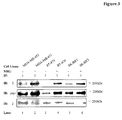
- NRG-1 in the serum of the cell culture medium, cells were cultured in serum-free medium for 24 h prior to harvesting. ErbB-2 or ErbB-3 were then precipitated using antibodies specific for either receptor, and precipitants were analysed by Western blot. Immunoblots using anti-ErbB-2 antibodies detected ErbB-2 in ErbB-3 precipitants ( Figure 1a, middle panel, Lane 3).
- ErbB-3 receptors were also detected by Western immunoblotting of anti-ErbB-2 precipitates from ErbB-2/3 contransfected IVIH3T3 cells ( Figure 1b).
- the presence of NRG-1 enhanced the heterodimerisation of ErbB-2 and ErbB-3 as expected ( Figure 1a. Lane 4; Figure 1b. Lane 2).
- Immunoblotting detected the presence of phosphorylated tyrosines of an 180 kDa protein from ErbB-2/3 cells treated with or without NRG-1 ( Figure 1a, top panel. Lane 3 and 4, respectively). It is expected that this phosphorylation was present on intracellular ErbB-2 and/or ErbB-3 that had formed a ligand independent heterodimer. Unlike ErbB-2, ErbB-3 has an impaired kinase domain and would not be capable of phosphorylating other proteins. Therefore, this indicates that the phosphorylated protein is most likely ErbB-3.
- ErbB-2/ErbB-3 cotransfected cells were cultured in either serum free media or in media containing serum. As shown in Figure 2b, left and right panels, similar banding patterns are detected from cells cultured with or without serum.
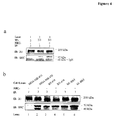
- Shc also co-immunoprecipitated with ErbB-3 from ErbB-2/3 transfected cells in the absence and presence of NRG-1 ( Figure 4b, Lanes 2 and 3). As Shc did not co-immunoprecipitate with ErbB-3 from cells expressing ErbB-3 alone, this data indicates that Shc is associated with ErbB-2/3 heterodimers in the presence and absence of NRG-1.
- BT-474 cells were more sensitive to N12 compared to the other cell lines. However, it was found that Ab5 also inhibited growth in both BT-474 and MDA-MB-453 cells ( Figure 5a and b, respectively). As with N12, BT-474 cells were more sensitive to Ab5 in comparison to other cancer cell lines tested. When N12 and Ab5 were combined to treat these breast cancer cells, they had an additive effect on MDA-MB-453 and BT-474 cells, and a synergistic effect on SK-BR-3 cells. T47D and MCF-7 cells were also tested with this cell growth assay. In T47D cells. ErbB-2 and ErbB-3 are overexpressed, and in MCF-7 cells ErbB-1, 3 and 4 are highly expressed.
- the present inventors have shown a cell growth stimulation effect triggered by ErbB-2/ErbB-3 in the absence of the ligand. NRG-1. This is associated with over-expression of ErbB-2 and ErbB-3 in human breast cancer cells. This finding is supported by the following observations: i) over-expressed ErbB-2 and ErbB-3 form heterodimers in ErbB-2/ErbB-3 co-transfected NIH3T3 cells, and in ErbB-2 over-expressing human breast cancer cells, which respond to anti-ErbB-2 antibody's inhibitory effect; ii) in the ligand independent ErbB-2/ErbB-3 heterodimers.
- ErbB-3 is phosphorylated on tyrosine residues; iii) the ligand-independent heterodimer binds to the cell signalling molecule Shc; iv) a commercial anti-ErbB-3 antibody, which has previously been reported not to have inhibitory effect on cancer cells, inhibits human breast cancer cell growth, and when it is combined with an anti-ErbB-2 antibody, they show either additive or synergistic effect on cell growth inhibition. Thus, it is concluded that ErbB-3 is involved in human breast cancer cell growth via a ligand-independent interaction with over-expressed ErbB-2.
- ErbB-2 over-expression alone was enough to induce tumourigenesis.
- Such conclusions were made from the following observations: i) ErbB-2 is over-expressed in a variety of human cancer cells since the ErbB-2 gene is amplified: ii) ErbB-2 over-expression results in phosphorylation of its intracellular domain and binding to cell signalling proteins.
- Shc and Grb2 iii) transfection of cultured fibroblast cells with the wild-type ErbB-2 gene results in cell transformation; and iv) ErbB-2 mutant, in which homodimerisation is enhanced, shows a higher level of the transformation activity.
- ErbB-2 mutant is able to transform cells, it is not clear if the wild-type ErbB-2 can also transform cells, since other studies can not identify such an activity for ErbB-2 alone. It is not clear if in these a few ErbB-2 transformed cells, ErbB-3 is also expressed, as such an ErbB-3 expression occurred in tumour cells from the ErbB-2 transgenic line. Thus, even though ErbB-2 is involved in cancer cell growth or cell transformation, it not clear if ErbB-2 alone is sufficient in mediating cell signals for cell growth or transformation. It is possible that only the ErbB-2/ErbB-3 heterodimer but not the ErbB-2 homodimer is directly involved in tumourigenesis.
- the ligand-independent heterodimer may have a higher affinity to NRG-1 than to the ErbB-3 homodimer.
- Artificial heterodimers of ErbB-2 and ErbB-3 have a much higher ligand binding affinity than artificial ErbB-3 homodimers or monomers.
- previous studies suggested that the ligand initiated ErbB-2 and ErbB-3 dimerisation. This apparent contradiction has not been adequately explained. Therefore it is unclear from those studies whether the dimer is formed prior to or after ligand binding to ErbB-3.
- the present finding suggests that ligand-independent formation of the ErbB-2-ErbB-3 heterodimeric complex might be dominant over the formation of ErbB-2 homodimers, as the presence of ErbB-3 can prevent formation of ErbB-2 homodimer doublet bands on the SDS-PAGE.
- ligand-dependent ErbB-2/ErbB-3 heterodimers have a lower mobilty on SDS-PAGE than that of the ligand-independent heterodimers. This difference may be due to the molecular mass of the ligand. NRG-1. which could be cross-linked to the receptors. However, the ligand used in this experiment contains only an EGF domain of about 7 kDa, thus it is unlikely that the molecular mass of the ligand is able to significantly change the heterodimer mobility.
- This mobility difference could be due instead to different conformations between the two heterodimers, which are fixed by the cross-linking reagents, or to different levels of phosphorylation, although both heterodimers are phosphorylated at comparable levels detected by the anti-phosphotyrosine antibody.
- the anti-ErbB-3 antibody used in this study (H3.105.5) has been previously investigated, and was found to have no effect on the growth of cancer cells which express ErbB-3 (NeoMarks Catalogue. 1999). The differing observations could be due to the different cell lines used. Unlike the previous study, the present inventors have tested five human breast cancer cell lines: MCF-7. T47D, SK-BR-3, MDA-MB-453 and BT-474. Cells from the latter two lines respond to the ErbB-3 antibody alone. Interestingly.
- SK-BR-3 cells do not significantly respond to the ErbB-3 antibody alone but show a 2.5-fold greater response to a combination of ErbB-2 and ErbB-3 antibodies than to the ErbB-2 antibody alone.
- all three cell lines which respond the ErbB-3 antibody also respond to the ErbB-2 antibody.
- MCF-7 and T47D cell respond neither to the ErbB-2 antibody nor the ErbB-3 antibody, even though MCF-7 cells express ErbB-3. 3 and 4, and T47D over-express ErbB-2 and ErbB-3.
- One aspect of the present invention is a novel approach for cancer therapy by blocking or interfering with the ErbB-2/ErbB-3 heterodimer formation.
Landscapes
- Health & Medical Sciences (AREA)
- Chemical & Material Sciences (AREA)
- Organic Chemistry (AREA)
- Life Sciences & Earth Sciences (AREA)
- Medicinal Chemistry (AREA)
- General Health & Medical Sciences (AREA)
- Chemical Kinetics & Catalysis (AREA)
- General Chemical & Material Sciences (AREA)
- Oncology (AREA)
- Immunology (AREA)
- Biophysics (AREA)
- Proteomics, Peptides & Aminoacids (AREA)
- Molecular Biology (AREA)
- Animal Behavior & Ethology (AREA)
- Biochemistry (AREA)
- Genetics & Genomics (AREA)
- Veterinary Medicine (AREA)
- Public Health (AREA)
- Pharmacology & Pharmacy (AREA)
- Nuclear Medicine, Radiotherapy & Molecular Imaging (AREA)
- Engineering & Computer Science (AREA)
- Materials Engineering (AREA)
- Geochemistry & Mineralogy (AREA)
- Medicines Containing Antibodies Or Antigens For Use As Internal Diagnostic Agents (AREA)
- Medicines That Contain Protein Lipid Enzymes And Other Medicines (AREA)
- Steroid Compounds (AREA)
- Peptides Or Proteins (AREA)
- Bioinformatics & Cheminformatics (AREA)
- Microbiology (AREA)
- Mycology (AREA)
- Epidemiology (AREA)
Priority Applications (1)
| Application Number | Priority Date | Filing Date | Title |
|---|---|---|---|
| EP14175608.0A EP2810653B1 (de) | 1999-06-18 | 2000-06-16 | Zellenwachstumshemmung |
Applications Claiming Priority (2)
| Application Number | Priority Date | Filing Date | Title |
|---|---|---|---|
| AUPQ1057A AUPQ105799A0 (en) | 1999-06-18 | 1999-06-18 | Cell growth inhibition |
| EP00936539A EP1187634B1 (de) | 1999-06-18 | 2000-06-16 | Zellwachstumsinhibition |
Related Parent Applications (1)
| Application Number | Title | Priority Date | Filing Date |
|---|---|---|---|
| EP00936539A Division EP1187634B1 (de) | 1999-06-18 | 2000-06-16 | Zellwachstumsinhibition |
Related Child Applications (2)
| Application Number | Title | Priority Date | Filing Date |
|---|---|---|---|
| EP14175608.0A Division EP2810653B1 (de) | 1999-06-18 | 2000-06-16 | Zellenwachstumshemmung |
| EP14175608.0A Division-Into EP2810653B1 (de) | 1999-06-18 | 2000-06-16 | Zellenwachstumshemmung |
Publications (2)
| Publication Number | Publication Date |
|---|---|
| EP1889631A1 true EP1889631A1 (de) | 2008-02-20 |
| EP1889631B1 EP1889631B1 (de) | 2014-09-03 |
Family
ID=3815248
Family Applications (3)
| Application Number | Title | Priority Date | Filing Date |
|---|---|---|---|
| EP00936539A Revoked EP1187634B1 (de) | 1999-06-18 | 2000-06-16 | Zellwachstumsinhibition |
| EP14175608.0A Expired - Lifetime EP2810653B1 (de) | 1999-06-18 | 2000-06-16 | Zellenwachstumshemmung |
| EP07119791.7A Revoked EP1889631B1 (de) | 1999-06-18 | 2000-06-16 | Zellenwachstumshemmung |
Family Applications Before (2)
| Application Number | Title | Priority Date | Filing Date |
|---|---|---|---|
| EP00936539A Revoked EP1187634B1 (de) | 1999-06-18 | 2000-06-16 | Zellwachstumsinhibition |
| EP14175608.0A Expired - Lifetime EP2810653B1 (de) | 1999-06-18 | 2000-06-16 | Zellenwachstumshemmung |
Country Status (8)
| Country | Link |
|---|---|
| US (2) | US9783456B1 (de) |
| EP (3) | EP1187634B1 (de) |
| JP (1) | JP4674020B2 (de) |
| AT (1) | ATE381943T1 (de) |
| AU (1) | AUPQ105799A0 (de) |
| DE (1) | DE60037586T2 (de) |
| ES (1) | ES2524006T3 (de) |
| WO (1) | WO2000078347A1 (de) |
Cited By (8)
| Publication number | Priority date | Publication date | Assignee | Title |
|---|---|---|---|---|
| US8329873B2 (en) | 2002-04-05 | 2012-12-11 | The Regents Of The University Of California | Bispecific single chain Fv antibody molecules and methods of use thereof |
| US8580263B2 (en) | 2006-11-21 | 2013-11-12 | The Regents Of The University Of California | Anti-EGFR family antibodies, bispecific anti-EGFR family antibodies and methods of use thereof |
| US8597652B2 (en) | 2009-03-20 | 2013-12-03 | Genentech, Inc. | Multispecific anti-HER antibodies |
| US9085622B2 (en) | 2010-09-03 | 2015-07-21 | Glaxosmithkline Intellectual Property Development Limited | Antigen binding proteins |
| US9487588B2 (en) | 2007-02-16 | 2016-11-08 | Merrimack Pharmaceuticals, Inc. | Antibodies against the ectodomain of ERBB3 and uses thereof |
| US9518130B2 (en) | 2010-03-11 | 2016-12-13 | Merrimack Pharmaceuticals, Inc. | Use of ERBB3 inhibitors in the treatment of triple negative and basal-like breast cancers |
| US9688761B2 (en) | 2013-12-27 | 2017-06-27 | Merrimack Pharmaceuticals, Inc. | Biomarker profiles for predicting outcomes of cancer therapy with ERBB3 inhibitors and/or chemotherapies |
| US10184006B2 (en) | 2015-06-04 | 2019-01-22 | Merrimack Pharmaceuticals, Inc. | Biomarkers for predicting outcomes of cancer therapy with ErbB3 inhibitors |
Families Citing this family (43)
| Publication number | Priority date | Publication date | Assignee | Title |
|---|---|---|---|---|
| US6949245B1 (en) | 1999-06-25 | 2005-09-27 | Genentech, Inc. | Humanized anti-ErbB2 antibodies and treatment with anti-ErbB2 antibodies |
| US7041292B1 (en) | 1999-06-25 | 2006-05-09 | Genentech, Inc. | Treating prostate cancer with anti-ErbB2 antibodies |
| CN1447696A (zh) | 2000-05-19 | 2003-10-08 | 杰南技术公司 | 用于提高对ErbB拮抗剂癌症治疗的有效应答可能性的基因检测试验 |
| AU2008200654B2 (en) * | 2001-08-09 | 2010-04-29 | Max-Planck-Gesellschaft Zur Forderung Der Wissenschaften E.V. | Inhibitors of HER3 activity |
| EP1283053A1 (de) | 2001-08-09 | 2003-02-12 | Max-Planck-Gesellschaft zur Förderung der Wissenschaften e.V. | Inhibitore der HER3 Aktivität |
| US7919098B2 (en) | 2002-03-26 | 2011-04-05 | Zensun ( Shanghai ) Sci & Tech Co., Ltd. | ErbB-3 based methods and compositions for treating neoplasms |
| ES2710439T3 (es) | 2005-01-21 | 2019-04-25 | Genentech Inc | Dosificación fija de anticuerpos HER |
| KR101253576B1 (ko) | 2005-02-23 | 2013-04-11 | 제넨테크, 인크. | Her 이량체화 억제제를 이용한 암 환자에서의 질환진행까지의 시간 또는 생존의 연장 |
| AR056857A1 (es) | 2005-12-30 | 2007-10-24 | U3 Pharma Ag | Anticuerpos dirigidos hacia her-3 (receptor del factor de crecimiento epidérmico humano-3) y sus usos |
| EP2518508A1 (de) | 2006-11-28 | 2012-10-31 | U3 Pharma GmbH | Aktiviertes HER3 als Marker zur Vorhersage der Therapieeffizienz |
| EP2899541A1 (de) | 2007-03-02 | 2015-07-29 | Genentech, Inc. | Voraussage der Reaktion auf einen HRE-Dimerisationshemmer auf Basis niedriger HER3-Expression |
| US9551033B2 (en) | 2007-06-08 | 2017-01-24 | Genentech, Inc. | Gene expression markers of tumor resistance to HER2 inhibitor treatment |
| CA2690334C (en) | 2007-06-08 | 2017-02-14 | Genentech, Inc. | Gene expression markers of tumor resistance to her2 inhibitor treatment |
| BRPI0812682A2 (pt) | 2008-06-16 | 2010-06-22 | Genentech Inc | tratamento de cáncer de mama metastático |
| WO2010019952A2 (en) | 2008-08-15 | 2010-02-18 | Merrimack Pharmaceuticals, Inc. | Methods, systems and products for predicting response of tumor cells to a therapeutic agent and treating a patient according to the predicted response |
| EP2808339B1 (de) | 2008-11-28 | 2017-02-15 | Zensun (Shanghai) Science & Technology, Co., Ltd. | Neuregulin-Peptide und deren Verwendung |
| JP5705836B2 (ja) | 2009-05-29 | 2015-04-22 | エフ・ホフマン−ラ・ロシュ・アクチェンゲゼルシャフト | Her2を発現する胃癌患者のher2シグナル伝達のためのモジュレーター |
| BR112012012160B1 (pt) * | 2009-11-13 | 2022-04-26 | Amgen, Inc. | Material e métodos para tratar ou prevenir doenças associadas ao her-3 |
| PH12012501157A1 (en) | 2009-12-22 | 2012-10-29 | Roche Glycart Ag | Anti-her3 antibodies and uses thereof |
| KR20130000384A (ko) | 2010-02-18 | 2013-01-02 | 더 보드 어브 트러스티스 어브 더 리랜드 스탠포드 주니어 유니버시티 | 뉴레귤린 길항제 및 암의 치료에서의 그의 용도 |
| WO2011146568A1 (en) | 2010-05-19 | 2011-11-24 | Genentech, Inc. | Predicting response to a her inhibitor |
| KR101862832B1 (ko) * | 2010-11-01 | 2018-05-30 | 심포젠 에이/에스 | Pan―her 항체 조성물 |
| US9155802B2 (en) | 2010-11-01 | 2015-10-13 | Symphogen A/S | Pan-HER antibody composition |
| US20130245233A1 (en) | 2010-11-24 | 2013-09-19 | Ming Lei | Multispecific Molecules |
| JP5766296B2 (ja) | 2010-12-23 | 2015-08-19 | エフ.ホフマン−ラ ロシュ アーゲーF. Hoffmann−La Roche Aktiengesellschaft | ポリペプチド−ポリヌクレオチド複合体、およびエフェクター成分の標的化された送達におけるその使用 |
| US20140363438A1 (en) | 2011-08-17 | 2014-12-11 | Genentech, Inc. | Neuregulin antibodies and uses thereof |
| WO2013053076A1 (en) | 2011-10-10 | 2013-04-18 | Zensun (Shanghai)Science & Technology Limited | Compositions and methods for treating heart failure |
| US9327023B2 (en) | 2011-10-25 | 2016-05-03 | The Regents Of The University Of Michigan | HER2 targeting agent treatment in non-HER2-amplified cancers having HER2 expressing cancer stem cells |
| MX350957B (es) | 2011-11-23 | 2017-09-27 | Medimmune Llc | Moleculas de union especificas para her3 y usos de las mismas. |
| AU2012346540C1 (en) | 2011-11-30 | 2019-07-04 | Genentech, Inc. | ErbB3 mutations in cancer |
| WO2013083810A1 (en) | 2011-12-09 | 2013-06-13 | F. Hoffmann-La Roche Ag | Identification of non-responders to her2 inhibitors |
| RU2014136886A (ru) | 2012-03-27 | 2016-05-20 | Дженентек, Инк. | Диагностика и виды лечения, связанные с ингибиторами her3 |
| HK1202431A1 (en) | 2012-05-02 | 2015-10-02 | Symphogen A/S | Humanized pan-her antibody compositions |
| BR112015006656A8 (pt) | 2012-10-08 | 2020-01-21 | Sensun Shanghai Science & Tech Co Ltd | composições e métodos para o tratamento de insuficiência cardíaca em pacientes diabéticos |
| JP6998646B2 (ja) | 2012-11-30 | 2022-02-04 | エフ・ホフマン-ラ・ロシュ・アクチェンゲゼルシャフト | Pd-l1阻害剤併用療法を必要とする患者の同定 |
| AR094403A1 (es) | 2013-01-11 | 2015-07-29 | Hoffmann La Roche | Terapia de combinación de anticuerpos anti-her3 |
| EP2999499B1 (de) | 2013-05-22 | 2019-07-17 | Zensun (Shanghai) Science & Technology, Co., Ltd. | Verlängerte freisetzung von neuregulin zur behandlung von herzinsuffizienz |
| WO2015048008A2 (en) | 2013-09-24 | 2015-04-02 | Medimmune, Llc | Binding molecules specific for her3 and uses thereof |
| CN104758922A (zh) | 2014-01-03 | 2015-07-08 | 上海泽生科技开发有限公司 | 纽兰格林制剂的配方 |
| US10745490B2 (en) | 2014-04-11 | 2020-08-18 | Celldex Therapeutics, Inc. | Anti-ErbB antibodies and methods of use thereof |
| CN105497876B (zh) | 2014-09-24 | 2021-01-15 | 上海泽生科技开发股份有限公司 | 神经调节蛋白用于预防、治疗或延迟心脏室性心律失常的方法和组合物 |
| CN111407882A (zh) | 2014-10-17 | 2020-07-14 | 上海泽生科技开发股份有限公司 | 神经调节蛋白用于预防、治疗或延迟射血分数保留的心力衰竭的方法和组合物 |
| WO2017194554A1 (en) | 2016-05-10 | 2017-11-16 | Inserm (Institut National De La Sante Et De La Recherche Medicale) | Combinations therapies for the treatment of cancer |
Citations (1)
| Publication number | Priority date | Publication date | Assignee | Title |
|---|---|---|---|---|
| WO1997035885A1 (en) * | 1996-03-27 | 1997-10-02 | Genentech, Inc. | ErbB3 ANTIBODIES |
Family Cites Families (20)
| Publication number | Priority date | Publication date | Assignee | Title |
|---|---|---|---|---|
| SE463851B (sv) | 1988-09-02 | 1991-02-04 | Amsu Ltd | Komposition foer behandling av erektil dysfunktion via uretra |
| EP0444181B2 (de) | 1989-08-04 | 2010-11-24 | Bayer Schering Pharma Aktiengesellschaft | Äusserliche domäne von c-erbb-2:gp75 |
| US5183884A (en) | 1989-12-01 | 1993-02-02 | United States Of America | Dna segment encoding a gene for a receptor related to the epidermal growth factor receptor |
| US5578482A (en) * | 1990-05-25 | 1996-11-26 | Georgetown University | Ligand growth factors that bind to the erbB-2 receptor protein and induce cellular responses |
| DE4221256C2 (de) | 1992-06-26 | 1997-07-10 | Lancaster Group Ag | Galenische Zusammensetzung für die topische Anwendung |
| US5741511A (en) | 1995-04-12 | 1998-04-21 | Sam Yang Co., Ltd. | Transdermal drug delivery device for treating erectile dysfunction |
| WO1997023256A1 (en) | 1995-12-22 | 1997-07-03 | Localmed, Inc. | Localized intravascular delivery of growth factors for promotion of angiogenesis |
| US5736154A (en) | 1996-03-11 | 1998-04-07 | Fuisz Technologies Ltd. | Transdermal delivery system |
| US5968511A (en) * | 1996-03-27 | 1999-10-19 | Genentech, Inc. | ErbB3 antibodies |
| WO1998002540A1 (en) | 1996-07-12 | 1998-01-22 | Genentech, Inc. | Chimeric heteromultimer adhesins |
| EP0931147A1 (de) * | 1996-10-18 | 1999-07-28 | Genentech, Inc. | Antikoerper gegen erbb2 |
| US5981201A (en) | 1997-01-08 | 1999-11-09 | Beth Israel Deaconess Medical Center | Methods of detection and treatment of breast cancer |
| DE69840699D1 (de) | 1997-02-10 | 2009-05-14 | Genentech Inc | Heregulin varianten |
| SE9703226D0 (sv) | 1997-09-08 | 1997-09-08 | Astra Ab | New pharmaceutical composition |
| US6197801B1 (en) | 1998-01-14 | 2001-03-06 | Usa Doctors Products, Inc. | Injectable pharmaceutical composition for treatment and reversal of erectile dysfunction |
| AU784617B2 (en) | 2000-05-15 | 2006-05-18 | Pharmacia & Upjohn Company | Aromatase inhibitors and monoclonal anti-HER2 antibodies as antitumors agents |
| EP1283053A1 (de) | 2001-08-09 | 2003-02-12 | Max-Planck-Gesellschaft zur Förderung der Wissenschaften e.V. | Inhibitore der HER3 Aktivität |
| US7919098B2 (en) | 2002-03-26 | 2011-04-05 | Zensun ( Shanghai ) Sci & Tech Co., Ltd. | ErbB-3 based methods and compositions for treating neoplasms |
| JP2008531557A (ja) | 2005-02-23 | 2008-08-14 | メリマック ファーマシューティカルズ インコーポレーティッド | 生物活性を調節するための二重特異性結合剤 |
| SG178789A1 (en) | 2007-02-16 | 2012-03-29 | Merrimack Pharmaceuticals Inc | Antibodies against erbb3 and uses thereof |
-
1999
- 1999-06-18 AU AUPQ1057A patent/AUPQ105799A0/en not_active Abandoned
-
2000
- 2000-06-16 AT AT00936539T patent/ATE381943T1/de not_active IP Right Cessation
- 2000-06-16 EP EP00936539A patent/EP1187634B1/de not_active Revoked
- 2000-06-16 US US09/979,809 patent/US9783456B1/en not_active Expired - Fee Related
- 2000-06-16 ES ES07119791.7T patent/ES2524006T3/es not_active Expired - Lifetime
- 2000-06-16 EP EP14175608.0A patent/EP2810653B1/de not_active Expired - Lifetime
- 2000-06-16 JP JP2001504409A patent/JP4674020B2/ja not_active Expired - Lifetime
- 2000-06-16 DE DE60037586T patent/DE60037586T2/de not_active Expired - Lifetime
- 2000-06-16 EP EP07119791.7A patent/EP1889631B1/de not_active Revoked
- 2000-06-16 WO PCT/AU2000/000671 patent/WO2000078347A1/en not_active Ceased
-
2015
- 2015-11-24 US US14/951,290 patent/US20160152727A1/en not_active Abandoned
Patent Citations (1)
| Publication number | Priority date | Publication date | Assignee | Title |
|---|---|---|---|---|
| WO1997035885A1 (en) * | 1996-03-27 | 1997-10-02 | Genentech, Inc. | ErbB3 ANTIBODIES |
Non-Patent Citations (4)
| Title |
|---|
| CHEN X ET AL: "An immunological approach reveals biological differences between the two NDF/heregulin receptors, ErbB-3 and ErbB-4", JOURNAL OF BIOLOGICAL CHEMISTRY, AMERICAN SOCIETY OF BIOLOCHEMICAL BIOLOGISTS, BIRMINGHAM,, US, vol. 271, no. 13, 29 March 1996 (1996-03-29), pages 7620 - 7629, XP002201895, ISSN: 0021-9258 * |
| PINKAS-KRAMARSKI R ET AL: "THE ONCOGENIC ERBB-2/ERBB-3 HETERODIMER IS A SURROGATE RECEPTOR OF THE EPIDERMAL GROWTH FACTOR AND BETACELLULIN", ONCOGENE, BASINGSTOKE, HANTS, GB, vol. 16, 12 March 1998 (1998-03-12), pages 1249 - 1258, XP001068235, ISSN: 0950-9232 * |
| THERMO SCIENTIFIC: "c-erbB-3/HER-3 Ab-5 (clone H3.105.5; same as Ab105) Mouse Monoclonal Antibody", XP002462184, Retrieved from the Internet <URL:http://www.labvision.com/pdf/303.pdf> [retrieved on 20071212] * |
| VADLAMUDI R ET AL: "REGULATION OF CYCLOOXYGENASE-2 PATHWAY BY HER2 RECEPTOR", ONCOGENE, BASINGSTOKE, HANTS, GB, vol. 18, no. 2, 14 January 1999 (1999-01-14), pages 305 - 314, XP001030629, ISSN: 0950-9232 * |
Cited By (11)
| Publication number | Priority date | Publication date | Assignee | Title |
|---|---|---|---|---|
| US8329873B2 (en) | 2002-04-05 | 2012-12-11 | The Regents Of The University Of California | Bispecific single chain Fv antibody molecules and methods of use thereof |
| US8980258B2 (en) | 2002-04-05 | 2015-03-17 | The Regents Of The University Of California | Bispecific single chain Fv antibody molecules and methods of use therof |
| US8580263B2 (en) | 2006-11-21 | 2013-11-12 | The Regents Of The University Of California | Anti-EGFR family antibodies, bispecific anti-EGFR family antibodies and methods of use thereof |
| US9487588B2 (en) | 2007-02-16 | 2016-11-08 | Merrimack Pharmaceuticals, Inc. | Antibodies against the ectodomain of ERBB3 and uses thereof |
| US8597652B2 (en) | 2009-03-20 | 2013-12-03 | Genentech, Inc. | Multispecific anti-HER antibodies |
| US9327035B2 (en) | 2009-03-20 | 2016-05-03 | Genentech, Inc. | Anti-HER antibodies |
| US9518130B2 (en) | 2010-03-11 | 2016-12-13 | Merrimack Pharmaceuticals, Inc. | Use of ERBB3 inhibitors in the treatment of triple negative and basal-like breast cancers |
| US9085622B2 (en) | 2010-09-03 | 2015-07-21 | Glaxosmithkline Intellectual Property Development Limited | Antigen binding proteins |
| US9688761B2 (en) | 2013-12-27 | 2017-06-27 | Merrimack Pharmaceuticals, Inc. | Biomarker profiles for predicting outcomes of cancer therapy with ERBB3 inhibitors and/or chemotherapies |
| US10273304B2 (en) | 2013-12-27 | 2019-04-30 | Merrimack Pharmaceuticals, Inc. | Biomarker profiles for predicting outcomes of cancer therapy with ERBB3 inhibitors and/or chemotherapies |
| US10184006B2 (en) | 2015-06-04 | 2019-01-22 | Merrimack Pharmaceuticals, Inc. | Biomarkers for predicting outcomes of cancer therapy with ErbB3 inhibitors |
Also Published As
| Publication number | Publication date |
|---|---|
| DE60037586D1 (de) | 2008-02-07 |
| DE60037586T2 (de) | 2009-01-08 |
| EP2810653B1 (de) | 2020-01-08 |
| US9783456B1 (en) | 2017-10-10 |
| EP1187634A1 (de) | 2002-03-20 |
| EP1187634A4 (de) | 2005-06-15 |
| JP4674020B2 (ja) | 2011-04-20 |
| ATE381943T1 (de) | 2008-01-15 |
| JP2003502386A (ja) | 2003-01-21 |
| EP1187634B1 (de) | 2007-12-26 |
| EP2810653A1 (de) | 2014-12-10 |
| WO2000078347A1 (en) | 2000-12-28 |
| US20160152727A1 (en) | 2016-06-02 |
| EP1889631B1 (de) | 2014-09-03 |
| AUPQ105799A0 (en) | 1999-07-08 |
| ES2524006T3 (es) | 2014-12-03 |
Similar Documents
| Publication | Publication Date | Title |
|---|---|---|
| US9783456B1 (en) | Method for inhibiting cell growth using anti-ErbB-3 and anti-ErbB-2 antibodies | |
| JP5719270B2 (ja) | 腫瘍治療のための組成物および方法 | |
| EP1414494B1 (de) | Hemmende antikörper der her3-aktivität | |
| US7815906B2 (en) | Compositions and methods for restoring sensitivity to treatment with HER2 antagonists | |
| PT896586E (pt) | Anticorpos de erbb3 | |
| EP2707391B1 (de) | Antikörper gegen her3 | |
| AU2021225180A1 (en) | Methods for identification, assessment, prevention, and treatment of metabolic disorders using Slit2 | |
| KR20050072744A (ko) | 암 조절 방법 | |
| US8962808B2 (en) | EGFR-related polypeptides and methods of use | |
| AU2003284190A1 (en) | Methods and kits for diagnosing tumorigenicity | |
| Kim et al. | Both the epitope specificity and isotype are important in the antitumor effect of monoclonal antibodies against Her‐2/neu antigen | |
| Lyu et al. | Increased erbB3 promotes erbB2/neu-driven mammary tumor proliferation and co-targeting of erbB2/erbB3 receptors exhibits potent inhibitory effects on breast cancer cells | |
| WO2006044566A9 (en) | Autocrine growth factor receptors and methods | |
| CA2459622C (en) | Compositions and methods for restoring sensitivity to treatment with her2 antagonists | |
| Hollmén | Role of ErbB2 and ErbB4 in cancer growth, prognosis and as targets for immunotherapy | |
| HK1091141B (en) | Compositions and methods for restoring sensitivity to treatment with her2 antagonists | |
| Shariati et al. | Journal of Biology and Today's World | |
| Abbasi et al. | Breast Cancer Biomarkers resistance to trastuzumab | |
| Zhang | Signalling pathways involved in cell transformation and conversion of phenotype | |
| Park | The HER-2/neu oncogene in human breast cancer: From molecular mechanisms to targeted therapies |
Legal Events
| Date | Code | Title | Description |
|---|---|---|---|
| PUAI | Public reference made under article 153(3) epc to a published international application that has entered the european phase |
Free format text: ORIGINAL CODE: 0009012 |
|
| AC | Divisional application: reference to earlier application |
Ref document number: 1187634 Country of ref document: EP Kind code of ref document: P |
|
| AK | Designated contracting states |
Kind code of ref document: A1 Designated state(s): AT BE CH CY DE DK ES FI FR GB GR IE IT LI LU MC NL PT SE |
|
| RIN1 | Information on inventor provided before grant (corrected) |
Inventor name: ZHOU, MINGDONG |
|
| RIN1 | Information on inventor provided before grant (corrected) |
Inventor name: ZHOU, MINGDONG |
|
| RAP1 | Party data changed (applicant data changed or rights of an application transferred) |
Owner name: ZENSUN (SHANGHAI) SCIENCE AND TECHNOLOGY LIMITED |
|
| 17P | Request for examination filed |
Effective date: 20080822 |
|
| AKX | Designation fees paid |
Designated state(s): AT BE CH CY DE DK ES FI FR GB GR IE IT LI LU MC NL PT SE |
|
| 17Q | First examination report despatched |
Effective date: 20081229 |
|
| RAP1 | Party data changed (applicant data changed or rights of an application transferred) |
Owner name: ZENSUN (SHANGHAI) SCIENCE AND TECHNOLOGY LIMITED |
|
| GRAP | Despatch of communication of intention to grant a patent |
Free format text: ORIGINAL CODE: EPIDOSNIGR1 |
|
| INTG | Intention to grant announced |
Effective date: 20140417 |
|
| GRAS | Grant fee paid |
Free format text: ORIGINAL CODE: EPIDOSNIGR3 |
|
| GRAA | (expected) grant |
Free format text: ORIGINAL CODE: 0009210 |
|
| AC | Divisional application: reference to earlier application |
Ref document number: 1187634 Country of ref document: EP Kind code of ref document: P |
|
| AK | Designated contracting states |
Kind code of ref document: B1 Designated state(s): AT BE CH CY DE DK ES FI FR GB GR IE IT LI LU MC NL PT SE |
|
| REG | Reference to a national code |
Ref country code: GB Ref legal event code: FG4D |
|
| REG | Reference to a national code |
Ref country code: AT Ref legal event code: REF Ref document number: 685206 Country of ref document: AT Kind code of ref document: T Effective date: 20140915 Ref country code: CH Ref legal event code: EP |
|
| REG | Reference to a national code |
Ref country code: IE Ref legal event code: FG4D |
|
| REG | Reference to a national code |
Ref country code: DE Ref legal event code: R096 Ref document number: 60048709 Country of ref document: DE Effective date: 20141009 |
|
| REG | Reference to a national code |
Ref country code: CH Ref legal event code: NV Representative=s name: KIRKER AND CIE S.A., CH |
|
| REG | Reference to a national code |
Ref country code: ES Ref legal event code: FG2A Ref document number: 2524006 Country of ref document: ES Kind code of ref document: T3 Effective date: 20141203 |
|
| REG | Reference to a national code |
Ref country code: AT Ref legal event code: MK05 Ref document number: 685206 Country of ref document: AT Kind code of ref document: T Effective date: 20140903 |
|
| PG25 | Lapsed in a contracting state [announced via postgrant information from national office to epo] |
Ref country code: GR Free format text: LAPSE BECAUSE OF FAILURE TO SUBMIT A TRANSLATION OF THE DESCRIPTION OR TO PAY THE FEE WITHIN THE PRESCRIBED TIME-LIMIT Effective date: 20141204 Ref country code: SE Free format text: LAPSE BECAUSE OF FAILURE TO SUBMIT A TRANSLATION OF THE DESCRIPTION OR TO PAY THE FEE WITHIN THE PRESCRIBED TIME-LIMIT Effective date: 20140903 Ref country code: FI Free format text: LAPSE BECAUSE OF FAILURE TO SUBMIT A TRANSLATION OF THE DESCRIPTION OR TO PAY THE FEE WITHIN THE PRESCRIBED TIME-LIMIT Effective date: 20140903 |
|
| REG | Reference to a national code |
Ref country code: NL Ref legal event code: VDEP Effective date: 20140903 |
|
| PG25 | Lapsed in a contracting state [announced via postgrant information from national office to epo] |
Ref country code: AT Free format text: LAPSE BECAUSE OF FAILURE TO SUBMIT A TRANSLATION OF THE DESCRIPTION OR TO PAY THE FEE WITHIN THE PRESCRIBED TIME-LIMIT Effective date: 20140903 Ref country code: CY Free format text: LAPSE BECAUSE OF FAILURE TO SUBMIT A TRANSLATION OF THE DESCRIPTION OR TO PAY THE FEE WITHIN THE PRESCRIBED TIME-LIMIT Effective date: 20140903 |
|
| PG25 | Lapsed in a contracting state [announced via postgrant information from national office to epo] |
Ref country code: NL Free format text: LAPSE BECAUSE OF FAILURE TO SUBMIT A TRANSLATION OF THE DESCRIPTION OR TO PAY THE FEE WITHIN THE PRESCRIBED TIME-LIMIT Effective date: 20140903 |
|
| PG25 | Lapsed in a contracting state [announced via postgrant information from national office to epo] |
Ref country code: PT Free format text: LAPSE BECAUSE OF FAILURE TO SUBMIT A TRANSLATION OF THE DESCRIPTION OR TO PAY THE FEE WITHIN THE PRESCRIBED TIME-LIMIT Effective date: 20150105 |
|
| REG | Reference to a national code |
Ref country code: DE Ref legal event code: R026 Ref document number: 60048709 Country of ref document: DE |
|
| PLBI | Opposition filed |
Free format text: ORIGINAL CODE: 0009260 |
|
| PLAX | Notice of opposition and request to file observation + time limit sent |
Free format text: ORIGINAL CODE: EPIDOSNOBS2 |
|
| 26 | Opposition filed |
Opponent name: U3 PHARMA GMBH Effective date: 20150601 |
|
| PG25 | Lapsed in a contracting state [announced via postgrant information from national office to epo] |
Ref country code: DK Free format text: LAPSE BECAUSE OF FAILURE TO SUBMIT A TRANSLATION OF THE DESCRIPTION OR TO PAY THE FEE WITHIN THE PRESCRIBED TIME-LIMIT Effective date: 20140903 |
|
| PLAF | Information modified related to communication of a notice of opposition and request to file observations + time limit |
Free format text: ORIGINAL CODE: EPIDOSCOBS2 |
|
| PLBB | Reply of patent proprietor to notice(s) of opposition received |
Free format text: ORIGINAL CODE: EPIDOSNOBS3 |
|
| PG25 | Lapsed in a contracting state [announced via postgrant information from national office to epo] |
Ref country code: MC Free format text: LAPSE BECAUSE OF FAILURE TO SUBMIT A TRANSLATION OF THE DESCRIPTION OR TO PAY THE FEE WITHIN THE PRESCRIBED TIME-LIMIT Effective date: 20140903 |
|
| PG25 | Lapsed in a contracting state [announced via postgrant information from national office to epo] |
Ref country code: LU Free format text: LAPSE BECAUSE OF FAILURE TO SUBMIT A TRANSLATION OF THE DESCRIPTION OR TO PAY THE FEE WITHIN THE PRESCRIBED TIME-LIMIT Effective date: 20150616 |
|
| REG | Reference to a national code |
Ref country code: IE Ref legal event code: MM4A |
|
| PG25 | Lapsed in a contracting state [announced via postgrant information from national office to epo] |
Ref country code: IE Free format text: LAPSE BECAUSE OF NON-PAYMENT OF DUE FEES Effective date: 20150616 |
|
| REG | Reference to a national code |
Ref country code: FR Ref legal event code: PLFP Year of fee payment: 17 |
|
| PG25 | Lapsed in a contracting state [announced via postgrant information from national office to epo] |
Ref country code: BE Free format text: LAPSE BECAUSE OF FAILURE TO SUBMIT A TRANSLATION OF THE DESCRIPTION OR TO PAY THE FEE WITHIN THE PRESCRIBED TIME-LIMIT Effective date: 20140903 |
|
| RAP2 | Party data changed (patent owner data changed or rights of a patent transferred) |
Owner name: ZENSUN (SHANGHAI) SCIENCE & TECHNOLOGY, CO., LTD. |
|
| RDAF | Communication despatched that patent is revoked |
Free format text: ORIGINAL CODE: EPIDOSNREV1 |
|
| STAA | Information on the status of an ep patent application or granted ep patent |
Free format text: STATUS: THE PATENT HAS BEEN GRANTED |
|
| APAH | Appeal reference modified |
Free format text: ORIGINAL CODE: EPIDOSCREFNO |
|
| APBM | Appeal reference recorded |
Free format text: ORIGINAL CODE: EPIDOSNREFNO |
|
| APBP | Date of receipt of notice of appeal recorded |
Free format text: ORIGINAL CODE: EPIDOSNNOA2O |
|
| APAJ | Date of receipt of notice of appeal modified |
Free format text: ORIGINAL CODE: EPIDOSCNOA2O |
|
| PLAB | Opposition data, opponent's data or that of the opponent's representative modified |
Free format text: ORIGINAL CODE: 0009299OPPO |
|
| R26 | Opposition filed (corrected) |
Opponent name: DAIICHI SANKYO EUROPE GMBH Effective date: 20150601 |
|
| APBQ | Date of receipt of statement of grounds of appeal recorded |
Free format text: ORIGINAL CODE: EPIDOSNNOA3O |
|
| REG | Reference to a national code |
Ref country code: FR Ref legal event code: PLFP Year of fee payment: 18 |
|
| REG | Reference to a national code |
Ref country code: FR Ref legal event code: PLFP Year of fee payment: 19 |
|
| PGFP | Annual fee paid to national office [announced via postgrant information from national office to epo] |
Ref country code: IT Payment date: 20190620 Year of fee payment: 20 Ref country code: DE Payment date: 20190604 Year of fee payment: 20 |
|
| PGFP | Annual fee paid to national office [announced via postgrant information from national office to epo] |
Ref country code: FR Payment date: 20190510 Year of fee payment: 20 |
|
| PGFP | Annual fee paid to national office [announced via postgrant information from national office to epo] |
Ref country code: CH Payment date: 20190614 Year of fee payment: 20 |
|
| PGFP | Annual fee paid to national office [announced via postgrant information from national office to epo] |
Ref country code: GB Payment date: 20190612 Year of fee payment: 20 Ref country code: ES Payment date: 20190701 Year of fee payment: 20 |
|
| REG | Reference to a national code |
Ref country code: DE Ref legal event code: R071 Ref document number: 60048709 Country of ref document: DE |
|
| REG | Reference to a national code |
Ref country code: CH Ref legal event code: PL |
|
| REG | Reference to a national code |
Ref country code: GB Ref legal event code: PE20 Expiry date: 20200615 |
|
| REG | Reference to a national code |
Ref country code: DE Ref legal event code: R064 Ref document number: 60048709 Country of ref document: DE Ref country code: DE Ref legal event code: R103 Ref document number: 60048709 Country of ref document: DE |
|
| APBU | Appeal procedure closed |
Free format text: ORIGINAL CODE: EPIDOSNNOA9O |
|
| PG25 | Lapsed in a contracting state [announced via postgrant information from national office to epo] |
Ref country code: GB Free format text: LAPSE BECAUSE OF EXPIRATION OF PROTECTION Effective date: 20200615 |
|
| RDAG | Patent revoked |
Free format text: ORIGINAL CODE: 0009271 |
|
| STAA | Information on the status of an ep patent application or granted ep patent |
Free format text: STATUS: PATENT REVOKED |
|
| REG | Reference to a national code |
Ref country code: ES Ref legal event code: FD2A Effective date: 20200925 |
|
| REG | Reference to a national code |
Ref country code: FI Ref legal event code: MGE |
|
| 27W | Patent revoked |
Effective date: 20200805 |
|
| PG25 | Lapsed in a contracting state [announced via postgrant information from national office to epo] |
Ref country code: ES Free format text: LAPSE BECAUSE OF EXPIRATION OF PROTECTION Effective date: 20200617 |
|
| P01 | Opt-out of the competence of the unified patent court (upc) registered |
Effective date: 20230527 |