EP1890409A2 - System und Verfahren zur optimierten Übertragung von ESG-Daten in einem DVB-H-System - Google Patents
System und Verfahren zur optimierten Übertragung von ESG-Daten in einem DVB-H-System Download PDFInfo
- Publication number
- EP1890409A2 EP1890409A2 EP07114518A EP07114518A EP1890409A2 EP 1890409 A2 EP1890409 A2 EP 1890409A2 EP 07114518 A EP07114518 A EP 07114518A EP 07114518 A EP07114518 A EP 07114518A EP 1890409 A2 EP1890409 A2 EP 1890409A2
- Authority
- EP
- European Patent Office
- Prior art keywords
- session
- data
- esg
- terminal
- reconfiguration
- Prior art date
- Legal status (The legal status is an assumption and is not a legal conclusion. Google has not performed a legal analysis and makes no representation as to the accuracy of the status listed.)
- Withdrawn
Links
Images



Classifications
-
- H—ELECTRICITY
- H04—ELECTRIC COMMUNICATION TECHNIQUE
- H04H—BROADCAST COMMUNICATION
- H04H60/00—Arrangements for broadcast applications with a direct linking to broadcast information or broadcast space-time; Broadcast-related systems
- H04H60/61—Arrangements for services using the result of monitoring, identification or recognition covered by groups H04H60/29-H04H60/54
- H04H60/66—Arrangements for services using the result of monitoring, identification or recognition covered by groups H04H60/29-H04H60/54 for using the result on distributors' side
-
- H—ELECTRICITY
- H04—ELECTRIC COMMUNICATION TECHNIQUE
- H04N—PICTORIAL COMMUNICATION, e.g. TELEVISION
- H04N21/00—Selective content distribution, e.g. interactive television or video on demand [VOD]
- H04N21/40—Client devices specifically adapted for the reception of or interaction with content, e.g. set-top-box [STB]; Operations thereof
- H04N21/47—End-user applications
Definitions
- the present invention relates to a Digital Video Broadcasting-Handheld (DVB-H) system, and more particularly to a system and a method for efficiently dividing a session into several sessions to forward the classified sessions during the transmission of Electronic Service Guide (ESG) data in the DVB-H system.
- DVD-H Digital Video Broadcasting-Handheld
- DVB-H implies technical standards which have been established for the purpose of improving the ability to receive Digital TeleVision (DTV) during motion, and the letter 'H' represents 'Handheld.' The standards support mobile multimedia broadcasting, which provides high quality audio and image services anytime and anywhere, even while driving or walking.
- a service model using this DVB-H has the following configuration.
- a sending side is configured with a network through which common carriers and broadcasters interact with one another according to standards of the Digital Video Broadcasting-Universal Mobile Telecommunications System (DVB-UMTS).
- the broadcasters deliver compressed data to a terminal in a transmission scheme of DVB-H on the basis of standards of Digital Video Broadcasting-Advanced Video Coding (DVB-AVC).
- the terminal communicates with the common carriers according to communication standards such as the Digital Video Broadcasting-Universal Mobile Telecommunications System/Global System for Mobile communication (DVB-UMTS/GSM), and is now able to deliver information on the receiving-side to the broadcasters in real time via a communication network.
- communication standards such as the Digital Video Broadcasting-Universal Mobile Telecommunications System/Global System for Mobile communication (DVB-UMTS/GSM)
- ESG Electronic Service Guide
- IP Internet Protocol
- the first process causes a terminal to perceive what kinds of ESGs the terminal can receive and how these ESGs are obtained.
- the second process causes the terminal to gather the ESG information and to manage the gathered ESG information.
- the third process causes the terminal to restore the ESG information having the latest version.
- the standards of DVB-H ESG support a mode of a single stream (hereinafter, referred to as "a single stream mode”) and a mode of multiple streams (hereinafter, referred to as "a multiple stream mode”) in the transmission of the ESG data.
- a single stream mode a mode of multiple streams
- a multiple stream mode a mode of multiple streams
- the present invention has been made to solve the above problems occurring in conventional systems, and it is the object of the present invention to provide a system and a method for efficiently dividing a session into several sessions to forward the classified sessions during the transmission of Electronic Service Guide (ESG) data in order to optimize the transmission of the ESG data in the DVB-H system.
- ESG Electronic Service Guide
- a method for optimizing the transmission of Electronic Service Guide (ESG) data in a Digital Video Broadcasting-Handheld (DVB-H) system including steps of transmitting the ESG data, in which a session type denoting a role of each session by ESG data sessions is set, from a DVB-H service provider to a terminal; detecting by the terminal each session type set in the ESG data; and discriminating between the ESG data sessions on the basis of the detected session type, and classifying the ESG data sessions according to the types thereof by the terminal.
- a system for optimizing the transmission of Electric Service Guide (ESG) data in a Digital Video Broadcasting-Handheld (DVB-H) system including a DVB-H service provider transmitting to a terminal the ESG data in which a session type denoting a role of each session by ESG data sessions is set; and the terminal for detecting each session type set in the ESG data, for discriminating between the ESG data sessions on the basis of the detected session type, and for classifying the ESG data sessions by the types thereof.
- ESG Electric Service Guide
- DVD-H Digital Video Broadcasting-Handheld
- a system and a method are provided for efficiently classifying several sessions into various types according to their roles to forward the classified sessions during the transmission of ESG data in a DVB-H broadcasting service. For this, when there is a large amount of the ESG data, sessions during which an actual ESG data is carried are assigned suitable roles needed to perform a broadcasting service and are then forwarded. On this, a variation of important information of a channel is specified as a reconfiguration session, which is then able to be transmitted. A terminal receives the reconfiguration session to acquire information to be varied, and previously prepares for the variation of the service. With this, since the terminal can gain access to a required ESG data session optionally as occasion demands, the effectiveness of a data receiving scheme of the terminal is improved in great measure, and can minimize interruption of the service.
- a terminal is to acquire information essentially required to receive a service provided by a service provider by receiving an ESG stream.
- the terminal gains access to a data stream transmitted so as to provide the service, and then receives data.
- the information required for the terminal to get access to the data stream is transmitted by use of ESG fragments.
- fragments of the ESG data are grouped several fragments by several fragments into one fragment set and are then included in one container, which is considered and transmitted as one object during a flute session.
- a first description is presented in a mode of ESG single stream transport.
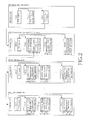
- ESG containers are transmitted during a same flute session as illustrated in FIG. 1. This session can be retrieved through an ESG access descriptor forwarded from an ESG bootstrap session.
- ESG containers are transmitted during sessions, which are more than three, as illustrated in FIG. 2.
- sessions which are more than three, as illustrated in FIG. 2.
- an ESG announcement carousel flute session is specified, and during the ESG announcement carousel flute session, the number of sessions, during which the actual ESG containers are transmitted, and information on the sessions, are perceived.
- the service provider informs the terminal of information on a channel ("channel information") of the ESG bootstrap session, i.e., a path, so as to transmit the ESG. Then, if the terminal is connected with the channel according to the channel information, the terminal receives bootstrap information, which includes an ESG provider descriptor and an ESG access descriptor. Through the ESG provider descriptor, information on an ID, a name, a logo, etc. related to the ESG provider are forwarded, and, through the ESG access descriptor, information on an announcement carousel of the ESG, information on the number of each IP session and information on the address during which the ESG is transferred are forwarded.
- channel information a channel
- the terminal receives bootstrap information, which includes an ESG provider descriptor and an ESG access descriptor.
- ESG provider descriptor information on an ID, a name, a logo, etc. related to the ESG provider are forwarded, and, through the ESG access descriptor, information on an announcement carous
- an ESG init container and index containers of the ESG are forwarded.
- the ESG init container includes an option of a decoder for deciphering the ESG, a partition declaration, an index list, and an index structure.
- the partition declaration includes information on a division reference by each session and on a channel of each session, in a case where the ESG is transferred during multiple sessions.
- the index list and the index structure include fragments of the ESG to be forwarded, as well as information on mapping between containers.
- the ESG flute session illustrated in FIGS. 1 and 2 signifies an ESG data session.
- the ESG is included in a container, and is then forwarded with the container.
- Each container includes a fragment management structure denoting information on fragments configuring the container and the ESG fragments.
- This data model of the ESG includes a service fragment, a schedule fragment, a contents fragment, an acquisition fragment, a service bundle fragment, a purchase fragment and a purchase channel fragment.
- the ESG has information on a broadcasting service, and is forwarded to the terminal by use of a separate Internet Protocol (IP) stream at a separate time from an actual data stream.
- IP Internet Protocol
- the service provider offers user information, which the user must have perceived before receiving a service, by using an ESG model before providing the service.
- the terminal acquires information inevitably required to receive the service the service provider offers.
- the terminal gets access to a data stream, transmitted so as to provide the service, by using the acquired information, and then receives data.
- a first preferred embodiment of the present invention includes a process of forwarding a session after specifying role for the session, during which ESG data is carried, by use of a partition declaration; and a process of classifying the session into a main data session, a current data session, and a future data session after a terminal has checked the partition declaration.
- a second embodiment of the present invention includes a process of additionally defining a reconfiguration session for reporting a change when the change of items occurs including variation of channel information, an update of data, etc., aside from the above sessions; and a process of ascertaining the reconfiguration session to acquire updated data in advance, wherein the process of ascertaining is performed by the terminal.
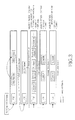
- FIG. 3 illustrates a session which is divided into several sessions and then transferred by roles in accordance with the rules of ESG partitioning according to this embodiment of the invention.
- the ESG data is forwarded in a multiple stream mode.
- the multiple stream mode information of each session is inserted in an init container inside an ESG announcement carousel, and then the inserted information is transmitted with the init container.
- the partition declaration includes information on a division reference by each session and on a channel of each session, when the ESG is transferred during multiple sessions.
- the index list and the index structure include fragments of the ESG to be forwarded, as well as information on mapping between containers. Accordingly, if the terminal confirms the partition declaration, it is now able to perceive the number of sessions to be transmitted, an IP address of each session, and information on ports.
- the role of the session is classified into three sessions. That is, several sessions are classified into three sessions, such as a main data session, a current data session, and a future data session.
- a structure of the partition declaration of standards of Digital Video Broadcasting-Handheld Computer Based Message System has to be improved.
- a new field is defined in the partition declaration and positions of established fields are changed so that each session can be set to a specific value, as described below..
- a new field called session type is first defined. Accordingly, each session can be assigned a session type, and a method by which suitable types of field values can be set, is presented.
- the session type defining the role of each session in this part is set to a value for discriminating between the sessions. Hence, if the terminal checks out only the value of the session type, the terminal is now able to classify the session into the main data session, the current data session, and the future data session.
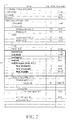
- FIG. 7 illustrates a syntax defined in the partition declaration according to the present invention.
- session type is set to a value for reporting the main data session shown in FIG. 7, field_identifier is set to '0,' and field_encoding is set to '0 x 0101,' so that the validity period can be set.
- the validity period is set to a relatively short term (e.g., one day, etc.), and should be set to seven days or less.
- the main data session is set as a plural number as a situation demands, and then a plurality of sessions can be forwarded.
- the main data session can be created in a plural number, and then a plurality of sessions can be forwarded.
- a value for reporting the current data session is set to a session type shown in FIG. 7.
- a validity period can be set and forwarded in a plural number.
- Data e.g., schedule fragment, content fragment, etc.
- the validity period is set to a short term (e.g., 3 hours, 24 hours, etc.) as management policies of common carriers or broadcasters demand, and should be set to 7 days or less.
- a value for giving notice of the future data session is set to the session type shown in FIG. 7, and data (e.g., schedule fragment, content fragment, etc.) required to provide service in the near future is carried.
- a validity period can be set to 7 days or more as management policies of common carriers or broadcasters demand, and can be set by using variables of start_field_value and end_field_value, which respectively signify the commencement of validity time and a termination of validity time.
- the future data session can be set in a plural number like the other sessions, can include data carried during the current data session, as policies of common carriers or broadcasters demand, and can otherwise include only the remaining data excepted from data carried during the current data session.
- the data carried during the future data session is used merely as additional data on the side of the terminal, the data does not necessarily need to be received, and it can be preset whether the data is received in advance.
- the validity period is set by each session. Accordingly, in the present invention, the validity period is set by using start_field_value and end_field_value by each session. If the validity period is set by each session, since it is possible that the terminal receives data whose validity period is long after the terminal has first received data whose validity period is short, the transmission of the ESG data can be efficiently achieved.
- the terminal first receives and analyzes the data essentially required to offer the broadcasting service, and is then able to deal with the remaining additional data as a background job. Therefore, as it is possible to display data on a screen with only necessary minimum data without waiting for the completion of reception of all ESG data, waiting time is considerably reduced, and can remarkably improve the quality of the services.
- a description of a process of generating the reconfiguration session is as follows.
- SDP Service Discovery Protocol
- critical data e.g., a schedule
- Service Uniform Resource Identifier and a point of time for application of the reconfiguration in the partition declaration is defined in creating the reconfiguration session in the present invention.
- setting num_fields shown in FIG. 7 to '2' enables a process to store only data carried during the reconfiguration session for special use.
- a first field_identifier is set to '0x01
- field_encoding is set to '0 x 0000,' so that stringtypes are specified for the field_identifier and the field_encoding.
- serviceURI list string using null value as a delimiter instead of denoting end validity time is inserted into end_field_value.
- the plural number may be specified for the serviceURI in accordance with the number of channel(s) in which information change(s).
- a second field_identifier is set to one (e.g., '0 x 02') of the values specified for "DVB reserved" in TABLE 8.2 of a document of ESG standards, and a set value is used for the second field identifier.
- field_encoding is set to '0 x 0400,' and a point of time applied to varied data has a form of datetime such as second, minute, hour, day, month, and year. Time applied to end_field_value is set to even units in seconds.
- information per serviceURI is assigned to one reconfiguration session, and can be transferred during the reconfiguration session.
- information related to a plurality of serviceURI is assigned to one reconfiguration session, and can be then transmitted during the reconfiguration session.
- the classified sessions may be transferred according to the preferred embodiments of the present invention, the structure of the syntax in ESG partition declaration must be modified as illustrated in FIG. 7.
- a field defining the type of the session is appended so as to distinguish between the role of each session, and it is possible that the type of the session is specified for each session.
- a part in which each session can be set to a specific value is inserted in the position designated by reference numeral 600 in FIG. 7. Because session type, which can assign a suitable role to each session, is appended before establishment of the rules of portioning, the terminal can easily discriminate between the roles of the sessions, and can provide a diversity of application services later on as well.
- a service provider in step 401, classifies a session into several sessions by suitable roles, and therefore creates the classified sessions assigned the suitable roles, respectively.
- the service provider classifies data into essential data required to provide a broadcasting service to be forwarded, data needed to offer a current broadcasting service, and data necessary to provide an additional service in the near future, and therefore generates a main data session, a current data session, and a future data session, during which corresponding data is respectively carried.
- the service provider if a situation where reconfiguration is required takes place, the service provider produces a reconfiguration session during which data needed for the reconfiguration is carried. If each session is created in this way, the service provider, in step 402, inserts information on the sessions causing ability for discrimination between the roles of the sessions into partition declaration. Going through the procedure in this manner, the service provider, in step 403, brings ESG data to completion to transmit to a terminal.
- FIG. 6 is a flowchart illustrating the operation of the terminal by a new rule of a partition declaration according to a preferred embodiment of the present invention.
- the terminal analyzes the partition declaration in terms of the syntax shown in FIG. 7.
- the terminal receives an ESG bootstrap session in step 500.
- the terminal analyzes the ESG bootstrap session, and in step 505, determines if a present transmission mode is a multiple stream mode or a single stream mode. If the present transmission mode is not the multiple stream mode, in step 510, the terminal determines that the present transmission mode is the single stream mode, searches for a pertinent session, and receives all the ESG data. Otherwise, in the multiple stream mode, in step 515, the terminal decodes an announcement carousel.
- the ESG bootstrap session includes an ESG provider descriptor and an ESG access descriptor.
- the ESG access descriptor possesses information during an announcement carousel session.
- the terminal searches for the announcement carousel session to receive an init container, it can detect information on a partition declaration in the init container.
- the terminal can detect the role of each session during which the actual ESG data is transmitted.
- the terminal can acquire information on each session from the partition declaration. Accordingly, in step 520, the terminal determines if a session to be checked exists, and searches for each session. Namely, once the terminal locates the main data session and the current data session on the basis of validity period detected by analyzing the information on the partition declaration, the terminal receives the ESG data. In a future data session, the terminal determines the reception of the pertinent ESG data by determining if it receives the future data session. While seeking each session, the terminal, in step 525, determines if a reconfiguration session exists. If the reconfiguration session exists, the terminal proceeds to step 530, and stores ESG data carried during the relevant reconfiguration session. Namely, the terminal previously stores updated data in order to apply the updated data to a preset point of time of reconfiguration application. The point of time of reconfiguration application is transferred along with the updated data during the reconfiguration session.
- the terminal determines if the validity period signifies one day or less. If so, the terminal, in step 540, receives the ESG data carried during the session, processes the received data, and returns back to step 520.
- the session having the validity period of one day or less corresponds to the main data session during which essential data needed to offer the broadcasting service is carried, or signifies the current data session during which data required to provide a service selected by the user is carried. If the session is determined to have a validity period of more than one day in step 535, the terminal regards the session as the future data session, and proceeds to step 555 to deal with the session as a background job.
- the terminal deals with the session as a background job in a case of the reception of data carried during the future data session. Going through the procedure in the way, if no more sessions exist to be checked in step 520, the terminal proceeds to step 550 to display a channel list on the basis of the ESG data received during the main data session and during the current data session, and deals with the future data session as a background job, as in step 555.
- the effectiveness of a data receiving scheme of the terminal is greatly improved.
- reconfiguration information is provided in advance even though important information of a channel on which viewers are watching a program changes, the improvement of service quality can be promoted while minimizing interruption of the service.
- CBMS Computer Based Message System
Landscapes
- Engineering & Computer Science (AREA)
- Signal Processing (AREA)
- Multimedia (AREA)
- Data Exchanges In Wide-Area Networks (AREA)
- Two-Way Televisions, Distribution Of Moving Picture Or The Like (AREA)
- Information Transfer Between Computers (AREA)
- Mobile Radio Communication Systems (AREA)
Applications Claiming Priority (1)
| Application Number | Priority Date | Filing Date | Title |
|---|---|---|---|
| KR1020060078484A KR100800858B1 (ko) | 2006-08-19 | 2006-08-19 | Dvb―h 시스템에서 esg 데이터 전송을 최적화하기위한 방법 및 이를 위한 시스템 |
Publications (2)
| Publication Number | Publication Date |
|---|---|
| EP1890409A2 true EP1890409A2 (de) | 2008-02-20 |
| EP1890409A3 EP1890409A3 (de) | 2012-05-16 |
Family
ID=38705119
Family Applications (1)
| Application Number | Title | Priority Date | Filing Date |
|---|---|---|---|
| EP07114518A Withdrawn EP1890409A3 (de) | 2006-08-19 | 2007-08-17 | System und Verfahren zur optimierten Übertragung von ESG-Daten in einem DVB-H-System |
Country Status (4)
| Country | Link |
|---|---|
| US (1) | US20080046926A1 (de) |
| EP (1) | EP1890409A3 (de) |
| KR (1) | KR100800858B1 (de) |
| CN (1) | CN101127827B (de) |
Families Citing this family (8)
| Publication number | Priority date | Publication date | Assignee | Title |
|---|---|---|---|---|
| KR100800857B1 (ko) * | 2006-08-18 | 2008-02-04 | 삼성전자주식회사 | Dvb―h시스템에서 통지 메시지를 제공하기 위한 방법및 이를 위한 시스템 |
| FR2913169B1 (fr) * | 2007-02-28 | 2009-05-22 | Expway Sa | Procede de mise a jour de donnees structurees diffusees en boucle a des terminaux mobiles |
| KR101418591B1 (ko) * | 2007-10-05 | 2014-07-10 | 삼성전자주식회사 | 휴대 방송 시스템에서의 서비스 가이드 제공 방법 및 장치 |
| KR101523377B1 (ko) | 2008-05-29 | 2015-05-27 | 삼성전자주식회사 | 디지털 방송 시스템에서 방송 서비스 송수신 방법 및 장치 |
| US8572648B2 (en) | 2008-06-18 | 2013-10-29 | Lg Electronics Inc. | Transmitting/receiving system and method of processing data in the transmitting/receiving system |
| KR101058244B1 (ko) | 2009-09-16 | 2011-08-22 | 한국방송공사 | 베이직 전자 가이드를 기반으로 하는 방송 서비스 제공 방법, 베이직 전자 가이드 제공 방법 및 모바일 디지털 방송 시스템 |
| EP3206391A4 (de) | 2014-10-12 | 2018-03-21 | LG Electronics Inc. | Rundfunksignalübertragungsvorrichtung, rundfunksignalempfangsvorrichtung, rundfunksignalübertragungsverfahren und rundfunksignalempfangsverfahren |
| MX2021004799A (es) * | 2015-07-23 | 2022-12-07 | Samsung Electronics Co Ltd | Aparato de transmision, aparato de recepcion, y metodos de control de los mismos. |
Citations (2)
| Publication number | Priority date | Publication date | Assignee | Title |
|---|---|---|---|---|
| US20060053450A1 (en) | 2004-09-09 | 2006-03-09 | Nokia Corporation | Mobile television electronic service guide delivery system |
| US20060123099A1 (en) | 2004-12-08 | 2006-06-08 | Nokia Corporation | Enhanced electronic service guide container |
Family Cites Families (9)
| Publication number | Priority date | Publication date | Assignee | Title |
|---|---|---|---|---|
| US7992172B1 (en) * | 1999-04-15 | 2011-08-02 | Cox Communications, Inc. | Method and systems for multicast using multiple transport streams |
| US20020188956A1 (en) * | 2001-06-07 | 2002-12-12 | Michael Ficco | Method and system for electronic program guide temporal content organization |
| JP2006512027A (ja) * | 2002-12-18 | 2006-04-06 | ノキア コーポレイション | セッションを告知する方法 |
| GB2396228A (en) * | 2002-12-19 | 2004-06-16 | Nokia Corp | A method of gathering information relating to consumption of broadcast content by receiving stations |
| GB2407745A (en) * | 2003-10-28 | 2005-05-04 | Nokia Corp | Method of providing an electronic service guide in a datacasting system |
| KR100913882B1 (ko) * | 2005-01-25 | 2009-08-26 | 삼성전자주식회사 | 이동/방송 시스템에서 방송 서비스에 대한 통지를 전송하는 방법 및 그 시스템 |
| US7614068B2 (en) * | 2005-03-18 | 2009-11-03 | Nokia Corporation | Prioritization of electronic service guide carousels |
| US8316132B2 (en) * | 2005-09-08 | 2012-11-20 | Nokia Corporation | Method to determine the completeness of a service guide |
| US7584495B2 (en) * | 2006-06-30 | 2009-09-01 | Nokia Corporation | Redundant stream alignment in IP datacasting over DVB-H |
-
2006
- 2006-08-19 KR KR1020060078484A patent/KR100800858B1/ko not_active Expired - Fee Related
-
2007
- 2007-08-03 US US11/833,415 patent/US20080046926A1/en not_active Abandoned
- 2007-08-17 CN CN2007101465044A patent/CN101127827B/zh not_active Expired - Fee Related
- 2007-08-17 EP EP07114518A patent/EP1890409A3/de not_active Withdrawn
Patent Citations (2)
| Publication number | Priority date | Publication date | Assignee | Title |
|---|---|---|---|---|
| US20060053450A1 (en) | 2004-09-09 | 2006-03-09 | Nokia Corporation | Mobile television electronic service guide delivery system |
| US20060123099A1 (en) | 2004-12-08 | 2006-06-08 | Nokia Corporation | Enhanced electronic service guide container |
Non-Patent Citations (1)
| Title |
|---|
| "Service Guide for Mobile broadcast Services", ANNOUNCEMENT OPEN MOBILE ALLIANCE, 24 March 2006 (2006-03-24) |
Also Published As
| Publication number | Publication date |
|---|---|
| CN101127827B (zh) | 2010-09-15 |
| US20080046926A1 (en) | 2008-02-21 |
| KR100800858B1 (ko) | 2008-02-04 |
| CN101127827A (zh) | 2008-02-20 |
| EP1890409A3 (de) | 2012-05-16 |
Similar Documents
| Publication | Publication Date | Title |
|---|---|---|
| EP1687919B1 (de) | Verfahren und mobiles endgerät zur durchführung einer weiterreichung in einem ausstrahlungssystem | |
| US10462503B2 (en) | Method for transmitting services information in different types of broadcasting networks and unit for processing said information | |
| EP1890409A2 (de) | System und Verfahren zur optimierten Übertragung von ESG-Daten in einem DVB-H-System | |
| US8359615B2 (en) | Method and digital broadcasting system for transmitting and receiving ESG | |
| EP1881627A2 (de) | Verfahren und Vorrichtung zum Senden / Empfangen einer elektronischen Dienstanleitung in einem digitalen Rundfunksystem | |
| US20120059949A1 (en) | Internet Multimedia Advertisement Insertion Architecture | |
| EP1914913A2 (de) | System und Verfahren zur Bereitstellung einer Benachrichtigungsmeldung in einem DVB-H-System | |
| US20080072258A1 (en) | Method and system for transmitting notification data in a dvb-h system | |
| EP1892955A2 (de) | System und Verfahren zur effizienten Bereitstellung von ESG-Daten in einem DVB-H-System | |
| EP1940173A1 (de) | Verfahren und DVB-H-System zur Bereitstellung von Rundfunkbildkonfigurationsinformationen | |
| EP1885074A2 (de) | Vorrichtung zum Empfangen eines Datenrundfunksignals und Verarbeitungsverfahren dafür | |
| US20080172694A1 (en) | Method, DVB-H system and terminal for providing a broadcast image using LASeR content | |
| EP1479223A1 (de) | Verfahren zur verwendung eines ablieferungssystemdeskriptors dergestalt, dass sich ein empfänger automatisch selbst modifizieren kann, wenn sich die breitbandübertragungsablieferungsparameter ändern | |
| US20060002390A1 (en) | Method and apparatus for storing and searching broadcasting stream | |
| US8701151B2 (en) | Method of downloading terrestrial DMB data using multi-download algorithm and an apparatus thereof | |
| US7991011B2 (en) | Identification of changes in broadcast database | |
| EP1879313A2 (de) | Vorrichtung zum Empfangen eines Datenrundfunksignals und Verarbeitungsverfahren dafür | |
| WO2005114905A1 (en) | Announcing applications in a digital broadcasting system | |
| HK1131845B (en) | Method of transmitting service information in various types of broadcasting networks and unit for processing said information | |
| WO2009066958A1 (en) | Apparatus and method for transmitting and receiving electronic service guide in digital video broadcasting system |
Legal Events
| Date | Code | Title | Description |
|---|---|---|---|
| PUAI | Public reference made under article 153(3) epc to a published international application that has entered the european phase |
Free format text: ORIGINAL CODE: 0009012 |
|
| 17P | Request for examination filed |
Effective date: 20070817 |
|
| AK | Designated contracting states |
Kind code of ref document: A2 Designated state(s): AT BE BG CH CY CZ DE DK EE ES FI FR GB GR HU IE IS IT LI LT LU LV MC MT NL PL PT RO SE SI SK TR |
|
| AX | Request for extension of the european patent |
Extension state: AL BA HR MK YU |
|
| PUAL | Search report despatched |
Free format text: ORIGINAL CODE: 0009013 |
|
| AK | Designated contracting states |
Kind code of ref document: A3 Designated state(s): AT BE BG CH CY CZ DE DK EE ES FI FR GB GR HU IE IS IT LI LT LU LV MC MT NL PL PT RO SE SI SK TR |
|
| AX | Request for extension of the european patent |
Extension state: AL BA HR MK RS |
|
| RAP1 | Party data changed (applicant data changed or rights of an application transferred) |
Owner name: SAMSUNG ELECTRONICS CO., LTD. |
|
| AKX | Designation fees paid |
Designated state(s): DE FR GB |
|
| STAA | Information on the status of an ep patent application or granted ep patent |
Free format text: STATUS: THE APPLICATION HAS BEEN WITHDRAWN |
|
| 18W | Application withdrawn |
Effective date: 20161212 |