EP1890452A2 - Systèmes de communication - Google Patents
Systèmes de communication Download PDFInfo
- Publication number
- EP1890452A2 EP1890452A2 EP07113543A EP07113543A EP1890452A2 EP 1890452 A2 EP1890452 A2 EP 1890452A2 EP 07113543 A EP07113543 A EP 07113543A EP 07113543 A EP07113543 A EP 07113543A EP 1890452 A2 EP1890452 A2 EP 1890452A2
- Authority
- EP
- European Patent Office
- Prior art keywords
- source apparatus
- destination
- destination apparatus
- source
- transmission
- Prior art date
- Legal status (The legal status is an assumption and is not a legal conclusion. Google has not performed a legal analysis and makes no representation as to the accuracy of the status listed.)
- Withdrawn
Links
Images



Classifications
-
- H—ELECTRICITY
- H04—ELECTRIC COMMUNICATION TECHNIQUE
- H04L—TRANSMISSION OF DIGITAL INFORMATION, e.g. TELEGRAPHIC COMMUNICATION
- H04L5/00—Arrangements affording multiple use of the transmission path
- H04L5/14—Two-way operation using the same type of signal, i.e. duplex
- H04L5/143—Two-way operation using the same type of signal, i.e. duplex for modulated signals
-
- H—ELECTRICITY
- H04—ELECTRIC COMMUNICATION TECHNIQUE
- H04L—TRANSMISSION OF DIGITAL INFORMATION, e.g. TELEGRAPHIC COMMUNICATION
- H04L25/00—Baseband systems
- H04L25/02—Details ; arrangements for supplying electrical power along data transmission lines
- H04L25/0202—Channel estimation
- H04L25/022—Channel estimation of frequency response
-
- H—ELECTRICITY
- H04—ELECTRIC COMMUNICATION TECHNIQUE
- H04L—TRANSMISSION OF DIGITAL INFORMATION, e.g. TELEGRAPHIC COMMUNICATION
- H04L25/00—Baseband systems
- H04L25/02—Details ; arrangements for supplying electrical power along data transmission lines
- H04L25/0202—Channel estimation
- H04L25/0222—Estimation of channel variability, e.g. coherence bandwidth, coherence time, fading frequency
-
- H—ELECTRICITY
- H04—ELECTRIC COMMUNICATION TECHNIQUE
- H04L—TRANSMISSION OF DIGITAL INFORMATION, e.g. TELEGRAPHIC COMMUNICATION
- H04L25/00—Baseband systems
- H04L25/02—Details ; arrangements for supplying electrical power along data transmission lines
- H04L25/0202—Channel estimation
- H04L25/0224—Channel estimation using sounding signals
- H04L25/0228—Channel estimation using sounding signals with direct estimation from sounding signals
-
- H—ELECTRICITY
- H04—ELECTRIC COMMUNICATION TECHNIQUE
- H04L—TRANSMISSION OF DIGITAL INFORMATION, e.g. TELEGRAPHIC COMMUNICATION
- H04L5/00—Arrangements affording multiple use of the transmission path
- H04L5/0001—Arrangements for dividing the transmission path
- H04L5/0003—Two-dimensional division
- H04L5/0005—Time-frequency
- H04L5/0007—Time-frequency the frequencies being orthogonal, e.g. OFDM(A) or DMT
-
- H—ELECTRICITY
- H04—ELECTRIC COMMUNICATION TECHNIQUE
- H04W—WIRELESS COMMUNICATION NETWORKS
- H04W28/00—Network traffic management; Network resource management
- H04W28/16—Central resource management; Negotiation of resources or communication parameters, e.g. negotiating bandwidth or QoS [Quality of Service]
- H04W28/18—Negotiating wireless communication parameters
-
- H—ELECTRICITY
- H04—ELECTRIC COMMUNICATION TECHNIQUE
- H04L—TRANSMISSION OF DIGITAL INFORMATION, e.g. TELEGRAPHIC COMMUNICATION
- H04L27/00—Modulated-carrier systems
- H04L27/26—Systems using multi-frequency codes
- H04L27/2601—Multicarrier modulation systems
- H04L27/2602—Signal structure
-
- H—ELECTRICITY
- H04—ELECTRIC COMMUNICATION TECHNIQUE
- H04W—WIRELESS COMMUNICATION NETWORKS
- H04W24/00—Supervisory, monitoring or testing arrangements
-
- H—ELECTRICITY
- H04—ELECTRIC COMMUNICATION TECHNIQUE
- H04W—WIRELESS COMMUNICATION NETWORKS
- H04W48/00—Access restriction; Network selection; Access point selection
- H04W48/16—Discovering, processing access restriction or access information
Definitions
- the present application relates to multihop and single hop techniques.
- multihop techniques in packet based radio and other communication systems, where it is purported that such techniques will enable both extension in coverage range and increase in system capacity (throughput).
- FIG. 4 illustrates a single-cell two-hop wireless communication system comprising a base station BS (known in the context of 3G communication systems as "node-B" NB) a relay node RN (also known as a relay station RS) and a user equipment UE (also known as mobile station MS).
- BS base station
- RN relay node
- MS user equipment
- the base station comprises the source station (S) and the user equipment comprises the destination station (D).
- the user equipment comprises the source station and the base station comprises the destination station.
- the relay node is an example of an intermediate apparatus (I) and comprises: a receiver, operable to receive data from the source apparatus; and a transmitter, operable to transmit this data, or a derivative thereof, to the destination apparatus.
- Simple analogue repeaters or digital repeaters have been used as relays to improve or provide coverage in dead spots. They can either operate in a different transmission frequency band from the source station to prevent interference between the source transmission and the repeater transmission, or they can operate at a time when there is no transmission from the source station.
- Figure 5 illustrates a number of applications for relay stations.
- the coverage provided by a relay station may be "in-fill” to allow access to the communication network for mobile stations which may otherwise be in the shadow of other objects or otherwise unable to receive a signal of sufficient strength from the base station despite being within the normal range of the base station.
- Range extension is also shown, in which a relay station allows access when a mobile station is outside the normal data transmission range of a base station.
- in-fill shown at the top right of Figure 5 is positioning of a nomadic relay station to allow penetration of coverage within a building that could be above, at, or below ground level.
- Relays may also be used in conjunction with advanced transmission techniques to enhance gain of the communications system as explained below.
- Multi-hop systems are suitable for use with multi-carrier transmission.
- a multi-carrier transmission system such as FDM (frequency division multiplex), OFDM (orthogonal frequency division multiplex) or DMT (discrete multi-tone)
- FDM frequency division multiplex
- OFDM orthogonal frequency division multiplex
- DMT discrete multi-tone
- a single data stream is modulated onto N parallel sub-carriers, each sub-carrier signal having its own frequency range. This allows the total bandwidth (i.e. the amount of data to be sent in a given time interval) to be divided over a plurality of sub-carriers thereby increasing the duration of each data symbol. Since each sub-carrier has a lower information rate, multi-carrier systems benefit from enhanced immunity to channel induced distortion compared with single carrier systems.
- the channel distortion correction entity within a multicarrier receiver can be of significantly lower complexity of its counterpart within a single carrier receiver when the system bandwidth is in excess of the coherence bandwidth of the channel.
- Orthogonal frequency division multiplexing is a modulation technique that is based on FDM.
- An OFDM system uses a plurality of sub-carrier frequencies which are orthogonal in a mathematical sense so that the sub-carriers spectra may overlap without interference due to the fact they are mutually independent.
- the orthogonality of OFDM systems removes the need for guard band frequencies and thereby increases the spectral efficiency of the system.
- OFDM has been proposed and adopted for many wireless systems. It is currently used in Asymmetric Digital Subscriber Line (ADSL) connections, in some wireless LAN applications (such as WiFi devices based on the IEEE802.11a/g standard), and in wireless MAN applications such as WiMAX (based on the IEEE 802.16 standard).
- ADSL Asymmetric Digital Subscriber Line
- OFDM is often used in conjunction with channel coding, an error correction technique, to create coded orthogonal FDM or COFDM.
- COFDM is now widely used in digital telecommunications systems to improve the performance of an OFDM based system in a multipath environment where variations in the channel distortion can be seen across both subcarriers in the frequency domain and symbols in the time domain.
- the system has found use in video and audio broadcasting, such as DVB and DAB, as well as certain types of computer networking technology.
- an OFDM symbol is the composite signal of all N sub-carrier signals.
- ⁇ f the sub-carrier separation in Hz
- Ts 1/ ⁇ f is symbol time interval in seconds
- c n are the modulated source signals.
- DFT Discrete Fourier Transform
- FFT Fast Fourier Transform
- OFDMA Orthogonal Frequency Division Multiple Access
- FDD frequency division duplexing
- TDD time division duplexing
- Both approaches (TDD & FDD) have their relative merits and are both well used techniques for single hop wired and wireless communication systems.
- IEEE802.16 standard incorporates both an FDD and TDD mode.
- Figure 6 illustrates the single hop TDD frame structure used in the OFDMA physical layer mode of the IEEE802.16 standard (WiMAX).
- Each frame is divided into DL and UL subframes, each being a discrete transmission interval. They are separated by Transmit/Receive and Receive/Transmit Transition Guard interval (TTG and RTG respectively).
- TTG and RTG Transmit/Receive and Receive/Transmit Transition Guard interval respectively.
- Each DL subframe starts with a preamble followed by the Frame Control Header (FCH), the DL-MAP, and the UL-MAP.
- FCH Frame Control Header
- DL-MAP DL-MAP
- UL-MAP UL-MAP
- the FCH contains the DL Frame Prefix (DLFP) to specify the burst profile and the length of the DL-MAP.
- DLFP DL Frame Prefix
- the DLFP is a data structure transmitted at the beginning of each frame and contains information regarding the current frame; it is mapped to the FCH.
- Simultaneous DL allocations can be broadcast, multicast and unicast and they can also include an allocation for another BS rather than a serving BS.
- Simultaneous ULs can be data allocations and ranging or bandwidth requests.
- the mobility (or relative movement between a transmitting apparatus and the corresponding receiving apparatus) is an important characteristic of mobile stations (MSs), relay stations (RSs), and other wireless communication devices. Mainly, it determines the radio channel characteristics, such as radio channel coherent time. Therefore, radio devices will rely on the mobility estimation to adapt to dynamically changing radio channel conditions.
- MSs mobile stations
- RSs relay stations
- radio channel characteristics such as radio channel coherent time. Therefore, radio devices will rely on the mobility estimation to adapt to dynamically changing radio channel conditions.
- the base station in light of the mobility of MS, the base station (BS) will arrange service connections to a corresponding permutation zone having a certain subcarrier allocation mode. For instance, low mobility MSs will be arranged to communicate within AMC permutation zone.
- a BS also can adjust the dimension of the burst to optimize the diversity gain in both time dimension and in frequency dimension.
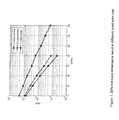
- Figure 1 shows the burst error rate for different burst dimensions with fixed payload, which is 4 slots.
- the channel model is ITU Pedestrian B with a velocity of 3km/hr. It is clear that increasing the size of the burst in frequency dimension for low mobility MS can result in better burst error rate performance.
- Embodiments of the invention provide approaches to accurately estimate mobility for wireless communications.
- CINR Carrier-Interference-Noise Ratio
- Embodiments of the invention give an approach to estimate the mobility of radio devices with higher accuracy, for example, in low SNR environment.
- the preferred method below is based on the frequency domain channel-gain-vector correlation factor (CGVCF, Channel-Gain-Vector Correlation Factor), which has three main steps.
- CVCF channel-gain-vector correlation factor
- Channel-Gain-Vector Correlation Factor Channel-Gain-Vector Correlation Factor
- Step One Obtaining the frequency domain instantaneous channel gain vectors, H kT s .
- Ts is the sampling period in time domain
- f n is the sampling point in frequency domain
- H kTs ( f n ) is the instantaneous channel gain at frequency point of f n .
- H kTs ( f n ) can be obtained by frequency domain channel estimation method.
- kT S can be equivalent to integral times of symbol durations.
- f n can be the subcarrier frequency of pre-decided sequences in frequency domain, such as pilots, and preamble.
- P RX _ k is the received pilots in frequency domain within the k th symbol (assuming T S equals symbol duration)
- P TX_k is the transmitted pilots in frequency domain within the k th symbol.
- H H T s H 2 ⁇ T s ⁇ H k ⁇ T s ⁇ H N ⁇ T s
- N the length of the sequence
- E ⁇ is the expectation
- ⁇ is the standard deviation.
- ⁇ m be the correlation factor between two frequency domain channel gain vectors with the time difference of mT.
- ⁇ m ⁇ 1 ⁇ 2 ⁇ ⁇ m ⁇ ⁇ N - 1
- Averaging methods can be used for calculating ⁇ m to decrease the effect of noise.
- Step Three Estimating Mobility.
- the mobility can be estimated by following optional methods:
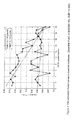
- Figure 3 shows an example of the calculated correlation factor of channel gain vectors.
- the dash and solid curves are the correlation factor curves computed within OFDMA-based WiMAX downlink subframe.
- the black dot lines are plotted by linear curve fitting so that we can see the difference of the grads in different mobility environment.
- the SNR in the simulation is 12dB.
- the method estimating mobility by the grads of ⁇ , will have a good performance in low SNR environment.
- invention embodiments give approaches to estimate the mobility for wireless communication devices.
- the benefits from this patent are:
- Embodiments of the present invention may be implemented in hardware, or as software modules running on one or more processors, or on a combination thereof. That is, those skilled in the art will appreciate that a microprocessor or digital signal processor (DSP) may be used in practice to implement some or all of the functionality of a transmitter embodying the present invention.
- DSP digital signal processor
- the invention may also be embodied as one or more device or apparatus programs (e.g. computer programs and computer program products) for carrying out part or all of any of the methods described herein.
- Such programs embodying the present invention may be stored on computer-readable media, or could, for example, be in the form of one or more signals.
- Such signals may be data signals downloadable from an Internet website, or provided on a carrier signal, or in any other form.
Landscapes
- Engineering & Computer Science (AREA)
- Signal Processing (AREA)
- Computer Networks & Wireless Communication (AREA)
- Power Engineering (AREA)
- Quality & Reliability (AREA)
- Mobile Radio Communication Systems (AREA)
Applications Claiming Priority (1)
| Application Number | Priority Date | Filing Date | Title |
|---|---|---|---|
| GBGB0616472.7A GB0616472D0 (en) | 2006-08-18 | 2006-08-18 | Communication systems |
Publications (1)
| Publication Number | Publication Date |
|---|---|
| EP1890452A2 true EP1890452A2 (fr) | 2008-02-20 |
Family
ID=37081234
Family Applications (1)
| Application Number | Title | Priority Date | Filing Date |
|---|---|---|---|
| EP07113543A Withdrawn EP1890452A2 (fr) | 2006-08-18 | 2007-07-31 | Systèmes de communication |
Country Status (4)
| Country | Link |
|---|---|
| US (1) | US20080045238A1 (fr) |
| EP (1) | EP1890452A2 (fr) |
| JP (1) | JP2008048424A (fr) |
| GB (1) | GB0616472D0 (fr) |
Cited By (2)
| Publication number | Priority date | Publication date | Assignee | Title |
|---|---|---|---|---|
| US8406161B2 (en) | 2006-08-18 | 2013-03-26 | Fujitsu Limited | Timing adjustment in multi-hop communication system |
| CN106100810A (zh) * | 2016-06-16 | 2016-11-09 | 北京汇通金财信息科技有限公司 | 基于载波聚合技术的通信装置和方法 |
Families Citing this family (8)
| Publication number | Priority date | Publication date | Assignee | Title |
|---|---|---|---|---|
| TW201028024A (en) * | 2006-08-18 | 2010-07-16 | Fujitsu Ltd | Communication systems |
| GB2440981A (en) * | 2006-08-18 | 2008-02-20 | Fujitsu Ltd | Wireless multi-hop communication system |
| GB2441574A (en) * | 2006-09-08 | 2008-03-12 | Fujitsu Ltd | Network entry to a multi-hop wireless communication system |
| US7912113B2 (en) * | 2007-10-05 | 2011-03-22 | Motorola Mobility, Inc. | Techniques for estimating received signal strength and carrier to interference and noise ratio in OFDM systems |
| US7580699B1 (en) * | 2007-10-18 | 2009-08-25 | At&T Mobility Ii Llc | Network systems and methods utilizing mobile devices to enhance consumer experience |
| JP5558355B2 (ja) * | 2008-07-22 | 2014-07-23 | 日本電信電話株式会社 | 受信方法、及び、受信装置 |
| US8804671B2 (en) * | 2010-07-15 | 2014-08-12 | Telefonaktiebolaget Lm Ericsson (Publ) | Method and apparatus for determining UE mobility status |
| US11631122B2 (en) | 2020-09-23 | 2023-04-18 | Shopify Inc. | Computer-implemented systems and methods for in-store route recommendations |
Family Cites Families (35)
| Publication number | Priority date | Publication date | Assignee | Title |
|---|---|---|---|---|
| US5719868A (en) * | 1995-10-05 | 1998-02-17 | Rockwell International | Dynamic distributed, multi-channel time division multiple access slot assignment method for a network of nodes |
| US5937349A (en) * | 1996-10-29 | 1999-08-10 | Motorola, Inc. | Method and system of tracking dynamic communication parameters during a link interruption |
| US6151484A (en) * | 1997-08-08 | 2000-11-21 | Ericsson Inc. | Communications apparatus and methods for adaptive signal processing based on mobility characteristics |
| US6615024B1 (en) * | 1998-05-01 | 2003-09-02 | Arraycomm, Inc. | Method and apparatus for determining signatures for calibrating a communication station having an antenna array |
| US6370384B1 (en) * | 1998-07-30 | 2002-04-09 | Airnet Communications Corporation | Frequency re-use planning for wireless communications system using wireless translating repeaters |
| FR2789492A1 (fr) * | 1999-02-08 | 2000-08-11 | Mitsubishi Electric Inf Tech | Procede d'estimation de la vitesse de deplacement relatif d'un emetteur et d'un recepteur en communication l'un avec l'autre d'un systeme de telecommunications |
| US7006530B2 (en) * | 2000-12-22 | 2006-02-28 | Wi-Lan, Inc. | Method and system for adaptively obtaining bandwidth allocation requests |
| EP1189364B8 (fr) * | 1999-06-23 | 2011-09-21 | National University Corporation Hokkaido University | Dispositif radio |
| US6574213B1 (en) * | 1999-08-10 | 2003-06-03 | Texas Instruments Incorporated | Wireless base station systems for packet communications |
| US6701129B1 (en) * | 2000-09-27 | 2004-03-02 | Nortel Networks Limited | Receiver based adaptive modulation scheme |
| US7110349B2 (en) * | 2001-03-06 | 2006-09-19 | Brn Phoenix, Inc. | Adaptive communications methods for multiple user packet radio wireless networks |
| EP1288674B1 (fr) * | 2001-09-03 | 2006-02-15 | STMicroelectronics N.V. | Procédé et dispositif d'estimation de la vitesse de déplacement d'un terminal mobile d'un système de communication sans fil |
| US7155171B2 (en) * | 2001-12-12 | 2006-12-26 | Saraband Wireless | Vector network analyzer applique for adaptive communications in wireless networks |
| US7096274B1 (en) * | 2002-02-12 | 2006-08-22 | 3Com Corporation | Optimum frame size predictor for wireless Local Area Network |
| JP2004040568A (ja) * | 2002-07-04 | 2004-02-05 | Denso Corp | 無線通信端末 |
| GB0222046D0 (en) * | 2002-09-23 | 2002-10-30 | Nokia Corp | Receiving method and receiver |
| US7580394B2 (en) * | 2002-11-27 | 2009-08-25 | Nokia Corporation | System and method for collision-free transmission scheduling in a network |
| US20040109428A1 (en) * | 2002-12-09 | 2004-06-10 | Srikanth Krishnamurthy | Method and apparatus for resource allocation for multiple traffic classes in wireless ad-hoc networks |
| US7903538B2 (en) * | 2003-08-06 | 2011-03-08 | Intel Corporation | Technique to select transmission parameters |
| KR101160136B1 (ko) * | 2003-08-12 | 2012-06-26 | 파나소닉 주식회사 | 무선 통신 장치 및 파일럿 심볼 전송 방법 |
| RU2408986C2 (ru) * | 2003-08-20 | 2011-01-10 | Панасоник Корпорэйшн | Устройство беспроводной связи и способ выделения поднесущих |
| US7400856B2 (en) * | 2003-09-03 | 2008-07-15 | Motorola, Inc. | Method and apparatus for relay facilitated communications |
| JP4398752B2 (ja) * | 2004-02-19 | 2010-01-13 | 株式会社エヌ・ティ・ティ・ドコモ | 無線中継システム、無線中継装置及び無線中継方法 |
| US7864659B2 (en) * | 2004-08-02 | 2011-01-04 | Interdigital Technology Corporation | Quality control scheme for multiple-input multiple-output (MIMO) orthogonal frequency division multiplexing (OFDM) systems |
| JP4592358B2 (ja) * | 2004-08-31 | 2010-12-01 | 株式会社エヌ・ティ・ティ・ドコモ | 移動通信システム及び移動通信方法 |
| CN1756246A (zh) * | 2004-09-29 | 2006-04-05 | 松下电器产业株式会社 | 子载波通信系统中自适应调节子载波组速率的方法及设备 |
| KR100681260B1 (ko) * | 2004-10-07 | 2007-02-09 | 삼성전자주식회사 | 전력 스펙트럼 기반의 속도 추정에 의한 속도 정합형 채널추정방법 및 이를 이용한 이동통신 단말의 복조기 |
| ATE491270T1 (de) * | 2004-10-25 | 2010-12-15 | Ericsson Telefon Ab L M | Auf funkqualität basierende kanalbetriebsmittelverwaltung |
| JP2006253951A (ja) * | 2005-03-09 | 2006-09-21 | Matsushita Electric Ind Co Ltd | 基地局装置及び拡散符号割り当て方法 |
| US7486928B2 (en) * | 2005-04-14 | 2009-02-03 | Kddi Corporation | Methods and apparatus for wireless communications |
| JP2006319676A (ja) * | 2005-05-12 | 2006-11-24 | Oki Electric Ind Co Ltd | フレーム送信方法、トポロジー取得方法、及び無線通信システム |
| US20070211757A1 (en) * | 2006-03-07 | 2007-09-13 | Ozgur Oyman | OFDMA resource allocation in multi-hop wireless mesh networks |
| JP4575318B2 (ja) * | 2006-03-09 | 2010-11-04 | 株式会社東芝 | 基地局、無線端末および無線通信方法 |
| US20070218931A1 (en) * | 2006-03-20 | 2007-09-20 | Harris Corporation | Time/frequency recovery of a communication signal in a multi-beam configuration using a kinematic-based kalman filter and providing a pseudo-ranging feature |
| US7415354B2 (en) * | 2006-04-28 | 2008-08-19 | L-3 Communications Corporation | System and method for GPS acquisition using advanced tight coupling |
-
2006
- 2006-08-18 GB GBGB0616472.7A patent/GB0616472D0/en not_active Ceased
-
2007
- 2007-07-31 EP EP07113543A patent/EP1890452A2/fr not_active Withdrawn
- 2007-08-17 US US11/840,518 patent/US20080045238A1/en not_active Abandoned
- 2007-08-20 JP JP2007214176A patent/JP2008048424A/ja active Pending
Cited By (3)
| Publication number | Priority date | Publication date | Assignee | Title |
|---|---|---|---|---|
| US8406161B2 (en) | 2006-08-18 | 2013-03-26 | Fujitsu Limited | Timing adjustment in multi-hop communication system |
| US8923175B2 (en) | 2006-08-18 | 2014-12-30 | Fujitsu Limited | Timing adjustment in multi-hop communication system |
| CN106100810A (zh) * | 2016-06-16 | 2016-11-09 | 北京汇通金财信息科技有限公司 | 基于载波聚合技术的通信装置和方法 |
Also Published As
| Publication number | Publication date |
|---|---|
| US20080045238A1 (en) | 2008-02-21 |
| GB0616472D0 (en) | 2006-09-27 |
| JP2008048424A (ja) | 2008-02-28 |
Similar Documents
| Publication | Publication Date | Title |
|---|---|---|
| US7965618B2 (en) | Communication systems | |
| US7957257B2 (en) | Communication systems | |
| CN101473608B (zh) | 通信系统 | |
| US7970347B2 (en) | Communication systems | |
| EP2178325B1 (fr) | Communication sans fils à sauts multiples | |
| US8179831B2 (en) | Communication systems | |
| EP1890452A2 (fr) | Systèmes de communication | |
| CN101141809B (zh) | 通信系统 | |
| EP2080304B1 (fr) | Systèmes de communication |
Legal Events
| Date | Code | Title | Description |
|---|---|---|---|
| PUAI | Public reference made under article 153(3) epc to a published international application that has entered the european phase |
Free format text: ORIGINAL CODE: 0009012 |
|
| AK | Designated contracting states |
Kind code of ref document: A2 Designated state(s): AT BE BG CH CY CZ DE DK EE ES FI FR GB GR HU IE IS IT LI LT LU LV MC MT NL PL PT RO SE SI SK TR |
|
| AX | Request for extension of the european patent |
Extension state: AL BA HR MK YU |
|
| STAA | Information on the status of an ep patent application or granted ep patent |
Free format text: STATUS: THE APPLICATION HAS BEEN WITHDRAWN |
|
| 18W | Application withdrawn |
Effective date: 20111215 |