EP1890965B1 - Struktur, poröser körper, sensor, strukturverfahren und nachweismethode für proben - Google Patents
Struktur, poröser körper, sensor, strukturverfahren und nachweismethode für proben Download PDFInfo
- Publication number
- EP1890965B1 EP1890965B1 EP06747229A EP06747229A EP1890965B1 EP 1890965 B1 EP1890965 B1 EP 1890965B1 EP 06747229 A EP06747229 A EP 06747229A EP 06747229 A EP06747229 A EP 06747229A EP 1890965 B1 EP1890965 B1 EP 1890965B1
- Authority
- EP
- European Patent Office
- Prior art keywords
- mesopores
- solution
- mesoporous silica
- immobilized
- framework
- Prior art date
- Legal status (The legal status is an assumption and is not a legal conclusion. Google has not performed a legal analysis and makes no representation as to the accuracy of the status listed.)
- Not-in-force
Links
Images





Classifications
-
- C—CHEMISTRY; METALLURGY
- C01—INORGANIC CHEMISTRY
- C01B—NON-METALLIC ELEMENTS; COMPOUNDS THEREOF; METALLOIDS OR COMPOUNDS THEREOF NOT COVERED BY SUBCLASS C01C
- C01B33/00—Silicon; Compounds thereof
- C01B33/113—Silicon oxides; Hydrates thereof
- C01B33/12—Silica; Hydrates thereof, e.g. lepidoic silicic acid
- C01B33/18—Preparation of finely divided silica neither in sol nor in gel form; After-treatment thereof
- C01B33/187—Preparation of finely divided silica neither in sol nor in gel form; After-treatment thereof by acidic treatment of silicates
- C01B33/193—Preparation of finely divided silica neither in sol nor in gel form; After-treatment thereof by acidic treatment of silicates of aqueous solutions of silicates
-
- C—CHEMISTRY; METALLURGY
- C12—BIOCHEMISTRY; BEER; SPIRITS; WINE; VINEGAR; MICROBIOLOGY; ENZYMOLOGY; MUTATION OR GENETIC ENGINEERING
- C12Q—MEASURING OR TESTING PROCESSES INVOLVING ENZYMES, NUCLEIC ACIDS OR MICROORGANISMS; COMPOSITIONS OR TEST PAPERS THEREFOR; PROCESSES OF PREPARING SUCH COMPOSITIONS; CONDITION-RESPONSIVE CONTROL IN MICROBIOLOGICAL OR ENZYMOLOGICAL PROCESSES
- C12Q1/00—Measuring or testing processes involving enzymes, nucleic acids or microorganisms; Compositions therefor; Processes of preparing such compositions
- C12Q1/001—Enzyme electrodes
- C12Q1/004—Enzyme electrodes mediator-assisted
-
- C—CHEMISTRY; METALLURGY
- C01—INORGANIC CHEMISTRY
- C01B—NON-METALLIC ELEMENTS; COMPOUNDS THEREOF; METALLOIDS OR COMPOUNDS THEREOF NOT COVERED BY SUBCLASS C01C
- C01B37/00—Compounds having molecular sieve properties but not having base-exchange properties
-
- C—CHEMISTRY; METALLURGY
- C01—INORGANIC CHEMISTRY
- C01B—NON-METALLIC ELEMENTS; COMPOUNDS THEREOF; METALLOIDS OR COMPOUNDS THEREOF NOT COVERED BY SUBCLASS C01C
- C01B37/00—Compounds having molecular sieve properties but not having base-exchange properties
- C01B37/02—Crystalline silica-polymorphs, e.g. silicalites dealuminated aluminosilicate zeolites
-
- C—CHEMISTRY; METALLURGY
- C12—BIOCHEMISTRY; BEER; SPIRITS; WINE; VINEGAR; MICROBIOLOGY; ENZYMOLOGY; MUTATION OR GENETIC ENGINEERING
- C12Q—MEASURING OR TESTING PROCESSES INVOLVING ENZYMES, NUCLEIC ACIDS OR MICROORGANISMS; COMPOSITIONS OR TEST PAPERS THEREFOR; PROCESSES OF PREPARING SUCH COMPOSITIONS; CONDITION-RESPONSIVE CONTROL IN MICROBIOLOGICAL OR ENZYMOLOGICAL PROCESSES
- C12Q1/00—Measuring or testing processes involving enzymes, nucleic acids or microorganisms; Compositions therefor; Processes of preparing such compositions
-
- G—PHYSICS
- G01—MEASURING; TESTING
- G01N—INVESTIGATING OR ANALYSING MATERIALS BY DETERMINING THEIR CHEMICAL OR PHYSICAL PROPERTIES
- G01N33/00—Investigating or analysing materials by specific methods not covered by groups G01N1/00 - G01N31/00
- G01N33/48—Biological material, e.g. blood, urine; Haemocytometers
- G01N33/483—Physical analysis of biological material
- G01N33/487—Physical analysis of biological material of liquid biological material
-
- Y—GENERAL TAGGING OF NEW TECHNOLOGICAL DEVELOPMENTS; GENERAL TAGGING OF CROSS-SECTIONAL TECHNOLOGIES SPANNING OVER SEVERAL SECTIONS OF THE IPC; TECHNICAL SUBJECTS COVERED BY FORMER USPC CROSS-REFERENCE ART COLLECTIONS [XRACs] AND DIGESTS
- Y10—TECHNICAL SUBJECTS COVERED BY FORMER USPC
- Y10T—TECHNICAL SUBJECTS COVERED BY FORMER US CLASSIFICATION
- Y10T428/00—Stock material or miscellaneous articles
- Y10T428/24—Structurally defined web or sheet [e.g., overall dimension, etc.]
- Y10T428/24149—Honeycomb-like
Definitions
- the present invention relates to a new structure having a plurality of mesopores, a porous material, a sensor, and a method for producing the structure, and a method for detecting a specimen.
- zeolites and silica gel As porous materials, zeolites and silica gel have hitherto been known. Zeolites made of aluminosilicates have been practically applied as adsorbents and ion exchange materials, and further, as catalysts. Zeolites are crystalline, have uniform pore sizes, and have excellent properties; however, the pore sizes thereof are as small as about 1 nm or less, and hence zeolites cannot be used as adsorbents or the like for organic compounds larger than the pore sizes. Silica gel has a larger pore size than zeolites; however, the pore size distribution extends widely, which raises a problem of controlling the structure of silica gel.
- mesoporous materials in which pores larger than those of zeolites and uniform in pore size are regularly arranged.
- Mesoporous materials are produced by taking advantage of surfactants, and there have been reported mesoporous materials that are formed of oxides such as SiO 2 , TiO 2 and ZrO 2 .
- the whole solid portion of the mesoporous material such as a particulate mesoporous material shown in Fig. 15 and a dendritic mesoporous material shown in Fig. 16 will be particularly referred to as the "framework" of the mesoporous material.
- the pore shapes of the mesoporous materials have been known to be tubes passing through the framework or to be spheres confined within the framework.
- mesoporous materials As described above, active studies have been developed.on mesoporous materials, but as main structures of mesoporous materials, there have been known only those described in Non-patent documents 1 and 2. Thus, mesoporous materials having new structure that are to be used for functional devices such as biosensors have been strongly demanded.
- US 2004/0122121 A discloses a mesoporous material which includes a network of interconnected pores within an L3 phase structure, where the pores include pore walls comprising a silicate material functionalized with at least one metal cation, and the use of such a material in biomolecular sensors.
- US 6 696 258 B discloses a mesoporous material formed out of a sol-gel matrix, where said material may be used with a biologically active agent immobilized within the mesopores.
- the present inventors have diligently studied the structure control for the purpose of obtaining a structure having mesopores, and consequently have perfected the present invention by discovering that a new structure can be produced.
- a mesopore means a pore having a pore size of 2 nm or more and 50 nm or less, as defined by IUPAC (International Union of Pure and Applied Chemistry). According to IUPAC, a pore having a pore size less than 2 nm is defined as a micropore, and a pore having a pore size larger than 50 nm is defined as a macropore.
- An object of the present invention is to provide a new structure having mesopores.
- Another object of the present invention is to provide a porous material, a sensor and a method for detecting a specimen that take advantage of the new structure. According to an aspect of the present invention, there is provided the structure claimed in claim 1.
- the senor for detecting a specimen claimed in claim 10.
- a structure capable of being applied as a new functional material.
- a porous material suitable for columns and the like.
- a sensor when used as a sensor, there can be provided a sensor higher in sensitivity than conventional sensors.
- a structure having mesopores according to the present invention is dendritic.
- Being dendritic is a concept that includes not only a shape in which the structure of a framework simply has branched structure, namely, a branched shape, but a shape in which a framework is continuously branched.
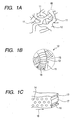
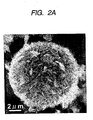
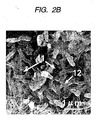
- the present invention also include as one embodiment thereof a dendritic framework that forms a three dimensional network structure as shown in the SEM micrograph of Fig. 2A and the SEM micrograph of Fig. 2B as taken with a higher magnification than in Fig. 2A , and a schematic view of Fig. 1A .
- the embodiment that adopts a three dimensional network structure will be described below with reference to Figs. 1A, 1B, 1C , 2A and 2B .
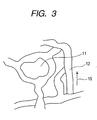
- a void 11 in a dendritic framework 12 the portions of which are adjacent to each other to form a three dimensional network structure is preferably a macropore, namely, a void that ensures a pore having a projected area in a certain direction equal to or.larger than the area of a circle having a diameter of 50 nm or more; in other words, the size of the void 11 is preferably larger than 50 nm, more preferably 100 nm or more and 700 nm or less.
- the spaces in the framework in such a case as shown in Fig. 3 wherein the branched framework undergoes linkage to form macropores is preferably such that the pore sizes of the macropores are 50 nm or more, and more preferably 100 nm or more and 700 nm or less.
- Fig.. 1B is an enlarged view showing a portion of the framework 12
- Fig. 1C is an enlarged view showing the surface 14 of the framework 12 and the section 17 along the above described direction 16.
- the mesopores 13 pass through the framework 12 in the direction 16 intersecting the longitudinal direction 15.
- the mesopores 13 have the openings thereof on the surface 14.
- the framework itself constituting the portion between the mesopores forms the "wall" separating the mesopores from each other.
- the structure of the present invention may take macroscopically a shape of particle or film, but a shape of particle as shown in Fig. 2A is preferably used.
- the pore size of a mesopores is a diameter if the sectional shape of the mesopore is a circle, and is the length of the longest axis if the sectional shape of the mesopore is a deformed circle such as an ellipse.
- a powdery structure having mesopores is subjected to a measurement of nitrogen gas adsorption, and from the results of the measurement, the pore size distribution is derived on the basis of the Berret-Joyner-Halenda (BJH) method.
- the pore size distribution of a structure to be preferably used in the present invention exhibits a single maximum value and 60% or more of the mesopores in the pore size distribution concerned fall within a range having a width of 10 nm and including the maximum value.
- the pore sizes of 80% or more of the fine pores fall within a range of ⁇ 5 nm from the maximum value, namely, in a range of having a width of 10 nm and including the maximum value. More preferably, 90% or more of the fine pores fall within a range having a width of 10 nm.
- the pore sizes of the mesopores used in the present invention are 2 nm or more and 50 nm or less, more preferably 10 nm or more and 30 nm or less.
- the pore sizes are preferably 10 nm or more so that a biological material such as an antibody may be introduced into the mesopores, and are preferably 30 nm or less from the viewpoint of the stabilization of the conformation of the biological material.
- the shape of a mesopore may be such that the pore size thereof is monotonically increased or discontinuously varied from one opening thereof to the other opening thereof.
- Information for the periodicity of the mesopores can be obtained from X-ray diffraction (XRD) measurement.
- the configuration of the mesopores as viewed in the direction normal to a section is not limited to a matrix configuration as shown in Fig. 4A , or a hexagonally symmetric configuration as shown in Fig. 4B , but may be another regular or irregular configuration.
- the structure according to the present embodiment has at least one diffraction peak in an angular region corresponding to a structure periodicity of 1 nm or more in XRD measurement; this means that the mesopores are regularly arranged.
- the mutual separations between the mesopores are of the order of 1 nm to 4 nm. It is more preferable that a plurality of adjacent mesopores share the same direction of extension; however, the direction of these mesopores may be branched somewhere along the mesopores into a plurality of directions.
- the length of a mesopore is preferably 50 nm or more and'500 nm or less. From the viewpoint of taking advantage of the mesopores as a reaction field for a biosensor or the like, the length of a mesopore is more preferably 50 nm or more and 300 nm or less.
- the mesopores 13 are aligned evenly along the longitudinal direction 15 of the framework 12.as shown in Fig. 1B .
- the mesopores 13 are preferably aligned as perpendicularly as possible to the longitudinal direction 15 of the framework 12.
- 90% or more of the mesopores are preferably aligned along the perpendicular direction.
- oxides such as silicon oxide, titanium oxide or tin oxide are preferable.
- Such a material may be a hybrid material composed of an inorganic material such as silica and an organic material such as benzene or ethylene.
- a coating layer made of a silane coupling agent or the like can be formed on the pore inner wall of the mesopores, or an enzyme, an antibody, DNA or the like can be introduced into the mesopores to be supported therein.
- the pore surface (pore inner wall) can be modified with a silage coupling agent, or with an aqueous solution of a metal salt that contains a metal capable of forming an oxide.
- a reaction solution that contains a material to form the framework of the structure, a surfactant and an orientation controlling agent is heated to 120°C in the presence of a hydrolysis catalyst, so that a structure containing the surfactant is formed under the hydrothermal synthesis conditions, and then the surfactant is removed from the structure.
- the prepared reaction solution is added with the hydrolysis catalyst, stirred at around room temperature, and thereafter, the raw materials are allowed to undergo condensation polymerization reaction in a range from a few hours to a few days.
- the materials to be the raw materials for the framework include halogen compounds, chalcogen compounds or metal alkoxides.
- halogen compounds chalcogen compounds or metal alkoxides.
- the pore wall of mesopores is formed with silicon oxide, tetraethoxysilane and tetramethoxysilane that are metal alkoxides are preferably used.
- nonionic surfactants such as block copolymers that contain polyethylene oxide as hydrophilic groups are preferably used.
- the orientation controlling agent may be an organic matter that can orient the surfactant so as to intersect the longitudinal direction of the dendritic framework; examples of such an organic matter may include n-decane (C 10 H 22 ).
- the detailed mechanism of the orientation controlling agent applied in the present invention is under study; when the orientation of the surfactant is along a direction intersecting the longitudinal direction of the framework, a sate stable in terms of entropy would be created. It is conceivable that by setting the reaction time at a few hours to a few days and the temperature at the time of reaction at 120°C, silicon oxide is laminated before it forms particles, or the silicon oxide particles undergoing reaction are mutually bonded, and thus dendritic growth is resulted.
- the temperature of 120°C is the ambient atmosphere temperature of the furnace for heating the solution; the solution is placed in a pressure vessel and the temperature of the solution is substantially the.same as the ambient atmosphere temperature.
- the dendritic structure thus obtained can be collected with a centrifugal separator because it is precipitated in the solution.
- the collected precipitate is dried by air drying or the like.
- a porous material can be obtained by removing the surfactant forming micelles from the collected precipitate.
- No particular constraint is imposed on the method for removing the surfactant as long as the method is a method capable of removing the surfactant without destroying the fine pore structure. Examples of such a method may include a method in which the surfactant is dissolved in a solvent so as to be removed, a method in which the surfactant is extruded from the pores by applying a supercritical state fluid, and further, a method in which the surfactant is oxidized to be removed by use of ozone.
- More preferable is a method in which the surfactant is removed by calcining the structure in an oxygen-containing atmosphere; in this method, the structure is calcined in air at 550°C for 5 hours, and consequently the surfactant can be removed without substantially destroying the mesoporous structure.
- the calcining temperature and time are appropriately selected according to the material to form the fine pore wall or the framework and the surfactant to be used.
- the step means a method in which the structure having mesopores is soaked in a solution containing a biological material and the biological material is adsorbed in the pores of the porous material by stirring.
- a functional group for example, an amino group or a carboxyl group
- a biological material is easily introduced into the mesopores conceivably because the functional group located.on the pore wall surface and the biological material electrically interact with each other.
- the fine pore surface is modified with a silane coupling agent
- a method in which the fine pore surface is modified with an aqueous solution of a metal salt containing a metal capable of forming an oxide are a method in which the fine pore surface is modified with an aqueous solution of a metal salt containing a metal capable of forming an oxide.
- the silane coupling agent is a compound generally represented by the chemical formula R-Si-X 3 , and having two or more different functional groups in a molecule thereof.
- the X denotes a site capable of reacting with the surface of the porous material made of an inorganic material.
- a mesoporous material is silicon oxide
- the hydrogen atoms of the silanol groups located on the fine pore surface are substituted with organic silicon groups to form the Si-O-Si-R bonds, and thus a layer of an organic matter R is formed on the fine pore surface
- examples of X include a chloro group, an alkoxy group, an acetoxy group, an isopropenoxy group and an amino group.
- silane coupling agent in which X is bifunctional or monofunctional as well as a silane coupling agent in which X is trifunctional.as long as the silane coupling agent can react with the fine pore surface to form the layer of R.
- R stands for an organic group such as an amino group, a carbonic group or a maleimide group.
- an aqueous solution of a metal salt-containing an element capable of forming an oxide titanium, aluminum, zirconium, tin or the like can be used as an element capable of forming the oxide layer concerned.
- a layer of zirconium oxide can be formed on the surface.
- the present inventors have been studying the structures suitable as the reaction fields for enzymatic reactions and antigen-antibody reactions, and have discovered that the structure according to the present invention is suitable as such reaction fields.
- the biological materials to be used in the present invention are antibodies, antibody fragments, DNAs, proteins, enzymes and the like.
- the biological materials also include the fragments containing active sites of a single strand DNA and Fab antibodies and the like.
- the DNA fragments may also be those fragments which are extracted from animals, plants and microbes, and cut to desired shapes, or those which are genetically engineered or chemically synthesized.
- Examples of the material 24 may include antigens, .antibody fragments, DNAs, proteins and enzymes.
- the biological.material 23 is an antibody
- the material 24 having a specific affinity with the biological material is an antigen.
- an anchor to connect the inner surface of the pore wall 22 of the mesopores to the biological material 23.
- the components to constitute an anchor are preferably the same constituent materials as the materials constituting the structure having mesopores.
- the anchor preferably has, as the site for bonding to the biological material, a hydroxy group, an amide group, an amino group, a pyridine group, a urea group, a urethane group, a carbonic group, a phenol group or the like.
- the anchor may also be a compound that has a functional group such as an azo group, a hydroxy group, a maleimide group, a silane derivative or an aminoalkylene group.
- Each of the mesopores can accommodate one or more biological materials. Accordingly, the mesopores each are required to have a size appropriate to immobilize the biological material.
- the surface of the biological material is close to the pore wall of the mesopores, so that the biological material is adsorbed in the mesopores by the van der Waals force due to the pore wall of the mesopores. Accordingly, the conformation of the biological material is furthermore maintained, so that the deactivation of the biological material due to the conformational change can be furthermore suppressed.
- the active units can be held in the mesopores by noncovalent bonding such as electrostatic bonding, hydrogen bonding and ionic bonding as well as the van der Waals force.
- a structure supporting a biological material in the mesopores thereof can be applied to a biosensor as a functional device.
- a sensor in which a biological material is supported in the mesopores of the above described structure, and the sensor is provided with a fluid (liquid or gas) containing the specimen. Then, the fluid containing the specimen penetrates into the mesopores while passing through the voids and macropores of the dendritic structure, and reacts with the biological material supported in the mesopores.
- the voids and macropores of the structure having the dendritic framework each have a large conductance to the fluid, so that the fluid evenly reaches the whole structure having the dendritic framework, and furthermore, reaches the mesopores communicatively connected to the voids and macropores.
- the longitudinal direction of the mesopores and the longitudinal direction of the framework are parallel to each other, the openings of the mesopores on the side wall of the framework are very low in occurrence probability, so that the probability of the penetration of the specimen into the mesopores becomes very low.
- the longitudinal direction of the mesopores and the longitudinal direction of the framework intersect with each other, and consequently there is detected the output signal based on the reaction between the biological material and the specimen occurring in a large number of the mesopores of the structure, so that the sensitivity is improved.
- the detection principle of the specimen takes advantage of the antigen-antibody reaction between an antigen and an antibody, a specific bonding reaction such as a bonding reaction between a single DNA and another single DNA, or other reactions.
- a target material is detected by taking advantage of variations of physical quantities such as electric current, electric voltage, light quantity, mass and heat quantity.
- the detection devices may include an enzyme electrode, a hydrogen peroxide electrode, an ISFET (Ion Sensitive Field Effect Transistor), an optical fiber, a thermistor, a quarts oscillator and a surface plasmon resonator.
- the structure according to the present invention can be used as a column of an adsorbent or a separating agent, as a functional device other than biosensors.
- a large number of particles made of the above described structure of the present embodiment are prepared, and the particles may be compacted to produce a porous material.
- a nonionic surfactant namely, a triblock copolymer (EO 20 PO 70 EO 20 ; HO(CH 2 CH 2 O) 20 (CH 2 CH(CH 3 )O) 70 (CH 2 CH 2 O) 20 H) was dissolved in 76.5 ml of purified water. Further, the aqueous solution obtained was added with 7.5 ml of 36% by weight of concentrated hydrochloric acid, and stirred at room temperature for 30 minutes. Then, the aqueous solution was added with 13.9 g of n-decane, as an orientation controlling agent, and was stirred at room temperature for 2 hours.
- a nonionic surfactant namely, a triblock copolymer (EO 20 PO 70 EO 20 ; HO(CH 2 CH 2 O) 20 (CH 2 CH(CH 3 )O) 70 (CH 2 CH 2 O) 20 H
- this mixed solution was added with 0.027 g of NH 4 F as a hydrolysis catalyst and 5.10 g of tetraethoxysilane (TEOS) to prepare a precursor solution.
- TEOS tetraethoxysilane
- the precursor solution was stirred at 40°C for 20 hours, and then allowed to react at 120°C for 48 hours.
- the white precipitate thus obtained was washed with purified water sufficiently and dried under a vacuum.
- the powder sample thus obtained was calcined at 550°C in air, and thus the surfactant was decomposed and removed from the interior of the fine pores to form hollow fine pores.
- the removal of the organic matters such as the surfactant was checked by the infrared absorption spectrum measurement method.
- the mesoporous silica powder thus synthesized was evaluated by means of the X-ray diffraction method, and consequently, as shown in Fig. 6 , there were identified a diffraction peak to be assigned to the (100) plane, and also diffraction peaks to be assigned to the (110), (200) and (210) planes of a hexagonal structure with an interplanar distance of 11.7 nm. These results manifest that the fine pore structure of the mesoporous silica has a hexagonal array provided with a high regularity.
- a nitrogen adsorption-desorption isotherm measurement was carried out at 77 K, and consequently, the shape of the adsorption isotherm was identified to be of the IV type according to the IUPAC classification.
- the specific surface area and the fine pore volume derived on the basis of the B.E.T. method were 700 m 2 /g and 1.88 ml/g, respectively.
- the fine pore size was derived on the basis of the BJH method.
- the fine pore size distribution of the mesoporous silica synthesized in present Example exhibited a narrow distribution with a single peak at 14.3 nm.
- macropores of 300 to 500 nm or macropore-sized voids were found to be formed.
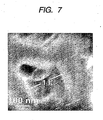
- FIG. 7 A SEM observation was carried out with a higher magnification, as shown in Fig. 7 , a tubular mesopore of 14 nm in diameter was found to be oriented in the direction bisecting the longitudinal direction of the dendritic structure.
- reference numeral 11 denotes the pore size of a macropore formed by the dendritic framework.
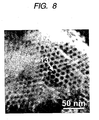
- Fig. 8 in the section of the structure, there was formed a fine pore structure in which uniform tubular mesopores underwent honeycomb (,i.e. hexagonally symmetrical) packing. It is to be noted that the mesopore structure was not destroyed by the electron beam during the observation.
- a structure (hereinafter, referred to as a hierarchical structure, as the case may be) that had two types of fine pores different in pore size from each other, namely, macropores formed between the portions of the dendritic framework and mesopores formed in the framework.
- HRP Horseradish peroxidase
- IEP isoelectric point
- the mixed solution was stirred with a shaker under the conditions of 4°C and 20 hours, and thus, HRP was adsorbed in the fine pores of the mesoporous silica.
- the reaction solution was subjected to centrifugal separation at 4°C, for 10 minutes and at 20000 g, and the HRP-mesoporous silica precipitate was washed with purified water three times.
- the original enzyme solution and the supernatant liquid obtained were subjected to UV-V is absorbance measurement.
- the amount of HRP adsorbed to the mesoporous silica was derived from the concentration change between before and after adsorption by taking advantage of the absorption maximum of HRP at 403 nm.
- the enzyme-immobilized mesoporous silica after having been washed was subjected to vacuum freeze-drying for 10 hours to yield a powder sample.
- the adsorption amount of HRP was as high as 252 mg/g in relation to 1 g of the mesoporous silica.
- the pH of the phosphate buffer solution By varying the pH of the phosphate buffer solution, the adsorption amount of HRP was varied. From these results, HRP and the fine pores of the mesoporous silica conceivably interacted with each other electrostatically to immobilize HRP.
- a mixed solution was prepared by mixing 8 ml of a 50 mM anhydrous toluene solution of 1,2-diaminobenzene with 2 ml of a 1.1 M n-decane solution of t-butylhydroperoxide.
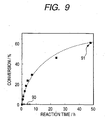
- 10 mg of the HRP-immobilized mesoporous silica was added, and the reaction was started at 37°C; the 470-nm absorbance of 1,2-dinitrobenzene generated by the oxidation of 1,2-diaminobenzene was measured to follow the time variation.
- the enzymatic activity of HRP in toluene as solvent was determined.
- the HRP-immobilized mesoporous silica (plot 101) and usual non-immobilized HRP (plot 100) were heat treated in a phosphate buffer solution at 70°C for 0 to 2 hours, and thereafter, the residual enzymatic activities thereof were measured; the results obtained are shown in Fig. 10 .
- the thermal stability of the HRP immobilized in the mesoporous silica was determined by measuring the oxidative decomposition rate of phenol. For quantitative determination of phenol, the 4-aminoantipyrine colorimetric method was used.
- the enzymatic activity of the non-immobilized HPR was reduced by half by heat treatment at 70°C for 30 minutes, and was only about 10% of the initial enzymatic activity after 2 hours.
- the HRP-immobilized mesoporous silica was verified to have a high stabilization effect against heat; 90% or more of the enzymatic activity survived after a heat treatment at 70°C for 2 hours.
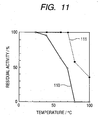
- Fig. 11 shows the results of the temperature dependence measurement of HRP on the basis of the phenol oxidation reaction.
- HRP histoneum
- immobilized HRP histoneum
- the remaining activity of the usual HRP was 0% under the conditions of 70°C and 30 minutes, but the HPR immobilized in the hierarchical mesoporous silica exhibited a 50% or more activity under the same conditions, and held an about 40% of the enzymatic activity even after the treatment at 100°C without going down to 0%.
- Each of the calcined powder of a hierarchical porous silica synthesized according to the above described synthesis method and the calcined powder of a monodisperse mesoporous silica having no macropores was weighed out in an amount of 0.2 g. Each of the weighed material was compacted into a disc-shaped pellet of 15 mm in diameter and 1 mm in thickness by means of a tablet forming press.
- Each of the mixed solutions was slowly shaken at 4°C for 48 hours with a shaker, HRP was thereby adsorbed to each of the mesoporous silicas, and the time variation of the adsorption amount in each of the HRP solutions was measured from the absorption intensity variation at the 403 nm of the HRP solution.
- the hierarchical mesoporous silica exhibited a relative adsorption amount of 80% or more at an elapse time of about 1 hour from the start of the adsorption. The adsorption amount was approximately the same as the adsorption amount of the calcined powder before compacting.
- the mesoporous material that had neither dendritic framework nor macropores exhibited a drastic decrease of the adsorption rate by compacting into pellet.
- the present inventors interpret that these results were caused by the fact that the hierarchical mesoporous material of the present invention maintained the macropores even in the compacted pellet, so that a high internal diffusion rate was maintained.
- the compacting made the material itself too higher in density, so that the adsorption rate was conceivably decreased.
- SBA-15 in which tubular fine pores were formed in parallel with the long axis direction of rod-shaped particles was synthesized, and the HRP adsorption and the stabilization effect in an organic solvent were measured.
- the synthesis method of SBA-15 is described in Science, No. 279, p. 548 .
- the synthesized SBA-15 was evaluated by the X-ray diffraction method, and consequently, there was identified a diffraction peak to be.assigned to the (100) plane of a hexagonal structure with an interplanar distance of 9.8 nm. From the nitrogen adsorption isotherm measurement, the synthesized SBA-15 was found to have a specific surface area of 800 m 2 /g and a fine pore size of 7.4 nm.
- the synthesized SBA-15 was subjected to the same HRP adsorption experiment as in Example 1.
- the adsorption amount of HRP was found to be 25 mg/g, exhibiting a very small adsorption amount that was 1/10 or less times the adsorption amount in the hierarchical mesoporous silica synthesized by the present inventors. From the analysis of the nitrogen adsorption isotherm for the sample after the HRP adsorption, the fine pore volume of SBA-15 was found not to be decreased from before to after the HRP adsorption, and HRP was found to be little adsorbed in the fine pores of SBA-15.
- tubular fine pores were formed.in parallel with the long axis direction of the rod-shaped particles; consequently, the aspect ratios of the tubular fine pores were large, so that the diffusion of HRP or a substrate from the outside into the interior of the fine pores and from the interior of the fine pores to the outside was made poor; and the number of the fine pore openings on the surface was small. Consequently, the introduction of HRP or the substrate was made slow.
- the hierarchical mesoporous silica synthesized by the present inventors is excellent in the internal diffusion of a protein or a substrate and excellent as a support for biological materials and the like because the hierarchical mesoporous silica has macropores and the like.
- GOD glucose oxidase
- IEP 4.6
- the hierarchical mesoporous silica modified with zirconium was evaluated by the X-ray diffraction method, and consequently, almost the same diffraction pattern as before modification was found to be exhibited, verifying that the periodic structure of the mesopores was not destroyed.
- the chemical bonding state of the silica surface was measured by X-ray photoelectron spectrometry (XPS), and consequently, a peak ascribable to Zr-O was identified, verifying that a zirconium oxide layer was formed on the silica surface.
- GOD was immobilized in the fine pores of the hierarchical mesoporous silica having been modified with zirconium, and the stabilization effect was measured on the basis of the oxidation decomposition reaction of phenol.
- the mixed solution was stirred with a shaker under the conditions of 4°C and 20 hours to immobilize GOD in the fine pores of the mesoporous silica. After adsorption, the reaction solution was subjected to centrifugal separation at 4°C, for 10 minutes and at 20000 g, to yield a GOD-immobilized silica.
- the amount of GOD adsorbed to the mesoporous silica was derived.
- the adsorption amount of GOD was 120 mg/g or more.
- the presence of the enzyme molecules introduced into the fine pores was identified with a nitrogen adsorption measurement apparatus from the decrease of the adsorption amount in the fine pores..
- GOD was little adsorbed to the mesoporous silica that was not modified with zirconium.
- the relative activity of the non-immobilized GOD was reduced down to 0% by heat treatment at 70°C for 30 minutes.
- the GOD immobilized in mesoporous silica was verified to have a high stabilization effect against heat; 70% or more of the enzymatic activity survived after a heat treatment at 70°C for 120 minutes.
- the time variation of the decomposition of phenol at 37°C was measured by using the GOD-immobilized hierarchical mesoporous silica that was not subjected to heat treatment.
- Example 2 In the same manner as in Example 1, GOD adsorption experiments were carried out by using the pellet-shaped hierarchical mesoporous silica and the pellet-shaped monodisperse mesoporous silica having no macropores. Each of these pellets was soaked in the aqueous solution of zirconium oxynitrate according to the above described method to be subjected to zirconium treatment, and then the time dependent adsorption behavior of GOD was measured. In the same manner as in Example 1, the pellet-shaped hierarchical mesoporous silica according to the present invention exhibited no variation in adsorption behavior as compared to the powder before compacting.
- GOD was little adsorbed to the pellets of the monodisperse mesoporous silica having no macropores. This is conceivably because in the pellet-shaped monodisperse mesoporous silica, the particles thereof were densely packed to deaccelerate the internal diffusion, resulting in an insufficient diffusion of GOD in the mesopores.
- This Example is a case in which the surface of the hierarchical mesoporous silica synthesized in Example 1 was modified with a silane coupling agent, and ⁇ -amylase was immobilized on the silica surface by covalent bonding.
- Example 1 To 50 ml of a 10% (v/v) toluene solution of 3-aminopropyltriethoxysilane, 1.0 g of the hierarchical mesoporous silica synthesized in Example 1 was added, and the solution thus obtained was stirred in an atmosphere of nitrogen at 120°C. for 48 hours. After the reaction, the precipitate was filtered out, washed with toluene, methanol and dichloromethane, and dried at room temperature.
- the hierarchical mesoporous silica modified with glutaraldehyde was evaluated by the X-ray. diffraction method, and consequently, almost the same diffraction pattern as before modification was found to be exhibited, verifying that the mesopore structure was not destroyed.
- ⁇ -amylase was immobilized in the fine pores of the hierarchical mesoporous silica having been modified, and the stabilization effect was measured on the basis of the hydrolysis reaction of starch to maltose.
- the mixed solution was soaked under the conditions of 4°C and 20 hours with a shaker to adsorb ⁇ -amylase in the fine pores of the mesoporous silica. After completion of the reaction, the pellets were filtered out, and washed with purified water three times. The original enzyme solution and the supernatant liquid were subjected to UV-Vis absorbance measurement.
- the amount of adsorption to the mesoporous silica was derived from the concentration variation from before to after the adsorption.
- the amount of the adsorbed ⁇ -amylase was as high as 140 mg/g.
- the adsorption experiments of ⁇ -amylase to the powdery hierarchical mesoporous silica subjected to no surface modification and the compacted pellet-shaped monodisperse mesoporous silica under the same conditions little showed adsorption behavior.
- ⁇ -amylase was immobilized onto the silica surface through the bonding between the -CHO modifying the silica surface and the -NH 2 of ⁇ -amylase.
- pellet-shaped amylase-immobilized mesoporous silica and the non-immobilized amylase were subjected to heat treatment at 25°C to 70°C in a sodium acetate buffer solution, and then subjected to enzymatic activity measurement.
- the supernatant was obtained by centrifugal separation, 1 ml of 0.5 N acetic acid and 3 ml of an iodine-potassium solution (0.015% iodine-0.15o potassium iodide solution) were added to this supernatant solution, and the supernatant solution was stirred sufficiently and then subjected to measurement of the 700-nm absorbance maximum.
- Usual ⁇ -amylase exhibited a relative activity of 20% under the conditions of 60°C and 30 minutes, but ⁇ -amylase immobilized in the hierarchical mesoporous silica exhibited a relative activity of 90% or more under the same conditions to verify the stabilization effect.
- This Example is a case in which a single strand DNA was introduced onto the mesopore surface of the hierarchical mesoporous silica produced in Example 1.
- This Example is an example of biosensing element that optically detects a specific reaction between single strand DNAs by taking advantage of hybridization reactions,
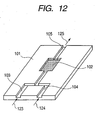
- Fig. 12 being a schematic view illustrating an example of the configuration of a biosensing element.
- Hybridization means the formation of a nucleic acid hybrid or the nucleic acid molecule hybridization, and is used as a method for investigating the primary structure homology of a nucleic acid, namely, the base sequence homology or a method for detecting nucleic acids having a homologous base sequence.
- Hybridization takes advantage of the property that two single-stranded nucleic acids mutually form hydrogen bonds between the complementary base pairs (A-T, G-C) to form a double helix double stranded nucleic acid.
- the hierarchical mesoporous silica synthesized in Example 1 and the SBA-15 used in Comparative Example 1 were soaked for 1 hour in a 10% solution of 3-aminopropyltriethoxysilane in 95% aqueous ethanol, and then unreacted solution was removed with a centrifugal separator. After washing with ethanol, the reaction was allowed to proceed in an atmosphere of nitrogen at 120°C for 1 hour, to introduce amino groups onto the pore surface of the mesoporous silica.
- amino group-introduced hierarchical mesoporous silica was soaked in a 1 mM dimethyl sulfoxide solution of GMBS for 2 hours, and then washed with dimethyl sulfoxide to introduce maleimide groups onto the pore surface of the mesoporous silica.
- the introduction of these functional groups was identified by means of FT-IR.
- DNA probe having thiol groups introduced therein was synthesized by use of a DNA automatic synthesizer, and thereafter the DNA probe was purified by high performance liquid chromatography.
- the DNA probe-immobilized mesoporous silica was filled in the groove on the chip substrate shown in Fig. 12 , and other channels were disposed as shown in Fig. 12 , and thus a biosensing element was fabricated.
- reference numeral 101 denotes a substrate
- 102 denotes the DNA probe-immobilized hierarchical mesoporous silica prepared according to present Example.
- Reference numerals 103 and 104 each denote a solution introduction tube
- 105 denotes a solution discharge tube for the solutions having been introduced.
- a hundredfold diluted solution of 20 x SSC was injected as a washing solution from the washing solution introduction tube 104 in the direction indicated by an arrow 124, and washing was carried out. Then, by use of a scanner for microarray, the fluorescence intensity (hybridization signal) of the DNA probe-immobilized portion and the fluorescence intensity (background signal) of the sample having no DNA probe immobilized therein were measured.
- the DNA probe-immobilized SBA-15 was small in the hybridization signal and was not able to attain a high fluorescence intensity ratio (hybridization signal/background signal); the time.variation of the fluorescence intensity due to the hybridization reaction was measured, and the time to reach the saturated intensity was also found to be long. On the contrary, the DNA probe-immobilized hierarchical mesoporous silica perfected the hybridization reaction in a very short time, and attained an excellent fluorescence intensity ratio.
- a mouse monoclonal antibody (the antigen was a human serum albumin) was immobilized, and the detection and the measurements of a target material was carried out by taking advantage of a specific bonding reaction between the antigen and the antibody.
- HRP-HSA horse radish peroxidase-labeled human serum albumin
- a nonspecific mouse immunoglobulin antibody that was not an antibody to the HRP-HSA was immobilized in the same manner as described above. Then, according to the above described procedures, there was measured the absorbance difference between the case where the antibody specifically bonded to the HSA was used and the case where the nonspecific antibody was used. Consequently, the nonspecific mouse Ig was found to be obviously smaller in the HRP activity than the mouse monoclonal Fab-type antibody-immobilized mesoporous silica according to present Example. From these results, it was verified that the antibody was immobilized in the mesoporous silica, and the antigen-antibody reaction occurred in the fine pores even after the immobilization of the antibody in the mesoporous silica.
- the antibody-immobilized mesoporous silica obtained in the above and the nonimmobilized mouse monoclonal antibody powder each were stored in a dried state at 37°C for 3 weeks and each were subjected to a time variation measurement of the HRP activity due to the antigen-antibody reaction:
- the bonding activity of each of the above silica and powder immediately before the start of the storage in a dried state at 37°C was defined as 100.
- the nonimmobilized mouse monoclonal antibody became zero in relative activity after one week to be completely deactivated.
- the antigen-antibody reaction of the mouse monoclonal antibody immobilized in the hierarchical mesoporous silica exhibited a relative activity of 90% or more even after three weeks.
- This Example is a case in which the same, hierarchical mesoporous silica as synthesized in Example 1 was synthesized on an electrode, further glucose oxidase (GOD) and a mediator were immobilized in the mesopores, and the glucose concentration was measured.
- GOD glucose oxidase
- a mediator As the electrodes, a carbon electrode and a platinum electrode were used.
- TEOS tetraethoxysilane
- the precursor solution was stirred at 40°C for 20 hours, and then allowed to react at 120°C for 48 hours.
- the white precipitate thus obtained was washed with purified water sufficiently.
- the white precipitate was appropriately added with ethanol, and subjected to centrifugal separation at 3000 rpm to 6000 rpm, to yield a paste-like hierarchical mesoporous silica.
- the obtained sample was coated onto a carbon electrode, dried at room temperature, calcined in air at 500°C to decompose and remove the surfactant from inside the fine pores to synthesize the hierarchical mesoporous silica on the carbon electrode.
- the mesoporous silica powder sampled from the electrode was evaluated by means of the X-ray diffraction method, and consequently there were identified a diffraction peak to be assigned to the (100) plane, and also diffraction peaks to be assigned to the (110), (200) and (210) planes of a hexagonal structure, in the same manner as in
- the amount of GOD adsorbed to the mesoporous silica was derived by subtracting the adsorption only to the carbon electrode as the background.
- the adsorption amount of GOD was 230 mg/g or more.
- the concentration of glucose is measured.
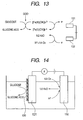
- the blood sugar level in blood or the like can be measured. Specifically, when the glucose in blood reaches the sensor, the glucose and GOD react with each other, and at the time of the reaction, the glucose releases electrons to be converted into gluconic acid. The electrons released from the glucose are trapped by the ferricyan ion ([Fe(III)(CN) 6 ] 3- ). The ferricyan ion ([Fe(I.II)(CN)6] 3- ) having trapped an electron is converted into the ferrocyan ion ([Fe(II)(CN) 6 ] 4- ).
- a working electrode 131 detects whether the reaction is occurring or not.
- the counter electrode 132 does not accept the electron of the ferrocyan ion ([Fe(II)(CN) 6 ] 4- ), but the hydrogen ion (H + ) accepts the electron on the counter electrode to generate water (H 2 O) in cooperation with oxygen (O 2 ).
- the electric current value By measuring the electric current value at this time, the amount of glucose is derived and the blood sugar level can be determined.
- the measurement of the glucose concentration was carried out as follows. In the constant-temperature cell shown in Fig. 14 , a 50 mM MOPS buffer solution was placed and maintained at a predetermined temperature. The synthesized GOD-immobilized carbon electrode was used as the working electrode 131 having enzyme-immobilized particles 130, and a platinum electrode was used as the counter electrode 132. A predetermined electric voltage was applied to the carbon electrode, and after the electric current became stationary, a sample containing glucose was added, the increase of the electric current value was measured, and a high electric current was obtained. Additionally, standard glucose solution samples were used to measure the electric current values, and consequently, the electric current value was found to linearly increase with the increase of the glucose concentration. Accordingly, there can be provided a biosensor capable of determining the glucose concentration and measuring the blood sugar level.
- This Example is a case in which the same hierarchical mesoporous silica as synthesized in Example 1 was synthesized on an electrode, further glucose oxidase (GOD) and a mediator were immobilized therein, and the glucose concentration was measured.
- GOD glucose oxidase
- the hierarchical mesoporous silica is the same as in the above-mentioned working examples. Ferrocenecarboxylic acid was used as the mediator. The ferrocenecarboxylic acid was immobilized to the surface of the mesopore with a covalent bond to support GOD to the mesopore.
- the immobilization of ferrocenecarboxylic acid consists of the following.
- a mesoporous silica-coated electrode in which mesopores had been formed by calcination was sililated with a silane coupler.
- 20 mM dichloromethane solution of (3-iodopropyl) trimethoxysilane (IPTMS) was prepared in a Teflon (tradename) vessel. The electrode was immersed in the solution, followed by stirring under nitrogen atmosphere at room temperature for 4 hours. The resulting electrode was washed with dichloromethane and ethanol, and dried at 80°C.
- the electrode thus Iodine-propylsililated was then immersed into a mixed solution of 0.13 mM ferrocenecarboxylic acid aqueous solution and 0.17 mM N,N'-dicyclohexylcarbodiimide aqueous solution, and stirred slowly under Ar atmosphere to immobilize ferrocenecarboxylic acid on the surface of silica.
- the introducing of IPTMS on the surface of silica and the immobilization of ferrocenecarboxylic acid by ester bond were confirmed by FT-IR, respectively. By these steps, the immobilization of ferrocenecarboxylic acid on the surface of silica with a covalent bond was completed.
- PBS with (pH 7.4 was placed in a constant-temperature cell.
- the GOD-immobilized carbon electrode prepared above was immersed therein, followed by stirring for 5 minutes with nitrogen-bubbling, wherein an Ag-AgCl electrode as a reference electrode and a platinum wire as a counter were used.
- Voltages from 100 mV to 600 mV were swept over the electrode.
- the oxidation current became constant, and then the decreasing of the voltage was carried out, whereby a CV curve was obtained.
- the scan rate was set to 1 mV/s. Each time the concentration of glucose was increased, the currents were measured to determine the saturation current value.
- the resulting peak value of the oxidation-reduction potential was 220 mV.
- An oxidation-reduction potential when a substance in blood is oxidized/reduced by an electrode is, e.g, 500-600 mV for ascorbic acid; and 300-400 mV for hemoglobin. Accordingly, it is important for measuring correctly the peak value of current to use a mediator not overlapping these peaks of oxidation-reduction potential but having the peak in a lower potential.
- the mesoporous material according to the present invention is excellent in internal diffusion, and can be applied to agents for immobilizing biological materials, to the increase of the precision of column materials or to the like.
- the structure having mesopores according to the present invention can be applied, for example, to biosensors and the like.
Landscapes
- Chemical & Material Sciences (AREA)
- Organic Chemistry (AREA)
- Life Sciences & Earth Sciences (AREA)
- Health & Medical Sciences (AREA)
- Engineering & Computer Science (AREA)
- Zoology (AREA)
- Wood Science & Technology (AREA)
- Proteomics, Peptides & Aminoacids (AREA)
- Physics & Mathematics (AREA)
- Immunology (AREA)
- Molecular Biology (AREA)
- Biophysics (AREA)
- Analytical Chemistry (AREA)
- Biochemistry (AREA)
- General Health & Medical Sciences (AREA)
- Inorganic Chemistry (AREA)
- Genetics & Genomics (AREA)
- General Engineering & Computer Science (AREA)
- Biomedical Technology (AREA)
- Bioinformatics & Cheminformatics (AREA)
- Biotechnology (AREA)
- Microbiology (AREA)
- General Life Sciences & Earth Sciences (AREA)
- Geology (AREA)
- General Physics & Mathematics (AREA)
- Hematology (AREA)
- Pathology (AREA)
- Urology & Nephrology (AREA)
- Food Science & Technology (AREA)
- Medicinal Chemistry (AREA)
- Immobilizing And Processing Of Enzymes And Microorganisms (AREA)
- Silicates, Zeolites, And Molecular Sieves (AREA)
- Solid-Sorbent Or Filter-Aiding Compositions (AREA)
Claims (12)
- Struktur, umfassend ein dendritisches Grundgerüst (12),
dadurch gekennzeichnet, dass
das Grundgerüst einen Zweig hat mit Mesoporen (13), die den Zweig in einer Richtung (16) passieren, welche die lokale Längsrichtung (15) des Zweiges schneidet. - Struktur nach Anspruch 1, wobei
die Mesoporen senkrecht zu der lokalen Längsrichtung des Zweiges sind. - Struktur nach Anspruch 1 oder 2, wobei
das dendritische Grundgerüst Makroporen (11) durch gegenseitiges Vernetzen von Zweigen des Grundgerüstes bildet oder makroporengroße Lücken (11) zwischen benachbarten Zweigen gebildet sind. - Struktur nach einem der Ansprüche 1 bis 3, wobei
die Mesoporen regelmäßig angeordnet sind. - Struktur nach Anspruch 4, wobei
die Mesoporen hexagonalsymmetrisch angeordnet sind. - Struktur nach einem der Ansprüche 1 bis 5, wobei
die Mesoporen eine Porengrößenverteilung haben, bei welcher 80 % oder mehr der Mesoporen innerhalb eines Bereiches einer Breite von 10 nm einschließlich des Maximalwertes fallen. - Struktur nach einem der Ansprüche 1 bis 6, wobei das Grundgerüst Siliciumoxid, Titanoxid oder Zinnoxid umfasst.
- Struktur nach einem der Ansprüche 1 bis 7, wobei ein biologisches Material (23) in den Mesoporen gehalten wird.
- Poröses Material, hergestellt aus mehreren Partikeln, die die Struktur nach einem der Ansprüche 1 bis 8 umfassen.
- Sensor zum Nachweisen einer Spezies,
welche das poröse Material nach Anspruch 9 und eine Elektrode (131, 132) umfasst und ein elektrisches Ausgangssignal nachweist, basierend auf einer Reaktion zwischen der Spezies und einem in den Mesoporen gehaltenen biologischen Material. - Verfahren zum Nachweisen einer Spezies, umfassend die Schritte:- Bereitstellen eines Sensors, in welchem ein biologisches Material in den Mesoporen der Struktur nach einem der Ansprüche 1 bis 8 gehalten wird;- Zuführen eines eine Spezies enthaltenden Fluidums zu dem Sensor; und- Nachweisen eines Ausgangssignals, basierend auf einer Reaktion zwischen dem biologischen Material und der Spezies.
- Enzymelektrode (131, 132), umfassend das poröse Material (130) nach Anspruch 9, welches das Enzym und eine Elektronentransfer-Substanz hält, und zwar zum Transferieren eines von dem Enzym zur Elektrode transferierten Elektrons,
wobei die Elektronentransfer-Substanz auf dem porösen Material immobilisiert ist.
Applications Claiming Priority (2)
| Application Number | Priority Date | Filing Date | Title |
|---|---|---|---|
| JP2005166754 | 2005-06-07 | ||
| PCT/JP2006/311469 WO2006132294A1 (en) | 2005-06-07 | 2006-06-01 | Structure, porous body, sensor, process of structure and detecting method for specimen |
Publications (2)
| Publication Number | Publication Date |
|---|---|
| EP1890965A1 EP1890965A1 (de) | 2008-02-27 |
| EP1890965B1 true EP1890965B1 (de) | 2010-07-21 |
Family
ID=36929043
Family Applications (1)
| Application Number | Title | Priority Date | Filing Date |
|---|---|---|---|
| EP06747229A Not-in-force EP1890965B1 (de) | 2005-06-07 | 2006-06-01 | Struktur, poröser körper, sensor, strukturverfahren und nachweismethode für proben |
Country Status (6)
| Country | Link |
|---|---|
| US (1) | US7914663B2 (de) |
| EP (1) | EP1890965B1 (de) |
| KR (1) | KR100940177B1 (de) |
| CN (1) | CN101166693B (de) |
| DE (1) | DE602006015638D1 (de) |
| WO (1) | WO2006132294A1 (de) |
Families Citing this family (10)
| Publication number | Priority date | Publication date | Assignee | Title |
|---|---|---|---|---|
| JP5219022B2 (ja) * | 2007-06-15 | 2013-06-26 | 株式会社船井電機新応用技術研究所 | 酵素電極及び酵素センサ |
| JP5296805B2 (ja) | 2007-12-10 | 2013-09-25 | バイエル・ヘルスケア・エルエルシー | バイオセンサーのための多孔性粒子試薬組成物、装置及び方法 |
| WO2010036520A1 (en) | 2008-09-26 | 2010-04-01 | Wisconsin Alumni Research Foundation | Mesoporous metal oxide materials for phosphoproteomics |
| FR2950044B1 (fr) * | 2009-09-11 | 2011-12-09 | Commissariat Energie Atomique | Procede de preparation d'une surface structuree fonctionnelle et surface obtenue par le procede |
| FR2969295B1 (fr) * | 2010-12-16 | 2012-12-14 | Commissariat Energie Atomique | Detecteur multifonctionnel de composes gazeux et ses applications |
| KR101670032B1 (ko) * | 2012-05-22 | 2016-10-28 | 고려대학교 산학협력단 | 광학 바이오센서 |
| KR101597025B1 (ko) | 2014-04-23 | 2016-03-07 | 한양대학교 산학협력단 | 3차원 미세구조를 가지는 생체유기물 구조체의 제조방법 및 생체유기물 구조체, 이를 응용한 센서와 액츄에이터 시스템 |
| LU92783B1 (en) * | 2015-07-22 | 2017-01-31 | Luxembourg Inst Of Science And Tech (List) | Highly aminated self-assembling fuctionalized Mesoporous Silicia Nanoparticles and methods of synthesis |
| HUE065552T2 (hu) * | 2017-02-17 | 2024-06-28 | Hoffmann La Roche | Folyamatos analitmonitorozó elektród keresztkötéses enzimmel |
| CN111233516B (zh) * | 2020-04-01 | 2022-05-17 | 蚌埠学院 | 一种氧气检测传感器材料的制备方法及其应用 |
Family Cites Families (12)
| Publication number | Priority date | Publication date | Assignee | Title |
|---|---|---|---|---|
| US4945125A (en) * | 1987-01-05 | 1990-07-31 | Tetratec Corporation | Process of producing a fibrillated semi-interpenetrating polymer network of polytetrafluoroethylene and silicone elastomer and shaped products thereof |
| JP3317749B2 (ja) | 1993-01-18 | 2002-08-26 | 直弘 曽我 | 無機系多孔質カラム |
| EP0710219B1 (de) * | 1993-07-19 | 1997-12-10 | MERCK PATENT GmbH | Anorganisches, poröses material und verfahren zu dessen herstellung |
| US5964993A (en) * | 1996-12-19 | 1999-10-12 | Implanted Biosystems Inc. | Glucose sensor |
| US6696258B1 (en) * | 1998-01-20 | 2004-02-24 | Drexel University | Mesoporous materials and methods of making the same |
| JP3389106B2 (ja) * | 1998-06-11 | 2003-03-24 | 松下電器産業株式会社 | 電気化学分析素子 |
| JP2002080216A (ja) | 2000-09-08 | 2002-03-19 | Toyota Central Res & Dev Lab Inc | 多孔体およびその製造方法 |
| WO2003002458A1 (fr) | 2001-06-29 | 2003-01-09 | Japan Science And Technology Corporation | Procede de preparation d'une matiere inorganique poreuse |
| US6733828B2 (en) * | 2002-01-29 | 2004-05-11 | Kuei-Jung Chao | Method of fabricating nanostructured materials |
| US20040122121A1 (en) * | 2002-12-23 | 2004-06-24 | Loureiro Sergio Martins | Functionalized mesoporous silicate structures, and related processes |
| US7001669B2 (en) * | 2002-12-23 | 2006-02-21 | The Administration Of The Tulane Educational Fund | Process for the preparation of metal-containing nanostructured films |
| US6958480B1 (en) * | 2004-06-25 | 2005-10-25 | The Regents Of The University Of California | Sample desorption/ionization from mesoporous silica |
-
2006
- 2006-06-01 DE DE602006015638T patent/DE602006015638D1/de active Active
- 2006-06-01 EP EP06747229A patent/EP1890965B1/de not_active Not-in-force
- 2006-06-01 CN CN2006800139361A patent/CN101166693B/zh not_active Expired - Fee Related
- 2006-06-01 US US10/590,293 patent/US7914663B2/en not_active Expired - Fee Related
- 2006-06-01 WO PCT/JP2006/311469 patent/WO2006132294A1/en not_active Ceased
- 2006-06-01 KR KR1020087000336A patent/KR100940177B1/ko not_active Expired - Fee Related
Also Published As
| Publication number | Publication date |
|---|---|
| US7914663B2 (en) | 2011-03-29 |
| CN101166693B (zh) | 2012-03-21 |
| KR20080016940A (ko) | 2008-02-22 |
| US20090014338A1 (en) | 2009-01-15 |
| KR100940177B1 (ko) | 2010-02-03 |
| DE602006015638D1 (de) | 2010-09-02 |
| EP1890965A1 (de) | 2008-02-27 |
| CN101166693A (zh) | 2008-04-23 |
| WO2006132294A1 (en) | 2006-12-14 |
Similar Documents
| Publication | Publication Date | Title |
|---|---|---|
| US7579077B2 (en) | Nanofiber surfaces for use in enhanced surface area applications | |
| Mukhopadhyay et al. | Gold nanoparticles assembled on amine-functionalized Na− Y zeolite: a biocompatible surface for enzyme immobilization | |
| Qiao et al. | Synthesis and bio-adsorptive properties of large-pore periodic mesoporous organosilica rods | |
| Ozansoy Kasap et al. | Biosensors based on nano-gold/zeolite-modified ion selective field-effect transistors for creatinine detection | |
| US20100285972A1 (en) | Nanofiber surfaces for use in enhanced surface area applications | |
| US7914663B2 (en) | Structure, porous body, sensor, process of structure and detecting method for specimen | |
| US20060286682A1 (en) | Surface treatment | |
| JP2009020087A (ja) | 酵素電極及び酵素センサ | |
| US7688056B2 (en) | Particle having mesopore loaded with biological substance, sensor including the same, and method for detecting specimen | |
| Timin et al. | Immobilization of bovine serum albumin onto porous poly (vinylpyrrolidone)-modified silicas | |
| Ariga et al. | Recent progresses in bio-inorganic nanohybrids | |
| JP4963117B2 (ja) | 酵素−シリカ系ナノ空孔材料複合体担持マイクロリアクター及びその製造方法 | |
| US7960185B2 (en) | Protein-immobilized carrier | |
| JP4458371B2 (ja) | 構造体、多孔体、センサー、及び、構造体の製造方法、並びに、検体の検出方法 | |
| US7892801B2 (en) | Process for enhancing the activity of glucose oxidase | |
| US7741069B2 (en) | Mesoporous material having dendritic skeleton containing immobilized glucose dehydrogenase | |
| Pyeshkova et al. | Application of silicalite-modified electrode for the development of sucrose biosensor with improved characteristics | |
| US20100018629A1 (en) | Particles, sensor using particles and method for producing porous structure unit | |
| JP4402646B2 (ja) | 粒子、粒子を用いたセンサ及び多孔質構造ユニットの製造方法 | |
| Soy et al. | Potentialities of zeolites for immobilization of enzymes in conductometric biosensors | |
| KR20050056517A (ko) | 졸-겔 법을 이용하여 제조된 단백질 칩과 이의 제조방법 | |
| JP2005351800A (ja) | 生体物質濃縮方法、生体物質濃縮素子、及び、生体物質濃縮素子を用いたバイオセンサ | |
| Dugas et al. | Use of organosilanes in biosensors | |
| Zhang et al. | Ordered amino-functionalized mesoporous silica thin films for high-density DNA probes | |
| Kato et al. | Encapsulated biomolecules using sol-gel reaction for high-throughput screening |
Legal Events
| Date | Code | Title | Description |
|---|---|---|---|
| PUAI | Public reference made under article 153(3) epc to a published international application that has entered the european phase |
Free format text: ORIGINAL CODE: 0009012 |
|
| 17P | Request for examination filed |
Effective date: 20080107 |
|
| AK | Designated contracting states |
Kind code of ref document: A1 Designated state(s): AT BE BG CH CY CZ DE DK EE ES FI FR GB GR HU IE IS IT LI LT LU LV MC NL PL PT RO SE SI SK TR |
|
| 17Q | First examination report despatched |
Effective date: 20080326 |
|
| DAX | Request for extension of the european patent (deleted) | ||
| GRAP | Despatch of communication of intention to grant a patent |
Free format text: ORIGINAL CODE: EPIDOSNIGR1 |
|
| GRAS | Grant fee paid |
Free format text: ORIGINAL CODE: EPIDOSNIGR3 |
|
| GRAA | (expected) grant |
Free format text: ORIGINAL CODE: 0009210 |
|
| AK | Designated contracting states |
Kind code of ref document: B1 Designated state(s): AT BE BG CH CY CZ DE DK EE ES FI FR GB GR HU IE IS IT LI LT LU LV MC NL PL PT RO SE SI SK TR |
|
| REG | Reference to a national code |
Ref country code: GB Ref legal event code: FG4D |
|
| REG | Reference to a national code |
Ref country code: CH Ref legal event code: EP |
|
| REG | Reference to a national code |
Ref country code: IE Ref legal event code: FG4D |
|
| REF | Corresponds to: |
Ref document number: 602006015638 Country of ref document: DE Date of ref document: 20100902 Kind code of ref document: P |
|
| REG | Reference to a national code |
Ref country code: NL Ref legal event code: VDEP Effective date: 20100721 |
|
| LTIE | Lt: invalidation of european patent or patent extension |
Effective date: 20100721 |
|
| PG25 | Lapsed in a contracting state [announced via postgrant information from national office to epo] |
Ref country code: NL Free format text: LAPSE BECAUSE OF FAILURE TO SUBMIT A TRANSLATION OF THE DESCRIPTION OR TO PAY THE FEE WITHIN THE PRESCRIBED TIME-LIMIT Effective date: 20100721 Ref country code: AT Free format text: LAPSE BECAUSE OF FAILURE TO SUBMIT A TRANSLATION OF THE DESCRIPTION OR TO PAY THE FEE WITHIN THE PRESCRIBED TIME-LIMIT Effective date: 20100721 Ref country code: FI Free format text: LAPSE BECAUSE OF FAILURE TO SUBMIT A TRANSLATION OF THE DESCRIPTION OR TO PAY THE FEE WITHIN THE PRESCRIBED TIME-LIMIT Effective date: 20100721 Ref country code: LT Free format text: LAPSE BECAUSE OF FAILURE TO SUBMIT A TRANSLATION OF THE DESCRIPTION OR TO PAY THE FEE WITHIN THE PRESCRIBED TIME-LIMIT Effective date: 20100721 |
|
| PG25 | Lapsed in a contracting state [announced via postgrant information from national office to epo] |
Ref country code: SI Free format text: LAPSE BECAUSE OF FAILURE TO SUBMIT A TRANSLATION OF THE DESCRIPTION OR TO PAY THE FEE WITHIN THE PRESCRIBED TIME-LIMIT Effective date: 20100721 Ref country code: IS Free format text: LAPSE BECAUSE OF FAILURE TO SUBMIT A TRANSLATION OF THE DESCRIPTION OR TO PAY THE FEE WITHIN THE PRESCRIBED TIME-LIMIT Effective date: 20101121 Ref country code: CY Free format text: LAPSE BECAUSE OF FAILURE TO SUBMIT A TRANSLATION OF THE DESCRIPTION OR TO PAY THE FEE WITHIN THE PRESCRIBED TIME-LIMIT Effective date: 20100721 Ref country code: BG Free format text: LAPSE BECAUSE OF FAILURE TO SUBMIT A TRANSLATION OF THE DESCRIPTION OR TO PAY THE FEE WITHIN THE PRESCRIBED TIME-LIMIT Effective date: 20101021 Ref country code: PL Free format text: LAPSE BECAUSE OF FAILURE TO SUBMIT A TRANSLATION OF THE DESCRIPTION OR TO PAY THE FEE WITHIN THE PRESCRIBED TIME-LIMIT Effective date: 20100721 Ref country code: PT Free format text: LAPSE BECAUSE OF FAILURE TO SUBMIT A TRANSLATION OF THE DESCRIPTION OR TO PAY THE FEE WITHIN THE PRESCRIBED TIME-LIMIT Effective date: 20101122 |
|
| PG25 | Lapsed in a contracting state [announced via postgrant information from national office to epo] |
Ref country code: GR Free format text: LAPSE BECAUSE OF FAILURE TO SUBMIT A TRANSLATION OF THE DESCRIPTION OR TO PAY THE FEE WITHIN THE PRESCRIBED TIME-LIMIT Effective date: 20101022 Ref country code: LV Free format text: LAPSE BECAUSE OF FAILURE TO SUBMIT A TRANSLATION OF THE DESCRIPTION OR TO PAY THE FEE WITHIN THE PRESCRIBED TIME-LIMIT Effective date: 20100721 Ref country code: SE Free format text: LAPSE BECAUSE OF FAILURE TO SUBMIT A TRANSLATION OF THE DESCRIPTION OR TO PAY THE FEE WITHIN THE PRESCRIBED TIME-LIMIT Effective date: 20100721 Ref country code: BE Free format text: LAPSE BECAUSE OF FAILURE TO SUBMIT A TRANSLATION OF THE DESCRIPTION OR TO PAY THE FEE WITHIN THE PRESCRIBED TIME-LIMIT Effective date: 20100721 |
|
| PG25 | Lapsed in a contracting state [announced via postgrant information from national office to epo] |
Ref country code: DK Free format text: LAPSE BECAUSE OF FAILURE TO SUBMIT A TRANSLATION OF THE DESCRIPTION OR TO PAY THE FEE WITHIN THE PRESCRIBED TIME-LIMIT Effective date: 20100721 |
|
| PLBE | No opposition filed within time limit |
Free format text: ORIGINAL CODE: 0009261 |
|
| STAA | Information on the status of an ep patent application or granted ep patent |
Free format text: STATUS: NO OPPOSITION FILED WITHIN TIME LIMIT |
|
| PG25 | Lapsed in a contracting state [announced via postgrant information from national office to epo] |
Ref country code: IT Free format text: LAPSE BECAUSE OF FAILURE TO SUBMIT A TRANSLATION OF THE DESCRIPTION OR TO PAY THE FEE WITHIN THE PRESCRIBED TIME-LIMIT Effective date: 20100721 Ref country code: EE Free format text: LAPSE BECAUSE OF FAILURE TO SUBMIT A TRANSLATION OF THE DESCRIPTION OR TO PAY THE FEE WITHIN THE PRESCRIBED TIME-LIMIT Effective date: 20100721 Ref country code: SK Free format text: LAPSE BECAUSE OF FAILURE TO SUBMIT A TRANSLATION OF THE DESCRIPTION OR TO PAY THE FEE WITHIN THE PRESCRIBED TIME-LIMIT Effective date: 20100721 Ref country code: CZ Free format text: LAPSE BECAUSE OF FAILURE TO SUBMIT A TRANSLATION OF THE DESCRIPTION OR TO PAY THE FEE WITHIN THE PRESCRIBED TIME-LIMIT Effective date: 20100721 Ref country code: RO Free format text: LAPSE BECAUSE OF FAILURE TO SUBMIT A TRANSLATION OF THE DESCRIPTION OR TO PAY THE FEE WITHIN THE PRESCRIBED TIME-LIMIT Effective date: 20100721 |
|
| 26N | No opposition filed |
Effective date: 20110426 |
|
| PG25 | Lapsed in a contracting state [announced via postgrant information from national office to epo] |
Ref country code: ES Free format text: LAPSE BECAUSE OF FAILURE TO SUBMIT A TRANSLATION OF THE DESCRIPTION OR TO PAY THE FEE WITHIN THE PRESCRIBED TIME-LIMIT Effective date: 20101101 |
|
| REG | Reference to a national code |
Ref country code: DE Ref legal event code: R097 Ref document number: 602006015638 Country of ref document: DE Effective date: 20110426 |
|
| REG | Reference to a national code |
Ref country code: CH Ref legal event code: PL |
|
| REG | Reference to a national code |
Ref country code: FR Ref legal event code: ST Effective date: 20120229 |
|
| REG | Reference to a national code |
Ref country code: IE Ref legal event code: MM4A |
|
| PG25 | Lapsed in a contracting state [announced via postgrant information from national office to epo] |
Ref country code: LI Free format text: LAPSE BECAUSE OF NON-PAYMENT OF DUE FEES Effective date: 20110630 Ref country code: IE Free format text: LAPSE BECAUSE OF NON-PAYMENT OF DUE FEES Effective date: 20110601 Ref country code: CH Free format text: LAPSE BECAUSE OF NON-PAYMENT OF DUE FEES Effective date: 20110630 Ref country code: FR Free format text: LAPSE BECAUSE OF NON-PAYMENT OF DUE FEES Effective date: 20110630 |
|
| PG25 | Lapsed in a contracting state [announced via postgrant information from national office to epo] |
Ref country code: MC Free format text: LAPSE BECAUSE OF NON-PAYMENT OF DUE FEES Effective date: 20110630 |
|
| PG25 | Lapsed in a contracting state [announced via postgrant information from national office to epo] |
Ref country code: LU Free format text: LAPSE BECAUSE OF NON-PAYMENT OF DUE FEES Effective date: 20110601 |
|
| PG25 | Lapsed in a contracting state [announced via postgrant information from national office to epo] |
Ref country code: TR Free format text: LAPSE BECAUSE OF FAILURE TO SUBMIT A TRANSLATION OF THE DESCRIPTION OR TO PAY THE FEE WITHIN THE PRESCRIBED TIME-LIMIT Effective date: 20100721 |
|
| PG25 | Lapsed in a contracting state [announced via postgrant information from national office to epo] |
Ref country code: HU Free format text: LAPSE BECAUSE OF FAILURE TO SUBMIT A TRANSLATION OF THE DESCRIPTION OR TO PAY THE FEE WITHIN THE PRESCRIBED TIME-LIMIT Effective date: 20100721 |
|
| PGFP | Annual fee paid to national office [announced via postgrant information from national office to epo] |
Ref country code: GB Payment date: 20150626 Year of fee payment: 10 Ref country code: DE Payment date: 20150630 Year of fee payment: 10 |
|
| REG | Reference to a national code |
Ref country code: DE Ref legal event code: R119 Ref document number: 602006015638 Country of ref document: DE |
|
| GBPC | Gb: european patent ceased through non-payment of renewal fee |
Effective date: 20160601 |
|
| PG25 | Lapsed in a contracting state [announced via postgrant information from national office to epo] |
Ref country code: DE Free format text: LAPSE BECAUSE OF NON-PAYMENT OF DUE FEES Effective date: 20170103 |
|
| PG25 | Lapsed in a contracting state [announced via postgrant information from national office to epo] |
Ref country code: GB Free format text: LAPSE BECAUSE OF NON-PAYMENT OF DUE FEES Effective date: 20160601 |