EP1891436B1 - Quantification of the viability of lactic acid bacteria using flow cytometry - Google Patents
Quantification of the viability of lactic acid bacteria using flow cytometry Download PDFInfo
- Publication number
- EP1891436B1 EP1891436B1 EP06742438A EP06742438A EP1891436B1 EP 1891436 B1 EP1891436 B1 EP 1891436B1 EP 06742438 A EP06742438 A EP 06742438A EP 06742438 A EP06742438 A EP 06742438A EP 1891436 B1 EP1891436 B1 EP 1891436B1
- Authority
- EP
- European Patent Office
- Prior art keywords
- cells
- dye
- lactic acid
- lab
- acid bacteria
- Prior art date
- Legal status (The legal status is an assumption and is not a legal conclusion. Google has not performed a legal analysis and makes no representation as to the accuracy of the status listed.)
- Active
Links
Images





Classifications
-
- C—CHEMISTRY; METALLURGY
- C12—BIOCHEMISTRY; BEER; SPIRITS; WINE; VINEGAR; MICROBIOLOGY; ENZYMOLOGY; MUTATION OR GENETIC ENGINEERING
- C12Q—MEASURING OR TESTING PROCESSES INVOLVING ENZYMES, NUCLEIC ACIDS OR MICROORGANISMS; COMPOSITIONS OR TEST PAPERS THEREFOR; PROCESSES OF PREPARING SUCH COMPOSITIONS; CONDITION-RESPONSIVE CONTROL IN MICROBIOLOGICAL OR ENZYMOLOGICAL PROCESSES
- C12Q1/00—Measuring or testing processes involving enzymes, nucleic acids or microorganisms; Compositions therefor; Processes of preparing such compositions
- C12Q1/02—Measuring or testing processes involving enzymes, nucleic acids or microorganisms; Compositions therefor; Processes of preparing such compositions involving viable microorganisms
- C12Q1/04—Determining presence or kind of microorganism; Use of selective media for testing antibiotics or bacteriocides; Compositions containing a chemical indicator therefor
- C12Q1/06—Quantitative determination
-
- G—PHYSICS
- G01—MEASURING; TESTING
- G01N—INVESTIGATING OR ANALYSING MATERIALS BY DETERMINING THEIR CHEMICAL OR PHYSICAL PROPERTIES
- G01N2333/00—Assays involving biological materials from specific organisms or of a specific nature
- G01N2333/195—Assays involving biological materials from specific organisms or of a specific nature from bacteria
- G01N2333/335—Assays involving biological materials from specific organisms or of a specific nature from bacteria from Lactobacillus (G)
Definitions
- the present invention pertains to a method of quantifying the number of viable lactic acid bacteria (LAB) cells in a sample.
- LAB viable lactic acid bacteria
- Lactic acid bacteria designates a rather heterologous group of Gram positive, non-motile, microaerophilic or anaerobic bacteria which ferment sugar with the production of acids including lactic acid and comprise e.g. the genera Bifidobacterium, Enterococcus, Lactobacillus, Lactococcus, Leuconostoc and Pediococcus.
- lactic acid bacteria are essential in the making of all fermented milk products such as yoghurt, cheese and butter. Furthermore lactic acid bacteria are widely used in the meat processing industry, wine manufacturing industry, the juice manufacturing industry as well as a number of other industries.
- specific strains of Lactobacillus or Bifidobacterium have been found to be able to colonize the intestinal mucosa and to assist in the maintenance of the well-being of the hosts. Live microorganisms which when administered in adequate amounts confer a health benefit on the host, is referred to as probiotic organisms or probiotics (FAO / WHO 2002).
- Both the use as starter culture and as probiotics imply that the LAB are exposed to various stress conditions that may affect their viability. Both starter cultures and probiotics are for practical reasons often provided in a freeze dried form. It is well known in the art that the number of viable cells of lactic acid bacteria is significantly reduced during the process of freeze drying. As the metabolic activities that characterizes live cells are essential both for the use as starter cultures and as probiotics, the content of live cells should be established for each batch of a starter culture or a probiotic composition. Furthermore, it also well known that the number of live cells decreases during storage. Thus, to ensure that the products provide sufficient live cells the shelf life of the products should be checked by monitoring the amount of live cells in spot tests at regular intervals.
- CFU colony forming units
- Living cells are characterized by an electrical potential gradient with the cytosol being electrical negative with respect to the exterior environment. Maintenance of the membrane potential requires an active energy metabolism in eukaryotic as well as in bacteria cells. Since the expenditure of metabolic energy is required to maintain potentials, the potential across the membrane of an injured or dying cell is decreased in magnitude. In bacteria the membrane potential is decreased or lost within minutes following removal of energy sources. Membrane potential is also decreased or lost if the bacterial cell membrane is ruptured or otherwise damaged by physical or chemical means ( Shapiro, (1990) ASM news 56, 584-588 ). Thus, the level of the membrane potential is a highly sensitive indicator not only of the membrane integrity but of the general physiological state of the individual bacteria cell.
- FCM Flow cytometry
- the CFU determination is the standard reference method for viability testing used by the dairy industry.
- the determination of colony forming units is a rather slow and very labour-intensive assay which it has proved very difficult to automate.
- the problem underlying the present invention was to provide a fast and reliable method of quantifying the amount of live LAB in a sample. It was desired that the method of quantifying the number of viable lactic acid bacteria (LAB) cells in a sample should be sufficient "resilient" to variations in assay times that is a characteristic of high throughput screening.
- LAB viable lactic acid bacteria
- the present invention is based on the surprising finding that the cellular membrane potential of LAB cells is very sensitive to the actual conditions under which the cells are stained and kept until the actual FCM analysis is performed, and this may be the reason why the known methods did not work properly.
- the composition of the actual staining mix is of major importance to the resiliency of the assay.
- the "resilience” or the “resiliency” of the analytical method refers to the degree of reproducibility of test results obtained by the analysis of the same (or similar) samples under a variety of normal test conditions, such as in different laboratories, different analysts, different instruments, different lots of reagents, different elapsed assay times, different assay temperatures, different days, etc.
- the invention provides to a method of quantifying the number of viable lactic acid bacteria (LAB) cells in a sample which is sufficient "resilient" to variations in assay times that is a characteristic of automation according to claim 1.
- the method comprise the steps of:
- the present invention relates to a method of quantifying the number of viable lactic acid bacteria (LAB) cells in a sample according to claim 1 comprising the steps of:
- the optical property of the dye composition may be detected using any suitable means known in the art.
- a microfluorometer may be used to measure fluorescence, but the measurement is accomplished most rapidly and precisely using a flow cytometer.
- the methodology of flow cytometry and cell sorting is described by P.K. Horan and L.L. Wheeless, Jr. in Science, Vol. 198, pages 149-157 (1977 ).
- Flow cytometers employing argon ion laser light sources are well suited for the present measurements.
- Such instruments are sold by several manufactureres, and are capable of automatically sorting cells on the basis of several criteria, e.g., fluorescent intensity, cell size, wavelength of fluorescence, and wavelength or intensity of absorption.
- the dye composition that is mixed with LAB cells in step (1) may comprise any suitable dye known in the art. Additionally, it has been found by the present inventor that it is highly advantageous if the dye composition further comprises a diluted complex growth media. Complex growth media are well known to the person of skill in the art and a suitable media is MRS (de Man et al. 1960). The purpose of adding a diluted growth media to the dye composition is to maintain (retain) a membrane potential in the cells without any significant proliferation of the cells i.e. active growth of the cells is inhibited and to obtain a degree of resilience of the cells as described above. Obviously, the degree of dilution depends of the type of LAB, the media, incubation conditions etc.
- the growth media will be diluted to a final concentration in the range of 2-10% (vol/vol), including a range of 2-5% (vol/vol).
- a suitable dilution of the growth medium is a dilution to a final concentration of at least 2%, such a dilution to a final concentration of 2%, 2,5%, 3%, 3,5%, 4%, 4,5%, 5% or even 6% (vol/vol).
- the diluted growth medium and the dye may be mixed/contacted with the cells in either one step or in two steps. Accordingly, the application relates to a method of quantifying the number of viable lactic acid bacteria (LAB) cells in a sample comprising the steps of:
- a carbohydrate such as e.g. glucose
- the carbohydrate may be added in a concentration which is in the range of 0,5-10%, such as in the range of 1 - 10% including a range of 2-5% vol/vol (final concentration).
- a further condition that influences the resilience of the cells as defined herein is the temperature during the mixing and incubation steps.
- the applied temperature may be selected with respect to the optimal growth temperature of the specific LAB cells. Typically, the applied temperature is lower than the temperature optimal for growth.
- a suitable temperature is at least 10°C lower than the optimal growth temperature of the lactic acid bacteria cells.
- lactic acid bacteria designates a group of Gram positive, catalase negative, non-motile, microaerophilic or anaerobic bacteria which ferment sugar with the production of acids including lactic acid as the predominantly produced acid, acetic acid, formic acid and propionic acid.
- the industrially most useful lactic acid bacteria are found among Lactococcus species, Streptococcus species, Enterococcus species, Lactobacillus species, Leuconostoc species, Pediococcus species and Bifidobacterium species.
- strains of lactic acid bacteria are generally divided into mesophilic organisms having optimum growth temperatures at about 30°C and thermophilic organisms having optimum growth temperatures in the range of about 40 to about 45°C.
- Typical organisms belonging to the mesophilic group include Lactococcus lactis, Lactococcus lactis subsp. cremoris, Leuconostoc mesenteroides subsp. cremoris, Pediococcus pentosaceus, Lactococcus lactis subsp. lactis biovar. diacetylactis, Lactobacillus casei subsp. casei and Lactobacillus paracasei subsp. paracasei.
- Thermophilic lactic acid bacterial species include as examples Streptococcus thermophilus, Enterococcus faecium, Lactobacillus delbrueckii subsp. lactis, Lactobacillus helveticus, Lactobacillus delbrueckii subsp. bulgaricus and Lactobacillus acidophilus.
- optimal growth temperatures for lactic acid bacterial are found within a broad temperature range such as in a range from 15°C to 50 °C.
- a suitable temperature for use in the present method is selected in the range between 0°C to 40°C, such as in a range of 10 °C to 25°C, including a range between 15 °C to 20°C.
- the temperature applied in the present method is a temperature of 20-21 °C when the organism is a thermophilic LAB such as those used in the examples.
- the viable cells to be quantified retain (maintain) their cell membrane potential for a significant period of time, i.e. a period of time that allows for handling and optical detection of large numbers of samples.
- the membrane potential is maintained for at least 10 minutes, such as at least 20 minutes, such as at least 40 minutes, such as at least 50 minutes.
- the membrane potential may be retained for at least 1 hour, such as at least 1,5 hours, such as at least 2 hours or even for at least 3 hours.
- the LAB to be quantified with respect to viability according to the present method may be provided in any form known in the art.
- Commercial sold LAB cultures may be provided in a freeze dried form.
- Rehydration may be carried out in any suitable aqueous medium such as e.g. water, growth medium, a buffer solution etc.
- the cells may further be subjected to an activation step such an activation are typically performed by subjecting the cells to conditions preparing the cells to active growth.
- a suitable activation comprise incubation the cells in a complex growth medium.
- the activation step comprises incubation in a complex growth medium
- the sample containing the LAB should either be diluted in order to keep the concentration of the growth medium component so low that bacterial growth is not sustained, or the LAB cells should be isolated e.g. by centrifugation or filtration.
- Suitable dyes for use in the present method include but are not limited to a "symmetric" cyanine dye and a dye selected from the group of dyes with the formulas:
- composition usable for staining of lactic bacteria cells said compostion comprises:
- composition may comprise bacteria cells, examples on such compositions are:
- a composition comprising:
- a composition comprising:
- the dye may be a dye as defined above, or a dye selected from the group consisting of: a dye as defined in claim 12; a dye as defined in claim 13; a dye as defined by Sims et al (1974); a dye as defined by Novo et al (1999).
- composition comprises components that are able to sustain cell viability, but are not able to sustain cell growth.
- composition may contain components belonging to the group consisting of:
- composition comprises bacteria cells
- such cells are preferable selected from the cells defined above.
- composition which is obtainable by a method comprising the following steps:
- composition may contain further ingredients, such as a carbohydrate or a mineral salt.
- an apparatus consisting of a detector (such as a flow cytometry instrument, e.g. detecting fluorescence) operatively connected to a container comprising a composition of the application.
- a detector such as a flow cytometry instrument, e.g. detecting fluorescence
- An interesting embodiment of the invention relates to a method of quantifying the number of viable lactic acid bacteria (LAB) cells (e.g. in a sample) according claim 1 comprising the steps of:
- components which makes viable cells retain (or substantially retain) said cell membrane potential while their growth is inhibited (or substantially inhibited) should be understood components that are able to sustain cell viability, but not to sustain (significant) cell growth.
- the components in 1c) may be the components of a complex growth medium as defined herein, preferably in a concentration that is 2% to 10% (calculated of the composition as a whole) of the recommended concentration when used a growth medium for LABs. It means that the compostion may be based on e.g. a MRS growth medium diluted from 5 to 50 times, or 10 to 50, such as with a buffer (e.g. PBS) or water.
- a buffer e.g. PBS
- the term "substantially retain” refers to that at least 80% (such as at least 90% or at least 95%) of the cell membrane potential is retained for a period of 60 minutes at 20 degrees C when the cells are incubated in the "stain-mix preparation” as defined herein, or it refers to that at least 80% (such as at least 90% or at least 95%) of the cells remain viable for a period of 60 minutes at 20 degrees C when the cells are incubated in the "stain-mix preparation” as defined herein.
- substantially inhibited refers to that at most 20% (such as at most 10% or at most 5%) of the cells divide for a period of 60 minutes at 20 degrees C when the cells are incubated in the "stain-mix preparation" as defined herein.
- LA-5 Freeze-dried powders were used for the following human health strains: LA-5, BB-12 and CRL-431, see details in Table 2.2.1a. Note that two products of LA-5 are used. If not otherwise stated LA-5 refers to material no. 501084/Batch 2484524. Table 2.2.1a. Data on bacterial strains used in the present work. Short name Species CHCC Production data LA-5 Lactobacillus acidophilus 3777 Mat: 501084 / Batch: 2484524 2169 Mat: 615939 / Batch: 2490471 BB-12 Bifidobacterium animalis subsp. lactis 2186 Mat: 615940 / Batch: 2480410 CRL-431 Lactobacillus paracasei subsp. paracasei 3136 Mat: 621008 / Batch: 2238008
- DiOC is prepared eg. as a stock of 1.5 mM in DMSO:
- DiOC abbreviates 3,3'-diethyloxacarbocyanine iodide (often specified as DiOC 2 (3)). Molecular formula: C 21 H 21 IN 2 O 2 ; Molecular weight: 460.31; CAS Number/Name: 905-96-4 /3-ethyl-2-[3-(3-ethyl-2(3H)-benzoxazolylidene)-1-propenyl]-benzoxazolium iodide. DiOC is provided by Molecular Probes, Leiden, The Netherlands (Cat.no. D14730).
- DiOC absorbs light and is potentially unstable in light. However, no loss of staining capacity has been observed despite repeated freeze-thaw cycles and unwanted storage at room temperature.
- DMSO dimethylsulfoxide (CAS Number: 67-68-5).
- a stock solution of 50% glucose is prepared, e.g. as follows (exemplified for 100 ml):
- Bead-Mix is made of phosphate buffered saline (PBS) added Tween 80 and a suspension of beads.
- PBS phosphate buffered saline
- the beads are used as an internal standard (StdBeads) in the flow cytometer analysis and Tween 80 prevents that beads stick to surfaces.
- Bead-Mix is prepared in relatively large volumes, distributed e.g. to 50 ml centrifuge tubes and stored frozen for future use. The concentration StdBeads is estimated precisely in a separate analysis (see Bead-Mix calibration ).
- Bead-Mix is the base medium for Stain-Mix (see below).
- PBS phosphate buffered saline
- Stain-Mix is used for the fluorescence staining of bacteria and membrane potential. Prepare fresh the same day of analysis, unless a use-before period is determined.
- the ingredients are described above and the composition is as follows:
- FTV-99 abbreviates the Danish word for dilution water (DK: "fortyndingsvand”) and denotes a volume of 99 ml.
- FTV-99 is prepared as follows:
- MRS is a general medium to grow Lactobacilli and other lactic acid bacteria.
- MRS-CM from Difco:
- freeze-dried cell material is rehydrated under agitation for 10 minutes in FTV (0.9% NaCl amended with 1.5% tryptone (Oxoid L42) and 0.1% antifoam 1510 (BDH 63215)) at 25°C.
- FTV 0.9% NaCl amended with 1.5% tryptone
- BDH 63215) 0.1% antifoam 1510
- rehydrated cells are then diluted into an appropriate growth medium (in the case of most lactic acid bacteria MRS (de Man et al. 1960) is used. 3) Then cells are incubated in growth medium for 30 min and at the optimal growth temperature of the cells (typically 37 - 40°C in the case of thermophile LAB). This to ensure the cellular energy metabolism is activated, but cell multiplication is minimized.
- the cells are further diluted with Stain-Mix typically, one part activated cells in MRS is mixed with 24 parts stain-mix to obtain a final concentration: 130 mM NaCl, 138 mM NaH2PO4 ⁇ H2O, 15 mM Na2HPO4 ⁇ 12H2O, 11 mM glucose, 3 uM diethyloxacarbocyanine iodide, 0.05% Tween 80, 0.01% of Yellow-green FluospheresTM (Molecular Probes; Leiden, The Netherlands) and 4% MRS. In certain experiments the MRS concentration of the final mixtures are varied as indicated. Finally 5) the samples are placed at 20-21°C and analysed by FCM.
- FacsCalibur Becton Dickinson
- the flow medium used is Facsflow (Becton Dickinson).
- the read out from the instrument is calibrated by use of the standard beads of the stain-mix by the so-called "Trucount” method.
- EXAMPLE 1 CFU DETERMINATIONS ARE NOT RELATED TO RESULTS OBTAINED WITH VIABILITY TEST BASED ON CELL MEMBRANE INTEGRITY DURING STORAGE.
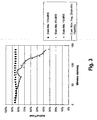
- EXAMPLE 2 THE COMPOSITION OF THE ACTUAL STAINING MIX IS OF MAJOR IMPORTANCE TO THE RESILIENCY OF THE ASSAY
- composition of staining mix was studied.
- the assay was performed essential as described in the materials and methods section.
- the culture analysed was freeze-dried Lactobacillus acidophilus strain LA-5.
- EXAMPLE 3 THE VIABILITY DETERMINED BY THE PRESENT PROTOCOL CORRELATES WELL WITH CFU COUNTS.
- the direct cell counts of membrane potential expressing cells is done according to the assay described above with duplicate sample analysis.
- the CFU analysis proceeds as follows: Freeze-dried biomass is rehydrated and diluted in 0.9% NaCl with 1.5% tryptone water, poured to 47°C melted MRS-agar and incubated 3 days at 37°C until counting of CFU. Two to six independent replicates were done.
- EXAMPLE 4 VERIFICATION OF ROBUSTNESS IN CELL ACTIVATION - REPEATED ANALYSES.
- the method is very robust, which provides a basis for very precise measurements multiple samples.
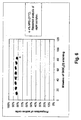
- the reproducibility of the assay is demonstrated by comparing the results from nine individual experiments each of which comprising eight different samples.
- the eight samples are stained with DiOC 2 (3) for intervals between 10-15 minutes and 80 minutes.
- the multiple measurements average 84% active cells with a standard deviation of 1.5%.
- the very low standard deviation for the analysis of differently treated samples is evidence that the cell activation is stabilized by the incubation conditions incl. 4% MRS at 20°C.
- the result is indicated in figure 6 and clearly shows a very high degree of reproducability.
- EXAMPLE 5 EXAMPLE: VERIFICATION OF ROBUSTNESS IN CELL ACTIVATION - ASSAY LINEARITY.
Landscapes
- Chemical & Material Sciences (AREA)
- Life Sciences & Earth Sciences (AREA)
- Health & Medical Sciences (AREA)
- Organic Chemistry (AREA)
- Engineering & Computer Science (AREA)
- Zoology (AREA)
- Wood Science & Technology (AREA)
- Proteomics, Peptides & Aminoacids (AREA)
- Analytical Chemistry (AREA)
- Toxicology (AREA)
- Immunology (AREA)
- Microbiology (AREA)
- Molecular Biology (AREA)
- Biophysics (AREA)
- Physics & Mathematics (AREA)
- Biotechnology (AREA)
- Biochemistry (AREA)
- Bioinformatics & Cheminformatics (AREA)
- General Engineering & Computer Science (AREA)
- General Health & Medical Sciences (AREA)
- Genetics & Genomics (AREA)
- Measuring Or Testing Involving Enzymes Or Micro-Organisms (AREA)
- Micro-Organisms Or Cultivation Processes Thereof (AREA)
Priority Applications (2)
| Application Number | Priority Date | Filing Date | Title |
|---|---|---|---|
| PL06742438T PL1891436T3 (pl) | 2005-05-27 | 2006-05-29 | Ilościowe określanie żywotności bakterii kwasu mlekowego z zastosowaniem cytometrii przepływowej |
| EP12151201A EP2447373A1 (en) | 2005-05-27 | 2006-05-29 | Quantification of the viability of lactic acid bacteria using flow cytometry |
Applications Claiming Priority (2)
| Application Number | Priority Date | Filing Date | Title |
|---|---|---|---|
| DKPA200500777 | 2005-05-27 | ||
| PCT/DK2006/000298 WO2006125446A2 (en) | 2005-05-27 | 2006-05-29 | Quantification of the viability of lactic acid bacteria using flow cytometry |
Related Child Applications (2)
| Application Number | Title | Priority Date | Filing Date |
|---|---|---|---|
| EP12150893.1 Division-Into | 2012-01-12 | ||
| EP12151201.6 Division-Into | 2012-01-16 |
Publications (2)
| Publication Number | Publication Date |
|---|---|
| EP1891436A2 EP1891436A2 (en) | 2008-02-27 |
| EP1891436B1 true EP1891436B1 (en) | 2012-07-11 |
Family
ID=37112813
Family Applications (2)
| Application Number | Title | Priority Date | Filing Date |
|---|---|---|---|
| EP12151201A Withdrawn EP2447373A1 (en) | 2005-05-27 | 2006-05-29 | Quantification of the viability of lactic acid bacteria using flow cytometry |
| EP06742438A Active EP1891436B1 (en) | 2005-05-27 | 2006-05-29 | Quantification of the viability of lactic acid bacteria using flow cytometry |
Family Applications Before (1)
| Application Number | Title | Priority Date | Filing Date |
|---|---|---|---|
| EP12151201A Withdrawn EP2447373A1 (en) | 2005-05-27 | 2006-05-29 | Quantification of the viability of lactic acid bacteria using flow cytometry |
Country Status (5)
| Country | Link |
|---|---|
| EP (2) | EP2447373A1 (da) |
| DK (1) | DK1891436T3 (da) |
| ES (1) | ES2389851T3 (da) |
| PL (1) | PL1891436T3 (da) |
| WO (1) | WO2006125446A2 (da) |
Cited By (2)
| Publication number | Priority date | Publication date | Assignee | Title |
|---|---|---|---|---|
| WO2022112551A1 (en) | 2020-11-30 | 2022-06-02 | Chr. Hansen A/S | Method for preparing bacterial products |
| WO2023031178A1 (en) | 2021-08-31 | 2023-03-09 | Chr. Hansen A/S | Method of preparing a bacterial culture |
Families Citing this family (9)
| Publication number | Priority date | Publication date | Assignee | Title |
|---|---|---|---|---|
| DK2411027T3 (da) * | 2009-03-25 | 2015-01-19 | Chr Hansen As | Anvendelse af et probiotikum til regulering af kropsvægt |
| CN102242184B (zh) * | 2011-06-16 | 2013-07-03 | 内蒙古普泽生物制品有限责任公司 | 一种四联菌片的菌种的活菌数检测方法 |
| EP2744888B1 (en) | 2011-08-18 | 2017-12-13 | Chr. Hansen A/S | Method for purifying bacterial cells |
| DK3287518T3 (da) | 2012-08-20 | 2022-02-21 | Chr Hansen As | Fremgangsmåde til frysetørring af et bakterieholdigt koncentrat |
| US10093894B2 (en) | 2012-08-20 | 2018-10-09 | Chr. Hansen A/S | Method for optimizing a process for freeze drying a bacteria-containing concentrate |
| IT201900006066A1 (it) * | 2019-04-18 | 2020-10-18 | Probiotical Spa | Uso di un metodo citofluorimetrico per valutare la stabilità e vitalità di una biomassa di cellule di batteri liofilizzate |
| CN113122469A (zh) * | 2021-02-26 | 2021-07-16 | 中国计量科学研究院 | 一种活细胞在线检测仪校准用细菌标准物质及其制备方法 |
| KR20240013767A (ko) * | 2021-05-26 | 2024-01-30 | 가부시키가이샤 야쿠르트 혼샤 | 당대사 활성을 갖는 유산균 생균의 검출 방법 |
| CN120866464A (zh) * | 2025-09-26 | 2025-10-31 | 东晓生物科技股份有限公司 | 一种基于多指标融合的高通量筛选高活乳酸菌的方法及应用 |
-
2006
- 2006-05-29 PL PL06742438T patent/PL1891436T3/pl unknown
- 2006-05-29 ES ES06742438T patent/ES2389851T3/es active Active
- 2006-05-29 DK DK06742438.2T patent/DK1891436T3/da active
- 2006-05-29 WO PCT/DK2006/000298 patent/WO2006125446A2/en not_active Ceased
- 2006-05-29 EP EP12151201A patent/EP2447373A1/en not_active Withdrawn
- 2006-05-29 EP EP06742438A patent/EP1891436B1/en active Active
Cited By (2)
| Publication number | Priority date | Publication date | Assignee | Title |
|---|---|---|---|---|
| WO2022112551A1 (en) | 2020-11-30 | 2022-06-02 | Chr. Hansen A/S | Method for preparing bacterial products |
| WO2023031178A1 (en) | 2021-08-31 | 2023-03-09 | Chr. Hansen A/S | Method of preparing a bacterial culture |
Also Published As
| Publication number | Publication date |
|---|---|
| DK1891436T3 (da) | 2012-10-01 |
| EP1891436A2 (en) | 2008-02-27 |
| WO2006125446A3 (en) | 2007-03-01 |
| ES2389851T3 (es) | 2012-11-02 |
| EP2447373A1 (en) | 2012-05-02 |
| WO2006125446A2 (en) | 2006-11-30 |
| PL1891436T3 (pl) | 2013-02-28 |
Similar Documents
| Publication | Publication Date | Title |
|---|---|---|
| Wendel | Assessing viability and stress tolerance of probiotics—a review | |
| Rault et al. | Multiparametric flow cytometry allows rapid assessment and comparison of lactic acid bacteria viability after freezing and during frozen storage | |
| Jacobsen et al. | Viability staining and flow cytometric detection of Listeria monocytogenes | |
| EP1891436B1 (en) | Quantification of the viability of lactic acid bacteria using flow cytometry | |
| JP2003052393A (ja) | 微生物の迅速な再生、成長、捕捉および検出 | |
| US20180318362A1 (en) | STABLE PROBIOTIC COMPOSITION CONTAINING Bacillus coagulans MTCC 5856 AND METHOD OF DETECTION THEREOF | |
| JPH09511150A (ja) | 微生物による抗菌性化合物の迅速な検出法 | |
| Walker et al. | Rapid enumeration of Bifidobacterium lactis in milk powders using impedance | |
| WO2021005813A1 (ja) | 乳酸菌選択分離培地 | |
| US12509713B2 (en) | Use of a cytofluorometry method for evaluating the stability and viability of a biomass of freeze-dried bacterial cells | |
| Bruetschy et al. | Use of flow cytometry in oenology to analyse yeasts | |
| Evans | A note on two uses for impedimetry in brewing microbiology | |
| Steneryd | Freeze‐dried mixed cultures as reference samples in quantitative and qualitative microbiological examinations of food | |
| KR20240013767A (ko) | 당대사 활성을 갖는 유산균 생균의 검출 방법 | |
| Min et al. | Viability assessment of Bifidobacterium longum ATCC 15707 on non-dairy foods using quantitative fluorescence microscopy | |
| Zheng et al. | The use of a simple flow cytometry method for rapid detection of spores in probiotic Bacillus licheniformis-containing tablets | |
| Janaszek et al. | The use of the firefly bioluminescent reaction for the rapid detection and counting of mycobacterium BCG | |
| EP2255197B1 (fr) | Procede de detection et/ou de quantification et/ou d'identification in vitro de bacteries dans un materiau biologique | |
| CN112813134B (zh) | 显色培养基、制备方法及菌株检测方法 | |
| JP7535498B2 (ja) | ジアミノピメリン酸を含む細菌の定量方法 | |
| Sielatycka et al. | Application of flow cytometry and measurement of water activity to evaluate the stability of probiotic products | |
| Gawai et al. | Activity And Purity Tests Of Starter Cultures | |
| JP2019165704A (ja) | 生菌数の測定方法 | |
| Schmacht et al. | Usage of various process analytical technologies (PAT) for evaluation of Lactobacillus acidophilus fermentation | |
| CN116606738A (zh) | 一种生物气溶胶发生用标准物质及其制备方法与定值方法 |
Legal Events
| Date | Code | Title | Description |
|---|---|---|---|
| PUAI | Public reference made under article 153(3) epc to a published international application that has entered the european phase |
Free format text: ORIGINAL CODE: 0009012 |
|
| 17P | Request for examination filed |
Effective date: 20071227 |
|
| AK | Designated contracting states |
Kind code of ref document: A2 Designated state(s): AT BE BG CH CY CZ DE DK EE ES FI FR GB GR HU IE IS IT LI LT LU LV MC NL PL PT RO SE SI SK TR |
|
| DAX | Request for extension of the european patent (deleted) | ||
| 17Q | First examination report despatched |
Effective date: 20100104 |
|
| GRAP | Despatch of communication of intention to grant a patent |
Free format text: ORIGINAL CODE: EPIDOSNIGR1 |
|
| RIC1 | Information provided on ipc code assigned before grant |
Ipc: G01N 33/50 20060101AFI20110906BHEP Ipc: C12Q 1/06 20060101ALI20110906BHEP |
|
| GRAS | Grant fee paid |
Free format text: ORIGINAL CODE: EPIDOSNIGR3 |
|
| GRAA | (expected) grant |
Free format text: ORIGINAL CODE: 0009210 |
|
| AK | Designated contracting states |
Kind code of ref document: B1 Designated state(s): AT BE BG CH CY CZ DE DK EE ES FI FR GB GR HU IE IS IT LI LT LU LV MC NL PL PT RO SE SI SK TR |
|
| REG | Reference to a national code |
Ref country code: GB Ref legal event code: FG4D |
|
| REG | Reference to a national code |
Ref country code: CH Ref legal event code: EP |
|
| REG | Reference to a national code |
Ref country code: AT Ref legal event code: REF Ref document number: 566383 Country of ref document: AT Kind code of ref document: T Effective date: 20120715 |
|
| REG | Reference to a national code |
Ref country code: IE Ref legal event code: FG4D |
|
| REG | Reference to a national code |
Ref country code: DE Ref legal event code: R096 Ref document number: 602006030701 Country of ref document: DE Effective date: 20120906 |
|
| REG | Reference to a national code |
Ref country code: DK Ref legal event code: T3 |
|
| REG | Reference to a national code |
Ref country code: NL Ref legal event code: T3 |
|
| REG | Reference to a national code |
Ref country code: ES Ref legal event code: FG2A Ref document number: 2389851 Country of ref document: ES Kind code of ref document: T3 Effective date: 20121102 |
|
| REG | Reference to a national code |
Ref country code: AT Ref legal event code: MK05 Ref document number: 566383 Country of ref document: AT Kind code of ref document: T Effective date: 20120711 |
|
| REG | Reference to a national code |
Ref country code: LT Ref legal event code: MG4D Effective date: 20120711 |
|
| PG25 | Lapsed in a contracting state [announced via postgrant information from national office to epo] |
Ref country code: IS Free format text: LAPSE BECAUSE OF FAILURE TO SUBMIT A TRANSLATION OF THE DESCRIPTION OR TO PAY THE FEE WITHIN THE PRESCRIBED TIME-LIMIT Effective date: 20121111 Ref country code: FI Free format text: LAPSE BECAUSE OF FAILURE TO SUBMIT A TRANSLATION OF THE DESCRIPTION OR TO PAY THE FEE WITHIN THE PRESCRIBED TIME-LIMIT Effective date: 20120711 Ref country code: CY Free format text: LAPSE BECAUSE OF FAILURE TO SUBMIT A TRANSLATION OF THE DESCRIPTION OR TO PAY THE FEE WITHIN THE PRESCRIBED TIME-LIMIT Effective date: 20120711 Ref country code: LT Free format text: LAPSE BECAUSE OF FAILURE TO SUBMIT A TRANSLATION OF THE DESCRIPTION OR TO PAY THE FEE WITHIN THE PRESCRIBED TIME-LIMIT Effective date: 20120711 Ref country code: AT Free format text: LAPSE BECAUSE OF FAILURE TO SUBMIT A TRANSLATION OF THE DESCRIPTION OR TO PAY THE FEE WITHIN THE PRESCRIBED TIME-LIMIT Effective date: 20120711 Ref country code: BE Free format text: LAPSE BECAUSE OF FAILURE TO SUBMIT A TRANSLATION OF THE DESCRIPTION OR TO PAY THE FEE WITHIN THE PRESCRIBED TIME-LIMIT Effective date: 20120711 |
|
| PG25 | Lapsed in a contracting state [announced via postgrant information from national office to epo] |
Ref country code: PT Free format text: LAPSE BECAUSE OF FAILURE TO SUBMIT A TRANSLATION OF THE DESCRIPTION OR TO PAY THE FEE WITHIN THE PRESCRIBED TIME-LIMIT Effective date: 20121112 Ref country code: LV Free format text: LAPSE BECAUSE OF FAILURE TO SUBMIT A TRANSLATION OF THE DESCRIPTION OR TO PAY THE FEE WITHIN THE PRESCRIBED TIME-LIMIT Effective date: 20120711 Ref country code: GR Free format text: LAPSE BECAUSE OF FAILURE TO SUBMIT A TRANSLATION OF THE DESCRIPTION OR TO PAY THE FEE WITHIN THE PRESCRIBED TIME-LIMIT Effective date: 20121012 Ref country code: SI Free format text: LAPSE BECAUSE OF FAILURE TO SUBMIT A TRANSLATION OF THE DESCRIPTION OR TO PAY THE FEE WITHIN THE PRESCRIBED TIME-LIMIT Effective date: 20120711 Ref country code: SE Free format text: LAPSE BECAUSE OF FAILURE TO SUBMIT A TRANSLATION OF THE DESCRIPTION OR TO PAY THE FEE WITHIN THE PRESCRIBED TIME-LIMIT Effective date: 20120711 |
|
| REG | Reference to a national code |
Ref country code: PL Ref legal event code: T3 |
|
| PLBI | Opposition filed |
Free format text: ORIGINAL CODE: 0009260 |
|
| PG25 | Lapsed in a contracting state [announced via postgrant information from national office to epo] |
Ref country code: EE Free format text: LAPSE BECAUSE OF FAILURE TO SUBMIT A TRANSLATION OF THE DESCRIPTION OR TO PAY THE FEE WITHIN THE PRESCRIBED TIME-LIMIT Effective date: 20120711 Ref country code: RO Free format text: LAPSE BECAUSE OF FAILURE TO SUBMIT A TRANSLATION OF THE DESCRIPTION OR TO PAY THE FEE WITHIN THE PRESCRIBED TIME-LIMIT Effective date: 20120711 |
|
| 26 | Opposition filed |
Opponent name: DE CLERCQ, BRANTS & PARTNERS CV Effective date: 20130410 |
|
| PLAX | Notice of opposition and request to file observation + time limit sent |
Free format text: ORIGINAL CODE: EPIDOSNOBS2 |
|
| PG25 | Lapsed in a contracting state [announced via postgrant information from national office to epo] |
Ref country code: SK Free format text: LAPSE BECAUSE OF FAILURE TO SUBMIT A TRANSLATION OF THE DESCRIPTION OR TO PAY THE FEE WITHIN THE PRESCRIBED TIME-LIMIT Effective date: 20120711 |
|
| REG | Reference to a national code |
Ref country code: DE Ref legal event code: R026 Ref document number: 602006030701 Country of ref document: DE Effective date: 20130410 |
|
| PG25 | Lapsed in a contracting state [announced via postgrant information from national office to epo] |
Ref country code: BG Free format text: LAPSE BECAUSE OF FAILURE TO SUBMIT A TRANSLATION OF THE DESCRIPTION OR TO PAY THE FEE WITHIN THE PRESCRIBED TIME-LIMIT Effective date: 20121011 |
|
| PLAF | Information modified related to communication of a notice of opposition and request to file observations + time limit |
Free format text: ORIGINAL CODE: EPIDOSCOBS2 |
|
| PLBB | Reply of patent proprietor to notice(s) of opposition received |
Free format text: ORIGINAL CODE: EPIDOSNOBS3 |
|
| PG25 | Lapsed in a contracting state [announced via postgrant information from national office to epo] |
Ref country code: MC Free format text: LAPSE BECAUSE OF FAILURE TO SUBMIT A TRANSLATION OF THE DESCRIPTION OR TO PAY THE FEE WITHIN THE PRESCRIBED TIME-LIMIT Effective date: 20120711 |
|
| REG | Reference to a national code |
Ref country code: CH Ref legal event code: PL |
|
| PG25 | Lapsed in a contracting state [announced via postgrant information from national office to epo] |
Ref country code: CH Free format text: LAPSE BECAUSE OF NON-PAYMENT OF DUE FEES Effective date: 20130531 Ref country code: LI Free format text: LAPSE BECAUSE OF NON-PAYMENT OF DUE FEES Effective date: 20130531 |
|
| REG | Reference to a national code |
Ref country code: IE Ref legal event code: MM4A |
|
| PG25 | Lapsed in a contracting state [announced via postgrant information from national office to epo] |
Ref country code: IE Free format text: LAPSE BECAUSE OF NON-PAYMENT OF DUE FEES Effective date: 20130529 |
|
| REG | Reference to a national code |
Ref country code: DE Ref legal event code: R100 Ref document number: 602006030701 Country of ref document: DE |
|
| PLCK | Communication despatched that opposition was rejected |
Free format text: ORIGINAL CODE: EPIDOSNREJ1 |
|
| PLBN | Opposition rejected |
Free format text: ORIGINAL CODE: 0009273 |
|
| STAA | Information on the status of an ep patent application or granted ep patent |
Free format text: STATUS: OPPOSITION REJECTED |
|
| 27O | Opposition rejected |
Effective date: 20141118 |
|
| REG | Reference to a national code |
Ref country code: DE Ref legal event code: R100 Ref document number: 602006030701 Country of ref document: DE Effective date: 20141118 |
|
| PG25 | Lapsed in a contracting state [announced via postgrant information from national office to epo] |
Ref country code: LU Free format text: LAPSE BECAUSE OF NON-PAYMENT OF DUE FEES Effective date: 20130529 Ref country code: HU Free format text: LAPSE BECAUSE OF FAILURE TO SUBMIT A TRANSLATION OF THE DESCRIPTION OR TO PAY THE FEE WITHIN THE PRESCRIBED TIME-LIMIT; INVALID AB INITIO Effective date: 20060529 |
|
| REG | Reference to a national code |
Ref country code: FR Ref legal event code: PLFP Year of fee payment: 11 |
|
| REG | Reference to a national code |
Ref country code: FR Ref legal event code: PLFP Year of fee payment: 12 |
|
| REG | Reference to a national code |
Ref country code: FR Ref legal event code: PLFP Year of fee payment: 13 |
|
| REG | Reference to a national code |
Ref country code: FR Ref legal event code: PLFP Year of fee payment: 18 |
|
| PGFP | Annual fee paid to national office [announced via postgrant information from national office to epo] |
Ref country code: PL Payment date: 20250314 Year of fee payment: 20 |
|
| PGFP | Annual fee paid to national office [announced via postgrant information from national office to epo] |
Ref country code: NL Payment date: 20250409 Year of fee payment: 20 |
|
| PGFP | Annual fee paid to national office [announced via postgrant information from national office to epo] |
Ref country code: DE Payment date: 20250402 Year of fee payment: 20 |
|
| PGFP | Annual fee paid to national office [announced via postgrant information from national office to epo] |
Ref country code: GB Payment date: 20250401 Year of fee payment: 20 Ref country code: ES Payment date: 20250606 Year of fee payment: 20 Ref country code: DK Payment date: 20250516 Year of fee payment: 20 |
|
| PGFP | Annual fee paid to national office [announced via postgrant information from national office to epo] |
Ref country code: IT Payment date: 20250422 Year of fee payment: 20 |
|
| PGFP | Annual fee paid to national office [announced via postgrant information from national office to epo] |
Ref country code: FR Payment date: 20250401 Year of fee payment: 20 |
|
| PGFP | Annual fee paid to national office [announced via postgrant information from national office to epo] |
Ref country code: TR Payment date: 20250516 Year of fee payment: 20 |
|
| PGFP | Annual fee paid to national office [announced via postgrant information from national office to epo] |
Ref country code: CZ Payment date: 20250521 Year of fee payment: 20 |