EP1895759A2 - Chargement de document en papier - Google Patents
Chargement de document en papier Download PDFInfo
- Publication number
- EP1895759A2 EP1895759A2 EP20070253388 EP07253388A EP1895759A2 EP 1895759 A2 EP1895759 A2 EP 1895759A2 EP 20070253388 EP20070253388 EP 20070253388 EP 07253388 A EP07253388 A EP 07253388A EP 1895759 A2 EP1895759 A2 EP 1895759A2
- Authority
- EP
- European Patent Office
- Prior art keywords
- document
- hash
- machine readable
- locations
- scanned
- Prior art date
- Legal status (The legal status is an assumption and is not a legal conclusion. Google has not performed a legal analysis and makes no representation as to the accuracy of the status listed.)
- Granted
Links
Images





Classifications
-
- H—ELECTRICITY
- H04—ELECTRIC COMMUNICATION TECHNIQUE
- H04N—PICTORIAL COMMUNICATION, e.g. TELEVISION
- H04N1/00—Scanning, transmission or reproduction of documents or the like, e.g. facsimile transmission; Details thereof
- H04N1/32—Circuits or arrangements for control or supervision between transmitter and receiver or between image input and image output device, e.g. between a still-image camera and its memory or between a still-image camera and a printer device
- H04N1/32101—Display, printing, storage or transmission of additional information, e.g. ID code, date and time or title
-
- H—ELECTRICITY
- H04—ELECTRIC COMMUNICATION TECHNIQUE
- H04N—PICTORIAL COMMUNICATION, e.g. TELEVISION
- H04N2201/00—Indexing scheme relating to scanning, transmission or reproduction of documents or the like, and to details thereof
- H04N2201/32—Circuits or arrangements for control or supervision between transmitter and receiver or between image input and image output device, e.g. between a still-image camera and its memory or between a still-image camera and a printer device
- H04N2201/3201—Display, printing, storage or transmission of additional information, e.g. ID code, date and time or title
- H04N2201/3269—Display, printing, storage or transmission of additional information, e.g. ID code, date and time or title of machine readable codes or marks, e.g. bar codes or glyphs
-
- H—ELECTRICITY
- H04—ELECTRIC COMMUNICATION TECHNIQUE
- H04N—PICTORIAL COMMUNICATION, e.g. TELEVISION
- H04N2201/00—Indexing scheme relating to scanning, transmission or reproduction of documents or the like, and to details thereof
- H04N2201/32—Circuits or arrangements for control or supervision between transmitter and receiver or between image input and image output device, e.g. between a still-image camera and its memory or between a still-image camera and a printer device
- H04N2201/3201—Display, printing, storage or transmission of additional information, e.g. ID code, date and time or title
- H04N2201/3269—Display, printing, storage or transmission of additional information, e.g. ID code, date and time or title of machine readable codes or marks, e.g. bar codes or glyphs
- H04N2201/327—Display, printing, storage or transmission of additional information, e.g. ID code, date and time or title of machine readable codes or marks, e.g. bar codes or glyphs which are undetectable to the naked eye, e.g. embedded codes
Definitions
- the present invention relates to the field of digital object distribution; more particularly, the present invention relates to processing documents to include hash marked pages or to process documents that have been previously hash marked.
- Machine readable codes have been applied to documents in the past as a way to manage the documents.
- bar codes are used as identifiers for document retrieval.
- this technique is susceptible to a sort of "transfer attack” where the machine readable code is removed from one document and pasted onto another. See U.S. Patent No. 5,754,308, issued to Lopresti et al.
- a machine readable code must always include some form of identifier, which is normally a numeric value or bit sequence of sufficient length to identify a document uniquely among many such documents. Choosing an appropriate identifier is a complex matter, and many techniques have been developed over many years. However, these techniques assume that the document is either being created from an electronic original, or chosen randomly, or chosen according to some counting scheme or complex sequencing algorithm. This can be useful in many cases, but does not relate the contents of a paper document to the chosen identifier.
- a method and apparatus are disclosed herein for paper-based document logging.
- the method comprises scanning bits of a document, generating a cryptographic hash, converting the cryptographic hash into a machine readable code, and rewriting the document with the code contained thereon.
- these processes include storing pages in a database and checking for known marks.
- these page images are associated with information in a set of metadata entries that corresponds to a digital object (e.g., a document). This set is referred to herein as a document log.
- a document log has log entries of metadata.
- the metadata may comprise short text messages, data in binary format, and/or optional links entered by one or more people or automated systems.
- the document log may be distributed. In one embodiment, the document log is distributed as XML.
- a technique is also disclosed for choosing an identifier which is unique among a large set of documents, and yet can be verified against other paper copies by visual inspection.
- the present invention also relates to apparatus for performing the operations herein.
- This apparatus may be specially constructed for the required purposes, or it may comprise a general purpose computer selectively activated or reconfigured by a computer program stored in the computer.
- a computer program may be stored in a computer readable storage medium, such as, but is not limited to, any type of disk including floppy disks, optical disks, CD-ROMs, and magnetic-optical disks, read-only memories (ROMs), random access memories (RAMs), EPROMs, EEPROMs, magnetic or optical cards, or any type of media suitable for storing electronic instructions, and each coupled to a computer system bus.
- a machine-readable medium includes any mechanism for storing or transmitting information in a form readable by a machine (e.g., a computer).
- a machine-readable medium includes read only memory ("ROM”); random access memory (“RAM”); magnetic disk storage media; optical storage media; flash memory devices; electrical, optical, acoustical or other form of propagated signals (e.g., carrier waves, infrared signals, digital signals, etc.); etc.
- a log (e.g., document log) consists of a digital object along with one or more sets of metadata.
- the digital objects can be represented as a sequence of bytes.
- the digital object may be a document and the metadata may correspond to a set of comments associated with the document.
- Comments which generally consist of text strings, may be documents themselves and could consist of arbitrary byte strings. Comments may be simple text entries that might refer to other documents and can be created by anyone or anything.
- a set of comments might represent feedback from different reviewers.
- the set of comments might include stories about the event depicted in the photograph such as a birthday party.
- the set of comments might include references to individual appointments or visits for the patient.
- document logs are represented using a simple XML format that specifies the "anchoring" document and list of entries.
- a format such as the simple syndication (RSS) format could easily be adapted to serve the same purpose.
- RSS simple syndication
- an exchange mechanism is used to enable two nodes to exchange a list of entries.
- the nodes use the HTTP GET methods to retrieve the XML file corresponding to a document log and the HTTP POST method to send an XML file or string with entries to a node.
- GET will refer to the action of retrieving content associated with a locator, whether used as part of HTTP or not.
- other exchange mechanisms including simple file copy operations or even shared file systems may be used.
- a node may include a user interface to enable an individual to view and add to the document log entries. Many user interfaces are possible for viewing and adding to document logs.
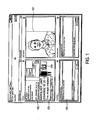
- An exemplary user interface is shown in Figure 1. Referring to Figure 1, a representation of the anchoring document 101 1 on the right hand side and document log entries 102 on the left-hand side. On the bottom of the left-hand side is a text box 103 that allows the user to type in a new entry.
- Figure 1 shows a prototype user interface for viewing of a document log.
- the document is an image (e.g., corresponding to a patient) and the entries correspond to information about that patient. These entries include links to other documents, such as appointments or procedure results, and their associated logs.
- the user interface of Figure 1 facilitates a hypothetical use for tracking patient information.
- a document On the right side of Figure 1 is a document, in this case a picture of the patient.
- Log entries 102 are entries associated with the patient. Some of these entries are manually typed in by office staff, physicians, or the patient themselves, and other entries are created automatically by related systems, such as a scheduling system or radiologic imaging machines. For each entry in such a document log, a link to another document may be included in the entry.
- a small thumbnail 104 of the related document is shown to the right of that entry.
- the "active" comment underneath the cursor is enlarged with a fisheye effect to enable rapid browsing of many comments within a single list.
- entry 105 underneath the mouse cursor is enlarged so as to be easily visible.
- the highlighted entry may have been created automatically by a machine in a manner well known in the art.
- the identifier for the document log shown might have been entered into the machine by use of a bar code or other mechanism on a printed version of this document log.
- An item that was automatically entered into the original document log includes a link to the document log containing the imaging results created automatically by the imaging machine. Clicking on any of entries 102 takes the user to the document log associated with that entry.
- Figure 2 shows the view of a log associated with the radiology image that was referenced by the highlighted comment in Figure 1. Referring to Figure 2, a document that was produced automatically by an x-ray machine and the comments that have been associated with that document are shown.
- the log associated with the referenced document will have an entry pointing back to the original log containing the link, but in many cases it will not.
- Navigation tools at the top of this prototype viewer provide forward and backward functions similar to a standard web browser.
- document types may include word processing files, flash paper, Excel files, text documents, or any other type of data.
- word processing files may include word processing files, flash paper, Excel files, text documents, or any other type of data.
- flash paper In the current system, any single file (or individually addressable unit) can be used as a "document.”
- a document log may represent a virtual space or (file) hierarchy.
- the origin of the space - a "root" node - is defined by the document itself.
- Directory names could be used specify locations of the virtual space.
- the storage associated with this representation could be a standard directory structure, for example, A as the name of a directory and C as the name of a file containing the comment on a.
- Other storage mechanisms such as a database using the hash values as primary keys, would work equally well and any node may use one or more such storage mechanisms.
- a confusing case in which the value of a is itself a string which can be interpreted as a path or a uniform resource locator (URL). If a 'http://foo.com/path/to/file.ext' then it may be ambiguous whether c is a comment about the location, is a comment about a web page whose contents might change, or a comment about the contents of that web page at some particular point in time. In the latter case, it is safer to use the hash of the contents (if available) as the anchoring document rather than the hash of the reference string as the anchor.
- a is a string and a valid URL
- individual nodes may choose to combine comments on the string as well as comments on the "known" contents that have been obtained from that URL.
- the document log of a might include an entry for each of the contents that has been available from a along with the pointers to the document log associated with this particular contents.
- a document is an immutable object identical to a particular sequence of bytes, and the hash value of a document is used as a reference to that document. Since different versions of a document have different hash values, the different versions are considered to be different documents. (By convention if D2 is a new version of document D1, the log of document D 1 will have an entry pointing to D2 and the log of D2 will have an entry pointing back to D1.)
- Each element of A u corresponds to a location which returns the digital object, that is a string representation of a.
- a new "virtual" SHA1 protocol may be defined as follows:
- GET(SHA1 : //host.name/A/B/C) if GET(SHA1 : //host.name/A/B/C) succeeds, it returns some content as a string of bytes. Unlike other protocols, this content is c and therefore is not just identical for any host, but is also be immutable. In other words, it is an error if SHA1(GET(SHA1 : //.../C)) does not equal c . Thus, if a node has a copy of c , then it does not need to perform any communications to return GET(SHA1://.../C) (assume that clients compute SHA1(c) and store the results and any lookup table using C as the key).
- GET(SHA1 : //host.com/A/) returns from host.com a listing of comments on document a (a standard XML format).
- SHA1://foo.com/A/ refers to a listing from host foo.com. /A/ is a reference to the locally known comments on a.
- SHA1://host.com/A/C/ refers to a listing of comments on comment a from host.com, etc.
- h/ or h.xml or similar standard variations on h can be used by the client as a request to the server for list of comments (e.g., XML file), which can be used to compute C (e.g., if c is one of the entries in that file).
- list of comments e.g., XML file
- C e.g., if c is one of the entries in that file.
- Clients may also maintain a list mapping A to u1 and u2, where u1 is a set of locations from which the client has obtained a (or information based on a) and u2 are locations containing comments on a (e.g., XML files).
- u1 is a set of locations from which the client has obtained a (or information based on a)
- u2 are locations containing comments on a (e.g., XML files).
- the client may simply look up u2, retrieve the associated set(s) of comments, and attempt to compute C.
- a client might maintain an internal table with the following entries: SHA1 (R) HTTP: (r u ) Notes c2c0bfe479dd http://www.rii.ricoh.com/ The "original" URL. (Note that the hash value has been truncated here to conserve space) /cache/c2c0bfe479dd/file.html a local copy of the document contents /c2c0bfe479dd/ http://www.rii.ricoh.com/rss.xml A conventional place to find comments associated with a particular web site. /cache/c2c0bfe479dd/rss.xml Local listing of known entries on this document.
- the hash values do not need to be of the same length.
- the more bits of the hash value that are specified the more "secure" the value is. Therefore, in cases where an encryption key, K, is used to encrypt information in documents and/or their log entries as discussed herein as being based on the content and an identifier, I, based on the content, K and I could be different portions of the output of the same algorithm or they could be the output of different algorithms. That is, although I is the hash of x and K is the hash of I. Equally well, I could be the first 80 bits and K could be bits 81-160 of the same hash computation.
- a node or server which stores, processes, presents, or adds to a document log for A to actually have access to the content a.
- a server for example, cache.com, that actually does have a cache or copy of the contents of documents, it can provide those contents in response to requests for the document, such as http://cache.com/A, and provide the list log entries in response to http://cache.com/A/.
- the path component of the HTTP: and SHA1: URLs that refer to the same document could be identical.
- an individual client keeps a local cache of entries for each document. These may be stored in a hash table.
- the local cache may be any memory space or storage location.
- the entry for each hash consists of 2 parts. The first part is either a string containing the actual content itself and/or one or more pointers to the actual content (if available), and the second part is a list of hash values that correspond to comments on this document.
- the client can be configured to check one or more places for lists of entries.
- a default location is a rendezvous point, or synchronizing server, which might be checked periodically, such as, for example, whenever the user views a document.
- entries e.g., the result of a GET operation
- those entries are added to the local cache (consistency checks may be done to ensure that the content is equal to the hash value) and the local list of entries is updated to reflect the new entries.
- Information such as the sequence number obtained from a synchronizing server may be used to order this list for presentation.
- nodes in one embodiment of the system of exchange are symmetric.
- the only difference between a client and server is that the client is defined as the machine that initiates communication - using GET to retrieve an entry listing or POST to send a listing.
- client is defined as the machine that initiates communication - using GET to retrieve an entry listing or POST to send a listing.
- different nodes in particular ones that act as servers) might also differ in their configuration, most especially in whether or not will accept entries from particular nodes (clients).
- Nodes might keep track of their communication with other nodes (either other clients or servers) and send only "new" entries to the other node (either via a POST or in response to a GET).
- FIG. 3 shows an exemplary sketch of a XML file that represents the log associated with document A.
- each entry has a number of attributes that may be assigned by the originator of the entry or another node.
- the SEQ attribute is assigned by the rendezvous point server.
- This XML document itself would be returned in response to a query for the document log associated with A, by convention this query takes the form //rp.com/A/ where "rp.com" is the host name for the rendezvous point. (Other servers/hosts would return their own versions of this listing.
- sequence numbers provided by the rendezvous point are designated as "canonical."
- the SRC tag is analogous to the SRC attribute of the HTML IMG tag and specifies the source of a thumbnail image representing the referenced document.
- RSS really simple syndication
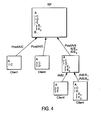
- Figure 4 is a diagram depicting the configuration of clients that submit entries to the rendezvous point for a particular document. Referring to Figure 4, the overall diagram showing submission of entries from clients to the rendezvous point. Note that some clients may POST entries directly to the rendezvous point, while others may go through intermediary nodes. Since entries are referenced and stored by their hash values, any node can exchange entries directly with any other node without worry of a conflict. Individual nodes can also assign their own ordering to the sequence of entries. The ordering provided by the rendezvous point is, by convention, treated as the canonical ordering. Note that the original creator of a document might specify a rendezvous point or "root" for the log entries associated with that document by specifying the root or rp attribute of the initial i doc .. ⁇ element.
- a document log may be created by anyone, not necessarily just the creator of the document. (The creator of a document does have the first opportunity to register an initial log entry on the document.) Other nodes may or may not choose to use the root attributes specified in the document element. Document entries may be made while off-line and later automatically synchronize those entries with one or more servers.
- the order of entries seen by the rendezvous point may differ from the actual creation order (especially if some clients are off-line at creation time). Also the intermediate nodes might aggregate entries from multiple other nodes and submit.
- sequence numbers are assigned in the order in which they are received.
- Separate configuration and confirmation of user identity can be handled in any one of several ways. These include username and password verification, IP address testing, session identifiers, and the like.
- the user might have to prove (through cryptographic methods) that they actually know the encryption key A (and/or the content a).
- a machine readable code is placed onto the paper where the contents of the code are intimately connected to the document content but still useful as a document hash. More specifically, in one embodiment, a technique to overcome the problem identified above includes producing a document hash by scanning the bits of a document to produce a cryptographic hash, converting the cryptographic hash into to a machine readable code, and then rewriting the document with the code inserted therein. For purposed herein, the machine readable code a "hash mark".
- the machine readable code may be placed or inserted in a number of locations in a document. Since pages can be marked virtually anywhere, in one embodiment, applying an additional mark is performed in a way that avoids overwriting existing marks if possible.
- the machine readable code is suitably sized to allow reliable reading at a resolution appropriate to the envisioned use. For any chosen hashing algorithm, resolution, and code symbol technology, a fixed size rectangle that can contain the code is computed.
- Some areas are statistically far more likely than others to contain hash marked areas. These areas near the margins and corners, for example, are more often blank than the center of the page in typical business documents. Aesthetically, the center is also a poor choice of location because it will be distracting to a reader. Any of numerous methods and criteria might be employed, but the end result will be a list of choices, in priority order, where a hash mark can best be placed on a page. For purposes herein, this list is referred to as the loclist. For example, a simple approach is to choose a list of rectangles in the corner margin areas of a page, where most ordinary documents leave white space.
- a process to create a hash marked page includes examining each rectangle of the loclist in order. If a machine readable code is located there, and appears to be of the correct sort, the document is assumed to be already marked and process ends. If no marks are found, all pages of the document are scanned and a cryptographic hash of the document contents is computed. The document contents and computed hash are stored in a memory (e.g., database) for later verification. The process then encodes the hash results in the chosen machine readable (e.g., a barcode), thereby creating a hash mark. A copy of the hash mark is placed into the document image, at the first open position available in the image, as specified by the loclist.
- a machine readable code e.g., a barcode
- the document image is returned to the user, as a printed page, image file, fax, or some other representation.
- the chosen area for marking might not be blank, but instead contain an area that can be readily marked by steganographic means.
- Such techniques are well known in the art, and any of several techniques could be applied.
- FIG. 5 is a flow diagram of one embodiment of a process for creating hash marked pages.
- the process is performed by processing logic that may comprise hardware (circuitry, dedicated logic, etc.), software (such as is run on a general purpose computer system or a dedicated machine), or a combination of both.
- processing logic begins by processing logic scanning bits of a document (processing block 501). Based on the scanned bits, processing logic generates a cryptographic hash (processing block 502).
- processing logic stores the scanned bits corresponding to content of the document and the hash in a memory (e.g., a database) (processing block 503).
- a memory e.g., a database
- processing logic converts the cryptographic hash into a machine readable code (processing block 504).
- processing logic also selects one or more locations that may be used to place the code on a subsequently generated document (processing block 505).
- the code is always placed at the same location in all documents.
- multiple locations may be used.
- the locations are selected based on one or more features such as, for example, but not limited to, the document size, the probability of ordinary documents having content that fills all or a portion of that area, and one or more aesthetic placement considerations.
- processing logic rewrites the document with the code contained thereon (processing block 506).
- rewriting the document with the code comprises placing the mark over a blank area on the document.
- processing logic prior to scanning all of the pages of a document, examines the document to determine if it already contains a machine readable code that specifies a cryptographic has associated with a document log.
- the examination of the document may include examining locations of the document specified in a list, where the locations are the most likely, or only, places on the document where such a code may appear. Note that if a code is found, processing logic does not scan bits of the document.
- Figure 6 is a block diagram of one embodiment of such a system.
- the system comprises a document scanner 601 and a printer 602 coupled to a computer 603.
- Computer 603 is also coupled to a document log database (or other memory) 604.
- the entire document may be analyzed.
- the loclist list of rectangles is scanned in preferred order to locate a hash mark. If a mark is found that is appropriate (contains a cryptographic hash), it is used. The contents of the mark are used as the identifier for the correct document log. With access to the original scan, the document scan can be checked against the contents of a memory (e.g., a database) to be sure that the document is pointing to the correct log.
- a memory e.g., a database
- FIG. 7 is a flow diagram of one embodiment of a process for identifying a document log by reading a document page having a hash mark thereon.
- the process is performed by processing logic that may comprise hardware (circuitry, dedicated logic, etc.), software (such as is run on a general purpose computer system or a dedicated machine), or a combination of both.
- the process begins by processing logic scanning bits of a document (processing block 701).
- the scanned bits form a document image.
- Processing logic examines the document image at one or more locations to locate the machine readable code (processing block 702).
- the locations are specified in a list of potential locations.
- the list of potential locations is scanned in a predetermined order.
- Processing logic detects the machine readable code in scanned bits of the document (processing logic 703) and obtains the cryptographic hash from the machine readable code (processing block 704).
- processing logic uses the cryptographic hash obtained from the machine readable code as an identifier, gains access to a document log (processing logic 305).
- processing logic verifies scanned bits against bits stored in a database to ensure that the document is pointing to the document log (processing logic 706).
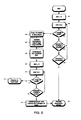
- FIG 8 is a more detailed flow diagram of one embodiment of a process for identifying a document log by reading a document page having a hash mark thereon.
- the process is performed by processing logic that may comprise hardware (circuitry, dedicated logic, etc.), software (such as is run on a general purpose computer system or a dedicated machine), or a combination of both.
- processing logic begins by processing logic initially sets an index variable n equal to zero (processing block 801). The process continues with processing logic incrementing the index n by 1 (processing block 802) and testing whether n is greater than the length of a list, loclist, containing potential locations in a document where a machine readable code containing a cryptographic hash may be contained (processing block 803). If not, processing logic tests whether there is a machine readable code (e.g., a barcode) is contained in the rectangle n of the location list, the loclist. If not, processing transitions to processing block 802 where processing continues. If so, processing logic tests whether the machine readable code is a log identifier (processing block 805). If not, processing transitions to processing block 802 where processing continues. If so, processing logic transitions to processing block 815 where processing ends (as the document is already marked).
- processing block 803 processing logic incrementing the index n by 1
- processing logic tests whether there is a machine readable code (e.g., a bar
- processing transitions to processing block 816 where processing logic scans all the pages of the document. After scanning, processing logic computes a cryptographic has of the page image contents (processing block 807) and creates a log ID from the computed hash (processing block 808).
- processing logic resets the index n to zero (processing block 809) and increments the index n by one (processing block 810). Thereafter, processing logic tests whether index n is greater than the length of the loclist (processing block 811). If it is, the process ends and no mark is made to the document (processing block 812). If not, processing logic tests whether the rectangle n of the loclist is empty (processing block 813). If not, processing transitions to processing block 810 and the process continues from there. If so, processing logic reprints the document and writes the machine readable code into rectangle n of the loclist (processing block 814) and the process finishes (processing block 815).
- a document arrives into an organization through multiple paths. If so, there may be several "unmarked" versions of a document that arrive in different places at different times. In one embodiment, these documents are marked with identical hash marks. If a document image has been previously stored, and a hash mark associated with it, it may be tractable to quickly find the correct document hash mark in an image database by comparing the document images. For example, the list of documents may be narrowed by simple classifiers such as, for example, but not limited to, number of columns, presence of header and footer, optical character recognition (OCR) term frequencies, and so on. Once the list of candidate documents in the database is suitably small, an exhaustive comparison based on scaling, skew detection, and so on might prove equivalence beyond reasonable doubt, and allow the same hash mark to be used with respect to the new unmarked paper sheet.
- simple classifiers such as, for example, but not limited to, number of columns, presence of header and footer, optical character recognition (OCR) term frequencies, and so on.
- the above-referenced processes for creating hash marked pages are modified to perform other functions if no mark is found. That is, the process includes scanning all the pages of a document if not marked and found and then checking the document image against a database of known marks. If a match is present, the associated cryptographic hash of the matching document is used. Otherwise, a cryptographic of the document image representation is computed. As above, if not already known, the document contents and computed hash are stored in memory (e.g., a database) for later verification.
- Figure 9 is a flow diagram of a process for associating a document with one or more documents that have previously been scanned and had cryptographic hash.
- the process is performed by logic that may comprise hardware (circuitry, dedicated logic, etc.), software (such as is run on a general purpose computer system or a dedicated machine), or a combination of both.
- processing logic begins by processing logic examining identified locations in a list containing one or more locations in the document at which a machine readable code containing a cryptographic hash may be located (processing block 901). Processing logic then scans bits of the document to create a document if the machine readable code is not found at the one or more locations (processing block 902) and compares the document image corresponding to scanned bits of the document against stored document images in a memory (processing block 903). Upon locating a match, processing logic obtains the cryptographic hash associated with a stored document image that matches the document image corresponding to the scanned bits if a match is found and writes a machine readable code containing the cryptographic hash on the document (processing block 904).
- processing logic computes a cryptographic hash of the document image corresponding to the scanned bits and stores the document image corresponding to the scanned bits and the cryptographic hash in the memory (processing block 905).
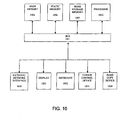
- FIG 10 is a block diagram of an exemplary computer system that may perform one or more of the operations described herein.
- computer system 1000 may comprise an exemplary client or server computer system.
- Computer system 1000 comprises a communication mechanism or bus 1011 for communicating information, and a processor 1012 coupled with bus 1011 for processing information.
- Processor 1012 includes a microprocessor, but is not limited to a microprocessor, such as, for example, Pentium TM , PowerPC TM , etc.
- System 1000 further comprises a random access memory (RAM), or other dynamic storage device 1004 (referred to as main memory) coupled to bus 1011 for storing information and instructions to be executed by processor 1012.
- main memory 1004 also may be used for storing temporary variables or other intermediate information during execution of instructions by processor 1012.
- Computer system 1000 also comprises a read only memory (ROM) and/or other static storage device 1006 coupled to bus 1011 for storing static information and instructions for processor 1012, and a data storage device 1007, such as a magnetic disk or optical disk and its corresponding disk drive.
- ROM read only memory
- Data storage device 1007 is coupled to bus 1011 for storing information and instructions.
- Computer system 1000 may further be coupled to a display device 1021, such as a cathode ray tube (CRT) or liquid crystal display (LCD), coupled to bus 1011 for displaying information to a computer user.
- a display device 1021 such as a cathode ray tube (CRT) or liquid crystal display (LCD)
- An alphanumeric input device 1022 may also be coupled to bus 1011 for communicating information and command selections to processor 1012.
- cursor control 1023 such as a mouse, trackball, track pad, stylus, or cursor direction keys, coupled to bus 1011 for communicating direction information and command selections to processor 1012, and for controlling cursor movement on display 1021.
- bus 1011 Another device that may be coupled to bus 1011 is hard copy device 1024, which may be used for marking information on a medium such as paper, film, or similar types of media.
- hard copy device 1024 Another device that may be coupled to bus 1011 is a wired/wireless communication capability 1025 to communication to a phone or handheld palm device.
- wired/wireless communication capability 1025 to communication to a phone or handheld palm device.
Landscapes
- Engineering & Computer Science (AREA)
- Multimedia (AREA)
- Signal Processing (AREA)
- Document Processing Apparatus (AREA)
- Information Retrieval, Db Structures And Fs Structures Therefor (AREA)
- Devices For Checking Fares Or Tickets At Control Points (AREA)
- Storage Device Security (AREA)
- Processing Or Creating Images (AREA)
Applications Claiming Priority (1)
| Application Number | Priority Date | Filing Date | Title |
|---|---|---|---|
| US11/514,711 US8479004B2 (en) | 2006-08-31 | 2006-08-31 | Paper-based document logging |
Publications (3)
| Publication Number | Publication Date |
|---|---|
| EP1895759A2 true EP1895759A2 (fr) | 2008-03-05 |
| EP1895759A3 EP1895759A3 (fr) | 2008-06-04 |
| EP1895759B1 EP1895759B1 (fr) | 2018-04-25 |
Family
ID=38924439
Family Applications (1)
| Application Number | Title | Priority Date | Filing Date |
|---|---|---|---|
| EP07253388.8A Active EP1895759B1 (fr) | 2006-08-31 | 2007-08-29 | Chargement de document en papier |
Country Status (3)
| Country | Link |
|---|---|
| US (1) | US8479004B2 (fr) |
| EP (1) | EP1895759B1 (fr) |
| JP (1) | JP2008059591A (fr) |
Cited By (1)
| Publication number | Priority date | Publication date | Assignee | Title |
|---|---|---|---|---|
| WO2009127468A1 (fr) | 2008-04-18 | 2009-10-22 | Umberto Zanini | Document numérique pour une conservation par substitution d'un document papier |
Families Citing this family (7)
| Publication number | Priority date | Publication date | Assignee | Title |
|---|---|---|---|---|
| US7949666B2 (en) * | 2004-07-09 | 2011-05-24 | Ricoh, Ltd. | Synchronizing distributed work through document logs |
| US8479004B2 (en) * | 2006-08-31 | 2013-07-02 | Ricoh Co., Ltd | Paper-based document logging |
| US8006094B2 (en) | 2007-02-21 | 2011-08-23 | Ricoh Co., Ltd. | Trustworthy timestamps and certifiable clocks using logs linked by cryptographic hashes |
| US8996483B2 (en) * | 2007-03-28 | 2015-03-31 | Ricoh Co., Ltd. | Method and apparatus for recording associations with logs |
| US20080243688A1 (en) * | 2007-03-28 | 2008-10-02 | Hart Peter E | Method and Apparatus for Recording Transactions with a Portable Logging Device |
| US8185733B2 (en) * | 2008-10-02 | 2012-05-22 | Ricoh Co., Ltd. | Method and apparatus for automatically publishing content based identifiers |
| US10033537B2 (en) * | 2012-11-30 | 2018-07-24 | Stephen B. Heppe | Promoting learned discourse in online media with consideration of sources and provenance |
Citations (2)
| Publication number | Priority date | Publication date | Assignee | Title |
|---|---|---|---|---|
| US20030131240A1 (en) | 2002-01-07 | 2003-07-10 | Xerox Corporation | Systems and methods for authenticating documents |
| EP1622074A1 (fr) | 2004-07-09 | 2006-02-01 | Ricoh Company, Ltd. | Synchronisation de déroulement des opérations à l'aide de document de logs |
Family Cites Families (135)
| Publication number | Priority date | Publication date | Assignee | Title |
|---|---|---|---|---|
| US4809158A (en) | 1985-10-23 | 1989-02-28 | Mccauley Peter B | Sorting method and apparatus |
| US6345288B1 (en) | 1989-08-31 | 2002-02-05 | Onename Corporation | Computer-based communication system and method using metadata defining a control-structure |
| US6044205A (en) | 1996-02-29 | 2000-03-28 | Intermind Corporation | Communications system for transferring information between memories according to processes transferred with the information |
| US5155850A (en) | 1990-02-23 | 1992-10-13 | International Business Machines Corporation | Method and system for maintaining a time frame selective document history log in a data processing system |
| EP0444358B1 (fr) | 1990-02-27 | 1998-08-19 | Oracle Corporation | Optimisation dynamique d'un seul accès relationnel |
| US5396622A (en) | 1991-12-23 | 1995-03-07 | International Business Machines Corporation | Efficient radix sorting system employing a dynamic branch table |
| US5963962A (en) | 1995-05-31 | 1999-10-05 | Network Appliance, Inc. | Write anywhere file-system layout |
| US6019287A (en) | 1993-10-06 | 2000-02-01 | 3M Innovative Properties Company | Security reader for automatic detection of tampering and alteration |
| US6522770B1 (en) * | 1999-05-19 | 2003-02-18 | Digimarc Corporation | Management of documents and other objects using optical devices |
| JP3593366B2 (ja) | 1994-09-19 | 2004-11-24 | 株式会社日立製作所 | デ−タベ−ス管理方法 |
| US5592618A (en) | 1994-10-03 | 1997-01-07 | International Business Machines Corporation | Remote copy secondary data copy validation-audit function |
| CN1312549C (zh) | 1995-02-13 | 2007-04-25 | 英特特拉斯特技术公司 | 用于安全交易管理和电子权利保护的系统和方法 |
| US5708780A (en) | 1995-06-07 | 1998-01-13 | Open Market, Inc. | Internet server access control and monitoring systems |
| EP0839352B1 (fr) | 1995-07-20 | 2002-10-16 | Novell, Inc. | Gestion des releves de mouvements dans un ordinateur et un reseau pouvant etre deconnectes |
| US7711564B2 (en) * | 1995-07-27 | 2010-05-04 | Digimarc Corporation | Connected audio and other media objects |
| US5809415A (en) | 1995-12-11 | 1998-09-15 | Unwired Planet, Inc. | Method and architecture for an interactive two-way data communication network |
| US6308175B1 (en) | 1996-04-04 | 2001-10-23 | Lycos, Inc. | Integrated collaborative/content-based filter structure employing selectively shared, content-based profile data to evaluate information entities in a massive information network |
| US6026379A (en) | 1996-06-17 | 2000-02-15 | Verifone, Inc. | System, method and article of manufacture for managing transactions in a high availability system |
| US20020046072A1 (en) | 1996-06-18 | 2002-04-18 | Toshikatsu Arai | Workflow system |
| US6044381A (en) | 1997-09-11 | 2000-03-28 | Puma Technology, Inc. | Using distributed history files in synchronizing databases |
| US5845292A (en) | 1996-12-16 | 1998-12-01 | Lucent Technologies Inc. | System and method for restoring a distributed checkpointed database |
| US5978475A (en) | 1997-07-18 | 1999-11-02 | Counterpane Internet Security, Inc. | Event auditing system |
| GB2329044B (en) | 1997-09-05 | 2002-10-09 | Ibm | Data retrieval system |
| US6661933B1 (en) * | 1998-01-13 | 2003-12-09 | Matsushita Electric Industrial Co., Ltd. | Apparatus and method for image data processing |
| JP2000013586A (ja) | 1998-06-22 | 2000-01-14 | Matsushita Electric Ind Co Ltd | 画像情報処理装置 |
| US6807632B1 (en) | 1999-01-21 | 2004-10-19 | Emc Corporation | Content addressable information encapsulation, representation, and transfer |
| US6065018A (en) | 1998-03-04 | 2000-05-16 | International Business Machines Corporation | Synchronizing recovery log having time stamp to a remote site for disaster recovery of a primary database having related hierarchial and relational databases |
| US5975475A (en) * | 1998-05-14 | 1999-11-02 | Chaplin; Gregg S. | Fire extinguisher holder |
| US6226618B1 (en) | 1998-08-13 | 2001-05-01 | International Business Machines Corporation | Electronic content delivery system |
| US6360215B1 (en) | 1998-11-03 | 2002-03-19 | Inktomi Corporation | Method and apparatus for retrieving documents based on information other than document content |
| US6363381B1 (en) * | 1998-11-03 | 2002-03-26 | Ricoh Co., Ltd. | Compressed document matching |
| GB9825102D0 (en) | 1998-11-16 | 1999-01-13 | Insignia Solutions Plc | Computer system |
| US6584477B1 (en) | 1999-02-04 | 2003-06-24 | Hewlett Packard Development Company, L.P. | High speed system and method for replicating a large database at a remote location |
| US6574627B1 (en) | 1999-02-24 | 2003-06-03 | Francesco Bergadano | Method and apparatus for the verification of server access logs and statistics |
| US6463427B1 (en) | 1999-03-16 | 2002-10-08 | Microsoft Corporation | Use of object signature property as a search parameter during synchronization of objects on a computer |
| US6631496B1 (en) | 1999-03-22 | 2003-10-07 | Nec Corporation | System for personalizing, organizing and managing web information |
| US6400845B1 (en) * | 1999-04-23 | 2002-06-04 | Computer Services, Inc. | System and method for data extraction from digital images |
| US6697948B1 (en) | 1999-05-05 | 2004-02-24 | Michael O. Rabin | Methods and apparatus for protecting information |
| US7278115B1 (en) | 1999-06-18 | 2007-10-02 | Microsoft Corporation | Methods, apparatus and data structures for providing a user interface to objects, the user interface exploiting spatial memory and visually indicating at least one object parameter |
| US6640301B1 (en) | 1999-07-08 | 2003-10-28 | David Way Ng | Third-party e-mail authentication service provider using checksum and unknown pad characters with removal of quotation indents |
| US6546385B1 (en) | 1999-08-13 | 2003-04-08 | International Business Machines Corporation | Method and apparatus for indexing and searching content in hardcopy documents |
| US6421717B1 (en) | 1999-09-10 | 2002-07-16 | Avantgo, Inc. | System, method, and computer program product for customizing channels, content, and data for mobile devices |
| JP2001092827A (ja) | 1999-09-20 | 2001-04-06 | Toshiba Corp | データ管理装置および方法 |
| JP2001101232A (ja) | 1999-10-04 | 2001-04-13 | Sony Corp | 情報処理装置および情報処理方法、並びに記録媒体 |
| US7134021B2 (en) | 1999-10-22 | 2006-11-07 | Hitachi, Ltd. | Method and system for recovering the validity of cryptographically signed digital data |
| US6557004B1 (en) | 2000-01-06 | 2003-04-29 | Microsoft Corporation | Method and apparatus for fast searching of hand-held contacts lists |
| JP3686300B2 (ja) | 2000-02-03 | 2005-08-24 | 三菱重工業株式会社 | 遠心圧縮機 |
| US6771885B1 (en) | 2000-02-07 | 2004-08-03 | Koninklijke Philips Electronics N.V. | Methods and apparatus for recording programs prior to or beyond a preset recording time period |
| US6978364B1 (en) | 2000-04-12 | 2005-12-20 | Microsoft Corporation | VPN enrollment protocol gateway |
| US7152047B1 (en) * | 2000-05-24 | 2006-12-19 | Esecure.Biz, Inc. | System and method for production and authentication of original documents |
| US7287003B2 (en) | 2000-06-02 | 2007-10-23 | Iprint.Com | Integrated electronic shopping cart system and method |
| JP2002024177A (ja) * | 2000-07-10 | 2002-01-25 | Asia Shoken Insatsu Kk | 電子公証システムおよび電子公証方法 |
| US6631469B1 (en) | 2000-07-17 | 2003-10-07 | Intel Corporation | Method and apparatus for periodic low power data exchange |
| US6687696B2 (en) | 2000-07-26 | 2004-02-03 | Recommind Inc. | System and method for personalized search, information filtering, and for generating recommendations utilizing statistical latent class models |
| US6582138B1 (en) * | 2000-08-21 | 2003-06-24 | Xerox Corporation | Authenticated sheet material |
| US6499665B1 (en) * | 2000-08-21 | 2002-12-31 | Xerox Corporation | Method for indexing and retrieval of physical documents |
| US6615208B1 (en) | 2000-09-01 | 2003-09-02 | Telcordia Technologies, Inc. | Automatic recommendation of products using latent semantic indexing of content |
| US8032542B2 (en) | 2000-10-26 | 2011-10-04 | Reynolds Mark L | Creating, verifying, managing, and using original digital files |
| US6810398B2 (en) | 2000-11-06 | 2004-10-26 | Avamar Technologies, Inc. | System and method for unorchestrated determination of data sequences using sticky byte factoring to determine breakpoints in digital sequences |
| US20040030681A1 (en) | 2000-11-21 | 2004-02-12 | Shannon Paul Thurmond | System and process for network site fragmented search |
| US6842761B2 (en) | 2000-11-21 | 2005-01-11 | America Online, Inc. | Full-text relevancy ranking |
| US7225219B2 (en) | 2000-11-29 | 2007-05-29 | Broadspider Networks, Inc. | Distributed caching architecture for computer networks |
| WO2002051063A1 (fr) | 2000-12-21 | 2002-06-27 | Digimarc Corporation | Procedes, appareil et programmes permettant de generer et utiliser des signatures de contenu |
| US20020174295A1 (en) | 2001-01-29 | 2002-11-21 | Ulrich Thomas R. | Enhanced file system failure tolerance |
| US20020120484A1 (en) | 2001-02-23 | 2002-08-29 | International Business Machines Corporation | Method and system for providing intelligent rules-based engine with heuristics for determining optimal routing and processing of business events |
| JP4438238B2 (ja) | 2001-03-01 | 2010-03-24 | 株式会社リコー | 画像形成装置 |
| US7200627B2 (en) | 2001-03-21 | 2007-04-03 | Nokia Corporation | Method and apparatus for generating a directory structure |
| US7191190B2 (en) * | 2001-03-27 | 2007-03-13 | Microsoft Corporation | Meta data management for media content objects |
| US7668718B2 (en) | 2001-07-17 | 2010-02-23 | Custom Speech Usa, Inc. | Synchronized pattern recognition source data processed by manual or automatic means for creation of shared speaker-dependent speech user profile |
| US20030028494A1 (en) * | 2001-08-06 | 2003-02-06 | King Shawn L. | Electronic document management system and method |
| WO2003017640A2 (fr) | 2001-08-16 | 2003-02-27 | Goldpocket Interactive | Consignation et surveillance de donnees numeriques dans un systeme tvi |
| US9460414B2 (en) * | 2001-08-28 | 2016-10-04 | Eugene M. Lee | Computer assisted and/or implemented process and system for annotating and/or linking documents and data, optionally in an intellectual property management system |
| US20030046586A1 (en) | 2001-09-05 | 2003-03-06 | Satyam Bheemarasetti | Secure remote access to data between peers |
| US7007074B2 (en) | 2001-09-10 | 2006-02-28 | Yahoo! Inc. | Targeted advertisements using time-dependent key search terms |
| US20030083040A1 (en) | 2001-11-01 | 2003-05-01 | Todd Ruth | Method of logging call processing information in a mobile communication network |
| WO2003046689A2 (fr) | 2001-11-21 | 2003-06-05 | Amicas, Inc. | Systemes et procedes permettant d'obtenir un service de liste de travail temps reel |
| US7180895B2 (en) | 2001-12-31 | 2007-02-20 | 3Com Corporation | System and method for classifying network packets with packet content |
| US20030126276A1 (en) | 2002-01-02 | 2003-07-03 | Kime Gregory C. | Automated content integrity validation for streaming data |
| US7356845B2 (en) * | 2002-01-30 | 2008-04-08 | Lucent Technologies Inc. | Method and apparatus for identification tagging documents in a computer system |
| US20030158944A1 (en) | 2002-02-19 | 2003-08-21 | International Business Machines Corporation | Software control in a business transaction environment |
| JP4366040B2 (ja) | 2002-03-07 | 2009-11-18 | インターナショナル・ビジネス・マシーンズ・コーポレーション | ネットワークサービスシステム、サーバ及びプログラム |
| JP4078454B2 (ja) | 2002-03-22 | 2008-04-23 | 株式会社日立製作所 | ディジタル署名管理方法とディジタル署名処理装置およびプログラムと記録媒体 |
| US7143098B2 (en) | 2002-05-10 | 2006-11-28 | International Business Machines Corporation | Systems, methods, and computer program products to reduce computer processing in grid cell size determination for indexing of multidimensional databases |
| JP2004040344A (ja) | 2002-07-02 | 2004-02-05 | Hitachi Ltd | 原本保証方法および原本保証システム |
| US20030191764A1 (en) * | 2002-08-06 | 2003-10-09 | Isaac Richards | System and method for acoustic fingerpringting |
| KR20040032260A (ko) | 2002-10-08 | 2004-04-17 | 전자부품연구원 | 메타데이터를 이용한 광고 디스플레이 장치 및 그 서비스방법 |
| US7555196B1 (en) | 2002-09-19 | 2009-06-30 | Microsoft Corporation | Methods and systems for synchronizing timecodes when sending indices to client devices |
| US7206934B2 (en) | 2002-09-26 | 2007-04-17 | Sun Microsystems, Inc. | Distributed indexing of identity information in a peer-to-peer network |
| US7792799B2 (en) | 2002-10-10 | 2010-09-07 | Perlego Systems, Inc. | Backing up a wireless computing device |
| US20040075866A1 (en) | 2002-10-18 | 2004-04-22 | Thormodsen Arne D. | Poster preparation system and method |
| US7197644B2 (en) * | 2002-12-16 | 2007-03-27 | Xerox Corporation | Systems and methods for providing hardcopy secure documents and for validation of such documents |
| CN100524153C (zh) * | 2003-02-21 | 2009-08-05 | 卡林戈公司 | 在数据库中添加、检索计算机文件的方法 |
| JP2004272439A (ja) | 2003-03-06 | 2004-09-30 | Konica Minolta Holdings Inc | ディレクトリ検索方法、ディレクトリ検索装置、記憶媒体及びプログラム |
| JP4381012B2 (ja) * | 2003-03-14 | 2009-12-09 | ヒューレット・パッカード・カンパニー | 万物識別子を用いたデータ検索システムおよびデータ検索方法 |
| US20040260593A1 (en) | 2003-05-20 | 2004-12-23 | Klaus Abraham-Fuchs | System and user interface supporting workflow operation improvement |
| GB0317571D0 (en) | 2003-07-26 | 2003-08-27 | Koninkl Philips Electronics Nv | Content identification for broadcast media |
| US7406487B1 (en) | 2003-08-29 | 2008-07-29 | Symantec Operating Corporation | Method and system for performing periodic replication using a log |
| US8229932B2 (en) | 2003-09-04 | 2012-07-24 | Oracle International Corporation | Storing XML documents efficiently in an RDBMS |
| CA2442796A1 (fr) | 2003-09-26 | 2005-03-26 | Ibm Canada Limited - Ibm Canada Limitee | Etablissement d'un lien entre un moteur de deroulement des operations et un modele de donnees |
| US7451167B2 (en) | 2003-10-24 | 2008-11-11 | Network Appliance, Inc. | Verification of file system log data using per-entry checksums |
| US7203796B1 (en) | 2003-10-24 | 2007-04-10 | Network Appliance, Inc. | Method and apparatus for synchronous data mirroring |
| US20050114709A1 (en) | 2003-10-25 | 2005-05-26 | Macrovision Corporation | Demand based method for interdiction of unauthorized copying in a decentralized network |
| US7373385B2 (en) | 2003-11-03 | 2008-05-13 | Cloudmark, Inc. | Method and apparatus to block spam based on spam reports from a community of users |
| US7519726B2 (en) | 2003-12-12 | 2009-04-14 | International Business Machines Corporation | Methods, apparatus and computer programs for enhanced access to resources within a network |
| DE602005014755D1 (de) * | 2004-03-12 | 2009-07-16 | Ingenia Technology Ltd | Verfahren und vorrichtungen zur erzeugung authentifizierbarer gegenstände und ihrer nachfolgenden überprüfung |
| US7669117B2 (en) | 2004-03-18 | 2010-02-23 | International Business Machines Corporation | Method and system for creation and retrieval of global annotations |
| US7478120B1 (en) | 2004-04-27 | 2009-01-13 | Xiaohai Zhang | System and method for providing a peer indexing service |
| US7313555B2 (en) | 2004-04-30 | 2007-12-25 | Anácapa North | Method for computing the minimum edit distance with fine granularity suitably quickly |
| US8977859B2 (en) | 2004-05-04 | 2015-03-10 | Elsevier, Inc. | Systems and methods for data compression and decompression |
| US7392533B2 (en) | 2004-05-19 | 2008-06-24 | Microsoft Corporation | System and method for management of a componentized electronic document retrievable over a network |
| US20050289187A1 (en) | 2004-06-29 | 2005-12-29 | Oracle International Corporation | System and method for investigating a data operation performed on a database |
| US20060036579A1 (en) | 2004-08-10 | 2006-02-16 | Byrd Stephen A | Apparatus, system, and method for associating resources using a time based algorithm |
| US20060047967A1 (en) | 2004-08-31 | 2006-03-02 | Akhan Mehmet B | Method and system for data authentication for use with computer systems |
| JP4155956B2 (ja) * | 2004-09-16 | 2008-09-24 | 三洋電機株式会社 | 電子透かし埋め込み装置と方法ならびに電子透かし抽出装置と方法 |
| JP2006086778A (ja) | 2004-09-16 | 2006-03-30 | Fuji Xerox Co Ltd | 複合装置および複合装置の文書管理方法 |
| US7853564B2 (en) | 2004-09-17 | 2010-12-14 | Adobe Systems Incorporated | Adding metadata to a stock content item |
| JP4631398B2 (ja) | 2004-11-04 | 2011-02-16 | 富士ゼロックス株式会社 | 文書管理装置、および文書管理方法、並びにコンピュータ・プログラム |
| US8230326B2 (en) | 2004-12-17 | 2012-07-24 | International Business Machines Corporation | Method for associating annotations with document families |
| US20060218204A1 (en) | 2005-03-25 | 2006-09-28 | International Business Machines Corporation | Log stream validation in log shipping data replication systems |
| US7890598B2 (en) | 2005-03-31 | 2011-02-15 | Sony Corporation | Remote access management |
| US20060271787A1 (en) * | 2005-05-31 | 2006-11-30 | Xerox Corporation | System and method for validating a hard-copy document against an electronic version |
| KR20080033998A (ko) * | 2005-07-25 | 2008-04-17 | 실버브룩 리서치 피티와이 리미티드 | 레이아웃을 식별하는 부호화 데이터를 가지는 상품 아이템 |
| US7796285B2 (en) * | 2005-10-18 | 2010-09-14 | Dialogic Corporation | Supplementing facsimile image data |
| JP4668763B2 (ja) | 2005-10-20 | 2011-04-13 | 株式会社日立製作所 | ストレージ装置のリストア方法及びストレージ装置 |
| US20070143356A1 (en) | 2005-12-15 | 2007-06-21 | Kleinsmith Richard A | Enforcing workflow for implementing unique identification |
| US7588192B2 (en) * | 2006-01-20 | 2009-09-15 | Xerox Corporation | Hard copy protection and confirmation method |
| US7940926B2 (en) | 2006-06-08 | 2011-05-10 | Novell, Inc. | Cooperative encoding of data by pluralities of parties |
| JPWO2008026238A1 (ja) | 2006-08-28 | 2010-01-14 | 三菱電機株式会社 | データ処理システム及びデータ処理方法及びプログラム |
| US8479004B2 (en) * | 2006-08-31 | 2013-07-02 | Ricoh Co., Ltd | Paper-based document logging |
| US8943332B2 (en) | 2006-10-31 | 2015-01-27 | Hewlett-Packard Development Company, L.P. | Audit-log integrity using redactable signatures |
| FR2909828A1 (fr) | 2006-12-06 | 2008-06-13 | Miyowa Sa | Procede pour transmettre un contenu vers au moins un destinataire a l'aide d'un equipement mobile |
| US20080243688A1 (en) | 2007-03-28 | 2008-10-02 | Hart Peter E | Method and Apparatus for Recording Transactions with a Portable Logging Device |
| JP4935468B2 (ja) | 2007-04-03 | 2012-05-23 | ソニー株式会社 | 情報処理装置、および情報処理方法、並びにコンピュータ・プログラム |
| US9424266B2 (en) | 2007-10-01 | 2016-08-23 | Microsoft Technology Licensing, Llc | Efficient file hash identifier computation |
| WO2009079264A1 (fr) | 2007-12-19 | 2009-06-25 | Casdex, Inc. | Système et procédé d'authentification de courriel sur la base du contenu |
-
2006
- 2006-08-31 US US11/514,711 patent/US8479004B2/en active Active
-
2007
- 2007-08-29 EP EP07253388.8A patent/EP1895759B1/fr active Active
- 2007-08-30 JP JP2007224787A patent/JP2008059591A/ja active Pending
Patent Citations (2)
| Publication number | Priority date | Publication date | Assignee | Title |
|---|---|---|---|---|
| US20030131240A1 (en) | 2002-01-07 | 2003-07-10 | Xerox Corporation | Systems and methods for authenticating documents |
| EP1622074A1 (fr) | 2004-07-09 | 2006-02-01 | Ricoh Company, Ltd. | Synchronisation de déroulement des opérations à l'aide de document de logs |
Cited By (1)
| Publication number | Priority date | Publication date | Assignee | Title |
|---|---|---|---|---|
| WO2009127468A1 (fr) | 2008-04-18 | 2009-10-22 | Umberto Zanini | Document numérique pour une conservation par substitution d'un document papier |
Also Published As
| Publication number | Publication date |
|---|---|
| US8479004B2 (en) | 2013-07-02 |
| EP1895759B1 (fr) | 2018-04-25 |
| EP1895759A3 (fr) | 2008-06-04 |
| US20080059800A1 (en) | 2008-03-06 |
| JP2008059591A (ja) | 2008-03-13 |
Similar Documents
| Publication | Publication Date | Title |
|---|---|---|
| EP1895759B1 (fr) | Chargement de document en papier | |
| EP1575261B1 (fr) | Manipulation de collections de documents | |
| US6778988B2 (en) | Method and apparatus for delivering a web page to a client device based on printed publications and publisher controlled links | |
| US6972863B2 (en) | Direct barcode printing from internet database | |
| US20080030800A1 (en) | Electronic document management system | |
| US8015194B2 (en) | Refining based on log content | |
| US7970169B2 (en) | Secure stamping of multimedia document collections | |
| US7580164B2 (en) | Document separator pages | |
| US7849053B2 (en) | Coordination and tracking of workflows | |
| JP5200374B2 (ja) | 文書管理システム、文書処理クライアント装置及びプログラム | |
| US7546528B2 (en) | Stamp sheets | |
| EP3792792A1 (fr) | Procédé et appareil de détection de sabotage des copies en papier et support d'enregistrement lisible par ordinateur non transitoire | |
| US8095537B2 (en) | Log integrity verification | |
| US7992771B2 (en) | Document-management device and document-management method | |
| JP4572136B2 (ja) | 文書管理方法 | |
| US10110771B2 (en) | Managing printed documents in a document processing system | |
| US7075668B2 (en) | Direct printing from internet database | |
| US7970738B2 (en) | Always on and updated operation for document logs | |
| US20060277483A1 (en) | Document-management device and document-management method | |
| US20060236142A1 (en) | Methods and systems for accessing email | |
| EP1804180A1 (fr) | Méthode d'affinage basé sur le contenu de journal | |
| JP2008052645A (ja) | 画像形成システム | |
| JP2014139751A (ja) | 文書の登録を行う装置、方法、プログラム | |
| JP2006093951A (ja) | 画像処理システム |
Legal Events
| Date | Code | Title | Description |
|---|---|---|---|
| PUAI | Public reference made under article 153(3) epc to a published international application that has entered the european phase |
Free format text: ORIGINAL CODE: 0009012 |
|
| 17P | Request for examination filed |
Effective date: 20070912 |
|
| AK | Designated contracting states |
Kind code of ref document: A2 Designated state(s): AT BE BG CH CY CZ DE DK EE ES FI FR GB GR HU IE IS IT LI LT LU LV MC MT NL PL PT RO SE SI SK TR |
|
| AX | Request for extension of the european patent |
Extension state: AL BA HR MK YU |
|
| PUAL | Search report despatched |
Free format text: ORIGINAL CODE: 0009013 |
|
| AK | Designated contracting states |
Kind code of ref document: A3 Designated state(s): AT BE BG CH CY CZ DE DK EE ES FI FR GB GR HU IE IS IT LI LT LU LV MC MT NL PL PT RO SE SI SK TR |
|
| AX | Request for extension of the european patent |
Extension state: AL BA HR MK RS |
|
| AKX | Designation fees paid |
Designated state(s): DE ES FR GB IT NL |
|
| 17Q | First examination report despatched |
Effective date: 20110318 |
|
| GRAP | Despatch of communication of intention to grant a patent |
Free format text: ORIGINAL CODE: EPIDOSNIGR1 |
|
| STAA | Information on the status of an ep patent application or granted ep patent |
Free format text: STATUS: GRANT OF PATENT IS INTENDED |
|
| INTG | Intention to grant announced |
Effective date: 20171124 |
|
| RIN1 | Information on inventor provided before grant (corrected) |
Inventor name: PIERSOL, KURT |
|
| GRAA | (expected) grant |
Free format text: ORIGINAL CODE: 0009210 |
|
| GRAS | Grant fee paid |
Free format text: ORIGINAL CODE: EPIDOSNIGR3 |
|
| STAA | Information on the status of an ep patent application or granted ep patent |
Free format text: STATUS: THE PATENT HAS BEEN GRANTED |
|
| RIN1 | Information on inventor provided before grant (corrected) |
Inventor name: PIERSOL, KURT |
|
| AK | Designated contracting states |
Kind code of ref document: B1 Designated state(s): DE ES FR GB IT NL |
|
| REG | Reference to a national code |
Ref country code: GB Ref legal event code: FG4D |
|
| REG | Reference to a national code |
Ref country code: DE Ref legal event code: R096 Ref document number: 602007054658 Country of ref document: DE |
|
| REG | Reference to a national code |
Ref country code: FR Ref legal event code: PLFP Year of fee payment: 12 |
|
| REG | Reference to a national code |
Ref country code: NL Ref legal event code: MP Effective date: 20180425 |
|
| PG25 | Lapsed in a contracting state [announced via postgrant information from national office to epo] |
Ref country code: NL Free format text: LAPSE BECAUSE OF FAILURE TO SUBMIT A TRANSLATION OF THE DESCRIPTION OR TO PAY THE FEE WITHIN THE PRESCRIBED TIME-LIMIT Effective date: 20180425 |
|
| PG25 | Lapsed in a contracting state [announced via postgrant information from national office to epo] |
Ref country code: ES Free format text: LAPSE BECAUSE OF FAILURE TO SUBMIT A TRANSLATION OF THE DESCRIPTION OR TO PAY THE FEE WITHIN THE PRESCRIBED TIME-LIMIT Effective date: 20180425 |
|
| REG | Reference to a national code |
Ref country code: DE Ref legal event code: R097 Ref document number: 602007054658 Country of ref document: DE |
|
| PG25 | Lapsed in a contracting state [announced via postgrant information from national office to epo] |
Ref country code: IT Free format text: LAPSE BECAUSE OF FAILURE TO SUBMIT A TRANSLATION OF THE DESCRIPTION OR TO PAY THE FEE WITHIN THE PRESCRIBED TIME-LIMIT Effective date: 20180425 |
|
| PLBE | No opposition filed within time limit |
Free format text: ORIGINAL CODE: 0009261 |
|
| STAA | Information on the status of an ep patent application or granted ep patent |
Free format text: STATUS: NO OPPOSITION FILED WITHIN TIME LIMIT |
|
| 26N | No opposition filed |
Effective date: 20190128 |
|
| P01 | Opt-out of the competence of the unified patent court (upc) registered |
Effective date: 20230522 |
|
| PGFP | Annual fee paid to national office [announced via postgrant information from national office to epo] |
Ref country code: DE Payment date: 20250820 Year of fee payment: 19 |
|
| PGFP | Annual fee paid to national office [announced via postgrant information from national office to epo] |
Ref country code: GB Payment date: 20250820 Year of fee payment: 19 |
|
| PGFP | Annual fee paid to national office [announced via postgrant information from national office to epo] |
Ref country code: FR Payment date: 20250828 Year of fee payment: 19 |