EP1896036B1 - Agents anti-inflammatoires - Google Patents
Agents anti-inflammatoires Download PDFInfo
- Publication number
- EP1896036B1 EP1896036B1 EP06744243A EP06744243A EP1896036B1 EP 1896036 B1 EP1896036 B1 EP 1896036B1 EP 06744243 A EP06744243 A EP 06744243A EP 06744243 A EP06744243 A EP 06744243A EP 1896036 B1 EP1896036 B1 EP 1896036B1
- Authority
- EP
- European Patent Office
- Prior art keywords
- pharmaceutically acceptable
- compounds
- acceptable salt
- inflammatory
- mmol
- Prior art date
- Legal status (The legal status is an assumption and is not a legal conclusion. Google has not performed a legal analysis and makes no representation as to the accuracy of the status listed.)
- Not-in-force
Links
Images
Classifications
-
- C—CHEMISTRY; METALLURGY
- C07—ORGANIC CHEMISTRY
- C07D—HETEROCYCLIC COMPOUNDS
- C07D223/00—Heterocyclic compounds containing seven-membered rings having one nitrogen atom as the only ring hetero atom
- C07D223/02—Heterocyclic compounds containing seven-membered rings having one nitrogen atom as the only ring hetero atom not condensed with other rings
- C07D223/06—Heterocyclic compounds containing seven-membered rings having one nitrogen atom as the only ring hetero atom not condensed with other rings with hetero atoms or with carbon atoms having three bonds to hetero atoms with at the most one bond to halogen, e.g. ester or nitrile radicals, directly attached to ring carbon atoms
- C07D223/12—Nitrogen atoms not forming part of a nitro radical
-
- A—HUMAN NECESSITIES
- A61—MEDICAL OR VETERINARY SCIENCE; HYGIENE
- A61K—PREPARATIONS FOR MEDICAL, DENTAL OR TOILETRY PURPOSES
- A61K31/00—Medicinal preparations containing organic active ingredients
- A61K31/33—Heterocyclic compounds
- A61K31/395—Heterocyclic compounds having nitrogen as a ring hetero atom, e.g. guanethidine or rifamycins
- A61K31/40—Heterocyclic compounds having nitrogen as a ring hetero atom, e.g. guanethidine or rifamycins having five-membered rings with one nitrogen as the only ring hetero atom, e.g. sulpiride, succinimide, tolmetin, buflomedil
- A61K31/4015—Heterocyclic compounds having nitrogen as a ring hetero atom, e.g. guanethidine or rifamycins having five-membered rings with one nitrogen as the only ring hetero atom, e.g. sulpiride, succinimide, tolmetin, buflomedil having oxo groups directly attached to the heterocyclic ring, e.g. piracetam, ethosuximide
-
- A—HUMAN NECESSITIES
- A61—MEDICAL OR VETERINARY SCIENCE; HYGIENE
- A61K—PREPARATIONS FOR MEDICAL, DENTAL OR TOILETRY PURPOSES
- A61K31/00—Medicinal preparations containing organic active ingredients
- A61K31/33—Heterocyclic compounds
- A61K31/395—Heterocyclic compounds having nitrogen as a ring hetero atom, e.g. guanethidine or rifamycins
- A61K31/435—Heterocyclic compounds having nitrogen as a ring hetero atom, e.g. guanethidine or rifamycins having six-membered rings with one nitrogen as the only ring hetero atom
- A61K31/44—Non condensed pyridines; Hydrogenated derivatives thereof
- A61K31/445—Non condensed piperidines, e.g. piperocaine
- A61K31/45—Non condensed piperidines, e.g. piperocaine having oxo groups directly attached to the heterocyclic ring, e.g. cycloheximide
-
- A—HUMAN NECESSITIES
- A61—MEDICAL OR VETERINARY SCIENCE; HYGIENE
- A61K—PREPARATIONS FOR MEDICAL, DENTAL OR TOILETRY PURPOSES
- A61K31/00—Medicinal preparations containing organic active ingredients
- A61K31/33—Heterocyclic compounds
- A61K31/395—Heterocyclic compounds having nitrogen as a ring hetero atom, e.g. guanethidine or rifamycins
- A61K31/55—Heterocyclic compounds having nitrogen as a ring hetero atom, e.g. guanethidine or rifamycins having seven-membered rings, e.g. azelastine, pentylenetetrazole
-
- A—HUMAN NECESSITIES
- A61—MEDICAL OR VETERINARY SCIENCE; HYGIENE
- A61P—SPECIFIC THERAPEUTIC ACTIVITY OF CHEMICAL COMPOUNDS OR MEDICINAL PREPARATIONS
- A61P11/00—Drugs for disorders of the respiratory system
- A61P11/06—Antiasthmatics
-
- A—HUMAN NECESSITIES
- A61—MEDICAL OR VETERINARY SCIENCE; HYGIENE
- A61P—SPECIFIC THERAPEUTIC ACTIVITY OF CHEMICAL COMPOUNDS OR MEDICINAL PREPARATIONS
- A61P17/00—Drugs for dermatological disorders
- A61P17/02—Drugs for dermatological disorders for treating wounds, ulcers, burns, scars, keloids, or the like
-
- A—HUMAN NECESSITIES
- A61—MEDICAL OR VETERINARY SCIENCE; HYGIENE
- A61P—SPECIFIC THERAPEUTIC ACTIVITY OF CHEMICAL COMPOUNDS OR MEDICINAL PREPARATIONS
- A61P17/00—Drugs for dermatological disorders
- A61P17/06—Antipsoriatics
-
- A—HUMAN NECESSITIES
- A61—MEDICAL OR VETERINARY SCIENCE; HYGIENE
- A61P—SPECIFIC THERAPEUTIC ACTIVITY OF CHEMICAL COMPOUNDS OR MEDICINAL PREPARATIONS
- A61P19/00—Drugs for skeletal disorders
- A61P19/02—Drugs for skeletal disorders for joint disorders, e.g. arthritis, arthrosis
-
- A—HUMAN NECESSITIES
- A61—MEDICAL OR VETERINARY SCIENCE; HYGIENE
- A61P—SPECIFIC THERAPEUTIC ACTIVITY OF CHEMICAL COMPOUNDS OR MEDICINAL PREPARATIONS
- A61P19/00—Drugs for skeletal disorders
- A61P19/08—Drugs for skeletal disorders for bone diseases, e.g. rachitism, Paget's disease
- A61P19/10—Drugs for skeletal disorders for bone diseases, e.g. rachitism, Paget's disease for osteoporosis
-
- A—HUMAN NECESSITIES
- A61—MEDICAL OR VETERINARY SCIENCE; HYGIENE
- A61P—SPECIFIC THERAPEUTIC ACTIVITY OF CHEMICAL COMPOUNDS OR MEDICINAL PREPARATIONS
- A61P25/00—Drugs for disorders of the nervous system
-
- A—HUMAN NECESSITIES
- A61—MEDICAL OR VETERINARY SCIENCE; HYGIENE
- A61P—SPECIFIC THERAPEUTIC ACTIVITY OF CHEMICAL COMPOUNDS OR MEDICINAL PREPARATIONS
- A61P25/00—Drugs for disorders of the nervous system
- A61P25/28—Drugs for disorders of the nervous system for treating neurodegenerative disorders of the central nervous system, e.g. nootropic agents, cognition enhancers, drugs for treating Alzheimer's disease or other forms of dementia
-
- A—HUMAN NECESSITIES
- A61—MEDICAL OR VETERINARY SCIENCE; HYGIENE
- A61P—SPECIFIC THERAPEUTIC ACTIVITY OF CHEMICAL COMPOUNDS OR MEDICINAL PREPARATIONS
- A61P29/00—Non-central analgesic, antipyretic or antiinflammatory agents, e.g. antirheumatic agents; Non-steroidal antiinflammatory drugs [NSAID]
-
- A—HUMAN NECESSITIES
- A61—MEDICAL OR VETERINARY SCIENCE; HYGIENE
- A61P—SPECIFIC THERAPEUTIC ACTIVITY OF CHEMICAL COMPOUNDS OR MEDICINAL PREPARATIONS
- A61P31/00—Antiinfectives, i.e. antibiotics, antiseptics, chemotherapeutics
- A61P31/12—Antivirals
-
- A—HUMAN NECESSITIES
- A61—MEDICAL OR VETERINARY SCIENCE; HYGIENE
- A61P—SPECIFIC THERAPEUTIC ACTIVITY OF CHEMICAL COMPOUNDS OR MEDICINAL PREPARATIONS
- A61P33/00—Antiparasitic agents
-
- A—HUMAN NECESSITIES
- A61—MEDICAL OR VETERINARY SCIENCE; HYGIENE
- A61P—SPECIFIC THERAPEUTIC ACTIVITY OF CHEMICAL COMPOUNDS OR MEDICINAL PREPARATIONS
- A61P35/00—Antineoplastic agents
-
- A—HUMAN NECESSITIES
- A61—MEDICAL OR VETERINARY SCIENCE; HYGIENE
- A61P—SPECIFIC THERAPEUTIC ACTIVITY OF CHEMICAL COMPOUNDS OR MEDICINAL PREPARATIONS
- A61P37/00—Drugs for immunological or allergic disorders
-
- A—HUMAN NECESSITIES
- A61—MEDICAL OR VETERINARY SCIENCE; HYGIENE
- A61P—SPECIFIC THERAPEUTIC ACTIVITY OF CHEMICAL COMPOUNDS OR MEDICINAL PREPARATIONS
- A61P37/00—Drugs for immunological or allergic disorders
- A61P37/02—Immunomodulators
- A61P37/06—Immunosuppressants, e.g. drugs for graft rejection
-
- A—HUMAN NECESSITIES
- A61—MEDICAL OR VETERINARY SCIENCE; HYGIENE
- A61P—SPECIFIC THERAPEUTIC ACTIVITY OF CHEMICAL COMPOUNDS OR MEDICINAL PREPARATIONS
- A61P9/00—Drugs for disorders of the cardiovascular system
-
- C—CHEMISTRY; METALLURGY
- C07—ORGANIC CHEMISTRY
- C07D—HETEROCYCLIC COMPOUNDS
- C07D207/00—Heterocyclic compounds containing five-membered rings not condensed with other rings, with one nitrogen atom as the only ring hetero atom
- C07D207/02—Heterocyclic compounds containing five-membered rings not condensed with other rings, with one nitrogen atom as the only ring hetero atom with only hydrogen or carbon atoms directly attached to the ring nitrogen atom
- C07D207/18—Heterocyclic compounds containing five-membered rings not condensed with other rings, with one nitrogen atom as the only ring hetero atom with only hydrogen or carbon atoms directly attached to the ring nitrogen atom having one double bond between ring members or between a ring member and a non-ring member
- C07D207/22—Heterocyclic compounds containing five-membered rings not condensed with other rings, with one nitrogen atom as the only ring hetero atom with only hydrogen or carbon atoms directly attached to the ring nitrogen atom having one double bond between ring members or between a ring member and a non-ring member with hetero atoms or with carbon atoms having three bonds to hetero atoms with at the most one bond to halogen, e.g. ester or nitrile radicals, directly attached to ring carbon atoms
- C07D207/24—Oxygen or sulfur atoms
- C07D207/26—2-Pyrrolidones
- C07D207/263—2-Pyrrolidones with only hydrogen atoms or radicals containing only hydrogen and carbon atoms directly attached to other ring carbon atoms
- C07D207/267—2-Pyrrolidones with only hydrogen atoms or radicals containing only hydrogen and carbon atoms directly attached to other ring carbon atoms with only hydrogen atoms or radicals containing only hydrogen and carbon atoms directly attached to the ring nitrogen atom
-
- C—CHEMISTRY; METALLURGY
- C07—ORGANIC CHEMISTRY
- C07D—HETEROCYCLIC COMPOUNDS
- C07D207/00—Heterocyclic compounds containing five-membered rings not condensed with other rings, with one nitrogen atom as the only ring hetero atom
- C07D207/02—Heterocyclic compounds containing five-membered rings not condensed with other rings, with one nitrogen atom as the only ring hetero atom with only hydrogen or carbon atoms directly attached to the ring nitrogen atom
- C07D207/18—Heterocyclic compounds containing five-membered rings not condensed with other rings, with one nitrogen atom as the only ring hetero atom with only hydrogen or carbon atoms directly attached to the ring nitrogen atom having one double bond between ring members or between a ring member and a non-ring member
- C07D207/22—Heterocyclic compounds containing five-membered rings not condensed with other rings, with one nitrogen atom as the only ring hetero atom with only hydrogen or carbon atoms directly attached to the ring nitrogen atom having one double bond between ring members or between a ring member and a non-ring member with hetero atoms or with carbon atoms having three bonds to hetero atoms with at the most one bond to halogen, e.g. ester or nitrile radicals, directly attached to ring carbon atoms
- C07D207/24—Oxygen or sulfur atoms
- C07D207/26—2-Pyrrolidones
- C07D207/273—2-Pyrrolidones with hetero atoms or with carbon atoms having three bonds to hetero atoms with at the most one bond to halogen, e.g. ester or nitrile radicals, directly attached to other ring carbon atoms
-
- C—CHEMISTRY; METALLURGY
- C07—ORGANIC CHEMISTRY
- C07D—HETEROCYCLIC COMPOUNDS
- C07D211/00—Heterocyclic compounds containing hydrogenated pyridine rings, not condensed with other rings
- C07D211/04—Heterocyclic compounds containing hydrogenated pyridine rings, not condensed with other rings with only hydrogen or carbon atoms directly attached to the ring nitrogen atom
- C07D211/68—Heterocyclic compounds containing hydrogenated pyridine rings, not condensed with other rings with only hydrogen or carbon atoms directly attached to the ring nitrogen atom having one double bond between ring members or between a ring member and a non-ring member
- C07D211/72—Heterocyclic compounds containing hydrogenated pyridine rings, not condensed with other rings with only hydrogen or carbon atoms directly attached to the ring nitrogen atom having one double bond between ring members or between a ring member and a non-ring member with hetero atoms or with carbon atoms having three bonds to hetero atoms, with at the most one bond to halogen, directly attached to ring carbon atoms
- C07D211/74—Oxygen atoms
- C07D211/76—Oxygen atoms attached in position 2 or 6
Definitions
- the disclosure relates to the use of 1'-substituted cyclohexyl derivatives of 3-aminolactams for preparing a medicament intended to prevent or treat inflammatory disorders.
- Inflammation is an important component of physiological host defence. Increasingly, however, it is clear that temporally or spatially inappropriate inflammatory responses play a part in a wide range of diseases, including those with an obvious leukocyte component (such as autoimmune diseases, asthma or atherosclerosis) but also in diseases that have not traditionally been considered to involve leukocytes (such as osteoporosis or Alzheimer's disease).
- leukocyte component such as autoimmune diseases, asthma or atherosclerosis
- diseases that have not traditionally been considered to involve leukocytes such as osteoporosis or Alzheimer's disease.
- the chemokines are a large family of signalling molecules with homology to interleukin-8 which have been implicated in regulating leukocyte trafficking both in physiological and pathological conditions. With more than fifty ligands and twenty receptors involved in chemokine signalling, the system has the requisite information density to address leukocytes through the complex immune regulatory processes from the bone marrow, to the periphery, then back through secondary lymphoid organs.
- this complexity of the chemokine system has at first hindered pharmacological approaches to modulating inflammatory responses through chemokine receptor blockade. It has proved difficult to determine which chemokine receptor(s) should be inhibited to produce therapeutic benefit in a given inflammatory disease.
- BSCIs Broad Spectrum Chemokine Inhibitors
- peptides and peptoid derivatives such as NR58-3.14.3, may not be optimal for use in vivo. They are quite expensive to synthesise and have relatively unfavourable pharmacokinetic and pharmacodynamic properties.
- NR58-3.14.3 is not orally bioavailable and is cleared from blood plasma with a half-life period of less than 30 minutes after intravenous injection.
- BSCIs stable, broad spectrum chemokine inhibitors
- 3-amino caprolactams with a seven-membered monolactam ring.
- further useful anti-inflammatory compounds may be generated from other 3-aminolactams with different ring size.
- (S)-3-(1'-adamantanecarbonylamino)caprolactam is a potent inhibitor of leukcoyte recruitment in vitro, and has powerful anti-inflammatory activity in vivo (comparable to the steroid preparation dexamethasone), whether delivered by an oral route, or by injection.
- (S)-3-(1'-adamantanecarbonylamino)caprolactam is crystalline, relatively straightforward and inexpensive to prepare and has good pharmaceutical properties.
- the adamantine ring does not facilitate substitutions of the ring hydrogen atoms, and limits the scope for exploring further derivatives for novel or improved properties.
- (S)-3-(1'-methylcyclohexylcarbonylamino)-caprolactam retains the key 2',2' disubstituted tetrahedral carbon atom, and hence many of the beneficial properties, of (S)-3-(1'-adamantanecarbonylamino)caprolactam, but is amenable to extensive substitution, providing a wealth of new derivatives which can be screened for novel or improved properties.
- Examples include compounds where the cyclohexyl ring is exchanged for rings of different sizes (from cyclopropyl to cyclo-ocytl), compounds where the methyl substituent at the 1' position is exchanged for other substituents (including heteroatoms), compounds where the ring itself is substituted at various positions and compounds where several of these modifications are made simultaneously.
- the disclosure provides the use of a compound of general formula (I), or a pharmaceutically acceptable salt thereof, for the preparation of a medicament intended to treat inflammatory disorder: but excluding (S)-3-(1'-methylcyclohexylcarbonylamino)-caprolactam: wherein z is 1,2,3 or 4; A is -CO- or -SO 2 -; Q is linear or branched alkyl, alkenyl, alkynyl, alkoxy, oxyalkyl, aminoalkyl, alkylamino, alklylaminoalkyl, haloalkyl, aryl or substituted aryl, or tert-Butoxycarbonylamino; T 1 and T 2 together constitute a cycloalkyl, cycloalkenyl or polycycloalkyl radical composed of n additional carbon atoms, where n is between 2 and 7; and each hydrogen atom bonded to the carbon atoms in the ring generated by T 1 and T 2 may be independently
- the carbon atom at position 3 of the lactam ring is asymmetric and consequently, the compounds according to the present disclosure have at least two possible enantiomeric forms, that is, the "R” and “S” configurations.
- the present disclosure encompasses the two enantiomeric forms and all combinations of these forms, including the racemic "RS" mixtures. With a view to simplicity, when no specific configuration is shown in the structural formulae, it should be understood that the two enantiomeric forms and their mixtures are represented.
- the compounds of general formula ( I ) or pharmaceutically acceptable salts thereof used according to this aspect of the disclosure will be compounds of general formula ( I' ) wherein A, Q, T 1 , T 2 and z have the same meanings as above.
- the compounds of general formula ( I ) or ( I' ), or their pharmaceutically acceptable salts will be such that the ring or rings composed by T 1 and T 2 together constrain the bond angles at the alpha-carbon to be essentially tetrahedral (i.e. sp3 hybrid bonds).
- the "alpha carbon” is either at the 2-position (relative to the amide carbonyl) or at the 1-position (relative to the sulfonamide sulfonyl group).
- Any substituent R 1 may be a substituent at any permissible position on the ring or rings of the cyclo-group composed by T 1 and T 2 .
- all the compounds of the disclosure have an "alpha carbon" which is both part of the cyclo group and is itself substituted.
- compositions comprising, as active ingredient, a compound of general formula ( I ), or a pharmaceutically acceptable salt thereof, and at least one pharmaceutically acceptable excipient and/or carrier: but excluding (S)-3-(1'-methylcyclohexylcarbonylamino)-caprolactam: wherein z is 1,2,3 or 4; A is -CO- or -SO 2 -; Q is linear or branched alkyl, alkenyl, alkynyl, alkoxy, oxyalkyl, aminoalkyl, alkylamino, alklylaminoalkyl, haloalkyl, aryl or substituted aryl, or tert-Butoxycarbonylamino; T 1 and T 2 together constitute a cycloalkyl, cycloalkenyl or polycycloalkyl radical composed of n additional carbon atoms, where n is between 2 and 7; and each hydrogen atom bonded to the carbon atoms in the ring generated
- the compounds of general formula ( I ) or pharmaceutically acceptable salts thereof used according to this aspect of the disclosure will be compounds of general formula ( I' ) wherein A, Q, T 1 , T 2 and z have the same meanings as above.
- salt in particular the addition salts of inorganic acids such as hydrochloride, hydrobromide, hydroiodide, sulphate, phosphate, diphosphate and nitrate or of organic acids such as acetate, maleate, fumarate, tartrate, succinate, citrate, lactate, methanesulphonate, p-toluenesulphonate, palmoate and stearate.
- inorganic acids such as hydrochloride, hydrobromide, hydroiodide, sulphate, phosphate, diphosphate and nitrate
- organic acids such as acetate, maleate, fumarate, tartrate, succinate, citrate, lactate, methanesulphonate, p-toluenesulphonate, palmoate and stearate.
- bases such as sodium or potassium hydroxide.
- Salt selection for basic drugs Int. J. Pharm. (1986), 33, 201-217 .
- the pharmaceutical composition can be in the form of a solid, for example powders, granules, tablets, gelatin capsules, liposomes or suppositories.
- Appropriate solid supports can be, for example, calcium phosphate, magnesium stearate, talc, sugars, lactose, dextrin, starch, gelatin, cellulose, methyl cellulose, sodium carboxymethyl cellulose, polyvinylpyrrolidine and wax.
- Other appropriate pharmaceutically acceptable excipients and/or carriers will be known to those skilled in the art.
- compositions according to the disclosure can also be presented in liquid form, for example, solutions, emulsions, suspensions or syrups.
- Appropriate liquid supports can be, for example, water, organic solvents such as glycerol or glycols, as well as their mixtures, in varying proportions, in water.
- the disclosure also provides compounds and salts thereof of general formula ( I ) but excluding (S)-3 -(1'-methylcylohexylcarbonylamino)-caprolactam : wherein z is 1,2,3 or 4; A is -CO- or -SO 2 -; Q is linear or branched alkyl, alkenyl, alkynyl, alkoxy, oxyalkyl, aminoalkyl, alkylamino, alklylaminoalkyl, haloalkyl, aryl or substituted aryl, or tert-Butoxycarbonylamino; T 1 and T 2 together constitute a cycloalkyl, cycloalkenyl or polycycloalkyl radical composed of n additional carbon atoms, where n is between 2 and 7; and each hydrogen atom bonded to the carbon atoms in the ring generated by T 1 and T 2 may be independently be substituted by a group R 1 , where R 1 is independently selected from
- the compounds of general formula ( I ) or salts thereof used according to this aspect of the disclosure will be compounds of general formula ( I' ) wherein A, Q, T 1 , T 2 and z have the same meanings as above.
- the compounds of general formula (I) or (I') when used in accordance with the disclosure, or their salts, will be such that the ring or rings composed of T 1 and T 2 constrain the bond angles at the alpha-carbon to be essentially tetrahedral (i.e. sp3 hybrid bonds).
- preferred compounds of general formula (I) or (I') and their salts according to any aspect of the present disclosure are selected from the group consisting of:
- the claimed invention relates to ( S )-3-(3'-hydroxy-1'-adamantanecarbonyl)amino-caprolactam and the salts thereof.
- the invention includes compounds, compositions and uses thereof as defined, wherein the compound is in hydrated or solvated form.
- the amide derivatives of 3-amino lactams described here are functional BSCIs. They are relatively inexpensive to synthesise, using facile synthesis routes provided herein; they are stable in human serum and consequently have excellent pharmacokinetic properties; they are orally bioavailable; they are highly potent broad-spectrum chemokine inhibitors in vitro with excellent selectivity over non-chemokine chemoattractants; they are highly potent and effective anti-inflammatory agents in vivo in rodent models of inflammation; their administration is not associated with any significant acute toxicity at the doses necessary to achieve a maximal therapeutic effect. Taken together, these properties suggest that amide derivatives of 3-aminolactams represent anti-inflammatory medications with advantages over previously described compounds.
- the improvement of the present disclosure lies in the provision of the 3-amino lactam moiety with a side chain having one or more alkyl/alkenyl rings to constrain the bond angles at the alpha carbon of the side chain.
- Compounds of this disclosure are significantly superior to compounds with linear alleyl chains (whether alkyl amides or alkyl sulfonamides).
- a 1'-substituted (that is, Q is not hydrogen) ring system is optimal for constraining the bond angles at the alpha carbon of the sidechain, and that such compounds are suitable for diverse substitution in order to generate compounds to be tested for novel or improved activities.
- Prior art peptides (such as NR58-3.14.3) have the disadvantages that: (a) they are expensive and require solid phase synthesis (at least for the longer ones) and (b) they clear very quickly via the kidneys and (c) they are generally less potent.
- the improvement described here, the aminolactams, are cheap, not cleared by the kidney and even more potent, and are also metabolically stable.
- the compounds of the present disclosure are amenable to diverse and facile substitution to generate a broad range of compounds with anti-inflammatory activity which can be tested for novel or improved activities in various assays both in vitro and in vivo.
- inflammatory disorders intended to be prevented or treated by the compounds of general formula (I) or (I') or the pharmaceutically acceptable salts thereof or pharmaceutical compositions or medicaments containing them as active ingredients include notably:
- inflammatory disorders include:
- the disclosure also provides a method of treatment, amelioration or prophylaxis of the symptoms of an inflammatory disease (including an adverse inflammatory reaction to any agent) by the administration to a patient of an anti-inflammatory amount of a compound, composition or medicament as claimed herein.
- Administration of a medicament according to the disclosure can be carried out by topical, oral, parenteral route, by intramuscular injection, etc.
- the administration dose envisaged for a medicament according to the invention is comprised between 0.1 mg and 10 g depending on the type of active compound used. Also envisaged is the generation of a library of two or more compounds described herein, where all the Compounds have a structure according to the general formula (I), and hence where the compounds should have anti-inflammatory activity. The said library may then be screened for compounds which are particularly active in a particular assay, or which possess a particular collection of physical, biological and/or pharmaceutical properties, and are therefore particularly suited to a particular application.
- the compounds of general formula (I) or (I') can be prepared using the processes described hereafter.
- 3-aminolactams are synthesised either by direct dehydration of the appropriate diaminocarboxylic acid (2,4-diaminobutyric acid to yield 5-ring aminolactam, ornithine to yield a 6-ring lactam, lysine to yield a 7-ring lactam or 2,7-diaminoheptanoic acid to yield an 8-ring lactam) as previously described .
- diaminocarboxylic acid 2,4-diaminobutyric acid to yield 5-ring aminolactam, ornithine to yield a 6-ring lactam, lysine to yield a 7-ring lactam or 2,7-diaminoheptanoic acid to yield an 8-ring lactam
- the 3-aminolactam product is reacted with an activated acid equivalent (for example, an appropriate acid chloride, as previously described for 7-ring aminolactams [ J. Med. Chem., 2005, 48, 867-74 ]).
- an activated acid equivalent for example, an appropriate acid chloride, as previously described for 7-ring aminolactams [ J. Med. Chem., 2005, 48, 867-74 ]).
- the above reaction may be carried out at ambient temperature (about 25 °C) or more generally at a temperature between 20 and 50 °C.
- a wide variety of appropriate activated acid equivalents when reacted with a 3-aminolactam in accordance with step 2 of the synthesis outlined in Diagram 1, will yield compounds according to the invention.
- Many of the acids (which can then be subsequently activated, for example as acid chlorides or using conventional amide bond synthesis reagents such as 1-hydroxybenzotriazole monohydrate and carbonyl diimidazole) are commercially available (for example, 1-methylcyclohexyl carboxylic acid is readily available from commercial suppliers).
- the remaining activated acid equivalents, or the carboxylic acids or carboxylate esters from which they are readily derived, may be synthesised using a range of methods well known in the art.
- 1-methyl-2-hydroxycyclohexyl carboxylic acid could be synthesised by the methylation of commercially available 2-oxocyclohexyl carboxylic acid ethyl ester, for example by deprotonation (enolisation) using potassium tert -butoxide then methylation by iodomethane, followed by reduction (for example with sodium borohydride).
- the resultant ethyl ester of 1-methyl-2-hydroxycyclohexane carboxylic acid may then be readily converted to the free acid or activated acid equivalent using methods well known in the art.
- protecting groups may have to be used during the amide bond formation in step 2 of the schema in Diagram 1, in the event that the appropriate acid has one or more substituents which are reactive under the conditions of forming the activated acid equivalent, or its subsequent reaction with 3-aminolactam to form the amide.
- Selection of appropriate protection groups, as well as the most appropriate activated acid equivalent, for a given reaction is in accordance with well established principles, known to those skilled in the art.
- the hydroxyl group must be protected during amide bond formation.
- the 1-methyl-2-hydroxycyclohexyl carboxylate (as the ethyl ester) may be reacted with 3,4-dihydro-2 H -pyran in the presence of para-toluene-sulphonic acid, to yield Ethyl 1-Methyl-2-(tetrahydropyran-2'-yloxy)-cyclohexane carboxylate.
- the resultant protected acid may then be activated, for example by reaction with 1-hydroxybenzotriazole monohydrate and carbonyl diimidazole to form the activated HoBT ester. This then reacts with an appropriate 3-aminolactam to form the amide bond in step 2 of Diagram 1. Subsequently, the protecting group could be removed, for example by acidic methanolysis (using acetyl chloride in methanol) to yield 3-(1'methyl-2'-hydroxycyclohexylcarbonylamino)-caprolactam.
- compositions comprising as active ingredient a compound
- this terminology is intended to cover both compositions in which other active ingredients may be present and also compositions which consist only of one active ingredient as defined.
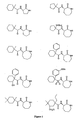
- Figure 1 shows the chemical structure of examples of compounds according to the disclosure.
- Reference Example 1 - ( S )-3-(2'-hydroxy-1'-methylcyclohexanecarbonyl)amino-caprolactam (as mixture of stereoisomers at the 1' and 2' positions): 1-methyl-2-(tetrahydropyran-2'-Cnorth/S.C.R.A.S/Specs/48553.WO01.SpecFinal yloxy)-cyclohexane carboxylic acid (see below for synthesis and characterisation, 1.87g, 7.30 mmol), 1-hydroxybenzotriazole monohydrate (7 mmol) and carbonyl diimidazole (7 mmol) were dissolved in THF (50 ml) and the reaction was heated at reflux for 4 hours.
- the reaction solvent was then removed in vacuo and the residue was partitioned between water and dichloromethane.
- the organic layer was washed with pH 2 buffer (0.5 M Na 2 SO 4 / 0.5 M NaHSO 4 ) and dilute aqueous sodium hydroxide, and then dried over Na 2 SO 4 and reduced in vacuo.
- the residue was recrystallised (hexanes) to give the lactam as a white solid (277 mg, 45%); m.p.
- the biological activity of the compounds of the current disclosure may be demonstrated using any of a broad range of functional assays of leukocyte migration in vitro, including but not limited to Boyden chamber and related transwell migration assays, under-agarose migration assays and direct visualisation chambers such as the Dunn Chamber.
- the 96-well format micro transwell assay system from Neuroprobe (Gaithersburg, MD, USA) has been used.
- this assay consists of two chambers separated by a porous membrane. The chemoattractant is placed in the lower compartment and the cells are placed in the upper compartment. After incubation for a period at 37°C the cells move towards the chemoattractant, and the number of cells in the lower compartment is proportional to the chemoattractant activity (relative to a series of controls).
- This assay can be used with a range of different leukocyte populations.
- leukocyte subsets may be prepared, including polymorphonuclear cells or lymphocytes or monocytes using methods well known to those skilled in the art such as density gradient centrifugation or magnetic bead separations.
- immortal cell lines which have been extensively validated as models of human peripheral blood leukocytes may be used, including, but not limited to THP-1 cells as a model of monocytes or Jurkat cells as model of na ⁇ ve T cells.
- the transwell migration systems are manufactured by Neuroprobe, Gaithersburg, MD, USA.
- the plates used are ChemoTx plates (Neuroprobe 101-8) and 30 ⁇ l clear plates (Neuroprobe MP30).
- Geys' Balanced Salt Solution is purchased from Sigma (Sigma G-9779).
- Fatty acid-free BSA is purchased from Sigma (Sigma A-8806).
- MTT i.e. 3-(4,5-dimethylthiazol-2-yl)-2,5-diphenyltetrazolium bromide
- Sigma Sigma (Sigma M-5655).
- RPMI-1640 without phenol red is purchased from Sigma (Sigma R-8755).
- the THP-1 cell line (European Cell culture Collection) were used as the leukocyte cell population.
- the volume of GBSS + BSA is then adjusted depending on the number of cells present so that the cells are at final density of 4.45 x 10 6 cells per ml of GBSS + BSA. This ensures that there are 100,000 THP-1 cells in each 25 ⁇ l of the solution that will be placed in the upper chamber of the plate.
- THP-1 cells The suspension of THP-1 cells at 4.45 x 10 6 . cells/ml is divided into two pots. To one pot the inhibitor under test is added at an appropriate final concentration, in an appropriate vehicle (for example at 1 ⁇ M in not more than 1% DMSO). To the second pot an equal volume of GBSS + BSA plus vehicle as appropriate (e.g. not more than 1% DMSO) is added to act as a control.
- an appropriate vehicle for example at 1 ⁇ M in not more than 1% DMSO.
- MCP-1 is diluted in GBSS + BSA to give a final concentration of 25 ng/ml. This is divided into two pots, as for the cell suspension. To one pot, the test compound is added to the same final concentration as was added to the cell suspension, while to the other pot an equal volume of GBSS + BSA plus vehicle as appropriate (e,g. not more than 1% DMSO) is added.
- vehicle e,g. not more than 1% DMSO
- the migration chamber should be assembled. Place 29 ⁇ l of the appropriate chemoattractant solution into the lower well of the chamber. Assays should be performed with at least triplicate determinations of each condition. Once all the lower chambers have been filled, apply the prous membrane to the chamber in accordance with the manufacturer's instructions. Finally, apply 25 ⁇ l of the appropriate cell solution to each upper chamber. A plastic lid is placed over the entire apparatus to prevent evaporation.
- the assembled chamber is incubated at 37 °C, 5% CO 2 , for 2 hours.
- a suspension of cells in GBSS + BSA is also incubated under identical conditions in a tube: these cells will be used to construct a standard curve for determining the number of cells that have migrated to the lower chamber under each condition.
- the liquid cell suspension is gently removed from the upper chamber, and 20 ⁇ l of ice-cold 20mM EDTA in PBS is added to the upper chamber, and the apparatus is incubated at 4°C for 15 mins. This procedure causes any cells adhering to the underside of the membrane to fall into the lower chamber.
- the filter is carefully flushed with GBSS + BSA to wash off the EDTA, and then the filter is removed.
- the number of cells migrated into the lower chamber under each condition can then be determined by a number of methods, including direct counting, labelling with fluorescent or radioactive markers or through the use of a vital dye.
- a vital dye MTT. 3 ⁇ l of stock MTT solution are added to each well, and then the plate is incubated at 37 °C for 1-2 hours during which time dehydrogenase enzymes within the cells convert the soluble MTT to an insoluble blue formazan product that can be quantified spectrophotometrically.
- an 8-point standard curve is set up. Starting with the number of cells added to each upper chamber (100,000) and going down in 2-fold serial dilutions in GBSS + BSA, the cells are added to a plate in 25 ⁇ l, with 3 ⁇ l of MTT stock solution added. The standard curve plate is incubated along side the migration plate.
- the liquid is carefully removed from the lower chambers, taking care not to disturb the precipitated formazan product.
- 20 ⁇ l of DMSO is added to each lower chamber to solubilise the blue dye, and absorbance at 595nm is determined using a 96-well plate reader. The absorbance of each well is then interpolated to the standard curve to estimate the number of cells in each lower chamber.
- the MCP-1 stimulated migration is determined by subtracting the average number of cells that reached the lower compartment in wells where no MCP-1 was added from the average number of cells that reached the lower compartment where MCP-1 was present at 25ng/ml.
- the impact of the test substance is calculated by comparing the MCP-1-induced migration which occurred in the presence or absence of various concentrations of the test substance.
- the inhibition of migration is expressed as a percentage of the total MCP-1 induced migration which was blocked by the presence of the compound.
- a dose-response graph is constructed by determining the inhibition of MCP-1 induced migration which occurs at a range of different compound concentrations (typically ranging from 1nM to 1 ⁇ M or higher in the case of poorly active compounds).
- the inhibitory activity of each compound is then expressed as the concentration of compound required to reduce the MCP-1-induced migration by 50% (the ED 50 concentration).
- the (S)- and (R)- enantiomers (at the 3 position of the aminolactam ring) of two different members of the series can be synthesised to determine whether the biological activity showed enantioselectivity.
- the dose-response curves for each of the compounds as inhibitors of MCP-1 induced THP-1 cell migration can be determined using the transwell migration assay.
Landscapes
- Health & Medical Sciences (AREA)
- Chemical & Material Sciences (AREA)
- Organic Chemistry (AREA)
- Life Sciences & Earth Sciences (AREA)
- Veterinary Medicine (AREA)
- Pharmacology & Pharmacy (AREA)
- Public Health (AREA)
- General Health & Medical Sciences (AREA)
- Medicinal Chemistry (AREA)
- Animal Behavior & Ethology (AREA)
- Nuclear Medicine, Radiotherapy & Molecular Imaging (AREA)
- General Chemical & Material Sciences (AREA)
- Chemical Kinetics & Catalysis (AREA)
- Bioinformatics & Cheminformatics (AREA)
- Engineering & Computer Science (AREA)
- Epidemiology (AREA)
- Immunology (AREA)
- Physical Education & Sports Medicine (AREA)
- Rheumatology (AREA)
- Orthopedic Medicine & Surgery (AREA)
- Neurology (AREA)
- Biomedical Technology (AREA)
- Neurosurgery (AREA)
- Dermatology (AREA)
- Pulmonology (AREA)
- Virology (AREA)
- Hospice & Palliative Care (AREA)
- Psychiatry (AREA)
- Pain & Pain Management (AREA)
- Transplantation (AREA)
- Oncology (AREA)
- Communicable Diseases (AREA)
- Tropical Medicine & Parasitology (AREA)
- Heart & Thoracic Surgery (AREA)
- Cardiology (AREA)
- Pharmaceuticals Containing Other Organic And Inorganic Compounds (AREA)
- Acyclic And Carbocyclic Compounds In Medicinal Compositions (AREA)
- Hydrogenated Pyridines (AREA)
- Pyrrole Compounds (AREA)
Claims (7)
- Composé qui est du (S)-3-(3'-hydroxy-1'-adamantanecarbanyl)amino-caprolactame ou sel pharmaceutiquement acceptable de celui-ci.
- Composition pharmaceutiquement acceptable comprenant, an tant que principe actif, le composé selon la revendication 1 ou un sel pharmaceutiquement acceptable de celui-ci, et au moins un excipient et/ou support pharmaceutiquement acceptable.
- Composé selon la revendication 1 ou sel pharmaceutiquement acceptable de celui-ci, utilisable dans le traitement d'un trouble inflammatoire.
- Utilisation d'un composé selon la revendication 1 ou d'un sel pharmaceutiquement acceptable de celui-ci, utilisable dans la fabrication d'un médicament pour le traitement d'un trouble inflammatoire.
- Composé utilisable selon la revendication 3 ou utilisation selon la revendication 4, dans lequel le trouble inflammatoire est choisi dans le groupe constitué par les maladies auto-Immunes, les maladies vasculaires, l'infection ou la réplication virale, l'asthme, l'ostéoporose (faible densité minérale osseuse), la croissance tumorale, la polyarthrite rhumatoïde, le rejet de greffe d'organe et/ou le retard de fonctionnement du greffon ou de l'organe, un trouble caractérisé par un taux de TNF-α élevé, le psoriasis, les lésions cutanées, les troubles causés par des parasites intracellulaires, les allergies, la maladie d'Alzheimer, la réponse anamnestique induite par l'antigène, la suppression de la réponse immunitaire, la sclérose en plaques, la sclérose latérale amyotrophique (SLA), la fibrose et la formation d'adhésions.
- Composé selon la revendication 1 ou sel pharmaceutiquement acceptable de celui-ci, utilisable dans le traitement, l'amélioration ou la prophylaxie des symptômes d'une maladie inflammatoire.
- Composé selon la revendication 1 ou sel pharmaceutiquement acceptable de celui-ci, utilisable dans la fabrication d'un médicament pour le traitement, l'amélioration ou la prophylaxie des symptômes d'une maladie inflammatoire.
Applications Claiming Priority (3)
| Application Number | Priority Date | Filing Date | Title |
|---|---|---|---|
| GB0512241A GB0512241D0 (en) | 2005-06-15 | 2005-06-15 | Anti-inflammatory agents |
| GB0516468A GB2430674B (en) | 2005-08-10 | 2005-08-10 | Anti-inflammatory agents |
| PCT/GB2006/002217 WO2006134384A1 (fr) | 2005-06-15 | 2006-06-14 | Agents anti-inflammatoires |
Publications (2)
| Publication Number | Publication Date |
|---|---|
| EP1896036A1 EP1896036A1 (fr) | 2008-03-12 |
| EP1896036B1 true EP1896036B1 (fr) | 2013-01-23 |
Family
ID=37056390
Family Applications (1)
| Application Number | Title | Priority Date | Filing Date |
|---|---|---|---|
| EP06744243A Not-in-force EP1896036B1 (fr) | 2005-06-15 | 2006-06-14 | Agents anti-inflammatoires |
Country Status (5)
| Country | Link |
|---|---|
| US (2) | US7803794B2 (fr) |
| EP (1) | EP1896036B1 (fr) |
| JP (1) | JP5209471B2 (fr) |
| CA (1) | CA2612217A1 (fr) |
| WO (1) | WO2006134384A1 (fr) |
Families Citing this family (10)
| Publication number | Priority date | Publication date | Assignee | Title |
|---|---|---|---|---|
| GB2418426A (en) | 2004-08-18 | 2006-03-29 | Univ Cambridge Tech | Alpha-(acylamino)-bicyclolactam derivatives for treatment of inflammatory disorders |
| GB0512238D0 (en) * | 2005-06-15 | 2005-07-27 | Univ Cambridge Tech | Anti-inflammatory agents |
| EP1896036B1 (fr) | 2005-06-15 | 2013-01-23 | Cambridge Enterprise Limited | Agents anti-inflammatoires |
| GB2430674B (en) * | 2005-08-10 | 2010-11-17 | Univ Cambridge Tech | Anti-inflammatory agents |
| GB2452696B (en) * | 2007-08-02 | 2009-09-23 | Cambridge Entpr Ltd | 3-(2',2'-dimethylpropanoylamino)-tetrahydropyridin-2-one and its use in pharmaceutical compositions |
| US7662967B2 (en) | 2007-08-02 | 2010-02-16 | Cambridge Enterprise Limited | Anti-inflammatory compounds and compositions |
| GB2455539B (en) * | 2007-12-12 | 2012-01-18 | Cambridge Entpr Ltd | Anti-inflammatory compositions and combinations |
| GB201009603D0 (en) * | 2010-06-08 | 2010-07-21 | Cambridge Entpr Ltd | Anti-inflammatory agent |
| TWI618985B (zh) * | 2011-08-10 | 2018-03-21 | 日產化學工業股份有限公司 | 具有碸構造之含矽阻劑底層膜形成組成物 |
| JP6247494B2 (ja) * | 2013-10-09 | 2017-12-13 | 川崎重工業株式会社 | 鉄道車両台車用の板バネの製造方法 |
Family Cites Families (6)
| Publication number | Priority date | Publication date | Assignee | Title |
|---|---|---|---|---|
| JP3054738B2 (ja) | 1988-07-22 | 2000-06-19 | 武田薬品工業株式会社 | チアゾロ[5,4―b]アゼピン誘導体 |
| EP0946561B1 (fr) | 1996-12-20 | 2002-02-13 | AstraZeneca AB | Derives de triazolo(4,5-d)pyrimidinyle et leur utilisation comme medicaments |
| JP2005513165A (ja) | 2002-01-11 | 2005-05-12 | ノボ ノルディスク アクティーゼルスカブ | 糖尿病、高血圧、慢性心不全および体液貯留状態の治療のための方法および組成物 |
| GB2418425B (en) * | 2004-08-11 | 2008-09-03 | Univ Cambridge Tech | Anti-inflammatory agents |
| GB0512238D0 (en) | 2005-06-15 | 2005-07-27 | Univ Cambridge Tech | Anti-inflammatory agents |
| EP1896036B1 (fr) | 2005-06-15 | 2013-01-23 | Cambridge Enterprise Limited | Agents anti-inflammatoires |
-
2006
- 2006-06-14 EP EP06744243A patent/EP1896036B1/fr not_active Not-in-force
- 2006-06-14 CA CA002612217A patent/CA2612217A1/fr not_active Abandoned
- 2006-06-14 JP JP2008516413A patent/JP5209471B2/ja active Active
- 2006-06-14 WO PCT/GB2006/002217 patent/WO2006134384A1/fr not_active Ceased
- 2006-06-14 US US11/922,277 patent/US7803794B2/en not_active Expired - Fee Related
-
2010
- 2010-09-07 US US12/877,041 patent/US8076323B2/en not_active Expired - Fee Related
Also Published As
| Publication number | Publication date |
|---|---|
| US20100016286A1 (en) | 2010-01-21 |
| JP2008543821A (ja) | 2008-12-04 |
| HK1111093A1 (en) | 2008-08-01 |
| US7803794B2 (en) | 2010-09-28 |
| EP1896036A1 (fr) | 2008-03-12 |
| JP5209471B2 (ja) | 2013-06-12 |
| CA2612217A1 (fr) | 2006-12-21 |
| US8076323B2 (en) | 2011-12-13 |
| US20110003792A1 (en) | 2011-01-06 |
| WO2006134384A1 (fr) | 2006-12-21 |
Similar Documents
| Publication | Publication Date | Title |
|---|---|---|
| US8076323B2 (en) | Anti-inflammatory agents | |
| US8497261B2 (en) | 3-aminocaprolactam compounds for treating inflammatory disorders | |
| JP5662505B2 (ja) | 抗炎症剤 | |
| EP1691814B9 (fr) | Agents anti-inflammatoires | |
| HK1111093B (en) | Anti-inflammatory agents | |
| GB2430674A (en) | Anti-inflammatory 3-([1-substituted-carbocyclyl](carbonyl/sulphonyl)amino) lactams | |
| HK1162313A (en) | Anti-inflammatory agents | |
| HK1162314A (en) | Anti-inflammatory agents | |
| HK1099200B (en) | Anti-inflammatory agents | |
| HK1111094B (en) | Anti-inflammatory agents | |
| HK1149908A (en) | Caprolactams and their use as anti-inflammatory agents |
Legal Events
| Date | Code | Title | Description |
|---|---|---|---|
| PUAI | Public reference made under article 153(3) epc to a published international application that has entered the european phase |
Free format text: ORIGINAL CODE: 0009012 |
|
| 17P | Request for examination filed |
Effective date: 20080111 |
|
| AK | Designated contracting states |
Kind code of ref document: A1 Designated state(s): AT BE BG CH CY CZ DE DK EE ES FI FR GB GR HU IE IS IT LI LT LU LV MC NL PL PT RO SE SI SK TR |
|
| DAX | Request for extension of the european patent (deleted) | ||
| REG | Reference to a national code |
Ref country code: HK Ref legal event code: DE Ref document number: 1111093 Country of ref document: HK |
|
| DAX | Request for extension of the european patent (deleted) | ||
| 17Q | First examination report despatched |
Effective date: 20110609 |
|
| GRAP | Despatch of communication of intention to grant a patent |
Free format text: ORIGINAL CODE: EPIDOSNIGR1 |
|
| GRAS | Grant fee paid |
Free format text: ORIGINAL CODE: EPIDOSNIGR3 |
|
| GRAA | (expected) grant |
Free format text: ORIGINAL CODE: 0009210 |
|
| RAP1 | Party data changed (applicant data changed or rights of an application transferred) |
Owner name: CAMBRIDGE ENTERPRISE LIMITED |
|
| AK | Designated contracting states |
Kind code of ref document: B1 Designated state(s): AT BE BG CH CY CZ DE DK EE ES FI FR GB GR HU IE IS IT LI LT LU LV MC NL PL PT RO SE SI SK TR |
|
| REG | Reference to a national code |
Ref country code: GB Ref legal event code: FG4D |
|
| REG | Reference to a national code |
Ref country code: CH Ref legal event code: EP |
|
| REG | Reference to a national code |
Ref country code: CH Ref legal event code: EP Ref country code: AT Ref legal event code: REF Ref document number: 594587 Country of ref document: AT Kind code of ref document: T Effective date: 20130215 |
|
| REG | Reference to a national code |
Ref country code: IE Ref legal event code: FG4D |
|
| REG | Reference to a national code |
Ref country code: DE Ref legal event code: R096 Ref document number: 602006034356 Country of ref document: DE Effective date: 20130314 |
|
| REG | Reference to a national code |
Ref country code: AT Ref legal event code: MK05 Ref document number: 594587 Country of ref document: AT Kind code of ref document: T Effective date: 20130123 |
|
| REG | Reference to a national code |
Ref country code: LT Ref legal event code: MG4D |
|
| REG | Reference to a national code |
Ref country code: NL Ref legal event code: VDEP Effective date: 20130123 |
|
| PG25 | Lapsed in a contracting state [announced via postgrant information from national office to epo] |
Ref country code: ES Free format text: LAPSE BECAUSE OF FAILURE TO SUBMIT A TRANSLATION OF THE DESCRIPTION OR TO PAY THE FEE WITHIN THE PRESCRIBED TIME-LIMIT Effective date: 20130504 Ref country code: BE Free format text: LAPSE BECAUSE OF FAILURE TO SUBMIT A TRANSLATION OF THE DESCRIPTION OR TO PAY THE FEE WITHIN THE PRESCRIBED TIME-LIMIT Effective date: 20130123 Ref country code: SE Free format text: LAPSE BECAUSE OF FAILURE TO SUBMIT A TRANSLATION OF THE DESCRIPTION OR TO PAY THE FEE WITHIN THE PRESCRIBED TIME-LIMIT Effective date: 20130123 Ref country code: BG Free format text: LAPSE BECAUSE OF FAILURE TO SUBMIT A TRANSLATION OF THE DESCRIPTION OR TO PAY THE FEE WITHIN THE PRESCRIBED TIME-LIMIT Effective date: 20130423 Ref country code: LT Free format text: LAPSE BECAUSE OF FAILURE TO SUBMIT A TRANSLATION OF THE DESCRIPTION OR TO PAY THE FEE WITHIN THE PRESCRIBED TIME-LIMIT Effective date: 20130123 Ref country code: AT Free format text: LAPSE BECAUSE OF FAILURE TO SUBMIT A TRANSLATION OF THE DESCRIPTION OR TO PAY THE FEE WITHIN THE PRESCRIBED TIME-LIMIT Effective date: 20130123 Ref country code: IS Free format text: LAPSE BECAUSE OF FAILURE TO SUBMIT A TRANSLATION OF THE DESCRIPTION OR TO PAY THE FEE WITHIN THE PRESCRIBED TIME-LIMIT Effective date: 20130523 |
|
| PGFP | Annual fee paid to national office [announced via postgrant information from national office to epo] |
Ref country code: DE Payment date: 20130612 Year of fee payment: 8 Ref country code: GB Payment date: 20130612 Year of fee payment: 8 |
|
| PG25 | Lapsed in a contracting state [announced via postgrant information from national office to epo] |
Ref country code: FI Free format text: LAPSE BECAUSE OF FAILURE TO SUBMIT A TRANSLATION OF THE DESCRIPTION OR TO PAY THE FEE WITHIN THE PRESCRIBED TIME-LIMIT Effective date: 20130123 Ref country code: LV Free format text: LAPSE BECAUSE OF FAILURE TO SUBMIT A TRANSLATION OF THE DESCRIPTION OR TO PAY THE FEE WITHIN THE PRESCRIBED TIME-LIMIT Effective date: 20130123 Ref country code: SI Free format text: LAPSE BECAUSE OF FAILURE TO SUBMIT A TRANSLATION OF THE DESCRIPTION OR TO PAY THE FEE WITHIN THE PRESCRIBED TIME-LIMIT Effective date: 20130123 Ref country code: NL Free format text: LAPSE BECAUSE OF FAILURE TO SUBMIT A TRANSLATION OF THE DESCRIPTION OR TO PAY THE FEE WITHIN THE PRESCRIBED TIME-LIMIT Effective date: 20130123 Ref country code: PL Free format text: LAPSE BECAUSE OF FAILURE TO SUBMIT A TRANSLATION OF THE DESCRIPTION OR TO PAY THE FEE WITHIN THE PRESCRIBED TIME-LIMIT Effective date: 20130123 Ref country code: PT Free format text: LAPSE BECAUSE OF FAILURE TO SUBMIT A TRANSLATION OF THE DESCRIPTION OR TO PAY THE FEE WITHIN THE PRESCRIBED TIME-LIMIT Effective date: 20130523 Ref country code: GR Free format text: LAPSE BECAUSE OF FAILURE TO SUBMIT A TRANSLATION OF THE DESCRIPTION OR TO PAY THE FEE WITHIN THE PRESCRIBED TIME-LIMIT Effective date: 20130424 |
|
| PGFP | Annual fee paid to national office [announced via postgrant information from national office to epo] |
Ref country code: FR Payment date: 20130624 Year of fee payment: 8 |
|
| REG | Reference to a national code |
Ref country code: HK Ref legal event code: GR Ref document number: 1111093 Country of ref document: HK |
|
| PG25 | Lapsed in a contracting state [announced via postgrant information from national office to epo] |
Ref country code: SK Free format text: LAPSE BECAUSE OF FAILURE TO SUBMIT A TRANSLATION OF THE DESCRIPTION OR TO PAY THE FEE WITHIN THE PRESCRIBED TIME-LIMIT Effective date: 20130123 Ref country code: CZ Free format text: LAPSE BECAUSE OF FAILURE TO SUBMIT A TRANSLATION OF THE DESCRIPTION OR TO PAY THE FEE WITHIN THE PRESCRIBED TIME-LIMIT Effective date: 20130123 Ref country code: DK Free format text: LAPSE BECAUSE OF FAILURE TO SUBMIT A TRANSLATION OF THE DESCRIPTION OR TO PAY THE FEE WITHIN THE PRESCRIBED TIME-LIMIT Effective date: 20130123 Ref country code: EE Free format text: LAPSE BECAUSE OF FAILURE TO SUBMIT A TRANSLATION OF THE DESCRIPTION OR TO PAY THE FEE WITHIN THE PRESCRIBED TIME-LIMIT Effective date: 20130123 Ref country code: RO Free format text: LAPSE BECAUSE OF FAILURE TO SUBMIT A TRANSLATION OF THE DESCRIPTION OR TO PAY THE FEE WITHIN THE PRESCRIBED TIME-LIMIT Effective date: 20130123 |
|
| PG25 | Lapsed in a contracting state [announced via postgrant information from national office to epo] |
Ref country code: CY Free format text: LAPSE BECAUSE OF FAILURE TO SUBMIT A TRANSLATION OF THE DESCRIPTION OR TO PAY THE FEE WITHIN THE PRESCRIBED TIME-LIMIT Effective date: 20130123 |
|
| PLBE | No opposition filed within time limit |
Free format text: ORIGINAL CODE: 0009261 |
|
| STAA | Information on the status of an ep patent application or granted ep patent |
Free format text: STATUS: NO OPPOSITION FILED WITHIN TIME LIMIT |
|
| PG25 | Lapsed in a contracting state [announced via postgrant information from national office to epo] |
Ref country code: IT Free format text: LAPSE BECAUSE OF FAILURE TO SUBMIT A TRANSLATION OF THE DESCRIPTION OR TO PAY THE FEE WITHIN THE PRESCRIBED TIME-LIMIT Effective date: 20130123 |
|
| 26N | No opposition filed |
Effective date: 20131024 |
|
| PG25 | Lapsed in a contracting state [announced via postgrant information from national office to epo] |
Ref country code: MC Free format text: LAPSE BECAUSE OF FAILURE TO SUBMIT A TRANSLATION OF THE DESCRIPTION OR TO PAY THE FEE WITHIN THE PRESCRIBED TIME-LIMIT Effective date: 20130123 |
|
| REG | Reference to a national code |
Ref country code: CH Ref legal event code: PL |
|
| REG | Reference to a national code |
Ref country code: DE Ref legal event code: R097 Ref document number: 602006034356 Country of ref document: DE Effective date: 20131024 |
|
| REG | Reference to a national code |
Ref country code: IE Ref legal event code: MM4A |
|
| PG25 | Lapsed in a contracting state [announced via postgrant information from national office to epo] |
Ref country code: LI Free format text: LAPSE BECAUSE OF NON-PAYMENT OF DUE FEES Effective date: 20130630 Ref country code: CH Free format text: LAPSE BECAUSE OF NON-PAYMENT OF DUE FEES Effective date: 20130630 Ref country code: IE Free format text: LAPSE BECAUSE OF NON-PAYMENT OF DUE FEES Effective date: 20130614 |
|
| REG | Reference to a national code |
Ref country code: DE Ref legal event code: R119 Ref document number: 602006034356 Country of ref document: DE |
|
| GBPC | Gb: european patent ceased through non-payment of renewal fee |
Effective date: 20140614 |
|
| REG | Reference to a national code |
Ref country code: DE Ref legal event code: R119 Ref document number: 602006034356 Country of ref document: DE Effective date: 20150101 |
|
| REG | Reference to a national code |
Ref country code: FR Ref legal event code: ST Effective date: 20150227 |
|
| PG25 | Lapsed in a contracting state [announced via postgrant information from national office to epo] |
Ref country code: DE Free format text: LAPSE BECAUSE OF NON-PAYMENT OF DUE FEES Effective date: 20150101 |
|
| PG25 | Lapsed in a contracting state [announced via postgrant information from national office to epo] |
Ref country code: FR Free format text: LAPSE BECAUSE OF NON-PAYMENT OF DUE FEES Effective date: 20140630 Ref country code: GB Free format text: LAPSE BECAUSE OF NON-PAYMENT OF DUE FEES Effective date: 20140614 |
|
| PG25 | Lapsed in a contracting state [announced via postgrant information from national office to epo] |
Ref country code: TR Free format text: LAPSE BECAUSE OF FAILURE TO SUBMIT A TRANSLATION OF THE DESCRIPTION OR TO PAY THE FEE WITHIN THE PRESCRIBED TIME-LIMIT Effective date: 20130123 |
|
| PG25 | Lapsed in a contracting state [announced via postgrant information from national office to epo] |
Ref country code: LU Free format text: LAPSE BECAUSE OF NON-PAYMENT OF DUE FEES Effective date: 20130614 Ref country code: HU Free format text: LAPSE BECAUSE OF FAILURE TO SUBMIT A TRANSLATION OF THE DESCRIPTION OR TO PAY THE FEE WITHIN THE PRESCRIBED TIME-LIMIT; INVALID AB INITIO Effective date: 20060614 |