EP1897614A2 - Catalyseurs de sulfide pour réduire le SO2 à du sulfure élémentaire - Google Patents
Catalyseurs de sulfide pour réduire le SO2 à du sulfure élémentaire Download PDFInfo
- Publication number
- EP1897614A2 EP1897614A2 EP07022212A EP07022212A EP1897614A2 EP 1897614 A2 EP1897614 A2 EP 1897614A2 EP 07022212 A EP07022212 A EP 07022212A EP 07022212 A EP07022212 A EP 07022212A EP 1897614 A2 EP1897614 A2 EP 1897614A2
- Authority
- EP
- European Patent Office
- Prior art keywords
- catalyst
- substrate
- solution
- impregnated
- sulfur
- Prior art date
- Legal status (The legal status is an assumption and is not a legal conclusion. Google has not performed a legal analysis and makes no representation as to the accuracy of the status listed.)
- Withdrawn
Links
- 239000003054 catalyst Substances 0.000 title claims abstract description 173
- NINIDFKCEFEMDL-UHFFFAOYSA-N Sulfur Chemical compound [S] NINIDFKCEFEMDL-UHFFFAOYSA-N 0.000 title claims abstract description 89
- UCKMPCXJQFINFW-UHFFFAOYSA-N Sulphide Chemical compound [S-2] UCKMPCXJQFINFW-UHFFFAOYSA-N 0.000 title claims abstract description 15
- RAHZWNYVWXNFOC-UHFFFAOYSA-N Sulphur dioxide Chemical compound O=S=O RAHZWNYVWXNFOC-UHFFFAOYSA-N 0.000 claims abstract description 348
- 239000007789 gas Substances 0.000 claims abstract description 99
- XLYOFNOQVPJJNP-UHFFFAOYSA-N water Chemical compound O XLYOFNOQVPJJNP-UHFFFAOYSA-N 0.000 claims abstract description 40
- RWSOTUBLDIXVET-UHFFFAOYSA-N Dihydrogen sulfide Chemical class S RWSOTUBLDIXVET-UHFFFAOYSA-N 0.000 claims abstract description 39
- 238000006243 chemical reaction Methods 0.000 claims abstract description 37
- UGFAIRIUMAVXCW-UHFFFAOYSA-N Carbon monoxide Chemical compound [O+]#[C-] UGFAIRIUMAVXCW-UHFFFAOYSA-N 0.000 claims abstract description 12
- 229910002091 carbon monoxide Inorganic materials 0.000 claims abstract description 8
- 239000001257 hydrogen Substances 0.000 claims abstract description 5
- 229910052739 hydrogen Inorganic materials 0.000 claims abstract description 5
- 238000000034 method Methods 0.000 claims description 67
- 239000000758 substrate Substances 0.000 claims description 53
- VNWKTOKETHGBQD-UHFFFAOYSA-N methane Chemical compound C VNWKTOKETHGBQD-UHFFFAOYSA-N 0.000 claims description 49
- PNEYBMLMFCGWSK-UHFFFAOYSA-N aluminium oxide Inorganic materials [O-2].[O-2].[O-2].[Al+3].[Al+3] PNEYBMLMFCGWSK-UHFFFAOYSA-N 0.000 claims description 46
- 239000000203 mixture Substances 0.000 claims description 39
- 229910000037 hydrogen sulfide Inorganic materials 0.000 claims description 38
- 238000005486 sulfidation Methods 0.000 claims description 37
- 229910052751 metal Inorganic materials 0.000 claims description 33
- 239000002184 metal Substances 0.000 claims description 33
- 229910001868 water Inorganic materials 0.000 claims description 31
- 238000009472 formulation Methods 0.000 claims description 27
- 238000001354 calcination Methods 0.000 claims description 22
- 238000010438 heat treatment Methods 0.000 claims description 19
- NHNBFGGVMKEFGY-UHFFFAOYSA-N Nitrate Chemical compound [O-][N+]([O-])=O NHNBFGGVMKEFGY-UHFFFAOYSA-N 0.000 claims description 18
- 229910002651 NO3 Inorganic materials 0.000 claims description 16
- 238000001035 drying Methods 0.000 claims description 16
- 150000003839 salts Chemical class 0.000 claims description 10
- 229910052761 rare earth metal Inorganic materials 0.000 claims description 8
- 150000002910 rare earth metals Chemical group 0.000 claims description 6
- -1 rare earth metal sulfide Chemical class 0.000 claims description 4
- 229910000873 Beta-alumina solid electrolyte Inorganic materials 0.000 claims description 3
- UFHFLCQGNIYNRP-UHFFFAOYSA-N Hydrogen Chemical compound [H][H] UFHFLCQGNIYNRP-UHFFFAOYSA-N 0.000 claims description 3
- 229910052976 metal sulfide Inorganic materials 0.000 claims description 3
- 229910052804 chromium Inorganic materials 0.000 claims description 2
- 229910052802 copper Inorganic materials 0.000 claims description 2
- 229910052742 iron Inorganic materials 0.000 claims description 2
- 239000007788 liquid Substances 0.000 claims description 2
- FGUUSXIOTUKUDN-IBGZPJMESA-N C1(=CC=CC=C1)N1C2=C(NC([C@H](C1)NC=1OC(=NN=1)C1=CC=CC=C1)=O)C=CC=C2 Chemical compound C1(=CC=CC=C1)N1C2=C(NC([C@H](C1)NC=1OC(=NN=1)C1=CC=CC=C1)=O)C=CC=C2 FGUUSXIOTUKUDN-IBGZPJMESA-N 0.000 claims 6
- 150000003568 thioethers Chemical class 0.000 claims 3
- GNFTZDOKVXKIBK-UHFFFAOYSA-N 3-(2-methoxyethoxy)benzohydrazide Chemical compound COCCOC1=CC=CC(C(=O)NN)=C1 GNFTZDOKVXKIBK-UHFFFAOYSA-N 0.000 claims 2
- 229910052684 Cerium Inorganic materials 0.000 claims 2
- 229910052777 Praseodymium Inorganic materials 0.000 claims 2
- 229910052792 caesium Inorganic materials 0.000 claims 2
- 229910052746 lanthanum Inorganic materials 0.000 claims 2
- 229910052744 lithium Inorganic materials 0.000 claims 2
- 229910052700 potassium Inorganic materials 0.000 claims 2
- 229910052708 sodium Inorganic materials 0.000 claims 2
- 229910052779 Neodymium Inorganic materials 0.000 claims 1
- 229910052783 alkali metal Inorganic materials 0.000 claims 1
- 150000001340 alkali metals Chemical class 0.000 claims 1
- 229910052791 calcium Inorganic materials 0.000 claims 1
- 229910052749 magnesium Inorganic materials 0.000 claims 1
- 229910052748 manganese Inorganic materials 0.000 claims 1
- 229910052759 nickel Inorganic materials 0.000 claims 1
- 229910052721 tungsten Inorganic materials 0.000 claims 1
- 229910052720 vanadium Inorganic materials 0.000 claims 1
- 229910052725 zinc Inorganic materials 0.000 claims 1
- 239000006227 byproduct Substances 0.000 abstract description 14
- 239000000356 contaminant Substances 0.000 abstract description 8
- 125000004435 hydrogen atom Chemical class [H]* 0.000 abstract 1
- 229910052717 sulfur Inorganic materials 0.000 description 51
- 239000011593 sulfur Substances 0.000 description 51
- 239000000243 solution Substances 0.000 description 47
- 238000006722 reduction reaction Methods 0.000 description 30
- 229910003158 γ-Al2O3 Inorganic materials 0.000 description 29
- 230000000694 effects Effects 0.000 description 27
- XEEYBQQBJWHFJM-UHFFFAOYSA-N Iron Chemical compound [Fe] XEEYBQQBJWHFJM-UHFFFAOYSA-N 0.000 description 22
- 229910052723 transition metal Inorganic materials 0.000 description 16
- 150000003624 transition metals Chemical class 0.000 description 16
- 239000003638 chemical reducing agent Substances 0.000 description 14
- 229910052593 corundum Inorganic materials 0.000 description 14
- 125000000101 thioether group Chemical group 0.000 description 14
- 229910001845 yogo sapphire Inorganic materials 0.000 description 14
- 150000002739 metals Chemical class 0.000 description 10
- 238000002360 preparation method Methods 0.000 description 10
- 238000011160 research Methods 0.000 description 10
- QVGXLLKOCUKJST-UHFFFAOYSA-N atomic oxygen Chemical compound [O] QVGXLLKOCUKJST-UHFFFAOYSA-N 0.000 description 9
- 239000001301 oxygen Substances 0.000 description 9
- 229910052760 oxygen Inorganic materials 0.000 description 9
- 239000002243 precursor Substances 0.000 description 9
- VYPSYNLAJGMNEJ-UHFFFAOYSA-N silicon dioxide Inorganic materials O=[Si]=O VYPSYNLAJGMNEJ-UHFFFAOYSA-N 0.000 description 9
- 239000008247 solid mixture Substances 0.000 description 9
- 238000012360 testing method Methods 0.000 description 9
- QGZKDVFQNNGYKY-UHFFFAOYSA-N Ammonia Chemical compound N QGZKDVFQNNGYKY-UHFFFAOYSA-N 0.000 description 8
- 238000005470 impregnation Methods 0.000 description 8
- 230000015572 biosynthetic process Effects 0.000 description 7
- 230000003197 catalytic effect Effects 0.000 description 7
- 238000010531 catalytic reduction reaction Methods 0.000 description 7
- 239000010453 quartz Substances 0.000 description 7
- JJWKPURADFRFRB-UHFFFAOYSA-N carbonyl sulfide Chemical compound O=C=S JJWKPURADFRFRB-UHFFFAOYSA-N 0.000 description 6
- 239000012018 catalyst precursor Substances 0.000 description 6
- 239000008187 granular material Substances 0.000 description 6
- 239000000463 material Substances 0.000 description 6
- 229910052750 molybdenum Inorganic materials 0.000 description 6
- IJGRMHOSHXDMSA-UHFFFAOYSA-N Atomic nitrogen Chemical compound N#N IJGRMHOSHXDMSA-UHFFFAOYSA-N 0.000 description 5
- ZOKXTWBITQBERF-UHFFFAOYSA-N Molybdenum Chemical compound [Mo] ZOKXTWBITQBERF-UHFFFAOYSA-N 0.000 description 5
- 239000003245 coal Substances 0.000 description 5
- 239000003546 flue gas Substances 0.000 description 5
- 238000004519 manufacturing process Methods 0.000 description 5
- 229910001960 metal nitrate Inorganic materials 0.000 description 5
- 239000011733 molybdenum Substances 0.000 description 5
- 238000012545 processing Methods 0.000 description 5
- VHUUQVKOLVNVRT-UHFFFAOYSA-N Ammonium hydroxide Chemical compound [NH4+].[OH-] VHUUQVKOLVNVRT-UHFFFAOYSA-N 0.000 description 4
- UYJXRRSPUVSSMN-UHFFFAOYSA-P ammonium sulfide Chemical compound [NH4+].[NH4+].[S-2] UYJXRRSPUVSSMN-UHFFFAOYSA-P 0.000 description 4
- 238000004458 analytical method Methods 0.000 description 4
- 238000006555 catalytic reaction Methods 0.000 description 4
- 238000011161 development Methods 0.000 description 4
- 230000008020 evaporation Effects 0.000 description 4
- 238000001704 evaporation Methods 0.000 description 4
- 239000003345 natural gas Substances 0.000 description 4
- 150000002823 nitrates Chemical class 0.000 description 4
- 239000000047 product Substances 0.000 description 4
- 238000003786 synthesis reaction Methods 0.000 description 4
- PAWQVTBBRAZDMG-UHFFFAOYSA-N 2-(3-bromo-2-fluorophenyl)acetic acid Chemical compound OC(=O)CC1=CC=CC(Br)=C1F PAWQVTBBRAZDMG-UHFFFAOYSA-N 0.000 description 3
- HEMHJVSKTPXQMS-UHFFFAOYSA-M Sodium hydroxide Chemical compound [OH-].[Na+] HEMHJVSKTPXQMS-UHFFFAOYSA-M 0.000 description 3
- 238000003916 acid precipitation Methods 0.000 description 3
- 230000008901 benefit Effects 0.000 description 3
- 229910052799 carbon Inorganic materials 0.000 description 3
- CETPSERCERDGAM-UHFFFAOYSA-N ceric oxide Chemical compound O=[Ce]=O CETPSERCERDGAM-UHFFFAOYSA-N 0.000 description 3
- 229910000422 cerium(IV) oxide Inorganic materials 0.000 description 3
- 238000002309 gasification Methods 0.000 description 3
- 229910044991 metal oxide Inorganic materials 0.000 description 3
- 239000002808 molecular sieve Substances 0.000 description 3
- 229910052757 nitrogen Inorganic materials 0.000 description 3
- URGAHOPLAPQHLN-UHFFFAOYSA-N sodium aluminosilicate Chemical compound [Na+].[Al+3].[O-][Si]([O-])=O.[O-][Si]([O-])=O URGAHOPLAPQHLN-UHFFFAOYSA-N 0.000 description 3
- 239000002904 solvent Substances 0.000 description 3
- 229910019626 (NH4)6Mo7O24 Inorganic materials 0.000 description 2
- XKRFYHLGVUSROY-UHFFFAOYSA-N Argon Chemical compound [Ar] XKRFYHLGVUSROY-UHFFFAOYSA-N 0.000 description 2
- OKTJSMMVPCPJKN-UHFFFAOYSA-N Carbon Chemical compound [C] OKTJSMMVPCPJKN-UHFFFAOYSA-N 0.000 description 2
- QGJOPFRUJISHPQ-UHFFFAOYSA-N Carbon disulfide Chemical compound S=C=S QGJOPFRUJISHPQ-UHFFFAOYSA-N 0.000 description 2
- JCXJVPUVTGWSNB-UHFFFAOYSA-N Nitrogen dioxide Chemical compound O=[N]=O JCXJVPUVTGWSNB-UHFFFAOYSA-N 0.000 description 2
- 238000002441 X-ray diffraction Methods 0.000 description 2
- 238000010521 absorption reaction Methods 0.000 description 2
- 229910052784 alkaline earth metal Inorganic materials 0.000 description 2
- 150000001342 alkaline earth metals Chemical class 0.000 description 2
- 229910045601 alloy Inorganic materials 0.000 description 2
- 239000000956 alloy Substances 0.000 description 2
- 239000000908 ammonium hydroxide Substances 0.000 description 2
- UBEWDCMIDFGDOO-UHFFFAOYSA-N cobalt(II,III) oxide Inorganic materials [O-2].[O-2].[O-2].[O-2].[Co+2].[Co+3].[Co+3] UBEWDCMIDFGDOO-UHFFFAOYSA-N 0.000 description 2
- 238000000354 decomposition reaction Methods 0.000 description 2
- 238000006477 desulfuration reaction Methods 0.000 description 2
- 230000023556 desulfurization Effects 0.000 description 2
- 238000010586 diagram Methods 0.000 description 2
- 230000007613 environmental effect Effects 0.000 description 2
- 238000002474 experimental method Methods 0.000 description 2
- XLYOFNOQVPJJNP-ZSJDYOACSA-N heavy water Substances [2H]O[2H] XLYOFNOQVPJJNP-ZSJDYOACSA-N 0.000 description 2
- 229910052734 helium Inorganic materials 0.000 description 2
- 239000001307 helium Substances 0.000 description 2
- SWQJXJOGLNCZEY-UHFFFAOYSA-N helium atom Chemical compound [He] SWQJXJOGLNCZEY-UHFFFAOYSA-N 0.000 description 2
- 229910000473 manganese(VI) oxide Inorganic materials 0.000 description 2
- 150000004706 metal oxides Chemical class 0.000 description 2
- 229910000510 noble metal Inorganic materials 0.000 description 2
- 239000002245 particle Substances 0.000 description 2
- 239000003208 petroleum Substances 0.000 description 2
- 239000000376 reactant Substances 0.000 description 2
- 230000001105 regulatory effect Effects 0.000 description 2
- 230000007928 solubilization Effects 0.000 description 2
- 238000005063 solubilization Methods 0.000 description 2
- 239000000126 substance Substances 0.000 description 2
- 150000004763 sulfides Chemical class 0.000 description 2
- 239000011364 vaporized material Substances 0.000 description 2
- 229910016870 Fe(NO3)3-9H2O Inorganic materials 0.000 description 1
- 241000282326 Felis catus Species 0.000 description 1
- 229910002609 Gd2Zr2O7 Inorganic materials 0.000 description 1
- 229910018378 Mn(NO3)2-6H2O Inorganic materials 0.000 description 1
- 229910018590 Ni(NO3)2-6H2O Inorganic materials 0.000 description 1
- 239000002253 acid Substances 0.000 description 1
- 230000002378 acidificating effect Effects 0.000 description 1
- 229910021529 ammonia Inorganic materials 0.000 description 1
- 238000013459 approach Methods 0.000 description 1
- 229910052786 argon Inorganic materials 0.000 description 1
- 239000000440 bentonite Substances 0.000 description 1
- 229910000278 bentonite Inorganic materials 0.000 description 1
- 230000033228 biological regulation Effects 0.000 description 1
- QGJOPFRUJISHPQ-NJFSPNSNSA-N carbon disulfide-14c Chemical compound S=[14C]=S QGJOPFRUJISHPQ-NJFSPNSNSA-N 0.000 description 1
- 150000004649 carbonic acid derivatives Chemical class 0.000 description 1
- 239000000969 carrier Substances 0.000 description 1
- 239000012159 carrier gas Substances 0.000 description 1
- 229910000420 cerium oxide Inorganic materials 0.000 description 1
- PBAYDYUZOSNJGU-UHFFFAOYSA-N chelidonic acid Natural products OC(=O)C1=CC(=O)C=C(C(O)=O)O1 PBAYDYUZOSNJGU-UHFFFAOYSA-N 0.000 description 1
- 238000003889 chemical engineering Methods 0.000 description 1
- 230000001684 chronic effect Effects 0.000 description 1
- QSQUFRGBXGXOHF-UHFFFAOYSA-N cobalt(III) nitrate Inorganic materials [Co].O[N+]([O-])=O.O[N+]([O-])=O.O[N+]([O-])=O QSQUFRGBXGXOHF-UHFFFAOYSA-N 0.000 description 1
- 229910052681 coesite Inorganic materials 0.000 description 1
- 150000001875 compounds Chemical class 0.000 description 1
- 230000001010 compromised effect Effects 0.000 description 1
- 238000001816 cooling Methods 0.000 description 1
- 150000004696 coordination complex Chemical class 0.000 description 1
- 229910052906 cristobalite Inorganic materials 0.000 description 1
- 230000003247 decreasing effect Effects 0.000 description 1
- 230000008021 deposition Effects 0.000 description 1
- 238000001514 detection method Methods 0.000 description 1
- 229910001873 dinitrogen Inorganic materials 0.000 description 1
- VDQVEACBQKUUSU-UHFFFAOYSA-M disodium;sulfanide Chemical compound [Na+].[Na+].[SH-] VDQVEACBQKUUSU-UHFFFAOYSA-M 0.000 description 1
- 238000000921 elemental analysis Methods 0.000 description 1
- 238000005516 engineering process Methods 0.000 description 1
- 238000001125 extrusion Methods 0.000 description 1
- 230000002349 favourable effect Effects 0.000 description 1
- 239000013020 final formulation Substances 0.000 description 1
- 239000012467 final product Substances 0.000 description 1
- 239000002803 fossil fuel Substances 0.000 description 1
- 239000000446 fuel Substances 0.000 description 1
- 239000003517 fume Substances 0.000 description 1
- 229930195733 hydrocarbon Natural products 0.000 description 1
- 150000002430 hydrocarbons Chemical class 0.000 description 1
- 150000002431 hydrogen Chemical class 0.000 description 1
- 238000012994 industrial processing Methods 0.000 description 1
- 239000011261 inert gas Substances 0.000 description 1
- 238000005259 measurement Methods 0.000 description 1
- 150000002736 metal compounds Chemical class 0.000 description 1
- 150000002826 nitrites Chemical class 0.000 description 1
- 229910000069 nitrogen hydride Inorganic materials 0.000 description 1
- 239000003960 organic solvent Substances 0.000 description 1
- BMMGVYCKOGBVEV-UHFFFAOYSA-N oxo(oxoceriooxy)cerium Chemical compound [Ce]=O.O=[Ce]=O BMMGVYCKOGBVEV-UHFFFAOYSA-N 0.000 description 1
- 230000020477 pH reduction Effects 0.000 description 1
- 238000012856 packing Methods 0.000 description 1
- 239000008188 pellet Substances 0.000 description 1
- 239000002574 poison Substances 0.000 description 1
- 231100000614 poison Toxicity 0.000 description 1
- 231100000572 poisoning Toxicity 0.000 description 1
- 230000000607 poisoning effect Effects 0.000 description 1
- 239000011148 porous material Substances 0.000 description 1
- 239000002244 precipitate Substances 0.000 description 1
- 238000001556 precipitation Methods 0.000 description 1
- 230000002028 premature Effects 0.000 description 1
- 238000011084 recovery Methods 0.000 description 1
- 238000004064 recycling Methods 0.000 description 1
- 239000012266 salt solution Substances 0.000 description 1
- 238000005070 sampling Methods 0.000 description 1
- 229920006395 saturated elastomer Polymers 0.000 description 1
- 239000000377 silicon dioxide Substances 0.000 description 1
- 229910052979 sodium sulfide Inorganic materials 0.000 description 1
- 239000007787 solid Substances 0.000 description 1
- 241000894007 species Species 0.000 description 1
- 229910052682 stishovite Inorganic materials 0.000 description 1
- 239000002352 surface water Substances 0.000 description 1
- 229910052905 tridymite Inorganic materials 0.000 description 1
- 235000021419 vinegar Nutrition 0.000 description 1
- 239000000052 vinegar Substances 0.000 description 1
Images







Classifications
-
- B—PERFORMING OPERATIONS; TRANSPORTING
- B01—PHYSICAL OR CHEMICAL PROCESSES OR APPARATUS IN GENERAL
- B01J—CHEMICAL OR PHYSICAL PROCESSES, e.g. CATALYSIS OR COLLOID CHEMISTRY; THEIR RELEVANT APPARATUS
- B01J27/00—Catalysts comprising the elements or compounds of halogens, sulfur, selenium, tellurium, phosphorus or nitrogen; Catalysts comprising carbon compounds
- B01J27/02—Sulfur, selenium or tellurium; Compounds thereof
- B01J27/04—Sulfides
- B01J27/047—Sulfides with chromium, molybdenum, tungsten or polonium
- B01J27/049—Sulfides with chromium, molybdenum, tungsten or polonium with iron group metals or platinum group metals
-
- B—PERFORMING OPERATIONS; TRANSPORTING
- B01—PHYSICAL OR CHEMICAL PROCESSES OR APPARATUS IN GENERAL
- B01D—SEPARATION
- B01D53/00—Separation of gases or vapours; Recovering vapours of volatile solvents from gases; Chemical or biological purification of waste gases, e.g. engine exhaust gases, smoke, fumes, flue gases, aerosols
- B01D53/34—Chemical or biological purification of waste gases
- B01D53/74—General processes for purification of waste gases; Apparatus or devices specially adapted therefor
- B01D53/86—Catalytic processes
- B01D53/8603—Removing sulfur compounds
- B01D53/8609—Sulfur oxides
-
- B—PERFORMING OPERATIONS; TRANSPORTING
- B01—PHYSICAL OR CHEMICAL PROCESSES OR APPARATUS IN GENERAL
- B01J—CHEMICAL OR PHYSICAL PROCESSES, e.g. CATALYSIS OR COLLOID CHEMISTRY; THEIR RELEVANT APPARATUS
- B01J27/00—Catalysts comprising the elements or compounds of halogens, sulfur, selenium, tellurium, phosphorus or nitrogen; Catalysts comprising carbon compounds
- B01J27/02—Sulfur, selenium or tellurium; Compounds thereof
- B01J27/04—Sulfides
- B01J27/043—Sulfides with iron group metals or platinum group metals
-
- B—PERFORMING OPERATIONS; TRANSPORTING
- B01—PHYSICAL OR CHEMICAL PROCESSES OR APPARATUS IN GENERAL
- B01J—CHEMICAL OR PHYSICAL PROCESSES, e.g. CATALYSIS OR COLLOID CHEMISTRY; THEIR RELEVANT APPARATUS
- B01J27/00—Catalysts comprising the elements or compounds of halogens, sulfur, selenium, tellurium, phosphorus or nitrogen; Catalysts comprising carbon compounds
- B01J27/02—Sulfur, selenium or tellurium; Compounds thereof
- B01J27/04—Sulfides
- B01J27/047—Sulfides with chromium, molybdenum, tungsten or polonium
- B01J27/051—Molybdenum
- B01J27/0515—Molybdenum with iron group metals or platinum group metals
-
- B—PERFORMING OPERATIONS; TRANSPORTING
- B01—PHYSICAL OR CHEMICAL PROCESSES OR APPARATUS IN GENERAL
- B01J—CHEMICAL OR PHYSICAL PROCESSES, e.g. CATALYSIS OR COLLOID CHEMISTRY; THEIR RELEVANT APPARATUS
- B01J37/00—Processes, in general, for preparing catalysts; Processes, in general, for activation of catalysts
- B01J37/20—Sulfiding
-
- C—CHEMISTRY; METALLURGY
- C01—INORGANIC CHEMISTRY
- C01B—NON-METALLIC ELEMENTS; COMPOUNDS THEREOF; METALLOIDS OR COMPOUNDS THEREOF NOT COVERED BY SUBCLASS C01C
- C01B17/00—Sulfur; Compounds thereof
- C01B17/02—Preparation of sulfur; Purification
- C01B17/04—Preparation of sulfur; Purification from gaseous sulfur compounds including gaseous sulfides
- C01B17/0473—Preparation of sulfur; Purification from gaseous sulfur compounds including gaseous sulfides by reaction of sulfur dioxide or sulfur trioxide containing gases with reducing agents other than hydrogen sulfide
-
- C—CHEMISTRY; METALLURGY
- C01—INORGANIC CHEMISTRY
- C01B—NON-METALLIC ELEMENTS; COMPOUNDS THEREOF; METALLOIDS OR COMPOUNDS THEREOF NOT COVERED BY SUBCLASS C01C
- C01B17/00—Sulfur; Compounds thereof
- C01B17/02—Preparation of sulfur; Purification
- C01B17/04—Preparation of sulfur; Purification from gaseous sulfur compounds including gaseous sulfides
- C01B17/0473—Preparation of sulfur; Purification from gaseous sulfur compounds including gaseous sulfides by reaction of sulfur dioxide or sulfur trioxide containing gases with reducing agents other than hydrogen sulfide
- C01B17/0491—Preparation of sulfur; Purification from gaseous sulfur compounds including gaseous sulfides by reaction of sulfur dioxide or sulfur trioxide containing gases with reducing agents other than hydrogen sulfide with hydrogen or hydrogen-containing mixtures, e.g. synthesis gas
Definitions
- This invention relates to catalysts which can convert sulfur dioxide to elemental sulfur, and the preparation method needed for their manufacture.
- Flue gases emitted from burning sulfur-containing fossil fuels are the most common source of dilute sulfur dioxide (SO 2 ) containing industrial gases.
- SO 2 dilute sulfur dioxide
- Sulfur dioxide is the unwanted byproduct of a diverse array of industrial activities, such as coal-burning power plants, advanced integrated gasification combined cycle (IGCC) using hot gas clean up systems, petroleum sulfur plants tail gas treatment facilities, metallurgical operations, and the like. Because of regulatory constraints, these operations are currently hampered by a limited choice of available coal sources, working parameters, etc., in order to meet environmental regulatory mandates. Further reduction of SO 2 contaminates would allow longer operating times for these facilities while staying within the legally determined limits for emissions.
- IGCC integrated gasification combined cycle
- Regenerable flue gas desulfurization systems [FGD] and integrated gasification combined cycle [IGCC] hot gas cleanup systems have been developed for use in coal-based utility industries. These systems release a stream of highly concentration [1%-30%] SO 2 gas. It is desirable to be able to convert the SO 2 gas to elemental sulfur using a single step process.
- Oxide and simple metal forms of metals represent the few SO 2 catalysts with appreciable activity. Many challenges have been encountered in this area of research, such as low yields, substantial reduction of sulfur yields by very low levels of water vapor, and unacceptable levels of unwanted byproducts.
- Natural gas or methane can also be used as reducing gases to recover elemental sulfur from SO 2 .
- this process requires elevated temperatures, and typically produces undesirable byproducts such as hydrogen sulfide, carbonyl sulfide, carbon monoxide, and elemental carbon.
- a plant capable of producing 5 tons per day of elemental sulfur through the reduction of SO 2 by natural gas was developed and in operation in 1940 ( Fleming et al, Industrial Engineering Chemistry Vol. 42, p2249, 1950 ). Because a secondary reactor was required to treat byproducts, this process was economically unattractive.
- Flytzani-Stephanopoulos et al reported favorable results with mixed oxide catalysts in a limited environment, but rapidly decreasing sulfur yields in the presence of only one or two percent of water in the feed stream.
- U.S. Patent 5,242,673 (issued 9/7/93) Flytzani-Stephanopoulos et al taught a cerium oxide catalyst which, in a dry environment with CO in stolchiometeric amounts had better than 90% conversion rate (column 8, line 53-55), and in another case, a selectivity of sulfur dioxide toward elemental sulfur of 50-60% (column 9, lines 15-17).
- the present inventive preparation process and the resulting unique catalysts provide unprecedented advantages over prior art sulfur dioxide reductant catalysts.
- the sulfide form of metals in the inventive catalysts provide unique advantages such as high yield of sulfur and low unwanted byproducts. This allows a single step conversion of SO 2 gas from industrial sources to elemental sulfur by simultaneously feeding a gas stream containing SO 2 and a separate stream of reducing gas through the inventive catalytic reactor.
- the present invention is based on the unexpected discovery of the inventors that performance parameters of their prior oxide SO 2 reducing catalysts were substantially improved upon by employing sulfidation as a step in the preparation protocol.
- surface metallic oxide species are converted to their sulfide forms by treatment with gases containing sulfur components.
- Another approach to producing the improved catalysts of the present invention is to introduce the sulfur components in the form of a solution, such as ammonium sulfide, during their manufacture.
- inventive sulfidation step taught in the present application results in new catalysts with unprecedented high sulfur recovery rates.
- the inventive catalysts high efficiency remains even when hydrogen, carbon monoxide, or hydrogen sulfides are employed as the reducing gases.
- inventive catalyst Water vapor, a common poison of prior art catalysts, are well tolerated by the inventive catalyst, which shows no appreciable reduction in sulfur yields in their presence.
- inventive catalysts work well at various pressures, and at a wide range of SO 2 concentrations [300 ppm to over 66.7%].
- the inventors have unexpectedly discovered a new class of catalysts that reduce sulfur dioxide to elemental sulfur, with dramatically improved critical qualities over prior art catalysts. This is accomplished by sulfiding a metallic salt impregnated support by either gas or solution sulfidation.
- the most important qualities which benefit from the present invention are high conversion efficiencies, specificity of conversion, and resistance to water poisoning.
- the inventors have produced a whole new class of catalysts which for the first time are capable of practical uses in industry.
- the comparison chart above demonstrates the very unexpected nature of the inventors discovery. It compares several prior art oxide formulations with the same formulas in a sulfide form. The comparison shows that most sulfide forms have little function over a reasonable range of temperatures, and where they do show an activity, have poor or somewhat inferior characteristics to their oxide counterparts. In the face of these clear findings, the research communities could be discouraged for any serious experimental efforts into sulfide forms of sulfur dioxide reducing catalysts.
- the inventive catalysts are prepared by first impregnating a substrate with a solution of the metallic compounds, and then sulfiding these metals to form the final catalyst. Standard processing procedures such as drying and calcination are also employed. In two major embodiments of the invention, the sulfidation can be accomplished by gaseous treatment or by a sulfiding solution. When desired, these methods can be employed in combination.
- Gaseous sulfidation converts the oxide forms of the metallic components to the sulfide form.
- a nitrate form of the metallic components is chemically converted to the sulfide form by treatment by solutions such as ammonium sulfide in ordered to produce sulfide precipitates.
- compositions of the catalysts were analyzed using X-ray diffraction, BET surface area analysis, and atomic absorption elemental analysis. Gaseous treatment appears to produce a more surface sulfiding effect, while treatment with solutions accomplishes sulfidation of the inner portions of the substrate. Gaseous treatment also tends to provide a final product with some of the oxide form of the metals remaining, while treatment by solution results in a more complete conversion to sulfide forms.
- the preparation steps enumerated below which take place during or after the sulfiding step must be accomplished in an oxygen limited environment.
- the impregnation step generally can take place in a standard gaseous environment.
- the gaseous stream used to exclude oxygen in the relevant steps is nitrogen, argon, helium, or other inert gas or gas combination.
- These flow-through stream conveniently serve both to deliver the sulfidation gas stream to the impregnated substrate in the case of gaseous treatment, and to draw unwanted byproducts away from the developing catalyst.
- a common first step in the various embodiment of the inventive preparation method is the impregnation of a substrate, typically alumina, with a solution of the metal salt or metal salts which will make up the final formulation.
- Metal salts of the desired formulation are first dissolved in water or other appropriate solvents or solvent combinations. While the metal salts are typically in nitrate form, they can also be less preferred metal carbonates or nitrites.
- the solution carrying the metallic components is then used to impregnate the alumina substrate with the various metal components of the desired formulation.
- the metal salt solution impregnation step can be accomplished in an ambient gas environment.
- the impregnated substrate is then evaporated to dryness.
- the various metal salts When the various metal salts have compatible solubilization parameters, they are place in solution in one step. Those metal salts that do not have compatible solubilization parameters, such as molybdenum, must be impregnated into the substrate and dried sequentially, as described below.
- the alumina substrate used in the present invention can be of virtually any type, such as ⁇ alumina, ⁇ alumina, or ⁇ alumina. The latter is employed in the examples set forth below. Because of the ease of processing available in the present invention, the substrate can be in a wide range of ⁇ forms, such as plates, granules, extrusions, pellets, honeycomb, monoliths, etc.
- the solution parameters exceed those of more standard metal components, and would cause premature precipitation and other difficulties if combined together.
- the carrier can be impregnated sequentially with the incompatible solvents.
- molybdenum is typically soluble at a much more basic pH than is compatible with other metallic nitrates. Therefore, molybdenum would be introduced on the substrate only after treatment with the other metal nitrates, including the drying steps.
- Evaporation of Solution The dissolved metal nitrates are then admixed with the alumina substrate, and the solution evaporated. This step can also occur in an ambient gas environment.
- the evaporation of the solution can be accomplished by any number of conventional means, such as by vacuum, gentle heating, or simply leaving the solution open to evaporation.
- gentle heating can take place at under about 200°C.
- evaporation temperatures are from 100°C to 150°C. This heating also serves to evaporate crystalline water.
- the dried, metal compound impregnated substrate described above is sulfidated by gaseous treatment.
- X ray diffraction studies appear to indicate that in this embodiment of the inventive preparation method the sulfide components are most concentrated at the surface of the substrate, but the metallic component in the deeper layers of the substrate seem to maintain their oxide form.
- the active surface of the catalyst includes all areas of the catalyst which come in contact with the reactant, and which are activity catalyzing SO 2 into elemental sulfur. This typically includes the surfaces of porous areas.
- the impregnation of a substrate and drying are accomplished as above.
- This impregnated, dried substrate serves as the precursor to the final gas sulfided catalyst.
- the impregnated is treated at a higher temperature in part to assure a more complete removal of water which was not eliminated during the drying step.
- the treatment typically is given for 15 minutes to four hours, depending on such parameters as the size of material to be treated, and the temperature of treatment. A preferred time is about a half an hour.
- the temperature of treatment can range from 200°C to 300°C, with the preferred temperature at about 250°C.
- the dried impregnated substrate is then treated at a third higher temperature level.
- this step serves to decompose their nitrate component.
- the nitrate component is usefully decomposed and potential nitrate contaminants reduced.
- the nitrate decomposition temperature is at 300°C to 450°C, with a preferred temperature of around 400°C.
- the treatment can take place from 15 minutes to 6 hours, depending on the size of the precursor catalyst, the temperature employed, the feed stream speed, etc.
- This step further decomposes remaining nitrate components and serve to more completely decompose nitrate and vaporize NO 2 . These vaporized materials are eliminated by the feed stream. Exemplifying the effects of this step is; MNO 3 /Al 2 O 3 ⁇ MO/Al 2 O 3 + NO 2 ⁇
- the final, highest level of heat treatment is the calcination step, which results in the formation of a metal oxide complex of the various components, rather than a standard alloy. Calcination can be accomplished at temperatures from 500°C to 700°C. Depending on the selected temperature, the calcination step can be accomplished in from 2 hours to 2 days. A preferred treatment would be at 600°C for 4 hours.
- the calcination temperature is in part determined by the structural limitations of the substrate. After calcination, the impregnated substrate is typically allowed to cool to room temperature in order to move the materials to a second vessel. However, when the same vessel is used for sulfiding, the cooling step is not necessary.
- the sulfiding of the calcinated precursor catalyst by gas has several parameters, all of which serve to balance the various choices when selecting the others. This provides great flexibility in processing techniques, and allows industry to specifically optimize the process for particular substrates or catalyst formulations, and for temperatures, gas stream flow rates and concentrations, etc. which are the most economical.
- the sulfiding continues until the catalyst precursor is saturated. This point can be judged as completed when the gaseous treatment stream has the same concentration of the sulfur component both before and after flowing over the catalyst precursor. Partial sulfiding can also been provided if certain mixed sulfide/oxide surface formulations having advantageous qualities are required.
- the various parameters for the gas sulfiding process are mutually determinant. For instance, if high temperatures are used, sulfidation can be accomplished very quickly. Low gaseous flow rate or low sulfide content of the treatment stream can be compensated for by treating a small amount of precursor catalyst over a longer period of time.
- the range of temperatures available to effectively accomplish sulfidation of the precursor catalyst are broad. Selection of treatment temperature will take into account such factors as cost, ease of processing, and substrate stability. Effective sulfidation temperatures can typically range from 200°C to 700°C. A more preferred range for sulfidation temperatures is from 350°C to 650°C. The most preferred range is from 500°C to 620°C.
- the time needed for effective sulfidation treatment is also flexible. For instance, with a good flow rate and high SO 2 concentration, effective treatment can take as little as 10 minutes. On the other hand, if only a low feed rate and temperature is available, or to provide gentle treatment parameters, a treatment time of five days or more can be provided. A more typical range of treatment time would be 30 minutes to 24 hours. A most preferred range of treatment time is about an hour.
- a wide range of treating gas concentrations can be used to sulfide the catalyst precursor. These can range from 0.1 % to 100%. Very concentrated treating gas is particularly useful when treating a large amount of catalyst precursor over a reasonable time period. When low concentration treating gas is available, longer time and higher temperature of processing is required. A preferred range of treating gas concentration is 5%-40%. The most preferred range is 10%.
- the gases used to treat the catalyst precursor can be of any number of formulations. For instance sulfur dioxide in a methane stream [SO 2 /CH 4 ], sulfur dioxide in a hydrogen stream [SO 2 /H 2 ], or sulfur dioxide in a carbon monoxide stream [SO 2 /CO].
- the various non-sulfur dioxide materials listed above can also be used in combination as a reductant for the sulfur dioxide component to produce the gaseous sulfides, H 2 S and/or COS for sulfidation of metal oxides.
- H 2 S and/or COS for sulfidation of metal oxides.
- an effective treatment stream in the present invention which would include varying levels of methane, hydrogen, and carbon monoxide with the desired percentages of sulfur dioxide.
- Other gaseous sources of sulfides can also be used directly, such as H 2 S and/or COS, by themselves or in combination with the gases described above.
- An example of the gaseous sulfiding preparation is the sulfidation of Fe 4 Co 1 Ni 1 Mo 1 Pr 6 Mn 2 O 26.33 / ⁇ -Al 2 O 3 .
- a fresh H 2 S gas can be used for the sulfidation.
- Fe 4 Co 2 Ni 2 Mn 2 O 17.66 / ⁇ -Al2O 3 oxide catalyst is reacted with H 2 S at 620°C for between 0.5 and 4 hours. Lower temperatures are also workable when H 2 S is employed.
- An example is the preparation of Bi 2 O x S y / ⁇ - Al 2 O 3 from the reaction of oxide catalyst with H 2 S at 300°C for an extensive period (24 hours). The performance of this catalyst is shown in Table 1.
- a second major embodiment of the inventive catalyst production method is sulfidation by treatment of the impregnated catalyst precursor with a sulfiding solution.
- This method results in a more uniform deposition of the sulfide form of the catalytic metals through the final catalyst, rather than a more surface effect as seen in the gaseous treatment method described above.
- Another important feature of the solution method is that sulfidation appears to be much closer to full completion; there is a lower amount of remaining oxide form as compared to the gaseous treatment method.
- the active surface of the catalyst includes all areas of the catalyst which come in contact with the reactant, and which are activity catalyzing SO 2 into elemental sulfur. This typically includes the surfaces of porous areas.
- the evaporated metal nitrates impregnated substrate is treated by a sulfiding solution after the impregnation and drying steps described above.
- the sulfiding solution treated substrate is then heated at four different levels. Each temperature level serves to promote the development of the catalyst, often partially accomplishing some of the purposes of the others. However, there is a tendency for a certain specialized effect to take place in each of the different levels.
- the first, lowest temperature a simple drying of the solution carrier is accomplished.
- the next highest temperature treatment serves to remove crystalline water.
- the third yet higher temperature acts to decompose ammonium nitrate and sulfide to vaporize other unwanted potential contaminating materials.
- the final, highest temperature acts as a calcination step, which forms the final catalytically active metal complex product.
- Solution Sulfidation Various solutions can be employed to convert the nitrate forms of the precursor catalyst to the sulfide form. Typical, an ammonium sulfide solution is used. The ammonium sulfide solution is introduced in stoichiometric proportions to the metallic components, with an excess, typically 10%, in order to ensure complete conversion: MNO 3 /Al 2 O 3 + (NH 4 ) 2 S --> MS/AL 2 O 3 + NH 4 + + NO 3 -
- the sulfidation solution can be prepared at concentrations which are most convenient for the production effort. Ranges from 5% to 30% concentration will, among others, be useful in the present invention. A standard laboratory concentration is around 10%.
- the sulfidation solution, which can be combined with the metal solution first, is simply admixed directly with the precursor treated substrate.
- This second drying step in this case typically includes heating, and is distinct from the initial drying step of the original metal salt impregnated substrate.
- the sulfided solution treated impregnated substrate is dried at from 50°C-100°C. Virtually all of the surface water and other solution liquid is removed in this step, as is much of the deeper water, such as that in the pores and close to the surface.
- the drying step serves to release to some degree potentially contaminating nitrogen components and water in a gaseous state.
- the impregnated is treated at a higher temperature in part to assure a more complete removal of water which was not eliminated during the drying step.
- the treatment typically is given for 15 minutes to four hours, depending on such parameters as the size of material to be treated, and the temperature of treatment. A preferred time is about a half an hour.
- the temperature of treatment can range from 200°C to 300°C, with the preferred temperature at about 250°C.
- the dried impregnated substrate is then treated at a third higher temperature level.
- this step serves to decompose ammonium nitrate and sulfide components.
- the ammonium nitrate and sulfide components are decomposed and potential contaminants reduced.
- the nitrate decomposition temperature is at 350°C to 450°C, with a preferred temperature of around 400°C.
- the treatment can take place from 15 minutes to 6 hours, depending on the size of the precursor catalyst, the temperature employed, the feed stream speed, etc.
- This step further decomposes remaining nitrate components and serve to more completely vaporize NO 2 , NH 3 , and H 2 S potential contaminants. These vaporized materials are then eliminated by the feed stream. Exemplifying the effects of this step is; MS/Al 2 O 3 + NH 4 NO 3 ⁇ MS/Al 2 O 3 + N 2 O ⁇ + 2H 2 O ⁇ excess (NH 4 ) 2 S ⁇ 2NH 3 ⁇ + H 2 S ⁇
- Calcination step The final, highest level of heat treatment is the calcination step, which the inventors hypothesize results in the formation of a metal sulfide complex of the various components, rather than a standard alloy. Calcination can be accomplished at temperatures from 500°C to 700°C in the absence of oxygen. Depending on the selected temperature, the calcination step can be accomplished in from 2 hours to 2 days. A preferred treatment would be at 620°C for 4 hours.
- a schematic flow diagram of the apparatus is shown in Diagram 1.
- the experimental setup consists of three separate sections: the gas supply section, the main reactor, and the detection and analysis section. Gases are supplied from compressed gas cylinders (Matheson Gas Products) to gas flow meters before entering a gas mixer. Two sizes of the tubular reactors are used in the experiments. The smaller one is fabricated from a 1.2-cm-o.d. with a 1-mm wall thickness quartz tube. The larger one is from a 2.5-cm-o.d. with a 1-mm wall thickness quartz tube. The entire reactor is mounted inside a tubular furnace.
- the smaller reactor is 7 cm long, while the larger reactor is 17 cm long.
- the reactors consist of three zones.
- the inlet or the preheating zone (2.5 cm long) is packed with 20 mesh quartz chips
- the reaction zone is packed with catalysts (either 30-40 sieve particles or 3 mm diameter by 5 mm height granules)
- the outlet zone (1 cm) is packed with quartz chips (20 mesh), mainly for the purpose of supporting the catalyst, which sat on a perforated quartz plate having seven holes for gas exit.
- a thermocouple reaching the center of the catalytic packing, provide measurement of the temperature of catalytic reactions.
- the gases pass through a sulfur collector at room temperatures, and then enter into an on-line trap cooled in an ice bath to condense water before entering a six-port sampling valve which is used to inject the products of the catalytic reactions into the gas chromatograph. Finally, the exit gases pass into a scrubber containing concentrated NaOH.
- the inlet and exit gases are analyzed by using a gas chromatograph equipped with a column switching valve and a thermal conductivity detector.
- a 4-meter Porapak P (60-80 mesh) column was employed at 90°C (100 mA) for the analysis of SO 2 , H 2 S, COS, H 2 O, and N 2 .
- Another 4-meter column with Molecular sieve 13X at room temperature was used for the analysis of H 2 , CO, and O 2 .
- the carrier gas is helium.
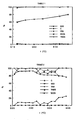
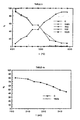
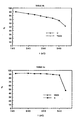
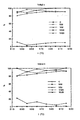
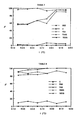
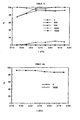
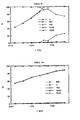
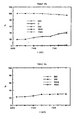
- the SO 2 concentrations generally ranged between 0.29% and 3.37%. It was demonstrated that the inventive catalysts were very effective for the conversion of low concentrations of SO 2 to elemental sulfur. It was also demonstrated that syngas and H 2 S can be effectively used as reductants for the reduction of SO 2 to elemental sulfur.
- the following test provides characteristics of inventive catalysts incorporating rare earth metals, using CO as a reductant with high SO 2 concentrations in the feed stock.
- SO 2 produced from industrial sources is often admixed with one or more gaseous contaminants, such as H 2 O, H 2 S, COS, and O 2 . As reported in the literature, these contaminants drastically decrease sulfur yield when using the current catalysts.
- the ⁇ -aluminum oxide substrate [ ⁇ -Al 2 O 3 ] was obtained from A. Johnson Matthey Company, Word Hill, MA, FW 1001.96; 96+% including 3% C. They were in the form of approximately 3.2 mm tablets with a surface area of 175m 2 /g and a density of 3.5-3.9. The mixture was then stirred in a crucible placed on a heating pad until the mixture was dry. This step removed water and decomposed the nitrates. 3. The solid mixture of step 2 was heated in a Muffle oven at 200°C for 0.5 hour and then at 450°C for 1 hour to further decompose the nitrate components. The Muffle oven was then turned off and allowed to equilibrate to room temperature.
- step 5 The solid mixture produced in step 5 were then calcined in a Muffle oven in a stepwise manner at 250°C for 0.5 hours, 450°C for 0.5 hours, and 600°C for 4 hours. The oven was then switched off and allowed to equilibrate to ambient temperature. The solid mixture was then removed. 7.
- the solid mixture of step 6 was sulfided with 20-30% H2S (the balance N 2 ) at a space velocity of 1,000 ml/gh at 600°C. The sulfidation is completed when the outlet H 2 S concentration reaches the inlet H 2 S concentration
Landscapes
- Chemical & Material Sciences (AREA)
- Organic Chemistry (AREA)
- Engineering & Computer Science (AREA)
- Chemical Kinetics & Catalysis (AREA)
- Materials Engineering (AREA)
- Environmental & Geological Engineering (AREA)
- Inorganic Chemistry (AREA)
- Health & Medical Sciences (AREA)
- Biomedical Technology (AREA)
- Analytical Chemistry (AREA)
- General Chemical & Material Sciences (AREA)
- Oil, Petroleum & Natural Gas (AREA)
- Catalysts (AREA)
Applications Claiming Priority (2)
| Application Number | Priority Date | Filing Date | Title |
|---|---|---|---|
| US09/006,702 US6297189B1 (en) | 1998-01-14 | 1998-01-14 | Sulfide catalysts for reducing SO2 to elemental sulfur |
| EP99903101A EP1062036A4 (fr) | 1998-01-14 | 1999-01-14 | Catalyseurs sulfures pour la reduction de so 2? en soufre |
Related Parent Applications (1)
| Application Number | Title | Priority Date | Filing Date |
|---|---|---|---|
| EP99903101A Division EP1062036A4 (fr) | 1998-01-14 | 1999-01-14 | Catalyseurs sulfures pour la reduction de so 2? en soufre |
Publications (1)
| Publication Number | Publication Date |
|---|---|
| EP1897614A2 true EP1897614A2 (fr) | 2008-03-12 |
Family
ID=21722168
Family Applications (2)
| Application Number | Title | Priority Date | Filing Date |
|---|---|---|---|
| EP99903101A Withdrawn EP1062036A4 (fr) | 1998-01-14 | 1999-01-14 | Catalyseurs sulfures pour la reduction de so 2? en soufre |
| EP07022212A Withdrawn EP1897614A2 (fr) | 1998-01-14 | 1999-01-14 | Catalyseurs de sulfide pour réduire le SO2 à du sulfure élémentaire |
Family Applications Before (1)
| Application Number | Title | Priority Date | Filing Date |
|---|---|---|---|
| EP99903101A Withdrawn EP1062036A4 (fr) | 1998-01-14 | 1999-01-14 | Catalyseurs sulfures pour la reduction de so 2? en soufre |
Country Status (5)
| Country | Link |
|---|---|
| US (2) | US6297189B1 (fr) |
| EP (2) | EP1062036A4 (fr) |
| AU (1) | AU2320599A (fr) |
| CA (1) | CA2319181C (fr) |
| WO (1) | WO1999036174A1 (fr) |
Cited By (1)
| Publication number | Priority date | Publication date | Assignee | Title |
|---|---|---|---|---|
| RU2445162C2 (ru) * | 2010-03-23 | 2012-03-20 | Российская Федерация в лице Министерства промышленности и торговли Российской Федерации | Катализатор (варианты) и способ восстановления диоксида серы из серосодержащих газов (варианты) |
Families Citing this family (12)
| Publication number | Priority date | Publication date | Assignee | Title |
|---|---|---|---|---|
| KR100487944B1 (ko) * | 2002-06-11 | 2005-05-06 | 부경대학교 산학협력단 | 이산화황가스의 선택적 환원용 촉매 및 이를 이용한이산화황의 제거방법 |
| CA2455011C (fr) | 2004-01-09 | 2011-04-05 | Suncor Energy Inc. | Traitement de mousse bitumineuse par injection de vapeur en ligne |
| US7351392B2 (en) * | 2004-03-03 | 2008-04-01 | Shell Oil Company | Process for the high recovery efficiency of sulfur from an acid gas stream |
| EP1720798A2 (fr) * | 2004-03-03 | 2006-11-15 | Shell Internationale Research Maatschappij B.V. | Procede pour la recuperation a efficacite elevee de soufre a partir d'un flux de gaz acide |
| US7722852B2 (en) * | 2007-07-05 | 2010-05-25 | Worleyparsons Group, Inc. | Process for the thermal reduction of sulfur dioxide to sulfur |
| EP2753412A4 (fr) * | 2011-09-05 | 2015-03-11 | Emission Logistics Pty Ltd | Système antipollution |
| WO2013098328A1 (fr) | 2011-12-27 | 2013-07-04 | Shell Internationale Research Maatschappij B.V. | Procédé amélioré de récupération de soufre élémentaire |
| US9023555B2 (en) * | 2012-02-24 | 2015-05-05 | Alan Devoe | Method of making a fuel cell device |
| EA032617B1 (ru) * | 2012-11-08 | 2019-06-28 | Стамикарбон Б.В. Эктин Андер Те Нейм Оф Мт Инновейшн Сентр | Способ извлечения серы с одновременным получением водорода |
| CN110787813B (zh) * | 2019-10-21 | 2022-07-05 | 北京北大先锋科技有限公司 | 燃煤烟气基so2催化还原制备单质硫的催化剂及制备方法 |
| CN113023684B (zh) * | 2021-03-09 | 2022-09-13 | 山东大学 | 一种炭/铁硫化物催化还原高硫烟气制备硫磺的系统和方法 |
| CN115285941B (zh) * | 2022-06-24 | 2024-02-20 | 上海交通大学 | 一种低温催化直接还原烟气中so2制硫磺的方法 |
Citations (3)
| Publication number | Priority date | Publication date | Assignee | Title |
|---|---|---|---|---|
| US5242673A (en) | 1991-11-12 | 1993-09-07 | Massachusetts Institute Of Technology | Elemental sulfur recovery process |
| US5384301A (en) | 1991-11-12 | 1995-01-24 | Massachusetts Institute Of Technology | Catalyst for elemental sulfur recovery process |
| US5494879A (en) | 1993-02-26 | 1996-02-27 | Regents, University Of California | Catalyst for the reduction of sulfur dioxide to elemental sulfur |
Family Cites Families (14)
| Publication number | Priority date | Publication date | Assignee | Title |
|---|---|---|---|---|
| US3864459A (en) * | 1969-04-21 | 1975-02-04 | Alvin B Stiles | Process for the economical use of refractory reducing gases for the reduction of sulfur dioxide |
| NL7315573A (nl) * | 1973-11-14 | 1975-05-16 | Shell Int Research | Katalysatorbereiding. |
| US3966640A (en) * | 1974-06-28 | 1976-06-29 | The Harshaw Chemical Company | Supported cobalt sulfate desulfurization catalyst |
| US4491639A (en) * | 1982-09-30 | 1985-01-01 | Gas Research Institute | Methods of making high activity transition metal catalysts |
| US4831060A (en) * | 1984-07-30 | 1989-05-16 | The Dow Chemical Company | Mixed alcohols production from syngas |
| US4882360A (en) * | 1984-07-30 | 1989-11-21 | The Dow Chemical Company | Process for producing alcohols from synthesis gas |
| US4626339A (en) * | 1984-09-28 | 1986-12-02 | Exxon Research And Engineering Company | Supported chromium-molybdenum and tungsten sulfide catalysts |
| US4748142A (en) * | 1984-09-28 | 1988-05-31 | Exxon Research And Engineering Company | Supported chromium-molybdenum and tungsten sulfide catalysts |
| US4825013A (en) * | 1984-11-05 | 1989-04-25 | The Dow Chemical Company | Preparation of ethanol and higher alcohols from lower carbon number alcohols |
| US4839326A (en) * | 1985-04-22 | 1989-06-13 | Exxon Research And Engineering Company | Promoted molybdenum and tungsten sulfide catalysts, their preparation and use |
| US4748141A (en) * | 1987-04-29 | 1988-05-31 | Shell Oil Company | Metal sulfide catalyst preparation |
| US4902404A (en) * | 1988-07-05 | 1990-02-20 | Exxon Research And Engineering Company | Hydrotreating process with catalyst staging |
| AU5466294A (en) * | 1992-11-18 | 1994-06-08 | Akzo Nobel N.V. | Process for removing sulphur dioxide from a sulphur dioxide-containing gas stream |
| US5804153A (en) * | 1994-12-16 | 1998-09-08 | The Hong Kong University Of Science & Technology | Catalytic removal of sulfur dioxide form flue gas |
-
1998
- 1998-01-14 US US09/006,702 patent/US6297189B1/en not_active Expired - Lifetime
-
1999
- 1999-01-14 WO PCT/US1999/000848 patent/WO1999036174A1/fr not_active Ceased
- 1999-01-14 EP EP99903101A patent/EP1062036A4/fr not_active Withdrawn
- 1999-01-14 AU AU23205/99A patent/AU2320599A/en not_active Abandoned
- 1999-01-14 CA CA002319181A patent/CA2319181C/fr not_active Expired - Fee Related
- 1999-01-14 EP EP07022212A patent/EP1897614A2/fr not_active Withdrawn
-
2000
- 2000-12-05 US US09/729,366 patent/US20010000475A1/en not_active Abandoned
Patent Citations (3)
| Publication number | Priority date | Publication date | Assignee | Title |
|---|---|---|---|---|
| US5242673A (en) | 1991-11-12 | 1993-09-07 | Massachusetts Institute Of Technology | Elemental sulfur recovery process |
| US5384301A (en) | 1991-11-12 | 1995-01-24 | Massachusetts Institute Of Technology | Catalyst for elemental sulfur recovery process |
| US5494879A (en) | 1993-02-26 | 1996-02-27 | Regents, University Of California | Catalyst for the reduction of sulfur dioxide to elemental sulfur |
Non-Patent Citations (7)
| Title |
|---|
| BIERBOWERE ET AL., CHEMICAL ENGINEERING PROGRESS AUGUST, 1974 |
| FLERPING ET AL., INDUSTRIAL ENGINEERING CHEMISTRY, vol. 42, 1950, pages 2249 |
| HAAS ET AL., JOURNAL OF CATALYSIS, vol. 29, 1973, pages 264 - 269 |
| KHALAFALLA ET AL., JOURNAL OF CATALYSIS, vol. 24, 1972, pages 121 - 129 |
| KHIM. PROM., vol. 1, 1989, pages 37 - 9 |
| ZH. PRIKL., KHIM., vol. 61, no. 1, 1988, pages 16 - 20 |
| ZH. PRIKL., KHIM., vol. 61, no. 8, 1988, pages 1891 - 4 |
Cited By (1)
| Publication number | Priority date | Publication date | Assignee | Title |
|---|---|---|---|---|
| RU2445162C2 (ru) * | 2010-03-23 | 2012-03-20 | Российская Федерация в лице Министерства промышленности и торговли Российской Федерации | Катализатор (варианты) и способ восстановления диоксида серы из серосодержащих газов (варианты) |
Also Published As
| Publication number | Publication date |
|---|---|
| WO1999036174A1 (fr) | 1999-07-22 |
| EP1062036A1 (fr) | 2000-12-27 |
| EP1062036A4 (fr) | 2004-10-27 |
| CA2319181C (fr) | 2007-08-21 |
| US20010000475A1 (en) | 2001-04-26 |
| AU2320599A (en) | 1999-08-02 |
| CA2319181A1 (fr) | 1999-07-22 |
| US6297189B1 (en) | 2001-10-02 |
Similar Documents
| Publication | Publication Date | Title |
|---|---|---|
| US5384301A (en) | Catalyst for elemental sulfur recovery process | |
| EP0947234A1 (fr) | Procédé catalytique sec à une étape pour la séparation simultanée de dioxyde de soufre et d'oxydes d'azote de courant gazeux | |
| Ma et al. | A regenerable Fe/AC desulfurizer for SO2 adsorption at low temperatures | |
| US4124695A (en) | Process for the oxidation of sulfur dioxide to sulfur trioxide | |
| US6297189B1 (en) | Sulfide catalysts for reducing SO2 to elemental sulfur | |
| US4082837A (en) | Process for the selective catalytic oxidation of partially oxidized inorganic compounds | |
| US3931390A (en) | Catalytic process for removing sulfur dioxide from gas streams | |
| US5494879A (en) | Catalyst for the reduction of sulfur dioxide to elemental sulfur | |
| Wang et al. | Catalytic reduction of SO2 with CO over supported iron catalysts | |
| CN1105174A (zh) | 用高选择性催化程序将气体中低浓度硫化氢直接氧化成硫的方法和实施该方法和催化剂 | |
| US5252528A (en) | Hot gas, regenerative, supported H2 S sorbents | |
| Shi et al. | Low temperature NH3 selective catalytic reduction of NOx over CeOx-biochar catalyst prepared by air oxidation | |
| US5795554A (en) | Method for preparing the oxysulfides of rare earth elements | |
| US6113871A (en) | Catalytic decomposition of ammonia and hydrogen cyanide in coke-oven gas | |
| JP7423320B2 (ja) | 二酸化炭素を主成分とするガス中の硫黄酸化物の除去方法 | |
| JPS6120342B2 (fr) | ||
| Mousavi et al. | Catalytic reduction of SO2 with CH4 to elemental sulfur: A comparative analysis of alumina, copper-alumina and nickel-alumina catalysts | |
| JPH08503651A (ja) | 二酸化硫黄含有ガス流から二酸化硫黄を除去する方法 | |
| KR20090031553A (ko) | 기체에서 중금속을 제거하는 방법 | |
| JP2022140290A (ja) | 二酸化炭素を主成分とするガス中の硫黄酸化物の除去方法 | |
| JP2600091B2 (ja) | 炭酸ガス還元用硫化モリブデン触媒及び一酸化炭素の製造方法 | |
| KR0128207B1 (ko) | 아황산가스로부터 원소 황을 회수하기 위한 선택 환원반응용 촉매의 제조 및 이용 방법 | |
| KR100487944B1 (ko) | 이산화황가스의 선택적 환원용 촉매 및 이를 이용한이산화황의 제거방법 | |
| JPS6153104B2 (fr) | ||
| CA1080441A (fr) | Procede catalytique pour eliminer l'anhydride sulfureux dans les courants gazeux |
Legal Events
| Date | Code | Title | Description |
|---|---|---|---|
| PUAI | Public reference made under article 153(3) epc to a published international application that has entered the european phase |
Free format text: ORIGINAL CODE: 0009012 |
|
| AC | Divisional application: reference to earlier application |
Ref document number: 1062036 Country of ref document: EP Kind code of ref document: P |
|
| AK | Designated contracting states |
Kind code of ref document: A2 Designated state(s): AT BE CH CY DE DK ES FI FR GB GR IE IT LI LU MC NL PT SE |
|
| STAA | Information on the status of an ep patent application or granted ep patent |
Free format text: STATUS: THE APPLICATION IS DEEMED TO BE WITHDRAWN |
|
| 18D | Application deemed to be withdrawn |
Effective date: 20090801 |