EP1900163B1 - Effizientes adressen-caching für pakettelefoniedienste - Google Patents
Effizientes adressen-caching für pakettelefoniedienste Download PDFInfo
- Publication number
- EP1900163B1 EP1900163B1 EP06728371.3A EP06728371A EP1900163B1 EP 1900163 B1 EP1900163 B1 EP 1900163B1 EP 06728371 A EP06728371 A EP 06728371A EP 1900163 B1 EP1900163 B1 EP 1900163B1
- Authority
- EP
- European Patent Office
- Prior art keywords
- database
- record
- telephone number
- uri
- service provider
- Prior art date
- Legal status (The legal status is an assumption and is not a legal conclusion. Google has not performed a legal analysis and makes no representation as to the accuracy of the status listed.)
- Active
Links
Images


Classifications
-
- H—ELECTRICITY
- H04—ELECTRIC COMMUNICATION TECHNIQUE
- H04M—TELEPHONIC COMMUNICATION
- H04M7/00—Arrangements for interconnection between switching centres
- H04M7/12—Arrangements for interconnection between switching centres for working between exchanges having different types of switching equipment, e.g. power-driven and step by step or decimal and non-decimal
- H04M7/1205—Arrangements for interconnection between switching centres for working between exchanges having different types of switching equipment, e.g. power-driven and step by step or decimal and non-decimal where the types of switching equipement comprises PSTN/ISDN equipment and switching equipment of networks other than PSTN/ISDN, e.g. Internet Protocol networks
- H04M7/128—Details of addressing, directories or routing tables
-
- H—ELECTRICITY
- H04—ELECTRIC COMMUNICATION TECHNIQUE
- H04L—TRANSMISSION OF DIGITAL INFORMATION, e.g. TELEGRAPHIC COMMUNICATION
- H04L12/00—Data switching networks
- H04L12/66—Arrangements for connecting between networks having differing types of switching systems, e.g. gateways
-
- H—ELECTRICITY
- H04—ELECTRIC COMMUNICATION TECHNIQUE
- H04L—TRANSMISSION OF DIGITAL INFORMATION, e.g. TELEGRAPHIC COMMUNICATION
- H04L61/00—Network arrangements, protocols or services for addressing or naming
- H04L61/45—Network directories; Name-to-address mapping
- H04L61/4557—Directories for hybrid networks, e.g. including telephone numbers
-
- H—ELECTRICITY
- H04—ELECTRIC COMMUNICATION TECHNIQUE
- H04L—TRANSMISSION OF DIGITAL INFORMATION, e.g. TELEGRAPHIC COMMUNICATION
- H04L61/00—Network arrangements, protocols or services for addressing or naming
- H04L61/58—Caching of addresses or names
-
- H—ELECTRICITY
- H04—ELECTRIC COMMUNICATION TECHNIQUE
- H04M—TELEPHONIC COMMUNICATION
- H04M7/00—Arrangements for interconnection between switching centres
- H04M7/12—Arrangements for interconnection between switching centres for working between exchanges having different types of switching equipment, e.g. power-driven and step by step or decimal and non-decimal
- H04M7/1205—Arrangements for interconnection between switching centres for working between exchanges having different types of switching equipment, e.g. power-driven and step by step or decimal and non-decimal where the types of switching equipement comprises PSTN/ISDN equipment and switching equipment of networks other than PSTN/ISDN, e.g. Internet Protocol networks
- H04M7/1225—Details of core network interconnection arrangements
- H04M7/123—Details of core network interconnection arrangements where the packet-switched network is an Internet Protocol Multimedia System-type network
-
- H—ELECTRICITY
- H04—ELECTRIC COMMUNICATION TECHNIQUE
- H04L—TRANSMISSION OF DIGITAL INFORMATION, e.g. TELEGRAPHIC COMMUNICATION
- H04L61/00—Network arrangements, protocols or services for addressing or naming
- H04L61/45—Network directories; Name-to-address mapping
- H04L61/4505—Network directories; Name-to-address mapping using standardised directories; using standardised directory access protocols
- H04L61/4511—Network directories; Name-to-address mapping using standardised directories; using standardised directory access protocols using domain name system [DNS]
-
- H—ELECTRICITY
- H04—ELECTRIC COMMUNICATION TECHNIQUE
- H04M—TELEPHONIC COMMUNICATION
- H04M2201/00—Electronic components, circuits, software, systems or apparatus used in telephone systems
- H04M2201/18—Comparators
-
- H—ELECTRICITY
- H04—ELECTRIC COMMUNICATION TECHNIQUE
- H04M—TELEPHONIC COMMUNICATION
- H04M2201/00—Electronic components, circuits, software, systems or apparatus used in telephone systems
- H04M2201/36—Memories
Definitions
- the present invention relates generally to packet telephony, and specifically to methods and systems for storing and accessing subscriber addresses for packet telephony services.
- ITSPs Internet telephony service providers
- VoIP Voice over Internet Protocol
- POTS plain old telephone service
- ITSPs provision their subscribers with Direct Inward Dial (DID) numbers in the standard format of conventional telephone numbers, as mandated by Recommendation E.164 of the International Telecommunications Union (ITU-T).
- DID Direct Inward Dial
- ITU-T International Telecommunications Union
- ITSPs deploy gateways to interface between their IP networks and the public switched telephone network (PSTN), so as to enable direct dialing between PSTN users and their subscribers' IP phones.
- PSTN public switched telephone network
- the ITSP routes the call to the destination over the EP network.
- the ITSP cannot generally determine whether the number indicates an IP phone or PSTN phone. Therefore, the ITSP must generally route the call through a gateway to the PSTN. If the destination number is a DID assigned by another ITSP, the call is then routed over the PSTN to the gateway of the destination ITSP.
- ENUM has been developed to provide standardized mapping between E.164 telephone numbers and Internet uniform resource identifiers (LTRJs) using the well- known Domain Name System (DNS).
- ENUM is defined by Faltstrom in Request for Comments (RFC) 2916 of the Internet Engineering Task Force (IETF), entitled “E.164 Number and DNS” (2000).
- RFC Request for Comments
- IETF Internet Engineering Task Force
- IETF Internet Engineering Task Force
- IETF Internet Engineering Task Force
- WO 2004/036888 describes a method and system of telephony wherein routing information is obtained from previously cached information or from a gatekeeper.
- An originating gateway in a network receives a request from a PSTN user for a connection and determines whether pertinent routing information is cached. If available, the cached routing information is used to attempt to establish a connection. If no previously established routing is available, the originating gateway requests preferred routing from a gatekeeper, including prioritized selections of terminating gateways through which to make a connection to a designated call recipient.
- US-A-5227778 describes a data communications network having a number of servers and a number of service providers which employs a protocol for translating service names to network addresses.
- a server sends a multi-cast message to all service providers requesting a service needed by one of the user terminals connected to this server. In the request, the service is identified by function, rather than by address. Any node which provides this service, receiving the request and able to reply, sends a reply message immediately to the server. The reply message identifies the node by network address. If the service provider cannot reply, a third party node can send a reply to identify the provider by address. If the server does not receive a reply from either the provider or a third party, then a cache of network addresses of services most recently used by the server is searched for this particular service.
- US-A-2005/0025294 describes a telephone applicable to PSTN and IP network having functions of obtaining, when a call is originated by entering a PSTN telephone number, an IP network telephone number of a destination telephone corresponding to the PSTN telephone number from a telephone number translation server connected to the IP network, obtaining IP address information of the destination telephone corresponding to the IP network telephone number from a call agent connected to the IP network and establishing call connection with the destination telephone via the IP network by using the IP address information.
- a central database holds records associating telephone numbers with corresponding Internet addresses, such as URIs or IP addresses.
- the database holds information regarding DIDs assigned by multiple different ITSPs and enterprises.
- the records are maintained in ENUM format and are accessed using DNS.
- DNS names, protocols, standards may be used to store and transfer the database records.
- the ITSP may consult the central database in order to determine whether the destination number is assigned to an IP phone and, if so, to receive a packet network address to which the call should be routed. When the destination number does not appear in the database, the ITSP routes the call to the PSTN.
- an ITSP maintains a local cache, in which it stores records received from the central database.
- the ITSP queries the central database, and then stores a record in its local cache based on the response that it receives.
- the record in the local cache indicates the packet network address (such as a URI or IP address) to which calls to that number should be routed. If the central database returns a negative response, indicating that the telephone number was not found, the local cache stores a record indicating that calls to that number should be routed to the PSTN.
- the ITSP will discover the appropriate routing information - packet network or PSTN - in the cache and will not have to consult the central database again. Since subscribers place the large majority of their calls (typically about 80%) to numbers that they have already called in the past, the ITSP will have a high rate of cache hits, without requiring enormous amounts of memory to hold the cache records.
- a method for telephony including:
- the second communication is initiated without sending a further provider request to the one or more subsequent database.
- the provider request may be a first provider request for a first record with respect to a first telephone number
- the method may include receiving at the facility of the telephone provider a third subscriber request to place a third call to a second telephone number, responsively to the third subscriber request, sending a second provider request to the remote server with respect to the second telephone number, and upon receiving a reply from the remote server indicating that the second record was not found in the database, placing the third call via a public switched telephone network (PSTN), and storing a second record in the local cache indicating that further calls to the second telephone number are to be placed via the PSTN.
- PSTN public switched telephone network
- the method includes selecting a group of the telephone numbers in the database that share a common characteristic, and downloading to the local cache from the remote server all of the records with respect the telephone numbers in the group.
- selecting the group includes making a count of the records that have been stored in the local cache responsively to subscriber requests to place calls to the telephone numbers that share the common characteristic, and downloading all of the records with respect the telephone numbers in the group if the count is equal at least to a predetermined threshold.
- the common characteristic may include at least one of a country code and an area code.
- storing the record includes setting an update time in the record, and upon expiration of the update time, automatically sending a further provider request to the remote server in order to update the record, independently of receiving subscriber requests to call the specified telephone number, hi one embodiment, storing the record further includes setting a persistence time in the record, and automatically purging the record if no further subscriber request to call the specified telephone is placed before expiration of the persistence time.
- sending the provider request and receiving the record include communicating with the remote server in accordance with a first protocol, while reading the record may include delivering the record from the local cache to the telephone service provider in accordance with a second protocol, different from the first protocol.
- the record is received over a public network from the remote server in an encrypted format, and the method includes decrypting the record at the facility of the telephone service provider.
- the record that is stored in the local cache may also be encrypted. Additionally or alternatively, reading the record from the local cache may include providing the network address subject to a data access restriction.
- the telephone service provider that receives the first subscriber request is a first telephone service provider
- the specified telephone number is assigned to a subscriber of a second telephone service provider
- the packet network address indicated by the record may belong to an intermediary server, which is configured to connect the first and second calls to the specified telephone number without enabling the first telephone service provider to determine that the calls have been placed via the second telephone service provider.
- the packet network address belonging to the intermediary server is a first packet network address
- the method includes associating access permissions with the records at the remote server, so that responsively to the permissions associated with the record with respect to the specified telephone number, the remote server furnishes to a third telephone service provider a second packet network address belonging to the second telephone service provider for use in placing a third call to the specified telephone number, while furnishing only the first packet network address to the first telephone service provider.
- sending the provider request includes sending a Domain Name System (DNS) request to the remote server, and placing the first and second calls includes placing Voice over Internet Protocol (VoIP) calls.
- DNS Domain Name System
- VoIP Voice over Internet Protocol
- sending the provider request includes sending a first provider request with respect to the specified telephone number to a first remote server, receiving a reply from the first remote server indicating that the record was not found in the database, sending a second provider request with respect to the specified telephone number to a second remote server, and upon receiving the record from the second remote server, storing the record in the local cache.
- storing the record includes storing the record at a node of a tree structure in the local cache, wherein the node is selected responsively to the specified telephone number, and wherein reading the record includes searching the tree.
- IP Internet Protocol
- the remote server is arranged to receive a selection of a group of the telephone numbers in the database that share a common characteristic, and to download to the local server all of the records with respect the telephone numbers in the group. At least one of the remote server and the local server may be arranged to select the group of the telephone numbers responsively to a count of subscriber requests to place calls to the telephone numbers that share the common characteristic.
- Fig. 1 is a block diagram that schematically illustrates a system 20 for Internet-based telephony, in accordance with an embodiment of the present invention.
- the system permits Internet telephony users to place calls over either a packet network 22, such as the public Internet, or a PSTN 24, depending on the destination telephone number of each call.
- This inter-network functionality is supported by a central database 28 containing records indicating the correspondence between E.164 telephone numbers and packet network addresses, in the form of URIs that can be placed directly into a SIP message for routing.
- the central database is accessible via a central server 26, which is typically maintained by a trusted central authority.
- database 28 stores records in ENUM format and may be accessed over network 22 using DNS protocols. Alternatively, other data formats and protocols may be used.
- an IP telephony subscriber places a call using an IP phone 30 to a certain destination telephone number.
- IP phone 30 accordingly sends a Session Initiation Protocol (SIP) INVITE message to the subscriber's ITSP 32 asking to establish the call to the destination number.
- ITSP 32 queries a local intelligent caching server (LICS) 42 (typically using either ENUM or SIP, for example) for the destination URI.
- LICS queries database 28 via server 26.
- Server 26 responds to the LICS by indicating, for example, that the destination number belongs to a subscriber that is served by a certain SIP proxy operated by a destination ITSP 34.
- ITSP 32 returns this response to ITSP 32, which then sends a SIP INVITE message to ITSP 34, which locates the subscriber to whom the destination number is assigned - in this case on an IP phone 36 - and sends a SIP INVITE message to the IP address of phone 36.
- ITSPs 32 and 34 thus connect IP phones 30 and 36 to communicate via packet network 22.
- server 26 informs ITSP 32 (either directly or via the LICS) that ITSP 34 is the proxy for phone 36 only if ITSP 34 has given permission to release this information to ITSP 32.
- server 26 responds to the query by ITSP 32 by indicating that the call to the destination number should be routed to an anonymizing intermediate server 37, which may be operated by or affiliated with the central authority. Server 37 then routes the call to ITSP 34 without revealing the actual call destination to ITSP 32.
- the destination telephone number indicated in the query by ITSP 32 may not be listed in database 28. There will be no listing, for example, when the destination number belongs to a PSTN phone 40 or when the destination number belongs to an ITSP or enterprise that has not released its records to central database 28. In this case, server 26 will return a negative response, indicating that the number in question was not found in the central database. (Server 26 may also return a negative response when ITSP 32 is not authorized to access records belonging to ITSP 34.) As a result of the negative response, ITSP 32 will route the call to a VoIP gateway 38, which will then place the call to the destination number via PSTN 24.
- the query and response-handling functions of ITSP 32 may be performed by LICS 42.
- the LICS maintains a cache containing records of correspondence between destination telephone numbers and packet network addresses (typically in the form of URIs). For some destination telephone numbers, the cache contains negative records, reflecting negative responses from server 26, which indicate that calls to these numbers are to be placed via the PSTN.
- ITSP 32 Upon receiving a call request from a subscriber, ITSP 32 typically consults LICS 42 before taking further action. In most cases, the LICS will return call routing instructions from the cache without the necessity of querying central database 28.
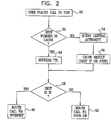
- Fig. 2 is a flow chart that schematically illustrates a method for placing calls via ITSP 32, in accordance with an embodiment of the present invention. (The same method may be used, mutatis mutandis , by ITSP 34 and other ITSPs that are affiliated with the central authority that maintains database 28.)
- the method is initiated when the user of IP phone 30 places a call to a destination telephone number via ITSP 32, at a call initiation step 50.
- the ITSP refers the destination number to LICS 42, which checks whether the number is recorded in the local cache that it maintains, at a cache checking step 52.
- the cache may also contain DID numbers that are assigned to subscribers of ITSP 32, along with the corresponding IP addresses, in order to avoid having to make two separate lookups for external telephone numbers and internal DID numbers.
- the data may be stored in the cache using any suitable method known in the art.
- the data may be stored in a very long bit array that contains every possible E.164 number, offset by the lowest one.
- the LICS may then check each queried number simply by reading from the array at the offset indicated by the number.
- the data may be stored in a denary tree structure with ten roots, wherein each number is stored at the appropriate node.
- the LICS in this case checks each queried number by traversing the tree, so that for a ten-digit number, a maximum of n searches are required.
- standard text-based data storage and indexing may be applied.
- LICS 42 sends a query to server 26 to ask for the packet network address associated with the number, at a query step 54.
- LICS 42 may wait for a response from the server before replying to the ITSP, or it may alternatively send an immediate negative response to the ITSP (so that the ITSP will route the call - presumably via the PSTN - while avoiding the delay of waiting for the response from server 26).
- LICS 42 receives the response from server 26, it caches the result, at a caching step 56.
- the cached result may be the URI address of a SIP proxy operated by ITSP 34 or by intermediate server 37, or it may even identify the URI or IP address of phone 36.
- the result may depend, inter alia , on the level of trust between ITSPs 32 and 34.
- LICS 42 may cache a negative result, to indicate that calls to the destination number in question are to be routed to PSTN 24 via gateway 38. This sort of "negative caching" - indicating telephone numbers for which no record will be found in database 28 - saves substantial time in avoiding transmission of unnecessary queries to the database.
- the DNS and ENUM protocols themselves make no provision for storing this sort of negative results.
- LICS 42 may query multiple remote servers, either simultaneously or sequentially. For example, upon receiving a negative response from a first server with respect to a given number, indicating that the first server does not have a packet network address for the number, the LICS may then query a second server. If the second server returns a positive response, with a packet network address, then the LICS caches this result, rather than the negative (PSTN) result returned by the first server.
- the query system used by the LICS differs from the DNS query protocol, in that the LICS continues to query different servers even after having received a authoritative - although negative - response from the first server.
- LICS 42 returns the destination address (whether on network 22 or gateway 38) to the SIP proxy of ITSP 32, at a destination determination step 58. If the destination is a URI or IP address on packet network 22, the SIP proxy routes the call to the appropriate address, at an Internet routing step 60. Otherwise, in the case of a negative result, the SIP proxy routes the call to gateway 38, at a PSTN routing step 62.
- LICS 42 discovers a cache hit at step 52, then there is no need to query database 28 before placing the call. Instead, LICS 42 refreshes a persistence time-to-live (TTL) timestamp, typically defined by the ITSP, for this entry in the cache, at a TTL refresh step 64.
- TTL persistence time-to-live
- This timestamp controls the persistence of records in the local cache and is used by LICS 42 in periodically purging (also known as "aging out") entries with stale timestamps in order to free up memory space in the cache. (Details of this process are described hereinbelow with reference to Fig. 3 .)
- Entries in the LICS can also become stale due to changes at the central server.
- a number that was previously listed as belonging to a certain ITSP was ported out of the control of the ITSP, and may have even been changed to a PSTN number.
- an update TTL timestamp set by the central server, may be associated with each entry. This latter timestamp indicates when the central server wishes the LICS to re-request a number. This TTL is attached to the response sent to the LICS from the central server.
- LICS 42 returns the cached destination address to the SIP proxy at step 58, which may proceed to place the call as described above.
- the LICS may have already automatically responded negatively to the first query from the ITSP regarding a given number. In this case, the LICS may proceeds to query database 28 in non-real-time.
- Fig. 3 is a table that schematically illustrates records 72 in an exemplary cache 70 of LICS 42, in accordance with an embodiment of the present invention.
- Each record is indexed by the destination E.164 telephone number and has an Internet destination field indicating the URI or IP address to which calls to the telephone number are to be directed.
- cache 70 may also contain the DID numbers and IP addresses of subscribers of ITSP 32. Records that are to be directed to PSTN 24 may by marked by a flag (not shown) for this purpose, and/or may contain the IP address of gateway 38 in the destination field.
- each record 72 contains two TTLs:
- the persistence TTL value determines the ultimate overall size of the LICS cache, whereas the update TTL sets the maximum time before changes in information are propagated down to the LICS from database 28. For example, the first time a given telephone number is dialed, LICS 42 may receive a negative answer from database 28, indicating that the number resides in the PSTN domain. The LICS caches the information and assigns a persistence TTL of thirty days and an update TTL of seven days. When the number is dialed again on day five, LICS 42 adds five days to the persistence TTL value, but leaves the update TTL unchanged. On day seven, when the update TTL expires, the LICS requests an update from the central authority regarding the telephone number of the record in order to ensure that the record is current. Upon receiving the update, the LICS resets the update TTL to seven days later. In the event that the number is not dialed again, and the persistence TTL expires, the LICS will purge the record from the cache.
- the use of the update TTL enables the LICS to keep up with changes in telephone number location data. For example, in countries that support Local Number Portability (LNP), such as the United States, customers who transfer to a VoIP service may keep their existing PSTN telephone number.
- LNP Local Number Portability
- the update TTL will determine the maximum time that can pass before the LICS becomes aware of the change.
- the same sort of updating applies to numbers that are transferred from one ITSP to another, as well as to changes in the IP addresses of the ITSPs themselves (assuming anonymity is not required).
- LICS 42 typically reviews the TTL values in cache 70 and updates or purges records 72 as a background process, independently of the query/response process of Fig. 2 .
- the update/purge process has little or no effect on the real-time performance of the LICS.
- synchronization of the cached records with database 28 in this manner is controlled and carried out locally by the LICS, it can be carried out without requiring that server 26 and database 28 be aware in any way of the state of the LICS cache or involved in any way in logging and managing cache updates. This scheme reduces the burden on the central server relative, for example, to DNS update schemes that are known in the art.
- ITSPs may be unwilling to release subscriber information to non- trusted third parties, because of the risk that these parties (such as rival ITSPs) will take advantage of the information to discover and make unauthorized approaches to their subscribers.
- server 37 is an intermediary proxy in VoIP calls in order to maintain the mutual anonymity of the ITSPs. This measure provides only partial protection, however, because DNS and ENUM are open standards, in which records are maintained in plain alphanumeric form. Therefore, absent other protective measures, third parties may succeed without great effort in reading and using the ENUM records posted in database 28 by an ITSP.
- database 28 may store and transmit records in encrypted form.
- a LICS (or other party) will then be able to decrypt the information only if it has the required key.
- the LICS may store the data in encrypted form, including local disk backup, to protect from any access to the data other than genuine call queries. Other storage features may also be implemented to prevent unauthorized data mining. Access to the data held by the LICS may be limited to the defined query interfaces (such as ENUM or SIP) used by the ITSP, whereby the response is returned unencrypted for local processing by the ITSP.
- the LICS may use access control lists in processing queries so that only authorized parties are allowed to access cached data. Furthermore, queries may be analyzed to detect anomalous patterns that could be indicative of data mining attempts, and suspicious queries may thus be denied.
- encryption and authentication mechanisms and protocols known in the art such as Simple Object Access Protocol (SOAP) over HTTPS, may be used in transmitting data between server 26 and LICS 42.
- SOAP Simple Object Access Protocol
- the central authority may use access control lists in determining how to respond to LICS queries.
- different responses may be returned to the same query based on the identity of the querying party.
- confidential information may be passed to an authorized LICS, whereas generic, anonymized, or null data is returned to another, non-authorized LICS requesting the very same DID.
- An organization may have an anonymization requirement for all other organizations, other than those appearing on an authorized access list.
- server 26 when server 26 responds to a request from an authorized LICS regarding a number provisioned by the organization, it will provide a URI or IP address at which the number can be reached directly, while in other cases it will respond with the IP address of server 37, thus hiding the identity of the destination organization.
- the scheme described above assumes no foreknowledge of the distribution of telephone numbers among ITSPs. In some cases, however, specific codes are assigned to IP-destined phone numbers, or ranges of phone numbers are provisioned to ITSPs. In such situations, it may be more efficient for LICS 42 to store the range of numbers that are known in advance to be IP phones, rather than to cache the numbers individually. In such cases, the LICS may download and store the records for the entire range from database 28, in addition to individually querying and caching numbers outside the range.
- the LICS can give a definitive answer whenever a subscriber dials a telephone number in the region: If the LICS has the number in its cache, then it is an IP destination; otherwise, it is definitely a PSTN number.
- the LICS acts both as an Authoritative Name Server on a pre-defined range or ranges of numbers, and as a caching server on the remaining numbers.
- the control of the balance between the authoritative and cache functions can be implemented either directly, under the specific control of a system manager, or on an automated basis, based on call distribution analysis.
- the data held by the LICS is synchronized fully with the central database, so that the LICS as the authoritative server for these destinations, while for the less common call destinations, the caching mechanism is used.
- the authoritative and cache functions may be balanced in order to optimize query speed, data integrity and synchronization bandwidth. An optimization calculation for this purpose may be based on call destination analysis, number of distinct telephone number dialed and total number of telephone numbers, size of the main LICS data store, and sensitivity to remote querying as against local data storage.
- an ITSP in Germany may determine that its subscribers call mainly German phone numbers. There are only a few other ITSPs in Germany, and database 28 holds a few hundred thousand records of German phone numbers (beginning with the E.164 country code of "49"). The LICS of the German ITSP could then download all the records from database 28 that begin with "49.” Upon receiving any subsequent call starting with 49, the Gennan ITSP need not query database 28, since the LICS can always determine whether the call is destined for an IP phone (if there is an entry for the number in cache) or for the PSTN (if no entry is found). For dialed numbers outside Germany, the ITSP may use the method of Fig. 2 to cache both positive and negative records and to query database 28 on a call-by-call basis.
- Fig. 4 is a flow chart that schematically illustrates a hybrid method for updating LICS 42, in accordance with an embodiment of the present invention.
- This method combines the individual query and caching method of Fig. 2 with the block caching method described above, under dynamic, automatic control of the LICS.
- the ITSP is able to configure the LICS to automatically download and store all the records in database 28 for any region (for example, a given area code) that takes up more than a certain threshold fraction, such as 20%, of its cache space.
- LICS 32 receives and caches new individual records for telephone numbers dialed by subscribers of ITSP 32, at a record caching step 80. Periodically - after a certain number of queries or a certain amount of time has passed - the LICS counts the records its cache by region, at an entry counting step 82. If the number of records for a given region is greater than the threshold configured by the ITSP, the LICS sends a request to server 26 to download all records in database 28 for that region, at a download request step 84. Before receiving the records, LICS 42 purges all other entries (including the "negative records" of PSTN numbers) for the region in question from its local cache, at a purging step 86.
- the LICS marks the entire region as having been locally cached, at a cache marking step 88. This marking indicates to the LICS subsequently that queries for the region need never be referred to database 28 (except for background cache updates when the update TTL expires). If a dialed number in this region does not appear in the cache, the ITSP simply routes the call to PSTN 24.
- a new LICS installed by an ITSP in Southern Texas may initially work on a call-by-call basis, storing positive (IP) and negative (PSTN) records for telephone numbers dialed by its subscribers.
- IP positive
- PSTN negative
- the LICS may recognize that "1956" is the main call destination, and may therefore request from database 28 all entries in the 956 area code. From then on, local calls are all handled by the LICS without querying the central database.
- the LICS may determine that other regions are also called frequently (such as adjacent Texas regions with area code 361 or 830, or cross-border calls to Mexico with country code 52). At that point, the LICS downloads the records for these regions and purges all other entries associated with the regions from its cache.
- the ITSP may set the threshold that triggers region download at step 82 to optimize performance by heuristically maximizing the frequency of cache hits by the LICS.
- LICS 42 may use SIP REDIRECT messages to access database 28 via packet network 22 or may use Transaction Capabilities Application Part (TCAP) messages to access the database over a SS7 network (such as PSTN 24, which could deploy its own LICS for placing calls to IP phones).
- TCAP Transaction Capabilities Application Part
- internal communication between ITSP 32 and LICS 42 may be based on ENUM or on one of these other exemplary protocols, regardless of the protocol that is used in communication between LICS 42 and server 26.
- the data structures and memory use in LICS 42 can be optimized for efficiency without the constraint of holding the information in a DNS-compatible format.
Landscapes
- Engineering & Computer Science (AREA)
- Computer Networks & Wireless Communication (AREA)
- Signal Processing (AREA)
- Multimedia (AREA)
- Telephonic Communication Services (AREA)
- Data Exchanges In Wide-Area Networks (AREA)
Claims (35)
- Verfahren zur Telefonie, umfassend:das Empfangen einer ersten Teilnehmeranforderung von einem Internetprotokoll-(IP)-Telefonie-Benutzerendgerät (30), das über einen paketvermittelten Daten-Link mit einem Internettelefonie-Dienstanbieter (32) direkt verbunden ist, bei dem Internettelefonie-Dienstanbieter zum Initiieren einer ersten Kommunikation zu einer ersten Rufnummer;das Abfragen einer ersten Datenbank (42) in Reaktion auf die Teilnehmeranforderung, um zu prüfen, ob die erste Datenbank (42) einen Datensatz für die erste Rufnummer enthält;das Beziehen des Datensatzes, wenn die erste Datenbank (42) einen Datensatz für die erste Rufnummer enthält, und:wenn der Datensatz einen Uniform Resource Identifier (URI) enthält, der der Rufnummer des Endpunkt-Benutzerendgeräts (36) zugeordnet ist, das Initiieren der Kommunikation zu dem Endpunkt-Benutzerendgerät (36) unter Verwendung dieses URI; undwenn der Datensatz anzeigt, dass der Rufnummer des Endpunkt-Benutzerendgeräts (36) kein URI zugeordnet ist, das Initiieren der Kommunikation zu dem Endpunkt-Benutzerendgerät (36) über ein öffentliches Telefonnetz (PSTN = Public Switched Telephone Network) (24);wenn die erste Datenbank (42) einen Datensatz für die Rufnummer nicht enthält, das Senden (54) einer ersten Dienstanbieteranfrage an eine oder mehrere nachfolgende Datenbanken (28) mit Datensätzen, die Benutzerendgerät-Rufnummern von Teilnehmern Endpunkt-Benutzerendgerät-URIs zuordnen, , um einen URI des Endpunkt-Benutzerendgeräts (36) abzurufen, mit welchem Kommunikationen zur ersten Rufnummer initiiert werden sollten;wobei, wenn die eine oder die mehreren nachfolgenden Datenbanken (28) einen Datensatz eines URI der Rufnummer des Endpunkt-Benutzerendgeräts (36) enthalten, die eine oder die mehreren nachfolgenden Datenbanken (28) dem Internettelefonie-Dienstanbieter (32) mit dem URI des Endpunkt-Benutzerendgeräts (36) antworten oder diesen benachrichtigen;wobei, wenn keine der einen oder mehreren nachfolgenden Datenbanken (28) einen Datensatz eines URI der Rufnummer des Endpunkt-Benutzerendgeräts (36) enthält, der Internettelefonie-Dienstanbieter (32) mit einer negativen Antwort benachrichtigt wird, dahingehend dass kein Datensatz eines der Rufnummer des Endpunkt-Benutzerendgeräts (36) zugeordneten URI gefunden wurde;und bei Empfang der Benachrichtigung oder Antwort von der einen oder den mehreren nachfolgenden Datenbanken (28), entsprechend das Speichern des URI oder der negativen Antwort in der ersten Datenbank (42) in einem Datensatz für die Rufnummer;nach dem Speichern des URI oder der negativen Antwort das Empfangen einer zweiten Teilnehmeranforderung zum Initiieren einer Kommunikation zu der ersten Rufnummer von einem zweiten IP-Telefonie-Benutzerendgerät (30) bei dem Internettelefonie-Dienstanbieter (32); undin Reaktion auf die zweite Teilnehmeranforderung das Abfragen der ersten Datenbank (42) durch den Internettelefonie-Dienstanbieter (32), um den Datensatz für die zu initiierende zweite Kommunikation zu dem URI zu beziehen.
- Verfahren nach Anspruch 1, wobei die zweite Kommunikation initiiert wird, ohne eine weitere Dienstanbieteranfrage an die eine oder die mehreren nachfolgenden Datenbanken (26) zu senden.
- Verfahren nach Anspruch 1, ferner umfassend:das Empfangen einer dritten Teilnehmeranforderung zum Initiieren einer dritten Kommunikation zu einer zweiten Rufnummer von einem dritten IP-Telefonie-Benutzerendgerät bei dem Internettelefonie-Dienstanbieter (32);in Reaktion auf die dritte Teilnehmeranforderung das Senden einer zweiten Dienstanbieteranfrage bezüglich der zweiten Rufnummer an die eine oder die mehreren nachfolgenden Datenbanken (26); undnach dem Erhalt einer Antwort von der einen oder den mehreren nachfolgenden Datenbanken (26), die angibt, dass ein der zweiten Rufnummer entsprechender Datensatz in der einen oder den mehreren nachfolgenden Datenbanken (28) nicht gefunden wurde, das Initiieren (62) einer dritten Kommunikation über ein öffentliches Telefonnetz (24) und das Speichern eines zweiten Datensatzes in der ersten Datenbank (42), der anzeigt, dass weitere Anrufe an die zweite Rufnummer über das PSTN (24) zu tätigen sind.
- Verfahren nach einem der Ansprüche 1 bis 3, ferner umfassend:das Auswählen einer Gruppe von Rufnummern, die ein gemeinsames Merkmal haben, in der einen oder den mehreren nachfolgenden Datenbanken (28);und das Herunterladen sämtlicher Datensätze bezüglich der Rufnummern in der Gruppe von der einen oder den mehreren nachfolgenden Datenbanken (26) in die erste Datenbank (42).
- Verfahren nach Anspruch 4, wobei das Auswählen der Gruppe umfasst:das Vornehmen einer Zählung der Datensätze, die in Reaktion auf die Teilnehmeranforderungen zum Initiieren von Kommunikationen zu den Rufnummern mit dem gemeinsamen Merkmal in der ersten Datenbank (42) gespeichert wurden, unddas Herunterladen (82, 84) sämtlicher Datensätze bezüglich der Rufnummern in der Gruppe, wenn der Zählwert zumindest gleich einem vorgegebenen Schwellenwert ist.
- Verfahren nach Anspruch 4 oder 5, wobei das gemeinsame Merkmal zumindest eine Ländervorwahl und eine Ortsvorwahl umfasst.
- Verfahren nach einem der vorangehenden Ansprüche, wobei das Speichern des Datensatzes (56) umfasst, dass eine Aktualisierungszeit in dem Datensatz festgelegt wird und dass nach Ablauf der Aktualisierungszeit automatisch eine weitere Dienstanbieteranfrage an die eine oder die mehreren nachfolgenden Datenbanken (26) gesendet wird, um den Datensatz zu aktualisieren, und zwar unabhängig von dem Empfang von Teilnehmeranforderungen zum Initiieren von Kommunikationen zu der angegebenen Rufnummer.
- Verfahren nach Anspruch 7, wobei das Speichern des Datensatzes (56) ferner umfasst, dass eine Persistenzzeit in dem Datensatz festgelegt wird und dass der Datensatz automatisch gelöscht wird, wenn vor Ablauf der Persistenzzeit keine weitere Teilnehmeranforderung zum Initiieren von Kommunikationen zu der angegebenen Rufnummer initiiert wird.
- Verfahren nach einem der vorangehenden Ansprüche, wobei das Senden der Dienstanbieteranfrage (54) und das Empfangen des Datensatzes umfassen: das Kommunizieren mit der einen oder den mehreren nachfolgenden Datenbanken (26) gemäß einem ersten Protokoll, und wobei das Abfragen der ersten Datenbank (42) zum Beziehen des Datensatzes umfasst, dass der Datensatz gemäß einem zweiten Protokoll, das sich von dem ersten Protokoll unterscheidet, von der ersten Datenbank (42) an den Internettelefonie-Dienstanbieter (32) geliefert wird.
- Verfahren nach einem der vorangehenden Ansprüche, wobei der Datensatz von der einen oder den mehreren nachfolgenden Datenbanken (26) in einem verschlüsselten Format über ein öffentliches Netzwerk (22) empfangen wird und wobei das Verfahren ferner das Entschlüsseln des Datensatzes bei dem Internettelefonie-Dienstanbieter (32) umfasst.
- Verfahren nach Anspruch 10, wobei das Speichern des Datensatzes (56) das Verschlüsseln des in der ersten Datenbank (42) gespeicherten Datensatzes umfasst.
- Verfahren nach einem der vorangehenden Ansprüche, wobei die Abfrage der ersten Datenbank (42) zum Beziehen des Datensatzes umfasst, dass die erste Datenbank (42) den URI bereitstellt, der einer Datenzugriffsbeschränkung unterliegt.
- Verfahren nach einem der vorangehenden Ansprüche, wobei der Internettelefonie-Dienstanbieter (32), der die erste Teilnehmeranforderung empfängt, ein erster Internettelefonie-Dienstanbieter (32) ist, während die angegebene Rufnummer einem IP-Telefonie-Benutzerendgerät (36) zugeteilt ist, das bei einem zweiten Internettelefonie-Dienstanbieter (34) abonniert ist, und wobei der von dem Datensatz angegebene URI zu einem Zwischenserver (37) gehört, der derart konfiguriert ist, dass er die erste und die zweite Kommunikation mit der angegebenen Telefonnummer verbindet, ohne dass der erste Internettelefonie-Dienstanbieter (32) feststellen kann, dass die Kommunikationen über den zweiten Internettelefonie-Dienstanbieter (34) erfolgt sind.
- Verfahren nach Anspruch 13, wobei der zu dem Zwischenserver (37) gehörende URI ein erster URI ist und wobei das Verfahren umfasst, dass den Datensätzen in der einen oder den mehreren nachfolgenden Datenbanken (26) Zugriffsberechtigungen zugeordnet werden, so dass die eine oder die mehreren nachfolgenden Datenbanken (26) in Reaktion auf die Berechtigungen, die dem Datensatz hinsichtlich der angegebenen Rufnummer zugeordnet sind, einem dritten Internettelefonie-Dienstanbieter einen zu dem zweiten Internettelefonie-Dienstanbieter (34) gehörenden zweiten URI zur Verwendung bei der Initiierung einer dritten Kommunikation zu der angegebenen Rufnummer zur Verfügung stellt, während dem ersten Internettelefonie-Dienstanbieter nur der erste URI zur Verfügung gestellt wird.
- Verfahren nach einem der vorangehenden Ansprüche, wobei das Senden der Dienstanbieteranfrage das Senden einer Domain Name System (DNS)-Anfrage an den Remote Server (26) umfasst und wobei das Initiieren der ersten und der zweiten Kommunikation das Tätigen von Voice over Internet Protocol (VoIP)-Anrufen umfasst.
- Verfahren nach einem der vorangehenden Ansprüche, wobei das Senden der Dienstanbieteranfrage umfasst:das Senden der ersten Dienstanbieteranfrage bezüglich der angegebenen Rufnummer an eine erste der nachfolgenden Datenbanken (26);das Empfangen einer Antwort von der ersten der nachfolgenden Datenbanken (26), die lautet, dass der Datensatz in dieser Datenbank (28) nicht gefunden wurde;das Senden einer dritten Dienstanbieteranfrage bezüglich der angegebenen Rufnummer an eine zweite der nachfolgenden Datenbanken; undnach dem Empfang des Datensatzes von der zweiten der nachfolgenden Datenbanken das Speichern des Datensatzes in der ersten Datenbank (42).
- Verfahren nach einem der vorangehenden Ansprüche, wobei das Speichern des Datensatzes (56) das Speichern des Datensatzes an einem Knoten einer Baumstruktur in der ersten Datenbank (42) umfasst, wobei der Knoten in Reaktion auf die angegebene Rufnummer gewählt wird und wobei die Abfrage der ersten Datenbank (42) zwecks Beziehen des Datensatzes das Durchsuchen des Baumes umfasst.
- Internetprotokoll- (IP)-Telefonie-Dienstanbieter-Vorrichtung, wobei die Vorrichtung umfasst:eine erste Datenbank (42), die eingerichtet ist für die Speicherung von Datensätzen, die Rufnummern jeweiligen Uniform Resource Identifiers (URIs) zuordnen; undeinen ersten Server (32), der konfiguriert ist für den Empfang einer Anforderung von jeweils einem ersten und einem zweiten IP-Telefonie-Benutzerendgerät (30), das über einen paketvermittelten Daten-Link direkt mit dem Internettelefonie-Dienstanbieter (32) verbunden ist, zum Initiieren von jeweils aufeinanderfolgenden ersten und zweiten Kommunikationen zu einer ersten Rufnummer undwobei der erste Server (32) wirksam ist, um in Reaktion auf die erste Teilnehmeranforderung, die bei dem Internettelefonie-Dienstanbieter (32) empfangen wird, die erste Datenbank (42) abzufragen, um zu prüfen, ob die erste Datenbank (42) einen Datensatz für die erste Rufnummer enthält;wobei, wenn die erste Datenbank (42) einen Datensatz für die erste Rufnummer enthält, der erste Server (32) ferner wirksam ist zum Beziehen des Datensatzes und:wenn der Datensatz einen Uniform Resource Identifier (URI) enthält, zum Initiieren der Kommunikation zu dem Endpunkt-Benutzerendgerät (36) unter Verwendung des URI, der der Rufnummer des Endpunkt-Benutzerendgerät (36) zugeordnet ist; undwenn der Datensatz angibt, dass der Rufnummer des Endpunkt-Benutzerendgeräts (36) kein URI zugeordnet ist, zum Initiieren der Kommunikation zu dem Endpunkt-Benutzerendgerät (36) über ein öffentliches Telefonnetz (PSTN = Public Switched Telephone Network) (24);wobei, wenn die erste Datenbank (42) einen Datensatz für die Rufnummer nicht enthält, der erste Server (32) ferner wirksam ist zum Senden einer ersten Dienstanbieteranfrage an eine oder mehrere nachfolgende Datenbanken (28) mit Datensätzen, die Benutzerendgerät-Rufnummern von Teilnehmern URIs von Endpunkt-Benutzerendgeräten zuordnen, um einen Datensatz abzurufen, der einen URI angibt, zu dem Kommunikationen zu der ersten Rufnummer initiiert werden sollten,wobei, wenn die eine oder die mehreren nachfolgenden Datenbanken (28) einen Datensatz eines URI der Rufnummer des Endpunkt-Benutzerendgeräts (36) enthalten, der erste Server (32) wirksam ist für den Empfang einer Antwort oder Benachrichtigung von der einen oder den mehreren nachfolgenden Datenbanken (28) mit dem URI des Endpunkt-Benutzerendgeräts (36);wobei, wenn keine der einen oder mehreren nachfolgenden Datenbanken (28) einen Datensatz eines URI der Rufnummer des Endpunkt-Benutzerendgeräts (36) enthält, der erste Server (32) wirksam ist, um mit einer negativen Antwort benachrichtigt zu werden, dahingehend dass kein Datensatz eines der Rufnummer des Endpunkt-Benutzerendgeräts (36) zugeordneten URI gefunden wurde;wobei bei Empfang der Benachrichtigung oder Antwort von der einen oder den mehreren nachfolgenden Datenbanken (26) der erste Server (32) wirksam ist für die Speicherung des Datensatzes in der ersten Datenbank (42) undwobei der erste Server ferner wirksam ist für die Initiierung der zweiten Kommunikation zu dem URI in Reaktion auf den Empfang der bei dem Internettelefonie-Dienstanbieter empfangenen Anforderung von dem zweiten IP-Telefonie-Benutzerendgerät.
- Vorrichtung nach Anspruch 18, wobei der zweite Anruf getätigt wird, ohne eine weitere Dienstanbieteranfrage an die eine oder die mehreren nachfolgenden Datenbanken (26) zu senden.
- Vorrichtung nach Anspruch 18, wobei in Reaktion auf den Empfang einer dritten Teilnehmeranforderung zum Initiieren einer dritten Kommunikation zu einer zweiten Rufnummer von einem dritten IP-Telefonie-Benutzerendgerät an dem ersten Server (32) der erste Server (32) oder die erste Datenbank (42) wirksam sind, um an die eine oder die mehreren nachfolgenden Datenbanken (26) eine zweite Dienstanbieteranfrage bezüglich der zweiten Rufnummer zu senden und nach dem Empfang einer Antwort von der einen oder den mehreren Datenbanken (26) mit dem Hinweis, dass der zweite Datensatz in der einen oder den mehreren nachfolgenden Datenbanken (28) nicht gefunden wurde, zu veranlassen, dass der erste Server (32) die dritte Kommunikation über ein öffentliches Telefonnetz (PSTN) (24) initiiert und einen zweiten Datensatz speichert, der angibt, dass weitere Anrufe an die zweite Rufnummer über das PSTN (24) zu tätigen sind.
- Vorrichtung nach einem der Ansprüche 18 bis 20, wobei der erste Server (42) ausgelegt ist zum Auswählen einer Gruppe von Rufnummern, die ein gemeinsames Merkmal haben, in der einen oder den mehreren nachfolgenden Datenbanken (28) und zum Herunterladen sämtlicher Datensätze bezüglich der Rufnummern in der Gruppe von der einen oder den mehreren nachfolgenden Datenbanken (28).
- Vorrichtung nach Anspruch 21, wobei die erste Datenbank (42) wirksam ist für eine Zählung (82) der Datensätze, die in Reaktion auf die Teilnehmeranforderungen zum Initiieren von Kommunikationen zu den ein gemeinsames Merkmal aufweisenden Rufnummern gespeichert wurden, und für das Herunterladen (84) sämtlicher Datensätze bezüglich der Rufnummern in der Gruppe, wenn der Zählwert zumindest gleich einem Schwellenwert ist.
- Vorrichtung nach Anspruch 21 oder 22, wobei das gemeinsame Merkmal zumindest eine Ländervorwahl oder eine Ortsvorwahl umfasst.
- Vorrichtung nach einem der Ansprüche 18 bis 23, wobei die erste Datenbank (42) derart ausgelegt ist, dass eine Aktualisierungszeit in dem Datensatz festgelegt ist und dass nach Ablauf der Aktualisierungszeit automatisch eine weitere Dienstanbieteranfrage an die eine oder die mehreren nachfolgenden Datenbanken (28) gesendet wird, um den Datensatz unabhängig von dem Empfang von Teilnehmeranforderungen zum Initiieren von Kommunikationen zu der angegebenen Rufnummer zu aktualisieren.
- Vorrichtung nach Anspruch 24, wobei die Datenbank ferner wirksam ist für die Festlegung einer Persistenzzeit in dem Datensatz und für das automatische Löschen des Datensatzes, wenn vor dem Ablauf der Persistenzzeit keine weitere Teilnehmeranforderung für eine Kommunikation zu der angegebenen Rufnummer initiiert wird.
- Vorrichtung nach einem der Ansprüche 18 bis 25, wobei die erste Datenbank (42) ausgelegt ist für eine Kommunikation mit der einen oder den mehreren weiteren Datenbanken (26) gemäß einem ersten Protokoll und für die Lieferung des Datensatzes an den ersten Server (32) gemäß einem zweiten Protokoll, das sich von dem ersten Protokoll unterscheidet.
- Vorrichtung nach einem der Ansprüche 18 bis 26, wobei der Datensatz von der einen oder den mehreren nachfolgenden Datenbanken (26) in verschlüsselter Form über ein öffentliches Netzwerk (22) empfangen wird und bei dem Internettelefonie-Dienstanbieter (32) entschlüsselt wird.
- Vorrichtung nach Anspruch 27, wobei der in der ersten Datenbank (42) gespeicherte Datensatz verschlüsselt ist.
- Vorrichtung nach einem der Ansprüche 18 bis 28, wobei die erste Datenbank (42) ausgelegt ist für die Bereitstellung eines URI, der einer Datenzugriffsbeschränkung unterliegt.
- Vorrichtung nach einem der Ansprüche 18 bis 29, wobei der Internettelefonie-Dienstanbieter (32), der die erste Teilnehmeranforderung erhält, ein erster Internettelefonie-Dienstanbieter (32) ist, während die angegebene Rufnummer einem IP-Telefonie-Benutzerendgerät (36) zugeteilt ist, das bei einem zweiten Internettelefonie-Dienstanbieter (34) abonniert ist, und wobei der von dem Datensatz angegebene URI zu einem Zwischenserver (37) gehört, der derart konfiguriert ist, dass er die erste und die zweite Kommunikation mit der angegebenen Telefonnummer verbindet, ohne dass der erste Internettelefonie-Dienstanbieter (32) feststellen kann, dass die Kommunikationen über den zweiten Internettelefonie-Dienstanbieter (34) erfolgt sind.
- Vorrichtung nach Anspruch 30, wobei der zu dem Zwischenserver (37) gehörende URI ein erster URI ist und wobei den Datensätzen bei dem zweiten Internettelefonie-Dienstanbieter (34) Zugriffsberechtigungen zugeordnet sind, so dass der zweite Internettelefonie-Dienstanbieter in Reaktion auf die den Datensätzen zugeordneten Berechtigungen hinsichtlich der angegebenen Rufnummer einem dritten Internettelefonie-Dienstanbieter einen zu dem zweiten Internettelefonie-Dienstanbieter gehörenden zweiten URI zur Verwendung bei der Initiierung einer dritten Kommunikation zu der angegebenen Rufnummer zur Verfügung stellt, während dem ersten Internettelefonie-Dienstanbieter nur der erste URI zur Verfügung gestellt wird.
- Vorrichtung nach einem der Ansprüche 18 bis 31, wobei die erste Datenbank (42) ausgelegt ist zum Senden der Dienstanbieteranfrage als eine Domain Name System (DNS)-Anfrage an die eine oder die mehreren nachfolgenden Datenbanken (26) und wobei der erste Server (32) ausgelegt ist zum Initiieren der ersten und der zweiten Kommunikation als Voice over Internet Protocol (VoIP)-Anrufe.
- Vorrichtung nach einem der Ansprüche 18 bis 32, wobei die erste Datenbank (42) ausgelegt ist zum Senden einer ersten Dienstanbieteranfrage bezüglich der angegebenen Rufnummer an eine erste der einen oder mehreren nachfolgenden Datenbanken (26) und zum Senden einer dritten Dienstanbieteranfrage bezüglich der angegebenen Rufnummer an eine weitere der einen oder mehreren nachfolgenden Datenbanken nach dem Erhalt einer Antwort von der Datenbank (26), die anzeigt, dass der Datensatz in der Datenbank (28) nicht gefunden wurde, und zum Speichern des Datensatzes in der ersten Datenbank (42) nach dem Erhalt des Datensatzes von der anderen der einen oder mehreren nachfolgenden Datenbanken.
- Vorrichtung nach einem der Ansprüche 18 bis 33, wobei die erste Datenbank (42) ausgelegt ist zum Speichern des Datensatzes an einem Knoten einer Baumstruktur, wobei der Knoten in Reaktion auf die angegebene Rufnummer gewählt wird, und ausgelegt ist zum Durchsuchen des Baumes, um den Datensatz auszulesen.
- System für Internetprotokoll- (IP)-Telefonie, umfassend:eine Internettelefonie-Dienstanbieter-Vorrichtung nach einem der Ansprüche 18 bis 34 unddie eine oder die mehreren nachfolgenden Datenbanken (28), die oder deren jede ausgelegt ist zum Speichern von Datensätzen, die jeweiligen URIs Rufnummern zuordnen, und die über ein öffentliches Netzwerk (22) mit dem Server (32) des Internettelefonie-Dienstanbieters in Verbindung stehen.
Applications Claiming Priority (2)
| Application Number | Priority Date | Filing Date | Title |
|---|---|---|---|
| US68415405P | 2005-05-23 | 2005-05-23 | |
| PCT/IL2006/000608 WO2006126196A2 (en) | 2005-05-23 | 2006-05-23 | Efficient address caching for packet telephony services |
Publications (3)
| Publication Number | Publication Date |
|---|---|
| EP1900163A2 EP1900163A2 (de) | 2008-03-19 |
| EP1900163A4 EP1900163A4 (de) | 2009-05-20 |
| EP1900163B1 true EP1900163B1 (de) | 2021-04-07 |
Family
ID=37452440
Family Applications (1)
| Application Number | Title | Priority Date | Filing Date |
|---|---|---|---|
| EP06728371.3A Active EP1900163B1 (de) | 2005-05-23 | 2006-05-23 | Effizientes adressen-caching für pakettelefoniedienste |
Country Status (3)
| Country | Link |
|---|---|
| US (4) | US8254278B2 (de) |
| EP (1) | EP1900163B1 (de) |
| WO (1) | WO2006126196A2 (de) |
Families Citing this family (34)
| Publication number | Priority date | Publication date | Assignee | Title |
|---|---|---|---|---|
| EP1900163B1 (de) * | 2005-05-23 | 2021-04-07 | XC Technology Holdings Limited | Effizientes adressen-caching für pakettelefoniedienste |
| WO2006126202A2 (en) | 2005-05-26 | 2006-11-30 | Kayote Networks, Inc. | Detection of spit in voip calls |
| CN1878164A (zh) * | 2005-06-08 | 2006-12-13 | 华为技术有限公司 | E.164号码域名存储和查询方法 |
| US8125888B2 (en) * | 2005-08-23 | 2012-02-28 | Multi-Tech Systems, Inc. | Session initiation protocol survivable server |
| US7529231B2 (en) * | 2006-01-13 | 2009-05-05 | At&T Intellectual Property L.L.P. | Routing methods and systems using ENUM servers internal and external to a service provider network |
| US9531762B2 (en) * | 2007-10-29 | 2016-12-27 | At&T Intellectual Property I, L.P., By Transfer Of Ownership From At&T Delaware Intellectual Property, Inc. | Identifying phone calls for internet telephony feature handling by routing the phone calls to a softswitch via a dedicated trunk |
| CN101465786B (zh) * | 2007-12-18 | 2013-01-09 | 华为技术有限公司 | 一种资源转发的方法、网络实体及网络系统 |
| US8634498B2 (en) * | 2008-12-17 | 2014-01-21 | Entropic Communications, Inc. | Systems and methods for probing wired communication channels |
| US8391273B2 (en) | 2008-12-18 | 2013-03-05 | At&T Intellectual Property I, L.P. | Methods, systems, and computer program products for providing intra-carrier IP-based connections using a common telephone number mapping architecture |
| US8432923B2 (en) | 2008-12-18 | 2013-04-30 | At&T Intellectual Property I, L.P. | Methods, systems, and computer program products for providing inter-carrier IP-based connections using a common telephone number mapping architecture |
| US9705939B2 (en) * | 2009-05-20 | 2017-07-11 | Peerless Network, Inc. | Self-healing inter-carrier network switch |
| US8000464B1 (en) | 2010-03-23 | 2011-08-16 | IntelePeer Inc. | Method of managing a peering database in a telecommunications network |
| GB2481653A (en) * | 2010-07-02 | 2012-01-04 | Xconnect Global Networks Ltd | Telephone registry for routing a telephone call |
| US8838563B2 (en) | 2010-07-08 | 2014-09-16 | Xconnect Global Networks Limited | Method and system for routing a telephone call |
| TWI426745B (zh) * | 2011-02-11 | 2014-02-11 | Hon Hai Prec Ind Co Ltd | 預設閘道器、終端設備及網路協定語音信令交換方法 |
| EP2501120B1 (de) * | 2011-03-15 | 2013-08-07 | Alcatel Lucent | Sicherungs-SIP-Server für Überlebensfähigkeit eines SIP-Unternehmensnetzwerks |
| US12169481B2 (en) * | 2011-09-26 | 2024-12-17 | Eraser App Ltd. | System and method for self-expiring data content |
| US20130163582A1 (en) * | 2011-12-26 | 2013-06-27 | Jaya MEGHANI | Systems and methods of managing communication requests in a voip communication system |
| CN103685143B (zh) * | 2012-08-31 | 2017-11-24 | 中兴通讯股份有限公司 | Enum‑dns中前后台数据同步的方法及系统 |
| US9197314B1 (en) | 2013-11-08 | 2015-11-24 | Gogo Llc | Data delivery to devices on vehicles using multiple forward links |
| US9967020B2 (en) * | 2013-11-08 | 2018-05-08 | Gogo Llc | Facilitating communications between on-board electronic devices and terrestrial devices |
| US9326217B2 (en) | 2013-11-08 | 2016-04-26 | Gogo Llc | Optimizing usage of modems for data delivery to devices on vehicles |
| JPWO2016031886A1 (ja) * | 2014-08-29 | 2017-06-15 | 株式会社Nttドコモ | 通信システム、経路選択装置、及び経路選択方法 |
| US10827026B1 (en) * | 2014-11-13 | 2020-11-03 | Amazon Technologies, Inc. | Eviction of data in a session service cache |
| JP6329479B2 (ja) * | 2014-12-03 | 2018-05-23 | 日本電信電話株式会社 | Enumキャッシュサーバ、enumキャッシュ方法、および、enumシステム |
| JP6310411B2 (ja) * | 2015-03-03 | 2018-04-11 | 日本電信電話株式会社 | 通信システム及び輻輳回避方法 |
| US9973544B2 (en) * | 2015-12-10 | 2018-05-15 | At&T Intellectual Property I, L.P. | Method and apparatus for enhancing inter-carrier communications |
| JP6570182B2 (ja) * | 2016-02-10 | 2019-09-04 | 日本電信電話株式会社 | Enumキャッシュ設定システム、enum権威サーバおよびenumキャッシュ設定方法 |
| WO2017204851A1 (en) | 2016-05-26 | 2017-11-30 | Level 3 Communications, Llc | Internet protocol endpoints datatbase in a telecommunications network |
| WO2018075009A1 (en) * | 2016-10-18 | 2018-04-26 | Github, Inc. | Response caching |
| EP3313052A1 (de) * | 2016-10-24 | 2018-04-25 | Snips | Mittel zur erweiterung der privatsphäre von benutzern eines cloud-basierten dienstes |
| US11012517B2 (en) * | 2016-12-29 | 2021-05-18 | Bce Inc. | System and method for accessing multimedia content |
| US20190081886A1 (en) * | 2017-09-12 | 2019-03-14 | Patton Electronics Company | Method and system for surviving outages in hosted sip service networks |
| US12445502B2 (en) | 2023-02-10 | 2025-10-14 | T-Mobile Usa, Inc. | IP multimedia subsystem (IMS) originated branded calling |
Citations (3)
| Publication number | Priority date | Publication date | Assignee | Title |
|---|---|---|---|---|
| US20030039241A1 (en) * | 2001-08-23 | 2003-02-27 | Mi-Ryong Park | Telephone number domain name system and operating method thereof on internet |
| US20040042605A1 (en) * | 2002-08-27 | 2004-03-04 | Tom Evslin | Call Routing system and method |
| US20050025294A1 (en) * | 2003-04-28 | 2005-02-03 | Satoshi Matsuhashi | Telephone applicable to PSTN and IP network and call connection control method |
Family Cites Families (12)
| Publication number | Priority date | Publication date | Assignee | Title |
|---|---|---|---|---|
| US5227778A (en) | 1991-04-05 | 1993-07-13 | Digital Equipment Corporation | Service name to network address translation in communications network |
| JP3742108B2 (ja) * | 1995-12-11 | 2006-02-01 | ヒューレット・パッカード・カンパニー | 遠隔通信サービス提供方法 |
| US6104701A (en) * | 1996-12-13 | 2000-08-15 | International Business Machines Corporation | Method and system for performing a least cost routing function for data communications between end users in a multi-network environment |
| US6449719B1 (en) * | 1999-11-09 | 2002-09-10 | Widevine Technologies, Inc. | Process and streaming server for encrypting a data stream |
| US7239629B1 (en) * | 1999-12-01 | 2007-07-03 | Verizon Corporate Services Group Inc. | Multiservice network |
| JP3591420B2 (ja) * | 2000-04-07 | 2004-11-17 | 日本電気株式会社 | ルータにおけるキャッシュテーブル管理装置およびプログラム記録媒体 |
| US7042998B2 (en) | 2002-08-27 | 2006-05-09 | Itxc Ip Holdings, S.A.R.L. | Call routing system and method with rule-modifying ability |
| US7161933B2 (en) * | 2002-09-24 | 2007-01-09 | Intel Corporation | Optimistic caching for address translations |
| JP2005242520A (ja) * | 2004-02-25 | 2005-09-08 | Ricoh Co Ltd | ネットワーク通信システム、および、ネットワーク複合機 |
| JP2005294993A (ja) * | 2004-03-31 | 2005-10-20 | Matsushita Electric Ind Co Ltd | Ip電話機及びipアダプタ |
| US7570630B1 (en) * | 2004-08-02 | 2009-08-04 | Sprint Spectrum L.P. | Dialed-digit based determination of whether to originate a call as a circuit-switched call or a packet-switched call |
| EP1900163B1 (de) * | 2005-05-23 | 2021-04-07 | XC Technology Holdings Limited | Effizientes adressen-caching für pakettelefoniedienste |
-
2006
- 2006-05-23 EP EP06728371.3A patent/EP1900163B1/de active Active
- 2006-05-23 US US11/915,231 patent/US8254278B2/en active Active
- 2006-05-23 WO PCT/IL2006/000608 patent/WO2006126196A2/en not_active Ceased
-
2012
- 2012-07-26 US US13/558,714 patent/US8804567B2/en active Active
-
2014
- 2014-08-11 US US14/456,549 patent/US9369586B2/en active Active - Reinstated
-
2016
- 2016-06-13 US US15/180,771 patent/US9866701B2/en active Active
Patent Citations (3)
| Publication number | Priority date | Publication date | Assignee | Title |
|---|---|---|---|---|
| US20030039241A1 (en) * | 2001-08-23 | 2003-02-27 | Mi-Ryong Park | Telephone number domain name system and operating method thereof on internet |
| US20040042605A1 (en) * | 2002-08-27 | 2004-03-04 | Tom Evslin | Call Routing system and method |
| US20050025294A1 (en) * | 2003-04-28 | 2005-02-03 | Satoshi Matsuhashi | Telephone applicable to PSTN and IP network and call connection control method |
Also Published As
| Publication number | Publication date |
|---|---|
| US9866701B2 (en) | 2018-01-09 |
| EP1900163A4 (de) | 2009-05-20 |
| US20140348159A1 (en) | 2014-11-27 |
| US8254278B2 (en) | 2012-08-28 |
| US20170251108A2 (en) | 2017-08-31 |
| EP1900163A2 (de) | 2008-03-19 |
| US20080198997A1 (en) | 2008-08-21 |
| US20160295023A1 (en) | 2016-10-06 |
| WO2006126196A3 (en) | 2008-01-17 |
| US20120287924A1 (en) | 2012-11-15 |
| US9369586B2 (en) | 2016-06-14 |
| US8804567B2 (en) | 2014-08-12 |
| WO2006126196A2 (en) | 2006-11-30 |
Similar Documents
| Publication | Publication Date | Title |
|---|---|---|
| US9866701B2 (en) | Efficient address caching for packet telephony services | |
| US10038779B2 (en) | Intercepting voice over IP communications and other data communications | |
| US8411670B2 (en) | Reverse ENUM based routing for communication networks | |
| US7843923B2 (en) | Methods and apparatus for determining the port and/or physical location of an IP device and for using that information | |
| CA2732148C (en) | Mobile gateway | |
| US8411672B2 (en) | Methods and apparatus for providing emergency telephone service to IP-based telephone users | |
| US20050182781A1 (en) | System for consulting and/or updating dns servers and/or ldap directories | |
| US20030200311A1 (en) | Methods and apparatus for wiretapping IP-based telephone lines | |
| US8510793B2 (en) | Enhancing ENUM security | |
| US7099306B2 (en) | System and method for internet protocol telephony advertisement protocol | |
| Jiang et al. | Towards junking the PBX: deploying IP telephony | |
| US8638780B1 (en) | System and method for obtaining an internet address associated with a telephone number | |
| US7924820B2 (en) | Method and system for facilitating communications |
Legal Events
| Date | Code | Title | Description |
|---|---|---|---|
| PUAI | Public reference made under article 153(3) epc to a published international application that has entered the european phase |
Free format text: ORIGINAL CODE: 0009012 |
|
| AK | Designated contracting states |
Kind code of ref document: A2 Designated state(s): AT BE BG CH CY CZ DE DK EE ES FI FR GB GR HU IE IS IT LI LT LU LV MC NL PL PT RO SE SI SK TR |
|
| AX | Request for extension of the european patent |
Extension state: AL BA HR MK YU |
|
| 17P | Request for examination filed |
Effective date: 20080716 |
|
| DAX | Request for extension of the european patent (deleted) | ||
| RBV | Designated contracting states (corrected) |
Designated state(s): AT BE BG CH CY CZ DE DK EE ES FI FR GB GR HU IE IS IT LI LT LU LV MC NL PL PT RO SE SI SK TR |
|
| RAP1 | Party data changed (applicant data changed or rights of an application transferred) |
Owner name: XCONNECT GLOBAL NETWORKS LTD. |
|
| A4 | Supplementary search report drawn up and despatched |
Effective date: 20090421 |
|
| RIC1 | Information provided on ipc code assigned before grant |
Ipc: H04M 7/12 20060101ALI20090415BHEP Ipc: H04L 12/66 20060101AFI20080131BHEP |
|
| 17Q | First examination report despatched |
Effective date: 20090605 |
|
| STAA | Information on the status of an ep patent application or granted ep patent |
Free format text: STATUS: EXAMINATION IS IN PROGRESS |
|
| GRAP | Despatch of communication of intention to grant a patent |
Free format text: ORIGINAL CODE: EPIDOSNIGR1 |
|
| STAA | Information on the status of an ep patent application or granted ep patent |
Free format text: STATUS: GRANT OF PATENT IS INTENDED |
|
| INTG | Intention to grant announced |
Effective date: 20190215 |
|
| GRAJ | Information related to disapproval of communication of intention to grant by the applicant or resumption of examination proceedings by the epo deleted |
Free format text: ORIGINAL CODE: EPIDOSDIGR1 |
|
| STAA | Information on the status of an ep patent application or granted ep patent |
Free format text: STATUS: EXAMINATION IS IN PROGRESS |
|
| GRAP | Despatch of communication of intention to grant a patent |
Free format text: ORIGINAL CODE: EPIDOSNIGR1 |
|
| STAA | Information on the status of an ep patent application or granted ep patent |
Free format text: STATUS: GRANT OF PATENT IS INTENDED |
|
| INTG | Intention to grant announced |
Effective date: 20190628 |
|
| GRAJ | Information related to disapproval of communication of intention to grant by the applicant or resumption of examination proceedings by the epo deleted |
Free format text: ORIGINAL CODE: EPIDOSDIGR1 |
|
| STAA | Information on the status of an ep patent application or granted ep patent |
Free format text: STATUS: EXAMINATION IS IN PROGRESS |
|
| GRAP | Despatch of communication of intention to grant a patent |
Free format text: ORIGINAL CODE: EPIDOSNIGR1 |
|
| STAA | Information on the status of an ep patent application or granted ep patent |
Free format text: STATUS: GRANT OF PATENT IS INTENDED |
|
| INTG | Intention to grant announced |
Effective date: 20191121 |
|
| 19U | Interruption of proceedings before grant |
Effective date: 20190808 |
|
| 19W | Proceedings resumed before grant after interruption of proceedings |
Effective date: 20200504 |
|
| RAP1 | Party data changed (applicant data changed or rights of an application transferred) |
Owner name: XC TECHNOLOGY HOLDINGS LIMITED |
|
| GRAJ | Information related to disapproval of communication of intention to grant by the applicant or resumption of examination proceedings by the epo deleted |
Free format text: ORIGINAL CODE: EPIDOSDIGR1 |
|
| STAA | Information on the status of an ep patent application or granted ep patent |
Free format text: STATUS: EXAMINATION IS IN PROGRESS |
|
| GRAP | Despatch of communication of intention to grant a patent |
Free format text: ORIGINAL CODE: EPIDOSNIGR1 |
|
| STAA | Information on the status of an ep patent application or granted ep patent |
Free format text: STATUS: GRANT OF PATENT IS INTENDED |
|
| INTC | Intention to grant announced (deleted) | ||
| INTG | Intention to grant announced |
Effective date: 20201019 |
|
| GRAS | Grant fee paid |
Free format text: ORIGINAL CODE: EPIDOSNIGR3 |
|
| GRAA | (expected) grant |
Free format text: ORIGINAL CODE: 0009210 |
|
| STAA | Information on the status of an ep patent application or granted ep patent |
Free format text: STATUS: THE PATENT HAS BEEN GRANTED |
|
| AK | Designated contracting states |
Kind code of ref document: B1 Designated state(s): AT BE BG CH CY CZ DE DK EE ES FI FR GB GR HU IE IS IT LI LT LU LV MC NL PL PT RO SE SI SK TR |
|
| REG | Reference to a national code |
Ref country code: GB Ref legal event code: FG4D |
|
| REG | Reference to a national code |
Ref country code: AT Ref legal event code: REF Ref document number: 1381115 Country of ref document: AT Kind code of ref document: T Effective date: 20210415 Ref country code: CH Ref legal event code: EP |
|
| REG | Reference to a national code |
Ref country code: DE Ref legal event code: R096 Ref document number: 602006060007 Country of ref document: DE |
|
| REG | Reference to a national code |
Ref country code: IE Ref legal event code: FG4D |
|
| REG | Reference to a national code |
Ref country code: LT Ref legal event code: MG9D |
|
| REG | Reference to a national code |
Ref country code: NL Ref legal event code: MP Effective date: 20210407 Ref country code: AT Ref legal event code: MK05 Ref document number: 1381115 Country of ref document: AT Kind code of ref document: T Effective date: 20210407 |
|
| PG25 | Lapsed in a contracting state [announced via postgrant information from national office to epo] |
Ref country code: BG Free format text: LAPSE BECAUSE OF FAILURE TO SUBMIT A TRANSLATION OF THE DESCRIPTION OR TO PAY THE FEE WITHIN THE PRESCRIBED TIME-LIMIT Effective date: 20210707 Ref country code: AT Free format text: LAPSE BECAUSE OF FAILURE TO SUBMIT A TRANSLATION OF THE DESCRIPTION OR TO PAY THE FEE WITHIN THE PRESCRIBED TIME-LIMIT Effective date: 20210407 Ref country code: FI Free format text: LAPSE BECAUSE OF FAILURE TO SUBMIT A TRANSLATION OF THE DESCRIPTION OR TO PAY THE FEE WITHIN THE PRESCRIBED TIME-LIMIT Effective date: 20210407 Ref country code: LT Free format text: LAPSE BECAUSE OF FAILURE TO SUBMIT A TRANSLATION OF THE DESCRIPTION OR TO PAY THE FEE WITHIN THE PRESCRIBED TIME-LIMIT Effective date: 20210407 Ref country code: NL Free format text: LAPSE BECAUSE OF FAILURE TO SUBMIT A TRANSLATION OF THE DESCRIPTION OR TO PAY THE FEE WITHIN THE PRESCRIBED TIME-LIMIT Effective date: 20210407 |
|
| PG25 | Lapsed in a contracting state [announced via postgrant information from national office to epo] |
Ref country code: ES Free format text: LAPSE BECAUSE OF FAILURE TO SUBMIT A TRANSLATION OF THE DESCRIPTION OR TO PAY THE FEE WITHIN THE PRESCRIBED TIME-LIMIT Effective date: 20210407 Ref country code: PL Free format text: LAPSE BECAUSE OF FAILURE TO SUBMIT A TRANSLATION OF THE DESCRIPTION OR TO PAY THE FEE WITHIN THE PRESCRIBED TIME-LIMIT Effective date: 20210407 Ref country code: PT Free format text: LAPSE BECAUSE OF FAILURE TO SUBMIT A TRANSLATION OF THE DESCRIPTION OR TO PAY THE FEE WITHIN THE PRESCRIBED TIME-LIMIT Effective date: 20210809 Ref country code: SE Free format text: LAPSE BECAUSE OF FAILURE TO SUBMIT A TRANSLATION OF THE DESCRIPTION OR TO PAY THE FEE WITHIN THE PRESCRIBED TIME-LIMIT Effective date: 20210407 Ref country code: IS Free format text: LAPSE BECAUSE OF FAILURE TO SUBMIT A TRANSLATION OF THE DESCRIPTION OR TO PAY THE FEE WITHIN THE PRESCRIBED TIME-LIMIT Effective date: 20210807 Ref country code: GR Free format text: LAPSE BECAUSE OF FAILURE TO SUBMIT A TRANSLATION OF THE DESCRIPTION OR TO PAY THE FEE WITHIN THE PRESCRIBED TIME-LIMIT Effective date: 20210708 Ref country code: LV Free format text: LAPSE BECAUSE OF FAILURE TO SUBMIT A TRANSLATION OF THE DESCRIPTION OR TO PAY THE FEE WITHIN THE PRESCRIBED TIME-LIMIT Effective date: 20210407 |
|
| REG | Reference to a national code |
Ref country code: CH Ref legal event code: PL |
|
| REG | Reference to a national code |
Ref country code: DE Ref legal event code: R097 Ref document number: 602006060007 Country of ref document: DE |
|
| PG25 | Lapsed in a contracting state [announced via postgrant information from national office to epo] |
Ref country code: SK Free format text: LAPSE BECAUSE OF FAILURE TO SUBMIT A TRANSLATION OF THE DESCRIPTION OR TO PAY THE FEE WITHIN THE PRESCRIBED TIME-LIMIT Effective date: 20210407 Ref country code: EE Free format text: LAPSE BECAUSE OF FAILURE TO SUBMIT A TRANSLATION OF THE DESCRIPTION OR TO PAY THE FEE WITHIN THE PRESCRIBED TIME-LIMIT Effective date: 20210407 Ref country code: CZ Free format text: LAPSE BECAUSE OF FAILURE TO SUBMIT A TRANSLATION OF THE DESCRIPTION OR TO PAY THE FEE WITHIN THE PRESCRIBED TIME-LIMIT Effective date: 20210407 Ref country code: DK Free format text: LAPSE BECAUSE OF FAILURE TO SUBMIT A TRANSLATION OF THE DESCRIPTION OR TO PAY THE FEE WITHIN THE PRESCRIBED TIME-LIMIT Effective date: 20210407 Ref country code: RO Free format text: LAPSE BECAUSE OF FAILURE TO SUBMIT A TRANSLATION OF THE DESCRIPTION OR TO PAY THE FEE WITHIN THE PRESCRIBED TIME-LIMIT Effective date: 20210407 Ref country code: CH Free format text: LAPSE BECAUSE OF NON-PAYMENT OF DUE FEES Effective date: 20210531 Ref country code: LU Free format text: LAPSE BECAUSE OF NON-PAYMENT OF DUE FEES Effective date: 20210523 Ref country code: LI Free format text: LAPSE BECAUSE OF NON-PAYMENT OF DUE FEES Effective date: 20210531 Ref country code: MC Free format text: LAPSE BECAUSE OF FAILURE TO SUBMIT A TRANSLATION OF THE DESCRIPTION OR TO PAY THE FEE WITHIN THE PRESCRIBED TIME-LIMIT Effective date: 20210407 |
|
| REG | Reference to a national code |
Ref country code: BE Ref legal event code: MM Effective date: 20210531 |
|
| PLBE | No opposition filed within time limit |
Free format text: ORIGINAL CODE: 0009261 |
|
| STAA | Information on the status of an ep patent application or granted ep patent |
Free format text: STATUS: NO OPPOSITION FILED WITHIN TIME LIMIT |
|
| 26N | No opposition filed |
Effective date: 20220110 |
|
| PG25 | Lapsed in a contracting state [announced via postgrant information from national office to epo] |
Ref country code: IE Free format text: LAPSE BECAUSE OF NON-PAYMENT OF DUE FEES Effective date: 20210523 |
|
| PG25 | Lapsed in a contracting state [announced via postgrant information from national office to epo] |
Ref country code: IS Free format text: LAPSE BECAUSE OF FAILURE TO SUBMIT A TRANSLATION OF THE DESCRIPTION OR TO PAY THE FEE WITHIN THE PRESCRIBED TIME-LIMIT Effective date: 20210807 |
|
| PG25 | Lapsed in a contracting state [announced via postgrant information from national office to epo] |
Ref country code: IT Free format text: LAPSE BECAUSE OF FAILURE TO SUBMIT A TRANSLATION OF THE DESCRIPTION OR TO PAY THE FEE WITHIN THE PRESCRIBED TIME-LIMIT Effective date: 20210407 Ref country code: BE Free format text: LAPSE BECAUSE OF NON-PAYMENT OF DUE FEES Effective date: 20210531 |
|
| PG25 | Lapsed in a contracting state [announced via postgrant information from national office to epo] |
Ref country code: HU Free format text: LAPSE BECAUSE OF FAILURE TO SUBMIT A TRANSLATION OF THE DESCRIPTION OR TO PAY THE FEE WITHIN THE PRESCRIBED TIME-LIMIT; INVALID AB INITIO Effective date: 20060523 Ref country code: CY Free format text: LAPSE BECAUSE OF FAILURE TO SUBMIT A TRANSLATION OF THE DESCRIPTION OR TO PAY THE FEE WITHIN THE PRESCRIBED TIME-LIMIT Effective date: 20210407 |
|
| PG25 | Lapsed in a contracting state [announced via postgrant information from national office to epo] |
Ref country code: TR Free format text: LAPSE BECAUSE OF FAILURE TO SUBMIT A TRANSLATION OF THE DESCRIPTION OR TO PAY THE FEE WITHIN THE PRESCRIBED TIME-LIMIT Effective date: 20210407 |
|
| PGFP | Annual fee paid to national office [announced via postgrant information from national office to epo] |
Ref country code: DE Payment date: 20250521 Year of fee payment: 20 |
|
| PGFP | Annual fee paid to national office [announced via postgrant information from national office to epo] |
Ref country code: GB Payment date: 20250516 Year of fee payment: 20 |
|
| PGFP | Annual fee paid to national office [announced via postgrant information from national office to epo] |
Ref country code: FR Payment date: 20250528 Year of fee payment: 20 |