EP1900167B1 - Procédé d'établissement d'une liaison et appareil destiné a des systèmes ofdm dont la disponibilité des sous-canaux est inconnue - Google Patents
Procédé d'établissement d'une liaison et appareil destiné a des systèmes ofdm dont la disponibilité des sous-canaux est inconnue Download PDFInfo
- Publication number
- EP1900167B1 EP1900167B1 EP06765917.7A EP06765917A EP1900167B1 EP 1900167 B1 EP1900167 B1 EP 1900167B1 EP 06765917 A EP06765917 A EP 06765917A EP 1900167 B1 EP1900167 B1 EP 1900167B1
- Authority
- EP
- European Patent Office
- Prior art keywords
- channels
- sub
- transceiver
- available
- packet
- Prior art date
- Legal status (The legal status is an assumption and is not a legal conclusion. Google has not performed a legal analysis and makes no representation as to the accuracy of the status listed.)
- Active
Links
Images


Classifications
-
- H—ELECTRICITY
- H04—ELECTRIC COMMUNICATION TECHNIQUE
- H04L—TRANSMISSION OF DIGITAL INFORMATION, e.g. TELEGRAPHIC COMMUNICATION
- H04L27/00—Modulated-carrier systems
- H04L27/26—Systems using multi-frequency codes
- H04L27/2601—Multicarrier modulation systems
- H04L27/2602—Signal structure
- H04L27/261—Details of reference signals
- H04L27/2613—Structure of the reference signals
-
- H—ELECTRICITY
- H04—ELECTRIC COMMUNICATION TECHNIQUE
- H04L—TRANSMISSION OF DIGITAL INFORMATION, e.g. TELEGRAPHIC COMMUNICATION
- H04L5/00—Arrangements affording multiple use of the transmission path
- H04L5/0001—Arrangements for dividing the transmission path
- H04L5/0003—Two-dimensional division
- H04L5/0005—Time-frequency
- H04L5/0007—Time-frequency the frequencies being orthogonal, e.g. OFDM(A) or DMT
-
- H—ELECTRICITY
- H04—ELECTRIC COMMUNICATION TECHNIQUE
- H04L—TRANSMISSION OF DIGITAL INFORMATION, e.g. TELEGRAPHIC COMMUNICATION
- H04L5/00—Arrangements affording multiple use of the transmission path
- H04L5/003—Arrangements for allocating sub-channels of the transmission path
- H04L5/0044—Allocation of payload; Allocation of data channels, e.g. PDSCH or PUSCH
-
- H—ELECTRICITY
- H04—ELECTRIC COMMUNICATION TECHNIQUE
- H04L—TRANSMISSION OF DIGITAL INFORMATION, e.g. TELEGRAPHIC COMMUNICATION
- H04L5/00—Arrangements affording multiple use of the transmission path
- H04L5/003—Arrangements for allocating sub-channels of the transmission path
- H04L5/0058—Allocation criteria
Definitions
- This invention relates to the field of communications and, more specifically, to a method and apparatus for implementing a handshake in OFDM systems.
- Wireless communication systems have been experiencing an explosive growth. From local wireless access networks to cellular telephone systems, wireless communications are allocated increasingly more frequency spectrums. However, such allocation is static and known to be frequency-spectrum inefficient. In the United States, Canada, and Europe, spectrum policy is undergoing radical rethinking. For example, the U.S. Government has recently established a spectrum policy initiative with a mandate to issue recommendations on how to better manage the spectrum. This has led the wireless communication industry to investigate innovative approaches for opening the radio spectrum by allowing opportunistic usage of the unused radio resources.
- SARA Spectrum Agile Radios
- CR Cognitive Radios
- future wireless communication systems such as cognitive radios will either be deployed in frequency bands already allocated--i.e., licensed to primary users or may operate in unlicensed portions of the frequency spectrum.
- these advanced wireless systems are expected to communicate only in a vacant spectrum not used by primary users of already existing wireless systems.
- primary users occupy their allocated frequency channels in a time-varying manner, with no coordination of transmission in different channels, the availability of vacant or unused channels to other users varies with time.
- Such users are those who use a frequency spectrum on an opportunistic basis and one that may be based on cognitive radio techniques.
- OFDM seems to be the most appropriate transmission scheme for these highly dynamic environments, as it enables the definition of a number of sub-channels that can be configured to be on or off depending upon channel usage.
- a method and a transceiver for determining available communication sub-channels in an OFDM communication system as defined in claims 1 and 6 respectively is provided.
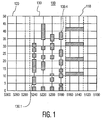
- Figure 1 illustrates a typical allocation and usage of frequency spectrum 100 wherein a licensed channel 110, having a deterministic pattern of usage, is shown in the frequency range 5,130 through 5,170 MHz and a second licensed frequency range 120 in the range of 5,250 to 5,300 MHz, wherein no channels are allocated. Also shown is the heavily utilized unlicensed frequency range 130 between 5,170 and 5,250 MHz. In this unlicensed frequency range four channels 130.1-130.4, each of 20 MHz, are shown. As would be recognized, the usage of these four channels is non-deterministic and time varying, as neither their length of time or period of transmission is fixed or known.
- Figures 2A and 2B collectively illustrate an example of the handshaking protocol in accordance with the principles of the invention for a system having a total of eight sub-channels, referred to as 1-8.
- Figure 2A illustrates the usage of periods 210 of sub-channels, 1,2 and 7, 207 by the transmitter for performing a handshake. Further illustrated are sub-channels 3, 4 and 6, 205 that are unavailable for transmission.
- the transmitter selects a subset or all of the vacant sub-channels and transmits multiple copies of the handshake packet in parallel or substantially concurrently on all selected sub-channels.
- an, optional, known preamble packet may be transmitted in a period 215 prior to the beginning of the handshake packet 210.
- the use of the preamble packet is advantageous in that it provides information that a receiver may use to determine that a handshake packet is available.
- an error-detecting code such as a Cyclic Redundancy Check (CRC) may be utilized.
- copies of the handshake packet may be transmitted on different sub-channels modulated with the predetermined appropriate phases.
- the receiver after distinguishing signal from noise, on at least one of the sub-channels employed by the transmitter, decodes the information in the handshake packet received on the transmitted channels.
- the information in the received handshake packet includes information regarding those sub-channels upon which the transmitter is able and/or willing to operate.
- the receiver may use a combining method to improve the reliability of the operation.
- FIG. 2B illustrates an exemplary case wherein channels 1,3 and 8, 220, are determined to be unavailable and, hence, a handshake response is provided in a time period 225 on channels 2,4 and 7, 250. Also illustrated is the transmission of an optional preamble packet in time period 230 prior to the transmission of the handshake packet.
- the transmitter upon receiving the handshake packet from the receiver, may then determine at least one combination of sub-channels that are available to both the transmitter and the receiver to operate on, and may send data packets 245 using OFDM over the determined sub-channels (i.e., sub-channels 2, 5 and 7 in Figure 2A ). As would be appreciated, different sets of common sub-channels may be used for each direction of communication. With the channel information known the receiver is able to receive and transmit information from and to the transmitter.
- the data packets 245 may be transmitted subsequently after a known delay that compensates for tasks such as local processing or for transitioning from receive to transmit.
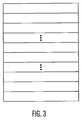
- Figure 3 illustrates an exemplary handshake packet in accordance with the principles of the invention.
- information regarding occupied sub-channels, potential sub-channels for transmission/reception, sender and/or destination address, coding and/or modulation information, packet length, channel scheduling information, location information, timing information-i.e. a time that the sub-channel information is valid, etc. may be included in the handshake packet.
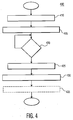
- FIG. 4 illustrates a flowchart of an exemplary process 400 for determining transmitter/receiver channels in accordance with the principles of the invention.
- a determination is made of the non-available channels.
- the handshake information is transmitted over the available sub-channels. As previously discussed a preamble may also be transmitted to assist the receiver in determining that handshake information is being transmitted.
- the transmitter awaits a response from the receiver.
- the transmitter reviews the provided information regarding the availability of receiver channels, at block 425.
- a determination is made . regarding transmitter and receiver channels. This may also include information regarding the transmitter/receiver channels and the duration (i.e., time) each channel is available.
- the determination of available sub-channels may be determined as the union of available sub-channels associated with the transmitter and the receiver. In another aspect, the determination of available sub-channels may be made based on the time of validity for associated sub-channels.
- the transmitter may transmit information regarding the sub-channel allocation data to the receiver at block 435.
- the transmitter may transmit a data packet, which may include information regarding the sub-channel allocation to the receiver.
- FIG. 5 illustrates a second exemplary process 500 for determining transmitter/receiver channels in accordance with the principles of the invention.
- a determination is made at block 410 for available channels, similar to the process described in Figure 4 .
- a timer is started, which may be used to provide a finite time for a receiver to respond to a transmitted handshake.
- handshake information is transmitted, similar to the process described in Figure 4 .
- the transmitter awaits a response from the receiver. In this case, when a response is received, a process continues at block 425, wherein a review of the received receiver channel information is preformed.
- available transmitter/receiver channel combinations are determined.
- a determination is made whether available channel combinations are determined. If the answer is in the affirmative, then an indication of a successful handshake is made. Otherwise, an indication is made, at block 540, that the handshake has failed.
- a system according to the invention can be embodied as hardware, a programmable processing or computer system that may be embedded in one or more hardware/software devices, loaded with appropriate software or executable code.
- the system can be realized by means of a computer program.
- the computer program will, when loaded into a programmable device, cause a processor in the device to execute the method according to the invention.
- the computer program enables a programmable device to function as the system according to the invention.
Landscapes
- Engineering & Computer Science (AREA)
- Signal Processing (AREA)
- Computer Networks & Wireless Communication (AREA)
- Mobile Radio Communication Systems (AREA)
Claims (10)
- Procédé de détermination de sous-canaux de communication disponibles dans un système de communication OFDM comprenant un premier et deuxième émetteurs-récepteurs et une pluralité de sous-canaux de communication,
le procédé comprenant les étapes suivantes effectuées par le premier émetteur-récepteur :émission en parallèle, sur tous les sous-canaux d'un premier ensemble de sous-canaux sélectionnés par le premier émetteur-récepteur parmi la pluralité de sous-canaux de communication disponibles au niveau du premier émetteur-récepteur, une copie d'un premier paquet d'établissement d'une liaison comprenant des premières informations de disponibilité (210) concernant les sous-canaux du premier ensemble sur la base desquelles le premier émetteur-récepteur est apte et/ou disposé à fonctionner ;réception en parallèle, sur tous les sous-canaux d'un deuxième ensemble de sous-canaux sélectionnés par le deuxième émetteur-récepteur parmi la pluralité de sous-canaux de communication disponibles au niveau du deuxième émetteur-récepteur, une copie d'un deuxième paquet d'établissement d'une liaison comprenant des deuxièmes informations de disponibilité (225) concernant les sous-canaux du deuxième ensemble sur la base desquelles le deuxième émetteur-récepteur est apte et/ou disposé à fonctionner ; etdétermination d'au moins un ensemble de sous-canaux disponibles communs sur la base des premières et deuxièmes informations de disponibilité concernant les premier et deuxième ensembles respectifs de sous-canaux, par sélection de sous-canaux communs à la fois aux premier et deuxième ensembles. - Procédé selon la revendication 1, comprenant en outre l'étape de :fourniture d'une indication (530) lorsqu'au moins un ensemble de sous-canaux disponibles communs est déterminé.
- Procédé selon la revendication 1, comprenant en outre l'étape de :émission d'un paquet préambule connu dans une période (215) avant le début du premier paquet d'établissement d'une liaison (210), ledit paquet préambule fournissant des informations utilisées par le deuxième émetteur-récepteur pour déterminer qu'un paquet d'établissement d'une liaison est disponible.
- Procédé selon la revendication 1, comprenant en outre l'étape de :réception d'un paquet préambule connu dans une période (230) avant le début du deuxième paquet d'établissement d'une liaison (225), ledit paquet préambule fournissant des informations utilisées par le premier émetteur-récepteur pour déterminer qu'un paquet d'établissement d'une liaison est disponible.
- Procédé selon la revendication 1, comprenant en outre l'étape de :fourniture d'un temps fini (510) pour la réception de deuxièmes informations de disponibilité concernant des sous-canaux du deuxième ensemble ; etfourniture d'une indication (540) lorsque le temps fini a expiré.
- Premier émetteur-récepteur, dans un système de communication OFDM comprenant une pluralité de sous-canaux de communication et un émetteur-récepteur supplémentaire,
le premier émetteur-récepteur comprenant :un émetteur pour l'émission en parallèle, sur tous les sous-canaux d'un premier ensemble de sous-canaux de sous-canaux sélectionnés par le premier émetteur-récepteur parmi la pluralité de sous-canaux de communication disponibles au niveau du premier émetteur-récepteur, une copie d'un premier paquet d'établissement d'une liaison comprenant des premières informations de disponibilité (210) concernant les sous-canaux du premier ensemble sur la base desquelles le premier émetteur-récepteur est apte et/ou disposé à fonctionner ;un récepteur pour la réception en parallèle, sur tous les sous-canaux d'un deuxième ensemble de sous-canaux sélectionnés par l'émetteur-récepteur supplémentaire parmi la pluralité de sous-canaux de communication disponibles au niveau du deuxième émetteur-récepteur, une copie d'un deuxième paquet d'établissement d'une liaison comprenant des deuxièmes informations de disponibilité (225) concernant les sous-canaux du deuxième ensemble sur la base desquelles le deuxième émetteur-récepteur est apte et/ou disposé à fonctionner ; etun moyen de détermination pour la détermination d'au moins un ensemble de sous-canaux disponibles communs sur la base des premières et deuxièmes informations de disponibilité concernant les premier et deuxième ensembles respectifs de sous-canaux, par sélection de sous-canaux communs à la fois aux premier et deuxième ensembles. - Émetteur-récepteur selon la revendication 6, dans lequel l'émetteur est agencé pour l'émission d'informations concernant l'au moins un ensemble de sous-canaux disponibles communs à l'émetteur-récepteur supplémentaire.
- Émetteur-récepteur selon la revendication 6, dans lequel l'émetteur est agencé pour l'émission d'un paquet préambule connu dans une période (215) avant le début du premier paquet d'établissement d'une liaison (210), ledit paquet préambule fournissant des informations utilisées par l'émetteur-récepteur supplémentaire pour déterminer qu'un paquet d'établissement d'une liaison est disponible.
- Émetteur-récepteur selon la revendication 6, dans lequel le récepteur est agencé pour la réception d'un paquet préambule connu dans une période (230) avant le début du deuxième paquet d'établissement d'une liaison (225), ledit paquet préambule fournissant des informations utilisées par l'émetteur-récepteur pour déterminer qu'un paquet d'établissement d'une liaison est disponible.
- Émetteur-récepteur selon la revendication 6, comprenant en outre une minuterie pour :la fourniture d'un temps fini pour la réception des deuxièmes informations de disponibilité concernant des sous-canaux du deuxième ensemble ; etla fourniture d'une indication lorsque le temps fini a expiré.
Applications Claiming Priority (2)
| Application Number | Priority Date | Filing Date | Title |
|---|---|---|---|
| US69456205P | 2005-06-28 | 2005-06-28 | |
| PCT/IB2006/052143 WO2007000744A1 (fr) | 2005-06-28 | 2006-06-27 | Procede d'etablissement d'une liaison et appareil destine a des systemes ofdm dont la disponibilite des sous-canaux est inconnue |
Publications (2)
| Publication Number | Publication Date |
|---|---|
| EP1900167A1 EP1900167A1 (fr) | 2008-03-19 |
| EP1900167B1 true EP1900167B1 (fr) | 2016-08-17 |
Family
ID=37179057
Family Applications (1)
| Application Number | Title | Priority Date | Filing Date |
|---|---|---|---|
| EP06765917.7A Active EP1900167B1 (fr) | 2005-06-28 | 2006-06-27 | Procédé d'établissement d'une liaison et appareil destiné a des systèmes ofdm dont la disponibilité des sous-canaux est inconnue |
Country Status (7)
| Country | Link |
|---|---|
| US (2) | US8902820B2 (fr) |
| EP (1) | EP1900167B1 (fr) |
| JP (1) | JP5027122B2 (fr) |
| KR (1) | KR101313779B1 (fr) |
| CN (1) | CN101208923B (fr) |
| ES (1) | ES2602427T3 (fr) |
| WO (1) | WO2007000744A1 (fr) |
Families Citing this family (15)
| Publication number | Priority date | Publication date | Assignee | Title |
|---|---|---|---|---|
| US8009696B2 (en) * | 2004-08-06 | 2011-08-30 | Ipeak Networks Incorporated | System and method for achieving accelerated throughput |
| US7953114B2 (en) * | 2004-08-06 | 2011-05-31 | Ipeak Networks Incorporated | System and method for achieving accelerated throughput |
| US8437370B2 (en) | 2011-02-04 | 2013-05-07 | LiveQoS Inc. | Methods for achieving target loss ratio |
| US9189307B2 (en) | 2004-08-06 | 2015-11-17 | LiveQoS Inc. | Method of improving the performance of an access network for coupling user devices to an application server |
| US9647952B2 (en) | 2004-08-06 | 2017-05-09 | LiveQoS Inc. | Network quality as a service |
| KR100825742B1 (ko) * | 2005-11-07 | 2008-04-29 | 한국전자통신연구원 | 직교 주파수 분할 다중 접속 기반의 인지 무선 시스템에서유연한 대역폭을 사용하는 방법, 이를 이용하는 기지국 및단말 |
| US8144793B2 (en) | 2006-12-12 | 2012-03-27 | Microsoft Corporation | Cognitive multi-user OFDMA |
| US8374130B2 (en) | 2008-01-25 | 2013-02-12 | Microsoft Corporation | Orthogonal frequency division multiple access with carrier sense |
| US10951743B2 (en) | 2011-02-04 | 2021-03-16 | Adaptiv Networks Inc. | Methods for achieving target loss ratio |
| US9590913B2 (en) | 2011-02-07 | 2017-03-07 | LiveQoS Inc. | System and method for reducing bandwidth usage of a network |
| US8717900B2 (en) | 2011-02-07 | 2014-05-06 | LivQoS Inc. | Mechanisms to improve the transmission control protocol performance in wireless networks |
| WO2015074237A1 (fr) * | 2013-11-22 | 2015-05-28 | 华为技术有限公司 | Procédé d'émission de données et émetteur de données |
| EP2890151B1 (fr) * | 2013-12-26 | 2016-06-01 | Telefónica, S.A. | Procédé, système et appareil de mise en réseau optique multicouche efficace |
| US10264476B2 (en) * | 2014-03-11 | 2019-04-16 | Nec Corporation | Wireless communication device, frequency determination method for wireless communication device, and program therefor |
| US10506446B2 (en) | 2017-10-26 | 2019-12-10 | Avago Technologies International Sales Pte. Limited | Protocols for flexible channel utilization |
Family Cites Families (13)
| Publication number | Priority date | Publication date | Assignee | Title |
|---|---|---|---|---|
| US6775320B1 (en) * | 1999-03-12 | 2004-08-10 | Aware, Inc. | Method and a multi-carrier transceiver supporting dynamic switching between active application sets |
| JP3826653B2 (ja) * | 2000-02-25 | 2006-09-27 | Kddi株式会社 | 無線通信システムのサブキャリア割当方法 |
| US20040240535A1 (en) * | 2001-05-10 | 2004-12-02 | Amit Verma | Fast exchange during intialization in multicarrier communication systems |
| CN104283832B (zh) * | 2002-03-08 | 2018-06-19 | 英特尔公司 | 用于高速率正交频分复用通信的系统和方法 |
| US6931076B2 (en) * | 2002-12-31 | 2005-08-16 | Intel Corporation | Signal detector |
| DE10350907B3 (de) * | 2003-10-31 | 2005-05-04 | Siemens Ag | Verfahren, Funkstation und Computerprogrammprodukt zum Zugriff auf Funkressourcen in einem Adhoc-Funkkommunikationssystem |
| JP2005167502A (ja) * | 2003-12-01 | 2005-06-23 | Ntt Docomo Inc | 無線通信システム、送信無線局の制御装置及び受信無線局の制御装置、並びにサブキャリア選択方法 |
| US7324605B2 (en) * | 2004-01-12 | 2008-01-29 | Intel Corporation | High-throughput multicarrier communication systems and methods for exchanging channel state information |
| US20050169231A1 (en) * | 2004-02-03 | 2005-08-04 | Sharp Laboratories Of America, Inc. | Method and system for detecting pending transmissions in a wireless data network |
| US7701909B2 (en) * | 2004-02-17 | 2010-04-20 | Alcatel-Lucent Usa Inc. | Methods and devices for selecting sets of available sub-channels |
| US7167463B2 (en) * | 2004-10-07 | 2007-01-23 | Meshnetworks, Inc. | System and method for creating a spectrum agile wireless multi-hopping network |
| CN1617530A (zh) * | 2004-12-06 | 2005-05-18 | 山东大学 | 一种选频方式的单载波分块传输方法 |
| US7580713B2 (en) * | 2005-05-12 | 2009-08-25 | Motorola, Inc. | Apparatus and method for establishing an active set of carriers for a receiver |
-
2006
- 2006-06-27 KR KR1020077030390A patent/KR101313779B1/ko active Active
- 2006-06-27 CN CN200680023303.9A patent/CN101208923B/zh active Active
- 2006-06-27 US US11/993,530 patent/US8902820B2/en active Active
- 2006-06-27 EP EP06765917.7A patent/EP1900167B1/fr active Active
- 2006-06-27 WO PCT/IB2006/052143 patent/WO2007000744A1/fr not_active Ceased
- 2006-06-27 ES ES06765917.7T patent/ES2602427T3/es active Active
- 2006-06-27 JP JP2008519087A patent/JP5027122B2/ja active Active
-
2014
- 2014-11-10 US US14/537,199 patent/US10742384B2/en active Active
Also Published As
| Publication number | Publication date |
|---|---|
| EP1900167A1 (fr) | 2008-03-19 |
| KR20080021065A (ko) | 2008-03-06 |
| US10742384B2 (en) | 2020-08-11 |
| CN101208923A (zh) | 2008-06-25 |
| CN101208923B (zh) | 2016-01-20 |
| WO2007000744A1 (fr) | 2007-01-04 |
| JP5027122B2 (ja) | 2012-09-19 |
| ES2602427T3 (es) | 2017-02-21 |
| KR101313779B1 (ko) | 2013-10-01 |
| US20100080167A1 (en) | 2010-04-01 |
| JP2008547348A (ja) | 2008-12-25 |
| US8902820B2 (en) | 2014-12-02 |
| US20150055615A1 (en) | 2015-02-26 |
Similar Documents
| Publication | Publication Date | Title |
|---|---|---|
| US10742384B2 (en) | Handshaking method and apparatus for OFDM systems with unknown sub-channel availability | |
| EP2050228B1 (fr) | Appareil et procédé pour l'attribution dynamique de ressources radio | |
| CN101536351B (zh) | 根据子带负荷进行发射功率控制的方法 | |
| EP2721760B1 (fr) | Sélection de canal en communication sans fil | |
| JP6600890B2 (ja) | 認可スペクトルおよび無認可スペクトルの両方にまたがるワイヤレス伝送を通信するためのシステムおよび方法 | |
| JP2011521507A (ja) | 無線通信においてスペクトル資源を利用するシステムおよび方法 | |
| KR20090033365A (ko) | 로컬 디바이스들 사이의 고속 로컬 접속성을 위한 시스템 및 방법 | |
| HUE027257T2 (en) | Use of supplemental assignments | |
| TR201816354T4 (tr) | Tekli ve çoklu küme iletimi için kaynak tahsisi. | |
| JP2009510967A (ja) | 柔軟な部分周波数再使用を用いるマルチキャリヤ無線ネットワーク | |
| CN108702805A (zh) | 设备到设备全双工通信 | |
| US20180084535A1 (en) | Communication method, base station, user equipment, and system | |
| WO2010075673A1 (fr) | Procédé, appareil et système de communication destinés à la configuration de ressources et à la transmission de données | |
| US10433305B2 (en) | Communication method | |
| US20140153503A1 (en) | Systems and methods for beaconing and management in bandwidth adaptive wireless networks | |
| TWI323996B (en) | Method and apparatus for allocating channels for data communication in a radio communication system | |
| Liu et al. | NCCC: NC-OFDM-based control channel establishment in cognitive radio networks using subcarrier pulses | |
| Kumar et al. | Tackling control channel saturation for load balancing in multi-channel mobile ad hoc networks | |
| Bhunia et al. | Implementation of interface agility for duplex dynamic spectrum access radio using USRP | |
| Rashid et al. | Enabling dynamic spectrum access for cognitive radio using software defined radio platform | |
| CN113348629A (zh) | 通信方法和装置 | |
| JPWO2019193662A1 (ja) | 基地局装置、端末装置、無線通信システム及び送信方法 | |
| CN121078540A (zh) | 支持多载波能力的窄带无线通信的方法及系统 | |
| Al-Mahdi et al. | Design and analysis of an OSA-BR MAC protocol for cognitive radio ad hoc networks | |
| Bennis et al. | Performance evaluation of advanced spectrum functionalities for future radio networks |
Legal Events
| Date | Code | Title | Description |
|---|---|---|---|
| PUAI | Public reference made under article 153(3) epc to a published international application that has entered the european phase |
Free format text: ORIGINAL CODE: 0009012 |
|
| 17P | Request for examination filed |
Effective date: 20080128 |
|
| AK | Designated contracting states |
Kind code of ref document: A1 Designated state(s): AT BE BG CH CY CZ DE DK EE ES FI FR GB GR HU IE IS IT LI LT LU LV MC NL PL PT RO SE SI SK TR |
|
| DAX | Request for extension of the european patent (deleted) | ||
| 17Q | First examination report despatched |
Effective date: 20080428 |
|
| DAX | Request for extension of the european patent (deleted) | ||
| RAP1 | Party data changed (applicant data changed or rights of an application transferred) |
Owner name: KONINKLIJKE PHILIPS N.V. |
|
| REG | Reference to a national code |
Ref country code: DE Ref legal event code: R079 Ref document number: 602006049970 Country of ref document: DE Free format text: PREVIOUS MAIN CLASS: H04L0027260000 Ipc: H04L0005000000 |
|
| GRAP | Despatch of communication of intention to grant a patent |
Free format text: ORIGINAL CODE: EPIDOSNIGR1 |
|
| INTG | Intention to grant announced |
Effective date: 20160311 |
|
| RIC1 | Information provided on ipc code assigned before grant |
Ipc: H04L 27/26 20060101ALI20160226BHEP Ipc: H04L 5/00 20060101AFI20160226BHEP |
|
| GRAS | Grant fee paid |
Free format text: ORIGINAL CODE: EPIDOSNIGR3 |
|
| GRAA | (expected) grant |
Free format text: ORIGINAL CODE: 0009210 |
|
| AK | Designated contracting states |
Kind code of ref document: B1 Designated state(s): AT BE BG CH CY CZ DE DK EE ES FI FR GB GR HU IE IS IT LI LT LU LV MC NL PL PT RO SE SI SK TR |
|
| REG | Reference to a national code |
Ref country code: GB Ref legal event code: FG4D |
|
| REG | Reference to a national code |
Ref country code: CH Ref legal event code: EP |
|
| REG | Reference to a national code |
Ref country code: IE Ref legal event code: FG4D |
|
| REG | Reference to a national code |
Ref country code: AT Ref legal event code: REF Ref document number: 821958 Country of ref document: AT Kind code of ref document: T Effective date: 20160915 |
|
| REG | Reference to a national code |
Ref country code: DE Ref legal event code: R096 Ref document number: 602006049970 Country of ref document: DE |
|
| REG | Reference to a national code |
Ref country code: NL Ref legal event code: FP |
|
| REG | Reference to a national code |
Ref country code: LT Ref legal event code: MG4D |
|
| REG | Reference to a national code |
Ref country code: AT Ref legal event code: MK05 Ref document number: 821958 Country of ref document: AT Kind code of ref document: T Effective date: 20160817 |
|
| PG25 | Lapsed in a contracting state [announced via postgrant information from national office to epo] |
Ref country code: LT Free format text: LAPSE BECAUSE OF FAILURE TO SUBMIT A TRANSLATION OF THE DESCRIPTION OR TO PAY THE FEE WITHIN THE PRESCRIBED TIME-LIMIT Effective date: 20160817 Ref country code: FI Free format text: LAPSE BECAUSE OF FAILURE TO SUBMIT A TRANSLATION OF THE DESCRIPTION OR TO PAY THE FEE WITHIN THE PRESCRIBED TIME-LIMIT Effective date: 20160817 |
|
| REG | Reference to a national code |
Ref country code: ES Ref legal event code: FG2A Ref document number: 2602427 Country of ref document: ES Kind code of ref document: T3 Effective date: 20170221 |
|
| PG25 | Lapsed in a contracting state [announced via postgrant information from national office to epo] |
Ref country code: PT Free format text: LAPSE BECAUSE OF FAILURE TO SUBMIT A TRANSLATION OF THE DESCRIPTION OR TO PAY THE FEE WITHIN THE PRESCRIBED TIME-LIMIT Effective date: 20161219 Ref country code: LV Free format text: LAPSE BECAUSE OF FAILURE TO SUBMIT A TRANSLATION OF THE DESCRIPTION OR TO PAY THE FEE WITHIN THE PRESCRIBED TIME-LIMIT Effective date: 20160817 Ref country code: AT Free format text: LAPSE BECAUSE OF FAILURE TO SUBMIT A TRANSLATION OF THE DESCRIPTION OR TO PAY THE FEE WITHIN THE PRESCRIBED TIME-LIMIT Effective date: 20160817 Ref country code: GR Free format text: LAPSE BECAUSE OF FAILURE TO SUBMIT A TRANSLATION OF THE DESCRIPTION OR TO PAY THE FEE WITHIN THE PRESCRIBED TIME-LIMIT Effective date: 20161118 Ref country code: SE Free format text: LAPSE BECAUSE OF FAILURE TO SUBMIT A TRANSLATION OF THE DESCRIPTION OR TO PAY THE FEE WITHIN THE PRESCRIBED TIME-LIMIT Effective date: 20160817 Ref country code: PL Free format text: LAPSE BECAUSE OF FAILURE TO SUBMIT A TRANSLATION OF THE DESCRIPTION OR TO PAY THE FEE WITHIN THE PRESCRIBED TIME-LIMIT Effective date: 20160817 |
|
| PG25 | Lapsed in a contracting state [announced via postgrant information from national office to epo] |
Ref country code: EE Free format text: LAPSE BECAUSE OF FAILURE TO SUBMIT A TRANSLATION OF THE DESCRIPTION OR TO PAY THE FEE WITHIN THE PRESCRIBED TIME-LIMIT Effective date: 20160817 Ref country code: RO Free format text: LAPSE BECAUSE OF FAILURE TO SUBMIT A TRANSLATION OF THE DESCRIPTION OR TO PAY THE FEE WITHIN THE PRESCRIBED TIME-LIMIT Effective date: 20160817 |
|
| REG | Reference to a national code |
Ref country code: DE Ref legal event code: R097 Ref document number: 602006049970 Country of ref document: DE |
|
| PG25 | Lapsed in a contracting state [announced via postgrant information from national office to epo] |
Ref country code: BE Free format text: LAPSE BECAUSE OF FAILURE TO SUBMIT A TRANSLATION OF THE DESCRIPTION OR TO PAY THE FEE WITHIN THE PRESCRIBED TIME-LIMIT Effective date: 20160817 Ref country code: CZ Free format text: LAPSE BECAUSE OF FAILURE TO SUBMIT A TRANSLATION OF THE DESCRIPTION OR TO PAY THE FEE WITHIN THE PRESCRIBED TIME-LIMIT Effective date: 20160817 Ref country code: DK Free format text: LAPSE BECAUSE OF FAILURE TO SUBMIT A TRANSLATION OF THE DESCRIPTION OR TO PAY THE FEE WITHIN THE PRESCRIBED TIME-LIMIT Effective date: 20160817 Ref country code: SK Free format text: LAPSE BECAUSE OF FAILURE TO SUBMIT A TRANSLATION OF THE DESCRIPTION OR TO PAY THE FEE WITHIN THE PRESCRIBED TIME-LIMIT Effective date: 20160817 Ref country code: BG Free format text: LAPSE BECAUSE OF FAILURE TO SUBMIT A TRANSLATION OF THE DESCRIPTION OR TO PAY THE FEE WITHIN THE PRESCRIBED TIME-LIMIT Effective date: 20161117 |
|
| PLBE | No opposition filed within time limit |
Free format text: ORIGINAL CODE: 0009261 |
|
| STAA | Information on the status of an ep patent application or granted ep patent |
Free format text: STATUS: NO OPPOSITION FILED WITHIN TIME LIMIT |
|
| REG | Reference to a national code |
Ref country code: FR Ref legal event code: PLFP Year of fee payment: 12 |
|
| 26N | No opposition filed |
Effective date: 20170518 |
|
| PG25 | Lapsed in a contracting state [announced via postgrant information from national office to epo] |
Ref country code: SI Free format text: LAPSE BECAUSE OF FAILURE TO SUBMIT A TRANSLATION OF THE DESCRIPTION OR TO PAY THE FEE WITHIN THE PRESCRIBED TIME-LIMIT Effective date: 20160817 |
|
| PG25 | Lapsed in a contracting state [announced via postgrant information from national office to epo] |
Ref country code: MC Free format text: LAPSE BECAUSE OF FAILURE TO SUBMIT A TRANSLATION OF THE DESCRIPTION OR TO PAY THE FEE WITHIN THE PRESCRIBED TIME-LIMIT Effective date: 20160817 |
|
| REG | Reference to a national code |
Ref country code: CH Ref legal event code: PL |
|
| REG | Reference to a national code |
Ref country code: IE Ref legal event code: MM4A |
|
| PG25 | Lapsed in a contracting state [announced via postgrant information from national office to epo] |
Ref country code: LI Free format text: LAPSE BECAUSE OF NON-PAYMENT OF DUE FEES Effective date: 20170630 Ref country code: IE Free format text: LAPSE BECAUSE OF NON-PAYMENT OF DUE FEES Effective date: 20170627 Ref country code: LU Free format text: LAPSE BECAUSE OF NON-PAYMENT OF DUE FEES Effective date: 20170627 Ref country code: CH Free format text: LAPSE BECAUSE OF NON-PAYMENT OF DUE FEES Effective date: 20170630 |
|
| REG | Reference to a national code |
Ref country code: FR Ref legal event code: PLFP Year of fee payment: 13 |
|
| PG25 | Lapsed in a contracting state [announced via postgrant information from national office to epo] |
Ref country code: HU Free format text: LAPSE BECAUSE OF FAILURE TO SUBMIT A TRANSLATION OF THE DESCRIPTION OR TO PAY THE FEE WITHIN THE PRESCRIBED TIME-LIMIT; INVALID AB INITIO Effective date: 20060627 |
|
| PG25 | Lapsed in a contracting state [announced via postgrant information from national office to epo] |
Ref country code: CY Free format text: LAPSE BECAUSE OF NON-PAYMENT OF DUE FEES Effective date: 20160817 |
|
| PG25 | Lapsed in a contracting state [announced via postgrant information from national office to epo] |
Ref country code: IS Free format text: LAPSE BECAUSE OF FAILURE TO SUBMIT A TRANSLATION OF THE DESCRIPTION OR TO PAY THE FEE WITHIN THE PRESCRIBED TIME-LIMIT Effective date: 20161217 |
|
| PGFP | Annual fee paid to national office [announced via postgrant information from national office to epo] |
Ref country code: DE Payment date: 20250626 Year of fee payment: 20 |
|
| PGFP | Annual fee paid to national office [announced via postgrant information from national office to epo] |
Ref country code: GB Payment date: 20250617 Year of fee payment: 20 |
|
| PGFP | Annual fee paid to national office [announced via postgrant information from national office to epo] |
Ref country code: NL Payment date: 20250624 Year of fee payment: 20 |
|
| PGFP | Annual fee paid to national office [announced via postgrant information from national office to epo] |
Ref country code: FR Payment date: 20250624 Year of fee payment: 20 |
|
| PGFP | Annual fee paid to national office [announced via postgrant information from national office to epo] |
Ref country code: TR Payment date: 20250616 Year of fee payment: 20 |
|
| PGFP | Annual fee paid to national office [announced via postgrant information from national office to epo] |
Ref country code: ES Payment date: 20250710 Year of fee payment: 20 |
|
| PGFP | Annual fee paid to national office [announced via postgrant information from national office to epo] |
Ref country code: IT Payment date: 20250623 Year of fee payment: 20 |