EP1900247B1 - Hard handover-verfahren in einem drahtlosen kommunikationssystem - Google Patents
Hard handover-verfahren in einem drahtlosen kommunikationssystem Download PDFInfo
- Publication number
- EP1900247B1 EP1900247B1 EP06799988.8A EP06799988A EP1900247B1 EP 1900247 B1 EP1900247 B1 EP 1900247B1 EP 06799988 A EP06799988 A EP 06799988A EP 1900247 B1 EP1900247 B1 EP 1900247B1
- Authority
- EP
- European Patent Office
- Prior art keywords
- base station
- mobile unit
- channel
- station router
- providing
- Prior art date
- Legal status (The legal status is an assumption and is not a legal conclusion. Google has not performed a legal analysis and makes no representation as to the accuracy of the status listed.)
- Not-in-force
Links
Images

Classifications
-
- H—ELECTRICITY
- H04—ELECTRIC COMMUNICATION TECHNIQUE
- H04W—WIRELESS COMMUNICATION NETWORKS
- H04W36/00—Hand-off or reselection arrangements
- H04W36/02—Buffering or recovering information during reselection ; Modification of the traffic flow during hand-off
-
- H—ELECTRICITY
- H04—ELECTRIC COMMUNICATION TECHNIQUE
- H04W—WIRELESS COMMUNICATION NETWORKS
- H04W36/00—Hand-off or reselection arrangements
- H04W36/0005—Control or signalling for completing the hand-off
- H04W36/0011—Control or signalling for completing the hand-off for data sessions of end-to-end connection
-
- H—ELECTRICITY
- H04—ELECTRIC COMMUNICATION TECHNIQUE
- H04W—WIRELESS COMMUNICATION NETWORKS
- H04W36/00—Hand-off or reselection arrangements
- H04W36/0005—Control or signalling for completing the hand-off
- H04W36/0055—Transmission or use of information for re-establishing the radio link
- H04W36/0072—Transmission or use of information for re-establishing the radio link of resource information of target access point
-
- H—ELECTRICITY
- H04—ELECTRIC COMMUNICATION TECHNIQUE
- H04W—WIRELESS COMMUNICATION NETWORKS
- H04W36/00—Hand-off or reselection arrangements
- H04W36/08—Reselecting an access point
-
- H—ELECTRICITY
- H04—ELECTRIC COMMUNICATION TECHNIQUE
- H04W—WIRELESS COMMUNICATION NETWORKS
- H04W80/00—Wireless network protocols or protocol adaptations to wireless operation
- H04W80/04—Network layer protocols, e.g. mobile IP [Internet Protocol]
-
- H—ELECTRICITY
- H04—ELECTRIC COMMUNICATION TECHNIQUE
- H04W—WIRELESS COMMUNICATION NETWORKS
- H04W36/00—Hand-off or reselection arrangements
- H04W36/0005—Control or signalling for completing the hand-off
Definitions
- This invention relates generally to a communication system, and, more particularly, to a wireless communication system.
- Mobile units communicate with a conventional wireless communication network over wireless communication links (or air interfaces) with one or more base stations or nodes-B.
- the base stations are communicatively coupled to a controller, which is connected to the wireless communication network.
- a controller which is connected to the wireless communication network.
- UMTS Universal Mobile Telecommunication System
- RNC radio network controller
- ATM asynchronous transfer mode
- the base station typically handles layer-1 services such as channel coding and/or channel decoding.
- the radio network controller provides layer-2 services such as radio link control (RLC), packet data convergence protocol (PDCP), and medium access control (MAC), as well as layer-3 services such as terminating Internet Protocol traffic with the network.
- RLC radio link control
- PDCP packet data convergence protocol
- MAC medium access control
- layer-3 services such as terminating Internet Protocol traffic with the network.
- a mobile unit in soft handover can maintain concurrent wireless communication links with more than one base station associated with a radio network controller.
- a radio network controller may provide transport blocks to a plurality of base stations in an active set associated with a mobile unit.
- the base stations in the active set may then provide information in the transport blocks to the mobile unit over a corresponding plurality of air interfaces.
- the mobile unit combines information received over the plurality of air interfaces to decode the transport blocks.
- the base station may provide information to the plurality of mobile units over the plurality of air interfaces.
- the radio network controller may then use the information received from the plurality of base stations to form packets that may be provided to the network.
- soft handover requires synchronization between backhaul links from the base stations to the radio network controller.
- the base stations and/or radio network controller may include jitter buffers to maintain the required degree of synchronization.
- base station routers may be used to provide wireless connectivity to mobile units.
- the base station routers are connected by a switch, which is communicatively coupled to the wireless communication network via a home agent.
- a base station router typically provides the functionality of a radio network controller and a base station in a single entity.
- a base station router may provide layer-1, layer-2, and layer-3 services.
- Wireless communication networks that use base station routers do not require synchronous backhaul links.
- soft handover may be difficult to implement in wireless communication networks that include base station routers. For example, each base station router would need a relatively large jitter buffer to maintain synchronization between multiple base station routers. Large jitter buffers may lead to long round-trip delays.
- Network architectures that include base station routers may therefore implement hard handovers (HHOs) between a source base station router (BSR) and a target BSR.
- the inter-BSR HHO is inspired by the standard inter-RNS HHO as described in 3GPP TS 25.931.
- the inter-BSR HHO procedure may extend the inter-RNS handover procedure with support for lossless frame selector relocation.
- a conventional inter-RNS HHO procedure starts with a mobile unit reporting one or more channel conditions based on pilot strengths for the various pilots the mobile unit is able to decode to the source BSR.
- the source BSR determines whether a hard handover to a selected target BSR should be performed and, if so, the source BSR communicates with the target BSR to allocate uplink and downlink wireless channel resources.
- the target BSR may then initiate a new downlink radio channel.
- the target BSR responds to the source BSR, which transmits a layer-3 channel reconfiguration message over a signalling channel (DCCH-2) to the mobile unit.
- DCCH-2 signalling channel
- the mobile unit acquires radio frame synchronization before initiating a new uplink.
- the target BSR receives the request to start a new downlink channel, it also activates internal searchers to locate the new uplink from the mobile unit.
- the target BSR Once the target BSR acquires uplink synchronization, it sends a Mobile Internet Protocol (MoIP) registration request to a home agent (HA) to inform the home agent of the new care-of address of the Mobile IP Foreign Agent (FA) inside the target BSR.
- MoIP Mobile Internet Protocol
- HA home agent
- FA Mobile IP Foreign Agent
- the conventional inter-RNS hard handover procedure is not a lossless handover.
- RLC radio layer control
- IP Internet Protocol
- Petrovic ( EP 1 519519 ) describes a technique for transferring a protocol context between base stations when a mobile unit hands off between the base stations. For example, set up information for a radio link between a second base station and a communication terminal can be transmitted from a first base station to the second base station prior to the activation time for the hand off.
- Ahlstrand ( WO 01/74095 ) describes a handover techniques that can be applied in a packet switched wireless communication network.
- Ahmavaara ( WO 01/20938 ) describes a technique for relocating a mobile unit in a communication system.
- the present invention is directed to addressing the effects of one or more of the problems set forth above.
- the following presents a simplified summary of the invention in order to provide a basic understanding of some aspects of the invention. This summary is not an exhaustive overview of the invention. It is not intended to identify key or critical elements of the invention or to delineate the scope of the invention. Its sole purpose is to present some concepts in a simplified form as a prelude to the more detailed description that is discussed later.
- a method for hard handovers of a mobile unit between a first and a second base station router.
- the method may include providing, to the first base station router from the second base station router over a first channel, configuration information for setting up a second channel associated with the second base station router and the mobile unit.
- the method may also include providing state information associated with the mobile unit to the second base station router concurrently with the reconfiguration of the mobile unit to communicate on the second channel.
- a method for hard handover of a mobile unit between a first and a second base station router may include receiving, at the mobile unit over a first channel, configuration information indicative of a second channel associated with the second base station router and the mobile unit. The method may also include reconfiguring the mobile unit to communicate over a second channel using the configuration information concurrently with state information associated with the mobile unit being provided to the second base station router by the first base station router.
- a method for hard handover of a mobile unit between a first and a second base station router may include receiving a request that the second base station router from the first base station router to allocate a channel to the mobile unit and providing configuration information to the first base station router from the second base station router to set up the channel.
- the method may also include receiving state information associated with the mobile unit from the base station router concurrently with reconfiguration of the mobile unit based on the configuration information.
- the software implemented aspects of the invention are typically encoded on some form of program storage medium or implemented over some type of transmission medium.
- the program storage medium may be magnetic (e.g., a floppy disk or a hard drive) or optical (e.g., a compact disk read only memory, or "CD ROM"), and may be read only or random access.
- the transmission medium may be twisted wire pairs, coaxial cable, optical fiber, or some other suitable transmission medium known to the art The invention is not limited by these aspects of any given implementation.
- FIG. 1 conceptually illustrates one exemplary embodiment of a wireless communication system 100.
- the wireless communication system 100 includes a network 105, which may include a wired portion, a wireless portion, or any combination thereof.
- Exemplary networks 105 include, but are not limited to, Universal Mobile Telecommunication System (UMTS) networks, Global System for Mobile communications (GSM) networks, Code Division Multiple Access (CDMA or CDMA 2000) networks, and like.
- a home agent 110 is communicatively coupled to the network.
- the home agent 110 may include functionality for routing data to mobile nodes currently attached to one or more foreign agents, implemented by BSRs. Operation of the home agent 110 is known to persons of ordinary skill in the art and, in the interest of clarity, only those aspects of the operation of the home agent 110 that are relevant to the present invention will be discussed further herein.
- One or more base station routers (BSRs) 120, 125 may be communicatively coupled to the home agent 110 so that the home agent 110 and the base station routers 120, 125 may exchange information.
- the home agent 110 may provide Internet protocol packets to one or more of the base station routers 120, 125.
- the base station routers 120, 125 may provide Internet protocol packets to the home agent 110.
- two base station routers 120, 125 are coupled to the home agent 110 via a switch 130, such as an IP switch.
- base station routers 120, 125 Although two base station routers 120, 125 are shown in Figure 1 , persons of ordinary skill in the art should appreciate that any number of base station routers 120, 125 may be included in the wireless communication system 100. Furthermore, the wireless communication system 100 may also include any number of home agents 110 and/or switches 130, as well as other elements not shown in Figure 1 .
- the base station routers 120, 125 provide wireless connectivity to one or more mobile units 135.
- the base station routers 120, 125 provide wireless connectivity to the mobile unit 135 according to a Universal Mobile Telecommunication Service (UMTS) protocol.
- UMTS Universal Mobile Telecommunication Service
- any protocol or combination of protocols may be used to provide wireless connectivity to the mobile unit 135.
- the base station router 120 is communicatively coupled to the mobile unit 135 over an air interface (as indicated by the solid double arrow 140).
- the air interface 140 may include uplink and/or downlink channels that may be used to transmit information between the base station router 120 and the mobile unit 135.
- a new air interface may be established between the mobile unit 135 and the base station router 125.
- the air interface 145 is established as a part of a hard handover of the mobile unit 135 from the base station router 120 to the base station router 125.
- the mobile unit 135 may provide a message to the base station router 125 reporting reception and successful decoding of a pilot channel from the base station router 125.
- the message from the mobile unit 135 may include information indicative of the measured pilot strength and/or a chip offset received with the pilot signal.
- the base station router 120 decodes the message and may determine that the mobile unit 135 should be handed over to the base station router 125.
- the hard handover may be initiated when the base station router 120, which is the primary base station router in the illustrated embodiment, provides a request to the base station router 125 to allocate a channel of the air interface 145 to the mobile unit 135.
- the base station router 125 provides configuration information, such as channel codes and/or scrambling codes of the uplink and/or downlink channels, to the base station router 120.
- the base station router 120 provides the configuration information to the mobile unit 135 over the air interface 140 and concurrently provides state information associated with the mobile unit 135 to the base station router 125, as will be discussed in detail below.
- the base station router 120 may also provide downlink data intended for the mobile unit 135 to the base station router 125 and the base station router 120 may provide received uplink data from mobile unit 13 5 to base station router 125.
- the mobile unit 135 may reconfigure using the provided configuration information and then establish a new connection with the base station router 125 over the air interface 145. At the end of the procedure, mobile unit 135 can communicate with base station router 125 with little or no apparent interruption.
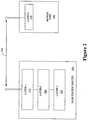
- FIG. 2 conceptually illustrates one exemplary embodiment of a base station router 200 and a mobile unit 205 that communicate over an air interface 210.
- the base station router 200 includes modules for implementing multiple layer services 215, 220, 225.
- the base station router 200 includes a module 215 for implementing layer-1 services, a module 220 for implementing layer-2 services, and a module 225 for implementing layer-3 services.
- the mobile unit 205 may also include one or more modules for implementing layer services.
- the mobile unit 205 includes a module 230 for implementing layer-1 services.
- modules 215, 220, 225, 230 may be implemented in a single entity or in a plurality of entities, and the modules 215, 220, 225, 230 may be implemented as software, firmware, hardware, or any combination thereof.
- the base station router 200 and/or the mobile unit 205 may include additional modules and/or other entities not shown in Figure 2 .
- the term “layer-1” refers to functionality that provides for transparent transmission of a bit stream between data link entities, such as a bit stream transmitted between the base station router 200 and the mobile unit 205 over the air interface 210.
- Layer-1 may also referred to as the physical layer, e.g ., the Open System Interconnection (OSI) Physical Layer.
- OSI Open System Interconnection
- the layer-1 modules 215, 230 may implement channel coding and/or decoding, such as baseband encoders and/or decoders.
- the layer-1 modules 215, 230 use configuration information to provide for transparent transmission of the bit stream.
- the configuration information may include channel and/or scrambling codes associated with an uplink and/or a downlink channel, as well as timing information such as frame and/or chip offsets.
- the term “layer-2” refers to functionality that provides for synchronizing the bit stream flowing to and from the physical layer (e.g ., the layer-1 module 215) and for detecting errors due to transmission problems such as noise, interference, and the like. Layer-2 may also be referred to as a traffic layer or a data link layer such as the Open Systems Interconnection Data Link Layer.
- the layer-2 module 220 may include functionality for implementing radio link control, packet data convergence protocol, medium access control, and the like.
- the term “layer-3” refers to functionality that provides paths for the transfer of data between systems and across networks. Layer-3 may be referred to as the network layer, such as the Open Systems Interconnection Network Layer.
- the layer-3 module 225 may implement functionality for handling Internet protocol traffic and/or signalling.
- the current state of the layer-2 and/or layer-3 modules 220, 225 is represented as state information.
- state information refers to information that is used to indicate a state of the layer-2 and/or layer-3 modules 220, 225 associated with communication with the mobile unit 205.
- the state information may also be referred to as user-plane state information.
- the state information includes radio link control (RLC) state information, which may include information in one or more data structures associated with one or more radio bearers and packet data units (PDUs) that may be stored in receive and/or transmit windows.
- RLC radio link control
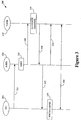
- FIG. 3 conceptually illustrates one exemplary embodiment of a method 300 for performing a hard handover.
- a mobile unit (MU) 305 is handed over from a source base station router (S-BSR) 310 to a target base station router (T-BSR) 315.
- the mobile unit 305 reports one or more channel conditions to the source base station router 310, as indicated by arrow 320.
- the mobile unit 305 may use a measurement message to report one or more pilot strengths for the various pilots it is able to decode to the source base station router 310.
- the source BSR 310 determines (at 325) whether to perform a hard handover to a selected target BSR 315.
- the source BSR 310 decides (at 325) to perform a hard handover of the mobile unit 305, then the source BSR 310 provides a message (as indicated by the arrow 330) to the target BSR 315 requesting the target BSR 315 to allocate channel resources to the mobile unit 305.
- the target BSR 315 may allocate (at 335) uplink and/or downlink wireless channel resources to the mobile unit 305 in response to receiving the request from the source BSR 310.
- Allocating (at 335) channel resources may include determining configuration information associated with the allocated channel.
- the configuration information typically comprises channelization codes and/or scrambling codes associated with the uplink and/or downlink channels.
- the target BSR 315 provides the configuration information to the source BSR 310, as indicated by the arrow 340.
- the source BSR 310 may then provide a message to the mobile unit 305 that includes the configuration information, as indicated by the arrow 345.
- the source base station router 310 provides a layer-3 physical channel reconfiguration (PCR) message that includes information instructing the mobile unit 305 to tune to the newly allocated radio channel.
- the reconfiguration message may instruct the mobile unit 305 to reconfigure the layer-1 parameters and to leave the layer-2 and layer-3 information untouched.
- the channel reconfiguration message may be sent on the same radio channel that is about to be reconfigured by the mobile unit 305.
- the mobile unit 305 may then reconfigure (at 350) using the configuration information so that the mobile unit 305 may communicate with the target BSR 315 over the newly allocated channel. In one embodiment, the mobile unit 305 may not communicate on the old and/or the new radio channel while it is reconfiguring (at 350).
- the source BSR 310 also provides state information associated with the mobile unit 305 to the target BSR 315, as indicated by the arrow 355.
- the state information may include layer-2 state information such as a header compression state and a radio link control state, as well as layer-3 state information such as mobile sign-on information between the source base station router 310 and the target base station router 315.
- the source BSR 310 provides the state information concurrently with reconfiguration (at 350) of the mobile unit 305. For example, the source BSR 310 may determine that the mobile unit 305 has disconnected from the channel to the source BSR 310 and may then initiate migration of state information to the target BSR 315.
- migration of the state information includes migration of radio link control state information.
- the radio link control (RLC) state migration may include marshalling data structures associated with RLC bearers used to communicate with the mobile unit 305, sending that state over the backhaul to the target BSR 315, and un-marshalling the state at the target BSR 315.
- RLC radio link control
- the mobile unit 305 may begin to use the newly allocated channel by providing a pilot signal over the newly allocated channel.
- the mobile unit 305 may also transmit a reconfiguration complete (such as PCR-C) message indicating that the reconfiguration succeeded.
- the target base station router 315 may begin to use the newly allocated channel as soon as it determines that this channel is "alive” by detecting the pilot signal and/or the PCR-C message.
- the layer-2 state information is transmitted between the source base station router 310 and the target base station router 315 substantially before reception of the PCR-C message. For example, a message with a radio link control sequence number n may be sent to the mobile unit 305 in the last uplink packet sent over the old channel.
- the target base station router 315 may then anticipate arrival of a message having a radio link control sequence number n + 1 by using the relocated state so that the new message is not discarded. Not having the relocated state may initiate a radio link control resynchronization procedure with the mobile unit 305 and may discard data. Similarly, if the first message in a downlink from the target base station router 315 does not match the sequence number expected by the mobile unit 305, the mobile unit 305 may initiate a radio link control resynchronization procedure.
- the resynchronization procedure may lead to loss of the PCR-C message and/or pending data messages and/or service interruptions for the application that is currently using the radio channel. For example, the resynchronization may interrupt voice services and/or reduce the capacity of data services.
- both uplink and downlink may be temporarily suspended while the mobile unit 305 and target base station router 315 re-synchronize. Accordingly, there should be a radio silence for some period of time during which the state information may be migrated from the source BSR 310 to the target BSR 315.
- the RLC state information may be forwarded from the source BSR 310 to the target BSR 315 beginning at a particular time and/or frame number.
- the outgoing physical channel reconfiguration (PCR) message may be timed inside the traffic plane.
- the traffic plane may include a packet data convergence protocol (PDCP) later, an RLC layer, and a MAC layer.
- PDCP packet data convergence protocol
- RLC handlers inside the protocol stack may be adapted to detect transmission of the PCR message and to record a cell system frame number of the frame that delivers the PCR message to the mobile unit 305.
- the RLC state migration procedure may be activated as soon as the mobile unit 305 has received the PCR message.
- the source base station router 310 suspends data processing. For example, the source base station router 310 may stop sending PDUs to the mobile unit 305 since the mobile unit 305 cannot receive packets anymore. If the source base station router 310 were to continue transmitting PDUs to the mobile unit 305 after the uplink and downlink have been suspended, these packets would be lost in the transmission and would have to be resent by a costly RLC retransmission. Once suspended, the source base station router 310 may initiate the RLC relocation by copying the RLC state from source BSR 310 to the target BSR 315.
- Transport blocks received in the uplink after the RLC state has been migrated may be forwarded to the target BSR 315, which may handle routing the transport blocks to the mobile unit 305.
- the act of wrapping up the RLC state may be performed atomically and may constitute a frame selector move.
- the RLC state may be comprised of two parts: data structures associated with transmit and/or receive windows and the PDUs stored inside the receive and/or transmit windows.
- the target BSR 315 may receive the migrated RLC states before the uplink is resynchronized.
- the RLC PDUs themselves may be sent at a slower pace over the backhaul.
- some service data units (SDUs) may not be reassembled up until point data is forwarded from the source BSR 310 to the target BSR 315, but RLC status reports can still be formulated. Accordingly, even when the backhaul is slow, the target BSR 315 may still be capable of making progress with the RLC bearers even though it may not yet have received the entire set of receive and/or transmit RLC PDUs.
- a portion of the RLC of the source BSR 310 may be transmitted to the target BSR 315 with the channel allocation message 330.
- the RLC layer of the target BSR 315 can be primed with RLC state information transmitted with the channel allocation message 330.
- the RLC state information sent together with the inter-RLC state of the target BSR 315 is only slightly out-of-date by the time the actual relocation is performed. In this event, RLC resets may be avoided, at the expense of having to retransmit the RLC PDUs that were transmitted between the time the radio channels were set up and the time the channel is actually reconfigured.
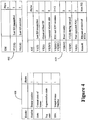
- Figure 4 conceptually illustrates one exemplary embodiment of state information that may be transmitted during an RLC state migration.
- the state for each bearer is preceded by a bearer header 400.
- the bearer header 400 may contain a bearer number (e.g., DCCH-1 to DCCH-4 and/or DTCH), a current operating mode or state of the bearer, and a current segmentation state of the bearer. The latter may be required for the target BSR to proceed with segmentation where the source BSR left off.
- the bearer header 400 may also contain a Target Frame Number (TFN) which indicates a frame number that may be used by the target BSR when it resumes operating the bearers.
- TFN Target Frame Number
- the bearer header 400 has a fixed size of 4 bytes.
- the bearer header 400 may be followed by one or more mode specific trailers 405, 410,
- the trailer 405 is an unacknowledged mode (UM) trailer and the trailer 410 is an acknowledged mode (AM) trailer.
- UM unacknowledged mode
- AM acknowledged mode
- the parameters VT(US) and VR(US) may allow the target BSR to continue operating the bearer.
- VT(US) presents the first unused sequence number and VR(US) represents the last received sequence number from the mobile.
- the RLC-UM may use these parameters to assign new sequence numbers for new transmission and to verify a PDU is received in sequence.
- the AM trailer 410 may also include information indicative of an acknowledgement state associated with the source base station router. Accordingly, receive and transmit parameters VT, VR may be forwarded to the target BSR to enable the target BSR to pre-initialize the receive and/or transmit windows.
- receive and transmit parameters VT, VR may be forwarded to the target BSR to enable the target BSR to pre-initialize the receive and/or transmit windows.
- the parameters shown in Figure 4 are discussed in detail in 3GPP TS 25.322.
- the AM trailer 410 may also include a bit mask of the receive window to indicate the PDUs that have been received by the source BSR.
- the target BSR may then be able to formulate RLC-AM status report messages if the mobile unit requests a status report message in the event the actual PDUs are still in flight to the target BSR. Knowledge of received PDUs may be used to formulate the status report message, even though the data itself is not required.
- the target BSR initializes the receive window by marking the already received PDUs as unavailable while the PDUs are in flight from source to target BSR. For as long as an SDU contains unavailable parts, the SDU cannot be reassembled. Since a receive window is typically small, e.g. 128 entries, at most the receive window worth of bits need to be transmitted with the state message.
- the RLC state header is followed by a sequence of PDUs from source to target. These PDUs are unacknowledged transmit PDUs, followed by a series of received PDUs that are not yet reassembled and followed by the IP queue of unsegmented IP packets that are stored in the IP queue. Note that the procedure requires that all PDUs eventually arrive at the target.
- a state migration may use 36 bytes for a RLC-AM bearer with a receive window size of 128 entries, 8 bytes for a RLC-UM bearer, 4 bytes for a RLC-TM bearer, or 152 bytes in total for a typical DCCH-1 to DCCH-4 and a DTCH bearer.
Landscapes
- Engineering & Computer Science (AREA)
- Computer Networks & Wireless Communication (AREA)
- Signal Processing (AREA)
- Mobile Radio Communication Systems (AREA)
Claims (9)
- Verfahren zur drahtlosen Kommunikation in Bezug auf eine Mobileinheit (305) und einen ersten und einen zweiten Basisstation-Router (310, 315), wobei eine Anforderung zum Zuweisen eines Kanals zur Mobileinheit (305) übertragen wird von dem ersten Basisstation-Router (310) zum zweiten Basisstation-Router (315), wobel das Verfahren umfasst:Empfangen am ersten Basisstation-Router (310) vom zweiten Basisstation-Router (315) über einen ersten Kanal von Konfigurationsinformation, die verwendbar ist zum Einstellen eines zweiten Kanals, der mit dem zweiten Basisstation-Router (315) und der Mobileinheit (305) verbunden ist; undBereitstellen von Zustandsinformation, die mit der Mobileinheit (305) verbunden ist, vom ersten Basisstation-Router (310) für den zweiten Basisstation-Router (315), gleichzeitig mit dem Bereitstellen der Konfigurationsinformation vom ersten Basistation-Router (310) für die Mobileinheit (305) über die Luftschnittstelle,
- Das Verfahren nach Anspruch 1, umfassend:Bereitstellen einer Anforderung zum Zuweisen des zweiten Kanals zum zweiten Basisstation-Router (315); undEmpfangen von Konfigurationsinfarmation, die indikativ ist für den zweiten Kanal, als Antwort auf das Bereitstellen der Anforderung zum Zuweisen des zweiten Kanals, wobei das Empfangen besagter Konfigurationsinformation, die indikativ ist für den zweiten Kanal, das Empfangen von mindestens einem Kanalisierungscode und von einem Scrambling-Code umfasst, die mit dem zweiten Kanal verbunden sind.
- Verfahren nach Anspruch 1, wobei das Bereitstellen besagter Konfigurationsinformation umfasst das Bereitstellen von mindestens einem aus einem Kanalislerungscode, einem Scrambling-Code, die mit dem zweiten Kanal verbunden sind, und einer Rekonfigurationskontrollnachricht.
- Verfahren nach Anspruch 1, wobei das Bereitstellen besagter Zustandsinformation umfasst:Bestimmen, dass die Mobileinheit (305) sich vom ersten Kanal getrennt hat; undBereitstellen besagter Zustandsinformation als Antwort zum Bestimmen, dass die Mobileinheit (305) sich vom ersten Kanal getrennt hat, wobei das Bereitstellen besagter Zustandsinformation umfasst das Bereitstellen besagter Zustandsinformation im Wesentlichen bevor die Mobileinheit beginnt, unter Benutzen des zweiten Kanals zu kommunizieren.
- Verfahren zur drahtlosen Kommunikation in Bezug auf eine Mobileinheit (305) und erste und zweiten Basisstation-Router (310, 315), wobei das Verfahren umfasst:Empfangen vom ersten Basisstation-Router (310) an der Mobileinheit (305) über einen ersten Kanal von Konfigurationsinformation, die indikativ Ist für einen zweiten Kanal, der mit dem zweiten Basisstation-Router (315) und der Mobileinheit (305) verbunden ist; undRekonfigurieren der Mobileinheit (305) zum Kommunizieren über den zweiten Kanal unter Benutzen der Konfigurationsinformation, wobei besagte Konfigurationsinformation gleichzeitig empfangen wird von dem ersten Basisstation-Router (310) mit Zustandsinformation, die mit einer Mobileinheit (305) verbunden ist, die dem zweiten Basisstation-Router (315) vom ersten Basisstation-Router (310) bereitgestellt wird.
- Verfahren nach Anspruch 5, wobei das Empfangen besagter Konfigurationsinformation umfasst das Empfangen von mindesten einem aus einem Kanalisierungscode, einem Scrambling-Code, die mit dem zweiten Kanal verbunden sind, und einer Rekonfigurationskontrollnachricht, und wobei das Rekonfigurieren zum Kommunizieren über den zweiten Kanal umfasst das Aufrechterhalten von mindestens einer Layer-2-Zustandsinformation und Layer-3-Zustandsinformation während des Rekonfigurierens, und weiterhin umfassend das Trennen vom ersten Kanal als Antwort auf das Empfangen der Konfigurationsinformation.
- Verfahren nach Anspruch 5, umfassend das Bereitstellen mindestens eines Signals über den zweiten Kanal Im Wesentlichen nach dem Rekonfigurieren.
- Verfahren zur drahtlosen Kommunikation in Bezug auf eine Mobileinheit (305) und erste und zweite Basisstation-Router (310, 315), umfassend:Empfangen einer Anforderung am zweiten Basisstation-Router (315) vom ersten Basisstation-Router (310) zum Zuweisen eines Kanals zur Mobileinheit (305);Bereitstellen von Konfigurationsinformation für den ersten Basisstation-Router (310) vom zweiten Basisstation-Router (315) zum Einstellen des Kanals;Empfangen am zweiten Basisstation-Router (315) von Zustandsinformation, die mit der Mobileinheit (305) verbunden ist, vom ersten Basisstation-Router (310) gleichzeitig mit dem Bereitstellen von Konfigurationsinformation vom ersten Basissation-Router (310) für die Mobileinheit (305) über die Luftschnittstelle.
- Verfahren nach Anspruch 8, wobei das Bereitstellen besagter Konfigurationsinformation umfasst das Bereitstellen mindestens eines Kanalisierungscodes und eines Scrambling-Codes, die mit dem Kanal verbunden sind, wobei das Empfangen der Zustandsinformation umfasst das Empfangen von mindestens einer Layer-1-Zustandsinformation, Layer-2-Zustandsinformation, Layer-3-Zustandsinformation und Zustandsinformation der physikalischen Schicht, und weiterhin umfassend:Empfangen mindestens eines Signals von der Mobileinheit (305) über den Kanal;Empfangen von Uplink- und Downlink-Information, die mit der Mobileinheit (305) verbunden sind; undBereitstellen von mindestens einem Signal für die Mobileinheit (305) über den Kanal.
Applications Claiming Priority (2)
| Application Number | Priority Date | Filing Date | Title |
|---|---|---|---|
| US11/176,572 US7920866B2 (en) | 2005-07-07 | 2005-07-07 | Method of hard handover in a wireless communication system |
| PCT/US2006/025728 WO2007008465A1 (en) | 2005-07-07 | 2006-06-29 | Method of hard handover in a wireless communication system |
Publications (2)
| Publication Number | Publication Date |
|---|---|
| EP1900247A1 EP1900247A1 (de) | 2008-03-19 |
| EP1900247B1 true EP1900247B1 (de) | 2017-11-15 |
Family
ID=37398378
Family Applications (1)
| Application Number | Title | Priority Date | Filing Date |
|---|---|---|---|
| EP06799988.8A Not-in-force EP1900247B1 (de) | 2005-07-07 | 2006-06-29 | Hard handover-verfahren in einem drahtlosen kommunikationssystem |
Country Status (6)
| Country | Link |
|---|---|
| US (1) | US7920866B2 (de) |
| EP (1) | EP1900247B1 (de) |
| JP (1) | JP5124453B2 (de) |
| KR (1) | KR101277100B1 (de) |
| CN (2) | CN104320820B (de) |
| WO (1) | WO2007008465A1 (de) |
Families Citing this family (78)
| Publication number | Priority date | Publication date | Assignee | Title |
|---|---|---|---|---|
| CN1964521B (zh) * | 2005-11-11 | 2010-05-12 | 上海贝尔阿尔卡特股份有限公司 | 一种在无线通信网络中的无线自回传方法及装置 |
| US20070286123A1 (en) * | 2006-06-13 | 2007-12-13 | Samsung Electronics Co., Ltd. | System and method for establishing a packet data conection by proxy during a wireless handoff |
| EP2254259B1 (de) | 2006-09-22 | 2016-11-09 | Mitsubishi Electric R&D Centre Europe B.V. | Verfahren und Vorrichtung zur Übertragung von Signalen, die Pilotensymbolmuster entsprechen |
| US8817740B2 (en) * | 2006-10-31 | 2014-08-26 | Motorola Mobility Llc | Methods and devices of a queue controller for dual mode bidirectional audio communication |
| US8792945B2 (en) * | 2006-10-31 | 2014-07-29 | Motorola Mobility Llc | Methods and devices for dual mode bidirectional audio communication |
| KR100973433B1 (ko) * | 2007-01-13 | 2010-08-03 | 삼성전자주식회사 | 무선 통신 시스템에서 다중 주파수 밴드를 이용한 신호송수신 방법 및 그 시스템 |
| CN101282177B (zh) * | 2007-04-06 | 2010-11-03 | 杭州华三通信技术有限公司 | 一种数据传输方法和终端 |
| US8818375B2 (en) | 2007-04-25 | 2014-08-26 | Telefonaktiebolaget L M Ericsson (Publ) | Method and apparatus for seamless handover in a wireless communication network |
| WO2008133587A1 (en) * | 2007-04-25 | 2008-11-06 | Telefonaktiebolaget Lm Ericsson (Publ) | A method and apparatus for seamless handover in a wireless communication network |
| US9232448B2 (en) * | 2007-06-18 | 2016-01-05 | Qualcomm Incorporated | Methods and apparatus for neighbor discovery of base stations in a communication system |
| KR101191491B1 (ko) * | 2007-06-18 | 2012-10-15 | 엘지전자 주식회사 | 핸드오버 중 하향링크 pdcp 동작 |
| US8451795B2 (en) * | 2007-08-08 | 2013-05-28 | Qualcomm Incorporated | Handover in a wireless data packet communication system that avoid user data loss |
| EP2026618B1 (de) * | 2007-08-14 | 2012-08-01 | Alcatel Lucent | Verfahren und Vorrichtung für Handover mit Daten-Weiterleitung von einem Ursprungs-Node-B zu einem Ziel-Node-B in einem drahtlosen Telekommunikationsnetzwerk |
| GB0724435D0 (en) * | 2007-12-14 | 2008-01-30 | Icera Inc | Physical channel establishment |
| GB2457066A (en) * | 2008-01-31 | 2009-08-05 | Nec Corp | Method of setting up radio bearers in a mobile communications system |
| EP3484135A1 (de) | 2008-04-02 | 2019-05-15 | Twilio Inc. | System und verfahren zur verarbeitung von telefoniesitzungen |
| US8837465B2 (en) | 2008-04-02 | 2014-09-16 | Twilio, Inc. | System and method for processing telephony sessions |
| US20100029275A1 (en) * | 2008-07-31 | 2010-02-04 | Peter Bosch | Migration of TCP connections with layer 2 support in wireless environments |
| EP2335402A4 (de) | 2008-10-01 | 2013-04-24 | Twilio Inc | Telefonie-web-ereignis-system und verfahren |
| NO330911B1 (no) * | 2008-12-12 | 2011-08-15 | Multi Phase Meters As | Fremgangsmåte og apparat for måling av sammensetning og strømningsrater for en våtgass |
| JP5671484B2 (ja) | 2009-03-02 | 2015-02-18 | トゥイリオ インコーポレイテッドTwilio Inc. | マルチテナント電話ネットワークのための方法およびシステム |
| CN101945444B (zh) * | 2009-07-06 | 2016-06-29 | 华为技术有限公司 | 通信方法、装置和系统 |
| CN101610215B (zh) * | 2009-07-21 | 2011-08-17 | 杭州华三通信技术有限公司 | 一种路由转发方法和一种网关设备 |
| US9210275B2 (en) | 2009-10-07 | 2015-12-08 | Twilio, Inc. | System and method for running a multi-module telephony application |
| US9459926B2 (en) | 2010-06-23 | 2016-10-04 | Twilio, Inc. | System and method for managing a computing cluster |
| US9459925B2 (en) | 2010-06-23 | 2016-10-04 | Twilio, Inc. | System and method for managing a computing cluster |
| US20120208495A1 (en) | 2010-06-23 | 2012-08-16 | Twilio, Inc. | System and method for monitoring account usage on a platform |
| US9590849B2 (en) | 2010-06-23 | 2017-03-07 | Twilio, Inc. | System and method for managing a computing cluster |
| US9338064B2 (en) | 2010-06-23 | 2016-05-10 | Twilio, Inc. | System and method for managing a computing cluster |
| US8838707B2 (en) | 2010-06-25 | 2014-09-16 | Twilio, Inc. | System and method for enabling real-time eventing |
| US8649268B2 (en) | 2011-02-04 | 2014-02-11 | Twilio, Inc. | Method for processing telephony sessions of a network |
| US20140044123A1 (en) | 2011-05-23 | 2014-02-13 | Twilio, Inc. | System and method for real time communicating with a client application |
| WO2012162397A1 (en) | 2011-05-23 | 2012-11-29 | Twilio, Inc. | System and method for connecting a communication to a client |
| US9648006B2 (en) | 2011-05-23 | 2017-05-09 | Twilio, Inc. | System and method for communicating with a client application |
| US9336500B2 (en) | 2011-09-21 | 2016-05-10 | Twilio, Inc. | System and method for authorizing and connecting application developers and users |
| US10182147B2 (en) | 2011-09-21 | 2019-01-15 | Twilio Inc. | System and method for determining and communicating presence information |
| US9495227B2 (en) | 2012-02-10 | 2016-11-15 | Twilio, Inc. | System and method for managing concurrent events |
| CN102571610A (zh) * | 2012-03-02 | 2012-07-11 | 杭州华三通信技术有限公司 | 一种报文转发方法和边缘设备 |
| US9602586B2 (en) | 2012-05-09 | 2017-03-21 | Twilio, Inc. | System and method for managing media in a distributed communication network |
| US9240941B2 (en) | 2012-05-09 | 2016-01-19 | Twilio, Inc. | System and method for managing media in a distributed communication network |
| US20130304928A1 (en) | 2012-05-09 | 2013-11-14 | Twilio, Inc. | System and method for managing latency in a distributed telephony network |
| US9295022B2 (en) | 2012-05-18 | 2016-03-22 | Comcast Cable Communications, LLC. | Wireless network supporting extended coverage of service |
| US9247062B2 (en) | 2012-06-19 | 2016-01-26 | Twilio, Inc. | System and method for queuing a communication session |
| US8737962B2 (en) | 2012-07-24 | 2014-05-27 | Twilio, Inc. | Method and system for preventing illicit use of a telephony platform |
| US8738051B2 (en) * | 2012-07-26 | 2014-05-27 | Twilio, Inc. | Method and system for controlling message routing |
| US9019843B2 (en) * | 2012-09-13 | 2015-04-28 | International Business Machines Corporation | Utilizing stored data to reduce packet data loss in a mobile data network with data breakout at the edge |
| US8938053B2 (en) | 2012-10-15 | 2015-01-20 | Twilio, Inc. | System and method for triggering on platform usage |
| US8948356B2 (en) | 2012-10-15 | 2015-02-03 | Twilio, Inc. | System and method for routing communications |
| US9258666B2 (en) | 2012-10-17 | 2016-02-09 | International Business Machines Corporation | State migration of edge-of-network applications |
| US9253254B2 (en) | 2013-01-14 | 2016-02-02 | Twilio, Inc. | System and method for offering a multi-partner delegated platform |
| US9282124B2 (en) | 2013-03-14 | 2016-03-08 | Twilio, Inc. | System and method for integrating session initiation protocol communication in a telecommunications platform |
| US9001666B2 (en) | 2013-03-15 | 2015-04-07 | Twilio, Inc. | System and method for improving routing in a distributed communication platform |
| US9338280B2 (en) | 2013-06-19 | 2016-05-10 | Twilio, Inc. | System and method for managing telephony endpoint inventory |
| US9225840B2 (en) | 2013-06-19 | 2015-12-29 | Twilio, Inc. | System and method for providing a communication endpoint information service |
| US9240966B2 (en) | 2013-06-19 | 2016-01-19 | Twilio, Inc. | System and method for transmitting and receiving media messages |
| US9483328B2 (en) | 2013-07-19 | 2016-11-01 | Twilio, Inc. | System and method for delivering application content |
| US9338018B2 (en) | 2013-09-17 | 2016-05-10 | Twilio, Inc. | System and method for pricing communication of a telecommunication platform |
| US9137127B2 (en) | 2013-09-17 | 2015-09-15 | Twilio, Inc. | System and method for providing communication platform metadata |
| US9274858B2 (en) | 2013-09-17 | 2016-03-01 | Twilio, Inc. | System and method for tagging and tracking events of an application platform |
| US9553799B2 (en) | 2013-11-12 | 2017-01-24 | Twilio, Inc. | System and method for client communication in a distributed telephony network |
| US9325624B2 (en) | 2013-11-12 | 2016-04-26 | Twilio, Inc. | System and method for enabling dynamic multi-modal communication |
| US9344573B2 (en) | 2014-03-14 | 2016-05-17 | Twilio, Inc. | System and method for a work distribution service |
| US9226217B2 (en) | 2014-04-17 | 2015-12-29 | Twilio, Inc. | System and method for enabling multi-modal communication |
| US9251371B2 (en) | 2014-07-07 | 2016-02-02 | Twilio, Inc. | Method and system for applying data retention policies in a computing platform |
| US9246694B1 (en) | 2014-07-07 | 2016-01-26 | Twilio, Inc. | System and method for managing conferencing in a distributed communication network |
| US9774687B2 (en) | 2014-07-07 | 2017-09-26 | Twilio, Inc. | System and method for managing media and signaling in a communication platform |
| US9516101B2 (en) | 2014-07-07 | 2016-12-06 | Twilio, Inc. | System and method for collecting feedback in a multi-tenant communication platform |
| US9363301B2 (en) | 2014-10-21 | 2016-06-07 | Twilio, Inc. | System and method for providing a micro-services communication platform |
| US9477975B2 (en) | 2015-02-03 | 2016-10-25 | Twilio, Inc. | System and method for a media intelligence platform |
| US10244444B2 (en) | 2015-03-04 | 2019-03-26 | Qualcomm Incorporated | Dual link handover |
| US9948703B2 (en) | 2015-05-14 | 2018-04-17 | Twilio, Inc. | System and method for signaling through data storage |
| US10419891B2 (en) | 2015-05-14 | 2019-09-17 | Twilio, Inc. | System and method for communicating through multiple endpoints |
| US10659349B2 (en) | 2016-02-04 | 2020-05-19 | Twilio Inc. | Systems and methods for providing secure network exchanged for a multitenant virtual private cloud |
| US10686902B2 (en) | 2016-05-23 | 2020-06-16 | Twilio Inc. | System and method for a multi-channel notification service |
| US10063713B2 (en) | 2016-05-23 | 2018-08-28 | Twilio Inc. | System and method for programmatic device connectivity |
| CN110958704B (zh) * | 2018-09-26 | 2022-02-22 | 维沃移动通信有限公司 | 一种资源调度方法和装置 |
| CN114258719B (zh) * | 2019-08-15 | 2024-11-22 | 上海诺基亚贝尔股份有限公司 | 通信网络中的切换 |
| WO2021155584A1 (zh) * | 2020-02-07 | 2021-08-12 | Oppo广东移动通信有限公司 | 通信方式切换方法、装置及其设备 |
Family Cites Families (18)
| Publication number | Priority date | Publication date | Assignee | Title |
|---|---|---|---|---|
| EP0151951A3 (de) * | 1984-01-27 | 1986-07-30 | Maschinenbau Haldenwang GmbH & Co. KG | Vorrichtung zur Ermittlung des Spiels an Kraftfahrzeugrädern |
| GB9921706D0 (en) | 1999-09-14 | 1999-11-17 | Nokia Telecommunications Oy | Relocation in a communication system |
| JP2001320326A (ja) * | 2000-03-03 | 2001-11-16 | Sony Corp | 通信システム、通信方法及び通信装置 |
| ATE373934T1 (de) | 2000-03-28 | 2007-10-15 | Ericsson Telefon Ab L M | Weiterreichung in einem paketvermittelten drahtlosen kommunikationsnetz |
| FR2809579B1 (fr) * | 2000-05-23 | 2003-07-04 | Nortel Matra Cellular | Procede de controle d'un canal entre un terminal radio et une infrastructure de radiocommunication cellulaire, et reseau d'acces mettant en oeuvre un tel procede |
| US6862450B2 (en) * | 2001-02-07 | 2005-03-01 | Nokia Mobile Phones Ltd. | Resetting signaling link upon SRNS relocation procedure |
| JP2003069617A (ja) * | 2001-08-27 | 2003-03-07 | Ntt Docomo Inc | ハンドオーバ制御装置、基地局、エッジルータ、中継ルータ、無線端末機、移動通信システム及びハンドオーバ制御方法 |
| US7065359B2 (en) * | 2001-10-09 | 2006-06-20 | Lucent Technologies Inc. | System and method for switching between base stations in a wireless communications system |
| US7242942B2 (en) * | 2002-04-25 | 2007-07-10 | Sony Corporation | Communication system, apparatus and method for controlling communication, apparatus and method for communication, and computer program |
| JP4733703B2 (ja) * | 2003-09-13 | 2011-07-27 | アルカテル−ルーセント ユーエスエー インコーポレーテッド | 1次エージェントおよび2次エージェントとして動作可能な基地局から形成されたネットワーク・アクティブ・セットを使用する無線通信システム |
| DE60336813D1 (de) | 2003-09-23 | 2011-06-01 | Panasonic Corp | Protokolkontextübertragung in einem Mobilfunkkommunikationsystem |
| US7197307B2 (en) * | 2004-02-27 | 2007-03-27 | Nokia Corporation | Hard handover method and controller |
| JP2005277612A (ja) * | 2004-03-24 | 2005-10-06 | Nec Corp | 移動通信システム、無線基地局及びそれらに用いる送信電力制御方法 |
| US7933600B2 (en) * | 2004-06-15 | 2011-04-26 | Telefonaktiebolaget Lm Ericsson (Publ) | Smooth hard handover method, mobile station and base station adapted for the method |
| US7733831B2 (en) * | 2004-08-23 | 2010-06-08 | Alcatel-Lucent Usa Inc. | Detecting a wireless network air interface |
| US7272123B2 (en) * | 2004-09-13 | 2007-09-18 | Nextel Communications, Inc. | System and method for handoff processing |
| US7499437B2 (en) * | 2004-09-13 | 2009-03-03 | Alcatel-Lucent Usa Inc. | Wireless communications system employing a network active set formed from base stations operable as primary and secondary agents |
| US7821995B2 (en) * | 2004-09-30 | 2010-10-26 | Alcatel-Lucent Usa Inc. | Active session mobility solution for radio link protocol |
-
2005
- 2005-07-07 US US11/176,572 patent/US7920866B2/en active Active
-
2006
- 2006-06-29 CN CN201410647935.9A patent/CN104320820B/zh not_active Expired - Fee Related
- 2006-06-29 KR KR1020087000370A patent/KR101277100B1/ko not_active Expired - Fee Related
- 2006-06-29 WO PCT/US2006/025728 patent/WO2007008465A1/en not_active Ceased
- 2006-06-29 EP EP06799988.8A patent/EP1900247B1/de not_active Not-in-force
- 2006-06-29 JP JP2008520310A patent/JP5124453B2/ja not_active Expired - Fee Related
- 2006-06-29 CN CN200680024548.3A patent/CN101218841B/zh not_active Expired - Fee Related
Non-Patent Citations (1)
| Title |
|---|
| None * |
Also Published As
| Publication number | Publication date |
|---|---|
| US20070010250A1 (en) | 2007-01-11 |
| JP2009500949A (ja) | 2009-01-08 |
| JP5124453B2 (ja) | 2013-01-23 |
| KR20080024517A (ko) | 2008-03-18 |
| WO2007008465A1 (en) | 2007-01-18 |
| KR101277100B1 (ko) | 2013-06-20 |
| CN101218841A (zh) | 2008-07-09 |
| US7920866B2 (en) | 2011-04-05 |
| EP1900247A1 (de) | 2008-03-19 |
| CN101218841B (zh) | 2014-12-17 |
| CN104320820A (zh) | 2015-01-28 |
| CN104320820B (zh) | 2018-09-28 |
Similar Documents
| Publication | Publication Date | Title |
|---|---|---|
| US7920866B2 (en) | Method of hard handover in a wireless communication system | |
| US11778521B2 (en) | Handover handling | |
| EP1915017B1 (de) | Verfahren und Vorrichtung zum Ausführen eines Handovers durch Neuanordnung eines Paketdatenkonvergenzprotokolls (PDCP) in einem mobilen Kommunikationssystem | |
| JP4016032B2 (ja) | 無線移動通信システムにおける受信ウインドウ移動方法 | |
| KR100892212B1 (ko) | 무선 통신 시스템 및 무선 기지국 및 무선 통신 제어 방법 | |
| US20040184424A1 (en) | Mobile communication system, radio network controller and method of transferring data employed therefor | |
| KR20070077798A (ko) | 이동통신 시스템에서 재전송 제어를 위한 상태보고의요청/전송 방법 및 장치 | |
| CA2677223A1 (en) | Method and apparatus for controlling a handover between utra r6 cells and r7 cells | |
| KR20090008215A (ko) | 기지국 및 경로제어장치 및 핸드오버 제어방법 | |
| US20090262701A1 (en) | Data transfer method and base station | |
| KR100943077B1 (ko) | 기지국간 무손실 핸드오버를 위한 패킷 포워딩 방법 |
Legal Events
| Date | Code | Title | Description |
|---|---|---|---|
| PUAI | Public reference made under article 153(3) epc to a published international application that has entered the european phase |
Free format text: ORIGINAL CODE: 0009012 |
|
| 17P | Request for examination filed |
Effective date: 20071213 |
|
| AK | Designated contracting states |
Kind code of ref document: A1 Designated state(s): AT BE BG CH CY CZ DE DK EE ES FI FR GB GR HU IE IS IT LI LT LU LV MC NL PL PT RO SE SI SK TR |
|
| DAX | Request for extension of the european patent (deleted) | ||
| 17Q | First examination report despatched |
Effective date: 20090109 |
|
| RAP3 | Party data changed (applicant data changed or rights of an application transferred) |
Owner name: LUCENT TECHNOLOGIES INC. |
|
| RAP1 | Party data changed (applicant data changed or rights of an application transferred) |
Owner name: ALCATEL LUCENT |
|
| DAX | Request for extension of the european patent (deleted) | ||
| 111Z | Information provided on other rights and legal means of execution |
Free format text: AT BE BG CH CY CZ DE DK EE ES FI FR GB GR HU IE IS IT LI LT LU LV MC NL PL PT RO SE SI SK TR Effective date: 20130410 |
|
| RAP1 | Party data changed (applicant data changed or rights of an application transferred) |
Owner name: ALCATEL LUCENT |
|
| D11X | Information provided on other rights and legal means of execution (deleted) | ||
| REG | Reference to a national code |
Ref country code: DE Ref legal event code: R079 Ref document number: 602006054130 Country of ref document: DE Free format text: PREVIOUS MAIN CLASS: H04Q0007380000 Ipc: H04W0036000000 |
|
| RIC1 | Information provided on ipc code assigned before grant |
Ipc: H04W 36/00 20090101AFI20170410BHEP Ipc: H04W 36/02 20090101ALI20170410BHEP Ipc: H04W 80/04 20090101ALN20170410BHEP Ipc: H04W 36/08 20090101ALN20170410BHEP |
|
| GRAP | Despatch of communication of intention to grant a patent |
Free format text: ORIGINAL CODE: EPIDOSNIGR1 |
|
| INTG | Intention to grant announced |
Effective date: 20170522 |
|
| GRAS | Grant fee paid |
Free format text: ORIGINAL CODE: EPIDOSNIGR3 |
|
| GRAA | (expected) grant |
Free format text: ORIGINAL CODE: 0009210 |
|
| AK | Designated contracting states |
Kind code of ref document: B1 Designated state(s): AT BE BG CH CY CZ DE DK EE ES FI FR GB GR HU IE IS IT LI LT LU LV MC NL PL PT RO SE SI SK TR |
|
| REG | Reference to a national code |
Ref country code: CH Ref legal event code: EP Ref country code: GB Ref legal event code: FG4D Ref country code: AT Ref legal event code: REF Ref document number: 947420 Country of ref document: AT Kind code of ref document: T Effective date: 20171115 |
|
| REG | Reference to a national code |
Ref country code: IE Ref legal event code: FG4D |
|
| REG | Reference to a national code |
Ref country code: DE Ref legal event code: R096 Ref document number: 602006054130 Country of ref document: DE |
|
| REG | Reference to a national code |
Ref country code: NL Ref legal event code: MP Effective date: 20171115 |
|
| REG | Reference to a national code |
Ref country code: LT Ref legal event code: MG4D |
|
| REG | Reference to a national code |
Ref country code: CH Ref legal event code: PCOW Free format text: NEW ADDRESS: SITE NOKIA PARIS SACLAY ROUTE DE VILLEJUST, 91620 NOZAY (FR) |
|
| REG | Reference to a national code |
Ref country code: AT Ref legal event code: MK05 Ref document number: 947420 Country of ref document: AT Kind code of ref document: T Effective date: 20171115 |
|
| RAP2 | Party data changed (patent owner data changed or rights of a patent transferred) |
Owner name: ALCATEL LUCENT |
|
| PG25 | Lapsed in a contracting state [announced via postgrant information from national office to epo] |
Ref country code: NL Free format text: LAPSE BECAUSE OF FAILURE TO SUBMIT A TRANSLATION OF THE DESCRIPTION OR TO PAY THE FEE WITHIN THE PRESCRIBED TIME-LIMIT Effective date: 20171115 Ref country code: SE Free format text: LAPSE BECAUSE OF FAILURE TO SUBMIT A TRANSLATION OF THE DESCRIPTION OR TO PAY THE FEE WITHIN THE PRESCRIBED TIME-LIMIT Effective date: 20171115 Ref country code: LT Free format text: LAPSE BECAUSE OF FAILURE TO SUBMIT A TRANSLATION OF THE DESCRIPTION OR TO PAY THE FEE WITHIN THE PRESCRIBED TIME-LIMIT Effective date: 20171115 Ref country code: FI Free format text: LAPSE BECAUSE OF FAILURE TO SUBMIT A TRANSLATION OF THE DESCRIPTION OR TO PAY THE FEE WITHIN THE PRESCRIBED TIME-LIMIT Effective date: 20171115 Ref country code: ES Free format text: LAPSE BECAUSE OF FAILURE TO SUBMIT A TRANSLATION OF THE DESCRIPTION OR TO PAY THE FEE WITHIN THE PRESCRIBED TIME-LIMIT Effective date: 20171115 |
|
| PG25 | Lapsed in a contracting state [announced via postgrant information from national office to epo] |
Ref country code: GR Free format text: LAPSE BECAUSE OF FAILURE TO SUBMIT A TRANSLATION OF THE DESCRIPTION OR TO PAY THE FEE WITHIN THE PRESCRIBED TIME-LIMIT Effective date: 20180216 Ref country code: LV Free format text: LAPSE BECAUSE OF FAILURE TO SUBMIT A TRANSLATION OF THE DESCRIPTION OR TO PAY THE FEE WITHIN THE PRESCRIBED TIME-LIMIT Effective date: 20171115 Ref country code: AT Free format text: LAPSE BECAUSE OF FAILURE TO SUBMIT A TRANSLATION OF THE DESCRIPTION OR TO PAY THE FEE WITHIN THE PRESCRIBED TIME-LIMIT Effective date: 20171115 Ref country code: BG Free format text: LAPSE BECAUSE OF FAILURE TO SUBMIT A TRANSLATION OF THE DESCRIPTION OR TO PAY THE FEE WITHIN THE PRESCRIBED TIME-LIMIT Effective date: 20180215 |
|
| REG | Reference to a national code |
Ref country code: FR Ref legal event code: PLFP Year of fee payment: 13 |
|
| PG25 | Lapsed in a contracting state [announced via postgrant information from national office to epo] |
Ref country code: DK Free format text: LAPSE BECAUSE OF FAILURE TO SUBMIT A TRANSLATION OF THE DESCRIPTION OR TO PAY THE FEE WITHIN THE PRESCRIBED TIME-LIMIT Effective date: 20171115 Ref country code: SK Free format text: LAPSE BECAUSE OF FAILURE TO SUBMIT A TRANSLATION OF THE DESCRIPTION OR TO PAY THE FEE WITHIN THE PRESCRIBED TIME-LIMIT Effective date: 20171115 Ref country code: CZ Free format text: LAPSE BECAUSE OF FAILURE TO SUBMIT A TRANSLATION OF THE DESCRIPTION OR TO PAY THE FEE WITHIN THE PRESCRIBED TIME-LIMIT Effective date: 20171115 Ref country code: CY Free format text: LAPSE BECAUSE OF FAILURE TO SUBMIT A TRANSLATION OF THE DESCRIPTION OR TO PAY THE FEE WITHIN THE PRESCRIBED TIME-LIMIT Effective date: 20171115 Ref country code: EE Free format text: LAPSE BECAUSE OF FAILURE TO SUBMIT A TRANSLATION OF THE DESCRIPTION OR TO PAY THE FEE WITHIN THE PRESCRIBED TIME-LIMIT Effective date: 20171115 |
|
| REG | Reference to a national code |
Ref country code: DE Ref legal event code: R097 Ref document number: 602006054130 Country of ref document: DE |
|
| PG25 | Lapsed in a contracting state [announced via postgrant information from national office to epo] |
Ref country code: PL Free format text: LAPSE BECAUSE OF FAILURE TO SUBMIT A TRANSLATION OF THE DESCRIPTION OR TO PAY THE FEE WITHIN THE PRESCRIBED TIME-LIMIT Effective date: 20171115 Ref country code: IT Free format text: LAPSE BECAUSE OF FAILURE TO SUBMIT A TRANSLATION OF THE DESCRIPTION OR TO PAY THE FEE WITHIN THE PRESCRIBED TIME-LIMIT Effective date: 20171115 Ref country code: RO Free format text: LAPSE BECAUSE OF FAILURE TO SUBMIT A TRANSLATION OF THE DESCRIPTION OR TO PAY THE FEE WITHIN THE PRESCRIBED TIME-LIMIT Effective date: 20171115 |
|
| PLBE | No opposition filed within time limit |
Free format text: ORIGINAL CODE: 0009261 |
|
| STAA | Information on the status of an ep patent application or granted ep patent |
Free format text: STATUS: NO OPPOSITION FILED WITHIN TIME LIMIT |
|
| 26N | No opposition filed |
Effective date: 20180817 |
|
| PG25 | Lapsed in a contracting state [announced via postgrant information from national office to epo] |
Ref country code: SI Free format text: LAPSE BECAUSE OF FAILURE TO SUBMIT A TRANSLATION OF THE DESCRIPTION OR TO PAY THE FEE WITHIN THE PRESCRIBED TIME-LIMIT Effective date: 20171115 |
|
| REG | Reference to a national code |
Ref country code: CH Ref legal event code: PL |
|
| REG | Reference to a national code |
Ref country code: BE Ref legal event code: MM Effective date: 20180630 |
|
| PG25 | Lapsed in a contracting state [announced via postgrant information from national office to epo] |
Ref country code: LU Free format text: LAPSE BECAUSE OF NON-PAYMENT OF DUE FEES Effective date: 20180629 Ref country code: MC Free format text: LAPSE BECAUSE OF FAILURE TO SUBMIT A TRANSLATION OF THE DESCRIPTION OR TO PAY THE FEE WITHIN THE PRESCRIBED TIME-LIMIT Effective date: 20171115 |
|
| REG | Reference to a national code |
Ref country code: IE Ref legal event code: MM4A |
|
| PG25 | Lapsed in a contracting state [announced via postgrant information from national office to epo] |
Ref country code: CH Free format text: LAPSE BECAUSE OF NON-PAYMENT OF DUE FEES Effective date: 20180630 Ref country code: LI Free format text: LAPSE BECAUSE OF NON-PAYMENT OF DUE FEES Effective date: 20180630 Ref country code: IE Free format text: LAPSE BECAUSE OF NON-PAYMENT OF DUE FEES Effective date: 20180629 |
|
| PG25 | Lapsed in a contracting state [announced via postgrant information from national office to epo] |
Ref country code: BE Free format text: LAPSE BECAUSE OF NON-PAYMENT OF DUE FEES Effective date: 20180630 |
|
| PG25 | Lapsed in a contracting state [announced via postgrant information from national office to epo] |
Ref country code: TR Free format text: LAPSE BECAUSE OF FAILURE TO SUBMIT A TRANSLATION OF THE DESCRIPTION OR TO PAY THE FEE WITHIN THE PRESCRIBED TIME-LIMIT Effective date: 20171115 |
|
| PG25 | Lapsed in a contracting state [announced via postgrant information from national office to epo] |
Ref country code: PT Free format text: LAPSE BECAUSE OF FAILURE TO SUBMIT A TRANSLATION OF THE DESCRIPTION OR TO PAY THE FEE WITHIN THE PRESCRIBED TIME-LIMIT Effective date: 20171115 Ref country code: HU Free format text: LAPSE BECAUSE OF FAILURE TO SUBMIT A TRANSLATION OF THE DESCRIPTION OR TO PAY THE FEE WITHIN THE PRESCRIBED TIME-LIMIT; INVALID AB INITIO Effective date: 20060629 |
|
| PG25 | Lapsed in a contracting state [announced via postgrant information from national office to epo] |
Ref country code: IS Free format text: LAPSE BECAUSE OF FAILURE TO SUBMIT A TRANSLATION OF THE DESCRIPTION OR TO PAY THE FEE WITHIN THE PRESCRIBED TIME-LIMIT Effective date: 20180315 |
|
| PGFP | Annual fee paid to national office [announced via postgrant information from national office to epo] |
Ref country code: FR Payment date: 20210513 Year of fee payment: 16 |
|
| PGFP | Annual fee paid to national office [announced via postgrant information from national office to epo] |
Ref country code: GB Payment date: 20220506 Year of fee payment: 17 Ref country code: DE Payment date: 20220505 Year of fee payment: 17 |
|
| PG25 | Lapsed in a contracting state [announced via postgrant information from national office to epo] |
Ref country code: FR Free format text: LAPSE BECAUSE OF NON-PAYMENT OF DUE FEES Effective date: 20220630 |
|
| REG | Reference to a national code |
Ref country code: DE Ref legal event code: R119 Ref document number: 602006054130 Country of ref document: DE |
|
| GBPC | Gb: european patent ceased through non-payment of renewal fee |
Effective date: 20230629 |
|
| PG25 | Lapsed in a contracting state [announced via postgrant information from national office to epo] |
Ref country code: DE Free format text: LAPSE BECAUSE OF NON-PAYMENT OF DUE FEES Effective date: 20240103 Ref country code: GB Free format text: LAPSE BECAUSE OF NON-PAYMENT OF DUE FEES Effective date: 20230629 |