EP1900446A2 - Procédé et dispositif destinés au tri d'objets en fonction de traces d'utilisation - Google Patents
Procédé et dispositif destinés au tri d'objets en fonction de traces d'utilisation Download PDFInfo
- Publication number
- EP1900446A2 EP1900446A2 EP07015657A EP07015657A EP1900446A2 EP 1900446 A2 EP1900446 A2 EP 1900446A2 EP 07015657 A EP07015657 A EP 07015657A EP 07015657 A EP07015657 A EP 07015657A EP 1900446 A2 EP1900446 A2 EP 1900446A2
- Authority
- EP
- European Patent Office
- Prior art keywords
- objects
- characteristic
- value
- measured
- threshold value
- Prior art date
- Legal status (The legal status is an assumption and is not a legal conclusion. Google has not performed a legal analysis and makes no representation as to the accuracy of the status listed.)
- Granted
Links
Images
Classifications
-
- B—PERFORMING OPERATIONS; TRANSPORTING
- B07—SEPARATING SOLIDS FROM SOLIDS; SORTING
- B07C—POSTAL SORTING; SORTING INDIVIDUAL ARTICLES, OR BULK MATERIAL FIT TO BE SORTED PIECE-MEAL, e.g. BY PICKING
- B07C5/00—Sorting according to a characteristic or feature of the articles or material being sorted, e.g. by control effected by devices which detect or measure such characteristic or feature; Sorting by manually actuated devices, e.g. switches
- B07C5/34—Sorting according to other particular properties
- B07C5/3404—Sorting according to other particular properties according to properties of containers or receptacles, e.g. rigidity, leaks, fill-level
- B07C5/3408—Sorting according to other particular properties according to properties of containers or receptacles, e.g. rigidity, leaks, fill-level for bottles, jars or other glassware
-
- G—PHYSICS
- G01—MEASURING; TESTING
- G01N—INVESTIGATING OR ANALYSING MATERIALS BY DETERMINING THEIR CHEMICAL OR PHYSICAL PROPERTIES
- G01N21/00—Investigating or analysing materials by the use of optical means, i.e. using sub-millimetre waves, infrared, visible or ultraviolet light
- G01N21/84—Systems specially adapted for particular applications
- G01N21/88—Investigating the presence of flaws or contamination
- G01N21/90—Investigating the presence of flaws or contamination in a container or its contents
-
- G—PHYSICS
- G01—MEASURING; TESTING
- G01N—INVESTIGATING OR ANALYSING MATERIALS BY DETERMINING THEIR CHEMICAL OR PHYSICAL PROPERTIES
- G01N21/00—Investigating or analysing materials by the use of optical means, i.e. using sub-millimetre waves, infrared, visible or ultraviolet light
- G01N21/84—Systems specially adapted for particular applications
- G01N21/88—Investigating the presence of flaws or contamination
- G01N21/8806—Specially adapted optical and illumination features
- G01N2021/8829—Shadow projection or structured background, e.g. for deflectometry
- G01N2021/8832—Structured background, e.g. for transparent objects
-
- G—PHYSICS
- G01—MEASURING; TESTING
- G01N—INVESTIGATING OR ANALYSING MATERIALS BY DETERMINING THEIR CHEMICAL OR PHYSICAL PROPERTIES
- G01N21/00—Investigating or analysing materials by the use of optical means, i.e. using sub-millimetre waves, infrared, visible or ultraviolet light
- G01N21/84—Systems specially adapted for particular applications
- G01N21/88—Investigating the presence of flaws or contamination
- G01N21/93—Detection standards; Calibrating baseline adjustment, drift correction
- G01N2021/936—Adjusting threshold, e.g. by way of moving average
Definitions
- the invention relates to a method for sorting out objects, in particular beverage bottles made of glass or plastic, due to signs of use, such as scratches or the like, wherein a value of a characteristic for the traces of a respective object is measured and the object by comparing with a threshold of the characteristic is sorted out. Furthermore, the invention relates to a device for sorting out objects, in particular beverage bottles made of glass or plastic, due to signs of use, such as scratches or the like, with a measuring device for measuring a value of a characteristic for the traces of a respective object and a comparison device for comparing the measured value with a threshold of the characteristic on the basis of which the object is sorted out.
- Reusable packaging in contrast to disposable packaging, is recyclable for several rounds without compromising the protection, transportation, storage and handling function and is ideally returned, cleaned, refilled and then returned to retail after removal of the product by the end user.
- a device and a method for examining translucent reusable bottles is known, wherein a characteristic for the traces of use of the reusable object in the form of a brightness gradient image is measured by means of a camera and a downstream image processing, based on which the object by comparing with an absolute threshold the characteristic is sorted out or the reusable circuit is fed back.
- a characteristic for the traces of use of the reusable object in the form of a brightness gradient image is measured by means of a camera and a downstream image processing, based on which the object by comparing with an absolute threshold the characteristic is sorted out or the reusable circuit is fed back.
- at least a part of the light beam, after penetrating the reusable object is brought into interaction with a reference geometry having a previously known brightness profile.
- Such a method has the disadvantage that a sorting out of the reusable object is decided only on the basis of a comparison with an absolute threshold of the parameter, which is an absolute measure of the permissible traces of use with which the object may be subject to the necessary quality requirements to be reused.
- an absolute threshold of the parameter which is an absolute measure of the permissible traces of use with which the object may be subject to the necessary quality requirements to be reused.
- a less rigid selection process would be desirable for sorting out objects in which not only the quality requirements involved in the object but also the amount and the amount of resources available and re-supplied to the reusable circuit should be.
- a minimum requirement for the quality of the containers should nevertheless be ensured.
- the invention has for its object to provide a method and an apparatus of the type mentioned, which is intended to increase the flexibility in the selection of objects to be sorted out while avoiding the aforementioned disadvantages and should still consider the desired quality requirements in the selection.
- this object is achieved by a method of the type mentioned above in that the threshold value of the parameter is determined from the respectively measured values of the parameter of a predetermined number of objects. Furthermore, the object is achieved by a generic device characterized in that this one Having means for determining the threshold value of the characteristic from the respectively measured values of the characteristic from a predetermined number of objects.
- the threshold value of the parameter is set in relation to the respectively measured values of the parameter of a predetermined number of objects.
- the threshold value of the parameter determines that, as a rule, containers whose condition is worse than the threshold value are sorted out, containers whose condition is better than the threshold value are supplied for further use.
- the threshold is determined dynamically based on the state of the previously measured bottles. It is achieved that usually always about the same percentage of containers is sorted out and thus the number of usable containers, regardless of the quality of the container is planned.
- the threshold value of the parameter can be determined, for example, by averaging the measured values of the parameter and a predetermined difference thereto.
- a specific embodiment provides that a percentage of objects to be sorted out is predetermined, based on which the threshold value is determined.
- a generic device has for this purpose a transport device for the arrival and removal of individual objects by the measuring device, which is formed for example by a conveyor belt.
- the respectively measured values of the parameter of the predetermined number of objects are stored in a list.
- the list can be successively extended with the respectively newly measured values of the parameter until the length of the list corresponds to the predetermined number of objects, so that the threshold value of the parameter can then be determined from the individual list entries.
- a data processing system for storing and processing each measured values of the characteristic of the predetermined number of objects in a list is provided.
- the determination of the threshold value of the parameter can already start with a predetermined minimum number of measurements, and the number of measurements to be used for the formation of the threshold value can be increased up to a number at which it is then kept constant.
- the continuous sequence of the method can furthermore be achieved by determining the threshold value of the parameter in a first step from a predefined number of objects, before in a second step objects are sorted out by means of a comparison with the threshold value of the parameter.
- a further threshold value of the parameter from a predetermined number of objects can be determined, with which of the threshold value of the characteristic variable determined in the first step for a subsequent step is updated.
- a value of the list is replaced by a value of the characteristic of an object measured in the subsequent step and then from the values of the list a further threshold value of the parameter is determined with which the threshold value of the characteristic variable determined in a preceding step is updated.
- a continuous refreshing of the threshold value of the parameter is achieved, taking into account the respective current measured value.
- the respectively older entry of the list is replaced by the respectively current measured value.
- the threshold value of the characteristic variable determined from a predetermined number of measured values could not satisfy any quality and safety requirements which have to be met by the objects, it is proposed that - with the parameter being inversely proportional to the "scuffing degree" -
- the measured value of the characteristic of the respective object is additionally compared with a minimum value of the parameter, which is set once in a previous step, and the object is sorted out when the value falls below the measured value compared to the minimum value.
- the threshold value determined in this way is too high in terms of the quality status of objects that are not to be sorted out, because due to the dynamically determined threshold value in a good ensemble still very good, slightly scratched containers are sorted out.
- - also at the scuffing degree inversely proportional parameter - the measured value of the characteristic of the respective object is additionally compared with a maximum value of the characteristic, which is set once in a previous step, and the object at a Exceeding the measured value compared to the maximum value is not sorted out.
- a preferred embodiment provides for the objects to be compared by comparing their respectively measured value of the parameter be sorted out with an absolute value of the parameter, which is set once in a previous step. This may be realized, for example, by means of an alternative initial operating mode. In order to allow the user to select an appropriate mode of operation as needed, it is proposed that a comparison of the measured value of the characteristic of the objects be made alternatively either with the determined threshold or with the absolute value according to user preferences.
- a falsifying and undesired influence of individual outlier values of the measured values of the parameter which represent an above-average deviation from the mean value of the measured values, can be prevented by a suitable choice of the predetermined number of objects.
- the predetermined number corresponds of objects has a value of ⁇ than 1000.
- individual outlier values can also be eliminated individually by advantageous comparison with the mean value of the measured values. In this case, a much smaller number of objects can be specified, from which the threshold value of the measured variable is determined.
- a list with a large number of measured values of the parameter of objects is updated in each case by a newly measured value of the parameter of an object, and from this for each new measured value or a predetermined number of new measured values a new threshold of the parameter is determined.
- the method according to the invention can be realized, for example, by measuring the value of the characteristic of the objects by observing light irradiation on the objects, which for this purpose may be translucent.
- the measuring device of a generic device comprises a light source for light irradiation on each one object and at least one observation device for receiving the light beams.
- the measuring device may comprise a reference geometry with a previously known brightness profile, which interacts with at least a part of the light radiation before being picked up by the observation device.
- the measured value of the parameter may correspond to a brightness gradient image of a reference geometry with a previously known brightness profile, with which the light is brought into interaction before observation.
- the brightness gradient image can be determined, for example, by means of a suitable image processing device in the observation device.
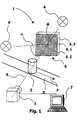
- Fig. 1 shows only by way of example the basic structure of a device 1 according to the invention for sorting out objects due to traces of use.
- a transport device 5 is provided in the form of a conveyor belt for successively transporting a sequence of objects 2 with respect to the observation direction B in the form of a camera 3, wherein the transport direction P of a respective object 2 at an angle with respect to the observation direction B is arranged.
- the succession of successively on and transported away objects may be, for example, reusable plastic beverage bottles, such as PET or the like act.
- a light source 4 is provided in extension in its observation direction B beyond the object 2, which according to the invention may be a flashlight or, alternatively, a continuous light-emitting source.
- a reference geometry 6 with a known brightness profile in the form of a square grid 6 can be arranged behind a transported object 2, in which a value of a parameter for traces is to be measured, before the light source 4, which is exemplified here as a physical grid made of metal or other suitable material, such as plastic.
- the square grid is formed by square grid bars 6.1 and between the bars 6.1 each remaining openings 6.2.
- the reference geometry / grating 6 is transparent to the light emitted by the light source 4, so that the observation device 3 according to the arrangement of light source 4, grating 6 shown in FIG. Object 2 and observation device 3, a combined image of at least a portion of the grating 6 and a portion of the object 2 receives, wherein the images of the grating 6 and the object 2 with the recorded image of the observation device 3 are superimposed.
- the light source 4 can be designed, for example, as a matrix-like planar arrangement of (infrared) light-emitting diodes (IR LEDs) and, in deviation from the representation shown, also in direct structural-physical connection with the reference geometry 6, ie the grating 6 then arranged directly on the (plane) light source, which is located, for example, at the location of the background 6.3.
- IR LEDs infrared light-emitting diodes
- a light source 4 ' can be provided instead of the light source 4 which operates in conjunction with the arrangement of object 2 and observation device 3 in the transmitted-light method , which is arranged starting from an imaginary point G on the grating 6 at an angle ⁇ to the observation direction B of the observation device 3.
- the light source 4 ' Based on the arrangement of object 2 and observation device 3 not in transmitted light but in reflected light method, wherein the grid 6 shown in FIG. 1 has a reflective background 6.3 in the manner of a ground glass.
- the grating 6 has a previously known brightness profile which is as high in contrast as possible and which is superimposed on the object 2 by a light irradiation through the light source 4, 4 'and recorded by the observation device 3.
- the observation device 3 is in operative connection with an image processing device for processing the recorded images of the object 2, for example for conversion into a brightness gradient image, which is used as a measured value of the characteristic for the traces of use of the object 2. Furthermore, further properties of the brightness gradient image can be analyzed in a determination device and used as a measured value of the parameter of the object 2.
- the image processing device and the determining device can be realized, for example, in a structural unit in a data processing system 7, which has a data connection with the observation device 3.
- a further functional unit is provided in the form of a database, which interacts advantageously with the image processing device and / or the determination device, so that the measured values of the characteristic of the traces of a sequence with a predetermined number of objects 2 transported in and out, for example in a file be saved in the form of a list. It can be provided that in each case a new entry in the list immediately after the measurement of the value of the characteristic of a respective object 2 takes place.
- a further functional unit in the form of a data processing program which accesses the values of the parameter stored in the list, for example after a predetermined number of entries has been made in the list, and determines from the stored values a threshold value of the parameter with which the measured values of the subsequently transported or transported objects 2 are compared and sorted out on the basis of this comparison.
- Both the database and the data further processing program are integrated together with the image processing device and the determination device as a physical unit in the data processing system 7.
- the interaction of the individual functional units can be realized by a common functional surface, which can advantageously have a user interface, via which, for example, an operating mode for sorting objects based on a comparison of the measured value of the parameter with a determined threshold value or with an absolute value or parameter for the determination of the threshold (see below) are externally adjustable.
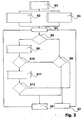
- FIG. 2 shows a flow chart of a method according to the invention for sorting out objects due to traces of use, which is represented, for example, by a functional surface with the individual o.g. Function units and a user interface can be performed.
- a first step (step S1), a selection of the user is made, which operating mode is to be used for comparing the measured values of a parameter of the objects 2.
- this is set once in a step S3. This means that when deciding on a sorting out of an object 2, an absolute limit of the measured value of the parameter of its traces of use is used.
- a percentage sorting of individual objects 2 with respect to the total amount of the objects can be selected, wherein in a step S2 the percentage of the objects to be sorted, and - optionally - a minimum value and / or a maximum value of the characteristic is set once.
- a tolerance interval of the parameter is defined once, so that objects with very strong traces of use in any case, and objects with less severe traces of use are excluded in any case, regardless of the percentage of objects shadow expertiseenden, so that according to the invention a quality assurance of the non-segregated objects still guaranteed.
- an absolute value of the parameter can be determined as in step S3, which is used as the starting value for comparing the first measured values of the characteristics of objects, until a threshold value of the characteristic from a predetermined number of objects is determined in the following method steps.
- step S4 the next object 2 of the measuring device 3, 4, 6 is supplied by the transport device 5.
- step S5 the value of the characteristic for the traces of use of the object is determined. If a comparison with an absolute value of the characteristic was selected in step S1, the measured value of the characteristic is compared with this value, which was determined in step S3, in step S6. Depending on undershot or exceeding this absolute value, the object is discarded in step S7 or found in step S8 as "good” and released for recycling. Subsequently, the process is continued with the next object to be measured with step S4.
- step S10 it is checked whether the number of entries of the list is equal to or greater than the predetermined number of measured values of the parameter on which the decision in this operating mode is based. If this is not the case, in step S6 the respective measured value is compared with the starting value determined in step S3, since no threshold value of the characteristic variable from a predetermined number of objects has yet been determined in a preceding method step. Depending on undershooting or exceeding the starting value, the object is rejected in step S7 or released for further use in step S8. In step S4, the method is then continued with the next object for determining a further measured value of the parameter.
- step S11 a threshold value of the characteristic from the list entries is compared with the comparison in step 12 with the respective current measured value of the characteristic of an object determined. Furthermore, additional comparisons are optionally provided with the minimum and / or maximum values defined in step S2.
- the characteristic quantity which is inversely proportional to the degree of scuffing it is precisely when the value falls below the starting value or the determined threshold or the minimum value in step S7 that the object is not rejected.
- the measured object 2 is released for recycling in step S8.
- the aforementioned inverse proportionality the latter applies in any case when the maximum value is exceeded.
- step S4 with the next object 2 to be measured.
- step S10 If, in step S10, the number of list entries exceeds the number of objects to be measured, in step S11 in the list according to the FIFO principle (First In-First Out) the measured value entered in the list before the longest period is deleted and the respectively current measured value entered in the list. This is followed by a new determination of the threshold value of the characteristic from the values of the thus updated list.
- FIFO principle First In-First Out
- step S12 the current measured value is compared with the threshold value of the parameter determined in this way, the object 2, after additional comparison with the minimum or maximum value defined in step S2, being rejected in step S7 or released for recycling in step S8.
- the decision criteria for sorting out the object thereby correspond to those as they have already been explained above. Now the process is continued in step S4 with the next object to be measured.
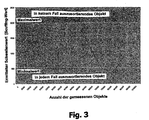
- 3 shows a diagram of an exemplary functional progression of the determined value of the parameter from the successively measured values of the parameter in each case a predetermined number of objects as a function of the total number of measured objects.
- the determined threshold values of the characteristic are given in units of their scuffing value, which represents a measure of the existing traces of use on the object, the scuffing value being inversely proportional to the scuffing degree, i. a high scuffing value "good” container with minor traces of use, a low scuffing value "bad” container marked with heavy signs of use.
- the threshold value of the parameter was determined in each case after a determination of the measured values of a predetermined number of 5,000 objects. Up to a total number of 0 to 35,000 objects, the determined threshold value varies between 1,250 and 2,000. Between a number of 35,000 and 55,000 objects, the determined threshold of the parameter exceeds the specified maximum value of the parameter of 2,000. In this case, even those objects are not sorted out, which fall below the threshold of the characteristic, but exceed the maximum value. However, all objects that fall below the lower threshold are safely ejected.
- a falling threshold of the characteristic from 2,000 to 500 is determined.
- a falling threshold value of the parameter is the specified minimum value, so that a sorting out of objects takes place, which indeed exceed the determined threshold value of the parameter, but fall below the minimum value specified as 500. However, objects that exceed the upper threshold will not be sorted out.
Landscapes
- General Health & Medical Sciences (AREA)
- Health & Medical Sciences (AREA)
- Life Sciences & Earth Sciences (AREA)
- Chemical & Material Sciences (AREA)
- Analytical Chemistry (AREA)
- Biochemistry (AREA)
- Physics & Mathematics (AREA)
- General Physics & Mathematics (AREA)
- Immunology (AREA)
- Pathology (AREA)
- Sorting Of Articles (AREA)
- Investigating Materials By The Use Of Optical Means Adapted For Particular Applications (AREA)
- Feeding Of Articles To Conveyors (AREA)
Applications Claiming Priority (1)
| Application Number | Priority Date | Filing Date | Title |
|---|---|---|---|
| DE102006043466.8A DE102006043466B4 (de) | 2006-09-15 | 2006-09-15 | Verfahren und Vorrichtung zum Aussortieren von Objekten aufgrund von Gebrauchsspuren |
Publications (3)
| Publication Number | Publication Date |
|---|---|
| EP1900446A2 true EP1900446A2 (fr) | 2008-03-19 |
| EP1900446A3 EP1900446A3 (fr) | 2008-06-04 |
| EP1900446B1 EP1900446B1 (fr) | 2010-02-17 |
Family
ID=38925578
Family Applications (1)
| Application Number | Title | Priority Date | Filing Date |
|---|---|---|---|
| EP07015657A Active EP1900446B1 (fr) | 2006-09-15 | 2007-08-09 | Procédé et dispositif destinés au tri d'objets en fonction de traces d'utilisation |
Country Status (3)
| Country | Link |
|---|---|
| EP (1) | EP1900446B1 (fr) |
| AT (1) | ATE457835T1 (fr) |
| DE (2) | DE102006043466B4 (fr) |
Cited By (4)
| Publication number | Priority date | Publication date | Assignee | Title |
|---|---|---|---|---|
| EP2636458A1 (fr) * | 2012-03-08 | 2013-09-11 | Wincor Nixdorf International GmbH | Dispositif et procédé destinés à la reconnaissance de la forme et du poid de récipients d'emballage vides |
| EP2698213A1 (fr) * | 2012-08-13 | 2014-02-19 | Krones AG | Dispositif de marquage de récipients, dispositif de traitement de récipients et procédé de marquage de récipients |
| WO2019185184A1 (fr) * | 2018-03-27 | 2019-10-03 | Krones Ag | Dispositif et procédé pour la détection optique de position d'objets transportés |
| WO2024251938A1 (fr) * | 2023-06-07 | 2024-12-12 | Tomra Sorting Gmbh | Appareil pour une machine de tri automatique, machine de tri et procédé |
Families Citing this family (3)
| Publication number | Priority date | Publication date | Assignee | Title |
|---|---|---|---|---|
| DE102017209752A1 (de) | 2017-06-09 | 2018-12-13 | Krones Ag | Inspektionsverfahren und Inspektionsvorrichtung zur Leerflascheninspektion in einer Getränkeverarbeitungsanlage |
| DE102021133164B3 (de) | 2021-12-15 | 2023-02-23 | Krones Aktiengesellschaft | Verfahren zum Durchführen eines Einstellbetriebs einer Behältnisinspektionsvorrichtung und Behältnisinspektionsvorrichtung |
| DE102021133159A1 (de) | 2021-12-15 | 2023-06-15 | Krones Aktiengesellschaft | Verfahren zum Durchführen eines Einstellbetriebs einer Behältnisinspektionsvorrichtung und Behältnisinspektionsvorrichtung |
Family Cites Families (9)
| Publication number | Priority date | Publication date | Assignee | Title |
|---|---|---|---|---|
| DE2619615C2 (de) * | 1976-05-04 | 1982-02-18 | Kronseder, Hermann, 8404 Woerth | Vorrichtung zum Erkennen und Ausscheiden von Behältern mit Scheuerstellen, insbesondere von Getränkeflaschen |
| US4691231A (en) * | 1985-10-01 | 1987-09-01 | Vistech Corporation | Bottle inspection system |
| ATE144730T1 (de) * | 1991-06-07 | 1996-11-15 | Elpatronic Ag | Verfahren und vorrichtung zum kennzeichnen von wiederbefüllbaren behältern, insbesondere kunststoff-flaschen sowie code-symbol zur kennzeichnung von kunststoff-flaschen |
| ATE139468T1 (de) * | 1992-11-27 | 1996-07-15 | Elpatronic Ag | Verfahren zum ausscheiden von mehrwegflaschen aus dem mehrwegumlauf |
| DE4320331A1 (de) * | 1993-06-20 | 1994-12-22 | Robert Prof Dr Ing Massen | Flexible optische Sortierung von Hohlkörpern |
| DE19646694A1 (de) * | 1996-11-12 | 1998-05-14 | Heuft Systemtechnik Gmbh | Verfahren zum Testen der Zuverlässigkeit eines Prüfgerätes, insbesondere eines Leerflascheninspektors |
| DE19651924A1 (de) * | 1996-12-13 | 1998-06-18 | Dieter Olschewski | Behälterglasprüfverfahren und -vorrichtungen |
| DE10065290C2 (de) * | 2000-12-29 | 2003-05-15 | Krones Ag | Verfahren und Vorrichtung zur optischen Inspektion von Flaschen |
| DE102004025948B3 (de) * | 2004-05-27 | 2006-03-16 | Krieg, Gunther, Prof. Dr.-Ing. | Verfahren und Vorrichtung zum Untersuchen von lichtdurchlässigen Objekten |
-
2006
- 2006-09-15 DE DE102006043466.8A patent/DE102006043466B4/de active Active
-
2007
- 2007-08-09 AT AT07015657T patent/ATE457835T1/de active
- 2007-08-09 DE DE502007002845T patent/DE502007002845D1/de active Active
- 2007-08-09 EP EP07015657A patent/EP1900446B1/fr active Active
Cited By (5)
| Publication number | Priority date | Publication date | Assignee | Title |
|---|---|---|---|---|
| EP2636458A1 (fr) * | 2012-03-08 | 2013-09-11 | Wincor Nixdorf International GmbH | Dispositif et procédé destinés à la reconnaissance de la forme et du poid de récipients d'emballage vides |
| EP2698213A1 (fr) * | 2012-08-13 | 2014-02-19 | Krones AG | Dispositif de marquage de récipients, dispositif de traitement de récipients et procédé de marquage de récipients |
| US9120328B2 (en) | 2012-08-13 | 2015-09-01 | Krones Ag | Marking device for marking containers, container handling device and a method for marking containers |
| WO2019185184A1 (fr) * | 2018-03-27 | 2019-10-03 | Krones Ag | Dispositif et procédé pour la détection optique de position d'objets transportés |
| WO2024251938A1 (fr) * | 2023-06-07 | 2024-12-12 | Tomra Sorting Gmbh | Appareil pour une machine de tri automatique, machine de tri et procédé |
Also Published As
| Publication number | Publication date |
|---|---|
| EP1900446A3 (fr) | 2008-06-04 |
| DE502007002845D1 (de) | 2010-04-01 |
| ATE457835T1 (de) | 2010-03-15 |
| DE102006043466A1 (de) | 2008-03-27 |
| EP1900446B1 (fr) | 2010-02-17 |
| DE102006043466B4 (de) | 2017-04-06 |
Similar Documents
| Publication | Publication Date | Title |
|---|---|---|
| EP1900446B1 (fr) | Procédé et dispositif destinés au tri d'objets en fonction de traces d'utilisation | |
| DE102011053547B4 (de) | Verfahren und System zum Lagern und Kommissionieren von Artikeln, insbesondere von Apothekenartikeln | |
| EP3630655B1 (fr) | Procédé et système d'entrepôt pour la préparation de marchandises avec tampon dynamique exploité efficacement | |
| EP0833270B1 (fr) | Procédé et dispositif de détection d'informations, détectables optiquement disposées sur des objets pouvant être de grande surface | |
| DE102011016641A1 (de) | Verfahren und Vorrichtung zum Ermitteln und Bereitstellen von Informationen für den Transport eines Objekts | |
| DE102009011230A1 (de) | Anordnung und Verfahren zum Erkennen und Steuern von mit einem Code versehenen Stückgütern | |
| DE102009011229A1 (de) | Anordnung und Verfahren zum Erkennen und Steuern von mit einem Code versehenen Stückgütern | |
| WO2019174937A1 (fr) | Procédé et système de caméras pour la surveillance d'une procédure de commissionnement ou d'emballage | |
| DE102007040301A1 (de) | Verfahren und Vorrichtung zur dynamischen Kontrollwägung | |
| WO1998047790A1 (fr) | Procede de controle de marchandises de detail faisant partie d'un ordre de preparation des commandes et dispositif pour l'execution de ce procede | |
| AT523755A2 (de) | Verfahren zum abschnittsweisen Bestimmen der Korngrößenverteilung eines auf ein Förderband aufgegebenen Schüttgutes | |
| DE102019118046A1 (de) | Lagerregal zur Lagerung mindestens eines Lagergutträgers und Verfahren zum Erfassen eines Lagerbestands eines Lagerregals | |
| EP4568903A1 (fr) | Procédé de fonctionnement d'un entrepôt automatisé, unité de commande pour commander un entrepôt automatisé et entrepôt automatisé | |
| DE3741940A1 (de) | Farbsensor | |
| EP2626320A1 (fr) | Dispositif de palier de rayonnage pour le chargement et le déchargement au choix de marchandises de stockage et procédé de fonctionnement d'un tel dispositif de palier de rayonnage | |
| WO2019174938A1 (fr) | Procédé et système de caméra pour surveiller un processus d'emballage | |
| DE102014203591A1 (de) | Vorrichtung für eine Gepäckbeförderungseinrichtung und Verfahren zum Betreiben einer Gepäckbeförderungseinrichtung | |
| DE102020215227B4 (de) | Vorrichtung und Verfahren zum Erstellen einer Referenzaufnahme des unbeladenen Zustands eines Werkstückträgers | |
| DE102010013335A1 (de) | Vorrichtung und Verfahren zur Kontrolle des Inhalts Medikamente enthaltender Packungseinheiten | |
| EP1925921B1 (fr) | Procédé et dispositif destinés à la détermination de la masse de marchandises au détail sur un dispositif de convoyage | |
| DE102014003005A1 (de) | Verfahren zum Ermitteln eines Sortierergebnisses für ein Wertdokument und Mittel zur Durchführung des Verfahrens | |
| DE19707156A1 (de) | Warenschleuse für Selbstbedienungsläden | |
| DE202009002919U1 (de) | Anordnung zum Erkennen und Steuern von mit einem Code versehenen Stückgütern | |
| DE19506041C1 (de) | Vorrichtung zum Zuordnen von Obst und Gemüse nach Klassen und Chargen | |
| AT523754A2 (de) | Verfahren zum abschnittsweisen Bestimmen des Volumens eines auf ein Förderband aufgegebenen Schüttgutes |
Legal Events
| Date | Code | Title | Description |
|---|---|---|---|
| PUAI | Public reference made under article 153(3) epc to a published international application that has entered the european phase |
Free format text: ORIGINAL CODE: 0009012 |
|
| AK | Designated contracting states |
Kind code of ref document: A2 Designated state(s): AT BE BG CH CY CZ DE DK EE ES FI FR GB GR HU IE IS IT LI LT LU LV MC MT NL PL PT RO SE SI SK TR |
|
| AX | Request for extension of the european patent |
Extension state: AL BA HR MK YU |
|
| PUAL | Search report despatched |
Free format text: ORIGINAL CODE: 0009013 |
|
| AK | Designated contracting states |
Kind code of ref document: A3 Designated state(s): AT BE BG CH CY CZ DE DK EE ES FI FR GB GR HU IE IS IT LI LT LU LV MC MT NL PL PT RO SE SI SK TR |
|
| AX | Request for extension of the european patent |
Extension state: AL BA HR MK RS |
|
| 17P | Request for examination filed |
Effective date: 20080430 |
|
| AKX | Designation fees paid |
Designated state(s): AT BE BG CH CY CZ DE DK EE ES FI FR GB GR HU IE IS IT LI LT LU LV MC MT NL PL PT RO SE SI SK TR |
|
| 17Q | First examination report despatched |
Effective date: 20090127 |
|
| GRAP | Despatch of communication of intention to grant a patent |
Free format text: ORIGINAL CODE: EPIDOSNIGR1 |
|
| GRAS | Grant fee paid |
Free format text: ORIGINAL CODE: EPIDOSNIGR3 |
|
| GRAA | (expected) grant |
Free format text: ORIGINAL CODE: 0009210 |
|
| AK | Designated contracting states |
Kind code of ref document: B1 Designated state(s): AT BE BG CH CY CZ DE DK EE ES FI FR GB GR HU IE IS IT LI LT LU LV MC MT NL PL PT RO SE SI SK TR |
|
| REG | Reference to a national code |
Ref country code: GB Ref legal event code: FG4D Free format text: NOT ENGLISH |
|
| REG | Reference to a national code |
Ref country code: CH Ref legal event code: EP |
|
| REG | Reference to a national code |
Ref country code: IE Ref legal event code: FG4D Free format text: LANGUAGE OF EP DOCUMENT: GERMAN |
|
| REF | Corresponds to: |
Ref document number: 502007002845 Country of ref document: DE Date of ref document: 20100401 Kind code of ref document: P |
|
| REG | Reference to a national code |
Ref country code: NL Ref legal event code: VDEP Effective date: 20100217 |
|
| LTIE | Lt: invalidation of european patent or patent extension |
Effective date: 20100217 |
|
| PG25 | Lapsed in a contracting state [announced via postgrant information from national office to epo] |
Ref country code: PT Free format text: LAPSE BECAUSE OF FAILURE TO SUBMIT A TRANSLATION OF THE DESCRIPTION OR TO PAY THE FEE WITHIN THE PRESCRIBED TIME-LIMIT Effective date: 20100617 Ref country code: ES Free format text: LAPSE BECAUSE OF FAILURE TO SUBMIT A TRANSLATION OF THE DESCRIPTION OR TO PAY THE FEE WITHIN THE PRESCRIBED TIME-LIMIT Effective date: 20100528 Ref country code: IS Free format text: LAPSE BECAUSE OF FAILURE TO SUBMIT A TRANSLATION OF THE DESCRIPTION OR TO PAY THE FEE WITHIN THE PRESCRIBED TIME-LIMIT Effective date: 20100617 Ref country code: LT Free format text: LAPSE BECAUSE OF FAILURE TO SUBMIT A TRANSLATION OF THE DESCRIPTION OR TO PAY THE FEE WITHIN THE PRESCRIBED TIME-LIMIT Effective date: 20100217 |
|
| PG25 | Lapsed in a contracting state [announced via postgrant information from national office to epo] |
Ref country code: LV Free format text: LAPSE BECAUSE OF FAILURE TO SUBMIT A TRANSLATION OF THE DESCRIPTION OR TO PAY THE FEE WITHIN THE PRESCRIBED TIME-LIMIT Effective date: 20100217 Ref country code: PL Free format text: LAPSE BECAUSE OF FAILURE TO SUBMIT A TRANSLATION OF THE DESCRIPTION OR TO PAY THE FEE WITHIN THE PRESCRIBED TIME-LIMIT Effective date: 20100217 Ref country code: SI Free format text: LAPSE BECAUSE OF FAILURE TO SUBMIT A TRANSLATION OF THE DESCRIPTION OR TO PAY THE FEE WITHIN THE PRESCRIBED TIME-LIMIT Effective date: 20100217 Ref country code: FI Free format text: LAPSE BECAUSE OF FAILURE TO SUBMIT A TRANSLATION OF THE DESCRIPTION OR TO PAY THE FEE WITHIN THE PRESCRIBED TIME-LIMIT Effective date: 20100217 |
|
| REG | Reference to a national code |
Ref country code: IE Ref legal event code: FD4D |
|
| PG25 | Lapsed in a contracting state [announced via postgrant information from national office to epo] |
Ref country code: EE Free format text: LAPSE BECAUSE OF FAILURE TO SUBMIT A TRANSLATION OF THE DESCRIPTION OR TO PAY THE FEE WITHIN THE PRESCRIBED TIME-LIMIT Effective date: 20100217 Ref country code: GR Free format text: LAPSE BECAUSE OF FAILURE TO SUBMIT A TRANSLATION OF THE DESCRIPTION OR TO PAY THE FEE WITHIN THE PRESCRIBED TIME-LIMIT Effective date: 20100518 Ref country code: NL Free format text: LAPSE BECAUSE OF FAILURE TO SUBMIT A TRANSLATION OF THE DESCRIPTION OR TO PAY THE FEE WITHIN THE PRESCRIBED TIME-LIMIT Effective date: 20100217 Ref country code: IE Free format text: LAPSE BECAUSE OF FAILURE TO SUBMIT A TRANSLATION OF THE DESCRIPTION OR TO PAY THE FEE WITHIN THE PRESCRIBED TIME-LIMIT Effective date: 20100217 Ref country code: CY Free format text: LAPSE BECAUSE OF FAILURE TO SUBMIT A TRANSLATION OF THE DESCRIPTION OR TO PAY THE FEE WITHIN THE PRESCRIBED TIME-LIMIT Effective date: 20100217 Ref country code: SE Free format text: LAPSE BECAUSE OF FAILURE TO SUBMIT A TRANSLATION OF THE DESCRIPTION OR TO PAY THE FEE WITHIN THE PRESCRIBED TIME-LIMIT Effective date: 20100217 Ref country code: RO Free format text: LAPSE BECAUSE OF FAILURE TO SUBMIT A TRANSLATION OF THE DESCRIPTION OR TO PAY THE FEE WITHIN THE PRESCRIBED TIME-LIMIT Effective date: 20100217 |
|
| PG25 | Lapsed in a contracting state [announced via postgrant information from national office to epo] |
Ref country code: SK Free format text: LAPSE BECAUSE OF FAILURE TO SUBMIT A TRANSLATION OF THE DESCRIPTION OR TO PAY THE FEE WITHIN THE PRESCRIBED TIME-LIMIT Effective date: 20100217 Ref country code: BG Free format text: LAPSE BECAUSE OF FAILURE TO SUBMIT A TRANSLATION OF THE DESCRIPTION OR TO PAY THE FEE WITHIN THE PRESCRIBED TIME-LIMIT Effective date: 20100517 Ref country code: CZ Free format text: LAPSE BECAUSE OF FAILURE TO SUBMIT A TRANSLATION OF THE DESCRIPTION OR TO PAY THE FEE WITHIN THE PRESCRIBED TIME-LIMIT Effective date: 20100217 |
|
| PLBE | No opposition filed within time limit |
Free format text: ORIGINAL CODE: 0009261 |
|
| STAA | Information on the status of an ep patent application or granted ep patent |
Free format text: STATUS: NO OPPOSITION FILED WITHIN TIME LIMIT |
|
| 26N | No opposition filed |
Effective date: 20101118 |
|
| PG25 | Lapsed in a contracting state [announced via postgrant information from national office to epo] |
Ref country code: DK Free format text: LAPSE BECAUSE OF FAILURE TO SUBMIT A TRANSLATION OF THE DESCRIPTION OR TO PAY THE FEE WITHIN THE PRESCRIBED TIME-LIMIT Effective date: 20100217 |
|
| BERE | Be: lapsed |
Owner name: KRIEG, GUNTHER, PROF.DR.ING. Effective date: 20100831 |
|
| PG25 | Lapsed in a contracting state [announced via postgrant information from national office to epo] |
Ref country code: MC Free format text: LAPSE BECAUSE OF NON-PAYMENT OF DUE FEES Effective date: 20100831 Ref country code: IT Free format text: LAPSE BECAUSE OF FAILURE TO SUBMIT A TRANSLATION OF THE DESCRIPTION OR TO PAY THE FEE WITHIN THE PRESCRIBED TIME-LIMIT Effective date: 20100217 |
|
| REG | Reference to a national code |
Ref country code: FR Ref legal event code: ST Effective date: 20110502 |
|
| PG25 | Lapsed in a contracting state [announced via postgrant information from national office to epo] |
Ref country code: FR Free format text: LAPSE BECAUSE OF NON-PAYMENT OF DUE FEES Effective date: 20100831 Ref country code: BE Free format text: LAPSE BECAUSE OF NON-PAYMENT OF DUE FEES Effective date: 20100831 |
|
| PG25 | Lapsed in a contracting state [announced via postgrant information from national office to epo] |
Ref country code: MT Free format text: LAPSE BECAUSE OF FAILURE TO SUBMIT A TRANSLATION OF THE DESCRIPTION OR TO PAY THE FEE WITHIN THE PRESCRIBED TIME-LIMIT Effective date: 20100217 |
|
| REG | Reference to a national code |
Ref country code: CH Ref legal event code: PL |
|
| GBPC | Gb: european patent ceased through non-payment of renewal fee |
Effective date: 20110809 |
|
| PG25 | Lapsed in a contracting state [announced via postgrant information from national office to epo] |
Ref country code: CH Free format text: LAPSE BECAUSE OF NON-PAYMENT OF DUE FEES Effective date: 20110831 Ref country code: LI Free format text: LAPSE BECAUSE OF NON-PAYMENT OF DUE FEES Effective date: 20110831 |
|
| PG25 | Lapsed in a contracting state [announced via postgrant information from national office to epo] |
Ref country code: GB Free format text: LAPSE BECAUSE OF NON-PAYMENT OF DUE FEES Effective date: 20110809 |
|
| PG25 | Lapsed in a contracting state [announced via postgrant information from national office to epo] |
Ref country code: HU Free format text: LAPSE BECAUSE OF FAILURE TO SUBMIT A TRANSLATION OF THE DESCRIPTION OR TO PAY THE FEE WITHIN THE PRESCRIBED TIME-LIMIT Effective date: 20100818 Ref country code: LU Free format text: LAPSE BECAUSE OF NON-PAYMENT OF DUE FEES Effective date: 20100809 |
|
| PG25 | Lapsed in a contracting state [announced via postgrant information from national office to epo] |
Ref country code: TR Free format text: LAPSE BECAUSE OF FAILURE TO SUBMIT A TRANSLATION OF THE DESCRIPTION OR TO PAY THE FEE WITHIN THE PRESCRIBED TIME-LIMIT Effective date: 20100217 |
|
| REG | Reference to a national code |
Ref country code: AT Ref legal event code: MM01 Ref document number: 457835 Country of ref document: AT Kind code of ref document: T Effective date: 20120831 |
|
| PG25 | Lapsed in a contracting state [announced via postgrant information from national office to epo] |
Ref country code: AT Free format text: LAPSE BECAUSE OF NON-PAYMENT OF DUE FEES Effective date: 20120831 |
|
| PGFP | Annual fee paid to national office [announced via postgrant information from national office to epo] |
Ref country code: DE Payment date: 20250821 Year of fee payment: 19 |