EP1901090B1 - Système de radar secondaire de surveillance en mode S - Google Patents
Système de radar secondaire de surveillance en mode S Download PDFInfo
- Publication number
- EP1901090B1 EP1901090B1 EP07253615A EP07253615A EP1901090B1 EP 1901090 B1 EP1901090 B1 EP 1901090B1 EP 07253615 A EP07253615 A EP 07253615A EP 07253615 A EP07253615 A EP 07253615A EP 1901090 B1 EP1901090 B1 EP 1901090B1
- Authority
- EP
- European Patent Office
- Prior art keywords
- mode
- target
- code information
- reply
- scan
- Prior art date
- Legal status (The legal status is an assumption and is not a legal conclusion. Google has not performed a legal analysis and makes no representation as to the accuracy of the status listed.)
- Not-in-force
Links
- 238000001514 detection method Methods 0.000 claims description 29
- 230000005540 biological transmission Effects 0.000 description 15
- 230000002596 correlated effect Effects 0.000 description 9
- 238000010586 diagram Methods 0.000 description 9
- 230000000875 corresponding effect Effects 0.000 description 7
- 238000013139 quantization Methods 0.000 description 2
- 230000003321 amplification Effects 0.000 description 1
- 230000006870 function Effects 0.000 description 1
- 238000003199 nucleic acid amplification method Methods 0.000 description 1
Images


Classifications
-
- G—PHYSICS
- G01—MEASURING; TESTING
- G01S—RADIO DIRECTION-FINDING; RADIO NAVIGATION; DETERMINING DISTANCE OR VELOCITY BY USE OF RADIO WAVES; LOCATING OR PRESENCE-DETECTING BY USE OF THE REFLECTION OR RERADIATION OF RADIO WAVES; ANALOGOUS ARRANGEMENTS USING OTHER WAVES
- G01S13/00—Systems using the reflection or reradiation of radio waves, e.g. radar systems; Analogous systems using reflection or reradiation of waves whose nature or wavelength is irrelevant or unspecified
- G01S13/74—Systems using reradiation of radio waves, e.g. secondary radar systems; Analogous systems
- G01S13/76—Systems using reradiation of radio waves, e.g. secondary radar systems; Analogous systems wherein pulse-type signals are transmitted
- G01S13/78—Systems using reradiation of radio waves, e.g. secondary radar systems; Analogous systems wherein pulse-type signals are transmitted discriminating between different kinds of targets, e.g. IFF-radar, i.e. identification of friend or foe
- G01S13/781—Secondary Surveillance Radar [SSR] in general
- G01S13/782—Secondary Surveillance Radar [SSR] in general using multimoding or selective addressing
-
- G—PHYSICS
- G01—MEASURING; TESTING
- G01S—RADIO DIRECTION-FINDING; RADIO NAVIGATION; DETERMINING DISTANCE OR VELOCITY BY USE OF RADIO WAVES; LOCATING OR PRESENCE-DETECTING BY USE OF THE REFLECTION OR RERADIATION OF RADIO WAVES; ANALOGOUS ARRANGEMENTS USING OTHER WAVES
- G01S13/00—Systems using the reflection or reradiation of radio waves, e.g. radar systems; Analogous systems using reflection or reradiation of waves whose nature or wavelength is irrelevant or unspecified
- G01S13/88—Radar or analogous systems specially adapted for specific applications
- G01S13/91—Radar or analogous systems specially adapted for specific applications for traffic control
Definitions
- the present invention relates to an improvement of a mode S secondary surveillance radar system capable of detecting aircraft mounted with a mode S transponder or an ATCRBS transponder.
- Targets (aircrafts) of a secondary surveillance radar system (referred hereafter as SSR) of a ground station include an aircraft mounted with an ATCRBS transponder and an aircraft mounted with a mode S transponder.
- the SSR for detecting the ATCRBS transponder and the mode S transponder carries out the surveillance in which a beam dwell time T is divided into a plurality of sweeps (four sweeps, for example), and each sweep is divided into an all-call period and a roll-call period.
- a mode A/C specialized transaction detecting an aircraft mounted with the ATCRBS transponder and a mode S specialized collective transaction detecting an aircraft mounted with the mode S transponder will be carried out.
- the mode S individual interrogation (roll call) and reply will be carried out by such a schedule that the transaction for respective targets will not overlap, according to a position information (range, azimuth) and a mode S address of targets (aircrafts) obtained from replies of the transponders to the mode S specialized collective interrogation.
- the beam dwell time T is a time corresponding to an angle range based on a rotational speed of an antenna that is scanning in a direction of the SSR (azimuth) and a transmission beam width, which is defined uniquely.
- Fig. 1 is a schematic diagram showing a configuration of the conventional mode S secondary surveillance radar system and a positional relationship with a target (aircraft) to be detected by the mode S secondary surveillance radar system
- Fig. 2 is a diagram showing a concrete configuration of a processor 3 shown in Fig. 1 .
- the processor 3 comprises a transmission controller 31 connected to the transmitter 22, a mode S reply processor 32 and an ATCRBS reply processor 33 connected to the receiver 23, a channel manager 34 connected to the mode S reply processor 32 and the transmission controller 31, a surveillance processor 35 connected to the channel manager 34, the transmission controller 31, the mode S reply processor 32 and the ATCRBS reply processor 33, and a timing signal generator 36 for generating and supplying timing signals for scan operations in a direction of the antenna 1 (azimuth), the interrogation transmission, etc., in order to realize an overall control of a system of the processor 3 as a whole.
- the transponder of the target comprises an antenna 4 for receiving a interrogation transmitted from the antenna 1 of the ground station (mode S secondary surveillance radar system) and transmitting a reply to that interrogation, i.e. a mode S reply or a mode A/C reply, towards the ground station, a transceiver 5 connected to the antenna 4, and a signal processor 6 connected to the transceiver 5, where the transceiver 5 and the signal processor 6 constitute a transponder.
- a mode S reply i.e. a mode S reply or a mode A/C reply
- an own site ID identification code
- parameters such as PR (reply probability), a target information obtained by a plurality of scans when a so called target information such as a range (distance), an azimuth and an altitude regarding the target position is obtained over a plurality of scans, and a parameter to become a reference for judging whether it is within a correlated range among scans, i.e. a correlation value are set in advance and stored in the surveillance processor 35.
- the channel manager 34 allocates the all-call period TA and the roll-call period TR in the beam dwell time T according to signals from the timing signal generator 36.
- the transmission controller 31 generates the mode S specialized collective interrogation and the mode A/C specialized interrogation of the reply probability 1 in the all-call period according to the own site ID and the PR value supplied from the surveillance processor 35, and transmits them towards the target (aircraft) from the antenna 1 through the transmitter 22 and the transmission and reception switch 21.
- the collective interrogation (of the mode S specialized one plus the mode A/C specialized one) from the ground station is transmitted towards the target mounted with the mode S transponder, and the reply to that transmitted collective interrogation from the transponder is received through the antenna 1 and the transmission and reception switch 21 of the ground station, digitized by the receiver 23 which has amplification, detection and quantization functions, and supplied to the mode S reply processor 32 and the ATCRBS reply processor 33.
- the mode S reply processor 32 carries out the preamble detection and the message decoding for the received reply X, estimates a distance to the target and a direction of the target from the position information of the target that can be obtained from the reception timing of the reply X, judges whether the own site ID and the PI (Parity/Interrogator ID) field coincide or not according to a mode S address contained in the reply X, and supplies the reply X for which the own site ID and the PI field coincide to the channel manager 34 and the surveillance processor 35 as a processing target reply.
- data for which the own site ID and the PI field do not coincide i.e. non-coincident reply data, will be discarded as not a processing target.
- the surveillance processor 35 which received a supply of the reply of the target which is judged as the processing target at the mode S reply processor 32, a detection report regarding that target is produced, registered and outputted, for those replies for which the mode S all-call coincides among the replies obtained in the same direction and the distance and the direction are within predicted ranges in the previous scan of the antenna 1 and which are within the correlated range that is set in advance.
- the reply data which are not correlated will be discarded.
- the surveillance processor 35 if there exists targets for which the mode S address overlaps among targets within the control coverage area controlled by that ground station, in relation to the replies supplied from the mode S reply processor 32, then a case where the air traffic control cannot be carried out properly as one of them is false may occur, so that the acquiring by the all call is carried out again for all the overlapping targets in the case where the mode S address overlaps.
- the surveillance processor 35 outputs a command to the channel manager 34, such that the individual interrogation (roll-call) containing a command of a lockout for not responding to the all call will be scheduled, in relation to the target of the reply which is judged as correlated.
- the channel manager 34 that received the command carries out the scheduling such that the transaction will not overlap, sequentially from the target (aircraft) for which the distance is farther, for the purpose of the effective utilization of the RF channels.
- the selective interrogation is scheduled and its reply is received in order to acquire the mode A code information and the altitude information along with the mode S address, for the target acquired by the all call.
- the mode S reply processor 32 For the individual reply of the mode A code information and the altitude information received, the mode S reply processor 32 carries out the preamble detection and the message decoding, sets the mode S address acquired by the earlier all call as a predicted mode S address, and judges whether the predicted mode S address and the mode S address acquired by the roll call coincide or not.
- the mode S reply processor 32 supplies the reply for which the mode S address coincides as a processing target to the surveillance processor 35, so that the surveillance processor 35 initially acquisition a target (aircraft) through the correlation processing, and then carries out the production, registration and output of the target detection report according to the acquired mode A code information at the roll-call, and stores code data of that acquired mode A code information into a memory such as RAM. Note here that data of the reply which is not correlated will be discarded as not a processing target.
- mode A code information stored in a memory at the surveillance processor 35 is unique to a flight of the target (aircraft), so that usually it will not be changed while the surveillance and the control of that target are to be continued.
- the transaction for acquiring the mode A code information will be omitted in order to increase the utilization efficiency of the RF channels.
- the detection report for that target is produced by reading out the mode A code information acquired soon after the initial acquiring and stored in a memory whenever necessary.
- the mode A code information of the target will be acquired again, stored in a memory and utilized by reading it out, when acquired again soon after the coast occurs or when the flight status (FS) of the target changes, for example.
- the mode A code information unique to the flight of the target (aircraft) is usually changed very rarely, so that in the conventional mode S secondary surveillance radar system, the interrogation for acquiring the mode A code information will be omitted in the selective interrogation at the scan of the antenna 1 after the initial acquisition after acquired the mode A code information.
- the mode A code information acquired first that target is used repeatedly in the target detection report production by the scan of the antenna 1 after the initial acquisition, so that if the code data of the mode A code information acquired first contain erroneously converted characters or errors due to some other causes, this erroneous mode A code information would be adopted again, such that there arises a possibility that the air traffic control will not be carried out properly.
- the invention provides a radar system as defined in Claim 1.
- the present invention can provide a mode S secondary surveillance radar system capable of improving a reliability of the mode A code information to be adopted at a time of producing a target detection report and carrying out the air traffic control more properly, without obstructing the efficient utilization of RF channels during the roll-cal period.
- the mode S secondary surveillance radar system of the present invention acquires the mode A code information by scans of a plurality of times including a scan of the antenna for making an initial acquisition, and produces a detection report of a acquisition surveillance by a scan of an antenna thereafter by adopting the mode A code information with coinciding code data among mode A code information acquired by scans of a plurality of times, so that the efficient utilization of RF channels during the roll-call period can be maintained while realizing target (aircraft) surveillance with a high reliability.
- Fig. 3 is a diagram showing a configuration of one embodiment of the mode S secondary surveillance radar system according to the present invention.
- the mode S secondary surveillance radar system of a ground station which is a sensor comprises an antenna 1, a transceiver 2 connected to the antenna 1, and a processor 3 connected to the transceiver 2.
- the antenna 1 is connected to a transmitter 22 and a receiver 23 through a transmission and reception switch 21 of the transceiver 2, and the transmitter 22 and the receiver 23 are connected to the processor 3.
- the processor 3 comprises a transmission controller 37 connected to the transmitter 22, a mode S reply processor 32 and an ATCRBS reply processor 33 connected to the receiver 23, a channel manager 38 connected to the mode S reply processor 32 and the transmission controller 37, a surveillance processor 39 connected to the channel manager 38, the transmission controller 37, the mode S reply processor 32 and the ATCRBS reply processor 33, and a timing signal generator 36 for carrying out an overall control of a system of the processor 3 as a whole, and generating and supplying timing signals for beam scans in a direction of the antenna 1 (azimuth).
- parameters such as an own site ID and a PR value that is necessary in a processing of a reply from a target (aircraft) are set in advance in the mode S reply processor 32, a correlation value for the purpose of carrying out a correlation processing of a target that is judged as a processing target at the mode S reply processor 32 is set in advance in the surveillance processor 39.
- the surveillance processor 39 introduces a target information obtained according to reply data from an ATCRBS transponder and a mode S transponder, introduces a reply to a mode S specialized collective interrogation, judges and detects a presence or absence of the overlapping receiving of an identical mode S address, and produces, registers and outputs a detection report regarding that target when it is judged that the overlapping receiving of the mode S address is absent.
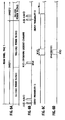
- a collective interrogation (of the mode S only interrogation A(S) plus the mode A/C only interrogation A(A/C)) is transmitted towards the target mounted with the mode S transponder through the antenna 1, and a reply X to that transmitted collective interrogation from the transponder shown in Fig. 4D is supplied to the receiver 23 through the antenna 1 and the transmission and reception switch 21 and through a detection window W shown in Fig. 4C , digitized by the amplified detection and the quantization, and supplied to the mode S reply processor 32 and the ATCRBS reply processor 33.
- the mode S reply processor 32 carries out the preamble detection and the message decoding for the received reply X, estimates a distance to the target and a direction of the target from the position information of the target that can be obtained from the reception timing of the reply X, judges whether the own site ID and the PI field coincide or not according to a mode S address contained in the reply X, and supplies the reply X for which the own site ID and the PI field coincide to the channel manager 38 and the surveillance processor 39 as a processing target reply, whereas data for which the own site ID and the PI field do not coincide will be discarded.
- the surveillance processor 39 which received a supply of the reply of the target which is judged as the processing target at the mode S reply processor 32, a detection report regarding that target is produced, registered and outputted, for those replies for which the mode S all call coincides among the replies obtained in the same direction and the distance and the direction are within predicted ranges in the previous scan of the antenna 1 and which are within the correlated range that is set in advance.
- the reply data which are not correlated will be discarded.
- the surveillance processor 39 detects whether there exists targets for which the mode S address overlaps among targets within the control coverage area controlled by that ground station or not, in relation to the replies supplied from the mode S reply processor 32, and in a case where targets for which the mode S address overlaps exist, the acquisition by the all call is carried out again for all the overlapping targets.
- the surveillance processor 39 outputs a command to the channel manager 38, such that the selective interrogations R(A) and R(C) will be scheduled in order to acquire the mode A code information and the altitude information, as shown in Fig. 4B , in relation to the target of the reply X which is judged as correlated.
- the channel manager 38 that received the command sets up corresponding detection windows W(A) and W(C) shown in Fig. 4C , and controls the transmission controller 37 to transmit the selective interrogations R(A) and R(C), so that corresponding replies X(A) and X(C) shown in Fig. 4D are transmitted from the transponder of the target that received them, and supplied to the mode S reply processor 32 and the ATCRBS reply processor 33 through the detection windows X(A) and X(C).
- the mode S reply processor 32 and the ATCRBS reply processor 33 carry out the preamble detection and the message decoding.
- the mode S reply processor 32 sets the mode S address acquired by the earlier all call as a predicted mode S address, and judges whether the predicted mode S address and the mode S address acquired by the roll call coincide or not.
- the mode S reply processor 32 supplies the reply for which the mode S address coincides as a processing target to the surveillance processor 39, so that the surveillance processor 39 initially acquisition a target (aircraft) through the correlation processing, carries out the production, registration and output of the target detection report, and stores the acquired mode A code information into a memory such as RAM. Note here that data of the reply which is not correlated will be discarded as not a processing target.
- the mode S secondary surveillance radar system (ground station) of this embodiment carries out the acquisition of the mode A code information at after a time of the initial acquisition of the target by a (first) scan of the antenna 1 also at a time of the acquisition by a (second) scan of the antenna 1 that follows the (first) scan at after a time of the initial acquisition, with respect to the same target, and when the mode A code information comprising the same code data is obtained consecutively twice, the acquisition of the mode A code information thereafter (third and subsequent scans) will be omitted for the first time.
- the selective interrogation X(C) of the altitude information and the acquisition of the corresponding reply X(C) are carried out in the roll-call period TR by the next (second) scan of the antenna 1 with respect to the captured target, as shown in Fig. 5A to Fig 5D , and unlike the conventional one, the selective interrogation R(A) of the mode A code information and the acquisition of the corresponding reply X(A) are also repeated similarly.
- a lockout command is issued so as not to respond to the all call TA after the collective interrogation.
- the surveillance processor 39 acquires the reply X(A) of the mode A code information and the reply X(C) of the altitude information according to the schedule shown in Fig. 5A to Fig. 5D by the (second) scan of the antenna,1, after the initial acquisition according to the schedule shown in Fig. 4A to Fig.4D , and judges whether the code data of the reply X(A) of the mode A code information acquired here coincide with the code data of the reply X(A) of the mode A code information that are acquired earlier and already stored in the memory or not.
- the surveillance processor 39 will omit the acquisition of the reply X(A) of the mode A code information by the subsequent scans for the first time, even though the acquisition of the reply X(C) of the altitude information will be continued, as shown in Fig. 6A to Fig. 6D .
- the code data do not coincide between the mode A code information acquired at a time of the initial acquisition (by the first scan) and the mode A code information acquired by the following second scan, they are compared with the code data of the mode A code information acquired by the following third scan, and stored by replacing them with the mode A code information that coincides with either one, and the code data of the replaced mode A code information will be read out and adopted in the production of the target detection report by the scans thereafter (fourth and subsequent).
- the target detection report by the subsequent scans is produced by adopting this coinciding mode A code information for the first time, so that the efficient utilization of RF channels during the roll-call period can be realized while the target (aircraft) surveillance with a high reliability becomes possible.
- the mode A code information is such that, besides the case of after the initial acquisition, the acquisition of the mode A code information becomes necessary again when a coast which misses data of the mode A code information occurs or when acquired again after the flight status of the target is changed, for example, and the acquisition of the mode S interrogation can be omitted in the subsequent scans similarly when the coinciding code data are obtained by the acquisitions of the mode A code information for two times.
- the surveillance processor 39 adopts this coinciding mode A code information in the production of the detection report by the acquisition of that one target by the subsequent scans, but it is not limited to the consecutive two scans, and it is also possible to adopt the mode A code information for which the code data coincide for three or more scans in the production of the detection report thereafter. It is also possible to adopt the mode A code information for which a greatest number of code data coincide among the acquired mode A code information by the arbitrarily separated scans which are not consecutive in the production of the detection report by the subsequent scans for that one target.
- the order of scans to be selected may be set according to a random number table.
- the acquisition of the mode A code information with coinciding code data for one target described above may be carried out at arbitrary timings or regularly.
- processor 3 has been described as being formed by hardware, but in practice, each signal processing at the processor 3 will be realized on software of a computer.
Landscapes
- Engineering & Computer Science (AREA)
- Radar, Positioning & Navigation (AREA)
- Remote Sensing (AREA)
- Physics & Mathematics (AREA)
- Computer Networks & Wireless Communication (AREA)
- General Physics & Mathematics (AREA)
- Electromagnetism (AREA)
- Radar Systems Or Details Thereof (AREA)
Claims (3)
- Système de radar secondaire de surveillance en mode S mettant en oeuvre une interrogation sélective de type appel général et appel nominal d'un transpondeur, comprenant une unité d'acquisition de codes en mode A destinée à acquérir des informations de codes en mode A par l'acquisition d'une cible par le biais d'un premier balayage d'une antenne (1), et à réacquérir au cours d'une période d'appel nominal les informations de codes en mode A de ladite une cible par le biais d'un second balayage de l'antenne suite à l'acquisition des informations de codes en mode A par le biais du premier balayage ; et
un processeur de surveillance (39) pour détecter les informations de codes en mode A avec données de code coïncidentes parmi les informations de codes en mode A acquises et nouvellement acquises par les premier et second balayages, et pour générer un rapport de détection de ladite une cible capturée ensuite par un balayage de l'antenne, en adoptant les informations de codes en mode A avec données de code coïncidentes ;
dans lequel l'unité d'acquisition de codes en mode A est agencée de manière à réacquérir les informations de codes en mode A de ladite une cible sur une pluralité de balayages après le premier balayage ; et
le processeur de surveillance est agencé de manière à générer le rapport de détection de ladite une cible capturée par la suite, en adoptant les informations de codes en mode A présentant le plus grand nombre de données de code coïncidentes, parmi les informations de codes en mode A acquises par le biais du premier balayage et des suivants par l'unité d'acquisition de codes en mode A. - Système de radar secondaire de surveillance en mode S selon la revendication 1, dans lequel l'unité d'acquisition de codes en mode A est agencée de manière à mettre en oeuvre la pluralité de balayages faisant suite au premier balayage par des balayages choisis arbitrairement de l'antenne.
- Système de radar secondaire de surveillance en mode S selon la revendication 1, dans lequel l'unité d'acquisition de codes en mode A est agencée de manière à acquérir les informations de codes en mode A de ladite une cible par : un balayage à l'issue d'un temps d'acquisition initiale d'une cible, un balayage au moment d'une ré-acquisition suite à une occurrence de région côtière, ou un balayage suite à un changement d'état de vol.
Applications Claiming Priority (1)
| Application Number | Priority Date | Filing Date | Title |
|---|---|---|---|
| JP2006249797A JP4498332B2 (ja) | 2006-09-14 | 2006-09-14 | モードs二次監視レーダ装置 |
Publications (2)
| Publication Number | Publication Date |
|---|---|
| EP1901090A1 EP1901090A1 (fr) | 2008-03-19 |
| EP1901090B1 true EP1901090B1 (fr) | 2011-05-04 |
Family
ID=38871696
Family Applications (1)
| Application Number | Title | Priority Date | Filing Date |
|---|---|---|---|
| EP07253615A Not-in-force EP1901090B1 (fr) | 2006-09-14 | 2007-09-12 | Système de radar secondaire de surveillance en mode S |
Country Status (4)
| Country | Link |
|---|---|
| US (1) | US7710308B2 (fr) |
| EP (1) | EP1901090B1 (fr) |
| JP (1) | JP4498332B2 (fr) |
| DE (1) | DE602007014302D1 (fr) |
Families Citing this family (18)
| Publication number | Priority date | Publication date | Assignee | Title |
|---|---|---|---|---|
| US7612716B2 (en) | 1999-03-05 | 2009-11-03 | Era Systems Corporation | Correlation of flight track data with other data sources |
| US7667647B2 (en) | 1999-03-05 | 2010-02-23 | Era Systems Corporation | Extension of aircraft tracking and positive identification from movement areas into non-movement areas |
| US7570214B2 (en) | 1999-03-05 | 2009-08-04 | Era Systems, Inc. | Method and apparatus for ADS-B validation, active and passive multilateration, and elliptical surviellance |
| US7739167B2 (en) | 1999-03-05 | 2010-06-15 | Era Systems Corporation | Automated management of airport revenues |
| US7782256B2 (en) | 1999-03-05 | 2010-08-24 | Era Systems Corporation | Enhanced passive coherent location techniques to track and identify UAVs, UCAVs, MAVs, and other objects |
| US7777675B2 (en) | 1999-03-05 | 2010-08-17 | Era Systems Corporation | Deployable passive broadband aircraft tracking |
| US7908077B2 (en) | 2003-06-10 | 2011-03-15 | Itt Manufacturing Enterprises, Inc. | Land use compatibility planning software |
| US8203486B1 (en) | 1999-03-05 | 2012-06-19 | Omnipol A.S. | Transmitter independent techniques to extend the performance of passive coherent location |
| US8446321B2 (en) | 1999-03-05 | 2013-05-21 | Omnipol A.S. | Deployable intelligence and tracking system for homeland security and search and rescue |
| US7889133B2 (en) | 1999-03-05 | 2011-02-15 | Itt Manufacturing Enterprises, Inc. | Multilateration enhancements for noise and operations management |
| US7965227B2 (en) | 2006-05-08 | 2011-06-21 | Era Systems, Inc. | Aircraft tracking using low cost tagging as a discriminator |
| JP4498332B2 (ja) * | 2006-09-14 | 2010-07-07 | 株式会社東芝 | モードs二次監視レーダ装置 |
| FR2938076B1 (fr) * | 2008-10-31 | 2010-11-12 | Thales Sa | Procede pour optimiser la gestion du temps radar pour des radars secondaires fonctionnant en mode s |
| JP5127748B2 (ja) * | 2009-03-10 | 2013-01-23 | 株式会社東芝 | 質問信号送信方法 |
| JP5398343B2 (ja) | 2009-05-15 | 2014-01-29 | 株式会社東芝 | 二次監視レーダ |
| US9285472B2 (en) | 2011-12-06 | 2016-03-15 | L-3 Communications Avionics Systems, Inc. | Multi-link transponder for aircraft and method of providing multi-link transponder capability to an aircraft having an existing transponder |
| JP6911437B2 (ja) * | 2017-03-24 | 2021-07-28 | 日本電気株式会社 | 二次レーダ装置、観測方法およびプログラム |
| CN115133952B (zh) * | 2022-08-29 | 2022-11-15 | 四川九洲空管科技有限责任公司 | 一种基于双随机因子的s模式概率应答方法、介质及装置 |
Family Cites Families (14)
| Publication number | Priority date | Publication date | Assignee | Title |
|---|---|---|---|---|
| FR1514099A (fr) * | 1966-03-22 | 1968-02-23 | Electronique & Radio Ind | Perfectionnements aux radars secondaires |
| JPS6361978A (ja) * | 1986-09-02 | 1988-03-18 | Mitsubishi Electric Corp | 二次レ−ダにおけるコ−ド検定方式 |
| JPH04332892A (ja) * | 1991-05-09 | 1992-11-19 | Toshiba Corp | 二次監視レーダ装置 |
| US6628225B2 (en) * | 2001-11-30 | 2003-09-30 | Raytheon Company | Reduced split target reply processor for secondary surveillance radars and identification friend or foe systems |
| JP4332892B2 (ja) | 2003-08-29 | 2009-09-16 | 川崎化成工業株式会社 | ポリエステルポリオールの製造方法 |
| JP4113080B2 (ja) | 2003-09-05 | 2008-07-02 | 株式会社東芝 | 二次監視レーダシステム |
| JP4203819B2 (ja) * | 2004-06-03 | 2009-01-07 | 日本電気株式会社 | Ssrモードs地上局での不良トランスポンダ応答除去システム及び方法 |
| US7408498B2 (en) * | 2004-09-14 | 2008-08-05 | Kabushiki Kaisha Toshiba | Secondary surveillance radar and its interrogation transmission method |
| JP4723961B2 (ja) * | 2004-09-14 | 2011-07-13 | 株式会社東芝 | 二次監視レーダ装置とその質問送信方法 |
| JP4253291B2 (ja) * | 2004-09-15 | 2009-04-08 | 株式会社東芝 | 二次監視レーダシステムとその地上装置 |
| JP4331094B2 (ja) * | 2004-12-03 | 2009-09-16 | 株式会社東芝 | モードsトランスポンダ送信信号解読装置及びモードsトランスポンダ送信信号解読方法 |
| JP2006208026A (ja) * | 2005-01-25 | 2006-08-10 | Toshiba Corp | 二次監視レーダ制御装置及び二次監視レーダ制御方法 |
| JP5214168B2 (ja) * | 2006-06-23 | 2013-06-19 | 株式会社東芝 | モードs二次監視レーダ |
| JP4498332B2 (ja) * | 2006-09-14 | 2010-07-07 | 株式会社東芝 | モードs二次監視レーダ装置 |
-
2006
- 2006-09-14 JP JP2006249797A patent/JP4498332B2/ja not_active Expired - Fee Related
-
2007
- 2007-09-12 DE DE602007014302T patent/DE602007014302D1/de active Active
- 2007-09-12 EP EP07253615A patent/EP1901090B1/fr not_active Not-in-force
- 2007-09-14 US US11/855,467 patent/US7710308B2/en not_active Expired - Fee Related
Also Published As
| Publication number | Publication date |
|---|---|
| US20090295621A1 (en) | 2009-12-03 |
| JP2008070255A (ja) | 2008-03-27 |
| JP4498332B2 (ja) | 2010-07-07 |
| EP1901090A1 (fr) | 2008-03-19 |
| US7710308B2 (en) | 2010-05-04 |
| DE602007014302D1 (de) | 2011-06-16 |
Similar Documents
| Publication | Publication Date | Title |
|---|---|---|
| EP1901090B1 (fr) | Système de radar secondaire de surveillance en mode S | |
| US7501977B2 (en) | Mode S radar | |
| EP1635189B1 (fr) | RADAR SECONDAIRE DE SURVEILLANCE et procédé d'émission d'interrogations | |
| EP2438463B1 (fr) | Système d'identification ami-ennemi (iff) | |
| EP1512988B1 (fr) | Système de radar secondaire de surveillance, station terrestre pour l'usage à cet égard, et méthode pour vérifier le signal de réponse | |
| EP2081049B1 (fr) | Système de radar de surveillance secondaire, et système terrestre à utiliser avec celui-ci | |
| US6344820B1 (en) | Passive SSR system | |
| EP1953565B1 (fr) | Radar secondaire de surveillance et procédé d'analyse de réponse du radar secondaire de surveillance | |
| US7746268B2 (en) | Mode S secondary surveillance radar | |
| CN114002668A (zh) | 经由超远程ads-b检测提高空中安全的二次雷达 | |
| JP5135291B2 (ja) | モードs二次監視レーダおよび航空機監視方法 | |
| US7847722B2 (en) | Secondary surveillance radar and method of analyzing replies for secondary surveillance radar | |
| JP4664841B2 (ja) | 二次監視レーダ | |
| JP2010133781A (ja) | 二次監視レーダ | |
| JP4377894B2 (ja) | モードs二次監視レーダ | |
| HK1136876A (en) | Method for reducing multipath propagation effects during the processing of replies in mode "s" |
Legal Events
| Date | Code | Title | Description |
|---|---|---|---|
| PUAI | Public reference made under article 153(3) epc to a published international application that has entered the european phase |
Free format text: ORIGINAL CODE: 0009012 |
|
| 17P | Request for examination filed |
Effective date: 20070921 |
|
| AK | Designated contracting states |
Kind code of ref document: A1 Designated state(s): AT BE BG CH CY CZ DE DK EE ES FI FR GB GR HU IE IS IT LI LT LU LV MC MT NL PL PT RO SE SI SK TR |
|
| AX | Request for extension of the european patent |
Extension state: AL BA HR MK YU |
|
| 17Q | First examination report despatched |
Effective date: 20081006 |
|
| AKX | Designation fees paid |
Designated state(s): DE FR GB IT |
|
| GRAP | Despatch of communication of intention to grant a patent |
Free format text: ORIGINAL CODE: EPIDOSNIGR1 |
|
| GRAS | Grant fee paid |
Free format text: ORIGINAL CODE: EPIDOSNIGR3 |
|
| GRAA | (expected) grant |
Free format text: ORIGINAL CODE: 0009210 |
|
| AK | Designated contracting states |
Kind code of ref document: B1 Designated state(s): DE FR GB IT |
|
| REG | Reference to a national code |
Ref country code: GB Ref legal event code: FG4D |
|
| REF | Corresponds to: |
Ref document number: 602007014302 Country of ref document: DE Date of ref document: 20110616 Kind code of ref document: P |
|
| REG | Reference to a national code |
Ref country code: DE Ref legal event code: R096 Ref document number: 602007014302 Country of ref document: DE Effective date: 20110616 |
|
| PLBE | No opposition filed within time limit |
Free format text: ORIGINAL CODE: 0009261 |
|
| STAA | Information on the status of an ep patent application or granted ep patent |
Free format text: STATUS: NO OPPOSITION FILED WITHIN TIME LIMIT |
|
| 26N | No opposition filed |
Effective date: 20120207 |
|
| REG | Reference to a national code |
Ref country code: DE Ref legal event code: R097 Ref document number: 602007014302 Country of ref document: DE Effective date: 20120207 |
|
| REG | Reference to a national code |
Ref country code: FR Ref legal event code: PLFP Year of fee payment: 10 |
|
| PGFP | Annual fee paid to national office [announced via postgrant information from national office to epo] |
Ref country code: GB Payment date: 20160907 Year of fee payment: 10 Ref country code: IT Payment date: 20160921 Year of fee payment: 10 Ref country code: DE Payment date: 20160907 Year of fee payment: 10 |
|
| PGFP | Annual fee paid to national office [announced via postgrant information from national office to epo] |
Ref country code: FR Payment date: 20160816 Year of fee payment: 10 |
|
| REG | Reference to a national code |
Ref country code: DE Ref legal event code: R119 Ref document number: 602007014302 Country of ref document: DE |
|
| GBPC | Gb: european patent ceased through non-payment of renewal fee |
Effective date: 20170912 |
|
| REG | Reference to a national code |
Ref country code: FR Ref legal event code: ST Effective date: 20180531 |
|
| PG25 | Lapsed in a contracting state [announced via postgrant information from national office to epo] |
Ref country code: GB Free format text: LAPSE BECAUSE OF NON-PAYMENT OF DUE FEES Effective date: 20170912 Ref country code: DE Free format text: LAPSE BECAUSE OF NON-PAYMENT OF DUE FEES Effective date: 20180404 |
|
| PG25 | Lapsed in a contracting state [announced via postgrant information from national office to epo] |
Ref country code: IT Free format text: LAPSE BECAUSE OF NON-PAYMENT OF DUE FEES Effective date: 20170912 Ref country code: FR Free format text: LAPSE BECAUSE OF NON-PAYMENT OF DUE FEES Effective date: 20171002 |