EP1901211A2 - Software-Robotervorrichtung - Google Patents
Software-Robotervorrichtung Download PDFInfo
- Publication number
- EP1901211A2 EP1901211A2 EP07115831A EP07115831A EP1901211A2 EP 1901211 A2 EP1901211 A2 EP 1901211A2 EP 07115831 A EP07115831 A EP 07115831A EP 07115831 A EP07115831 A EP 07115831A EP 1901211 A2 EP1901211 A2 EP 1901211A2
- Authority
- EP
- European Patent Office
- Prior art keywords
- sobot
- function
- action
- player
- module
- Prior art date
- Legal status (The legal status is an assumption and is not a legal conclusion. Google has not performed a legal analysis and makes no representation as to the accuracy of the status listed.)
- Granted
Links
Images




Classifications
-
- G—PHYSICS
- G06—COMPUTING OR CALCULATING; COUNTING
- G06N—COMPUTING ARRANGEMENTS BASED ON SPECIFIC COMPUTATIONAL MODELS
- G06N3/00—Computing arrangements based on biological models
- G06N3/004—Artificial life, i.e. computing arrangements simulating life
-
- G—PHYSICS
- G06—COMPUTING OR CALCULATING; COUNTING
- G06F—ELECTRIC DIGITAL DATA PROCESSING
- G06F15/00—Digital computers in general; Data processing equipment in general
- G06F15/16—Combinations of two or more digital computers each having at least an arithmetic unit, a program unit and a register, e.g. for a simultaneous processing of several programs
-
- G—PHYSICS
- G06—COMPUTING OR CALCULATING; COUNTING
- G06F—ELECTRIC DIGITAL DATA PROCESSING
- G06F8/00—Arrangements for software engineering
- G06F8/60—Software deployment
- G06F8/65—Updates
-
- G—PHYSICS
- G06—COMPUTING OR CALCULATING; COUNTING
- G06F—ELECTRIC DIGITAL DATA PROCESSING
- G06F9/00—Arrangements for program control, e.g. control units
- G06F9/06—Arrangements for program control, e.g. control units using stored programs, i.e. using an internal store of processing equipment to receive or retain programs
-
- G—PHYSICS
- G06—COMPUTING OR CALCULATING; COUNTING
- G06N—COMPUTING ARRANGEMENTS BASED ON SPECIFIC COMPUTATIONAL MODELS
- G06N3/00—Computing arrangements based on biological models
- G06N3/12—Computing arrangements based on biological models using genetic models
- G06N3/126—Evolutionary algorithms, e.g. genetic algorithms or genetic programming
Definitions
- the present invention relates to a software robot with genetic code, and in particular, to a software robot apparatus having a compatible software robot platform.
- the genetic code found in a software robot is the robot genome consisting of a plurality of artificial chromosomes, which enables the software robot to have individuality showing unique response and behavior upon receiving an input of an external stimulus.
- a puppy sobot may react to an input of feeding-like stimulus by showing an action of swinging its tail or lightly barking.
- the sobot is also provided with various functions such as learning, memorizing and instinctive behavior, which affect the sobot's reactions and behavior.
- the artificial chromosomes defined in the robot genome interact with the external environment that define the robot's individuality or personality that changes the robot's internal state (i.e., motivation, homeostasis, emotion, etc.) and behavior.
- Table 1 Personality Determiner of the totality or a part of behavioral characteristics rather than simply summarized technical details. Including motivation, homeostasis, and emotion. Namely, the personality engine represents an engine involving all of the motivation, homeostasis, and emotion. Generating various internal states and behaviors. Motivation Process of rousing an activity of a living being and controlling its pattern. Cause of selecting and performing an activity. Examples include curiosity, intimacy, weariness, avoidance, possession, dominance, etc. Homeostasis Function of maintaining a stable state of equilibrium between the different but interdependent elements of an organism regardless of continuous changes of the internal and external environments. Cause of selecting and performing an activity.
- Examples include hunger, sleepiness, tiredness, etc. Emotion Psychic and physical reaction subjectively experienced as strong feeling. Examples are happiness, sadness, anger, fear, etc. Behavior Anything that an organism does involving action such as moving and stopping. Examples are sleeping, eating, running, etc. The behavioral types to be selected by an organism are limited, and it may do only a single behavior at any instant.
- the artificial chromosomes may be classified into three groups: (1) an essential element-related group, (2) an internal state-related group, and (3) a behavior selection-related group.
- the essential element-related group chromosomes define the essential parameters greatly affecting a change of the internal state and the external behavior
- the internal state-related group chromosomes define the parameters affecting the robot's internal state according to the input of the external stimuli exerted to the robot.
- the behavior selection-related chromosomes define the parameters that determine an external behavior corresponding to the internal state presently determined.
- the internal state is defined as motivation, homeostasis, emotion, etc.
- the internal state of the robot may be determined by the robot's own internal state and the internal state-related chromosomes which are the parameters affecting the robot's internal state according to the input of the external stimuli.
- behavior selection-related chromosomes involve various behaviors instead of the external stimuli and also involve various parameters for the particular behavior relating to their respective internal states.
- the essential element-related chromosomes group which are the essential parameters greatly affecting a change of the internal state and the external behavior, may include the volatility, initial value, mean value, convergent value, damping value with time, and a particular value determined at a particular time in accordance with the respective internal states such as motivation, homeostasis and emotion.
- the robot genome consists of the essential element-related chromosomes serving as the essential parameters affecting a change of the internal state and the external behavior
- the internal state-related chromosomes serves as the parameters affecting the robot's internal state according to the input of the external stimuli
- the behavior selection-related chromosomes serves as the parameters determining an external behavior corresponding to the internal state presently determined.
- All of the parameters of the essential element-related chromosomes group, the internal state-related chromosomes group, and behavior selection-related chromosomes group, as well as the changes of the internal state such as changes of emotion, motivation and homeostasis depending on the external stimuli and the behaviors corresponding to such changes may be determined by an artificial animated object engine.
- the process relating to the artificial animated object engine is generally known in the art in Korean Laid-Open Patent Publication No. 2004-78322 entitled "Artificial Animated Object System and an Educational Software System Using It" invented by Jong-Whan KIM and published on September 10, 2004.
- the present invention has been designed to substantially solve at least the above problems and/or disadvantages and to provide at least the advantages described below. Accordingly, the object of the present invention is to provide a sobot apparatus with a standardized platform covering all the components required for developing the sobot applications.
- a sobot apparatus with genetic code includes an artificial animated object engine including a perception module, a learning module, an internal state module, a behavior selection module and a motor module for changing the internal state involving the motivation, homeostasis, and emotion of the sobot in response to the input of an external stimulus exerted to the sobot according to the genetic code so as to determine the behavior of the sobot; a sobot protocol module for providing a communication protocol for sobot-related data communication between the sobot and another external device; an update agent for controlling the update of the sobot-related data; an update protocol module for providing an update protocol for transmitting/receiving the update data under the control of the update agent; a network interface for interfacing the sobot with another device through a network in cooperation with the sobot protocol and update protocol; a player database for storing a plurality of action script files respectively describing a plurality of behaviors conducted by the sobot; a script engine both for encoding a plurality of action files
- the sobot apparatus is adapted to generate a sobot in a sensible form, which may include a plurality of sobots.
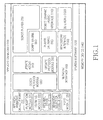
- the sobot apparatus includes an application module 10, an artificial animated object engine 20, a sobot protocol module 30, an update agent 40, an update protocol module 50, a network interface 60, a sobot player 70, a script engine 80, a player database 90, a repository interface 100, a sobot graphic/audio interface 110, a 3D engine 130, system software 120, a memory device 140, a display part (not shown), and an audio output part (not shown).
- the application module 10 is the uppermost layer and provides an external input interface, including such devices, for example, as a sobot authorizing device, a pressure sensor, and an optical sensor.
- the memory device 140 stores the sobot data corresponding to at least one sobot.
- the sobot data includes basic model information, internal state information, action information, resource information, and genetic code of the sobot.
- the genetic code is a robot genome consisting of a plurality of artificial chromosomes, which may be classified into the essential element-related group, internal state-related group, and behavior selection-related group.
- the essential element-related group chromosomes define the essential parameters greatly affecting a change of the internal state and the external behavior of the robot
- the internal state-related group chromosomes define the parameters affecting the robot's internal state according to the input of the external stimuli exerted to the robot.
- the behavior selection-related group chromosomes define the parameters of the robot that determine an external behavior corresponding to the internal state presently determined.
- the genetic code is uniquely determined for the corresponding sobot, and is unchangeable.
- the basic model information represents the type and model of the sobot and also provides the sobot with a particular genetic code, e.g., a certain characteristic, such as the characteristics relating to a puppy, a cat, or even a robot.
- the internal state information represents the character traits of the sobot relating to motivation, homeostasis, and emotion and is changed by the artificial animated object engine 20 according to the corresponding genetic code and the input of the external stimuli exerted by the user or detected by the sensor when the sobot has been activated so as to be perceived by the user.
- the action information represents the action taken by the sobot as determined by the artificial animated object engine 20 according to the internal state information.
- the resource information represents the various sub-items set corresponding to a particular sobot, e.g., such accessories and scenes as the sobot character may take.
- the artificial animated object engine 20 further includes a perception module 21 for perceiving the external environment, an internal state module 23 for representing the internal state of the sobot such as an emotion state of the artificial animated object, a behavior selection module 24 for selecting a behavior of the artificial animated object according to the external information and the internal state, a learning module 22 for acclimating the artificial animated object to the external environment, and a motor module 25 for actually realizing the behavior of the artificial animated object, thereby changing the internal state involving the motivation, homeostasis and emotion of the sobot in response to the input of an external stimulus exerted to the sobot so as to determine a behavior of the sobot such as action and facial expression.
- a perception module 21 for perceiving the external environment
- an internal state module 23 for representing the internal state of the sobot such as an emotion state of the artificial animated object
- a behavior selection module 24 for selecting a behavior of the artificial animated object according to the external information and the internal state
- a learning module 22 for acclimating the artificial animated object to the
- the artificial animated object engine 20 may also store, manage, and control the individual and emotional information of the sobot by means of the genetic code. Hence, the artificial animated object engine 20 enables the user to create the individuality and emotion of the sobots with different genetic codes. In addition, the artificial animated object engine 20 determines an action to be externally shown according to the data collected through the learning, memorizing, and instinctual functions.
- the perception module 21 pre-processes the information concerning the internal state change and behavior selection of the sobot and the sensor information used for learning.
- the perception module 21 also delivers the presently input information selectively according in a predetermined priority order to the behavior selection module 24 to select a behavior.
- the perception module 21 includes a plurality of sensors, a symbolizer, and an attention selector.
- the internal state module 23 changes the internal state of the sobot according to the input perceived through the perception module 21.
- the internal state module 23 changes the internal state delivered to the behavior selection module 24 by considering the external input and the genetic code of the corresponding sobot.
- the internal state represents the sobot's internal characteristic traits, such as motivation, homeostasis, and emotion.
- the motivational trait enables the sobot to initiate an action
- the homeostasis trait enables the sobot desire to maintain
- the emotion trait defines the emotional state of the sobot.
- Examples of motivational trait are curiosity, intimacy, monotony, avoidance, and greed.
- Examples of the homeostasis traits are fatigue, hunger, and drowsiness.
- Examples of emotional traits are happiness, sadness, anger, fear, and quietude.
- the behavior selection module 24 includes a general behavior selector and an inherent behavior selector so as to select one of the actions previously stored considering the probability based on the inputs received from the perception module 21 and internal state module 23.
- the behavior selection module 24 may select as the final action the action determined by the inherent behavior selector.
- the learning module 22 may include a preference learner for enabling the sobot to avoid or approach the objective intended by the user's input according as the user's input represents praise or reproach, and a voice learner for making the sobot perform the action requested by a voice command of the user.
- the motor module 25 provides the sobot with a method of moving in virtual space according to the behavior selected by the behavior selection module 24.
- the sobot protocol module 30 provides a protocol to enable the sobot apparatus to communicate with a sobot server for controlling the transfer, information and certification of the sobot and with other devices. All the information concerning the sobot is transmitted through the sobot protocol module 30 to both sobot server and other devices.
- the sobot server controls the assignment, transfer, information and certification of the sobots and the information of the instrument equipped with each sobot.
- the sobot server cooperates with the content providers so as to update the action script file of the sobot and the sobot-related resources such as the kind of the sobot, item and scene.
- the update agent 40 controls all the update relating to the sobot as a subsystem for updating the structure files and resources of the platform of the sobot apparatus. Connected to the sobot server, the update agent 40 compares the sobot's update version stored in the sobot apparatus with the update version presently provided by the sobot server so as to find out update data. The update agent 40 updates the structure files and resources of the platform of the sobot apparatus with the update data received from the sobot server.
- the update protocol module 50 provides OMA DM (Object Management Architecture Device Management) protocol for performing the actual update under the control of the update agent 40.
- the network interface 60 interfaces the sobot apparatus with the sobot server or other devices in a network.
- the network interface 60 provides an interface for serial communication, TCP/IP (Transmission Control Protocol/Internet Protocol) communication, and SMS (Short Message Service)/MMS (Multimedia Message Service) communication.
- the sobot graphic/audio interface 110 and 3D engine 130 are the final output application for generating the sobot.
- the sobot may be generated in a graphic, text or audio form according to the kind of the output application provided in the sobot apparatus.
- the sobot apparatus equipped with the sobot graphic/audio interface 110 and 3D engine 130 generates the sobot as a 3D image.
- the sobot graphic/audio interface 110 supports the porting for any kind of 3D engine.
- the sobot platform is mounted in a robot, providing a robot with an operational application as the final output application, the sobot may be generated by the robot.
- the script engine 80 encodes and decodes the action script file of the sobot under the control of the sobot player 70.
- the action file corresponding to each action of the sobot is stored and managed in a script file format for reduction of its size and easy transmission.
- the action of the sobot may be a facial expression such as smile, tears, and distortion, or a motion such as walking, running, lying and sitting.
- the action file for generating such action may include data representing one or more actions and the interrelationship between these actions.
- the action file may be composed through the sobot server or sobot apparatus, but is finally stored into the sobot apparatus as the script file format.
- the script engine 80 is controlled by the sobot player 70 so as to parse the action script file previously stored in the player database 90 that enable the sobot to perform the corresponding action, or to encode a generated action file scripted into the corresponding action script file stored in the player database 90.
- the player database 90 stores a plurality of action script files as well as the data required for generating the sobot in connection with the output application provided in the sobot apparatus. In this embodiment, it stores the information, text and behavioral information relating to 3D modeling.
- the repository interface 100 interfaces the sobot player 70 with the player database 90 and memory device 140 so as to deliver the action script and the sobot data retrieved respectively from the player database 90 and the memory device 140 to the sobot player 70.
- the sobot player 70 enables both actual generation and action of the sobot by controlling the application module 10, script engine 80, player database 90, repository interface 100, sobot graphic/audio interface 110 and 3D engine 130. Namely, receiving a command for requesting a desired sobot from the application module 10, the sobot player 70 retrieves the corresponding sobot data from the memory device 140 through the repository interface 100. Then, the sobot player 70 obtains from the player database 90, through the repository interface 100, the action script corresponding to the action information of the sobot data, delivered through the sobot graphic/audio interface 110 to the script engine 80. The sobot player 70 also delivers the basic model and resource information of the sobot data to the sobot graphic/audio interface 110, which accordingly cooperates with the 3D engine 130 to visually generate the sobot.
- the application module 10 delivers the user's input exerted to the generated sobot to the artificial animated object engine 20.
- the user's input may be a value detected by a pressure sensor touched by the user as in stroking the sobot apparatus. Alternatively, this value may be one selected by the user through a menu provided in a text form like "feeding".
- the artificial animated object engine 20 changes the internal state of the sobot according to the user's input and the genetic code of the sobot retrieved from the memory device 140, and it selects the behavior corresponding to the change of the internal state so as to request the application module 10 to designate the action corresponding to the behavior.
- the application module 10 delivers the action designated by the artificial animated object engine 20 to the sobot player 70, which in turn obtains the action script corresponding to the designated action through the repository interface 100, delivered to the sobot graphic/audio interface 110.
- the script engine 80 parses the action script received from the sobot graphic/audio interface 110 so as to enable the sobot graphic/audio interface 110 to cooperate with the 3D engine to generate the image and audio representing the operation of the sobot according to the action script.
- the sobot player 70 cooperates with the repository interface 100 and the sobot graphic/audio interface 110 to replace the presently generated sobot with the newly generated one.
- the sobot data of the previously generated sobot is changed, it is stored in the memory device 140.
- the sobot player 70 performs the function of managing the sobot data.
- FIGs. 2 to 11 flowcharts are shown illustrating the process of the sobot apparatus generating the sobot, as well as the platform interface used in each step thereof.
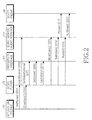
- Fig. 2 shows the process of the sobot apparatus generating the sobot according to an embodiment of the present invention.
- the application module 10 Upon receiving a request for generating a sobot, the application module 10 sends in step 201 generated a sobot designation function InitPlayer ( ) to the sobot player 70 to designate the sobot as generated.
- the sobot player 70 sends, in step 203, a creative device function CreateDevice ( ) to the sobot graphic/audio interface 110 to determine and initialize the device for generating the sobot.
- the generating device is a 3D image.
- the application module 10 sends a sobot generation function ShowSobot ( ) to the sobot player 70 to generate the sobot.
- the sobot player 70 sends, in step 207, a sobot schema obtaining function GetSobotSchema ( ) to the repository interface 100 so as to obtain the basic sobot schema for generating the sobot.
- the sobot player 70 sends, in step 209, a sobot data obtaining function GetSobot ( ) to the repository interface 100 to retrieve the sobot data from the memory device 140.
- the sobot player 70 sends, in step 211, an action obtaining function GetAction ( ) to the repository interface 100 to retrieve the action script corresponding to the action information of the sobot data.
- the repository interface 100 retrieves the corresponding action script defined by the GetAction ( ) function from the database 90, delivered to the sobot player 70.
- the sobot player 70 also sends, in step 213, a scene forming function MakeScene ( ) to the sobot graphic/audio interface 110 to set the scene of the generated sobot according to the resource information of the sobot data.
- the sobot graphic/audio interface 110 cooperates with the 3D engine 130 so as to form the background scene of the sobot according to the scene information defined by the MakeScene ( ) function.
- the sobot player 70 sends, in step 215, an action set function SetAction ( ) defining the action script obtained in step 211 to the sobot graphic/audio interface 110, which in turn sends, in step 217, a parsing function Parse ( ) to the script engine 80 to parse the action script defined by SetAction ( ).
- the sobot player 70 sends, in step 219, a render function Render ( ) to the sobot graphic/audio interface 110 so that the sobot graphic/audio interface 110 cooperates with the 3D engine so as to model the sobot into a 3D image according to the basic model and resource information of the sobot data.
- the sobot graphic/audio interface 110 sends, in step 221, a script run function RunScript ( ) to the script engine 80, which in turn cooperates with the 3D engine 130 to run the a parsed action script to enable the generated sobot to perform the corresponding action.
- a script run function RunScript ( ) to the script engine 80, which in turn cooperates with the 3D engine 130 to run the a parsed action script to enable the generated sobot to perform the corresponding action.
- Fig. 3 a flowchart of a process of changing the behavior of the generated sobot according to the external input inducing a behavior change is shown.
- the application module 10 sends, in step 231, a generated behavior change function corresponding to the external input to the artificial animated object engine 20.
- the artificial animated object engine 20 changes the internal state of the sobot according to the external input contained in the generated behavior change function and the genetic data of the sobot, thereby selecting the behavior corresponding to the changed internal state.
- the artificial animated object engine 20 sends, in step 233, an action set function SetAction ( ) to the application module 10 to set the action corresponding to the selected behavior.
- an action set function SetAction SetAction
- the application module 10 sends, in step 235, the received SetAction ( ) to the sobot player 70, which in turn sends, in step 237, an action obtaining function GetAction ( ) to the repository interface 100 in order to retrieve the action script corresponding to the new action defined by the SetAction ( ) function.
- the repository interface 100 retrieves the corresponding action script defined by the GetAction ( ) function from the database 90, delivered to the sobot player 70.
- the sobot player 70 sends, in step 239, an action set function SetAction ( ) defining the action script for setting a new action of the sobot to the sobot graphic/audio interface 110, which in turn sends, in step 241, a parsing function Parse ( ) to the script engine 80 to parse the action script defined by SetAction ( ).
- the script engine 80 parses the received action script.
- the sobot player 70 sends in step 243 a render function Render ( ) to the sobot graphic/audio interface 110 to perform the new action.
- the sobot graphic/audio interface 110 sends, in step 245, a script run function RunScript ( ) to the script engine 80, which in turn cooperates with the 3D engine 130 to run the parsed action script to enable the generated sobot to perform the new action.
- a script run function RunScript to the script engine 80, which in turn cooperates with the 3D engine 130 to run the parsed action script to enable the generated sobot to perform the new action.
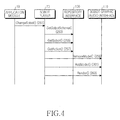
- Fig. 4 is a flowchart illustrating a process of generating another sobot after removing the presently generated sobot.
- the application module 10 sends, in step 251, a generated sobot change function ChangeSobot ( ) containing the identifying information of the new sobot to the sobot player 70.
- the sobot player 70 sends, in step 253, a sobot schema obtaining function GetSobotSchema ( ) to the repository interface 100 so as to obtain the basic sobot schema for generating the new sobot.
- the sobot player 70 sends, in step 255, a sobot data obtaining function GetSobot ( ) to the repository interface 100 to retrieve the sobot data of the new sobot from the memory device 140.
- the sobot player 70 sends, in step 257, an action obtaining function GetAction ( ) to the repository interface 100 to retrieve the action script corresponding to the action information of the sobot data.
- the repository interface 100 retrieves the corresponding action script defined by the GetAction ( ) from the database 90, delivered to the sobot player 70.
- the sobot player 70 sends, in step 259, a model remove function RemoveModel ( ) to the sobot graphic/audio interface 110 so as to delete the presently generated sobot from the display part.
- the sobot player 70 sends, in step 261, a model add function AddModel ( ) to the sobot graphic/audio interface 110 so that the sobot graphic/audio interface 110 cooperates with the 3D engine so as to model the new sobot into a 3D image according to the basic model and resource information of the sobot data obtained in step 255 and the action script obtained in step 257.
- the sobot player 70 sends a render function Render ( ) to the sobot graphic/audio interface 110 to output the new sobot modeled in cooperation with the 3D engine 130 to the display device.
- the action script stored in the player database 90 and the sobot data stored in the memory device 140 are managed by the user's input, as shown in Figs. 5 to 9, which, in a sobot apparatus according to an embodiment of the present invention, respectively illustrate a process of managing a sobot, a process of managing the actions of a sobot, a process of managing the items of a sobot, a process of managing the scenes of a sobot, and a process of managing the resources of a sobot.
- the application module 10 sends, in step 271, a sobot list retrieval function GetSobotList ( ) to the sobot player 70.
- the sobot player 70 provides the user with a sobot list retrieved from the memory device 140. If the user selects a particular sobot from the sobot list, the application module 10 sends, in step 273, a sobot obtaining function GetSobot ( ) to the sobot player 70 to retrieve the sobot data of the selected sobot provided for the user. If the user adds a new sobot, the application module 10 sends, in step 275, a sobot add function AddSobot ( ) to the sobot player 70 so as to store the sobot data of the new sobot. If the user requests deletion of a sobot, the application module 10 sends a sobot delete function DeleteSobot ( ) to the sobot player 70 to delete the corresponding sobot data.
- the user may also edit the action information contained in the sobot player data, as shown in Fig. 6.
- the application module 10 sends, in step 281, an action list obtaining function GetActionList ( ) to the sobot player 70.
- the sobot player 70 provides the user with the action list prepared according to the action information contained in the sobot data.
- the application module 10 sends, in step 283, an action obtaining function GetAction ( ) defining the action to the sobot player 70 to retrieve the detailed information of the selected action provided for the user.
- the application module 10 sends, in step 285, an action add function AddAction ( ) to the sobot player 70 so as to add the new action selected by the user to the sobot data. If the user requests deletion of an action, the application module 10 sends, in step 287, an action delete function DeleteAction ( ) to the sobot player 70 to delete the action selected by the user.
- the user may also change the items of the resources set in the sobot, as shown in Fig. 7.
- the items may represent various accessories taken by the sobot.
- the application module 10 sends, in step 291, an item list obtaining function GetltemList ( ) to the sobot player 70.
- the sobot player 70 provides the user with the item list prepared according to the resource information contained in the sobot data. If the user selects a particular item from the item list, the application module 10 sends, in step 293, an item obtaining function Getltem ( ) to the sobot player 70 to retrieve the detailed information of the selected item provided for the user.
- the application module 10 sends, in step 295, an item add function Addltem ( ) to the sobot player 70 so as to add the new item to the sobot data. If the user requests deletion of a particular item, the application module 10 sends, in step 297, an item delete function Deleteltem ( ) to the sobot player 70 to delete the item
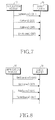
- the other resources set in the sobot may be managed as shown in Figs. 8 and 9, similar to Fig. 7.
- the application module 10 responds to the user's input in the steps of 301 to 307 so as to respectively send a scene list obtaining function GetSceneList ( ), a scene obtaining function GetScene ( ), a scene add function AddScene ( ) and a scene delete function DeleteScene ( ) to the sobot player 70 to provide the user with the list of the scenes set for a particular sobot and the detailed information of a particular scene, and to add a new scene and to delete a particular scene.
- the application module 10 responds to the user's input in the steps of 311 to 317 so as to respectively send resource a list obtaining function GetResourceList ( ), resource obtaining function GetResource ( ), a resource add function AddResource ( ) and a resource delete function DeleteResource ( ) to the sobot player 70 to provide the user with the resource list set for a particular sobot and the detailed information of a particular resource, and to add a new resource and to delete a particular resource.
- the resources mean other things except the items and scenes.
- the sobot may be transmitted through the sobot protocol module 30 to external terminals, as shown in Figs. 10 to 12, which, in a sobot apparatus according to an embodiment of the present invention, respectively show a process of transmitting and receiving messages, a process of performing a serial communication, and a process of performing a TCP/IP communication. Description is made of transmission and reception of the messages, such as SMS and MMS, with reference to Fig. 10.
- the application module 10 sends a message agent function CreateMessageAgent ( ) to the sobot protocol module 30 to create and initialize a message communication agent, such as an SMS/MMS message agent, according to the communication device applied. Then, the application module 10 prepares a message attached with a sobot according to the user's input. Thereafter, if the user requests transmission of the message, the application module 10 sends, in step 321, message send a function SendMessage ( ) to the sobot protocol module 30, which in turn transmits the message through the network interface 60. Thereafter, the application module 10 registers the listener by means of a listener register function CreateListener ( ) in step 323.
- a message agent function CreateMessageAgent CreateMessageAgent
- the application module 10 monitors through a listening function Listen ( ) the reception of an answering message in response to the message transmitted through the sobot protocol module 30 in step 321. Then, in step 327, the sobot protocol module 30 transfers the received SMS or MMS message through a message receive function ReceiveMessage ( ) to the application module 10.
- the application module 10 sends, in step 331, a serial communication agent function CreateSerialAgent ( ) to the sobot protocol module 30 to obtain a serial communication agent through the network interface 60.
- the serial communication agent may be a serial phone agent or serial IPC agent according to the actual connection device.
- the application module 10 sends, in step 333, a connect function Connect ( ) to the sobot protocol module 30 to request a connection for serial communication through the network interface 60.
- the application module 10 sends, in step 335, send a function Send ( ) to the sobot protocol module 30, which in turn transmits the particular sobot through the network interface 60 to an external device.
- the sobot protocol module 30 sends, in step 337, a receive function Receive ( ) received from the network interface 60 to the application module 10 to prepare the sobot apparatus for the reception of the sobot.
- the application module 10 sends a close function Close ( ) to the sobot protocol module 30 to end it.
- the application module 10 sends, in step 341, a TCP/IP communication agent function CreateTcpipAgent ( ) to the sobot protocol module 30 to initialize a TCP/IP communication agent.
- the TCP/IP communication agent may be a TCP/IP phone agent or a TCP/IP PDA agent.
- the application module 10 sends, in step 343, a connect function Connect ( ) to the sobot protocol module 30 to request a connection for TCP/IP communication through the network interface 60.
- the application module 10 sends, in step 345, a send function Send ( ) to the sobot protocol module 30, which in turn transmits the particular sobot through the network interface 60 to an external device.
- the sobot protocol module 30 sends, in step 347, a receive function Receive ( ) received from the network interface 60 to the application module 10 to prepare the sobot apparatus for the reception of the sobot.
- the application module 10 sends, in step 349, a close function Close ( ) to the sobot protocol module 30 to end it.
- the functions received from the application module 10 are delivered to the network interface 60 to perform each communication.
- various other functions relating to generating the sobot may be used for the operation of the sobot apparatus, such as a scene manager function GetSceneManager ( ) for obtaining a scene manager, a camera move function MoveCamera ( ) for changing the position of the camera so as to display the generated 3D sobot at a different point of view, a model move function MoveModel ( ) for enabling the sobot to perform a designated action while changing the position, a background music set function SetBGM for controlling the background music, and a background music stop function StopBGM.
- a scene manager function GetSceneManager for obtaining a scene manager
- a camera move function MoveCamera for changing the position of the camera so as to display the generated 3D sobot at a different point of view
- a model move function MoveModel for enabling the sobot to perform a designated action while changing the position
- a background music set function SetBGM for controlling
- the present invention provides a sobot apparatus with a standardized platform covering all the components required for developing the sobot applications, so that varieties of instruments such as mobile phones, WIBRO phones, PDAs and PCs may be included with a sobot apparatus with a separate platform, and a convenient environment may be secured for the developers to develop the applications only by using the interface provided in the platform of a sobot apparatus.
Landscapes
- Engineering & Computer Science (AREA)
- Physics & Mathematics (AREA)
- Theoretical Computer Science (AREA)
- Software Systems (AREA)
- General Engineering & Computer Science (AREA)
- Biophysics (AREA)
- Health & Medical Sciences (AREA)
- Life Sciences & Earth Sciences (AREA)
- General Physics & Mathematics (AREA)
- Molecular Biology (AREA)
- Computing Systems (AREA)
- Bioinformatics & Cheminformatics (AREA)
- Evolutionary Biology (AREA)
- Mathematical Physics (AREA)
- Bioinformatics & Computational Biology (AREA)
- Artificial Intelligence (AREA)
- Biomedical Technology (AREA)
- Computational Linguistics (AREA)
- Data Mining & Analysis (AREA)
- Evolutionary Computation (AREA)
- General Health & Medical Sciences (AREA)
- Computer Security & Cryptography (AREA)
- Genetics & Genomics (AREA)
- Physiology (AREA)
- Computer Hardware Design (AREA)
- Stored Programmes (AREA)
- Electrically Operated Instructional Devices (AREA)
- Manipulator (AREA)
- Television Signal Processing For Recording (AREA)
Applications Claiming Priority (1)
| Application Number | Priority Date | Filing Date | Title |
|---|---|---|---|
| KR1020060086439A KR100827088B1 (ko) | 2006-09-07 | 2006-09-07 | 소프트웨어 로봇 장치 |
Publications (3)
| Publication Number | Publication Date |
|---|---|
| EP1901211A2 true EP1901211A2 (de) | 2008-03-19 |
| EP1901211A3 EP1901211A3 (de) | 2011-05-11 |
| EP1901211B1 EP1901211B1 (de) | 2019-03-06 |
Family
ID=38740291
Family Applications (1)
| Application Number | Title | Priority Date | Filing Date |
|---|---|---|---|
| EP07115831.5A Ceased EP1901211B1 (de) | 2006-09-07 | 2007-09-06 | Software-Robotervorrichtung |
Country Status (4)
| Country | Link |
|---|---|
| US (1) | US7890446B2 (de) |
| EP (1) | EP1901211B1 (de) |
| KR (1) | KR100827088B1 (de) |
| CN (1) | CN100583034C (de) |
Cited By (4)
| Publication number | Priority date | Publication date | Assignee | Title |
|---|---|---|---|---|
| US8464218B2 (en) | 2008-12-19 | 2013-06-11 | Electronics And Telecommunications Research Institute | Method port arrangement and configuration method thereof for robot software component |
| US8689217B2 (en) | 2008-10-31 | 2014-04-01 | Electronics And Telecommunications Research Institute | System and method for thread processing robot software components responsive to periodic, dedicated, and passive modes |
| CN105929838A (zh) * | 2016-05-20 | 2016-09-07 | 腾讯科技(深圳)有限公司 | 一种飞行器的飞行控制方法和移动终端以及飞行控制端 |
| RU2615822C2 (ru) * | 2015-05-19 | 2017-04-11 | Алексей Игоревич Салмин | Хранилище для футляров с информацией, синхронизирующее дополнительное смешанное лазерное освещение с работой зоны интенсивного развития техники, и носовые опоры солнцезащитных очков |
Families Citing this family (18)
| Publication number | Priority date | Publication date | Assignee | Title |
|---|---|---|---|---|
| US8648867B2 (en) | 2006-09-25 | 2014-02-11 | Neurala Llc | Graphic processor based accelerator system and method |
| CN101493903A (zh) * | 2008-01-24 | 2009-07-29 | 鸿富锦精密工业(深圳)有限公司 | 有性格特征的类生物装置及其展现方法 |
| TW201019242A (en) * | 2008-11-11 | 2010-05-16 | Ind Tech Res Inst | Personality-sensitive emotion representation system and method thereof |
| FR2963132A1 (fr) * | 2010-07-23 | 2012-01-27 | Aldebaran Robotics | Robot humanoide dote d'une interface de dialogue naturel, methode d'utilisation et de programmation de ladite interface |
| KR20120047577A (ko) * | 2010-11-04 | 2012-05-14 | 주식회사 케이티 | 대화형 행동모델을 이용한 로봇 인터랙션 서비스 제공 장치 및 방법 |
| US8762305B1 (en) * | 2010-11-11 | 2014-06-24 | Hrl Laboratories, Llc | Method and system for dynamic task selection suitable for mapping external inputs and internal goals toward actions that solve problems or elicit rewards |
| CN102624762B (zh) * | 2011-01-30 | 2016-01-20 | 深圳市腾讯计算机系统有限公司 | 基于云计算提升机器人软件功能的方法和云计算服务器 |
| JP6069607B2 (ja) * | 2013-03-26 | 2017-02-01 | 株式会社国際電気通信基礎技術研究所 | ロボットサービス連携システムおよびプラットフォーム |
| WO2014204615A2 (en) | 2013-05-22 | 2014-12-24 | Neurala, Inc. | Methods and apparatus for iterative nonspecific distributed runtime architecture and its application to cloud intelligence |
| EP2999940A4 (de) | 2013-05-22 | 2017-11-15 | Neurala Inc. | Verfahren und vorrichtung zur frühen sensorischen integration und robusten erfassung von wissen der realen welt |
| CN103399739A (zh) * | 2013-07-19 | 2013-11-20 | 苏州大学 | 一种机器人程序开发平台的生成方法与系统 |
| CN103678485B (zh) * | 2013-12-26 | 2017-05-10 | 中国运载火箭技术研究院 | 虚拟试验流程节点驱动与活动封装系统 |
| US9626566B2 (en) | 2014-03-19 | 2017-04-18 | Neurala, Inc. | Methods and apparatus for autonomous robotic control |
| KR20170036657A (ko) | 2014-03-19 | 2017-04-03 | 뉴럴라 인코포레이티드 | 자율 로봇 제어를 위한 방법들 및 장치 |
| WO2016014137A2 (en) * | 2014-05-06 | 2016-01-28 | Neurala, Inc. | Apparatuses, methods, and systems for defining hardware-agnostic brains for autonomous robots |
| CN106101288A (zh) * | 2016-08-24 | 2016-11-09 | 何乙诚 | 一种机器人远程控制系统 |
| US10646994B2 (en) | 2017-04-25 | 2020-05-12 | At&T Intellectual Property I, L.P. | Robot virtualization leveraging Geo analytics and augmented reality |
| US10733004B2 (en) | 2017-04-26 | 2020-08-04 | At&T Intellectual Property I, L.P. | Intelligent service on-demand robot virtualization |
Citations (1)
| Publication number | Priority date | Publication date | Assignee | Title |
|---|---|---|---|---|
| WO2000068893A1 (en) | 1999-05-07 | 2000-11-16 | Nintendo Software Technology Corporation | Object modeling for computer simulation and animation |
Family Cites Families (9)
| Publication number | Priority date | Publication date | Assignee | Title |
|---|---|---|---|---|
| EP1103351B1 (de) * | 1999-10-26 | 2007-09-05 | Sony France S.A. | Verfahren und System zur Agentsübertragung für einen Roboter |
| EP1182610A1 (de) * | 2000-02-09 | 2002-02-27 | Sony Corporation | Vorrichtung und verfahren zur informationsverarbeitung, datenträger und programm |
| CN1372506A (zh) * | 2000-03-24 | 2002-10-02 | 索尼公司 | 机器人设备行为决定方法和机器人设备 |
| US20020082077A1 (en) * | 2000-12-26 | 2002-06-27 | Johnson Douglas R. | Interactive video game system with characters that evolve physical and cognitive traits |
| KR101137205B1 (ko) * | 2002-03-15 | 2012-07-06 | 소니 주식회사 | 로봇의 행동 제어 시스템 및 행동 제어 방법, 및 로봇 장치 |
| JP2004054769A (ja) * | 2002-07-23 | 2004-02-19 | Ns Solutions Corp | 貸出資産管理システム、貸出資産管理方法、その記録媒体およびプログラム |
| KR100503652B1 (ko) | 2003-03-04 | 2005-07-22 | 한국과학기술원 | 가상 생명체 시스템과 이를 이용한 교육용 소프트웨어시스템 |
| KR100542758B1 (ko) * | 2003-12-10 | 2006-01-20 | 한국전자통신연구원 | 유비쿼터스 네트워크 기반의 소봇을 이용한 시스템 및소봇의 전이 및 이동 방법 |
| KR100757906B1 (ko) * | 2004-11-26 | 2007-09-11 | 한국전자통신연구원 | 네트워크 기반 로봇 시스템 및 그 실행 방법 |
-
2006
- 2006-09-07 KR KR1020060086439A patent/KR100827088B1/ko not_active Expired - Fee Related
-
2007
- 2007-09-06 EP EP07115831.5A patent/EP1901211B1/de not_active Ceased
- 2007-09-07 CN CN200710149208A patent/CN100583034C/zh not_active Expired - Fee Related
- 2007-09-07 US US11/852,047 patent/US7890446B2/en not_active Expired - Fee Related
Patent Citations (1)
| Publication number | Priority date | Publication date | Assignee | Title |
|---|---|---|---|---|
| WO2000068893A1 (en) | 1999-05-07 | 2000-11-16 | Nintendo Software Technology Corporation | Object modeling for computer simulation and animation |
Cited By (5)
| Publication number | Priority date | Publication date | Assignee | Title |
|---|---|---|---|---|
| US8689217B2 (en) | 2008-10-31 | 2014-04-01 | Electronics And Telecommunications Research Institute | System and method for thread processing robot software components responsive to periodic, dedicated, and passive modes |
| US8464218B2 (en) | 2008-12-19 | 2013-06-11 | Electronics And Telecommunications Research Institute | Method port arrangement and configuration method thereof for robot software component |
| RU2615822C2 (ru) * | 2015-05-19 | 2017-04-11 | Алексей Игоревич Салмин | Хранилище для футляров с информацией, синхронизирующее дополнительное смешанное лазерное освещение с работой зоны интенсивного развития техники, и носовые опоры солнцезащитных очков |
| CN105929838A (zh) * | 2016-05-20 | 2016-09-07 | 腾讯科技(深圳)有限公司 | 一种飞行器的飞行控制方法和移动终端以及飞行控制端 |
| CN105929838B (zh) * | 2016-05-20 | 2019-04-02 | 腾讯科技(深圳)有限公司 | 一种飞行器的飞行控制方法和移动终端以及飞行控制端 |
Also Published As
| Publication number | Publication date |
|---|---|
| US20080066065A1 (en) | 2008-03-13 |
| EP1901211A3 (de) | 2011-05-11 |
| KR100827088B1 (ko) | 2008-05-02 |
| EP1901211B1 (de) | 2019-03-06 |
| CN100583034C (zh) | 2010-01-20 |
| KR20080022810A (ko) | 2008-03-12 |
| CN101140515A (zh) | 2008-03-12 |
| US7890446B2 (en) | 2011-02-15 |
Similar Documents
| Publication | Publication Date | Title |
|---|---|---|
| US7890446B2 (en) | Software robot apparatus | |
| US8136038B2 (en) | Offering menu items to a user | |
| KR101257896B1 (ko) | 스마트 서비스 로봇 운영 시스템 및 방법 | |
| CN112416599B (zh) | 一种资源调度方法、装置、设备及计算机可读存储介质 | |
| US6494762B1 (en) | Portable electronic subscription device and service | |
| CN1312554C (zh) | 前摄的用户接口 | |
| RU2331918C2 (ru) | Проактивный интерфейс пользователя, содержащий эволюционирующий агент | |
| CN109947388B (zh) | 页面播读的控制方法、装置、电子设备及存储介质 | |
| CN111383346B (zh) | 基于智能语音的交互方法、系统、智能终端和存储介质 | |
| JP2014098962A (ja) | 行動制御装置、行動制御方法、および制御プログラム | |
| JP2025036469A (ja) | ロボット、異常通知方法及びプログラム | |
| CN111816168A (zh) | 一种模型训练的方法、语音播放的方法、装置及存储介质 | |
| KR102334998B1 (ko) | 무선 통신 기반의 감성표현장치 | |
| JP2003108376A (ja) | 応答メッセージ生成装置、及び端末装置 | |
| US8684748B1 (en) | System and method for playing web-based training content on a client computer system | |
| US7711778B2 (en) | Method for transmitting software robot message | |
| JP2001191274A (ja) | データ保持装置、ロボット装置、変更装置及び変更方法 | |
| CN116192825A (zh) | 跨端声音复刻方法及系统 | |
| JP7012988B2 (ja) | 情報通信デバイス | |
| JP4546125B2 (ja) | インターフェース提示方法及びインターフェース提示システム | |
| KR20250052202A (ko) | 메모리 스트림 기반의 개별 특성정보를 반영한 캐릭터 생성 방법 및 서버 | |
| EP1587289B1 (de) | Verfahren und System zur Realisierung eines netzbasierten Wachstums eines Agents für Mobilkommunikationsgerät | |
| US20050234854A1 (en) | Method and system for realizing a network-based growth of an agent for mobile communication apparatus | |
| KR20250090226A (ko) | 생성형 인공지능 기반 가상 아바타의 디지털 공간 학습 시스템 | |
| KR20020050016A (ko) | 스케줄을 관리할 수 있는 캐릭터와 캐릭터를 이용한 정보제공 시스템 및 그 방법 |
Legal Events
| Date | Code | Title | Description |
|---|---|---|---|
| PUAI | Public reference made under article 153(3) epc to a published international application that has entered the european phase |
Free format text: ORIGINAL CODE: 0009012 |
|
| 17P | Request for examination filed |
Effective date: 20070906 |
|
| AK | Designated contracting states |
Kind code of ref document: A2 Designated state(s): AT BE BG CH CY CZ DE DK EE ES FI FR GB GR HU IE IS IT LI LT LU LV MC MT NL PL PT RO SE SI SK TR |
|
| AX | Request for extension of the european patent |
Extension state: AL BA HR MK YU |
|
| PUAL | Search report despatched |
Free format text: ORIGINAL CODE: 0009013 |
|
| AK | Designated contracting states |
Kind code of ref document: A3 Designated state(s): AT BE BG CH CY CZ DE DK EE ES FI FR GB GR HU IE IS IT LI LT LU LV MC MT NL PL PT RO SE SI SK TR |
|
| AX | Request for extension of the european patent |
Extension state: AL BA HR MK RS |
|
| AKX | Designation fees paid |
Designated state(s): DE FR GB |
|
| RAP1 | Party data changed (applicant data changed or rights of an application transferred) |
Owner name: SAMSUNG ELECTRONICS CO., LTD. |
|
| 17Q | First examination report despatched |
Effective date: 20160425 |
|
| RIC1 | Information provided on ipc code assigned before grant |
Ipc: G06N 3/00 20060101AFI20180709BHEP Ipc: G06N 3/12 20060101ALN20180709BHEP Ipc: G06F 8/65 20180101ALN20180709BHEP |
|
| GRAP | Despatch of communication of intention to grant a patent |
Free format text: ORIGINAL CODE: EPIDOSNIGR1 |
|
| INTG | Intention to grant announced |
Effective date: 20180925 |
|
| RIN1 | Information on inventor provided before grant (corrected) |
Inventor name: KIM, JOON-KOO Inventor name: KIM, KWANG-CHOON Inventor name: CHOI, BYUNG-KWON |
|
| GRAS | Grant fee paid |
Free format text: ORIGINAL CODE: EPIDOSNIGR3 |
|
| GRAA | (expected) grant |
Free format text: ORIGINAL CODE: 0009210 |
|
| AK | Designated contracting states |
Kind code of ref document: B1 Designated state(s): DE FR GB |
|
| REG | Reference to a national code |
Ref country code: GB Ref legal event code: FG4D |
|
| REG | Reference to a national code |
Ref country code: DE Ref legal event code: R096 Ref document number: 602007057762 Country of ref document: DE |
|
| REG | Reference to a national code |
Ref country code: DE Ref legal event code: R097 Ref document number: 602007057762 Country of ref document: DE |
|
| PLBE | No opposition filed within time limit |
Free format text: ORIGINAL CODE: 0009261 |
|
| STAA | Information on the status of an ep patent application or granted ep patent |
Free format text: STATUS: NO OPPOSITION FILED WITHIN TIME LIMIT |
|
| 26N | No opposition filed |
Effective date: 20191209 |
|
| REG | Reference to a national code |
Ref country code: DE Ref legal event code: R119 Ref document number: 602007057762 Country of ref document: DE |
|
| PG25 | Lapsed in a contracting state [announced via postgrant information from national office to epo] |
Ref country code: DE Free format text: LAPSE BECAUSE OF NON-PAYMENT OF DUE FEES Effective date: 20200401 |
|
| GBPC | Gb: european patent ceased through non-payment of renewal fee |
Effective date: 20190906 |
|
| PG25 | Lapsed in a contracting state [announced via postgrant information from national office to epo] |
Ref country code: FR Free format text: LAPSE BECAUSE OF NON-PAYMENT OF DUE FEES Effective date: 20190930 Ref country code: GB Free format text: LAPSE BECAUSE OF NON-PAYMENT OF DUE FEES Effective date: 20190906 |