EP1901238A2 - Dispositif de contrôle d'authentification et d'accès - Google Patents
Dispositif de contrôle d'authentification et d'accès Download PDFInfo
- Publication number
- EP1901238A2 EP1901238A2 EP07010281A EP07010281A EP1901238A2 EP 1901238 A2 EP1901238 A2 EP 1901238A2 EP 07010281 A EP07010281 A EP 07010281A EP 07010281 A EP07010281 A EP 07010281A EP 1901238 A2 EP1901238 A2 EP 1901238A2
- Authority
- EP
- European Patent Office
- Prior art keywords
- key
- sub
- user
- controlled resource
- authentication
- Prior art date
- Legal status (The legal status is an assumption and is not a legal conclusion. Google has not performed a legal analysis and makes no representation as to the accuracy of the status listed.)
- Ceased
Links
Images

Classifications
-
- G—PHYSICS
- G07—CHECKING-DEVICES
- G07C—TIME OR ATTENDANCE REGISTERS; REGISTERING OR INDICATING THE WORKING OF MACHINES; GENERATING RANDOM NUMBERS; VOTING OR LOTTERY APPARATUS; ARRANGEMENTS, SYSTEMS OR APPARATUS FOR CHECKING NOT PROVIDED FOR ELSEWHERE
- G07C9/00—Individual registration on entry or exit
- G07C9/20—Individual registration on entry or exit involving the use of a pass
- G07C9/22—Individual registration on entry or exit involving the use of a pass in combination with an identity check of the pass holder
- G07C9/25—Individual registration on entry or exit involving the use of a pass in combination with an identity check of the pass holder using biometric data, e.g. fingerprints, iris scans or voice recognition
- G07C9/26—Individual registration on entry or exit involving the use of a pass in combination with an identity check of the pass holder using biometric data, e.g. fingerprints, iris scans or voice recognition using a biometric sensor integrated in the pass
-
- G—PHYSICS
- G07—CHECKING-DEVICES
- G07C—TIME OR ATTENDANCE REGISTERS; REGISTERING OR INDICATING THE WORKING OF MACHINES; GENERATING RANDOM NUMBERS; VOTING OR LOTTERY APPARATUS; ARRANGEMENTS, SYSTEMS OR APPARATUS FOR CHECKING NOT PROVIDED FOR ELSEWHERE
- G07C9/00—Individual registration on entry or exit
- G07C9/20—Individual registration on entry or exit involving the use of a pass
- G07C9/22—Individual registration on entry or exit involving the use of a pass in combination with an identity check of the pass holder
- G07C9/23—Individual registration on entry or exit involving the use of a pass in combination with an identity check of the pass holder by means of a password
-
- G—PHYSICS
- G07—CHECKING-DEVICES
- G07C—TIME OR ATTENDANCE REGISTERS; REGISTERING OR INDICATING THE WORKING OF MACHINES; GENERATING RANDOM NUMBERS; VOTING OR LOTTERY APPARATUS; ARRANGEMENTS, SYSTEMS OR APPARATUS FOR CHECKING NOT PROVIDED FOR ELSEWHERE
- G07C9/00—Individual registration on entry or exit
- G07C9/20—Individual registration on entry or exit involving the use of a pass
- G07C9/22—Individual registration on entry or exit involving the use of a pass in combination with an identity check of the pass holder
- G07C9/25—Individual registration on entry or exit involving the use of a pass in combination with an identity check of the pass holder using biometric data, e.g. fingerprints, iris scans or voice recognition
- G07C9/257—Individual registration on entry or exit involving the use of a pass in combination with an identity check of the pass holder using biometric data, e.g. fingerprints, iris scans or voice recognition electronically
-
- G—PHYSICS
- G07—CHECKING-DEVICES
- G07C—TIME OR ATTENDANCE REGISTERS; REGISTERING OR INDICATING THE WORKING OF MACHINES; GENERATING RANDOM NUMBERS; VOTING OR LOTTERY APPARATUS; ARRANGEMENTS, SYSTEMS OR APPARATUS FOR CHECKING NOT PROVIDED FOR ELSEWHERE
- G07C9/00—Individual registration on entry or exit
- G07C9/00174—Electronically operated locks; Circuits therefor; Nonmechanical keys therefor, e.g. passive or active electrical keys or other data carriers without mechanical keys
- G07C9/00563—Electronically operated locks; Circuits therefor; Nonmechanical keys therefor, e.g. passive or active electrical keys or other data carriers without mechanical keys using personal physical data of the operator, e.g. finger prints, retinal images, voicepatterns
Definitions
- the inventive arrangements concern secure processing systems, and more particularly apparatus for providing authentication and access control to secure processing systems.
- many conventional systems used for authentication of users and for controlling access to secure processing systems generally require physical contact with an information processing system.
- such physical contact can include card readers or biometric scanners that are wired to the processing system, or an electrical cable that is used to insert a CIK.
- conventional systems usually rely on single mode of access control.
- a conventional CAC card is used for common access control to a facility, but does not provide biometric scanning.
- conventional biometric scanning devices identify an individual, but do not combine such features with the benefit of a functional CIK.
- the invention concerns an authentication and access control device for providing access to a controlled resource.
- the controlled resource is be a data processing device.
- the data processing device can be a mobile computing system or personal electronic device.
- the authentication and access control device includes a first security key sub-system.
- the first security key sub-system is responsive to an input signal for providing a first key code required for permitting a user access to a controlled resource.
- the device advantageously also includes a second security key sub-system including at least one electronic circuit for providing a second key code different from the first key code.
- the second key code is used for authenticating the user or can be otherwise useful for secure use of the particular resource.
- the device also includes a wireless communication system.
- the wireless communication system includes at least one wireless transmitter.
- the wireless transmitter is coupled to at least one of the first security key sub-system and the second security key sub-system.
- the first key code and the second key code are communicated wirelessly to the controlled resource.
- the one or more wireless signals is used to enable functionality and/or user access provided by the controlled resource.
- the first and second key codes can be transmitted as part of a single wireless signal transmission, or can be transmitted separately.
- the first security key sub-system is selected from the group consisting of (1) a biometric scanner, (2) a keypad configured for entry by a user of at least one of alpha and numeric data, (3) a data store containing a personal identification code for a particular user, (4) a data store containing a cryptographic fill key, and (5) a data store containing a cryptographic ignition key.
- the second security key sub-system is advantageously selected from the same group. However, the second security key sub-system will generally be a different one of the listed alternatives as compared to the security key sub-system selected for the first security key sub-system.
- the biometric scanner determines the first or second key code based on a biometric scan of a user.
- the first or second security key sub-system is a keypad configured for entry by a user of alpha numeric data
- the first or second key code would be some predetermined password entered by a pattern of keystrokes inputted by a user.
- the cryptographic key is the key code for that sub-system.
- the cryptographic key is a cryptographic fill key that is predetermined for enabling cryptographic data processing to be performed using the controlled resource. If the first or second security key sub-system includes a data store that contains a cryptographic ignition key, then the key code for that sub-system can be the cryptographic ignition key. The cryptographic ignition key is used to enable at least one data processing function of the controlled resource.
- the authentication and access control device of the present invention is not limited to the first and second security key sub-systems. Instead, one or more additional security key subsystems can be provided. All of the security keys are communicated wirelessly to the controlled resource.
- the third security key sub-system is also be selected from the group consisting of (1) a biometric scanner, (2) a keypad configured for entry by a user of at least one of alpha and numeric data, (3) a data store containing a personal identification code for a particular user, (4) a data store containing a cryptographic fill key, and (5) a data store containing a cryptographic ignition key.
- the third security key sub-system is advantageously selected so that it is different or exclusive of a security key sub-system selected for the first and second security key sub-systems.
- the authentication and access control device includes a first security key sub-system that includes a biometric scanner.
- the biometric scanner is used for generating a first key code containing information required for permitting a user access to a controlled resource, such as a personal electronic device.
- a wireless communication system is provided that includes at least one wireless transmitter coupled to the first security key sub-system for wirelessly transmitting the first key code to the personal electronic device.
- the biometric scanner system is advantageously combined with at least a second security key sub-system for generating a second key code different from said first key code.
- the second key code is provided for authenticating the user to the personal electronic device or enabling a data processing function of the personal electronic device.
- the second security key sub-system can be selected from the group consisting of (1) a keypad configured for entry by a user of at least one of alpha and numeric data, (2) a data store containing a personal identification code for a particular user, (3) a data store containing a cryptographic fill key, and (4) a data store containing a cryptographic ignition key.
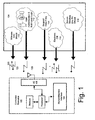
- the present invention concerns an authentication and access control device (AACD) for providing access to a controlled resource.
- AACD authentication and access control device
- a controlled resource 102 that can be accessed using the AACD 104.
- the controlled resource 102 can be a secure information processing system.
- the controlled resource can be an electronic security system that provides perimeter physical access control to a secure area.
- the controlled resource 102 can include several components. These components can include a human/machine interface 106 and an input/output (I/O) system 108 for communicating data into and out of the device.
- the human/machine interface 106 can include a keypad for data entry and an LCD or other type of display screen.
- the I/O system 108 can include a wireless interface. I/O system 108 can be connected to a suitable transducer 109 for wireless communications. If the I/O system is RF based, the transducer can be an antenna. If the system is optically based, a suitable optical transducer can be used. Alternatively, any other suitable wireless transducer can be used.
- the wireless interface can be based on any of a variety of well known wireless interface standards. Examples of such well known wireless interface standards can include the Bluetooth wireless standard, and the IEEE 802.11 family of standards. However, the invention is not limited in this regard and any other wireless interface standard can be used.
- the secure information processing system can be a personal electronic device.
- PEDs Personal electronic devices
- mobile handheld computers which are sometimes called personal digital assistants or PDAs
- PDAs have the ability to store, process and communicate data.
- PDAs generally fall into one of several categories which can include handheld PCs, palm size PCs, smart phones, and handheld instruments.
- PDAs typically include some kind of microprocessor with a commercially available operating system such as Linux, Palm OS, or Widows CE (Pocket PC).
- Many PDAs also have built in LCD displays, touch sensitive screens, and keypads for the human/machine interface.
- Some PDAs also include wireless networking capabilities. For example, many such devices can communicate with other devices using well known wireless networking. The foregoing capabilities make these compact devices highly useful for various business and personal applications. It is anticipated that recent developments in PDA technology will increasingly facilitate secure processing on these types of devices.
- the controlled resource 102 is an electronic security system that is used to secure physical access to a perimeter
- the controlled resource can be linked to one or more electronically controlled locks (not shown).
- Other control and surveillance systems such as video cameras and/or other types of surveillance sensors, can also be used to provide perimeter physical access control. Still, it will be appreciated that the invention is not limited to any particular type of controlled resource.
- the AACD 104 can include one or more sub-systems 110, 112, 114, 116, 118 that are useful for authentication and access control.
- the AACD 104 can include at least two sub-systems that facilitate either (1) user authentication or (2) access control with respect to a controlled resource 102.
- the two sub-systems can be entirely separate from one another within the AACD.
- the sub-systems can share one or more common hardware and/or software elements.
- the two sub-systems can be under the control of a common microprocessor or microprocessor device, can share memory facilities, I/O facilities, antennas, and other resources.
- each security sub-system which is implemented on the AACD 104 can generate and transmit at least one key code that is associated with that particular sub-system.
- a first sub-system 110 can include a personal identification code that is associated with a particular user.
- the first sub-system can be similar to conventional common access control cards that are swiped, scanned or otherwise designed to respond to a conventional stimulus signal for generating a security code. Consequently, for this type of sub-system the key code can be any particular code that can be associated with a specified user.
- the sub-system 110 can be useful for automatically limiting access to the controlled resource.
- the security key subsystem 110 in response to an interrogation signal 120, can transmit a key code associated with a particular user. When the key-code is received by the controlled resource 102, it can determine whether the user has privileges to use or access the controlled resource.
- the controlled resource 102 can determine that an individual is present with AACD 104 that has generated a valid user key code. However, the controlled resource cannot know whether the user who possesses the device is the legitimate owner or authorized user of the AACD. Accordingly, it can be advantageous to combine the sub-system 110 with at least a second sub-system.
- the second sub-system can be used to authenticate that the individual possessing the AACD 104 is in fact the person who is authorized to use the AACD.
- One method to accomplish such authentication would be to include a biometric scanner sub-system 112 as part of the AACD 104.
- Another method would be to include a keypad 114 or other data entry device as part of the AACD 104 to allow a user to enter a user password.
- a first one of the security key sub-systems 110, 112, 114, 116, 118 can be selected from the group consisting of (1) a biometric scanner, (2) a keypad configured for entry by a user of at least one of alpha and numeric data, (3) a data store containing a personal identification code for a particular user, (4) a data store containing a cryptographic fill key, and (5) a data store containing a cryptographic ignition key.
- a second one of the security key sub-systems 110, 112, 114, 116, 118 can be selected from the same group.
- the first and second security key sub-systems can be of the same type, but it can be advantageous to select the second one of the security key subsystems so that it is not the same type of subsystem as the first security key sub-system.
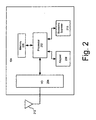
- AACD 104 there is shown a block diagram that illustrates one of many possible ways that AACD 104 could be implemented.
- any two or more of the security key sub-systems 110, 112, 114, 116, 118 can be entirely separate from one another or can share one or more common hardware and/or software elements.
- the block diagram in Fig. 2 shows an arrangement in which two or more such sub-systems can be under the control of a common microprocessor device.
- the sub-systems share memory facilities, and I/O facilities.
- AACD 104 can include a microprocessor 202, I/O system 204, and data store 206.
- Fig. 2 also shows that AACD 104 can include a keypad 208 and a biometric scanner 210 operatively connected to the microprocessor 202.
- a keypad 208 and a biometric scanner 210 operatively connected to the microprocessor 202.
- a biometric scanner 210 operatively connected to the microprocessor 202.
- one or both of these components may be omitted, depending on the particular selection of sub-systems that are incorporated into the device.
- Microprocessor 202 is capable of receiving and transmitting data through input/output (I/O) subsystem 204, which can include a wireless transceiver, and any other conventional data communication service.
- I/O subsystem 204 can include a wireless transceiver, and any other conventional data communication service.
- a suitable transducer 212 can be provided for any wireless applications. If the I/O subsystem relies on an RF link, the transducer can be an antenna. Alternatively, for an optical based system, an optical transducer can be used.
- the wireless interface can be based on any of a variety of well known wireless interface standards. Examples of such well known wireless interface standards can include the Bluetooth wireless standard, and the IEEE 802.11 family of standards. However, the invention is not limited in this regard and any other wireless interface standard can be used.
- AACD 104 and controlled resource 102 are subject to interception. Accordingly, it can be advantageous to make use of various cryptographic techniques for the purpose of conducting all or part of such communications. Any suitable cryptographic technique or process can be used for preventing unauthorized use of the information that is transmitted between the two devices.
- Microprocessor 202 can be any of a variety of commercially available processor.
- microprocessor 202 can be selected from the StrongARM or XScale processors (e.g., SA-110 or PXA270) available from Intel Corp. of Santa Clara, CA , the i.MX or Dragonball family of processors available from Freescale Semiconductor, Inc. of Austin, Texas, or the OMAP family of processors offered for sale by Texas Instruments of Dallas, Texas.
- Microprocessor 202 can utilize any suitable commercially available operating system.
- processor 202 can be implemented as a microelectronic controller. Suitable commercially available controllers can include the MCS51 family of microcontrollers available from Intel Corp. of Santa Clara, CA, the MSP430 family of microcontrollers available from Texas Instruments of Dallas, Texas, or the P87LPC 7xx family of microcontrollers available from Philips Electronics of the Netherlands.
- Processor 202 can communicate respectively with data store 206.
- Data stores 206 can be comprised of any suitable data storage system such as flash memory, read-only memory (ROM), EE PROM and/or dynamic random access memory (DRAM).
- the operating system for the processor can be stored in nonvolatile memory in data store 206. Still, those skilled in the art will appreciate that the invention is not limited with regard to the particular type of data store that is used for the operating system or application software of processor 202.
- Suitable data communication links can be provided between the processor 202, data store 206, keypad, 208 and biometric scanner 210.
- the data communication links can be any suitable type serial or parallel type data channels.
- the communication link is a parallel type data link then it can conform to any of a number of well known bus standards, including without limitation ISA, EISA, VESA, PCI, EMIF and so on.
- a serial data channel is used, then it can be an I2C, SPI, Microwire, Maxim or other type serial data bus.
- One or more of the authorization access and control sub-systems 110, 112, 114, 116, 118 can be implemented in the AACD 104 that is shown in Fig. 2.
- sub-systems 110, 116, 118 can all make use of predetermined key codes.
- These key codes can be stored in data store 206.
- the key codes can be retrieved by processor 202 from data store 206 in response to a particular command signal from the controlled resource 102 or from a user. Thereafter, the processor 202 can automatically cause the key codes to be transmitted to the controlled resource 102.
- Security key sub-system 110 can utilize any conventional key code that can be used to identify a user.
- a security key code for security key sub-system 116 can include a cryptographic ignition key (CIK).
- CIK cryptographic ignition key
- CIK can be used to enable a secure device when the CIK is loaded into the secure device.
- certain data processing functions of secure devices can require the insertion of a cryptographic key.
- a cryptographic fill key can be stored in data store 206 as part of the secure wireless fill key device 118.
- the wireless capability of the AACD 104, combined with its secure authorization and access control features ensure that only authorized users will be able to make use of the CIK and wireless fill key.
- the key code can be generated as a result of a biometric scan.
- a data file associated with the biometric scan can be communicated to the processor 202.
- Processor 202 can cause the data file to be directly transmitted to the controlled resource 102 using I/O subsystem 204.
- the data file can be evaluated by controlled resource 102 and compared to a database of biometric scan data for the purpose of determining whether the user should be granted access.
- the key-code for the biometric scan can also be a digital code that is derived from the biometric scanning process.
- the digital code can be transmitted to the controlled resource for comparison to a reference file.
- the biometric scan data can be compared to a reference file contained in data store 206. If the biometric scan data matches the information contained in the reference file, then microprocessor 202 can cause a specific key code to be transmitted to the controlled resource.
- One advantage of this arrangement would be that it avoids the need to wirelessly transmit biometric scan data.
- biometric scanner 210 any type of biometric scanner can be used.
- the biometric scanner can be a fingerprint scanner or a retinal scanner.
- Other types of scanners are also possible and the invention is not limited to these particular scanning types.
- voice recognition systems can be used for this purpose.
- the invention is not limited to any particular type of biometric scanner.
- keypad 208 can record a series of user key strokes indicating a user password.
- the key strokes can be communicated to the processor 202.
- processor 202 can communicate the keystroke information to the I/O subsystem 204, which transmits the data to the controlled resource 102.
- the password can be evaluated by the controlled resource to determine if the user is authorized to access the controlled resource.
- the AACD 104 can compare the password entered by a user to a password stored in data store 206. If the password is correct, then processor 202 can cause a key code to be transmitted to the controlled resource.
- the controlled resource 102 can verify that the key code is sufficient to allow the user to access the controlled resource.
- keypad 208 and biometric scanner 210 each provide a means for establishing that the AACD is being utilized by its proper owner. Accordingly, it can be desirable in some instances to use only one of these types of security key sub-systems. In fact, utilizing the combination of these security key sub-systems provides for substantially enhanced security.
- Each of the security key sub-systems 110, 112, 114, 116, 118 that are implemented in the AACD 104 can advantageously be arranged to communicate wirelessly with the controlled resource 102.
- a single common wireless I/O subsystem 204 is used by all of the security key sub-systems for enabling wireless communications with the controlled resource 102.
- the wireless interface system can provide wireless communications with the controlled resource 102 using any of a variety of well known wireless networking standards such as the Bluetooth or IEEE 802.11 family of standards.
- the AACD 104 can optionally include two or more wireless interface subsystems.
- one or more of the security key sub-systems 110, 112, 114, 116, 118 can use a separate wireless interface system to communicate with the controlled resource 102.
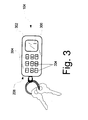
- the various security key subsystems incorporated into the AACD 104 can be advantageously implemented in a single compact housing 302.
- the housing 302 can be sized to fit in a user's pocket or attached to a key chain. Typically this would mean that the device would have an overall size of less than about two cubic inches (2 inches 3 ) .
- the relatively small size of the housing can allow the AACD 104 to be more conveniently carried by a user.
- Fig. 3 also shows a plurality of keys 304 associated with keypad 208, and a fingerprint sensor 306 that can be used with biometric scanner 210.
- FIG. 4 there shown a flowchart that is useful for understanding the operation of the AACD 104.
- the flowchart is intended to illustrate one possible process for implementing one or more of the security features of the AACD. In this regard, it should be understood that the flowchart is not intended to limit the scope of the invention.
- a process in the AACD device 104 can begin in step 402 with processor 202 monitoring a biometric scanner 210 to determine if a user has positioned a portion of their body for scanning. If so, then the process can continue in step 404 by initiating a biometric scan.
- processor 202 can evaluate the results of the biometric scan to determine if the scan results correspond to an authorized user of the AACD 104, the controlled resource 102, or both. If the biometric scan results correspond to an authorized user, then the process can continue on to step 408. Otherwise, the processor can return to step 402.
- step 408 the processor 202 can monitor the keypad for key stroke entry.
- step 410 the processor can determine if a valid password has been entered on the key pad. If not, then the processor 202 can return to step 402. However, if a valid password is entered, then the AACD 104 can begin monitoring an input from I/O subsystem 204 to determine if a valid interrogation signal has been received from the controlled resource 102. If, after a period of time, no valid interrogation signal is received in step 414, then the process continues on to step 418.
- a common access control (CAC) key code can be automatically transmitted in response by the AACD 104.
- the AACD can automatically transmit the CAC key code without waiting for an interrogation signal.
- step 418 the processor 202 can determine whether a cryptographic ignition key (CIK) has been requested or is to be transmitted to the controlled resource.
- CIK cryptographic ignition key
- a request for the CIK can be transmitted by the controlled resource and received using I/O subsystem 204.
- the transmission of the CIK can be requested by one or more user keystrokes. Assuming a proper request is received, then the CIK is transmitted in step 420.
- the AACD 104 can determine whether a request has been received for the AACD 104 to transmit a cryptographic fill key.
- the request can be transmitted to the AACD 104 by the controlled resource, or can be initiated by a series of user keystrokes. If a valid request is received in step 422, then the cryptographic fill key can be transmitted in step 424.
Landscapes
- Physics & Mathematics (AREA)
- General Physics & Mathematics (AREA)
- Engineering & Computer Science (AREA)
- Human Computer Interaction (AREA)
- Lock And Its Accessories (AREA)
- Mobile Radio Communication Systems (AREA)
- Storage Device Security (AREA)
Applications Claiming Priority (1)
| Application Number | Priority Date | Filing Date | Title |
|---|---|---|---|
| US11/445,571 US7979714B2 (en) | 2006-06-02 | 2006-06-02 | Authentication and access control device |
Publications (2)
| Publication Number | Publication Date |
|---|---|
| EP1901238A2 true EP1901238A2 (fr) | 2008-03-19 |
| EP1901238A3 EP1901238A3 (fr) | 2011-10-12 |
Family
ID=38791789
Family Applications (1)
| Application Number | Title | Priority Date | Filing Date |
|---|---|---|---|
| EP07010281A Ceased EP1901238A3 (fr) | 2006-06-02 | 2007-05-23 | Dispositif de contrôle d'authentification et d'accès |
Country Status (3)
| Country | Link |
|---|---|
| US (1) | US7979714B2 (fr) |
| EP (1) | EP1901238A3 (fr) |
| IL (1) | IL183303A0 (fr) |
Cited By (2)
| Publication number | Priority date | Publication date | Assignee | Title |
|---|---|---|---|---|
| US9710978B1 (en) | 2016-03-15 | 2017-07-18 | Tyco Fire & Security Gmbh | Access control system using optical communication protocol |
| CN108961479A (zh) * | 2017-05-26 | 2018-12-07 | 无锡兆能信息技术有限公司 | 一种基于ieee802.11管理帧的智能门禁方法和系统 |
Families Citing this family (12)
| Publication number | Priority date | Publication date | Assignee | Title |
|---|---|---|---|---|
| US7623894B2 (en) * | 2003-10-09 | 2009-11-24 | Freescale Semiconductor, Inc. | Cellular modem processing |
| US8041947B2 (en) | 2006-03-23 | 2011-10-18 | Harris Corporation | Computer architecture for an electronic device providing SLS access to MLS file system with trusted loading and protection of program execution memory |
| US8127145B2 (en) | 2006-03-23 | 2012-02-28 | Harris Corporation | Computer architecture for an electronic device providing a secure file system |
| US8060744B2 (en) | 2006-03-23 | 2011-11-15 | Harris Corporation | Computer architecture for an electronic device providing single-level secure access to multi-level secure file system |
| JP4127842B2 (ja) * | 2006-06-05 | 2008-07-30 | 株式会社東芝 | 情報処理装置 |
| US8249238B2 (en) * | 2006-09-21 | 2012-08-21 | Siemens Enterprise Communications, Inc. | Dynamic key exchange for call forking scenarios |
| US9646434B2 (en) | 2013-10-10 | 2017-05-09 | Google Technology Holdings LLC | Method and system for controlling access to a restricted location |
| US10510201B2 (en) * | 2018-01-25 | 2019-12-17 | Xerox Corporation | Electromechanical lock security system |
| US10366555B1 (en) | 2018-01-25 | 2019-07-30 | Xerox Corporation | Electromechanical lock security system |
| US11102197B2 (en) * | 2019-09-04 | 2021-08-24 | Bank Of America Corporation | Security tool |
| US11102198B2 (en) * | 2019-11-19 | 2021-08-24 | Bank Of America Corporation | Portable security tool for user authentication |
| US11546176B2 (en) * | 2020-08-26 | 2023-01-03 | Rockwell Collins, Inc. | System and method for authentication and cryptographic ignition of remote devices |
Citations (5)
| Publication number | Priority date | Publication date | Assignee | Title |
|---|---|---|---|---|
| WO1998012670A1 (fr) | 1996-09-18 | 1998-03-26 | Dew Engineering And Development Limited | Systeme biometrique d'identification garantissant la securite des acces |
| EP0924657A2 (fr) | 1997-12-22 | 1999-06-23 | TRW Inc. | Technique de vérification d'identité à distance avec un dispositif d'identification personel |
| US6671804B1 (en) * | 1999-12-01 | 2003-12-30 | Bbnt Solutions Llc | Method and apparatus for supporting authorities in a public key infrastructure |
| US20050122210A1 (en) | 2003-12-05 | 2005-06-09 | Honeywell International Inc. | Dual technology door entry person authentication |
| US20050273626A1 (en) | 2004-06-02 | 2005-12-08 | Steven Pearson | System and method for portable authentication |
Family Cites Families (65)
| Publication number | Priority date | Publication date | Assignee | Title |
|---|---|---|---|---|
| US4227253A (en) | 1977-12-05 | 1980-10-07 | International Business Machines Corporation | Cryptographic communication security for multiple domain networks |
| US4493031A (en) | 1982-08-25 | 1985-01-08 | At&T Bell Laboratories | Memory write protection using timers |
| DE3730134C1 (de) * | 1987-09-09 | 1996-05-30 | Siemens Ag | Schlüsselgerät |
| US4918728A (en) | 1989-08-30 | 1990-04-17 | International Business Machines Corporation | Data cryptography operations using control vectors |
| GB9017683D0 (en) | 1990-08-13 | 1990-09-26 | Marconi Gec Ltd | Data security system |
| US5283828A (en) | 1991-03-01 | 1994-02-01 | Hughes Training, Inc. | Architecture for utilizing coprocessing systems to increase performance in security adapted computer systems |
| US5263168A (en) | 1991-06-03 | 1993-11-16 | Motorola, Inc. | Circuitry for automatically entering and terminating an initialization mode in a data processing system in response to a control signal |
| US5596718A (en) | 1992-07-10 | 1997-01-21 | Secure Computing Corporation | Secure computer network using trusted path subsystem which encrypts/decrypts and communicates with user through local workstation user I/O devices without utilizing workstation processor |
| US5369702A (en) | 1993-10-18 | 1994-11-29 | Tecsec Incorporated | Distributed cryptographic object method |
| DE4341887C2 (de) | 1993-12-08 | 1996-12-19 | Siemens Ag | Verfahren zum Verhindern einer unberechtigten Datenänderung bei einer Vorrichtung mit einem nichtflüchtigen Speicher |
| US5548646A (en) | 1994-09-15 | 1996-08-20 | Sun Microsystems, Inc. | System for signatureless transmission and reception of data packets between computer networks |
| US6741991B2 (en) | 1994-09-30 | 2004-05-25 | Mitsubishi Corporation | Data management system |
| US5748744A (en) | 1996-06-03 | 1998-05-05 | Vlsi Technology, Inc. | Secure mass storage system for computers |
| US5802178A (en) | 1996-07-30 | 1998-09-01 | Itt Industries, Inc. | Stand alone device for providing security within computer networks |
| DE19633919C1 (de) | 1996-08-22 | 1997-06-05 | Siemens Ag | Aktualisierung eines Mobilfunkgerätes |
| JP3097570B2 (ja) | 1996-09-26 | 2000-10-10 | 日本電気株式会社 | Ii−vi族化合物半導体およびその製造方法 |
| US5956404A (en) | 1996-09-30 | 1999-09-21 | Schneier; Bruce | Digital signature with auditing bits |
| US6148401A (en) | 1997-02-05 | 2000-11-14 | At&T Corp. | System and method for providing assurance to a host that a piece of software possesses a particular property |
| EP0862124A3 (fr) | 1997-02-28 | 2003-03-26 | Fujitsu Limited | Système d'accès de fichiers pour accéder efficacement à un fichier de données codées dans un dispositif de stockage |
| US6401206B1 (en) | 1997-03-06 | 2002-06-04 | Skylight Software, Inc. | Method and apparatus for binding electronic impressions made by digital identities to documents |
| US7290288B2 (en) | 1997-06-11 | 2007-10-30 | Prism Technologies, L.L.C. | Method and system for controlling access, by an authentication server, to protected computer resources provided via an internet protocol network |
| US6438666B2 (en) | 1997-09-26 | 2002-08-20 | Hughes Electronics Corporation | Method and apparatus for controlling access to confidential data by analyzing property inherent in data |
| US6081895A (en) | 1997-10-10 | 2000-06-27 | Motorola, Inc. | Method and system for managing data unit processing |
| US6378072B1 (en) | 1998-02-03 | 2002-04-23 | Compaq Computer Corporation | Cryptographic system |
| GB2336005A (en) | 1998-03-28 | 1999-10-06 | Motorola Ltd | Maintaining security in development tools |
| US6282653B1 (en) | 1998-05-15 | 2001-08-28 | International Business Machines Corporation | Royalty collection method and system for use of copyrighted digital materials on the internet |
| US6775778B1 (en) | 1998-05-29 | 2004-08-10 | Texas Instruments Incorporated | Secure computing device having boot read only memory verification of program code |
| EP1085396A1 (fr) | 1999-09-17 | 2001-03-21 | Hewlett-Packard Company | Fonctionnement de l'état sécurisé sur une plate-forme d'ordinateur |
| US6351817B1 (en) | 1999-10-27 | 2002-02-26 | Terence T. Flyntz | Multi-level secure computer with token-based access control |
| WO2001061521A1 (fr) | 2000-02-15 | 2001-08-23 | Molten Markets Pty Ltd | Systeme d'interface utilisateur |
| US7392398B1 (en) | 2000-06-05 | 2008-06-24 | Ati International Srl | Method and apparatus for protection of computer assets from unauthorized access |
| US7003674B1 (en) | 2000-07-31 | 2006-02-21 | Western Digital Ventures, Inc. | Disk drive employing a disk with a pristine area for storing encrypted data accessible only by trusted devices or clients to facilitate secure network communications |
| US7870599B2 (en) * | 2000-09-05 | 2011-01-11 | Netlabs.Com, Inc. | Multichannel device utilizing a centralized out-of-band authentication system (COBAS) |
| US20020099950A1 (en) | 2001-01-22 | 2002-07-25 | Smith Kenneth K. | Method of maintaining integrity of an instruction or data set |
| US7047405B2 (en) | 2001-04-05 | 2006-05-16 | Qualcomm, Inc. | Method and apparatus for providing secure processing and data storage for a wireless communication device |
| US7072937B2 (en) | 2001-03-21 | 2006-07-04 | Northrop Grumman Corporation | Web-based common use terminal with multiple application servers |
| US20030037237A1 (en) | 2001-04-09 | 2003-02-20 | Jean-Paul Abgrall | Systems and methods for computer device authentication |
| US7069447B1 (en) | 2001-05-11 | 2006-06-27 | Rodney Joe Corder | Apparatus and method for secure data storage |
| KR100463842B1 (ko) | 2001-12-27 | 2004-12-29 | 한국전자통신연구원 | 파일 보안 시스템의 키 관리 장치와 암호키 관리방법 |
| US7028149B2 (en) | 2002-03-29 | 2006-04-11 | Intel Corporation | System and method for resetting a platform configuration register |
| US7185249B2 (en) | 2002-04-30 | 2007-02-27 | Freescale Semiconductor, Inc. | Method and apparatus for secure scan testing |
| US7958351B2 (en) | 2002-08-29 | 2011-06-07 | Wisterium Development Llc | Method and apparatus for multi-level security implementation |
| US6992765B2 (en) * | 2002-10-11 | 2006-01-31 | Intralase Corp. | Method and system for determining the alignment of a surface of a material in relation to a laser beam |
| US7478248B2 (en) | 2002-11-27 | 2009-01-13 | M-Systems Flash Disk Pioneers, Ltd. | Apparatus and method for securing data on a portable storage device |
| US7322042B2 (en) | 2003-02-07 | 2008-01-22 | Broadon Communications Corp. | Secure and backward-compatible processor and secure software execution thereon |
| US7210009B2 (en) | 2003-09-04 | 2007-04-24 | Advanced Micro Devices, Inc. | Computer system employing a trusted execution environment including a memory controller configured to clear memory |
| US20050114687A1 (en) | 2003-11-21 | 2005-05-26 | Zimmer Vincent J. | Methods and apparatus to provide protection for firmware resources |
| US20050132186A1 (en) | 2003-12-11 | 2005-06-16 | Khan Moinul H. | Method and apparatus for a trust processor |
| US7698552B2 (en) | 2004-06-03 | 2010-04-13 | Intel Corporation | Launching a secure kernel in a multiprocessor system |
| US7818574B2 (en) | 2004-09-10 | 2010-10-19 | International Business Machines Corporation | System and method for providing dynamically authorized access to functionality present on an integrated circuit chip |
| JP4326443B2 (ja) | 2004-10-08 | 2009-09-09 | フェリカネットワークス株式会社 | 情報処理装置および情報処理方法、並びにプログラム |
| US7496347B2 (en) | 2004-11-12 | 2009-02-24 | Velocita Wireless Llc | Method and apparatus for providing secure wireless communication |
| DE102004062203B4 (de) | 2004-12-23 | 2007-03-08 | Infineon Technologies Ag | Datenverarbeitungseinrichtung, Telekommunikations-Endgerät und Verfahren zur Datenverarbeitung mittels einer Datenverarbeitungseinrichtung |
| US8732856B2 (en) | 2004-12-30 | 2014-05-20 | Oracle International Corporation | Cross-domain security for data vault |
| US7155980B2 (en) * | 2005-01-07 | 2007-01-02 | Kulite Semiconductor Products, Inc. | Resonating transducer |
| US20080022136A1 (en) | 2005-02-18 | 2008-01-24 | Protegrity Corporation | Encryption load balancing and distributed policy enforcement |
| US7606370B2 (en) * | 2005-04-05 | 2009-10-20 | Mcafee, Inc. | System, method and computer program product for updating security criteria in wireless networks |
| US20060253711A1 (en) * | 2005-05-09 | 2006-11-09 | Charles Kallmann | Biometric safety and security system |
| US7765399B2 (en) | 2006-02-22 | 2010-07-27 | Harris Corporation | Computer architecture for a handheld electronic device |
| US20070214364A1 (en) * | 2006-03-07 | 2007-09-13 | Roberts Nicole A | Dual layer authentication system for securing user access to remote systems and associated methods |
| US7779252B2 (en) | 2006-03-21 | 2010-08-17 | Harris Corporation | Computer architecture for a handheld electronic device with a shared human-machine interface |
| US8041947B2 (en) | 2006-03-23 | 2011-10-18 | Harris Corporation | Computer architecture for an electronic device providing SLS access to MLS file system with trusted loading and protection of program execution memory |
| US8060744B2 (en) | 2006-03-23 | 2011-11-15 | Harris Corporation | Computer architecture for an electronic device providing single-level secure access to multi-level secure file system |
| US8127145B2 (en) | 2006-03-23 | 2012-02-28 | Harris Corporation | Computer architecture for an electronic device providing a secure file system |
| US20070250411A1 (en) * | 2006-03-29 | 2007-10-25 | Williams Albert L | System and method for inventory tracking and control of mission-critical military equipment and supplies |
-
2006
- 2006-06-02 US US11/445,571 patent/US7979714B2/en not_active Expired - Fee Related
-
2007
- 2007-05-17 IL IL183303A patent/IL183303A0/en unknown
- 2007-05-23 EP EP07010281A patent/EP1901238A3/fr not_active Ceased
Patent Citations (5)
| Publication number | Priority date | Publication date | Assignee | Title |
|---|---|---|---|---|
| WO1998012670A1 (fr) | 1996-09-18 | 1998-03-26 | Dew Engineering And Development Limited | Systeme biometrique d'identification garantissant la securite des acces |
| EP0924657A2 (fr) | 1997-12-22 | 1999-06-23 | TRW Inc. | Technique de vérification d'identité à distance avec un dispositif d'identification personel |
| US6671804B1 (en) * | 1999-12-01 | 2003-12-30 | Bbnt Solutions Llc | Method and apparatus for supporting authorities in a public key infrastructure |
| US20050122210A1 (en) | 2003-12-05 | 2005-06-09 | Honeywell International Inc. | Dual technology door entry person authentication |
| US20050273626A1 (en) | 2004-06-02 | 2005-12-08 | Steven Pearson | System and method for portable authentication |
Cited By (3)
| Publication number | Priority date | Publication date | Assignee | Title |
|---|---|---|---|---|
| US9710978B1 (en) | 2016-03-15 | 2017-07-18 | Tyco Fire & Security Gmbh | Access control system using optical communication protocol |
| WO2017160328A1 (fr) * | 2016-03-15 | 2017-09-21 | Tyco Fire & Security Gmbh | Système de contrôle d'accès utilisant un protocole de communication optique |
| CN108961479A (zh) * | 2017-05-26 | 2018-12-07 | 无锡兆能信息技术有限公司 | 一种基于ieee802.11管理帧的智能门禁方法和系统 |
Also Published As
| Publication number | Publication date |
|---|---|
| IL183303A0 (en) | 2007-09-20 |
| EP1901238A3 (fr) | 2011-10-12 |
| US20070283159A1 (en) | 2007-12-06 |
| US7979714B2 (en) | 2011-07-12 |
Similar Documents
| Publication | Publication Date | Title |
|---|---|---|
| EP1901238A2 (fr) | Dispositif de contrôle d'authentification et d'accès | |
| US7493495B2 (en) | Biometrics interface | |
| Jansen | Authenticating users on handheld devices | |
| EP2083398A1 (fr) | Carte intelligente biométrique pour dispositifs mobiles | |
| US20050039027A1 (en) | Universal, biometric, self-authenticating identity computer having multiple communication ports | |
| US20030200445A1 (en) | Secure computer system using SIM card and control method thereof | |
| US20090190802A1 (en) | Optimized biometric authentication method and system | |
| US20120047566A1 (en) | Password protected secure device | |
| US9111084B2 (en) | Authentication platform and related method of operation | |
| EP2391967B1 (fr) | Dispositif sécurisé protégé par mot de passe | |
| US20120017273A1 (en) | Apparatus and method for improving the security in portable communication system | |
| US11823512B1 (en) | Smart access control system using an electronic card | |
| KR100724413B1 (ko) | 이동 통신 단말기를 이용한 도어개폐 시스템 및 그 제어방법 | |
| KR102010764B1 (ko) | 스마트폰 인증 기능을 이용한 컴퓨터 보안 시스템 및 방법 | |
| CN102044099A (zh) | 通用身份表示及操作控制系统 | |
| KR100862742B1 (ko) | 이동 단말기를 이용한 컴퓨터 보안 방법 및 장치 | |
| KR102289145B1 (ko) | 디지털 식별자 위변조 방지 시스템, 방법 및 장치 | |
| JP2003178033A (ja) | 認証方法及び認証システム及び認証トークン | |
| EP2083544B1 (fr) | Procédé et système d'authentification biométrique optimisée | |
| KR20070080652A (ko) | 이동통신 단말기를 이용하는 도어 록 제어 시스템 및 방법 | |
| JP2002315055A (ja) | 通信端末及び無線通信システム | |
| CN106295285B (zh) | 一种信息处理方法及电子设备 | |
| JPH10334239A (ja) | 端末装置 | |
| JP2002288623A (ja) | Icカードシステム | |
| KR102340398B1 (ko) | 출입 통제 제어를 위한 장치, 시스템 및 방법 |
Legal Events
| Date | Code | Title | Description |
|---|---|---|---|
| PUAI | Public reference made under article 153(3) epc to a published international application that has entered the european phase |
Free format text: ORIGINAL CODE: 0009012 |
|
| 17P | Request for examination filed |
Effective date: 20070523 |
|
| AK | Designated contracting states |
Kind code of ref document: A2 Designated state(s): AT BE BG CH CY CZ DE DK EE ES FI FR GB GR HU IE IS IT LI LT LU LV MC MT NL PL PT RO SE SI SK TR |
|
| AX | Request for extension of the european patent |
Extension state: AL BA HR MK YU |
|
| PUAL | Search report despatched |
Free format text: ORIGINAL CODE: 0009013 |
|
| AK | Designated contracting states |
Kind code of ref document: A3 Designated state(s): AT BE BG CH CY CZ DE DK EE ES FI FR GB GR HU IE IS IT LI LT LU LV MC MT NL PL PT RO SE SI SK TR |
|
| AX | Request for extension of the european patent |
Extension state: AL BA HR MK RS |
|
| RIC1 | Information provided on ipc code assigned before grant |
Ipc: G07C 9/00 20060101AFI20110908BHEP |
|
| AKX | Designation fees paid |
Designated state(s): DE FR GB IT |
|
| STAA | Information on the status of an ep patent application or granted ep patent |
Free format text: STATUS: EXAMINATION IS IN PROGRESS |
|
| 17Q | First examination report despatched |
Effective date: 20170614 |
|
| RAP1 | Party data changed (applicant data changed or rights of an application transferred) |
Owner name: HARRIS GLOBAL COMMUNICATIONS, INC. |
|
| STAA | Information on the status of an ep patent application or granted ep patent |
Free format text: STATUS: THE APPLICATION HAS BEEN REFUSED |
|
| 18R | Application refused |
Effective date: 20190122 |