EP1901340A1 - Procédé de production de plaquette fixée - Google Patents
Procédé de production de plaquette fixée Download PDFInfo
- Publication number
- EP1901340A1 EP1901340A1 EP07018101A EP07018101A EP1901340A1 EP 1901340 A1 EP1901340 A1 EP 1901340A1 EP 07018101 A EP07018101 A EP 07018101A EP 07018101 A EP07018101 A EP 07018101A EP 1901340 A1 EP1901340 A1 EP 1901340A1
- Authority
- EP
- European Patent Office
- Prior art keywords
- wafer
- bonded
- active layer
- semiconductor wafer
- producing
- Prior art date
- Legal status (The legal status is an assumption and is not a legal conclusion. Google has not performed a legal analysis and makes no representation as to the accuracy of the status listed.)
- Ceased
Links
Images

Classifications
-
- H—ELECTRICITY
- H10—SEMICONDUCTOR DEVICES; ELECTRIC SOLID-STATE DEVICES NOT OTHERWISE PROVIDED FOR
- H10P—GENERIC PROCESSES OR APPARATUS FOR THE MANUFACTURE OR TREATMENT OF DEVICES COVERED BY CLASS H10
- H10P14/00—Formation of materials, e.g. in the shape of layers or pillars
- H10P14/20—Formation of materials, e.g. in the shape of layers or pillars of semiconductor materials
-
- H—ELECTRICITY
- H10—SEMICONDUCTOR DEVICES; ELECTRIC SOLID-STATE DEVICES NOT OTHERWISE PROVIDED FOR
- H10P—GENERIC PROCESSES OR APPARATUS FOR THE MANUFACTURE OR TREATMENT OF DEVICES COVERED BY CLASS H10
- H10P90/00—Preparation of wafers not covered by a single main group of this subclass, e.g. wafer reinforcement
- H10P90/19—Preparing inhomogeneous wafers
- H10P90/1904—Preparing vertically inhomogeneous wafers
- H10P90/1906—Preparing SOI wafers
- H10P90/1914—Preparing SOI wafers using bonding
- H10P90/1916—Preparing SOI wafers using bonding with separation or delamination along an ion implanted layer, e.g. Smart-cut
-
- H—ELECTRICITY
- H10—SEMICONDUCTOR DEVICES; ELECTRIC SOLID-STATE DEVICES NOT OTHERWISE PROVIDED FOR
- H10W—GENERIC PACKAGES, INTERCONNECTIONS, CONNECTORS OR OTHER CONSTRUCTIONAL DETAILS OF DEVICES COVERED BY CLASS H10
- H10W10/00—Isolation regions in semiconductor bodies between components of integrated devices
- H10W10/10—Isolation regions comprising dielectric materials
- H10W10/181—Semiconductor-on-insulator [SOI] isolation regions, e.g. buried oxide regions of SOI wafers
Definitions
- the present invention relates to a method of producing a bonded wafer by bonding a wafer for an active layer and a wafer for a substrate without interposing an insulation film in between, and thinning the wafer for the active layer.
- a bonded wafer denotes an SOI (Silicon On Insulator) wafer.
- SOI Silicon On Insulator
- the below described methods are disclosed as methods of producing a bonded wafer.
- a method grinding-polishing method
- Non Patent Reference 1 Science of silicon, edited by UCS semiconductor basic technology workshop, Realize Inc., June 28, 1996, p 459-462
- the oxidized wafer for the active layer is made into a thin film of a predetermined thickness by grinding and polishing the surface of the wafer.
- An ion implantation separation method described in Patent Reference 1 comprises a step of forming an ion-implanted layer by implanting light element ions such as H 2 ions or He ions to a predetermined depth in the wafer for an active layer, a step of bonding the wafer for the active layer and the wafer for the substrate interposing an insulation film in between, a step of delaminating the wafer at the above-described ion-implanted layer, and a step of forming an active layer of a predetermined thickness by thinning an active layer portion exposed by the delamination.
- a bonded wafer may be produced by so-called Smart-cut method (registered trademark).
- Patent Reference 2 Japanese Unexamined Patent Application, First Publication, No. 2000-36445 ) shows a bonded wafer in which an insulation layer is not interposed between the wafer for an active layer and the wafer for the substrate.
- This type of wafer is considered as an advantageous wafer in terms of the simplification of production process of a composite crystal substrate and improvement of performance of the substrate.
- the wafer for the active layer is made into a thin layer. After that, the bonded wafer is subjected to a heat treatment, thereby forming a bonded interface in which an insulation film is not interposed.
- Patent Reference 3 Japanese Unexamined Patent Application, First Publication No. H8-264398 ) describes a method for reducing island oxides (oxide islands) in the bonded interface. In this method, before bonding wafers, surface natural oxide films are removed from the wafers by dipping the wafers in a solution of HF or the like.
- Patent Reference 3 includes problems. For example, even though the surface oxide films are removed from wafers, oxygen atoms in the interior of the substrate locally condense to the bonded interface and form oxides. Therefore, the reduction of island oxides cannot be performed sufficiently.
- An object of the invention is to provide a a method of producing a bonded wafer by bonding a wafer for an active layer and a wafer for a substrate without interposing an insulation layer in between, where a formation of island oxides is suppressed by controlling oxygen concentrations in surface portions at least including bonded surfaces of the wafers.
- a first aspect of the present invention is a method of producing a bonded wafer, comprising:
- the first semiconductor wafer may be a semiconductor wafer constituting a substrate (supporting substrate) of a semiconductor device (wafer for a substrate), and the second semiconductor wafer may be a semiconductor wafer constituting an active layer of a semiconductor device (wafer for an active layer).
- a second aspect of the present invention is a method of producing a bonded wafer according to the above-described first aspect, wherein the first semiconductor wafer and the second semiconductor wafer are high-temperature-annealed wafers which have been subjected to a heat treatment at a temperature of 1000°C or more in an Ar gas or H 2 gas atmosphere.
- a third aspect of the present invention is a method of producing a bonded wafer according to the first aspect, wherein the second semiconductor wafer is a SOI wafer having an insulation layer and an active layer, and an oxygen concentration of the active layer of the SOI wafer is 1.0 ⁇ 10 18 atoms/cm 3 (Old ASTM) or less.
- a fourth aspect of the present invention is a method of producing a bonded wafer according to any one of the above-described first, second or third aspect, wherein the first semiconductor wafer and the second semiconductor wafer have different crystal orientations.
- a fifth aspect of the present invention is a method of producing a bonded wafer according to any one of the above-described first to fourth aspects, wherein bonded surfaces of the first semiconductor wafer and the second semiconductor wafer are hydrophobic surfaces.
- a sixth aspect of the present invention is a method of producing a bonded wafer according to any one of the above-described first to fifth aspects, wherein the thinning of the second semiconductor wafer is performed by an ion implantation separation method.
- the present invention it is possible to produce a bonded wafer while controlling the oxygen concentration of the surface portion at least including the bond surface of each of the first semiconductor wafer and the second semiconductor wafer to be 1.0 ⁇ 10 18 atoms/cm 3 (Old ASTM) or less. As a result, it is possible to inhibit a formation of island oxides in the bonded interface.
- FIG. 1 is a flow chart for explaining production process of a bonded wafer in accordance with the production method of the present invention.
- a method of producing a bonded wafer according to the present invention comprises a step of bonding a wafer for an active layer (semiconductor wafer for an active layer) and a wafer for a substrate (semiconductor wafer for a substrate) without interposing an insulation film in between, and a step of working (thinning) the wafer for an active layer into a thin film.
- a conventional bonded wafer which has been produced in accordance with a method including the above-described steps included a problem in that the natural oxide film in the bonded interface locally aggregated to form island oxides in the subsequent step of producing the bonded wafer (heat treatment step) and that numerous island oxides remained in the bonded interface.
- the inventors found that, even in the case of not providing an insulation film in the bonded interface, by reducing oxygen concentrations of surface portions at least including bonded surfaces of the wafer for an active layer and a wafer for a substrate, it was possible to reduce the size of island oxides formed in the bonded interface and reduce the numbers of the island oxides.
- a wafer 2 for an active layer and a wafer 3 for a substrate each having a natural oxide film in a normal state are prepared (state A of FIG. 1).
- a wafer 2' for an active layer and a wafer 3' for a substrate are formed such that the oxygen concentration of a surface portion at least including a bond surface of each of the wafers 2', 3' is controlled to be 1.0 ⁇ 10 18 atoms/cm 3 (Old ASTM) or less (state B of FIG. 1).
- the wafer 2' for an active layer is bonded to the wafer 3' for a substrate (state C of FIG. 1).
- the active layer portion 5 is worked to a thin film using a polishing apparatus (state E of FIG. 1).
- a silicon wafer may be applied as the semiconductor wafer constituting the wafer 2 for an active later and the wafer 3 for a substrate. It is also possible to use multilayered wafers having at least one Si layer and/or SiGe layer formed on a Si wafer sliced from a single crystal. An SOI wafer having an insulation layer and a semiconductor layer may also be used.
- the wafer 2' for an active layer and the wafer 3' for a substrate which have been subjected to a predetermined treatment be high-temperature-annealed wafers which have been subjected to a heat treatment at a temperature of not lower than 1000°C in an atmosphere of Ar gas, H 2 gas, or a mixed gas of Ar and H 2 .
- a heat treatment oxygen in the surface vicinity of the wafer for the active layer and the wafer for the substrate diffuse outwardly, and the oxygen concentration of the surface vicinity of the wafer is controlled to be not higher than 1.0 ⁇ 10 18 atoms/cm 3 (Old ASTM).
- the method of producing a bonded wafer of the present invention may include a step of heat treating the wafer for an active layer and the wafer for a substrate at a temperature of not lower than 1000°C in an atmosphere of Ar gas, H 2 gas, or a mixed gas of Ar and H 2 .
- the heat treatment temperature be in a range from 1100°C to 1250°C. Where the heat treatment temperature is lower than 1100°C, it is impossible to obtain a sufficient effect of outward diffusion of oxygen.
- Crystal defect-free wafers may be used as the wafer for an active layer and the wafer for a substrate.
- Epitaxial wafers may be used as the wafer 2' for an active layer and the wafer 3' for a substrate which have been subjected to a predetermined treatment.
- a near-surface portion of an epitaxial layer of an epitaxial wafer has an oxygen concentration which is lower than that of the general bulk wafer and is not higher than 1.0 ⁇ 10 18 atoms/cm 3 (Old ASTM). Therefore, when the epitaxial wafers are used, it is not necessary to perform a heat treatment of the wafers in a high temperature gas atmosphere.
- the method of producing a bonded wafer according to the present invention may comprise a step of forming an epitaxial layer on a surface of each of the wafer 2' for an active layer and the wafer 3' for a substrate.
- the above-described wafer for an active layer be a SOI wafer having an insulation layer and an active layer (semiconductor layer constituting an active region in a semiconductor device), and an oxygen concentration of the active layer of the SOI wafer be not higher than 1.0 ⁇ 10 18 atoms/cm 3 (Old ASTM).
- the insulation film layer of the SOI wafer used as the wafer for an active layer may be used as a stop layer for polishing or etching during the step of thinning the bonded wafer (state D of FIG. 1) after bonding the wafers.
- As a method for reducing the oxygen concentration of the active layer for example, it is possible to apply the above-described heat treatment in an Ar gas atmosphere.
- the wafer 2' for an active layer and the wafer 3' for a substrate may be constituted of wafers having different crystal orientations.
- two wafers have different crystal orientations in the bonded interface, when a (110) crystal (crystal having a (110) plane as a surface plane to be bonded) and a (100) crystal is bonded, or a (111) crystal and a (100) crystal are bonded.
- a crystal orientation of a wafer may be controlled by growing a single crystal while controlling the pulling axis (growth axis) to correspond to a predetermined crystal orientation, and slicing a wafer from the obtained single crystal.
- the bonded surfaces of the wafer 2' for an active layer and the wafer 3' for a substrate are hydrophobic surfaces.
- oxide layers in the bond surface are further removed. Therefore, the oxygen concentration is further reduced and generation of island oxide is further reduced.
- the hydrophobic surface denotes a surface where a natural oxide film does not exist. For example, it is possible to obtain a hydrophobic surface by dipping the wafer in a HF solution, thereby removing a natural oxide film.
- a method of producing a bonded wafer according to the present invention may comprise a step of performing a hydrophobic treatment on surfaces of the wafer 2' for an active layer and the wafer 3' for a substrate.
- the hydrophobic treatment may be a step of removing a natural oxide film from a wafer by dipping the wafer in a HF solution.
- a conventional method may be applied for bonding the wafer 2' for an active layer and the wafer 3' for a substrate. For example, by joining a wafer 2' for an active layer and the wafer 3' for a substrate, and performing a heat treatment at a predetermined temperature (for example, 1100 to 1200°C), covalent bond is formed between the semiconductor materials constituting the two wafers, thereby bonding the wafer 2' for an active layer and the wafer 3' for a substrate.
- a predetermined temperature for example, 1100 to 1200°C
- a method of thinning the active layer 5 of the bonded wafer (state D of FIG. 1) is not limited provided that the method can be applied to work the wafer 2' for an active layer into a thin film by grinding or by delaminating the wafer 2'. It is preferable to perform the thinning using an ion implantation separation method.
- the ion implantation separation method has advantages. For example, the ion implantation method is cost effective since the separated portion may be recycled. In addition, a constant film thickness is provided to the bonded wafer without performing grinding.
- the ion implantation separation method before bonding the wafers, light element gas such as hydrogen gas or helium gas is implanted to the wafer 2' for the active layer thereby forming an ion-implanted layer in a predetermined depth from the surface of the wafer 2' for the active layer.
- the bonded wafer is subjected to a heat treatment at a temperature ranging from 450°C to 600°C, preferably at about 500°C, and the wafer 2' for an active layer is separated at the ion-implanted layer.
- the thickness of the active layer 5 of the above-described bonded wafer be given a thickness in a range from 50 nm to 100 nm by the thinning.
- the oxygen concentration of surfaces of the wafer for an active layer and the wafer for a substrate before bonding is controlled to be not higher than 1.0 ⁇ 10 18 atoms/cm 3 (Old ASTM). It is preferable to control the oxygen concentration of surfaces of the wafer for an active layer and the wafer for a substrate before bonding to be not higher than 1.0 ⁇ 10 17 atoms/cm 3 (Old ASTM). In this case, the numbers of island oxides can be further reduced.
- the lower limit of the oxygen concentration is not set since it is preferable to reduce the oxygen concentration to as low a value as possible. At present, it is considered that an oxygen concentration for a practically available wafer is limited to be not lower than about 1.0 ⁇ 10 15 atoms/cm 3 (Old ASTM).
- the surface portion from the outermost surface of the bond surface to the depth of 0.5 ⁇ m, preferably to the depth of 1 ⁇ m, to have an oxygen concentration of not higher than 1.0 ⁇ 10 18 atoms/cm 3 (Old ASTM).
- Old ASTM oxygen concentration of not higher than 1.0 ⁇ 10 18 atoms/cm 3
- Two semiconductor wafers were prepared as a wafer for an active layer and a wafer for a substrate.
- Each of the wafers had a diameter of 300 mm, surface orientation (wafer plane orientation) of (100), and a surface oxygen concentration of 1.3 ⁇ 10 18 atoms/cm 3 (Old ASTM).
- Both wafers were subjected to a heat treatment at 1100°C in an Ar gas atmosphere (Ar annealing) such that the surface oxygen concentration of each of the wafers was reduced to 1.0 ⁇ 10 18 atoms/cm 3 (Old ASTM). After that, the thus heat-treated two high-temperature-annealed wafers were bonded directly without interposing an insulation film.
- the bonded wafer was subjected to a heat treatment at 1100°C.
- the wafer for the active layer was thinned by grinding and polishing, and the active layer was worked to a thin film of 100 nm or less.
- Example 2 an SOI wafer was used as a wafer for the active layer, and an oxygen concentration of the active layer of the SOI wafer was controlled to be 1.0 ⁇ 10 18 atoms/cm 3 (Old ASTM) by performing a heat treatment at 1100°C in an Ar gas atmosphere. Ar annealing was not performed. By using the other conditions the same as those in Example 1, a bonded wafer was produced.
- Example 3 a wafer having a surface orientation of (100) plane was used as the wafer for a substrate, and a wafer having a surface orientation of (110) plane was used as the wafer for an active layer.
- Surface oxygen concentrations of the two wafers were controlled to be 1.0 ⁇ 10 18 atoms/cm 3 (Old ASTM) by controlling a rotation of a crucible while pulling silicon single crystals as raw materials of the wafers. Ar annealing of the two wafers was not performed.
- the other processes were the same as those in Example 1, and a bonded wafer was produced.
- Example 4 surface oxygen concentrations of two wafers were controlled to be 1.0 ⁇ 10 18 atoms/cm 3 (Old ASTM) by controlling a rotation of a crucible while pulling silicon single crystal as a raw material of the wafers. Ar annealing was not performed on the two wafers. Before the bonding, both wafers were dipped in a HF solution composed of 1 vol% of HF and 99 vol % of H 2 O. The other processes were the same as those in Example 1, and a bonded wafer was produced.
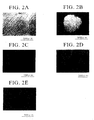
- Example 1 Average numbers of island oxides (particle/cm 2 ) Sizes of island oxides ( ⁇ m) Example 1 2.5/cm 2 500 to 1000 Example 2 2.5/cm 2 500 to 800 Example 3 2.5/cm 2 200 to 500 Example 4 2.5/cm 2 100 to 200 Comparative Example 1 5/cm 2 1500 to 2000
- a method of producing a bonded wafer comprising a step of bonding a wafer for an active layer and a wafer for a substrate without interposing an insulation film in between, and a step of working the wafer for an active layer into a thin film, wherein surface portions at least including bonded surfaces of the first semiconductor wafer and the second semiconductor wafer have an oxygen concentration of 1.0 ⁇ 10 18 atoms/cm 3 (Old ASTM) or less.
Landscapes
- Element Separation (AREA)
- Recrystallisation Techniques (AREA)
Applications Claiming Priority (1)
| Application Number | Priority Date | Filing Date | Title |
|---|---|---|---|
| JP2006251252A JP2008072049A (ja) | 2006-09-15 | 2006-09-15 | 貼り合わせウェーハの製造方法 |
Publications (1)
| Publication Number | Publication Date |
|---|---|
| EP1901340A1 true EP1901340A1 (fr) | 2008-03-19 |
Family
ID=38963226
Family Applications (1)
| Application Number | Title | Priority Date | Filing Date |
|---|---|---|---|
| EP07018101A Ceased EP1901340A1 (fr) | 2006-09-15 | 2007-09-14 | Procédé de production de plaquette fixée |
Country Status (6)
| Country | Link |
|---|---|
| US (1) | US7902043B2 (fr) |
| EP (1) | EP1901340A1 (fr) |
| JP (1) | JP2008072049A (fr) |
| KR (1) | KR100927852B1 (fr) |
| CN (1) | CN101145512A (fr) |
| SG (1) | SG141381A1 (fr) |
Families Citing this family (3)
| Publication number | Priority date | Publication date | Assignee | Title |
|---|---|---|---|---|
| JP5136733B2 (ja) * | 2011-04-11 | 2013-02-06 | 横浜ゴム株式会社 | 導電性高分子/多孔質炭素材料複合体およびそれを用いた電極材料 |
| JP6614066B2 (ja) * | 2016-08-22 | 2019-12-04 | 株式会社Sumco | シリコン接合ウェーハの製造方法 |
| WO2018096642A1 (fr) * | 2016-11-25 | 2018-05-31 | 新電元工業株式会社 | Procédé de production de dispositif à semiconducteur, et dispositif à semiconducteur |
Citations (3)
| Publication number | Priority date | Publication date | Assignee | Title |
|---|---|---|---|---|
| US20020153563A1 (en) * | 1998-04-17 | 2002-10-24 | Atsushi Ogura | Silicon-on-insulator(soi)substrate |
| US20040072409A1 (en) * | 2002-06-25 | 2004-04-15 | Fitzgerald Eugene A. | Coplanar integration of lattice-mismatched semiconductor with silicon via wafer bonding virtual substrates |
| US20040087109A1 (en) * | 2002-08-29 | 2004-05-06 | Mccann Paul Damien | Method for direct bonding two silicon wafers for minimising interfacial oxide and stresses at the bond interface, and an SOI structure |
Family Cites Families (11)
| Publication number | Priority date | Publication date | Assignee | Title |
|---|---|---|---|---|
| US4597804A (en) | 1981-03-11 | 1986-07-01 | Fujitsu Limited | Methods of forming denuded zone in wafer by intrinsic gettering and forming bipolar transistor therein |
| JPH0521128A (ja) | 1991-07-10 | 1993-01-29 | Shinko Electric Ind Co Ltd | アレスタ装置及びこれに用いるベントセイフリング |
| JP3175323B2 (ja) * | 1991-08-26 | 2001-06-11 | 株式会社デンソー | 半導体基板の製造方法 |
| JPH08264398A (ja) | 1995-03-20 | 1996-10-11 | Mitsubishi Materials Corp | シリコン半導体ウェーハの製造方法 |
| JPH08264397A (ja) * | 1995-03-23 | 1996-10-11 | Mitsubishi Materials Corp | シリコン半導体ウェーハ及びその製造方法 |
| JP3085184B2 (ja) * | 1996-03-22 | 2000-09-04 | 住友金属工業株式会社 | Soi基板及びその製造方法 |
| KR100296365B1 (ko) | 1996-06-28 | 2001-11-30 | 고지마 마타오 | 실리콘단결정웨이퍼의열처리방법과그열처리장치및실리콘단결정웨이퍼와그제조방법 |
| JP3697106B2 (ja) * | 1998-05-15 | 2005-09-21 | キヤノン株式会社 | 半導体基板の作製方法及び半導体薄膜の作製方法 |
| JP4273540B2 (ja) | 1998-07-21 | 2009-06-03 | 株式会社Sumco | 貼り合わせ半導体基板及びその製造方法 |
| JP2000178098A (ja) | 1998-12-15 | 2000-06-27 | Sony Corp | シリコンウエハの熱処理方法 |
| JP4830290B2 (ja) * | 2004-11-30 | 2011-12-07 | 信越半導体株式会社 | 直接接合ウェーハの製造方法 |
-
2006
- 2006-09-15 JP JP2006251252A patent/JP2008072049A/ja active Pending
-
2007
- 2007-09-07 KR KR1020070090933A patent/KR100927852B1/ko not_active Expired - Fee Related
- 2007-09-13 CN CNA2007101547330A patent/CN101145512A/zh active Pending
- 2007-09-14 EP EP07018101A patent/EP1901340A1/fr not_active Ceased
- 2007-09-14 US US11/855,959 patent/US7902043B2/en not_active Expired - Fee Related
- 2007-09-14 SG SG200708568-1A patent/SG141381A1/en unknown
Patent Citations (3)
| Publication number | Priority date | Publication date | Assignee | Title |
|---|---|---|---|---|
| US20020153563A1 (en) * | 1998-04-17 | 2002-10-24 | Atsushi Ogura | Silicon-on-insulator(soi)substrate |
| US20040072409A1 (en) * | 2002-06-25 | 2004-04-15 | Fitzgerald Eugene A. | Coplanar integration of lattice-mismatched semiconductor with silicon via wafer bonding virtual substrates |
| US20040087109A1 (en) * | 2002-08-29 | 2004-05-06 | Mccann Paul Damien | Method for direct bonding two silicon wafers for minimising interfacial oxide and stresses at the bond interface, and an SOI structure |
Also Published As
| Publication number | Publication date |
|---|---|
| US7902043B2 (en) | 2011-03-08 |
| KR100927852B1 (ko) | 2009-11-23 |
| CN101145512A (zh) | 2008-03-19 |
| SG141381A1 (en) | 2008-04-28 |
| JP2008072049A (ja) | 2008-03-27 |
| US20080070377A1 (en) | 2008-03-20 |
| KR20080025310A (ko) | 2008-03-20 |
Similar Documents
| Publication | Publication Date | Title |
|---|---|---|
| US7521334B2 (en) | Method for producing direct bonded wafer and direct bonded wafer | |
| EP1408551A1 (fr) | Procede de production de plaquettes de liaison | |
| EP1583145A1 (fr) | Procédé de production d'une plaquette soi et plaquette soi | |
| JP4820801B2 (ja) | 貼り合わせウェーハの製造方法 | |
| EP1710836A1 (fr) | Procede pour la fabrication de tranches soi | |
| KR20000011406A (ko) | Soi웨이퍼의제조방법및이방법으로제조된soi웨이퍼 | |
| EP2993686B1 (fr) | Procédé de production de substrat hybride | |
| WO2004075298A1 (fr) | Tranche soi et son procede de fabrication | |
| KR20070007018A (ko) | 적층기판의 세척방법, 기판의 접합방법 및 접합 웨이퍼의제조방법 | |
| KR20090117626A (ko) | 접합 웨이퍼의 제조 방법 | |
| EP2187429B1 (fr) | Procédé de fabrication de tranche de liaison | |
| JPWO2005024917A1 (ja) | 貼り合わせウェーハの製造方法 | |
| US7977221B2 (en) | Method for producing strained Si-SOI substrate and strained Si-SOI substrate produced by the same | |
| US7582540B2 (en) | Method for manufacturing SOI wafer | |
| TW200931601A (en) | Method for manufacturing semiconductor substrate | |
| US7902043B2 (en) | Method of producing bonded wafer | |
| JPH0922993A (ja) | Soiウエハ及びその製造方法 | |
| CN101558486A (zh) | 制造复合材料晶片的方法以及相应的复合材料晶片 | |
| JP2011054704A (ja) | 貼り合わせウェーハの製造方法 | |
| CN118866803A (zh) | 键合晶圆的制备方法 | |
| CN118633150A (zh) | 用于制造双绝缘体上半导体结构的方法 | |
| KR100898534B1 (ko) | 접합 웨이퍼 및 접합 웨이퍼의 제조 방법 | |
| JP4529036B2 (ja) | 半導体用薄膜ウェハの製造方法 | |
| EP3370249B1 (fr) | Procédé de fabrication de tranche soi collée | |
| KR101032564B1 (ko) | 접합 웨이퍼의 제조 방법 |
Legal Events
| Date | Code | Title | Description |
|---|---|---|---|
| PUAI | Public reference made under article 153(3) epc to a published international application that has entered the european phase |
Free format text: ORIGINAL CODE: 0009012 |
|
| 17P | Request for examination filed |
Effective date: 20070914 |
|
| AK | Designated contracting states |
Kind code of ref document: A1 Designated state(s): AT BE BG CH CY CZ DE DK EE ES FI FR GB GR HU IE IS IT LI LT LU LV MC MT NL PL PT RO SE SI SK TR |
|
| AX | Request for extension of the european patent |
Extension state: AL BA HR MK YU |
|
| RIN1 | Information on inventor provided before grant (corrected) |
Inventor name: ENDO, AKIHIKO,C/O SUMCO CORPORATION Inventor name: MORIMOTO, NOBUYUKI,C/O SUMCO CORPORATION |
|
| EL | Fr: translation of claims filed | ||
| AKX | Designation fees paid |
Designated state(s): FR |
|
| REG | Reference to a national code |
Ref country code: DE Ref legal event code: 8566 |
|
| 17Q | First examination report despatched |
Effective date: 20090123 |
|
| STAA | Information on the status of an ep patent application or granted ep patent |
Free format text: STATUS: THE APPLICATION HAS BEEN REFUSED |
|
| 18R | Application refused |
Effective date: 20110707 |