EP1901471A2 - Procédé et appareil d'attribution dynamique de tampon harq dans un système de communication sans fil - Google Patents
Procédé et appareil d'attribution dynamique de tampon harq dans un système de communication sans fil Download PDFInfo
- Publication number
- EP1901471A2 EP1901471A2 EP07017981A EP07017981A EP1901471A2 EP 1901471 A2 EP1901471 A2 EP 1901471A2 EP 07017981 A EP07017981 A EP 07017981A EP 07017981 A EP07017981 A EP 07017981A EP 1901471 A2 EP1901471 A2 EP 1901471A2
- Authority
- EP
- European Patent Office
- Prior art keywords
- harq
- allocated
- buffer
- burst
- acid
- Prior art date
- Legal status (The legal status is an assumption and is not a legal conclusion. Google has not performed a legal analysis and makes no representation as to the accuracy of the status listed.)
- Granted
Links
Images




Classifications
-
- H—ELECTRICITY
- H04—ELECTRIC COMMUNICATION TECHNIQUE
- H04L—TRANSMISSION OF DIGITAL INFORMATION, e.g. TELEGRAPHIC COMMUNICATION
- H04L1/00—Arrangements for detecting or preventing errors in the information received
- H04L1/12—Arrangements for detecting or preventing errors in the information received by using return channel
- H04L1/16—Arrangements for detecting or preventing errors in the information received by using return channel in which the return channel carries supervisory signals, e.g. repetition request signals
- H04L1/18—Automatic repetition systems, e.g. Van Duuren systems
-
- H—ELECTRICITY
- H04—ELECTRIC COMMUNICATION TECHNIQUE
- H04L—TRANSMISSION OF DIGITAL INFORMATION, e.g. TELEGRAPHIC COMMUNICATION
- H04L1/00—Arrangements for detecting or preventing errors in the information received
- H04L1/12—Arrangements for detecting or preventing errors in the information received by using return channel
- H04L1/16—Arrangements for detecting or preventing errors in the information received by using return channel in which the return channel carries supervisory signals, e.g. repetition request signals
- H04L1/18—Automatic repetition systems, e.g. Van Duuren systems
- H04L1/1829—Arrangements specially adapted for the receiver end
- H04L1/1835—Buffer management
- H04L1/1845—Combining techniques, e.g. code combining
-
- H—ELECTRICITY
- H04—ELECTRIC COMMUNICATION TECHNIQUE
- H04L—TRANSMISSION OF DIGITAL INFORMATION, e.g. TELEGRAPHIC COMMUNICATION
- H04L1/00—Arrangements for detecting or preventing errors in the information received
- H04L1/12—Arrangements for detecting or preventing errors in the information received by using return channel
- H04L1/16—Arrangements for detecting or preventing errors in the information received by using return channel in which the return channel carries supervisory signals, e.g. repetition request signals
- H04L1/18—Automatic repetition systems, e.g. Van Duuren systems
- H04L1/1812—Hybrid protocols; Hybrid automatic repeat request [HARQ]
-
- H—ELECTRICITY
- H04—ELECTRIC COMMUNICATION TECHNIQUE
- H04L—TRANSMISSION OF DIGITAL INFORMATION, e.g. TELEGRAPHIC COMMUNICATION
- H04L1/00—Arrangements for detecting or preventing errors in the information received
- H04L1/12—Arrangements for detecting or preventing errors in the information received by using return channel
- H04L1/16—Arrangements for detecting or preventing errors in the information received by using return channel in which the return channel carries supervisory signals, e.g. repetition request signals
- H04L1/18—Automatic repetition systems, e.g. Van Duuren systems
- H04L1/1822—Automatic repetition systems, e.g. Van Duuren systems involving configuration of automatic repeat request [ARQ] with parallel processes
-
- H—ELECTRICITY
- H04—ELECTRIC COMMUNICATION TECHNIQUE
- H04L—TRANSMISSION OF DIGITAL INFORMATION, e.g. TELEGRAPHIC COMMUNICATION
- H04L1/00—Arrangements for detecting or preventing errors in the information received
- H04L1/12—Arrangements for detecting or preventing errors in the information received by using return channel
- H04L1/16—Arrangements for detecting or preventing errors in the information received by using return channel in which the return channel carries supervisory signals, e.g. repetition request signals
- H04L1/18—Automatic repetition systems, e.g. Van Duuren systems
- H04L1/1829—Arrangements specially adapted for the receiver end
- H04L1/1835—Buffer management
Definitions
- the present invention relates to a wireless communication network, and more particularly to a method and apparatus for efficiently controlling buffers which support a Hybrid Automatic Repeat Request (HARQ).
- HARQ Hybrid Automatic Repeat Request
- radio transmission element technologies such as wireless multiple access and multiplexing, high-speed packet radio transmission, and a radio link control, have been proposed in the wireless communication system.
- a Hybrid Automatic Repeat Request (HARQ) scheme is technology for controlling errors, in which an Automatic Repeat request (ARQ) scheme and a Forward Error Correction (FEC) scheme are combined.
- the HARQ scheme can be applied to packet data services for bursty packet data, such as wireless Internet packet, that is, to services requiring a high reliability of transmission data.
- a receiving terminal employing the HARQ scheme transmits either an affirmative signal, i.e. an ACKnowledgement (ACK) or a negative signal, i.e. a Negative AcKnowledgement (NAK) to a transmitting terminal as a response signal according to whether or not received data has been successfully decoded, thereby requesting the transmitting terminal to retransmit the same data if necessary. That is, the HARQ scheme has such a mechanism that the transmitting terminal retransmits corresponding data when receiving a NAK signal as a result of decoding from the receiving terminal.
- the receiving terminal obtains a gain in the reception performance by combining the retransmitted data and previous data.
- the receiving terminal stores the received data in order to determine whether a burst (i.e. a set of data) received from the transmitting terminal corresponds to newly-transmitted data or retransmitted data, and to obtain a performance gain through combination of the data.
- ACK ACKnowledgement
- NAK Negative AcK
- the allocation of an HARQ burst by a transmitting terminal and the transmission of an ACK/NAK ReSPonse (ACK_RSP) to the HARQ burst by a receiving terminal are performed based on HARQ channels (i.e. ACID,(HARQ Channel ID) which is identification information for identifying HARQ channels).
- HARQ channels i.e. ACID,(HARQ Channel ID) which is identification information for identifying HARQ channels.
- a downlink HARQ burst corresponding to a newly-transmitted burst or a retransmitted burst is determined based on whether an AI_SN(HARQ Sequence Number Indicator - defines HARQ identifier sequence number) field information of an HARQ DownLink MAP (DL_MAP) message has been toggled to "0" or "1.”
- AI_SN HARQ Sequence Number Indicator - defines HARQ identifier sequence number
- the following parameters which are values used in the IEEE 802.16e standard, are items representing the performance of a terminal, and are values subjected to SBC(Subscriber station(SS) Basic Capability) negotiation upon cooperation with a base station.
- the following parameters are items defined by the base station and informed from the base station, and are values having no connection to the performance of the terminal.
- the sizes of the buffers required for each category may be calculated as follows.
- the conventional method allocates an allocatable maximum memory region according to each ACID in order to reduce the complexity caused by managing memory regions allocated according to ACIDs.
- the present invention has been made to solve at least the above-mentioned problems occurring in the prior art, and the present invention provides a method and apparatus for efficiently managing a memory which supports a Hybrid Automatic Repeat Request (HARQ) in a wireless communication system.
- HARQ Hybrid Automatic Repeat Request
- the present invention provides a method and apparatus for managing an HARQ buffer by dynamically allocating a memory region, instead of allocating a fixed memory region according to each HARQ channel, in the wireless communication system.
- the present invention provides a method and apparatus for allocating HARQ data to an HARQ buffer in consideration of a new transmission and a retransmission in the wireless communication system.
- the present invention provides a method and apparatus for performing an allocation operation in such a manner as to have a dynamic memory region in managing the HARQ buffer according to each channel.
- a method for dynamically allocating a Hybrid Automatic Repeat Request (HARQ) buffer which stores received HARQ bursts, to HARQ channels in a wireless communication system, the method includes determining, according to each HARQ channel, if an HARQ burst has been allocated to a current frame, if the HARQ burst corresponds to a retransmitted burst, and ACK/NAK according to success/failure of decoding of an allocated HARQ burst, thereby determining whether an HARQ buffer region is allocated or released; and allocating the released buffer region to be used for a burst of another HARQ channel.
- HARQ Hybrid Automatic Repeat Request
- an apparatus for dynamically allocating a Hybrid Automatic Repeat Request (HARQ) buffer which stores received HARQ bursts, to HARQ channels in a wireless communication system
- the apparatus includes a retransmission checker for managing, according to each HARQ channel, information regarding if an HARQ burst has been allocated to a current frame, information if the HARQ burst corresponds to a retransmitted burst, and ACK/NAK information according to success/failure of decoding of an allocated HARQ burst; a buffer controller for managing information representing allocation/release of the identification information according to the allocation information and retransmission/non-retransmission for each HARQ channel, and information about a size of an HARQ buffer region allocated corresponding to the HARQ burst according to each channel; and an HARQ buffer for releasing or maintaining the buffer regions according to a control of the buffer controller.
- HARQ Hybrid Automatic Repeat Request
- the present invention described below provides a method and apparatus for allocating memory regions to Hybrid Automatic Repeat Request (HARQ) channels with the concept of one overall memory through aggregation support, instead of fixedly allocating buffer regions for HARQ according to each ACID.
- HARQ Hybrid Automatic Repeat Request
- the present invention provides a method and apparatus for dynamically allocating memory regions according to each ACID for HARQ.
- the present invention provides an efficient memory allocation method and apparatus, which can make a normal HARQ burst allocation, even if an abnormal HARQ burst allocation has been caused by a transmission error of an HARQ ACK signal.
- the present invention minimizes the size of a memory required for aggregation support of an HARQ buffer, and minimizes the power consumption of the entire system by using the minimized HARQ buffer.
- FIG. 1 is a block diagram of an HARQ controller according to an exemplary embodiment of the present invention.
- HARQ controller 110 includes an HARQ retransmission checker 112, an ACK information manager 114, and an HARQ buffer controller 116.
- the HARQ retransmission checker 112 checks if an HARQ burst allocated to the current frame corresponds to a retransmission.
- the ACK information manager 114 receives ACK/NAK determination values resulting from a cyclic redundancy check (CRC) from a CRC decoder 104, which performs the CRC for the HARQ burst, and manages the received ACK/NAK determination values.
- CRC cyclic redundancy check
- the HARQ buffer controller 116 performs a dynamic control for an HARQ buffer allocated according to each HARQ channel.
- an HARQ is configured to a maximum of 16 HARQ channels (ACID). That is, a base station allocates an HARQ burst according to each HARQ channel, and either retransmits a previously-allocated burst or transmits a new burst based on a response signal ACK RSP for each HARQ channel, which has been received from a terminal.
- the HARQ controller 110 determines if a burst allocated according to each HARQ channel corresponds to a retransmission based on an ACK/NAK result, and manages the HARQ buffer.
- the HARQ retransmission checker 112 checks whether a DL HARQ burst corresponds to a new transmission or a retransmission by means of information about an HARQ burst allocated to a specific HARQ channel, which is generated as a result of decoding an HARQ DL-MAP message output from a MAP decoder 102, and of a previous ACK/NAK result for the specific HARQ channel.
- the HARQ retransmission checker 112 stores information about previously allocated HARQ bursts according to each HARQ channel. In this case, the information about the HARQ bursts varies depending on supported HARQ modes.
- the HARQ retransmission checker 112 manages and stores information as below according to each HARQ channel in order to determine if an HARQ burst allocated to a terminal corresponds to a retransmission.
- ACID Identification information for identifying an HARQ channel allocated with an HARQ burst, and an ACK channel.
- the HARQ channel and the ACK channel will be inclusively designated as "ACID.”
- AI_SN information which represents whether or not an HARQ burst allocated a corresponding ACID through bit toggling (0/1) corresponds to a retransmission.
- DIUC information which represents an error correction type (FEC code type) of an allocated HARQ burst.
- Duration information which represents the number of slots of an allocated HARQ burst.
- Repetition information about repetition of an allocated HARQ burst.
- the "Repetition” can be changed upon retransmission.
- the HARQ retransmission checker 112 manages whether a HARQ burst is allocated according to each ACID in the current frame or not, and manages a result of determination for retransmission of an ACID allocated with an HARQ burst, as ON (1)/OFF (0) flags, by means of the aforementioned information.
- FIG. 2 is a diagram of managing retransmission/non-retransmission according to each ACID under the control of the HARQ retransmission checker 112 according to the present invention.
- Allocated ACID When an Allocated ACID (Alloc_ACID) has a value of ON (1), it means that an HARQ burst has been allocated to a corresponding ACID of the current frame. In contrast, when an Alloc_ACID has a value of OFF (0), it means that an HARQ burst has not been allocated to a corresponding ACID of the current frame.
- New_Tx when a New Transmission (New_Tx) has a value of ON (1), it means a new transmission. In contrast, when a New_Tx has a value of OFF (0), it means a retransmission.
- a New_Tx has a value of "X" indicative of "Don't care,” it means that an HARQ burst has not been allocated to a corresponding ACID. Therefore, when an Alloc_ACID has a value of OFF (0), a corresponding New_Tx has a value of "X" representing "Don't care,” and when an Alloc_ACID has a value of ON (1), a corresponding New_Tx has a value of ON (1) or OFF (0) according to whether a corresponding HARQ burst corresponds to a new transmission or a retransmission.
- the ACK information manager 114 manages a result of the ACK/NAK determination for an HARQ burst allocated according to each ACID.
- FIG. 3 is a diagram in which the ACK information manager 114 manages ACK/NAK flags according to each ACID.
- the current frame initially expresses the results of the ACK/NAK determination for HARQ bursts finally allocated according to each ACID up to the previous frame. Thereafter, with respect to an ACID allocated to the current frame, a CRC decoding is performed, and then the ACK/NAK states of the current frame are updated.
- the HARQ buffer controller 116 creates a flag for indicating "clear” or "reallocation” with respect to a memory region, which has been allocated as an HARQ buffer for HARQ combining according to each ACID. Also, the HARQ buffer controller 116 manages the sizes of memory regions to be newly allocated and memory regions occupied according to each ACID. This is shown in FIG. 4.
- FIG. 4 is a diagram in which the HARQ buffer controller 116 manages an HARQ buffer according to the present invention.
- an ACID_Clr flag When an ACID_Clr flag has a value of ON (1), it means that a memory region allocated to a corresponding ACID is released. That is, it means that a memory region previously-allocated corresponding to the corresponding ACID is shifted into a clear state so that the memory region can be allocated as a region for a new ACID. In contrast, when an ACID_Clr flag has a value of OFF (0), it means that a memory region allocated to a corresponding ACID is maintained in the allocated state. Also, the value of an Nblock according to each ACID represents the size of a memory region occupied by each ACID, or the size of a memory region to be reallocated after the memory region has been released.
- the HARQ buffer controller 116 may manage the values of the Nblock in units of bits or bytes so as to express the actual size of each memory region. Also, for convenience, the values of the Nblock may be expressed as the number of unit memory blocks by dividing the entire memory in units of memory blocks, each of which has a predetermined size.
- each memory block M is determined to be 4096bits using a 4-bit LLR, a total of 272 memory blocks are required for the entire HARQ buffer.
- the HARQ buffer controller 116 gives numbers from zero to "Max_Nblock-1" with respect to a maximum “Max_Nblock” of memory blocks, and establishes and manages a memory block bitmap representing whether or not a specific memory block is allocated according to each ACID. This is shown in FIG. 5.
- the HARQ buffer controller 116 establishes a block bitmap according to each ACID with respect to memory blocks for the HARQ buffer. When a value in the bitmap is "1" for a specific memory block "MemoryBlock #X,” it means that the specific memory block has been allocated to an ACID.
- the HARQ controller 110 manages information about burst allocation according to each ACID, the results of ACK/NAK determination, the re-establishment and sizes of HARQ burst memory regions, etc. In this case, the meanings of the ON(0) and OFF(1) established for flags according to each ACID may be changed.
- whether or not an HARQ burst corresponds to a retransmitted burst is determined primarily by checking whether or not an AI_SN value has been toggled.
- the aforementioned information about the HARQ burst may be additionally used.
- the HARQ retransmission checker 112 receives information about an HARQ burst allocated to a specific ACID in the current frame from the MAP decoder 102, and compares the received information with information about an HARQ burst previously allocated to the specific ACID, thereby determining whether the HARQ burst allocated in the current frame corresponds to a newly transmitted burst or a retransmitted burst.
- an AI_SN is configured by one bit and may have any one value of 0 and 1 as an initial value, a terminal cannot determine if the AI_SN has been toggled at first.
- an initial AI_SN value (pre_AI_SN) is initialized to “2b'10” or “2'b11” in the start, and then the AI_SN is augmented and used, such as "2b'00” or “2'b01” obtained by adding "0" to an upper bit of the initial AI_SN value.
- ACK information represents a result of ACK/NAK for an HARQ burst previously allocated to a corresponding ACID and received from the ACK information manager 114.
- "duplication" represents that a HARQ burst corresponds to a retransmitted burst when it is determined according to HARQ burst allocation information about a corresponding ACID, but the HARQ burst has already resulted in ACK as a result of decoding.
- the HARQ retransmission checker 112 updates the Alloc_ACID representing if an HARQ burst has been allocated according to each ACID, and the New_Tx value representing if an HARQ burst corresponds to a newly transmitted burst, which are shown in FIG. 2.
- ACK/NAK information about all ACIDs up to the previous frame is transferred as determination information for memory management according to each ACID in the ACK information manager 114.
- the ACK information manager 114 updates ACK/NAK information about a corresponding ACID, and transfers a corresponding value for transmission of an ACK_RSP to a transmitting terminal (Tx allocator) 120.
- the HARQ buffer controller 116 receives information "Alloc_ACID [15:0]” indication if an HARQ burst has been allocated according to each ACID in the current frame, as well as results “New_Tx [15:0]” of the determination as to whether an HARQ burst allocated according to each ACID corresponds to a newly transmitted burst or a retransmitted burst, from the HARQ retransmission checker 112, and receives ACK/NAK information "ACK [15:0]” according to each ACID up to the previous frame from the ACK information manager 114.
- the constellation size represents a bit size of a constellation according to a Modulation and Coding Scheme (MCS), and is given as shown in Table 1 below.
- the LLR bits have a value representing a bit resolution of an LLR value. The following description will be given based on 4 LLR bits. Table 1 MCS Level constellation size QPSK 1/2 2 QPSK 3/4 2 16 QAM 1/2 4 16 QAM 3/4 4 64 QAM 1/2 6 64 QAM 2/3 6 64 QAM 3/4 6 64 QAM 5/6 6
- a memory size of an HARQ buffer required for each ACID may be calculated in a scheme similar to the aforementioned scheme.
- the HARQ buffer controller 116 performs a re-establishment (or initialization) with respect to a memory region allocated according to each ACID by means of the information as described above.
- ACID_Clr ACID Clear [15:0], which is a flag representing if a memory has been re-established according to each ACID.
- a setting condition for ACID_Clr flag information, a determination of the size of a memory (or the number of memory blocks) allocated according to each ACID, and a procedure of clearing an HARQ buffer memory are as follows.
- the case where the total sum of the sizes of memories allocated according to each ACID is greater than the entire HARQ buffer capacity, as described in item (c) in condition (1), is caused by a difference between the size of an HARQ buffer which is actually occupied in a terminal and the size of an HARQ buffer which a base station recognizes to be occupied on account of an ACK channel error, and will be referred to as an "abnormal case" by the HARQ buffer controller 116.
- the HARQ buffer controller 116 releases memory allocation for remaining ACIDs, except for ACIDs allocated in the current frame, as item (c) of condition (1), sets an abnormal flag to ON (1), and transfers the abnormal flag to the HARQ retransmission checker 112.
- the HARQ retransmission checker 112 When receiving the abnormal flag (Abnormal_Flag) having a value of ON (1), the HARQ retransmission checker 112 initializes a previous ACK pre_AI_SN value for an ACID unallocated in the current frame based on reallocation (Alloc_ACID) to 2'b10 (or 2'b11), thereby setting the corresponding ACID to be unconditionally determined as a new transmission in the next allocation.
- the HARQ buffer controller 116 releases a previously-allocated memory region when the flag value of a corresponding bit has a value of ON (1) according to each ACID, and newly allocates a memory region as large as an Nblock with respect to an ACID to which a newly transmitted HARQ burst is allocated in the current frame.
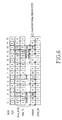
- FIGs. 6 and 7 are diagrams illustrating examples in which the HARQ buffer controller manages the HARQ buffer in units of ACIDs according to the present invention, wherein examples of setting an ACID_Clr flag and an Nblock value are set with respect to a normal case and an abnormal case.
- ACK information has a value of "1," which represents that a previously transmitted HARQ burst has been normally received by a receiving side.
- the reallocation Alloc_ACID of ACID #0 has been set to "0,” and the New_Tx thereof has been set to X, which represents that there is no newly transmitted HARQ burst. Therefore, the Nblock of ACID #0 is set to "0,” and a release state of an HARQ memory region for ACID #0 is set to "1," thereby being cleared.
- ACK information has a value of "0,” which represents that a previously transmitted HARQ burst has not been normally received by the receiving side. That is, a negative determination NAK has been made in response to the previously transmitted HARQ burst. Since a retransmitted burst is allocated to the current frame, the allocation Alloc_ACID of ACID #1 has been set to "1," and the New_Tx thereof has been set to "0.” In this case, the clear flag of an HARQ memory region for ACID #1 has a value of "0,” and the previous memory region maintains a previous Nblock value "83.”
- ACK information has a value of "1," which represents that a previously transmitted HARQ burst has been normally received by a receiving side. Since a newly transmitted HARQ burst exists in ACID #2 of the current frame, the allocation Alloc_ACID of ACID #2 has been set to "1,” and the New_Tx thereof has been set to "1.” The Nblock for the new HARQ burst is set to "98,” and the HARQ memory region for ACID #2 is cleared to "1,” so that the memory region can be changed to be used for the new HARQ burst.
- the HARQ buffer controller determines if the total sum of Nblock for the retransmitted and newly-transmitted HARQ bursts with respect to the total of 16 ACIDs has a value greater than the entire capacity of the HARQ buffer.
- the total sum of Nblock for ACID #1, to which 83 blocks are allocated for a retransmitted HARQ burst, ACIDs #7, #9, #11, and #15, to which 33, 7, 1, and 1 Nblock, respectively, are allocated for previously allocated HARQ bursts, and ACIDs #2, 6, and 13, to which 98, 4, and 14 blocks, respectively, are allocated for new HARQ bursts, is 241 blocks, thereby determining that the total sum of Nblock has a value less than "272," which is a set maximum Nblock value.
- FIG. 7 is a diagram illustrating an example in which an abnormal case occurs when the HARQ buffer controller manages the HARQ buffer.
- ACK information is set to "0," which represents that a previously transmitted HARQ burst has not been normally received by a receiving side. That is, a negative determination NAK has been made with respect to the HARQ burst previously transmitted through ACID #0. Also, since an HARQ burst has not been allocated to ACID #0 of the current frame, the allocation Alloc_ACID of ACID #0 has been set to "0,” and the “New_Tx" thereof has been set to X. In this case, the Nblock is maintained at "0,” which is a previous value, as it is.
- ACK information is set to "0," which represents that a previously transmitted HARQ burst has not been normally received by the receiving side. That is, a negative determination NAK has been made with respect to the HARQ burst previously transmitted through ACID #2. Also, since an HARQ burst has not been allocated to ACID #2 of the current frame, the allocation Alloc_ACID of ACID #2 has been set to "0,” and the New_Tx thereof has been set to X. In this case, the Nblock is maintained at "170,” which is a previously set value.
- ACK information has a value of "1," which represents that a previously transmitted HARQ burst has been normally received by the receiving side.
- the reallocation Alloc_ACID thereof has been set to "1,” and the New_Tx thereof has been set to "1.”
- the Nblock for the new HARQ burst is set to "150,” and the HARQ memory region for ACID #4 is cleared to "1,” so that the HARQ memory region thereof can be changed to a memory region for the new HARQ burst requiring 150 Nblock.
- ACK information is set to "0," which represents that a previously transmitted HARQ burst has not been normally received by the receiving side.
- the reallocation Alloc_ACID thereof has been set to "1,” and the New_Tx thereof has been set to "1.”
- the Nblock for the newly transmitted HARQ burst is set to "42.”
- the HARQ buffer controller determines if the total sum of Nblock for the retransmitted and newly-transmitted HARQ bursts with respect to the total of 16 ACIDs has a value greater than the entire capacity of the HARQ buffer.
- the total sum of Nblock for ACIDs #2, #7, and #8, to which 170, 15, and blocks, respectively, are allocated for previously allocated HARQ bursts, and ACIDs #4, 6, 13, and 15, to which 150, 42, 26, and 21 blocks, respectively, are allocated for new HARQ bursts, is 430 blocks, thereby determining that the total sum of Nblock has a greater larger than "272," which is a set maximum Nblock value. Therefore, it can be understood that since the total sum of Nblock for all of the ACIDs has a value greater than the set maximum Nblock value, the HARQ buffer has not been normally allocated for HARQ bursts.
- the HARQ buffer controller clears every HARQ buffer allocated to unallocated ACIDs based on whether or not each ACID of the current has been allocated. That is, when setting an ACID_Clr which is information representing whether or not the memory region according to each ACID is reset, the HARQ buffer controller sets the ACID_Clr flag value for an ACID, which has a value of "0", as an Alloc_ACID flag value representing an ACID allocated to the current frame, to "0," thereby clearing all of allocated memory regions.
- the Nblock for ACIDs associated with transmission of new HARQ bursts are updated. That is, the Nblock values for ACIDs unallocated to the current frame are updated to "0.” Accordingly, the Nblock values for ACIDs #2 and #7 in FIG. 7 are updated and finally set to "0.”
- the total sum of Nblock for ACIDs #4, 6, 8, 13, and 15 to which 150, 42, 6, 26, and 21 blocks, respectively, are allocated for new HARQ bursts is 245 blocks, thereby determining that the total sum of Nblock has a value less than "272," which is a set maximum Nblock value. Therefore, it is determined that the HARQ buffer has been normally allocated for HARQ bursts.
- the HARQ buffer controller releases a previously allocated memory region when a corresponding bit flag value for each ACID is "0," and newly allocates a memory region as many as Nblock to an ACID to which a newly transmitted HARQ burst has been allocated in the current frame.
- FIG. 8 is a flowchart illustrating a procedure of setting an ACID_Clr representing if memory allocation has been reset according to each ACID, and an Nblock value representing the size (i.e. the number of blocks) of allocated memory according to an exemplary embodiment of the present invention.
- an HARQ controller checks an ACID so as to identify a "k" value allocated to the ACID.
- the ACID represents identification information allocated for identifying HARQ channels, and a total of 16 pieces of identification information from "0" to "15" may be allocated for the ACID according to an exemplary embodiment of the present invention.
- step 810 the HARQ controller checks if reallocation (Alloc_ACID) has been performed with respect to a k th ACID. That is, it is determined if the reallocation (Alloc_ACID) for ACID #k has been set to "1.” When the reallocation (Alloc_ACID) for ACID #k has been set to "1,” the HARQ controller determines in step 815 if there is a newly-transmitted HARQ burst associated with the reallocated ACID #k.
- the HARQ controller calculates in step 820 a memory region for ACID #k.
- the Nblock for ACID #k may be calculated by Equation (1) or (2).
- step 825 the HARQ controller increases ACID #k by one, and then checks ACID #k+1, which is the next ACID. That is, while increasing the value of "k" one by one, the HARQ controller checks if reallocation has been performed and if there is new transmission data through steps 810 to 820, and checks the Nblock corresponding to each ACID.
- step 830 the HARQ controller determines if ACID #k corresponds to the maximum channel number supported by the HARQ.
- the HARQ controller checks if reallocation has been performed and if there is a newly-transmission data with respect to the last ACID channel, allocates an Nblock to the last ACID, and proceeds to step 835.
- step 840 the HARQ controller checks if Nblock allocated for a total of 16 ACIDs have been allocated normally. A process of checking if Nblock allocated for the total of 16 ACIDs have been normally allocated will be described later with reference to FIG. 9.
- step 810 when it is determined in step 810 that the reallocation Alloc_ACID for ACID #k has been set to "0," so that ACID #k does not correspond to an allocated channel in the current frame, the HARQ controller proceeds to step 845, in which the HARQ controller checks if ACID #k has been determined to be an ACK, as a result of decoding with respect to a previously-transmitted HARQ burst.
- step 845 when it is determined in step 845 that ACID #k has been determined to be a NAK, the HARQ controller sets the ACID_Clr flag bit to OFF (0) in step 855, and proceeds to step 860, in which the HARQ controller maintains the memory region (i.e. Nblock) for ACID #k at a previously stored value.
- FIG. 9 is a flowchart illustrating a procedure of determining if an abnormal case causing an overflow of the HARQ buffer occurs based on the ACID_Clr representing if memory allocation has been re-established and the Nblock value representing the size (e.g. the number of blocks) of an allocated memory according to each ACID, and additionally updating the ACID_Clr and Nblock values based on a result of the determination according to an exemplary embodiment of the present invention.
- step 905 the HARQ controller enters an initialization state.
- a "k" in ACID #k is set to "0”
- the HARQ controller in step 920 checks a Total_Nblock, which is the total sum of Nblock allocated to every ACID #k up to the maximum number of channels, and checks if the Total_Nblock has a value less than the maximum Nblock.
- the HARQ controller in step 965 sets a flag to represent that HARQ bursts have been normally allocated. For example, an abnormal flag may be set to "0.”
- the HARQ controller in step 925 sets a flag to represent that HARQ bursts have been abnormally allocated. For example, an abnormal flag may be set to "1."
- step 930 the HARQ controller enters an initialization state. That is, the HARQ controller in step 935 checks if the allocation Alloc_ACID for ACID #i of the current frame has been set to "0.”. Thereafter, in step 940, the HARQ controller sets the memory region reset ACID_Clr for ACID #i to "1,” sets the Nblock for ACID #i to "0,” and initializes a pre_AI_SN value for ACID #i in the retransmission checker.
- step 945 the HARQ controller increases the value of "i" in ACID #i by one, and checks ACID #i+1, so as to perform an initialization operation.
- the HARQ controller identifies ACID #i as corresponding to the maximum number of channels (ACIDs) supported by the HARQ scheme in step 950, the HARQ controller proceeds to step 955, thereby ending the procedure.
- step 960 the HARQ controller resets memory regions allocated according to each ACID, based on memory region reallocation information according to each ACID.
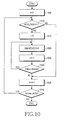
- FIG. 10 is a flowchart illustrating a procedure of releasing a memory block bitmap according to each ACID, based on set ACID_Clr values, according to an exemplary embodiment of the present invention.
- the HARQ controller identifies an ACID.
- the HARQ controller identifies a "k" value allocated for the ACID.
- the ACID represents identification information allocated for identifying HARQ channels, and may have a total of 16 pieces of identification information from #0 to #15 according to an exemplary embodiment of the present invention.
- the HARQ controller determines if the flag of a k th ACID_Clr has a value of ON (1).
- the HARQ controller increases the value of "i” in memory block #i by one, checks the memory block #i+1, and clears a corresponding bitmap to "0.” Such an operation is repeated until the value of "i" reaches the maximum Nblock as determined in step 1030.
- the HARQ controller repeats steps 1010 to 1030.
- the HARQ controller releases allocation information of memory blocks according to each ACID by using the memory block bitmap, based on the ACID_Clr flag representing if memory reallocation has been performed according to each ACID.
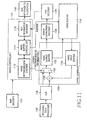
- FIG. 11 is a block diagram illustrating the configuration of a receiving apparatus including the HARQ controller according to an exemplary embodiment of the present invention.
- a receiving data processor 1100 performs an analog-to-digital converting operation with respect to data received through an antenna, removes a cyclic prefix from the converted digital data, performs a serial-to-parallel converting operation with respect to data including actual information, and outputs the parallel data. Thereafter, the receiving data processor 1100 performs a Fast Fourier Transform (FFT), and performs a channel estimation, thereby generating Log-Likelihood Ratio (LLR) data through demapping.
- FFT Fast Fourier Transform
- LLR Log-Likelihood Ratio
- An LLR buffer 1105 temporarily stores the LLR data before transmitting the LLR data to an HARQ combiner 1120.
- An HARQ controller 1110 performs a retransmission determination according to each ACID with respect to HARQ bursts, ACK information management, and a control for an HARQ buffer.
- An HARQ retransmission checker 1112 determines if an allocated burst corresponds to a newly transmitted burst or a retransmitted burst, and transfers retransmission information (i_retrans) to the HARQ combiner. Also, the HARQ retransmission checker 1112 transfers allocation information according to each ACID, as well as information regarding if a retransmission has been performed to an HARQ buffer controller 1114.
- An ACK information manager 1116 receives ACK/NAK information from a CRC decoder 1135 and manages the received ACK/NAK information according to each ACID.
- the HARQ buffer controller 1114 receives allocation information according to each ACID, retransmission information, ACK information, etc. from the HARQ retransmission checker 1112 and the ACK information manager 1116, determines if the allocation is available by calculating the size of an HARQ buffer required from the burst allocation information, and performs a dynamic memory allocation or a release operation according to each ACID.
- the HARQ combiner 1120 combines LLR data with an HARQ burst, and buffers the combined data.
- the HARQ combiner 1120 receives information indicating if a retransmission of a corresponding ACID has been made, from the HARQ retransmission checker 1112. Then, in the case of a new transmission, the HARQ combiner 1120 directly transfers input LLR data without a combining operation for the LLR data, but in the case of retransmission, the HARQ combiner 120 performs a combining operation with respect to LLR data.
- the HARQ combiner 1120 fetches previous LLR data from the HARQ buffer, and temporarily stores the previous LLR data in an HARQ Input Buffer (In_Buffer) 1124.
- the combined data is temporarily stored in an HARQ Output Buffer (Out_Buffer) 1122, and then is stored in the HARQ buffer and is transferred to an error correction decoder 1130.
- the HARQ buffer 1140 stores LLR data of HARQ bursts according to each ACID.
- the error correction decoder 1130 decodes received bursts.
- the CRC decoder 1135 performs an error detection (CRC) decoding operation with respect to the decoded bursts, thereby determining an ACK or NAK.
- a MAP decoder 1102 analyzes allocation information about received bursts, and transmits the analyzed allocation information to the HARQ controller 1110.
- An ACK response transmitting terminal (Tx allocator) 1145 transmits an ACK response for an HARQ burst.
- the present invention can efficiently manage an HARQ buffer through dynamic memory control.
- the buffer managing method according to the present invention can reduce the size of a memory for the HARQ buffer, and can more efficiently control the HARQ buffer even when an abnormal case occurs due to an ACK channel error and the like, in allocating the HARQ burst.
- the managing method of the present invention can efficiently use a limited memory area. Accordingly, the present invention has the effects of reducing the size of the entire chip, as well as reducing power consumption.
Landscapes
- Engineering & Computer Science (AREA)
- Computer Networks & Wireless Communication (AREA)
- Signal Processing (AREA)
- Mobile Radio Communication Systems (AREA)
- Detection And Prevention Of Errors In Transmission (AREA)
- Communication Control (AREA)
Applications Claiming Priority (1)
| Application Number | Priority Date | Filing Date | Title |
|---|---|---|---|
| KR20060088763A KR100946894B1 (ko) | 2006-09-13 | 2006-09-13 | 무선 통신 시스템에서 복합 자동 재전송버퍼를 동적으로 할당하는 방법 및 장치 |
Publications (3)
| Publication Number | Publication Date |
|---|---|
| EP1901471A2 true EP1901471A2 (fr) | 2008-03-19 |
| EP1901471A3 EP1901471A3 (fr) | 2014-01-22 |
| EP1901471B1 EP1901471B1 (fr) | 2020-03-04 |
Family
ID=38896865
Family Applications (1)
| Application Number | Title | Priority Date | Filing Date |
|---|---|---|---|
| EP07017981.7A Active EP1901471B1 (fr) | 2006-09-13 | 2007-09-13 | Procédé et appareil d'attribution dynamique de tampon harq dans un système de communication sans fil |
Country Status (5)
| Country | Link |
|---|---|
| US (1) | US8060801B2 (fr) |
| EP (1) | EP1901471B1 (fr) |
| JP (1) | JP4659800B2 (fr) |
| KR (1) | KR100946894B1 (fr) |
| CN (1) | CN101222307B (fr) |
Cited By (6)
| Publication number | Priority date | Publication date | Assignee | Title |
|---|---|---|---|---|
| EP2104261A1 (fr) | 2008-03-17 | 2009-09-23 | Panasonic Corporation | Gestion de processus HARQ améliorée |
| WO2009132571A1 (fr) * | 2008-04-30 | 2009-11-05 | 大唐移动通信设备有限公司 | Procédé, appareil et système de mise en tampon de données selon un mode de duplexage par répartition temporelle |
| CN101291334B (zh) * | 2008-06-18 | 2010-11-10 | 北京北方烽火科技有限公司 | 一种wimax系统中的数据链路层的无线资源调度方法 |
| CN102158330A (zh) * | 2011-04-22 | 2011-08-17 | 中兴通讯股份有限公司 | Harq合并存储空间的处理方法及装置 |
| US8347163B2 (en) | 2008-08-08 | 2013-01-01 | Industrial Technology Research Institute | System and method for data transmission |
| TWI666893B (zh) * | 2015-02-13 | 2019-07-21 | 南韓商三星電子股份有限公司 | 使用者設備、數據機晶片以及分配使用者設備下行鏈路混合自動重複要求緩衝器的方法 |
Families Citing this family (34)
| Publication number | Priority date | Publication date | Assignee | Title |
|---|---|---|---|---|
| US9160496B2 (en) * | 2007-06-29 | 2015-10-13 | Qualcomm Incorporated | Methods and apparatus for H-ARQ process memory management |
| US8194588B2 (en) * | 2007-12-13 | 2012-06-05 | Qualcomm Incorporated | Coding block based HARQ combining scheme for OFDMA systems |
| FR2926939A1 (fr) * | 2008-01-30 | 2009-07-31 | Canon Kk | Procede de transmission de donnees avec anticipation des acquittements, dispositif d'entree, produit programme d'ordinateur et moyen de stockage correspondants |
| CN101505212B (zh) * | 2008-02-04 | 2012-11-07 | 上海贝尔股份有限公司 | 操作harq缓冲器的方法 |
| US8265056B2 (en) * | 2008-02-19 | 2012-09-11 | Qualcomm Incorporated | Packet decoding for H-ARQ transmission |
| EP2093921B1 (fr) * | 2008-02-22 | 2015-10-14 | Sequans Communications | Procédé et produit pour la gestion de la mémoire dans un système de communication HARQ |
| US9184874B2 (en) * | 2008-03-31 | 2015-11-10 | Qualcomm Incorporated | Storing log likelihood ratios in interleaved form to reduce hardware memory |
| KR101476187B1 (ko) * | 2008-04-04 | 2014-12-24 | 엘지전자 주식회사 | 네트워크 진입 지시 및 네트워크 진입 방법 |
| CN101999219B (zh) | 2008-04-14 | 2014-02-19 | Lg电子株式会社 | 执行随机接入过程的方法和装置 |
| US20090276673A1 (en) * | 2008-05-05 | 2009-11-05 | Industrial Technology Research Institute | Methods and systems for optimizing harq communication |
| US8737383B2 (en) * | 2008-07-07 | 2014-05-27 | Intel Corporation | Techniques for enhanced persistent scheduling with efficient link adaptation capability |
| WO2010071334A2 (fr) * | 2008-12-16 | 2010-06-24 | Lg Electronics Inc. | Procédé et appareil pour réaliser une harq dans un système de communication sans fil |
| US8385268B2 (en) * | 2009-03-25 | 2013-02-26 | Qualcomm Incorporated | Method and apparatus for efficient control decoding for transparent relaying operation in a wireless communication system |
| WO2010120136A2 (fr) * | 2009-04-15 | 2010-10-21 | 엘지전자 주식회사 | Procédé d'affectation de ressources de groupe dans un système d'accès sans fil à large bande, et appareil associé |
| US8560696B2 (en) * | 2009-04-28 | 2013-10-15 | Intel Corporation | Transmission of advanced-MAP information elements in mobile networks |
| DK2280505T3 (da) | 2009-07-08 | 2012-10-01 | Ericsson Telefon Ab L M | Fremgangsmåde og indretning til behandling af en pakke i et HARQ-system |
| US8429479B2 (en) * | 2009-09-16 | 2013-04-23 | Intel Corporation | Method and system to increase the throughput of a hybrid automatic repeat request (HARQ) protocol |
| EP2339774B1 (fr) * | 2009-12-23 | 2012-11-14 | Blue Wonder Communications GmbH | Procédé pour décoder des paquets de données dans un système de communication sans fil |
| KR20110073277A (ko) * | 2009-12-23 | 2011-06-29 | 엘지전자 주식회사 | 고정 자원 할당에서 acid를 할당하기 위한 방법 및 장치 |
| JP5533322B2 (ja) * | 2010-06-18 | 2014-06-25 | 富士通株式会社 | データ転送装置、データ転送方法及びデータ転送プログラム |
| KR20120002000A (ko) * | 2010-06-30 | 2012-01-05 | 삼성전자주식회사 | 하이브리드 에이알큐 버스트를 송수신하는 방법 및 장치 |
| US8543880B2 (en) * | 2010-09-17 | 2013-09-24 | Intel Corporation | Techniques for successive refinement of metrics stored for HARQ combining |
| KR20120035018A (ko) * | 2010-10-04 | 2012-04-13 | 삼성전자주식회사 | 무선 통신 시스템들간의 간섭이 존재하는 네트워크에서 통신을 위한 장치 및 방법 |
| KR20120046899A (ko) * | 2010-11-01 | 2012-05-11 | 삼성전자주식회사 | 무선통신 시스템에서 복합 자동 재전송 요청을 위한 버퍼 관리 장치 및 방법 |
| US8781035B2 (en) * | 2011-01-07 | 2014-07-15 | Qualcomm Incorporated | Methods and systems for improving retransmission performance of data channels in a wireless communication |
| EP2966797B1 (fr) * | 2011-03-15 | 2018-06-13 | Telefonaktiebolaget LM Ericsson (publ) | Procédés et dispositifs permettant de déterminer une synchronisation d'informations de rétroaction |
| KR102059135B1 (ko) * | 2013-08-14 | 2019-12-24 | 삼성전자주식회사 | 무선 통신 시스템에서 장치 간 통신을 위한 송신 제어 장치 및 방법 |
| KR102064890B1 (ko) | 2013-10-22 | 2020-02-11 | 삼성전자 주식회사 | 내부 및 외부 메모리를 선택적으로 사용하는 harq 데이터 처리 장치 및 그 처리 방법 |
| WO2015103746A1 (fr) * | 2014-01-08 | 2015-07-16 | Qualcomm Incorporated | Amélioration de réseau mbsfn de petite taille |
| KR101607773B1 (ko) * | 2014-10-27 | 2016-04-11 | 삼성에스디에스 주식회사 | 데이터 송신 장치 및 이를 이용하는 데이터 통신 방법 |
| US10367621B2 (en) | 2014-10-27 | 2019-07-30 | Qualcomm Incorporated | Fountain HARQ for reliable low latency communication |
| US9819454B2 (en) | 2014-12-11 | 2017-11-14 | Nxp Usa, Inc. | Wireless communication apparatus and method for HARQ buffer management |
| KR102733016B1 (ko) | 2016-12-22 | 2024-11-21 | 삼성전자주식회사 | Harq 처리를 수행하는 모뎀 칩, 이를 포함하는 어플리케이션 프로세서 및 모뎀 칩의 동작방법 |
| US10715273B2 (en) | 2018-09-26 | 2020-07-14 | At&T Intellectual Property I, L.P. | Joint channel estimation and data detection technique to decode 5G uplink control channel |
Family Cites Families (11)
| Publication number | Priority date | Publication date | Assignee | Title |
|---|---|---|---|---|
| JP2718690B2 (ja) | 1988-03-14 | 1998-02-25 | 株式会社日立製作所 | 通信制御システム |
| KR100459557B1 (ko) * | 2001-08-23 | 2004-12-03 | 삼성전자주식회사 | 고속 순방향 패킷 접속 통신 시스템에서 데이터 상태정보를 나타내기 위한 혼화 자동 재전송 요구 채널 번호할당 방법 |
| US6700867B2 (en) * | 2001-12-20 | 2004-03-02 | Motorola, Inc. | Method and system for reduced memory hybrid automatic repeat request |
| DE60217098T2 (de) * | 2002-08-13 | 2007-05-03 | Matsushita Electric Industrial Co., Ltd., Kadoma | Hybrides automatisches Wiederholungsaufforderungsprotokoll |
| DE60217097T2 (de) * | 2002-08-13 | 2007-05-10 | Matsushita Electric Industrial Co., Ltd., Kadoma | Hybrides automatisches Wiederholungsaufforderungsprotokoll |
| KR101009861B1 (ko) * | 2003-08-19 | 2011-01-19 | 삼성전자주식회사 | 이동통신 시스템에서의 데이터 전송 방법과 전송률 할당 방법 및 이를 위한 장치 |
| GB2405289B (en) * | 2003-08-20 | 2006-10-25 | Ipwireless Inc | Method,base station,remote station and system for HSDPA communication |
| KR20060039841A (ko) * | 2004-11-03 | 2006-05-09 | 삼성전자주식회사 | 무선 접속 통신 시스템에서 효율적인 메시지 전송을 위한기지국 및 단말과 그 방법 |
| WO2006049438A1 (fr) * | 2004-11-03 | 2006-05-11 | Samsung Electronics Co., Ltd. | Systeme et procede permettant l'emission/reception d'informations concernant la capacite de la memoire tampon pour les demande de repletion automatique hybrides dans un systeme de communication sans fil |
| JP4649329B2 (ja) * | 2005-12-28 | 2011-03-09 | 富士通株式会社 | 移動端末装置及び同装置におけるチャネル補償方法 |
| US7797605B2 (en) * | 2007-08-28 | 2010-09-14 | Beceem Communications Inc. | Managing storage of HARQ packets |
-
2006
- 2006-09-13 KR KR20060088763A patent/KR100946894B1/ko active Active
-
2007
- 2007-09-13 US US11/900,754 patent/US8060801B2/en active Active
- 2007-09-13 CN CN2007101861737A patent/CN101222307B/zh active Active
- 2007-09-13 JP JP2007238298A patent/JP4659800B2/ja active Active
- 2007-09-13 EP EP07017981.7A patent/EP1901471B1/fr active Active
Cited By (12)
| Publication number | Priority date | Publication date | Assignee | Title |
|---|---|---|---|---|
| EP2104261A1 (fr) | 2008-03-17 | 2009-09-23 | Panasonic Corporation | Gestion de processus HARQ améliorée |
| WO2009115261A1 (fr) * | 2008-03-17 | 2009-09-24 | Panasonic Corporation | Gestion de processus harq améliorée |
| US8489953B2 (en) | 2008-03-17 | 2013-07-16 | Panasonic Corporation | HARQ process management |
| WO2009132571A1 (fr) * | 2008-04-30 | 2009-11-05 | 大唐移动通信设备有限公司 | Procédé, appareil et système de mise en tampon de données selon un mode de duplexage par répartition temporelle |
| CN101572661B (zh) * | 2008-04-30 | 2011-09-07 | 电信科学技术研究院 | 基于时分双工模式的数据缓存方法、装置和系统 |
| KR101110886B1 (ko) * | 2008-04-30 | 2012-02-17 | 차이나 아카데미 오브 텔레커뮤니케이션즈 테크놀로지 | 시분할 이중 방식 기반의 데이터 버퍼링 방법, 장치 및 시스템 |
| CN101291334B (zh) * | 2008-06-18 | 2010-11-10 | 北京北方烽火科技有限公司 | 一种wimax系统中的数据链路层的无线资源调度方法 |
| US8347163B2 (en) | 2008-08-08 | 2013-01-01 | Industrial Technology Research Institute | System and method for data transmission |
| CN102158330A (zh) * | 2011-04-22 | 2011-08-17 | 中兴通讯股份有限公司 | Harq合并存储空间的处理方法及装置 |
| WO2012142906A1 (fr) * | 2011-04-22 | 2012-10-26 | 中兴通讯股份有限公司 | Procédé et appareil pour traiter un espace de stockage combiné harq |
| CN102158330B (zh) * | 2011-04-22 | 2015-06-10 | 中兴通讯股份有限公司 | Harq合并存储空间的处理方法及装置 |
| TWI666893B (zh) * | 2015-02-13 | 2019-07-21 | 南韓商三星電子股份有限公司 | 使用者設備、數據機晶片以及分配使用者設備下行鏈路混合自動重複要求緩衝器的方法 |
Also Published As
| Publication number | Publication date |
|---|---|
| KR100946894B1 (ko) | 2010-03-09 |
| KR20080024419A (ko) | 2008-03-18 |
| CN101222307B (zh) | 2013-01-30 |
| EP1901471B1 (fr) | 2020-03-04 |
| EP1901471A3 (fr) | 2014-01-22 |
| US20080065944A1 (en) | 2008-03-13 |
| US8060801B2 (en) | 2011-11-15 |
| CN101222307A (zh) | 2008-07-16 |
| JP4659800B2 (ja) | 2011-03-30 |
| JP2008072720A (ja) | 2008-03-27 |
Similar Documents
| Publication | Publication Date | Title |
|---|---|---|
| EP1901471B1 (fr) | Procédé et appareil d'attribution dynamique de tampon harq dans un système de communication sans fil | |
| US11825295B2 (en) | Method for scheduling in mobile communication and apparatus thereof | |
| CN101689974B (zh) | 多载波移动体通信系统 | |
| CN1134928C (zh) | 宽带无线通信链路层的差错控制方法 | |
| KR101332237B1 (ko) | 장치, 방법 및 제조 물품 | |
| CN101309133B (zh) | 在使用中继的无线通信系统中发送控制消息的装置和方法 | |
| EP1965534A2 (fr) | Appareil et procédé de transmission de message de commande dans un système de communication sans fil utilisant une mise en relais | |
| US20050281212A1 (en) | Wireless access communication system for data retransmission, data retransmission apparatus and method | |
| US20090154412A1 (en) | Enhanced dynamical fast-feedback channel allocations | |
| EP2290867A1 (fr) | Système d'émission d'informations sur la capacité de la mémoire tampon d'un protocole de demande de répétition automatique hybride dans un système de communications d' accès sans fil à large bande | |
| US20100014430A1 (en) | Resource allocation method and base station device | |
| CN102263624A (zh) | 无线通信中用于测距的混合自动重复请求的装置和方法 | |
| CN1846365A (zh) | 控制重发分组的传输功率的方法及使用其的移动终端 | |
| US20090252089A1 (en) | Packet receiving and transmitting method | |
| CN102076023A (zh) | 缓存空间的分配方法和设备 | |
| US11973594B2 (en) | Devices, methods and non-transitory computer-readable mediums for adaptively selective retransmission in wireless communications | |
| CN1114308C (zh) | 无线通信系统中分配无线资源的方法 | |
| CN107947904A (zh) | 一种重传调度方法及基站 | |
| US20080318531A1 (en) | Method for controlling allocating resources in a mobile radio communication network, corresponding transmitter and receiver | |
| CN109547170B (zh) | 数据传输方法、网络侧设备及通信系统 | |
| KR100966074B1 (ko) | 무선통신시스템에서 재전송 장치 및 방법 | |
| WO2008004842A2 (fr) | Procédé de réception et d'émission de paquets | |
| CN114745751B (zh) | 数据传输方法及装置、电子设备和存储介质 | |
| CN118540737A (zh) | 数据的处理方法及终端、电子设备及介质 | |
| KR20100043563A (ko) | 휴대 인터넷 시스템에서 arq 전송지원 방법 및 장치 |
Legal Events
| Date | Code | Title | Description |
|---|---|---|---|
| PUAI | Public reference made under article 153(3) epc to a published international application that has entered the european phase |
Free format text: ORIGINAL CODE: 0009012 |
|
| 17P | Request for examination filed |
Effective date: 20070913 |
|
| AK | Designated contracting states |
Kind code of ref document: A2 Designated state(s): AT BE BG CH CY CZ DE DK EE ES FI FR GB GR HU IE IS IT LI LT LU LV MC MT NL PL PT RO SE SI SK TR |
|
| AX | Request for extension of the european patent |
Extension state: AL BA HR MK YU |
|
| RAP1 | Party data changed (applicant data changed or rights of an application transferred) |
Owner name: SAMSUNG ELECTRONICS CO., LTD. |
|
| PUAL | Search report despatched |
Free format text: ORIGINAL CODE: 0009013 |
|
| AK | Designated contracting states |
Kind code of ref document: A3 Designated state(s): AT BE BG CH CY CZ DE DK EE ES FI FR GB GR HU IE IS IT LI LT LU LV MC MT NL PL PT RO SE SI SK TR |
|
| AX | Request for extension of the european patent |
Extension state: AL BA HR MK RS |
|
| RIC1 | Information provided on ipc code assigned before grant |
Ipc: H04L 1/18 20060101AFI20131219BHEP |
|
| RBV | Designated contracting states (corrected) |
Designated state(s): AT BE BG CH CY CZ DE DK EE ES FI FR GB GR HU IE IS IT LI LT LU LV MC MT NL PL PT RO SE SI SK TR |
|
| AKX | Designation fees paid |
Designated state(s): DE FR GB IT NL |
|
| STAA | Information on the status of an ep patent application or granted ep patent |
Free format text: STATUS: EXAMINATION IS IN PROGRESS |
|
| 17Q | First examination report despatched |
Effective date: 20180713 |
|
| GRAP | Despatch of communication of intention to grant a patent |
Free format text: ORIGINAL CODE: EPIDOSNIGR1 |
|
| STAA | Information on the status of an ep patent application or granted ep patent |
Free format text: STATUS: GRANT OF PATENT IS INTENDED |
|
| INTG | Intention to grant announced |
Effective date: 20190531 |
|
| GRAJ | Information related to disapproval of communication of intention to grant by the applicant or resumption of examination proceedings by the epo deleted |
Free format text: ORIGINAL CODE: EPIDOSDIGR1 |
|
| STAA | Information on the status of an ep patent application or granted ep patent |
Free format text: STATUS: EXAMINATION IS IN PROGRESS |
|
| INTC | Intention to grant announced (deleted) | ||
| GRAP | Despatch of communication of intention to grant a patent |
Free format text: ORIGINAL CODE: EPIDOSNIGR1 |
|
| STAA | Information on the status of an ep patent application or granted ep patent |
Free format text: STATUS: GRANT OF PATENT IS INTENDED |
|
| INTG | Intention to grant announced |
Effective date: 20190927 |
|
| GRAS | Grant fee paid |
Free format text: ORIGINAL CODE: EPIDOSNIGR3 |
|
| GRAA | (expected) grant |
Free format text: ORIGINAL CODE: 0009210 |
|
| STAA | Information on the status of an ep patent application or granted ep patent |
Free format text: STATUS: THE PATENT HAS BEEN GRANTED |
|
| AK | Designated contracting states |
Kind code of ref document: B1 Designated state(s): DE FR GB IT NL |
|
| REG | Reference to a national code |
Ref country code: GB Ref legal event code: FG4D |
|
| REG | Reference to a national code |
Ref country code: DE Ref legal event code: R096 Ref document number: 602007059926 Country of ref document: DE |
|
| REG | Reference to a national code |
Ref country code: NL Ref legal event code: FP |
|
| REG | Reference to a national code |
Ref country code: DE Ref legal event code: R097 Ref document number: 602007059926 Country of ref document: DE |
|
| PLBE | No opposition filed within time limit |
Free format text: ORIGINAL CODE: 0009261 |
|
| STAA | Information on the status of an ep patent application or granted ep patent |
Free format text: STATUS: NO OPPOSITION FILED WITHIN TIME LIMIT |
|
| PG25 | Lapsed in a contracting state [announced via postgrant information from national office to epo] |
Ref country code: IT Free format text: LAPSE BECAUSE OF FAILURE TO SUBMIT A TRANSLATION OF THE DESCRIPTION OR TO PAY THE FEE WITHIN THE PRESCRIBED TIME-LIMIT Effective date: 20200304 |
|
| 26N | No opposition filed |
Effective date: 20201207 |
|
| PG25 | Lapsed in a contracting state [announced via postgrant information from national office to epo] |
Ref country code: FR Free format text: LAPSE BECAUSE OF NON-PAYMENT OF DUE FEES Effective date: 20200930 |
|
| PGFP | Annual fee paid to national office [announced via postgrant information from national office to epo] |
Ref country code: GB Payment date: 20220822 Year of fee payment: 16 |
|
| GBPC | Gb: european patent ceased through non-payment of renewal fee |
Effective date: 20230913 |
|
| PG25 | Lapsed in a contracting state [announced via postgrant information from national office to epo] |
Ref country code: GB Free format text: LAPSE BECAUSE OF NON-PAYMENT OF DUE FEES Effective date: 20230913 |
|
| PG25 | Lapsed in a contracting state [announced via postgrant information from national office to epo] |
Ref country code: GB Free format text: LAPSE BECAUSE OF NON-PAYMENT OF DUE FEES Effective date: 20230913 |
|
| PGFP | Annual fee paid to national office [announced via postgrant information from national office to epo] |
Ref country code: NL Payment date: 20240822 Year of fee payment: 18 |
|
| PGFP | Annual fee paid to national office [announced via postgrant information from national office to epo] |
Ref country code: DE Payment date: 20250820 Year of fee payment: 19 |