EP1903748B1 - Verfahren und System zur Anzeige von Alarmnachrichten - Google Patents
Verfahren und System zur Anzeige von Alarmnachrichten Download PDFInfo
- Publication number
- EP1903748B1 EP1903748B1 EP07018227A EP07018227A EP1903748B1 EP 1903748 B1 EP1903748 B1 EP 1903748B1 EP 07018227 A EP07018227 A EP 07018227A EP 07018227 A EP07018227 A EP 07018227A EP 1903748 B1 EP1903748 B1 EP 1903748B1
- Authority
- EP
- European Patent Office
- Prior art keywords
- alert
- message
- shared
- server
- subscriber
- Prior art date
- Legal status (The legal status is an assumption and is not a legal conclusion. Google has not performed a legal analysis and makes no representation as to the accuracy of the status listed.)
- Ceased
Links
- 238000000034 method Methods 0.000 title claims description 27
- 230000005540 biological transmission Effects 0.000 description 14
- 230000004044 response Effects 0.000 description 6
- 230000009471 action Effects 0.000 description 2
- 230000008859 change Effects 0.000 description 2
- 230000014509 gene expression Effects 0.000 description 2
- 230000000977 initiatory effect Effects 0.000 description 2
- 230000007246 mechanism Effects 0.000 description 2
- 101100377185 Mus musculus Znf354b gene Proteins 0.000 description 1
- 101100297655 Rattus norvegicus Pim3 gene Proteins 0.000 description 1
- 101100095818 Rattus norvegicus Sik1 gene Proteins 0.000 description 1
- 101150086963 Znf354a gene Proteins 0.000 description 1
- 238000004891 communication Methods 0.000 description 1
- 230000001419 dependent effect Effects 0.000 description 1
- 238000011161 development Methods 0.000 description 1
- 230000018109 developmental process Effects 0.000 description 1
- 238000010586 diagram Methods 0.000 description 1
- 238000005516 engineering process Methods 0.000 description 1
- 230000000284 resting effect Effects 0.000 description 1
- 239000000344 soap Substances 0.000 description 1
Images


Classifications
-
- H—ELECTRICITY
- H04—ELECTRIC COMMUNICATION TECHNIQUE
- H04L—TRANSMISSION OF DIGITAL INFORMATION, e.g. TELEGRAPHIC COMMUNICATION
- H04L67/00—Network arrangements or protocols for supporting network services or applications
- H04L67/2866—Architectures; Arrangements
- H04L67/30—Profiles
- H04L67/306—User profiles
-
- H—ELECTRICITY
- H04—ELECTRIC COMMUNICATION TECHNIQUE
- H04L—TRANSMISSION OF DIGITAL INFORMATION, e.g. TELEGRAPHIC COMMUNICATION
- H04L51/00—User-to-user messaging in packet-switching networks, transmitted according to store-and-forward or real-time protocols, e.g. e-mail
- H04L51/21—Monitoring or handling of messages
- H04L51/224—Monitoring or handling of messages providing notification on incoming messages, e.g. pushed notifications of received messages
-
- H—ELECTRICITY
- H04—ELECTRIC COMMUNICATION TECHNIQUE
- H04L—TRANSMISSION OF DIGITAL INFORMATION, e.g. TELEGRAPHIC COMMUNICATION
- H04L67/00—Network arrangements or protocols for supporting network services or applications
- H04L67/50—Network services
- H04L67/54—Presence management, e.g. monitoring or registration for receipt of user log-on information, or the connection status of the users
-
- H—ELECTRICITY
- H04—ELECTRIC COMMUNICATION TECHNIQUE
- H04L—TRANSMISSION OF DIGITAL INFORMATION, e.g. TELEGRAPHIC COMMUNICATION
- H04L67/00—Network arrangements or protocols for supporting network services or applications
- H04L67/50—Network services
- H04L67/55—Push-based network services
Definitions
- Embodiments of the present invention comprise methods and systems for displaying message alerts on shared and private devices.
- US 2003/0095540 describes a web server push gateway for interfacing web services push applications and mobile terminals operable with one of a plurality of different mobile push technologies.
- WO 2006/070067 Al describes push messaging methods and devices, wherein a server is placed feely on a connected network outside the wireless network firewall or other corresponding wireless network security entity and is arranged to push web content, partial updates to web content and messages initiating the pull of web content to a mobile terminal located in the wireless network.
- WO 03/049359 Al describes information content distribution based on privacy and/or personal information in order to protect user privacy.
- the problem is solved by a method for generating and displaying a message alert according to claim 1 and a system for generating and displaying a message alert according to claim 11.
- Some embodiments of the present invention comprise methods and systems for displaying message alerts on shared and private devices according to user preferences entered at the message server.
- a method for generating and displaying a message alert on a shared device comprising: a) storing, on a resource accessible to a server, an alert preference for a subscriber, wherein said alert preference comprises an explicit alert description for a shared device and a shared alert description for said shared device; b) receiving a message for said subscriber at said server; c) sending a first message alert for said subscriber to said shared device if said shared device is detected as present by said server and said subscriber explicitly logs in to said shared device, wherein the content of said first message alert is based on said explicit alert description; and d) sending a second message alert for said subscriber to said shared device if said shared device is detected as present by said server and said subscriber does not log in to said shared device, wherein the content of said second message alert is based on said shared alert description.
- a system for generating and displaying a message alert comprising: a) storage, accessible to a server, for storing an alert preference for a subscriber, wherein said alert preference comprises an explicit alert description for a shared device and a shared alert description for said shared device; b) a receiver for receiving a message for said subscriber at said server; and c) a transmitter for sending a first message alert for said subscriber to said shared device if said shared device is detected as present by said server and said subscriber explicitly logs in to said shared device, wherein the content of said first message alert is based on said explicit alert description, and for sending a second message alert for said subscriber to said shared device if said shared device is detected as present by said server and said subscriber does not log in to said shared device, wherein the content of said second message alert is based on said shared alert description.
- the shared device displays, for example, a message alert having more content if the subscriber logs in to the shared device, and allows the shared device to display, for example, a message alert having less content if the subscriber does not log in to the shared device.
- the subscriber can obtain more information, and when the subscriber does not log in to the shared device, the subscriber can protect the subscriber's privacy.
- a growing number of devices may provide connection to the Internet. These devices may include both shared devices, also considered public devices, such as a television, and private devices, for example, a personal computer, a personal digital assistant, a personal digital music player, and a cell phone. A shared, or shared device, may be used simultaneously by several people. Further, increased Internet-protocol-based (IP-based) services are being deployed on cell phones; while home devices, like televisions, may be connected to the Internet via numerous methods including Ethernet, wireless connection, and cable. Developments such as these may open up a wide range of new services and applications that link various devices. An example of one application is transmission of multi-media messages and live message streams to, and from, any of these devices.
- IP-based Internet-protocol-based
- a message also referred to as mail, may be an electronic mail message (email), a multi-media message (MMS), a video mail, a voice mail, or any other communication of media content, including those comprising live media streams of either voice or video or both.
- message and mail will be used interchangeably throughout this specification and the associated claims. Additionally, the term server and mail server will be interchangeably.
- Embodiments of the present invention comprise methods and systems for displaying message alerts on public and private devices according to user preferences entered at the message server.
- Mail may be delivered to a personal device (or several personal devices) on which a user may log in to and then subsequently, the user may sign in to a mail service from which he may access his mail.
- a user may also log on to his mail service from a shared device. After logging in with his password to the mail service, the user may then view private messages addressed to him.
- an alert may be presented on a shared device indicating that a mail message for a member in the community of the shared device has been received.
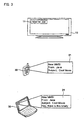
- the alert 11 may be presented in an unobtrusive manner as shown in Fig. 1 for an exemplary shared device 10.
- the exemplary alert 11 may indicate only the name of the recipient of the message.
- the alert may indicate additional information.
- Fig. 2 shows an exemplary alert for a user that logs in to an exemplary shared device 10.
- the alert 12 may indicate the name of the recipient of the message and additional information, for example, the name of the sender of the message, and the subject of the message.
- a user may have multiple devices active at the same time, and he may be alerted to the receipt of a message on all of his devices in a different manner based on the device type.
- the message alert 11 may comprise minimal information, for example the name of the message recipient.
- the message alert 21 may comprise additional, but still limited, information, for example the message subject and the name of the sender.
- the message alert 31 may comprise further additional information, for example the first line of text of a text message.
- the presentation style and appearance of the message alert may be device dependent.
- a user may set their alert display preferences at the mail server.
- the alert display preferences may be specified by Extensible Markup Language (XML) code or any other encoding of the preferences that may be compiled and executed, interpreted or otherwise stored, read, and executed at the mail server.
- the preferences may be stored at the mail server per user account.
- Exemplary XML code indicating an alert display preference that any information may be passed in a message alert to a private device and only the "from" field may be shown in a message alert at a public device may be given by:
- Exemplary XML code indicating an alert display preference that any information may be passed in a message alert to a private device and only a message alert as to receipt of a message may be shown in a message alert at a public device may be given by:
- the display of message alerts may be based on rules defined at the mail server by the user.
- a user may define rules for alert content and display based on the device on which the alert may be displayed.
- the user may also define rules for alert content and display based on message properties.
- the user may also define rules for alert content and display based on message content.
- the user may define rules based on a combination of the above elements.
- An exemplary rule may be that if a message is explicitly sent to all members in the community of a shared device, then the subject field and the from field may be shown in message alerts on public devices.
- Exemplary XML code specifying this rule may be given by:
- the alert display preferences may be set at the mail server, and the public or private client may only access the preferred fields for alerting the user. If the user explicitly logs in to the mail server, then there may be no restriction to the information retrieved by the client.
- the rules and preferences defined at the mail server may control the data transferred to the client, and the client may control the display appearance.
- a user may receive message alerts only when the user explicitly logs in to a shared device.
- the shared device may be properly authenticated with the specific user account login.
- a shared device may store the mail server password of each member of the community of the shared device.
- the shared device may store the passwords encrypted using the device's public key, and when the device boots up it may retrieve the stored passwords.
- a device password may be associated with a shared device, one time. Then each member of the community of the shared device may then associate the shared-device password with their personal account at the server. The association may be done using a private device or public device. The server may maintain a table of members who desire message alerts on the shared device.
- the shared device may authenticate to the server using standard challenge-response mechanisms, for example the authentication framework Simple Authentication and Security Layer (SASL), with the device password.
- SASL authentication framework Simple Authentication and Security Layer
- the shared device may then poll or listen for new mail alerts for members who have registered the device password at the server.
- the shared device may have certificates associated with it.
- the device may be manufactured with device certificates, with root authority from the manufacturer, which may be certified by a certificate authority, for example VeriSign.
- Each public device may have a public-private key pair.
- a user may associate his account with the device certificate.
- an alert may be encrypted with a key derived from the public key.
- the shared device boots up, it may send the certificate to the mail server.
- the mail server may verify the certificate, and the mail server may notify the alerts for all registered users of the shared device.
- UI user interface
- the user may first indicate his login name and password using the interface 50, and he may then link 52 the shared device, in this example a television, using the "Link TV" option to the mail account on the mail server.
- the shared device may then send a message to the mail server requesting association of the user account password with the shared device certificate.
- An exemplary initiation message may be as shown below using WSDL-SOAP-XML-HTTP:
- a member of the community associated with a shared device may log in to the device for a one time set up session using his device account password. The member may then select a secondary password for media sharing. The member may then log in to the mail server and may enter the secondary password for media sharing. The shared device and the mail server may then know the set of sharing passwords for each member. The secondary password may be used to log into the server using standard challenge-response mechanisms at the time of shared-device boot up, and the shared device may then receive message alerts for the registered members.
- the mail server when each device, private or public, logs in, the mail server may maintain the presence of each user and device.
- the server may mark the limited presence of the registered users associated with the shared device.
- the mail server may update the presence of the member to indicate explicit log in, and in some embodiments, this may change the level of message alerts that may be received on the shared device for that member.
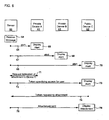
- a message for an intended recipient may be received 64 on the server 60.
- the server 60 may alert 65, 67, 69 the multiple devices 61, 62, 63 registered for the intended recipient.
- the intended recipient may be registered on two private devices, private device A 61 and private device B 62, in addition to one public device, public device C 63.
- the server 60 may alert 65, 67, 69 each device 61, 62, 63 according to the alert display preferences stored at the server 60 for the intended recipient.
- Each device 61, 62, 63 may display its respective message alert 66, 68, 70 according to its device display rules.
- the user may examine the message 64 through any of the devices 61, 62, 63, for example, through private device A 61.
- the user may desire redirection of a portion of the message to public device C 63.
- a user may receive a mail comprising an image attachment on his cell phone.
- the user may request the server to redirect the image attachment to the television to enable more suitable viewing conditions.
- the user's request may be transmitted 71 from private device A 61 to the server 60.
- the server 60 may send a token to the television with access being indicated for the user and a timeout restriction 72 to the public device C 63. In alternate embodiments there may be no timeout restriction.
- An application on the public device C 63 may receive the token, and display a message alert 73. The user may then select the message alert 73.
- the application on the public device C 63 may make a request 74 to the server 60 with the same token, and the server 60 may send the attachment 75 to the public device C 63.
- the public device C 63 may then display the attachment 76.
- An exemplary token may be given by:
- a message may be received on multiple devices.
- the user may direct a portion of a message to any one of the devices from any of another of the devices.
- Embodiments of the present invention as discussed relative to Fig. 6 are not limited to three devices, or limited to a redirection request from a private device for redirection to a public device.
- a challenge-response method may be used.
- the signature may be verified up to a root authority level.
- the manufacturer of the shared device may obtain a certificate for the shared device assembly, and may issue secondary certificates to each device manufactured.
- Each manufactured shared device may have a unique certificate, also considered public key, and each certificate may be signed by the manufacturer, who in turn may be certified by VeriSign.
- VeriSign When a shared device present the certificate to a server, the certificate authentication may go all the way to the standard root authority.
- the server may issue a token which has all the information regarding the shared device.
- An exemplary token may be:
- the server response to a query from a device may depend on the device. It may depend on if the device is a public device or a private device.
- An exemplary response to a query from a public device may be:
- a message may be encrypted using either the device password or the public key.
- a message alert may be encrypted using either the device password or the public key.
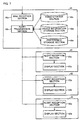
- the system of the present embodiment includes a mail server 60, a private device A 61, a private device B 62, and a public device C 63.
- the mail server 60 includes a mail reception section (receiver) 60a; an alert transmission section (transmitter) 60b; a table storage section 60c for storing a table (shown in Fig. 8 ) in which the "To" field (name or ID of a receiver) is associated with name of a device; a device information storage section 60d for storing device information (shown in Fig.
- the private device A 61 includes an alert reception section 61a and a display section 61 b.
- the private device B 62 includes an alert reception section 62a and a display section 62b.
- the public device C 63 includes an alert reception section 63a and a display section 63b.
- the mail reception section 60a receives a mail and transmits, as mail information, the received mail or a subset of the mail to the alert transmission section 60b.
- the mail includes the "To" field (name or ID of a recipient), the "From” field (name or ID of a sender), the "Subject” field (the subject of the mail), and the text of the body of the mail.
- the mail information includes at least the "To” field.
- the mail information also includes the "From" field, the "Subject” field, and first line of the text of the body of the mail.
- the alert transmission section 60b receives the mail information from the mail reception section 60a. Based on the "To" field that is included in the mail information and the table stored in the table storage section 60c, the alert transmission section 60b detects, as present, a device associated with the "To” field.
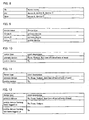
- the "To" field that is included in the mail information is "Joe” and, as shown in Fig. 8 , the private device A 61, the private device B 62, and the public device C 63 are stored in the table such that the private device A 61, the private device B 62, and the public device C 63 are associated with the the "To" field, i.e. "Joe". Accordingly, in this example, the private device A 61, the private device B 62, and the public device C 63 are detected as present.
- the alert transmission section 60b obtains the type of the device having been detected as present.
- the obtained type of the device includes the private device and the public device.
- the alert transmission section 60b obtains an alert description associated with the device having been detected as present.
- a first alert description associated with the public device C 63 and a second alert description associated with the private device A 61 and the private device B 62 are obtained.
- the alert transmission section 60b generates a message alert (second message alert) 31 shown in Fig. 3 based on the obtained second alert description and the mail information, and generates a message alert (first message alert) 11 shown in Fig. 3 based on the obtained first alert description and the mail information. Then, the alert transmission section 60b transmits the message alert 11 to the public device C 63 and transmits the message alert 31 to the private device A 61 and the private device B 62.
- the alert reception section 61a receives the message alert 31 and causes the display section 61b to display the message alert 31 (see Fig. 3 ). Further, in the private device B 62, the alert reception section 62a receives the message alert 31 and causes the display section 62b to display the message alert 31 (see Fig. 3 ). Further, in the public device C 63, the alert reception section 63a receives the message alert 11 and causes the display section 63b to display the message alert 11 (see Fig. 3 ).
- the message alert 11 displayed by the public device C 63 is not a subset of the message alert 31 displayed by the private device A 61 and the private device B 62.
- the message alert displayed by the public device C 63 may be a subset of the message alert displayed by the private device A 61 and the private device B 62.
- Fig. 11 shows an example of alert display preference information in that case.
- the alert transmission section 60b may be arranged so that, depending on whether the public device C 63 is logged in or not, the alert transmission section 60b changes an alert description C used for generating a message alert. That is, the alert transmission section 60b may be arranged so that, when the public device C 63 is logged in, the alert transmission section 60b generates a message alert (first message alert) based on an explicit alert description, and when the public device C 63 is not logged in, the alert transmission section 60b generates a message alert (second message alert) based on a shared alert description that is a subset of the explicit alert description.
- Fig. 12 shows an example of alert display preference information in that case.
Landscapes
- Engineering & Computer Science (AREA)
- Computer Networks & Wireless Communication (AREA)
- Signal Processing (AREA)
- Information Transfer Between Computers (AREA)
- User Interface Of Digital Computer (AREA)
- Two-Way Televisions, Distribution Of Moving Picture Or The Like (AREA)
Claims (16)
- Verfahren zum Erzeugen und Anzeigen eines Nachrichtenalarms auf einer gemeinsam genutzten Vorrichtung (10), wobei das Verfahren aufweist:a) Speichern einer Alarmvorliebe für einen Teilnehmer auf einer Ressource, die für einen Server (60) zugänglich ist, wobei die Alarmvorliebe eine explizite Alarmbeschreibung für die gemeinsam genutzte Vorrichtung (10) und eine gemeinsam genutzte Alarmbeschreibung für die gemeinsam genutzte Vorrichtung (10) aufweist;b) Empfangen einer Nachricht für den Teilnehmer an dem Server (60); undc) Senden eines ersten Nachrichtenalarms (11) für den Teilnehmer zur gemeinsam genutzten Vorrichtung (10), wenn die gemeinsam genutzte Vorrichtung durch den Server (60) als vorhanden detektiert wird und der Teilnehmer sich explizit in die gemeinsam genutzte Vorrichtung (10) einloggt, wobei der Inhalt des ersten Nachrichtenalarms (11) auf der expliziten Alarmbeschreibung basiert; dadurch gekennzeichnet, dass es ferner aufweistd) Senden eines zweiten Nachrichtenalarms (21) für den Teilnehmer zur gemeinsam genutzten Vorrichtung (10), wenn die gemeinsam genutzte Vorrichtung (10) durch den Server (60) als vorhanden detektiert wird und der Teilnehmer sich in die gemeinsam genutzte Vorrichtung (10) nicht einloggt, wobei der Inhalt des zweiten Nachrichtenalarms (21) auf der gemeinsam genutzten Alarmbeschreibung basiert.
- Verfahren nach Anspruch 1, das ferner das Verschlüsseln des ersten Nachrichtenalarms (11) und/oder des zweiten Nachrichtenalarms (21) unter Verwendung eines Vorrichtungspassworts, das der gemeinsam genutzten Vorrichtung (10) zugeordnet ist, aufweist.
- Verfahren nach Anspruch 1, das ferner das Verschlüsseln des ersten Nachrichtenalarms (11) und/oder des zweiten Nachrichtenalarms (21) unter Verwendung eines sekundären Passworts, das dem Teilnehmer zugeordnet ist, aufweist.
- Verfahren nach Anspruch 1, wobei die gemeinsam genutzte Vorrichtung ein Fernsehgerät ist.
- Vorrichtung nach Anspruch 1, wobei der Inhalt des zweiten Nachrichtenalarms (21) eine Teilmenge des Inhalts des ersten Nachrichtenalarms (11) ist.
- Verfahren nach Anspruch 1, wobei die Alarmvorliebe ferner eine Nachrichtenalarmbeschreibung für eine zweite Vorrichtung (20), wobei das Verfahren ferner aufweist:Senden eines dritten Nachrichtenalarms (21) für den Teilnehmer zur zweiten Vorrichtung (20), wenn die zweite Vorrichtung (20) durch den Server (60) als vorhanden detektiert wird, wobei der Inhalt des dritten Nachrichtenalarms (21) auf der Nachrichtenalarmbeschreibung basiert.
- Verfahren nach Anspruch 6, wobei die zweite Vorrichtung (20) eine private Vorrichtung ist.
- Verfahren nach Anspruch 6, wobei der Inhalt des ersten Nachrichtenalarms (11) eine Teilmenge des Inhalts des dritten Nachrichtenalarms (21) ist.
- Verfahren nach Anspruch 6, wobei der dritte Nachrichtenalarm (21) unter Verwendung eines Passworts, das dem Teilnehmer zugeordnet ist, verschlüsselt wird.
- Verfahren nach Anspruch 7, wobei die private Vorrichtung eine Vorrichtung ist, die aus der Gruppe ausgewählt ist, die aus einem Mobiltelephon, einem persönlichen digitalen Assistenten (PDA), einem Personalcomputer und einem persönlichen digitalen Musikwiedergabegerät besteht.
- System zum Erzeugen und Anzeigen eines Nachrichtenalarms, wobei das System aufweist:a) einen Speicher (60e), der für einen Server (60) zugänglich ist, zum Speichern einer Alarmvorliebe für einen Teilnehmer, wobei die Alarmvorliebe eine explizite Alarmbeschreibung für die gemeinsam genutzte Vorrichtung (10) und eine gemeinsam genutzte Alarmbeschreibung für die gemeinsam genutzte Vorrichtung (10) aufweist;b) einen Empfänger (60a) zum Empfangen einer Nachricht für den Teilnehmer am Server (60); undc) einen Sender (60b) zum Senden eines ersten Nachrichtenalarms (11) für den Teilnehmer zur gemeinsam genutzten Vorrichtung (10), wenn die gemeinsam genutzte Vorrichtung (10) durch den Server (60) als vorhanden detektiert wird und der Teilnehmer sich in die gemeinsam genutzte Vorrichtung (10) explizit einloggt, wobei der Inhalt des ersten Nachrichtenalarms (11) auf der expliziten Alarmbeschreibung basiert,dadurch gekennzeichnet, dass der Sender (60b) auch zum Senden eines zweiten Nachrichtenalarms (21) für den Teilnehmer zur gemeinsam genutzten Vorrichtung (10) konfiguriert ist, wenn die gemeinsam genutzte Vorrichtung (10) durch den Server (60) als vorhanden detektiert wird und der Teilnehmer sich nicht in die gemeinsam genutzte Vorrichtung (10) einloggt, wobei der Inhalt des zweiten Nachrichtenalarms (21) auf der gemeinsam genutzten Alarmbeschreibung basiert.
- System nach Anspruch 11, wobei die gemeinsam genutzte Vorrichtung (10) ein Fernsehgerät ist.
- System nach Anspruch 11, wobei die Alarmvorliebe ferner eine Nachrichtenalarmbeschreibung für eine zweite Vorrichtung (20) aufweist, und der Sender (60b) ferner einen dritten Nachrichtenalarm (21) für den Teilnehmer zur zweiten Vorrichtung (20) sendet, wenn die zweite Vorrichtung (20) für den Server (60) als vorhanden detektiert wird, wobei der Inhalt des dritten Nachrichtenalarms (21) auf der Nachrichtenalarmbeschreibung basiert.
- System nach Anspruch 13, wobei die zweite Vorrichtung (20) eine private Vorrichtung ist.
- System nach Anspruch 13, wobei der Inhalt des ersten Nachrichtenalarms (11) eine Teilmenge des Inhalts des dritten Nachrichtenalarms (21) ist.
- System nach Anspruch 14, wobei die private Vorrichtung eine Vorrichtung ist, die aus der Gruppe ausgewählt ist, die aus einem Mobiltelephon, einem persönlichen digitalen Assistenten (PDA), einem Personalcomputer und einem persönlichen digitalen Musikwiedergabegerät besteht.
Applications Claiming Priority (1)
| Application Number | Priority Date | Filing Date | Title |
|---|---|---|---|
| US11/533,311 US8144006B2 (en) | 2006-09-19 | 2006-09-19 | Methods and systems for message-alert display |
Publications (3)
| Publication Number | Publication Date |
|---|---|
| EP1903748A2 EP1903748A2 (de) | 2008-03-26 |
| EP1903748A3 EP1903748A3 (de) | 2009-08-05 |
| EP1903748B1 true EP1903748B1 (de) | 2010-11-17 |
Family
ID=38947679
Family Applications (1)
| Application Number | Title | Priority Date | Filing Date |
|---|---|---|---|
| EP07018227A Ceased EP1903748B1 (de) | 2006-09-19 | 2007-09-17 | Verfahren und System zur Anzeige von Alarmnachrichten |
Country Status (4)
| Country | Link |
|---|---|
| US (1) | US8144006B2 (de) |
| EP (1) | EP1903748B1 (de) |
| JP (1) | JP4572223B2 (de) |
| DE (1) | DE602007010563D1 (de) |
Families Citing this family (45)
| Publication number | Priority date | Publication date | Assignee | Title |
|---|---|---|---|---|
| US8359546B2 (en) * | 1997-09-11 | 2013-01-22 | Harold Lee Peterson | System, method and computer-readable medium for online marketing and visual presentations of software programs |
| US8312055B2 (en) * | 2010-06-11 | 2012-11-13 | Sony Corporation | Content alert upon availability for internet-enabled TV |
| EP2712441B1 (de) | 2011-06-05 | 2020-09-23 | Apple Inc. | Systeme und verfahren zur anzeige von über mehrere anwendungen erhaltenen benachrichtigungen |
| US9591346B2 (en) * | 2012-05-14 | 2017-03-07 | Samsung Electronics Co., Ltd. | Content delivery system with content sharing mechanism and method of operation thereof |
| US8886166B2 (en) | 2012-06-04 | 2014-11-11 | Avago Technologies General Ip (Singapore) Pte. Ltd. | System to identify whether a text message is from a trusted source |
| CN104272342B (zh) * | 2012-06-08 | 2018-02-09 | Sk普兰尼特有限公司 | 用于多设备环境中的消息服务的方法和系统及其设备 |
| DE102012109051A1 (de) * | 2012-09-25 | 2014-05-15 | Mindmatics Secure Messaging Gmbh | Verfahren zum Austauschen einer vertraulichen Information zwischen einem Server und einem mobilen Endgerät |
| US9628424B2 (en) * | 2012-11-15 | 2017-04-18 | Samsung Electronics Co., Ltd. | Apparatus and method for sharing time-sensitive data between devices with intermittent connectivity |
| US9137291B2 (en) | 2012-12-21 | 2015-09-15 | Blackberry Limited | Method, system and apparatus for processing alerts and acknowledgments |
| EP2747499B1 (de) * | 2012-12-21 | 2015-02-18 | BlackBerry Limited | Verfahren und Vorrichtung zur Bearbeitung von Hinweisen und Bestätigungen |
| WO2014143776A2 (en) | 2013-03-15 | 2014-09-18 | Bodhi Technology Ventures Llc | Providing remote interactions with host device using a wireless device |
| JP6039506B2 (ja) * | 2013-06-07 | 2016-12-07 | 株式会社ソニー・インタラクティブエンタテインメント | 情報処理装置 |
| US20150084838A1 (en) * | 2013-09-23 | 2015-03-26 | At&T Intellectual Property I, L.P. | Public Signage |
| CN104519037A (zh) * | 2013-09-30 | 2015-04-15 | 华为终端有限公司 | 一种评论信息的显示方法及设备 |
| KR102210704B1 (ko) | 2013-12-24 | 2021-02-02 | 삼성전자주식회사 | 사용자단말기 및 사용자단말기의 제어방법 |
| JP6395447B2 (ja) * | 2014-05-29 | 2018-09-26 | 任天堂株式会社 | プログラム、情報処理装置、情報処理システム及び通知方法 |
| US11343335B2 (en) | 2014-05-29 | 2022-05-24 | Apple Inc. | Message processing by subscriber app prior to message forwarding |
| US9324067B2 (en) | 2014-05-29 | 2016-04-26 | Apple Inc. | User interface for payments |
| US9967401B2 (en) | 2014-05-30 | 2018-05-08 | Apple Inc. | User interface for phone call routing among devices |
| TWI647608B (zh) | 2014-07-21 | 2019-01-11 | 美商蘋果公司 | 遠端使用者介面 |
| US10339293B2 (en) | 2014-08-15 | 2019-07-02 | Apple Inc. | Authenticated device used to unlock another device |
| US9872178B2 (en) * | 2014-08-25 | 2018-01-16 | Smart Technologies Ulc | System and method for authentication in distributed computing environments |
| WO2016036603A1 (en) | 2014-09-02 | 2016-03-10 | Apple Inc. | Reduced size configuration interface |
| WO2016036552A1 (en) | 2014-09-02 | 2016-03-10 | Apple Inc. | User interactions for a mapping application |
| US9451144B2 (en) | 2014-09-02 | 2016-09-20 | Apple Inc. | Remote camera user interface |
| US9574896B2 (en) | 2015-02-13 | 2017-02-21 | Apple Inc. | Navigation user interface |
| US10254911B2 (en) * | 2015-03-08 | 2019-04-09 | Apple Inc. | Device configuration user interface |
| US20160358133A1 (en) | 2015-06-05 | 2016-12-08 | Apple Inc. | User interface for loyalty accounts and private label accounts for a wearable device |
| US10417447B2 (en) * | 2015-06-15 | 2019-09-17 | Arris Enterprises Llc | Selective display of private user information |
| US20180103085A1 (en) * | 2016-10-06 | 2018-04-12 | Microsoft Technology Licensing, Llc | Data Transfer in a Communication System |
| US10916243B2 (en) * | 2016-12-27 | 2021-02-09 | Amazon Technologies, Inc. | Messaging from a shared device |
| CN108712736B (zh) * | 2018-04-28 | 2021-09-21 | 北京小米移动软件有限公司 | 寻找设备的方法、装置和系统 |
| US10887193B2 (en) | 2018-06-03 | 2021-01-05 | Apple Inc. | User interfaces for updating network connection settings of external devices |
| JP6921338B2 (ja) | 2019-05-06 | 2021-08-18 | アップル インコーポレイテッドApple Inc. | 電子デバイスの制限された動作 |
| DK201970533A1 (en) | 2019-05-31 | 2021-02-15 | Apple Inc | Methods and user interfaces for sharing audio |
| US11481094B2 (en) | 2019-06-01 | 2022-10-25 | Apple Inc. | User interfaces for location-related communications |
| US11477609B2 (en) | 2019-06-01 | 2022-10-18 | Apple Inc. | User interfaces for location-related communications |
| US12511021B2 (en) | 2020-09-14 | 2025-12-30 | Apple Inc. | Device management user interface |
| US12405717B2 (en) | 2020-10-26 | 2025-09-02 | Apple Inc. | Methods and user interfaces for handling user requests |
| US11463389B1 (en) * | 2021-05-05 | 2022-10-04 | Rovi Guides, Inc. | Message modification based on device compatability |
| US11562124B2 (en) | 2021-05-05 | 2023-01-24 | Rovi Guides, Inc. | Message modification based on message context |
| US11563701B2 (en) | 2021-05-05 | 2023-01-24 | Rovi Guides, Inc. | Message modification based on message format |
| US12619303B2 (en) | 2021-09-25 | 2026-05-05 | Apple Inc. | Gaze based interactions with three-dimensional environments |
| US12579758B2 (en) | 2022-02-08 | 2026-03-17 | Apple Inc. | Devices, methods, and graphical user interfaces for interacting with virtual objects using hand gestures |
| US12386428B2 (en) | 2022-05-17 | 2025-08-12 | Apple Inc. | User interfaces for device controls |
Family Cites Families (32)
| Publication number | Priority date | Publication date | Assignee | Title |
|---|---|---|---|---|
| US6748320B2 (en) | 1993-05-18 | 2004-06-08 | Arrivalstar, Inc. | Advance notification systems and methods utilizing a computer network |
| US5555376A (en) * | 1993-12-03 | 1996-09-10 | Xerox Corporation | Method for granting a user request having locational and contextual attributes consistent with user policies for devices having locational attributes consistent with the user request |
| JPH10174007A (ja) | 1996-10-11 | 1998-06-26 | Toshiba Corp | マルチ機能テレビジョン装置 |
| TW482987B (en) | 2000-01-03 | 2002-04-11 | Amova Company | Automatic media editing system |
| JP2001257709A (ja) | 2000-03-10 | 2001-09-21 | Sony Corp | 電子メール転送装置および電子メール転送方法 |
| US20010053274A1 (en) | 2000-06-20 | 2001-12-20 | Koninklijke Philips Electronics N.V. | System and method for remote control of consumer electronics over data network with visual feedback |
| KR100407966B1 (ko) | 2001-08-24 | 2003-12-01 | 엘지전자 주식회사 | 티브이를 이용한 휴대폰 제어시스템 및 그 방법 |
| US7286112B2 (en) | 2001-09-27 | 2007-10-23 | Fujifilm Corporation | Image display method |
| JP2003125365A (ja) | 2001-10-10 | 2003-04-25 | Minolta Co Ltd | 制御装置、プログラム、および記録媒体 |
| US7254614B2 (en) | 2001-11-20 | 2007-08-07 | Nokia Corporation | Web services push gateway |
| FR2832887B1 (fr) | 2001-11-28 | 2005-09-16 | Medialive | Methode pour acceder aux courriers electroniques video et multimedia |
| US7162451B2 (en) * | 2001-11-30 | 2007-01-09 | International Business Machines Corporation | Information content distribution based on privacy and/or personal information |
| US7250846B2 (en) * | 2002-03-05 | 2007-07-31 | International Business Machines Corporation | Method and apparatus for providing dynamic user alert |
| EP1483910A1 (de) | 2002-03-12 | 2004-12-08 | Nokia Corporation | System und verfahren zum transfer einer mms zwischen einer nachrichtenkommunikationseinheit und einem digital-tv |
| JP2003316697A (ja) | 2002-04-23 | 2003-11-07 | Matsushita Electric Ind Co Ltd | 認証機能付き電子メールシステム |
| US20030232593A1 (en) | 2002-06-13 | 2003-12-18 | Nokia Corporation | Digital data transfer through different communication paths |
| GB2393827B (en) * | 2002-10-04 | 2005-11-16 | Michael John Leck | Monitor system |
| CN1685716B (zh) | 2002-10-11 | 2010-09-01 | 索尼株式会社 | 网络控制确认的系统和方法、控制通信终端、服务器装置 |
| JP3987025B2 (ja) | 2002-12-12 | 2007-10-03 | シャープ株式会社 | マルチメディアデータ処理装置およびマルチメディアデータ処理プログラム |
| US7593915B2 (en) | 2003-01-07 | 2009-09-22 | Accenture Global Services Gmbh | Customized multi-media services |
| JP2007515698A (ja) | 2003-04-30 | 2007-06-14 | ディズニー エンタープライゼス インコーポレイテッド | 携帯電話によるマルチメディアコントローラ |
| US7640341B2 (en) | 2003-06-19 | 2009-12-29 | Microsoft Corporation | Instant messaging for multi-user computers |
| US7447740B2 (en) | 2003-12-19 | 2008-11-04 | Microsoft Corporation | Internet video conferencing on a home television |
| JP2005294993A (ja) | 2004-03-31 | 2005-10-20 | Matsushita Electric Ind Co Ltd | Ip電話機及びipアダプタ |
| US7289788B2 (en) * | 2004-05-26 | 2007-10-30 | Avaya Technology Corp. | Mobile gateway for secure extension of enterprise services to mobile devices |
| US20060001737A1 (en) | 2004-07-01 | 2006-01-05 | Dawson Thomas P | Video conference arrangement |
| FI20045504A0 (fi) | 2004-12-28 | 2004-12-28 | Stream Mobile Oy | Push-viestintämenetelmiä ja -laitteita |
| KR20070015766A (ko) | 2005-08-01 | 2007-02-06 | (주)판도라티비 | 인터넷을 이용한 개인 동영상 방송시스템 및 서비스 방법 |
| US20080052150A1 (en) | 2005-08-26 | 2008-02-28 | Spot Runner, Inc., A Delaware Corporation | Systems and Methods For Media Planning, Ad Production, and Ad Placement For Radio |
| CA2656922A1 (en) | 2006-06-16 | 2007-12-27 | Droplet Technology, Inc. | System, method, and apparatus of video processing and applications |
| US20080024593A1 (en) | 2006-07-25 | 2008-01-31 | Larisa Tsirinsky | Multimedia Communication System |
| US20080034435A1 (en) * | 2006-08-03 | 2008-02-07 | Ibm Corporation | Methods and arrangements for detecting and managing viewability of screens, windows and like media |
-
2006
- 2006-09-19 US US11/533,311 patent/US8144006B2/en not_active Expired - Fee Related
-
2007
- 2007-09-14 JP JP2007240138A patent/JP4572223B2/ja not_active Expired - Fee Related
- 2007-09-17 EP EP07018227A patent/EP1903748B1/de not_active Ceased
- 2007-09-17 DE DE602007010563T patent/DE602007010563D1/de active Active
Also Published As
| Publication number | Publication date |
|---|---|
| US20080077673A1 (en) | 2008-03-27 |
| EP1903748A3 (de) | 2009-08-05 |
| JP4572223B2 (ja) | 2010-11-04 |
| EP1903748A2 (de) | 2008-03-26 |
| DE602007010563D1 (de) | 2010-12-30 |
| JP2008077658A (ja) | 2008-04-03 |
| US8144006B2 (en) | 2012-03-27 |
Similar Documents
| Publication | Publication Date | Title |
|---|---|---|
| US8144006B2 (en) | Methods and systems for message-alert display | |
| US11432115B2 (en) | Method for downloading a message client and authenticating a mobile phone number | |
| US8412675B2 (en) | Context aware data presentation | |
| US8069166B2 (en) | Managing user-to-user contact with inferred presence information | |
| US10313464B2 (en) | Targeted notification of content availability to a mobile device | |
| US8091116B2 (en) | Communication system and method | |
| ES2281783T3 (es) | Gestion de mensajes. | |
| Fong et al. | Towards an open protocol for secure online presence notification | |
| US9210729B2 (en) | Communication system and method | |
| US20040196968A1 (en) | Message screening system and method | |
| US8763086B2 (en) | Service sharing among IMS users | |
| US8156340B1 (en) | System and method for securing system content by automated device authentication | |
| EP1559240A1 (de) | Verfahren und system für zusatzdiensten, zur sekundären authentifizierung, zur authorisierung und/oder zur gesicherten übertragung, für dialogbasierte protokollen und systemen | |
| KR101461056B1 (ko) | 무선 인스턴트 메시징 시스템의 상태 정보 관리 방법 및 그장치 | |
| CA2652508A1 (en) | Group advertisement method in sip based message service | |
| US9325745B2 (en) | Providing services by managing communication relationships | |
| JP2012512448A (ja) | 個人データを公開するために通信機器間の仮想関係を作成する方法及び構成 | |
| US7991019B2 (en) | Methods and systems for combining media inputs for messaging | |
| US20060239234A1 (en) | Application programming interface for discovering endpoints in a serverless peer to peer network | |
| US20060059183A1 (en) | Securely publishing user profile information across a public insecure infrastructure | |
| Lonnfors et al. | Session initiation protocol (SIP) extension for partial notification of presence information | |
| WO2010057297A1 (en) | Apparatus, and an associated method, for providing and using opaque presence indications in a presence service | |
| JP4989713B2 (ja) | プレゼンス・サービス・システムにおける情報配信の方法 | |
| JP2009288894A (ja) | Imクライアント装置、imサーバ、imシステムおよび方法 | |
| Kutscher et al. | Dynamic device access for mobile users |
Legal Events
| Date | Code | Title | Description |
|---|---|---|---|
| PUAI | Public reference made under article 153(3) epc to a published international application that has entered the european phase |
Free format text: ORIGINAL CODE: 0009012 |
|
| AK | Designated contracting states |
Kind code of ref document: A2 Designated state(s): AT BE BG CH CY CZ DE DK EE ES FI FR GB GR HU IE IS IT LI LT LU LV MC MT NL PL PT RO SE SI SK TR |
|
| AX | Request for extension of the european patent |
Extension state: AL BA HR MK YU |
|
| PUAL | Search report despatched |
Free format text: ORIGINAL CODE: 0009013 |
|
| AK | Designated contracting states |
Kind code of ref document: A3 Designated state(s): AT BE BG CH CY CZ DE DK EE ES FI FR GB GR HU IE IS IT LI LT LU LV MC MT NL PL PT RO SE SI SK TR |
|
| AX | Request for extension of the european patent |
Extension state: AL BA HR MK RS |
|
| 17P | Request for examination filed |
Effective date: 20100204 |
|
| GRAP | Despatch of communication of intention to grant a patent |
Free format text: ORIGINAL CODE: EPIDOSNIGR1 |
|
| AKX | Designation fees paid |
Designated state(s): DE FR GB |
|
| GRAS | Grant fee paid |
Free format text: ORIGINAL CODE: EPIDOSNIGR3 |
|
| GRAA | (expected) grant |
Free format text: ORIGINAL CODE: 0009210 |
|
| AK | Designated contracting states |
Kind code of ref document: B1 Designated state(s): DE FR GB |
|
| REG | Reference to a national code |
Ref country code: GB Ref legal event code: FG4D |
|
| REF | Corresponds to: |
Ref document number: 602007010563 Country of ref document: DE Date of ref document: 20101230 Kind code of ref document: P |
|
| PLBE | No opposition filed within time limit |
Free format text: ORIGINAL CODE: 0009261 |
|
| STAA | Information on the status of an ep patent application or granted ep patent |
Free format text: STATUS: NO OPPOSITION FILED WITHIN TIME LIMIT |
|
| 26N | No opposition filed |
Effective date: 20110818 |
|
| REG | Reference to a national code |
Ref country code: DE Ref legal event code: R097 Ref document number: 602007010563 Country of ref document: DE Effective date: 20110818 |
|
| REG | Reference to a national code |
Ref country code: FR Ref legal event code: PLFP Year of fee payment: 10 |
|
| REG | Reference to a national code |
Ref country code: FR Ref legal event code: PLFP Year of fee payment: 11 |
|
| PGFP | Annual fee paid to national office [announced via postgrant information from national office to epo] |
Ref country code: FR Payment date: 20170928 Year of fee payment: 11 Ref country code: GB Payment date: 20170921 Year of fee payment: 11 Ref country code: DE Payment date: 20170928 Year of fee payment: 11 |
|
| REG | Reference to a national code |
Ref country code: DE Ref legal event code: R119 Ref document number: 602007010563 Country of ref document: DE |
|
| GBPC | Gb: european patent ceased through non-payment of renewal fee |
Effective date: 20180917 |
|
| PG25 | Lapsed in a contracting state [announced via postgrant information from national office to epo] |
Ref country code: DE Free format text: LAPSE BECAUSE OF NON-PAYMENT OF DUE FEES Effective date: 20190402 |
|
| PG25 | Lapsed in a contracting state [announced via postgrant information from national office to epo] |
Ref country code: FR Free format text: LAPSE BECAUSE OF NON-PAYMENT OF DUE FEES Effective date: 20180930 |
|
| PG25 | Lapsed in a contracting state [announced via postgrant information from national office to epo] |
Ref country code: GB Free format text: LAPSE BECAUSE OF NON-PAYMENT OF DUE FEES Effective date: 20180917 |