EP1903793A2 - Procédé pour le changement de canal d'un dispositif d'affichage d'image et appareil pour celui-ci - Google Patents
Procédé pour le changement de canal d'un dispositif d'affichage d'image et appareil pour celui-ci Download PDFInfo
- Publication number
- EP1903793A2 EP1903793A2 EP07112424A EP07112424A EP1903793A2 EP 1903793 A2 EP1903793 A2 EP 1903793A2 EP 07112424 A EP07112424 A EP 07112424A EP 07112424 A EP07112424 A EP 07112424A EP 1903793 A2 EP1903793 A2 EP 1903793A2
- Authority
- EP
- European Patent Office
- Prior art keywords
- channel
- minor
- currently displayed
- channels
- input
- Prior art date
- Legal status (The legal status is an assumption and is not a legal conclusion. Google has not performed a legal analysis and makes no representation as to the accuracy of the status listed.)
- Withdrawn
Links
Images


Classifications
-
- H—ELECTRICITY
- H04—ELECTRIC COMMUNICATION TECHNIQUE
- H04N—PICTORIAL COMMUNICATION, e.g. TELEVISION
- H04N5/00—Details of television systems
- H04N5/44—Receiver circuitry for the reception of television signals according to analogue transmission standards
- H04N5/50—Tuning indicators; Automatic tuning control
-
- H—ELECTRICITY
- H04—ELECTRIC COMMUNICATION TECHNIQUE
- H04N—PICTORIAL COMMUNICATION, e.g. TELEVISION
- H04N21/00—Selective content distribution, e.g. interactive television or video on demand [VOD]
- H04N21/40—Client devices specifically adapted for the reception of or interaction with content, e.g. set-top-box [STB]; Operations thereof
- H04N21/41—Structure of client; Structure of client peripherals
- H04N21/422—Input-only peripherals, i.e. input devices connected to specially adapted client devices, e.g. global positioning system [GPS]
- H04N21/42204—User interfaces specially adapted for controlling a client device through a remote control device; Remote control devices therefor
-
- H—ELECTRICITY
- H04—ELECTRIC COMMUNICATION TECHNIQUE
- H04N—PICTORIAL COMMUNICATION, e.g. TELEVISION
- H04N21/00—Selective content distribution, e.g. interactive television or video on demand [VOD]
- H04N21/40—Client devices specifically adapted for the reception of or interaction with content, e.g. set-top-box [STB]; Operations thereof
- H04N21/41—Structure of client; Structure of client peripherals
- H04N21/426—Internal components of the client ; Characteristics thereof
-
- H—ELECTRICITY
- H04—ELECTRIC COMMUNICATION TECHNIQUE
- H04N—PICTORIAL COMMUNICATION, e.g. TELEVISION
- H04N21/00—Selective content distribution, e.g. interactive television or video on demand [VOD]
- H04N21/40—Client devices specifically adapted for the reception of or interaction with content, e.g. set-top-box [STB]; Operations thereof
- H04N21/43—Processing of content or additional data, e.g. demultiplexing additional data from a digital video stream; Elementary client operations, e.g. monitoring of home network or synchronising decoder's clock; Client middleware
- H04N21/431—Generation of visual interfaces for content selection or interaction; Content or additional data rendering
- H04N21/4312—Generation of visual interfaces for content selection or interaction; Content or additional data rendering involving specific graphical features, e.g. screen layout, special fonts or colors, blinking icons, highlights or animations
-
- H—ELECTRICITY
- H04—ELECTRIC COMMUNICATION TECHNIQUE
- H04N—PICTORIAL COMMUNICATION, e.g. TELEVISION
- H04N21/00—Selective content distribution, e.g. interactive television or video on demand [VOD]
- H04N21/40—Client devices specifically adapted for the reception of or interaction with content, e.g. set-top-box [STB]; Operations thereof
- H04N21/43—Processing of content or additional data, e.g. demultiplexing additional data from a digital video stream; Elementary client operations, e.g. monitoring of home network or synchronising decoder's clock; Client middleware
- H04N21/434—Disassembling of a multiplex stream, e.g. demultiplexing audio and video streams, extraction of additional data from a video stream; Remultiplexing of multiplex streams; Extraction or processing of SI; Disassembling of packetised elementary stream
- H04N21/4345—Extraction or processing of SI, e.g. extracting service information from an MPEG stream
-
- H—ELECTRICITY
- H04—ELECTRIC COMMUNICATION TECHNIQUE
- H04N—PICTORIAL COMMUNICATION, e.g. TELEVISION
- H04N21/00—Selective content distribution, e.g. interactive television or video on demand [VOD]
- H04N21/40—Client devices specifically adapted for the reception of or interaction with content, e.g. set-top-box [STB]; Operations thereof
- H04N21/43—Processing of content or additional data, e.g. demultiplexing additional data from a digital video stream; Elementary client operations, e.g. monitoring of home network or synchronising decoder's clock; Client middleware
- H04N21/438—Interfacing the downstream path of the transmission network originating from a server, e.g. retrieving encoded video stream packets from an IP network
- H04N21/4383—Accessing a communication channel
-
- H—ELECTRICITY
- H04—ELECTRIC COMMUNICATION TECHNIQUE
- H04N—PICTORIAL COMMUNICATION, e.g. TELEVISION
- H04N21/00—Selective content distribution, e.g. interactive television or video on demand [VOD]
- H04N21/40—Client devices specifically adapted for the reception of or interaction with content, e.g. set-top-box [STB]; Operations thereof
- H04N21/41—Structure of client; Structure of client peripherals
- H04N21/422—Input-only peripherals, i.e. input devices connected to specially adapted client devices, e.g. global positioning system [GPS]
- H04N21/42204—User interfaces specially adapted for controlling a client device through a remote control device; Remote control devices therefor
- H04N21/42206—User interfaces specially adapted for controlling a client device through a remote control device; Remote control devices therefor characterized by hardware details
- H04N21/4221—Dedicated function buttons, e.g. for the control of an EPG, subtitles, aspect ratio, picture-in-picture or teletext
Definitions
- Apparatuses and methods consistent with the present invention relate to switching a channel, and image display devices which switch channels. More particularly, the present invention relates to a method for switching a channel using existing navigation keys of an image display device providing a broadcast from multi-channels, and an image display device which implements said method.
- Image display devices display images that are received externally through an antenna. More specifically, if a user selects a desired channel, an image display device is tuned to the selected channel and displays images to be viewed by the user that are received from the channel through an antenna.
- image display devices include, for instance, mobile phones, personal digital assistants (PDAs) and television sets (TVs) .
- a frequency band of 6 MHz which is allocated to one TV channel in an analog broadcasting environment, is set aside for one channel of high definition (HD) quality. Accordingly, terrestrial waves and cable broadcasting stations tend to provide multimode services (MMS) by adding up to six channels, such as a channel of standard definition (SD) quality, an audio channel, a data channel, into the rest of the frequency band.
- SD standard definition
- DTVs digital TVs
- image display device provides multiple services and increase the number of viewable channels sharply.
- a channel of HD quality (referred to hereinafter as a "major channel") and other channels (referred to hereinafter as “minor channels”) are transmitted in a frequency band for one channel by multichannel broadcasting, so that the number of channel switches between major channels, between major channels and minor channels, and between minor channels are increased.
- a currently viewed major channel is 7-1
- the current major channel 7-1 is switched through channels 7-2, 7-3, 7-4 and 7-5 to the channel 8-1 by pressing an up/down key 5 times.
- an aspect of the present invention provides a method for switching channels using existing navigation keys in order to switch channels more rapidly and more conveniently, and an image display device adopting the method.
- Another aspect of the present invention provides a method for switching channels by reducing the number of key presses required for switching between channels, and an image display device adopting the method.
- Yet another aspect of the present invention provides a method for switching channels which allows a user to conveniently switch channels by displaying minor channels together with a major channel, and an image display device adopting the method.
- a method for switching a channel comprising switching a currently displayed channel to a major channel adjacent to the currently displayed channel, if a channel switch command is input using a first direction key, and switching the currently displayed channel to a minor channel adjacent to the currently displayed channel, if a channel switch command is input using a second direction key.
- the currently displayed channel may be switched to one of a subsequent major channel or a preceding major channel.
- the currently displayed channel may be switched to one of a subsequent minor channel or a preceding minor channel.
- the channel switch command input using the second direction key may be ignored.
- the list of minor channels may be displayed in a banner form.
- the list of minor channels may differentiate the number of the currently displayed channel from numbers of other channels, and may comprise left and right arrows to switch the currently displayed channel left and right.
- the list of minor channels may be displayed transparently or translucently.
- the first direction key may be at least one of up and down keys.
- the second direction key may be at least one of left and right keys.
- an image display device comprising a first direction key, a second direction key, and a controller which switches a currently displayed channel to a major channel adjacent to the currently displayed channel, if a channel switch command is input using the first direction key, and switches the currently displayed channel to a minor channel adjacent to the currently displayed channel, if a channel switch command is input using the second direction key.
- the controller may switch the currently displayed channel to one of a subsequent major channel or a preceding major channel, if the channel switch command is input using the first direction key.
- the controller may determine whether there is any minor channel pertaining to the currently displayed channel, if the channel switch command is input using the second direction key.
- the device may further comprise an on-screen display (OSD) generator which generates a list of minor channels based on the channel map, wherein the controller operates the OSD generator to generate and display a list of minor channels including the minor channel, if there is any minor channel pertaining to the currently displayed channel.
- OSD on-screen display
- the controller may switch the currently displayed channel to one of a subsequent minor channel or a preceding minor channel.
- the controller may ignore the channel switch command input using the second direction key, if there are no minor channels pertaining to the currently displayed channel.
- the OSD generator may display the list of minor channels in a banner form.
- the list of minor channels may differentiate the number of the currently displayed channel from numbers of other channels, and may comprise left and right arrows to switch the currently displayed channel to left and right directions.
- the list of minor channels may be displayed transparently or translucently.
- the first direction key may be at least one of up and down keys.
- the second direction key may be at least one of up and down keys.
- FIG. 1 is a block diagram illustrating an image display device according to an exemplary embodiment of the present invention.
- the exemplary image display device shown in FIG. 1 provides a method for switching channels by displaying minor channels together with a major channel and for using existing navigation keys, that is, up/down/left/right direction keys.
- the image display device comprises a tuner 110, a Moving Picture Experts Group (MPEG) decoder 120, a display unit 130, a key input unit 140, a controller 150, a memory 160 and an on-screen display (OSD) generator 170.
- MPEG Moving Picture Experts Group
- OSD on-screen display
- the tuner 110 receives and demodulates a digital image signal through an antenna 180.
- the MPEG decoder 120 then decodes the demodulated digital image signal.
- the display unit 130 displays the decoded digital image signal.
- the key input unit 140 comprises navigation keys, that is, up/down/left/right direction keys in order for a user to input an instruction to switch the channel.
- the key input unit 140 may be implemented, for example, with a remote control, which outputs a manipulation signal according to a user command, and a remote control signal receiver, which receives the signal output from the remote control and transmits the signal to the controller 150. Additionally, the key input unit 140 may be implemented, for example, with an input unit mounted on the image display device.
- the key input unit 140 receives a signal from the remote control signal receiver, the transmission of which is initiated using the up/down/left/right direction keys on the remote control, and transmits the signal to the controller 150.
- the key input unit 140 is mounted on the image display device, then the key input unit 140 transmits a signal, the transmission of which is initiated using the up/down/left/right direction keys on the key input unit 140, directly to the controller 150.
- the controller 150 switches channels between major channels based on a channel map stored in the memory 160. That is, the up/down keys among the navigation keys on the key input unit 140 input up/down signals to switch the channel up or down, respectively, and are used for channel switching between major channels.
- the controller 150 switches the channel between minor channels based on the channel map stored in the memory 160. That is, the left/right keys among the navigation keys on the key input unit 140 input left/right signals to switch the channel left or right, respectively, and are used for channel switching between minor channels.
- the controller 150 operates the OSD generator 170 to generate a list of the minor channels pertaining to the current major channel based on the channel map stored in the memory 160.
- the memory 160 stores a channel map.
- the channel map comprises a plurality of available major channels and a plurality of minor channels pertaining to each major channel.
- Table 1 shows an example of the channel map stored in the memory 160.
- the channel map comprises major channels 6-1, 7-1, 9-1, 10-1, 11-1 and 20-1
- major channel 6-1 comprises minor channels 6-2 and 6-3
- major channel 7-1 comprises minor channels 7-2, 7-3, 7-4 and 7-5
- major channel 9-1 comprises minor channels 9-2, 9-3 and 9-4
- major channel 10-1 does not comprise any minor channels
- major channel 11-1 comprises minor channels 11-2 and 11-3
- major channel 20-1 comprises minor channel 20-2.
- the OSD generator 170 generates the list of minor channels pertaining to the current major channel based on the channel map stored in the memory 160, by control of the controller 150, and displays the list of the minor channels on the display unit 130.
- the OSD generator 170 generates the list of the minor channels in a banner form.
- FIG. 2 shows an example of a minor channel display method according to a method for switching channels in an image display device according to an exemplary embodiment of the present invention.
- the display unit 130 displays a digital image decoded by the MPEG decoder 120, for example, an image received through major channel 7-1, and also displays a list of the channels 200 pertaining to major channel 7-1.
- the list of channels 200 shows the numbers of major channel 7-1 and shows minor channels 7-2, 7-3, 7-4 and 7-5 pertaining to the major channel.
- a cursor 210 indicates the number of the currently displayed channel, and left and right arrows 220 and 230 indicate switching to a lower channel, and a higher channel, respectively.
- the left and right arrows 220 and 230 correspond to the left/right keys, respectively, among the navigation keys on the key input unit 140.
- the number of the currently displayed channel may be indicated using the cursor 210, for example, but may also be indicated in a different color, flickering or a different font from numbers of other channels.
- the list of the channels 200 may be displayed horizontally or vertically, and may be displayed on the top, bottom, left, right or center of the display.
- list of channels 200 may be displayed transparently or translucently so as to show the currently displayed image.
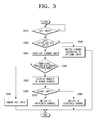
- FIG. 3 is a flow chart illustrating a method for switching the channel of an image display device according to an exemplary embodiment of the present invention.
- the controller 150 determines whether there is a key input in operation (S310).
- the controller 150 determines that there is a key input, for instance, if a signal is input from the keys on the key input unit 140.
- the controller 150 determines whether the key input is input from left/right keys among the navigation keys on the key input unit 140 in operation (S320).
- the controller 150 switches the channel according to up/down input in operation (S325).
- the controller 150 switches to the next major channel, that is, major channel 9-1 based on the channel map of Table 1.
- the controller 150 switches to the preceding major channel, that is, for example, major channel 6-1 based on the channel map of Table 1.
- the controller 150 switches to the next major channel, that is, major channel 9-1. Accordingly, up/down input is used for switching between major channels.
- the controller 150 determines whether there is any minor channel associated with the currently displayed channel based on the channel map in operation (S340).
- the controller 150 ignores the left/right key input in operation (S345). That is, the controller 150 does not perform any operation corresponding to the key input.
- the controller 150 If there is a minor channel associated with the currently displayed channel (S340-Y), then the controller 150 operates the OSD generator 170 to generate and display a list of minor channels, including the next minor channel, on the display unit 130 in operation (S350).
- the controller 150 determines whether a signal corresponding to the right key is input in operation (S360). That is, if a signal corresponding to the left/right keys is input (S320-Y), then the controller 150 displays the list of minor channels, and then if another signal corresponding to the left/right keys is input thereafter, an operation corresponding to the particular key input is performed.
- the controller 150 switches to the next channel (i.e., an increased channel) in operation (S370). More specifically, the controller 150 switches to the channel sequentially following the currently displayed major channel 7-1, that is, for example, minor channel 7-2.
- the controller 150 switches to the preceding channel (i.e., a decreased channel) in operation (S380). More specifically, the controller 150 switches to a channel sequentially preceding the currently displayed major channel 7-1, that is, according to the exemplary embodiment under discussion, minor channel 7-5. This is because the numbers of channels are arranged such that a channel subsequent to 7-5 is 7-1 and a channel prior to 7-1 is 7-5.
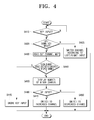
- FIG. 4 is a flow chart illustrating a method for switching the channel of an image display device according to another exemplary embodiment of the present invention.
- an up/down key input corresponds to channel switching between major channels
- a left/right key input corresponds to channel switching between minor channels.
- an up/down key input corresponds to channel switching between minor channels
- a left/right key input corresponds to channel switching between major channels.
- the controller 150 determines whether there is a key input in operation (S410). The controller 150 determines that there is a key input, for instance, if a signal is input from the keys on the key input unit 140.
- the controller 150 determines whether the key input is input from the up/down keys among the navigation keys on the key input unit 140 in operation (420).
- the controller 150 switches the channel according to the left/right input in operation (S425).
- the controller 150 switches to the next major channel, that is, major channel 9-1 based on the channel map of Table 1.
- the controller 150 switches to the preceding major channel, that is, for example, major channel 6-1 based on the channel map of Table 1.
- the controller 150 determines whether there is any minor channel pertaining to the currently displayed channel based on the channel map in operation (S440).
- the controller 150 ignores the up/down key input in operation (S445). That is, the controller 150 does not perform any operation corresponding to the key input.
- the controller 150 If there is a minor channel associated with the currently displayed channel (S440-Y), then the controller 150 operates the OSD generator 170 to generate and display a list of minor channels, including the next minor channel on the display unit 130 in operation (S450).
- the controller 150 determines whether a signal corresponding to the right key is input in operation (S460). That is, if a signal corresponding to the up/down keys is input (S420-Y), then the controller 150 displays the list of minor channels, and then if another signal corresponding to the up/down keys is input thereafter, an operation corresponding to the particular key input is performed.
- the controller 150 switches to a subsequent channel (i.e., an increased channel) in operation (S470). More specifically, the controller 150 switches to the channel following the currently displayed major channel 7-1, that is, for example, minor channel 7-2.
- the controller 150 switches to a preceding channel (i.e., a decreased channel) in operation (S480). More specifically, the controller 150 switches to the channel sequentially preceding the currently displayed major channel 7-1, that is, according to the exemplary embodiment under discussion, minor channel 7-5. This is because numbers of channels are arranged such that the channel following 7-5 is 7-1 and the channel preceding 7-1 is 7-5.
- a list of minor channels is generated and displayed, but this is just an exemplary embodiment of the present invention.
- a menu for requesting a list of minor channels is provided, and if a user selects the list of minor channels from the menu, a list of minor channels may be generated and displayed.
- a particular key for requesting a list of minor channels other than the left/right keys is provided, and if a signal corresponding to the particular key is input, a list of minor channels may be generated and displayed.
- navigation direction keys are used in the preceding exemplary embodiments, but other manipulation means to input a channel switch command may be used consistent with the present invention.
- a user can switch to a desired channel, thereby increasing user convenience.
- channel switching is available with less key manipulation.
- a list of minor channels pertaining to the current channel is displayed by selecting the left/right keys, and thus all channels provided by the broadcasting station of the current channel can be identified.
Landscapes
- Engineering & Computer Science (AREA)
- Multimedia (AREA)
- Signal Processing (AREA)
- Human Computer Interaction (AREA)
- Circuits Of Receivers In General (AREA)
- User Interface Of Digital Computer (AREA)
- Details Of Television Systems (AREA)
Applications Claiming Priority (1)
| Application Number | Priority Date | Filing Date | Title |
|---|---|---|---|
| KR1020060092550A KR101271665B1 (ko) | 2006-09-22 | 2006-09-22 | 채널 이동방법 및 이를 적용한 영상표시장치 |
Publications (2)
| Publication Number | Publication Date |
|---|---|
| EP1903793A2 true EP1903793A2 (fr) | 2008-03-26 |
| EP1903793A3 EP1903793A3 (fr) | 2009-09-23 |
Family
ID=38477140
Family Applications (1)
| Application Number | Title | Priority Date | Filing Date |
|---|---|---|---|
| EP07112424A Withdrawn EP1903793A3 (fr) | 2006-09-22 | 2007-07-13 | Procédé pour le changement de canal d'un dispositif d'affichage d'image et appareil pour celui-ci |
Country Status (4)
| Country | Link |
|---|---|
| US (1) | US8502923B2 (fr) |
| EP (1) | EP1903793A3 (fr) |
| KR (1) | KR101271665B1 (fr) |
| CN (1) | CN101150676A (fr) |
Families Citing this family (7)
| Publication number | Priority date | Publication date | Assignee | Title |
|---|---|---|---|---|
| KR101427111B1 (ko) * | 2007-08-01 | 2014-08-07 | 삼성전자 주식회사 | 영상처리장치 및 그 제어방법 |
| KR101467790B1 (ko) * | 2008-09-08 | 2014-12-03 | 엘지전자 주식회사 | 디지털 텔레비전 수신기 및 이 수신기에서 멀티 모드 서비스의 방송을 처리하는 방법 |
| CN103491405B (zh) * | 2013-08-30 | 2018-06-05 | 小米科技有限责任公司 | 遥控系统、遥控器、显示设备及遥控方法 |
| CN103618934A (zh) * | 2013-12-11 | 2014-03-05 | 乐视网信息技术(北京)股份有限公司 | 智能电视中节目控制菜单的显示方法及装置 |
| KR102425445B1 (ko) | 2015-12-22 | 2022-07-27 | 삼성전자주식회사 | 디스플레이 장치 및 이의 제어 방법 |
| CN106454505A (zh) * | 2016-11-17 | 2017-02-22 | 广州视源电子科技股份有限公司 | 频道的切换方法及装置 |
| RU2754946C1 (ru) * | 2020-04-03 | 2021-09-08 | Федеральное государственное бюджетное военное образовательное учреждение высшего образования "Военно-медицинская академия имени С.М. Кирова" Министерства обороны Российской Федерации (ВМедА) | Способ определения риска наличия кальциноза клапана аорты у пациентов 60 лет и старше |
Family Cites Families (14)
| Publication number | Priority date | Publication date | Assignee | Title |
|---|---|---|---|---|
| KR960012013B1 (ko) * | 1992-07-17 | 1996-09-09 | 사토 후미오 | 채널 선국 장치 |
| US6111614A (en) * | 1997-10-17 | 2000-08-29 | Sony Corporation | Method and apparatus for displaying an electronic menu having components with differing levels of transparency |
| US6763522B1 (en) * | 1998-06-30 | 2004-07-13 | Sony Corporation | System and method for a digital television electronic program guide |
| KR100298400B1 (ko) * | 1998-08-10 | 2001-09-06 | 구자홍 | 디지털 티브이의 채널표시방법 |
| US7412715B2 (en) * | 1998-10-28 | 2008-08-12 | Samsung Electronics Co., Ltd. | Method and apparatus for displaying channel information and selecting channel on digital television |
| TW499816B (en) * | 1998-11-30 | 2002-08-21 | United Video Properties Inc | Interactive program guide system and method |
| US20040049782A1 (en) * | 1999-09-27 | 2004-03-11 | Sony Corp | Channel selection in digital television |
| US6714264B1 (en) * | 2000-08-31 | 2004-03-30 | Matsushita Electric Industrial Co., Ltd. | Digital television channel surfing system |
| JP2002112127A (ja) * | 2000-09-26 | 2002-04-12 | Funai Electric Co Ltd | 選局装置 |
| JP4552333B2 (ja) * | 2001-01-31 | 2010-09-29 | 船井電機株式会社 | デジタル/アナログ放送受信機のチャンネル選択装置及び同装置を備えたデジタル/アナログ放送受信機 |
| JP4327370B2 (ja) * | 2001-02-28 | 2009-09-09 | ヤマハ株式会社 | ビデオミキサー装置 |
| KR100797104B1 (ko) * | 2001-03-29 | 2008-01-23 | 엘지전자 주식회사 | 디지털 티브이의 채널 선국방법 |
| JP3522234B2 (ja) * | 2001-05-22 | 2004-04-26 | 船井電機株式会社 | 受信装置 |
| KR20060072540A (ko) | 2004-12-23 | 2006-06-28 | 엘지전자 주식회사 | 방송 수신 기기 및 그의 채널 전환 방법 |
-
2006
- 2006-09-22 KR KR1020060092550A patent/KR101271665B1/ko not_active Expired - Fee Related
-
2007
- 2007-04-26 US US11/740,447 patent/US8502923B2/en not_active Expired - Fee Related
- 2007-07-13 EP EP07112424A patent/EP1903793A3/fr not_active Withdrawn
- 2007-07-13 CN CNA200710129188XA patent/CN101150676A/zh active Pending
Also Published As
| Publication number | Publication date |
|---|---|
| EP1903793A3 (fr) | 2009-09-23 |
| KR101271665B1 (ko) | 2013-06-05 |
| KR20080027088A (ko) | 2008-03-26 |
| US20080074557A1 (en) | 2008-03-27 |
| US8502923B2 (en) | 2013-08-06 |
| CN101150676A (zh) | 2008-03-26 |
Similar Documents
| Publication | Publication Date | Title |
|---|---|---|
| US7030933B2 (en) | Broadcast receiving system with function of on-screen displaying channel information | |
| JP4552333B2 (ja) | デジタル/アナログ放送受信機のチャンネル選択装置及び同装置を備えたデジタル/アナログ放送受信機 | |
| US8156526B2 (en) | Apparatus and method for controlling screen layout in digital broadcast receiver for receiving moving picture content | |
| EP1988709B1 (fr) | Dispositif, procede et programme de controle d'affichage | |
| US7412715B2 (en) | Method and apparatus for displaying channel information and selecting channel on digital television | |
| JP2002232801A (ja) | チャンネル情報のオンスクリーン表示機能を有する放送受信装置 | |
| KR19990005711A (ko) | 디지털 텔레비젼 수상기에서 서브 채널정보 표시방법 | |
| EP1903793A2 (fr) | Procédé pour le changement de canal d'un dispositif d'affichage d'image et appareil pour celui-ci | |
| JP2002232793A (ja) | デジタル/アナログ放送受信機のチャンネル選択装置及び同装置を備えたデジタル/アナログ放送受信機 | |
| US8763040B2 (en) | Method of processing transmit streams independently to display multiple broadcasts at the same time and a receiver for implementing the same | |
| JPWO2009098775A1 (ja) | 受信装置、受信方法及び受信プログラム | |
| JP2005045508A (ja) | 受信装置および受信方法 | |
| JP2009017389A (ja) | デジタル放送受信装置 | |
| CN101090466A (zh) | 电视机的画外画/画中画双通道处理方法及装置 | |
| JP4165584B2 (ja) | 放送信号受信装置 | |
| US8887198B2 (en) | Display device and method for searching channel | |
| US20100110296A1 (en) | Method of watching data broadcast and a receiving device for implementing the same | |
| KR20050017870A (ko) | 디지털 티브이에서 채널 탐색 방법 | |
| KR100720704B1 (ko) | 아날로그 및 디지털 방송영상을 표시하는 방송수신장치 및그 방법 | |
| KR100238681B1 (ko) | 디지털 다채널 텔레비젼 방송 수상기의 채널선택방법 | |
| KR100246794B1 (ko) | 프로그램 안내방법 | |
| JP5512103B2 (ja) | 放送表示装置、制御方法 | |
| JP2010010888A (ja) | デジタル放送受信装置 | |
| JP2010200205A (ja) | 放送受信機およびその制御方法 | |
| JP2002033970A (ja) | 選局装置 |
Legal Events
| Date | Code | Title | Description |
|---|---|---|---|
| PUAI | Public reference made under article 153(3) epc to a published international application that has entered the european phase |
Free format text: ORIGINAL CODE: 0009012 |
|
| AK | Designated contracting states |
Kind code of ref document: A2 Designated state(s): AT BE BG CH CY CZ DE DK EE ES FI FR GB GR HU IE IS IT LI LT LU LV MC MT NL PL PT RO SE SI SK TR |
|
| AX | Request for extension of the european patent |
Extension state: AL BA HR MK YU |
|
| PUAL | Search report despatched |
Free format text: ORIGINAL CODE: 0009013 |
|
| AK | Designated contracting states |
Kind code of ref document: A3 Designated state(s): AT BE BG CH CY CZ DE DK EE ES FI FR GB GR HU IE IS IT LI LT LU LV MC MT NL PL PT RO SE SI SK TR |
|
| AX | Request for extension of the european patent |
Extension state: AL BA HR MK RS |
|
| RIC1 | Information provided on ipc code assigned before grant |
Ipc: H04N 5/44 20060101ALI20090820BHEP Ipc: H04N 5/445 20060101ALI20090820BHEP Ipc: H04N 5/50 20060101AFI20070924BHEP |
|
| AKX | Designation fees paid | ||
| STAA | Information on the status of an ep patent application or granted ep patent |
Free format text: STATUS: THE APPLICATION IS DEEMED TO BE WITHDRAWN |
|
| REG | Reference to a national code |
Ref country code: DE Ref legal event code: 8566 |
|
| 18D | Application deemed to be withdrawn |
Effective date: 20100521 |