EP1904497B1 - Derives de rylene substitues - Google Patents
Derives de rylene substitues Download PDFInfo
- Publication number
- EP1904497B1 EP1904497B1 EP06764095A EP06764095A EP1904497B1 EP 1904497 B1 EP1904497 B1 EP 1904497B1 EP 06764095 A EP06764095 A EP 06764095A EP 06764095 A EP06764095 A EP 06764095A EP 1904497 B1 EP1904497 B1 EP 1904497B1
- Authority
- EP
- European Patent Office
- Prior art keywords
- radicals
- alkyl
- und
- polysubstituted
- mono
- Prior art date
- Legal status (The legal status is an assumption and is not a legal conclusion. Google has not performed a legal analysis and makes no representation as to the accuracy of the status listed.)
- Not-in-force
Links
- 0 CC(N(*)C(C)=O)=O Chemical compound CC(N(*)C(C)=O)=O 0.000 description 2
Classifications
-
- C—CHEMISTRY; METALLURGY
- C07—ORGANIC CHEMISTRY
- C07D—HETEROCYCLIC COMPOUNDS
- C07D487/00—Heterocyclic compounds containing nitrogen atoms as the only ring hetero atoms in the condensed system, not provided for by groups C07D451/00 - C07D477/00
- C07D487/02—Heterocyclic compounds containing nitrogen atoms as the only ring hetero atoms in the condensed system, not provided for by groups C07D451/00 - C07D477/00 in which the condensed system contains two hetero rings
- C07D487/04—Ortho-condensed systems
-
- C—CHEMISTRY; METALLURGY
- C07—ORGANIC CHEMISTRY
- C07D—HETEROCYCLIC COMPOUNDS
- C07D493/00—Heterocyclic compounds containing oxygen atoms as the only ring hetero atoms in the condensed system
- C07D493/02—Heterocyclic compounds containing oxygen atoms as the only ring hetero atoms in the condensed system in which the condensed system contains two hetero rings
- C07D493/06—Peri-condensed systems
-
- C—CHEMISTRY; METALLURGY
- C07—ORGANIC CHEMISTRY
- C07D—HETEROCYCLIC COMPOUNDS
- C07D471/00—Heterocyclic compounds containing nitrogen atoms as the only ring hetero atoms in the condensed system, at least one ring being a six-membered ring with one nitrogen atom, not provided for by groups C07D451/00 - C07D463/00
- C07D471/02—Heterocyclic compounds containing nitrogen atoms as the only ring hetero atoms in the condensed system, at least one ring being a six-membered ring with one nitrogen atom, not provided for by groups C07D451/00 - C07D463/00 in which the condensed system contains two hetero rings
- C07D471/06—Peri-condensed systems
-
- C—CHEMISTRY; METALLURGY
- C08—ORGANIC MACROMOLECULAR COMPOUNDS; THEIR PREPARATION OR CHEMICAL WORKING-UP; COMPOSITIONS BASED THEREON
- C08K—Use of inorganic or non-macromolecular organic substances as compounding ingredients
- C08K5/00—Use of organic ingredients
- C08K5/0008—Organic ingredients according to more than one of the "one dot" groups of C08K5/01 - C08K5/59
- C08K5/0041—Optical brightening agents, organic pigments
-
- C—CHEMISTRY; METALLURGY
- C08—ORGANIC MACROMOLECULAR COMPOUNDS; THEIR PREPARATION OR CHEMICAL WORKING-UP; COMPOSITIONS BASED THEREON
- C08K—Use of inorganic or non-macromolecular organic substances as compounding ingredients
- C08K5/00—Use of organic ingredients
- C08K5/16—Nitrogen-containing compounds
- C08K5/34—Heterocyclic compounds having nitrogen in the ring
- C08K5/3412—Heterocyclic compounds having nitrogen in the ring having one nitrogen atom in the ring
- C08K5/3432—Six-membered rings
- C08K5/3437—Six-membered rings condensed with carbocyclic rings
Definitions
- the invention relates to the use of the rylene derivatives Ia for coloring high molecular weight organic and inorganic materials, for producing electromagnetic radiation absorbing and / or emitting aqueous polymer dispersions, for generating invisible to the human eye, infrared light absorbing markers and labels, as infrared absorbers for thermal management , as IR laser absorbing materials in welding treatment of plastic parts, for laser marking and laser marking, as semiconductors in organic electronics, as filters or emitters in display applications, as emitters in chemiluminescence applications, as Labeling groups in detection methods and as active components in photovoltaics.
- Perylenetetracarboxylic diimides, perylenedicarboximides, the corresponding acid anhydrides and the higher homologs of these compounds are of particular interest, in particular, as fluorescent colorants and as NIR absorbers.
- phenoxy or thiophenoxy substituents are usually introduced into the rylene skeleton of these compounds. These are in particular unsubstituted or substituted in the p-position, for example by tert-alkyl phenoxy or thiophenoxy ( WO 97/22607 . WO-A-031104232 . WO-A-96/22332 . WO-A-02/76988 as well as the older German patent applications 10 2005 018 241.0 and 10 2005 021 362.6 ).
- perylenetetracarboxylic acid diynes which allow the formation of star-shaped polymers.
- Their perylene skeleton is substituted by phenoxy radicals, which in turn carry reactive groups in the para position.
- the invention had the object of further improving the optical properties of rylene derivatives, in particular to increase the steepness of their absorption band.
- variable R in formula Ia has the following meaning:
- Preferred radicals R 1 are ortho, ortha'-dialkyl-substituted aryl radicals, especially those which are also part of the radical A, or linear alkyl chains which are bonded via a middle carbon atom to the imide nitrogen atom.
- Selected examples of these radicals R 1 are 2,6-dimethylphenyl, 2,6-diisopropylphenyl, 2,6-diisopropyl-4-butylphenyl, 5-undecyl, 7-tridecyl and 9-pentadecyl.
- M is hydrogen, an alkali metal cation, NH 4 + or NR 3 4 + , with alkali metal cations, such as lithium, sodium, potassium or cesium cations, being particularly preferred.
- Examples of preferred rylene derivatives I include perylene, terrylene and quaterrylene derivatives.
- Perylene-3,4 9,10-tetracarboxylic, perylenetetracarboxylic acids, their salts and anhydrides, PerylentetracarbonTalkremonoimidmonoanhydride and condensation products of Perylentetracarbon Textre (dianhydrides) n or Perylenetetracarbon Acidmonoimidmonoanhydriden with aromatic ⁇ , ⁇ -diamines, in particular with 1,2-Diaminobenzol- and 1.8 -Diaminonaphthalinderivaten;
- Terrylen-3,4 11,12-tetracarboxylic, Terrylentetracarbon yarnren, their salts and anhydrides, Terrylentetracarbon skilletremonoimidmonoanhydride and condensation products of Tenylentetracarbon Textre (dianhydrides) n or Terrylentetracarbon skilletremonoimidmonoanhydriden with aromatic ⁇ , ⁇ -diamines, in particular with 1,2-Diaminobenzol- and 1.8 -Diaminonaphthalinderivaten;
- Quaterrylene-3,4 13,14-tetracarboxylic diimides, Quaterrylentetracarbon yarnren, their salts and anhydrides, Quatenylentetracarbonchuremonoimidmonoanhydride and Condensation products of quaterrylenetetracarboxylic acid (dianhydrides) or quaterrylenetetracarboxylic monoimide monoanhydrides with aromatic ⁇ , ⁇ -diamines, in particular with 1,2-diaminobenzene and 1,8-diaminonaphthalene derivatives;
- Perylene-3,4-dicarboximides and perylenedicarboxylic acids their salts, anhydrides and condensation products with aromatic ⁇ , ⁇ -diamines, in particular with 1,2-diaminobenzene and 1,8-diaminonaphthalene derivatives;
- Terrylen-3,4-dicarboximides and Terrylendicarbon Acid their salts, anhydrides and condensation products with aromatic ⁇ , (- diamines, in particular with 1,2-Diaminobenzol- and 1,8-Diaminonaphthalinderivaten;
- Quaterrylen-3,4-dicarboximides and Quaterrylendicarbon Acid their salts, anhydrides and condensation products with aromatic (, (- diamines, especially with 1,2-Diaminobenzol- and 1,8-Diaminonaphthalinderivaten.
- the condensation products of the rylenetetracarboxylic acids or of the rylenetetracarboxylic dianhydrides may be mono- or dicondensation products.
- the dicondensation products can be present in symmetrical or asymmetrical form, as a rule mixtures of both forms are present.
- the rylene derivatives Ia according to the invention are characterized by at least one radical A of the formula substituted.
- the (thio) phenoxy radicals A are substituted in both ortho positions by radicals R.
- the two radicals R may be the same or different, but they are preferably the same.
- the (thio) phenoxy radicals A can also be substituted in one, two or all three other ring positions by identical or different radicals R 'other than hydrogen. Preference is given to an additional substitution in the para position.
- radicals R ' correspond to the radicals R, where alkyl radicals and cycloalkyl radicals may also have tertiary carbon atoms in the 1-position here without restriction.
- Preferred radicals R ' are the alkyl, cycloalkyl and phenyl radicals, especially the alkyl radicals R' with secondary or primary carbon atom in the 1-position and methyl and the cycloalkyl radicals R 'with secondary carbon atom in the 1-position, wherein the alkyl and cycloalkyl radicals having a secondary carbon atom in the 1-position are particularly noteworthy.
- the rylene derivatives Ia can carry further substituents in the rylene skeleton.
- halogen atoms such as fluorine, chlorine, bromine or iodine, especially chlorine or bromine.
- halogen atoms are then included in the rylene derivatives Ia, when the replacement of the first introduced into the rylene skeleton halogen atoms by the radicals A (or Y) is not complete.
- rylene derivatives Ia may also be substituted by cyclic amino groups P.
- radicals P are based on the cyclic amines piperidine, pyrrolidine, piperazine, morpholine and thiomorpholine (1,4-thiazine), the piperidines, pyrrolidines, piperazines and morpholines being preferred and the piperidines being particularly preferred.
- the perylenetetracarboxylic acid derivatives Ia are preferably substituted twice (especially in the 1,7- or 1,6-position) or fourfold (especially in the 1,6,7,12-position) and preferably contain 2 radicals A.
- the perylenedicarboxylic acid derivatives Ia an additional substitution of the peri-position (9-position) in particular by a radical A or a halogen atom possible.
- the Terrylentetracarbon Aciderivate la are preferably fourfold (especially in 1,6,9,14-position) substituted and in particular contain at least 2 residues A. Also in the Terrylendicarbonchurederivaten a peri-substitution (11-position) is possible in particular by a halogen atom.
- the quaterrylenetetracarboxylic acid derivatives la are preferably fourfold (especially in the 1,6,11,16-position) or sixfold (especially in 1,6,8,11,16,18- or 1,6,8,11,16, 19-position) and preferably contain 4 radicals A.
- Peri-substitution (13-position), in particular by a halogen atom, is in turn additionally possible with the quaterrylenedicarboxylic acid derivatives.
- the rylene derivatives Ia are obtained in the form of mixtures of products with different degrees of substitution, in which the products explicitly mentioned above each account for the major part.
- Particularly preferred rylene derivatives Ia are the perylene, terrylene and Quaterrylentetracarbonkladiimide and the perylene, Terrylen- and Quaterrylendicarbonkladiimides, wherein the Rylenetetracarbonkladiimide are very particularly preferred.
- diimides and monoimides Ia which are substituted on the imide nitrogen atoms by aryl radicals which likewise have ortho, ortho'-disubstitution, ie in particular correspond to the phenyl radicals contained in the radicals A, since these rylene derivatives Ia show particularly steep absorption bands.
- This reaction is conveniently carried out in the presence of a base and a non-nucleophilic solvent.
- the (thio) phenol HA can also be converted beforehand into the (thio) phenolate.
- the nucleophilic substitution can be dispensed with the presence of the base.
- the nucleophilic substitution on the halogenated rylene derivatives also offers the possibility of preparing rylene derivatives Ia which, in addition to the radicals A, have other additional substituents.
- rylene derivatives Ia which carry both the radicals A and further (thio) phenoxy radicals Y, which are not ortho, ortho'-disubstituted, as substituents, can readily be prepared by an (thio) phenoxylation with the one (thio) phenol HA or HY and supplementary reaction with the other (thio) phenol HY or HA or else parallel reaction with both (thio) phenols.
- Rylene derivatives Ia which have cyclic amino groups P as additional substituents, can be obtained analogously, that is, by an (thio) phenoxylation with the ortho, ortho'-disubstituted (thio) phenol HA and supplementary reaction with an amine HP or, at first, partial reaction with the Amin HP and then supplementary (thio) phenoxylation or else by parallel reaction of the halogenated rylene derivative with HA and HP.
- rylenecarboximides The reaction of the halogenated rylene derivatives with the (thio) phenol HA is described in more detail below using the example of the perylene, terrylene and quaterrylenetetracarboxylic diimides and dicarboxylic acid monoimides (referred to below as “rylenecarboximides").
- Suitable non-nucleophilic solvents for this reaction are in particular polar aprotic solvents, in particular aliphatic carboxylic acid amides (preferably N, N-di-C 1 -C 4 -alkyl-C 1 -C 4 -carboxamides) and lactams, such as dimethylformamide, diethylformamide, dimethylacetamide , Dimethylbutyramide and N-methylpyrrolidone.
- polar aprotic solvents in particular aliphatic carboxylic acid amides (preferably N, N-di-C 1 -C 4 -alkyl-C 1 -C 4 -carboxamides) and lactams, such as dimethylformamide, diethylformamide, dimethylacetamide , Dimethylbutyramide and N-methylpyrrolidone.
- Non-polar aprotic solvents may also be used as non-nucleophilic solvents, but these solvents are not preferred.
- aromatic hydrocarbons such as benzene, toluene and xylene, may be mentioned.
- solvent mixtures can also be used.
- the amount of solvent depends on the solubility of the halogenated rylene derivative. As a rule, 2 to 200 ml, in particular 3 to 150 ml of solvent per g of halogenated rylene derivative are required.
- Suitable bases are, in particular, inorganic and organic bases containing alkali metal or alkaline earth metals, the alkali metal-containing bases being particularly suitable.
- inorganic bases are alkali metal and alkaline earth metal carbonates and - hydro-gencarbonates, hydroxides, hydrides and amides
- organic bases are alcoholates (especially the C 1 -C 10 -alcoholates, especially tert-C 4 -C 6 -alcoholates), (phenyl) alkylamides (in particular the bis (C 1 -C 4 -alkyl) amides) and triphenylmethyl metallates based on the alkali and alkaline earth metals.
- Preferred bases are the carbonates and bicarbonates, with the carbonates being particularly preferred.
- Preferred alkali metals are lithium, sodium, potassium and cesium, particularly suitable alkaline earth metals are magnesium and calcium.
- the metal-containing bases include: lithium carbonate, sodium carbonate, potassium carbonate and cesium carbonate; Sodium bicarbonate and potassium bicarbonate; Lithium hydroxide, sodium hydroxide, potassium hydroxide and cesium hydroxide; Lithium hydride, sodium hydride and potassium hydride; Lithium amide, sodium amide and potassium amide; Lithium methylate, sodium methylate, potassium methylate, lithium ethylate, sodium ethylate, potassium ethylate, sodium isopropylate, potassium isopropylate, sodium tert-butylate, potassium tert-butylate, lithium (1,1-dimethyl) octylate, sodium (1,1-dimethyl) octylate and potassium (1,1-dimethyl) octylate; Lithium dimethylamide, lithium diethylamide, lithium diisopropylamide, sodium diisopropylamide, lithium hexamethyldisilazide,
- alkylamines in particular tri (C 2 -C 6 -alkyl) amines, such as triethylamine, tripropylamine and tributylamine, alcoholamines, especially mono-, di- and tri (C 2 -C 4 -alcohol) amines, such as mono- , Di- and triethanolamine, and heterocyclic bases such as pyridine, 4- (N, N-dimethylamino) pyridine, (4-pyrrolidino) pyridine, N-methylpiperidine, N-methylpiperidone, N-methylmorpholine, N-methyl-2-pyrrolidone , Pyrimidine, quinoline, isoquinoline, quinaldine, diazabicyclooctane (DABCO), diazabicyclononene (DBN) and diazabicycloundecene (DBU).
- DABCO diazabicyclooctane
- DBN diazabicyclononene
- base mixtures can also be used.
- Very particularly preferred bases are lithium carbonate, sodium carbonate, potassium carbonate and cesium carbonate.
- At least 0.4 equivalents of base are required per mole of (thio) phenol HA.
- Particularly suitable amounts are from 0.4 to 3, in particular 0.4 to 1.2 equivalents per mole of HA for the metal bases.
- the amount used is preferably 0.4 to 10, particularly preferably 0.4 to 3, equivalents per mole of HA. If the organic base is used at the same time as a solvent, which may be the case in particular in the case of the heterocyclic bases, a quantitative restriction is of course superfluous.
- the reaction can be carried out in the presence of phase transfer catalysts.
- phase transfer catalysts are especially quaternary ammonium salts and phosphonium salts, such as tetra (C 1 -C 18 alkyl) ammonium halides and tetrafluoroborates, Benzyltri (C 1 -C 18 alkyl) ammonium halides and tetrafluoroborates and tetra (C 1 -C 18 alkyl ) and tetraphenylphosphonium halides, and crown ethers.
- the halides are usually the fluorides, chlorides, bromides and iodides, with the chlorides and bromides being preferred.
- More particularly suitable examples are: tetraethylammonium chloride, tetrabutylammonium bromide, tetrabutylammonium iodide, tetrabutylammonium tetrafluoroborate and benzyltriethylammonium chloride; Tetrabutylphosphonium bromide and tetraphenylphosphonium chloride and bromide; 18-crown-6, 12-crown-4 and 15-crown-5.
- phase transfer catalyst its amount used is usually 0.4 to 10, in particular 0.4 to 3 equivalents per mole (thio) of phenol.
- 1 to 10 mol, preferably 1 to 5 mol (thio) of phenol HA are used per mole of halogen atom to be exchanged. If only a partial replacement of the halogen atoms takes place, it is advisable to lower the (thio) amount of phenol to 1 to 1.5, preferably 1 to 1.2, moles per mole of halogen atom to be exchanged.
- the reaction temperature depends on the reactivity of the substrate and is generally in the range of 30 to 150 ° C.
- the reaction time is usually 0.5 to 96 hours, especially 2 to 72 hours.
- reaction partners can first be mixed and then heated together to the reaction temperature.
- the isolation of the obtained Rylencarbon mecanicimide Ia can be carried out when using inorganic bases as follows:
- the incurred inorganic salts can first be filtered off, the rylenecarboximide Ia then precipitate by addition of aliphatic alcohols such as methanol, ethanol, isopropanol, butanol or ethylene glycol monobutyl ether, water or water / alcohol mixtures or by evaporation of the solvent and finally filtered off.
- aliphatic alcohols such as methanol, ethanol, isopropanol, butanol or ethylene glycol monobutyl ether, water or water / alcohol mixtures or by evaporation of the solvent and finally filtered off.
- the inorganic salts can also be filtered off together with the precipitated rylenecarboximide Ia and washed out by washing with water and / or dilute inorganic acids, such as hydrochloric acid or sulfuric acid.
- rylenecarboximides Ia may be subjected to filtration or column chromatography on silica gel for additional purification.
- Suitable eluents are in particular halogenated aliphatic hydrocarbons, such as methylene chloride and chloroform, aliphatic and aromatic hydrocarbons, such as cyclohexane, petroleum ether, benzene, toluene and xylene, aliphatic alcohols, such as methanol and ethanol, and aliphatic carboxylic acid esters, such as ethyl acetate, preferably in the form be used by mixtures.
- Dehalogenation may be carried out prior to isolation of the reaction product in the reaction mixture obtained in the (thio) phenoxylation. If desired, however, the reaction product can also be intermediately isolated and optionally additionally purified.
- the base-induced dehalogenation can also be directly linked to the (thio) phenoxylation by using strong bases in the greater amount from the outset and heating the reaction mixture to higher temperature after (thio) phenoxylation.
- suitable reducing agents are above all complex hydrides, in particular borohydrides, such as sodium borohydride, and elemental hydrogen.
- the amount of reducing agent in the case of the complex hydrides is usually 1 to 8, preferably 2 to 5 equivalents per mole of halogen atom to be eliminated.
- complex hydrides as reducing agents are suitable as transition metal catalysts in particular palladium compounds, such as palladium acetate, dichloro (1,5-cyclooctadiene) palladium (II), dichloro [1,1'-bis (diphenylphosphino) ferro-cen] palladium (II), Tri (dibenzylideneacetone) dipalladium (0), tetrakis (triphenylphosphine) palladium (0) and tetrakis (tris-o-tolylphosphine) palladium (0)
- palladium compounds such as palladium acetate, dichloro (1,5-cyclooctadiene) palladium (II), dichloro [1,1'-bis (diphenylphosphino) ferro-cen] palladium (II), Tri (dibenzylideneacetone) dipalladium (0), tetrakis (triphenylphos
- Suitable inert solvents are, in particular, aliphatic carboxylic acid nitriles, such as acetonitrile and propionitrile, aliphatic carboxylic acid amides, such as N, N-dimethylformamide and N, N-dimethylacetamide, and lactams, such as N-methylpyrrolidone.
- the amount of solvent is generally 10 to 100 ml of solvent per g of enthalogenated Rylencarbonklaimid la.
- the reaction temperature is usually in the range of 20 to 100 ° C when using the complex hydrides and in the reduction with hydrogen at 20 to 50 ° C.
- the reaction time is usually 5 to 100 hours, preferably 12 to 60 hours.
- the reductive dehalogenation can be carried out directly after the (thio) phenoxylation by cooling the reaction mixture to room temperature, adding the reducing agent and the catalyst and then heating the mixture to the desired reaction temperature. If desired, however, it is also possible to isolate the (thio) phen-oxylated product first and, if appropriate, additionally to clean it.
- Suitable bases for the base-induced dehalogenation are, in particular, alkali metal hydroxides, such as potassium and sodium hydroxide, alkali metal carbonates, such as potassium, sodium and cesium carbonate, alkali metal alcoholates of secondary and tertiary alcohols, such as lithium, sodium and potassium isopropoxide and tert-butoxide, and sterically hindered nitrogen bases such as DABCO, DBN and DBU.
- alkali metal hydroxides such as potassium and sodium hydroxide
- alkali metal carbonates such as potassium, sodium and cesium carbonate
- alkali metal alcoholates of secondary and tertiary alcohols such as lithium, sodium and potassium isopropoxide and tert-butoxide
- sterically hindered nitrogen bases such as DABCO, DBN and DBU.
- solvents the same solvents as in the (thio) phenoxylation can be used.
- the amount of solvent is expediently 2 to 200 ml, in particular 3 to 100 ml per g of enthalogenated Rylencarbonklaimid la.
- the reaction temperature is usually in the range of 50 to 200 ° C, preferably 60 to 130 ° C.
- the base-induced dehalogenation is generally completed in 5 to 72 hours, especially in 10 to 48 hours.
- All of the functionalized perylene, terrylene and quaterrylene derivatives Ia according to the invention are preferably prepared from the corresponding halogenated compounds Rylentetracarbonkladiimiden from, for example, in the WO 97/22607 . 03/104232 and 96/22332 are described.
- the dimides can then be converted by saponification into the rylenetetracarboxylic dianhydrides Ia or the rylenetetracarboxylic monoimide monoanhydrides Ia.
- the rylenetetracarboxylic monoimide monoanhydrides Ia can be decarboxylated to the rylenedicarboximides Ia, from which in turn the corresponding rylenedicarboxylic anhydrides Ia are accessible by saponification.
- the rylenedicarboximides Ia can also be prepared as described above by (thio) phenoxylation of the halogenated rylenedicarboximides.
- the rylenetetracarboxylic dianhydrides Ia can be converted into the corresponding di- and mono-condensation products by decarboxylation into the unfunctionalized rylenes Ia or by reaction with aromatic diamines H 2 N-E-NH 2 .
- Pentarylene and Hexarylentetracarbon Acidiimide are finally accessible by coupling reaction of substituted with the radicals A (and optionally with the radicals Y) substituted perylene and Terrylendicarbonklaimiden or by homocoupling appropriately substituted Terrylendicarbonklaimide. These coupling reactions are described in detail in the earlier German patent application 10 2005 018 241.0.
- the rylene derivatives Ia according to the invention are characterized by steep absorption bands. They therefore have particularly brilliant absorption or fluorescent colors.
- the fluorescence quantum yield is also increased.
- the absorption maxima are long-wavelength shifted with respect to the respective individuals not substituted by the residues A, which for many applications results in better utilization of the incident light.
- the Rylenderivate Ia invention can be easily incorporated into organic and inorganic materials and are therefore suitable for a whole Range of applications, some of which are listed below by way of example.
- They can generally be used for coloring paints, printing inks and plastics.
- the perylene and Terrylenderivate la absorb in the visible range of the electromagnetic spectrum and are characterized in particular by their fluorescence, which is in the case of Perylenderivate Ia in the visible range of the electromagnetic spectrum.
- the higher rylene derivatives Ia are of particular interest because of their absorbance in the near-infrared region of the electromagnetic spectrum.
- the rylene derivatives Ia according to the invention can be used for producing electromagnetic radiation absorbing and / or emitting aqueous polymer dispersions. Fluorescent polymer dispersions are found in the terrylene derivatives Ia and in particular in the perylene derivatives Ia, while at the higher homologues in the near-infrared region of the electromagnetic spectrum resulting absorbent polymer dispersions.
- the higher Ryfenderivate Ia are due to their pronounced absorption in the near-infrared region of the electromagnetic spectrum for generating invisible to the human eye, infrared light absorbing markers and labels, as infrared absorbers for thermal management and as IR laser-absorbing materials in the welding treatment of plastic parts.
- These applications are eg in the DE-A-10 2004 018 547 and the WO-A-02177081 and 04/05427 described in more detail.
- the higher rylene derivatives Ia can advantageously also be used for laser marking and laser marking.
- the laser light absorbed by the Rylenderivate la causes heating of the plastic, which leads to its foaming or the conversion of an additional colorant contained and thus results in a marking or labeling.
- rylene derivatives Ia according to the invention can be used as semiconductors in organic electronics. Examples of individual applications in the field are field effect transistors and electrophotography.
- the rylene derivatives Ia according to the invention can also be used as filters or emitters for display applications.
- the fluorescent Rylenderivate Ia absorbing in the visible range, especially the perylene derivatives Ia, as absorbing color filters or as fluorescent emitters for LCD and OLED displays of interest, while the NIR absorbing higher Rylenderivate I can act in particular as a protective filter against NIR radiation.
- the rylene derivatives Ia can also be used as emitters in chemiluminescence applications.
- the perylene and terrylene based fluorescent colorants are particularly suitable.
- the perylene and terrylene based fluorescent colorants are also of interest as labeling groups in detection methods, particularly in diagnostic and analytical methods on biological samples, including living cells.
- the rylene derivatives Ia according to the invention in particular the perylene and terrylene derivatives Ia, can also be used as active components in photovoltaics.
- Example 1 N, N'-bis (2,6-diisopropylphenyl) -1,7- and -1,6-bis (2,6-diisopropylphenoxy) -perylene-3,4: 9,10-tetracarboxylic diimide (la1)
- the Rylenderivatgemische la1 and V1 were each 0.02 wt .-% ig incorporated into PMMA and processed to a molded part of 5.5 x 5.5 cm edge length.
- the spray mixture containing the rylene derivative mixture la1 had a significantly higher edge fluorescence and a significantly more brilliant blue hue.
- Example 2 N, N'-bis (2,6-diisopropylphenyl) -1,6,9,14-tetra (2,6-diisopropylphenoxy) -terrenylene-3,4: 11,12-tetracarboxylic diimide (la2)
- Example 3 N, N'-bis (2,6-diisopropylphenyl) -1,6,11,16-tetra (2,6-diisopropylphenoxy) -quaterrylene-3,4: 13,14-tetracarboxylic diimide (la3)
- the mixture was then first heated to 100 ° C and stirred for 2 h at this temperature, then heated to 110 ° C for 2 h and finally to 120 ° C for 2 h. At this temperature, an additional 2.0 g (11 mmol) of 2,6-diisopropylphenol and 0.63 g (4.5 mmol) of potassium carbonate were added. After further stirring at 120 ° C for 5 hours, the mixture was cooled to room temperature.
- the product was precipitated by slow addition of initially 300 ml of water and then 100 ml of 10 wt .-% sulfuric acid, filtered off, washed first in portions with a total of 400 ml of 10 wt .-% sulfuric acid and then washed neutral with water and dried in vacuo.
- reaction mixture was precipitated onto 2 l of 10% strength by weight sulfuric acid.
- the product was filtered off, washed first in portions with a total of 500 ml of 10 wt .-% sulfuric acid and then with ethanol and dried in vacuo.
- Example 6 N, N'-bis (2,6-diisopropylphenyl) -1,6,9,14-tetra (2,6-dimethylthiophenoxy) -terrenylene-3,4: 11,12-tetracarboxylic diimide (Ia6)
- Example 7 N, N'-bis (2,6-diisopropylphenyl) -1,6,11,16-tetra (2,6-diisopropylphenoxy) -8,18- and -8,19-dipiperidylquaterrylene-3,4: 13,14-tetracarboxylic diimide (Ia7)
Landscapes
- Chemical & Material Sciences (AREA)
- Organic Chemistry (AREA)
- Health & Medical Sciences (AREA)
- Chemical Kinetics & Catalysis (AREA)
- Medicinal Chemistry (AREA)
- Polymers & Plastics (AREA)
- Nitrogen Condensed Heterocyclic Rings (AREA)
- Plural Heterocyclic Compounds (AREA)
- Pharmaceuticals Containing Other Organic And Inorganic Compounds (AREA)
- Paints Or Removers (AREA)
- Inks, Pencil-Leads, Or Crayons (AREA)
- Polymerisation Methods In General (AREA)
- Organic Low-Molecular-Weight Compounds And Preparation Thereof (AREA)
- Heterocyclic Carbon Compounds Containing A Hetero Ring Having Oxygen Or Sulfur (AREA)
Claims (14)
- Dérivés Rylène de formule générale la
 B sont liés l'un à l'autre avec formation d'un cycle hexagonal, en un radical de formule (a) ou (b)
 B' indépendamment de B sont liés l'un à l'autre avec formation d'un cycle hexagonal, en un radical de formule (a) ou (b), ou représentent l'un et l'autre un atome d'hydrogène ou un radical -COOM ;A représente un radical de formule
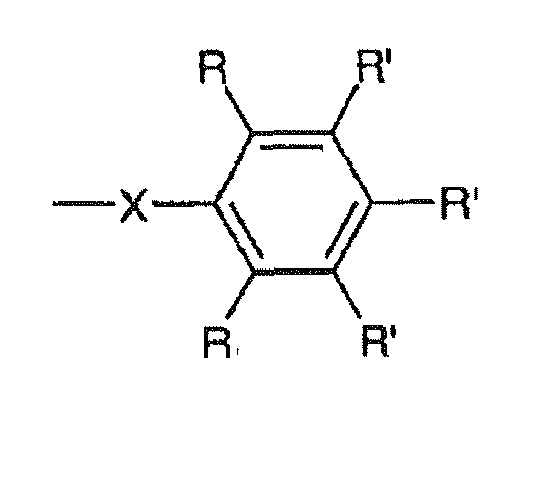 Y représente un radical (thio)phénoxy de formule
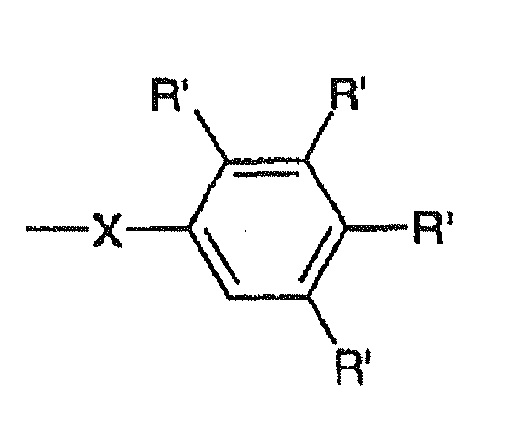 X représente -O- ou -S- ;R représente des radicaux identiques ou différents :(i) un radical alkyle en C1-C30, au maximum un des radicaux pouvant comporter en la position 1 un atome de carbone tertiaire, dont la chaîne carbonée peut être interrompue par un ou plusieurs groupements -O-, -S-, -NR2 et/ou -CO-, et qui peut être une ou plusieurs fois substitué par alcoxy en C1-C12, hydroxy et/ou halogène ;(ii) un radical cycloalkyle en C3-C8, au maximum un des radicaux pouvant comporter en la position 1 un atome de carbone tertiaire, et qui peut être une ou plusieurs fois substitué par alkyle en C1-C18 et/ou alcoxy en C1-C12 ;(iii) un radical aryle ou hétéroaryle, qui peut être une ou plusieurs fois substitué par alkyle en C1-C18 et/ou alcoxy en C1-C12 ;(iv) un radical -U-aryle, qui peut être une ou plusieurs fois substitué par les radicaux précédents, nommés en tant que substituants pour les radicaux aryle (iii), U représentant un groupement -O-, -S- ou -NR2- ;(v) un atome d'halogène ou un groupe alcoxy en C1-C12, hydroxy ou cyano ;R' représente des radicaux identiques ou différents : un atome d'hydrogène ; l'un des radicaux (i), (ii), (iii), (iv) et (v) nommés pour R, les radicaux alkyle (i) et les radicaux cycloalkyle (ii) pouvant comporter en la position 1 un atome de carbone tertiaire ;P représente un cycle à 5 à 9 chaînons, lié par un atome d'azote, dont la chaîne carbonée peut être interrompue par un ou plusieurs groupements -O-, -S-, -NR2, -CO- et/ou -SO2-, auquel peuvent être soudés un ou deux cycles saturés ou insaturés à 4 à 8 chaînons, dont la chaîne carbonée peut également être interrompue par ces groupements et/ou -N=, le système cyclique entier pouvant être une ou plusieurs fois substitué par : alkyle en C1-C30, qui peut être une ou plusieurs fois substitué par aryle, qui peut être substitué par alkyle en C1-C18 ; pour p > 1 les radicaux P pouvant être identiques ou différents ;Hal représente le fluor, le chlore, le brome ou l'iode ;M représente un atome d'hydrogène, un cation de métal alcalin, NH4 + ou NR3 4 + ;R1 représente un atome d'hydrogène ; un radical alkyle en C1-C30, qui peut être une ou plusieurs fois substitué par alcoxy en C1-C6, cyano et/ou aryle ; un radical phényle, qui peut être une ou plusieurs fois substitué par alkyle en C1-C18, alcoxy en C1-C6, halogène, cyano et/ou nitro ;R2 représente un atome d'hydrogène ou un groupe alkyle en C1-C18 ;R3 représente, chaque fois indépendamment, un atome d'hydrogène ; un radical alkyle en C1-C18, qui peut être une ou plusieurs fois substitué par alcoxy en C1-C6, hydroxy, halogène et/ou cyano ; un radical aryle ou hétéroaryle, chacun pouvant être une ou plusieurs fois substitué par alkyle en C1-C6 et/ou les radicaux nommés précédemment en tant que substituants pour alkyle ;pour m = 0 (dérivés pérylène)n vaut de 1 à 4 ;p vaut de 0 à 2, n + p étant ≤ 4 ;y vaut de 0 à 4, n + p + y étant ≤ 4 ;z vaut de 0 à 4, n + p + y + z étant ≤ 6 ;et pour m = 1 (dérivés terrylène)n vaut de 1 à 6 ;p vaut de 0 à 3, n + p étant ≤ 6 ;y vaut de 0 à 3, n + p + y étant ≤ 6 ;z vaut de 0 à 5, n + p + y + z étant ≤ 8 ;et pour m = 2 (dérivés quaterrylène)n vaut de 1 à 8 ;p vaut de 0 à 5, n + p étant ≤ 8 ;y vaut de 0 à 5, n + p + y étant ≤ 8 ;z vaut de 0 à 6, n + p + y + z étant ≤ 10.
 - Dérivés Rylène de formule générale Ia selon la revendication 1
 B sont liés l'un à l'autre avec formation d'un cycle hexagonal, en un radical de formule (a) ou (b)
 B' indépendamment de B sont liés l'un à l'autre avec formation d'un cycle hexagonal, en un radical de formule (a) ou (b), ou représentent l'un et l'autre un atome d'hydrogène ou un radical -COOM ;A représente un radical de formule
 Y représente un radical (thio)phénoxy de formule
 X représente -O- ou -S- ;R représente des radicaux identiques ou différents : (i) un radical alkyle en C1-C30, qui ne comporte en la position 1 aucun atome de carbone tertiaire, dont la chaîne carbonée peut être interrompue par un ou plusieurs groupements -O-, -S-, -NR2 et/ou - CO-, et qui peut être une ou plusieurs fois substitué par alcoxy en C1-C12, hydroxy et/ou halogène ; (ii) un radical cycloalkyle en C3-C8, qui ne comporte en la position 1 aucun atome de carbone tertiaire, et qui peut être une ou plusieurs fois substitué par alkyle en C1-C18 et/ou alcoxy en C1-C12 ; (iii) un radical aryle ou hétéroaryle, qui peut être une ou plusieurs fois substitué par alkyle en C1-C18 et/ou alcoxy en C1-C12 ; (iv) un radical -U-aryle, qui peut être une ou plusieurs fois substitué par les radicaux précédents, nommés en tant que substituants pour les radicaux aryle (iii), U représentant un groupement -O-, -S- ou -NR2- ; (v) un atome d'halogène ou un groupe alcoxy en C1-C12, hydroxy ou cyano ;R' représente des radicaux identiques ou différents : un atome d'hydrogène ; l'un des radicaux (i), (ii), (iii), (iv) et (v) nommés pour R, les radicaux alkyle (i) et les radicaux cycloalkyle (ii) pouvant comporter en la position 1 un atome de carbone tertiaire ;P représente un cycle à 5 à 9 chaînons, lié par un atome d'azote, dont la chaîne carbonée peut être interrompue par un ou plusieurs groupements -O-, -S-, -NR2, -CO- et/ou -SO2-, auquel peuvent être soudés un ou deux cycles saturés ou insaturés à 4 à 8 chaînons, dont la chaîne carbonée peut également être interrompue par ces groupements et/ou -N=, le système cyclique entier pouvant être une ou plusieurs fois substitué par : alkyle en C1-C30, qui peut être une ou plusieurs fois substitué par aryle, qui peut être substitué par alkyle en C1-C18 ; pour p > 1 les radicaux P pouvant être identiques ou différents ;Hal représente le fluor, le chlore, le brome ou l'iode ;M représente un atome d'hydrogène, un cation de métal alcalin, NH4 + ou NR3 4 +;R1 représente un atome d'hydrogène ; un radical alkyle en C1-C30, qui peut être une ou plusieurs fois substitué par alcoxy en C1-C6, cyano et/ou aryle ; un radical phényle, qui peut être une ou plusieurs fois substitué par alkyle en C1-C18, alcoxy en C1-C6, halogène, cyano et/ou nitro ;R2 représente un atome d'hydrogène ou un groupe alkyle en C1-C18 ;R3 représente, chaque fois indépendamment, un atome d'hydrogène ; un radical alkyle en C1-C18, qui peut être une ou plusieurs fois substitué par alcoxy en C1-C6, hydroxy, halogène et/ou cyano ; un radical aryle ou hétéroaryle, chacun pouvant être une ou plusieurs fois substitué par alkyle en C1-C6 et/ou les radicaux nommés précédemment en tant que substituants pour alkyle ;pour m = 0 (dérivés pérylène)n vaut de 1 à 4 ;p vaut de 0 à 2, n + p étant ≤ 4 ;y vaut de 0 à 4, n + p + y étant ≤ 4 ;z vaut de 0 à 4, n + p + y + z étant ≤ 6 ;et pour m = 1 (dérivés terrylène)n vaut de 1 à 6 ;p vaut de 0 à 3, n + p étant ≤ 6 ;y vaut de 0 à 3, n + p + y étant ≤ 6 ;z vaut de 0 à 5, n + p + y + z étant ≤ 8 ;et pour m = 2 (dérivés quaterrylène)n vaut de 1 à 8 ;p vaut de 0 à 5, n + p étant ≤ 8 ;y vaut de 0 à 5, n + p + y étant ≤ 8 ;z vaut de 0 à 6, n + p + y + z étant ≤ 10.
 - Utilisation de dérivés Rylène selon la revendication 1 ou 2, pour la coloration de matières organiques et de matières inorganiques.
- Utilisation selon la revendication 3, caractérisée en ce que les matières organiques sont des peintures, des encres d'impression ou des matières plastiques.
- Utilisation de dérivés Rylène selon la revendication 1 ou 2, pour la préparation de dispersions aqueuses de polymérisats émettant et/ou absorbant un rayonnement électromagnétique.
- Utilisation de dérivés Rylène selon la revendication 1 ou 2, pour la production de marquages ou d'inscriptions absorbant dans l'infrarouge, invisibles à l'oeil nu.
- Utilisation de dérivés Rylène selon la revendication 1 ou 2, en tant qu'absorbeur infrarouge pour la gestion de la chaleur.
- Utilisation de dérivés Rylène selon la revendication 1 ou 2, en tant que matériaux absorbant les rayons laser-IR dans le traitement par soudage de pièces en matière plastique.
- Utilisation de dérivés Rylène selon la revendication 1 ou 2, pour le marquage au laser et l'inscription laser.
- Utilisation de dérivés Rylène selon la revendication 1 ou 2, en tant que semi-conducteur en électronique organique.
- Utilisation de dérivés Rylène selon la revendication 1 ou 2, sous forme de filtres ou d'émetteurs pour des applications d'affichage.
- Utilisation de dérivés Rylène selon la revendication 1 ou 2, sous forme d'émetteurs dans des applications de chimiluminescence.
- Utilisation de dérivés Rylène selon la revendication 1 ou 2, en tant que groupes de marquage dans des procédés de détection.
- Utilisation de dérivés Rylène selon la revendication 1 ou 2, en tant que composants actifs dans la technique photovoltaïque.
Applications Claiming Priority (2)
| Application Number | Priority Date | Filing Date | Title |
|---|---|---|---|
| DE102005032583A DE102005032583A1 (de) | 2005-07-11 | 2005-07-11 | Substituierte Rylenderivate |
| PCT/EP2006/063955 WO2007006717A1 (fr) | 2005-07-11 | 2006-07-06 | Derives de rylene substitues |
Publications (2)
| Publication Number | Publication Date |
|---|---|
| EP1904497A1 EP1904497A1 (fr) | 2008-04-02 |
| EP1904497B1 true EP1904497B1 (fr) | 2011-08-17 |
Family
ID=36997501
Family Applications (1)
| Application Number | Title | Priority Date | Filing Date |
|---|---|---|---|
| EP06764095A Not-in-force EP1904497B1 (fr) | 2005-07-11 | 2006-07-06 | Derives de rylene substitues |
Country Status (9)
| Country | Link |
|---|---|
| US (1) | US8071775B2 (fr) |
| EP (1) | EP1904497B1 (fr) |
| JP (1) | JP5074393B2 (fr) |
| KR (1) | KR101399197B1 (fr) |
| CN (1) | CN101223172B (fr) |
| AT (1) | ATE520695T1 (fr) |
| DE (1) | DE102005032583A1 (fr) |
| ES (1) | ES2370838T3 (fr) |
| WO (1) | WO2007006717A1 (fr) |
Families Citing this family (50)
| Publication number | Priority date | Publication date | Assignee | Title |
|---|---|---|---|---|
| DE102005021362A1 (de) * | 2005-05-04 | 2006-11-09 | Basf Ag | Terrylen- und Quaterrylenderivate |
| DE102005037115A1 (de) | 2005-08-03 | 2007-02-08 | Basf Ag | Mehrfachchromophore |
| WO2008052981A1 (fr) * | 2006-11-02 | 2008-05-08 | Basf Se | Diimides d'acide pentarylène-tétracarboxylique et hexarylène-tétracarboxylique et leur production |
| US20100171108A1 (en) * | 2007-06-22 | 2010-07-08 | Basf Se | Use of n,n'-bis(1,1-dihydroperfluoro-c3-c5-alkyl)-perylene-3,4:9,10- tetracarboxylic diimides |
| DE102007030076A1 (de) | 2007-06-29 | 2007-11-15 | Heidelberger Druckmaschinen Ag | Verfahren zum Trocknen von Druckfarbe auf einem Bedruckstoff |
| WO2009013258A1 (fr) | 2007-07-23 | 2009-01-29 | Basf Se | Utilisation de derivés de rylène en tant que composants actifs dans des cellules solaires et des photodétecteurs |
| US8563855B2 (en) * | 2007-07-23 | 2013-10-22 | Basf Se | Tandem photovoltaic cell |
| EP2240529B1 (fr) * | 2008-02-05 | 2017-07-19 | Basf Se | Polymères semi-conducteurs de naphtalène-imide |
| US8618297B2 (en) | 2008-07-25 | 2013-12-31 | Basf Se | Azide substituted naphthylene or rylene imide derivatives and their use as reagents in click-reactions |
| US9236535B2 (en) | 2011-02-24 | 2016-01-12 | Basf Se | Illumination devices |
| WO2012152812A1 (fr) | 2011-05-10 | 2012-11-15 | Basf Se | Nouveaux convertisseurs de couleur |
| WO2012168395A1 (fr) | 2011-06-10 | 2012-12-13 | Basf Se | Nouveau convertisseur de couleurs |
| EP3008485A1 (fr) | 2013-06-13 | 2016-04-20 | Basf Se | Détecteur pour détection optique d'au moins un objet |
| EP3008421A1 (fr) | 2013-06-13 | 2016-04-20 | Basf Se | Détecteur permettant de détecter optiquement l'orientation d'au moins un objet |
| BR112016002446A2 (pt) | 2013-08-05 | 2017-08-01 | Basf Se | composto de naftalenobenzimidazol cianado, mistura de compostos de naftalenobenzimidazol cianado, conversor de cor, uso de um conversor de cor, dispositivo de luminosidade, e, dispositivo para produção de energia elétrica mediante iluminação |
| DE102014100837A1 (de) * | 2014-01-24 | 2015-07-30 | Osram Opto Semiconductors Gmbh | Lichtemittierendes Bauelement und Verfahren zur Herstellung eines lichtemittierenden Bauelements |
| US9919999B2 (en) | 2014-05-09 | 2018-03-20 | Basf Se | Cyanated perylene compounds |
| CN106662636B (zh) | 2014-07-08 | 2020-12-25 | 巴斯夫欧洲公司 | 用于确定至少一个对象的位置的检测器 |
| US11125880B2 (en) | 2014-12-09 | 2021-09-21 | Basf Se | Optical detector |
| JP6841769B2 (ja) | 2015-01-30 | 2021-03-10 | トリナミクス ゲゼルシャフト ミット ベシュレンクテル ハフツング | 少なくとも1個の物体を光学的に検出する検出器 |
| CN107428775B (zh) | 2015-03-26 | 2020-11-03 | 巴斯夫欧洲公司 | 氰化苯并呫吨和苯并噻吨化合物 |
| EP3072887B1 (fr) | 2015-03-26 | 2017-10-18 | Basf Se | N, n'-bis (2,6-diisopropylphenyl) -1,7-di (2,6-diphenylphenoxy) perylene-3,4; 9,10-tetracarboximide, n, n'-bis (2,6-diisopropylphenyl) -1,6-di (2,6-diphenylphenoxy) perylene-3,4; 9,10-tetracarboximide et son utilisation |
| EP3101087B1 (fr) | 2015-06-03 | 2018-01-17 | Basf Se | Chromophores multiples avec un squelette de pérylène diimide |
| EP3325917B1 (fr) | 2015-07-17 | 2020-02-26 | trinamiX GmbH | Détecteur pour détecter optiquement au moins un objet |
| KR102539263B1 (ko) | 2015-09-14 | 2023-06-05 | 트리나미엑스 게엠베하 | 적어도 하나의 물체의 적어도 하나의 이미지를 기록하는 카메라 |
| KR20180086198A (ko) | 2015-11-25 | 2018-07-30 | 트리나미엑스 게엠베하 | 적어도 하나의 물체를 광학적으로 검출하기 위한 검출기 |
| JP6949033B2 (ja) | 2016-01-14 | 2021-10-13 | ビーエイエスエフ・ソシエタス・エウロパエアBasf Se | 剛直な2,2’−ビフェノキシ架橋を有するペリレンビスイミド |
| JP2019523562A (ja) | 2016-07-29 | 2019-08-22 | トリナミクス ゲゼルシャフト ミット ベシュレンクテル ハフツング | 光学的検出のための光センサおよび検出器 |
| JP7114578B2 (ja) | 2016-10-06 | 2022-08-08 | ビーエーエスエフ ソシエタス・ヨーロピア | 2-フェニルフェノキシ置換ペリレンビスイミド化合物およびそれらの使用 |
| CN109923372B (zh) | 2016-10-25 | 2021-12-21 | 特里纳米克斯股份有限公司 | 采用集成滤波器的红外光学检测器 |
| EP3532864B1 (fr) | 2016-10-25 | 2024-08-28 | trinamiX GmbH | Détecteur pour détection optique d'au moins un objet |
| CN109964144B (zh) | 2016-11-17 | 2023-07-18 | 特里纳米克斯股份有限公司 | 用于光学探测至少一个对象的检测器 |
| US11860292B2 (en) | 2016-11-17 | 2024-01-02 | Trinamix Gmbh | Detector and methods for authenticating at least one object |
| WO2018096083A1 (fr) | 2016-11-25 | 2018-05-31 | Trinamix Gmbh | Détecteur optique comprenant au moins un guide d'ondes optique |
| CN110177789A (zh) | 2017-01-18 | 2019-08-27 | 巴斯夫欧洲公司 | 作为色彩转化器的经1,6,7,12-四(2-异丙基苯氧基)取代的苝四甲酸二酰亚胺 |
| KR20190132659A (ko) | 2017-03-24 | 2019-11-28 | 바스프 에스이 | 색 변환기를 위한 매트릭스 물질로서의 폴리(에틸렌 푸란-2,5-디카르복실레이트) |
| CN110770555A (zh) | 2017-04-20 | 2020-02-07 | 特里纳米克斯股份有限公司 | 光学检测器 |
| EP3645965B1 (fr) | 2017-06-26 | 2022-04-27 | trinamiX GmbH | Appareil de détermination d'une position d'au moins un objet |
| WO2019011677A1 (fr) | 2017-07-13 | 2019-01-17 | Basf Se | Vitrage feuilleté, unité d'éclairage et procédé de fabrication d'un vitrage feuilleté |
| JP7203830B2 (ja) * | 2017-08-24 | 2023-01-13 | ビーエーエスエフ ソシエタス・ヨーロピア | データを送信するための、および可視スペクトル範囲内の電磁放射を放出するための送信機およびデータ送信システム |
| WO2019121602A1 (fr) | 2017-12-19 | 2019-06-27 | Basf Se | Composés de benzoxanthène ou de benzothioxanthène substitués par cyanoaryle |
| CN111886318B (zh) | 2018-03-20 | 2024-07-23 | 巴斯夫欧洲公司 | 黄光发射装置 |
| US12071574B2 (en) | 2018-06-22 | 2024-08-27 | Basf Se | Photostable cyano-substituted boron-dipyrromethene dye as green emitter for display and illumination applications |
| CN112739794B (zh) | 2018-09-11 | 2024-08-13 | 巴斯夫欧洲公司 | 用于光学数据通信的包括发光收集器的接收器 |
| US12302749B2 (en) | 2018-10-10 | 2025-05-13 | Konica Minolta, Inc. | Imide derivative, luminescent composition containing same, luminous thin film, and luminous particles |
| JP7561756B2 (ja) | 2019-03-22 | 2024-10-04 | ベーアーエスエフ・エスエー | 植物の栽培方法 |
| EP3816238B9 (fr) * | 2019-11-04 | 2023-06-21 | Textilchemie Dr. Petry Gmbh | Dérivés de polyparaparylène et leurs procédés de fabrication |
| EP3858946A1 (fr) | 2020-01-29 | 2021-08-04 | Basf Se | Nouveaux rylènedicarboximides |
| JP7845842B2 (ja) * | 2021-02-18 | 2026-04-14 | 住友化学株式会社 | 着色樹脂組成物、カラーフィルタ及び表示装置 |
| WO2023105029A1 (fr) | 2021-12-09 | 2023-06-15 | Basf Se | Colorants à base de diimide terrylène et de diimide quaterrylène |
Family Cites Families (16)
| Publication number | Priority date | Publication date | Assignee | Title |
|---|---|---|---|---|
| US5986099A (en) | 1995-01-20 | 1999-11-16 | Basf Aktiengesellschaft | Substituted quaterrylene tetracarboxylic acid diimides |
| DE19547209A1 (de) * | 1995-12-18 | 1997-06-19 | Basf Ag | 1,7-Diaroxy-oder -arylthiosubstituierte Perylen-3,4,9,10-tetracarbonsäuren, deren Dianhydride und Diimide |
| DE19700990A1 (de) * | 1997-01-14 | 1998-07-16 | Langhals Heinz | Die ausbalancierte Decarboxylierung von aromatischen Polycarbonsäuren - eine einstufige Synthese von Perylen-3,4-dicarbonsäureanhydrid |
| JPH1167450A (ja) * | 1997-08-12 | 1999-03-09 | Sony Corp | 有機電界発光素子 |
| US6166210A (en) * | 1997-12-15 | 2000-12-26 | Ciba Specialty Chemicals Corporation | Perylene imide monocarboxylic acids |
| DE19805121A1 (de) * | 1998-02-09 | 1999-08-12 | Basf Ag | Verfahren zur Herstellung farbstoffenthaltender, wässriger Polymerisatdispersionen |
| DE19940708A1 (de) * | 1999-08-27 | 2001-03-01 | Basf Ag | Thermochrome Rylenfarbstoffe |
| DE10039643A1 (de) * | 2000-08-14 | 2002-02-28 | Max Planck Gesellschaft | Funktionalisierte Perylentetracarbonsäurediimide |
| EP1379577B1 (fr) * | 2001-03-23 | 2004-08-25 | Solutia Inc. | Regulation du rayonnement solaire dans des stratifies de verre de securite |
| AU2002310976B2 (en) | 2001-03-23 | 2007-11-01 | Basf Aktiengesellschaft | Tert. alkylphenoxy substituted polycyclic compounds |
| DE10225595A1 (de) * | 2002-06-07 | 2003-12-18 | Basf Ag | 1,6,9,14-Tetrasubstituierte Terrylentetracarbonsäurediimide |
| DE10238994A1 (de) * | 2002-08-20 | 2004-02-26 | Basf Ag | Rylenfarbstoffe |
| DE10243906A1 (de) * | 2002-09-20 | 2004-04-01 | Basf Ag | 9-Cyanosubstituierte Perylen-3,4-dicarbonsäuremonoimide |
| DE102004057585A1 (de) | 2004-11-29 | 2006-06-01 | Basf Ag | Durch cyclische Aminogruppen substituierte Rylentetracarbonsäurediimide |
| DE102005018241A1 (de) | 2005-04-19 | 2006-10-26 | Basf Ag | Hexarylen- und Pentarylentetracarbonsäurediimide |
| DE102005021362A1 (de) | 2005-05-04 | 2006-11-09 | Basf Ag | Terrylen- und Quaterrylenderivate |
-
2005
- 2005-07-11 DE DE102005032583A patent/DE102005032583A1/de not_active Withdrawn
-
2006
- 2006-07-06 KR KR1020087002598A patent/KR101399197B1/ko not_active Expired - Fee Related
- 2006-07-06 WO PCT/EP2006/063955 patent/WO2007006717A1/fr not_active Ceased
- 2006-07-06 CN CN200680025404.XA patent/CN101223172B/zh active Active
- 2006-07-06 AT AT06764095T patent/ATE520695T1/de active
- 2006-07-06 JP JP2008520847A patent/JP5074393B2/ja active Active
- 2006-07-06 US US11/994,719 patent/US8071775B2/en active Active
- 2006-07-06 EP EP06764095A patent/EP1904497B1/fr not_active Not-in-force
- 2006-07-06 ES ES06764095T patent/ES2370838T3/es active Active
Also Published As
| Publication number | Publication date |
|---|---|
| JP5074393B2 (ja) | 2012-11-14 |
| DE102005032583A1 (de) | 2007-01-25 |
| KR101399197B1 (ko) | 2014-05-26 |
| ATE520695T1 (de) | 2011-09-15 |
| KR20080040686A (ko) | 2008-05-08 |
| CN101223172A (zh) | 2008-07-16 |
| ES2370838T3 (es) | 2011-12-23 |
| US20080167467A1 (en) | 2008-07-10 |
| EP1904497A1 (fr) | 2008-04-02 |
| US8071775B2 (en) | 2011-12-06 |
| JP2009500438A (ja) | 2009-01-08 |
| WO2007006717A1 (fr) | 2007-01-18 |
| CN101223172B (zh) | 2015-11-25 |
Similar Documents
| Publication | Publication Date | Title |
|---|---|---|
| EP1904497B1 (fr) | Derives de rylene substitues | |
| EP1879847B1 (fr) | Derives de terrylene et de quaterrylene | |
| EP1513841B1 (fr) | Diimide d'acide t tracarbonique terrylene 1,6,9,14-t trasubstitue | |
| EP1206456B1 (fr) | Colorants de rylene thermochromes | |
| EP1802622B1 (fr) | Halogenation de rylene-carboximides a halogene elementaire dans un melange a deux phases comprenant un solvant organique et de l'eau, avec prelevement en continu, a partir du solvant organique, de l'hydracide halogene forme | |
| EP1370612B1 (fr) | Colorant de rylene thermochromes | |
| EP2087042A1 (fr) | Diimides d'acide pentarylene-tetracarboxylique et hexarylene-tetracarboxylique et leur production | |
| EP2089390B1 (fr) | Diimides d'acide heptarylène-tétracarboxylique et d'acide octarylène-tétracarboxylique et leur production | |
| EP1917311B1 (fr) | Chromophores multiples a base de rylene | |
| EP1711469B1 (fr) | Procede de production de diimides de terylene-3,4:11,12-acide tetracarboxylique par synthese directe | |
| EP1789415B1 (fr) | Procede de production de diimides de quaterrylene-3,4:13,14-acide tetracarboxylique, par synthese directe | |
| DE102004003735A1 (de) | Verfahren zur Herstellung von Terrylen-3,4:11,12-tetracarbonsäurediimiden | |
| US20090124732A1 (en) | Rylene Tetracarboxylic Acid Diimides Substituted By Cyclic Amino Groups | |
| EP2285806B1 (fr) | Dimiides d acide pentarylènetétracarboxylique trois et quatre fois substitués |
Legal Events
| Date | Code | Title | Description |
|---|---|---|---|
| PUAI | Public reference made under article 153(3) epc to a published international application that has entered the european phase |
Free format text: ORIGINAL CODE: 0009012 |
|
| 17P | Request for examination filed |
Effective date: 20080211 |
|
| AK | Designated contracting states |
Kind code of ref document: A1 Designated state(s): AT BE BG CH CY CZ DE DK EE ES FI FR GB GR HU IE IS IT LI LT LU LV MC NL PL PT RO SE SI SK TR |
|
| DAX | Request for extension of the european patent (deleted) | ||
| 17Q | First examination report despatched |
Effective date: 20081023 |
|
| GRAP | Despatch of communication of intention to grant a patent |
Free format text: ORIGINAL CODE: EPIDOSNIGR1 |
|
| GRAS | Grant fee paid |
Free format text: ORIGINAL CODE: EPIDOSNIGR3 |
|
| DAX | Request for extension of the european patent (deleted) | ||
| GRAA | (expected) grant |
Free format text: ORIGINAL CODE: 0009210 |
|
| AK | Designated contracting states |
Kind code of ref document: B1 Designated state(s): AT BE BG CH CY CZ DE DK EE ES FI FR GB GR HU IE IS IT LI LT LU LV MC NL PL PT RO SE SI SK TR |
|
| REG | Reference to a national code |
Ref country code: GB Ref legal event code: FG4D Free format text: NOT ENGLISH |
|
| REG | Reference to a national code |
Ref country code: CH Ref legal event code: EP |
|
| REG | Reference to a national code |
Ref country code: IE Ref legal event code: FG4D Free format text: LANGUAGE OF EP DOCUMENT: GERMAN |
|
| REG | Reference to a national code |
Ref country code: DE Ref legal event code: R096 Ref document number: 502006010037 Country of ref document: DE Effective date: 20111013 |
|
| REG | Reference to a national code |
Ref country code: NL Ref legal event code: VDEP Effective date: 20110817 |
|
| REG | Reference to a national code |
Ref country code: ES Ref legal event code: FG2A Ref document number: 2370838 Country of ref document: ES Kind code of ref document: T3 Effective date: 20111223 |
|
| LTIE | Lt: invalidation of european patent or patent extension |
Effective date: 20110817 |
|
| PG25 | Lapsed in a contracting state [announced via postgrant information from national office to epo] |
Ref country code: FI Free format text: LAPSE BECAUSE OF FAILURE TO SUBMIT A TRANSLATION OF THE DESCRIPTION OR TO PAY THE FEE WITHIN THE PRESCRIBED TIME-LIMIT Effective date: 20110817 Ref country code: LT Free format text: LAPSE BECAUSE OF FAILURE TO SUBMIT A TRANSLATION OF THE DESCRIPTION OR TO PAY THE FEE WITHIN THE PRESCRIBED TIME-LIMIT Effective date: 20110817 Ref country code: PT Free format text: LAPSE BECAUSE OF FAILURE TO SUBMIT A TRANSLATION OF THE DESCRIPTION OR TO PAY THE FEE WITHIN THE PRESCRIBED TIME-LIMIT Effective date: 20111219 Ref country code: IS Free format text: LAPSE BECAUSE OF FAILURE TO SUBMIT A TRANSLATION OF THE DESCRIPTION OR TO PAY THE FEE WITHIN THE PRESCRIBED TIME-LIMIT Effective date: 20111217 Ref country code: SE Free format text: LAPSE BECAUSE OF FAILURE TO SUBMIT A TRANSLATION OF THE DESCRIPTION OR TO PAY THE FEE WITHIN THE PRESCRIBED TIME-LIMIT Effective date: 20110817 Ref country code: NL Free format text: LAPSE BECAUSE OF FAILURE TO SUBMIT A TRANSLATION OF THE DESCRIPTION OR TO PAY THE FEE WITHIN THE PRESCRIBED TIME-LIMIT Effective date: 20110817 |
|
| PG25 | Lapsed in a contracting state [announced via postgrant information from national office to epo] |
Ref country code: CY Free format text: LAPSE BECAUSE OF FAILURE TO SUBMIT A TRANSLATION OF THE DESCRIPTION OR TO PAY THE FEE WITHIN THE PRESCRIBED TIME-LIMIT Effective date: 20110817 Ref country code: GR Free format text: LAPSE BECAUSE OF FAILURE TO SUBMIT A TRANSLATION OF THE DESCRIPTION OR TO PAY THE FEE WITHIN THE PRESCRIBED TIME-LIMIT Effective date: 20111118 Ref country code: SI Free format text: LAPSE BECAUSE OF FAILURE TO SUBMIT A TRANSLATION OF THE DESCRIPTION OR TO PAY THE FEE WITHIN THE PRESCRIBED TIME-LIMIT Effective date: 20110817 Ref country code: PL Free format text: LAPSE BECAUSE OF FAILURE TO SUBMIT A TRANSLATION OF THE DESCRIPTION OR TO PAY THE FEE WITHIN THE PRESCRIBED TIME-LIMIT Effective date: 20110817 Ref country code: LV Free format text: LAPSE BECAUSE OF FAILURE TO SUBMIT A TRANSLATION OF THE DESCRIPTION OR TO PAY THE FEE WITHIN THE PRESCRIBED TIME-LIMIT Effective date: 20110817 |
|
| REG | Reference to a national code |
Ref country code: IE Ref legal event code: FD4D |
|
| PG25 | Lapsed in a contracting state [announced via postgrant information from national office to epo] |
Ref country code: IE Free format text: LAPSE BECAUSE OF FAILURE TO SUBMIT A TRANSLATION OF THE DESCRIPTION OR TO PAY THE FEE WITHIN THE PRESCRIBED TIME-LIMIT Effective date: 20110817 Ref country code: CZ Free format text: LAPSE BECAUSE OF FAILURE TO SUBMIT A TRANSLATION OF THE DESCRIPTION OR TO PAY THE FEE WITHIN THE PRESCRIBED TIME-LIMIT Effective date: 20110817 Ref country code: SK Free format text: LAPSE BECAUSE OF FAILURE TO SUBMIT A TRANSLATION OF THE DESCRIPTION OR TO PAY THE FEE WITHIN THE PRESCRIBED TIME-LIMIT Effective date: 20110817 |
|
| PG25 | Lapsed in a contracting state [announced via postgrant information from national office to epo] |
Ref country code: EE Free format text: LAPSE BECAUSE OF FAILURE TO SUBMIT A TRANSLATION OF THE DESCRIPTION OR TO PAY THE FEE WITHIN THE PRESCRIBED TIME-LIMIT Effective date: 20110817 Ref country code: RO Free format text: LAPSE BECAUSE OF FAILURE TO SUBMIT A TRANSLATION OF THE DESCRIPTION OR TO PAY THE FEE WITHIN THE PRESCRIBED TIME-LIMIT Effective date: 20110817 |
|
| PLBE | No opposition filed within time limit |
Free format text: ORIGINAL CODE: 0009261 |
|
| STAA | Information on the status of an ep patent application or granted ep patent |
Free format text: STATUS: NO OPPOSITION FILED WITHIN TIME LIMIT |
|
| PG25 | Lapsed in a contracting state [announced via postgrant information from national office to epo] |
Ref country code: DK Free format text: LAPSE BECAUSE OF FAILURE TO SUBMIT A TRANSLATION OF THE DESCRIPTION OR TO PAY THE FEE WITHIN THE PRESCRIBED TIME-LIMIT Effective date: 20110817 |
|
| 26N | No opposition filed |
Effective date: 20120521 |
|
| REG | Reference to a national code |
Ref country code: DE Ref legal event code: R097 Ref document number: 502006010037 Country of ref document: DE Effective date: 20120521 |
|
| PG25 | Lapsed in a contracting state [announced via postgrant information from national office to epo] |
Ref country code: MC Free format text: LAPSE BECAUSE OF NON-PAYMENT OF DUE FEES Effective date: 20120731 |
|
| REG | Reference to a national code |
Ref country code: CH Ref legal event code: PL |
|
| PG25 | Lapsed in a contracting state [announced via postgrant information from national office to epo] |
Ref country code: LI Free format text: LAPSE BECAUSE OF NON-PAYMENT OF DUE FEES Effective date: 20120731 Ref country code: CH Free format text: LAPSE BECAUSE OF NON-PAYMENT OF DUE FEES Effective date: 20120731 |
|
| PG25 | Lapsed in a contracting state [announced via postgrant information from national office to epo] |
Ref country code: BG Free format text: LAPSE BECAUSE OF FAILURE TO SUBMIT A TRANSLATION OF THE DESCRIPTION OR TO PAY THE FEE WITHIN THE PRESCRIBED TIME-LIMIT Effective date: 20111117 |
|
| REG | Reference to a national code |
Ref country code: AT Ref legal event code: MM01 Ref document number: 520695 Country of ref document: AT Kind code of ref document: T Effective date: 20120731 |
|
| PG25 | Lapsed in a contracting state [announced via postgrant information from national office to epo] |
Ref country code: AT Free format text: LAPSE BECAUSE OF NON-PAYMENT OF DUE FEES Effective date: 20120731 |
|
| PG25 | Lapsed in a contracting state [announced via postgrant information from national office to epo] |
Ref country code: LU Free format text: LAPSE BECAUSE OF NON-PAYMENT OF DUE FEES Effective date: 20120706 |
|
| PG25 | Lapsed in a contracting state [announced via postgrant information from national office to epo] |
Ref country code: HU Free format text: LAPSE BECAUSE OF FAILURE TO SUBMIT A TRANSLATION OF THE DESCRIPTION OR TO PAY THE FEE WITHIN THE PRESCRIBED TIME-LIMIT Effective date: 20060706 |
|
| REG | Reference to a national code |
Ref country code: FR Ref legal event code: PLFP Year of fee payment: 11 |
|
| PGFP | Annual fee paid to national office [announced via postgrant information from national office to epo] |
Ref country code: TR Payment date: 20160621 Year of fee payment: 11 |
|
| PGFP | Annual fee paid to national office [announced via postgrant information from national office to epo] |
Ref country code: IT Payment date: 20160721 Year of fee payment: 11 Ref country code: GB Payment date: 20160729 Year of fee payment: 11 |
|
| PGFP | Annual fee paid to national office [announced via postgrant information from national office to epo] |
Ref country code: FR Payment date: 20160727 Year of fee payment: 11 |
|
| PGFP | Annual fee paid to national office [announced via postgrant information from national office to epo] |
Ref country code: BE Payment date: 20160725 Year of fee payment: 11 Ref country code: ES Payment date: 20160829 Year of fee payment: 11 |
|
| GBPC | Gb: european patent ceased through non-payment of renewal fee |
Effective date: 20170706 |
|
| REG | Reference to a national code |
Ref country code: FR Ref legal event code: ST Effective date: 20180330 |
|
| PG25 | Lapsed in a contracting state [announced via postgrant information from national office to epo] |
Ref country code: GB Free format text: LAPSE BECAUSE OF NON-PAYMENT OF DUE FEES Effective date: 20170706 |
|
| PG25 | Lapsed in a contracting state [announced via postgrant information from national office to epo] |
Ref country code: FR Free format text: LAPSE BECAUSE OF NON-PAYMENT OF DUE FEES Effective date: 20170731 |
|
| REG | Reference to a national code |
Ref country code: BE Ref legal event code: MM Effective date: 20170731 |
|
| PG25 | Lapsed in a contracting state [announced via postgrant information from national office to epo] |
Ref country code: BE Free format text: LAPSE BECAUSE OF NON-PAYMENT OF DUE FEES Effective date: 20170731 Ref country code: IT Free format text: LAPSE BECAUSE OF NON-PAYMENT OF DUE FEES Effective date: 20170706 |
|
| REG | Reference to a national code |
Ref country code: ES Ref legal event code: FD2A Effective date: 20181107 |
|
| PG25 | Lapsed in a contracting state [announced via postgrant information from national office to epo] |
Ref country code: ES Free format text: LAPSE BECAUSE OF NON-PAYMENT OF DUE FEES Effective date: 20170707 |
|
| PG25 | Lapsed in a contracting state [announced via postgrant information from national office to epo] |
Ref country code: TR Free format text: LAPSE BECAUSE OF NON-PAYMENT OF DUE FEES Effective date: 20170706 |
|
| PGFP | Annual fee paid to national office [announced via postgrant information from national office to epo] |
Ref country code: DE Payment date: 20240730 Year of fee payment: 19 |
|
| REG | Reference to a national code |
Ref country code: DE Ref legal event code: R119 Ref document number: 502006010037 Country of ref document: DE |
|
| PG25 | Lapsed in a contracting state [announced via postgrant information from national office to epo] |
Ref country code: DE Free format text: LAPSE BECAUSE OF NON-PAYMENT OF DUE FEES Effective date: 20260203 |