EP1906332A2 - Sicherheitsvorrichtung mit Schlüsselverwaltungsfunktion und Informationsverarbeitungsvorrichtung - Google Patents
Sicherheitsvorrichtung mit Schlüsselverwaltungsfunktion und Informationsverarbeitungsvorrichtung Download PDFInfo
- Publication number
- EP1906332A2 EP1906332A2 EP07113835A EP07113835A EP1906332A2 EP 1906332 A2 EP1906332 A2 EP 1906332A2 EP 07113835 A EP07113835 A EP 07113835A EP 07113835 A EP07113835 A EP 07113835A EP 1906332 A2 EP1906332 A2 EP 1906332A2
- Authority
- EP
- European Patent Office
- Prior art keywords
- key
- content
- unit
- information
- generated
- Prior art date
- Legal status (The legal status is an assumption and is not a legal conclusion. Google has not performed a legal analysis and makes no representation as to the accuracy of the status listed.)
- Withdrawn
Links
Images







Classifications
-
- G—PHYSICS
- G06—COMPUTING OR CALCULATING; COUNTING
- G06F—ELECTRIC DIGITAL DATA PROCESSING
- G06F21/00—Security arrangements for protecting computers, components thereof, programs or data against unauthorised activity
- G06F21/70—Protecting specific internal or peripheral components, in which the protection of a component leads to protection of the entire computer
- G06F21/78—Protecting specific internal or peripheral components, in which the protection of a component leads to protection of the entire computer to assure secure storage of data
- G06F21/80—Protecting specific internal or peripheral components, in which the protection of a component leads to protection of the entire computer to assure secure storage of data in storage media based on magnetic or optical technology, e.g. disks with sectors
-
- G—PHYSICS
- G06—COMPUTING OR CALCULATING; COUNTING
- G06F—ELECTRIC DIGITAL DATA PROCESSING
- G06F21/00—Security arrangements for protecting computers, components thereof, programs or data against unauthorised activity
- G06F21/10—Protecting distributed programs or content, e.g. vending or licensing of copyrighted material ; Digital rights management [DRM]
- G06F21/107—License processing; Key processing
-
- G—PHYSICS
- G06—COMPUTING OR CALCULATING; COUNTING
- G06F—ELECTRIC DIGITAL DATA PROCESSING
- G06F21/00—Security arrangements for protecting computers, components thereof, programs or data against unauthorised activity
- G06F21/10—Protecting distributed programs or content, e.g. vending or licensing of copyrighted material ; Digital rights management [DRM]
- G06F21/108—Transfer of content, software, digital rights or licenses
- G06F21/1083—Partial license transfers
-
- G—PHYSICS
- G06—COMPUTING OR CALCULATING; COUNTING
- G06F—ELECTRIC DIGITAL DATA PROCESSING
- G06F21/00—Security arrangements for protecting computers, components thereof, programs or data against unauthorised activity
- G06F21/60—Protecting data
- G06F21/602—Providing cryptographic facilities or services
-
- G—PHYSICS
- G06—COMPUTING OR CALCULATING; COUNTING
- G06F—ELECTRIC DIGITAL DATA PROCESSING
- G06F21/00—Security arrangements for protecting computers, components thereof, programs or data against unauthorised activity
- G06F21/70—Protecting specific internal or peripheral components, in which the protection of a component leads to protection of the entire computer
- G06F21/71—Protecting specific internal or peripheral components, in which the protection of a component leads to protection of the entire computer to assure secure computing or processing of information
- G06F21/72—Protecting specific internal or peripheral components, in which the protection of a component leads to protection of the entire computer to assure secure computing or processing of information in cryptographic circuits
-
- H—ELECTRICITY
- H04—ELECTRIC COMMUNICATION TECHNIQUE
- H04L—TRANSMISSION OF DIGITAL INFORMATION, e.g. TELEGRAPHIC COMMUNICATION
- H04L9/00—Cryptographic mechanisms or cryptographic arrangements for secret or secure communications; Network security protocols
- H04L9/08—Key distribution or management, e.g. generation, sharing or updating, of cryptographic keys or passwords
- H04L9/0816—Key establishment, i.e. cryptographic processes or cryptographic protocols whereby a shared secret becomes available to two or more parties, for subsequent use
- H04L9/0819—Key transport or distribution, i.e. key establishment techniques where one party creates or otherwise obtains a secret value, and securely transfers it to the other(s)
- H04L9/0822—Key transport or distribution, i.e. key establishment techniques where one party creates or otherwise obtains a secret value, and securely transfers it to the other(s) using key encryption key
-
- H—ELECTRICITY
- H04—ELECTRIC COMMUNICATION TECHNIQUE
- H04L—TRANSMISSION OF DIGITAL INFORMATION, e.g. TELEGRAPHIC COMMUNICATION
- H04L9/00—Cryptographic mechanisms or cryptographic arrangements for secret or secure communications; Network security protocols
- H04L9/08—Key distribution or management, e.g. generation, sharing or updating, of cryptographic keys or passwords
- H04L9/0861—Generation of secret information including derivation or calculation of cryptographic keys or passwords
- H04L9/0877—Generation of secret information including derivation or calculation of cryptographic keys or passwords using additional device, e.g. trusted platform module [TPM], smartcard, USB or hardware security module [HSM]
-
- H—ELECTRICITY
- H04—ELECTRIC COMMUNICATION TECHNIQUE
- H04L—TRANSMISSION OF DIGITAL INFORMATION, e.g. TELEGRAPHIC COMMUNICATION
- H04L9/00—Cryptographic mechanisms or cryptographic arrangements for secret or secure communications; Network security protocols
- H04L9/08—Key distribution or management, e.g. generation, sharing or updating, of cryptographic keys or passwords
- H04L9/0894—Escrow, recovery or storing of secret information, e.g. secret key escrow or cryptographic key storage
- H04L9/0897—Escrow, recovery or storing of secret information, e.g. secret key escrow or cryptographic key storage involving additional devices, e.g. trusted platform module [TPM], smartcard or USB
-
- H—ELECTRICITY
- H04—ELECTRIC COMMUNICATION TECHNIQUE
- H04L—TRANSMISSION OF DIGITAL INFORMATION, e.g. TELEGRAPHIC COMMUNICATION
- H04L2209/00—Additional information or applications relating to cryptographic mechanisms or cryptographic arrangements for secret or secure communication H04L9/00
- H04L2209/60—Digital content management, e.g. content distribution
Definitions
- the present invention relates to a secure device having a key management function used for content protection and an information processing apparatus. More particularly, the invention relates to a secure device having a key management function used for recording or reproducing digital contents obtained in a digital broadcast or the like and to an information processing apparatus in which the secure device is assembled.
- HDD hard disk
- LSI dedicated hardware
- the digital content stored in the HDD is decrypted by the hardware and then reproduced.
- management information including a content list and a use situation of the HDD is recorded in the undetachable LSI.
- digital content encrypted by a LSI is associated with the LSI in a one-to-one corresponding manner. Consequently, in the case of performing a digital content reproducing process, a process of moving digital content to a DVD medium or the like, a process of distributing digital content to another information processing apparatus in accordance with the DTCP-IP, and the like, the digital content has to be decrypted by using the same LSI.
- a LSI can perform a process on only a single content, and cannot simultaneously perform a process of reproducing content A in the device and a process of distributing another content B to another device.
- Digital content is generally large and, in some cases, it takes long time to perform the process of distributing the digital content. It is inconvenient for the user that the content reproducing process cannot be performed by the same device during the distributing process. That is, an apparatus satisfying a request for simultaneously reproducing and distributing a plurality of pieces of content is in demand.
- the plurality of pieces of content can be simultaneously processed. For example, by mounting ten LSIs, ten different reproducing, recording, and distributing processes can be simultaneously performed.
- the present invention provides a secure device provided with: an input unit for dividing content into a plurality of blocks and inputting the plurality of blocks; a key generating unit for sequentially generating keys for encrypting one or plural blocks; a content encrypting unit for encrypting the one or plural blocks by using the generated key; a key information generating unit for generating key information for restoring the generated key used for the encrypting by the generated key; and a storage control unit for outputting contents of each of the blocks encrypted by the content encrypting unit and the key information generated by the key information generating unit to an external storage, wherein the key sequentially generated by the key generating unit is newly generated when a predetermined condition is satisfied, and varies by every one or plural blocks.
- An object of the present invention is to provide a secure device and an information processing apparatus having a key management function capable of sufficiently assuring the security of content and, moreover, by devising management of a key used for encrypting and decrypting, realizing prevention of increase in the cost, effective use of software assets and simultaneous use of a plurality of pieces of content.
- the invention is characterized in that it further comprises: a restoration control unit for receiving key information stored in the external storage; a key information restoring unit for restoring the generated key used for the encrypting from the received key information; and an output unit for outputting the restored generated key to an information processing mechanism for decrypting contents of each of the blocks stored in the external storage.
- the secure device performs a process of restoring a generated key but does not perform a process of decrypting content itself, so that the process burden on the secure device can be lessened. Also in the case of using one secure device, simultaneous use of a plurality of pieces of content can be substantially realized.
- the invention is characterized in that it comprises a key information restoration managing unit for managing a restoration state of the generated key which is restored by the key information restoring unit and, on the basis of the restoration state of the generated key already restored, determining whether the already restored generated key can be updated or not and whether a generated key to be newly restored can be restored or not, wherein when it is determined that restoration is not permitted, the key information restoring unit does not restore the generated key which is not permitted to be restored.
- the invention provides an information processing apparatus having a key management function and provided with: a secure control unit having a function of generating and restoring a key for encrypting content and encrypting contents by using the generated key; a content storing unit for storing the encrypted content and key information having data by which the generated key used for encrypting the content can be restored; and an information processing unit for reproducing the contents stored in the content storing unit, wherein the secure control unit is provided with: an input unit for dividing content into a plurality of blocks and inputting the plurality of blocks; a key generating unit for sequentially generating keys for encrypting one or plural blocks when a predetermined condition is satisfied; a content encrypting unit for encrypting the one or plural blocks by using the generated key; a key information generating unit for generating key information for restoring the generated key used for the encrypting from the generated key; a storage control unit for outputting content of each of the blocks encrypted by the content encrypting unit and the key information generated by the key information
- the risk of leakage of the generated keys and illegal use of content can be lessened by varying the generated keys.
- decrypting of content itself is performed by the information processor and the secure control unit performs restoration of the keys which can be performed in a relatively short time, the process burden on the secure control unit during reproduction of content can be lessened.
- simultaneous use of plural pieces of content is substantially possible with only one secure control unit, the cost and the number of processes can be reduced at the time of realizing simultaneous use of plural pieces of content.
- the present invention also provides a program for making a computer realize the key management function of the information processing apparatus.
- content denotes multimedia information such as a moving picture, a still picture, and sound, and streaming data of the multimedia information.
- Encrypting of content is performed in parallel with reception of content for every predetermined amount.
- One unit of content to be encrypted is called a block.
- An external storage denotes a content storage as will be described later, concretely, a nonvolatile rewritable medium such as a hard disk (HDD).
- HDD hard disk
- the secure device of the invention corresponds to a secure control unit (LSI) which will be described later, and is generally provided as a semiconductor integrated circuit device such as an IC chip.
- LSI secure control unit
- the information processing unit is a functional block of reproducing and distributing content and corresponds to an application program which will be described later.
- the key information includes a generated key which is encrypted with a master key peculiar to the secure device.
- the key information includes the generated key and range information specifying the block of contents to which the generated key is applied for encrypting.
- the secure device is further provided with a key information storing unit for storing a key generated by the key generating unit, wherein the key information includes a key index that specifies the generated key stored in the key information storing unit.
- the key information further includes range information that specifies a block of contents to which the generated key specified by the key index is applied.
- the key generating unit generates a key initial value and, from the key initial value, generates a key on the basis of a predetermined rule, and the key information includes the key initial value.
- the predetermined condition for generating a key denotes a condition for determining a timing for generating a key, and various timings described later can be considered. For example, each time content of one block as a unit of the encrypting process is received, a new key may be generated. Each time a plurality of blocks corresponding to a predetermined amount are received, a new key may be generated. The details of the generation timings will be described later.
- FIG. 1 is a configuration block diagram showing an example of an information processing apparatus of the invention.
- the information processing apparatus of the invention is mainly constructed by a content receiving unit 1, a secure control unit 2, a content storage 3, and an information processing unit 4.
- the content receiving unit 1 is a part for receiving various information such as images, sound, and documents and corresponds to, for example, a tuner for receiving image information transmitted in a digital broadcast.
- the secure control unit 2 is a LSI chip fixed to a board or the like so as not to be detached, in which a microcomputer including a CPU, a ROM, a RAM, an I/O controller, a timer, and the like is mounted.
- the secure control unit 2 is functionally classified into, mainly, a key managing unit and a content encrypting unit.
- the content encrypting unit is a part for encrypting received content by using a key (K2) generated in the secure control unit 2.
- K2 a key generated in the secure control unit 2.
- the encrypted content is stored together with key information to be described later into the content storage 3.
- the key managing unit is a part for generating the key (K2) for encrypting and decrypting content, storing it and, in response to a request from the information processing unit 4, giving the encrypted key (K2) to the information processing unit 4.
- the key (K2) is encrypted and given to the information processing unit 4.
- the content storage 3 is a memory for storing content, key information, and a content list.
- a large-capacity storage such as a hard disk (HDD) is used.
- a nonvolatile rewritable recording medium can also be used.
- a flash memory, a USB memory, a CD-RW, a DVD-RW, or a DVD-RAM may be used.
- a content list is information in which content and key information stored in the HDD 3 are associated. With reference to the list, the encrypting form and the storage location in the HDD of content can be known.
- the key information includes not only the key (K2) generated by the key managing unit but also index information by which the key can be specified, range information specifying content to which the key is applied, and the like.
- FIG. 7 shows a concrete example of the key information.
- the information processing unit 4 is a part for executing a specific process on received content and corresponds to an application program.
- a recording program for recording received content on the HDD 3 a reproduction program for reproducing content stored in the HDD 3
- a distributing program for transferring content stored in the HDD 3 to another recording medium (DVD-R or the like) or another information device connected via a network, and the like correspond to the information processing unit 4.
- the application programs include function modules corresponding to an information obtaining unit, a key obtaining unit, and a content decrypting unit as described above.
- the information processing apparatus of the invention is, for example, an information device such as a personal computer or a work station.
- the main functions of the invention are realized by a microcomputer and a secure control unit mounted on a personal computer or the like, and a control program and an application program stored in a HDD or the like.
- the main functions of the information processing apparatus of the invention include a content recording function and a content reproducing (restoring) function. An outline of the content recording function and the content reproducing function will be described hereinbelow.
- Recording of content starts when a recording request is sent from the application program 4 to the secure control unit 2.
- the key managing unit generates a key (K2) for encrypting
- the key (K2) is encrypted with a key (Km) peculiar to the secure control unit 2
- the content encrypting unit encrypts the received content by using the key (K2) and stores the encrypted content to the HDD 3.
- the content stored in the HDD 3 is encrypted with the key (K2)
- the key (K2) is encrypted with the key (Km) peculiar to the secure control unit 2.
- the received content is cut every predetermined amount or predetermined time into blocks, and is sequentially encrypted on the block unit basis, and the encrypted content is stored in the HDD.
- the key (K2) used for encrypting is generated for every block or every some blocks. For example, different keys (K2) for encrypting are generated for each block and the content is encrypted with the different keys (K2) on the block unit basis.
- the content of a encrypted block is associated with key information specifying the key (K2) with which the block is encrypted, and the resultant is stored in the HDD.
- content in a plurality of blocks received is encrypted with a key K2-1 for encrypting, and content of blocks received for the following ten seconds is encrypted with a newly generated key K2-2.
- Reproduction (restoration) of content starts when, for example, a reproduction (decrypting) request is given from the application program 4 to the secure control unit 2.
- the reproduction request includes content information (such as content ID) read from the HDD 3.
- the secure control unit 2 interprets content to be reproduced on the basis of the content information included in the reproduction request and the like, and reads key information associated with the content to be reproduced from the HDD 3.
- the secure control unit 2 restores the key (K2) associated with the content to be reproduced from the read key information or the information stored in the secure control unit 2, and supplies the key (K2) to the application program 4.
- the content itself requested to be reproduced is directly supplied from the HDD 3 to the application program 4 without passing through the secure control unit 2.
- the application program 4 restores the content read from the HDD 3 by using the key (K2) given from the secure control unit 2.
- the restored content is reproduced on a display such as CRT, LCD, or the like, moved to another recording medium, or distributed to another information device via a network.
- the invention is characterized in that, at the time of recording content, a plurality of keys (K2) are sequentially generated by the secure control unit 2, and the content is encrypted by using different keys (K2).
- the encrypted content which is stored in the HDD is directly output from the HDD 3 to the application program 4.
- the key (K2) for restoring the encrypted content is restored by the secure control unit 2 and output from the secure control unit 2 to the application program 4.
- the secure control unit By managing the generation, restoration, and output of the keys (K2) by the secure control unit, security for protecting content and preventing illegal use is sufficiently assured.
- the secure control unit performs only the generation and restoration of the keys which can be processed in a relatively short time. Consequently, a plurality of pieces of content can be almost simultaneously processed by using only one secure control unit.
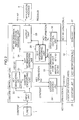
- FIG. 2 is a configuration block diagram of the secure control unit used in the invention.
- the secure control unit 2 has the key managing unit and the content encrypting unit 23 as described above and further includes an input unit 21 as an interface with the tuner 1, an output unit 28 as an interface with the application program 4, and a storage control unit 29 and a restoration control unit 30 as interfaces with the HDD 3.
- the key managing unit is configured by a key generating unit 22, a key information generating unit 24, a key information restoring unit 26, a key information restoration managing unit 27, and a key information storing unit 25.
- the present invention is characterized in that, different from the case of providing a plurality of LSIs and performing a reproducing process and a distributing process simultaneously on a plurality of pieces of content, only one LSI is provided and a reproducing process and a distributing process are almost simultaneously performed on a plurality of pieces of content.
- the input unit 21 is a part for supplying content given from the tuner 1 to the content encrypting unit 23. Since moving picture content in a digital broadcast and the like is continuously sent, the moving picture content is divided into, for example, blocks of predetermined data amount (such as 1 Mbyte), and the blocks are sent to the content encrypting unit 23. One block is a unit of the encrypting process. The process of dividing the moving picture content into blocks may be performed at every predetermined time (for example, ten seconds).
- the key generating unit 22 is requested to generate a key (K2).
- the key generating unit 22 is a part for generating a key (K2) for encrypting one block.
- K2 As a timing for generating the key (K2), various timings can be considered as will be described later.
- a master key Km is pre-stored in the key information storing unit 25 in the secure control unit 2 so as not to be rewritten.
- the key K2 generated in the key generating unit 22 is encrypted by using the master key Km and stored in the HDD 3.
- the key K2 itself is not stored as key information. Consequently, information indicative of the key K2 may be stored as it is in the HDD 3 without being encrypted.
- the content encrypting unit 23 is a part for encrypting content of one block by using the key K2 generated by the key generating unit 22.
- the encrypted content is obtained once by the input unit 21 and, after that, the encrypted content is decrypted with the key (K1) used for the encrypting. After that, the decrypted content is supplied to the content encrypting unit 23.
- the key K1 is supplied from the tuner 1 or pre-stored in the secure control unit.
- the content obtained by decrypting the received content, which was encrypted with the key K1, by using the key K1 is encrypted with the key K2 in the content encrypting unit 23.
- the content encrypted with the key K2 will be described as "K2(content)" hereinbelow.
- the content K2 is supplied to the storage control unit 29 and stored in the HDD 3.
- the key information generating unit 24 is a part for generating key information KJ by using the generated key K2.
- the key information KJ is information for specifying the generated key K2 and, as will be described later, various modes can be considered.
- the key information KJ is made by an index indicative of the key K2 of the key information storing unit and information indicative of the range of content to which the key K2 is applied.
- the generated key information KJ is supplied to the storage control unit 29 and stored in the HDD 3.
- the storage control unit 29 is a part for storing a encrypted content block and the key information KJ into the HDD 3. At the time of storing the content block and the key information KJ, information for associating the content block and the key information KJ is stored in a content list 35.
- the HDD 3 as a content storage is a memory for storing, mainly, the content list 35, key information KJ 36, and content 37.
- the content 37 is content of the block encrypted with the generated key K2.
- K2 is included in the key information KJ 36 stored in the HDD 3
- the key K2 itself not the key K2 itself but the key K2 encrypted with the master key Km or a peculiar key other than the master key held in the secure control unit (or a key generated from the master key) is stored.
- the key K2 encrypted with the master key Km is expressed as Km (K2).
- FIG. 5 is a diagram illustrating an example of information stored in the HDD 3 as a content storage.
- the content 37 is stored as single content files (CF01, CF02, ...) on a content-by-content basis.
- the key information KJ 36 is stored as files (KJ01, KJ02, ...) corresponding to the content files.
- the content list 35 is a list storing content names (ct-A, ct-B, ...), names and storage locations of the content files, and names and storage locations of key information files in a state where they are associated with each other.
- the key information storing unit 25 stores various information used by the secure control unit 2 and is a part storing not only the master key Km which is fixedly stored but also the generated keys K2, keys output from the output unit 28, initial values for key generation, a key generation calculating method, and the like.
- the restoration control unit 30 is a part for reading the key information KJ from the HDD 3 in response to a request from the key information restoring unit 26.
- the read key information KJ is given to the key information restoring unit 26.
- the key information restoring unit 26 is a part for restoring the key (K2).
- the key (K2) is restored on the basis of the key information KJ read by the restoration control unit 30.
- the key information KJ information is obtained from the key information storing unit.
- the restored key (K2) is output from the output unit 28 to the application program 4 which sent a reproduction request or distribution request.
- the key information restoration managing unit 27 is a part for managing information such as time of acquisition and updating of a restored key and a flag indicating whether a key can be restored or not.
- the above units are main configuration modules of the secure control unit 2.
- the functions of the modules are realized by a microcomputer provided in the LSI and a control program stored in a ROM in the LSI, a flash memory, or the like.
- a nonvolatile rewritable memory is used as the key information storing unit 25 in the LSI.
- the secure control unit 2 mainly encrypts content and generates and restores a key. Decrypting (restoring) of encrypted content is not performed on the inside of the secure control unit. A process of reading content itself from the HDD 3 in order to decrypt the content is performed by not-shown another logic without using the secure control unit. The read content is directly supplied to the application program. The application program decrypts the read content.
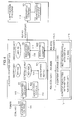
- FIG. 3 is a schematic diagram illustrating a process of encrypting content and a key and the like of the invention.
- FIG. 4 is a schematic diagram illustrating a process of encrypting content and a key and the like conventionally performed.
- Kn denotes a key “n” and “Km” indicates a master key peculiar to the secure control unit.
- Kn (D) indicates D encrypted with the key "n”.
- D denotes an object to be encrypted and corresponds to, for example, content and a key.
- the input content is content (K1 (content)) encrypted with the key K1.
- the key K1 is preliminarily stored in the secure control unit 2 or input in a encrypted form like the content.
- the input content (K1 (content)) is decrypted with the key K1 (112).
- One key K20 is generated for the input content. After that, content decrypted with the key K1 is encrypted by using the generated key K20 (113). The content (K20 (content)) encrypted with the key K20 is stored in the HDD 3 (115).
- the generated key K20 is encrypted by using the master key Km (114).
- the encrypted key (Km (K20)) is associated with content and stored in the HDD 3 (116).
- the above process corresponds to content recording process.
- content to be reproduced (K20 (content)) and the key (Km (K20)) are read from the HDD 3. That is, both of the content and the key is supplied to the secure control unit 2.
- the read key is decrypted in the secure control unit 2 by using the master key Km. After that, the read content is decrypted in the secure control unit by using the decrypted key K20 (117).
- a key K3 is generated in the secure control unit and the decrypted content is encrypted by using the key K3 (118). This encrypting operation is performed to prevent content from being leaked and illegally used at the time of supplying the content to the application program.
- the encrypted content (K3 (content)) and the key K3 are output from the secure control unit to the application program 4 which sent the reproduction request.
- the encrypted content (K3 (content)) is decrypted by using the key K3 (119).
- both of a key and content are decrypted by using the secure control unit 2 and the decrypted content is supplied to the application program 4.
- the secure control unit 2 restores a key and delivers it to the application program 4, but does not restore content.
- the key K2 is generated.
- the decrypted content is encrypted (103).
- the encrypted content (K2 (content)) is stored in the HDD 3 (105).
- the generated key K2 is encrypted with the master key Km (104).
- the encrypted key (Km (K2)) is stored as key information in the HDD 3 (106).
- the key K2 is generated for every predetermined number of blocks of content which is input after that, or for every blocks in a predetermined time, and the encrypting operation is performed by using the newly generated key K2 for every input blocks.
- content of the number of pieces corresponding to the number of input blocks and the key information KJ generated from the key K2 with which the blocks are encrypted are stored so as to be associated with each other in the HDD 3. At this time, a content list is also generated.
- the key information KJ corresponding to the content is supplied to the secure control unit.
- the key (Km (K2)) stored in association with the content to be reproduced is read by the secure control unit 2.
- the read key (Km (K2)) is decrypted by using the master key Km (107).
- the decrypted key K2 is supplied to the application program 4 which sent the reproduction request.
- the application program 4 which sent the reproduction request decrypts the directly supplied content (K2 (content)) with the key K2 received from the secure control unit 2 (108).
- the decrypted content is reproducible content and is reproduced on a display or the like.
- the process of decrypting content itself is performed by the application program and is not performed by the secure control unit 2.
- the secure control unit 2 At the time of reproduction, only the key decrypting process which can be performed in a relatively short time is performed in the secure control unit 2, so that the secure control unit 2 is not occupied for a long time by a single reproducing process. Therefore, even if there are a reproduction request process and a distribution request process by two application programs 4 in the same period of time, in the secure control unit 2, only a process of decrypting a key for reproduction and a process of decrypting a key for distribution are performed in a short time. Consequently, the secure control unit 2 is not occupied by a single process for a long time. Even if there is only one secure control unit, the reproducing process and the distributing process after that can be performed in parallel almost in a real-time manner. (Description of Key Generation Timing, Key Information, and Encrypted Content)
- the timing for generating a key used for encrypting a block, the key information KJ generated by the key information generating unit 24, and content encrypted by the content encrypting unit 23 will be described.
- the input content is divided into blocks and encrypted with the key K2 on the block unit basis.
- the key K2 different keys are generated for every block or every some blocks. Examples of the generation timing are as follows.
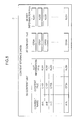
- FIGS. 6A to 6C are diagrams illustrating the relations among content, keys, and key information used in the invention.
- FIG. 6A shows a case where a new key K2 is generated each time one block is encrypted. Specifically, a key K2 corresponding to one block content BC is generated.
- the keys K2 are K2-1, K2-2, ... K2-Z.
- the key information generating unit 24 generates the key information KJ in correspondence with the generated key K2.
- a key K2-i and key information KJi correspond to block content BCi.
- FIG. 6B shows a case where a new key K2 is generated for every plural blocks.
- the number (r) of the keys generated is smaller than the number (z) of the blocks.
- the key information KJ is generated for each key Kn, so that the number of pieces of the key information KJ is the same as the number (r) of the keys.
- the blocks BC of the content and the key information KJ are sent to the HDD 3.
- the key information KJ includes information (range information) specifying a corresponding content block.
- key information KJ 1 includes information indicating that a block to which the key information KJ1 is applied is BC1.
- key information KJ2 includes information indicating that blocks to which the key information KJ2 is applied are BC3, BC4, and BC5.
- Information may be supplied to the HDD 3 in forms as shown in FIG. 6C.
- the storage control unit 29 performs a process of associating the block content BC with key information KJ corresponding to the block content BC. After that, the associated information is sent as pair information to the HDD 3.
- the block content BC, the key information KJ, and range information indicative of the relation between the block content and the key information are separately sent to the HDD 3.
- the range information may be included after being encrypted with the master key Km. Also in the case of the form 2 in FIG. 6C, to assure security, the part of the range information which is encrypted with the master key Km may be sent to the HDD 3.
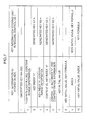
- FIG. 7 is a diagram illustrating an embodiment of the key information of the invention.
- FIG. 7 shows some concrete examples of the key information KJ generated by the key information generating unit 24.
- the key information KJ any of the concrete examples can be employed. The invention is not limited to the concrete examples.
- Only any one piece of the key information KJ in FIG. 7 may be employed for one piece of content, or a plurality of pieces of the key information KJ may be stored. When the plurality of pieces of the key information KJ are stored, the original key K2 can be restored from any of the key information.
- FIG. 7 also shows information to be stored in the key information storing unit 25 in the secure control unit 2 in correspondence with ten kinds of key information KJ.
- No. 1 shows that the key (Km (K2)) encrypted with the master key Km is stored as key information in the HDD 3. In this case, even if the HDD 3 is stolen and the key (Km (K2)) is read, it is difficult to restore the generated key K2 itself without knowing the master key Km.
- the encrypted key (Km (K2)) is read from the HDD 3 and supplied to the secure control unit.
- the secure control unit to which the key (Km (K2)) is supplied can restore the generated key K2 by applying the master key Km to the key (Km (K2)).
- No. 2 shows the case where the generated key (Km (K2)) encrypted with the master key and the information indicative of the range of applying the content are stored as the key information KJ in the HDD 3. In this case as well, it is unnecessary to store the key K2 in the secure control unit.
- No. 3 shows the case where n pieces of generated keys K2-n are stored in the key information storing unit 25 in the secure control unit, and a key index "n" indicative of the index number specifying the key K2-n is stored in the HDD 3.
- the key information generating unit 24 generates an index number (for example, 3) specifying the key K2-3, and the index number is set as the key index "n".
- the key index "n” is read from the HDD and supplied to the secure control unit.
- the secure control unit to which the key index "n” is supplied reads the generated key K2-n corresponding to the key index "n” from the key information storing unit 25.
- No. 4 shows the case where the information indicative of the content to which the generated key is applied (content range information) is stored in addition to the key index "n" in the HDD 3.
- the generated key K2 itself is stored in the secure control unit.
- No. 5 shows the case where the ID specifying one piece of content (content ID) and the key index "n" are stored in the HDD 3.
- the number of a block can be indicated by the key index "n”.
- the generated key K2 itself used for encrypting the block is stored in the secure control unit.
- No. 6 shows the case where the content range information is added to the key information of No. 5.
- No. 7 shows the case where the key initial value is stored in the HDD 3.
- the key initial value is a value as the base for generating a key in accordance with a rule. It is assumed that the keys K2 generated sequentially after that are generated in accordance with a rule.
- the third generated key K2-3 may be generated by adding a predetermined specific value to the second generated key K2-2 or by adding all of keys (K2-1 and K2-2) generated before.
- keys may be sequentially generated by using a predetermined key formula.
- No. 8 shows the case where the key initial value and the above-described key formula are stored in the HDD 3.
- one key formula is not fixedly used but a plurality of key formulae can be used. That is, a plurality of different keys can be generated from one key initial value.
- No. 9 shows the case where an index as the number of a set of a key initial value and a key formula is stored in the HDD 3.
- the key initial value and the key formula are stored in the secure control unit.
- the secure control unit In the case of restoring the key K2, it is sufficient to read the index of the key K2 from the HDD 3 and supply it to the secure control unit.
- the secure control unit to which the index is supplied specifies the key initial value and the key formula from the index and can sequentially generate the keys K2.
- No. 10 shows the case where the information of No. 9 is recombined, the key initial value and the index are stored in the HDD 3, and the key formula is stored in the secure control unit.
- the key formula is read from the key information storing unit 25 first, and the generated key K2 can be reconstructed from the key initial value and the key formula.
- a mode to be employed may be determined fixedly in advance or according to a standard such as the security level.
- No. 3 in FIG. 7 may be employed.
- FIG. 8 shows a flowchart of an example of the encrypting process at the time of recording content.
- step S 11 the application program for recording sets hardware such as the secure control unit into a recordable state.
- step S12 the application program for recording adds content management information (such as content name) specified by the recording instruction to a content list in the HDD 3.
- content management information such as content name
- step S 13 a request for encrypting content which is requested to be recorded is sent to the secure control unit 2.
- the encrypting request sent to the secure control unit 2 may include, for example, a key generating method.
- the secure control unit 2 which received the encrypting request inputs and encrypts the content requested to be recorded, and generates the key K2 used for encrypting and the key information KJ by the function blocks shown in FIG. 2.
- step S 14 the content block encrypted by the secure control unit and the generated key information KJ are obtained from the secure control unit.
- the key K2 is not newly generated and the same key is continuously used, only encrypted content is obtained and the key information KJ is not obtained. In other words, the key information KJ is obtained only in the case where the new key K2 is generated.
- step S 15 the obtained content block and the key information KJ are stored in the HDD 3.
- step S16 a check is made to see whether recording of the whole requested content has been finished or not. If NO, the program returns to step S14 and repeats the process of encrypting content and storing the encrypted content in the HDD 3.
- the program finishes the process. Acquisition and storage of the key information KJ are performed in any of the forms shown in FIGS. 6A to 6C, and the key information KJ composed of information as shown in FIG. 7 is generated by the secure control unit and stored in the HDD 3.
- FIG. 9 shows a flowchart of the encrypting process of the secure control unit at the time of recording.
- step S21 whether a content encrypting request is received from the application program for recording or not is checked. If YES, the content of the request is interpreted and the program advances to step S22.
- step S22 whether it is a timing for newly generating the key K2 or not is checked. For example, whether it is a timing corresponding to any of the above-described five timings or not is checked.
- step S25 When it is not the timing for newly generating the key K2, the program advances to step S25.
- the program advances to step S23.
- step S23 the key generating unit 22 newly generates the key K2 for encrypting.
- Generation of the key K2 may vary according to a encrypting algorism. It is sufficient to use a method of generating the key K2 from a random number in a manner similar to the conventional technique. In the case where the key initial value and the key formula are determined in advance, the key K2 is generated on the basis of the value and the formula.
- step S24 the key information generating unit 24 generates the key information KJ in a form as shown in FIG. 7 by using the generated key K2.
- step S25 the content encrypting unit 23 encrypts content by using the generated key K2 on the block unit basis.
- step S26 the storage control unit 29 stores the encrypted block content BC and the key information KJ into the HDD 3.
- the information may not be stored directly into the HDD 3 by the secure control unit. As shown in the above-described flow of FIG. 8, the information may be supplied once to the application program for recording, and the application program may write the information into the HDD 3.
- step S27 whether all of the content requested to be encrypted has been processed or not is checked.
- the program returns to step S22, and again the encrypting process from step S22 to step S26 is repeated on the following block content.
- the key K2 for encrypting the block content is newly generated at a predetermined timing as described above, even if one of the plurality of keys K2 is leaked, only a partial block encrypted with the leaked key K2 is restored and the whole content cannot be restored (reproduced).
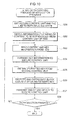
- FIG. 10 shows a flowchart showing an example of a decrypting process at the time of reproducing (distributing) content.
- an application program for reproduction or distribution sends a content decrypting request to the secure control unit, obtains the key K2 for decrypting from the secure control unit, a block of the requested content is directly obtained from the HDD, and the content is reproduced.
- step S31 the secure control unit and the like are set to a reproducible state.
- step S32 information such as the file name of content to be reproduced is obtained from the content list in the HDD.
- step S33 the content BC and the key information KJ stored in the HDD so as to be associated with the file name of the content are read directly from the HDD. In this operation, the secure control unit does not intervene.
- step S34 the read key information KJ is supplied to the secure control unit. Specifically, a request for restoring the key K2 corresponding to the key information KJ is sent to the secure control unit.
- the secure control unit to which the key information KJ was sent determines whether the key K2 specified by the key information KJ can be restored or not. If YES, the secure control unit restores the key K2 and outputs the restored key K2 to the application program.
- step S35 the restored key K2 is obtained from the secure control unit.
- step S36 by using the obtained key K2, the content BC read from the HDD is decrypted and reproduced.
- step S37 after completion of the decrypting of the content, a message that the use of the key K2 is finished is sent to the secure control unit.
- key restoration is determined according to the number of keys simultaneously used, the number of keys simultaneously used has to be decreased in response to the completion of use. If the decreasing operation is not performed, the number of keys simultaneously used reaches its limit, restoring operation is not permitted, and the secure control unit does not output the key K2.
- step S38 whether reproduction of all of content to be reproduced has been finished or not is checked. If NO, the program returns to step S33 and the process of decrypting the remaining content is executed. In the case where reproduction of all of the requested content has been finished, the process is finished.
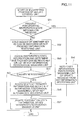
- FIG. 11 shows a flowchart of an example of the key restoring process of the secure control unit at the time of reproduction.
- the secure control unit receives a restoration request or an update request from the application program, determines whether the key K2 can be restored or not, and if the key K2 can be restored, restores the key K2, and outputs the restored key K2 to the application program.
- the update request denotes, for example, a request for continuous use of the key K2 in the case where the application program is currently using the key K2 or periodical notification to the secure control unit of the state where the key K2 is being used. For example, when the secure control unit permits use of the key and, within a predetermined time (for example, 10 seconds), an update request is not received from the application program permitted to use, the key K2 after that is not restored.
- a predetermined time for example, 10 seconds
- Whether a key can be restored or not is etermined by the key information restoration managing unit 27.
- the key information restoring unit 26 inquires the key information restoration managing unit 27 of whether restoration can be performed or not and determines whether restoration can be performed or not by checking a restoration state information managed by the key information restoration managing unit 27.
- FIG. 12 is a diagram illustrating an example of the restoration state information managed and held by the key information restoration managing unit 27.
- FIG. 12 shows the restoration state information of two pieces of content.
- Acquisition time indicates time when a request for restoring the key is received for the first time.
- Update time denotes time when an update request is received from the application program.
- the first restoration request is received at 12:34:20 (hour/minute/second) and, after three seconds, an update request indicating that the restored key 1 is being currently used is received.
- Time with respect to the key 3 is similar to the above.
- the keys can be still used (can be restored).
- a first restoration request is received at 00:00:00 (hour/minute/second), and the key 5 is output to the application program. After that, no update request is received from the application program. In the case where an update request is not still received after lapse of predetermined time, it is determined that the key cannot be used (restored) after that.
- the key information restoration managing unit 27 determines whether a key can be restored possible or impossible while generating, recognizing, and updating the key restoration state information as shown in FIG. 12.
- step S51 in FIG. 11 the key information restoring unit 26 checks whether a restoration state update request has been received from the application program or not.
- step S52 When there is no update request, the program advances to step S52 and an inquiry of whether a key can be restored or not is sent to the key information restoration managing unit 27.
- step S56 the update request is notified to the key information restoration managing unit 27.
- the key information restoration managing unit 27 which has received the inquiry in step S52 determines whether the key can be restored or not with reference to the restoration state information in step S53.
- step S53 whether the key can be restored or not is not determined in step S53 and it is determined in step S54 that the key can be restored.
- step S53 In the case where it is determined in step S53 that the key can be restored, the program advances to step S55.
- step S54 when it is determined that the key cannot be restored (step S54), the process is finished without restoring the key.
- step S55 since restoration is permitted, the key information restoring unit 26 restores the corresponding key K2 by using the key information KJ given from the application program, and notifies the key information restoration managing unit 27 of restoration of the key K2.
- step S57 the key information restoration managing unit 27 updates or generates the restoration state information of FIG. 12. For example, in the case of the first restoration request, the restoration state information of the key is generated and the acquisition time is stored.
- step S56 the update time in the key restoration state information already generated is changed.
- all of the keys K2 requested to restore are not unconditionally output to the application program.
- a present restoration state is checked to determine whether a key can be restored or not. After that, the key which can be restored is output. In such a manner, when an illegal request for restoring a key is received, the key can be prevented from being unnecessarily output, and content can be prevented from being illegally restored.
- FIG. 12 shows an example of determining whether restoration can be performed or not by lapse of time since an update request is received, the present invention is not limited to the example.
- the upper limit of requests for restoring the keys K2, which are received simultaneously when a request for reproducing content is made may be limited to a predetermined number (n).
- the number of requests for restoring keys which can be received simultaneously from the application program is limited to five.
- five keys K2-1 to K2-5 are simultaneously output to the application program.
- a request for restoring the sixth key K2-6 is not received and the sixth key K2-6 is not restored.
- time T it is also possible to determine time T in which one request for restoring a key is received.
- a plurality of key restoration requests are received during the time T, only one request may be received and the other requests may not be received.
- a method of determining whether a key can be restored or not may be automatically set in accordance with the kind of content or an attribute of content such as the encrypting method.
- FIG. 13 is a flowchart showing an example of the key information restoration managing unit 27.
- step S71 update time in the restoration state information is checked. In the case where predetermined time has elapsed since the updating of last time, the restoration state of the key is changed to "impossible".
- step S72 whether an access is made from the key information restoring unit 26 or not is checked.
- the access includes an inquiry of whether a key can be restored or not and an update request.
- the program returns to step S71 and a check to see the restoration state information is continued.
- step S73 In the case where the access is an inquiry of whether a key can be restored or not in step S73, the program advances to step S74. In the case where the access is an update request in step S75, the program advances to step S76. In the case of the other accesses, the program returns to step S71.
- step S74 with reference to the restoration state information, a reply to the inquiry is sent to the key information restoring unit 26. That is, a result of determining whether the inquired key K2 can be restored or not is sent back to the key information restoring unit 26.
- the restoration state information has not been generated yet. Consequently, a reply that the key can be restored is sent.
- step S76 update time for the key requested to be updated is changed to the present time. In the case of the first update request, update time is newly added.
- the restoration state information of the key is deleted in order to permit use of the key. Since the use of the key by the application program is finished by the operation, after that, a request for restoring the key can be accepted by another application program.
- step S77 in the case where the upper limit of the number of keys which can be used is set as a reference for determining whether a key can be restored or not, the number of keys used at present is checked. When keys of a number exceeding the set value are being used, the use (restoration state) of the key is set as "impossible".
- the restoration state information as shown in FIG. 12 may be generated each time a restoration request or an update request is received. Alternatively, when the first restoration request is received, information for all of the keys for the content may be generated in advance.
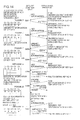
- FIG. 14 shows an example of a time chart of key information restoration.
- FIG. 14 shows an example of the case where a restoration request and an update request for key information are continuously output from the application and restoration of a key is permitted and the case where restoration of a key is not permitted.
- the secure control unit determines whether a key corresponding to the received key information may be restored or not, and generates restoration state information managed by the key information restoration managing unit 27.
- restoration state information C 1 to C5 in FIG. 12
- the key K2-1 is restored on the basis of the received key information KJ, and the key K2-1 is output to the application program.
- the application program which received the key K2-1 decrypts corresponding block content by using the key K2-1.
- the key information is supplied to the secure control unit.
- the secure control unit checks to see whether the key K2-2 corresponding to the key information can be restored or not, and when the restoration state information does not include information of the key K2-2 to be restored, additionally generates the information of the key K2-2. In this case, the restoration state is set as "possible".
- the secure control unit restores the key K2-2 and outputs it to the application program.
- the number of keys being used for a piece of content becomes two.
- the application which receives the new key K2-2 restores the corresponding block content.
- a request for updating the key K2-1 is sent to the secure control unit.
- the secure control unit which receives the update request determines that the update request is received within a proper time
- the secure control unit updates the update time of the key K2-1 (S203).
- the secure control unit determines whether restoring of the key K2-3 corresponding to the key information is permitted or not. When restoring of the key K2-3 is permitted, the secure control unit newly adds the information of the key K2-3 to the restoration state information, and sends the restored key K2-3 to the application program (S204).
- key information is sent to the secure control unit in order to obtain the next key K2-4 from the application program.
- the secure control unit checks the "restoration state" in S205, the "restoration state” in the restoration management information is "impossible” so that the key K2-4 is not permitted to be restored. A message that the key K2-4 cannot be restored may be sent to the application program.
- the application program to which failure in acquisition of the key K2-4 is notified sends an update request to the secure control unit for finishing use of the key K2-1 so that a new key K2-4 can be obtained (S106).
- the secure control unit which receives the message indicating the end of use of the key K2-1 deletes the part of the restoration state information corresponding to the key K2-1. Since the number of keys being used at present changes from 3 to 2, the secure control unit changes the "restoration state" to "possible” (S206).
- the key information restoration managing unit 27 in the secure control unit changes the "restoration state" to "impossible".
- the key information for requesting for the next key K2-4 is sent from the application program after lapse of the predetermined update time (S107). Since the "restoration state" is "impossible", the key K2-4 fails to be restored (S207).
- FIGS. 11 and 13 show an embodiment of the determination of whether a key can be restored or not.
- the invention is not limited to the example.
- a common memory which is used only between a secure control unit and an application program is provided, and a key update check and determination of whether a key can be restored or not may be performed by periodically writing and reading specific data to/from the common memory.
- the secure control unit writes specific data A indicative of an update request into the common memory and, after that, the application program recognizes the specific data A and checks whether specific data B is written in the common memory or not within a predetermined time. When the secure control unit confirms that the specific data B is written, it is determined that a legal application program has requested for updating of a key.
- blocks of content are encrypted while varying generated keys for encrypting content, so that the risk of leakage of the generated keys can be lessened. Even if one of the generated keys is illegally leaked, it is difficult to illegally use the whole content. Thus, security which is necessary and sufficient to protect content can be assured.
- the secure device of the present invention performs the generated key restoring process and does not perform the process of restoring content itself, so that the process burden on the secure device can be lessened. Therefore, simultaneous use of a plurality of pieces of content can be substantially realized by using one secure device.
Landscapes
- Engineering & Computer Science (AREA)
- Computer Security & Cryptography (AREA)
- Theoretical Computer Science (AREA)
- Computer Hardware Design (AREA)
- Software Systems (AREA)
- Physics & Mathematics (AREA)
- General Physics & Mathematics (AREA)
- General Engineering & Computer Science (AREA)
- Signal Processing (AREA)
- Computer Networks & Wireless Communication (AREA)
- Bioethics (AREA)
- Health & Medical Sciences (AREA)
- General Health & Medical Sciences (AREA)
- Mathematical Physics (AREA)
- Multimedia (AREA)
- Technology Law (AREA)
- Storage Device Security (AREA)
- Two-Way Televisions, Distribution Of Moving Picture Or The Like (AREA)
Applications Claiming Priority (1)
| Application Number | Priority Date | Filing Date | Title |
|---|---|---|---|
| JP2006260797A JP4957148B2 (ja) | 2006-09-26 | 2006-09-26 | 鍵管理機能を持つセキュア素子および情報処理装置 |
Publications (2)
| Publication Number | Publication Date |
|---|---|
| EP1906332A2 true EP1906332A2 (de) | 2008-04-02 |
| EP1906332A3 EP1906332A3 (de) | 2009-07-08 |
Family
ID=38910903
Family Applications (1)
| Application Number | Title | Priority Date | Filing Date |
|---|---|---|---|
| EP07113835A Withdrawn EP1906332A3 (de) | 2006-09-26 | 2007-08-06 | Sicherheitsvorrichtung mit Schlüsselverwaltungsfunktion und Informationsverarbeitungsvorrichtung |
Country Status (3)
| Country | Link |
|---|---|
| US (1) | US7978857B2 (de) |
| EP (1) | EP1906332A3 (de) |
| JP (1) | JP4957148B2 (de) |
Cited By (2)
| Publication number | Priority date | Publication date | Assignee | Title |
|---|---|---|---|---|
| WO2013089758A1 (en) | 2011-12-15 | 2013-06-20 | Intel Corporation | Preserving image privacy when manipulated by cloud services |
| CN117459233A (zh) * | 2023-12-21 | 2024-01-26 | 法琛堂(昆明)医疗科技有限公司 | 医疗信息多层加密方法、装置、电子设备及存储介质 |
Families Citing this family (13)
| Publication number | Priority date | Publication date | Assignee | Title |
|---|---|---|---|---|
| CA2629015A1 (en) * | 2005-11-18 | 2008-05-08 | Rick L. Orsini | Secure data parser method and system |
| KR101397480B1 (ko) * | 2007-10-10 | 2014-05-21 | 삼성전자주식회사 | 전자장치 및 그의 암호화방법 |
| WO2010001544A1 (ja) * | 2008-07-01 | 2010-01-07 | パナソニック株式会社 | ドライブ装置、コンテンツ再生装置、記録装置、データ読み出し方法、プログラム、記録媒体、および集積回路 |
| US9237310B2 (en) | 2008-11-26 | 2016-01-12 | Thomson Licensing | Method and system digital for processing digital content according to a workflow |
| EP2192514A1 (de) * | 2008-11-26 | 2010-06-02 | Thomson Licensing | Verfahren und System zur Verarbeitung von digitalem Inhalt gemäß des Arbeitsablaufs |
| WO2011148542A1 (ja) * | 2010-05-28 | 2011-12-01 | 株式会社ソニー・コンピュータエンタテインメント | 情報処理装置および情報処理システム |
| KR101236991B1 (ko) * | 2011-10-24 | 2013-02-25 | 한국전자통신연구원 | 하드디스크 암호화를 위한 장치 및 방법 |
| EP2953290A1 (de) * | 2014-06-06 | 2015-12-09 | Gemalto SA | Verwaltung einer hohen Anzahl von einmaligen Tasten durch ein sicheres Element |
| CN106919856B (zh) * | 2015-12-25 | 2020-01-07 | 展讯通信(上海)有限公司 | 安全移动终端 |
| US10169563B2 (en) * | 2017-01-27 | 2019-01-01 | International Business Machines Corporation | Encryption authorization dongle having volatile memory |
| JP6731887B2 (ja) * | 2017-06-27 | 2020-07-29 | Kddi株式会社 | 保守システム及び保守方法 |
| JP6696942B2 (ja) * | 2017-08-14 | 2020-05-20 | Kddi株式会社 | 車両保安システム及び車両保安方法 |
| KR20250093781A (ko) | 2023-12-18 | 2025-06-25 | 주식회사 한새 | 이산화탄소 제거용 제올라이트 흡착제, 및 이의 제조방법 |
Citations (1)
| Publication number | Priority date | Publication date | Assignee | Title |
|---|---|---|---|---|
| US20040076298A1 (en) | 2002-03-07 | 2004-04-22 | Oliver Huw Edward | Method and apparatus for controlling content consumption |
Family Cites Families (23)
| Publication number | Priority date | Publication date | Assignee | Title |
|---|---|---|---|---|
| EP0768774A3 (de) * | 1995-10-16 | 1999-08-04 | Sony Corporation | Verfahren und Anordnung zur Datenverschlüsselung unter Verwendung einer Hierarchie von Schlüsselverteilung |
| US5974144A (en) * | 1998-02-25 | 1999-10-26 | Cipheractive Ltd. | System for encryption of partitioned data blocks utilizing public key methods and random numbers |
| WO2001030019A1 (en) * | 1999-10-18 | 2001-04-26 | Sony Corporation | Information processor and information processing method, and recorded medium |
| ES2301525T3 (es) * | 2000-01-21 | 2008-07-01 | Sony Corporation | Sistema de autentificacion de datos. |
| JP2001358707A (ja) * | 2000-06-15 | 2001-12-26 | Sony Corp | 暗号鍵ブロックを用いた情報処理システムおよび情報処理方法、並びにプログラム提供媒体 |
| AU779440B2 (en) * | 2000-06-21 | 2005-01-27 | Sony Corporation | Information recording/reproducing apparatus and method |
| US6787611B2 (en) * | 2000-06-27 | 2004-09-07 | Chemfirst Electronic Materials L.P. | Purification means |
| KR100571617B1 (ko) * | 2000-06-29 | 2006-04-17 | 마쯔시다덴기산교 가부시키가이샤 | 저작권 보호장치와 방법 |
| JP2002204228A (ja) * | 2000-12-28 | 2002-07-19 | Toshinori Hayashi | コンテンツ配信装置、コンテンツ配信方法、コンテンツダウンロードプログラム、コンテンツダウンロード装置 |
| JP3893256B2 (ja) * | 2001-05-30 | 2007-03-14 | 日本電信電話株式会社 | ネットワーク動画像配信方法とそのシステム、及びネットワーク動画像配信プログラムとこのプログラムを記録した記録媒体。 |
| JP4408601B2 (ja) * | 2001-12-27 | 2010-02-03 | 富士通株式会社 | 情報再生装置およびセキュアモジュール |
| JP4576100B2 (ja) | 2002-07-30 | 2010-11-04 | 富士通株式会社 | 情報再生装置、セキュアモジュールおよび情報再生方法 |
| JP3881942B2 (ja) * | 2002-09-04 | 2007-02-14 | 松下電器産業株式会社 | 暗号化部を有する半導体装置 |
| JP2004342246A (ja) * | 2003-05-16 | 2004-12-02 | Sony Corp | 情報処理装置、情報記録媒体、コンテンツ管理システム、および方法、並びにコンピュータ・プログラム |
| JP4898082B2 (ja) | 2003-05-19 | 2012-03-14 | 富士通株式会社 | ソフトウエア認証方法、ソフトウエア認証プログラム |
| JP4568489B2 (ja) | 2003-09-11 | 2010-10-27 | 富士通株式会社 | プログラム保護方法、プログラム保護プログラムおよびプログラム保護装置 |
| JP4114605B2 (ja) | 2003-12-24 | 2008-07-09 | ソニー株式会社 | 情報処理装置、情報記録媒体、および情報処理方法、並びにコンピュータ・プログラム |
| JP4936652B2 (ja) * | 2004-08-26 | 2012-05-23 | ソニー株式会社 | 情報処理装置、情報記録媒体、および情報処理方法、並びにコンピュータ・プログラム |
| WO2006080510A1 (ja) * | 2005-01-31 | 2006-08-03 | Matsushita Electric Industrial Co., Ltd. | バックアップ管理装置、バックアップ管理方法、コンピュータプログラム、記録媒体、集積回路及びバックアップシステム |
| JP4715233B2 (ja) * | 2005-02-25 | 2011-07-06 | ソニー株式会社 | 情報処理装置、および情報記録媒体製造方法、並びにコンピュータ・プログラム |
| US7650312B2 (en) * | 2005-06-06 | 2010-01-19 | Yume Networks, Inc. | Method and system to enable continuous monitoring of integrity and validity of a digital content |
| JP4613739B2 (ja) * | 2005-08-01 | 2011-01-19 | ソニー株式会社 | 情報処理装置、情報処理方法、および情報記録媒体、並びにコンピュータ・プログラム |
| US8046837B2 (en) * | 2005-08-26 | 2011-10-25 | Sony Corporation | Information processing device, information recording medium, information processing method, and computer program |
-
2006
- 2006-09-26 JP JP2006260797A patent/JP4957148B2/ja not_active Expired - Fee Related
-
2007
- 2007-08-06 EP EP07113835A patent/EP1906332A3/de not_active Withdrawn
- 2007-08-15 US US11/893,168 patent/US7978857B2/en not_active Expired - Fee Related
Patent Citations (1)
| Publication number | Priority date | Publication date | Assignee | Title |
|---|---|---|---|---|
| US20040076298A1 (en) | 2002-03-07 | 2004-04-22 | Oliver Huw Edward | Method and apparatus for controlling content consumption |
Cited By (4)
| Publication number | Priority date | Publication date | Assignee | Title |
|---|---|---|---|---|
| WO2013089758A1 (en) | 2011-12-15 | 2013-06-20 | Intel Corporation | Preserving image privacy when manipulated by cloud services |
| EP2791855A4 (de) * | 2011-12-15 | 2015-08-12 | Intel Corp | Schutz der privatsphäre bei einer bildbearbeitung durch cloud-dienste |
| US9276745B2 (en) | 2011-12-15 | 2016-03-01 | Intel Corporation | Preserving image privacy when manipulated by cloud services |
| CN117459233A (zh) * | 2023-12-21 | 2024-01-26 | 法琛堂(昆明)医疗科技有限公司 | 医疗信息多层加密方法、装置、电子设备及存储介质 |
Also Published As
| Publication number | Publication date |
|---|---|
| JP4957148B2 (ja) | 2012-06-20 |
| EP1906332A3 (de) | 2009-07-08 |
| US7978857B2 (en) | 2011-07-12 |
| JP2008085468A (ja) | 2008-04-10 |
| US20080075290A1 (en) | 2008-03-27 |
Similar Documents
| Publication | Publication Date | Title |
|---|---|---|
| US7978857B2 (en) | Secure device having key management function and information processing apparatus | |
| JP4687703B2 (ja) | 記録システム、情報処理装置、記憶装置、記録方法及びプログラム | |
| US7730345B2 (en) | Contents furnishing system | |
| US7269741B2 (en) | Recording apparatus, medium, method, and related computer program | |
| US7266202B1 (en) | Information processing device and method, and program storage medium | |
| CN101449274B (zh) | 用于内容再现控制的电子设备、方法和集成电路 | |
| CN100414864C (zh) | 具有编辑装置和记录媒体的音频数据重放管理系统及方法 | |
| US7298844B2 (en) | Recording/reproducing apparatus, data moving method, and data deletion method | |
| CN101533654A (zh) | 用于处理信息的设备和方法 | |
| CN101189617A (zh) | 电子设备、更新服务器装置、密钥更新装置 | |
| US20070248231A1 (en) | Storage Medium Processing Method, Storage Medium Processing Device, and Program | |
| US7266691B1 (en) | Contents providing system | |
| US9684772B2 (en) | Information processing apparatus, information processing method and program | |
| CN100585713C (zh) | 信息处理装置和信息处理方法 | |
| CN100410902C (zh) | 内容移动控制装置及方法 | |
| US8120997B2 (en) | Information processing apparatus including a communication unit that communicates with an IC chip and associated methodology | |
| JP2001083874A (ja) | 情報提供システム、情報規制装置、情報受信装置及び情報提供方法 | |
| WO2006031030A1 (en) | Method and apparatus for searching for rights objects stored in portable storage device using object identifier | |
| JP2001092880A (ja) | 情報提供システム、リスト送信装置、情報受信装置及び情報提供方法 | |
| US8521651B2 (en) | Digital content reproducing apparatus and method thereof | |
| US7373672B2 (en) | Method for securely managing information in database | |
| JP2003242043A (ja) | 再生装置およびデータ管理システムにおけるコンテンツ管理方法 | |
| JPWO2007111196A1 (ja) | 情報配信装置、情報記録媒体、および情報再生装置 | |
| JP5345989B2 (ja) | ファイルデータ削除プログラム及びファイルデータ削除システム | |
| JP4652719B2 (ja) | ファイルデータ削除プログラム及びファイルデータ削除システム |
Legal Events
| Date | Code | Title | Description |
|---|---|---|---|
| PUAI | Public reference made under article 153(3) epc to a published international application that has entered the european phase |
Free format text: ORIGINAL CODE: 0009012 |
|
| AK | Designated contracting states |
Kind code of ref document: A2 Designated state(s): AT BE BG CH CY CZ DE DK EE ES FI FR GB GR HU IE IS IT LI LT LU LV MC MT NL PL PT RO SE SI SK TR |
|
| AX | Request for extension of the european patent |
Extension state: AL BA HR MK YU |
|
| PUAL | Search report despatched |
Free format text: ORIGINAL CODE: 0009013 |
|
| AK | Designated contracting states |
Kind code of ref document: A3 Designated state(s): AT BE BG CH CY CZ DE DK EE ES FI FR GB GR HU IE IS IT LI LT LU LV MC MT NL PL PT RO SE SI SK TR |
|
| AX | Request for extension of the european patent |
Extension state: AL BA HR MK RS |
|
| 17P | Request for examination filed |
Effective date: 20100107 |
|
| AKX | Designation fees paid |
Designated state(s): DE FR GB |
|
| 17Q | First examination report despatched |
Effective date: 20100820 |
|
| STAA | Information on the status of an ep patent application or granted ep patent |
Free format text: STATUS: THE APPLICATION IS DEEMED TO BE WITHDRAWN |
|
| 18D | Application deemed to be withdrawn |
Effective date: 20180301 |