EP1906667A2 - Behandlung von durch Datenübertragung empfangenen Anwendungen - Google Patents
Behandlung von durch Datenübertragung empfangenen Anwendungen Download PDFInfo
- Publication number
- EP1906667A2 EP1906667A2 EP07105332A EP07105332A EP1906667A2 EP 1906667 A2 EP1906667 A2 EP 1906667A2 EP 07105332 A EP07105332 A EP 07105332A EP 07105332 A EP07105332 A EP 07105332A EP 1906667 A2 EP1906667 A2 EP 1906667A2
- Authority
- EP
- European Patent Office
- Prior art keywords
- application
- data
- data broadcast
- received
- execute
- Prior art date
- Legal status (The legal status is an assumption and is not a legal conclusion. Google has not performed a legal analysis and makes no representation as to the accuracy of the status listed.)
- Withdrawn
Links
Images




Classifications
-
- H—ELECTRICITY
- H04—ELECTRIC COMMUNICATION TECHNIQUE
- H04N—PICTORIAL COMMUNICATION, e.g. TELEVISION
- H04N21/00—Selective content distribution, e.g. interactive television or video on demand [VOD]
- H04N21/40—Client devices specifically adapted for the reception of or interaction with content, e.g. set-top-box [STB]; Operations thereof
- H04N21/47—End-user applications
-
- H—ELECTRICITY
- H04—ELECTRIC COMMUNICATION TECHNIQUE
- H04N—PICTORIAL COMMUNICATION, e.g. TELEVISION
- H04N7/00—Television systems
- H04N7/16—Analogue secrecy systems; Analogue subscription systems
- H04N7/162—Authorising the user terminal, e.g. by paying; Registering the use of a subscription channel, e.g. billing
- H04N7/163—Authorising the user terminal, e.g. by paying; Registering the use of a subscription channel, e.g. billing by receiver means only
-
- H—ELECTRICITY
- H04—ELECTRIC COMMUNICATION TECHNIQUE
- H04N—PICTORIAL COMMUNICATION, e.g. TELEVISION
- H04N21/00—Selective content distribution, e.g. interactive television or video on demand [VOD]
- H04N21/40—Client devices specifically adapted for the reception of or interaction with content, e.g. set-top-box [STB]; Operations thereof
- H04N21/43—Processing of content or additional data, e.g. demultiplexing additional data from a digital video stream; Elementary client operations, e.g. monitoring of home network or synchronising decoder's clock; Client middleware
- H04N21/434—Disassembling of a multiplex stream, e.g. demultiplexing audio and video streams, extraction of additional data from a video stream; Remultiplexing of multiplex streams; Extraction or processing of SI; Disassembling of packetised elementary stream
- H04N21/4348—Demultiplexing of additional data and video streams
- H04N21/4349—Demultiplexing of additional data and video streams by extracting from data carousels, e.g. extraction of software modules from a DVB carousel
-
- H—ELECTRICITY
- H04—ELECTRIC COMMUNICATION TECHNIQUE
- H04N—PICTORIAL COMMUNICATION, e.g. TELEVISION
- H04N21/00—Selective content distribution, e.g. interactive television or video on demand [VOD]
- H04N21/80—Generation or processing of content or additional data by content creator independently of the distribution process; Content per se
- H04N21/81—Monomedia components thereof
- H04N21/8166—Monomedia components thereof involving executable data, e.g. software
- H04N21/8173—End-user applications, e.g. Web browser, game
-
- H—ELECTRICITY
- H04—ELECTRIC COMMUNICATION TECHNIQUE
- H04N—PICTORIAL COMMUNICATION, e.g. TELEVISION
- H04N7/00—Television systems
- H04N7/015—High-definition television systems
-
- H—ELECTRICITY
- H04—ELECTRIC COMMUNICATION TECHNIQUE
- H04N—PICTORIAL COMMUNICATION, e.g. TELEVISION
- H04N7/00—Television systems
- H04N7/08—Systems for the simultaneous or sequential transmission of more than one television signal, e.g. additional information signals, the signals occupying wholly or partially the same frequency band, e.g. by time division
Definitions
- the present invention relates to handling applications received by data broadcast.
- ACAP Application Configuration Access Protocol
- ATSC Advanced Television Systems Committee
- MHP Multimedia Home PlatForm
- DVB Digital Video Broadcasting
- OACP Open Cable Application Platform
- modules are periodically transmitted.
- modules which are basic data units, are repeatedly transmitted in order to make them available to users.
- an object carousel method a group of constructed objects are easily delivered from a broadcast server to a user using a directory object, a file object, a stream object, or the like.
- a block transmitted in the form of a DownloadDataBlock (DDB) defined in the Digital Storage Media Command and Control (DSM-CC) specification is used as the basic transport unit, and several blocks constitute a module.
- Video clips, images, and text files which are used in an application program provided to a user, are transmitted in the form of a module.
- DDB DownloadDataBlock
- DSM-CC Digital Storage Media Command and Control
- each module contains at least one piece of application data and/or code which can be executed in a client.
- the client must collect all modules or all files/directories belonging to an application in order to execute the application.
- a conventional data receiving apparatus is not capable of determining whether all application data needed to execute a received and stored application is collected. Thus, when all the needed application data is not present and a consumer desires to execute the application, the application cannot be executed, execution of the application is suddenly stopped, or an execution error message is generated.
- the present invention is capable of preventing an error in executing an application by determining whether all application data needed to execute the application is received by tracking an object carousel tree or by using module collection information of an object carousel tree.
- an apparatus for receiving and storing a data broadcast application comprising an application controller determining whether receiving of application data needed to execute an application is completed when a data broadcast is stored, and allowing the received application data to be stored when it is determined that receiving of the application data is completed; and a storage unit storing the application data, which is completely received, together with audio/video data.
- the application controller's determination of whether receiving of the application is completed may be performed by searching a tree structure of an object carousel constructed from the data broadcast, and determining whether an object is received.
- the application controller's determination of whether receiving of the application is completed may be performed by determining whether all modules described in a control message are received.
- the control message may be download information indications extracted from a program map table of the data broadcast.
- the application controller may determine as to whether receiving of application data to be executed for each application is completed.
- the tree structure of the object carousel may be constructed using a service gateway as a root directory, wherein the service gateway is collected based on an interoperable object reference of a service gateway included in download server indications of the data broadcast.
- an apparatus for executing a data broadcast application comprising a storage unit storing application data, which is needed to execute an application, together with audio/video data when a data broadcast is stored; an application controller determining whether the application is to be executed together with the audio/video data when the stored data broadcast is reproduced; and an application executing unit selectively executing the application in response to an instruction from the application controller.
- the application controller may determine whether each of the applications is to be executed.
- the application controller may not allow the application to be executed when not all of the application data are received before storing of the data broadcast is completed.
- the determining of whether receiving of the application data is completed may be performed by determining whether all modules described in a control message are received.
- the determining of whether receiving of the application data is completed may be performed by searching a tree structure of an object carousel constructed from the data broadcast and determining whether an object is received.
- the control message may be download information indications extracted from a program map table of the data broadcast.
- the tree structure of the object carousel may be constructed using a service gateway as a root directory, wherein the service gateway is collected based on an interoperable object reference of a service gateway of download server indications of the data broadcast.
- a method of receiving and storing a data broadcast application comprising (a) determining whether receiving of application data needed to execute an application is completed when a data broadcast is stored; and (b) when it is determined that receiving of the application data is completed, storing the received application data.
- the method may be performed for each of a plurality of applications when a plurality of pieces of application data for the plurality of applications are transmitted.
- (a) may comprise (a1) constructing an object tree using a service gateway as a root directory, wherein the service gateway is collected based on an interoperable object reference of a service gateway included in download server indications of the data broadcast; and (a2) extracting an object included in a module based on the interoperable object reference of the service gateway, and determining whether all objects are received by sequentially searching for lower directories based on the extracted object.
- (a) may comprise (a1) extracting a control message from a program map table of the data broadcast; and (a2) determining whether all modules described in the control message are received.
- the control message may be download information indications extracted from the program map table of the data broadcast.
- a method of executing a data broadcast application comprising (a) storing application data, which is needed to execute an application, together with audio/video data when a data broadcast is stored; and (b) executing the application together with the audio/video data when the stored data broadcast is reproduced.
- determinations may be made as to whether each of the applications is to be executed.
- the application may not be executed when not all of the application is received before the data broadcast is completed.
- Whether receiving of the application data is completed may be determined by determining whether all modules described in a control message are received, or by determining by searching a tree structure of an object carousel constructed from the data broadcast and determining whether an object is received.
- a computer readable medium having recorded thereon a computer program for the above methods.
- FIG. 1 is a block diagram of a data broadcast receiving apparatus according to the present invention.
- the data broadcast receiving apparatus includes a demultiplexer 100, an audio/video (AV) buffer 110, an AV decoder 120, an AV output unit 130, an application controller 140, an audio/video/application storage unit 150, and an application execution unit 160.
- AV audio/video
- the demultiplexer 100 demultiplexes a transport stream (TS) into an AV element stream (ES), and the AV buffer 110 stores the ES.
- TS transport stream
- ES AV element stream
- the AV ES is decoded by the AV decoder 120, and reproduced by the AV output unit 130 or stored in the audio/video/application storage unit 150.
- the application controller 140 determines whether all application data needed to execute an application is received by tracking an object carousel tree or by using module collection information of a data carousel. The operation of the application controller 140 is described later.
- the audio/video/application storage unit 150 stores the ES of the application in response to a control command from the application controller 140.
- the audio/video/application storage unit 150 stores only application data that is completely received, thereby preventing errors in executing an application due to the absence of needed data.
- the audio/video/application storage unit 150 is non-volatile storage, for instance a HDD. Storage in the audio/video/application storage unit 150 constitutes permanent or semi permanent storage. Prior to storage in the audio/video/application storage unit 150, received data is stored only transiently in memory such as RAM.
- the application execution unit 160 determines whether execution of the application is needed when a stored data broadcast is reproduced, in response to a control command from the application controller 140, and executes the application when the data broadcast is reproduced.
- Figure 2 illustrates a transport format of a stream object, and a process of decoding the stream object.
- an MPEG-2 transport stream constructed in section units is periodically transmitted, and in operation (b), a data broadcast receiver receives the sections of the MPEG-2 transport stream.
- the received sections are converted into modules in units of DownloadDataBlocks (DDBs), based on root information obtained from download server indications (DSI).
- DDBs DownloadDataBlocks
- DSI download server indications
- DSI contains information regarding Download Info Indications (DII), but in the object carousel method, DSI obtains information regarding DII via a service gateway (SGW).
- DII Download Info Indications
- SGW service gateway
- application data (a SGW object, a directory object, file objects, etc.) which are needed to execute an application, is extracted from the modules. Since the object carousel method uses a directory structure, a SGW corresponding to a root directory is first interpreted so as to search for a desired directory/file.
- the root directory is designated in DSI.
- ServiceGatewayinfo() which contains the location information of an object and tap information, indicates a SGW, i.e., an object including a root. That is, a section head is added to a section of each of Digital Storage Media Command and Control (DSM-CC) transport streams, and each of the DSM-CC transport streams is inserted into a user data region of one of a plurality of transport packets which are transmitted.
- DSM-CC Digital Storage Media Command and Control
- a DSM-CC bit stream is inserted into a user data region of a transport packet that is to be transmitted, it is possible to search modules grouped based on the location information of the object and the tab information contained in ServiceGatewayinfo() for a SGW of an object including a root. That is, a root designated based on ServiceGatewayinfo() is searched for, information of a lower directory in the searched root is read, and the object is read by reading lower directory information from interoperable object references (IORs) included in the lower directory.
- IORs interoperable object references
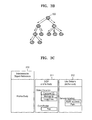
- Figure 3B is a diagram illustrating an object carousel tree. As illustrated in Figure 3B, since an object carousel method basically uses a directory structure, an SGW 300 located on the top of the tree is a root directory, and directories or files branch out from the SGW 300.
- FIG. 3C is a block diagram of an IOR 310.
- a profile body of the IOR 310 includes a BIOP profile body 311 and a lite options profile body 312.
- the BIOP profile body 311 includes location information (carousel ID, module ID, an object key, etc.) of an object.
- FIG 4 is a flowchart illustrating a method of determining whether receiving of an application is completed.
- a transport stream (TS) is received (operation s410).
- the received TS contains service information (SI).
- SI contains a program association table (PAT), a program map table (PMT), an application information table (AIT), and so on.
- PAT program association table
- PMT program map table
- AIT application information table
- An object carousel tree is traced (operation s430). That is, as illustrated in Figure 3A, information regarding an IOR of the SGW is extracted using a DSI (operation s430). It is possible to search the information regarding the IOR of the SGW for a service gateway object and a lower object IOR.
- the object IOR may be a directory object or a file object.
- the object IOR is a first object, a corresponding file object is searched for, and the obtained file object is stored. If the object IOR is a directory object, a corresponding directory object is searched for, and then, a directory object or a file object is searched for. In this way, it is possible to determine whether a necessary object is present by using an object carousel tree, and to store an object obtained by the searching.
- operation s440 If all objects for executing the application, i.e., the application data, are completely received (operation s440), the received application is stored (operation s460). Otherwise, necessary application data are continuously extracted (operation s450).
- Figure 5 is a flowchart illustrating an alternative method of determining whether reception of an application is completed. In the method illustrated in Figure 5, it is determined whether receiving of modules each containing an object is completed, unlike in the method illustrated in Figure 4, which determines whether receiving of objects is completed.
- a transport stream (TS) containing service information (SI) is received (operation s510).
- a PMT of a corresponding service channel included in the SI is analyzed, and packet identification (PID) of an object carousel for an elementary stream (ES) containing an object carousel, and other information are extracted (operation s520).
- PID packet identification
- Module collection information of a data carousel contained in an ES of each object carousel is extracted by extracting a control message (operation s530).
- the control message indicates the location of a corresponding object, and in particular, the control message is download information identifications (DIIs).
- Modules needed to execute an application are searched for according to the extracted module collection information (operation s540). When all the modules are searched for until storing of a data broadcast ends (operation s550), it is determined that receiving of the application data is completed (operation s560). Operations 520 through 550 are performed on an ES of each of the object carousels described in the same PMT.
- a data broadcast receiving apparatus receives a data broadcast, it is determined whether all application data needed to execute an application is received, and the received application data is stored. During reproduction of the data broadcast, only applications whose application data is completely received are executed together with audio/video. Thus, since a user can only execute applications that operate normally, the user is less inconvenienced, and errors in operating the data broadcast receiving apparatus during execution of the application can be prevented.
Landscapes
- Engineering & Computer Science (AREA)
- Multimedia (AREA)
- Signal Processing (AREA)
- Computer Security & Cryptography (AREA)
- General Engineering & Computer Science (AREA)
- Software Systems (AREA)
- Two-Way Televisions, Distribution Of Moving Picture Or The Like (AREA)
- Circuits Of Receivers In General (AREA)
Applications Claiming Priority (1)
| Application Number | Priority Date | Filing Date | Title |
|---|---|---|---|
| KR1020060096398A KR100823282B1 (ko) | 2006-09-29 | 2006-09-29 | 데이터 방송 애플리케이션을 수신, 저장 및 실행하기 위한방법 및 장치 |
Publications (2)
| Publication Number | Publication Date |
|---|---|
| EP1906667A2 true EP1906667A2 (de) | 2008-04-02 |
| EP1906667A3 EP1906667A3 (de) | 2011-08-31 |
Family
ID=38896835
Family Applications (1)
| Application Number | Title | Priority Date | Filing Date |
|---|---|---|---|
| EP07105332A Withdrawn EP1906667A3 (de) | 2006-09-29 | 2007-03-30 | Behandlung von durch Datenübertragung empfangenen Anwendungen |
Country Status (4)
| Country | Link |
|---|---|
| US (1) | US20080092196A1 (de) |
| EP (1) | EP1906667A3 (de) |
| KR (1) | KR100823282B1 (de) |
| CN (1) | CN101155310B (de) |
Families Citing this family (6)
| Publication number | Priority date | Publication date | Assignee | Title |
|---|---|---|---|---|
| KR20090005645A (ko) * | 2007-07-09 | 2009-01-14 | 삼성전자주식회사 | 데이터 검색 방법 및 데이터 방송 송수신 장치 |
| KR101490254B1 (ko) * | 2008-08-28 | 2015-02-05 | 엘지전자 주식회사 | 방송 수신기 및 백그라운드 채널 epg 제공 방법 |
| CN102149013B (zh) * | 2011-03-29 | 2013-06-26 | 深圳创维数字技术股份有限公司 | 一种数字电视的数据处理系统及方法、数字电视接收终端 |
| JPWO2012157753A1 (ja) * | 2011-05-19 | 2014-07-31 | 日本放送協会 | 放送通信連携受信装置 |
| CN104023259B (zh) * | 2014-04-04 | 2017-10-10 | 珠海迈科智能科技股份有限公司 | 一种机顶盒快速获取dsm‑cc应用程序的方法和装置 |
| US9918114B2 (en) | 2015-06-01 | 2018-03-13 | Comcast Cable Communications, Llc | Transmission of applications with content |
Family Cites Families (18)
| Publication number | Priority date | Publication date | Assignee | Title |
|---|---|---|---|---|
| US5819034A (en) * | 1994-04-28 | 1998-10-06 | Thomson Consumer Electronics, Inc. | Apparatus for transmitting and receiving executable applications as for a multimedia system |
| JP3465813B2 (ja) * | 1997-10-29 | 2003-11-10 | 日本ビクター株式会社 | ディジタル放送受信装置及びディジタル情報記録再生装置 |
| GB2376128B (en) * | 2000-03-08 | 2004-08-11 | Gen Instrument Corp | Personal versatile recorder and method of implementing and using same |
| US6907414B1 (en) * | 2000-12-22 | 2005-06-14 | Trilogy Development Group, Inc. | Hierarchical interface to attribute based database |
| US7669212B2 (en) * | 2001-02-02 | 2010-02-23 | Opentv, Inc. | Service platform suite management system |
| US7017175B2 (en) * | 2001-02-02 | 2006-03-21 | Opentv, Inc. | Digital television application protocol for interactive television |
| US7721320B2 (en) * | 2001-09-27 | 2010-05-18 | Nokia Corporation | Storage of audio/visual program data with associated promotional material |
| US7886332B2 (en) * | 2002-03-19 | 2011-02-08 | Canon Kabushiki Kaisha | Television broadcast receiving apparatus |
| US7657917B2 (en) * | 2002-05-23 | 2010-02-02 | Microsoft Corporation | Interactivity emulator for broadcast communication |
| GB2393805B (en) * | 2002-10-02 | 2005-09-14 | Tektronix Int Sales Gmbh | Cold boot timing |
| EP1570663A2 (de) * | 2002-12-04 | 2005-09-07 | Koninklijke Philips Electronics N.V. | Verfahren und vorrichtung zur erzeugung eines anwendungsdatensignals |
| KR100406633B1 (ko) * | 2002-12-31 | 2003-11-20 | 주식회사 휴맥스 | 디지털 방송수신기에서의 어플리케이션 프로그램 정보 및상태 표시방법 |
| EP1593259A1 (de) * | 2003-01-31 | 2005-11-09 | Koninklijke Philips Electronics N.V. | Interanwendungssteuerung zur leistungsverbesserung der wiedergabe von gespeicherten interaktiven fernsehanwendungen |
| US8266669B2 (en) * | 2003-03-12 | 2012-09-11 | Koninklijke Philips Electronics N.V. | Method and apparatus for storing an interactive television program |
| KR100679012B1 (ko) * | 2004-08-26 | 2007-02-05 | 삼성전자주식회사 | 디지털 방송 수신기의 업그레이드 방법 및 시스템 |
| US7827579B2 (en) * | 2004-09-09 | 2010-11-02 | Nokia Corporation | Mobile television electronic service guide delivery system |
| EP1859624A2 (de) * | 2005-03-03 | 2007-11-28 | Koninklijke Philips Electronics N.V. | Gestreamtes dateisystem für anwendungen mit optischen platten |
| US8316132B2 (en) * | 2005-09-08 | 2012-11-20 | Nokia Corporation | Method to determine the completeness of a service guide |
-
2006
- 2006-09-29 KR KR1020060096398A patent/KR100823282B1/ko not_active Expired - Fee Related
-
2007
- 2007-01-30 US US11/699,457 patent/US20080092196A1/en not_active Abandoned
- 2007-03-30 CN CN2007100919162A patent/CN101155310B/zh not_active Expired - Fee Related
- 2007-03-30 EP EP07105332A patent/EP1906667A3/de not_active Withdrawn
Also Published As
| Publication number | Publication date |
|---|---|
| KR20080029592A (ko) | 2008-04-03 |
| US20080092196A1 (en) | 2008-04-17 |
| CN101155310A (zh) | 2008-04-02 |
| CN101155310B (zh) | 2010-10-13 |
| KR100823282B1 (ko) | 2008-04-21 |
| EP1906667A3 (de) | 2011-08-31 |
Similar Documents
| Publication | Publication Date | Title |
|---|---|---|
| KR101703866B1 (ko) | 방송 서비스 전송 방법, 그 수신 방법 및 방송 서비스 수신 장치 | |
| EP2773108B1 (de) | Empfangsvorrichtung, empfangsverfahren, programm und informationsverarbeitungssystem | |
| JP2008118654A (ja) | デジタル放送メディア記録装置及び記録方法 | |
| CN101155310B (zh) | 接收、存储和执行数据广播应用的方法和设备 | |
| KR20130054207A (ko) | 디지털 콘텐츠 버전 전환 방법 및 그 대응 장치 | |
| US20070140651A1 (en) | Recording apparatus | |
| US20070022208A1 (en) | Recording and reproduction apparatus | |
| US20060053249A1 (en) | Information recording/reproduction processing device, method, and computer program | |
| US8718131B2 (en) | Method and apparatus for generating and processing packet in MPEG-2 transport stream | |
| CN102144399B (zh) | 广播接收机和提供背景频道epg的方法 | |
| JP4991284B2 (ja) | 双方向テレビ番組を記憶するための方法及び装置 | |
| CN1234231C (zh) | 记录数字视频广播数据的方法 | |
| US20090144793A1 (en) | Method for obtaining service map information, apparatus therefor, and method for fast performing application in service according to the service map information | |
| CN102187683A (zh) | 数据传送装置和数据接收装置 | |
| US10728610B2 (en) | Receiving apparatus, receiving method, transmission apparatus, and transmission method | |
| US8254764B2 (en) | Recording apparatus, image reproducing apparatus, and special reproduction method therefor | |
| US20070008402A1 (en) | Apparatus and method for backing up broadcast files | |
| US8078038B2 (en) | Content reception/recording device, method, program, and recording medium | |
| CN102469359B (zh) | 间歇地更新固件的方法、数据处理装置及数字电视 | |
| KR100962763B1 (ko) | 데이터 방송 파일 시스템 처리 방법 | |
| EP1791367B1 (de) | Informationsaufzeichnungsmedium, multiplexer und dekodierer | |
| CN101043611A (zh) | Dtv节目播放预定时间显示设备及其方法 | |
| KR100737600B1 (ko) | 데이터 방송 수신장치 및 그의 데이터 저장 방법 | |
| KR20070039594A (ko) | 대화식 애플리케이션들을 저장/삭제하는 방법 및 장치 | |
| US20110293243A1 (en) | Multimedia playing apparatus and multimedia data converter and converting method thereof |
Legal Events
| Date | Code | Title | Description |
|---|---|---|---|
| PUAI | Public reference made under article 153(3) epc to a published international application that has entered the european phase |
Free format text: ORIGINAL CODE: 0009012 |
|
| 17P | Request for examination filed |
Effective date: 20070330 |
|
| AK | Designated contracting states |
Kind code of ref document: A2 Designated state(s): AT BE BG CH CY CZ DE DK EE ES FI FR GB GR HU IE IS IT LI LT LU LV MC MT NL PL PT RO SE SI SK TR |
|
| AX | Request for extension of the european patent |
Extension state: AL BA HR MK YU |
|
| PUAL | Search report despatched |
Free format text: ORIGINAL CODE: 0009013 |
|
| AK | Designated contracting states |
Kind code of ref document: A3 Designated state(s): AT BE BG CH CY CZ DE DK EE ES FI FR GB GR HU IE IS IT LI LT LU LV MC MT NL PL PT RO SE SI SK TR |
|
| AX | Request for extension of the european patent |
Extension state: AL BA HR MK RS |
|
| RIC1 | Information provided on ipc code assigned before grant |
Ipc: H04N 7/00 20110101ALN20110726BHEP Ipc: H04N 7/16 20110101AFI20110726BHEP |
|
| AKX | Designation fees paid |
Designated state(s): AT BE BG CH CY CZ DE DK EE ES FI FR GB GR HU IE IS IT LI LT LU LV MC MT NL PL PT RO SE SI SK TR |
|
| RAP1 | Party data changed (applicant data changed or rights of an application transferred) |
Owner name: SAMSUNG ELECTRONICS CO., LTD. |
|
| 17Q | First examination report despatched |
Effective date: 20121221 |
|
| STAA | Information on the status of an ep patent application or granted ep patent |
Free format text: STATUS: THE APPLICATION IS DEEMED TO BE WITHDRAWN |
|
| 18D | Application deemed to be withdrawn |
Effective date: 20130511 |