EP1909467B1 - Contrôleur centralisé pour la manipulation distribuée de fonctions de télécommunications - Google Patents
Contrôleur centralisé pour la manipulation distribuée de fonctions de télécommunications Download PDFInfo
- Publication number
- EP1909467B1 EP1909467B1 EP07018667.1A EP07018667A EP1909467B1 EP 1909467 B1 EP1909467 B1 EP 1909467B1 EP 07018667 A EP07018667 A EP 07018667A EP 1909467 B1 EP1909467 B1 EP 1909467B1
- Authority
- EP
- European Patent Office
- Prior art keywords
- endpoint
- endpoints
- client
- message
- telecommunications
- Prior art date
- Legal status (The legal status is an assumption and is not a legal conclusion. Google has not performed a legal analysis and makes no representation as to the accuracy of the status listed.)
- Active
Links
Images





Classifications
-
- H—ELECTRICITY
- H04—ELECTRIC COMMUNICATION TECHNIQUE
- H04L—TRANSMISSION OF DIGITAL INFORMATION, e.g. TELEGRAPHIC COMMUNICATION
- H04L67/00—Network arrangements or protocols for supporting network services or applications
- H04L67/01—Protocols
- H04L67/10—Protocols in which an application is distributed across nodes in the network
- H04L67/104—Peer-to-peer [P2P] networks
-
- H—ELECTRICITY
- H04—ELECTRIC COMMUNICATION TECHNIQUE
- H04L—TRANSMISSION OF DIGITAL INFORMATION, e.g. TELEGRAPHIC COMMUNICATION
- H04L65/00—Network arrangements, protocols or services for supporting real-time applications in data packet communication
- H04L65/1066—Session management
- H04L65/1101—Session protocols
- H04L65/1104—Session initiation protocol [SIP]
-
- H—ELECTRICITY
- H04—ELECTRIC COMMUNICATION TECHNIQUE
- H04L—TRANSMISSION OF DIGITAL INFORMATION, e.g. TELEGRAPHIC COMMUNICATION
- H04L65/00—Network arrangements, protocols or services for supporting real-time applications in data packet communication
- H04L65/40—Support for services or applications
- H04L65/403—Arrangements for multi-party communication, e.g. for conferences
- H04L65/4053—Arrangements for multi-party communication, e.g. for conferences without floor control
-
- H—ELECTRICITY
- H04—ELECTRIC COMMUNICATION TECHNIQUE
- H04L—TRANSMISSION OF DIGITAL INFORMATION, e.g. TELEGRAPHIC COMMUNICATION
- H04L65/00—Network arrangements, protocols or services for supporting real-time applications in data packet communication
- H04L65/80—Responding to QoS
-
- H—ELECTRICITY
- H04—ELECTRIC COMMUNICATION TECHNIQUE
- H04M—TELEPHONIC COMMUNICATION
- H04M3/00—Automatic or semi-automatic exchanges
- H04M3/42—Systems providing special services or facilities to subscribers
- H04M3/42229—Personal communication services, i.e. services related to one subscriber independent of his terminal and/or location
- H04M3/42263—Personal communication services, i.e. services related to one subscriber independent of his terminal and/or location where the same subscriber uses different terminals, i.e. nomadism
- H04M3/42272—Personal communication services, i.e. services related to one subscriber independent of his terminal and/or location where the same subscriber uses different terminals, i.e. nomadism whereby the subscriber registers to the terminals for personalised service provision
-
- H—ELECTRICITY
- H04—ELECTRIC COMMUNICATION TECHNIQUE
- H04L—TRANSMISSION OF DIGITAL INFORMATION, e.g. TELEGRAPHIC COMMUNICATION
- H04L67/00—Network arrangements or protocols for supporting network services or applications
- H04L67/01—Protocols
- H04L67/10—Protocols in which an application is distributed across nodes in the network
- H04L67/104—Peer-to-peer [P2P] networks
- H04L67/1087—Peer-to-peer [P2P] networks using cross-functional networking aspects
- H04L67/1091—Interfacing with client-server systems or between P2P systems
-
- H—ELECTRICITY
- H04—ELECTRIC COMMUNICATION TECHNIQUE
- H04L—TRANSMISSION OF DIGITAL INFORMATION, e.g. TELEGRAPHIC COMMUNICATION
- H04L67/00—Network arrangements or protocols for supporting network services or applications
- H04L67/01—Protocols
- H04L67/10—Protocols in which an application is distributed across nodes in the network
- H04L67/104—Peer-to-peer [P2P] networks
- H04L67/1087—Peer-to-peer [P2P] networks using cross-functional networking aspects
- H04L67/1093—Some peer nodes performing special functions
Definitions
- the present invention relates to telecommunications in general, and, more particularly, to determining where a telecommunications feature is to be handled and notifying one or more client endpoints of the result.
- EP1643713 discloses how a first client endpoint sends a subscription to a presence server in a communication network in order to receive presence information regarding a second client endpoint. This presence monitoring is handled at said presence server, which informs the first client endpoint of changes in the presence status of the second client endpoint.
- US 6 985 961 B1 discloses a system for routing incoming messages to various devices based on media capabilities and type of media session.
- the system includes a composite user agent acting on behalf of a group of member users agents in a communication network.
- the composite user agent provides in a group of member user agents with a specialized proxy function while representing the group to the network as a single user agent.
- the composite user agent behaves and is viewed as a user agent.
- the composite user agent behaves and is viewed as both a registrat and a proxy server.
- FIG. 1 depicts telecommunications system 100 in the prior art.
- System 100 comprises telecommunications network 101; client endpoints 102-1 through 102-H, wherein H is a positive integer; and servers 103-1 through 103- L, wherein L is a positive integer.
- the elements of system 100 are interconnected as shown.
- System 100 enables calls, via network 101, between endpoints 102-1 through 102- H and servers 103-1 through 103- L .
- Network 101 comprises one or more of the Internet, the Public Switched Telephone Network (PSTN), a local area network (LAN), and so forth.
- PSTN Public Switched Telephone Network
- LAN local area network
- Client endpoints 102-1 through 102- H are telecommunications devices such as an Internet-protocol telephone, a notebook computer, a personal digital assistant (PDA), a tablet computer, and so forth. Each endpoint is capable of originating outgoing calls and receiving incoming calls, in well-known fashion. In addition, each endpoint is capable of one or more communication modes that comprise but are not limited to voice, video, data, email, and instant messaging.
- Servers 103-1 through 103- L are data-processing systems that handle telecommunications features that can be subscribed to by the endpoints.
- the servers are capable of handling features such as voice calling, video streaming, data retrieval, email, instant messaging, availability and presence monitoring, and so forth.
- Telecommunications system 100 operates in accordance with the Session Initiation Protocol (SIP), a set of standardized communication rules for initiating and maintaining communication for telephony, presence-based systems, instant messaging, and other telecommunications applications.
- SIP Session Initiation Protocol
- the increasing use of SIP-based systems represents a fundamental shift in telecommunications, in which a user can be addressed as a logical entity that might possess one or more devices, with each device going in and out of service based on the usage patterns of the user.
- the scalability issue that arises in a centralized server architecture is partially mitigated by partitioning the client endpoint users across multiple servers. Doing so, however, often has the effect of spreading out the call processing-related resource utilization, but not necessarily the SIP events-related utilization. Consequently, there are at least three issues with the centralized server architecture in the long run.
- each logical user in the system is represented by a private domain of endpoint entities, from which an endpoint is selected to serve as a super peer to represent the user to the centralized server, as is the case in a hybrid peer-to-peer system.
- Those endpoint entities can be physical devices; logical instances of the user's capability in shared software systems, applications, and services; or a combination of the two.
- a designated endpoint is selected, also from the private domain of endpoints, to handle some of the telecommunications features that the server otherwise would have handled.
- the super-peer endpoint and the designated endpoint can be the same endpoint or different endpoints.
- each endpoint in the private domain is permitted to have limited direct access to the server, typically for the purposes of registering and subscribing to features, in addition to and in contrast with the indirect access through the super peer.
- the server redirects a subscribing endpoint to the designated endpoint that is handling the feature.
- the centralized server of the illustrative embodiment enables the reallocation of one or more telecommunications features to some of the client endpoints, as described in this specification.
- the server receives a subscribe message from a client endpoint that is attempting to subscribe to a particular telecommunications feature or features.
- the server determines whether the feature being subscribed to is to be handled by the server itself or by a designated client endpoint that belongs to the private domain of the subscribing endpoint. This determination is based on one or more considerations that include, but are not limited to, the following:
- the server determines that the telecommunications feature being subscribed to is to be handled by a designated client endpoint in the private domain, the server then transmits a message to at least one of the client endpoints in the private domain (e.g. , the subscribing endpoint, the designated client endpoint, the super-peer endpoint, etc. ), which message redirects the subscribing endpoint to the designated endpoint.
- the server first transmits a message (e.g. , as part of a call initialization, etc .) to the designated endpoint that indicates that the endpoint has been designated to handle the subscribed-to feature.
- the illustrative embodiment of the present invention is advantageous over some techniques in the prior art, in that it enables a mitigation of the server scalability issue, in terms of reducing the amount of associated messaging from order ( n * k * m ) to roughly order ( n ), where n is the number of users in the system, k is the number of endpoints per user, and m is the number of messages per endpoint. Furthermore, since each endpoint is permitted on a limited basis to directly access the centralized server, the pre-existing relationship between a user, the user's endpoints, and the server is still maintained. This is particularly advantageous over, for example, pure peer-to-peer systems in the prior art because it is often important to retain some features at the server, particularly those that require a higher level of reliability than what some endpoints might be able to provide.
- the illustrative embodiment of the present invention comprises: receiving, at a data-processing system, a first message from a first client endpoint that is a member of a user domain, wherein the first client endpoint attempts to subscribe to a first telecommunications feature via the first message; determining which one of (i) a designated client endpoint that is a member of the user domain and (ii) the data-processing system is to handle the first telecommunications feature; and when the first telecommunications feature is to be handled by the designated client endpoint, transmitting a second message to at least one member client endpoint in the user domain, wherein the second message is transmitted after receiving the first message; wherein the user domain comprises the client endpoints that are associated with a first user.
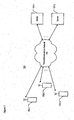
- FIG. 2 depicts telecommunications system 200, a hybrid peer-to-peer system, as is known in the art, which comprises telecommunications network 201; client endpoints 202-1 through 202- M , wherein M is a positive integer; and servers 203-1 through 203- N , wherein N is a positive integer.
- M is depicted as being equal to 3
- the number of endpoints can be different from that depicted, as those who are skilled in the art will appreciate.
- the depicted elements in system 200 are interconnected as shown.
- System 200 is capable of handling calls between endpoints via Session Initiation Protocol-based (SIP-based) signaling, in accordance with the illustrative embodiment.
- SIP-based Session Initiation Protocol-based
- system 200 comprises endpoints 202-1 through 202- M and servers 203-1 through 203- N in the illustrative embodiment; however, it will also be clear to those skilled in the art how to apply the present invention to some alternative embodiments that further comprise legacy endpoints or servers, or both, in which those legacy endpoints and servers do not embody the tasks described below and with respect to Figures 8 and 9 .
- Telecommunications network 201 is a network that comprises one or more of the Internet, the Public Switched Telephone Network (PSTN), a local area network (LAN), and so forth.
- Network 201 comprises or is connected to one or more transmission-related nodes such as gateways, routers, or switches that are used to direct packets from one or more sources to their correct destinations.
- Network 201 is capable of handling SIP-based messages in well-known fashion that are transmitted among two or more SIP-capable processing systems.
- PDA personal digital assistant
- Endpoint 202- m is capable of originating outgoing calls and receiving incoming calls, in well-known fashion.
- endpoint 202- m is capable of one or more communication modes that comprise but are not limited to voice, video, data, email, and instant messaging.
- endpoint 202- m is SIP-capable, but as those who are skilled in the art will appreciate, in some alternative embodiments endpoint 202- m can operate in accordance with a different type of call-control protocol.
- Endpoint 202- m is able to provide access to telecommunications features to its user.
- endpoint 202- m is able to access one or more servers 203-1 through 203- N for the purpose of providing server-based telecommunications features to its user.
- Endpoint 202- m is also able to communicate with other endpoints for the purpose of subscribing to endpoint-based, telecommunications features; in turn, one or more of endpoints 202-1 through 202- M are able to handle those telecommunications features on behalf of the subscribing endpoints.
- endpoint 202- m executes the tasks described below and with respect to Figure 8 in supporting the distributed feature functionality of the illustrative embodiment.
- Each endpoint 202- m is identified by a unique contact address, as is known in the art.
- the contact addresses for endpoints 202-1 through 202- M are associated with a public address of the particular user.
- the public address as is known in the art, is an identifier that is used to represent the user publicly. It is an address that might, for example, appear on the user's business card. When calling parties specify the user's public address, it is up to the SIP network to resolve the address down to one or more of several endpoint devices that the user might possess.
- Each of endpoints 202-1 through 202-M registers its contact address and its association with a particular public address, at which point the endpoint becomes a contact for a particular user.
- a user named Carol Q. Jones might have a public address of cjones@company.com and four endpoints that are identified by the following contact addresses:
- Endpoints 202-1 through 202- M are all depicted as wireless devices in the illustrative embodiment.
- some alternative embodiments of the present invention can comprise endpoints that are all wired or can comprise a mix of wireless and wired endpoints.
- the wireless communication protocol can be cellular-based, WiFi-based, Bluetooth-based, or based on yet a different set of rules.
- Endpoints 202-1 through 202- M are all depicted also as physical devices in the illustrative embodiment.
- some alternative embodiments of the present invention can comprise endpoint entities that are instead logical instances of a user's capability in shared software systems, applications, and services.
- a logical instance can be resident at one device, such as a shared computing system, even though that logical instance was created as the result of the user logging into telecommunications system 200 by using a different device.
- the Session Initiation Protocol enables the user to log in via a first device and be represented by an addressable endpoint entity virtually anywhere throughout system 200, such as in a first application (e.g ., conferencing, etc .) that is not necessarily resident at the first device.
- the same user could then log into system 200 via a second device-with or without having logged out of the first application-and be represented by an addressable endpoint entity in another place, such as in a different application (e.g. , one with screen pops and an instant messaging interface, etc .).
- endpoints 202-1 through 202- M are associated with to a specific human user.
- endpoints 202-1 through 202- M might be associated with a user that is itself a telecommunications device, such as an automated call distributor (ACD).
- ACD automated call distributor
- incoming calls have as their destination address the address of the ACD system, where the individual contact addresses, as are known in the art, correspond to the various endpoints in the ACD system.
- the salient components of server 203- n are described below and with respect to Figure 7 .
- the server-based features that server 203- n handles can include but are not limited to SIP event packages (e.g. , as a SIP event server, etc .), call processing ( e.g. , as a SIP proxy, etc .), voice calling, video streaming, email, voice mail, instant messaging, web access, other data retrieval, and presence-based services (e.g.
- server 203-n executes the tasks described below and with respect to Figure 9 in supporting the distributed feature functionality of the illustrative embodiment.
- server data-processing system 203-n executes the tasks of the illustrative embodiment
- another data-processing system can be used to execute those tasks, as those who are skilled in the art will appreciate.
- server 203- n is SIP-capable, but as those who are skilled in the art will appreciate, in some alternative embodiments server 203- n can operate in accordance with a different type of call-control protocol. In any event, it will be clear to those skilled in the art, after reading this specification, how to make and use server 203- n .
- Private domain 220 comprises client endpoints 203-1 through 203- N , each of which is said to belong to domain 220.
- private domain 220 is a user domain.
- private domain 220 can be defined based on a different attribute than endpoints that are associated with the same user.
- domain 220 can be defined as comprising those endpoints that are in close physical proximity to each other or are in direct communication range of each other.
- client endpoints 202-1 through 202- M are able to function as either equal peers or super peers.
- An "equal peer” is able to communicate peer-to-peer with other endpoints in the same private domain, in well-known fashion.
- endpoint 202-2 is the super peer, while the other endpoints depicted are not; therefore, endpoints other than 202-2 communicate with servers 203-1 through 203- N through the super-peer endpoint and communication path 214.
- each of endpoints 202-1 through 202- M runs an onboard software agent, wherein the agent is responsible for peer-to-peer routing and communication, as well as possibly other telecommunications features to be described later.
- Communication paths 211, 212, and 213 enable the peer-to-peer communication exchanges between endpoints 202-1 through 202- M .
- endpoint 202-1 might be within direct communication range of endpoint 202-2 and, as a result, transmits signals via path 211 ( i.e. , a wireless medium) directly to endpoint 202-2 in well-known fashion and without assistance from any other endpoint.
- path 211 i.e. , a wireless medium
- the transmission between two endpoints occurs indirectly through one or more networks, such as a wireline network.
- endpoints 202-1 through 202- M might communicate with each other through one or more intermediate systems, such as base stations and switching centers. This can be either because the endpoints are scattered across widely-separated geographic regions that are out of direct communication range with each other or because the endpoints receive service via different service providers (e.g. , Boingo for WiFi, Verizon for cellular, etc .) and cannot communicate directly with each other.
- service providers e.g. , Boingo for WiFi, Verizon for cellular, etc .
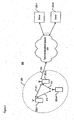
- Figure 3 depicts private domain 320, which is similar to private domain 220, except that one or more of the peer endpoints other than super-peer endpoint 202-2 are both able and allowed to access telecommunications network 201 directly ( i . e ., not requiring an intermediary super-peer endpoint).
- client endpoint 202-2 is the super peer, yet client endpoint 202-1 is allowed to access network 201 directly via communication path 315, instead of having to go through endpoint 202-2.
- each private domain can be defined by an attribute other than comprising all of the endpoints that belong to a particular user.
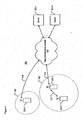
- Figure 4 depicts private domain 420, which is defined as comprising all of the endpoints that are in close physical proximity in a first area (i.e ., endpoints 202-2 and 202-3), and private domain 430, which is defined as comprising all of the endpoints that are in close physical proximity in a second area ( i.e. , endpoints 202-1 only).
- Client endpoint 202-2 is the super-peer endpoint in private domain 420.
- Client endpoint 202-1 is the super-peer endpoint in private domain 430, as well as the only endpoint in domain 430 until another endpoint comes along.
- Figure 5 depicts a plurality of endpoints within private domain 520.
- the plurality of endpoints comprises a super-peer endpoint 202-2, as well as other client endpoints that are members of domain 520.
- endpoint 202-2 communicates with one or more servers 203- n as an agent of one or more other endpoints in the plurality.
- at least some of the endpoints, such as endpoints 202-1 and 202-4, are capable of subscribing to telecommunications features via one or more servers 203- n .
- endpoints 202-3 and 202-5 are capable of handling one or more telecommunications features, though not necessarily those features to which some endpoints attempt to subscribe via the servers.
- some of the client endpoints are allowed to access network 201 without having to go through super-peer endpoint 202-2.
- endpoint 202-1 might query the other endpoints about their abilities to communicate at or above a predetermined quality-of-service level (e.g. , bandwidth, error rate, latency, etc .). As a result of the inquiry, endpoint 202-1 might find that endpoints 202-1, 202-2, and 202-3 are able to support voice services (i.e.
- endpoints 202-4 and 202-5 are not able to support voice services but are still able to support instant messaging services, along with endpoint 202-2.
- endpoints 202-1, 202-2, and 202-3 will be able to transfer voice packets directly with each other, or at least without involving network 201, via paths 511, 512, and 513; at the same time, endpoints 202-2, 202-4, and 202-5 will be able to transfer instant messaging packets directly with each other via paths 515, 516, and 517.
- capabilities that might be present at one or more endpoints in domain 520 can be related to storage capability, processing capability, and user presentation (e.g. , display, etc .) capability, as well as the ability to provide one or more specified telecommunications features.
- one such capability might be an endpoint's capability to display the HTML-based content of messages.
- a particular telecommunications feature might comprise the ability to select an endpoint to present media content to a user.
- each given endpoint in the plurality of endpoints associated with domain 520 can inquire about, report on, or handle other capabilities than those already mentioned.
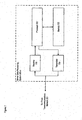
- FIG. 6 depicts the salient components of client endpoint 202- m in accordance with the illustrative embodiment of the present invention.
- Endpoint 202- m comprises receiver 601, processor 602, memory 603, and transmitter 604, interconnected as shown.
- Receiver 601 is part of a network interface that is capable of receiving signals from other client endpoints in the same private domain, as well as signals from one or more of server data-processing systems 203-1 through 203- N via network 201, and forwards the information encoded in the signals to processor 602, in well-known fashion. It will be clear to those skilled in the art, after reading this specification, how to make and use receiver 601.
- Processor 602 is a general-purpose processor that is capable of receiving information from receiver 601, executing instructions stored in memory 603, reading data from and writing data into memory 603, executing the tasks described below and with respect to Figure 8 , and transmitting information to transmitter 604.
- processor 602 might be a special-purpose processor. In either case, it will be clear to those skilled in the art, after reading this specification, how to make and use processor 602.
- Memory 603 stores the instructions and data used by processor 602.
- Memory 603 might be any combination of dynamic random-access memory (RAM), flash memory, disk drive memory, and so forth. It will be clear to those skilled in the art, after reading this specification, how to make and use memory 603.
- RAM dynamic random-access memory
- flash memory disk drive memory
- Transmitter 604 is part of a network interface that receives information from processor 602 and is capable of transmitting signals that encode this information to other client endpoints in the same private domain, as well as signals to one or more of server data-processing systems 203-1 through 203- N via network 201, in well-known fashion. It will be clear to those skilled in the art, after reading this specification, how to make and use transmitter 604.
- Keypad 605 accepts input signals from the user, and display 606 presents displayable signals to the user, both in well-known fashion.
- FIG. 7 depicts the salient components of server data-processing system 203- n in accordance with the illustrative embodiment of the present invention.
- Server 203- n comprises receiver 701, processor 702, memory 703, and transmitter 704, interconnected as shown.
- Receiver 701 is part of a network interface that receives signals from client endpoints (e.g. , endpoint 202- m, etc .) via network 201 and forwards the information encoded in the signals to processor 702, in well-known fashion. It will be clear to those skilled in the art, after reading this specification, how to make and use receiver 701.
- client endpoints e.g. , endpoint 202- m, etc .
- Processor 702 is a general-purpose processor that is capable of receiving information from receiver 701, executing instructions stored in memory 703, reading data from and writing data into memory 703, executing the tasks described below and with respect to Figure 9 , and transmitting information to transmitter 704.
- processor 702 might be a special-purpose processor. In either case, it will be clear to those skilled in the art, after reading this specification, how to make and use processor 702.
- Memory 703 stores the instructions and data used by processor 702.
- Memory 703 might be any combination of dynamic random-access memory (RAM), flash memory, disk drive memory, and so forth. It will be clear to those skilled in the art, after reading this specification, how to make and use memory 703.
- RAM dynamic random-access memory
- Transmitter 704 is part of a network interface that receives information from processor 702 and transmits signals that encode this information to client endpoints (e.g. , endpoint 202- m , etc.) via network 201, in well-known fashion. It will be clear to those skilled in the art, after reading this specification, how to make and use transmitter 704.
- Figures 8 and 9 depict flowcharts of salient tasks that involve informing a client endpoint that is subscribing to a telecommunications feature about where the feature is being handled ( e.g. , at another client endpoint 202- m , at server 203- n , etc .).
- the tasks in Figure 8 constitute a first technique, in which the subscribing endpoint first queries other endpoints in the same private domain about one or more capabilities, such as the ability to provide a feature, and then receives a report on where those capabilities can be found.
- the tasks in Figure 9 constitute a second technique in which server 203- n informs the subscribing endpoint about where the feature can be found.
- Figure 8 depicts a flowchart of the salient tasks that are executed by client endpoint 202- m , in accordance with the illustrative embodiment of the present invention.
- the depicted tasks involve informing a first client endpoint about where one or more capabilities are being handled, including features that the first client endpoint might subscribe to.
- the tasks are associated with communication among one or more of client endpoints 202-1 through 202- M and, optionally, with server 203- n .
- the tasks associated with Figure 8 are described below as being executed by endpoint 202-1.
- endpoint 202-1 transmits a registration message to a registrar server, which for pedagogical purposes is server 203-2.
- server 203-2 a registrar server
- endpoint 202-1 transmits the message via endpoint 202-2, which handles at least some of the communication with server 203-2 as an agent of endpoint 202-1.
- endpoint 202-1 is able to transmit at least the registration message to server 203-2 without the assistance of any other endpoint.
- endpoint 202-1 receives a plurality of contact addresses of endpoints (e.g. , in a list, etc .) that are associated with the user of private domain 520.
- the plurality of contact addresses essentially identifies member endpoints of domain 520 to endpoint 202-1.
- endpoint 202-1 transmits a first message to a second endpoint (e.g. , endpoint 202-2, endpoint 202-3, etc.) based on that second endpoint having been identified by a first contact address in the plurality of contact addresses.
- the first message inquires about one or more capabilities that might be present in the plurality of endpoints. Capabilities that might be present at one or more endpoints include, but are not limited to, the following:
- endpoint 202-1 also transmits a capabilities inquiry message to one or more additional endpoints identified by the plurality of contact addresses.
- endpoint 202-1 receives a second message from one of the members of the plurality of endpoints, wherein the second message comprises a report on one or more capabilities queried about at task 803.
- the member endpoint that reports the capabilities might be the same as the endpoint to which the inquiry was sent, while in some other embodiments the member endpoint that reports the capabilities might be different than the queried endpoint.
- report messages might be received from more than one endpoint.
- endpoint 202-3 might indicate that it has voice-handling capabilities
- endpoint 202-5 might indicate that it has instant messaging capabilities.
- endpoint 202-2 i.e.
- the super peer might indicate that endpoint 202-3 has voice-handling capabilities and endpoint 202-5 has instant messaging capabilities. Based on the available capabilities, the querying endpoint can determine the best endpoint or subset of endpoints to handle a particular feature on behalf of the querying endpoint.
- each queried endpoint determines which capabilities to advertise to endpoint 202-1 as being available.
- endpoint 202-1 instead determines which capabilities it can use out of the reported capabilities, while in some other alternative embodiment yet another endpoint (e.g. , super-peer endpoint 202-2, etc .) determines which capabilities endpoint 202-1 can use. This determination is based on one or more considerations that include, but are not limited to, the following:
- endpoint 202-1 checks whether a particular telecommunications feature is available at an endpoint in domain 520 or at a server, based on one or more capabilities reports that endpoint 202-1 received from other endpoints at task 804. If the feature of interest is to be handled by an endpoint, task execution proceeds to task 806. Otherwise, if the feature of interest is to be handled by a server, task execution proceeds to task 807.
- endpoint 202-1 transmits a subscribe message to the client endpoint that is handling the feature being subscribed to (i.e. , a designated endpoint), in which the message indicates the feature.
- endpoint 202-1 transmits the message to a different member client endpoint in domain 520 than the one that handles the feature, which then processes the subscribe message. Task execution then ends.
- endpoint 202-1 transmits a subscribe message to server 203- n , in which the message indicates the feature that is being subscribed to. The subscribe process then continues in well-known fashion. Task execution then ends.
- FIG. 9 depicts a flowchart of the salient tasks that are executed by server data-processing system 203- n , in accordance with the illustrative embodiment of the present invention.
- the depicted tasks involve server 203- n informing a first client endpoint about where a particular feature is being handled that the first client endpoint is subscribing to.
- the tasks are associated with communication between one or more client endpoints 202- m and server 203- n .
- the tasks associated with Figure 9 are described below as being executed by server 203-1, which receives a message from endpoint 202-1.
- server 203-1 receives a subscribe message from client endpoint 202-1 that is attempting to subscribe to a particular telecommunications feature.
- the subscribe message indicates the feature or features to which endpoint 202-1 is attempting to subscribe.
- server 203-1 receives a subscribe message instead from a different member client endpoint of endpoint 202-1's private domain, which message indicates that endpoint 202-1 is attempting to subscribe to a specified feature or features. This might be the case when, for example, a super-peer endpoint is handling the subscribe-related communications between the private domain and server 203-1.
- server 203-1 determines whether the feature being subscribed to is to be handled by the server itself (or another server such as server 203-2) or by a designated client endpoint that belongs to the same private domain as endpoint 202-1. This determination is based on one or more considerations that include, but are not limited to, the following:
- some features are to be always be handled by the server, while other features by an endpoint in the private domain.
- a subscribing endpoint that can efficiently communicate with other endpoints in the domain can be redirected to another endpoint in the domain for the feature, while a subscribing endpoint that cannot efficiently communicate with the other endpoints can be directed to the server.
- the subscribing endpoint is incapable of accessing the feature at another endpoint, the subscribing endpoint can be directed to the server.
- the server might choose to redirect subscribing endpoints to their own private domain only when the current resource utilization at the server rises above a predetermined level.
- a variety of telecommunications features can be handled by a designated client endpoint as an agent of the other endpoints in a private domain, instead of being handled by the server.
- One example of such a feature is a SIP event package, as is known in the art, such as conferencing.
- Another example of such a feature is the monitoring of device presence, which in a centralized server architecture can result in too much message traffic being offered to the server.
- Device presence is the low-level state of an individual client device, such as whether the device is on or off.
- the designated client endpoint can track each device's presence and then aggregate the presence information to present an overall indication of user availability to server 203-1.
- the designated endpoint can handle media such as voice messaging, instant messaging, and so forth.
- media handling is call recording, in which a user wants to record a new call.
- one or more endpoints in the private domain bridge instead of using mixing resources on the centralized server, one or more endpoints in the private domain bridge on and share the responsibilities for recording and storage of the media.
- other telecommunications features than those mentioned in the examples can be handled by a designated client endpoint instead of being handled by the server.
- the designated client endpoint which for pedagogical purposes is endpoint 202-2, can be designated in any of a variety of ways as the endpoint to handle the telecommunications feature being subscribed to.
- the endpoints in the private domain can elect endpoint 202-2 or server 203-1 can select endpoint 202-2 to handle a particular feature.
- the super-peer endpoint in the illustrative embodiment is also the designated endpoint that handles a feature for its domain; however, as those who are skilled in the art will appreciate in some alternative embodiments, a non-super peer endpoint can handle a feature, or at least a feature that does not require communicating with the servers.
- a first designated endpoint can handle a first feature
- a second designated endpoint can handle a second feature, and so forth.
- server 203-1 checks whether the telecommunications feature being subscribed to is to be handled by a designated client endpoint. If the feature is to be handled by a designated client endpoint, then task execution proceeds to task 904. If not, task execution proceeds to task 906.
- server 203-1 optionally initiates a call to the designated client endpoint (i.e. , endpoint 202-2), instructing the designated endpoint to assume the handling of the telecommunications feature being subscribed to. This occurs when the designated client endpoint is not already in a state in which it is ready to handle the feature.
- server 203-1 transmits a redirecting message to endpoint 202-1 that indicates that the feature being subscribed to is being handled by an endpoint in endpoint 202-1's private domain.
- the message indicates the particular endpoint that is handling the feature (i.e., endpoint 202-2).
- the message merely indicates that the feature is being handled in the private domain-in which case, it is up to endpoint 202-1 to determine the particular endpoint that is handling the feature.
- server 203-1 transmits the message to the subscribing endpoint
- server 203-1 transmits the message to a different endpoint or endpoints in the private domain (e.g. , designated endpoint-202-2, etc .). In this case, it is up to the endpoint that receives the message to inform the subscribing endpoint, which might be indicated in the message or which might need to be determined by the endpoint that receives the message.
- server 203-1 executes task 905, task execution proceeds back to task 901.
- server 203-1 transmits a response to endpoint 202-1 that the endpoint has been subscribed to the feature, which is being handled by the server itself. Task execution then proceeds back to task 901.
Landscapes
- Engineering & Computer Science (AREA)
- Signal Processing (AREA)
- Computer Networks & Wireless Communication (AREA)
- Multimedia (AREA)
- Business, Economics & Management (AREA)
- General Business, Economics & Management (AREA)
- Data Exchanges In Wide-Area Networks (AREA)
- Small-Scale Networks (AREA)
- Mobile Radio Communication Systems (AREA)
- Computer And Data Communications (AREA)
- Telephonic Communication Services (AREA)
Claims (15)
- Procédé pour commander de façon centralisée la prise en charge de caractéristiques de télécommunications comprenant :la réception, (901) au niveau d'un système de traitement de données centralisé (203-1, 203-N), d'un premier message en provenance d'un premier point d'extrémité de client (202-1) qui est un membre d'un domaine privé (220), où ledit premier point d'extrémité de client (202-1) tente de s'abonner à une première caractéristique de télécommunications via ledit premier message ;la détermination (902), au niveau dudit système de traitement de données centralisé (203-1, 203-N) et sur la base au moins en partie d'une capacité d'au moins un membre du domaine privé (220), duquel entre :un point d'extrémité de client désigné (202-2, 202-M) qui est un membre dudit domaine privé (220), etledit système de traitement de données centralisé (203-1, 203-N)doit gérer ladite première caractéristique de télécommunications ; etlorsque ladite première caractéristique de télécommunications doit être prise en charge par ledit point d'extrémité de client désigné (202-2, 202-M),la transmission (905) d'un deuxième message dudit système de traitement de données centralisé (203-1, 203-N) à au moins un point d'extrémité de client membre (202-1, 202-M) dans ledit domaine privé (220), où ledit deuxième message est transmis après la réception dudit premier message,dans lequel tous les points d'extrémité de client dans ledit domaine privé partagent au moins un attribut.
- Procédé selon la revendication 1, comprenant en outre
l'initiation, au niveau dudit système de traitement de données centralisé (203-1, 203-N), d'un appel vers ledit point d'extrémité de client désigné (202-2, 202-M) qui donne pour instruction audit point d'extrémité de client désigné (202-2, 202-M) de prendre en charge ladite première caractéristique de télécommunications. - Procédé selon l'une quelconque des revendications 1 ou 2, dans lequel ledit premier point d'extrémité de client est un dudit au moins un point d'extrémité de client membre.
- Procédé selon la revendication 1, dans lequel ledit deuxième message indique qu'un point d'extrémité dans ledit domaine privé autre que ledit point d'extrémité de client désigné s'abonne à ladite première caractéristique de télécommunications.
- Procédé selon la revendication 4, dans lequel ledit deuxième message indique que ledit premier point d'extrémité de client s'abonne à ladite première caractéristique de télécommunications.
- Procédé selon la revendication 4, dans lequel ladite première caractéristique de télécommunications est liée à la surveillance de présence de dispositif.
- Procédé selon la revendication 1, comprenant en outre :la réception, au niveau dudit système de traitement de données, d'un troisième message en provenance d'un second point d'extrémité de client qui est également un membre dudit domaine privé, où ledit second point d'extrémité de client tente de s'abonner à une seconde caractéristique de télécommunications via ledit troisième message ; etlorsque ladite seconde caractéristique de télécommunications doit être prise en charge par ledit système de traitement de données centralisé, la transmission d'un quatrième message dudit système de traitement de données centralisé (203-1, 203-N) audit premier point d'extrémité de client qui indique que ledit premier point d'extrémité de client a été abonné à ladite première caractéristique de télécommunications.
- Procédé selon la revendication 1, dans lequel la détermination de l'endroit où ladite première caractéristique de télécommunications doit être prise en charge est basée sur une première capacité dudit premier point d'extrémité de client.
- Procédé selon la revendication 8, dans lequel ledit attribut est la proximité physique des points d'extrémité de client les uns par rapport aux autres.
- Procédé selon la revendication 9, dans lequel la détermination, au niveau dudit système de traitement de données centralisé (203-1, 203-N), duquel entre :un point d'extrémité de client désigné qui est un membre dudit domaine privé, etledit système de traitement de données centralisédoit gérer ladite première caractéristique de télécommunications ;est basée au moins en partie sur au moins une règle.
- Procédé selon la revendication 10, dans lequel ladite au moins une règle comprend une règle qui est liée à l'allocation de largeur de bande à l'intérieur d'un canal de communication.
- Procédé selon la revendication 11, dans lequel ladite au moins une règle comprend une règle qui est liée à la localisation dudit premier point d'extrémité de client.
- Procédé selon l'une quelconque des revendications 9 à 12, comprenant en outre :la réception, au niveau dudit système de traitement de données centralisé, d'un troisième message en provenance d'un second point d'extrémité de client qui est également un membre dudit domaine privé, où ledit second point d'extrémité de client tente de s'abonner à une seconde caractéristique de télécommunications via ledit troisième message ;la détermination, au niveau dudit système de traitement de données (203-1, 203-N), sur la base d'au moins une règle qui est liée audit premier attribut, duquel entre :ledit point d'extrémité de client désigné qui est un membre dudit domaine privé, etledit système de traitement de données doit gérer ladite seconde caractéristique de télécommunications ; etlorsque ladite seconde caractéristique de télécommunications doit être prise en charge par ledit système de traitement de données, la transmission d'un quatrième message dudit système de traitement de données (203-1, 203-N) audit premier point d'extrémité de client qui indique que ledit premier point d'extrémité de client a été abonné à ladite première caractéristique de télécommunications.
- Procédé selon l'une quelconque des revendications 9 à 13, dans lequel la détermination de l'endroit où ladite première caractéristique de télécommunications doit être prise en charge est également basée sur au moins une règle qui est liée à un attribut dudit domaine privé.
- Procédé selon l'une quelconque des revendications précédentes, dans lequel le domaine privé est un domaine d'utilisateur et tous les points d'extrémité de client dans ledit domaine d'utilisateur sont associés à un premier utilisateur.
Applications Claiming Priority (1)
| Application Number | Priority Date | Filing Date | Title |
|---|---|---|---|
| US11/539,162 US7656836B2 (en) | 2006-10-05 | 2006-10-05 | Centralized controller for distributed handling of telecommunications features |
Publications (2)
| Publication Number | Publication Date |
|---|---|
| EP1909467A1 EP1909467A1 (fr) | 2008-04-09 |
| EP1909467B1 true EP1909467B1 (fr) | 2015-10-21 |
Family
ID=39047977
Family Applications (1)
| Application Number | Title | Priority Date | Filing Date |
|---|---|---|---|
| EP07018667.1A Active EP1909467B1 (fr) | 2006-10-05 | 2007-09-22 | Contrôleur centralisé pour la manipulation distribuée de fonctions de télécommunications |
Country Status (4)
| Country | Link |
|---|---|
| US (1) | US7656836B2 (fr) |
| EP (1) | EP1909467B1 (fr) |
| JP (1) | JP4599617B2 (fr) |
| CA (1) | CA2602775C (fr) |
Cited By (2)
| Publication number | Priority date | Publication date | Assignee | Title |
|---|---|---|---|---|
| US9258511B2 (en) | 2010-03-31 | 2016-02-09 | Skype | Indicia of contact viewing activity |
| US9521360B2 (en) | 2010-12-31 | 2016-12-13 | Skype | Communication system and method |
Families Citing this family (21)
| Publication number | Priority date | Publication date | Assignee | Title |
|---|---|---|---|---|
| GB2444995B (en) * | 2006-12-21 | 2011-07-27 | Vodafone Plc | Peer to peer network |
| US20080288504A1 (en) * | 2007-05-17 | 2008-11-20 | Fisher Iii William W | Methods, media, and systems for recording and reporting content usage |
| US8645477B2 (en) * | 2009-01-30 | 2014-02-04 | Voxer Ip Llc | Progressive messaging apparatus and method capable of supporting near real-time communication |
| US8825772B2 (en) * | 2007-06-28 | 2014-09-02 | Voxer Ip Llc | System and method for operating a server for real-time communication of time-based media |
| US9178916B2 (en) * | 2007-06-28 | 2015-11-03 | Voxer Ip Llc | Real-time messaging method and apparatus |
| US8688789B2 (en) * | 2009-01-30 | 2014-04-01 | Voxer Ip Llc | Progressive messaging apparatus and method capable of supporting near real-time communication |
| US8180029B2 (en) | 2007-06-28 | 2012-05-15 | Voxer Ip Llc | Telecommunication and multimedia management method and apparatus |
| US11095583B2 (en) | 2007-06-28 | 2021-08-17 | Voxer Ip Llc | Real-time messaging method and apparatus |
| US20100198922A1 (en) | 2009-01-30 | 2010-08-05 | Rebelvox Llc | Methods for using the addressing, protocols and the infrastructure of email to support near real-time communication |
| US20110019662A1 (en) * | 2007-06-28 | 2011-01-27 | Rebelvox Llc | Method for downloading and using a communication application through a web browser |
| KR101472936B1 (ko) * | 2008-04-30 | 2014-12-17 | 삼성전자주식회사 | 피투피 네트워크 시스템 및 그의 지역 기반 운용 방법 |
| US8849927B2 (en) * | 2009-01-30 | 2014-09-30 | Voxer Ip Llc | Method for implementing real-time voice messaging on a server node |
| GB2475237B (en) | 2009-11-09 | 2016-01-06 | Skype | Apparatus and method for controlling communication signalling and media |
| GB201005465D0 (en) | 2010-03-31 | 2010-05-19 | Skype Ltd | Television set |
| GB201005458D0 (en) | 2010-03-31 | 2010-05-19 | Skype Ltd | Media appliance |
| GB2479180B (en) * | 2010-03-31 | 2016-06-01 | Skype | System of user devices |
| US9717090B2 (en) | 2010-12-31 | 2017-07-25 | Microsoft Technology Licensing, Llc | Providing notifications of call-related services |
| US10404762B2 (en) | 2010-12-31 | 2019-09-03 | Skype | Communication system and method |
| US10291660B2 (en) | 2010-12-31 | 2019-05-14 | Skype | Communication system and method |
| US9019336B2 (en) | 2011-12-30 | 2015-04-28 | Skype | Making calls using an additional terminal |
| GB201301452D0 (en) | 2013-01-28 | 2013-03-13 | Microsoft Corp | Providing notifications of call-related services |
Family Cites Families (8)
| Publication number | Priority date | Publication date | Assignee | Title |
|---|---|---|---|---|
| JPH1153326A (ja) * | 1997-07-30 | 1999-02-26 | Internatl Business Mach Corp <Ibm> | 分散処理システム、クライアントノード、サーバノードおよび分散処理方法 |
| US7170863B1 (en) * | 2001-02-12 | 2007-01-30 | Nortel Networks Limited | Push-to-talk wireless telecommunications system utilizing a voice-over-IP network |
| US6985961B1 (en) * | 2001-12-04 | 2006-01-10 | Nortel Networks Limited | System for routing incoming message to various devices based on media capabilities and type of media session |
| US20050021976A1 (en) * | 2003-06-23 | 2005-01-27 | Nokia Corporation | Systems and methods for controlling access to an event |
| EP1643713A1 (fr) | 2004-10-04 | 2006-04-05 | Hewlett-Packard Development Company, L.P. | Système informatique distribué |
| US7634564B2 (en) * | 2004-11-18 | 2009-12-15 | Nokia Corporation | Systems and methods for invoking a service from a plurality of event servers in a network |
| DE102005009107B3 (de) * | 2005-02-28 | 2006-07-13 | Siemens Ag | Bereitstellung von redundanten SIP Proxy Ressourcen |
| GB0607294D0 (en) * | 2006-04-11 | 2006-05-24 | Nokia Corp | A node |
-
2006
- 2006-10-05 US US11/539,162 patent/US7656836B2/en active Active
-
2007
- 2007-09-14 CA CA2602775A patent/CA2602775C/fr not_active Expired - Fee Related
- 2007-09-22 EP EP07018667.1A patent/EP1909467B1/fr active Active
- 2007-10-05 JP JP2007261502A patent/JP4599617B2/ja active Active
Cited By (2)
| Publication number | Priority date | Publication date | Assignee | Title |
|---|---|---|---|---|
| US9258511B2 (en) | 2010-03-31 | 2016-02-09 | Skype | Indicia of contact viewing activity |
| US9521360B2 (en) | 2010-12-31 | 2016-12-13 | Skype | Communication system and method |
Also Published As
| Publication number | Publication date |
|---|---|
| JP2008104173A (ja) | 2008-05-01 |
| CA2602775C (fr) | 2012-10-30 |
| US7656836B2 (en) | 2010-02-02 |
| JP4599617B2 (ja) | 2010-12-15 |
| CA2602775A1 (fr) | 2008-04-05 |
| EP1909467A1 (fr) | 2008-04-09 |
| US20080084840A1 (en) | 2008-04-10 |
Similar Documents
| Publication | Publication Date | Title |
|---|---|---|
| EP1909467B1 (fr) | Contrôleur centralisé pour la manipulation distribuée de fonctions de télécommunications | |
| US7299286B2 (en) | Personal user agent | |
| US20080281971A1 (en) | Network multimedia communication using multiple devices | |
| KR101402433B1 (ko) | 그룹 통화 케이퍼빌리티 질의 | |
| CN102255889B (zh) | Sip监视和控制锚点 | |
| CN102256235B (zh) | 用于填充共同通信日志的方法及系统 | |
| US7870418B2 (en) | Enhanced presence routing and roster fidelity by proactive crashed endpoint detection | |
| US20050198320A1 (en) | Resilient application layer overlay framework for converged communication over internet protocol networks | |
| US7831270B2 (en) | Providing virtual talk group communication sessions in accordance with endpoint resources | |
| KR20050084360A (ko) | 동적 사용자 상태에 따른 처리 | |
| CN101536481A (zh) | 用于在对等网络中提供呼叫中心服务的方法 | |
| CN101208941B (zh) | 利用出现检测执行自动联络分配的方法和系统 | |
| CA2574197C (fr) | Methode et systeme pour signaler le transfert d'appels telephoniques entre points d'acces dans un reseau local sans fil | |
| EP1909453B1 (fr) | Manipulation distribuée de propriétés de télécommunication dans un système poste à poste hybride de points limite | |
| US8437341B2 (en) | Contact priority reordering | |
| US20060085678A1 (en) | Distributed computing | |
| US7778274B2 (en) | System and method for providing a compatibility feature in a session initiation protocol (SIP) environment | |
| WO2009064226A1 (fr) | Procédé de prise en charge de paquet événement | |
| US20070130288A1 (en) | Distributed communication through media services | |
| Li et al. | Extending instant messaging to provide pervasive personal communication | |
| Wu et al. | The Protocol Design and Implementation of a JXTA Based P2P-SIP System | |
| Kaloxylos et al. | Extending sip to enable a more efficient multimedia session control in future networks |
Legal Events
| Date | Code | Title | Description |
|---|---|---|---|
| PUAI | Public reference made under article 153(3) epc to a published international application that has entered the european phase |
Free format text: ORIGINAL CODE: 0009012 |
|
| 17P | Request for examination filed |
Effective date: 20071004 |
|
| AK | Designated contracting states |
Kind code of ref document: A1 Designated state(s): AT BE BG CH CY CZ DE DK EE ES FI FR GB GR HU IE IS IT LI LT LU LV MC MT NL PL PT RO SE SI SK TR |
|
| AX | Request for extension of the european patent |
Extension state: AL BA HR MK RS |
|
| RIN1 | Information on inventor provided before grant (corrected) |
Inventor name: SANGERMANO, JOHN JOSEPH Inventor name: BAKER, ALBERT J. Inventor name: ZENNER, HAL B. |
|
| 17Q | First examination report despatched |
Effective date: 20080626 |
|
| AKX | Designation fees paid |
Designated state(s): DE FR GB |
|
| GRAP | Despatch of communication of intention to grant a patent |
Free format text: ORIGINAL CODE: EPIDOSNIGR1 |
|
| INTG | Intention to grant announced |
Effective date: 20150505 |
|
| GRAS | Grant fee paid |
Free format text: ORIGINAL CODE: EPIDOSNIGR3 |
|
| GRAA | (expected) grant |
Free format text: ORIGINAL CODE: 0009210 |
|
| AK | Designated contracting states |
Kind code of ref document: B1 Designated state(s): DE FR GB |
|
| REG | Reference to a national code |
Ref country code: GB Ref legal event code: FG4D |
|
| REG | Reference to a national code |
Ref country code: DE Ref legal event code: R096 Ref document number: 602007043550 Country of ref document: DE |
|
| REG | Reference to a national code |
Ref country code: DE Ref legal event code: R097 Ref document number: 602007043550 Country of ref document: DE |
|
| PLBE | No opposition filed within time limit |
Free format text: ORIGINAL CODE: 0009261 |
|
| STAA | Information on the status of an ep patent application or granted ep patent |
Free format text: STATUS: NO OPPOSITION FILED WITHIN TIME LIMIT |
|
| 26N | No opposition filed |
Effective date: 20160722 |
|
| REG | Reference to a national code |
Ref country code: FR Ref legal event code: ST Effective date: 20170531 |
|
| PG25 | Lapsed in a contracting state [announced via postgrant information from national office to epo] |
Ref country code: FR Free format text: LAPSE BECAUSE OF NON-PAYMENT OF DUE FEES Effective date: 20160930 |
|
| REG | Reference to a national code |
Ref country code: DE Ref legal event code: R079 Ref document number: 602007043550 Country of ref document: DE Free format text: PREVIOUS MAIN CLASS: H04L0029080000 Ipc: H04L0065000000 |
|
| PGFP | Annual fee paid to national office [announced via postgrant information from national office to epo] |
Ref country code: DE Payment date: 20250929 Year of fee payment: 19 |
|
| PGFP | Annual fee paid to national office [announced via postgrant information from national office to epo] |
Ref country code: GB Payment date: 20250929 Year of fee payment: 19 |