EP1912065B1 - Méthode pour analyser l'albumine dans un prélèvement en solution - Google Patents
Méthode pour analyser l'albumine dans un prélèvement en solution Download PDFInfo
- Publication number
- EP1912065B1 EP1912065B1 EP06782218.9A EP06782218A EP1912065B1 EP 1912065 B1 EP1912065 B1 EP 1912065B1 EP 06782218 A EP06782218 A EP 06782218A EP 1912065 B1 EP1912065 B1 EP 1912065B1
- Authority
- EP
- European Patent Office
- Prior art keywords
- albumin
- sample
- buffer
- chromatography
- oxidized
- Prior art date
- Legal status (The legal status is an assumption and is not a legal conclusion. Google has not performed a legal analysis and makes no representation as to the accuracy of the status listed.)
- Active
Links
Images






Classifications
-
- G—PHYSICS
- G01—MEASURING; TESTING
- G01N—INVESTIGATING OR ANALYSING MATERIALS BY DETERMINING THEIR CHEMICAL OR PHYSICAL PROPERTIES
- G01N30/00—Investigating or analysing materials by separation into components using adsorption, absorption or similar phenomena or using ion-exchange, e.g. chromatography or field flow fractionation
- G01N30/02—Column chromatography
- G01N30/88—Integrated analysis systems specially adapted therefor, not covered by a single one of the groups G01N30/04 - G01N30/86
-
- G—PHYSICS
- G01—MEASURING; TESTING
- G01N—INVESTIGATING OR ANALYSING MATERIALS BY DETERMINING THEIR CHEMICAL OR PHYSICAL PROPERTIES
- G01N30/00—Investigating or analysing materials by separation into components using adsorption, absorption or similar phenomena or using ion-exchange, e.g. chromatography or field flow fractionation
- G01N30/02—Column chromatography
- G01N30/88—Integrated analysis systems specially adapted therefor, not covered by a single one of the groups G01N30/04 - G01N30/86
- G01N2030/8809—Integrated analysis systems specially adapted therefor, not covered by a single one of the groups G01N30/04 - G01N30/86 analysis specially adapted for the sample
- G01N2030/8813—Integrated analysis systems specially adapted therefor, not covered by a single one of the groups G01N30/04 - G01N30/86 analysis specially adapted for the sample biological materials
-
- G—PHYSICS
- G01—MEASURING; TESTING
- G01N—INVESTIGATING OR ANALYSING MATERIALS BY DETERMINING THEIR CHEMICAL OR PHYSICAL PROPERTIES
- G01N30/00—Investigating or analysing materials by separation into components using adsorption, absorption or similar phenomena or using ion-exchange, e.g. chromatography or field flow fractionation
- G01N30/02—Column chromatography
- G01N30/88—Integrated analysis systems specially adapted therefor, not covered by a single one of the groups G01N30/04 - G01N30/86
- G01N2030/8809—Integrated analysis systems specially adapted therefor, not covered by a single one of the groups G01N30/04 - G01N30/86 analysis specially adapted for the sample
- G01N2030/8813—Integrated analysis systems specially adapted therefor, not covered by a single one of the groups G01N30/04 - G01N30/86 analysis specially adapted for the sample biological materials
- G01N2030/8822—Integrated analysis systems specially adapted therefor, not covered by a single one of the groups G01N30/04 - G01N30/86 analysis specially adapted for the sample biological materials involving blood
-
- G—PHYSICS
- G01—MEASURING; TESTING
- G01N—INVESTIGATING OR ANALYSING MATERIALS BY DETERMINING THEIR CHEMICAL OR PHYSICAL PROPERTIES
- G01N30/00—Investigating or analysing materials by separation into components using adsorption, absorption or similar phenomena or using ion-exchange, e.g. chromatography or field flow fractionation
- G01N30/02—Column chromatography
- G01N30/88—Integrated analysis systems specially adapted therefor, not covered by a single one of the groups G01N30/04 - G01N30/86
- G01N2030/8809—Integrated analysis systems specially adapted therefor, not covered by a single one of the groups G01N30/04 - G01N30/86 analysis specially adapted for the sample
- G01N2030/8813—Integrated analysis systems specially adapted therefor, not covered by a single one of the groups G01N30/04 - G01N30/86 analysis specially adapted for the sample biological materials
- G01N2030/8831—Integrated analysis systems specially adapted therefor, not covered by a single one of the groups G01N30/04 - G01N30/86 analysis specially adapted for the sample biological materials involving peptides or proteins
Definitions
- the present invention relates to a method of analyzing albumin in a sample solution by mass spectrometry or liquid chromatography. More particularly, the present invention relates to a method of analyzing albumin in a sample solution, which is characterized by a pretreatment method of the sample solution before applying to mass spectrometry or liquid chromatography, and a method of accurately and stably analyzing amount of oxidized albumin and reduced albumin in a sample solution and a presence ratio thereof.
- Albumin is a protein widely distributed in living bodies in a highest amount.
- Human albumin is a simple protein consisting of 585 amino acids, and having a molecular weight of 66 kDa and 17 disulfide bonds and single free cysteine residue in a molecule.
- Albumin is produced in the liver and secreted into blood.
- Albumin occupies about 60% of the protein present in total plasma, and is known to exhibit physiology including (1) control and maintenance of plasma osmotic pressure, (2) transport of bilirubin, amino acid, fatty acid, hormone, metal ion, drug and the like, (3) amino acid source under malnutrition, (4) redox buffering ability, and the like.
- the bond between a drug and albumin is deeply involved in the efficacy expression of the drug.
- albumin is a protein having various functions.
- Reduced and oxidized albumin, glycated albumin and the like are known to be present heterogeneously in albumin within the living body.
- progress of albumin glycation is generally reported in diabetes ( Suzuki E., Diabetes Res. 18(3), 153-158, 1992 ), and glycated albumin formed by glucose binding is drawing attention as a marker for monitoring of blood glucose level, like hemoglobin A1c in diabetes clinical situations.
- Alb(red) and Alb(ox) are in dynamic equilibrium in vivo. Accordingly, the presence ratio of Alb(red) and Alb(ox) in plasma reflects the redox state in blood. That is, when some oxidative stress is applied, the presence ratio of Alb(ox) increases. Specifically, Alb(ox) is known to increase in elderly persons, and patients with nephrosis syndrome, dialysis, hepatic diseases and the like ( Sogami M., J.
- diabetic patients are considered to be under an oxidative stress in view of increased blood oxidative products, decreased antioxidant enzyme activity, and formation of a free radical relating to a microvascular damage ( Oberley LW, Free Radical Biol. Med., 5, 113-124, 1988 ).
- the state of oxidative stress is an unpreferable state where oxidation reaction and antioxidation reaction in a living body are imbalanced and oxidation reaction prevails. It is said that cellular DNA, phospholipid on cellular membrane, protein and carbohydrates are damaged due to an oxidative stress, angiopathy advances, and health condition is aggravated. In this way, the oxidative stress is said to cause aging and various diseases, and it is known that substances having an antioxidant effect such as polyphenol and the like are good for the health. Accordingly, once easy monitoring of an oxidized condition in vivo is made possible, monitoring of health conditions, and screening for drugs and health materials are enabled.
- Cirrhosis is known as one of the representative diseases in which oxidized albumin increases.
- blood albumin level decreases since albumin producibility of the liver is degraded.
- human plasma albumin preparations and branched chain amino acid preparations are used for treatment of hypoalbuminemia.
- hepatic diseases such as cirrhosis and the like, a decrease in the albumin level as well as an increase in oxidized albumin are observed ( Watanabe A, Netrition 20, 351-357, 2004 ).
- albumin exhibits redox buffering ability in a living body by forming a reductant oxidant by itself. Accordingly, the presence ratio of oxidized albumin and reduced albumin is considered to reflect the redox state of a living body. Therefore, once an in vivo reduced oxidized albumin ratio of the blood can be accurately determined, the progress of, a therapeutic effect on a disease caused by an oxidative stress, or health condition can be monitored sensitively. In other words, once an in vivo oxidized/reduced albumin ratio of the blood can be easily determined, the degree of progress and a therapeutic effect on a disease, or health condition can be easily monitored.
- HPLC high performance liquid chromatography
- a first problem is the stability of a sample. Since reduced albumin in plasma is highly unstable, oxidized albumin increases due to natural oxidation even under preserved condition at -20°C and Alb(red) % value decreases. This reaction is in parallel to the temperature rise. Accordingly, it is said that plasma should be preserved at -70°C or below ( Ryozo Muramoto, Igaku no Ayumi, 198(13), 972-976, 2001 ). For measurement by the HPLC method, the plasma preserved at -70°C or below should be thawed and immediately thereafter applied to the HPLC measurement. A second problem is insufficient separation of Alb(red) and Alb(ox).
- Alb(red) and Alb(ox) have a very small structural difference, it is extremely difficult to completely separate them by HPLC, and baseline separation on a chromatogram is unattainable ( Keiko Yasukawa, Rinsyou Kensa, 44(8), 907-910, 2000 ).
- a third problem is poor structural information of oxidized albumin.
- Alb(ox) a sulfur-containing compound such as cysteine, glutathione and the like is bonded at the 34th residue cysteine from the N-terminus of albumin via a disulfide bond.
- the structure of Alb(ox) detected by the HPLC method cannot be specifically known by the HPLC method.
- the above-mentioned first problem is still a serious problem as ever also for the ESI-MS method. Since the ratio of oxidized albumin in plasma increases during preservation when the temperature is not -70°C or below, preservation of sample is difficult. Moreover, since the ratio of oxidized albumin constantly increases from thawing to measurement of freeze-preserved plasma, fluctuation of measurement values occurs. Accordingly, by a conventional method, a plasma preserved at -70°C or below should be thawed and immediately thereafter subjected to the HPLC measurement or ESI-MS measurement. The time and room temperature up to the measurement cause variation in the Alb(red) % value.
- Oxidized albumin is prepared in a test tube by a method including reaction with a compound having a thiol group such as cysteine, glutathione and the like ( Gabaldon M., Arch. Biochem. Biophys. 431, 178-188, 2004 ).
- a compound having a thiol group such as cysteine, glutathione and the like ( Gabaldon M., Arch. Biochem. Biophys. 431, 178-188, 2004 ).
- this reaction is reversible, a problem occurs in that oxidized albumin is easily converted to reduced albumin. Accordingly, a standard sample showing a constant ratio of the oxidized and reduced albumins for a long time has been desired to perform an analysis with high accuracy.
- albumin is stabilized by adjusting pH of a sample solution to a particular range, and diluting a sample at a ratio within a particular range to give a dilute solution, and, optionally, by removing low-molecular compounds by a chromatography method such as affinity chromatography, gel filtration chromatography and the like, or ultrafiltration and the like, which affords marked suppression of oxidization of reduced albumin in the sample solution, and enabled a far stabler albumin measurement with high analysis accuracy as compared to conventional methods by applying the stabilized solution to mass spectrometry or liquid chromatography directly or after filtration, which resulted in the completion of the present invention.
- a chromatography method such as affinity chromatography, gel filtration chromatography and the like, or ultrafiltration and the like
- the gist of the present invention is as follows.
- the albumin analysis method of the present invention is characterized by adjusting a sample solution to pH 4 - 9 before subjecting the sample solution to mass spectrometry or liquid chromatography. More preferably, the sample solution is adjusted to pH 5.8 - 6.2. In a case where the pH of the sample solution is less than 4 or more than 9, it is difficult to analyze albumin with stability, because oxidization of reduced albumin to oxidized albumin is promoted even during the preparation of the sample solution.
- Examples of the method for adjusting pH include dissolution in a buffer, addition of a weak acidic solution or weak basic solution and the like.
- adjusting pH with a buffer is preferable since the below-mentioned dilution can be performed simultaneously.
- the buffer to be used include conventional buffers such as phosphate buffer, Tris-HCl buffer, borate buffer, citrate buffer, acetate buffer, carbonate buffer, HEPES hydrochloride buffer, succinate buffer and the like. Particularly preferred are citrate buffer and phosphate buffer.
- the present invention is particularly suitable for the analysis of a blood or plasma sample taken from a test subject.
- the blood or plasma sample for 0-100 hr, preferably 2-12 hr, to promote the oxidation reaction of reduced albumin.
- This incubation further clarifies the difference in the amount and/or the presence ratio of reduced albumin and oxidized albumin in the sample, thereby enabling more convenient monitoring of the balance between oxidation and reduction in the sample.
- the incubation temperature is, for example, 4 - 60°C, preferably 25 - 40°C.
- the sample solution used is, the solution obtained by diluting a sample 50- to 100000-fold with a dilution solvent.
- the dilution rate is smaller than 50-fold, the conversion rate of reduced albumin to oxidized albumin becomes high since contact frequency of low-molecular compounds and reduced albumin is high.
- the pH buffering ability of the buffer is impaired.
- the albumin concentration may be lower than the detection limit of the apparatus. In this case, however, it becomes possible to detect by increasing the injection amount of the sample to compensate for the greater dilution ratio.
- dilution solvent examples include buffer, water, acetonitrile, methanol, formic acid solution and the like.
- buffer is preferable since pH can also be adjusted simultaneously.
- examples of the buffer include those exemplified for the adjustment of pH. Of those, phosphate buffer is particularly preferable.
- Examples of the method for removing the low-molecular compounds include an ultrafiltration treatment, and purification by chromatography such as high performance liquid chromatography, reversed phase chromatography, normal phase chromatography, affinity chromatography, ion exchange chromatography, gel filtration chromatography, hydrophobic chromatography and the like.
- the purification by affinity chromatography using an affinity column having high albumin adsorption capacity is preferable.
- a sample is applied to an affinity column to allow absorption of albumin in the sample to a column resin.
- the inside of the column is washed with phosphate buffer while keeping the albumin adsorbed thereon, whereby low-molecular compounds are removed.
- a phosphate buffer having a high salt concentration is flown through the column as an albumin eluent. As a result, albumin is released from the resin, and a sample free of low-molecular compounds is obtained.
- the low-molecular compounds means a compound having a molecular weight of not more than 2,000, preferably not more than 1,000, and more preferably not more than 500.
- the compound include amino acid, organic acid, saccharides, fatty acid, lipid, nucleic acid, nucleotide, nucleoside, metal ion, steroid compound, peptide and the like, which have a molecular weight of not more than the above-mentioned molecular weights. More specifically, cysteine, cystine, homocysteine, homocystine, reduced glutathione and oxidized glutathione can be mentioned.
- the pore size of a filtration filter is generally used molecular weight cut 1000 Da - 60000 Da, and preferably, a filter having a pore size of 10000 Da - 30000 Da is used.
- chromatography examples include those exemplified for the aforementioned removal of the low-molecular compounds. Of these, reversed phase high performance liquid chromatography that can be connected to mass spectrometry with ease as LC-MS is preferable.
- Reduced albumin in the blood or plasma is highly unstable.
- a sample solution is blood (whole blood)
- a cryotreatment is generally unpreferable, because the freezing causes destruction of red blood cells and hemoglobin in the red blood cells affects the measurement.
- Use of a pH adjustable collection tube e.g., a blood collection tube enclosing a dilution solvent for pH adjustment
- the plasma may be separated after blood collection, rapidly frozen using liquid nitrogen and cryopreserved at -70°C or lower.
- the above-mentioned pH adjustment, dilution, ultrafiltration and chromatography may be performed prior to cryopreservation of a plasma sample. Alternatively, they may be performed after thawing a cryopreserved plasma sample rather than prior to the preservation. It is also possible to treat the sample in advance using a gel-inclusion collection utensil, or a pH adjustment dilution solvent-inclusion collection utensil, before cryopreservation or during collection of blood. As a result, the sample can be preserved stably for a long time even at a high preservation temperature.
- Examples of the mass spectrometers usable in the present invention include an electrospray ionization-time-of-flight mass spectrometer (ESI-TOFMS), a quadrupole mass spectrometer, an ion trap mass spectrometer, a Fourier transform ion cyclotron mass spectrometer, a matrix-assisted laser desorption/ionization-time-of-flight mass spectrometer (MALDI-TOFMS), a magnetic sector-type mass spectrometer, a tandem quadrupole mass spectrometer and the like.
- ESI-TOFMS is preferable from the aspects of simplicity, high mass resolution capability and high sensitivity.
- albumin analysis method of the present invention amount of reduced albumin and oxidized albumin and/or presence ratio of reduced albumin and oxidized albumin, the presence or absence of glycated albumin, identification of oxidized albumin present in several kinds, and the like can be analyzed for a sample solution.
- the reduced albumin means an albumin wherein a free cysteine residue at the 34th position from the N-terminus is not modified.
- the oxidized albumin means an albumin wherein a thiol compound other than albumin in the living body is bonded to a free cysteine residue at the 34th position from the N-terminus via a disulfide bond.
- test subject from whom a blood or plasma sample can be collected, include mammals (e.g., mouse, rat, hamster, rabbit, cat, dog, bovine, sheep, monkey, human and the like).
- mammals e.g., mouse, rat, hamster, rabbit, cat, dog, bovine, sheep, monkey, human and the like.
- the conditions of hepatic disease, renal disease, diabetes, rheumatism, encephalopathy, fatigue, aging, oxidative stress, cardiac disease, lung disease and the like are known to produce an oxidative stress, and they are diseases causing disturbance in the balance between oxidation and reduction of a test subject. That is, when a test subject falls into these conditions, the ratio of oxidized albumin relative to the total amount of oxidized albumin and reduced albumin in the test subject increases. Therefore, by analyzing the ratio of oxidized albumin, whether or not the test subject has fallen into these diseases or conditions can be determined.
- hepatic disease examples include hepatitis C, hepatitis B, cirrhosis, hepatic encephalopathy, primary biliary cirrhosis, liver cancer and the like.
- renal disease examples include renal failure, glomerulonephritis, nephrosis syndrome, pyelonephritis and gout kidney.
- encephalopathy examples include cerebral apoplexy, cerebral infarction, hepatic encephalopathy, subarachnoid hemorrhage and the like.
- cardiac disease examples include angina pectoris, myocardial infarction, arrhythmia, congenital cardiac disease and the like.
- lung disease examples include pneumonia, emphysema, asthma, bronchitis and the like.
- a test substance can also be screened for with the amount of reduced albumin and oxidized albumin and/or the presence ratio of reduced albumin and oxidized albumin as an index.
- the screening includes; measuring, by the albumin analysis method of the present invention, amount of reduced albumin and oxidized albumin and/or presence ratio of reduced albumin and oxidized albumin in a test subject with or without administration of a test substance; comparing the amount and/or presence ratio obtained with administration of a test substance and the amount and/or presence ratio obtained without administration of a test substance; and selecting a test subject showing a greater amount and/or presence ratio of reduced albumin with administration of test substance as compared to non-administration thereof.
- test substance examples include various drugs and health materials such as antioxidant, albumin-binding substance, etc., and the like.
- the health materials mean food materials having effects for maintenance or improvement of health and foods containing the same.
- the drug examples include prophylactic or therapeutic drugs for hepatic disease, renal disease (particularly nephrosis syndrome), diabetes, cardiac disease and aging, and the like.
- examples of the health materials include nutrient sources/nutritious supplements such as antioxidant, vitamin, amino acid, mineral, carbohydrate, fatty acid, enzyme, etc., and the like.
- a test substance showing a greater amount of reduced albumin by about 0.1 mg/mL, preferably about 0.2 mg/mL, by administration of the test substance as compared to non-administration thereof can be a candidate for a useful drug or health material.
- a test substance showing a greater presence ratio of reduced albumin to the total albumin of not less than 2%, preferably not less than 3%, more preferably not less than 5%, by administration of the test substance as compared to non-administration thereof can be a candidate for a useful drug or health material.
- the pretreatment method of a sample solution used in the albumin analysis method of present invention can markedly suppress the oxidation reaction of albumin in the blood or plasma, by pH adjustment and dilution and, optionally, removal of low-molecular compounds by ultrafiltration and chromatography. As a result, preservation management and transport management become markedly easy.
- the albumin analysis method of the present invention utilizing the pretreatment method suppresses an influence of natural oxidation of albumin on the measurement results as much as possible as compared to the conventional HPLC method, and affords stable Alb(red) % values.
- use of the albumin analysis method of the present invention realizes accurate albumin quantification, unlike the conventional serum albumin quantification methods.
- mass spectrometry or liquid chromatography is used as an analysis method.
- an analysis by LC-MS is more effective in terms of sensitivity, selectivity and detection method.
- mass spectrometry is used, measurement is possible with a minimum of about 0.2 nL of a sample to be used for one measurement, as compared to 10 ⁇ L for conventional HPLC methods.
- mass spectrometry is generally high sensitive as compared to liquid chromatography, sufficient dilution of a sample solution is possible, which facilitates setting of pH to fall within a particular range and permits a higher dilution ratio, and the like, thereby reducing contact frequency of Alb(red) with a reactive compound in the sample solution.
- the selectivity refers to that of Alb(red) and Alb(ox).
- selectivity thereof is higher than that of liquid chromatography, baseline separation can be accomplished for Alb(red) and Alb(ox).
- mass spectrometry since the detection is based on m/z values, the structure information can be obtained as necessary from the peak on the mass spectrum, in addition to the Alb(red) % values.
- Albumin is highly unstable and, as the incubation time passes, oxidized albumin increases due to natural oxidation. In fact, when sample solutions obtained by incubating plasma for a given time, adjusting its pH and diluting same are subjected to mass spectrometry or liquid chromatography, the rate of change of Alb(red) % varies depending on the samples. That is, albumin plays a role of a probe that reflects the redox state of plasma.
- the method of the present invention affords convenient and rapid screening of a drug effect because it is highly convenient, permits a rapid measurement of 35 min measurement time per sample, and enables automatic analysis by an auto injector since the sample does not need to be analyzed immediately after freeze-thawing.
- the albumin standard sample refers to an albumin solution having a stable presence ratio of reduced albumin and oxidized albumin.
- albumin standard samples one containing reduced albumin more than oxidized albumin (preferably more than 50%, more preferably not less than 70%, of the total of reduced albumin and oxidized albumin is reduced albumin) in a solution is referred to as a reduced albumin standard sample, and one containing oxidized albumin more than reduced albumin (preferably more than 50%, more preferably not less than 70%, of the total of reduced albumin and oxidized albumin is oxidized albumin) in a solution is referred to as an oxidized albumin standard sample.
- a production method of an oxidized albumin standard sample, for accuracy control of albumin quantitative analysis includes adding cysteine, homocysteine or glutathione, removing low-molecular compounds by ultrafiltration or purification by chromatography and adjusting pH.
- the above-mentioned albumin standard sample is suitable for controlling accuracy of measurement of Alb(red) %.
- a standard sample for the measurement of a presence ratio of reduced albumin and oxidized albumin in an analysis sample, comprises an albumin wherein a free cysteine residue at the 34th position from the N-terminus is not modified (reduced albumin), and an albumin wherein a thiol compound other than albumin is bonded to a free cysteine residue at the 34th position from the N-terminus via a disulfide bond.
- reduced albumin an albumin wherein a thiol compound other than albumin is bonded to a free cysteine residue at the 34th position from the N-terminus via a disulfide bond.
- specific examples of the thiol compound other than albumin include cysteine, homocysteine and glutathione.
- the above-mentioned standard sample is preferably prepared from blood, or using albumin prepared by recombinant DNA technology.
- the method for preparing albumin from blood is not particularly limited, and a method generally used in the field of preparing albumin from the blood can be appropriately used. For example, a method including subjecting a collected blood sample to chromatography, and separating or purifying albumin can be mentioned.
- the albumin (reduced albumin + oxidized albumin) concentration of a standard sample solution is preferably 0.1 - 50 mg/ml.
- the method of preparing albumin by recombinant DNA technology is not particularly limited, and the method to be generally used in the field to prepare albumin by recombinant DNA technology can be appropriately used.
- a recombinant DNA human serum albumin produced by a yeast as an expression system is reported ( Fleer R. et al, Biotechnology (NY). 1991 Oct; 9(10): 968-75 ), and for example, the method described in this reference can be used.
- the pH of the above-mentioned standard sample is preferably adjusted to 4 - 9 from the aspects of stability of reduced and oxidized albumins.
- a solution obtained by dissolving the above-mentioned standard sample in at least one kind of buffer selected from the group consisting of phosphate buffer, Tris-HCl buffer, borate buffer, citrate buffer, acetate buffer, carbonate buffer, HEPES buffer and succinate buffer is preferable.
- the above-mentioned standard sample is preferably free of a thiol compound other than reduced albumin.
- the balance between oxidation and reduction of a test subject can be monitored. As a result, whether or not a test subject has fallen under a condition of oxidative stress, or hepatic disease, renal disease, diabetes, rheumatism, encephalopathy, fatigue, aging, cardiac disease, lung disease and the like, in which oxidized albumin increases, can be determined.
- a drug for the prophylaxis or treatment of a condition of hepatic disease, renal disease, diabetes, rheumatism, encephalopathy, fatigue, aging, oxidative stress, cardiac disease, lung disease and the like can be screened for.
- an antioxidant to be a health material can also be screened for.
- monitoring of an oxidative stress condition during drug administration also enables a search of applicable diseases of known or novel drugs.
- a rat plasma sample was prepared as follows. The rat was anesthetized with diethyl ether as an inhalation anesthetic, and the blood was collected. The obtained blood was immediately separated to give plasma by centrifugation. Then, the plasma fraction was placed in another test tube, frozen with liquid nitrogen, and cryopreserved before use at -80°C.
- the plasma sample of the above-mentioned normal rat which had been cryoreserved at -80°C, was thawed on an ice bath, and the sample was diluted 100-fold with 50 mM NaH 2 PO 4 /Na 2 HP0 4 (pH 6.0) and analyzed by HPLC-ESI-TOFMS.
- a human plasma sample was prepared as follows. Blood was collected from a human test subject into a vacuum blood collection tube containing heparin, and transferred to a polypropylene tube for centrifugation. This was centrifuged at 4°C and 3000 rpm for 20 min, and the obtained supernatant fraction was used as a plasma component.
- HPLC-ESI-TOFMS was performed using a system connecting a high performance liquid chromatography apparatus (HPLC: Ultimate Plus Capillary/Nano LC System, Dionex Corporation, USA) and an electrospray-ionization time-of-flight mass spectrometer (ESI-TOFMS: microTOFTM, BRUKER Daltonics Inc., USA).
- HPLC apparatus consisted of three modules of a micro auto injector (FAMOS), a micro flow pump of split system (Ultimate) and a pump mounted switching valve (Switchos).
- FAMOS micro auto injector
- Ultimate micro flow pump of split system
- Switchchos pump mounted switching valve
- the albumin in the sample was separated and concentrated using a trap column (MonoCap concentration column: GL Science Inc., inner diameter 0.2 mm, length 150 mm) and a separation column (MonoCap for Fast-flow: inner diameter 0.2 mm, length 50 mm).
- the eluents for HPLC were solution (A) [acetonitrile/water (Milli-Q)(25:75 v/v, 1 L) mixture added with formic acid (1 mL)], and solution (B) [acetonitrile/water (Milli-Q)(90:10 v/v, 1 L) mixture added with formic acid (1 mL)].
- the sample tray of the auto injector was set to 4°C, and sample vials was continuously cooled
- the trap column was equilibrated by flowing solution (A) at a flow rate (0.05 mL/min), and the separation column was equilibrated by flowing solution (B) at a flow rate (15 ⁇ L/min, pump set flow rate 0.125 mL/min, substantial flow rate 15 ⁇ L/min by split flow path).
- solution (A) was sent at 0.05 mL/min from Swichos during the period of from 0 min to 10 min from the start of the measurement, during which salt and contaminant components in the sample passed through the trap column and albumin was adsorbed by the trap column, whereby desalting and concentration were achieved.
- the flow path was changed by switching valve to form a flow path connecting the trap column and the separation column.
- solution (B) was sent from Ultimate at a flow rate of 15 ⁇ L/min, albumin adsorbed on the trap column was transferred to a separation column, and retained in the separation column. From 15 min to 35 min from the start of the measurement, the flow path was changed again to form separate flow paths for the trap column and the separation column, during which solution (B) was sent from Ultimate at a flow rate of 15 ⁇ L/min, wherein other contaminant components containing albumin were crudely separated. On the other hand, from 15 min to 25 min from the start of the measurement, solution (B) was sent from Switchos at a flow rate of 0.07 ⁇ L/min, whereby the residual substances retained in the trap column was eluted. From 25 min to 35 min from the start of the measurement, solution (A) was sent from Switchos at a flow rate of 0.07 ⁇ L/min, whereby the trap column was initiated with solution (A).
- Albumin eluted from the separation column was ionized at an electrospray ion source part to be the interface between high performance liquid chromatography and mass spectrometer, and detected by mass spectrometer All mass spectra were subjected to a method wherein ionization and ion detection parameter had been optimized.
- the detection mass range of mass spectrometer was set to m/z 50 - 3000, and albumin multivalent charged with positive ion was detected.
- the ionization parameter conditions were the following values. End Plate Offset: -500 V, Capillary: -5000 V, Neblizer Gas: 0.4 Bar, Dry Gas: 5.0 L/min, Dry Temp: 200°C.
- the software to control mass spectrometer the ionized albumin was detected by microTOF Control.
- the optimized conditions were Capillary Exit: 150 to 250 V, Skimmer 1:50 to 100V, Hexapole 1:24 to 36V, Skimmer 2:25 to 35V, Hexapole 2:18 to 24V, Hexapole RF: 500 to 800V, Transfer Time: 30 to 50 ⁇ s, Pre Puls Storage: 20 to 40 ⁇ s, Lens 1 Storage: 30 to 60V, Lens 1 Extraction: 18 to 24V, Lens 2: -15 to +15V, Lens 3: -70 to - 10V, Lens 4: -15 to +15V, Lens 5: -60 to +20V, Detector: 1400 to 1600V, Rolling Average: 3, Summation: 20000, Pulser Push/Pull: 380 to 400V, Corrector Fill: 40 to 50V, Corrector Extract: 800 to 1000V, Flight Tube: 9000V, Reflector: 1300V and TOF Detector: 1800 to 2000V.
- Alb(red)% ⁇ Alb(red) peak intensity (height)/(Alb(red) peak intensity (height) + Alb(ox) peak intensity (height)) ⁇ x100 of each valence was determined and the average value was calculated.
- the plasma sample was diluted 100-fold and filtered with a buffer to control pH of the sample.
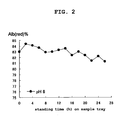
- the stability test of Alb(red) was performed for an enlarged pH range.
- the dilution buffers used were 50 mM acetate buffers (pH 3.0, pH 4.0 and pH 5.0), 50 mM phosphate buffers (pH 6.0, pH 7.0 and pH 8.0), and 0.1 M carbonate buffers (pH 9.0 and pH 10.0).
- the pH applicable range on the acidic region was confirmed.
- an albumin-derived signal was not observed on the mass spectrum at pH 3.0, but at the range of from pH 4.0 to pH 7.0, stable Alb(red)% value was obtained even after 48 hr from the start of standing on a sample tray ( Fig. 3(1) ).
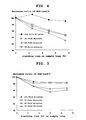
- the applicable range on the alkaline region was confirmed.
- Plasma samples of a hepatic disease model rats prepared by repetitive administration of carbon tetrachloride were subjected to measurement.
- Hepatic disease-induced model rats were prepared by subcutaneously administering a mixture (1 mL/kg) of equivalent amounts of carbon tetrachloride (CCl 4 ) and olive oil to SD rats twice a week. Blood (1 mL) was collected under ether anesthesia from the subclavian vein per month from the start of CCl 4 administration. Simultaneously, blood was sampled from normal rats as a control group. The collected blood was immediately placed in an ice bath, and centrifuged within an hour to separate the plasma. The separated plasma was immediately frozen with liquid nitrogen and preserved at -80°C. The preserved samples were thawed before measurement and treated as described in the following (1) or (2). The Alb(red)% value of the plasma samples of both the normal rats and the hepatic disease model rats (22 weeks after the start of CCl 4 administration) was calculated.
- CCl 4 carbon tetrachloride
- the Alb(red)% value was (80.8 ⁇ 1.1) for the normal rats and (82.8 ⁇ 2.3) for the hepatic disease model rats.
- the Alb(red)% value was (65.2 ⁇ 3.7) for the normal rats and (54.2 ⁇ 5.6) for the hepatic disease model rats (Table 1 and Fig. 6 ). Table 1.
- Alb(red)% was analyzed using a liquid chromatography-mass spectrometer (LC-ESI-TOFMS). In this Example, however, high performance liquid chromatography (HPLC) alone was used as an analyzer.
- LC-ESI-TOFMS liquid chromatography-mass spectrometer
- HPLC high performance liquid chromatography
- AKTAexplorer 10S GE Healthcare (formerly Amersham Biosciences AB), Sweden
- HPLC eluent 30 mM phosphate buffer (pH 6.85) containing 0.15 M sodium sulfate was used at a flow rate of 0.8 mL/min.
- HPLC eluent 30 mM phosphate buffer (pH 6.85) containing 0.15 M sodium sulfate was used at a flow rate of 0.8 mL/min.
- Shodex Asahipak GS-520 7E was used. Measurement signals were monitored by UV detection (detection wavelength 280 nm).
- a normal rat plasma sample cryopreserved at -80°C was thawed in an ice bath, and diluted 5-fold with 50 mM phosphate buffer (pH 6.0).
- a 5-fold diluted sample immediately applied to the HPLC apparatus and a 5-fold diluted sample subjected to a 2-hr preincubation treatment at room temperature were analyzed.
- a peak derived from reduced albumin was observed on the chromatogram at near 10.5 min. Since there is no change observed in the chromatogram pattern before and after the preincubation treatment, it was confirmed that albumin in rat plasma was stable by the use of the buffer at pH 6.0 ( Fig. 7 ).
- KK-Ay mouse has been modified by introducing the obesity gene Ay to prepare a ⁇ type 2 diabetes model> that expresses obesity and hyperglycemia earlier and severer than KK mouse does.
- the KK-Ay mouse is a ⁇ complicated model> prepared by introducing the Ay gene into a KK mouse, and characteristically expresses obesity and hyperglycemia earlier (7-8-week-old) and severer than the KK mouse does.
- a KK-Ay mouse (CLEA Japan, Inc.) as an inherited spontaneously diabetes model mouse
- Alb(red)% value of the plasma samples was measured. Collected blood from a normal mouse or diabetes model mouse was immediately placed in an ice bath and centrifuged within an hour to give a plasma sample.
- the plasma samples were immediately frozen with liquid nitrogen and preserved at -80°C.
- the preserved samples were treated as described in the following (1) or (2), and then the Alb(red)% value of the plasma samples of both the normal rat and the diabetic mouse was calculated.
- the Alb(red)% was 80.3% for the normal mouse and 80.1% for the diabetes model mouse.
- the Alb(red)% value was (72.4 ⁇ 0.8) for the normal mouse and (68.9 ⁇ 1.7) for the diabetes model mouse.
- the preincubation treatment rendered remarkable the difference in Alb(red)% between the samples.
- glycated albumin was confirmed in addition to the reduced albumin and oxidized albumin ( Fig. 8 ).
- the proportion of glycated albumin in the whole albumin is 9.9% for the normal mouse and 13.9% for the diabetes mouse.
- glycated albumin was observed in a greater amount in the diabetes mouse.
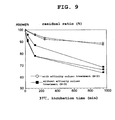
- Plasma of a wild-type rat (Sparague-Dawley or F344 rat, male, CLEA Japan, Inc.) was diluted with 50 mM phosphate buffer (pH 6.0). After a filtration treatment using a 0.45 ⁇ m filter, the solution was applied to an affinity chromatography Blue HP column equilibrated with 50 mM phosphate buffer. Albumin in the plasma was retained on the column resin, and other contaminant components passed through the column or were removed by washing. Lastly, the albumin adsorbed onto the column was eluted with 50 mM phosphate buffer (pH 6.0) containing 1.5 M potassium chloride, which was followed by incubation treatment at 37°C for 2 hr.
- 50 mM phosphate buffer pH 6.0
- the change in Alb(red)% at this time was measured in the same manner as in Example 1, and the results were compared between the Blue HP column treated sample and the nontreated sample ( Fig. 9 ). As a result, the sample subjected to the Blue HP column treatment showed a smaller change in Alb(red)%. As demonstrated, stabilization of Alb(red) could be achieved since affinity chromatography removed contaminant components in the sample.
- Treated bloods 1) and 2) were diluted 100-fold with a diluted solution (50 mM sodium phosphate buffer, pH 6.0) and treated blood 3) was diluted 10-fold with the same dilution solution, and the oxidized albumin ratio and reduced albumin ratio were calculated according to HPLC-ESI-TOFMS described in Example 1.
- the residual ratio of the reduced albumin ratio (Alb(red)%) was calculated.
- treated blood 1 the residual ratio decreased with the preservation time and was 95% at 48 hr later.
- treatment bloods 2) and 3 the residual ratio after 48 hr of preservation was 100-101%, with no fluctuation ( Fig. 10 ). It was therefore demonstrated that the fluctuation of the reduced albumin ratio could be suppressed by pH adjustment or dilution.
- Plasma was diluted 50-fold with 50 mM sodium phosphate buffer (pH 6.0) and used as an HPLC sample.
- sample No. 0 h 24 h 72 h sample 1 100.0% 100.6% 100.0% sample 2 100.0% 100.8% 100.4% sample 3 100.0% 100.4% 99.7% sample 4 100.0% 100.3% 99.4% sample 5 100.0% 100.4% 100.1%
- the residual ratio of reduced albumin ratio after 72 hr preservation was 99.4 - 100.4%, and fluctuation was not observed as compared to immediately after the treatment. From these results, the stability of reduced albumin up to 72 hr after blood sample collection could be confirmed, thus ensuring possible transport of an analysis sample from a hospital to an analytical laboratory.
- the residual ratio of reduced albumin ratio (Alb(red) %) was calculated.
- treated blood 1) the residual ratio decreased with the preservation time and became 92-94% 2 days later.
- treated bloods 2) and 3 the residual ratio after 2-day preservation was 100-101%, with no fluctuation as compared to that immediately after the treatment. It was confirmed from these results that reduced albumin remained stable for 2 days by refrigeration, due to the pH adjustment treatment.
- the flow-injection method wherein solid phase extraction and ESI-MS are combined can drastically shorten the measurement time as evidenced by the MS measurement time of not more than 5 min.
- Blood was collected from healthy volunteers, and a plasma sample was obtained by plasma separation.
- the sample was subjected to albumin purification by affinity chromatography according to the procedures shown in Example 5.
- the purified eluate was diluted to 4 mg/mL with 50 mM phosphate buffer containing 1.5 M potassium chloride (pH 6.0) (this was used as a reduced albumin standard sample).
- To this solution was added, as thiol group-containing low-molecular compounds, any of cysteine, cystine which is an oxidant thereof, homocysteine, homocystine which is an oxidant thereof, reduced glutathione and its oxidant, oxidized glutathione to give an oxidized albumin standard sample.
- cysteine-added albumin As oxidized albumins existing in the living body, 3 kinds of cysteine-added albumin, homocysteine-added albumin and glutathione-added albumin were respectively prepared as follows.
- cysteine-added albumin For preparing cysteine-added albumin, a 4 mg/mL purified albumin solution (120 mL) was mixed with a 0.6 mM aqueous cysteine (manufactured by Sigma Ltd.) solution (12 mL) and a 0.6 mM aqueous cystine (manufactured by Sigma Ltd.) solution (108 mL).
- a 4 mg/mL purified albumin solution 120 mL was mixed with a 3 mM aqueous homocysteine (manufactured by Sigma Ltd.) solution (8 mL) and a 3 mM aqueous homocystine (manufactured by Sigma Ltd.) solution (72 mL).
- a 4 mg/mL purified albumin solution 120 mL was mixed with a 3 mM aqueous reduced glutathione (manufactured by Wako Pure Chemical Industries, Ltd.) solution (8 mL) and a 3 mM aqueous oxidized glutathione (manufactured by Wako Pure Chemical Industries, Ltd.) solution (72 mL).
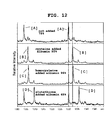
- the purity (%) of the reduced or oxidized albumin in the oxidized albumin standard samples (3 kinds) obtained by this preparation method was determined by the HPLC-ESI-TOFMS measurement described in Example 1 ( Fig. 12 ).
- the purity of the oxidized albumin in the cysteine-added albumin ([B] in Fig. 12 ), homocysteine-added albumin ([C] in Fig. 12 ) and glutathione-added albumin ([D] in Fig. 12 ) was 95%, 96% and 65%, respectively.
- the purity of the reduced albumin in the reduced albumin standard sample ([A] in Fig. 12 ) was 78%.
- the stability of the reduced albumin standard solution and various oxidized albumin standard samples prepared according to the above-mentioned methods was evaluated after preservation at 4°C, -20°C and -80°C. Sampling was conducted at regular intervals, and changes in the purity were measured using the HPLC-ESI-TOFMS described in Example 1.
- albumin was analyzed according to the HPLC method described in Example 7 and using the prepared standard samples.
- the analyzed values of the purity of reduced albumin, cysteine-added albumin and glutathione-added albumin matched well with the values measured by ESI-TOFMS with higher accuracy. Therefore, the analysis accuracy of the HPLC method could be guaranteed by using the albumin standard samples of the present invention.
- ESI-TOFMS method HPLC method reduced albumin standard sample reduced albumin purity 75% reduced albumin purity 76% oxidized albumin standard sample oxidized albumin purity 95% oxidized albumin purity 95%
- the amount and presence ratio of reduced/oxidized albumins and glycated protein components can be conveniently measured with high sensitivity
- a method useful for biochemical study, diagnosis of diseases and screening for pharmaceutical agents can be provided.
- various conditions associated with oxidative stress such as hepatic disease, renal disease, diabetes, rheumatism, encephalopathy, fatigue, aging, oxidative stress, cardiac disease, lung disease and the like can be preferably analyzed.
Landscapes
- Physics & Mathematics (AREA)
- Health & Medical Sciences (AREA)
- Life Sciences & Earth Sciences (AREA)
- Chemical & Material Sciences (AREA)
- Analytical Chemistry (AREA)
- Biochemistry (AREA)
- General Health & Medical Sciences (AREA)
- General Physics & Mathematics (AREA)
- Immunology (AREA)
- Pathology (AREA)
- Other Investigation Or Analysis Of Materials By Electrical Means (AREA)
- Investigating Or Analysing Biological Materials (AREA)
- Peptides Or Proteins (AREA)
Claims (12)
- Procédé d'analyse de la quantité d'albumine réduite et d'albumine oxydée et/ou du taux de présence d'albumine réduite et d'albumine oxydée dans un échantillon de sang ou de plasma provenant d'un sujet d'essai, le procédé comprenant la dilution de l'échantillon 50 à 100 000 fois avec un tampon, pour obtenir ainsi une solution d'échantillon ayant un pH de 4-9 et la soumission de la solution à une spectrométrie de masse ou une chromatographie en phase liquide.
- Procédé selon la revendication 1, qui comprend l'incubation de la solution d'échantillon pendant 0-100 h, l'ajustement de son pH et la soumission de la solution d'échantillon diluée à une spectrométrie de masse ou chromatographie en phase liquide.
- Procédé selon la revendication 1 ou la revendication 2, dans lequel le tampon est au moins d'un type choisi dans le groupe constitué par un tampon phosphate, un tampon Tris-HCl, un tampon borate, un tampon citrate, un tampon acétate, un tampon carbonate, un tampon HEPES et un tampon succinate.
- Procédé selon la revendication 2, dans lequel la température d'incubation est de 4-60°C.
- Procédé selon l'une quelconque des revendications 1 à 4, qui comprend un traitement d'ultrafiltration avant la spectrométrie de masse ou la chromatographie en phase liquide.
- Procédé selon l'une quelconque des revendications 1 à 5, qui comprend une purification par chromatographie avant la spectrométrie de masse ou la chromatographie en phase liquide.
- Procédé selon la revendication 6, dans lequel la chromatographie est au moins d'un type choisi dans le groupe constitué par la chromatographie en phase liquide haute performance, la chromatographie en phase inverse, la chromatographie en phase normale, la chromatographie d'affinité, la chromatographie à échange d'ions, la chromatographie par filtration sur gel, et la chromatographie hydrophobe.
- Procédé selon l'une quelconque des revendications 1 à 7, dans lequel la spectrométrie de masse est effectuée à l'aide d'au moins un type d'appareil choisi dans le groupe constitué par un spectromètre de masse à temps de vol par ionisation par électronébulisation, un spectromètre de masse quadripolaire, un spectromètre de masse à piège ionique, un spectromètre de masse à résonance cyclotronique ionique par transformée de Fourier, un spectromètre de masse à temps de vol par désorptionionisation laser assistée par matrice, un spectromètre de masse de type à secteur magnétique et un spectromètre de masse quadripolaire en tandem.
- Procédé selon l'une quelconque des revendications précédentes, dans lequel l'échantillon provient d'un sujet d'essai ayant au moins une condition pathologique ou suspecté d'avoir au moins une condition pathologique choisie dans le groupe constitué par une maladie hépatique, une maladie rénale, le diabète, le rhumatisme, l'encéphalopathie, la fatigue, le vieillissement, le stress oxydatif, une maladie cardiaque et une maladie pulmonaire.
- Procédé d'analyse du sang ou du plasma provenant d'un sujet d'essai dans au moins une condition pathologique ou suspecté d'être dans au moins une condition pathologique choisie dans le groupe constitué par une maladie hépatique, une maladie rénale, le diabète, le rhumatisme, l'encéphalopathie, la fatigue, le vieillissement, le stress oxydatif, une maladie cardiaque et une maladie pulmonaire, qui comprend l'analyse, par le procédé selon l'une quelconque des revendications 1 à 8, de la quantité d'albumine réduite et d'albumine oxydée et/ou du taux de présence d'albumine réduite et d'albumine oxydée dans le sang ou le plasma provenant du sujet d'essai.
- Procédé de criblage d'une substance d'essai, comprenant
la mesure, par le procédé selon l'une quelconque des revendications 1 à 8, de la quantité d'albumine réduite et d'albumine oxydée et/ou du taux de présence d'albumine réduite et d'albumine oxydée dans un échantillon provenant d'un sujet d'essai avec ou sans administration d'une substance d'essai,
la comparaison de la quantité et/ou du taux de présence obtenu(e) avec administration d'une substance d'essai et de la quantité et/ou du taux de présence obtenu(e) sans administration d'une substance d'essai, et
la sélection de l'échantillon présentant la plus grande quantité et/ou le plus grand taux de présence d'albumine réduite avec administration d'une substance d'essai, comparativement à sa non-administration. - Procédé selon la revendication 11, dans lequel la substance d'essai est un antioxydant.
Applications Claiming Priority (2)
| Application Number | Priority Date | Filing Date | Title |
|---|---|---|---|
| JP2005217993 | 2005-07-27 | ||
| PCT/JP2006/315358 WO2007013679A1 (fr) | 2005-07-27 | 2006-07-27 | Méthode pour analyser l'albumine dans un prélèvement en solution |
Publications (3)
| Publication Number | Publication Date |
|---|---|
| EP1912065A1 EP1912065A1 (fr) | 2008-04-16 |
| EP1912065A4 EP1912065A4 (fr) | 2011-01-26 |
| EP1912065B1 true EP1912065B1 (fr) | 2015-02-18 |
Family
ID=37683552
Family Applications (1)
| Application Number | Title | Priority Date | Filing Date |
|---|---|---|---|
| EP06782218.9A Active EP1912065B1 (fr) | 2005-07-27 | 2006-07-27 | Méthode pour analyser l'albumine dans un prélèvement en solution |
Country Status (6)
| Country | Link |
|---|---|
| US (1) | US7833798B2 (fr) |
| EP (1) | EP1912065B1 (fr) |
| JP (1) | JP5024044B2 (fr) |
| KR (1) | KR101075012B1 (fr) |
| CN (1) | CN101273267B (fr) |
| WO (1) | WO2007013679A1 (fr) |
Families Citing this family (19)
| Publication number | Priority date | Publication date | Assignee | Title |
|---|---|---|---|---|
| WO2009123162A1 (fr) * | 2008-03-31 | 2009-10-08 | 学校法人久留米大学 | Procédé de détermination d'un œdème associé à une maladie du foie |
| JP5669349B2 (ja) * | 2008-08-26 | 2015-02-12 | 株式会社バイオマーカーサイエンス | 生体内緊張状態の緩和・誘導抑制効果の評価方法、並びに、物質のスクリーニング方法 |
| JP5817720B2 (ja) | 2010-05-18 | 2015-11-18 | 味の素株式会社 | 含硫黄アミノ酸誘導体 |
| US9002656B2 (en) | 2011-10-17 | 2015-04-07 | Daxor Corporation | Automated total body albumin analyzer |
| CN102321563B (zh) * | 2011-10-24 | 2013-04-03 | 江南大学 | 一株拟无枝酸菌及利用其全细胞转化制备香草醛的方法 |
| EP3068788A1 (fr) | 2013-11-14 | 2016-09-21 | Cadila Healthcare Limited | Nouveaux composés hétérocycliques |
| CN103792315B (zh) * | 2014-01-23 | 2015-07-08 | 中国计量科学研究院 | 一种人血清蛋白无机质谱联用技术的定量方法 |
| JP6749590B2 (ja) * | 2015-09-17 | 2020-09-02 | 国立大学法人 東京大学 | 酸化型及び還元型アルブミンの分析方法、酸化型及び還元型アルブミンの分析装置、及び酸化型及び還元型アルブミンの分析キット |
| JP6915832B2 (ja) * | 2016-10-11 | 2021-08-04 | 国立大学法人 東京大学 | 還元型アルブミンの安定化剤及びその使用 |
| ES2600386B8 (es) * | 2016-11-16 | 2017-08-04 | Grifols Worldwide Operations Limited | Método de diagnóstico in vitro de la enfermedad de alzheimer basado en el nivel redox de la albúmina en el líquido cefalorraquídeo |
| CN109996555A (zh) | 2016-11-22 | 2019-07-09 | 克洛索治疗有限公司 | 新颖重组klotho蛋白及其组合物和方法 |
| CN108333362B (zh) * | 2017-12-21 | 2021-04-02 | 河北工程大学 | 一种人体疲劳测定方法 |
| SG11202008979QA (en) * | 2018-03-28 | 2020-10-29 | Two Tag Holdings Pty Ltd | Methods for measuring relative oxidation levels of a protein |
| JP7281155B2 (ja) * | 2018-04-23 | 2023-05-25 | 国立大学法人 東京大学 | 酸化型・還元型アルブミンを指標とした糖尿病合併症の進行の予測方法 |
| WO2021002403A1 (fr) * | 2019-07-02 | 2021-01-07 | 森永乳業株式会社 | Procédé pour déterminer un risque de sous-nutrition et/ou un risque de naissance d'un enfant de faible poids corporel chez un sujet |
| KR102099194B1 (ko) * | 2019-11-08 | 2020-04-09 | 한국화학연구원 | 제브라피쉬 내 갑상선 호르몬 분석 방법 |
| JP7384360B2 (ja) * | 2020-05-11 | 2023-11-21 | 株式会社島津製作所 | アルブミン分析方法及びアルブミン分析装置 |
| CN115825263B (zh) * | 2022-11-04 | 2024-10-29 | 南京科技职业学院 | 一种血清中氧化型白蛋白的检测方法及其试剂盒 |
| CN115728420A (zh) * | 2022-12-01 | 2023-03-03 | 深圳市药品检验研究院(深圳市医疗器械检测中心) | 一种人血清白蛋白的检测方法及其应用 |
Family Cites Families (3)
| Publication number | Priority date | Publication date | Assignee | Title |
|---|---|---|---|---|
| JPS61155397A (ja) * | 1984-12-28 | 1986-07-15 | Asahi Medical Kk | クロマトグラフイ−によるアルブミンの短時間分離方法 |
| JP2003139751A (ja) * | 2001-11-02 | 2003-05-14 | Internatl Reagents Corp | 精度管理用物質 |
| WO2004011948A1 (fr) | 2002-07-25 | 2004-02-05 | Ajinomoto Co., Inc. | Methode d'analyse d'une proteine |
-
2006
- 2006-07-27 EP EP06782218.9A patent/EP1912065B1/fr active Active
- 2006-07-27 WO PCT/JP2006/315358 patent/WO2007013679A1/fr not_active Ceased
- 2006-07-27 CN CN2006800353416A patent/CN101273267B/zh not_active Expired - Fee Related
- 2006-07-27 JP JP2007526947A patent/JP5024044B2/ja active Active
- 2006-07-27 KR KR1020087004763A patent/KR101075012B1/ko not_active Expired - Fee Related
-
2008
- 2008-01-25 US US12/019,675 patent/US7833798B2/en not_active Expired - Fee Related
Also Published As
| Publication number | Publication date |
|---|---|
| KR101075012B1 (ko) | 2011-10-19 |
| CN101273267B (zh) | 2013-03-27 |
| US20080138846A1 (en) | 2008-06-12 |
| US7833798B2 (en) | 2010-11-16 |
| WO2007013679A1 (fr) | 2007-02-01 |
| KR20080032246A (ko) | 2008-04-14 |
| CN101273267A (zh) | 2008-09-24 |
| JPWO2007013679A1 (ja) | 2009-02-12 |
| JP5024044B2 (ja) | 2012-09-12 |
| EP1912065A4 (fr) | 2011-01-26 |
| EP1912065A1 (fr) | 2008-04-16 |
Similar Documents
| Publication | Publication Date | Title |
|---|---|---|
| US7833798B2 (en) | Method for analysis of albumin in sample solution | |
| US12493049B2 (en) | Quantitation of insulin-like growth factor-I and insulin-like growth factor-II with high-resolution mass spectrometry | |
| US20230184740A1 (en) | Methods for quantitation of insulin levels by mass spectrometry | |
| AU2007275638B2 (en) | Method of detecting and/ or measuring hepcidin in a sample | |
| US9063119B2 (en) | Methods for detecting vitamin C by mass spectrometry | |
| Nemoto et al. | High-throughput determination of nonsteroidal anti-inflammatory drugs in human plasma by HILIC-MS/MS | |
| RU2702998C1 (ru) | Способ контроля содержания противотуберкулёзных препаратов основного ряда и их токсичных метаболитов в плазме крови | |
| EP1666884B1 (fr) | Méthode pour la détermination de l'arginine, de l'arginine méthylée et de dérivés | |
| Martens-Lobenhoffer et al. | Detection and quantification of α-keto-δ-(NG, NG-dimethylguanidino) valeric acid: a metabolite of asymmetric dimethylarginine | |
| Kobuchi et al. | Development and validation of an LC–MS/MS method for the determination of tofogliflozin in plasma and its application to a pharmacokinetic study in rats | |
| US6984308B2 (en) | Electrochemical analysis of coenzyme Q10 and reduced coenzyme Q10 | |
| Zinellu et al. | Pre-analytical factors affecting ascorbic and uric acid quantification in human plasma | |
| JP7378469B2 (ja) | アスコルビン酸を測定するための方法およびシステム | |
| US12105102B2 (en) | Methods for quantifying insulin-like growth factor-1 and insulin-like growth factor-2 | |
| Amlodipine | Compound Index Vol. 758 | |
| AU2013270594A1 (en) | Method of detecting and/or measuring hepcidin in a sample | |
| HK1175841A (en) | Method of detecting and/or measuring hepcidin in a sample |
Legal Events
| Date | Code | Title | Description |
|---|---|---|---|
| PUAI | Public reference made under article 153(3) epc to a published international application that has entered the european phase |
Free format text: ORIGINAL CODE: 0009012 |
|
| 17P | Request for examination filed |
Effective date: 20080218 |
|
| AK | Designated contracting states |
Kind code of ref document: A1 Designated state(s): AT BE BG CH CY CZ DE DK EE ES FI FR GB GR HU IE IS IT LI LT LU LV MC NL PL PT RO SE SI SK TR |
|
| AX | Request for extension of the european patent |
Extension state: AL BA HR MK RS |
|
| A4 | Supplementary search report drawn up and despatched |
Effective date: 20101223 |
|
| 17Q | First examination report despatched |
Effective date: 20130605 |
|
| GRAP | Despatch of communication of intention to grant a patent |
Free format text: ORIGINAL CODE: EPIDOSNIGR1 |
|
| INTG | Intention to grant announced |
Effective date: 20140512 |
|
| RIN1 | Information on inventor provided before grant (corrected) |
Inventor name: KAWAKAMI, ASAMI Inventor name: KUBOTA, KAZUYUKI Inventor name: YAMADA, NAOYUKI Inventor name: NAKAYAMA, AKIRA Inventor name: TAKEHANA, KENJI |
|
| GRAP | Despatch of communication of intention to grant a patent |
Free format text: ORIGINAL CODE: EPIDOSNIGR1 |
|
| INTG | Intention to grant announced |
Effective date: 20140822 |
|
| GRAS | Grant fee paid |
Free format text: ORIGINAL CODE: EPIDOSNIGR3 |
|
| GRAA | (expected) grant |
Free format text: ORIGINAL CODE: 0009210 |
|
| AK | Designated contracting states |
Kind code of ref document: B1 Designated state(s): AT BE BG CH CY CZ DE DK EE ES FI FR GB GR HU IE IS IT LI LT LU LV MC NL PL PT RO SE SI SK TR |
|
| AX | Request for extension of the european patent |
Extension state: AL BA HR MK RS |
|
| RAP1 | Party data changed (applicant data changed or rights of an application transferred) |
Owner name: AJINOMOTO CO., INC. |
|
| REG | Reference to a national code |
Ref country code: GB Ref legal event code: FG4D |
|
| RIN1 | Information on inventor provided before grant (corrected) |
Inventor name: KAWAKAMI, ASAMI Inventor name: TAKEHANA, KENJI Inventor name: YAMADA, NAOYUKI Inventor name: NAKAYAMA, AKIRA Inventor name: KUBOTA, KAZUYUKI |
|
| REG | Reference to a national code |
Ref country code: CH Ref legal event code: EP |
|
| REG | Reference to a national code |
Ref country code: AT Ref legal event code: REF Ref document number: 710856 Country of ref document: AT Kind code of ref document: T Effective date: 20150315 |
|
| REG | Reference to a national code |
Ref country code: IE Ref legal event code: FG4D |
|
| REG | Reference to a national code |
Ref country code: DE Ref legal event code: R096 Ref document number: 602006044500 Country of ref document: DE Effective date: 20150402 |
|
| REG | Reference to a national code |
Ref country code: NL Ref legal event code: VDEP Effective date: 20150218 |
|
| REG | Reference to a national code |
Ref country code: AT Ref legal event code: MK05 Ref document number: 710856 Country of ref document: AT Kind code of ref document: T Effective date: 20150218 |
|
| REG | Reference to a national code |
Ref country code: LT Ref legal event code: MG4D |
|
| PG25 | Lapsed in a contracting state [announced via postgrant information from national office to epo] |
Ref country code: SE Free format text: LAPSE BECAUSE OF FAILURE TO SUBMIT A TRANSLATION OF THE DESCRIPTION OR TO PAY THE FEE WITHIN THE PRESCRIBED TIME-LIMIT Effective date: 20150218 Ref country code: LT Free format text: LAPSE BECAUSE OF FAILURE TO SUBMIT A TRANSLATION OF THE DESCRIPTION OR TO PAY THE FEE WITHIN THE PRESCRIBED TIME-LIMIT Effective date: 20150218 Ref country code: ES Free format text: LAPSE BECAUSE OF FAILURE TO SUBMIT A TRANSLATION OF THE DESCRIPTION OR TO PAY THE FEE WITHIN THE PRESCRIBED TIME-LIMIT Effective date: 20150218 Ref country code: FI Free format text: LAPSE BECAUSE OF FAILURE TO SUBMIT A TRANSLATION OF THE DESCRIPTION OR TO PAY THE FEE WITHIN THE PRESCRIBED TIME-LIMIT Effective date: 20150218 |
|
| PG25 | Lapsed in a contracting state [announced via postgrant information from national office to epo] |
Ref country code: NL Free format text: LAPSE BECAUSE OF FAILURE TO SUBMIT A TRANSLATION OF THE DESCRIPTION OR TO PAY THE FEE WITHIN THE PRESCRIBED TIME-LIMIT Effective date: 20150218 Ref country code: IS Free format text: LAPSE BECAUSE OF FAILURE TO SUBMIT A TRANSLATION OF THE DESCRIPTION OR TO PAY THE FEE WITHIN THE PRESCRIBED TIME-LIMIT Effective date: 20150618 Ref country code: LV Free format text: LAPSE BECAUSE OF FAILURE TO SUBMIT A TRANSLATION OF THE DESCRIPTION OR TO PAY THE FEE WITHIN THE PRESCRIBED TIME-LIMIT Effective date: 20150218 Ref country code: GR Free format text: LAPSE BECAUSE OF FAILURE TO SUBMIT A TRANSLATION OF THE DESCRIPTION OR TO PAY THE FEE WITHIN THE PRESCRIBED TIME-LIMIT Effective date: 20150519 Ref country code: AT Free format text: LAPSE BECAUSE OF FAILURE TO SUBMIT A TRANSLATION OF THE DESCRIPTION OR TO PAY THE FEE WITHIN THE PRESCRIBED TIME-LIMIT Effective date: 20150218 |
|
| PG25 | Lapsed in a contracting state [announced via postgrant information from national office to epo] |
Ref country code: RO Free format text: LAPSE BECAUSE OF FAILURE TO SUBMIT A TRANSLATION OF THE DESCRIPTION OR TO PAY THE FEE WITHIN THE PRESCRIBED TIME-LIMIT Effective date: 20150218 Ref country code: DK Free format text: LAPSE BECAUSE OF FAILURE TO SUBMIT A TRANSLATION OF THE DESCRIPTION OR TO PAY THE FEE WITHIN THE PRESCRIBED TIME-LIMIT Effective date: 20150218 Ref country code: SK Free format text: LAPSE BECAUSE OF FAILURE TO SUBMIT A TRANSLATION OF THE DESCRIPTION OR TO PAY THE FEE WITHIN THE PRESCRIBED TIME-LIMIT Effective date: 20150218 Ref country code: CZ Free format text: LAPSE BECAUSE OF FAILURE TO SUBMIT A TRANSLATION OF THE DESCRIPTION OR TO PAY THE FEE WITHIN THE PRESCRIBED TIME-LIMIT Effective date: 20150218 Ref country code: EE Free format text: LAPSE BECAUSE OF FAILURE TO SUBMIT A TRANSLATION OF THE DESCRIPTION OR TO PAY THE FEE WITHIN THE PRESCRIBED TIME-LIMIT Effective date: 20150218 |
|
| REG | Reference to a national code |
Ref country code: DE Ref legal event code: R097 Ref document number: 602006044500 Country of ref document: DE |
|
| PG25 | Lapsed in a contracting state [announced via postgrant information from national office to epo] |
Ref country code: PL Free format text: LAPSE BECAUSE OF FAILURE TO SUBMIT A TRANSLATION OF THE DESCRIPTION OR TO PAY THE FEE WITHIN THE PRESCRIBED TIME-LIMIT Effective date: 20150218 |
|
| PLBE | No opposition filed within time limit |
Free format text: ORIGINAL CODE: 0009261 |
|
| STAA | Information on the status of an ep patent application or granted ep patent |
Free format text: STATUS: NO OPPOSITION FILED WITHIN TIME LIMIT |
|
| 26N | No opposition filed |
Effective date: 20151119 |
|
| PG25 | Lapsed in a contracting state [announced via postgrant information from national office to epo] |
Ref country code: MC Free format text: LAPSE BECAUSE OF FAILURE TO SUBMIT A TRANSLATION OF THE DESCRIPTION OR TO PAY THE FEE WITHIN THE PRESCRIBED TIME-LIMIT Effective date: 20150218 Ref country code: SI Free format text: LAPSE BECAUSE OF FAILURE TO SUBMIT A TRANSLATION OF THE DESCRIPTION OR TO PAY THE FEE WITHIN THE PRESCRIBED TIME-LIMIT Effective date: 20150218 |
|
| REG | Reference to a national code |
Ref country code: CH Ref legal event code: PL |
|
| PG25 | Lapsed in a contracting state [announced via postgrant information from national office to epo] |
Ref country code: LU Free format text: LAPSE BECAUSE OF FAILURE TO SUBMIT A TRANSLATION OF THE DESCRIPTION OR TO PAY THE FEE WITHIN THE PRESCRIBED TIME-LIMIT Effective date: 20150727 |
|
| REG | Reference to a national code |
Ref country code: IE Ref legal event code: MM4A |
|
| PG25 | Lapsed in a contracting state [announced via postgrant information from national office to epo] |
Ref country code: CH Free format text: LAPSE BECAUSE OF NON-PAYMENT OF DUE FEES Effective date: 20150731 Ref country code: LI Free format text: LAPSE BECAUSE OF NON-PAYMENT OF DUE FEES Effective date: 20150731 |
|
| PG25 | Lapsed in a contracting state [announced via postgrant information from national office to epo] |
Ref country code: BE Free format text: LAPSE BECAUSE OF FAILURE TO SUBMIT A TRANSLATION OF THE DESCRIPTION OR TO PAY THE FEE WITHIN THE PRESCRIBED TIME-LIMIT Effective date: 20150218 |
|
| REG | Reference to a national code |
Ref country code: FR Ref legal event code: PLFP Year of fee payment: 11 |
|
| PG25 | Lapsed in a contracting state [announced via postgrant information from national office to epo] |
Ref country code: IE Free format text: LAPSE BECAUSE OF NON-PAYMENT OF DUE FEES Effective date: 20150727 |
|
| REG | Reference to a national code |
Ref country code: DE Ref legal event code: R082 Ref document number: 602006044500 Country of ref document: DE Representative=s name: PATENTANWAELTE STREHL, SCHUEBEL-HOPF & PARTNER, DE Ref country code: DE Ref legal event code: R082 Ref document number: 602006044500 Country of ref document: DE Representative=s name: STREHL SCHUEBEL-HOPF & PARTNER MBB PATENTANWAE, DE Ref country code: DE Ref legal event code: R081 Ref document number: 602006044500 Country of ref document: DE Owner name: EA PHARMA CO., LTD., JP Free format text: FORMER OWNER: AJINOMOTO CO., INC., TOKYO, JP |
|
| REG | Reference to a national code |
Ref country code: GB Ref legal event code: 732E Free format text: REGISTERED BETWEEN 20160908 AND 20160914 |
|
| REG | Reference to a national code |
Ref country code: FR Ref legal event code: TP Owner name: EA PHARMA CO., LTD., JP Effective date: 20161019 |
|
| PG25 | Lapsed in a contracting state [announced via postgrant information from national office to epo] |
Ref country code: BG Free format text: LAPSE BECAUSE OF FAILURE TO SUBMIT A TRANSLATION OF THE DESCRIPTION OR TO PAY THE FEE WITHIN THE PRESCRIBED TIME-LIMIT Effective date: 20150218 Ref country code: HU Free format text: LAPSE BECAUSE OF FAILURE TO SUBMIT A TRANSLATION OF THE DESCRIPTION OR TO PAY THE FEE WITHIN THE PRESCRIBED TIME-LIMIT; INVALID AB INITIO Effective date: 20060727 |
|
| REG | Reference to a national code |
Ref country code: FR Ref legal event code: PLFP Year of fee payment: 12 |
|
| PG25 | Lapsed in a contracting state [announced via postgrant information from national office to epo] |
Ref country code: CY Free format text: LAPSE BECAUSE OF FAILURE TO SUBMIT A TRANSLATION OF THE DESCRIPTION OR TO PAY THE FEE WITHIN THE PRESCRIBED TIME-LIMIT Effective date: 20150218 |
|
| PGFP | Annual fee paid to national office [announced via postgrant information from national office to epo] |
Ref country code: FR Payment date: 20170613 Year of fee payment: 12 |
|
| PG25 | Lapsed in a contracting state [announced via postgrant information from national office to epo] |
Ref country code: TR Free format text: LAPSE BECAUSE OF FAILURE TO SUBMIT A TRANSLATION OF THE DESCRIPTION OR TO PAY THE FEE WITHIN THE PRESCRIBED TIME-LIMIT Effective date: 20150218 |
|
| PGFP | Annual fee paid to national office [announced via postgrant information from national office to epo] |
Ref country code: DE Payment date: 20170719 Year of fee payment: 12 Ref country code: IT Payment date: 20170720 Year of fee payment: 12 Ref country code: GB Payment date: 20170726 Year of fee payment: 12 |
|
| PG25 | Lapsed in a contracting state [announced via postgrant information from national office to epo] |
Ref country code: PT Free format text: LAPSE BECAUSE OF FAILURE TO SUBMIT A TRANSLATION OF THE DESCRIPTION OR TO PAY THE FEE WITHIN THE PRESCRIBED TIME-LIMIT Effective date: 20150218 |
|
| REG | Reference to a national code |
Ref country code: DE Ref legal event code: R119 Ref document number: 602006044500 Country of ref document: DE |
|
| GBPC | Gb: european patent ceased through non-payment of renewal fee |
Effective date: 20180727 |
|
| PG25 | Lapsed in a contracting state [announced via postgrant information from national office to epo] |
Ref country code: GB Free format text: LAPSE BECAUSE OF NON-PAYMENT OF DUE FEES Effective date: 20180727 Ref country code: FR Free format text: LAPSE BECAUSE OF NON-PAYMENT OF DUE FEES Effective date: 20180731 Ref country code: DE Free format text: LAPSE BECAUSE OF NON-PAYMENT OF DUE FEES Effective date: 20190201 |
|
| PG25 | Lapsed in a contracting state [announced via postgrant information from national office to epo] |
Ref country code: IT Free format text: LAPSE BECAUSE OF NON-PAYMENT OF DUE FEES Effective date: 20180727 |